語彙集

英単語辞書 | 単語の意味、定義、例文

noun
/stæns/
立場 (tachiba)

a person's attitude, opinion, or position on an issue

"The company took a strong stance on environmental protection."

"その会社は環境保護に強い立場を取った。" (Sono kaisha wa kankyō hogo ni tsuyoi tachiba o totta.)
verb
/stɑːntʃ/
止血する (shiketsu suru)

to stop the flow of blood or liquid from a wound or source

"The nurse quickly stanched the bleeding from the cut."

"看護師はすぐに切り傷からの出血を止めました。" (kangoshi wa sugu ni kirikizu kara no shukketsu wo tome mashita)
noun
/ˈstænʃən/
支柱 (shichū)

a strong upright bar or post used as support or to control movement

"The red rope was attached to the stanchions to guide the crowd."
"赤いロープは群衆を導くためにスタンションに取り付けられていた。" (Akai rūpu wa gunshū o michibiku tame ni sutanshon ni toritsukerarete ita.)
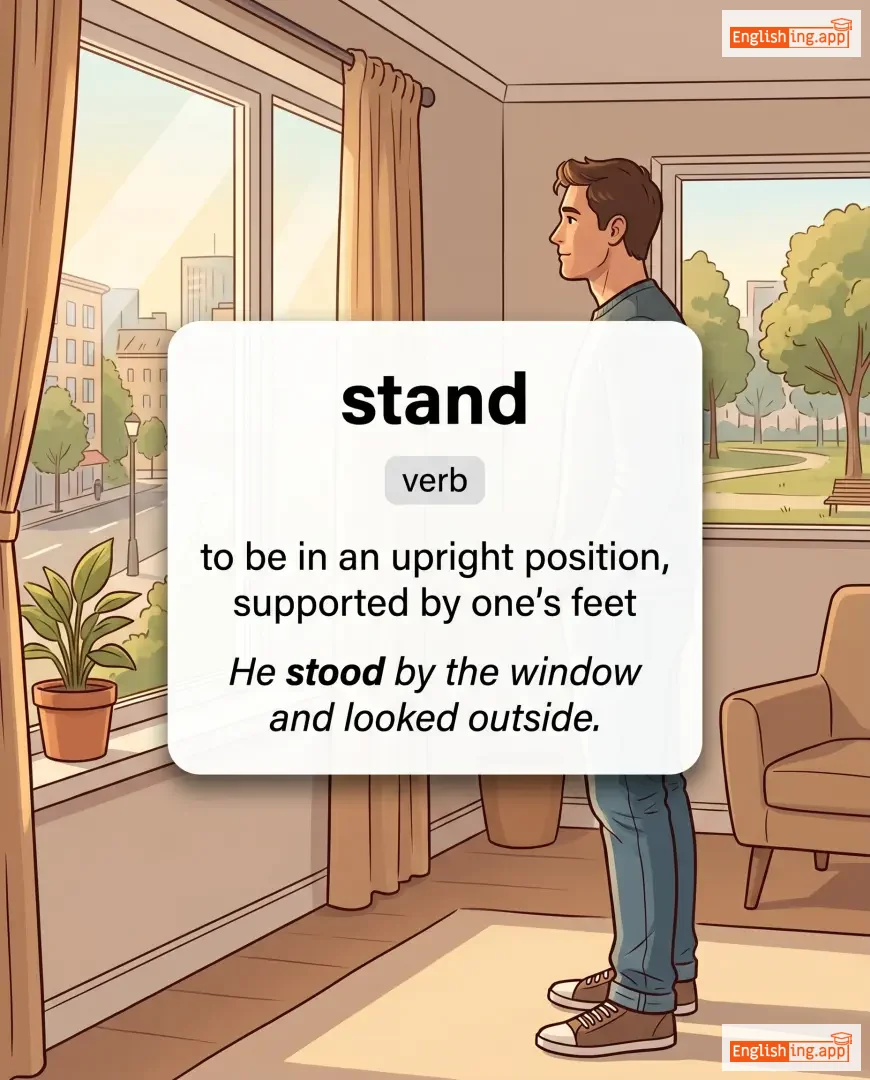
stand definition card — visual illustration of the meaning
verb
/stænd/
立つ (tatsu)

to be in an upright position, supported by one's feet

"He stood by the window and looked outside."
"彼は窓のそばに立って外を見ていました。" (Kare wa mado no soba ni tatte soto wo miteimashita.)
noun
/ˈstændərd/

a level of quality or achievement, or a measure of comparison

"This car meets all the safety standards."

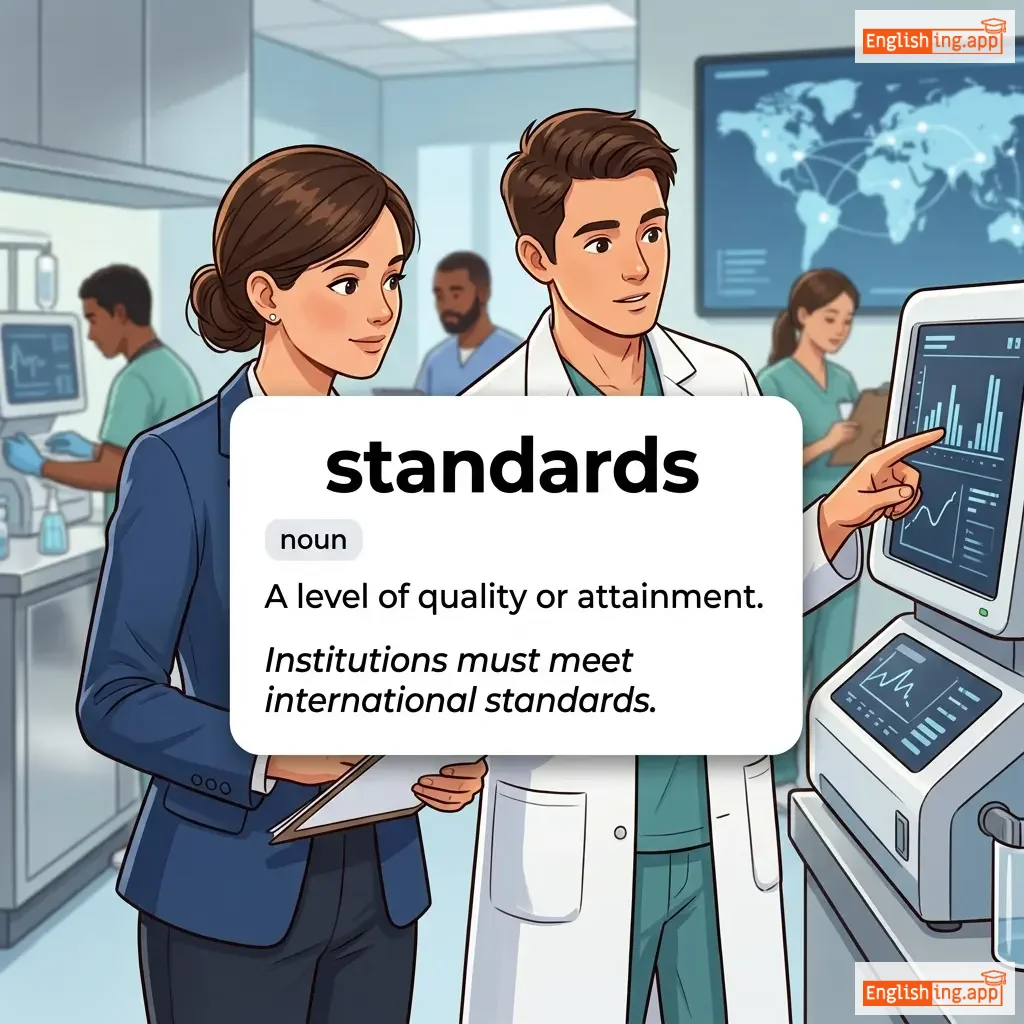
standards definition card — visual illustration of the meaning
noun
ˈstæn.dədz
基準 (kijun)

A level of quality or attainment.

"Institutions must meet international standards."

"機関は国際基準を満たさなければならない。" (Kikan wa kokusai kijun o mitasanakereba naranai.)
noun/adjective
/ˈstændɪŋ/
地位 / 評判 (chii / hyoban)

status, reputation, or position; also the act of being upright on the feet

"He has high standing in the community for his charity work."

"彼はその慈善活動のため、コミュニティで高い評価を得ています。" (Kare wa sono jizen katsudou no tame, komyuniti de takai hyouka wo eteimasu.)
noun
/ˈstændˌstɪl/
停滞 (teitai)

a situation in which all movement or activity stops

"The traffic came to a standstill after the accident."

"事故後、交通は停滞しました。" (Jiko go, koutsuu wa teitai shimashita.)
noun
/ˈstænzə/
スタンザ (sutanza)

a group of lines forming a unit in a poem or song

"The poem begins with a stanza describing nature."

"その詩は自然を描写するスタンザで始まります。" (Sono shi wa shizen o byousha suru sutanza de hajimarimasu.)
noun
/stɑːr/
(hoshi)

a luminous point in the night sky, a famous person

"The movie star smiled for the cameras."

"映画スターはカメラに向かって微笑みました。" (Eiga sutā wa kamera ni mukatte bishōmimashita.)
noun
/stɑːr ˈæn.ɪs/
スターアニス (sutā anis)

star-shaped spice pod with a licorice-like flavor used in cooking

"She added star anise to the soup for aromatic flavor."

"彼女はスープに香り豊かな風味を加えるためにスターアニスを入れました。" (Kanojo wa sūpu ni kaori yutakana fūmi o kuwaeru tame ni sutā anis o iremashita.)
noun
/stɑːr fɪʃ/
ヒトデ (hitode)

a marine echinoderm with five or more radiating arms, typically found on the sea floor

"The starfish slowly moved across the ocean floor searching for food."

"ヒトデはゆっくりと海底を動きながら食べ物を探した。" (hitode wa yukkuri to kaitei o ugoki nagara tabemono o sagashita)
noun
/stɑːr fruːts/
スターフルーツ (sutā furūtsu)

yellow tropical fruits that form a star shape when sliced crosswise; tangy and crisp taste

"When you slice star fruits, they look like beautiful yellow stars on your plate."

"スターフルーツを切ると、プレートの上に美しい黄色い星のように見えます。" (sutā furūtsu o kiru to, purēto no ue ni utsukushī kiiroi hoshi no yō ni miemasu.)
verb
/stɛə/
じっと見る (jitto miru)

to look at something with a fixed gaze

"She stared at the painting for hours."

"彼女は何時間も絵をじっと見つめていました。" (Kanojo wa nanjikan mo e o jitto mitsumete imashita.)
adjective
/stɑːrk/
厳しい、鋭い (kibishii, surudoi)

Severe, sharp, or clearly defined; plain and without any decoration.

"The stark contrast between poverty and wealth was evident in the city."

"貧困と富の間の鮮明な対比は街中で明らかだった。" (Hinkon to tomi no aida no senmei na taibi wa machi naka de akiraka datta.)
adjective
/ˈstɑː.ri/
星のような; 輝く; (sutarii)

full of stars; shining like stars; relating to stars

"We enjoyed the starry night sky while camping in the mountains."

"私たちは山でキャンプしながら、星空を楽しみました。" (watashitachi wa yama de kyanpu shinagara, hoshizora wo tanoshimimashita.)
start definition card — visual illustration of the meaning
verb
/stɑːrt/
始める (hajimeru)

To begin doing something; to commence.

"They will start the meeting at 10 a.m."

"彼らは午前10時に会議を始めます。" (Karera wa gozen 10-ji ni kaigi o hajimemasu.)
noun
/ˈstɑːrtər/
何かを始める人または物; 食事の最初の料理 (nanika o hajimeru hito matawa mono; shokuji no saisho no ryōri)

a person or thing that starts something; the first course of a meal

"The starter of the meal was a fresh salad."

"食事のスターターは新鮮なサラダでした。" (Shokuji no sutātā wa shinsen na sarada deshita.)
verb
/ˈstɑːtɪŋ/
始める (hajimeru)

beginning to do or experience something

"She is starting a new job next week."

"彼女は来週、新しい仕事を始める。" (Kanojo wa raishuu, atarashii shigoto o hajimeru.)
verb
/ˈstɑːrtl/
驚かせる (odorokasu)

To surprise or frighten someone suddenly.

"The loud noise startled the children."

"大きな音が子供たちを驚かせた。" (Ōkina oto ga kodomotachi o odorokaseta.)
adjective
/ˈstɑːrtəld/
驚いた (odoroita)

suddenly shocked or surprised by something unexpected

"She was startled by the loud noise outside."

"彼女は外の大きな音に驚いた。" (Kanojo wa soto no ookina oto ni odoroita.)
startup definition card — visual illustration of the meaning
noun
ˈstɑːtʌp
新しい会社、ビジネスの試み (atarashii kaisha, bijinesu no kokoromi)

New company, business venture.

"The startup grew into a global brand."

"スタートアップは世界的なブランドに成長しました。" (Startappu wa sekaiteki na burando ni seichou shimashita.)
noun
/stɑːˈveɪ.ʃən/
飢餓 (kiga)

suffering or death caused by lack of food; extreme hunger

"Many people died of starvation during the famine."

"多くの人々は飢饉の間に飢え死にしました。" (ōku no hitobito wa kikin no aida ni ue-shini shimashita.)
verb
/stɑːv/
飢え死に (ueshini)

to suffer or die from lack of food

"He was left to starve in the desert."

"彼は砂漠で飢え死にするために放置された。" (Kare wa sabaku de uesini suru tame ni hōchi sareta.)
noun
/ˈsteɪsɪs/ or /ˈstæsɪs/
停滞 (teitai)

A state of inactivity or equilibrium; a situation where nothing changes.

"The negotiations reached a state of stasis with no progress made."
"交渉は停滞状態に達し、進展はありませんでした。" (Kōshō wa teitai jōtai ni tasshi, shinten wa arimasen deshita.)
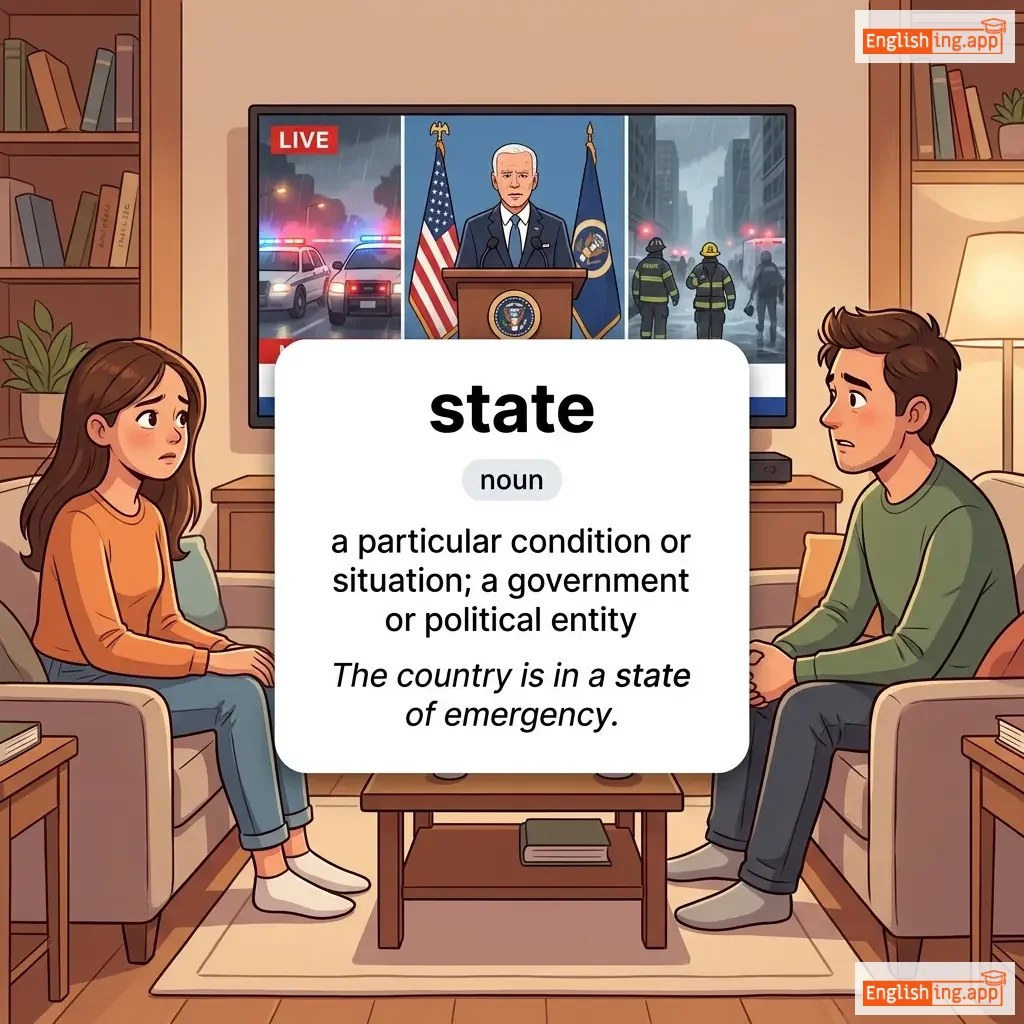
state definition card — visual illustration of the meaning
noun
/steɪt/
状態 (joutai)

a particular condition or situation; a government or political entity

"The country is in a state of emergency."

"その国は非常事態にあります。" (Sono kuni wa hijoujitai ni arimasu.)
noun
/ˈsteɪtkraft/
国政術 (kokusetsu)

The art of governing and managing state affairs effectively.

"The leader was praised for his exceptional statecraft in handling international relations."

"リーダーは国際関係を扱う際の卓越した国政術に対して称賛されました。" (Rīdā wa kokusai kankei o atsukau sai no takuetsu shita kokusetsu ni taishite shōsan saremashita.)
adjective
/ˈsteɪtli/
威厳と壮大 (igen to soudai)

Having a dignified, majestic, and impressive appearance or manner.

"The stately mansion stood at the end of the long driveway."

"その威厳ある邸宅は長いドライブウェイの終わりに立っていました。" (Sono igen aru teitaku wa nagai doraibuwei no owari ni tatte imashita.)
noun
/ˈsteɪtmənt/
声明 (seimei)

a clear expression of something in speech or writing

"She made a statement about the company's new policies."
"彼女は会社の新しい方針について声明を発表しました。" (Kanojo wa kaisha no atarashii houshin ni tsuite seimei o happyou shimashita.)
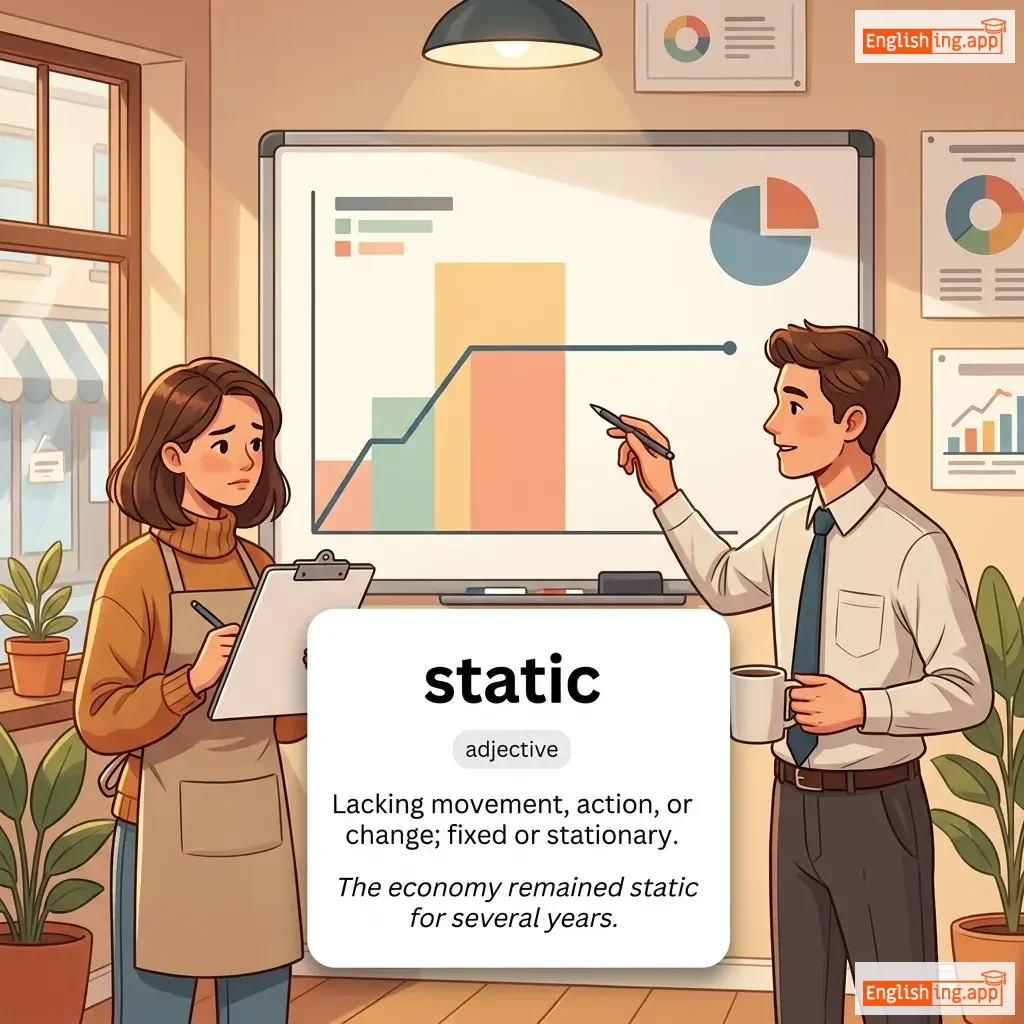
static definition card — visual illustration of the meaning
adjective
/ˈstætɪk/
静的 (seiteki)

Lacking movement, action, or change; fixed or stationary.

"The economy remained static for several years."

"経済は数年間静的でした。" (Keizai wa suunenkan seiteki deshita.)
noun
/ˈstætɪks/
静力学 (seiryokugaku)

The branch of mechanics dealing with bodies at rest and forces in equilibrium.

"She is studying statics as part of her engineering course."

"彼女は工学のコースの一環として静力学を学んでいます。" (Kanojo wa kōgaku no kōsu no ikkan toshite seiryokugaku o manandeimasu.)
noun
/ˈsteɪʃən/

a place where a particular service is provided, especially for transportation

"We arrived at the station just in time for the train."

adjective
/ˈsteɪʃəˌneri/
静止 (seishi)

Not moving or not intended to be moved.

"The car remained stationary at the red light."

"車は赤信号で静止したままでした。" (Kuruma wa akashingou de seishi shita mamade shita.)
noun
/ˈsteɪ.ʃən.ər/
文房具店 (bunbouguten)

a person who sells paper, pens, pencils, and other office supplies

"The stationer recommended the best pens for writing exams."

"文房具屋は試験のための最適なペンを推薦しました。" (Bunbouguten wa shiken no tame no saiteki na pen wo suisen shimashita.)
adjective
/stəˈtɪstɪkəl/
統計的 (tokeiteki)

relating to the use or analysis of numerical data

"The report provides statistical data about population growth."

"報告書は人口増加に関する統計データを提供しています。" (Hōkokusho wa jinkō zōka ni kansuru tōkei dēta o teikyō shiteimasu.)
noun
/ˌstætɪˈstɪʃən/
統計学者 (tōkeigakusha)

A person who specializes in collecting, analyzing, and interpreting numerical data.

"The statistician presented the survey results with great clarity."

"統計学者は調査結果を明確に示しました。" (Tōkeigakusha wa chōsa kekka o meikaku ni shimeshimashita.)
noun
/stəˈtɪstɪks/
統計 (tōkei)

the practice or science of collecting and analyzing numerical data

"The statistics showed an increase in the number of users last year."

"統計は昨年のユーザー数の増加を示しました。" (Tōkei wa sakunen no yūzā-sū no zōka o shimeshimashita.)
noun
/ˈstætʃuː/
(zō)

a carved or cast figure of a person or animal, especially one that is life-size or larger

"They built a statue of the national hero in the city square."

"彼らは都市広場に国民的英雄の像を建てました。" (Karera wa toshi kōba ni kokumin-teki eiyū no zō o tatemashita.)
adjective
/ˌstætʃuˈɛsk/
彫像のような (chouza no youna)

Having the grace, beauty, or dignity of a statue; tall and attractively proportioned.

"She had a statuesque figure that turned heads wherever she went."

"彼女は彫像のような体型をしていて、どこに行っても人々の視線を引きつけていた。" (Kanojo wa chouza no youna taikei o shite ite, doko ni itte mo hitobito no shisen o hikitsukete ita.)
noun
/ˌstætʃuˈɛt/
小さな像 (chiisana zou)

A small statue, usually decorative or artistic.

"The artist won a gold statuette for his work."

"アーティストは彼の作品で金の小さな像を受賞しました。" (Aatisuto wa kare no sakuhin de kin no chiisana zou wo jushou shimashita.)
noun
/ˈstætʃər/
名声、身長 (meisei, shinchou)

A person's natural height or their reputation and importance.

"Her intellectual stature made her a respected figure in academia."

"彼女の知的名声は、彼女を学界で尊敬される人物にしました。" (kanojo no chiteki meisei wa, kanojo o gakkai de sonkei sareru jinbutsu ni shimashita.)
noun
/ˈsteɪtəs/
地位 (chii)

the social or professional position or condition of someone or something

"His social status improved after the promotion."

"昇進後、彼の社会的地位は向上しました。" (Shoushingo, kare no shakaiteki chii wa koujou shimashita.)
noun
/ˈsteɪtəs kwoʊ/
現状 (genjō)

The existing state of affairs, especially regarding social or political issues.

"The government decided to maintain the status quo until further review."

"政府はさらなるレビューまで現状を維持することを決定しました。" (seifu wa sarana ru byū made genjō o iji suru koto o kettei shimashita.)
noun
/ˈstætʃuːt/
法律 (hōritsu)

A written law passed by a legislative body.

"The new statute protects workers' rights."

"新しい法律は労働者の権利を保護します。" (Atarashī hōritsu wa rōdōsha no kenri o hogo shimasu.)
adjective
/ˈstætʃətɔːri/
法定 (hōtei)

Required, permitted, or enacted by law.

"The company must comply with all statutory regulations."

"会社はすべての法定規制に従わなければならない。" (Kaisha wa subete no hōtei kisei ni shitagawanakereba naranai.)
adjective
/stɔːntʃ/
堅固な, 忠実な (kengona, chuujitsuna)

Loyal, committed, and firm in support.

"She is a staunch supporter of environmental protection."
"彼女は環境保護の強固な支持者です。" (Kanojo wa kankyō hogo no kyōko na shijisha desu.)
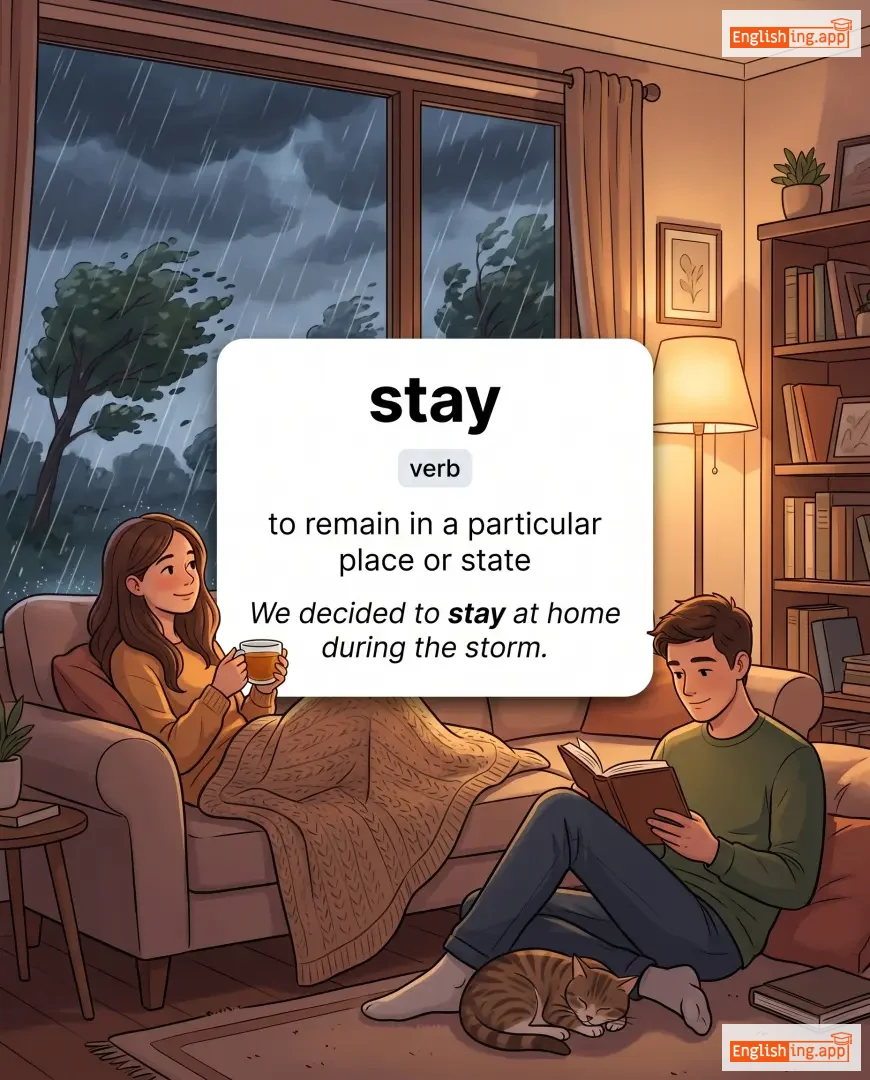
stay definition card — visual illustration of the meaning
verb
/steɪ/
滞在する (taizai suru)

to remain in a particular place or state

"We decided to stay at home during the storm."

"私たちは嵐の間、家にいることに決めました。" (Watashitachi wa arashi no aida, ie ni iru koto ni kimemashita.)
adjective
/ˈstɛdfæst/
不動の, 忠実な (fudō no, chūjitsuna)

Firm, loyal, and unwavering in purpose or support.

"He remained steadfast in his determination to succeed."

"彼は成功への決意において不動のままでした。" (Kare wa seikou e no ketsui ni oite fudou no mamadeshita.)
adverb
/ˈstɛdɪli/
着実に (chakujitsu ni)

in a regular and continuous way; without stopping or changing

"The company's profits have been increasing steadily."

"会社の利益は着実に増加しています。" (Kaisha no rieki wa chakujitsu ni zōka shiteimasu.)
adjective
/ˈstɛdi/
安定 (antei)

firm, stable, and not likely to change suddenly

"He kept his hand steady while painting the picture."

"彼は絵を描いている間、手を安定させていました。" (Kare wa e o kaite iru aida, te o antei sasete imashita.)