語彙集

英単語辞書 | 単語の意味、定義、例文

noun
/ˈspɛʃəlɪst/
専門家 (senmonka)

a person who is an expert in a particular area or field

"She is a specialist in pediatric medicine."

"彼女は小児科の専門家です。" (Kanojo wa shōnika no senmonka desu.)
noun
/ˌspeʃiˈælɪti/
専門分野 (senmon bun'ya)

a particular area of activity or interest that someone focuses on; expertise in a specific field

"His speciality is Italian cuisine."

"彼の専門分野はイタリア料理です。" (kare no senmon bun'ya wa itaria ryōri desu.)
verb
/ˈspɛʃəˌlaɪz/
専門的に取り組む (senmonteki ni torikumu)

to focus on a particular subject or activity and become an expert in it

"He decided to specialize in cardiology."

"彼は心臓病学に専門的に取り組むことに決めました。" (Kare wa shinzōbyōgaku ni senmonten ni torikumu koto ni kimemashita.)
adjective
/ˈspɛʃəˌlaɪzd/
専門的な (senmon-teki na)

designed or developed for a particular purpose or function

"He has a specialized knowledge of ancient civilizations."

"彼は古代文明に関する専門的な知識を持っています。" (Kare wa kodai bunmei ni kansuru senmon-teki na chishiki o motteimasu.)
adverb
/ˈspeʃ.əl.i/
特別に (tokubetsu ni)

for a particular purpose; especially; specifically

"This gift was specially made for you."

"このギフトは特別にあなたのために作られました。" (Kono gifuto wa tokubetsu ni anata no tame ni tsukuraremashita.)
noun
/ˈspɛʃəlti/
専門 (senmon)

a particular area of study, work, or interest; something in which a person or place excels

"Her specialty is pediatric medicine."

"彼女の専門は小児科医学です。" (kanojo no senmon wa shonika igaku desu)
noun
/ˈspiːʃiː/
硬貨 (kouka)

money in the form of coins rather than notes or credit

"The transaction was made in specie."

"取引は硬貨で行われました。" (Torihiki wa kouka de okonawaremashita.)
noun
/ˈspiːʃiːz/
(shu)

a group of living organisms consisting of similar individuals capable of exchanging genes or interbreeding

"The panda is an endangered species."
"パンダは絶滅危惧種です。" (Panda wa zetsumetsu kigushu desu.)
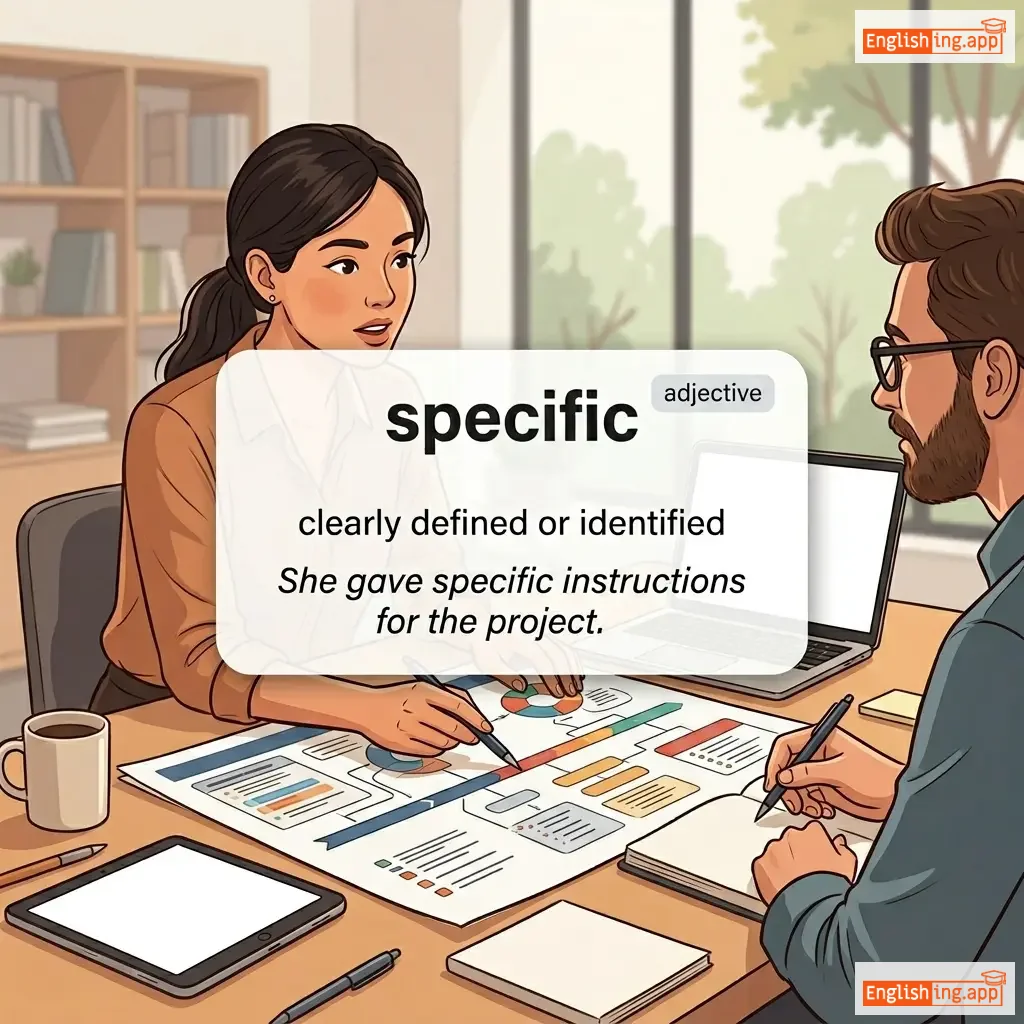
specific definition card — visual illustration of the meaning
adjective
/spəˈsɪfɪk/
具体的 (gutaiteki)

clearly defined or identified

"She gave specific instructions for the project."

"彼女はプロジェクトのために具体的な指示を出しました。" (Kanojo wa purojekuto no tame ni gutaiteki na shiji o dashimashita.)
adverb
/spəˈsɪfɪkli/
特に (toku ni)

in a clear and exact way

"He was specifically asked to handle the finances."

"彼は特に財務を扱うように頼まれました。" (Kare wa toku ni zaimu o atsukau you ni tanomaremashita.)
noun
/ˌspɛsɪfɪˈkeɪʃən/
仕様書 (shiyōsho)

a detailed description or assessment of something

"The product specification includes all the necessary details."

"製品の仕様書にはすべての必要な詳細が含まれています。" (Seihin no shiyōsho ni wa subete no hitsuyō na shōsai ga fukumareteimasu.)
verb
/ˈspɛsɪfaɪ/
指定する (shiteisuru)

to state or describe something clearly and exactly

"Please specify the time and place of the meeting."

"会議の時間と場所を指定してください。" (Kaigi no jikan to basho o shitei shite kudasai.)
noun
/ˈspɛsəmən/
標本 (hyouhon)

an individual animal, plant, piece of a mineral, etc., used as an example of its species or type for scientific study

"The museum has a rare butterfly specimen."
"博物館には珍しい蝶の標本があります。" (Hakubutsukan ni wa mezurashī chō no hyōhon ga arimasu.)
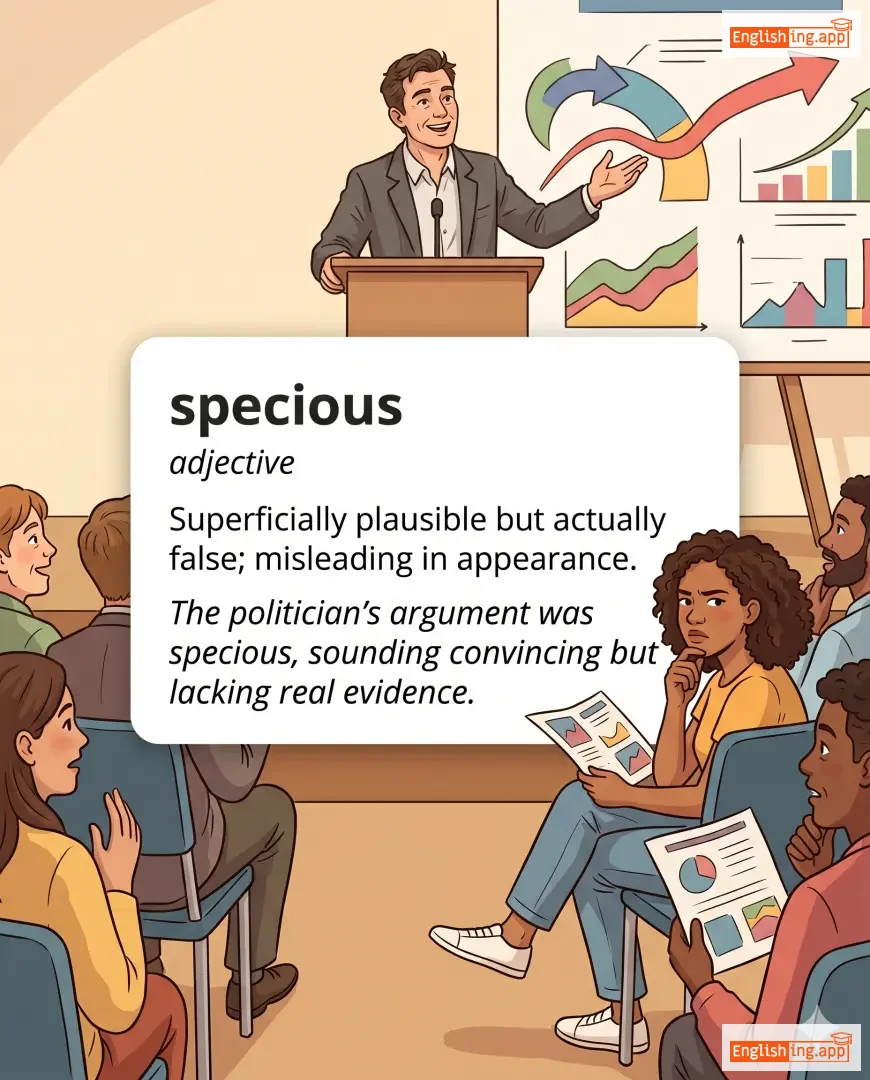
specious definition card — visual illustration of the meaning
adjective
/ˈspiːʃəs/
見せかけの (misekake no)

Superficially plausible but actually false; misleading in appearance.

"The politician’s argument was specious, sounding convincing but lacking real evidence."

"その政治家の議論は見せかけのもので、説得力があるように見えたが、実際の証拠は欠けていた。" (Sono seijika no giron wa misekake no mono de, settokuryoku ga aru you ni mieta ga, jissai no shouko wa kakete ita.)
noun
/spɛk/
しみ (shimi)

A very small spot, mark, or particle.

"There was a tiny speck of dust on the glass table."
"ガラスのテーブルに小さなほこりのしみがあった。" (Garasu no tēburu ni chīsana hokori no shimi ga atta.)
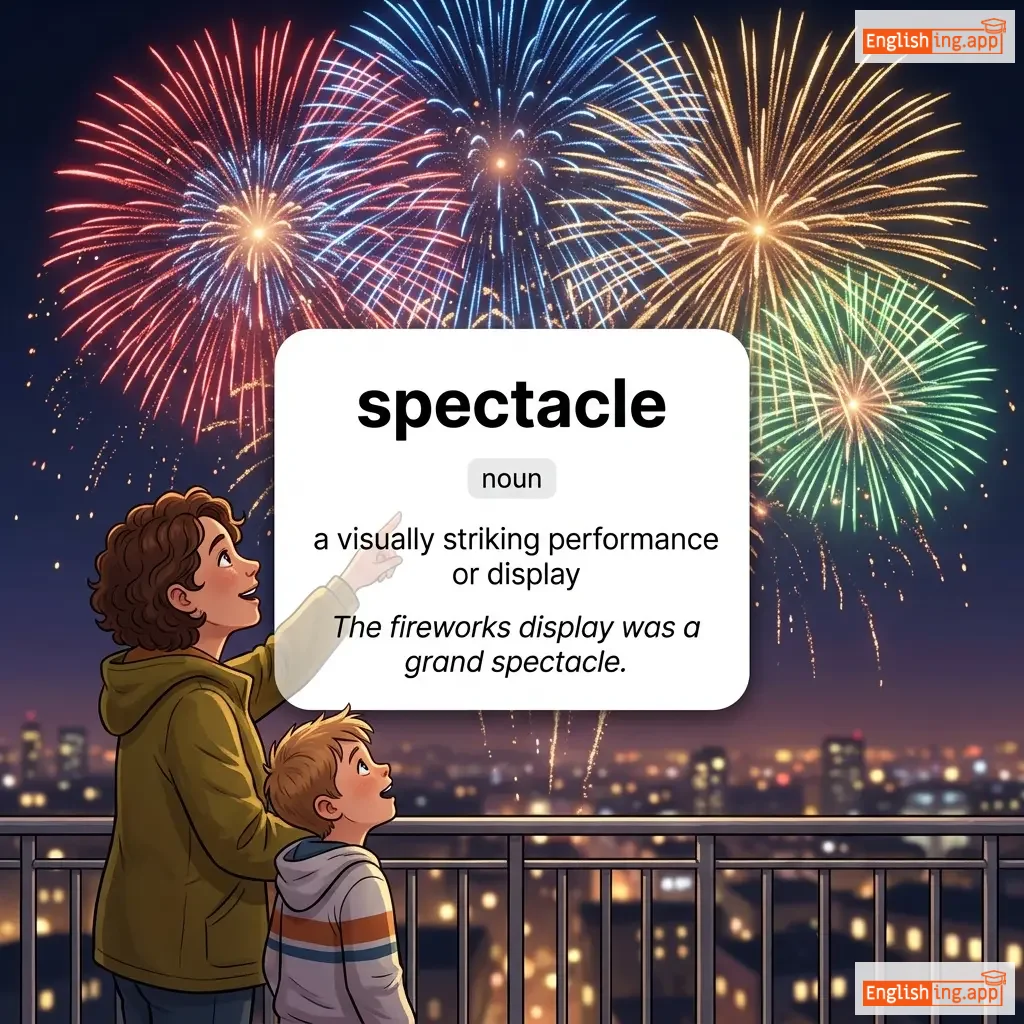
spectacle definition card — visual illustration of the meaning
noun
/ˈspɛktəkəl/
視覚的なショー (shikakuteki na shō)

a visually striking performance or display

"The fireworks display was a grand spectacle."
"花火のショーは壮大な視覚的なショーでした。" (Hanabi no shō wa sōdaina shikakuteki na shō deshita.)
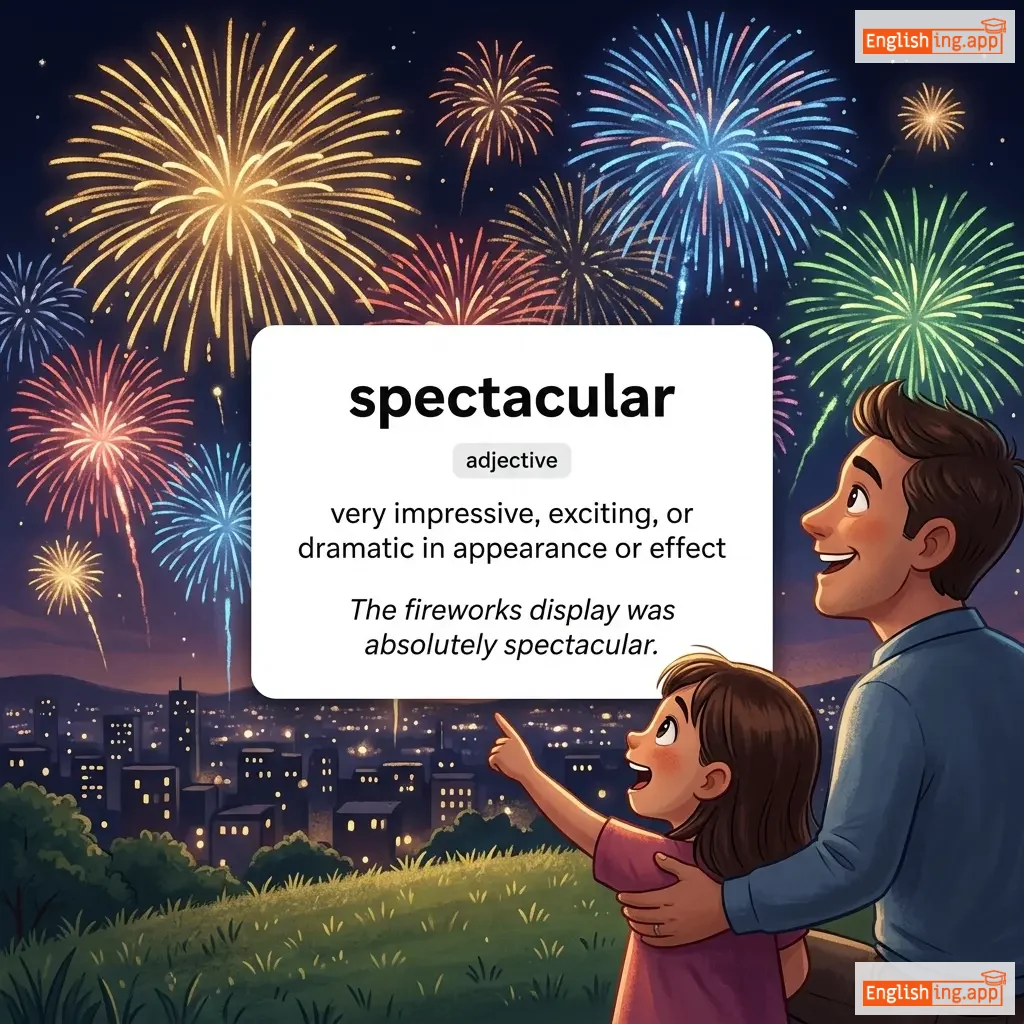
spectacular definition card — visual illustration of the meaning
adjective
/spɛkˈtækjələr/
壮大 (sōdai)

very impressive, exciting, or dramatic in appearance or effect

"The fireworks display was absolutely spectacular."

"花火大会は絶対に壮観でした。" (Hanabi taikai wa zettai ni sōkan deshita.)
noun
/ˈspɛkteɪtər/
観客 (kankyaku)

A person who watches an event, show, or game without taking part.

"Thousands of spectators gathered to watch the football match."

"何千人もの観客がサッカーの試合を観るために集まりました。" (Nansen-nin mono kankyaku ga sakkā no shiai o miru tame ni atsumarimashita.)
noun
/ˈspɛktər/
幽霊 (yūrei)

A ghost or spirit; something that causes fear or dread.

"The specter of war still haunts the region."

"戦争の幽霊は今でもその地域をおびやかしています。" (Sensō no yūrei wa imademo sono chiiki o obiyakashiteimasu.)
adjective
/ˈspɛktrəl/
幽霊のような (yūrei no yō na)

Relating to a ghost or specter; ghostly. Also relating to a spectrum.

"The old mansion had a spectral atmosphere at night."
"古い館には夜、幽霊のような雰囲気が漂っていた。" (Furui yakata ni wa yoru, yūrei no yō na fun'iki ga tadayotte ita.)
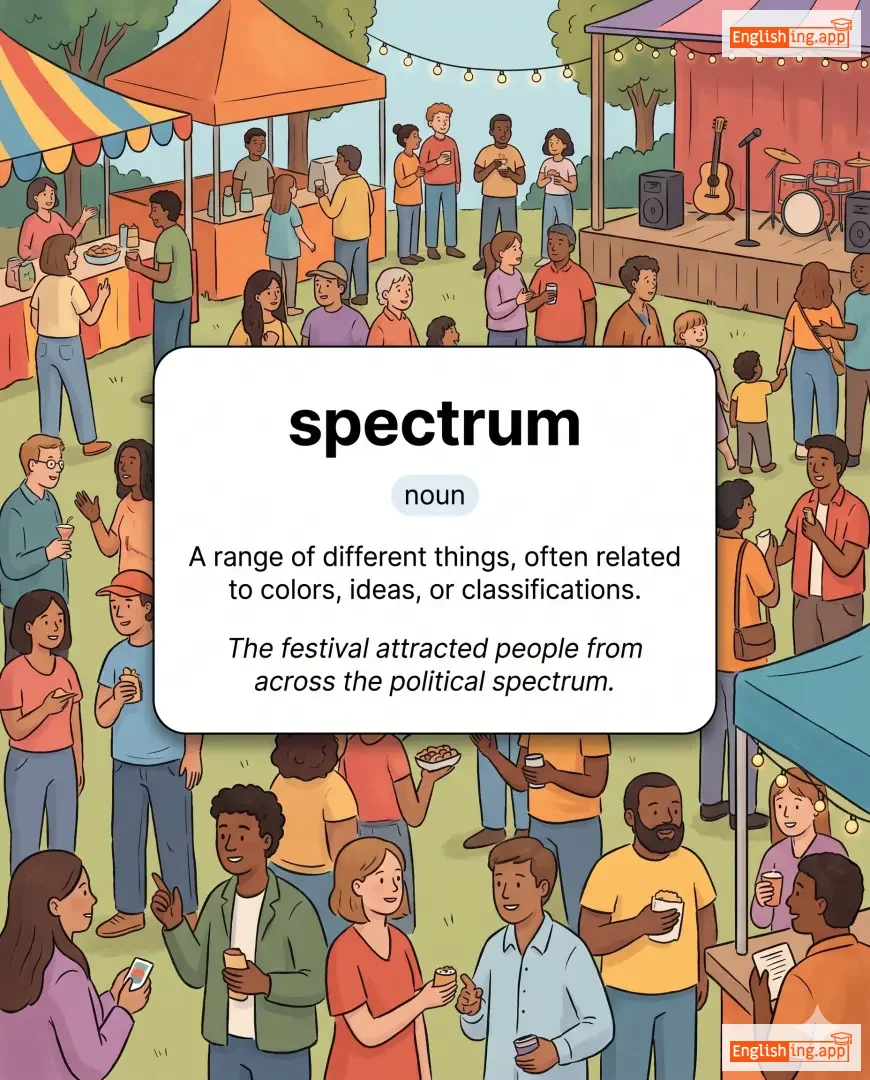
spectrum definition card — visual illustration of the meaning
noun
/ˈspɛktrəm/
スペクトル (supekutoru)

A range of different things, often related to colors, ideas, or classifications.

"The festival attracted people from across the political spectrum."

"その祭りは政治的スペクトル全体から人々を引き付けました。" (Sono matsuri wa seijiteki supekutoru zentai kara hitobito o hiki tsukemashita.)
verb
/ˈspɛkjʊˌleɪt/
推測する / 投資する (すいそくする / とうしする)

To form a theory or guess without firm evidence; to invest in stocks, property, etc. hoping for profit.

"Experts speculate that the company may expand into new markets."
"専門家は会社が新しい市場に進出する可能性があると予測しています。" (せんもんかはかいしゃがあたらしいしじょうにしんしゅつするかのうせいがあるとよそくしています。)
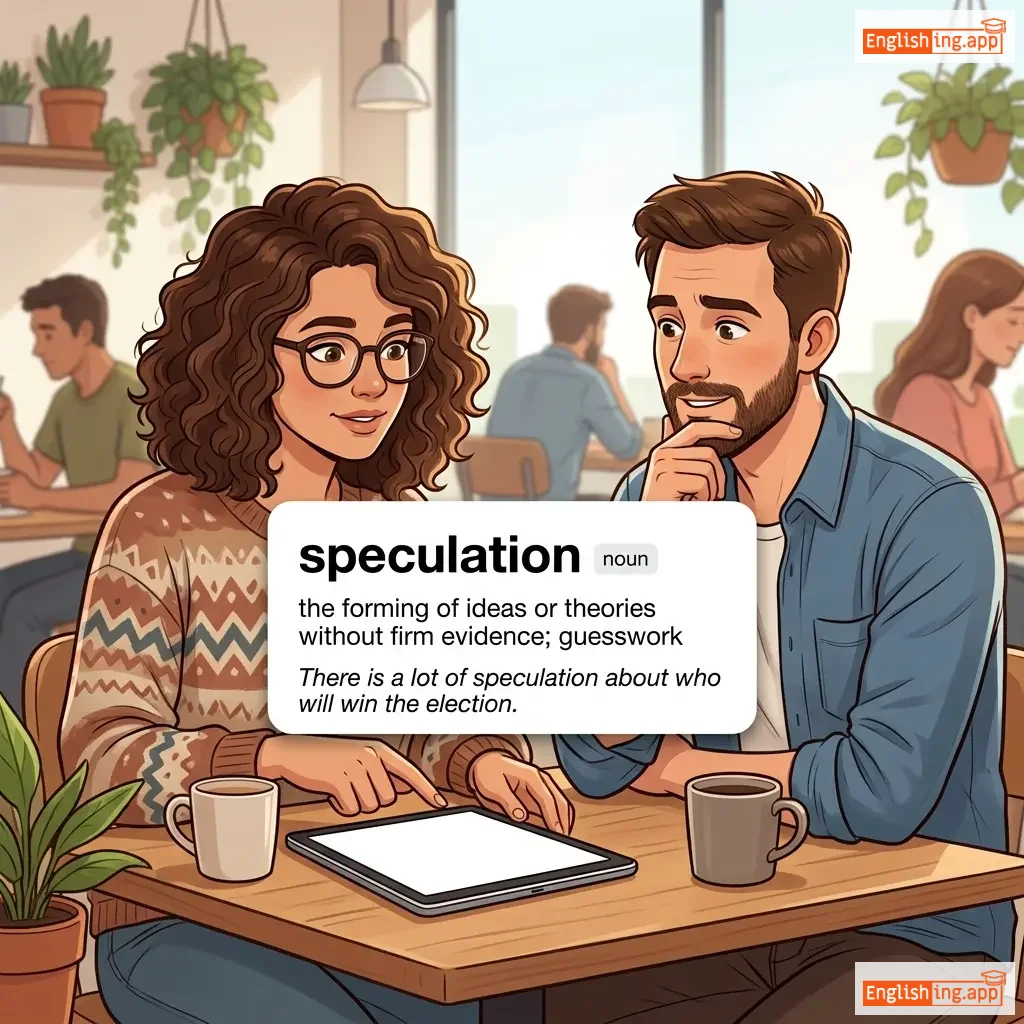
speculation definition card — visual illustration of the meaning
noun
/ˌspɛkjʊˈleɪʃən/
推測 (suisoku)

the forming of ideas or theories without firm evidence; guesswork

"There is a lot of speculation about who will win the election."

"誰が選挙に勝つかについて多くの推測があります。" (Dare ga senkyo ni katsu ka ni tsuite ooku no suisoku ga arimasu.)
noun
/ˈspɛkjʊˌleɪtər/
投機家 (tōkika)

A person who forms theories without evidence, or invests in assets hoping for profit.

"The real estate speculator bought land hoping its value would rise."

"不動産投機家は、土地の価値が上がることを期待して土地を購入しました。" (Fudōsan tōkika wa, tochi no kachi ga agaru koto o kitai shite tochi o kōnyū shimashita.)
noun
/spiːʧ/
演説 (enzetsu)

the expression of thoughts and feelings through spoken words

"The president delivered a speech on national unity."

"大統領は国家統一に関する演説を行いました。" (Daitouryou wa kokka touitsu ni kansuru enzetsu wo okonaimashita.)
adjective
/ˈspiːtʃləs/
言葉を失う (kotoba o ushinau)

Unable to speak because of shock, surprise, or strong emotion.

"She was speechless when she received the award."

"彼女は賞を受け取ったとき、言葉を失いました。" (Kanojo wa shō o uketotta toki, kotoba o ushinai mashita.)
noun/verb
/spiːd/
速度 (sokudo)

the rate at which something moves or happens

"The car was moving at high speed."

"車は高速で走っていた。" (Kuruma wa kōsoku de hashitte ita.)
adjective
/ˈspiː.di/
速い; 素早い; 機敏な; (hayai, subayai, kibi na)

moving or happening quickly; fast

"The speedy delivery service arrived within an hour."

"速い配送サービスは1時間以内に到着しました。" (Hayai haisou sābisu wa 1 jikan inai ni tōchaku shimashita.)
verb
/spɛl/
綴る / 呪文 (tsuzuru / jumon)

to write or name the letters of a word in the correct order; also a short period of time or a state of enchantment

"She asked me to spell her name correctly on the form."

"彼女はフォームに正しく名前を綴ってほしいと言いました。" (Kanojo wa fōmu ni tadashiku namae wo tsuzutte hoshī to iimashita.)
adjective
/ˈspel.baʊnd/
夢中; 魅了された (muchuu, miryou sareta)

completely fascinated and unable to move or think about anything else; enchanted

"The children sat spellbound as the magician performed his tricks."

"子供たちは魔法使いが技を披露するのを夢中で見ていました。" (Kodomotachi wa mahou tsukai ga waza o hirou suru no o muchuu de miteimashita.)
noun
/spɪˈlʌŋkər/
洞窟探検家 (dōkutsu tankenka)

A person who explores caves as a hobby.

"The spelunker carried ropes and lights into the dark cave."

"洞窟探検家は暗い洞窟にロープとライトを持って行きました。" (Dōkutsu tankenka wa kurai dōkutsu ni rōpu to raito o motte ikimashita.)
spend definition card — visual illustration of the meaning
verb
/spɛnd/
使う (tsukau)

to use money to buy or pay for something

"He spent all his money on books."
"彼は本にすべてのお金を使いました。" (Kare wa hon ni subete no okane o tsukaimashita.)
noun
/ˈspɛndɪŋ/

the act of paying money for goods or services

"Her spending on clothes was higher than expected."

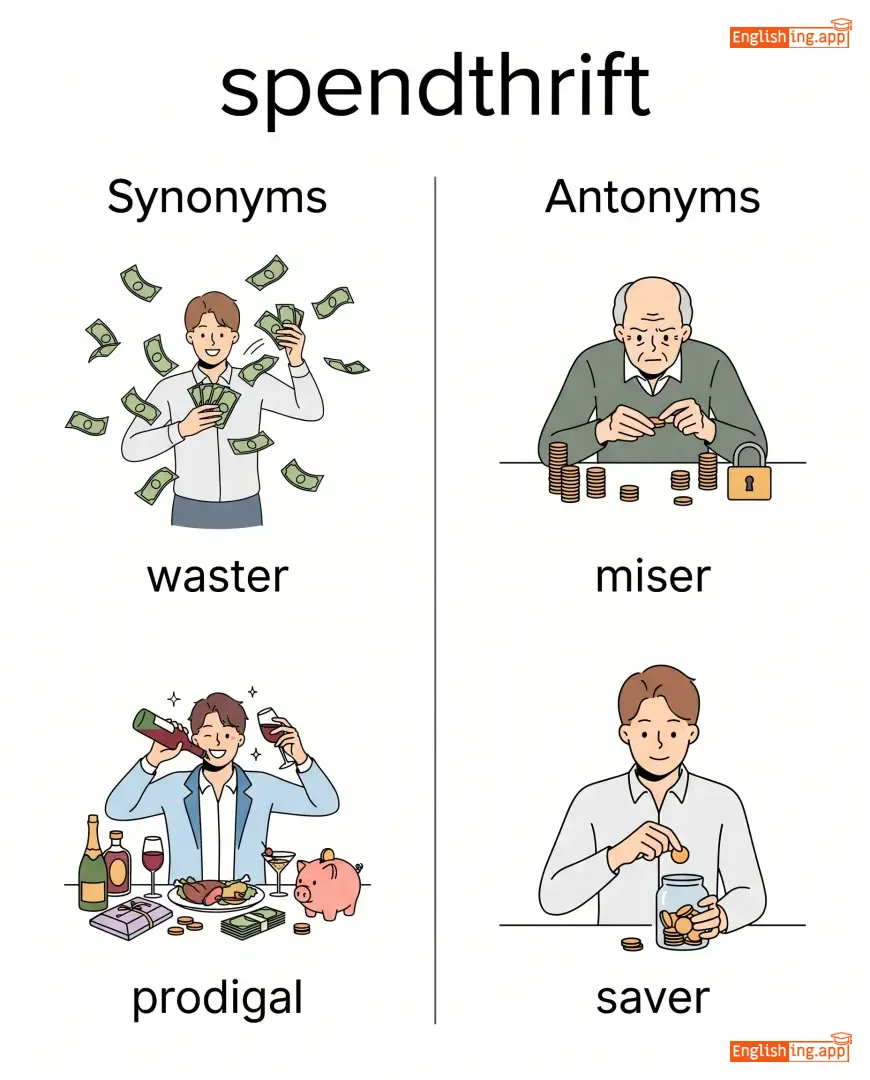
spendthrift definition card — visual illustration of the meaning
noun
/ˈspɛndˌθrɪft/
浪費家 (rōhika)

A person who spends money extravagantly or wastefully.

"The young prince was known as a spendthrift, wasting his fortune on lavish parties."

"若い王子は浪費家として知られ、贅沢なパーティーに財産を浪費していた。" (Wakai ōji wa rōhika toshite shirare, zeitakuna pātī ni zaisan o rōhi shite ita.)
verb, adjective
/spɛnt/
使い果たされた, 疲れ切った (tsukai hatasareta, tsukare kitta)

Past tense and past participle of 'spend'; also used as an adjective meaning exhausted or used up.

"She spent all her energy preparing for the exam."

"彼女は試験の準備に全てのエネルギーを使い果たした。" (Kanojo wa shiken no junbi ni subete no enerugī o tsukai hatashita.)
noun
/sfɪər/
球体 (kyūtai)

a round, three-dimensional shape that is perfectly symmetrical around its center; an area of activity or knowledge

"The Earth is almost a perfect sphere."

"地球はほぼ完璧な球体です。" (Chikyū wa hobo kanpeki na kyūtai desu.)
noun
/sfɛˈrɪsɪti/
球形 (kyūkei)

The quality or state of being spherical; roundness.

"The sphericity of the ball made it roll smoothly on the ground."

"ボールの球形は、地面でスムーズに転がるのを可能にしました。" (Bōru no kyūkei wa, jimen de sumūzu ni korogaru no o kanō ni shimashita.)
noun
/ˈsfɛrɔɪd/
回転楕円体 (kaiten daen-tai)

A three-dimensional shape that is almost spherical but slightly flattened or elongated.

"The Earth is not a perfect sphere but an oblate spheroid."

"地球は完璧な球体ではなく、偏平な回転楕円体です。" (chikyuu wa kanpeki na kyutai dewa naku henpei na kaiten daentai desu)
noun
/sfɪˈrɒmɪtər/
球面測定器 (kyūmen sokuteiki)

An instrument used for measuring the curvature of spherical surfaces.

"The scientist used a spherometer to measure the lens curvature."

"科学者はレンズの曲率を測定するためにスフェロメーターを使用しました。" (Kagakusha wa renzu no kyokuritsu o sokutei suru tame ni suferomēta o shiyō shimashita.)
adjective
/ˈsfɪŋks laɪk/
神秘的な (shinpitekina)

Mysterious, enigmatic, or difficult to interpret

"Her sphinx-like smile made it hard to guess what she was thinking."

"彼女のスフィンクスのような微笑みは、彼女が何を考えているのかを予測するのを難しくさせた。" (Kanojo no sufinx no yōna bishōmi wa, kanojo ga nani o kangaete iru no ka o yosoku suru no o muzukashiku saseta.)
noun
/spaɪs/
スパイス (supaisu)

a substance used to add flavor to food

"She added a pinch of spice to the curry for extra flavor."

"彼女はカレーに風味を加えるためにスパイスを一つまみ加えました。" (Kanojo wa karē ni fūmi o kuwaeru tame ni supaisu o hitotsu mami kuwaemashita.)
noun
/ˈspaɪs bɒks/
スパイス箱 (supaisu hako)

a container used to store various spices and seasonings

"She opened the spice box to find cumin for her curry."

"彼女はカレー用のクミンを見つけるためにスパイスボックスを開けました。" (Kanojo wa karee yō no kumīn o mitsukeru tame ni supaisu bokkusu o akemashita.)
adjective
/spɪk/
非常にきれいで整頓された; 完璧 (supikku)

extremely clean and neat; immaculate

"The house was spick and span after the cleaning."

"掃除後、家はまるで新品のようにきれいで整然としていました。" (Sōji go, ie wa marude shinpin no yō ni kirei de seizen to shite imashita.)
adjective
/ˈspaɪ.si/
スパイシー (supaisī)

having a strong, hot flavor from spices; containing spices

"This curry is too spicy for me to eat."

"このカレーは私には辛すぎます。" (kono karē wa watashi ni wa karasugimasu.)
noun
/ˈspaɪ.dər/
クモ (kumo)

a small creature with eight legs that makes webs to catch insects

"The spider caught a fly in its web."

"クモは自分のウェブでハエを捕まえた。" (Kumo wa jibun no webu de hae o tsukamaeta.)
verb
/spɪl/
こぼす (kobosu)

to cause liquid to flow or fall out of a container by accident

"Be careful not to spill your coffee."

"コーヒーをこぼさないように気を付けて。" (Koohii wo kobosanai you ni ki wo tsukete.)
verb
/spɪn/
回転する (kaiten suru)

To turn around quickly or cause something to rotate

"The dancer began to spin gracefully on the stage."

"ダンサーはステージで優雅に回転を始めました。" (Dansā wa sutēji de yūga ni kaiten o hajimemashita.)
noun
/ˈspɪn.ɪtʃ/
ほうれん草 (hōrensō)

a vegetable with large dark green leaves that are eaten cooked or uncooked

"Fresh spinach is very nutritious."

"新鮮なほうれん草はとても栄養価が高いです。" (Shinsen na hōrensō wa totemo eiyō-ka ga takai desu.)
adjective
/ˈspɪndli/
細くて弱い (hosokute yowai)

Long, thin, and weak-looking

"The spindly tree bent under the weight of the snow."

"細い木が雪の重みで曲がった。" (Hosoi ki ga yuki no omomi de magatta.)
noun
/spaɪn/
背骨 (sebone)

the backbone; a series of bones extending from the skull to the lower back

"The doctor examined her spine after the accident."

"事故後、医者は彼女の背骨を調べました。" (Jiko go, isha wa kanojo no sebone wo shirabemashita.)