語彙集

英単語辞書 | 単語の意味、定義、例文

adjective
/ˈsɔːlti/
塩辛い (shiokarai)

having the taste of salt; containing salt; tasting of seawater

"The salty ocean water made her thirsty."
"塩辛い海水が彼女を渇かせた。" (Shio karai kaisui ga kanojo o kawakaseta)
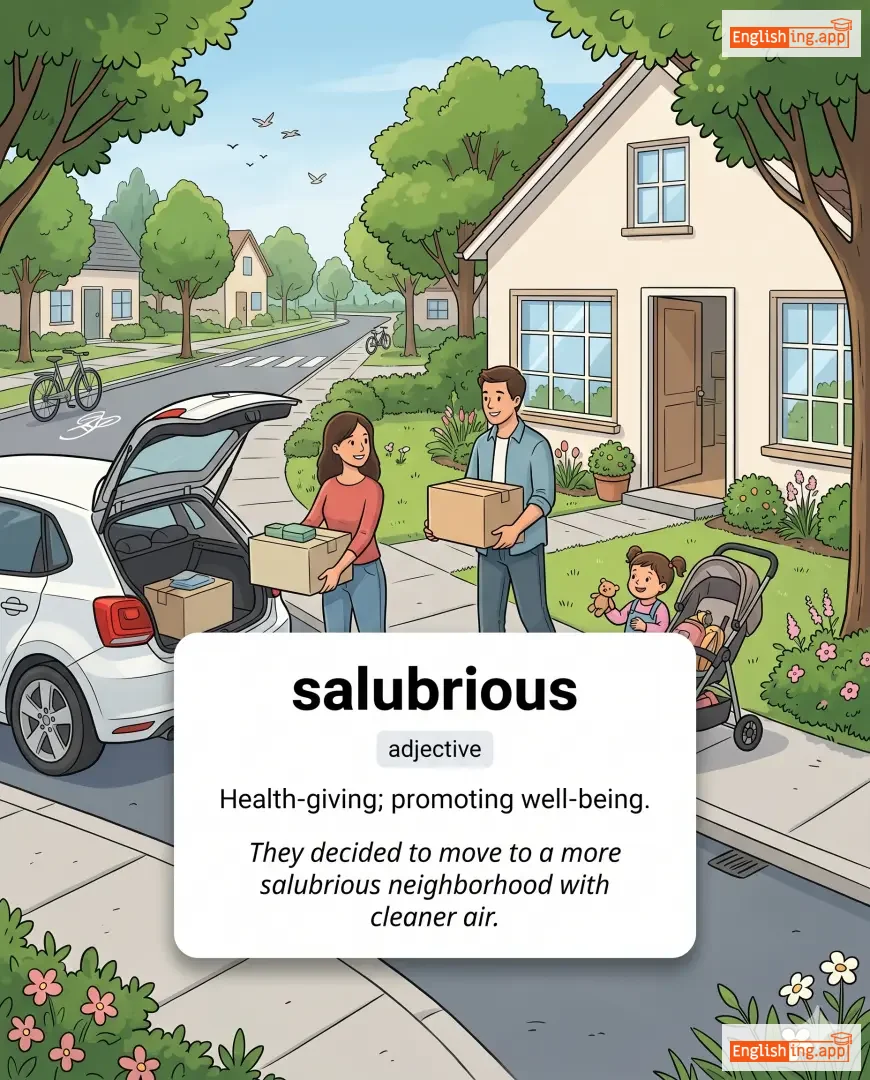
salubrious definition card — visual illustration of the meaning
adjective
/səˈluː.bri.əs/
健康的な (kenkōtekina)

Health-giving; promoting well-being.

"They decided to move to a more salubrious neighborhood with cleaner air."
"彼らは、より健康的な空気の清潔な街区に引っ越すことに決めました。" (Karera wa, yori kenkōtekina kūki no seiketsu na kaku ni hikkosu koto ni kimemashita.)
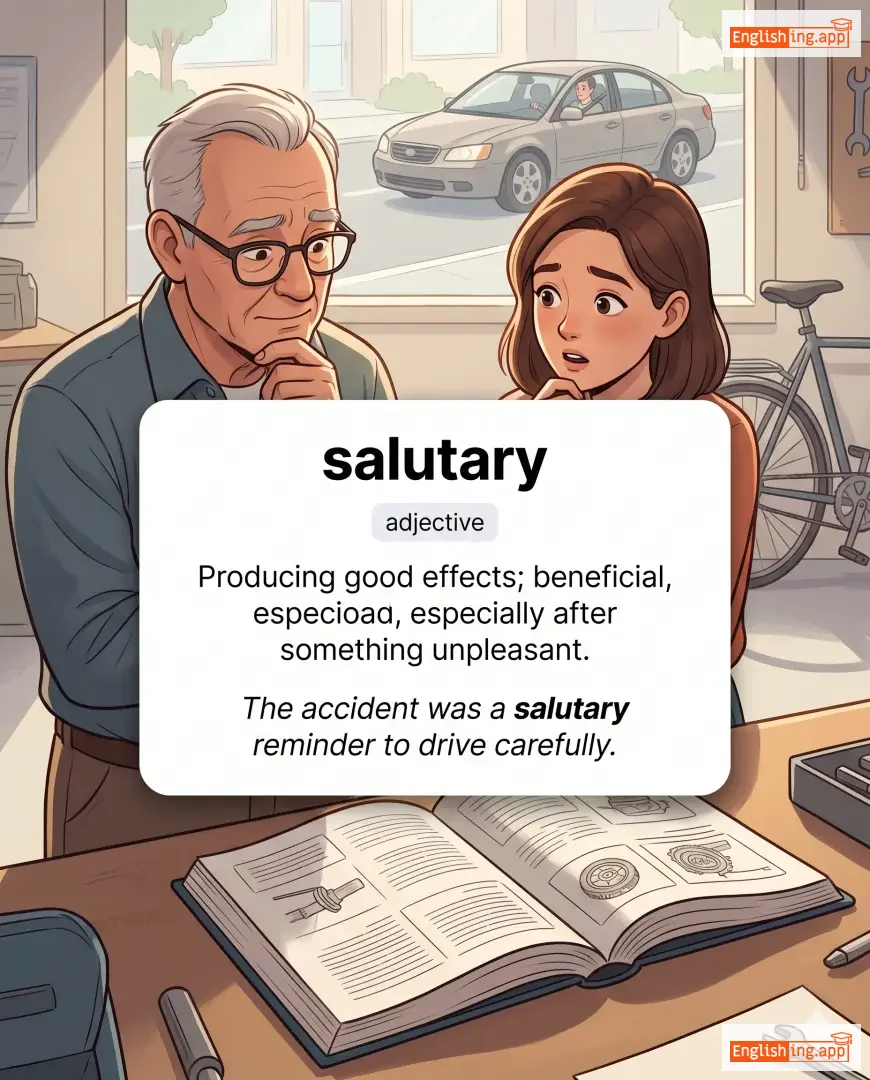
salutary definition card — visual illustration of the meaning
adjective
/ˈsæljʊˌtɛri/
有益な (yūeki na)

Producing good effects; beneficial, especially after something unpleasant.

"The accident was a salutary reminder to drive carefully."

"その事故は、慎重に運転することを思い出させる有益な教訓でした。" (Sono jiko wa, shinchou ni unten suru koto o omoidasa seru yūeki na kyōkun deshita.)
noun
/ˌsæljʊˈteɪʃən/
挨拶 (aisatsu)

A gesture or utterance of greeting, goodwill, or courtesy.

"He raised his hat as a polite salutation."

"彼は礼儀正しい挨拶として帽子を上げた。" (Kare wa reigi tadashī aisatsu toshite bōshi o ageta.)
adjective
/səˈluːtəˌtɔri/
歓迎の挨拶 (kangei no aisatsu)

Relating to or expressing a greeting or an address, especially at the beginning of a speech.

"She delivered a salutatory address at the graduation ceremony."

"彼女は卒業式で歓迎の挨拶を行いました。" (Kanojo wa sotsugyō shiki de kangei no aisatsu o okonaimashita.)
salute definition card — visual illustration of the meaning
verb
/səˈluːt/
敬礼 (keirei)

to greet with respect; to honor

"The soldiers saluted their commanding officer."

"兵士たちは指揮官に敬礼した。" (Heishitachi wa shikikan ni keirei shita.)
verb
/ˈsælvɪdʒ/
救助 (kyūjo)

To save something from loss, damage, or destruction.

"They managed to salvage some goods from the fire."
"彼らは火事からいくつかの物を救出することに成功した。" (Karera wa kaji kara ikutsuka no mono o kyūshutsu suru koto ni seikō shita.)
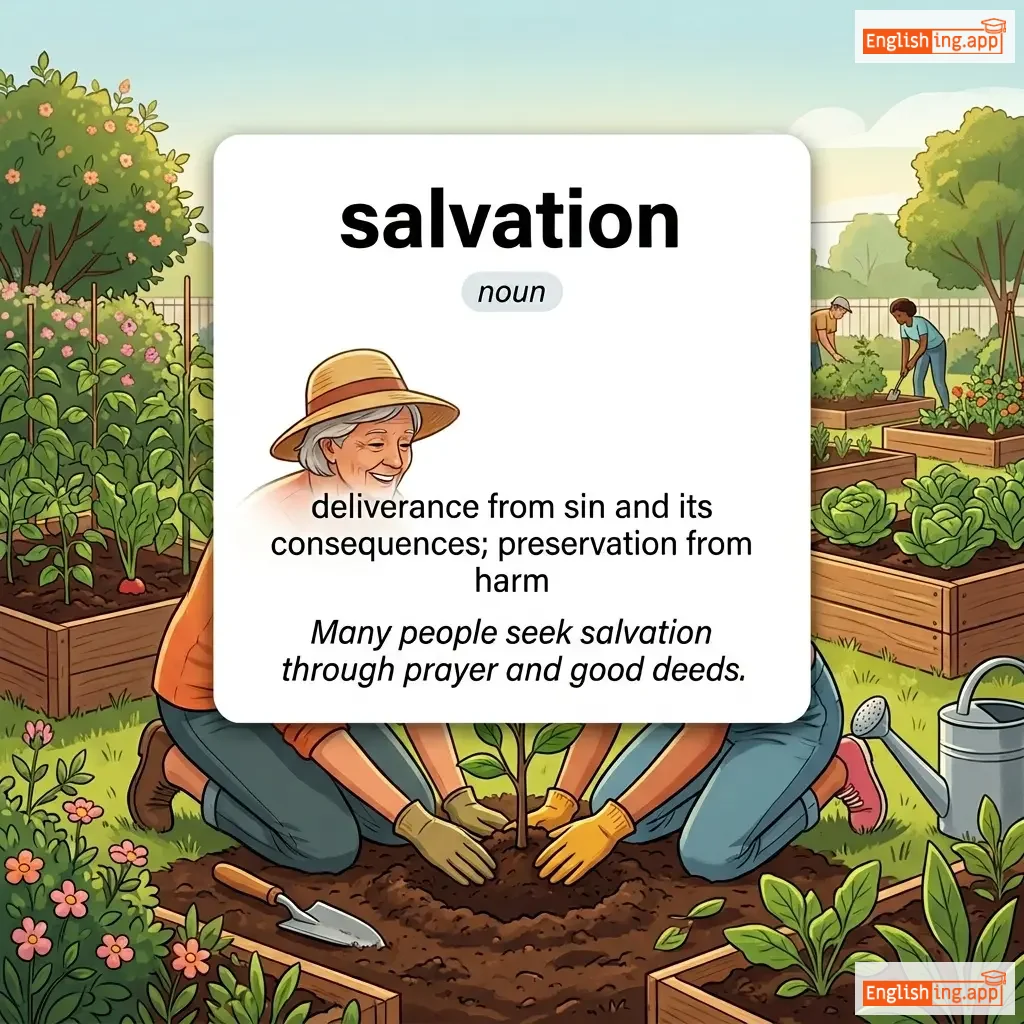
salvation definition card — visual illustration of the meaning
noun
/sælˈveɪ.ʃən/
救済 (kyūsai)

deliverance from sin and its consequences; preservation from harm

"Many people seek salvation through prayer and good deeds."

"多くの人々は祈りと善行を通じて救済を求めます。" (ōku no hitobito wa inori to zen kō o tsūjite kyūsai o motomemasu.)
noun
/sælv/
(kusuri)

An ointment used to promote healing of the skin or as protection.

"She applied a salve to the burn on her hand."

"彼女は手のやけどに薬を塗りました。" (Kanojo wa te no yakedo ni kusuri o nurimashita.)
noun
/ˈsælvər/
銀のトレイ (gin no tore)

A tray, typically made of silver, used for serving food or drinks.

"The butler brought in the tea on a silver salver."

"執事は銀のトレイでお茶を運んできました。" (Shitsuji wa gin no torei de ocha o hakonde kimashita.)
noun
/ˈsælvoʊ/
一斉射撃 (issei shageki)

A simultaneous discharge of guns or release of bombs; a sudden outburst of cheers or applause.

"The soldiers fired a salvo to honor the fallen general."

"兵士たちは倒れた将軍を讃えるために一斉射撃を行った。" (Heishitachi wa taoreta shōgun o tataeru tame ni issei shageki o okonatta.)
adjective
/seɪm/
同じ (onaji)

identical; not different or changed

"We wore the same dress at the party."

"私たちはパーティーで同じドレスを着ていました。" (Watashitachi wa pātii de onaji doresu o kite imashita.)
noun
/ˈsæm.pəl/
サンプル (sanpuru)

a small part or quantity intended to show what the whole is like

"She gave me a sample of the fabric to see if I liked it."

"彼女は私が気に入ったかどうかを確認するために布のサンプルをくれました。" (Kanojo wa watashi ga kiniitta ka dou ka o kakunin suru tame ni nuno no sanpuru o kuremashita.)
verb
/ˈsæŋktɪfaɪ/

To make holy or sacred; to set apart as holy.

"The priest sanctified the new church building."

adjective
/ˌsæŋktɪˈmoʊniəs/
偽善的な敬虔 (gizen-teki na keiken)

Making a show of being morally superior to others; hypocritically pious.

"He gave a sanctimonious speech about honesty while he himself was corrupt."
"彼は自分が腐敗していたにもかかわらず、正直について偽善的なスピーチをしました。" (Kare wa jibun ga fuhai shite ita nimo kakawarazu, shoujiki ni tsuite gizen-teki na supīchi o shimashita.)
Sanction definition card — visual illustration of the meaning
⚖️

Sanction

noun/verb
/ˈsæŋkʃən/

An official permission or approval; also a penalty imposed to enforce rules.

"The government imposed sanctions on the company for violating trade laws."

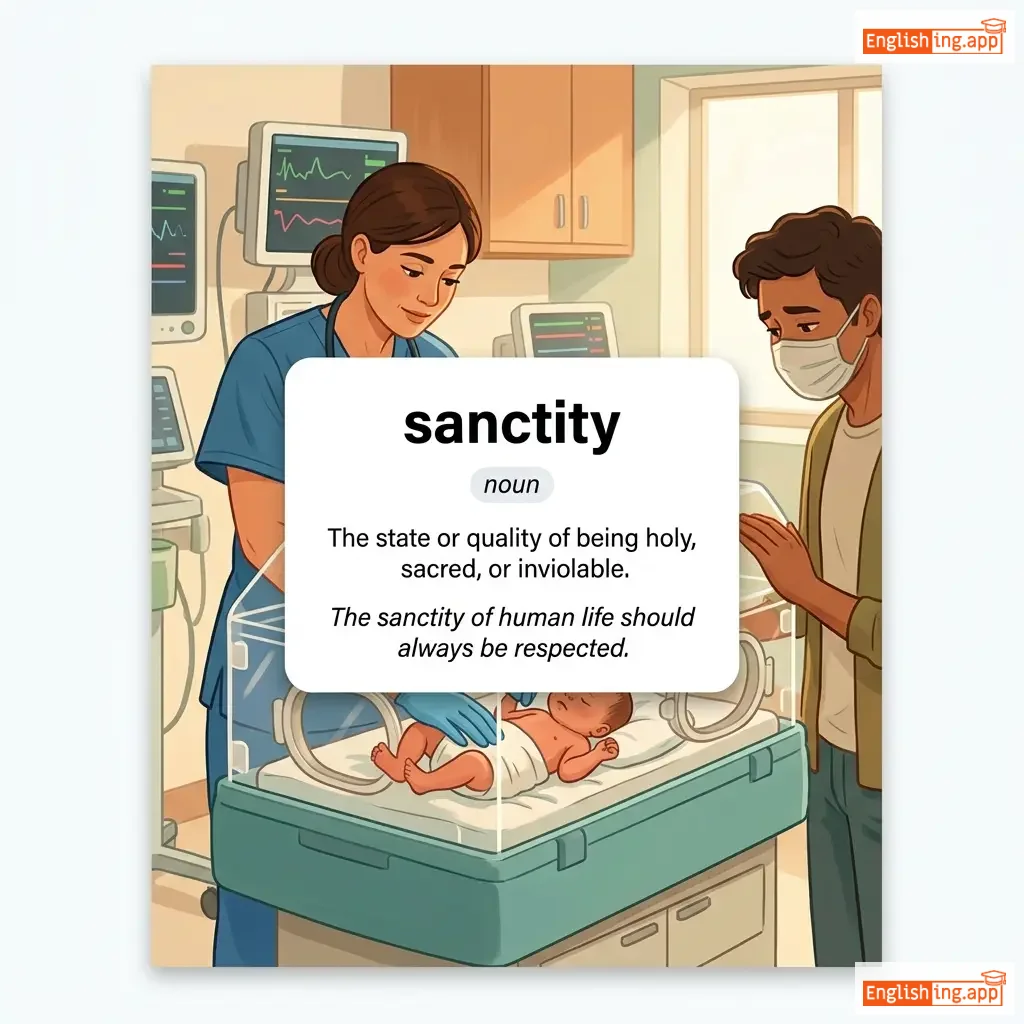
sanctity definition card — visual illustration of the meaning
noun
/ˈsæŋk.tə.ti/
神聖さ (shinseisa)

The state or quality of being holy, sacred, or inviolable.

"The sanctity of human life should always be respected."

"人間の命の神聖さは常に尊重されるべきです。" (Ningen no inochi no shinseisa wa tsuneni sonchou sareru beki desu.)
noun
/ˈsæŋk.tʃuˌɛr.i/
避難所 (hinanjo)

A place of safety, refuge, or protection; a sacred place.

"The forest is a sanctuary for endangered animals."

"その森は絶滅危惧種の動物たちの避難所です。" (Sono mori wa zetsumetsu kigushu no dōbutsutachi no hinanjo desu.)
noun
/sænd/
幸せ (shiawase)

Small loose grains of crushed rock, found on beaches and deserts.

"Children built castles out of sand on the beach."

"彼女は賞を受け取ったとき、幸せを隠せなかった。" (Kanojo wa shō o uketotta toki, shiawase o kakusenakatta.)
noun
/ˈsændwɪtʃ/
サンドイッチ (sandoicchi)

two pieces of bread with food such as meat, cheese, or salad between them

"I made a chicken sandwich for lunch."

"私は昼食にチキンサンドイッチを作りました。" (Watashi wa chūshoku ni chikin sandoicchi o tsukurimashita.)
adjective
/ˈsændi/
砂の; 砂質の (suna no, sunashitsu no)

covered with sand; containing sand; having the texture of sand

"The sandy beach stretched for miles along the coast."

"砂浜は海岸に沿って何マイルも続いていました。" (Sunahama wa kaigan ni sotte nan mairu mo tsudzuite imashita.)
noun
/ˌsɒ̃ˈfrwɑː/
冷静 (reisei)

Composure or coolness, especially in difficult situations.

"The leader handled the crisis with remarkable sang-froid."

"リーダーは危機を見事な冷静さで対処しました。" (Rīdā wa kiki o migoto na reiseisa de taisho shimashita.)
noun
/ˌsɒ̃ˈfrwɑː/
冷静 (reisei)

Composure or coolness under pressure.

"She impressed everyone with her sangfroid during the interview."

"彼女は面接中に冷静さで皆を感動させた。" (Kanojo wa mensetsu-chū ni reisei-sa de mina o kandō saseta.)
adjective
/ˈsæŋɡwɪˌnɛri/
血なまぐさい (chinamagusai)

Involving or causing much bloodshed; bloodthirsty.

"The battle was one of the most sanguinary conflicts of the war."

"その戦闘は戦争の中で最も血なまぐさい戦いの一つだった。" (Sono sentō wa sensō no naka de mottomo chinamagusai tatakai no hitotsu datta.)
adjective
/ˈsæŋɡwɪn/
楽観的 (rakkanteki)

Optimistic or positive, especially in a difficult situation.

"Despite the challenges, she remained sanguine about the future."

"困難にもかかわらず、彼女は未来に対して楽観的な姿勢を保ち続けた。" (Konnan ni mo kakawarazu, kanojo wa mirai ni taishite rakkanteki na shisei o tamotsu tsudzuketa.)
adjective
/sæŋˈɡwɪniəs/
血液に関連する (ketsueki ni kanren suru)

Relating to blood; bloody.

"The surgeon examined the sanguineous discharge from the wound."
"外科医は傷口からの血なまぐさい分泌物を調べました。" (Geka-i wa kizu go-to kara no chinamokusai bunpibutsu o shirabemashita.)
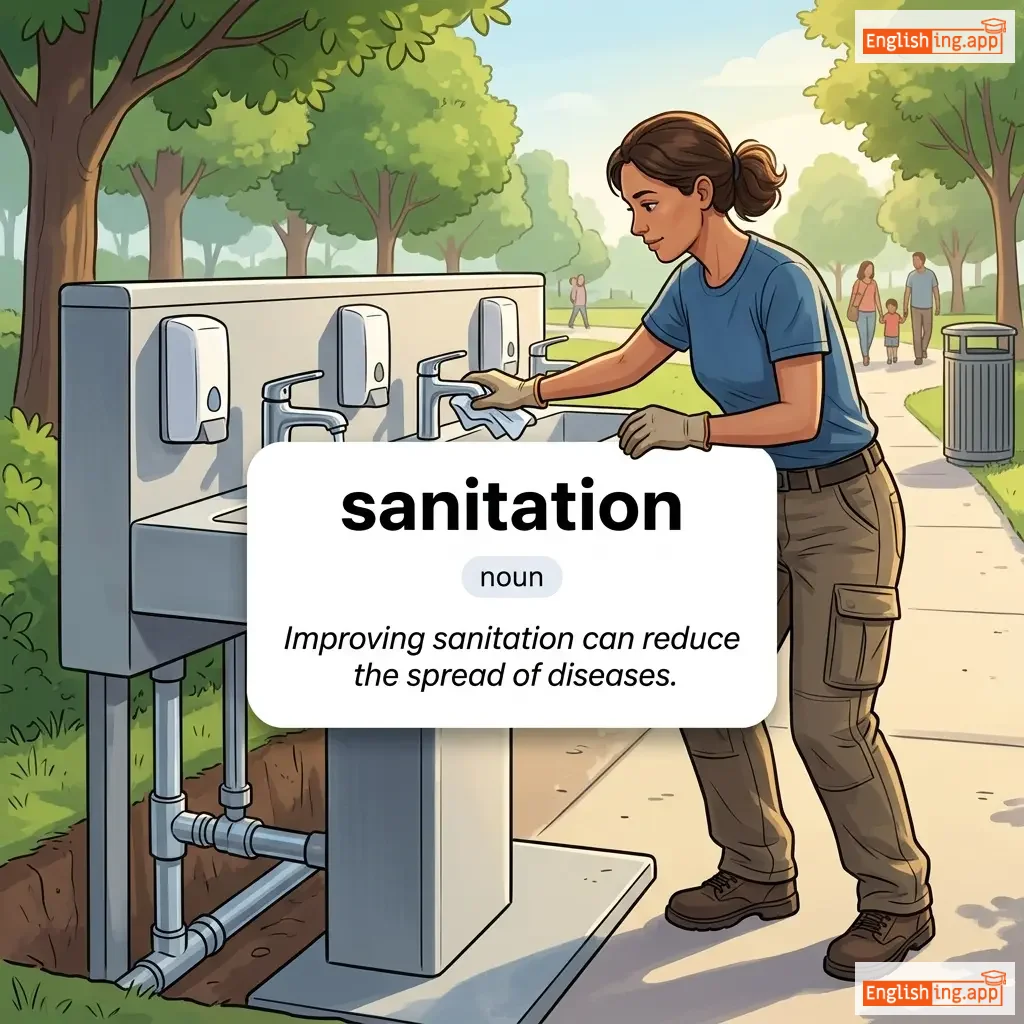
sanitation definition card — visual illustration of the meaning
noun
/ˌsænɪˈteɪʃən/
衛生管理 (eisei kanri)

The systems and practices for maintaining hygiene and public health, especially through clean water and sewage disposal.

"Improving sanitation can reduce the spread of diseases."

"衛生管理の改善は病気の広がりを減らすことができます。" (Eisei kanri no kaizen wa byōki no hirogari o herasu koto ga dekimasu.)
sanitization definition card — visual illustration of the meaning
noun
ˌsæn.ɪ.taɪˈzeɪ.ʃən
衛生管理 (eisei kanri)

The process of cleaning and disinfecting to eliminate germs and bacteria.

"Regular sanitization keeps appliances germ-free."

"定期的な衛生管理により、機器が無菌状態に保たれます。" (Teikiteki na eisei kanri ni yori, kiki ga mukin joutai ni tamarimasu.)
verb, noun
/sæp/
樹液 / 弱める (jueki / yowameru)

As a noun: the vital fluid in plants; As a verb: to gradually weaken or drain strength.

"The long journey began to sap his energy."

"長い旅が彼のエネルギーを弱め始めた。" (Nagai tabi ga kare no enerugi- o yowame hajimeta.)
noun
/ˈsæf.aɪər/
サファイア (safaia)

a precious stone that is typically blue in color

"The royal crown was adorned with a large sapphire."

"ロイヤルクラウンは大きなサファイアで飾られていました。" (Roiyaru kuraun wa ookina safaia de kazararete imashita.)
adjective
/ˈsæpɪd/
美味しい (oishii)

Having a pleasant taste; flavorful.

"The chef prepared a sapid dish that delighted everyone at the table."

"シェフはテーブルの全員を喜ばせる美味しい料理を準備しました。" (Shefu wa tēburu no zen'in o yorokobaseru oishī ryōri o junbi shimashita.)
noun
/ˈseɪpiəns/
知恵 (chie)

Wisdom or intelligence.

"Her sapience in solving problems earned her the respect of her colleagues."

"問題解決における彼女の知恵は、同僚たちの尊敬を集めました。" (Mondai kaiketsu ni okeru kanojo no chie wa, dōryō-tachi no sonkei o atsume mashita.)
adjective
/ˈseɪpiənt/
賢明な (kenmei na)

Wise, or appearing to be wise.

"The professor gave a sapient response to the complex question."

"教授は複雑な質問に賢明な回答をしました。" (Kyoju wa fukuzatsu na shitsumon ni kenmei na kotae o shimashita.)
adjective
/ˌseɪpiˈɛnʃəl/
知恵に関連する (chie ni kanren suru)

Relating to wisdom or knowledge, often in a religious or philosophical sense.

"The monk shared sapiential teachings with his students."

"僧侶は学生たちに知恵に関連する教えを共有しました。" (Sōryo wa gakusei-tachi ni chie ni kanren suru oshie o kyōyū shimashita.)
adjective
/ˌsæpəˈneɪʃəs/
石鹸のような (sekken no yōna)

Soapy or having the qualities of soap.

"The plant has saponaceous leaves that produce foam when rubbed in water."

"その植物には、摩擦で泡を作る石鹸のような葉があります。" (Sono shokubutsu ni wa, masatsu de awa o tsukuru sekken no yōna ha ga arimasu.)
noun
/ˈsɑːrˌkæzəm/
皮肉 (hiniku)

The use of irony to mock or convey contempt.

"His sarcasm often made people laugh but sometimes offended them."

"彼の皮肉はよく人々を笑わせたが、時々彼らを怒らせた。" (Kare no hiniku wa yoku hitobito o warawaseta ga, tokidoki karera o okorase ta.)
adjective
/sɑːrˈkæstɪk/
皮肉な (hiniku na)

Using irony or mockery to convey contempt or humor.

"She made a sarcastic remark about his cooking."

"彼女は彼の料理について皮肉なコメントをしました。" (Kanojo wa kare no ryōri ni tsuite hiniku na komento o shimashita.)
noun
/sɑːrˈkɒfəɡəs/
石棺 (sekigan)

A stone coffin, often decorated, used in ancient times.

"The museum displayed a beautifully carved sarcophagus from ancient Egypt."

"博物館には古代エジプトからの美しく彫刻された石棺が展示されていました。" (Hakubutsukan ni wa kodai Ejiputo kara no utsukushiku chōkoku sareta sekigan ga tenji sarete imashita.)
sardonic definition card — visual illustration of the meaning
adjective
/sɑːrˈdɒnɪk/
幸福 (koufuku)

Grimly mocking or cynical.

"She gave him a sardonic smile after hearing his excuse."

"彼女は賞を受け取ったとき、自分の幸福を隠すことができませんでした。" (Kanojo wa shō o uketotta toki, jibun no kōfuku o kakusu koto ga dekimasen deshita.)
noun
/ˈsɑːri/
サリー (sari)

a garment consisting of a length of cotton or silk elaborately draped around the body, traditionally worn by women from South Asia

"She looked elegant in her red silk saree at the festival."

"彼女は祭りで赤い絹のサリーを着てとてもエレガントに見えました。" (Kanojo wa matsuri de akai kinu no sari o kite totemo ereganto ni miemashita.)
sartorial definition card — visual illustration of the meaning
adjective
/sɑːrˈtɔːriəl/
仕立てに関する (shitate ni kansuru)

Relating to tailoring, clothes, or style of dress.

"The actor is known for his sartorial elegance on the red carpet."

"その俳優はレッドカーペットでのサートリアルな優雅さで知られています。" (Sono haiyu wa reddo kāpetto de no sātoriaru na yūgasa de shirareteimasu.)
noun
/ˈseɪ.tən/
サタン (Satan)

the chief evil spirit; the Devil in Christian and Islamic belief

"According to religious texts, Satan tempts people to sin."

"宗教的な文献によると、サタンは人々を罪に導く。" (Shūkyō-teki na bunken ni yoru to, Satan wa hitobito o tsumi ni michibiku.)
verb
/seɪt/
満たす (mitasu)

To satisfy fully or to excess.

"The huge meal sated their hunger after the long journey."

"長い旅の後、巨大な食事が彼らの空腹を満たした。" (Nagai tabi no ato, kyodaina shokuji ga karera no kuufuku o mitashita.)
satellite definition card — visual illustration of the meaning
noun
/ˈsætəlaɪt/
衛星 (eisei)

An artificial body placed in orbit around the earth or another planet to collect information or for communication.

"The weather satellite provided real-time images of the storm."
"気象衛星は嵐のリアルタイム画像を提供しました。" (Kishou eisei wa arashi no riaru taimu gazou wo teikyoushimashita.)
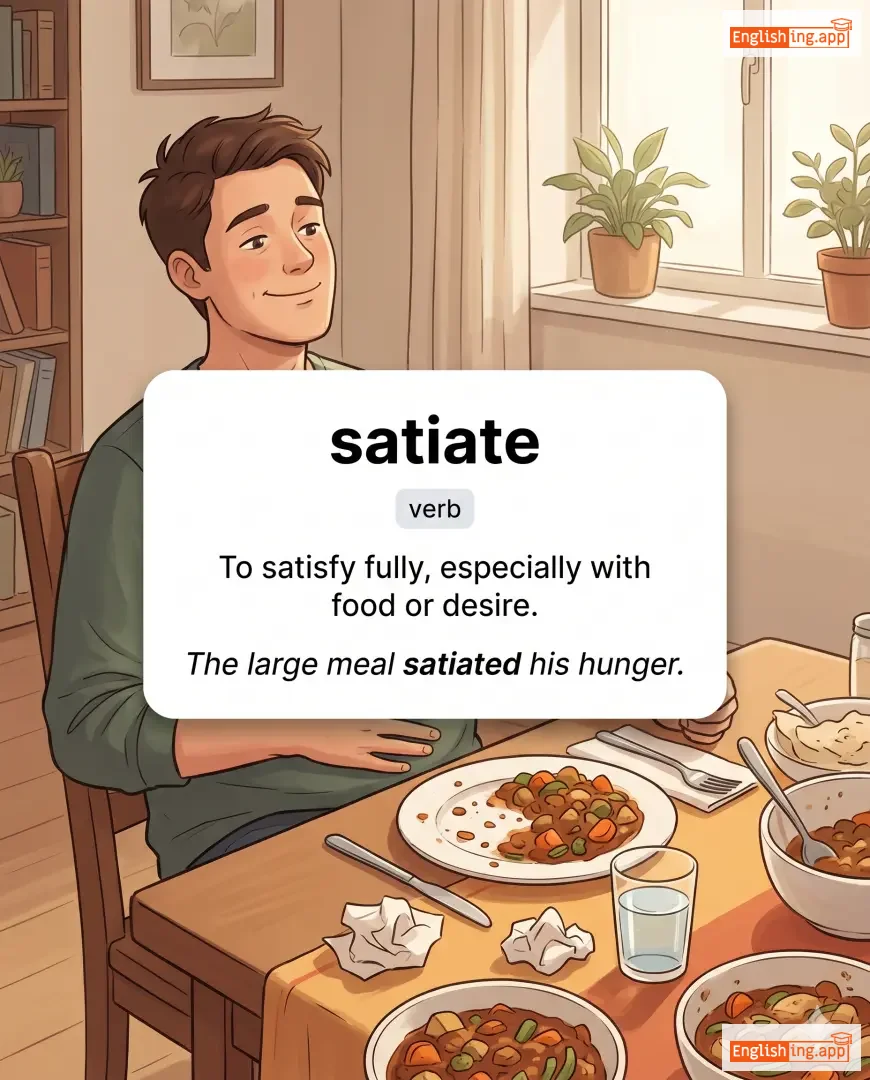
satiate definition card — visual illustration of the meaning
verb
/ˈseɪʃiˌeɪt/
満たす (mitasu)

To satisfy fully, especially with food or desire.

"The large meal satiated his hunger."
"大きな食事が彼の空腹を満たしました。" (Ookina shokuji ga kare no kuufuku o mitashimashita.)
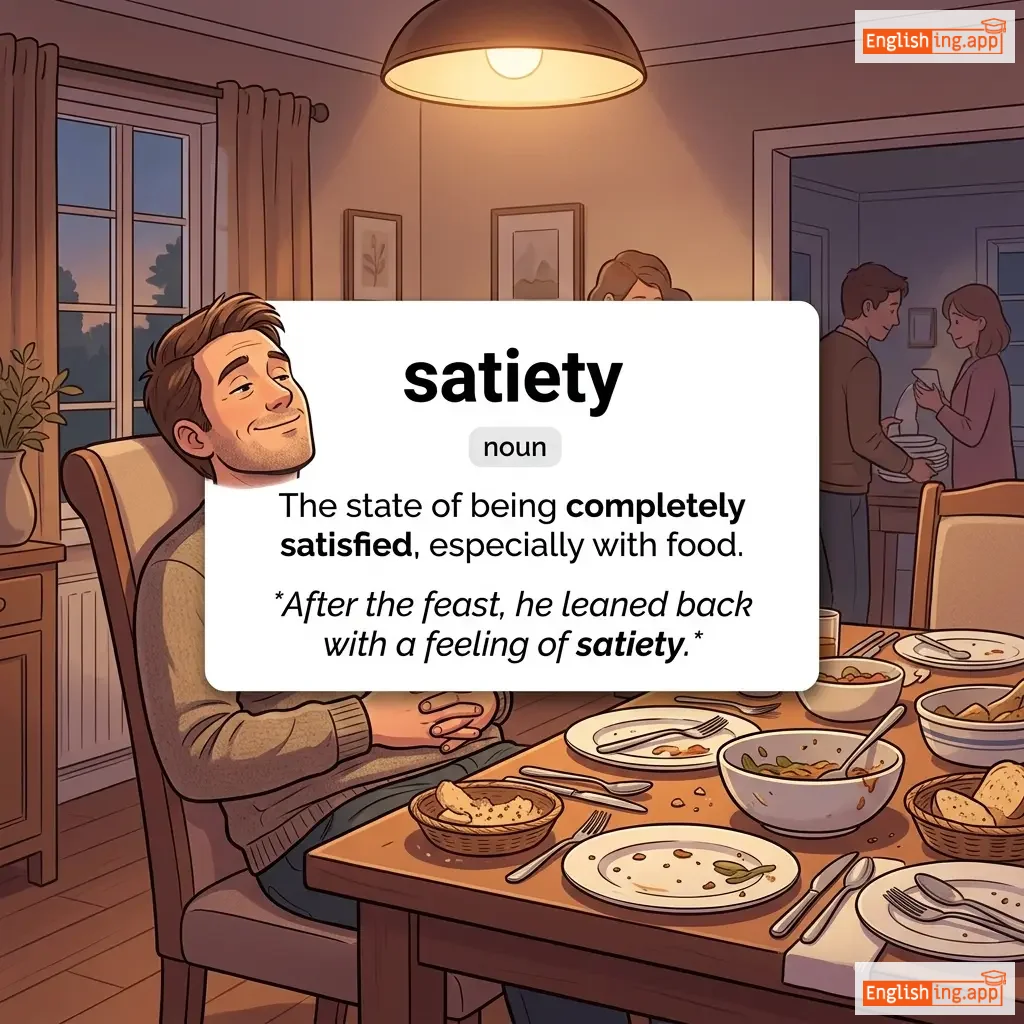
satiety definition card — visual illustration of the meaning
noun
/səˈtaɪ.ə.ti/
満腹感 (manpukukan)

The state of being completely satisfied, especially with food.

"After the feast, he leaned back with a feeling of satiety."

"宴会の後、彼は満腹感を感じながら背もたれに寄りかかった。" (Enkai no ato, kare wa manpukukan wo kanjinagara semotare ni yori kakatta.)
noun
/ˈsætaɪər/
風刺 (fūshi)

The use of humor, irony, or exaggeration to criticize people's stupidity or vices.

"The play was a brilliant satire on modern politics."

"その劇は現代政治への素晴らしい風刺でした。" (Sono geki wa gendai seiji e no subarashī fūshi deshita.)
adjective
/səˈtɪrɪk/
皮肉な (hinikuna)

Relating to or using satire.

"The novel takes a satiric view of urban life."

"その小説は都市生活を皮肉な視点で描いています。" (Sono shōsetsu wa toshi seikatsu o hinikuna shiten de egaiteimasu.)
adjective
/səˈtɪrɪkəl/
風刺的 (fūshiteki)

containing or using satire to criticize or mock

"The satirical cartoon mocked the government's new policy."

"その風刺的な漫画は政府の新しい政策を嘲笑しました。" (Sono fūshiteki na manga wa seifu no atarashī seisaku o chōshō shimashita.)
verb
/ˈsætəˌraɪz/
風刺する (fūshi suru)

to mock or criticize something using satire

"The play satirizes the greed of modern corporations."

"その劇は現代の企業の貪欲さを風刺しています。" (Sono geki wa gendai no kigyō no dōyoku-sa o fūshi shiteimasu.)