語彙集

英単語辞書 | 単語の意味、定義、例文

adverb
/rɪˈpɔːtɪdli/
報告によると (hōkoku ni yoru to)

according to what is said or believed, although not confirmed

"The company has reportedly agreed to the new terms."

"その会社はreportedly新しい条件に同意しました。" (Sono kaisha wa reportedly atarashī jōken ni dōi shimashita.)
noun
/rɪˈpɔːrtər/
レポーター (repo-ta-)

a person who reports news or information

"The reporter interviewed several people at the scene."

"レポーターは現場で数人にインタビューしました。" (Repo-ta- wa genba de suunin ni intabyu shimashita.)
noun
/rɪˈpɔːtɪŋ/
報道 (hōdō)

the act of giving news or information about something

"Good reporting is essential for public awareness."

"良い報道は公共の認識にとって不可欠です。" (Yoi hōdō wa kōkyō no ninshiki ni totte fukaketsu desu.)
noun/verb
/rɪˈpoʊz/
休息 (kyūsoku)

a state of rest, sleep, or tranquility; to rest or lie in a peaceful position

"After the long journey, she sought repose in the quiet garden."

"長い旅の後、彼女は静かな庭で休息を求めた。" (Nagai tabi no ato, kanojo wa shizukana niwa de kyūsoku o motometa.)
noun
/rɪˈpɑːzɪtɔːri/
リポジトリ (ripojitori)

a place where things are stored or kept for safekeeping

"The library serves as a repository of knowledge."

"図書館は知識のリポジトリとして機能します。" (Toshokan wa chishiki no ripojitori toshite kinou shimasu.)
verb
/ˌrɛprɪˈhɛnd/
非難する (hinan suru)

to express disapproval or criticism of someone or something

"The teacher reprehended the student for being dishonest."

"先生は不正直なことで生徒を叱りました。" (Sensei wa fuseijika na koto de seito o shikarimashita.)
adjective
/ˌrɛprɪˈhɛnsəbl̩/
非難すべき (hinan subeki)

Deserving strong criticism or blame.

"His dishonest actions were truly reprehensible."

"彼の不誠実な行動は本当に非難すべきものでした。" (Kare no fuseijitsu na kōdō wa hontōni hinan subeki mono deshita.)
noun
/ˌrɛprɪˈhɛnʃən/
叱責 (shisseki)

The act of rebuking or criticizing severely.

"The teacher’s reprehension of the student’s behavior was justified."

"教師の学生の行動に対する叱責は正当であった。" (Kyoushi no gakusei no koudou ni taisuru shisseki wa seitou de atta.)
verb
/ˌrɛprɪˈzɛnt/
代表する (daihyou suru)

to act or speak on behalf of someone or something

"He will represent our company at the conference."

"彼は会議で私たちの会社を代表します。" (Kare wa kaigi de watashitachi no kaisha o daihyou shimasu.)
noun
/ˌrɛprɪzɛnˈteɪʃən/
代表 (daihyou)

the action of speaking or acting on behalf of someone or something

"Her representation of the team was impeccable."

"彼女のチームの代表は完璧でした。" (Kanojo no chiimu no daihyou wa kanpeki deshita.)
adjective
/ˌrɛprɪzɛnˈteɪʃənl̩/
表現的 (hyōgente-ki)

Relating to or depicting something in a realistic or symbolic way.

"The artist preferred a representational style of painting."
"アーティストは表現的な絵画スタイルを好んでいました。" (Ātisuto wa hyōgente-ki na kaiga sutairu o kononde imashita.)
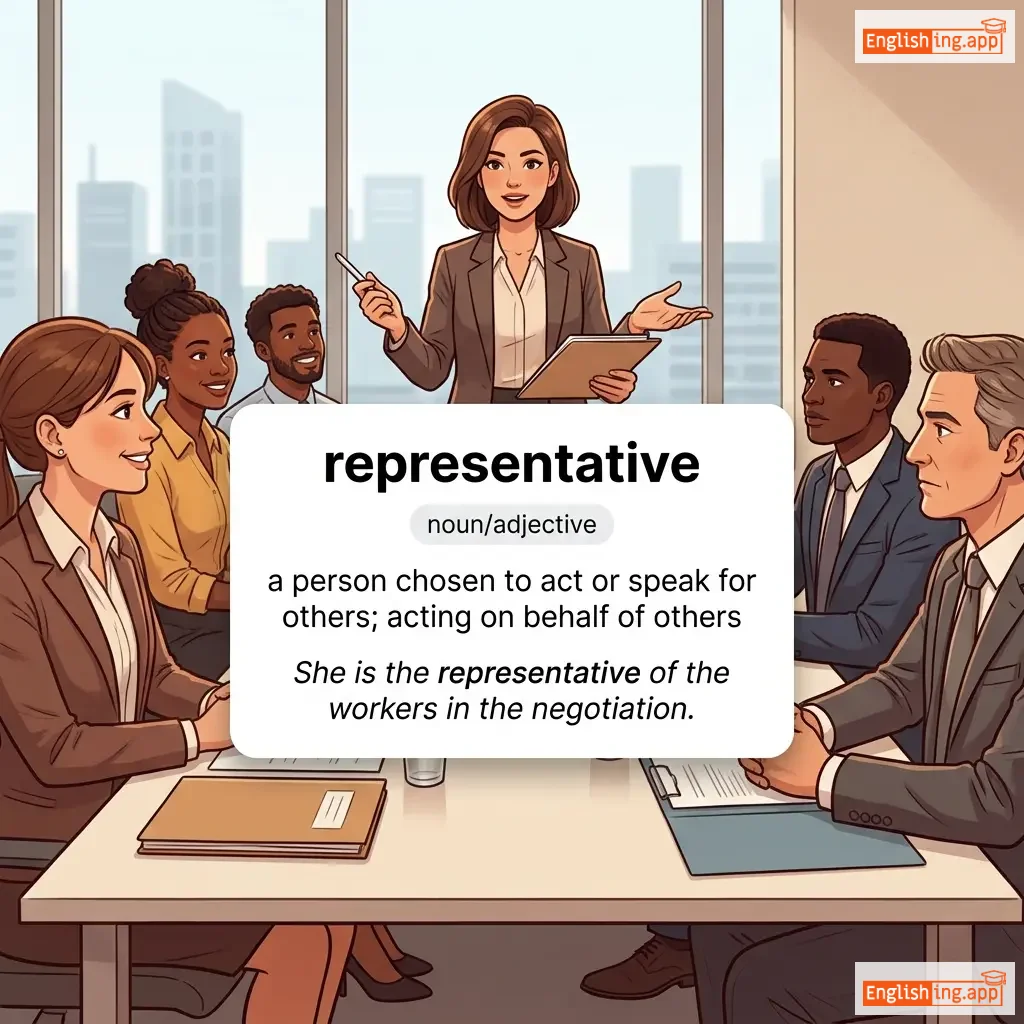
representative definition card — visual illustration of the meaning
noun/adjective
/ˌrɛprɪˈzɛntətɪv/
代表者 (daihyou-sha)

a person chosen to act or speak for others; acting on behalf of others

"She is the representative of the workers in the negotiation."

"彼女は交渉における労働者の代表者です。" (Kanojo wa kōshō ni okeru rōdōsha no daihyōsha desu.)
verb
/rɪˈprɛs/

To restrain, suppress, or keep under control, especially emotions or desires.

"He tried to repress his anger during the meeting."

adjective
/rɪˈprɛsəbl̩/
抑制可能 (yokusei kanou)

Capable of being restrained or suppressed.

"The movement proved to be hardly repressible."

"その運動はほとんど抑制可能であることが証明されました。" (Sono undou wa hotondo yokusei kanou de aru koto ga shoumei saremashita.)
noun
/rɪˈpreʃən/
抑圧 (yokuatsu)

the action of subduing someone or something by force; the restraint, prevention, or inhibition of a feeling, impulse, etc.

"The government's repression of free speech sparked widespread protests."

"政府の表現の自由に対する抑圧は、広範な抗議を引き起こした。" (Seifu no hyougen no jiyuu ni taisuru yokuatsu wa kouhan na kougi wo hikiokoshita.)
adjective
/rɪˈpres.ɪv/
抑圧的な (yokuatsuteki na)

restraining freedom or preventing self-expression; oppressive

"The repressive government banned all forms of protest."

"抑圧的な政府はすべての抗議の形態を禁止しました。" (yokuatsuteki na seifu wa subete no kōgi no keitai o kinshi shimashita)
noun/verb
/rɪˈpriːv/

A temporary relief or delay from something unpleasant; to postpone or cancel punishment.

"The prisoner was granted a last-minute reprieve from execution."

noun/verb
/ˈrɛprɪˌmænd/

A formal expression of disapproval; to scold or criticize someone officially.

"The teacher reprimanded the student for being late."

noun
/rɪˈpraɪzəl/
報復 (houfuku)

An act of retaliation or revenge, especially in a conflict.

"The attack was carried out as a reprisal for the bombing."
"攻撃は爆撃への報復として行われた。" (Kōgeki wa bakugeki e no hōfuku toshite okonawareta.)
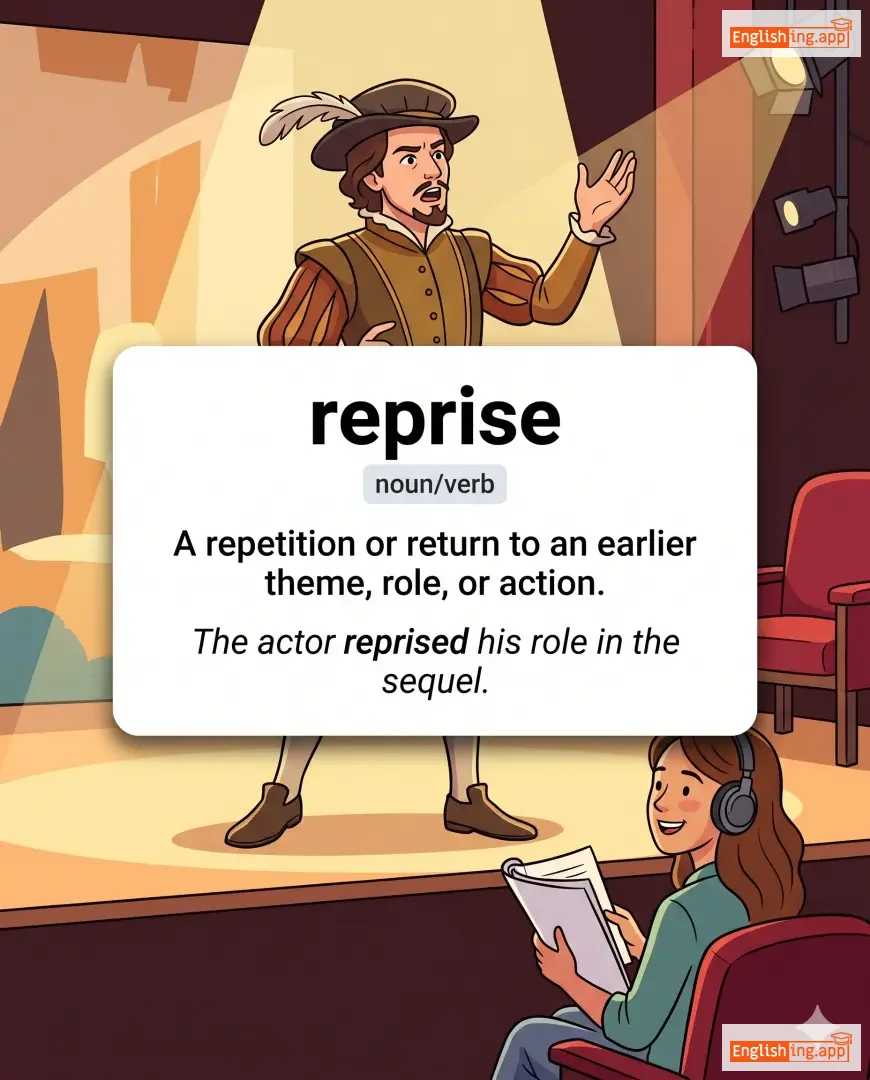
reprise definition card — visual illustration of the meaning
noun/verb
/rɪˈpriːz/
繰り返し (kurikaeshi)

A repetition or return to an earlier theme, role, or action.

"The actor reprised his role in the sequel."

"俳優は続編で自分の役を再演しました。" (Haiyū wa zokuhen de jibun no yaku o saien shimashita.)
reproach definition card — visual illustration of the meaning
noun/verb
/rɪˈproʊtʃ/
非難 / 批判 (hinan / hihan)

An expression of disapproval or disappointment; to criticize someone for doing wrong.

"She reproached him for arriving late to the meeting."

"彼女は会議に遅れたことを彼に非難した。" (Kanojo wa kaigi ni okureta koto o kare ni hinan shita.)
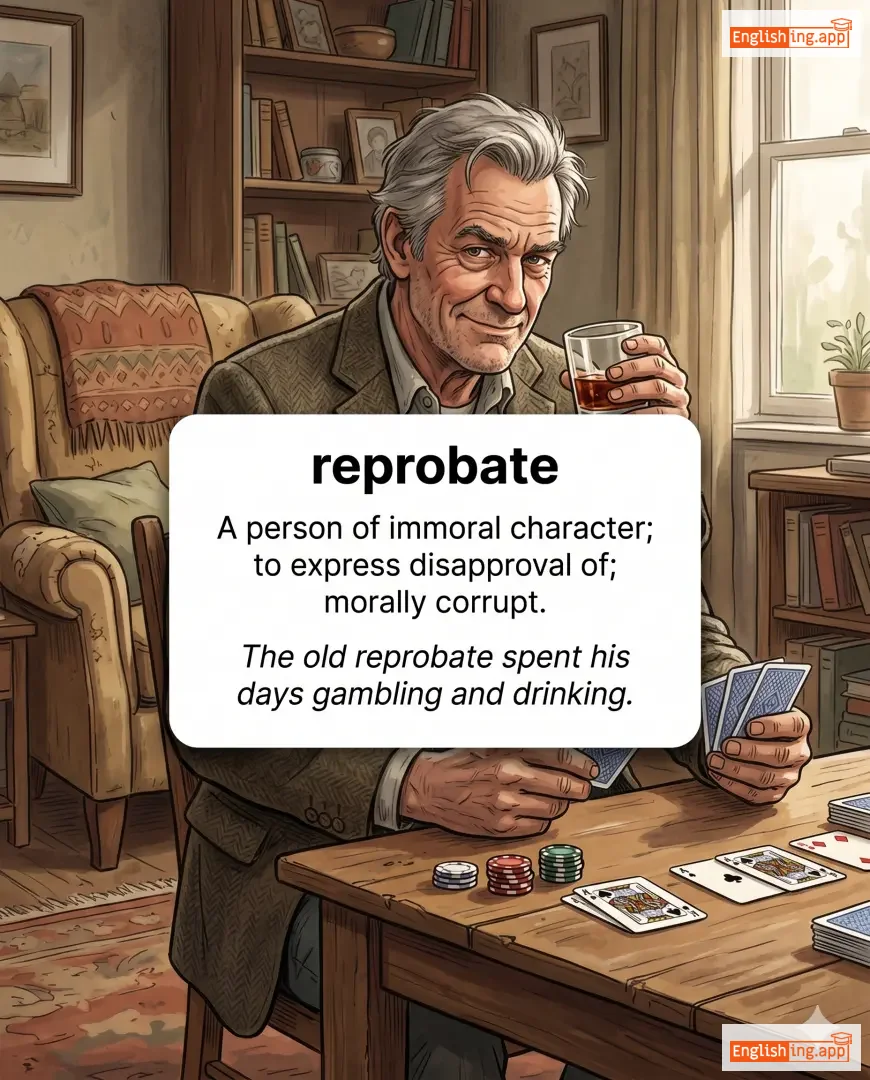
reprobate definition card — visual illustration of the meaning
noun, adjective, verb
/ˈrɛprəˌbeɪt/

A person of immoral character; to express disapproval of; morally corrupt.

"The old reprobate spent his days gambling and drinking."

noun
/ˌrɛprəˈbeɪʃən/

Strong disapproval or condemnation; rejection by God as beyond salvation.

"The teacher’s face showed clear reprobation at the student’s rude remark."

verb
/ˌriːprəˈdjuːs/
再生する, 繁殖する (saisei suru, hanshoku suru)

To make a copy of something; to generate offspring.

"Many animals reproduce rapidly in favorable conditions."

"多くの動物は好ましい条件下で急速に繁殖します。" (Ōku no dōbutsu wa konomashī jōkenka de kyūsoku ni hanshoku shimasu.)
noun
/ˌriːprəˈdʌkʃən/
再生, 繁殖 (saisei, hanshoku)

The process of producing offspring; the act of copying or duplicating.

"The textbook included a detailed diagram of human reproduction."
"教科書には人間のリプロダクションの詳細な図が含まれていました。" (Kyoukasho ni wa ningen no rīprodakushon no shousai na zu ga fukumarete imashita.)
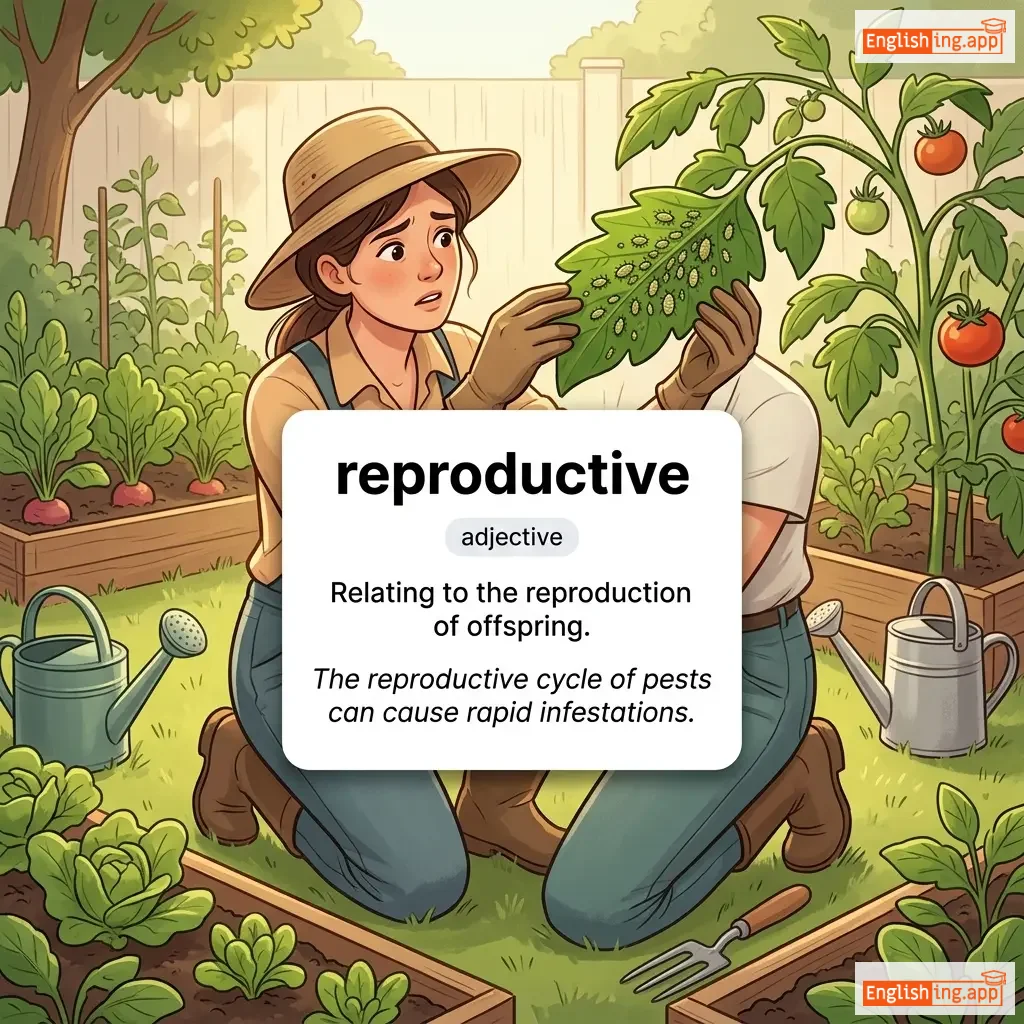
reproductive definition card — visual illustration of the meaning
adjective
ˌriːprəˈdʌktɪv
繁殖に関する (hanshoku ni kansuru)

Relating to the reproduction of offspring.

"The reproductive cycle of pests can cause rapid infestations."

"害虫の生殖サイクルは迅速な感染を引き起こす可能性があります。" (Gaichū no seishoku saikuru wa jinsoku na kansen o hikiokosu kanōsei ga arimasu.)
noun
/rɪˈpruːf/
叱責, 非難 (shisseki, hinan)

An expression of blame or disapproval.

"His careless words drew a sharp reproof from his mother."

"彼の不注意な言葉は、母親からの厳しい叱責を引き起こした。" (Kare no fuchūina kotoba wa, hahaoya kara no kibishī shisseki o hikiokoshita.)
verb
/rɪˈpruːv/
叱る (shikaru)

to criticize or correct someone gently or disapprove of their actions

"The teacher reproved the student for being late."

"先生は遅刻した生徒を叱りました。" (Sensei wa chikoku shita seito o shikarimashita.)
noun
/ˈrɛp.taɪl/
爬虫類 (hatchōrui)

a cold-blooded animal with scales that lays eggs, such as snakes, lizards, turtles, or crocodiles

"The snake is a reptile that can be found in many parts of the world."
"ヘビは、世界の多くの地域で見つけることができる爬虫類です。" (Hebi wa, sekai no ōku no chiiki de mitsukeru koto ga dekiru hatchōrui desu.)
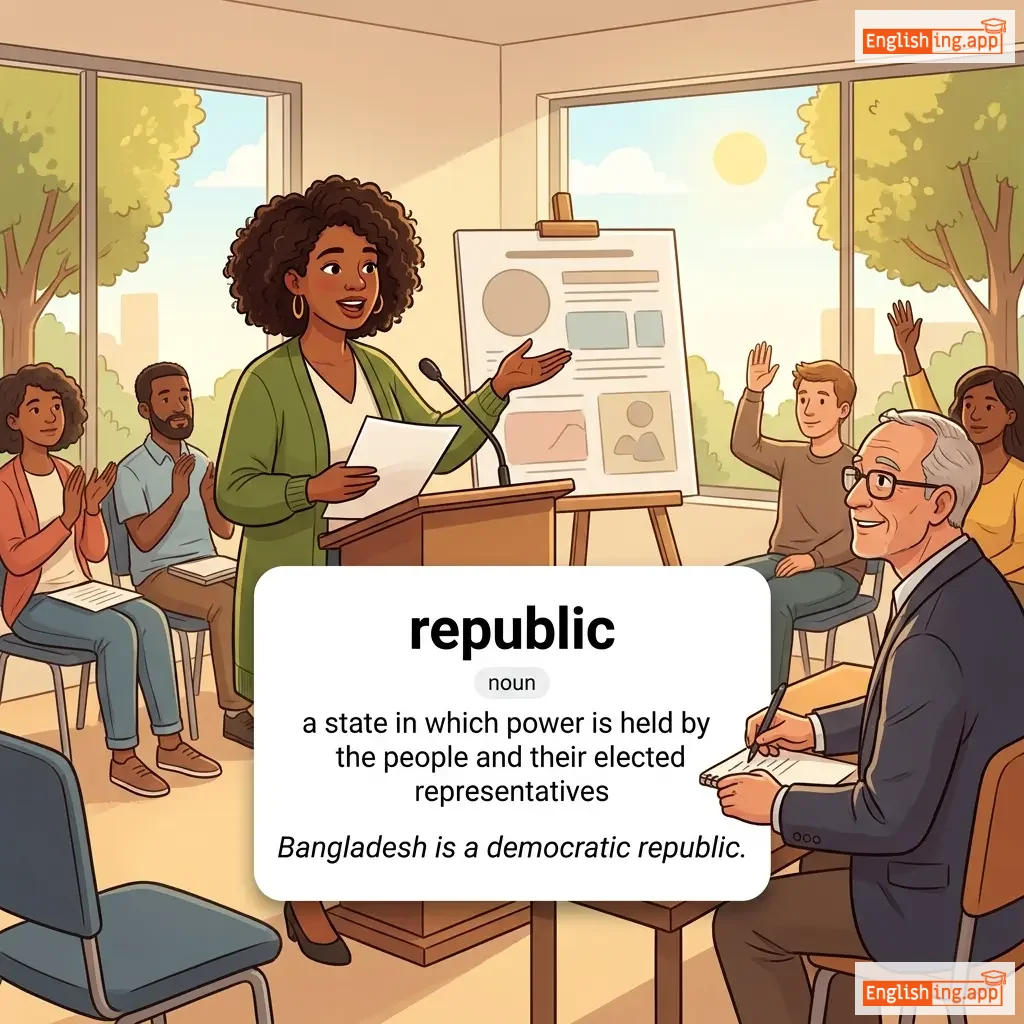
republic definition card — visual illustration of the meaning
noun
/rɪˈpʌblɪk/
共和国 (kyōwakoku)

a state in which power is held by the people and their elected representatives

"Bangladesh is a democratic republic."

"バングラデシュは民主的な共和国です。" (Banguradeshu wa minshuteki na kyōwakoku desu.)
noun/adjective
/rɪˈpʌblɪkən/
共和党員 (kyouwatouin)

a member or supporter of a republican political party or system

"The republican candidate won the election."
"リパブリカン候補者は選挙に勝利しました。" (Ripaburikan kōhosha wa senkyo ni shōri shimashita.)
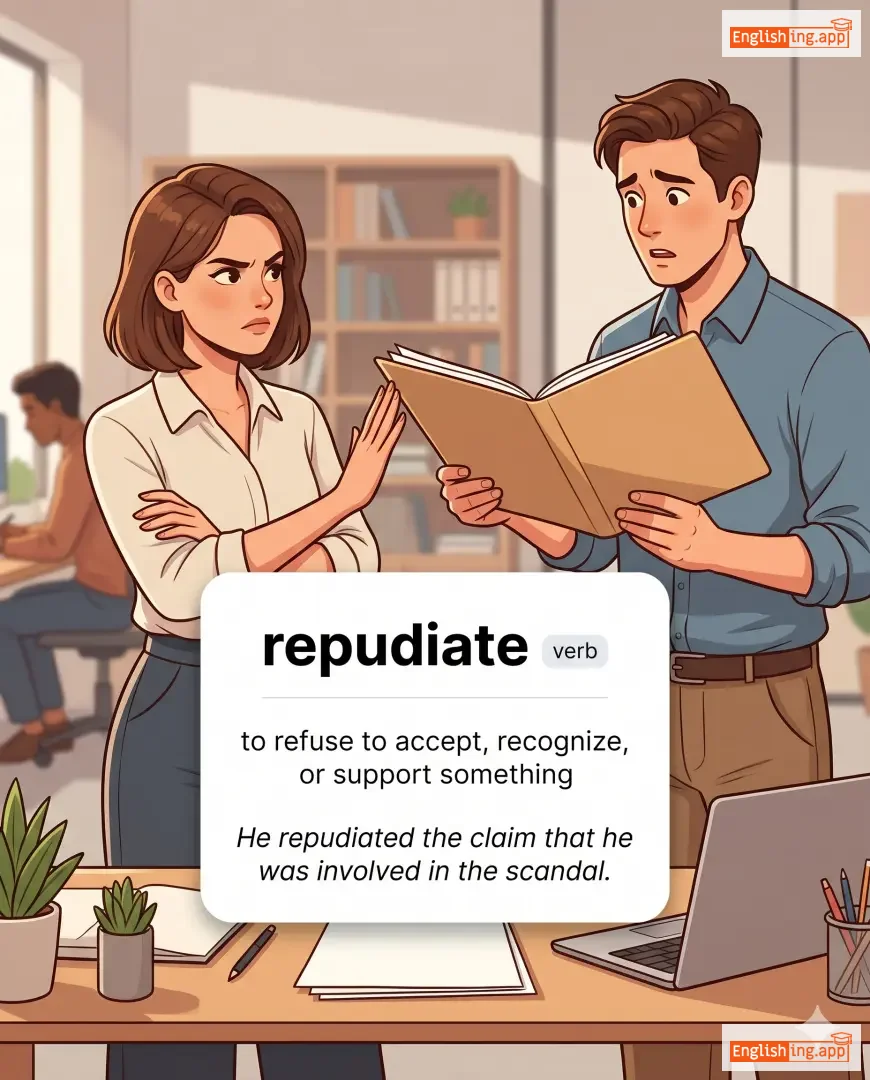
repudiate definition card — visual illustration of the meaning
verb
/rɪˈpjuː.di.eɪt/
否定する (hitei suru)

to refuse to accept, recognize, or support something

"He repudiated the claim that he was involved in the scandal."

"彼はそのスキャンダルに関与していたという主張を否定しました。" (Kare wa sono sukyandaru ni kan'yo shite ita to iu shuchou o hitei shimashita.)
noun
/rɪˈpʌɡ.nəns/
嫌悪 (ken'o)

intense disgust or strong aversion towards something

"She felt deep repugnance at the cruelty of the act."

"彼女はその行為の残酷さに深い嫌悪を感じた。" (Kanojo wa sono kōi no zankokusa ni fukai ken'o o kanjita.)
adjective
/rɪˈpʌɡ.nənt/
嫌悪感を抱かせる (ken'okan o idakaseru)

causing strong dislike, disgust, or opposition

"The idea of cheating was repugnant to him."

"裏切りの考えは彼にとって嫌悪感を抱かせるものだった。" (uragiri no kangae wa kare ni totte ken'okan o idakaseru mono datta.)
verb
/rɪˈpʌls/
撃退する / 嫌悪感を引き起こす (gekitai suru / ken'o kan o hikiokosu)

to drive back an attack or attacker by force; to cause intense dislike or disgust

"The army managed to repulse the enemy attack."

"軍隊は敵の攻撃を撃退することに成功した。" (Guntai wa teki no kougeki o gekitai suru koto ni seikou shita.)
noun
/rɪˈpʌlʃən/

a strong feeling of dislike or disgust

"She felt deep repulsion at the sight of cruelty to animals."

adjective
/rɪˈpʌlsɪv/
不快な (fukai na)

arousing intense distaste or disgust

"The garbage gave off a repulsive smell."

"ゴミは不快な臭いを発していた。" (Gomi wa fukai na nioi o hasshite ita.)
adjective
/ˈrɛpjətəbəl/
評判の良い (hyōban no yoi)

having a good reputation; respected

"They chose a reputable company to handle their finances."

"彼らは財務を管理するために評判の良い会社を選びました。" (Karera wa zaimu o kanri suru tame ni hyōban no yoi kaisha o erabimashita.)
reputation definition card — visual illustration of the meaning
noun
/ˌrɛpjuˈteɪʃən/
評判 (hyōban)

the beliefs or opinions that are generally held about someone or something

"She has a good reputation in the industry."

"彼女は業界で良い評判を持っています。" (Kanojo wa gyōkai de yoi hyōban o motteimasu.)
noun
/rɪˈpjuːt/
評判 (hyōban)

the opinion generally held of someone or something; reputation

"He is a scholar of great repute in his field."

"彼はその分野で大変な評判を持つ学者です。" (Kare wa sono bunya de taihen na hyōban o motsu gakusha desu.)
adjective
/rɪˈpjuːtɪd/
評判の良い (hyōban no yoi)

Generally considered or believed to be something, often based on reputation rather than certainty.

"He is a reputed expert in financial management."

"彼は財務管理の評判の良い専門家です。" (Kare wa zaimu kanri no hyōban no yoi senmonka desu.)
noun
/rɪˈkwɛst/

a formal or polite demand for something

"She made a request for additional time to complete the project."

noun
/ˈrɛkwiəm/
レクイエム (rekuiemu)

A mass, music, or ceremony for the repose of the souls of the dead.

"The choir performed a requiem in memory of the late leader."

"合唱団は故リーダーを記念してレクイエムを演奏しました。" (Kōshōdan wa ko rīdā o kinen shite rekuiemu o ensō shimashita.)
verb
/rɪˈkwaɪə(r)/
必要とする (hitsuyou to suru)

to need something or make something necessary

"This task requires your full attention."

"この作業はあなたの完全な注意を必要とします。" (Kono sagyō wa anata no kanzen na chūi wo hitsuyō to shimasu.)
adjective
/rɪˈkwaɪəd/
必要な (hitsuyou na)

necessary or compulsory

"A visa is required to enter the country."

"その国に入るにはビザが必要です。" (Sono kuni ni hairu ni wa biza ga hitsuyou desu.)
noun
/rɪˈkwaɪə(r)mənt/
要件 (youken)

something that is necessary or demanded

"The job has specific educational requirements."

"この仕事には特定の教育要件があります。" (Kono shigoto ni wa tokutei no kyouiku youken ga arimasu.)
adjective
/ˈrɛkwɪzɪt/
必要な (hitsuyou na)

Made necessary by particular circumstances or regulations; required.

"A passport is a requisite document for international travel."

"パスポートは国際旅行に必要な書類です。" (Pasupooto wa kokusai ryokou ni hitsuyou na shorui desu.)
noun
/ˌrɛkwɪˈzɪʃən/
要求 (yōkyū)

An official order laying claim to the use of property or materials; a formal demand or request.

"The manager submitted a requisition for new office supplies."

"マネージャーは新しいオフィス用品のためのレクイジションを提出しました。" (Manējā wa atarashī ofisu yōhin no tame no rekuiyō o teishutsu shimashita.)
noun
/rɪˈkwaɪtəl/
報復 (hōfuku)

The act of returning something, such as a favor, service, or punishment; repayment or retaliation.

"She offered her time in requital for his kindness."

"彼女は彼の親切に報復として自分の時間を提供しました。" (Kanojo wa kare no shinsetsu ni hōfuku to shite jibun no jikan o teikyō shimashita.)
verb
/rɪˈkwaɪt/
返す (kaesu)

to return or repay a favor, service, or feeling

"She requited his kindness with a thoughtful gift."

"彼女は彼の親切に思慮深い贈り物で報いました。" (Kanojo wa kare no shinsetsu ni shinryo fukai okurimono de mukawashimashita.)