語彙集

英単語辞書 | 単語の意味、定義、例文

noun
/ˈpɛnəlti/
罰金 (batsukin)

A punishment imposed for breaking a law, rule, or contract.

"He had to pay a heavy penalty for breaking the traffic rules."

"交通規則違反で重い罰金を払わなければなりませんでした。" (Kōtsū kisoku ihan de omoi batsukin o harawanakereba narimasen deshita.)
noun
/ˈpɛnəns/
幸せ (shiawase)

Voluntary self-punishment as an expression of repentance for wrongdoing.

"He fasted for a week as a penance for his mistakes."
"彼女は賞を受け取ったとき、自分の幸せを隠すことができませんでした。" (Kanojo wa shō o uketotta toki, jibun no shiawase o kakusu koto ga dekimasen deshita.)
penchant definition card — visual illustration of the meaning
noun
/ˈpɒ̃ʃɒ̃/
傾向 (keikou)

a strong or habitual liking for something or tendency to do something

"She has a penchant for collecting rare books."

"彼女は珍しい本を集める傾向がある。" (Kanojo wa mezurashii hon o atsumeru keikou ga aru.)
✏️

pencil

noun
/ˈpɛnsəl/

an instrument for writing or drawing, typically made of wood with a graphite core

"He drew a picture with a pencil."

noun
/ˈpɛndənt/
ペンダント (pendanto)

a piece of jewelry that hangs from a chain worn around the neck

"She wore a silver pendant around her neck."

"彼女は首に銀のペンダントをつけていました。" (Kanojo wa kubi ni gin no pendanto o tsukete imashita.)
adjective
/ˈpɛndənt/
吊るす (tsurusu)

hanging down or suspended

"The pendent branches touched the ground."

"吊るす枝が地面に触れました。" (Tsurusu eda ga jimen ni furemashita.)
adjective
/ˈpɛndɪŋ/
保留中 (horyu-chu)

awaiting decision or settlement

"The case is still pending in court."

"その事件はまだ裁判所で保留中です。" (sono jiken wa mada saiban-sho de horyu-chu desu.)
adjective
/ˈpɛndjʊləs/
幸せ (shiawase)

hanging down loosely; drooping

"The pendulous fruit weighed down the branch."

"賞を受け取った時、彼女は幸せを隠すことができませんでした。" (Shou o uketotta toki, kanojo wa shiawase o kakusu koto ga dekimasen deshita.)
noun
/ˈpɛndjələm/
振り子 (furiko)

A weight suspended from a pivot so that it swings freely, often used to regulate clocks.

"The pendulum swung back and forth inside the clock."

"振り子は時計の中で前後に揺れていた。" (Furiko wa tokei no naka de zengo ni yurete ita.)
adjective
/ˈpɛnɪtrəbl/
通過可能な (tsūka kanō na)

Capable of being passed through or entered.

"The thin wall was easily penetrable."
"薄い壁は簡単に通過可能でした。" (Usui kabe wa kantan ni tsūka kanō deshita.)
penetrate definition card — visual illustration of the meaning
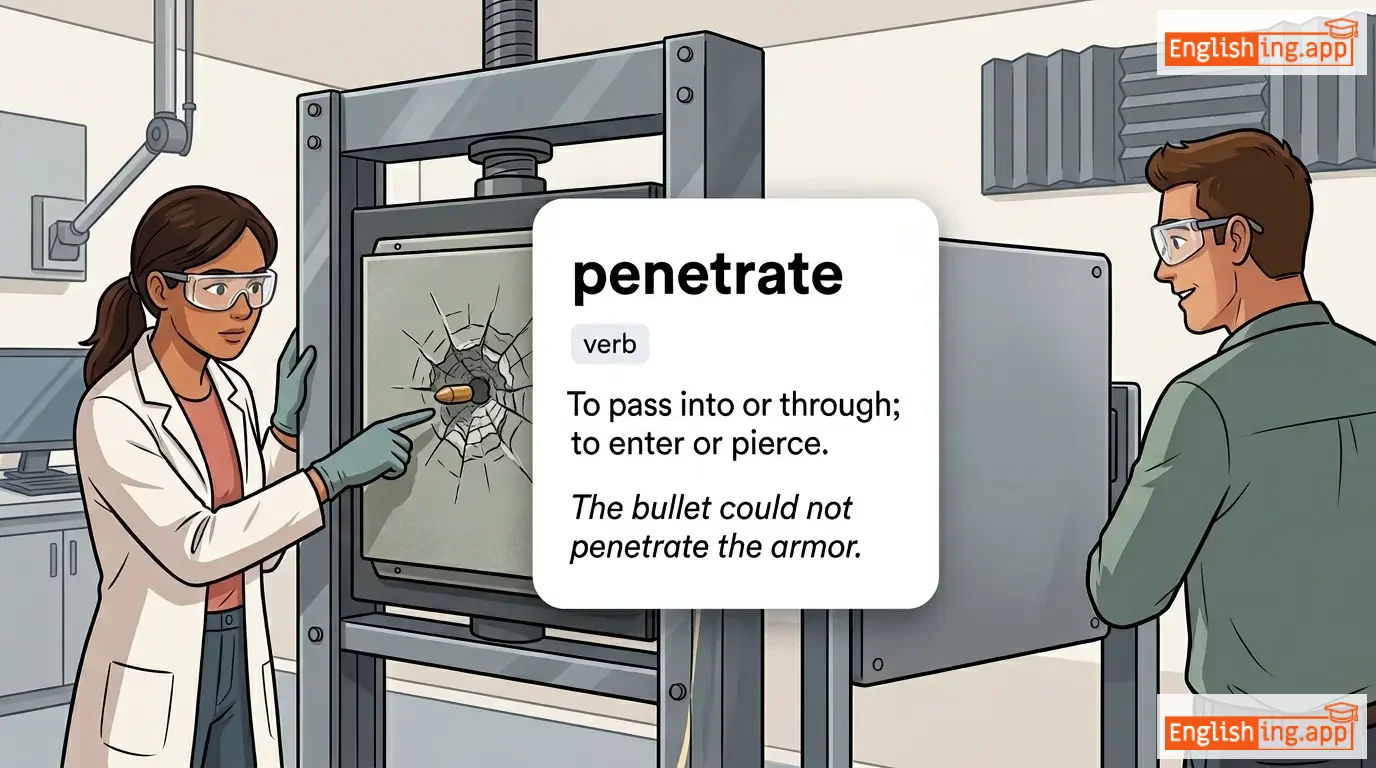
verb
/ˈpɛnɪtreɪt/
貫通する (kantsu suru)

To pass into or through; to enter or pierce.

"The bullet could not penetrate the armor."

"弾丸は鎧を貫通できませんでした。" (Dangan wa yoroi o kantsu dekimasen deshita.)
noun
/ˌpɛnɪˈtreɪʃən/
浸透 (shintou)

The act of piercing or entering into something.

"The company's market penetration grew rapidly."

"その企業の市場浸透は急速に成長した。" (Sono kigyō no shijō shintō wa kyūsoku ni seichō shita.)
noun
/pəˈnɪn.sjə.lə/
半島 (hantō)

a piece of land that is almost completely surrounded by water but connected to the mainland

"The Korean Peninsula is located in East Asia."

"朝鮮半島は東アジアに位置しています。" (Chōsen hantō wa Higashi Ajia ni ichi shiteimasu.)
adjective
/pəˈnɪnsjələr/
半島のような (hantō no yōna)

Relating to or resembling a peninsula.

"The peninsular region is surrounded by water on three sides."

"その半島のような地域は、三方向が水で囲まれています。" (Sono hantō no yōna chiiki wa, san hōkō ga mizu de kakomareteimasu.)
noun
/ˈpɛnɪtəns/
懺悔 (sankei)

The action or feeling of showing sorrow and regret for having done wrong.

"His eyes were full of penitence after realizing his mistake."

"自分の間違いに気づいた後、彼の目は懺悔に満ちていた。" (Jibun no machigai ni kidzuita ato, kare no me wa sankei ni michite ita.)
adjective
/ˈpɛnɪtənt/
悔い改めた (kuiaratameta)

Feeling or showing sorrow and regret for having done wrong.

"She was penitent after shouting at her friend."

"彼女は友達に叫んだ後、悔い改めていた。" (Kanojo wa tomodachi ni sakenda ato, kuiaratamete ita.)
adjective
/ˌpɛnɪˈtɛnʃəl/
悔い改めの (kuiaratame no)

Relating to or expressing penitence or penance.

"The priest delivered a penitential sermon on forgiveness."

"司祭は許しに関する悔い改めの説教をしました。" (Shisai wa yurushi ni kansuru kuiaratame no sekkyou o shimashita.)
noun
/ˈpɛnənt/
ペナント旗 (penanto ki)

A tapering flag used for signaling or as an emblem of victory or achievement.

"The team raised the championship pennant proudly."

"チームは誇らしげにチャンピオンシップペナント旗を掲げました。" (Chīmu wa hokorashige ni chanpionshipu penanto ki o kakagemashita.)
adjective
/ˈpɛneɪt/
羽のような (hane no you na)

Having parts or structures arranged like a feather; feather-shaped.

"The fern has a pennate leaf structure."

"シダ植物の葉の構造は羽のような形状です。" (Shida shokubutsu no ha no kouzou wa hane no you na keijou desu.)
adjective
/ˈpen.ɪ.ləs/
無一文; 極貧; 完全に金がない (muichimon; kyokuhin; kanzen ni kane ga nai)

having no money; extremely poor; completely without funds

"After losing his job, he became penniless."

"仕事を失った後、彼は無一文になった。" (Shigoto o ushinatta ato, kare wa muichimon ni natta.)
noun
/ˈpɛni/
ペニー (penii)

a small coin of low value; a very small amount of money

"He found a penny on the sidewalk and smiled."

"彼は歩道でペニーを見つけて微笑んだ。" (kare wa hodou de penii o mitsukete hohoenda)
noun
/pɪˈnɒlədʒi/
刑務学 (keimugaku)

The study of prison management and criminal rehabilitation.

"He decided to specialize in penology to help improve the prison system."

"彼は刑務学を専門にすることに決め、刑務所制度の改善に役立つことを目指しました。" (Kare wa keimugaku o senmon ni suru koto ni kime, keimusho seido no kaizen ni yakudatsu koto o mezashimashita.)
noun
/ˈpɛnʃən/
年金 (nenkin)

A regular payment made during a person's retirement from an investment fund or employer.

"After 30 years of service, he received a monthly pension."

"30年の勤務後、彼は毎月の年金を受け取りました。" (30-nen no kinmugo, kare wa maitsuki no nenkin o ukemashita.)
adjective
/ˈpɛnsɪv/
物思いにふけった (mono omoi ni fuketta)

Engaged in deep or serious thought.

"She looked pensive as she stared out of the window."

"彼女は窓の外を見ながら物思いにふけっているようだった。" (Kanojo wa mado no soto o minagara mono omoi ni fukette iru yō datta.)
adjective
/ˈpent ʌp/
抑えられた; 制限された; 閉じ込められた (osaerareta; seigen sareta; tojikomerareta)

suppressed; restrained; confined

"He had pent-up anger that finally exploded."

"彼は抑えられた怒りを抱えており、最終的に爆発した。" (Kare wa osaerareta ikari o kakaete ori, saishūteki ni bakuhatsu shita.)
noun
/ˈpɛntæd/
五つ組 (itsutsu-gumi)

A group or set of five things.

"The committee was divided into a pentad of working groups."

"委員会は五つの作業グループに分けられました。" (Iinkai wa itsutsu no sagyō gurūpu ni wakeraremashita.)
noun
/ˈpɛntəɡən/

A plane figure with five straight sides and five angles; also refers to the US Department of Defense building.

"The Pentagon is one of the most iconic government buildings in the United States."

noun
/ˈpɛntəˌɡræm/
ペンタグラム (pentaguramu)

A five-pointed star often used as a symbol in magic, mysticism, or religion.

"The wizard drew a pentagram on the floor as part of the ritual."

"魔法使いは儀式の一環として床にペンタグラムを描いた。" (Mahōtsukai wa gishiki no ikkan to shite yuka ni pentaguramu o kaita.)
noun
/ˌpɛntəˈhiːdrən/
ペンタヘドロン (pentahedron)

A solid geometric figure with five faces.

"In geometry class, the teacher explained the structure of a pentahedron."

"幾何学の授業で、先生はペンタヘドロンの構造を説明しました。" (Kikagaku no jugyō de, sensei wa pentahedron no kōzō o setsumei shimashita.)
noun
/pɛnˈtæmɪtər/
ペンタメーター (pentameter)

A line of verse consisting of five metrical feet.

"Shakespeare often wrote his plays in iambic pentameter."

"シェイクスピアはよくアイアンビック・ペンタメーターで劇を書きました。" (Sheikusupia wa yoku aiambikku pentamētā de geki o kakimashita.)
noun
/pɛnˈtæθlɒn/
ペンタスロン (pentasuron)

An athletic contest featuring five different events.

"She trained hard to compete in the modern pentathlon."

"彼女は現代五種競技に出場するために一生懸命訓練した。" (Kanojo wa gendai goshū kyōgi ni shutsujō suru tame ni isshōkenmei kunren shita.)
adjective
/ˌpɛntəˈveɪlənt/
五価 (goka)

Having a valence of five, especially in chemistry.

"Phosphorus can exist in a pentavalent state."

"リンは五価の状態で存在することができます。" (Rin wa goka no jōtai de sonzai suru koto ga dekimasu.)
adjective
/pəˈnʌltɪmət/
最後から二番目 (saigo kara nibanme)

second to the last in a sequence or series

"She finished the penultimate chapter before going to sleep."

"彼女は寝る前に最後から二番目の章を終えた。" (Kanojo wa neru mae ni saigo kara nibanme no shou o oeta.)
noun
/pəˈnʌmbrə/
部分的な影 (bubun-teki na kage)

a partially shaded area around the shadow of an object, especially during an eclipse

"The moon’s penumbra created a dim shadow over the Earth."

"月のペヌンブラが地球上に薄暗い影を作り出しました。" (Tsuki no penumbra ga chikyū-jō ni usugurai kage o tsukuri dashimashita.)
adjective
/pəˈnjʊəriəs/
極度に貧しい (kyokudo ni mazushii)

extremely poor; poverty-stricken; miserly

"The penurious family struggled to buy food."
"その極度に貧しい家族は食べ物を買うのに苦しんでいました。" (Sono kyokudo ni mazushii kazoku wa tabemono o kau no ni kurushinde imashita.)
penury definition card — visual illustration of the meaning
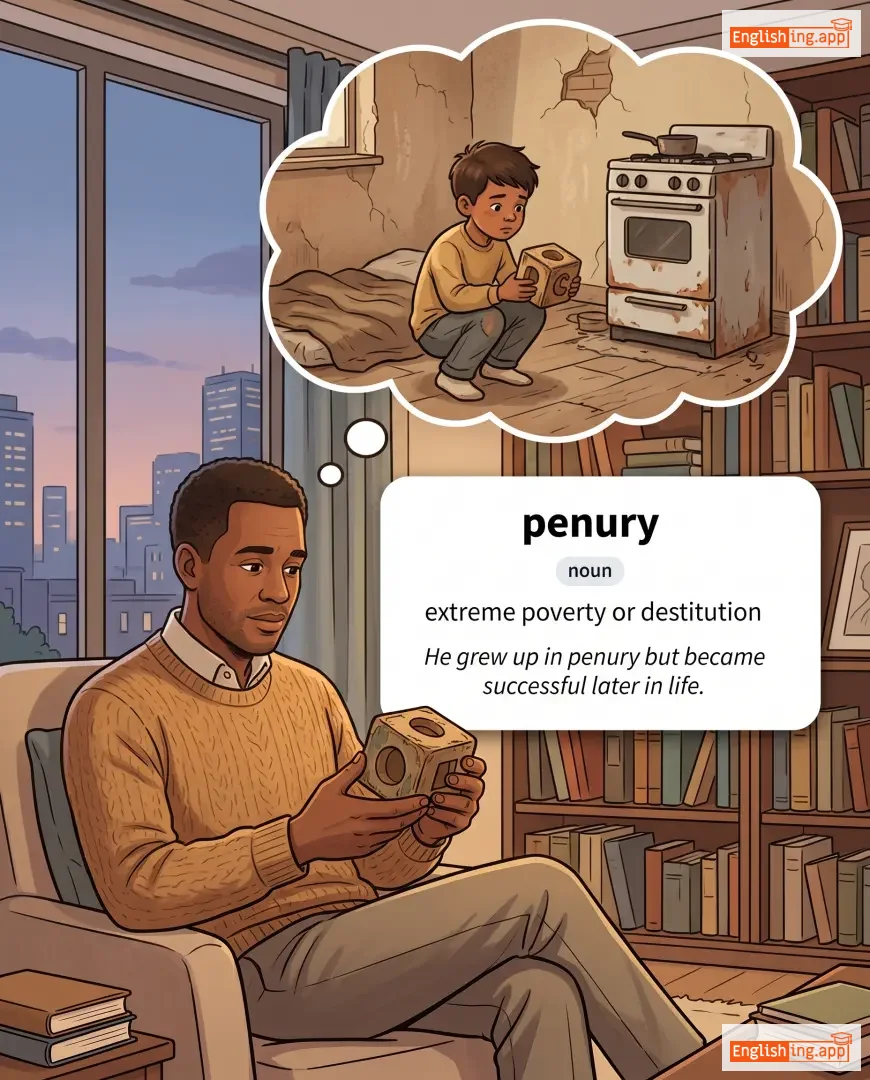
noun
/ˈpɛnjʊri/
極貧 (kyokuhin)

extreme poverty or destitution

"He grew up in penury but became successful later in life."

"彼は貧困の中で育ちましたが、その後、人生で成功しました。" (Kare wa hinkon no naka de sodachimashita ga, sono ato, jinsei de seikō shimashita.)
noun
/ˈpiːɒn/
ピオン (pion)

a low-ranking worker, often performing menial tasks

"The office peon delivered the files to each department."

"オフィスのピオンは各部署にファイルを届けました。" (Ofisu no pion wa kaku busho ni fairu o todokemashita.)
noun
/ˈpiːpl/
人々 (hitobito)

a group of human beings collectively

"The people in the town gathered for the festival."

"町の人々は祭りのために集まりました。" (Machi no hitobito wa matsuri no tame ni atsumarimashita.)
noun
/ˈpɛpər/
胡椒 (koshō)

a pungent spice obtained from pepper plants, used to flavor food

"I like to add pepper to my soup."

"私はスープに胡椒を加えるのが好きです。" (Watashi wa sūpu ni koshō o kuwaeru no ga suki desu.)
preposition
/pɜːr/
人あたり (hito atari)

for each, according to

"The tickets are priced at $20 per person."

"チケットは1人あたり20ドルの価格です。" (Chiketto wa hitori atari 20 doru no kakaku desu.)
noun
/pɜːr bɔɪld raɪs/
パーボイルドライス (pāboirudo raisu)

Rice that has been partially boiled in the husk before milling; parboiled rice

"Per boiled rice retains more nutrients than regular white rice."

"パーボイルドライスは通常の白い米よりも多くの栄養素を保持します。" (Pāboirudo raisu wa tsūjō no shiroi kome yori mo ōku no eiyōso o hoji shimasu.)
adverb
/pɜːr ˈseɪ/
自体 (jitai)

By or in itself; intrinsically.

"The idea is not bad per se, but it needs improvement."

"そのアイデア自体は悪くないが、改善が必要だ。" (Sono aidea jitai wa warukunai ga, kaizen ga hitsuyō da.)
verb
/pəˈræmbjʊˌleɪt/
散歩する (sanpo suru)

To walk through or travel around, especially for leisure.

"They perambulated the old town, enjoying the sights."

"彼らは古い町を散歩し、景色を楽しんでいました。" (Karera wa furui machi wo sanpo shi, keshiki wo tanoshinde imashita.)
noun
/pəˈræm.bjə.leɪ.tər/
ベビーカー (perambulator)

a four-wheeled carriage for a baby; baby stroller or pram

"She pushed the perambulator through the park while the baby slept peacefully."
"彼女は公園を通り抜けながら、赤ちゃんが静かに寝ている間にペランブレータを押していました。" (Kanojo wa kōen o tōri-nuke nagara, akachan ga shizuka ni nete iru aida ni perambureta o oshite imashita.)
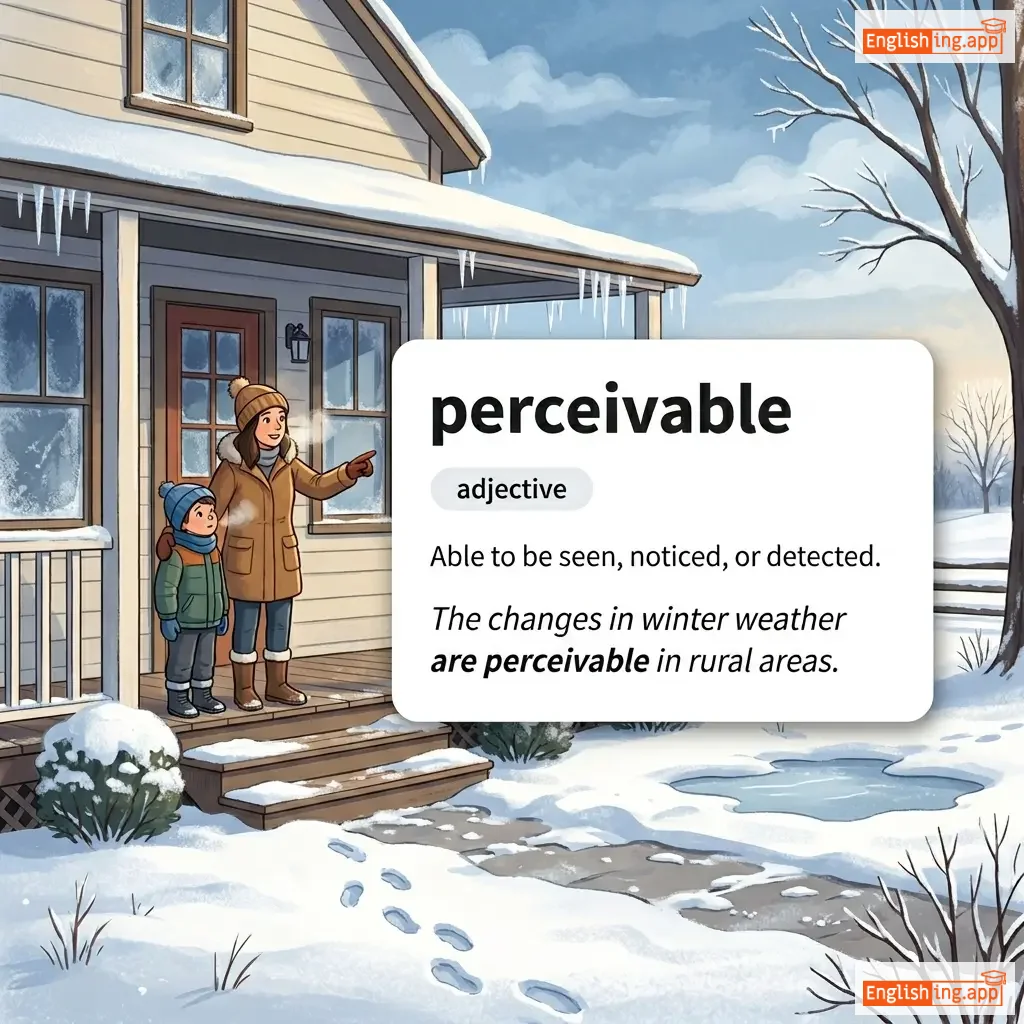
perceivable definition card — visual illustration of the meaning
adjective
পারসিভেবল
知覚可能 (chikaku kanou)

Able to be seen, noticed, or detected.

"The changes in winter weather are perceivable in rural areas."
"冬の天気の変化は農村地域で知覚可能です。" (Fuyu no tenki no henka wa nōson chiiki de chikaku kanou desu.)
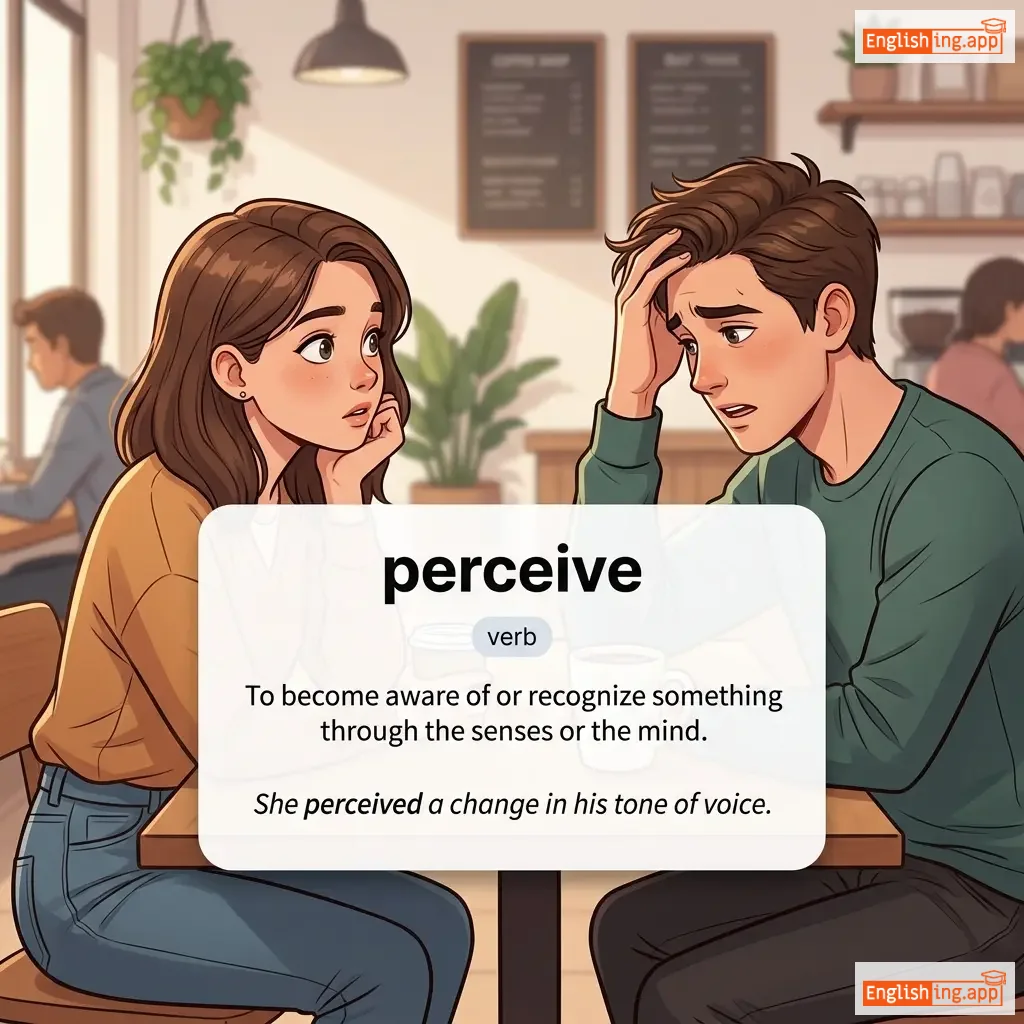
perceive definition card — visual illustration of the meaning
verb
/pərˈsiːv/
認識する (ninshiki suru)

To become aware of or recognize something through the senses or the mind.

"She perceived a change in his tone of voice."

"彼女は彼の声のトーンの変化を認識しました。" (Kanojo wa kare no koe no tōn no henka o ninshiki shimashita.)
👁️

perceived

verb
/pərˈsiːvd/
幸福 (kōfuku)

to become aware of something through the senses or the mind; to understand or interpret

"She perceived a hint of sadness in his voice."

"彼女は賞を受け取ったとき、幸せを隠せませんでした。" (Kanojo wa shō o uketotta toki, kōfuku o kakusemasen deshita.)
noun; adverb
/pərˈsɛnt/
パーセント (paasento)

a proportion out of one hundred; by each hundred

"Sales increased by ten percent this year."

"今年の売上は10パーセント増えました。" (kotoshi no uriage wa juu paasento fuemashita)
noun
/pərˈsɛntɪdʒ/
パーセント (pāsento)

a proportion or share in relation to a whole

"The percentage of students who passed the exam was high."

"試験に合格した学生のパーセントは高かった。" (Shiken ni gokaku shita gakusei no pāsento wa takakatta.)
adjective
/pərˈsɛptəbl̩/
知覚できる (chikaku dekiru)

Able to be noticed or recognized by the senses or the mind.

"There was a perceptible change in the atmosphere."

"大気中に知覚できる変化がありました。" (Taiki-chū ni chikaku dekiru henka ga arimashita.)