語彙集

英単語辞書 | 単語の意味、定義、例文

noun
/ˌpraɪvəˈtɪə/
私掠船 (shiryaku-sen)

A privately owned armed ship authorized by a government to attack enemy ships during war.

"The privateer captured several enemy vessels during the conflict."

"プライベティアは紛争中にいくつかの敵船を捕らえました。" (Puraibetiya wa funsō-chū ni ikutsuka no teki-sen o toraemashita.)
adverb
/ˈpraɪvətli/
プライベートで (puraibēto de)

in a private way; not in public or not shared with others

"She spoke to him privately about the issue."

"彼女はその問題についてプライベートで彼に話しました。" (Kanojo wa sono mondai ni tsuite puraibēto de kare ni hanashimashita.)
noun
/praɪˈveɪʃən/
欠乏, 貧困 (ketsubou, hinkon)

A state in which things essential for human well-being such as food and warmth are lacking.

"The refugees suffered great privation during the harsh winter."
"難民たちは厳しい冬の間に大きな欠乏に苦しみました。" (Nanmin-tachi wa kibishii fuyu no aida ni ookina ketsubou ni kurushimimashita.)
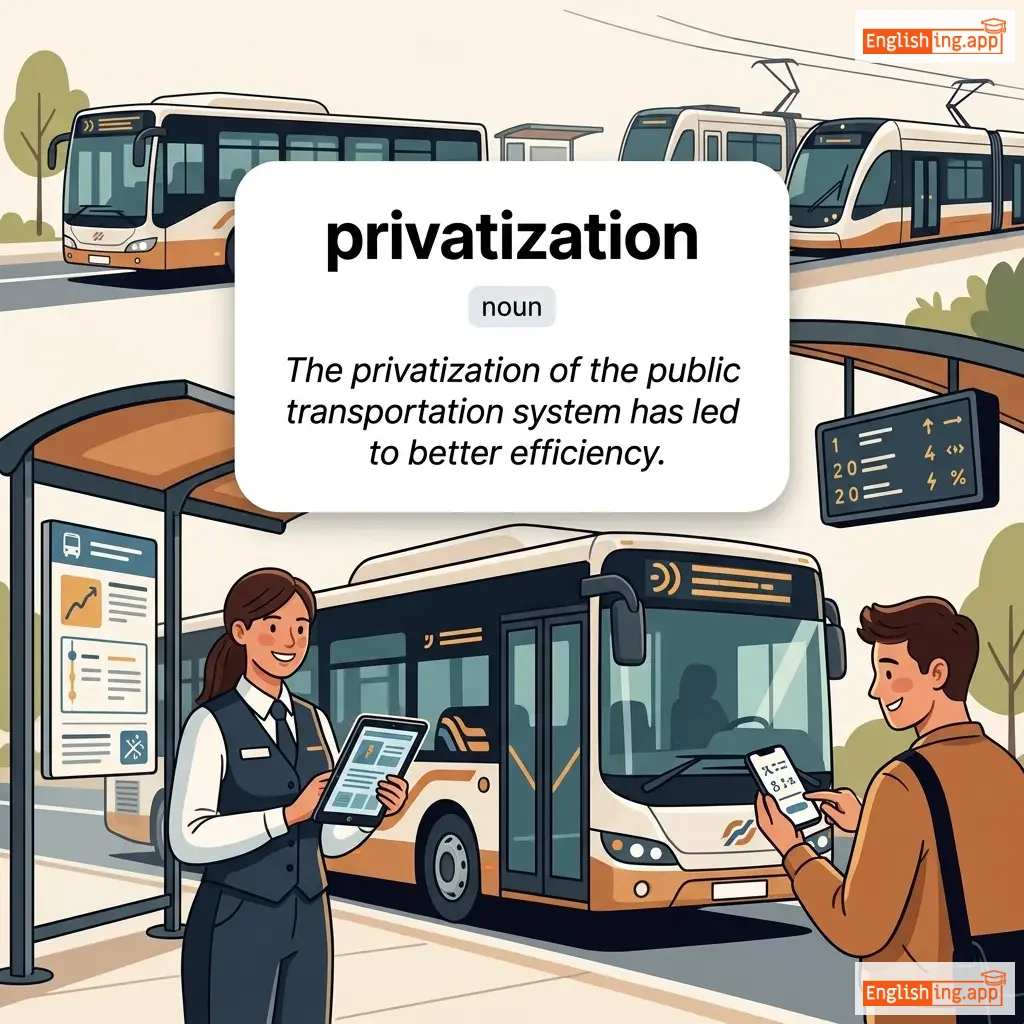
privatization definition card — visual illustration of the meaning
noun
/ˌpraɪvətəˈzeɪʃən/
民営化 (min'eika)

the process of transferring ownership of a business, industry, or service from the public sector to the private sector

"The privatization of the public transportation system has led to better efficiency."

"公共交通システムの民営化は、効率の向上をもたらしました。" (Kōkyō kōtsū shisutemu no min'eika wa, kōritsu no kōjō o motarashimashita.)
noun
/ˈprɪvəlɪdʒ/
特権, 利点 (tokken, riten)

A special right, advantage, or immunity granted or available only to a particular person or group.

"Education is considered a privilege in many developing countries."

"多くの発展途上国では、教育は特権と見なされています。" (Ooku no hatten tojoukoku de wa, kyouiku wa tokken to minasareteimasu.)
adjective
/ˈprɪv.ə.lɪdʒd/
恵まれた (megumareta)

having special advantages; favored; elite

"She comes from a privileged background with many opportunities."

"彼女は機会に恵まれた背景を持っている。" (Kanojo wa kikai ni megumareta haikei o motte iru.)
noun
/ˈprɪvɪti/
プライバシー関係、契約関係 (puraibashī kankei, keiyaku kankei)

A close, private, or special relationship; in law, the direct connection between parties to a contract.

"There was no privity of contract between the supplier and the customer."

"供給者と顧客の間には契約関係がなかった。" (kyōkyūsha to kokyaku no aida ni wa keiyaku kankei ga nakatta.)
adjective
/ˈprɪvi/
秘密の知識 (himitsu no chishiki)

having access to secret or private knowledge

"She was privy to the confidential discussions."

"彼女は機密の議論に通じていました。" (Kanojo wa kimitsu no giron ni tsūjite imashita.)
noun, verb
/praɪz/
(shou)

something given as a reward for achievement; to value highly

"He won the first prize in the competition."
"彼はコンペティションで一等賞を受賞した。" (Kare wa konpetishon de ittou shou wo jushou shita.)
noun
/prəʊ/
プロフェッショナル (purofesshonaru)

a professional, especially in sports; or a person who is in favor of something

"He plays tennis like a pro."

"彼はプロのようにテニスをプレーします。" (Kare wa puro no yō ni tenisu o purē shimasu.)
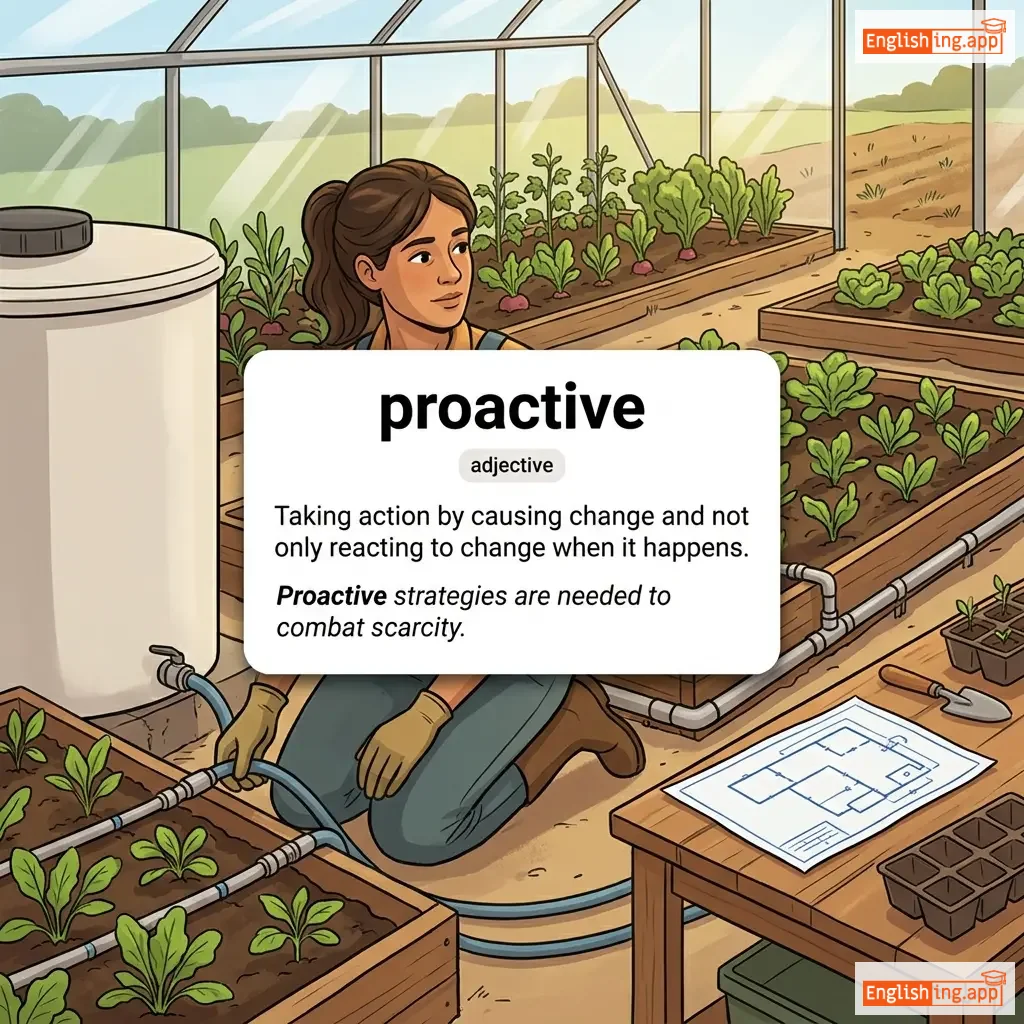
proactive definition card — visual illustration of the meaning
adjective
ˌprəʊˈæk.tɪv
積極的 (sekkyokuteki)

Taking action by causing change and not only reacting to change when it happens.

"Proactive strategies are needed to combat scarcity."
"不足に対処するために積極的な戦略が必要です。" (Fusoku ni taisho suru tame ni sekkyokuteki na senryaku ga hitsuyō desu.)
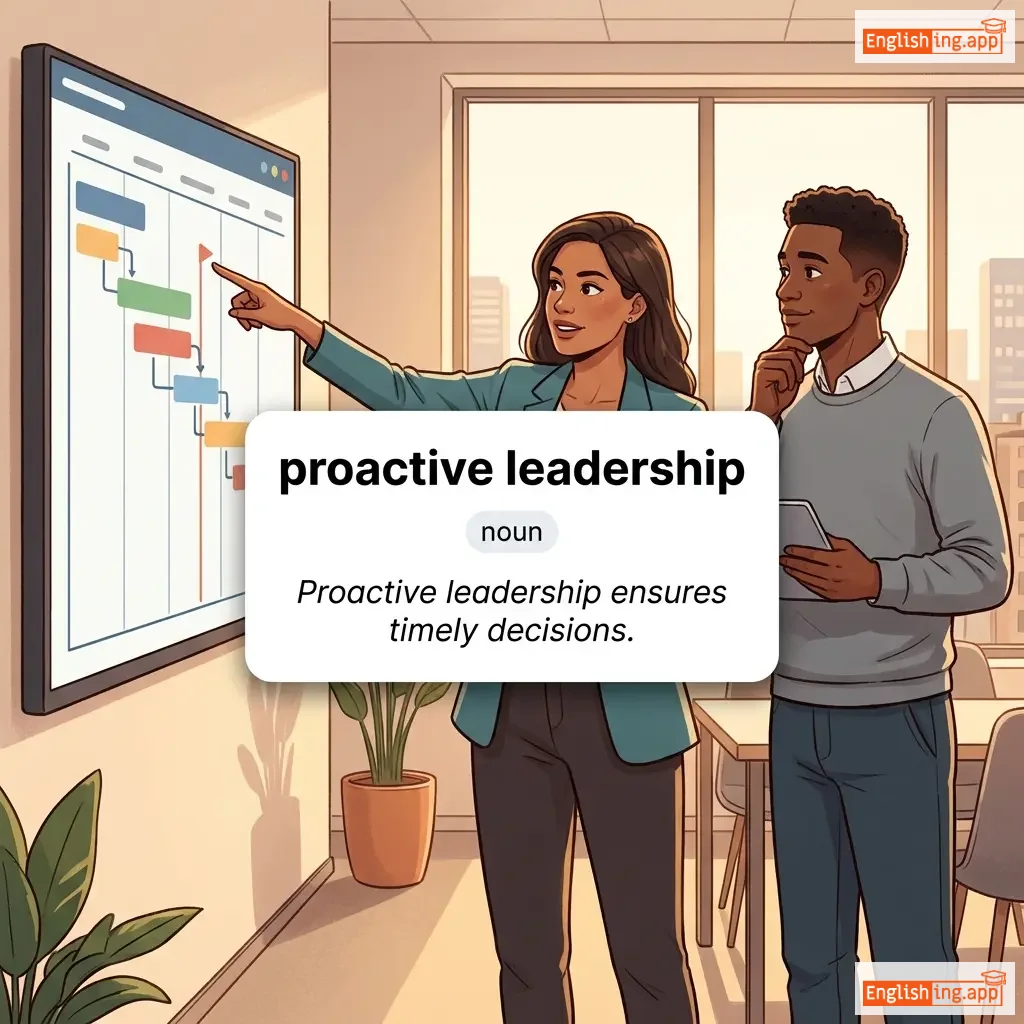
proactive leadership definition card — visual illustration of the meaning
noun
/ˌprəʊˈæk.tɪv ˈliː.də.ʃɪp/
プロアクティブリーダーシップ (puroakutibu rīdāshippu)

Leadership that takes initiative and anticipates problems before they occur, rather than reacting to events.

"Proactive leadership ensures timely decisions."

"プロアクティブリーダーシップは適時の意思決定を保証します。" (Puroakutibu rīdāshippu wa tekiji no ishi kettei o hoshō shimasu.)
proactive saving definition card — visual illustration of the meaning
noun
proʊˈæktɪv ˈseɪvɪŋ
積極的貯蓄 (sekkyokuteki chochiku)

Actively planning and setting aside money in advance to prepare for future financial needs

"Proactive saving ensures financial stability in old age."
"プロアクティブセービングは老後の財政的安定を確保します。" (Puroakutibu sebingu wa rōgo no zaiseiteki antei o kakuho shimasu.)
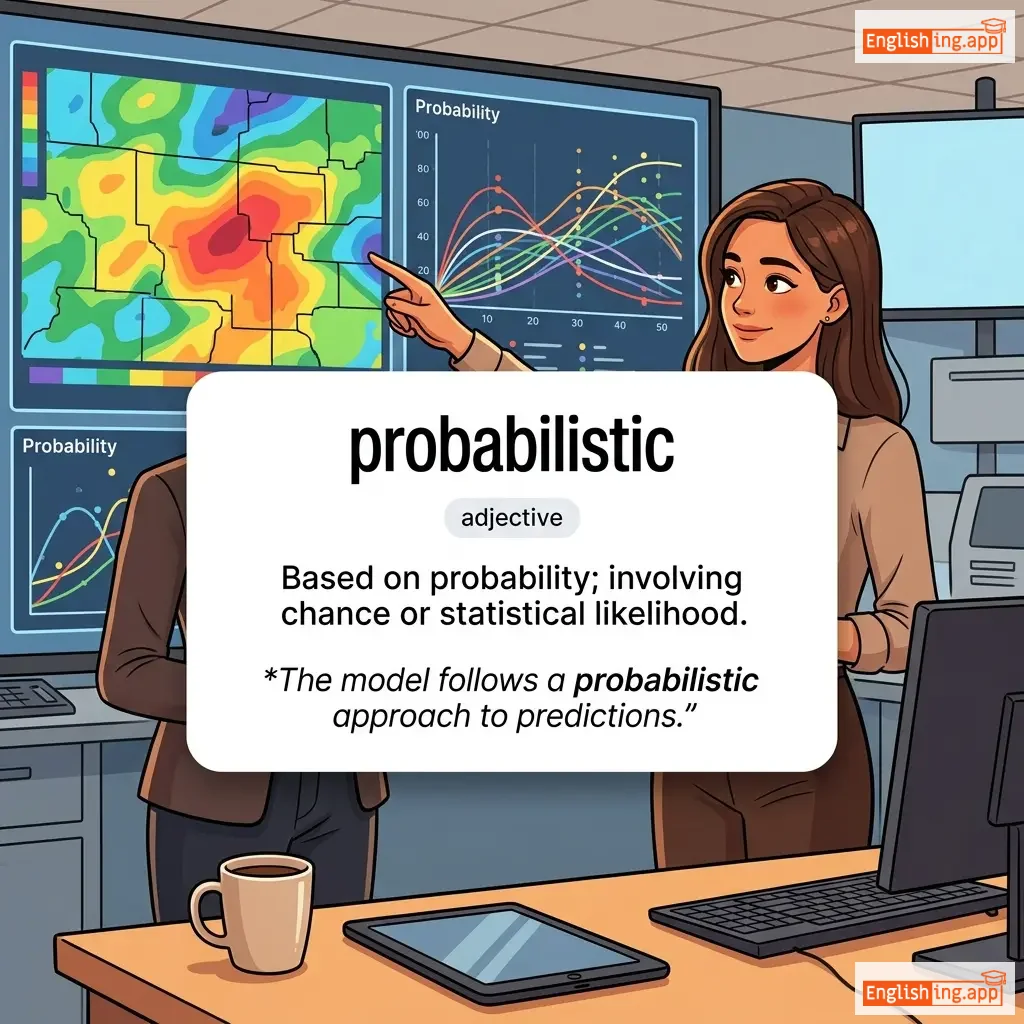
probabilistic definition card — visual illustration of the meaning
adjective
ˌprɒb.ə.bɪˈlɪs.tɪk
確率に基づく (probabisutikku)

Based on probability; involving chance or statistical likelihood.

"The model follows a probabilistic approach to predictions."

"モデルは予測のために確率的アプローチを採用しています。" (Moderu wa yosoku no tame ni kakuritsuteki apurōchi o saiō shiteimasu.)
noun
/ˌprɒbəˈbɪləti/
確率 (kakuritsu)

the likelihood or chance of something happening

"The probability of rain tomorrow is high according to the forecast."

"明日の雨の確率は予報によると高いです。" (Ashita no ame no kakuritsu wa yohō ni yoru to takai desu.)
adjective
/ˈprɒbəbl̩/
可能性が高い (kanousei ga takai)

likely to happen or be true, but not certain

"Rain is probable tomorrow according to the forecast."

"予報によると、明日は雨が降る可能性が高いです。" (Yohou ni yoru to, ashita wa ame ga furu kanousei ga takai desu.)
adverb
/ˈprɒbəbli/
おそらく (osoraku)

used to mean that something is very likely to happen or be true

"He will probably be late to the meeting."

"彼はおそらく会議に遅れるでしょう。" (Kare wa osoraku kaigi ni okureru deshō.)
noun
/ˈproʊbeɪt/
遺言検認 (yuigon kenshin)

the official proving of a will in a court of law

"The family had to go through probate after his death."

"家族は彼の死後、遺言検認の手続きを経なければならなかった。" (Kazoku wa kare no shigo, yuigon kenshin no tetsuzuki o he-nakereba naranakatta.)
noun
/proʊˈbeɪʃən/
試用期間 (shiyou kikan)

a period of testing or supervision, especially for offenders or new employees

"He was placed on probation for six months."
"彼は6か月の試用期間を与えられました。" (Kare wa roku kagetsu no shiyou kikan o ataeraremashita.)
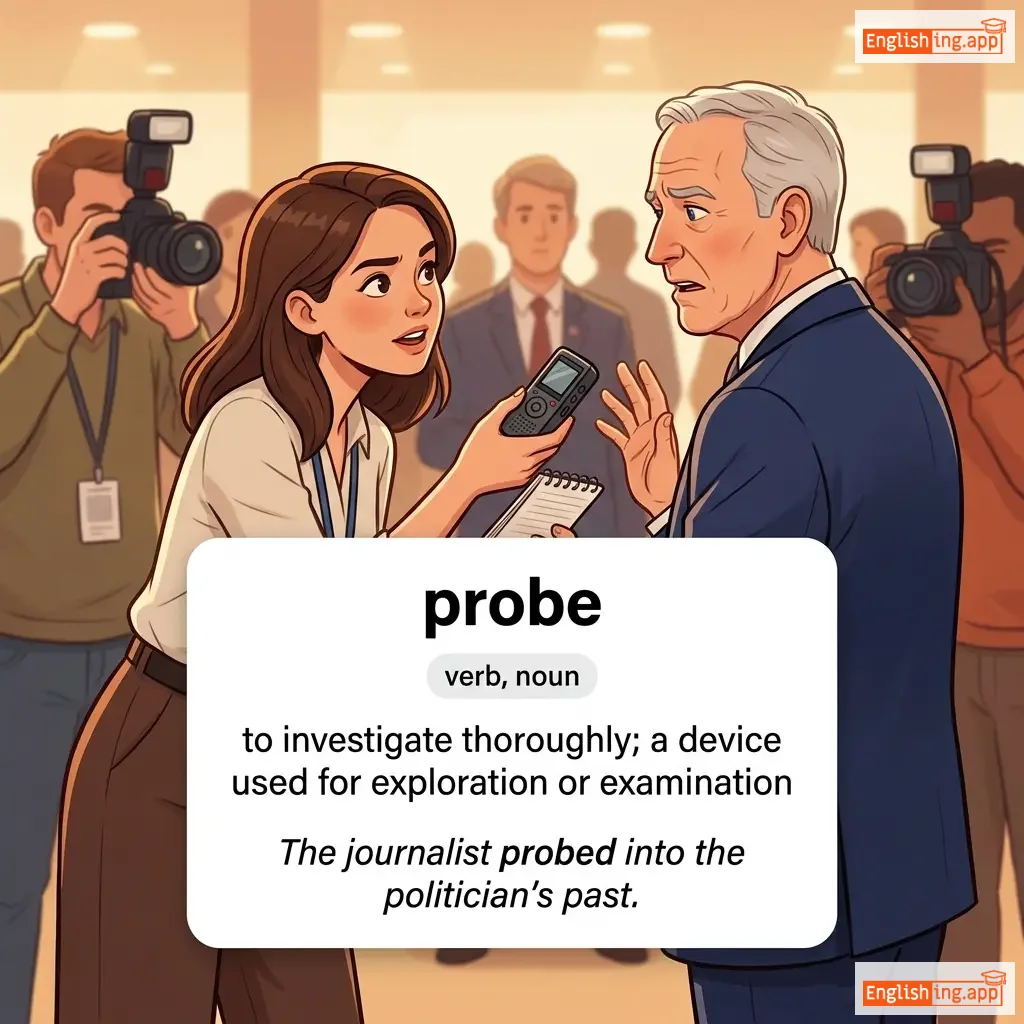
probe definition card — visual illustration of the meaning
verb, noun
/proʊb/
調査する (chōsa suru)

to investigate thoroughly; a device used for exploration or examination

"The journalist probed into the politician’s past."

"ジャーナリストは政治家の過去を調査しました。" (Jānarisuto wa seijika no kako o chōsa shimashita.)
probiotic definition card — visual illustration of the meaning
noun
ˌprəʊ.baɪˈɒt.ɪk
有益な細菌 (yūeki na saikin)

Live microorganisms that provide health benefits when consumed in adequate amounts.

"Yogurt is a natural source of probiotics that aid digestion."

"ヨーグルトは消化を助けるプロバイオティクスの自然な供給源です。" (Yōguruto wa shōka o tasukeru purobaiotikusu no shizen na kyōkyūgen desu.)
probiotics definition card — visual illustration of the meaning
noun
/ˌprəʊ.baɪˈɒt.ɪks/
プロバイオティクス (purobaiotikusu)

Live microorganisms that, when administered in adequate amounts, confer health benefits to the host, especially for digestive health.

"Probiotics improve digestion and enhance gut health."

"プロバイオティクスは消化を改善し、腸の健康を促進します。" (Purobaiotikusu wa shouka wo kaizen shi, chou no kenkou wo sokushin shimasu.)
probity definition card — visual illustration of the meaning
noun
/ˈproʊbɪti/
誠実 (seijitsu)

The quality of having strong moral principles; honesty and decency.

"The judge was admired for his integrity and probity."

"その裁判官は、誠実さと正直さで賞賛されました。" (Sono saiban-kan wa, seijitsusa to shōjitsusa de shōsan saremashita.)
noun
/ˈprɒbləm/
問題 (mondai)

a matter or situation regarded as unwelcome or harmful and needing to be dealt with and overcome

"We need to find a solution to this problem."
"私たちはこの問題の解決策を見つける必要があります。" (Watashitachi wa kono mondai no kaiketsu-saku o mitsukeru hitsuyō ga arimasu.)
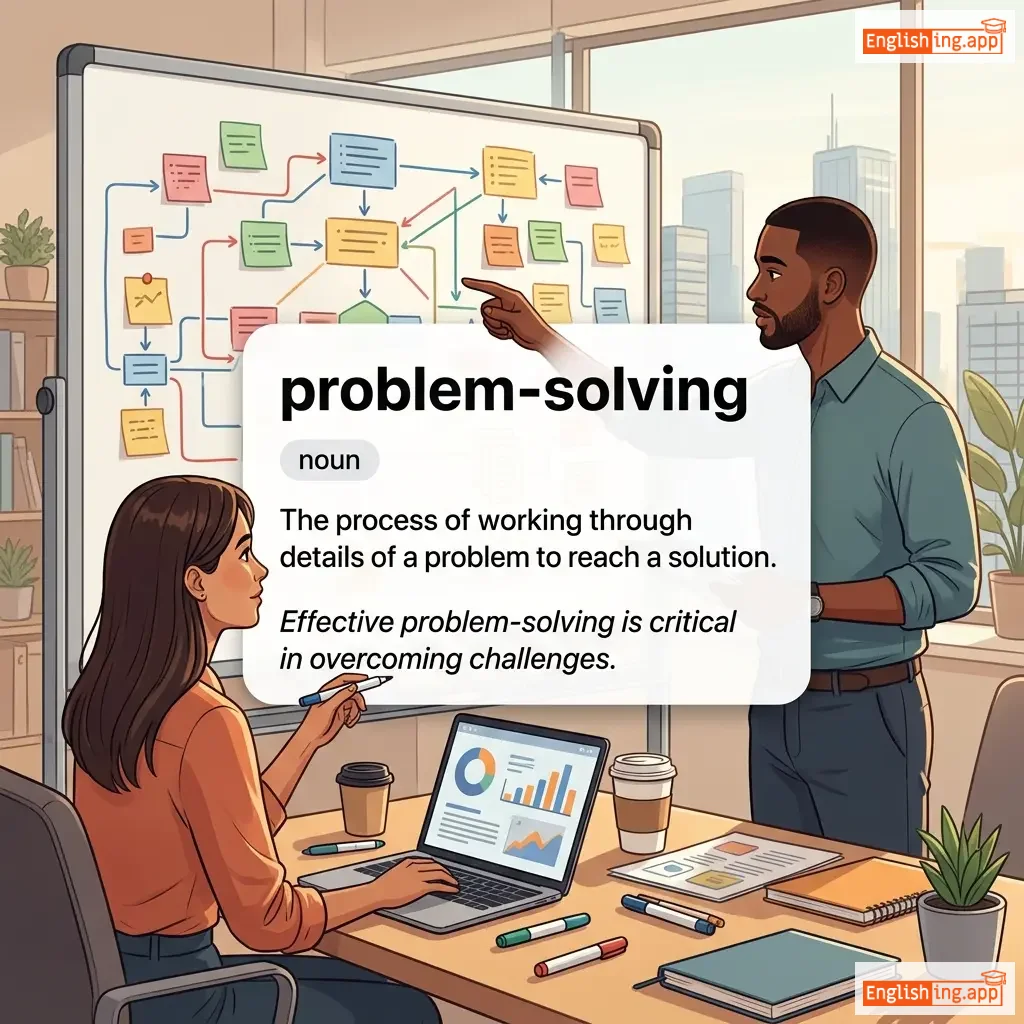
problem-solving definition card — visual illustration of the meaning
noun
/ˈprɒbləm ˈsɒlvɪŋ/
問題解決 (mondai kaiketsu)

The process of working through details of a problem to reach a solution.

"Effective problem-solving is critical in overcoming challenges."
"効果的な問題解決は、課題を克服するために重要です。" (Kouka-teki na mondai kaiketsu wa, kadai o kokufuku suru tame ni juuyou desu.)
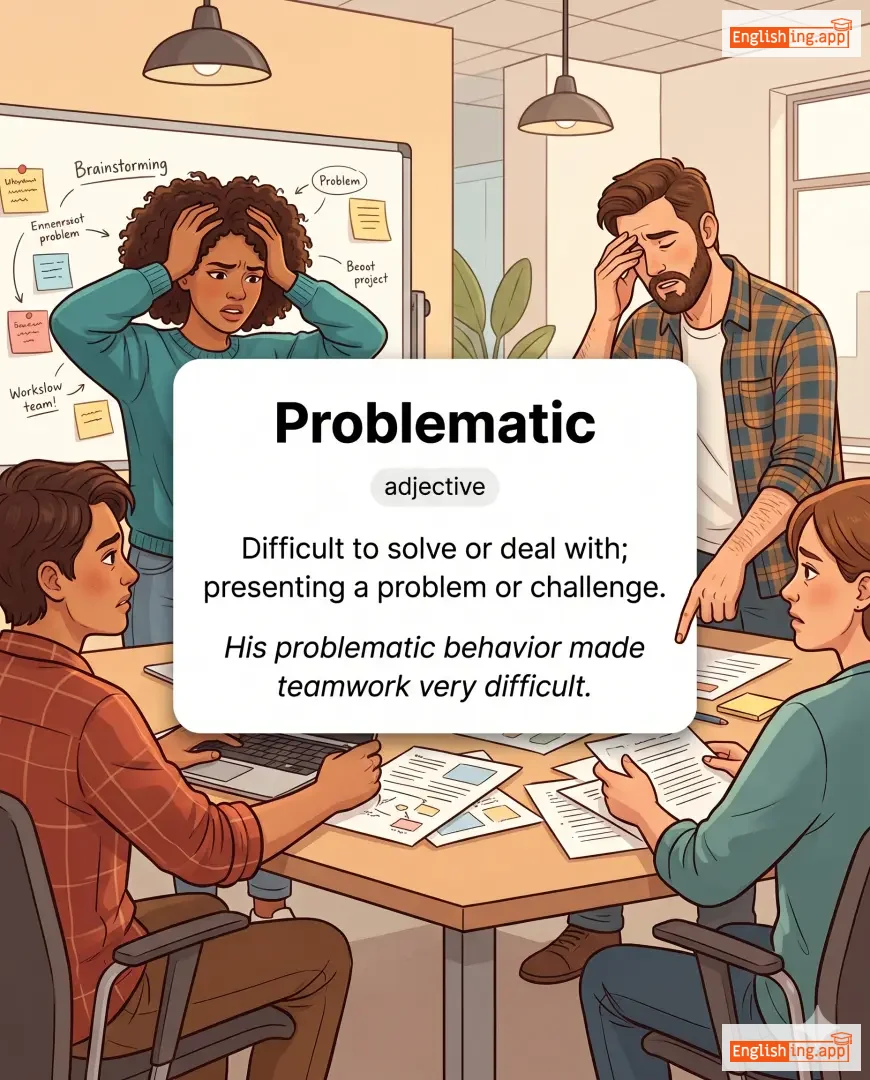
Problematic definition card — visual illustration of the meaning
adjective
/ˌprɒbləˈmætɪk/
問題のある (mondai no aru)

Difficult to solve or deal with; presenting a problem or challenge.

"His problematic behavior made teamwork very difficult."

"彼の問題のある行動はチームワークを非常に難しくしました。" (Kare no mondai no aru kōdō wa chīmu wāku o hijō ni muzukashiku shimashita.)
noun
/proʊˈbɑːsɪs/
象の鼻 (zou no hana)

The long, flexible nose of some animals, especially an elephant, or a tubular feeding and sucking organ in insects.

"The elephant used its proboscis to grab food."

"ゾウは食べ物を取るためにその象の鼻を使った。" (Zō wa tabemono o toru tame ni sono zō no hana o tsukatta.)
adjective
/prəˈsiːdʒərəl/
手続き的な (tetsudzukiteki na)

Relating to an established or official way of doing something; concerned with procedure.

"The committee followed the procedural rules strictly."
"委員会は手続き的なルールを厳格に守った。" (Iinkai wa tetsudzukiteki na rūru o genkaku ni mamotta.)
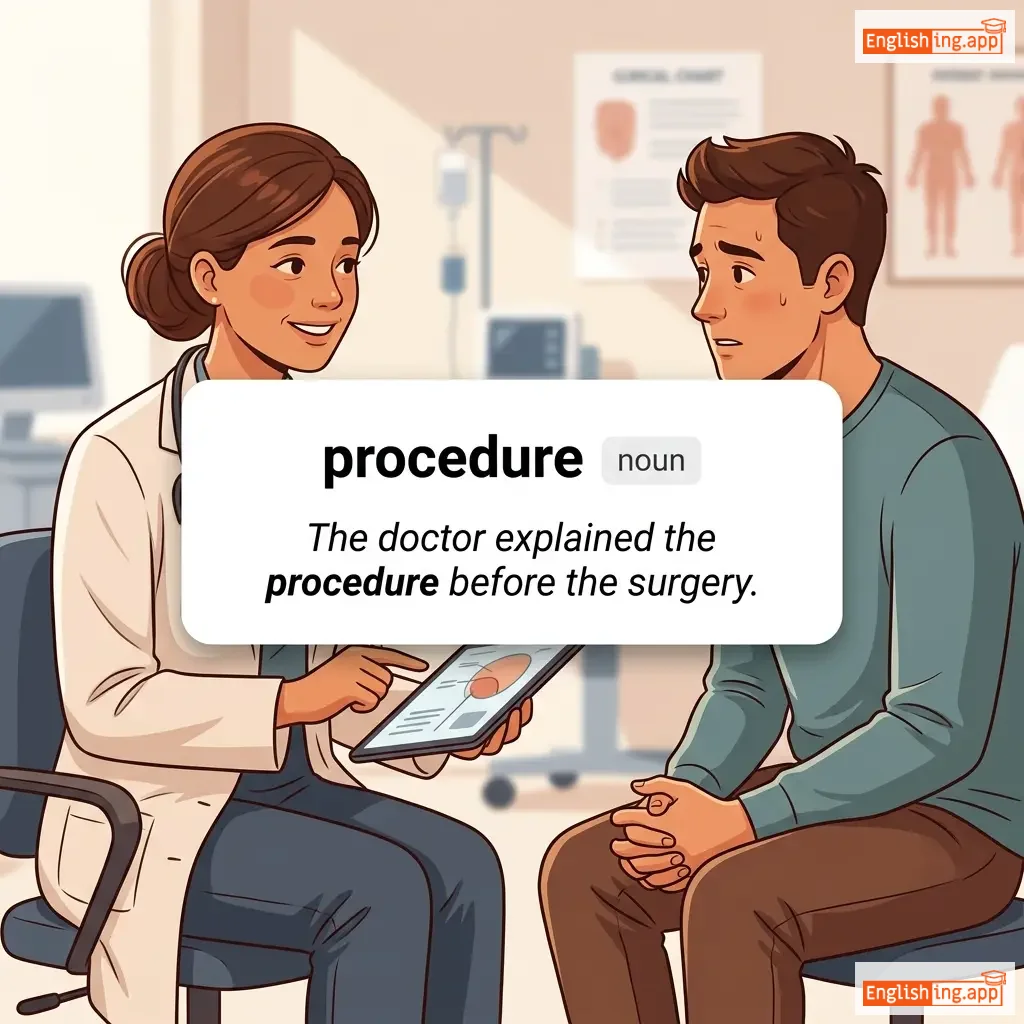
procedure definition card — visual illustration of the meaning
noun
/prəˈsiːdʒər/
手順 (tejun)

An established or official way of doing something; a series of actions conducted in a certain order.

"The doctor explained the procedure before the surgery."

"医者は手術の前に手順を説明しました。" (Isha wa shujutsu no mae ni tejun o setsumei shimashita.)
➡️

proceed

verb
/prəˈsiːd/

to begin or continue an action or process after a pause or interruption

"After the short break, the speaker proceeded with his lecture."

noun
/prəˈsiːdɪŋ/
手続き (tetsudzuki)

a course of action; often used for a legal process or event

"The court proceedings lasted for several hours."
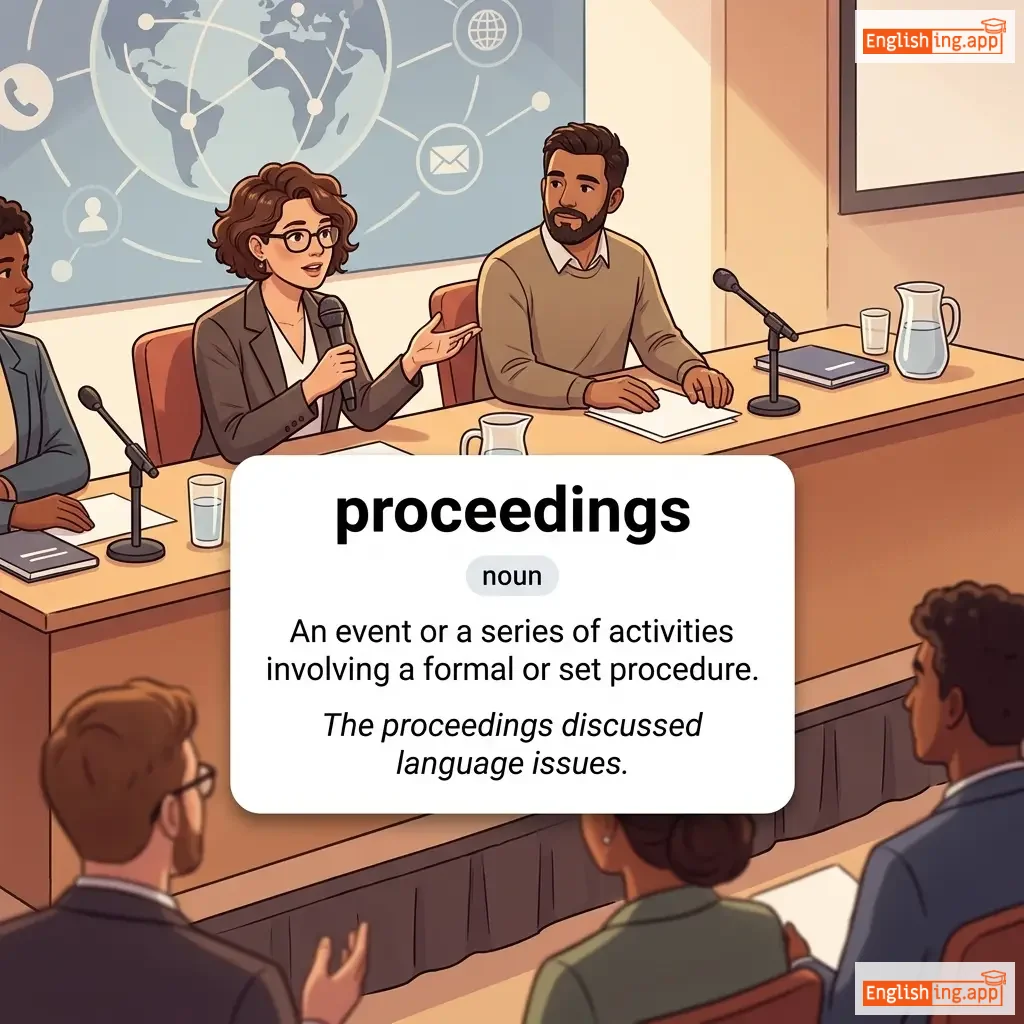
"裁判所の手続きは数時間続きました。" (Saibansho no tetsudzuki wa suujikan tsuzukimashita.)
proceedings definition card — visual illustration of the meaning
noun
prəˈsiːdɪŋz
手続き (tetsuzuki)

An event or a series of activities involving a formal or set procedure.

"The proceedings discussed language issues."

"手続きでは言語の問題が議論されました。" (Tetsuzuki de wa gengo no mondai ga giron saremashita.)
noun
/ˈprəʊsiːdz/
収益 (shuueki)

money obtained from an event, activity, or sale

"The proceeds from the charity event were donated to the orphanage."

"チャリティイベントの収益は孤児院に寄付されました。" (Charity ibento no shuueki wa kojin ni kifu saremashita.)
process definition card — visual illustration of the meaning
noun
/ˈprəʊsɛs/
プロセス (purosesu)

a series of actions or steps taken to achieve a particular end

"The hiring process takes several weeks."
"採用プロセスは数週間かかります。" (Saiyō purosesu wa suū shūkan kakarimasu.)
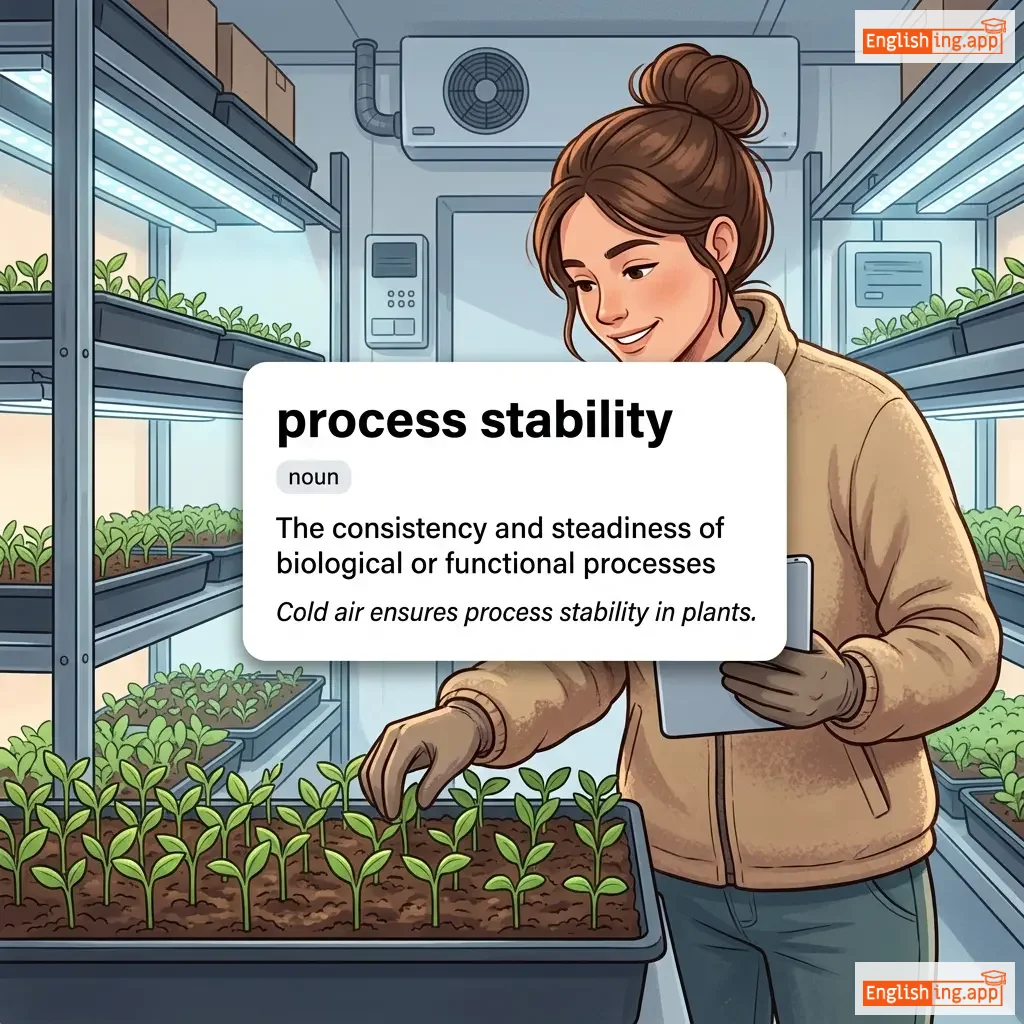
process stability definition card — visual illustration of the meaning
noun
ˈprəʊses stəˈbɪlɪti
プロセスの安定性 (purosesu no anteisei)

The consistency and steadiness of biological or functional processes

"Cold air ensures process stability in plants."
"冷たい空気は植物のプロセスの安定性を確保します。" (Tsumetai kūki wa shokubutsu no purosesu no anteisei o kakuho shimasu.)
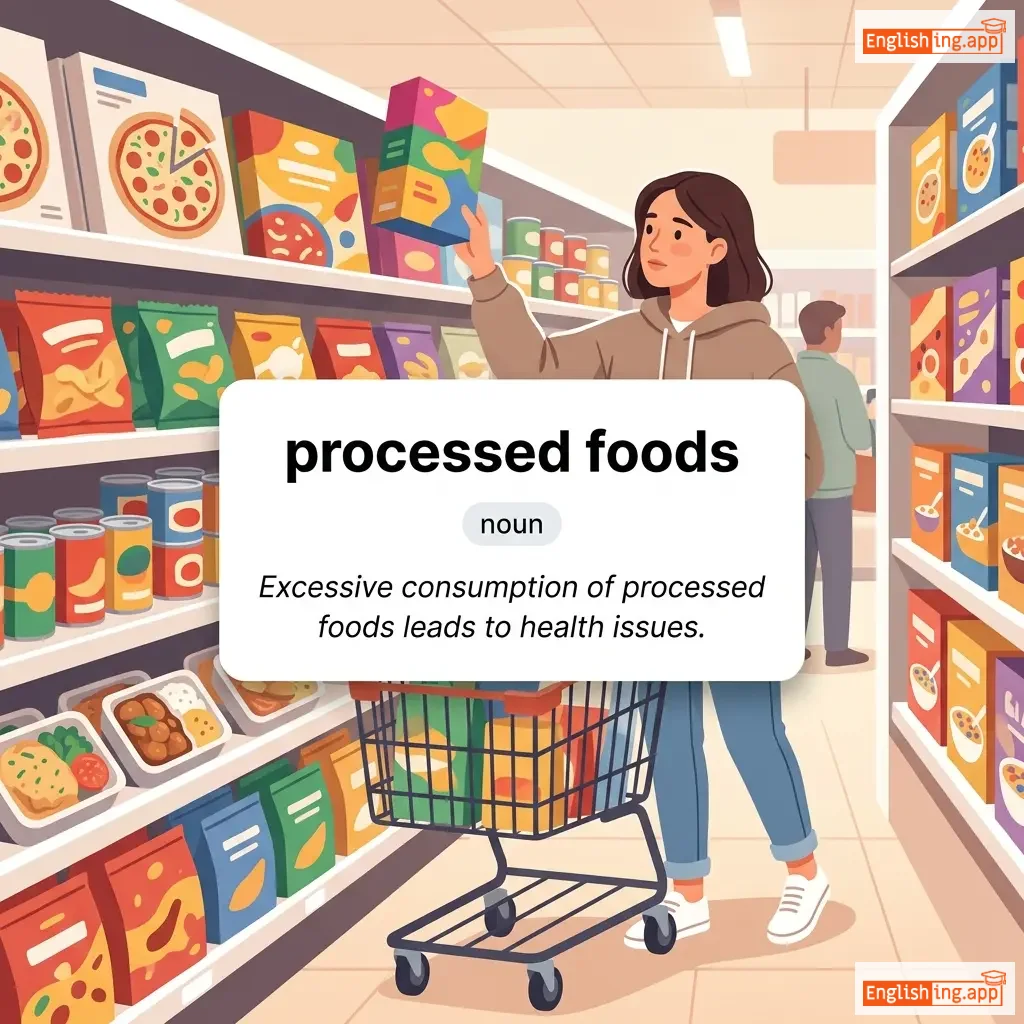
processed foods definition card — visual illustration of the meaning
noun
ˈprɑː.sest fuːdz
加工食品 (kakou shokuhin)

Foods that have been altered from their natural state through various methods such as canning, freezing, refrigeration, dehydration and aseptic processing.

"Excessive consumption of processed foods leads to health issues."

"加工食品の過剰摂取は健康問題を引き起こします。" (Kakou shokuhin no kajō sesshu wa kenko mondai o hikiokoshimasu.)
noun
/ˈprəʊsesɪŋ/
処理 (shori)

the series of actions or steps taken to achieve a particular end, especially in data or food handling

"Data processing takes place in the server."

"データ処理はサーバーで行われます。" (Dēta shori wa sābā de okonawaremasu.)
🚶‍♂️🚶‍♀️

Procession (プロセッション)

noun
/prəˈseʃ.ən/
行列; パレード; (gyouretsu)

a group of people or vehicles moving forward in an organized way, especially as part of a ceremony

"The wedding procession walked slowly to the church."

"結婚式の行列はゆっくりと教会に向かって歩きました。" (kekkonshiki no gyouretsu wa yukkuri to kyoukai ni mukatte arukimashita.)
noun
/ˈprəʊsesə/
プロセッサ (purosessa)

a machine or device that processes something, especially a computer's central processing unit (CPU)

"The new laptop has a faster processor."

"新しいノートパソコンにはより高速なプロセッサがあります。" (Atarashī nōtopasokon ni wa yori kōsoku na purosessa ga arimasu.)
verb
/prəˈkleɪm/
宣言する (sengen suru)

to announce something publicly or officially, especially something important

"The president proclaimed a national day of mourning."

"大統領は国民の日を宣言した。" (Daitōryō wa kokumin no hi o sengen shita.)
noun
/ˌprɒkləˈmeɪʃən/
宣言 (sengen)

an official public announcement made by a person in authority

"The king issued a proclamation declaring the new law."
"王は新しい法律を発表する宣言を出した。" (Ō wa atarashī hōritsu o happyō suru sengen o dashita.)
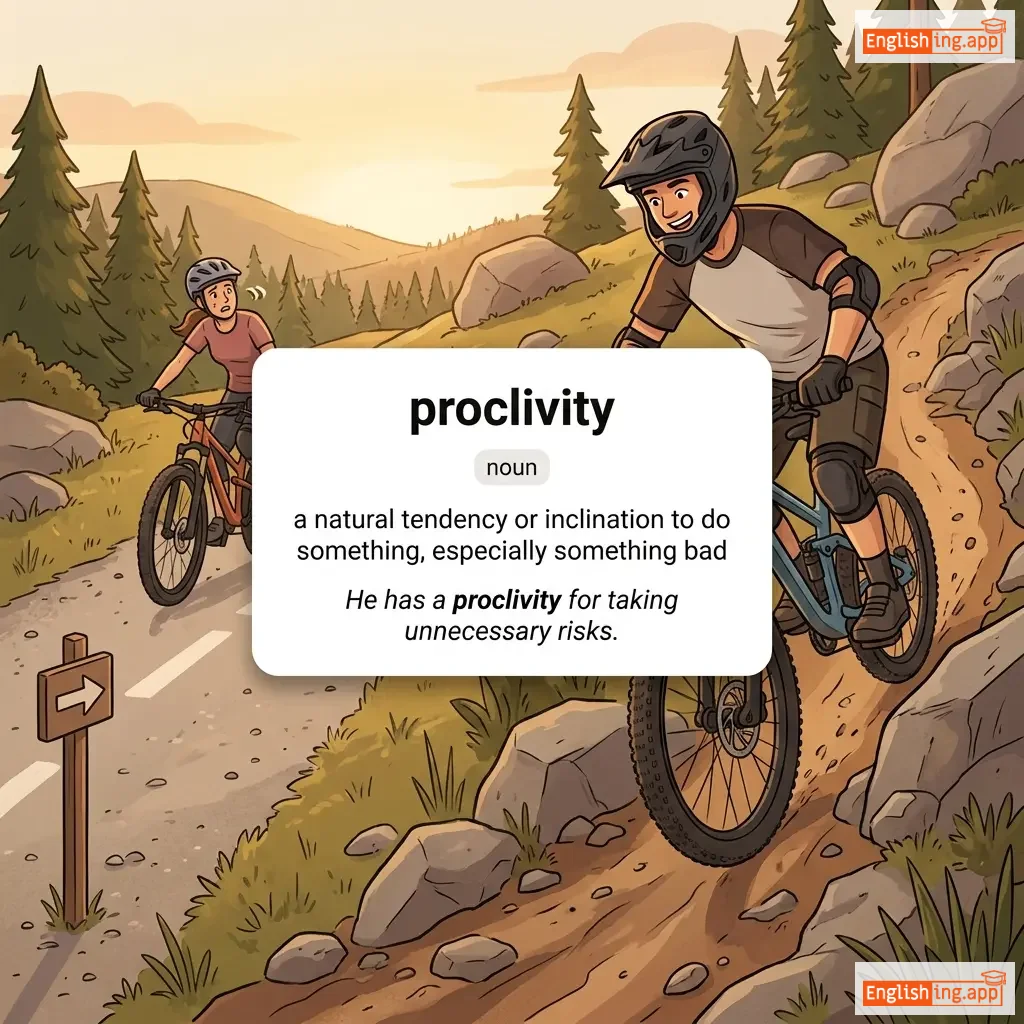
proclivity definition card — visual illustration of the meaning
noun
/prəˈklɪvɪti/
傾向 (keikou)

a natural tendency or inclination to do something, especially something bad

"He has a proclivity for taking unnecessary risks."

"彼は不必要なリスクを取る傾向がある。" (Kare wa fuhitsuyou na risuku wo toru keikou ga aru.)
procrastinate definition card — visual illustration of the meaning
verb
/prəˈkræs.tɪ.neɪt/

to delay doing something, often unnecessarily or habitually

"He tends to procrastinate instead of finishing his assignments on time."

procrastination definition card — visual illustration of the meaning
noun
/prəˌkræs.tɪˈneɪ.ʃən/
先延ばし (saki nobashi)

the act of delaying or postponing something

"Procrastination often leads to unnecessary stress before deadlines."

"先延ばしはしばしば締め切り前に不必要なストレスを引き起こします。" (Saki nobashi wa shibashiba shimekiri mae ni fuhitsuyō na sutoresu o hikiokoshimasu.)
noun
/ˈprɒk.tər/
試験監督者 (shiken kantokusha)

a person who supervises students during an examination

"The proctor reminded students to keep their phones switched off."

"試験監督者は学生に携帯電話を切るように注意しました。" (Shiken kantokusha wa gakusei ni keitai denwa o kiru yō ni chūi shimashita.)
verb
/prəˈkjʊər/
調達する (choutatsu suru)

to obtain something, especially with effort or difficulty

"They managed to procure enough supplies for the expedition."

"彼らは遠征のために十分な物資を調達することができました。" (Karera wa ensen no tame ni jūbun'na bussī o chōtatsu suru koto ga dekimashita.)
procurement definition card — visual illustration of the meaning
noun
/prəˈkjʊə.mənt/
調達 (choutatsu)

the process of obtaining goods or services, often for business or government

"The company focuses on the efficient procurement of raw materials."

"会社は原材料の効率的な調達に集中しています。" (Kaisha wa genzairyou no kouritsuteki na choutatsu ni shuuchuu shiteimasu.)
verb
/prɒd/
突っつく (tsutsuku)

to poke or push someone or something with a finger, foot, or pointed object

"She prodded him in the arm to get his attention."

"彼女は彼の腕を突いて注意を引こうとした。" (Kanojo wa kare no ude o tsuite chuui o hikou to shita.)
prodigal definition card — visual illustration of the meaning
adjective
/ˈprɒdɪɡəl/
浪費家 (rōhika)

spending money or resources freely and recklessly; wastefully extravagant

"The prodigal son returned home after wasting his inheritance."

"浪費家の息子は、遺産を浪費した後、家に帰りました。" (Rōhika no musuko wa, isan o rōhi shita ato, ie ni kaerimashita.)
noun
/ˌprɒdɪˈɡæləti/
浪費 (rōhi)

the quality of being wastefully extravagant

"His prodigality with money left him bankrupt."

"彼の浪費癖が彼を破産させた。" (Kare no rōhi heki ga kare o hasan saseta.)