日本
インターフェース言語
EN
English
BN
বাংলা
HI
हिन्दी
ES
Español
FR
Français
DE
Deutsch
RU
Русский
ZH
简体中文
JA
日本語
日本
コンテンツ言語
ウェブサイト言語と同じ
EN
英語
BN
ベンガル語
HI
ヒンディー語
ES
スペイン語
FR
フランス語
DE
ドイツ語
RU
ロシア語
ZH
中国語
JA
日本語
ライト
ダーク
システム
ログイン
ホーム
コース
語彙集
PDF
動画
日本語
インターフェース言語
EN
英語
BN
ベンガル語
HI
ヒンディー語
ES
スペイン語
FR
フランス語
DE
ドイツ語
RU
ロシア語
ZH
中国語
JA
日本語
日本語
コンテンツ言語
EN
英語
BN
ベンガル語
HI
ヒンディー語
ES
スペイン語
FR
フランス語
DE
ドイツ語
RU
ロシア語
ZH
中国語
JA
日本語
Light
Dark
System
ログイン
登録
ホーム
コース
語彙集
PDF
動画
語彙集
/
probiotics
🦠
probiotics
(プロバイオティクス)
noun
/ˌprəʊ.baɪˈɒt.ɪks/
プロバイオティクス
(purobaiotikusu)
probiotic
probity
意味
Live microorganisms that, when administered in adequate amounts, confer health benefits to the host, especially for digestive health.
意味の翻訳
適切に摂取された場合、健康に有益で、特に消化器系の健康に良い影響を与える微生物。
Tekisetsu ni sesshu sareta baai, kenkou ni yuueki de, tokuni shouka ki kei no kenkou ni yoi eikyou wo ataeru biseibutsu.
例文
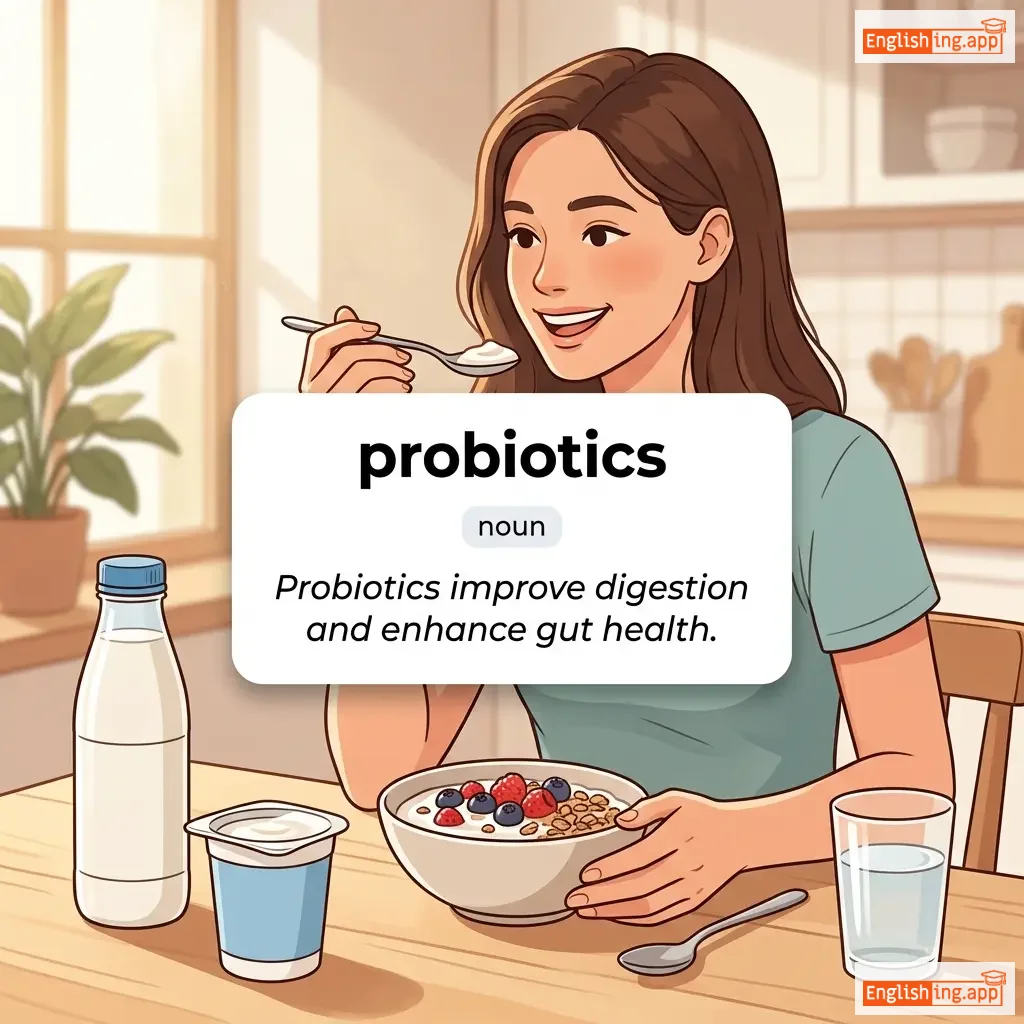
Probiotics
improve digestion and enhance gut health.
プロバイオティクスは消化を改善し、腸の健康を促進します。
Purobaiotikusu wa shouka wo kaizen shi, chou no kenkou wo sokushin shimasu.
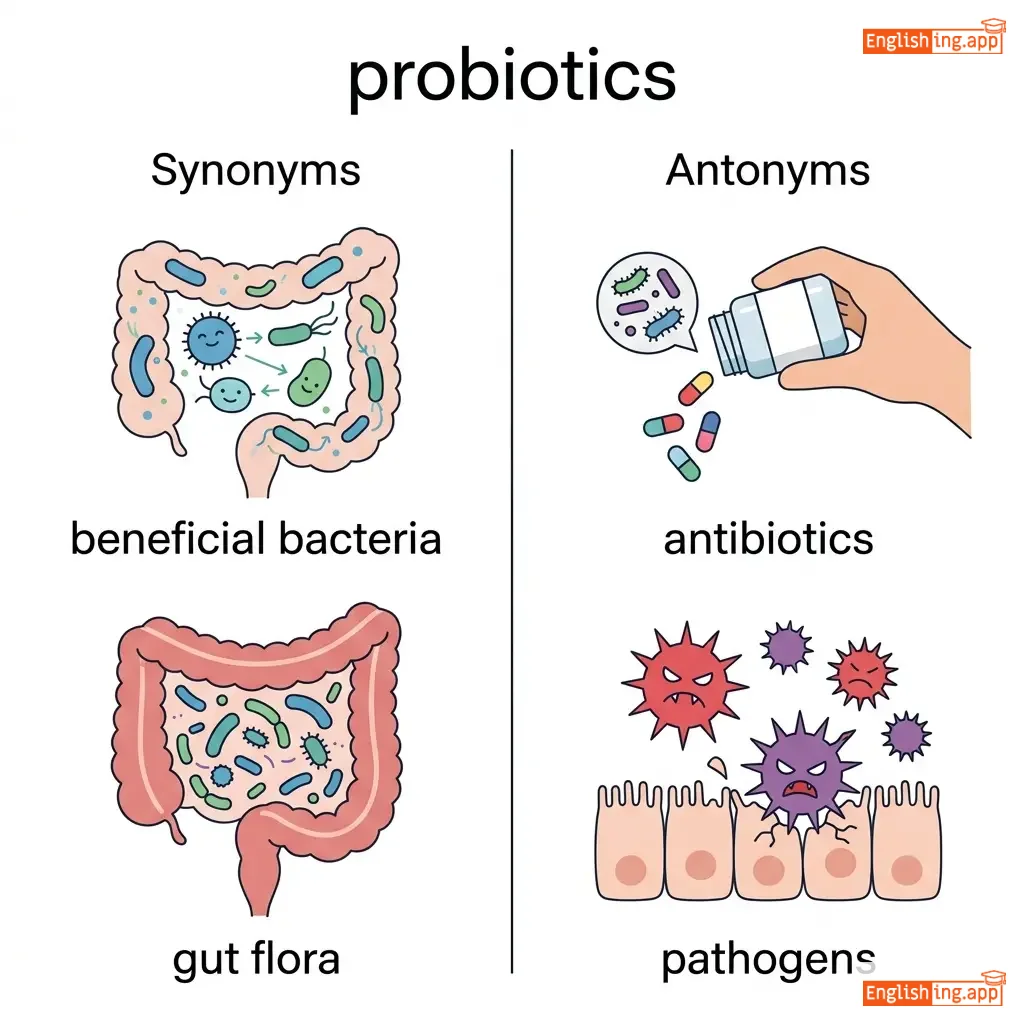
同義語
beneficial bacteria, gut flora, digestive aid
対義語
antibiotics, pathogens, harmful microbes
関連記事
Learn Vocabulary Through Article 218 - The Science Behind Healthy Eating
関連語彙
signature
(署名)
a person's name written by themselves, often as a form of identification or authorization
regime
(政権)
a system or form of government, often authoritarian
Neuroplasticity
(神経可塑性)
The ability of the brain to reorganize itself by forming new neural connections throughout life.
knack
(才能)
a natural skill or ability; a special talent for doing something easily
antecedents
(先例)
previous events, conditions, or people that influence or serve as a basis for something that follows
profound initiative
(深遠なイニシアティブ)
A deep, meaningful, and significant action or program designed to create change.
さらに探索
すべての語彙