語彙集

英単語辞書 | 単語の意味、定義、例文

verb
/ˈpɔːltər/
あいまいに話す、騙す (aimai ni hanasu, damasu)

to act insincerely or deceitfully; to equivocate or lie

"He paltered when asked about his involvement in the deal."

"取引に関与しているか尋ねられたとき、彼は回避しました。" (Torihiki ni kan'yo shite iru ka tazunerareta toki, kare wa kaishi shimashita.)
adjective
/ˈpɔːltri/
取るに足りない, 些細な (toru ni tarinai, sasaina)

small or meager; lacking in value or importance

"They offered him a paltry sum for his work."

"彼らは彼の仕事に対して取るに足りない金額を提案した。" (Karera wa kare no shigoto ni taishite toru ni tarinai kingaku o teian shita.)
adjective
/ˈpeɪli/
縞模様 (kamomoyou)

striped with different colors, usually used in heraldry

"The knight’s shield was decorated with paly stripes of red and gold."

"騎士の盾には赤と金の縞模様が飾られていた。" (Kishi no tate ni wa aka to kin no kamomoyou ga kazararete ita.)
verb
/ˈpæmpər/
甘やかす / 大切にする (amayasasu / taisetsu ni suru)

to treat with excessive care and attention; to spoil

"Parents often pamper their first child."

"親はしばしば最初の子供を甘やかします。" (Oya wa shibashiba saisho no kodomo wo amayakashimasu.)
noun
/ˈpæm.flət/
パンフレット (panfuretto)

a small booklet or brochure containing information or arguments about a subject

"The health department distributed a pamphlet about nutrition."

"健康部門は栄養に関するパンフレットを配布しました。" (Kenkou bumon wa eiyou ni kansuru panfuretto o haifu shimashita.)
noun, verb
/ˌpæm.fləˈtɪər/
パンフレットの著者 (panfuretto no chosha)

a person who writes or distributes pamphlets, often to promote a political or social cause

"In the 18th century, many pamphleteers influenced public opinion."

"18世紀には、多くのパンフレットの著者が公衆の意見に影響を与えました。" (18 seiki ni wa, ooku no panfuretto no chosha ga koushu no iken ni eikyou wo ataemashita.)
noun, verb
/pæn/
フライパン, 鍋 (furaipan, nabe)

a shallow container used for cooking; also means to criticize severely (verb)

"She cooked the eggs in a frying pan."

"彼女はフライパンで卵を調理した。" (Kanojo wa furaipan de tamago o chōri shita.)
adjective
/ˌpæn.əˈmer.ɪ.kən/
パンアメリカン (pan-amerikan)

relating to all the countries of North, Central, and South America

"The Pan-American Games bring together athletes from across the continent."

"パンアメリカンゲームは大陸全体のアスリートを集めます。" (Pan-Amerikan gēmu wa tairiku zentai no asurīto o atsume masu.)
noun
/ˌpænəˈsiːə/
万能薬 (bannōyaku)

A solution or remedy for all difficulties or diseases.

"Education is often seen as a panacea for social problems."
"教育は社会問題の万能薬と見なされることがよくあります。" (Kyōiku wa shakai mondai no bannōyaku to minasareru koto ga yoku arimasu.)
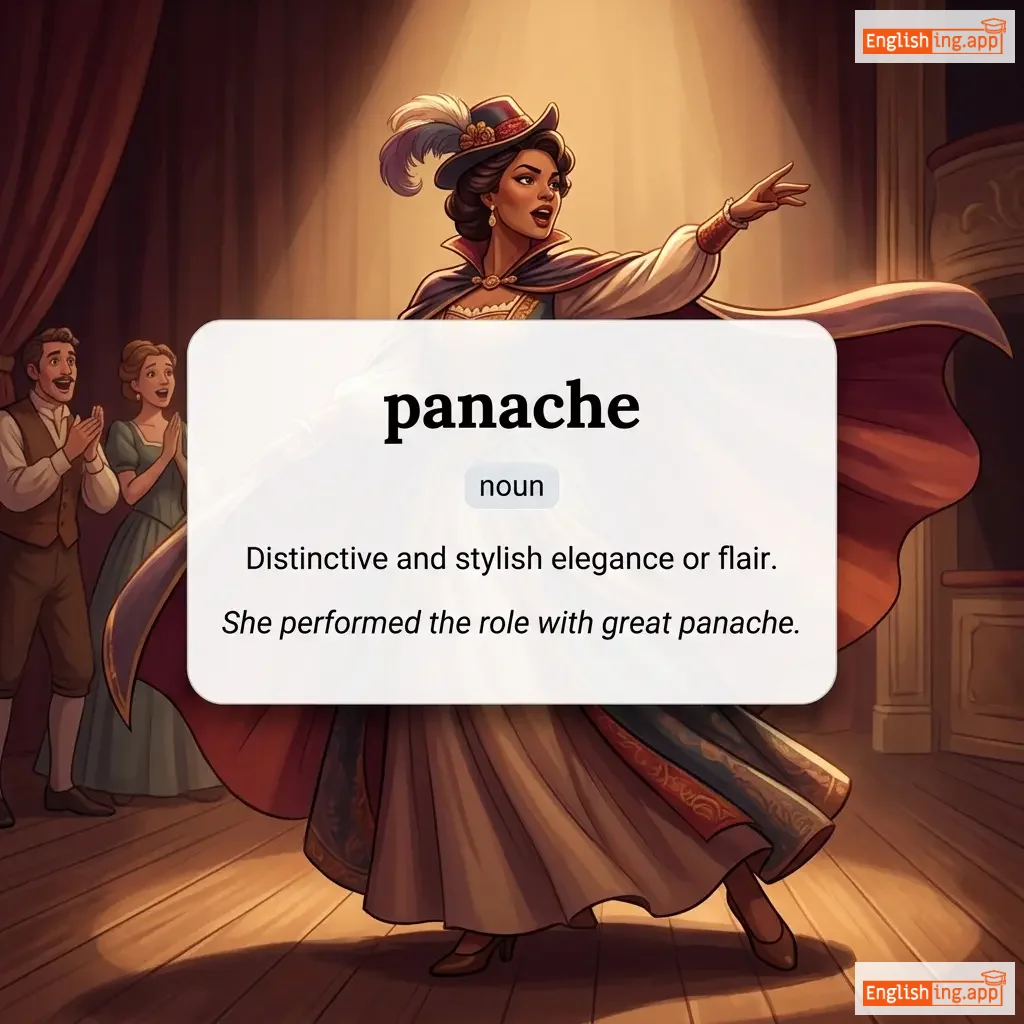
panache definition card — visual illustration of the meaning
noun
/pəˈnæʃ/
独特な優雅さ (dokutoku na yūgasa)

Distinctive and stylish elegance or flair.

"She performed the role with great panache."

"彼女は素晴らしいパナッシュで役を演じました。" (Kanojo wa subarashī panasshu de yaku o enjimashita.)
noun
/pʌntʃ ˈfoʊrən/
パンチ・フォロン (panchi foron)

a Bengali spice blend containing five whole spices: cumin, fennel, fenugreek, nigella, and mustard seeds

"The aroma filled the kitchen when she heated panch phoron in oil."

"彼女がオイルでパンチ・フォロンを加熱したとき、香りがキッチンを満たしました。" (kanojo ga oiru de panchi foron o kenetsu shita toki, kaori ga kicchin o mitashimashita.)
noun
/ˈpæŋkriəs/
膵臓 (suizo)

A gland in the abdomen that produces insulin and digestive enzymes.

"The pancreas plays a vital role in digestion and blood sugar regulation."

"膵臓は消化と血糖の調節に重要な役割を果たしています。" (Suizo wa shōka to kettō no chōsetsu ni jūyōna yakuwari o hatashiteimasu.)
noun
/pænˈdɛmɪk/
パンデミック (pandemikku)

An outbreak of a disease that occurs on a global scale.

"The COVID-19 pandemic changed the world dramatically."

"COVID-19パンデミックは世界を劇的に変えました。" (COVID-19 pandemikku wa sekai o gekiteki ni kaemashita.)
noun
/ˌpændəˈmoʊniəm/
混乱 (konran)

Wild and noisy disorder or confusion; uproar.

"When the concert was canceled, pandemonium broke out among the crowd."

"コンサートがキャンセルされたとき、観客の間で混乱が起きました。" (Konsāto ga kyanseru sareta toki, kankyaku no aida de konran ga okimashita.)
verb
/ˈpændər/
おべっかを使う, ごますりする (obekka wo tsukau, gomasuri suru)

to indulge or exploit the weaknesses, desires, or immoral tendencies of others

"The politician was accused of pandering to voters' fears."

"その政治家は有権者の恐怖におもねっていると非難された。" (Sono seijika wa yukensha no kyoufu ni omonetteiru to hinansareta.)
noun
/ˌpænəˈdʒɪrɪk/
賛辞, 賞賛 (sanchi, shōsan)

a formal speech or piece of writing in praise of someone or something

"The author wrote a panegyric on the bravery of the soldiers."

"著者は兵士たちの勇気についてのパネジリックを書いた。" (Chosha wa heishitachi no yūki ni tsuite no panejiriku o kaita.)
noun
/ˈpænəl/
パネル, 審査員グループ (paneru, shinsain gurūpu)

a group of people gathered to discuss, judge, or advise on a particular topic

"The panel of judges announced the winner of the competition."

"審査員のパネルはコンテストの優勝者を発表しました。" (Shinsain no paneru wa kontesuto no yūshōsha o happyō shimashita.)
noun
/pæŋ/
突然の鋭い痛みまたは感情的苦痛 (totsuzen no surudoi itami matawa kanjō-teki kutsū)

a sudden sharp feeling of pain or emotional distress

"She felt a pang of guilt after the argument."

"議論後、彼女は罪悪感のパンを感じた。" (Giron go, kanojo wa zaiakukan no pan o kanjita.)
noun/verb
/ˈpænɪk/
幸福 (kōfuku)

a sudden overwhelming fear or anxiety causing irrational behavior

"The crowd panicked when the fire alarm went off."

"彼女は賞を受け取ったとき、幸せを隠すことができませんでした。" (Kanojo wa shō o uketotta toki, kōfuku o kakusu koto ga dekimasen deshita.)
adjective
/ˈpæn.ɪ.ki/
パニック状態の; 不安と恐怖を示す (panikku jōtai no; fuan to kyōfu o shimesu)

feeling or showing panic; anxious and fearful

"The crowd became panicky when the fire alarm sounded."

"火災警報が鳴ると群衆はパニックになった。" (Kasaikeihō ga naru to gunshū wa panikku ni natta.)
/ˈpæn.ə.pli/
全装備 (zen sōbi)

A complete or impressive collection of things; a full set of armor.

"The museum displayed a panoply of ancient weapons."

"博物館は古代の武器の全装備を展示しました。" (Hakubutsukan wa kodai no buki no zen sōbi o tenji shimashita.)
noun
/ˌpæn.əˈræm.ə/
パノラマビュー (panorama byū)

An unbroken view of the whole region surrounding an observer.

"From the hilltop, we enjoyed a breathtaking panorama of the city."

"丘の頂上から、私たちは街の息をのむようなパノラマビューを楽しみました。" (oka no chōjō kara, watashitachi wa machi no iki o nomu yōna panorama byū o tanoshimimashita.)
adjective
/ˌpæn.əˈræm.ɪk/
パノラマビュー (panorama byuu)

Giving a wide view of an extensive area in all directions.

"The hotel offers panoramic views of the ocean."

"ホテルは海のパノラミックビューを提供します。" (hoteru wa umi no panoramikku byuu wo teikyoushimasu.)
noun
/pænt/
パンツ (pantsu)

a piece of clothing worn from the waist down, covering both legs separately

"He wore a pair of blue pants to the party."

"彼はパーティーに青いパンツを履いていった。" (Kare wa pātii ni aoi pantsu o haite itta.)
noun
/ˈpæn.θi.ɪ.zəm/
汎神論 (hanshinron)

The belief that God and the universe are identical, or that everything is a manifestation of God.

"Spinoza’s philosophy is often associated with pantheism."

"スピノザの哲学はしばしば汎神論と関連付けられます。" (Supinoza no tetsugaku wa shibashiba hanshinron to kanrenzukeraremasu.)
noun
/ˈpæn.θi.ən/
すべての神々、すべての神々に捧げられた寺院 (subete no kamigami, subete no kamigami ni sasagerareta jiin)

All the gods of a religion collectively; a building dedicated to all gods.

"The Roman Pantheon is one of the best-preserved ancient temples."

"ローマのパンテオンは最もよく保存されている古代の神殿の一つです。" (Rōma no Panteon wa mottomo yoku hozon sarete iru kodai no shinden no hitotsu desu.)
noun
/ˈpæntəmaɪm/
パントマイム (pantomaimu)

A type of theatrical performance using gestures and movements without spoken words; in Britain, a musical comedy play for families performed at Christmas.

"The children enjoyed the Christmas pantomime at the local theater."

"子供たちは地元の劇場でクリスマスのパントマイムを楽しんだ。" (kodomotachi wa jimoto no gekijo de Kurisumasu no pantomaimu o tanoshinda.)
noun
/ˈpæntəˌskoʊp/
広範囲またはパノラマビューを提供する光学機器 (kouhanni matawa panorama byuu wo teikyousuru kougaku kiki)

An optical instrument that provides a wide or panoramic view.

"The scientist used a pantoscope to observe the entire horizon."

"科学者は全ての地平線を観察するためにパンタスコープを使用しました。" (Kagakusha wa subete no chiheisen wo kansatsu suru tame ni pantascope wo shiyou shimashita.)
noun
/ˈpæntri/
パントリー (pantorī)

A small room or cupboard where food, dishes, and kitchen supplies are stored.

"She stocked the pantry with fresh groceries for the week."

"彼女は今週のために新鮮な食料品でパントリーを満たしました。" (Kanojo wa konshū no tame ni shinsen na shokuryōhin de pantorī o mitashimashita.)
👨‍👧

papa (パパ)

noun
/ˈpɑːpə/
お父さん (otousan)

an informal or affectionate term for one’s father

"Papa is picking me up from school today."

"パパは今日学校に迎えに来る。" (papa wa kyou gakkou ni mukae ni kuru)
noun
/ˈpeɪpəsi/
教皇職 (kyōkō shoku)

The office or authority of the Pope in the Roman Catholic Church.

"The papacy played a significant role in medieval European politics."

"教皇職は中世ヨーロッパの政治で重要な役割を果たした。" (Kyōkō shoku wa chūsei Yōroppa no seiji de jūyō na yakuwari o hatashita.)
noun
/pəˈpaɪə/
パパイヤ (papaiya)

a large orange tropical fruit with sweet orange flesh and black seeds

"Papaya is rich in vitamins and very good for health."
"パパイヤはビタミンが豊富で、健康に非常に良いです。" (Papaiya wa bitamin ga hōfu de, kenkō ni hijō ni yoi desu.)
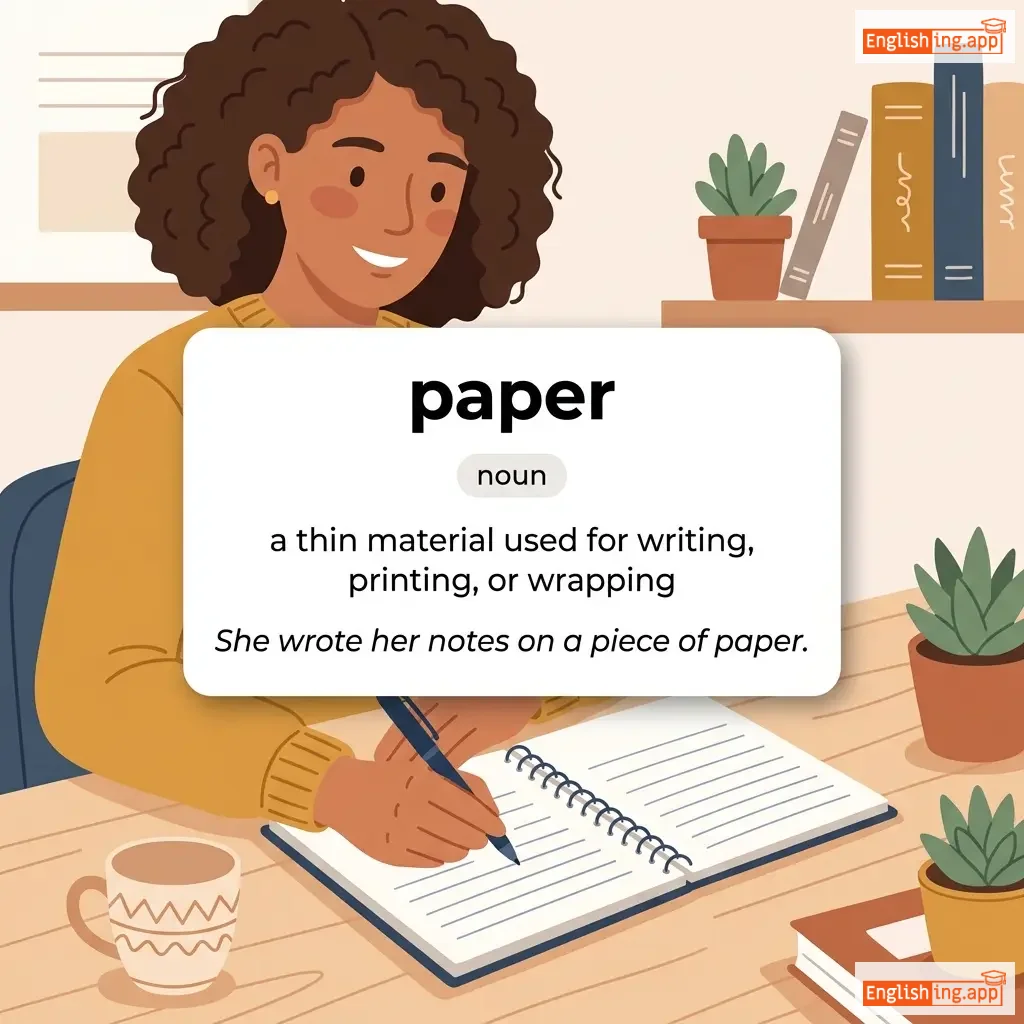
paper definition card — visual illustration of the meaning
noun
/ˈpeɪpər/
(kami)

a thin material used for writing, printing, or wrapping

"She wrote her notes on a piece of paper."

"彼女は紙にメモを書いた。" (Kanojo wa kami ni memo o kaita.)
noun
/pəˈpaɪrəs/
パピルス (papirusu)

An ancient writing material made from the pith of the papyrus plant; also refers to the plant itself.

"The ancient scroll was written on papyrus."

"古代の巻物はパピルスに書かれていました。" (Kodai no kanmō wa papirusu ni kakarete imashita.)
noun
/ˈpærəbl/
寓話 (gūwa)

A simple story used to illustrate a moral or spiritual lesson.

"Jesus often taught using a parable to convey deeper truths."
"イエスはしばしば深い真理を伝えるために寓話を使って教えていました。" (Iesu wa shibashiba fukai shinri o tsutaeru tame ni gūwa o tsukatte oshiete imashita.)
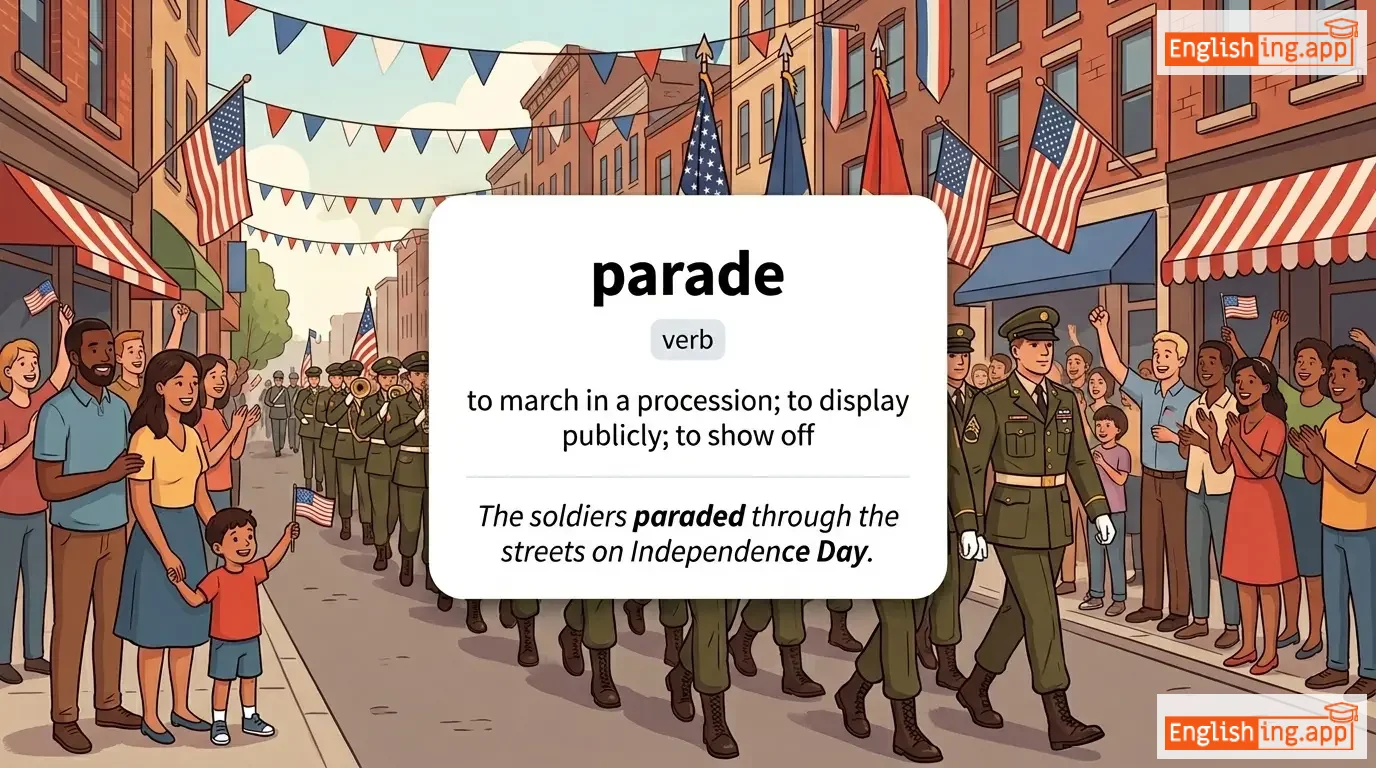
parade definition card — visual illustration of the meaning
noun
/pəˈreɪd/
パレード / 行進 (pareedo / koushin)

a public procession, especially one celebrating a special day or event

"Thousands of people attended the Independence Day parade."
"何千人もの人々が独立記念日のパレードに参加しました。" (Nanzen nin mo no hitobito ga dokuritsukinenbi no pareedo ni sanka shimashita.)
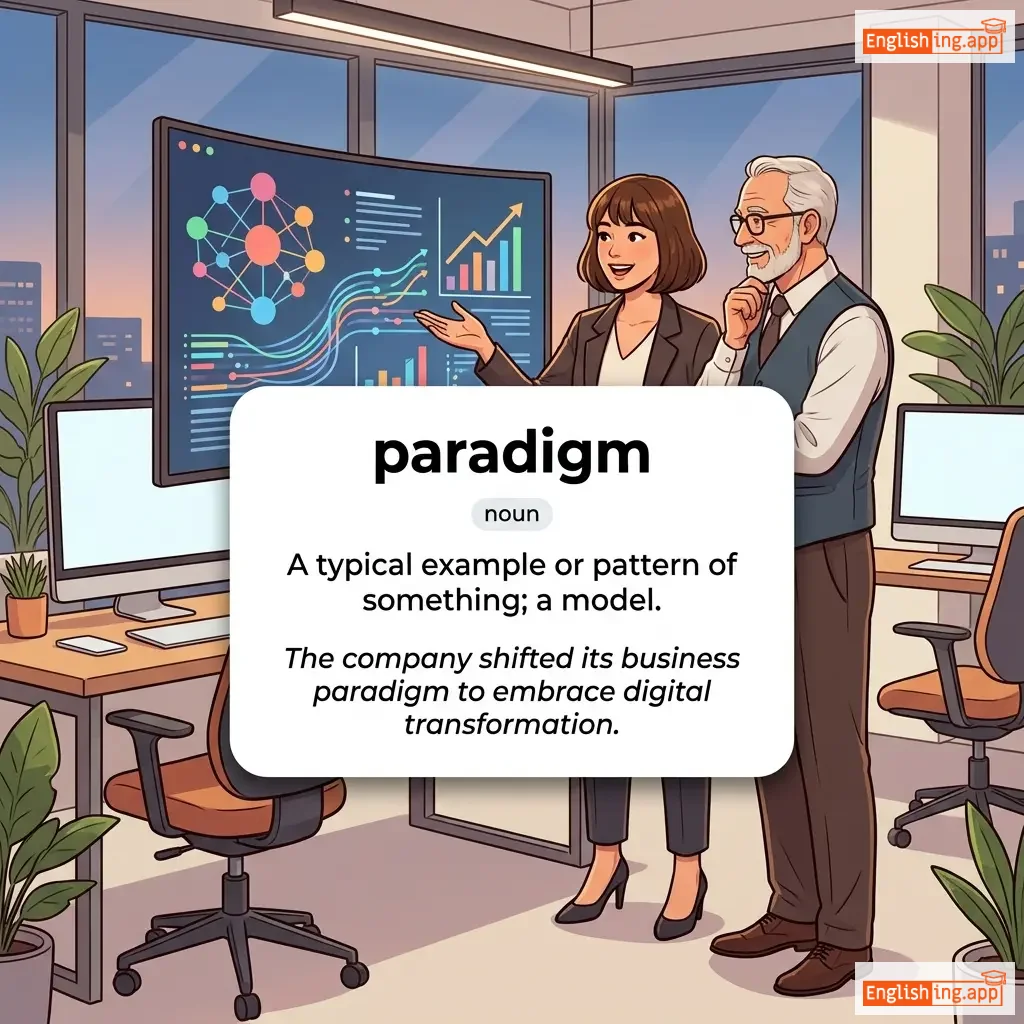
paradigm definition card — visual illustration of the meaning
noun
/ˈpærədaɪm/
モデル (moderu)

A typical example or pattern of something; a model.

"The company shifted its business paradigm to embrace digital transformation."

"その企業はデジタルトランスフォーメーションを受け入れるためにビジネスモデルを変更しました。" (Sono kigyō wa dejitaru toransufōmēshon o ukeireru tame ni bijinesu moderu o henkō shimashita.)
adjective
/ˌpærəˈdɪɡmətɪk/
典型的な (tenkeiteki na)

Serving as a typical example or model of something.

"Her success story is paradigmatic of the opportunities education can provide."

"彼女の成功物語は、教育が提供できる機会の典型的な例です。" (Kanojo no seikō monogatari wa, kyōiku ga teikyō dekiru kikai no tenkeiteki na rei desu.)
noun
/ˈpærədaɪs/
楽園 (rakuen)

An ideal or perfect place of happiness; often thought of as heaven.

"The tropical island felt like a true paradise."

"その熱帯の島はまるで本当の楽園のように感じました。" (Sono nettai no shima wa marude hontō no rakuen no yō ni kanjimashita.)
paradox definition card — visual illustration of the meaning
noun
/ˈpærədɒks/
逆説 (gyakusetsu)

A statement or situation that seems contradictory but may reveal a deeper truth.

"It is a paradox that computers make our lives easier but also more stressful."

"コンピュータが私たちの生活をより簡単にする一方で、ストレスも増加させるという逆説があります。" (Konpyūta ga watashitachi no seikatsu o yori kantan ni suru ippō de, sutoresu mo zōka saseru to iu gyakusetsu ga arimasu.)
adjective
/ˌpærəˈdɒksɪkəl/
逆説的 (gyakusetsuteki)

Seemingly contradictory or opposed to common sense, yet possibly true.

"It is paradoxical that standing is often more tiring than walking."
"立っていることが歩くことよりも疲れるのは逆説的です。" (Tatte iru koto ga aruku koto yori mo tsukareru no wa gyakusetsuteki desu.)
paragon definition card — visual illustration of the meaning
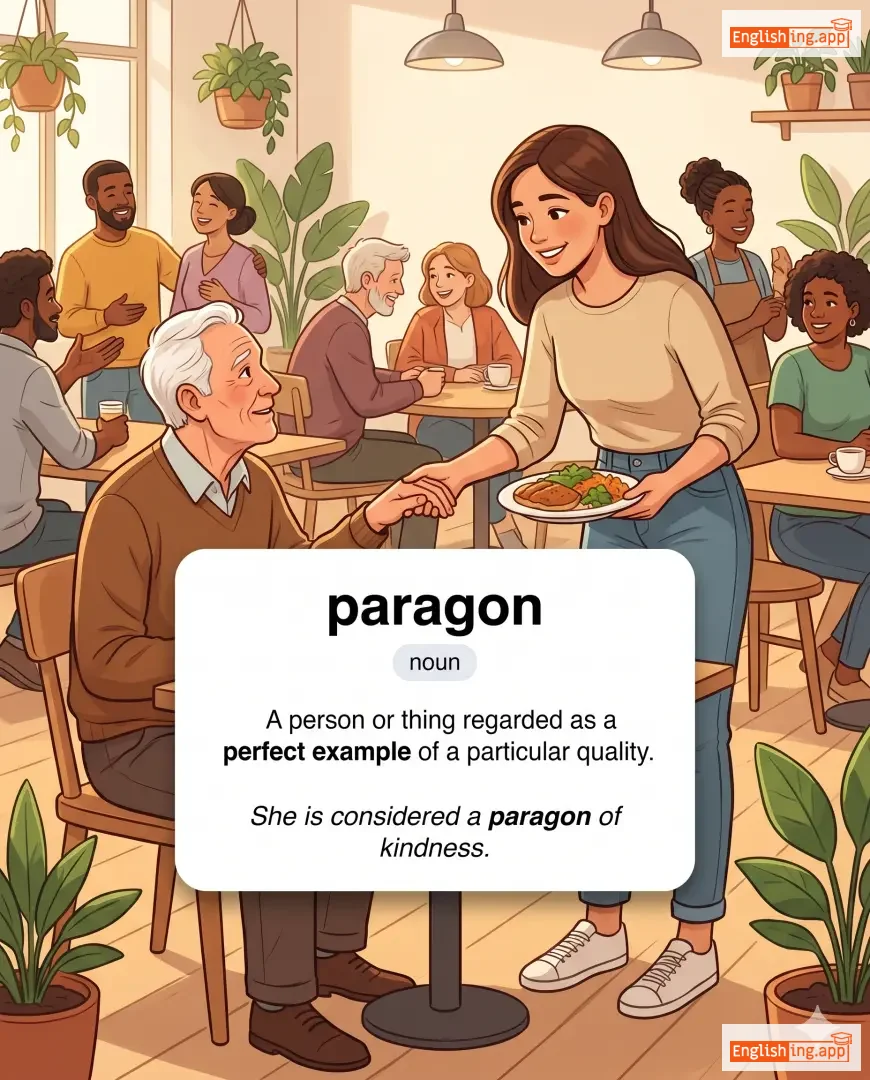
noun
/ˈpærəɡɒn/
模範 (mohan)

A person or thing regarded as a perfect example of a particular quality.

"She is considered a paragon of kindness."

"彼女は親切の模範と見なされています。" (Kanojo wa shinsetsu no mohan to minasareteimasu.)
noun
/ˈpær.ə.kiːt/
インコ (inko)

a small colorful parrot with a long tail, often kept as a pet

"The green parakeet learned to say hello."

"緑色のインコはこんにちはを言うことを学びました。" (Midori-iro no inko wa konnichiwa wo iu koto wo manabimashita.)
noun, adjective, verb
/ˈpærəˌlɛl/

Lines, objects, or events that are side by side and never meet; similarity or comparison.

"The road runs parallel to the railway."

noun
/ˈpærəˌlɛlɪzəm/
平行主義 (heikou shugi)

The state of being parallel or similar; in literature, the use of components in a sentence that are grammatically the same or similar in construction.

"The writer used parallelism to give rhythm to his prose."
"作家は自分の文章にリズムを与えるために平行主義を使用しました。" (Sakka wa jibun no bunshou ni rizumu wo ataeru tame ni heikou shugi wo shiyou shimashita.)
parallels definition card — visual illustration of the meaning
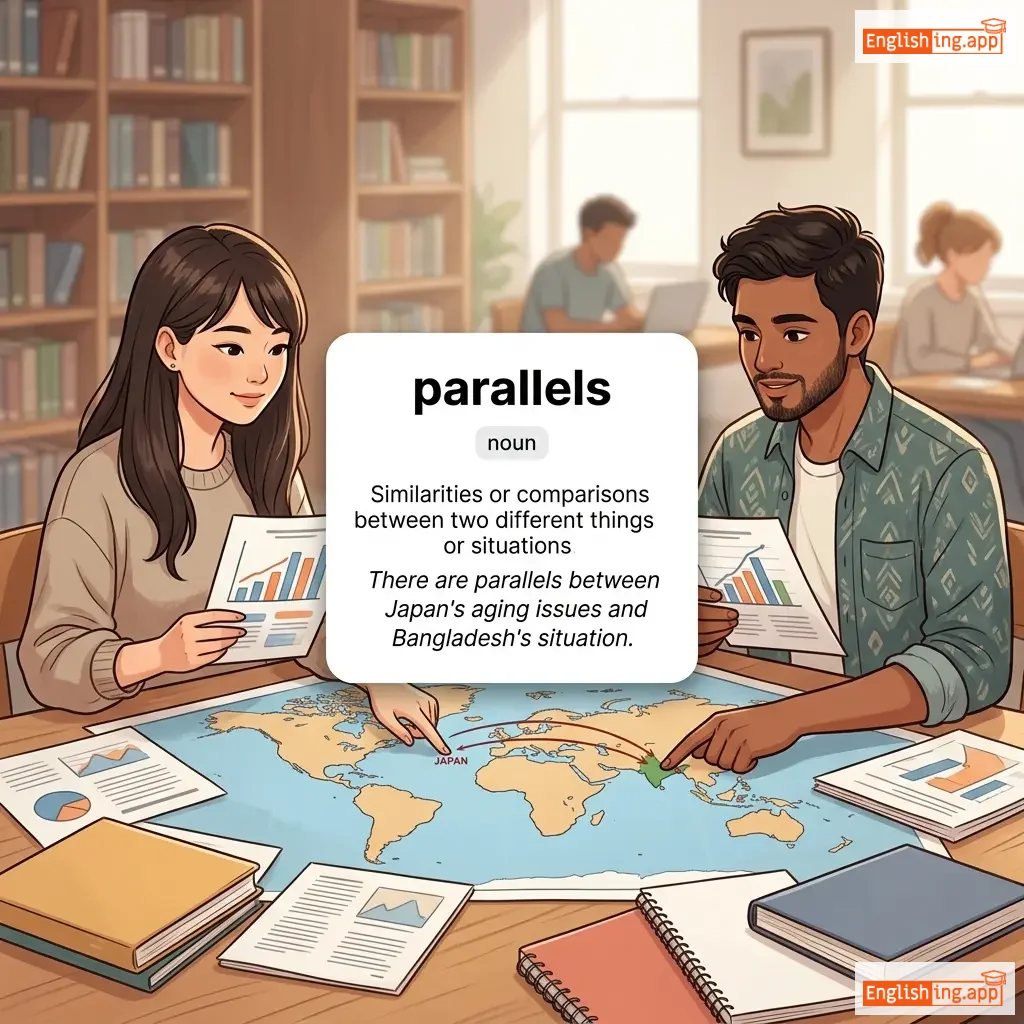
noun
ˈpærəˌlɛlz
類似点 (ruijiten)

Similarities or comparisons between two different things or situations

"There are parallels between Japan's aging issues and Bangladesh's situation."

"日本の高齢化問題とバングラデシュの状況にはパラレルが存在します。" (Nihon no koureika mondai to Banguradeshu no joukyou ni wa pararelu ga sonzai shimasu.)
noun
/pəˈræləsɪs/
麻痺 (mabi)

Loss of the ability to move in part or most of the body, typically as a result of illness or injury.

"The accident left him with partial paralysis."

"事故で部分的な麻痺が残りました。" (Jiko de bubun-tekina mabi ga nokorimashita.)
verb
/ˈpærəlaɪz/
麻痺させる (mahi saseru)

to cause someone or something to lose the ability to move or function normally

"The sudden shock seemed to paralyze him."

"突然の衝撃が彼を麻痺させたようだった。" (Totsuzen no shōgeki ga kare o mahi saseta yō datta.)
noun
/pəˈræmɪtər/
パラメーター (parametaa)

a limit, boundary, or measurable factor that defines or determines something

"We need to set clear parameters for this project."

"このプロジェクトのために明確なパラメーターを設定する必要があります。" (Kono purojekuto no tame ni meikaku na parametaa o settei suru hitsuyou ga arimasu.)
adjective
/ˈpærəmaʊnt/
最も重要な (mottomo jūyōna)

more important than anything else; supreme

"Safety is of paramount importance in this factory."

"この工場では安全が最も重要です。" (Kono kōjō dewa anzen ga mottomo jūyō desu.)