語彙集

英単語辞書 | 単語の意味、定義、例文

noun
/ˈɔːrθədɑːksi/
正統 (seito)

traditional or generally accepted beliefs and practices

"The religious leader defended the orthodoxy of the faith."

"宗教指導者は信仰の正統性を守った。" (Shūkyō shidōsha wa shinkō no seitō-sei o mamotta.)
adjective
/ɔːrˈθɑːɡənl/
直交 (chokkō)

at right angles; independent or unrelated

"In mathematics, two vectors are orthogonal if their dot product is zero."

"数学では、2つのベクトルが直交している場合、そのドット積はゼロです。" (Sūgaku de wa, futatsu no bekutoru ga chokkō shite iru baai, sono dotto seki wa zero desu.)
noun
/ɔːrˈθɑːɡrəfi/
正書法 (seishohou)

The conventional spelling system of a language.

"English orthography can be confusing for learners."

"英語の正書法は学習者にとって混乱を招くことがあります。" (Eigo no seishohou wa gakushū-sha ni totte konran o maneku koto ga arimasu.)
adjective
/ˌɔːrθəˈpiːdɪk/
骨や筋肉の変形の修正に関連する (kotsu ya kinniku no henkei no shūsei ni kanren suru)

Relating to the correction of deformities of bones or muscles.

"She visited an orthopedic surgeon for her back pain."
"彼女は背中の痛みのために整形外科医に行った。" (Kanojo wa senaka no itami no tame ni seikeigeka-i ni itta.)
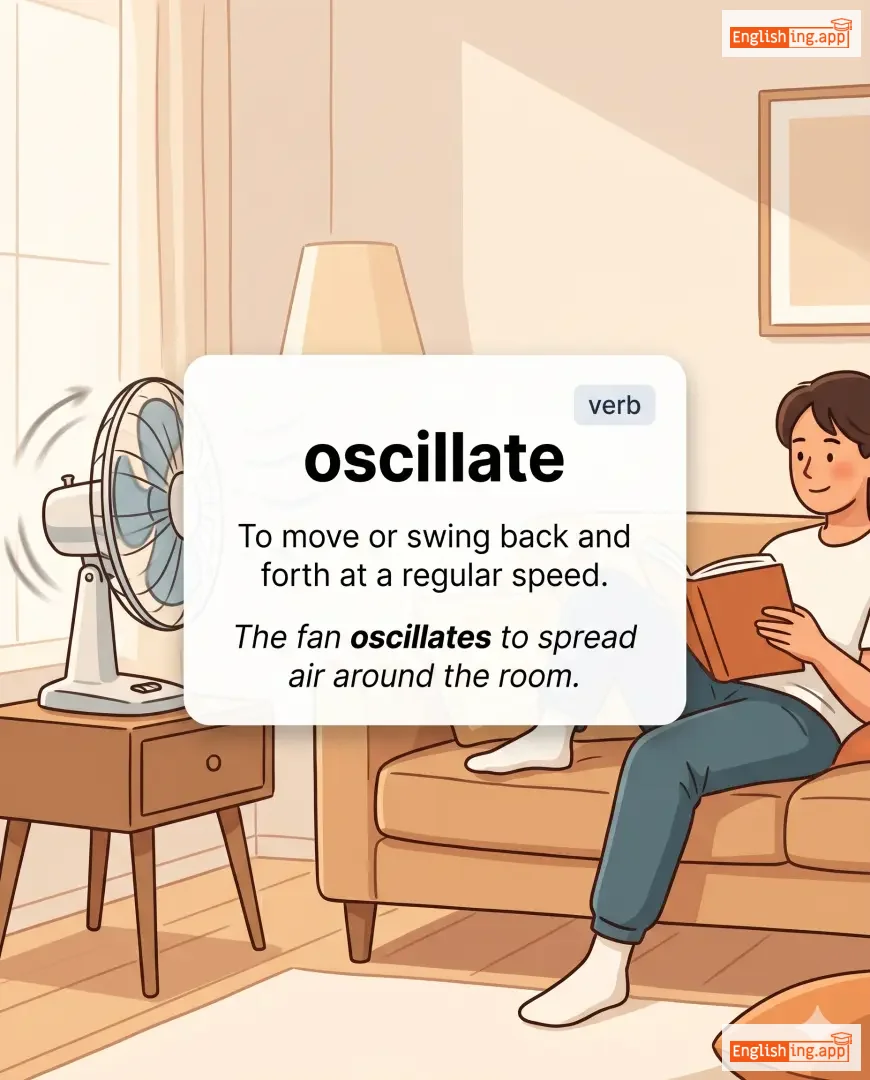
oscillate definition card — visual illustration of the meaning
verb
/ˈɑːsɪleɪt/
幸福 (koufuku)

To move or swing back and forth at a regular speed.

"The fan oscillates to spread air around the room."

"彼女は賞を受け取ったとき、喜びを隠せなかった。" (Kanojo wa shou wo uketotta toki, yorokobi wo kakusenakatta.)
noun
/ˌɑːsɪˈleɪʃən/
振動 (shindou)

The movement back and forth at a regular speed.

"The oscillation of the pendulum controls the clock."

"振り子の振動が時計を制御します。" (Furiko no shindou ga tokei o seigyo shimasu.)
verb
/ˈɑːskjʊleɪt/
キスする (kisu suru)

To kiss.

"They osculated under the mistletoe during the party."

"彼らはパーティーの時にヤドリギの下でキスをしました。" (Karera wa pātī no toki ni yadorigi no shita de kisu o shimashita.)
adjective
/ˈɒsiəs/
骨のような (hone no you na)

consisting of or turned into bone; bony

"The fossil showed osseous structures of the ancient creature."

"化石は古代の生物の骨のような構造を示しました。" (Kaseki wa kodai no seibutsu no hone no you na kouzou wo shimeshimashita.)
adjective
/ˈɑːsɪˌfaɪd/
骨に変わった、硬直した (hone ni kawatta, kōchoku shita)

Turned into bone or become rigid; unwilling to change.

"The company had an ossified management structure that resisted innovation."

"その会社は、革新に抵抗する硬直した管理構造を持っていました。" (Sono kaisha wa, kakushin ni teikō suru kōchoku shita kanri kōzō o motte imashita.)
verb
/ˈɒsɪfaɪ/
骨化する (kotsuka suru)

to turn into bone or become rigid and inflexible

"With age, some tissues tend to ossify."

"年を重ねると、一部の組織が骨化する傾向があります。" (Toshi o kasaneru to, ichibu no soshiki ga kotsuka suru keiko ga arimasu.)
adjective
/ɒˈstɛnsəbl/
見せかけの (misekake no)

stated or appearing to be true, but not necessarily so

"His ostensible reason for leaving was illness, but many doubted it."

"彼の出発の見せかけの理由は病気だったが、多くの人がそれを疑っていた。" (Kare no shuppatsu no misekake no riyū wa byōki datta ga, ōku no hito ga sore o utagatte ita.)
adjective
/ɒˈstɛnsɪv/
明示的 (meishiteki)

clearly demonstrative or pointing out; explicitly shown

"The teacher gave an ostensive example to clarify the concept."

"先生はその概念を明確にするために、明示的な例を示しました。" (Sensei wa sono gainen o meikaku ni suru tame ni, meishiteki na rei o shimeshimashita.)
noun
/ˌɒstɛnˈteɪʃən/
見せびらかし (misebirakashi)

excessive display of wealth or knowledge intended to attract admiration or envy

"The billionaire’s party was full of ostentation and luxury."
"億万長者のパーティーは、見せびらかしと贅沢で満ちていた。" (Okumanchouja no paatii wa, misebirakashi to zeitaku de michite ita.)
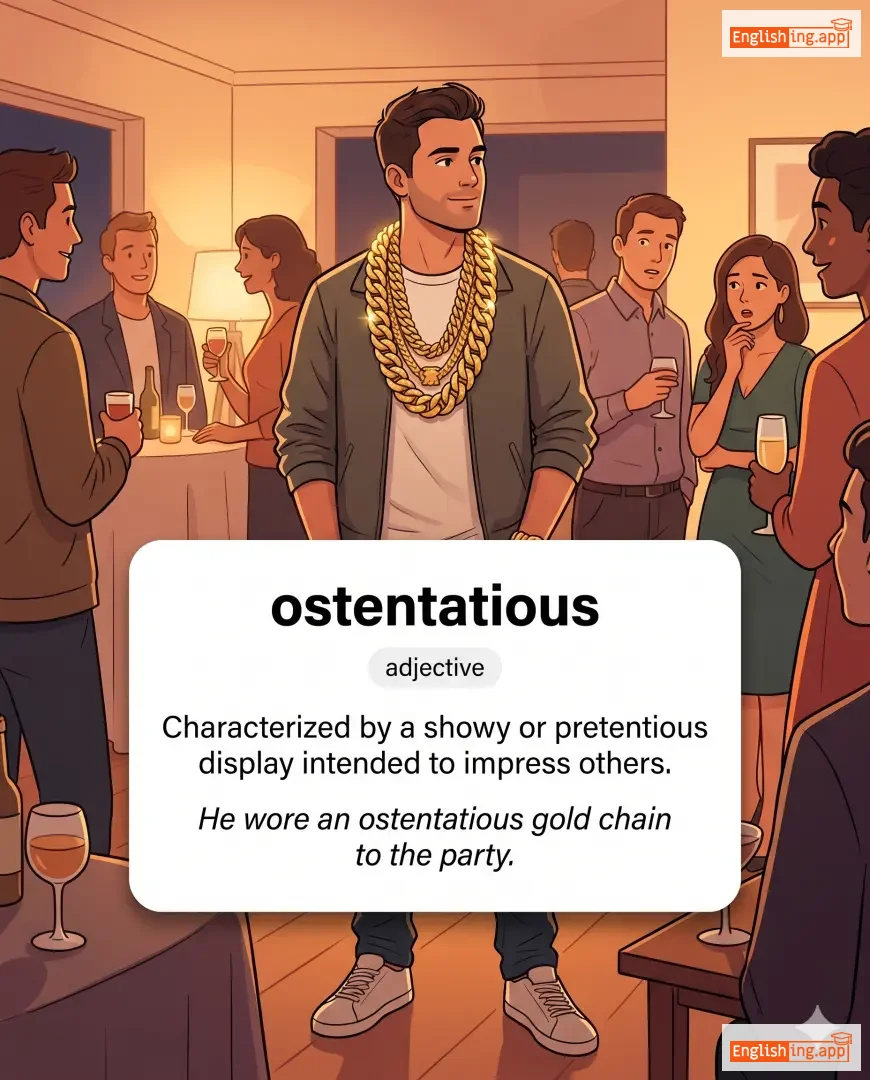
ostentatious definition card — visual illustration of the meaning
adjective
/ˌɒstɛnˈteɪʃəs/
見せびらかしの (misebirakashi no)

Characterized by a showy or pretentious display intended to impress others.

"He wore an ostentatious gold chain to the party."

"彼はパーティーで見せびらかしの金のチェーンをしていました。" (Kare wa pātī de misebirakashi no kin no chēn o shite imashita.)
noun
/ˈɒstrəsɪzəm/
追放 (tsuihou)

The act of excluding someone from a group or society.

"The student faced ostracism after breaking the rules."
"その学生は規則を破った後、追放に直面しました。" (Sono gakusei wa kisoku o yabutta ato, tsuihō ni chokumen shimashita.)
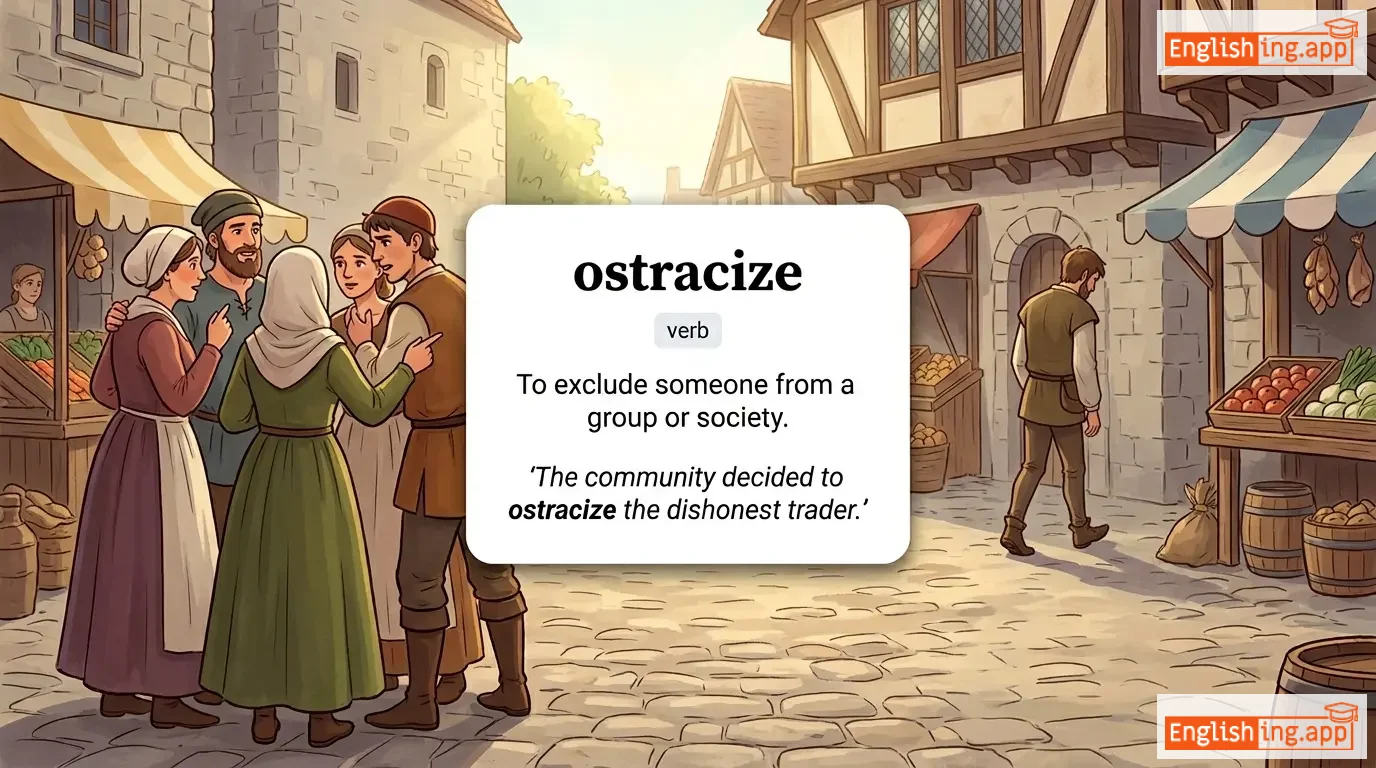
ostracize definition card — visual illustration of the meaning
verb
/ˈɒstrəsaɪz/
追放する (tsuihou suru)

To exclude someone from a group or society.

"The community decided to ostracize the dishonest trader."

"コミュニティは不正な商人を追放することを決定しました。" (Komyuniti wa fusei na shounin o tsuihou suru koto o kettei shimashita.)
noun
/ˈɒs.trɪtʃ/
ダチョウ (dachou)

a large flightless bird native to Africa with long legs and neck

"The ostrich is the world's largest bird."

"ダチョウは世界最大の鳥です。" (dachou wa sekai saidai no tori desu)
adjective
/ˈʌðər/
他の (hoka no)

used to refer to something different from the one already mentioned or known

"I don't want this one, I will take the other one."

"これを欲しくない、他のを取るつもりだ。" (Kore o hoshikunai, hoka no o toru tsumori da.)
pronoun
/ˈʌðərz/
他の人々 (hoka no hitobito)

people or things distinct from the ones already mentioned or known

"I like to spend time with others."

"私は他の人々と時間を過ごすのが好きです。" (Watashi wa hoka no hitobito to jikan o sugosu no ga suki desu.)
adverb
/ˈʌðərwaɪz/
そうでないと (soude nai to)

in a different or other way

"We need to hurry; otherwise, we'll miss the train."

"急いでください。そうでないと電車に乗り遅れます。" (Isoide kudasai. Sou denai to densha ni noriokuremasu.)
noun
/ˈɒt.ər/
カワウソ (kawaso)

a mammal with webbed feet that lives near water and feeds on fish

"The playful otter swam gracefully in the river."

"遊び好きなカワウソは川で優雅に泳いでいました。" (Asobi suki na kawaso wa kawa de yūga ni oyoide imashita.)
modal verb
/ɔːt/
べき (beki)

Used to indicate duty, correctness, or moral obligation.

"You ought to respect your elders."

"あなたは年長者を尊敬すべきです。" (Anata wa nenchōsha o sonkei subeki desu.)
pronoun
/aʊər/
私たちの (watashitachi no)

belonging to or associated with the speaker and one or more other people

"This is our house."

"これは私たちの家です。" (Kore wa watashitachi no ie desu.)
pronoun
/aʊərz/
私たちの (watashitachi no)

belonging to or associated with us

"This victory is ours."

"この勝利は私たちのものです。" (Kono shōri wa watashitachi no mono desu.)
pronoun
/aʊərˈsɛlvz/
私たち自身 (watashitachi jishin)

used by the speaker to refer to themselves and one or more others as the object of the verb

"We should help ourselves before helping others."

"私たちは他の人を助ける前に、自分たち自身を助けるべきです。" (Watashitachi wa hoka no hito o tasukeru mae ni, jibun-tachi jishin o tasukeru beki desu.)
verb
/aʊst/
追放する (tsuihousuru)

To remove someone from a position or place of power or authority.

"The rebels ousted the dictator from power."

"反乱者は独裁者を権力から追い出しました。" (Hanran-sha wa dokusaisha o kenryoku kara oidasimashita.)
adverb
/aʊt/
(soto)

moving or appearing away from the inside or center; not at home or present

"He stepped out of the room quietly."

"彼は静かに部屋を出ました。" (Kare wa shizukani heya o demashita.)
adjective
/ˌaʊt ən ˈaʊt/
完全な (kanzenna)

complete; absolute; used to emphasize something extreme

"The speech was an out-and-out lie."

"そのスピーチは完全な嘘だった。" (Sono supiichi wa kanzenna uso datta.)
noun
/ˈaʊt.breɪk/
発生 (autobureeku)

a sudden occurrence or eruption of something, especially disease or violence

"The outbreak of flu affected many students in the school."

"インフルエンザの流行は学校の多くの生徒に影響を与えた。" (infuruenza no ryuukou wa gakkou no ooku no seito ni eikyou wo ataeta)
adjective
/ˌaʊt əv ðə ˈweɪ/
人里離れた場所 (hitozato hanareta basho)

remote or unusual; not in a convenient or usual location

"They stayed in an out-of-the-way village."

"彼らは人里離れた村に滞在しました。" (Karera wa hitozato hanareta mura ni taizai shimashita.)
noun
/ˈaʊt.saɪ.dər/
アウトサイダー (autosaidā)

a person who does not belong to a particular group; someone not accepted by a group

"As an outsider, he found it difficult to understand their traditions."

"アウトサイダーとして、彼は彼らの伝統を理解するのが難しいと感じました。" (Autosaidā to shite, kare wa karera no dentō o rikai suru no ga muzukashī to kanjimashita.)
noun
/ˈaʊtˌbreɪk/
発生 (hassei)

a sudden start or occurrence of something unpleasant, like disease or violence

"There was an outbreak of flu in the city."

"街でインフルエンザが発生した。" (Machi de infuruenza ga hassei shita.)
noun
/ˈaʊtbɜːrst/
感情または活動の突然の爆発 (kanjō matawa katsudō no totsuzen no bakuhatsu)

a sudden release of strong emotion or activity

"She had an angry outburst during the meeting."

"会議中に彼女は怒りの爆発をした。" (Kaigi-chū ni kanojo wa ikari no bakuhatsu o shita.)
noun
/ˈaʊtkæst/
社会的に排除された人 (shakaiteki ni haijo sareta hito)

a person who is rejected or excluded from society or a group

"He felt like an outcast at school."

"彼は学校でアウトカストのように感じた。" (Kare wa gakkō de autokasuto no yō ni kanjita.)
noun
/ˈaʊtkʌm/
結果 (kekka)

the result or consequence of an action or situation

"The outcome of the project was beyond expectations."

"プロジェクトの結果は予想を超えていました。" (Purojekuto no kekka wa yosou wo koeteimashita.)
noun
/ˈaʊtˌkraɪ/
抗議 (kougi)

A strong expression of public anger or disapproval.

"The decision sparked an outcry among the citizens."

"その決定は市民の間で抗議を引き起こしました。" (Sono kettei wa shimin no aida de kougi wo hikiokoshimashita.)
adjective
/ˌfæʃ.ənd/
時代遅れ (jidaiokure)

obsolete; no longer current

"This computer software is completely outdated."

"このソフトウェアは完全に時代遅れです。" (Kono sofutowea wa kanzen ni jidaiokure desu.)
verb
/ˌaʊtˈduː/
超える (koeru)

To do better than someone else; to surpass.

"She always tries to outdo her classmates in exams."

"彼女は試験でクラスメートを常に超えようとします。" (Kanojo wa shiken de kurasumeeto wo jōni koeyou to shimasu.)
adjective
/ˈaʊtdɔːr/
アウトドア (autodoa)

situated, existing, or done outside a building

"We planned an outdoor picnic for the weekend."

"週末のためにアウトドアピクニックを計画しました。" (Shūmatsu no tame ni autodoa pikunikku o keikaku shimashita.)
adverb; noun
/ˌaʊtˈdɔːrz/
屋外で (okugai de)

outside a building; the natural environment outside

"We spent the whole afternoon outdoors enjoying the fresh air."

"私たちは午後ずっと屋外で新鮮な空気を楽しみました。" (watashitachi wa gogo zutto okugai de shinsen na kuuki o tanoshimimashita)
adjective
/ˈaʊtər/
外部 (gaibu)

situated on or toward the outside; external

"The outer layer of the jacket is waterproof."

"ジャケットの外側の層は防水です。" (Jaketto no gaibu no sou wa bousui desu.)
noun
/ˈaʊtˌfɪt/
衣装 (ishou)

A set of clothes worn together, often for a particular occasion.

"She wore a beautiful outfit to the party."

"彼女はパーティーに美しい衣装を着て行った。" (Kanojo wa pātii ni utsukushī ishou o kite itta.)
adjective
/ˈaʊtˌɡoʊɪŋ/
社交的 (shakōteki)

Friendly and sociable; inclined to mix with others.

"He is an outgoing person who loves meeting new people."

"彼は新しい人々と会うのが好きな社交的な人です。" (Kare wa atarashī hitobito to au no ga suki na shakōteki na hito desu.)
noun
/ˈaʊtˌɡroʊθ/
成長 (seichou)

something that grows out of something else; a natural development or result

"The new policy was an outgrowth of years of debate."

"新しい政策は数年の議論の成長でした。" (Atarashii seisaku wa suunen no giron no seichou deshita.)
noun
/ˈaʊtɪŋ/
お出かけ (odekake)

a short trip or excursion, often for leisure or enjoyment

"They had a lovely outing at the beach last weekend."

"彼らは先週末、ビーチで素晴らしいお出かけをしました。" (Karera wa senshūmatsu, bīchi de subarashī odekake o shimashita.)
adjective
/ˌaʊtˈlændɪʃ/
奇妙 (kimyō)

Looking or sounding bizarre or unfamiliar; strange.

"He wore an outlandish costume to the festival."

"彼は祭りに奇妙な衣装を着ていました。" (Kare wa matsuri ni kimyō na ishō o kite imashita.)
verb
/aʊtˈlæst/
他より長く続く (hoka yori nagaku tsudzuku)

to continue longer than; to endure beyond someone or something else

"The old castle has outlasted many generations."

"その古い城は多くの世代を超えて生き残りました。" (Sono furui shiro wa ōku no sedai o koete ikinokorimashita.)
noun, verb
/ˈaʊtlɔː/

as a noun: a person who breaks the law and lives outside its protection; as a verb: to make something illegal

"The government decided to outlaw the harmful practice."

noun
/ˈaʊtlet/
出口 (deguchi)

a means by which something is released, expressed, or distributed

"Art is a great outlet for emotions."

"アートは感情のための素晴らしい出口です。" (Āto wa kanjō no tame no subarashī deguchi desu.)
noun, verb
/ˈaʊtlaɪn/

a general description or plan that gives the main ideas without details; to describe something briefly or highlight main points

"The teacher asked us to outline our research project before writing the report."