語彙集

英単語辞書 | 単語の意味、定義、例文

adjective
/ˈmɛni/
多くの (ooku no)

a large number of

"Many students attended the lecture."

"多くの学生が講義に参加しました。" (Ooku no gakusei ga kougi ni sanka shimashita.)
noun
/mæp/
地図 (chizu)

a drawing that shows the features of an area of land or sea

"He studied the map before starting his journey."

"彼は旅を始める前に地図を調べました。" (Kare wa tabi o hajimeru mae ni chizu o shirabemashita.)
verb
/mɑːr/
台無しにする (dainashi ni suru)

to spoil or damage the appearance or quality of something

"The scratch will mar the beauty of the painting."

"その傷は絵画の美しさを台無しにする。" (Sono kizu wa kaiga no utsukushisa o dainashi ni suru.)
noun
/ˈmærəθən/
マラソン (marason)

a long-distance running race, typically 42.195 kilometers (26.2 miles)

"She completed the marathon in under four hours."

"彼女は4時間以内にマラソンを完走しました。" (Kanojo wa 4 jikan inai ni marason o kansou shimashita.)
verb
/məˈrɔːd/
略奪する (ryakudatsu suru)

to roam in search of things to steal or attack

"The bandits marauded through the village at night."

"バンディットたちは夜に村を略奪しました。" (Banditto-tachi wa yoru ni mura o ryakudatsu shimashita.)
noun
/məˈrɔː.dər/
略奪者 (ryakudatsusha)

a person who roams around in search of things to steal or people to attack

"Villagers feared the marauders who raided their homes."

"村人たちは自分たちの家を襲った略奪者を恐れていた。" (Murabito-tachi wa jibun-tachi no ie o osotta ryakudatsusha o osorete ita.)
🏛️

marble

noun
/ˈmɑːrbəl/

a hard, smooth stone used in building and sculpture, often white with colored lines

"The floor of the palace was made of white marble."

🚶‍♂️

March

verb
/mɑːrtʃ/

to walk in a regular, rhythmic way, often in step with others; to proceed with determination

"The soldiers marched across the field."

noun
/meər/
雌馬 (meshima)

an adult female horse

"The beautiful mare galloped across the meadow."

"美しい雌馬が草原を駆け抜けた。" (Utsukushī meshima ga sōgen o kakenuketa.)
noun
/ˈmɑːrdʒɪn/
マージン、限界、境界 (maajin, genkai, kyoukai)

The edge or border of something; the amount by which something is won or falls short.

"The company increased its profit margin last year."

"その会社は昨年、利益率を増加させました。" (Sono kaisha wa sakunen, rieki-ritu o zouka sasemashita.)
adjective
/ˈmɑːrdʒɪnəl/
限界的, 小さい, 重要でない (genkai teki, chiisai, juuyou denai)

Relating to or at the edge; small or insignificant in amount or importance.

"He made only a marginal improvement in his grades."
"彼は成績においてわずかな改善をしました。" (Kare wa seiseki ni oite wazukana kaizen o shimashita.)
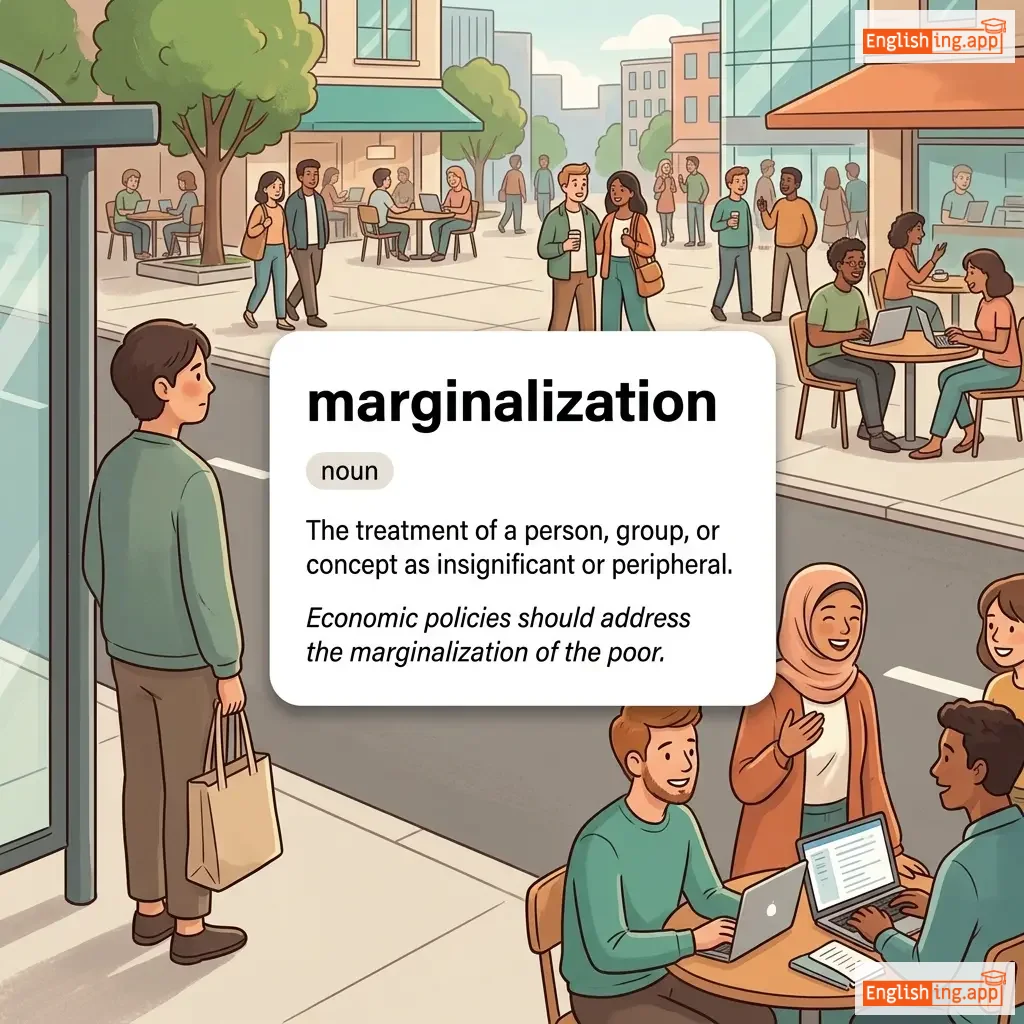
marginalization definition card — visual illustration of the meaning
noun
ˌmɑːr.dʒɪ.nəl.aɪˈzeɪ.ʃən
周縁化 (shuuenka)

The treatment of a person, group, or concept as insignificant or peripheral.

"Economic policies should address the marginalization of the poor."

"経済政策は貧困層の周縁化に対処すべきです。" (Keizai seisaku wa hinkon sou no shuuenka ni taisho subeki desu.)
verb
/ˈmɑːrdʒɪnəlaɪz/
疎外する, 置き去りにする (sogai suru, okizari ni suru)

To treat a person or group as unimportant or insignificant.

"The policy marginalized minority communities."
"政策は少数派コミュニティを疎外しました。" (Seisaku wa shōsūha komyuniti o sogai shimashita.)
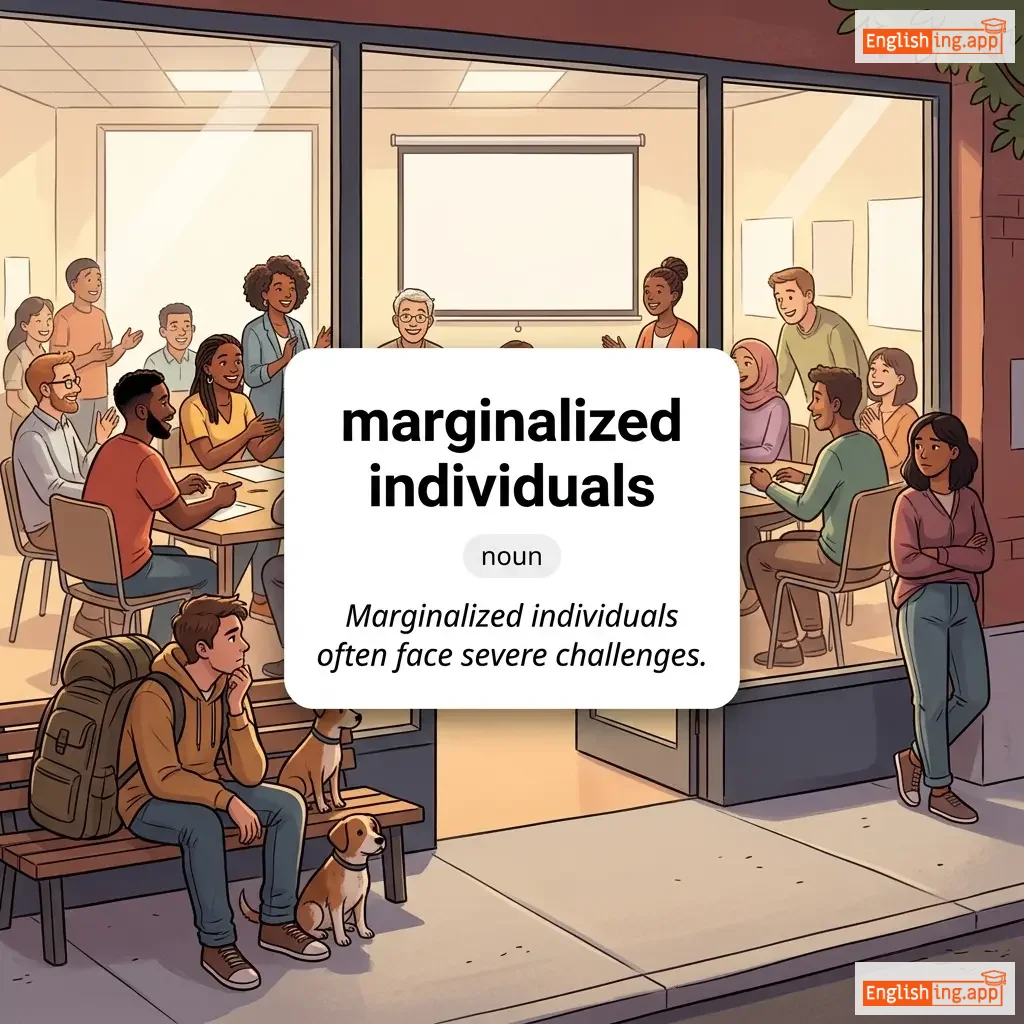
marginalized individuals definition card — visual illustration of the meaning
noun
ˈmɑːrdʒɪnəlaɪzd ˌɪndɪˈvɪdʒuəlz
疎外された個人 (sogai sareta kojin)

People who are treated as insignificant or peripheral to society, often excluded from mainstream social, economic, or political activities.

"Marginalized individuals often face severe challenges."

"疎外された個人はしばしば重大な課題に直面します。" (Sogai sareta kojin wa shibashiba jūdaina kadai ni chokumen shimasu.)
noun
/ˈmɛrɪɡoʊld/
マリーゴールド (mariigorudo)

a bright orange or yellow flower of the daisy family, often used in gardens and ceremonies

"The vibrant marigold flowers added a splash of color to the festival decorations."
"鮮やかなマリーゴールドの花は、祭りの装飾に色を添えた。" (azayakana mariigorudo no hana wa matsuri no shoshoku ni iro o soeta)
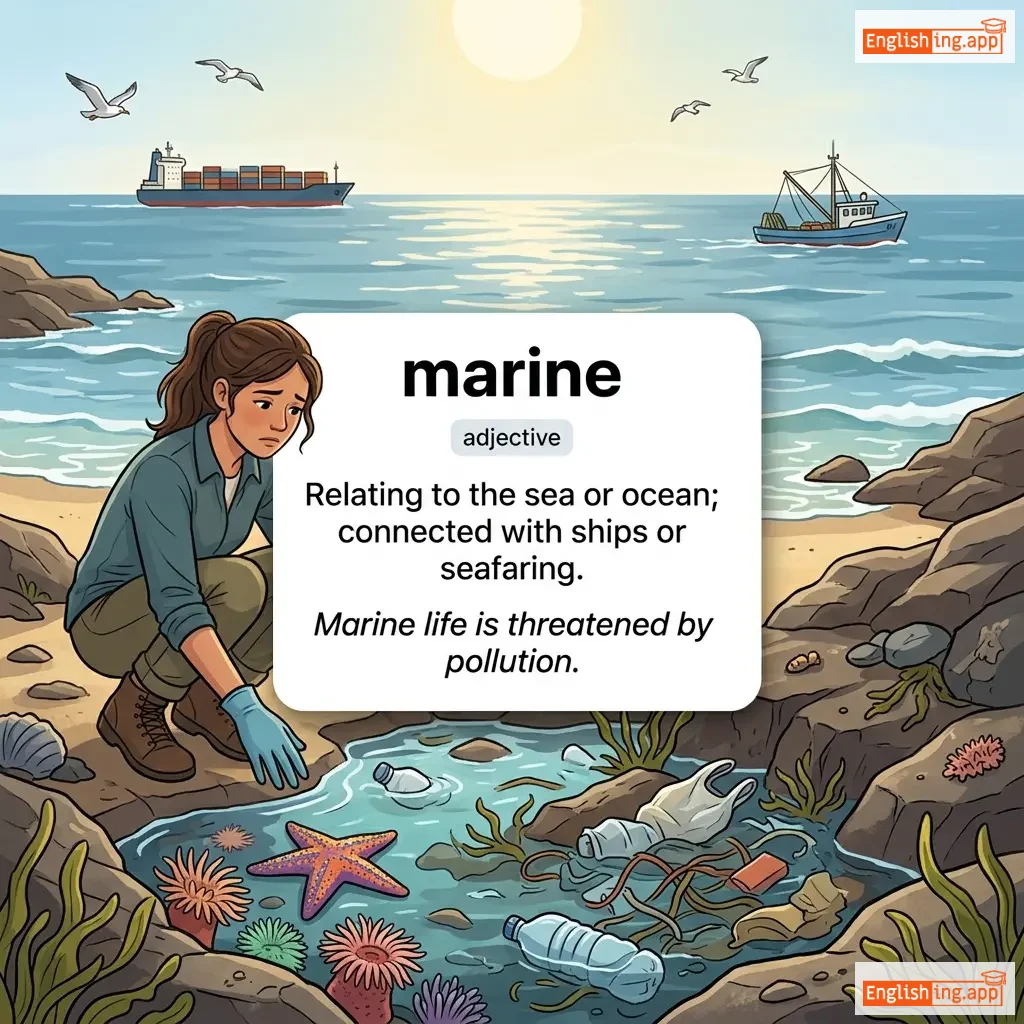
marine definition card — visual illustration of the meaning
adjective
/məˈriːn/
海洋の (kaiyō no)

Relating to the sea or ocean; connected with ships or seafaring.

"Marine life is threatened by pollution."
"海洋生物は汚染の脅威にさらされています。" (Kaiyō seibutsu wa osen no kyōi ni sarareteimasu.)
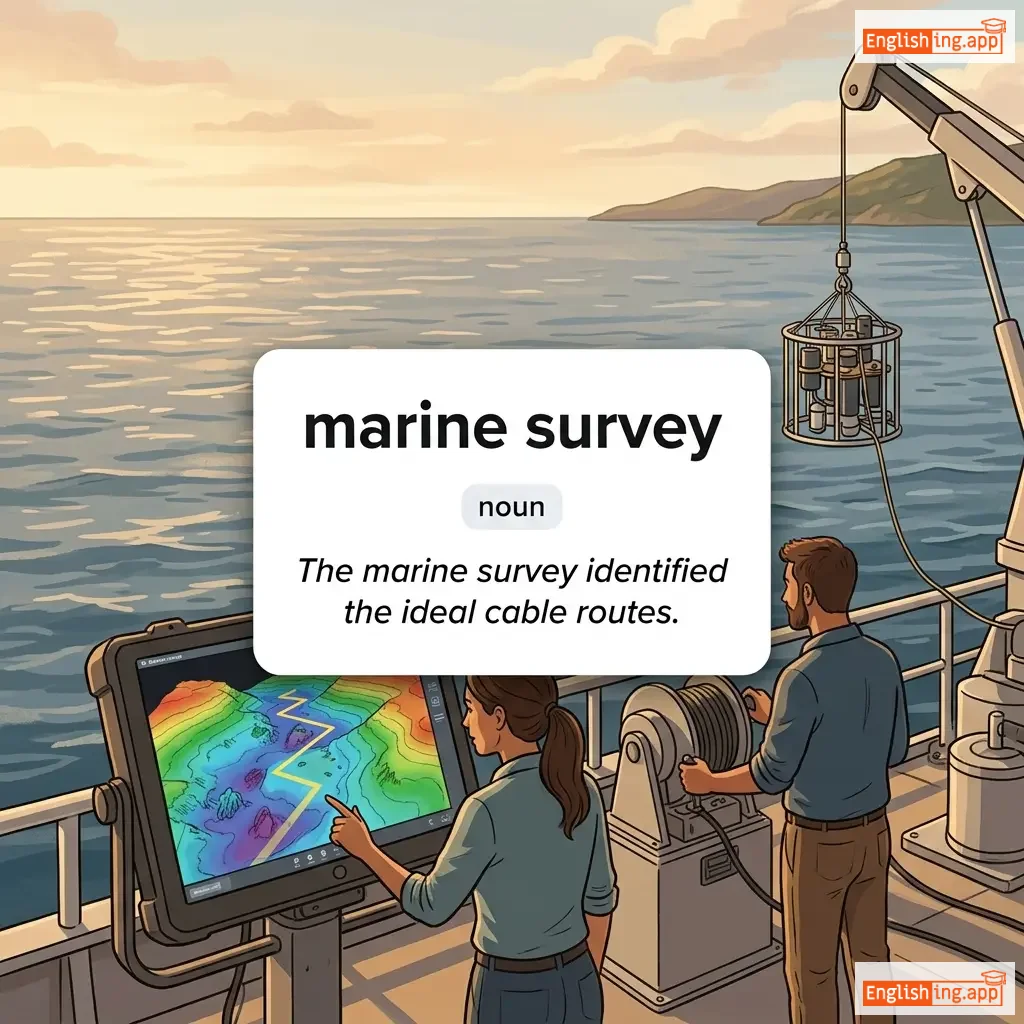
marine survey definition card — visual illustration of the meaning
noun
məˈriːn ˈsɜː.veɪ
海洋調査 (kaiyo chosa)

A systematic examination of the sea, seabed, and underwater features for the purpose of making maps or gathering other information.

"The marine survey identified the ideal cable routes."

"海洋調査によって理想的なケーブルルートが特定された。" (kaiyo chosa ni yotte risouteki na keeburu ruuto ga tokutei sareta)
adjective
/ˈmærɪtəl/
結婚に関する (kekkon ni kansuru)

Relating to marriage or the relationship between husband and wife.

"They sought counseling to resolve their marital issues."
"彼らは結婚問題を解決するためにカウンセリングを受けました。" (Karera wa kekkon mondai o kaiketsu suru tame ni kaunseringu o ukemashita.)
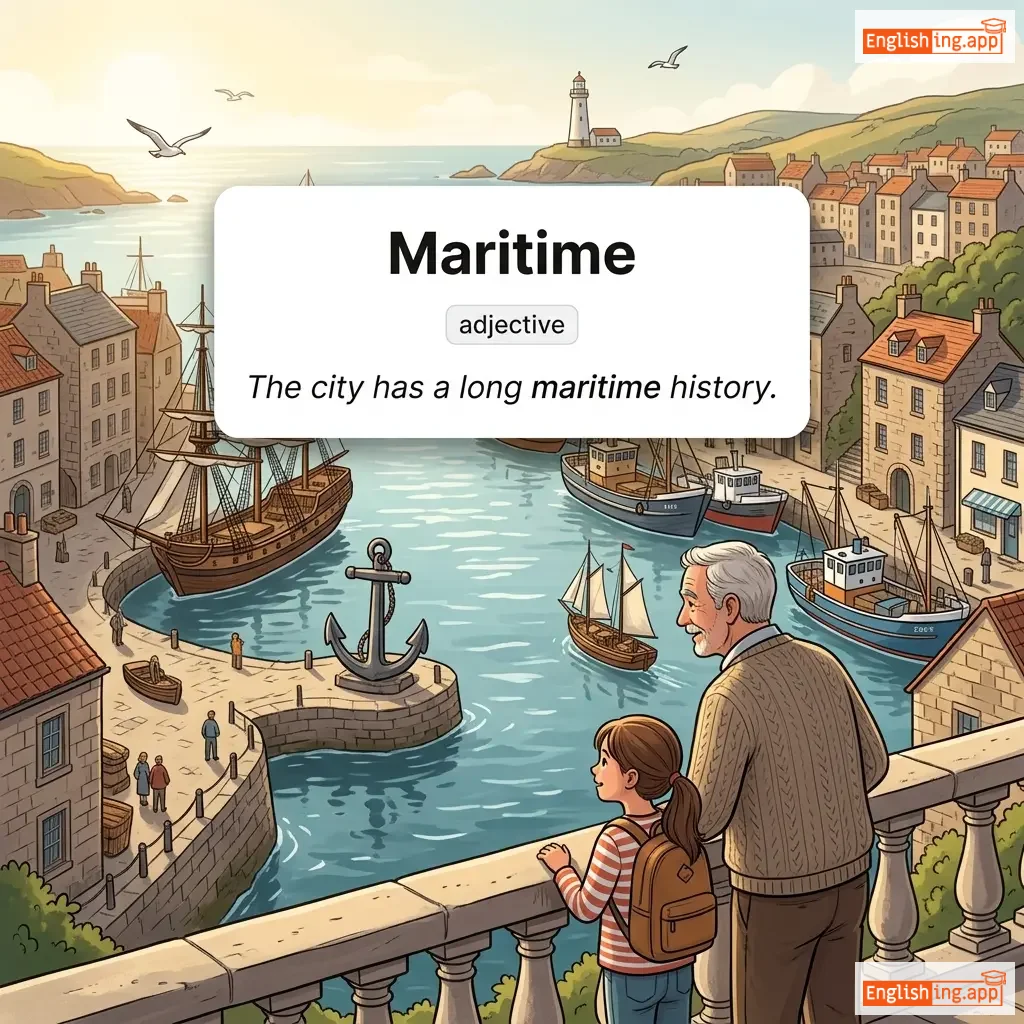
Maritime definition card — visual illustration of the meaning
adjective
/ˈmærɪˌtaɪm/
海事の (kaiji no)

connected with the sea, especially in relation to seafaring, shipping, or naval matters

"The city has a long maritime history."

"その都市には長い海事の歴史があります。" (Sono toshi ni wa nagai kaiji no rekishi ga arimasu.)
verb
/mɑːrk/
印をつける (ishi o tsukeru)

to make a visible impression or symbol on a surface

"The teacher marked the important points in red."

"先生は赤で重要なポイントをマークしました。" (Sensei wa aka de jūyōna pointo o māku shimashita.)
adjective
/mɑːrkt/
顕著な (kenchona)

clearly noticeable or significant

"There was a marked improvement in her health."

"彼女の健康には顕著な改善がありました。" (Kanojo no kenko ni wa kenchona kaizen ga arimashita.)
noun
/ˈmɑːrkər/
マーカー、マーキングペン (māka, mākingu pen)

an object used to indicate a position, place, or boundary; a pen with a thick tip used for writing or drawing

"He used a red marker to underline the important points."

"彼は重要なポイントを強調するために赤いマーカーを使用しました。" (Kare wa jūyō na pointo o kyōchō suru tame ni akai mākā o shiyō shimashita.)
market definition card — visual illustration of the meaning
noun
/ˈmɑːrkɪt/
市場 (ichiba)

a place or system where goods and services are bought and sold

"They went to the market to buy fresh vegetables."

"彼らは新鮮な野菜を買いにマーケットに行った。" (Karera wa shinsen na yasai o kai ni māketto ni itta.)
market economy definition card — visual illustration of the meaning
noun
ˈmɑːr.kɪt ɪˈkɒn.ə.mi
市場経済 (shijou keizai)

An economic system where production and pricing decisions are controlled by individuals and based on supply and demand.

"A market economy allows businesses to compete freely."

"市場経済は企業が自由に競争できるようにします。" (Shijou keizai wa kigyou ga jiyuu ni kyousou dekiru you ni shimasu.)
Market Penetration definition card — visual illustration of the meaning
noun
/ˈmɑː.kɪt ˌpen.ɪˈtreɪ.ʃən/
市場浸透 (shijou shintou)

A measure of the amount of sales or adoption of a product or service compared to the total theoretical market for that product or service.

"High market penetration ensures competitive dominance."

"市場浸透が競争優位性を確保する。" (Shijou shintou ga kyousou yuisei o kakuho suru.)
marketability definition card — visual illustration of the meaning
noun
/ˌmɑːr.kɪ.təˈbɪl.ə.ti/
市場性 (shijousei)

The possibility of commercial success for a product or service

"The new product's marketability depends on consumer demand."

"新しい商品の市場性は消費者の需要に依存しています。" (Atarashī shōhin no shijō-sei wa shōhisha no juyō ni izon shiteimasu.)
Marketing definition card — visual illustration of the meaning
noun
/ˈmɑːrkɪtɪŋ/
マーケティング (māketingu)

The action or business of promoting and selling products or services, including market research and advertising.

"The company invested heavily in digital marketing."

"その会社はデジタルマーケティングに多大な投資をしました。" (Sono kaisha wa dejitaru māketingu ni tadaina tōshi o shimashita.)
noun
/ˈmɑːrkɪtˌpleɪs/
市場 (ichiba)

a place where goods and services are bought and sold; an open area for trade

"The town's marketplace is crowded every Friday morning."

"街の市場は毎週金曜日の朝に混雑しています。" (Machi no ichiba wa maishū kin'yōbi no asa ni konzatsu shiteimasu.)
verb
/məˈruːn/
無人島に取り残す (mujintou ni torinokosu)

to leave someone trapped and isolated, especially on an island

"The sailors were marooned on a deserted island."

"水夫たちは無人島に取り残されました。" (Suifu-tachi wa mujintou ni torinokosaremashita.)
verb
/mɑːrd/
台無しにする (dainashi ni suru)

to spoil or damage the quality or appearance of something

"The celebration was marred by bad weather."

"お祝いは悪天候で台無しになりました。" (Oiwai wa akutenkō de dainashi ni narimashita.)
noun
/ˈmærɪdʒ/
幸せ (shiawase)

The legally or formally recognized union of two people as partners in a personal relationship.

"Their marriage lasted for over thirty years."

"彼女は賞を受け取ったとき、自分の幸せを隠せなかった。" (Kanojo wa shō o uketotta toki, jibun no shiawase o kakusenakatta.)
👩‍❤️‍👨

Married (ハピネス)

adjective
/ˈmærid/
幸福 (kōfuku)

Having a spouse; joined in marriage.

"She is happily married with two children."

"彼女は賞を受け取ったとき、自分の幸福を隠せなかった。" (Kanojo wa shō o uketotta toki, jibun no kōfuku o kakusenakatta.)
noun
/ˈmæroʊ/
骨髄 (kotsuzui)

a soft fatty substance in the cavities of bones, producing blood cells

"Bone marrow is vital for the production of red blood cells."

"骨髄は赤血球の生産に不可欠です。" (Kotsuzui wa sekketsukyū no seisan ni fukaketsu desu.)
noun
/ˈmær.oʊ ʌv ˈplæn.tɪn triː/
プランテンツリーの髄 (Puranten tsurī no zui)

the soft inner part of the banana plant stem that is used as a vegetable in cooking

"The marrow of plantain tree is commonly used in traditional Bengali cuisine."

"プランテンツリーの髄は、伝統的なベンガル料理で一般的に使用されます。" (Puranten tsurī no zui wa, dentō-teki na bengaru ryōri de ippanteki ni shiyō saremasu.)
marry definition card — visual illustration of the meaning
💒

marry

verb
/ˈmæri/
結婚する (kekkon suru)

To join in marriage; to take someone as a spouse.

"They plan to marry next spring."

"彼らは来年の春に結婚する予定です。" (Karera wa rainen no haru ni kekkon suru yotei desu.)
noun
/mɑːrz/
火星 (Kasei)

The fourth planet from the Sun; the Roman god of war

"Scientists are planning a manned mission to Mars in the next decade."

"科学者たちは次の十年で火星への有人ミッションを計画しています。" (Kagakusha-tachi wa tsugi no jūnen de kasei e no yūjin misshon o keikaku shiteimasu.)
noun
/mɑːrʃ/
湿地 (shicchi)

An area of low-lying, waterlogged land, often dominated by grasses and reeds.

"The birds nested in the marsh during spring."

"春には鳥が湿地に巣を作った。" (Haru ni wa tori ga shicchi ni su o tsukutta.)
verb
/ˈmɑːrʃəl/
整理する (seiri suru)

To arrange or organize people, events, or resources in an orderly way.

"The teacher marshaled the students for the field trip."

"教師は遠足のために生徒を整列させました。" (Kyōshi wa ensoku no tame ni seito o seiretsu sasemashita.)
noun
/mɑːrˈsuːpiəl/
袋で子供を育てる哺乳類 (fukuro de kodomo wo sodateru honyūrui)

A type of mammal that carries and nourishes its young in a pouch, like kangaroos and koalas.

"The kangaroo is a well-known marsupial."

"カンガルーはよく知られたマースピアルです。" (Kangarū wa yoku shirareta māsupiaru desu.)
adjective
/ˈmɑːrʃəl/
軍事的な (gunjiteki na)

Related to war, soldiers, or military life.

"The country imposed martial law during the crisis."

"その国は危機の間に戒厳令を施行した。" (Sono kuni wa kiki no aida ni kaigenrei o shikō shita.)
adjective, noun
/ˈmɑːrʃən/
火星人 (kaseijin)

Related to the planet Mars; or an imaginary being from Mars.

"The movie showed a Martian visiting Earth."

"映画は火星人が地球を訪れるシーンを見せた。" (Eiga wa kaseijin ga chikyū o otozureru shīn o miseta.)
noun
/ˈmɑːr.tɪn/
ツバメ (tsubame)

small swift-flying bird that catches insects on the wing

"The martin built its nest under the bridge."

"ツバメは橋の下に巣を作りました。" (Tsubame wa hashi no shita ni su o tsukurimashita.)
noun
/ˌmɑːrtəˈnɛt/
厳格な規律の指導者 (gengaku na kiritsu no shidōsha)

A strict disciplinarian who demands rigid adherence to rules.

"The new manager was such a martinet that even minor infractions were punished."

"新しいマネージャーはマルティネットのようで、些細な違反も処罰されました。" (Atarashī manējā wa marutinetto no yō de, sasaina ihan mo shobatsu saremashita.)
noun
/ˈmɑːrtər/
殉教者 (junkyousha)

A person who suffers or dies for their beliefs or cause.

"He was hailed as a martyr for defending his faith."

"彼は信念を守るために殉教者として称賛された。" (Kare wa shinnen o mamoru tame ni junkyousha toshite shousan sareta.)
noun
/ˈmɑːrtərdəm/
殉教 (junkyo)

The suffering or death of a martyr.

"His martyrdom inspired many to fight for justice."
"彼の殉教は多くの人々に正義のために戦うようにインスパイアしました。" (Kare no junkyo wa ooku no hitobito ni seigi no tame ni tatakau you ni insupaishimashita.)
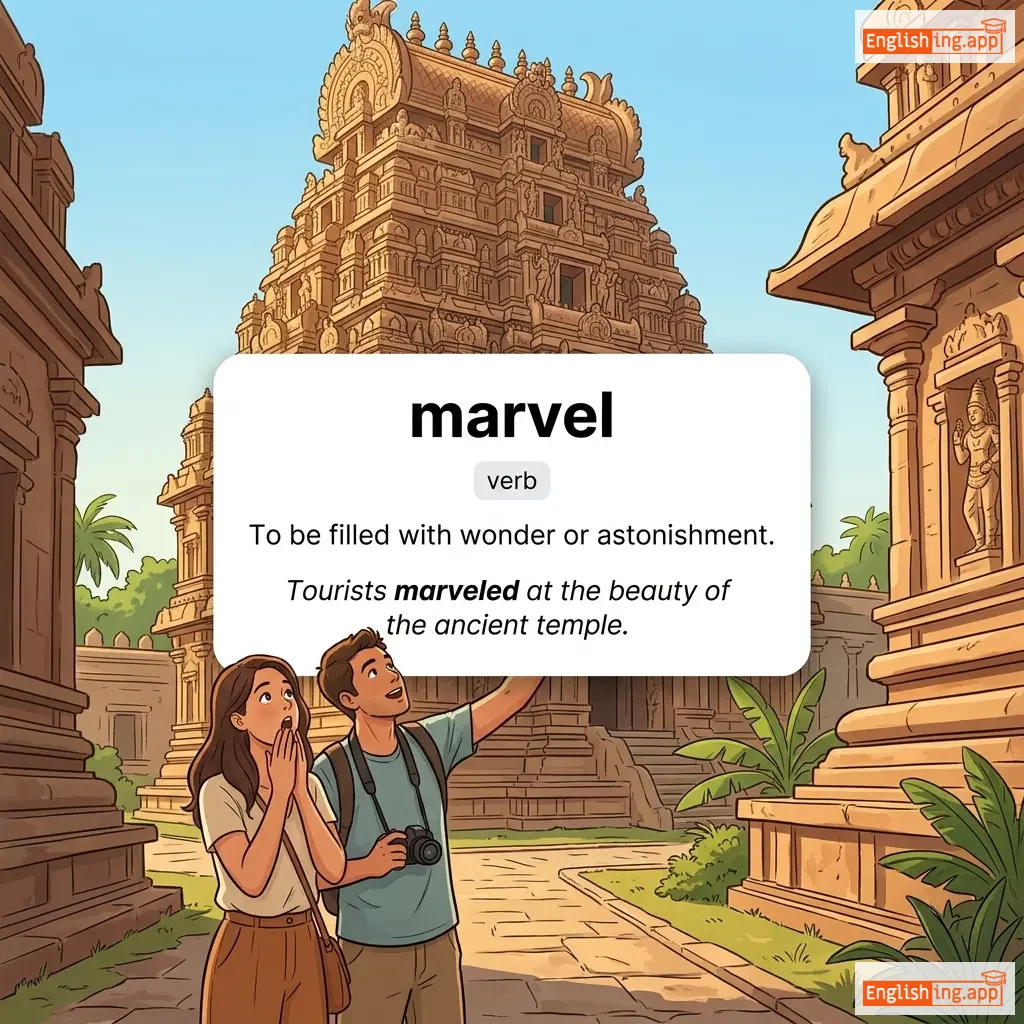
marvel definition card — visual illustration of the meaning
verb
/ˈmɑːrvl/
驚嘆する (kyōtan suru)

To be filled with wonder or astonishment.

"Tourists marveled at the beauty of the ancient temple."

"観光客たちは古代の寺院の美しさに驚嘆しました。" (Kankōkyaku-tachi wa kodai no jiin no utsukushisa ni kyōtan shimashita.)
adjective
/ˈmɑːrvələs/
素晴らしい; 驚くべき; 素晴らしい (subarashii; odorokubeki; subarashii)

extremely good; wonderful; causing great wonder

"The view from the mountain was marvellous."

"山からの景色は素晴らしかった。" (Yama kara no keshiki wa subarashikatta.)
adjective
/ˈmɑːrvələs/
素晴らしい (subarashii)

Causing great wonder or delight; extraordinary.

"She gave a marvelous performance on stage."

"彼女はステージで素晴らしいパフォーマンスを披露しました。" (Kanojo wa sutēji de subarashī pafōmansu o hirō shimashita.)
adjective
/ˈmæskjəlɪn/
男性的 (danseiteki)

having qualities traditionally associated with men

"He has a deep, masculine voice."

"彼は深い男性的な声を持っています。" (Kare wa fukai danseiteki na koe o motteimasu.)
noun
/meɪs/
ナツメグの花 (natsumegu no hana)

spice obtained from the reddish seed covering of the nutmeg seed

"A pinch of mace adds warmth to the dessert."

"一 pinch ナツメグの花 デザートに温かみを加える。" (I pinch natsumegu no hana dezāto ni atatakai wo kuwaeru.)