語彙集

英単語辞書 | 単語の意味、定義、例文

noun
/ˈlɪstɪŋ/
リスト (risuto)

a series of items or names written or printed in a specific order

"The listing of available jobs was updated daily."

"利用可能な仕事のリストは毎日更新されていました。" (Riyou kanou na shigoto no risuto wa mainichi kōshin sarete imashita.)
adjective
/ˈlɪstləs/
無気力 (mukiryoku)

lacking energy, enthusiasm, or interest

"She felt listless after working long hours without rest."

"長時間休憩なしで働いた後、彼女は無気力に感じていた。" (Chō jikan kyūkei nashi de hataraita ato, kanojo wa mukiryoku ni kanjite ita.)
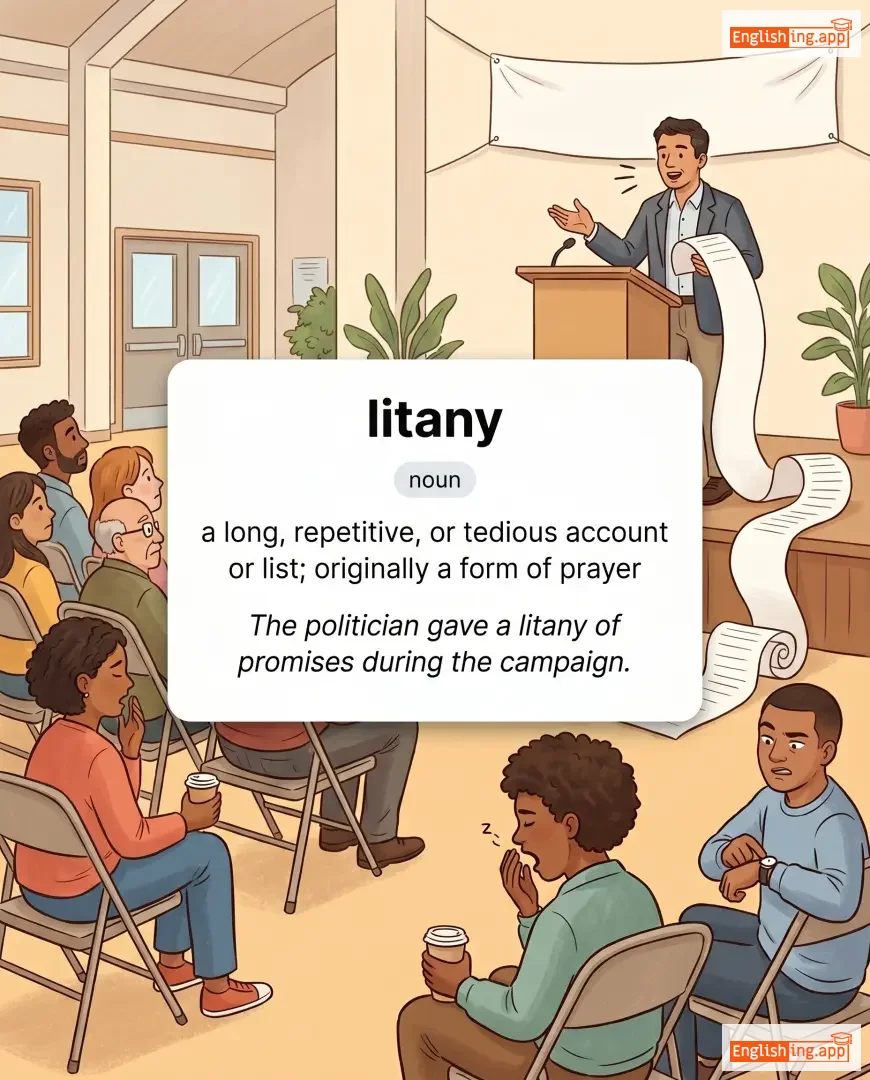
litany definition card — visual illustration of the meaning
noun
/ˈlɪtəni/

a long, repetitive, or tedious account or list; originally a form of prayer

"The politician gave a litany of promises during the campaign."

noun
/ˈlaɪtʃi/
ライチ (raichi)

a small oval pink-red tropical fruit with white translucent flesh and sweet taste

"The litchi has a rough pink shell that you peel to eat the sweet white fruit inside."

"ライチは、外側がざらざらしたピンク色の皮で、中に甘くて白い果実が入っています。" (Raichi wa, sotogawa ga zarazara shita pinku-iro no kawa de, naka ni amakute shiroi kajitsu ga haitteimasu.)
💧

liter

noun
/ˈlɪtə(r)/

a metric unit of volume equal to one cubic decimeter

"The recipe calls for two liters of water."

noun
/ˈlɪtərəsi/
識字能力 (shikiji nōryoku)

the ability to read and write

"Literacy programs help reduce poverty in rural areas."
"識字プログラムは、農村地域の貧困を減らすのに役立ちます。" (Shikiji puroguramu wa, nōson chiiki no hinkon o herasu no ni yakudachimasu.)
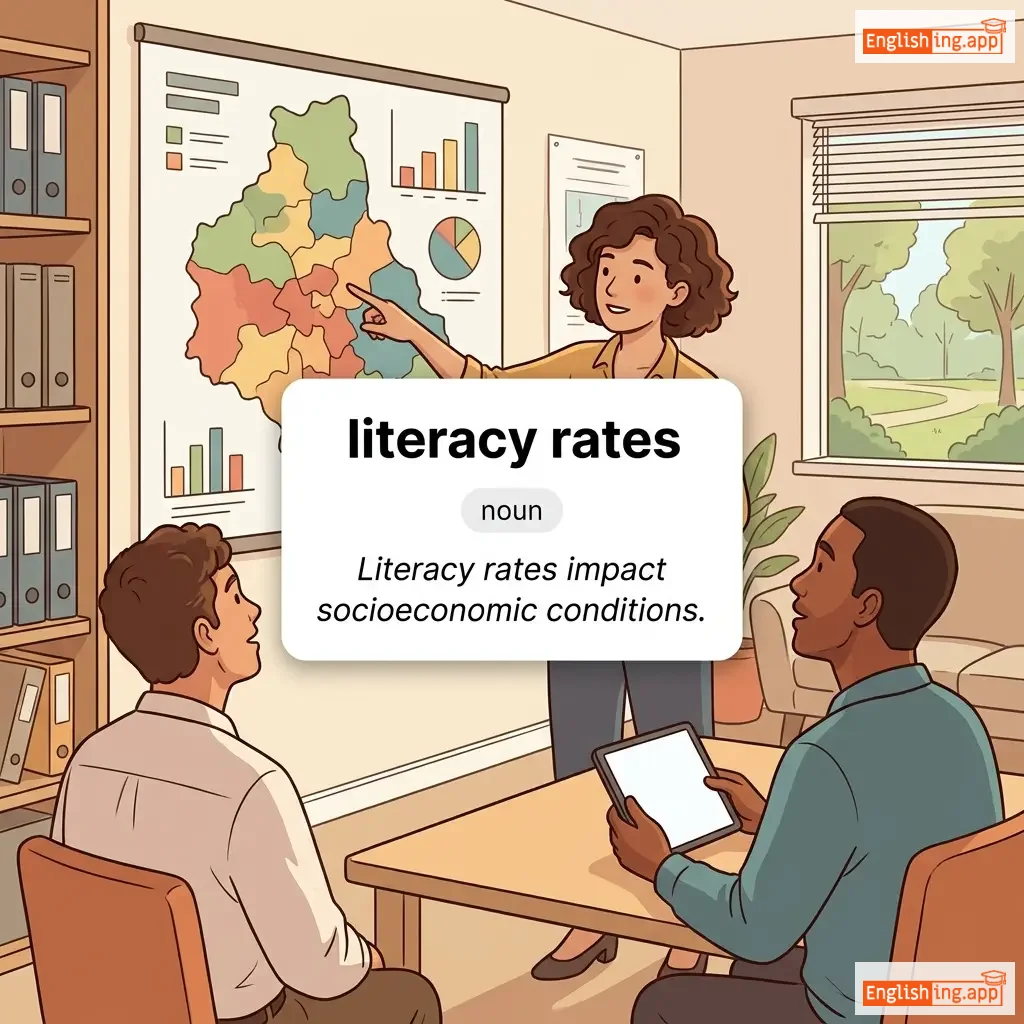
literacy rates definition card — visual illustration of the meaning
noun
ˈlɪt.ər.ə.si ˌreɪts
識字率 (shikajiritsu)

The percentage of people in a population who can read and write; measures of educational levels in a population.

"Literacy rates impact socioeconomic conditions."

"識字率は社会経済的条件に影響を与える。" (Shikajiritsu wa shakai keizaiteki jōken ni eikyō o ataeru.)
adjective
/ˈlɪtərəl/
字義通り (jigi dōri)

taking words in their usual or most basic sense without metaphor or exaggeration

"His comment was meant as a joke, not to be taken in a literal sense."

"彼のコメントは冗談として言われたので、字義通りに受け取るべきではありません。" (Kare no komento wa jōdan toshite iwareta node, jigi dōri ni uketoru beki de wa arimasen.)
adverb
/ˈlɪtərəli/
文字通り (mojidoori)

in a literal manner or sense; exactly

"He was literally running for three hours without stopping."

"彼は文字通り3時間休まずに走り続けていた。" (Kare wa mojidoori san jikan yasumazu ni hashiri tsuzukete ita.)
adjective
/ˈlɪtərɛri/
文学的 (bungakuteki)

concerning the writing, study, or content of literature

"She is a well-known figure in the literary world."

"彼女は文学界でよく知られた人物です。" (Kanojo wa bungaku kai de yoku shirareta jinbutsu desu.)
adjective
/ˈlɪt.ər.ət/
識字; 教育を受けた; 良い教育を受けた (ritereeto)

able to read and write; educated; well-educated

"She is a very literate person who reads extensively."
"彼女は非常に教育を受けた人で、広範囲に読書をします。" (kanojo wa hijō ni kyōiku o uketa hito de, kōhanni dokusho o shimasu.)
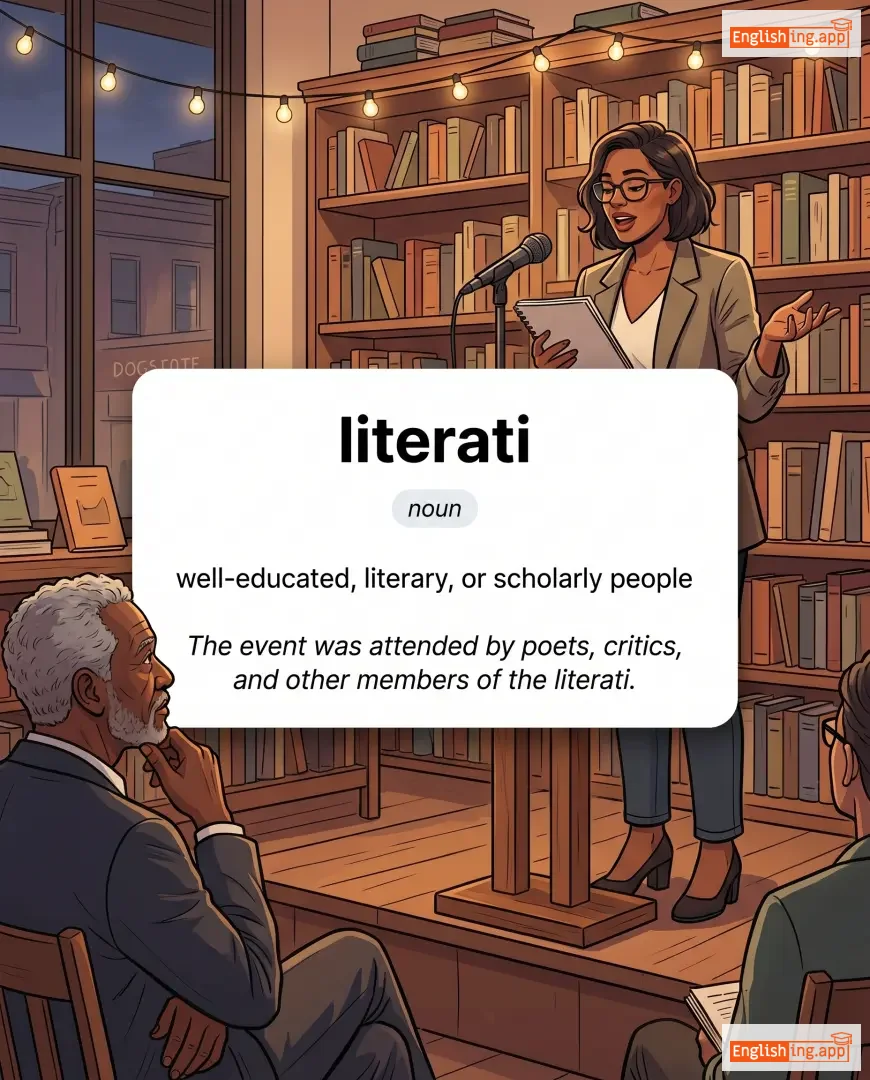
literati definition card — visual illustration of the meaning
noun
/ˌlɪt.əˈrɑː.ti/
文学者 (bungakusha)

well-educated, literary, or scholarly people

"The event was attended by poets, critics, and other members of the literati."

"そのイベントには詩人、批評家、その他の文学者が出席しました。" (Sono ibento niwa shijin, hihyōka, sono ta no bungakusha ga shusseki shimashita.)
noun
/ˈlɪtərətʃər/
文学 (bungaku)

written works, especially those considered of superior or lasting artistic merit

"He studied English literature at university."

"彼は大学で英文学を学びました。" (Kare wa daigaku de eibungaku o manabimashita.)
/laɪð/
しなやかで優雅 (shinayakade yūga)

thin, supple, and graceful in movement

"The lithe dancer captivated the audience with her graceful spins."

"しなやかなダンサーはその優雅な回転で観客を魅了しました。" (Shinayakana dansā wa sono yūgana kaiten de kankyaku o miryō shimashita.)
adjective
/ˈlaɪðsəm/
しなやかで優雅な (shinayakade yūgana)

gracefully flexible and supple

"Her lithesome figure allowed her to move like a ballerina."

"彼女のしなやかな姿勢は、バレリーナのように動くことを可能にしました。" (Kanojo no shinayakana shisei wa, barerīna no yō ni ugoku koto o kanō ni shimashita.)
noun
/ˈlɪθəˌɡræf/
リトグラフ (石版印刷) (ritogurafu (sekiban insatsu))

a print made by lithography, often artistic

"The museum displayed a rare lithograph from the 19th century."

"博物館では19世紀の珍しいリトグラフが展示されていました。" (Hakubutsukan de wa 19 seiki no mezurashii ritogurafu ga tenji sarete imashita.)
noun
/ˈlɪθəˌtaɪp/
リトタイプ (印刷面) (ritotaipu (insatsumen))

a printing surface or type made for lithography

"The printer used a lithotype to produce multiple copies of the design."

"プリンターはデザインの複数のコピーを作成するためにリトタイプを使用しました。" (Purintā wa dezain no fukusū no kopī o sakusei suru tame ni ritotaipu o shiyō shimashita.)
noun
/ˈlɪtɪɡənt/
訴訟当事者 (soshō tōjisha)

a person involved in a lawsuit

"The court summoned both litigants for the hearing."

"裁判所は両方の訴訟当事者を公聴会に召喚した。" (Saibansho wa ryōhō no soshō tōjisha o kōchōkai ni shōkan shita.)
verb
/ˈlɪtɪˌɡeɪt/
訴訟する (soshou suru)

to engage in legal proceedings or take a dispute to court

"The company decided to litigate the contract dispute."

"その企業は契約の争いを訴えることに決めた。" (Sono kigyō wa keiyaku no arasoi o uttaeru koto ni kimeta.)
litigation definition card — visual illustration of the meaning
noun
/ˌlɪtɪˈɡeɪʃən/
訴訟 (soshō)

the process of taking legal action or resolving disputes in court

"The litigation lasted for over three years."

"訴訟は3年以上続いた。" (Soshō wa 3-nen ijō tsuzita.)
adjective
/lɪˈtɪdʒəs/
訴訟好き (soshōzuki)

prone to engage in lawsuits or overly inclined to argue legally

"He is known as a litigious neighbor who often sues people."

"彼はしばしば他人を訴える争い好きな隣人として知られています。" (Kare wa shibashiba tanin o utaeru arasoi suki na rinjin to shirareteimasu.)
noun
/ˈlaɪtoʊtiːz/
緩和表現 (kanwahyōgen)

a figure of speech in which an affirmative is expressed by the negative of its contrary

"Saying 'not bad' as a compliment is an example of litotes."

"'悪くない'と言うことは、緩和表現の一例です。" ('Warukunai' to iu koto wa, kanwahyōgen no ichirei desu.)
noun
/ˈliːtər/
リットル (ritturu)

a metric unit of volume equal to 1,000 cubic centimeters; commonly used to measure liquids

"She bought a litre of milk from the shop."

"彼女は店で1リットルの牛乳を買いました。" (kanojo wa mise de 1 rittoru no gyuunyuu o kaimashita)
noun/verb
/ˈlɪtər/
ゴミ (gomi)

rubbish or waste left lying in a public place; to make a place untidy by leaving rubbish

"The park was full of litter after the festival."

"祭りの後、公園はゴミでいっぱいだった。" (Matsuri no ato, kouen wa gomi de ippai datta.)
adjective
/ˈlɪtl/
小さい (chiisai)

Small in size, amount, or degree.

"He drank a little water before going to bed."

"彼は寝る前に少し水を飲んだ。" (Kare wa neru mae ni sukoshi mizu o nonda.)
adjective
/ˈlɪtərəl/
沿岸の (engan no)

Related to or situated on the shore of the sea or a lake.

"The littoral zone is home to many unique marine species."

"沿岸地域は多くのユニークな海洋種の生息地です。" (Engan chiiki wa ōku no yunikuna kaiyō-shu no seisokuchi desu.)
noun
/ˈlɪtərdʒi/
典礼 (tenrei)

A form or formulary according to which public religious worship is conducted.

"The priest followed the liturgy during the Sunday mass."
"司祭は日曜日のミサで典礼に従いました。" (Shisai wa nichiyōbi no misa de tenrei ni shitagaimashita.)
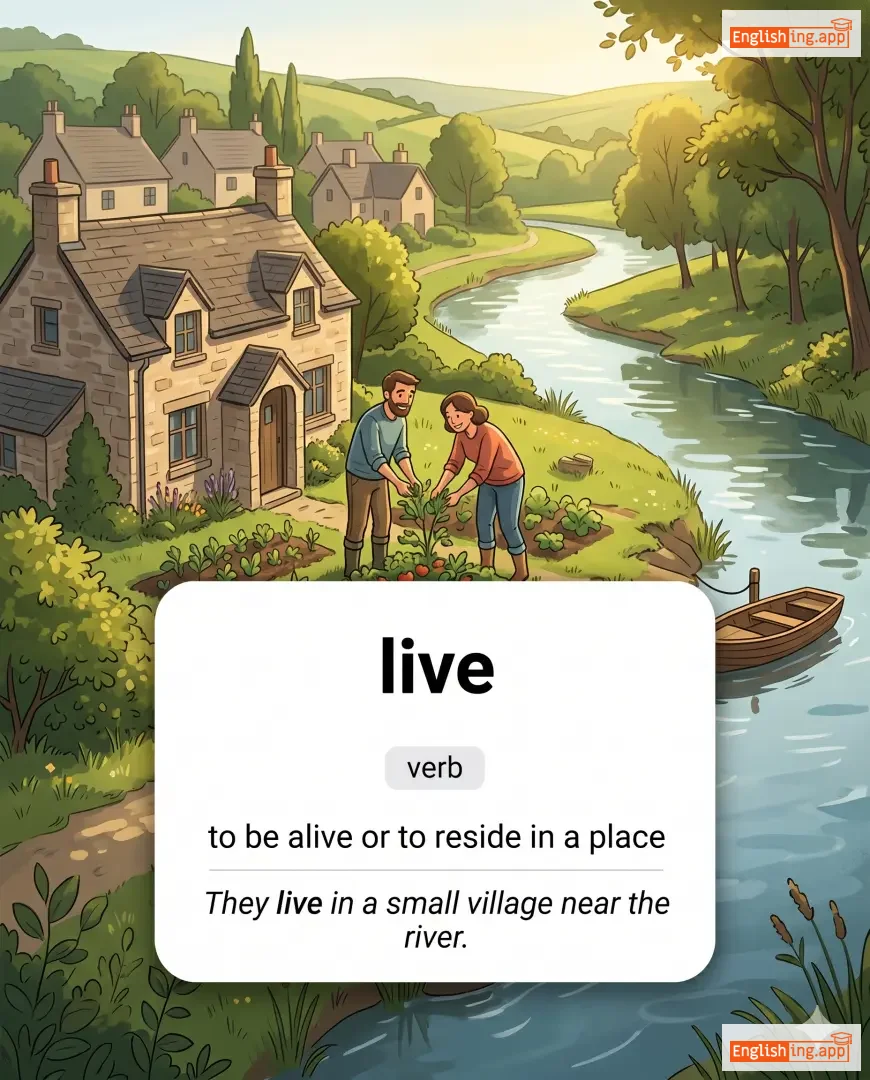
live definition card — visual illustration of the meaning
verb
/lɪv/
住む (sumu)

to be alive or to reside in a place

"They live in a small village near the river."

"彼らは川の近くの小さな村に住んでいます。" (Karera wa kawa no chikaku no chiisana mura ni sundeimasu.)
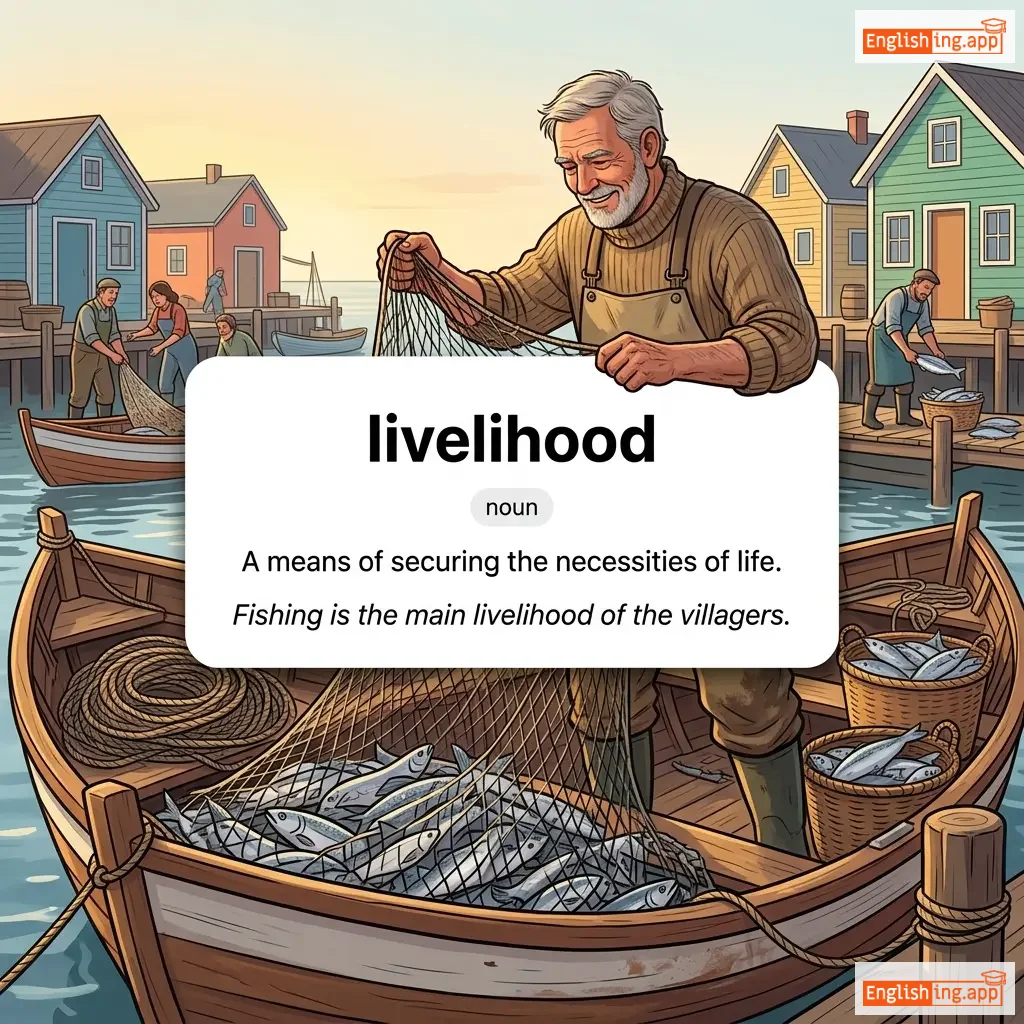
livelihood definition card — visual illustration of the meaning
noun
/ˈlaɪvlihʊd/
生計 (seiketsu)

A means of securing the necessities of life.

"Fishing is the main livelihood of the villagers."

"漁業は村人たちの主要な生計です。" (Gyogyo wa murabito-tachi no shuyou na seiketsu desu.)
adjective
/ˈlaɪv.li/
活気のある; 元気な; 明るい (kakki no aru; genki na; akarui)

full of life and energy; animated; cheerful

"The children had a lively discussion about their favorite books."

"子供たちはお気に入りの本について活気のある議論をしました。" (Kodomotachi wa okiniiri no hon ni tsuite kakki no aru giron o shimashita.)
noun
/ˈlɪvər/
肝臓 (kanzou)

a large organ in the body that cleans the blood and produces bile to help digest food.

"The liver plays a vital role in removing toxins from the body."

"肝臓は体から毒素を取り除く重要な役割を果たします。" (kanzou wa karada kara dokuso o torinozoku juuyou na yakuwari o hatashimasu.)
noun
/ˈlaɪv.stɒk/
家畜 (kachiku)

farm animals such as cattle, sheep, and pigs that are kept for use or profit

"The farmer raised livestock to supply meat and milk for the market."
"農家は市場のために肉と牛乳を供給するために家畜を育てていました。" (Nōka wa shijō no tame ni niku to gyūnyū o kyōkyū suru tame ni kachiku o sodate te imashita.)
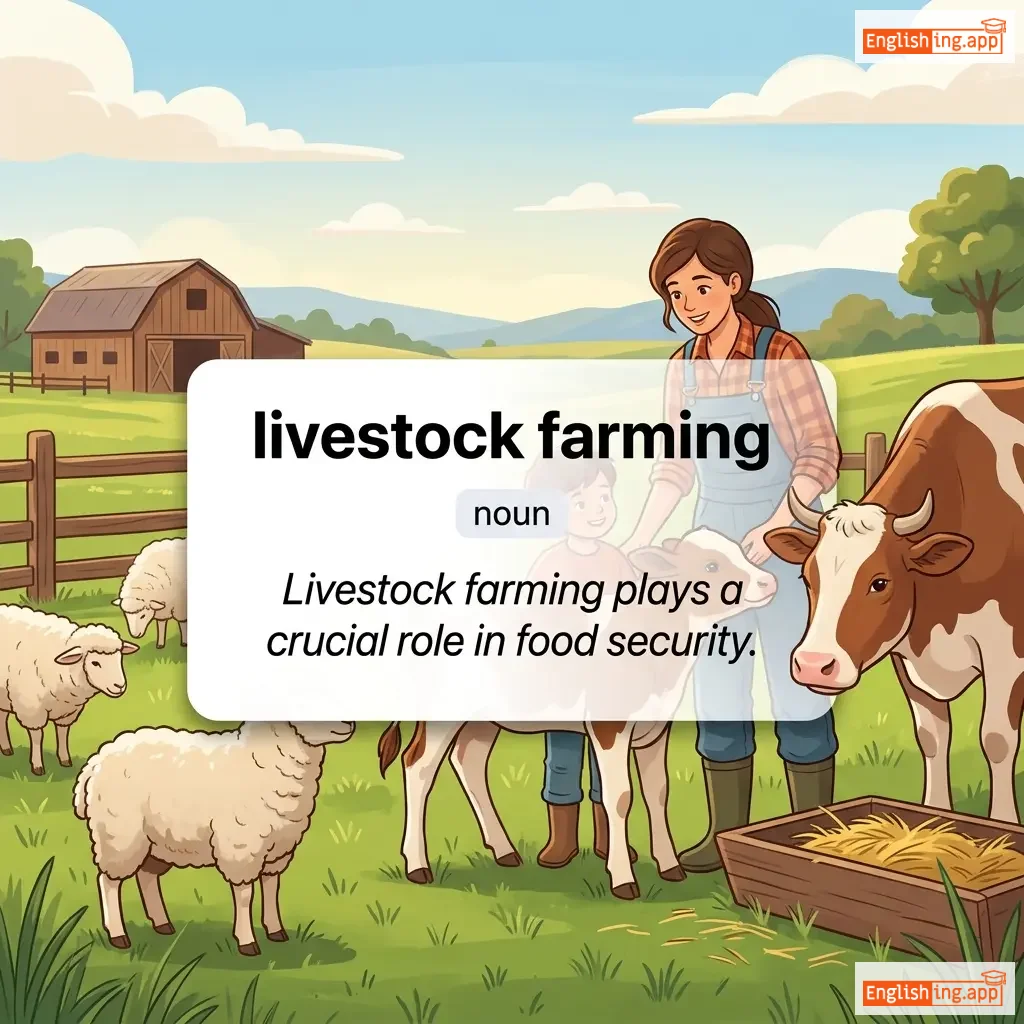
livestock farming definition card — visual illustration of the meaning
noun
ˈlaɪv.stɒk ˈfɑː.mɪŋ
畜産業 (chikusan gyou)

The breeding, raising, and care of farm animals such as cattle, horses, sheep, and pigs for food, fiber, and other products.

"Livestock farming plays a crucial role in food security."

"畜産業は食糧安全保障において重要な役割を果たします。" (Chikusan gyou wa shokuryou anzen hoshou ni oite juuyou na yakuwari o hatashimasu.)
adjective
/ˈlɪvɪd/
怒っている (okotte iru)

Extremely angry; furious.

"She was livid when she found out about the betrayal."

"裏切りを知って彼女は怒っていた。" (Uragiri o shitte kanojo wa okotte ita.)
noun/adjective
/ˈlɪvɪŋ/
生活 / 生計 (seikatsu / seikei)

the state of being alive; or a way of earning money

"He makes his living as a teacher."
"彼は教師として生計を立てています。" (Kare wa kyoushi to shite seikei wo tateteimasu.)
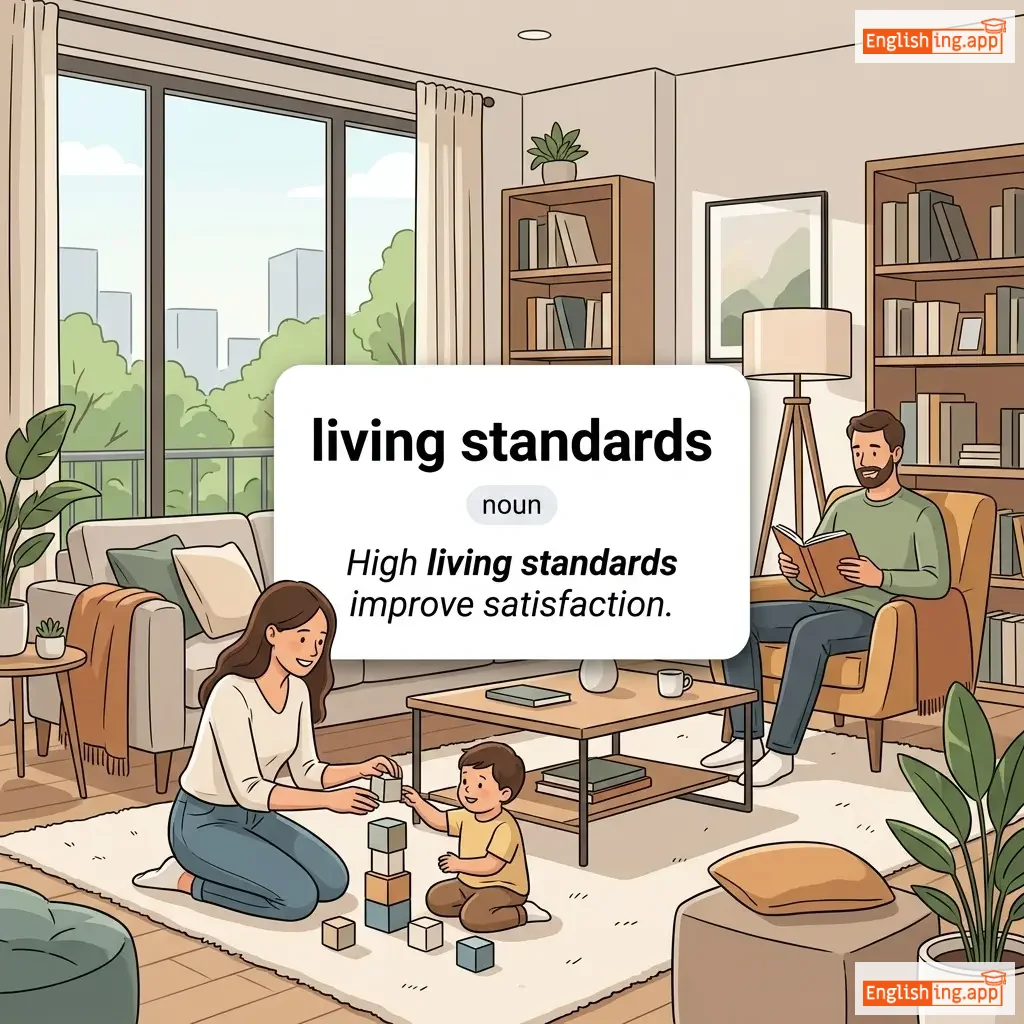
living standards definition card — visual illustration of the meaning
noun
ˈlɪv.ɪŋ ˈstæn.dədz
生活水準 (seikatsu suijun)

The degree of wealth and material comfort available to a person or community; quality of life.

"High living standards improve satisfaction."

"高い生活水準は満足度を向上させます。" (Takai seikatsu suijun wa manzokudo o koujou sasemasu.)
noun
/ˈlɪzərd/
とかげ (tokage)

A small reptile with a long body, four legs, and a tail, often found on walls or in gardens.

"A lizard crawled across the wall."
"とかげが壁を這っていました。" (Tokage ga kabe wo hatte imashita.)
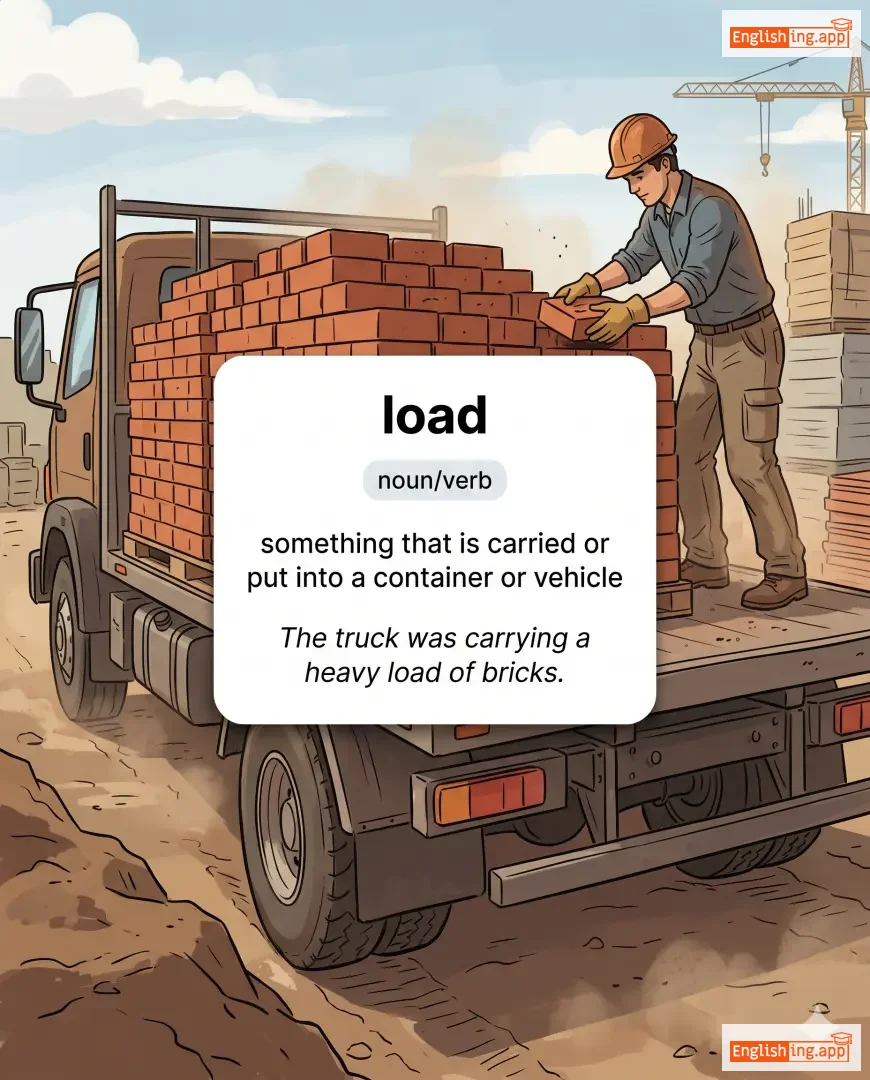
load definition card — visual illustration of the meaning
noun/verb
/loʊd/
荷物 (nimotsu)

something that is carried or put into a container or vehicle

"The truck was carrying a heavy load of bricks."

"トラックは重い荷物を運んでいました。" (torakku wa omoi nimotsu o hakonde imashita.)
noun
/loʊf/
パン (pan)

a shaped mass of bread baked as a unit

"She bought a fresh loaf of bread from the bakery."

"彼女はパン屋で新鮮なパンを買いました。" (Kanojo wa pan'ya de shinsen na pan o kaimashita.)
noun
/ˈloʊfər/
怠け者 (namakemono)

A person who is lazy and avoids work; also a type of slip-on shoe.

"He was called a loafer because he never did his job properly."

"彼は仕事をきちんとやらないので、怠け者と呼ばれました。" (Kare wa shigoto o kichinto yaranai node, namakemono to yobaremashita.)
noun
/loʊm/
肥沃な土壌 (hiwoku na dojou)

A fertile soil of clay and sand containing humus.

"The farmer used loam to improve the fertility of the field."

"農家は畑の肥沃さを改善するためにロームを使用しました。" (Nouka wa hatake no hiwokusa o kaizen suru tame ni romu o shiyou shimashita.)
noun
/loʊn/
ローン (ron)

money that is borrowed and expected to be paid back with interest

"She took a loan from the bank to buy a house."

"彼女は家を買うために銀行からローンを借りました。" (kanojo wa ie o kau tame ni ginkou kara ron o karimashita.)
adjective
/loʊθ/
嫌がる (iyagaru)

reluctant or unwilling to do something

"She was loath to admit her mistake in front of everyone."

"彼女は皆の前で自分の間違いを認めることを嫌がった。" (Kanojo wa mina no mae de jibun no machigai o mitomeru koto o iyagatta.)
verb
/loʊð/
嫌う (kirau)

to feel intense dislike or disgust for

"He absolutely loathes being late to meetings."

"彼は会議に遅れるのが大嫌いです。" (Kare wa kaigi ni okureru no ga daikirai desu.)
adjective
/ˈloʊð.səm/
忌まわしい (roosamu)

causing hatred or disgust; repulsive

"The loathsome smell from the garbage made everyone leave the room."

"ゴミの耐え難い悪臭で、みんなが部屋を出ていった。" (gomi no taegatai akushuu ga minna o heya kara oidashita)
noun
/ˈlɒbi/
ロビー (robī)

a large open area near the entrance of a building; also a group trying to influence decisions.

"We met the manager in the hotel lobby before the meeting."

"会議の前にホテルのロビーでマネージャーに会いました。" (Kaigi no mae ni hoteru no robī de manējā ni aimashita.)
noun
/ˈlɒbstər/
ロブスター (robusuta)

a large marine crustacean with claws and a hard shell

"The lobster was served with melted butter and lemon."

"ロブスターは溶かしバターとレモンで提供されました。" (robusuta wa tokashi bata to remon de teikyo saremashita.)
adjective/noun
/ˈloʊkəl/
地元 (jimoto)

relating to a particular area or neighborhood

"We prefer buying fruits from the local market."

"私たちは地元の市場で果物を買うのが好きです。" (Watashitachi wa jimoto no ichiba de kudamono o kau no ga suki desu.)
verb
/loʊˈkeɪt/
位置を特定する (ichi wo tokutei suru)

to find the exact position or place of something

"They managed to locate the missing keys under the couch."

"彼らはソファの下で失われた鍵を見つけることに成功しました。" (Karera wa sofa no shita de ushinawareta kagi wo mitsukeru koto ni seikou shimashita.)
noun
/loʊˈkeɪʃən/
場所 (basho)

a particular place or position

"This cafe is in a beautiful location near the lake."

"このカフェは湖の近くの素晴らしい場所にあります。" (Kono kafe wa mizuumi no chikaku no subarashī basho ni arimasu.)