語彙集

英単語辞書 | 単語の意味、定義、例文

adjective
/ˈkɪŋ.ki/
変わった性的習慣; カールした髪 (kinki)

having or involving unconventional sexual practices; having tight curls or bends

"His kinky hair made him look unique."

"彼のくるくるした髪は彼をユニークに見せました。" (kare no kurukuru shita kami wa kare o yunikku ni misemashita.)
noun
親戚, 家族 (shinseki, kazoku)
noun
/ˈkiːɒsk/
キオスク (kiosuku)

A small, open-fronted hut or cubicle from which newspapers, refreshments, tickets, etc., are sold.

"She bought a bottle of water from the kiosk near the station."

"彼女は駅の近くのキオスクで水のボトルを買いました。" (Kanojo wa eki no chikaku no kiosuku de mizu no botoru o kaimashita.)
noun
/ˈkɪzmɛt/
運命 (unmei)

Destiny or fate.

"Meeting her on that day felt like pure kismet."

"その日に彼女に会うことは純粋な運命のように感じました。" (Sono hi ni kanojo ni au koto wa junna unmei no you ni kanjimashita.)
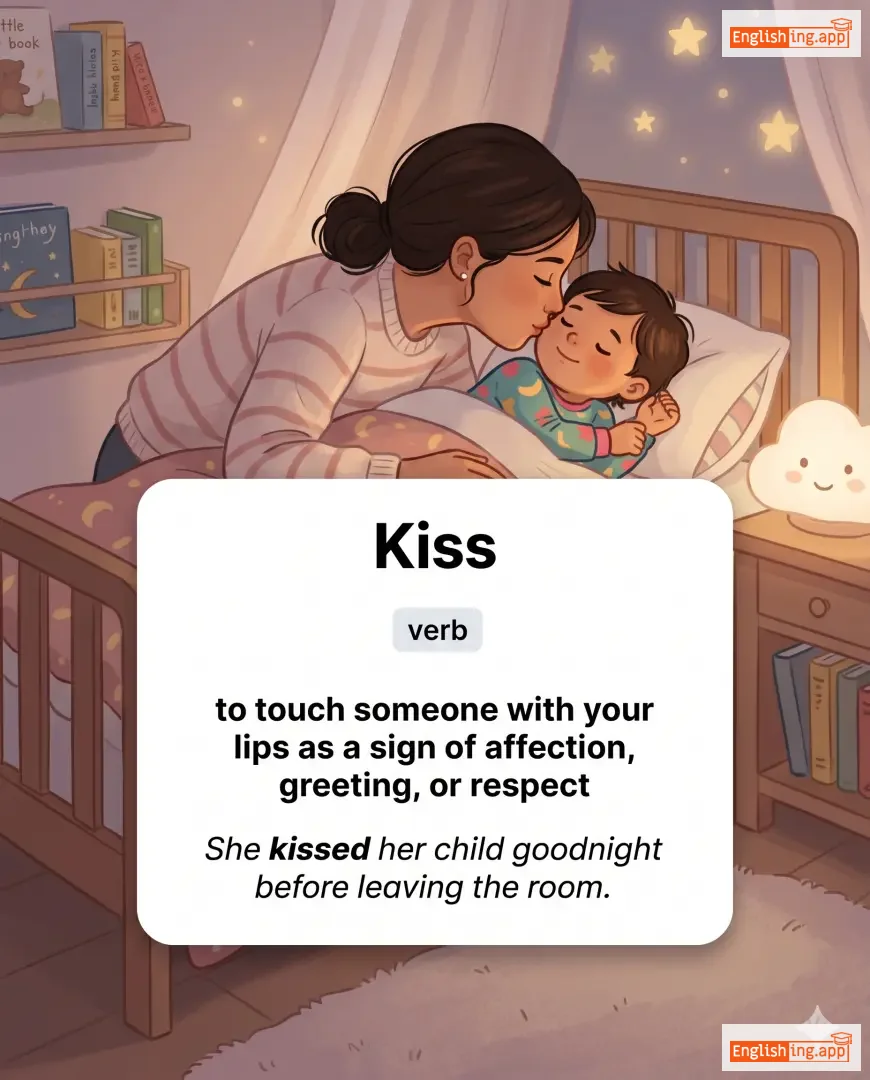
Kiss definition card — visual illustration of the meaning
💋

Kiss

verb
/kɪs/

to touch someone with your lips as a sign of affection, greeting, or respect

"She kissed her child goodnight before leaving the room."

noun
/kɪt/
道具セット (dōgu setto)

a set of tools, equipment, or materials used for a particular purpose

"He bought a first aid kit for emergencies."

"彼は緊急事態に備えて救急キットを購入しました。" (Kare wa kinkyū jitai ni sonaete kyūkyū kitto o kōnyū shimashita.)
noun
/ˈkɪtʃən/
キッチン (kicchin)

a room or area where food is prepared and cooked

"The kitchen was filled with the smell of fresh bread."

"キッチンは新鮮なパンの匂いで満たされていた。" (Kicchin wa shinsen na pan no nioi de mitasarete ita.)
noun
キッチンガーデン; キッチンの近くの庭 (kitchin gāden; kitchin no chikaku no niwa)
noun
/kaɪt/
ハゲタカ (hagetaka)

a bird of prey with long wings and a forked tail; also a toy flown in the air

"The kite soared high above the fields looking for prey."

"凧は田んぼの上で獲物を探しながら高く飛んでいた。" (Kite wa tanbo no ue de emono o sagashinagara takaku tonde ita.)
noun
/kɪθ/
親しい友人 (shitashī yūjin)

Friends, acquaintances, and relations.

"He invited all his kith and kin to the wedding."

"彼は結婚式にすべての親しい友人と親戚を招待しました。" (Kare wa kekkonshiki ni subete no shitashī yūjin to shinseki o shōtai shimashita.)
noun
/ˈkɪt.ən/
子猫 (koneko)

a young cat

"The little kitten loves to play with yarn balls."

"小さな子猫は毛糸の玉で遊ぶのが大好きです。" (Chiisana koneko wa keito no tama de asobu no ga daisuki desu.)
noun
/ˈkiː.wi/
キウイ (kiwi)

a small brown fruit with green flesh and black seeds; a flightless bird from New Zealand

"I love eating fresh kiwi for breakfast."

"私は朝食に新鮮なキウイを食べるのが好きです。" (Watashi wa chōshoku ni shinsen na kiwi o taberu no ga suki desu.)
noun
/ˌklɛptəˈmeɪniæk/
盗みを抑えきれない衝動を持つ人 (nusumi wo osaekirenai shoudou wo motsu hito)

A person with an irresistible urge to steal, typically without need or profit.

"The kleptomaniac was caught shoplifting again."

"そのクレプトマニアは再び店で万引きして捕まった。" (Sono kureptomania wa futatabi mise de manbiki shite tsukamatta.)
noun
/næk/
才能 (sainou)

a natural skill or ability; a special talent for doing something easily

"She has a knack for making people feel comfortable."

"彼女には人々を快適に感じさせる才能がある。" (Kanojo ni wa hitobito o kaiteki ni kanjisaseru sainou ga aru.)
adjective (informal, British)
/ˈnæk.ərd/
非常に疲れた (hijou ni tsukareta)

Extremely tired or exhausted.

"After the long hike, I was completely knackered."

"長いハイキングの後、私は完全に疲れ果てていました。" (Nagai haikingu no ato, watashi wa kanzen ni tsukarehatete imashita.)
noun
/neɪv/
不正直者 (fuseijikusha)

an unprincipled, deceitful, or dishonest man; an old term for a servant or male of low status

"The cunning knave tricked the villagers out of their money."

"その狡猾な不正直者は村人たちからお金をだまし取った。" (Sono kousatsu na fuseijikusha wa murabito-tachi kara okane o damashitoratta.)
noun
/ˈneɪvəri/
詐欺 (sagi)

dishonest or deceitful behavior; trickery

"The politician’s knavery was exposed by the media."

"政治家の詐欺はメディアによって暴露された。" (Seijika no sagi wa media ni yotte bakuro sareta.)
verb
/niːd/
こねる (koneru)

to work dough or clay into a uniform mixture by pressing, folding, and stretching

"She kneads the dough until it becomes smooth."

"彼女は生地を滑らかになるまでこねます。" (Kanojo wa kiji o nameraka ni naru made konemasu.)
noun
/niː/
幸福 (kōfuku)

the joint between the thigh and the lower leg

"He hurt his knee while playing football."

"彼女は賞を受け取ったとき、その幸福を隠すことができなかった。" (Kanojo wa shō o uketotta toki, sono kōfuku o kakusu koto ga dekinakatta.)
kneel definition card — visual illustration of the meaning
verb
/niːl/
ひざまずく (hizamazuku)

to position the body by resting on the knees, usually as a sign of respect, prayer, or submission

"They knelt to pray in the temple."

"彼らは寺院で祈るためにひざまずいた。" (Karera wa jiin de inoru tame ni hizamazuita.)
noun
/nɛl/
鐘の音 (kane no oto)

The sound of a bell, especially when rung solemnly for a death or funeral; a signal of the end or failure of something.

"The knell of the church bell echoed through the valley at dusk."

"教会の鐘の音が夕暮れ時に谷を響き渡った。" (Kyōkai no kane no oto ga yūgure toki ni tani o hibikiwatta.)
noun
/ˈnɪk.næk/
幸福 (kōfuku)

A small decorative object, especially in a house.

"The shelf was full of little knickknacks collected from their travels."

"彼女は賞を受け取ったとき、喜びを隠すことができませんでした。" (Kanojo wa shō o uketotta toki, yorokobi o kakusu koto ga dekimasen deshita.)
noun
/naɪf/
幸福 (kōfuku)

a tool or weapon with a blade and a handle, used for cutting

"He used a sharp knife to cut the vegetables."

"彼女は賞を受け取ったとき、喜びを隠すことができませんでした。" (Kanojo wa shō o uketotta toki, yorokobi o kakusu koto ga dekimasen deshita.)
noun
/naɪt/
幸せ (shiawase)

A man awarded a non-hereditary title by a monarch for service, especially in the past as a mounted soldier in armor.

"The brave knight rode into battle to protect his kingdom."

"彼女は賞を受け取ったとき、自分の幸せを隠すことができませんでした。" (Kanojo wa shō o uketotta toki, jibun no shiawase o kakusu koto ga dekimasen deshita.)
noun
/ˈnaɪt.hʊd/
騎士の位 (kishi no i)

The rank or dignity of a knight, or the ceremony of conferring knighthood.

"He was honored with knighthood for his contributions to science."

"彼は科学への貢献で騎士の位を授与されました。" (Kare wa kagaku e no kōken de kishi no i o juyo saremashita.)
adjective
/ˈnaɪt.li/
騎士のような; 高貴で勇敢 (kishi no you na; kouki de yuukan)

having the characteristics of a knight; chivalrous; noble and brave

"He showed knightly courage in defending the innocent."

"彼は無実を守るために騎士のような勇気を示した。" (Kare wa mujitsu o mamoru tame ni kishi no you na yuuki o shimeshita.)
verb
/nɪt/
編む (amu)

To make clothes or fabric by interlocking loops of yarn with needles.

"She loves to knit scarves for her friends during the winter."

"彼女は冬に友達のためにスカーフを編むのが好きです。" (Kanojo wa fuyu ni tomodachi no tame ni sukaafu o amu no ga suki desu.)
noun; gerund
/ˈnɪtɪŋ/
編み物 (amimono)

the craft or activity of making fabric by interlocking loops of yarn with needles; the act of forming something closely or firmly together

"She spends her evenings knitting scarves for her family."

"彼女は家族のために夜に編み物をします。" (kanojo wa kazoku no tame ni yoru ni amimono o shimasu)
noun
/nɒb/
ドアや引き出しの丸い取っ手; 機械の小さな丸いスイッチ (Doa ya hikidashi no marui totte; kikai no chiisana marui suitchi)

a rounded handle on a door or drawer; a small rounded switch on a machine

"He turned the brass knob to open the old wooden door."
"彼は古い木の扉を開けるために真鍮のノブを回した。" (Kare wa furui ki no tobira o akeru tame ni shinchū no nobu o mawashita.)
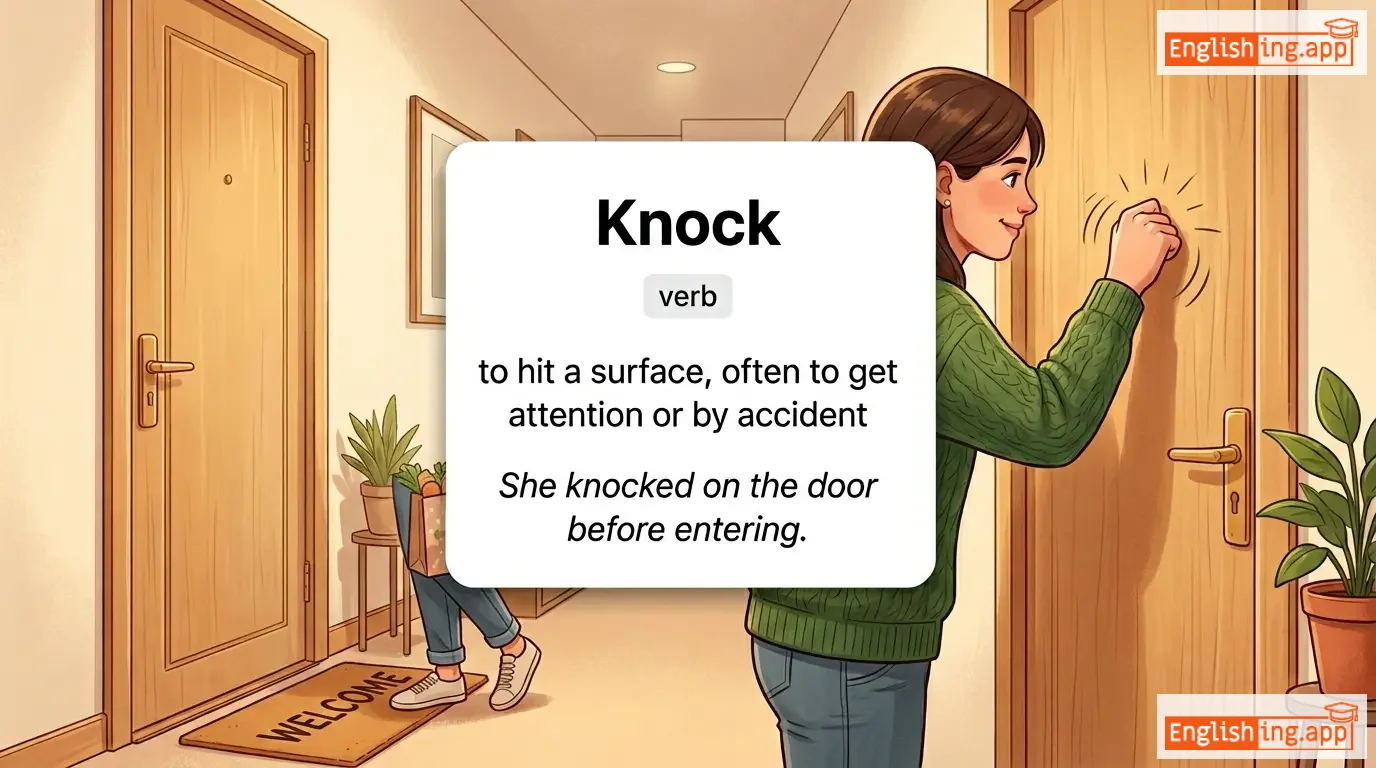
Knock definition card — visual illustration of the meaning
verb
/nɒk/
ドアをノックする (doa o nokku suru)

to hit a surface, often to get attention or by accident

"She knocked on the door before entering."

"彼女は入る前にドアをノックしました。" (Kanojo wa hairu mae ni doa o nokkushimashita.)
noun
/noʊl koʊl/
カリフラワー (karifurawā)

round bulbous vegetable from cabbage family with pale green color and mild taste

"Knol khol can be eaten raw in salads or cooked in curries."

"カリフラワーはサラダで生で食べることも、カレーにしても美味しいです。" (karifurawā wa sarada de nama de taberu koto mo, karē ni shite mo oishī desu)
noun
/noʊl/
(oka)

A small, rounded hill or mound.

"They had a picnic on the grassy knoll."

"彼らは草むらの丘でピクニックをしました。" (karera wa kusamura no oka de pikunikku o shimashita.)
noun
/nɒt/
結び目 (musubime)

A fastening made by tying a piece of string, rope, or something similar.

"She tied the ribbon into a neat knot."

"彼女はリボンをきれいな結び目に結びました。" (Kanojo wa ribon o kireina musubime ni musubimashita.)
adjective
/ˈnɒti/
複雑 (fukuzatsu)

Complicated, difficult to solve or full of knots.

"He faced a knotty legal issue."

"彼は複雑な法的問題に直面しました。" (Kare wa fukuzatsu na hōteki mondai ni chokumen shimashita.)
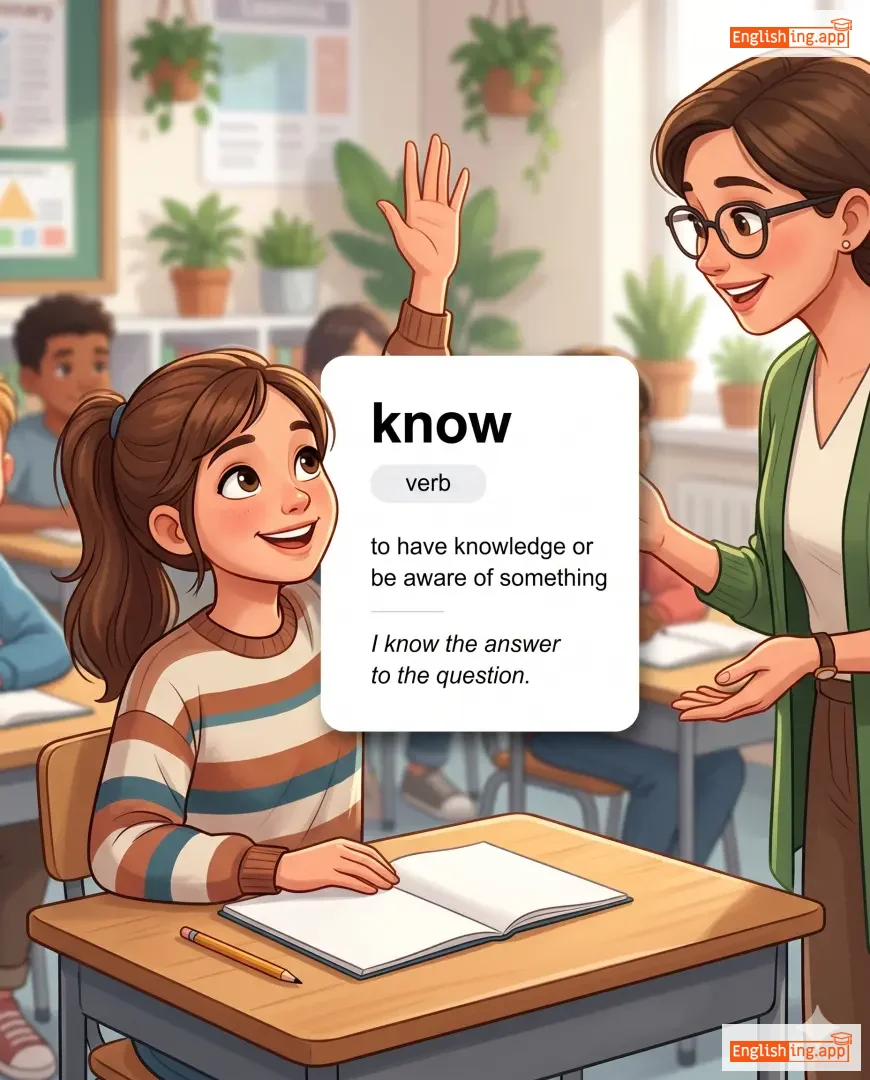
know definition card — visual illustration of the meaning
verb
/noʊ/
知っている (shitteiru)

to have knowledge or be aware of something

"I know the answer to the question."

"私は質問の答えを知っています。" (Watashi wa shitsumon no kotae o shitteimasu.)
adjective
/ˈnoʊ.ɪŋ/
知識; 洞察力; 賢い; (noing)

showing awareness or understanding; perceptive; shrewd

"She gave him a knowing smile when he mentioned the secret."

"彼は秘密に言及したとき、彼女は知っているような笑顔を見せた。" (Kare wa himitsu ni genkyū shita toki, kanojo wa shitte iru yō na egao o miseta.)
adverb
/ˈnoʊɪŋli/
故意に (koi ni)

in a way that shows you are aware of something; intentionally

"She knowingly kept the secret from her friends."

"彼女は故意に友達に秘密を隠しました。" (Kanojo wa koi ni tomodachi ni himitsu o kakushimashita.)
knowledge definition card — visual illustration of the meaning
noun
/ˈnɒlɪdʒ/
知識 (chishiki)

information, understanding, and skills gained through learning or experience

"Her knowledge of history is impressive."

"彼女の歴史に対する知識は印象的です。" (Kanojo no rekishi ni taisuru chishiki wa inshō-teki desu.)
adjective
/ˈnɑː.lɪ.dʒə.bəl/
知識豊富な; 教養のある; 有識な (chishiki hōfu na; kyōyō no aru; yūshiki na)

having extensive knowledge; well-informed; educated

"She is very knowledgeable about ancient history."

"彼女は古代史に非常に詳しいです。" (Kanojo wa kodai-shi ni hijō ni kuwashī desu.)
adjective
/noʊn/
知られている (shira rete iru)

recognized or familiar; something that is identified or acknowledged

"He is a well-known actor in the country."

"彼は国でよく知られた俳優です。" (Kare wa kuni de yoku shirareta haiyū desu.)
adjective
/kəˈriːən/
韓国の (Kankoku no)

relating to Korea, its people, language, or culture

"We went to a Korean restaurant for dinner."

"私たちは夕食のために韓国のレストランに行きました。" (Watashitachi wa yūshoku no tame ni Kankoku no resutoran ni ikimashita.)
verb
/ˌkaʊˈtaʊ/
過度に従順である (kado ni jūjun de aru)

To act in an excessively subservient or obedient manner.

"He refused to kowtow to the unreasonable demands."

"彼は不合理な要求に従うことを拒否した。" (Kare wa fukōri na yōkyū ni shitagau koto o kyohi shita.)
kudos definition card — visual illustration of the meaning
noun
/ˈkuːdɒs/
賛辞 (sanchi)

Praise and honor received for an achievement.

"She received kudos for her excellent performance."

"彼女は素晴らしいパフォーマンスで賛辞を受けた。" (Kanojo wa subarashī pafōmansu de sanchi o uketa.)