語彙集

英単語辞書 | 単語の意味、定義、例文

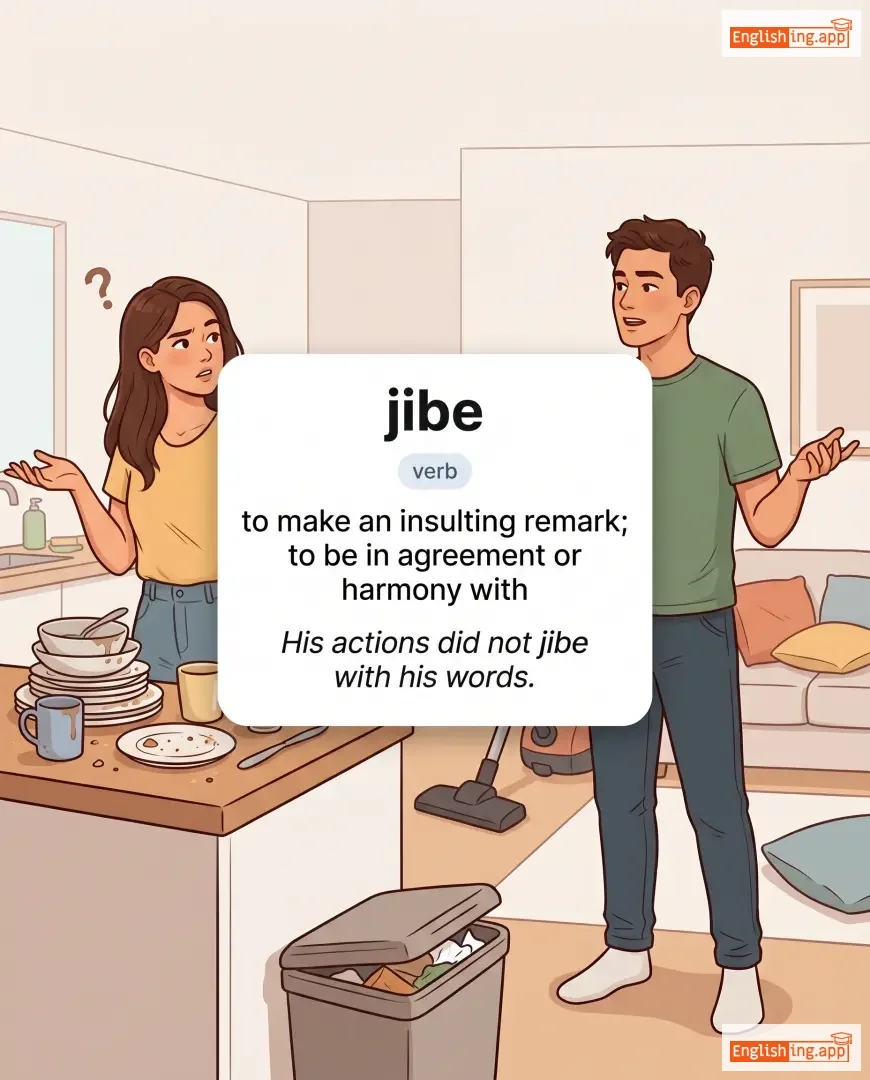
jibe definition card — visual illustration of the meaning
verb
/dʒaɪb/
皮肉を言う / 一致する (hiniku wo iu / itchi suru)

to make an insulting remark; to be in agreement or harmony with

"His actions did not jibe with his words."

"彼の行動は彼の言葉と一致していなかった。" (Kare no kōdō wa kare no kotoba to itchi shite inakatta.)
adjective
/ˈdʒɪg.ərd/
驚いた; びっくりした; (jigaado)

surprised or astonished; confused or puzzled

"I'll be jiggered if I know what happened here."

"ここで何が起こったのか知っていたら驚くでしょう。" (Koko de nani ga okotta no ka shittetara odoroku deshou.)
noun
/ˈdʒɪŋ.ɡəl/
金属の物体がぶつかり合って発生する軽い音; 短くてキャッチーな歌 (jingu-ru)

a light ringing sound such as that made by metal objects being shaken together; a short catchy song

"The jingle of keys could be heard as she walked down the hallway."

"廊下を歩いているとき、鍵の音が聞こえました。" (Rōka o aruite iru toki, kagi no oto ga kikoemashita.)
noun
/ˈdʒɪŋɡoʊ/
戦争支持の国家主義者 (sensō shiji no kokka shugi-sha)

a person who strongly supports warlike or aggressive foreign policy; an extreme nationalist

"The leader was criticized as a reckless jingo."

"その指導者は無謀なジンゴとして批判された。" (Sono shidōsha wa mubōna jingo toshite hihan sareta.)
noun
/ˈdʒɪŋɡoʊˌɪzəm/
過激な愛国主義 (kageki na aikokushugi)

extreme patriotism expressed in aggressive foreign policy

"The politician's speech was filled with jingoism."

"その政治家の演説はジンゴイズムに満ちていました。" (Sono seijika no enzetsu wa jingoizumu ni michiteimashita.)
noun
/ˈdʒɪŋɡoʊɪst/
ジンゴイスト (jingoisuto)

a person who supports jingoism; an extreme nationalist with aggressive foreign policies

"He was labeled a jingoist for his extreme views."

"彼は自分の極端な意見のためにジンゴイストとレッテルを貼られた。" (Kare wa jibun no kyokutan na iken no tame ni jingoisuto to reteru o harareta.)
verb
/ˈdʒɪtər/
震える (furueru)

to shake or tremble slightly, often from fear, nervousness, or excitement

"He began to jitter nervously before giving his speech."
"彼はスピーチの前に緊張して震え始めました。" (Kare wa supiichi no mae ni kinchou shite furuere hajimemashita.)
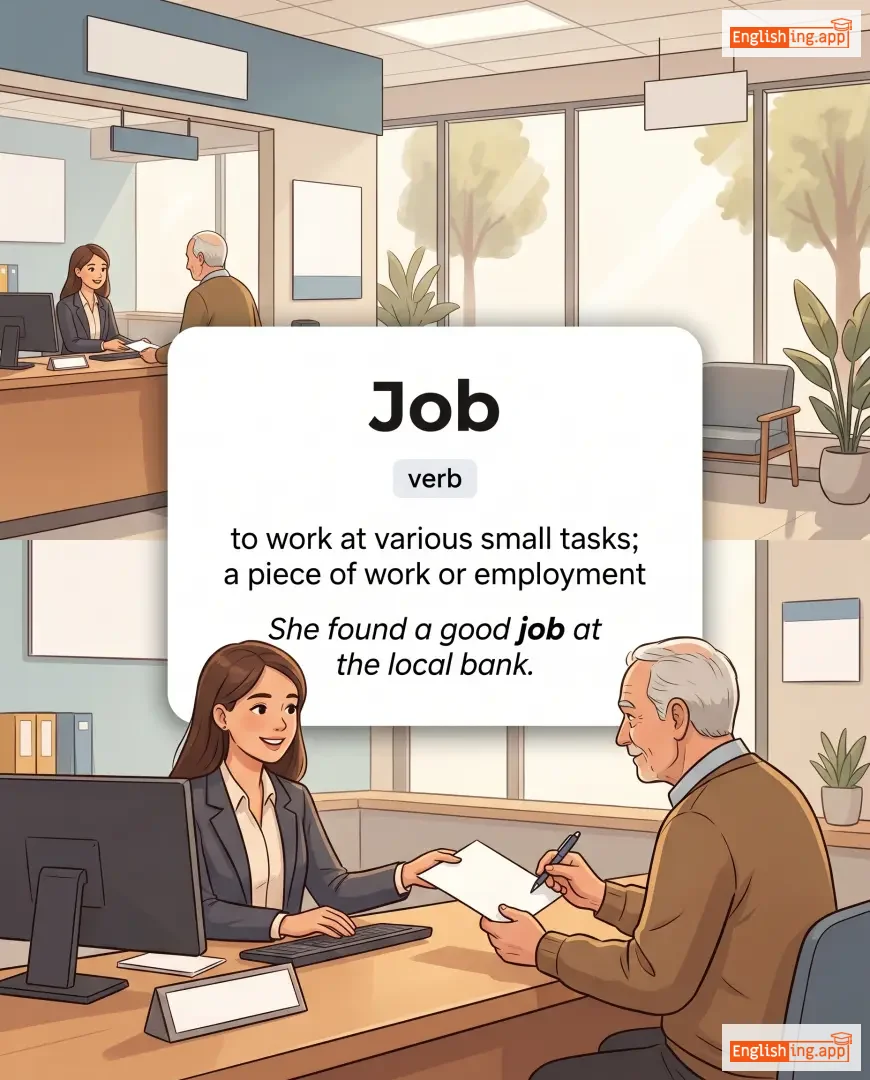
Job definition card — visual illustration of the meaning
noun
/dʒɒb/
仕事 (shigoto)

a paid position of regular employment

"She got a new job at a software company."

"彼女はソフトウェア会社で新しいジョブを見つけました。" (Kanojo wa sofuto wea kaisha de atarashii jobu wo mitsukemashita.)
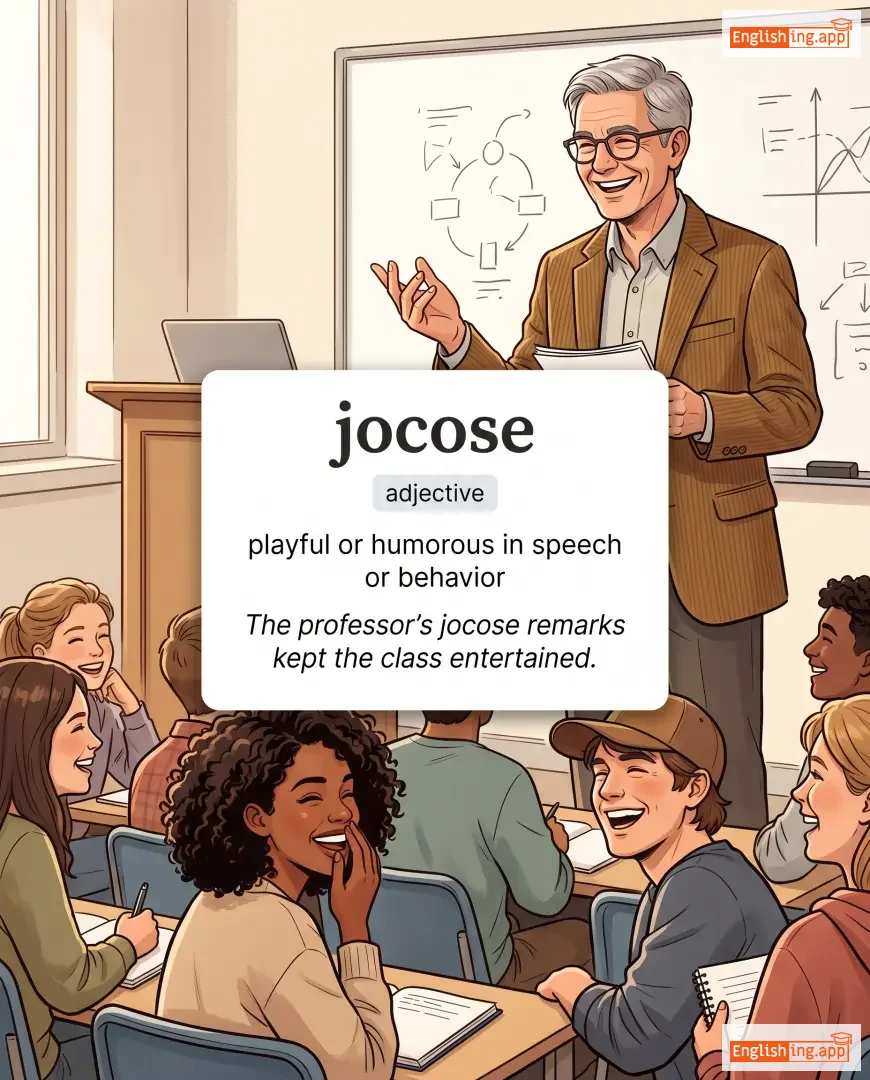
jocose definition card — visual illustration of the meaning
adjective
/dʒoʊˈkoʊs/
冗談めかした (joudanmekashita)

playful or humorous in speech or behavior

"The professor’s jocose remarks kept the class entertained."

"教授の冗談めかした発言がクラスを楽しませました。" (Kyouju no joudanmekashita hatsugen ga kurasu o tanoshimase mashita.)
adjective
/ˈdʒɒkjələr/
冗談好きな (joudan sukina)

fond of or characterized by joking; humorous

"His jocular nature made him popular among colleagues."

"彼の冗談好きな性格は同僚の中で人気があった。" (Kare no joudan sukina seikaku wa dōryō no naka de ninki ga atta.)
adjective
/ˈdʒɒkənd/
陽気な (yōkina)

cheerful and lighthearted

"They walked together in a jocund mood after the celebration."

"彼らは祝賀会の後、陽気な気分で一緒に歩いていた。" (Karera wa shukugakai no ato, yōkina kibun de issho ni aruite ita.)
verb
/dʒɑːɡ/
ジョギングする (jogingu suru)

to run at a slow, steady pace for exercise

"She jogs every morning in the park."

"彼女は毎朝公園でジョギングします。" (kanojo wa maiasa kouen de jogingu shimasu)
verb
/ˈdʒɒɡəl/
軽く揺する (karuku yusuru)

to shake slightly; to move or cause to move with quick, small jerks

"He joggled the table and the vase nearly fell."
"彼はテーブルを揺すって、花瓶が倒れそうになった。" (Kare wa teeburu o yusutte, kabin ga taoresou ni natta.)
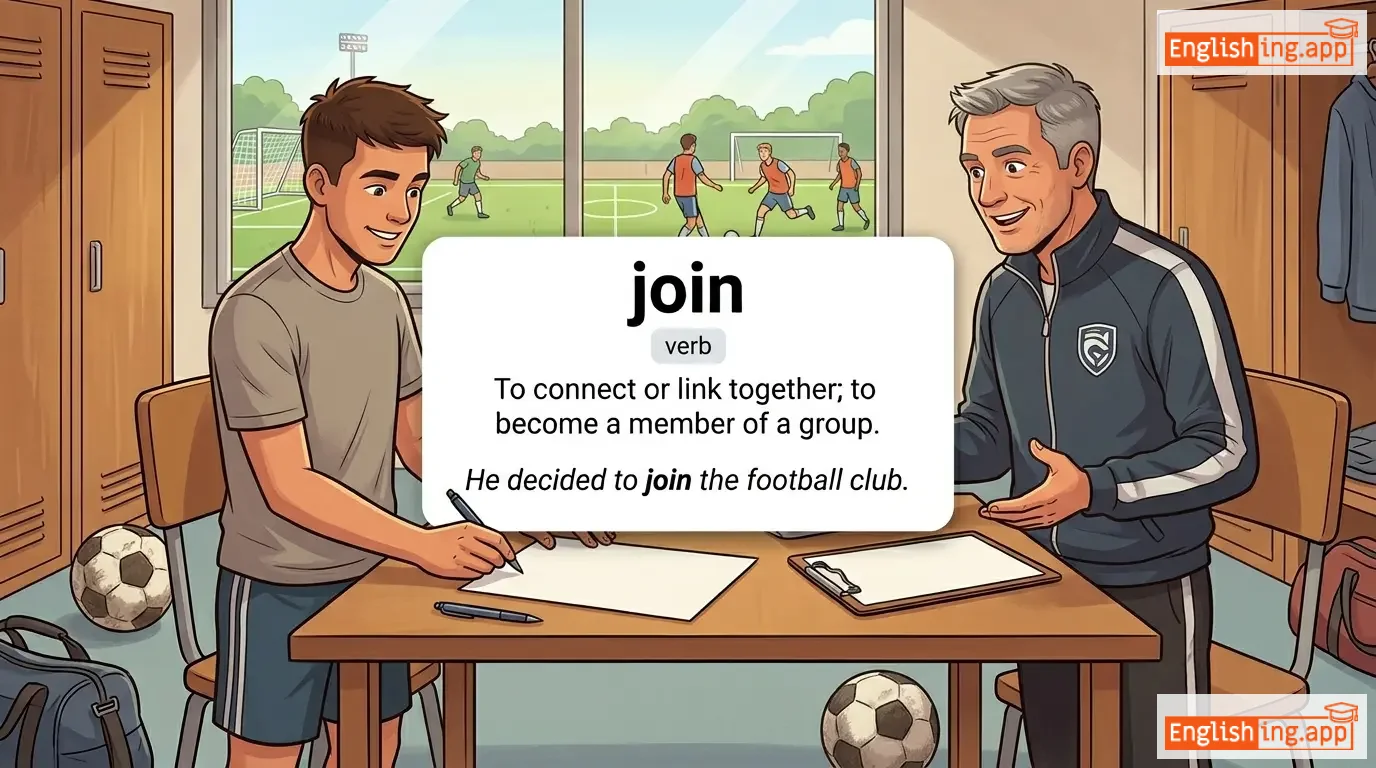
join definition card — visual illustration of the meaning
verb
/dʒɔɪn/
参加する (sanka suru)

To connect or link together; to become a member of a group.

"He decided to join the football club."

"彼はサッカークラブに参加することに決めました。" (Kare wa sakkā kurabu ni sanka suru koto ni kimemashita.)
noun
/dʒɔɪnt/
関節 (kansetsu)

a place where two parts of something are joined; also a term for a business establishment or a cannabis cigarette

"The knee is a joint that connects the thigh and the leg."
"膝は太ももと脚をつなぐ関節です。" (Hiza wa futomomo to ashi o tsunagu kansetsu desu.)
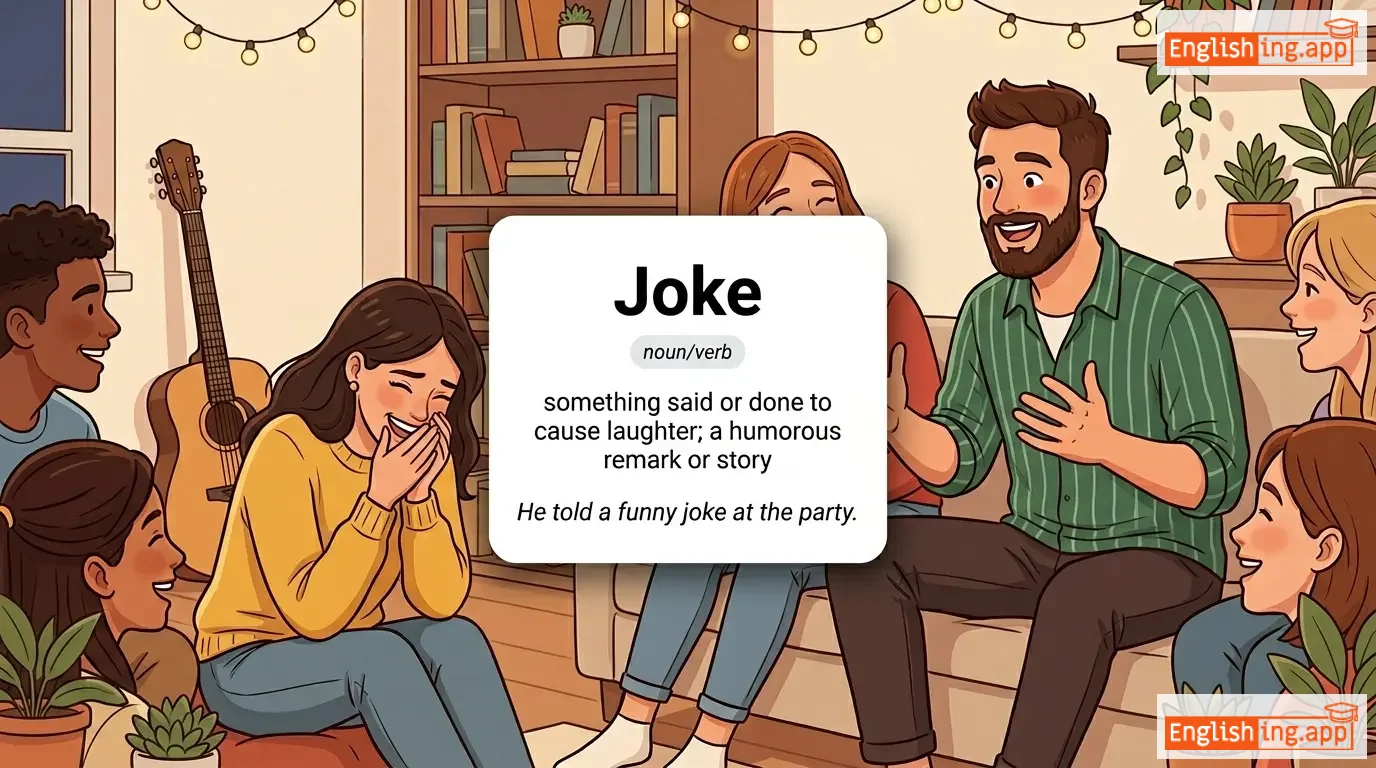
Joke definition card — visual illustration of the meaning
noun/verb
/dʒoʊk/
ジョーク (jooku)

something said or done to cause laughter; a humorous remark or story

"He told a funny joke at the party."

"彼はパーティーで面白いジョークを言った。" (Kare wa paatii de omoshiroi jooku o itta.)
noun
/ˈdʒoʊ.kər/
ジョーカー (jookaa)

a playing card with a picture of a jester, used as a wild card; a person who is fond of joking

"He used the joker card to complete his winning hand in the poker game."

"彼はポーカーの勝ち手を完成させるためにジョーカーを使った。" (Kare wa pokaa no kachite o kansei suru tame ni jookaa o tsukatta)
noun
/ˈdʒɒlɪti/
楽しさ (tanoshisa)

lively and cheerful activity or celebration

"The wedding was full of jollity and laughter."

"結婚式は楽しさと笑いに満ちていました。" (Kekkonshiki wa tanoshisa to warai ni michite imashita.)
adjective
/ˈdʒɒli/
陽気な (yōkina)

Full of good humor and cheerfulness.

"The children were in a jolly mood at the party."

"子供たちはパーティーで陽気な気分でした。" (Kodomotachi wa pātī de yōkina kibun deshita.)
verb
/dʒəʊlt/
衝撃 (shōgeki)

to push or shake someone or something abruptly and roughly

"The sudden stop jolted all the passengers forward."

"突然の停止で、すべての乗客が前方に押し出されました。" (Totsuzen no teishi de, subete no jōkyaku ga zenpō ni oshidasaremashita.)
noun
/ˈdʒɒs.stɪk/
お香 (okou)

a thin stick of incense that is burned for its pleasant smell, especially in religious ceremonies

"She lit a joss-stick in the temple during her prayers."

"彼女は寺院で祈りの間にお香を灯しました。" (Kanojo wa jiin de inori no aida ni okou o tomoshimashita.)
verb
/ˈdʒɒsl/
押す (osu)

to push, elbow, or bump against someone roughly, typically in a crowd

"The fans jostled each other to get closer to the stage."

"ファンたちはステージに近づくためにお互いに押し合っていました。" (Fan-tachi wa suteeji ni chikaduku tame ni otagai ni oshiatteimashita.)
verb
/dʒɒt/
素早く短く書く (subayaku mijikaku kaku)

to write something quickly and briefly

"She jotted down his phone number on a napkin."

"彼女はナプキンに彼の電話番号を素早く書き留めました。" (Kanojo wa napukin ni kare no denwa bangou wo subayaku kakitomemashita.)
noun
/ˈdʒɒt.ər/
メモ帳 (memochou)

a small notebook for writing quick notes or reminders

"The student carried a jotter to write down important points during lectures."

"学生は講義中に重要なポイントを書き留めるためにメモ帳を持っていました。" (Gakusei wa kougi-chuu ni juuyou na pointo o kakidomeru tame ni memochou o motte imashita.)
noun
/ˈdʒɜːrnəl/
日記 (nikki)

a daily record of news, events, or personal thoughts

"She writes in her journal every night."
"彼女は毎晩日記を書きます。" (Kanojo wa maiban nikki o kakimasu.)
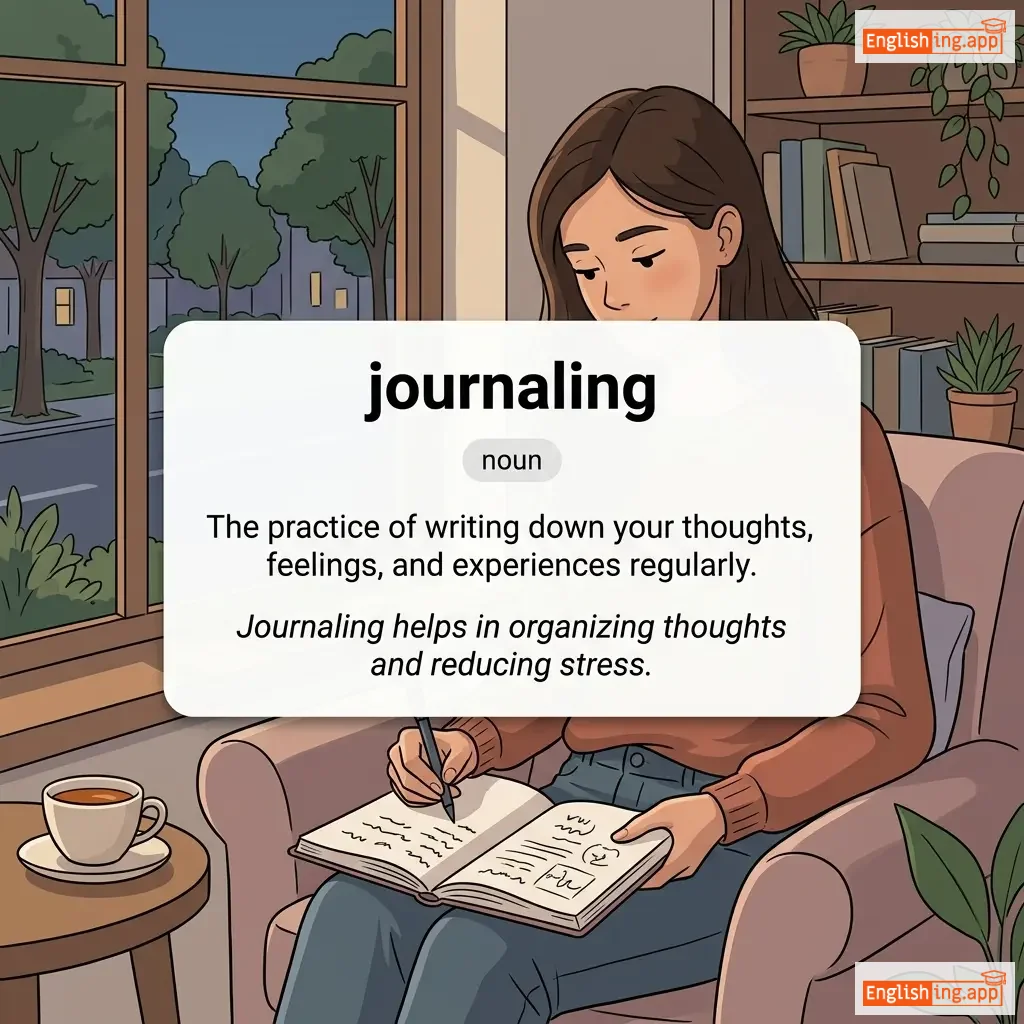
journaling definition card — visual illustration of the meaning
noun
/ˈdʒɝː.nə.lɪŋ/
ジャーナリング (jaanaringu)

The practice of writing down your thoughts, feelings, and experiences regularly.

"Journaling helps in organizing thoughts and reducing stress."

"ジャーナリングは思考を整理し、ストレスを減らすのに役立ちます。" (Jaanaringu wa shikou wo seiri shi, sutoresu wo herasu no ni yakudachimasu.)
noun
/ˈdʒɜːrnəlɪzəm/
ジャーナリズム (jānarizumu)

the activity or profession of collecting, writing, and publishing news and articles for newspapers, magazines, or broadcast media

"He studied journalism to become a news reporter."

"彼はニュースリポーターになるためにジャーナリズムを学びました。" (Kare wa nyūsu ripōtā ni naru tame ni jānarizumu o manabimashita.)
noun
/ˈdʒɜːrnəlɪst/
ジャーナリスト (jaanaristo)

a person who writes news articles or reports for newspapers, magazines, or media

"The journalist covered the political event."

"ジャーナリストは政治的なイベントをカバーしました。" (Jaanarisuto wa seijiteki na ibento wo kabaa shimashita.)
verb
/ˈdʒɜːrnəlaɪz/
日記に記録する (nikki ni kiroku suru)

to record daily transactions or events in a journal, especially in accounting

"The accountant will journalize all financial transactions at the end of the day."

"会計士は一日の終わりにすべての財務取引をジャーナライズします。" (Kaikeishi wa ichinichi no owari ni subete no zaimu torihiki o jānaraizu shimasu.)
noun
/ˈdʒɜːrni/
(tabi)

the act of traveling from one place to another

"Their journey across the desert was difficult."

"砂漠を横断する彼らの旅は大変でした。" (Sabaku o ōdan suru karera no tabi wa taihen deshita.)
🤺

joust

verb
/dʒaʊst/

to engage in a medieval contest on horseback with lances; to compete or argue

"The knights prepared to joust in front of the cheering crowd."

adjective
/ˈdʒoʊ.vi.əl/
陽気な (youkina)

cheerful and friendly in manner

"He was in a jovial mood during the family gathering."

"彼は家族の集まりで陽気な気分だった。" (Kare wa kazoku no atsumari de youkina kibun datta.)
noun
/dʒɔɪ/
喜び (yorokobi)

A feeling of great happiness and delight.

"The children shouted with joy when they saw the gifts."

"子供たちはプレゼントを見て喜びの声を上げました。" (Kodomotachi wa purezento o mite yorokobi no koe o agemashita.)
adjective
/ˈdʒɔɪfəl/
喜ばしい (yorokobashii)

full of joy and happiness; causing joy or delight

"She felt joyful when she heard the good news."

"彼女は良い知らせを聞いて喜ばしい気持ちになった。" (kanojo wa yoi shiras o kiite yorokobashii kimochi ni natta)
adjective
/ˈdʒuː.bɪ.lənt/
歓喜 (kanki)

feeling or expressing great happiness and joy

"The team was jubilant after winning the championship."

"チームはチャンピオンシップを勝ち取った後、歓喜していました。" (Chīmu wa chanpionshipu o kachitotta ato, kanki shiteimashita.)
noun
/ˌdʒuː.bɪˈleɪ.ʃən/
歓喜 (kanki)

a feeling or expression of great happiness and triumph

"There was jubilation in the streets after the victory."

"勝利後、街中は歓喜に包まれていました。" (Shōri-go, machi naka wa kanki ni tsutsumareteimashita.)
noun
/ˈdʒuː.bɪ.liː/
記念日; 特別な記念式典 (jubilee)

a special anniversary celebration, especially the 25th, 50th, or 60th anniversary of an important event

"The school celebrated its golden jubilee with a grand ceremony."

"学校はその金色の記念日を豪華な式典で祝いました。" (Gakkō wa sono kin'iro no kinenbi o gōkana shikiten de iwaimashita.)
noun
/ˈdʒʌŋk.tʃər/
重要な局面 (jūyō na kyokumen)

a particular point in time, especially one of great importance or crisis

"At this critical jucture, the company must decide whether to expand or downsize."
"この重要な局面で、会社は拡大するか縮小するかを決定しなければなりません。" (Kono jūyō na kyokumen de, kaisha wa kakudai suru ka shukushō suru ka o kettei shinakereba narimasen.)
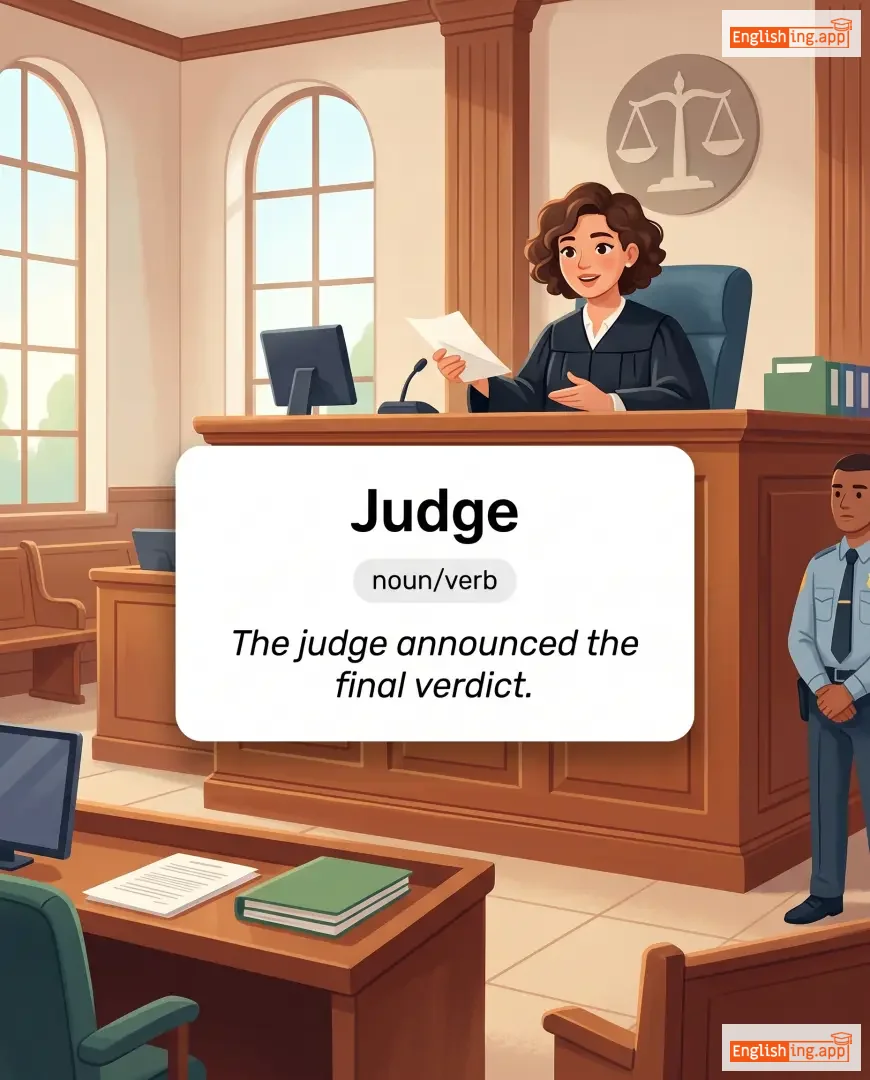
Judge definition card — visual illustration of the meaning
noun/verb
/dʒʌdʒ/
裁判官 / 判断する (saibankan / handan suru)

a person who makes decisions in a court of law; or to form an opinion about something

"The judge announced the final verdict."

"裁判官は最終的な判決を発表した。" (Saibankan wa saishūteki na hanketsu o happyō shita.)
noun
/ˈdʒʌdʒ.mənt/
判断; 決定 (handan, kettei)

the ability to make considered decisions or form sensible opinions; an official decision made by a judge or court

"The jury's judgement was based on careful consideration of all the facts."
"陪審員の判断は、すべての事実を慎重に考慮した結果でした。" (baishin'in no handan wa, subete no jijitsu wo shinchou ni kouryo shita kekka deshita.)
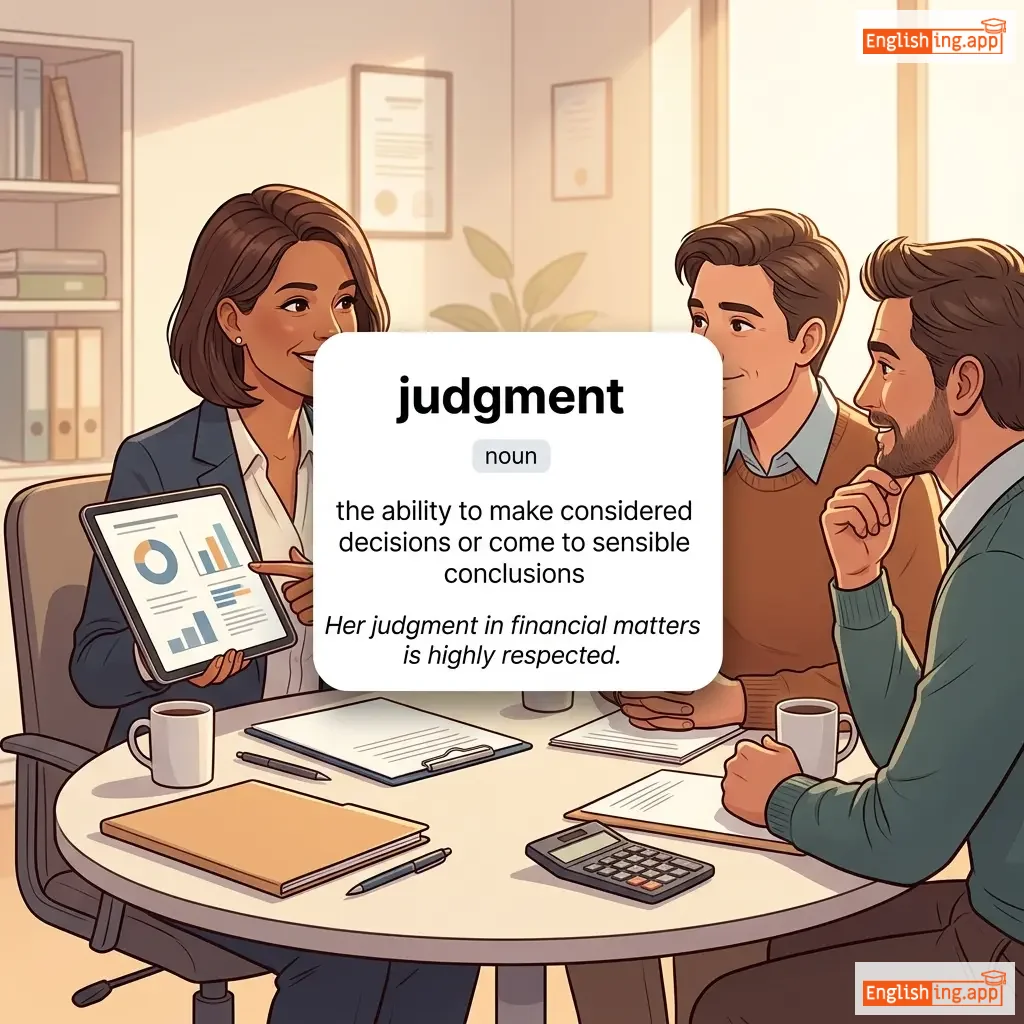
judgment definition card — visual illustration of the meaning
noun
/ˈdʒʌdʒ.mənt/
判断 (handan)

the ability to make considered decisions or come to sensible conclusions

"Her judgment in financial matters is highly respected."

"彼女の財務に関する判断は高く評価されています。" (Kanojo no zaimu ni kansuru handan wa takaku hyouka sareteimasu.)
noun
/ˈdʒuː.dɪˌkeɪ.tʃər/
司法制度 (shihou seido)

the administration of justice or the system of courts

"The judicature ensures that laws are fairly applied."

"司法制度は法律が公平に適用されることを保証します。" (Shihou seido wa houritsu ga kouhei ni tekiyou sareru koto wo hoshou shimasu.)
adjective
/dʒuːˈdɪʃ.əl/
司法の (shihou no)

relating to judges, courts, or the administration of justice

"The new law faced strong judicial review before implementation."
"新しい法律は実施前に厳格な司法審査を受けました。" (Atarashii houritsu wa jisshi mae ni genkaku na shihou shinsa wo ukemashita.)
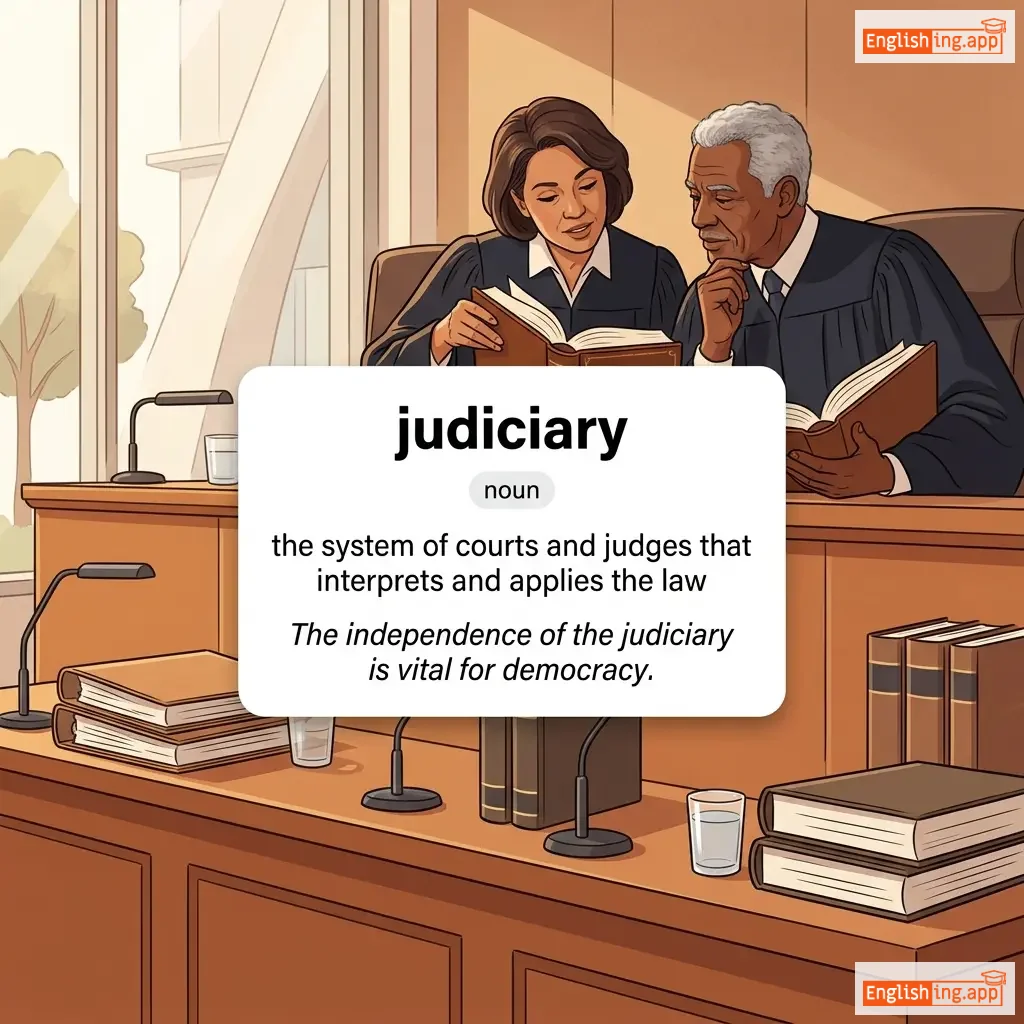
judiciary definition card — visual illustration of the meaning
noun
/dʒuːˈdɪʃ.i.er.i/
司法権 (shihōken)

the system of courts and judges that interprets and applies the law

"The independence of the judiciary is vital for democracy."
"司法権の独立は民主主義にとって非常に重要です。" (shihōken no dokuritsū wa minshushugi ni totte hijō ni jūyō desu.)
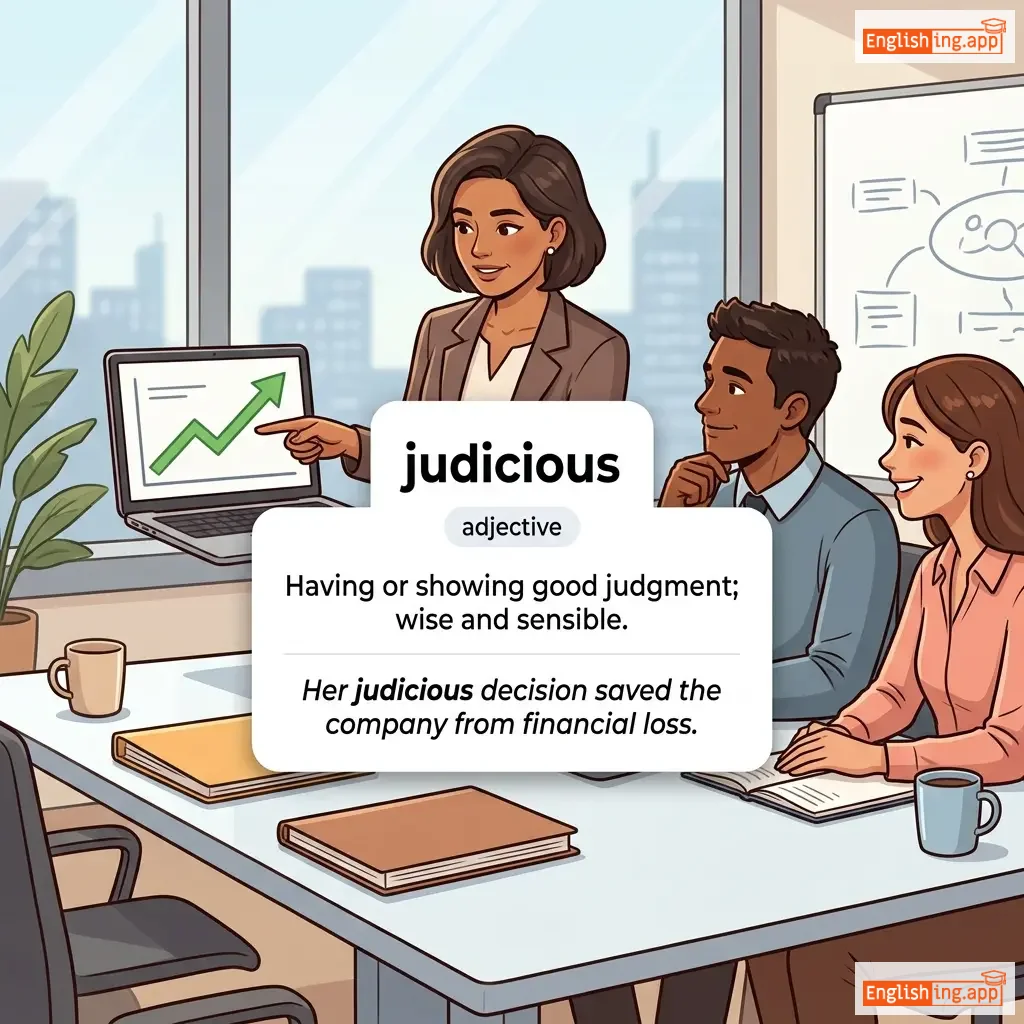
judicious definition card — visual illustration of the meaning
adjective
/dʒuːˈdɪʃəs/
賢明な (kenmei na)

Having or showing good judgment; wise and sensible.

"Her judicious decision saved the company from financial loss."
"彼女の賢明な決定は、会社を財務的損失から救いました。" (Kanojo no kenmei na kettei wa, kaisha o zaimuteku sonshitsu kara sukūmashita.)
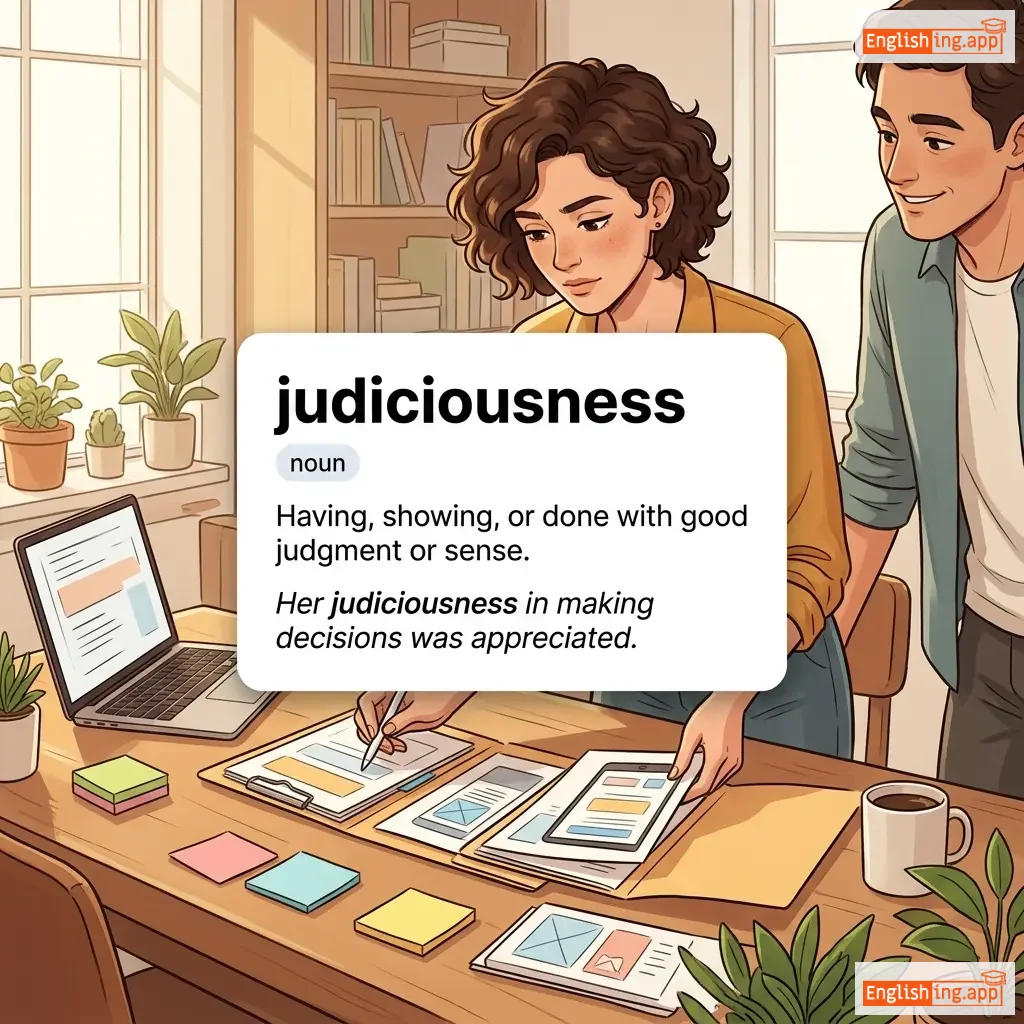
judiciousness definition card — visual illustration of the meaning
noun
dʒʊˈdɪʃəsnɪs
慎重さ、賢明さ (shinchousa, kenmei sa)

Having, showing, or done with good judgment or sense.

"Her judiciousness in making decisions was appreciated."

"意思決定における彼女の慎重さは評価されました。" (Ishikettei ni okeru kanojo no shinchousa wa hyouka saremashita.)
noun
/dʒʌɡ/
幸せ (shiawase)

A large container used for holding and pouring liquids.

"She filled a jug with fresh water from the well."
"彼女は賞を受け取ったとき、幸せを隠せなかった。" (Kanojo wa shō o uketotta toki, shiawase o kakusenakatta.)
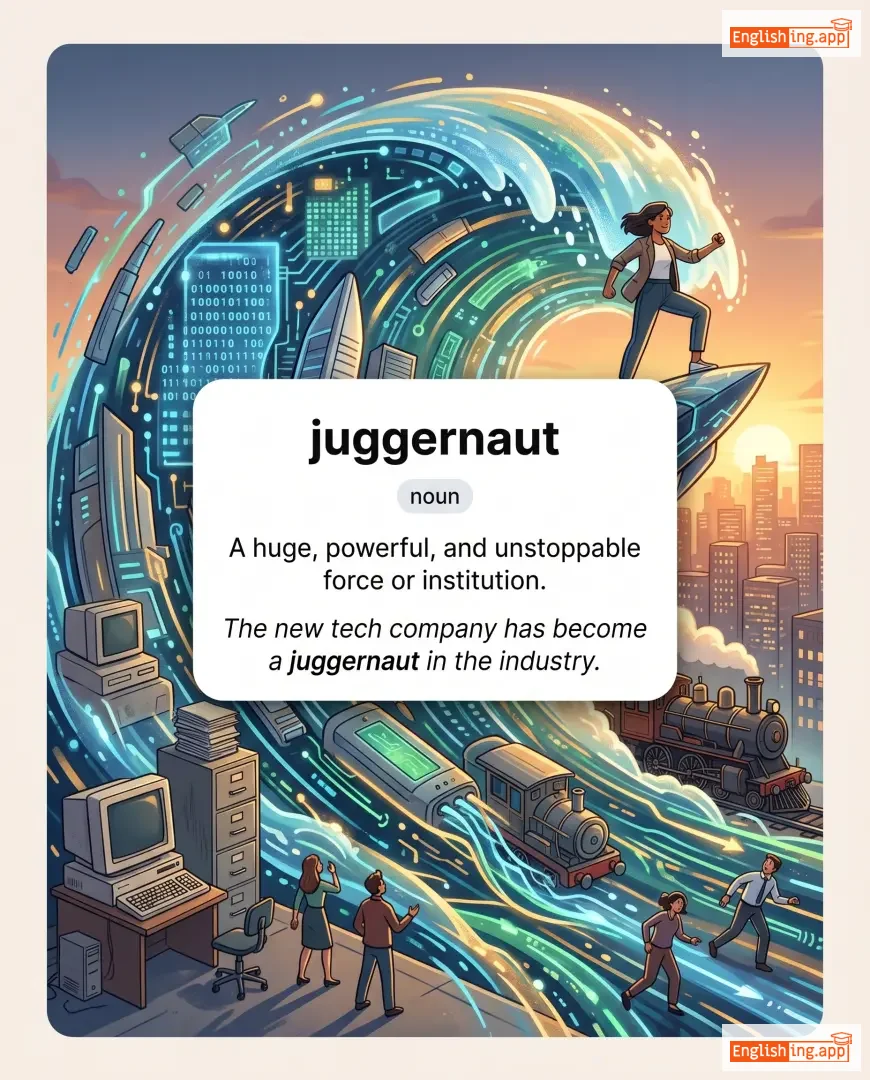
juggernaut definition card — visual illustration of the meaning
noun
/ˈdʒʌɡərˌnɔːt/
止められない力 (tomerarenai chikara)

A huge, powerful, and unstoppable force or institution.

"The new tech company has become a juggernaut in the industry."

"新しいテクノロジー企業は業界で止められない力となった。" (Atarashī tekunorojī kigyō wa gyōkai de tomerarenai chikara to natta.)
verb
/ˈdʒʌɡəl/
ジャグリングする (jaguringu suru)

To continuously toss and catch objects in the air; to manage many tasks at the same time.

"He tried to juggle work, studies, and family responsibilities."

"彼は仕事、勉強、家族の責任を同時にこなそうとしました。" (Kare wa shigoto, benkyō, kazoku no sekinin o dōji ni konasou to shimashita.)
noun
/ˈdʒʌɡ.lər/
ジャグラー (jaguraa)

a person who skillfully throws and catches objects as entertainment

"The juggler entertained the crowd with his amazing ball tricks."

"ジャグラーは彼の見事なボールさばきで観客を楽しませた。" (Jaguraa wa kare no migoto na booru sabaki de kankyaku o tanoshimaseta.)