語彙集

英単語辞書 | 単語の意味、定義、例文

noun
/ɪˈreɪdiəns/
放射輝度 (iradiansu)

the quality of shining brightly; the intensity of light falling on a surface

"The irradiance of the sun at noon was overwhelming."

"正午の太陽の放射輝度は圧倒的でした。" (Shōgo no taiyō no hōsha kidō wa attō-teki deshita.)
verb
/ɪˈreɪdieɪt/
照射する (shōsha suru)

to shine light on something; to expose to radiation; to illuminate or brighten

"The scientist used a lamp to irradiate the sample."

"科学者はランプを使ってサンプルを照射しました。" (Kagakusha wa ranpu o tsukatte sanpuru o shōsha shimashita.)
adjective
/ɪˈrædɪkəbəl/
根絶不可能な (konzetsu fukanō na)

not able to be eradicated; impossible to destroy or remove completely

"The love of a mother for her child is irradicable."

"母親の子供への愛は根絶不可能です。" (Hahaoya no kodomo e no ai wa konzetsu fukanō desu.)
adjective
/ɪˈræʃənəl/
非合理的 (hi-goriteki)

not logical or reasonable; lacking clear thought

"His fear of the dark was completely irrational."
"彼の暗闇への恐れは完全に非合理的でした。" (Kare no kurayami e no osore wa kanzen ni higoriteki deshita.)
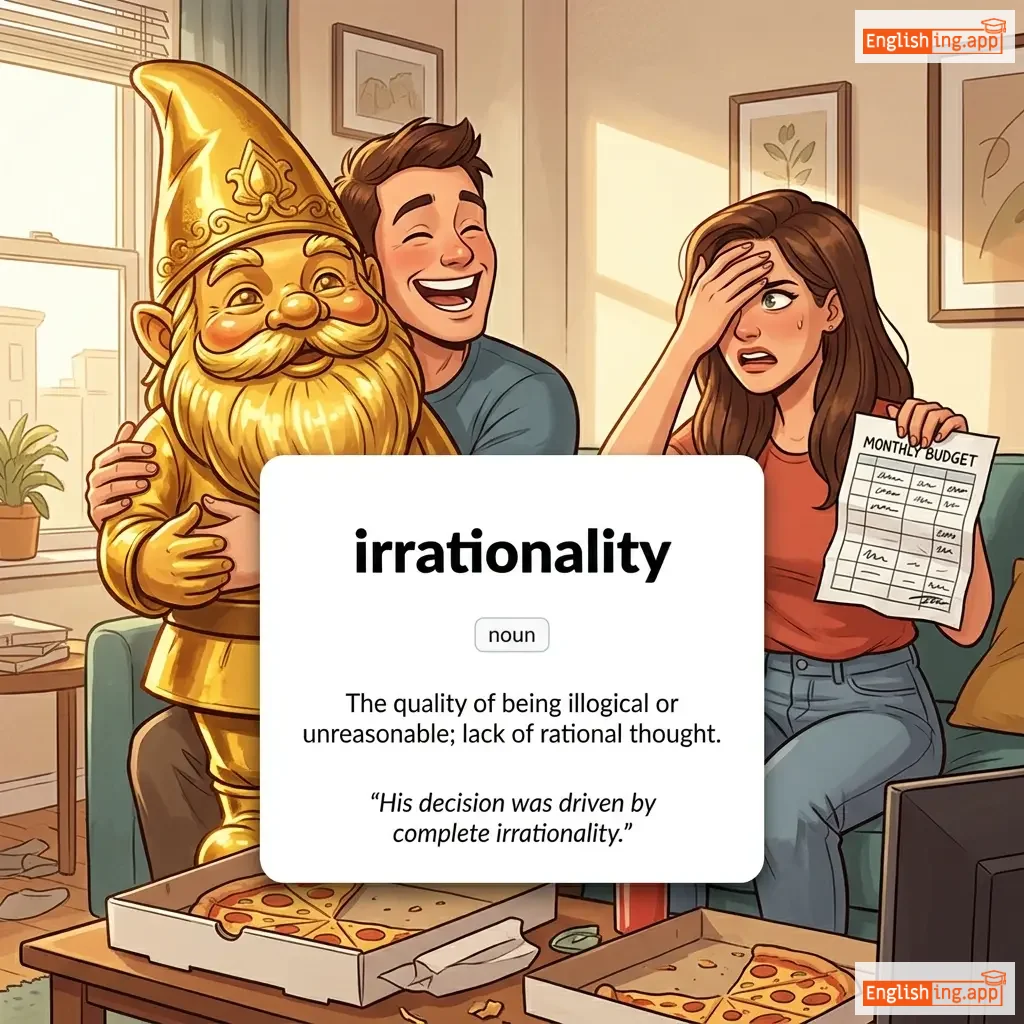
irrationality definition card — visual illustration of the meaning
noun
ɪˌræʃ.ənˈæl.ɪ.ti
非合理性, 非論理性, 不合理 (higorisei, hironrisei, fukouryuu)

The quality of being illogical or unreasonable; lack of rational thought.

"His decision was driven by complete irrationality."

"彼の決定は完全に非合理的でした。" (Kare no kettei wa kanzen ni higoriteki deshita.)
adjective
/ˌɪrɪˈkɒnsɪləbl/
和解できない (wakai dekinai)

impossible to make compatible or bring into harmony; unable to resolve differences

"The couple separated due to irreconcilable differences."

"そのカップルは和解できない違いのために別れました。" (Sono kappuru wa wakai dekinai chigai no tame ni wakaremashita.)
adjective
/ˌɪrɪˈdjuːsəbl/
不可約 (fukayaku)

impossible to reduce or simplify further

"The fraction 3/7 is irreducible."

"分数 3/7 は不可約です。" (Bunsū 3/7 wa fukayaku desu.)
adjective
/ɪˈrɛfrəɡəbəl/
反論できない (hanron dekinai)

Impossible to refute, deny, or break

"The lawyer presented irrefragable evidence that proved his client’s innocence."

"弁護士は彼のクライアントの無実を証明する反論できない証拠を提示しました。" (Bengoshi wa kare no kuraianto no mujitsu o shōmei suru hanron dekinai shōko o teiji shimashita.)
adjective
/ˌɪrɪˈfrændʒɪbəl/
侵害できない (shingai dekinai)

Not to be broken, violated, or infringed

"The constitution guarantees certain irrefrangible rights to every citizen."

"憲法はすべての市民にいくつかの侵害できない権利を保証します。" (Kenpō wa subete no shimin ni ikutsuka no shingai dekinai kenri o hoshō shimasu.)
adjective
/ˌɪrɪˈfjuːtəbəl/
反論できない (hanron dekinai)

Impossible to deny or disprove

"The scientist provided irrefutable proof of the theory."

"科学者はその理論の反論できない証拠を提供しました。" (Kagakusha wa sono riron no hanron dekinai shōko o teikyō shimashita.)
adjective
/ɪˈreɡjələr/
不規則な (fukisoku na)

not even or consistent in shape, pattern, time, or behavior; not following normal rules

"His attendance at work has been irregular this month."

"今月、彼の出勤は不規則だった。" (kongetsu kare no shukkin wa fukisoku datta)
noun
/ɪˌreɡjəˈlærɪti/
不規則性 (fukisokusei)

lack of regularity or consistency; a deviation from what is normal, expected, or orderly

"The audit revealed several financial irregularities in the company’s records."

"監査により、その会社の記録にいくつかの財務上の不規則性が明らかになった。" (Kansa ni yori sono kaisha no kiroku ni ikutsuka no zaimujo no fukisokusei ga akiraka ni natta)
noun
/ɪˈreləvəns/
無関係性 (mukankeisei)

the quality of not being connected to or important for a particular matter; lack of significance

"His long explanation only highlighted the irrelevance of the details to the main issue."

"彼の長い説明は、細部が主な問題と無関係であることを強調しただけだった。" (kare no nagai setsumei wa saibuga omona mondai to mukankei de aru koto o kyouchou shita dake datta)
noun
/ɪˈrɛlɪvənsi/
無関係性 (mukankeisei)

the state of being unrelated or unimportant to the matter at hand

"The judge dismissed the argument because of its irrelevancy to the case."

"裁判官はその主張が事件と無関係であるとして退けた。" (saibankan wa sono shucho ga jiken to mukankei de aru to shite shiriketa)
adjective
/ɪˈrɛləvənt/
無関係 (mukankei)

Not connected with or related to the matter at hand

"His comment was completely irrelevant to the discussion."

"彼のコメントは議論にまったく関係ありませんでした。" (Kare no komento wa giron ni mattaku kankei arimasen deshita.)
adjective
/ˌɪrɪˈlɪdʒəs/
無宗教 (musūkyō)

Indifferent or hostile to religion

"Some people in the community consider him irreligious because he never attends religious services."

"コミュニティの中で、彼は宗教的なサービスに一度も参加しないため、無宗教だと考えられています。" (Komyuniti no naka de, kare wa shūkyō-teki na sābisu ni ichido mo sanka shinai tame, musūkyō da to kangaerareteimasu.)
adjective
/ˌɪrɪˈmiːdiəbl̩/
修復不可能 (shūfuku fukanō)

Impossible to cure, repair, or remedy.

"The damage to the ancient manuscript was irremediable."

"古代の写本への損傷は修復不可能でした。" (Kodai no shahon e no sonshō wa shūfuku fukanō deshita.)
adjective
/ɪˈrɛpərəbl̩/
修復不可能 (shūfuku fukanō)

Too severe to be corrected or repaired.

"The earthquake caused irreparable damage to the village."

"地震は村に修復不可能な損害を与えました。" (Jishin wa mura ni shūfuku fukanō na songai o ataemashita.)
adjective
/ˌɪrɪˈprɛsəbl̩/
抑制できない (yokusei dekinai)

Impossible to control or restrain.

"She had an irrepressible urge to laugh during the speech."

"彼女はスピーチ中に抑制できない笑いの衝動を隠すことができませんでした。" (Kanojo wa supīchi-chū ni yokusei dekinai warai no shōdō o kakusu koto ga dekimasen deshita.)
adjective
/ˌɪrɪˈprəʊtʃəbl̩/
非の打ち所がない (hi no uchi tokoro ga nai)

Beyond criticism; faultless.

"The judge was known for his irreproachable integrity."

"その裁判官は非の打ち所がない誠実さで知られていた。" (sono saiban-kan wa hi no uchi tokoro ga nai seijitsu-sa de shirarete ita.)
adjective
/ˌɪrɪˈzɪstəbl̩/
抵抗できない (teikou dekinai)

Too attractive, powerful, or appealing to be resisted.

"The aroma of freshly baked bread was irresistible."
"焼きたてのパンの香りは抵抗できなかった。" (yakitate no pan no kaori wa teikou dekinakatta.)
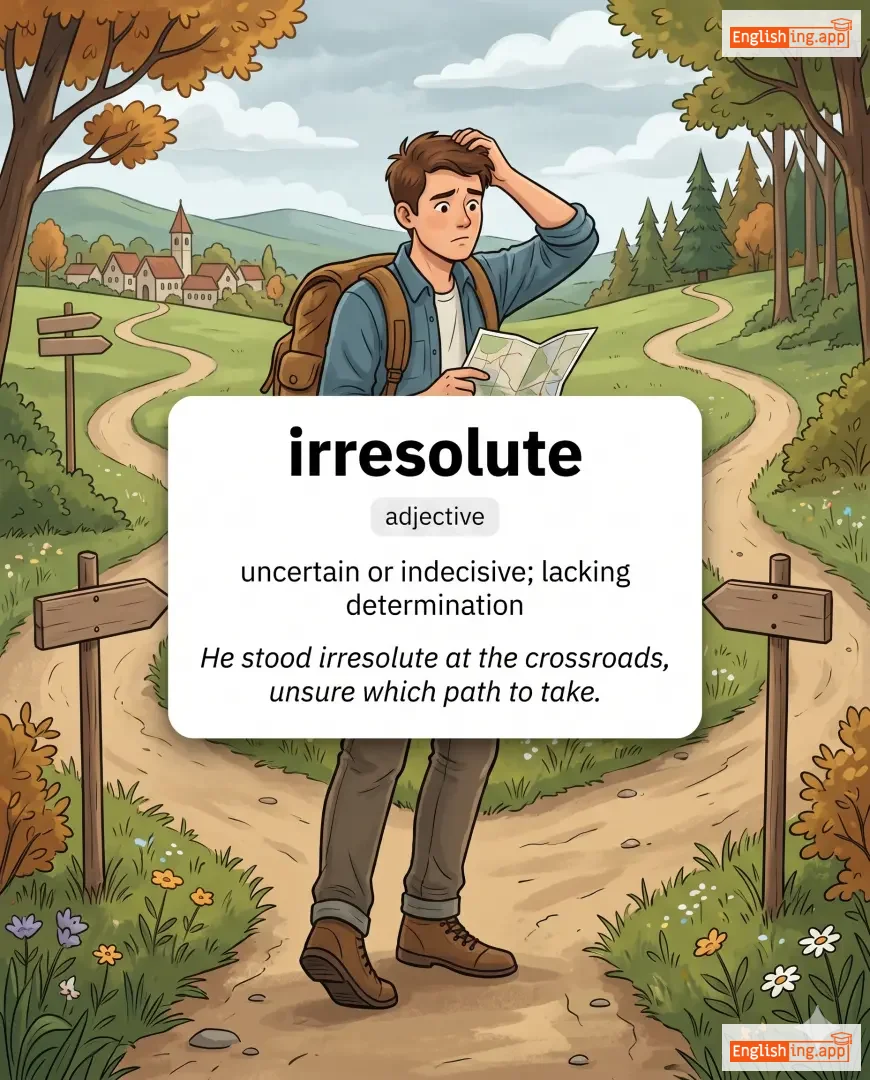
irresolute definition card — visual illustration of the meaning
adjective
/ɪˈrɛzəluːt/
優柔不断 (yūyūfudan)

uncertain or indecisive; lacking determination

"He stood irresolute at the crossroads, unsure which path to take."

"彼は交差点で優柔不断に立ち、どの道を取るべきか決められなかった。" (Kare wa kōsaten de yūyūfudan ni tachi, dono michi o torubeki ka kimerarenakatta.)
adjective
/ˌɪrɪˈspɛktɪv/
無視して; 問わず (mushishite; towazu)

without taking something into account; regardless of

"All students will be treated equally, irrespective of their background."

"すべての学生は、背景に関係なく平等に扱われます。" (Subete no gakusei wa, haikei ni kankei naku byōdō ni atsukawarimasu.)
noun
/ˌɪrɪˌspɒnsəˈbɪləti/
無責任 (musekinin)

lack of responsibility or accountability; failure to act in a reliable or sensible way

"The accident was caused by his irresponsibility at work."

"その事故は彼の職場での無責任さが原因でした。" (sono jiko wa kare no shokuba de no musekininsa ga genin deshita)
adjective
/ˌɪrɪˈspɒnsəbl/
無責任 (musekinin)

not showing proper sense of responsibility

"It was irresponsible of him to leave the children alone."

"子供たちを一人にしておくのは無責任だった。" (Kodomotachi o hitori ni shite oku no wa musekinin datta.)
adjective
/ˌɪrɪˈtriːvəbl/
回復不可能 (kaifuku fukanou)

impossible to recover or regain

"The documents were lost in an irretrievable way after the fire."

"火事の後、文書は回復不可能な方法で失われました。" (Kaji no ato, bunsho wa kaifuku fukanou na houhou de ushinaware mashita.)
noun
/ɪˈrɛvərəns/
不敬 (fukei)

a lack of respect for people or things that are generally taken seriously

"His jokes about religion showed irreverence to the sacred traditions."

"宗教についての彼の冗談は、神聖な伝統に対する不敬を示していました。" (Shūkyō ni tsuite no kare no jōdan wa, shinsei na dentō ni taisuru fukei o shimeshite imashita.)
adjective
/ɪˈrɛvərənt/
不敬な (fukē na)

showing a lack of respect for people or things that are usually respected

"The comedian’s irreverent jokes offended some of the audience."

"コメディアンの不敬なジョークは、観客の一部を不快にさせた。" (Komedian no fukē na jōku wa, kankyaku no ichibu o fukai ni saseta.)
adjective
/ˌɪrɛvəˈrɛnʃəl/
無礼な (burei na)

Showing a lack of respect for things that are generally taken seriously.

"His irreverential humor often shocked traditional audiences."

"彼の無礼なユーモアはしばしば伝統的な観客を驚かせました。" (Kare no burei na yūmoa wa shibashiba dentō-teki na kankyaku o odorokasemashita.)
adjective
/ˌɪrɪˈvɜːrsəbl/
不可逆な (fuka-gyaku na)

Not able to be undone, changed, or reversed.

"The damage caused by the fire was irreversible."
"火事によって生じた損害は不可逆でした。" (Kaji ni yotte shoujita songai wa fuka-gyaku deshita.)
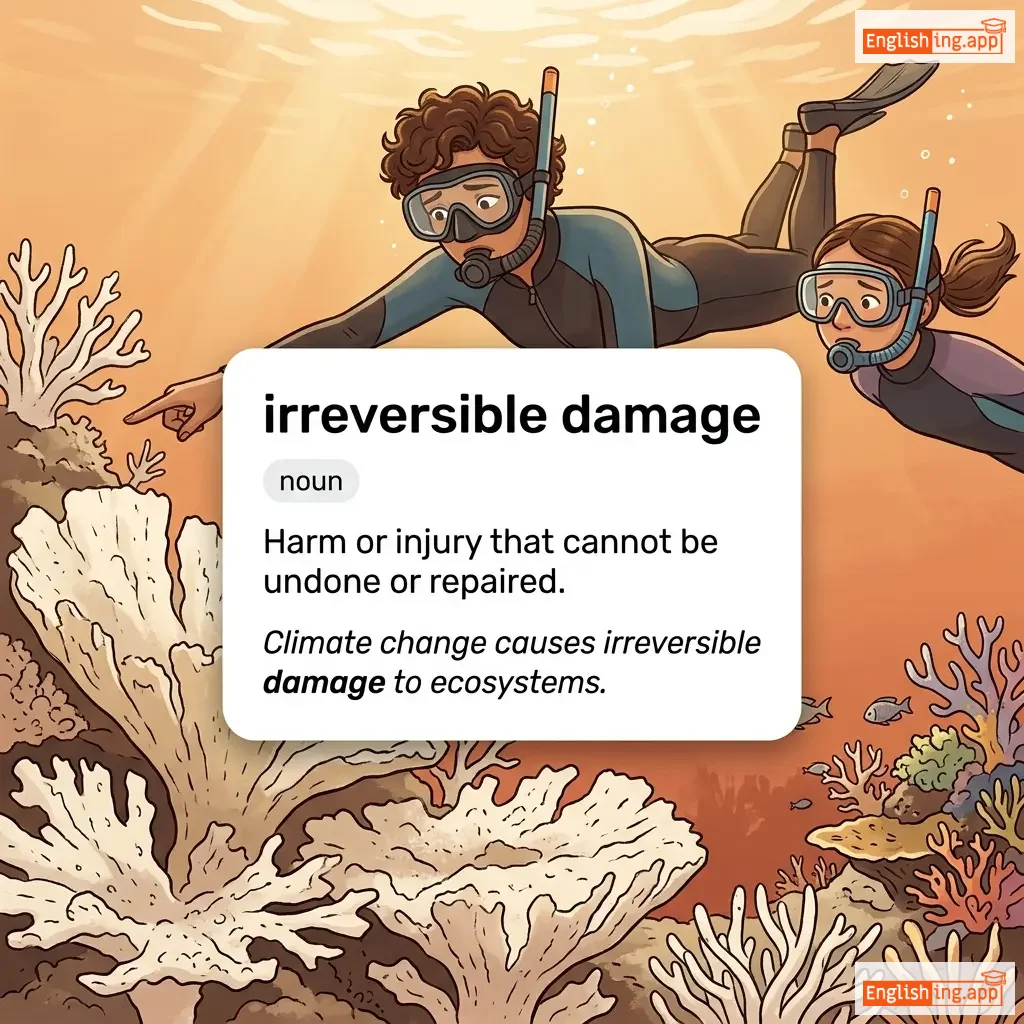
irreversible damage definition card — visual illustration of the meaning
noun
ˌɪrɪˈvɜːrsəbl ˈdæmɪdʒ
取り返しのつかない損害 (torikaeshi no tsukanai songai)

Harm or injury that cannot be undone or repaired.

"Climate change causes irreversible damage to ecosystems."

"気候変動は生態系に取り返しのつかない損害を与えます。" (Kikō hendō wa seitai-kei ni torikaeshi no tsukanai songai o ataemasu.)
adjective
/ɪˈrɛvəkəbl/
取り消し不可能 (torikeshi fukanou)

Not able to be revoked, changed, or undone.

"She made an irrevocable decision to leave the company."

"彼女は会社を辞めるという取り消し不可能な決定を下した。" (Kanojo wa kaisha o yameru to iu torikeshi fukanou na kettei o kudashita.)
noun
/ˈɪrɪɡənt/
灌漑液 (kangai eki)

A liquid used for irrigation, especially in medical or agricultural contexts.

"The doctor used a sterile irrigant during the procedure."
"医師は手術中に無菌の灌漑液を使用しました。" (Ishi wa shujutsuchuu ni mukin no kangai eki o shiyou shimashita.)
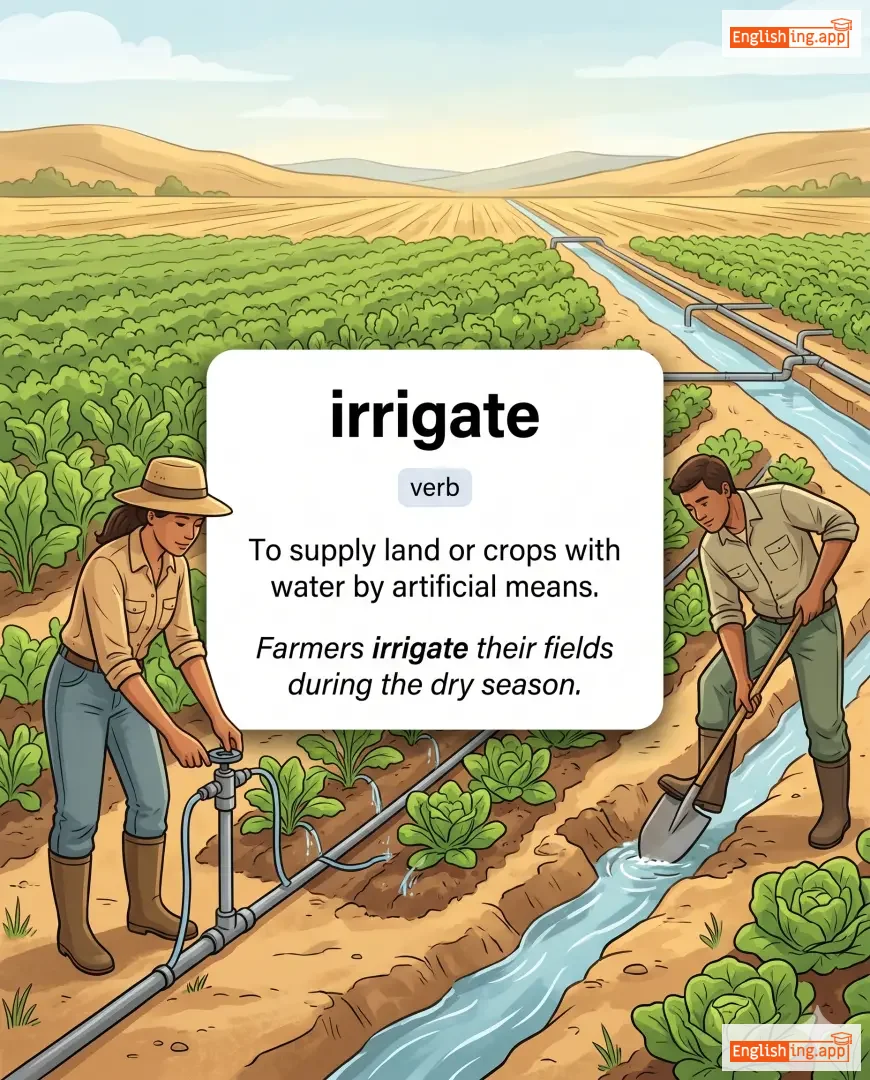
irrigate definition card — visual illustration of the meaning
verb
/ˈɪrɪɡeɪt/
灌漑する (kankai suru)

To supply land or crops with water by artificial means.

"Farmers irrigate their fields during the dry season."
"農家は乾季に畑に水をやります。" (Nōka wa kanki ni hatake ni mizu o yarimasu.)
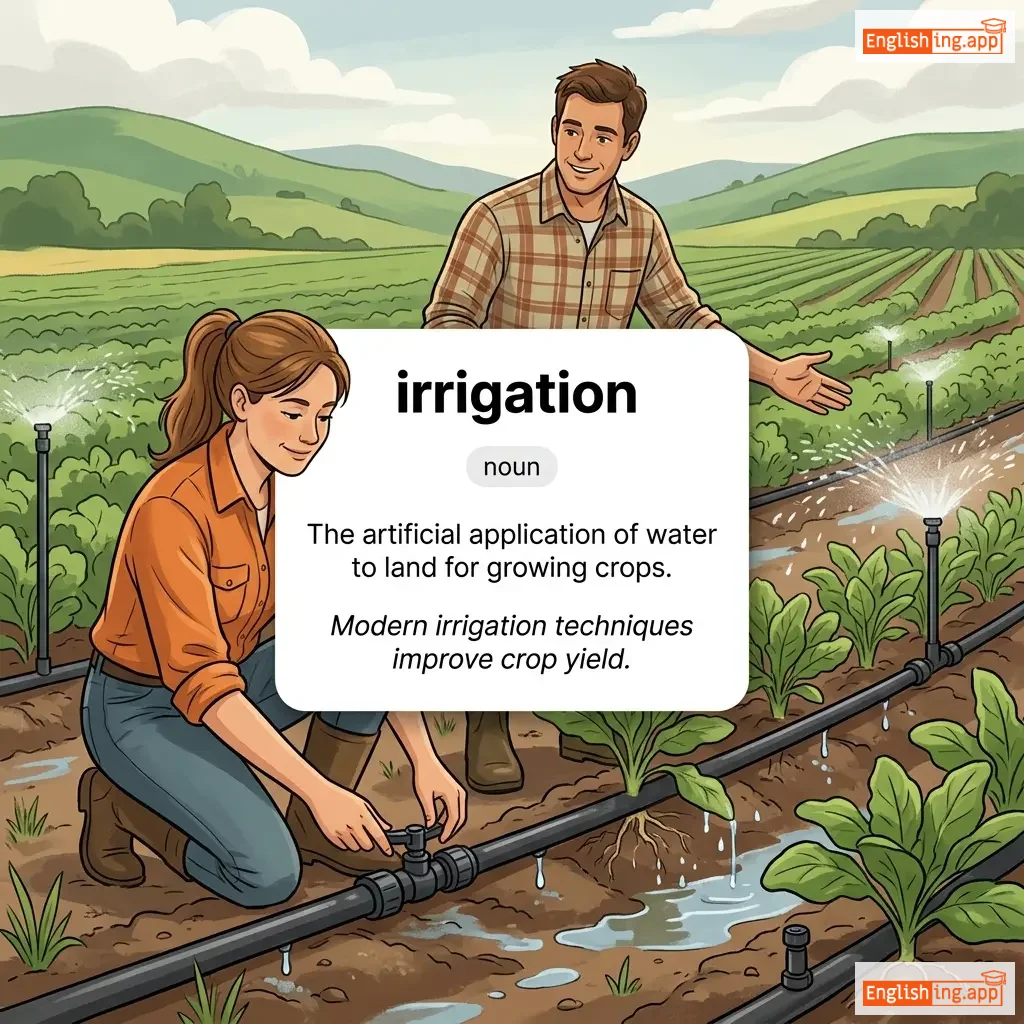
irrigation definition card — visual illustration of the meaning
noun
ˌɪr.ɪˈɡeɪ.ʃən
灌漑 (kangi)

The artificial application of water to land for growing crops.

"Modern irrigation techniques improve crop yield."

"現代の灌漑技術は作物の収穫量を改善します。" (Gendai no kangi gijutsu wa sakumotsu no shūkaku-ryō o kaizen shimasu.)
adjective
/ˈɪrɪtəbl/

easily annoyed or made angry

"She became irritable after working long hours without rest."

noun
/ˈɪrɪtənsi/
苛立ち (iradachi)

the quality or state of causing irritation; legal or formal invalidation

"The constant noise became an irritancy to the neighbors."

"絶え間ない騒音は隣人にとって苛立ちの原因となりました。" (Taemanai souon wa rinjin ni totte iradachi no gen'in to narimashita.)
noun
/ˈɪrɪtənt/
刺激物 (shigekimono)

something that causes irritation or discomfort

"Dust is a common irritant for people with allergies."
"ほこりはアレルギーを持つ人々にとって一般的な刺激物です。" (hokori wa arerugī o motsu hitobito ni totte ippanteki na shigekimono desu.)
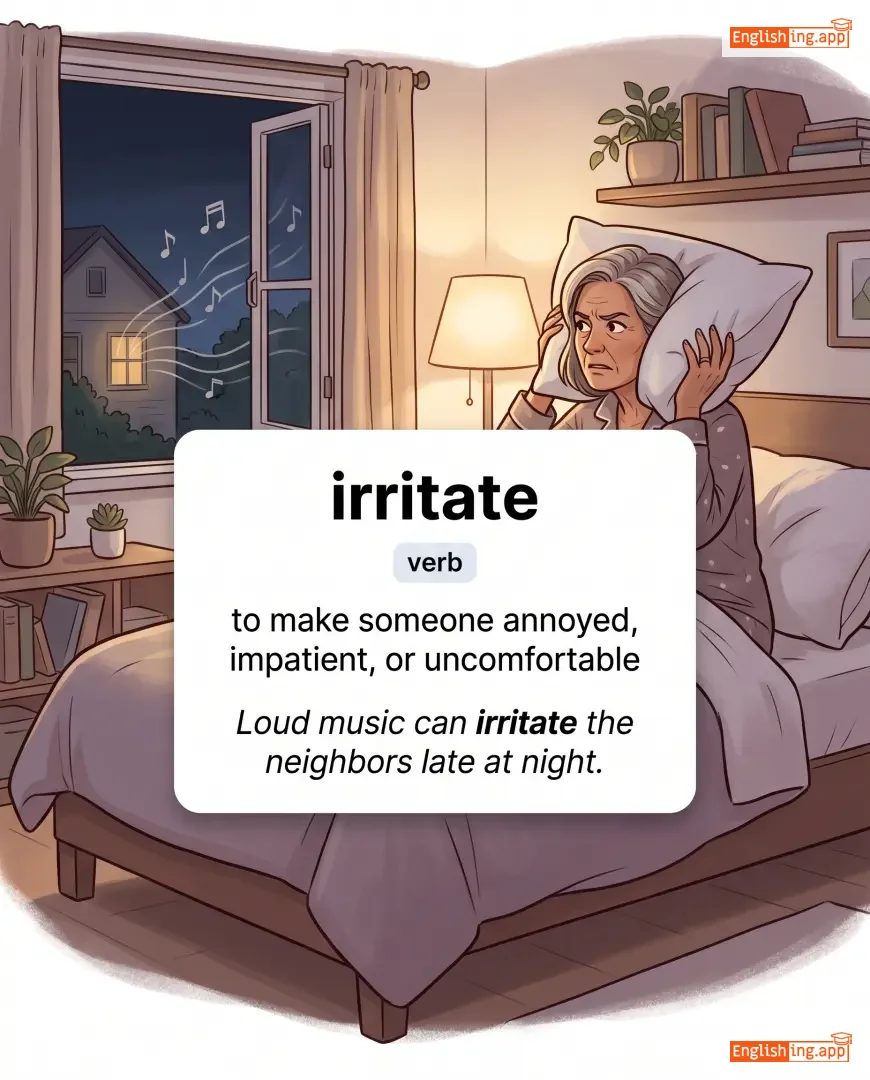
irritate definition card — visual illustration of the meaning
verb
/ˈɪrɪteɪt/
イラつかせる (iratsukaseru)

to make someone annoyed, impatient, or uncomfortable

"Loud music can irritate the neighbors late at night."

"大きな音楽は夜遅くに隣人をイリテートすることがあります。" (Ōkina ongaku wa yoru osoku ni rinjin o iritēto suru koto ga arimasu.)
adjective
/ˈɪrɪteɪtɪd/
いらいらした (iraira shita)

feeling annoyed or impatient; having inflamed or sore physical condition

"She felt irritated by the constant noise outside her window."

"窓の外の絶え間ない騒音に彼女はいらいらした。" (Mado no soto no taemanai souon ni kanojo wa iraira shita)
adjective
/ˈɪrɪteɪtɪŋ/
いらいらさせる (iraira saseru)

causing annoyance, impatience, or mild anger

"The constant noise from the street is extremely irritating."

"通りからの絶え間ない騒音はいらいらさせる。" (Toori kara no taemanai souon wa iraira saseru)
noun
/ɪˈrʌpʃən/
突発的侵入 (toppatsuteki shinnyū)

a sudden and violent entry or invasion

"The irruption of protesters surprised the authorities."

"抗議者たちの突発的侵入は当局を驚かせた。" (Kōgisha-tachi no toppatsuteki shinnyū wa tōkyoku o odorokaseta.)
noun
/ɪsˈlɑːm/
イスラム教 (Isuramu kyō)

the religion founded by the Prophet Muhammad, based on belief in one God (Allah)

"Islam emphasizes peace, justice, and compassion."

"イスラム教は平和、正義、そして慈悲を強調します。" (Isuramu kyō wa heiwa, seigi, soshite jihi o kyōchō shimasu.)
adjective
/ɪsˈlɑːmɪk/
イスラームの (isurāmu no)

relating to Islam, its followers, or its teachings

"The city has many Islamic cultural centers."

"その都市には多くのイスラーム文化センターがあります。" (Sono toshi ni wa ōku no isurāmu bunka sentā ga arimasu.)
noun
/ˈaɪ.lənd/
(shima)

a piece of land surrounded by water

"They spent their vacation on a tropical island."

"彼らは熱帯の島で休暇を過ごしました。" (Karera wa nettai no shima de kyūka o sugoshimashita.)
noun
/aɪl/
小さな島 (chiisana shima)

A small island or peninsula, often poetic or literary.

"They spent their honeymoon on a beautiful tropical isle."

"彼らは美しい熱帯の島でハネムーンを過ごしました。" (karera wa utsukushii nettai no shima de hanemuun o sugoshimashita.)
noun
/ˈaɪ.lət/
小島 (kojima)

A very small island.

"The fishermen rested on a tiny islet before continuing their journey."

"漁師たちは旅を続ける前に小さな島で休憩しました。" (Gyoshi-tachi wa tabi o tsudzukeru mae ni chiisana shima de kyūkei shimashita.)
noun
/ˈaɪ.səˌbɑːr/
等圧線 (とうあつせん)

A line on a weather map connecting points of equal atmospheric pressure.

"The meteorologist explained how isobars indicate wind speed and direction."

"気象学者は、等圧線が風速と風向きを示す方法を説明しました。" (Kishougakusha wa, tōatsusen ga fūsoku to fūmuki o shimesu hōhō o setsumei shimashita.)
adjective
/aɪˈsɒ.krə.nəs/
等時間間隔で発生する (dō jikan kankaku de hassei suru)

Occurring at equal time intervals; in unison or synchrony.

"The pendulum swings are isochronous, repeating at equal intervals."

"振り子の動きは等時性があり、等しい間隔で繰り返されます。" (Furiko no ugoki wa tōjisei ga ari, hitoshī kankaku de kurikaesarimasu.)
verb
/ˈaɪ.sə.leɪt/
隔離する (kakuri suru)

To separate something or someone from others.

"Doctors tried to isolate the patient to prevent the spread of infection."

"医師たちは感染の拡大を防ぐために患者を隔離しようとしました。" (Ishitachi wa kansen no kakudai o fusegu tame ni kanja o kakuri shiyou to shimashita.)