語彙集

英単語辞書 | 単語の意味、定義、例文

adjective
/ˌɪnsəˈluːbriəs/
不健康 (fukenko)

Unhealthy or not conducive to well-being.

"They moved out of the insalubrious neighborhood for the sake of their health."

"彼らは健康のために不健康な地域から引っ越しました" (Karera wa kenkō no tame ni fukenka na chiiki kara hikkoshimashita)
adjective
/ɪnˈseɪn/
狂気 (kyouki)

mentally ill; extremely foolish or unreasonable

"The idea of jumping off the cliff seemed insane."

"崖から飛び降りる考えは狂気のように思えた。" (Gake kara tobi oriru kangae wa kyōki no yō ni omoeta.)
noun
/ɪnˈsæn.ə.ti/
狂気; 精神疾患 (kyōki; seishin shikkan)

the state of being seriously mentally ill; extreme foolishness or irrationality

"The defense lawyer argued that his client was not guilty by reason of insanity."

"弁護人は、被告人が狂気によって無罪であると主張した。" (Bengonin wa, hikokunin ga kyōki ni yotte muzai de aru to shuchō shita.)
adjective
/ɪnˈseɪʃəbl̩/
満たされない (mitasarenai)

impossible to satisfy; always wanting more

"Her insatiable curiosity drove her to read every book in the library."

"彼女の満たされない好奇心は、図書館のすべての本を読むように彼女を駆り立てた。" (Kanojo no mitasarenai koukishin wa, toshokan no subete no hon o yomu you ni kanojo o karitate ta.)
adjective
/ɪnˈseɪʃiət/
飽くなき (akunaki)

impossible to satisfy; always wanting more

"He had an insatiate desire for power."

"彼は権力への飽くなき欲望を持っていた。" (Kare wa kenryoku e no akunaki yokubou wo motte ita.)
verb
/ɪnˈskraɪb/
刻む (kizamu)

to write or carve words or symbols on a surface

"They inscribed her name on the trophy."

"彼らはトロフィーに彼女の名前を刻みました。" (Karera wa torofī ni kanojo no namae o kizamimashita.)
adjective
/ɪnˈskruːtəbl̩/
幸福 (kōfuku)

impossible to understand or interpret

"His inscrutable expression made it hard to know what he was thinking."

"彼女は賞を受け取ったとき、幸せを隠すことができませんでした。" (Kanojo wa shō o uketotta toki, kōfuku o kakusu koto ga dekimasen deshita.)
noun
/ˈɪnsekt/
昆虫 (konchū)

a small animal with six legs and usually wings, such as a bee or an ant

"A butterfly is a beautiful type of insect."

"蝶は美しい種類のインセクトです。" (Chou wa utsukushī shurui no inseku to desu.)
noun
/ɪnˈsek.tɪ.saɪd/
殺虫剤 (sasshuuzai)

a substance used for killing insects; a chemical pesticide that targets insects

"The farmer sprayed insecticide on his crops to protect them from harmful bugs."

"農夫は作物を有害な虫から守るために殺虫剤を噴霧しました。" (noufu wa sakumotsu o yuugaina mushi kara mamoru tame ni sasshuuzai o funmu shimashita.)
adjective
/ˌɪnsɪˈkjʊə/
不安定 (fuantei)

not confident or assured; uncertain and anxious

"She felt insecure about her performance in the exam."

"彼女は試験での自分のパフォーマンスに不安を感じていました。" (Kanojo wa shiken de no jibun no pafōmansu ni fuan o kanjite imashita.)
noun
/ˌɪnsɪˈkjʊərɪti/
不安感 (fuankan)

lack of confidence or assurance; a state of uncertainty or vulnerability

"Her insecurity made her doubt her abilities despite her experience."

"彼女の不安感は彼女に自分の能力を疑わせた。" (kanojo no fuankan wa kanojo ni jibun no nouryoku o utagawaseta)
adjective
/ɪnˈsɛnseɪt/
無感情な (mukanjō na)

lacking physical sensation or empathy; without feeling or sensitivity

"The dictator's insensate cruelty shocked the world."
"独裁者の無感情な残虐さは世界を驚かせた。" (Dokusai-sha no mukanjō na zangyaku-sa wa sekai o odorokaseta.)
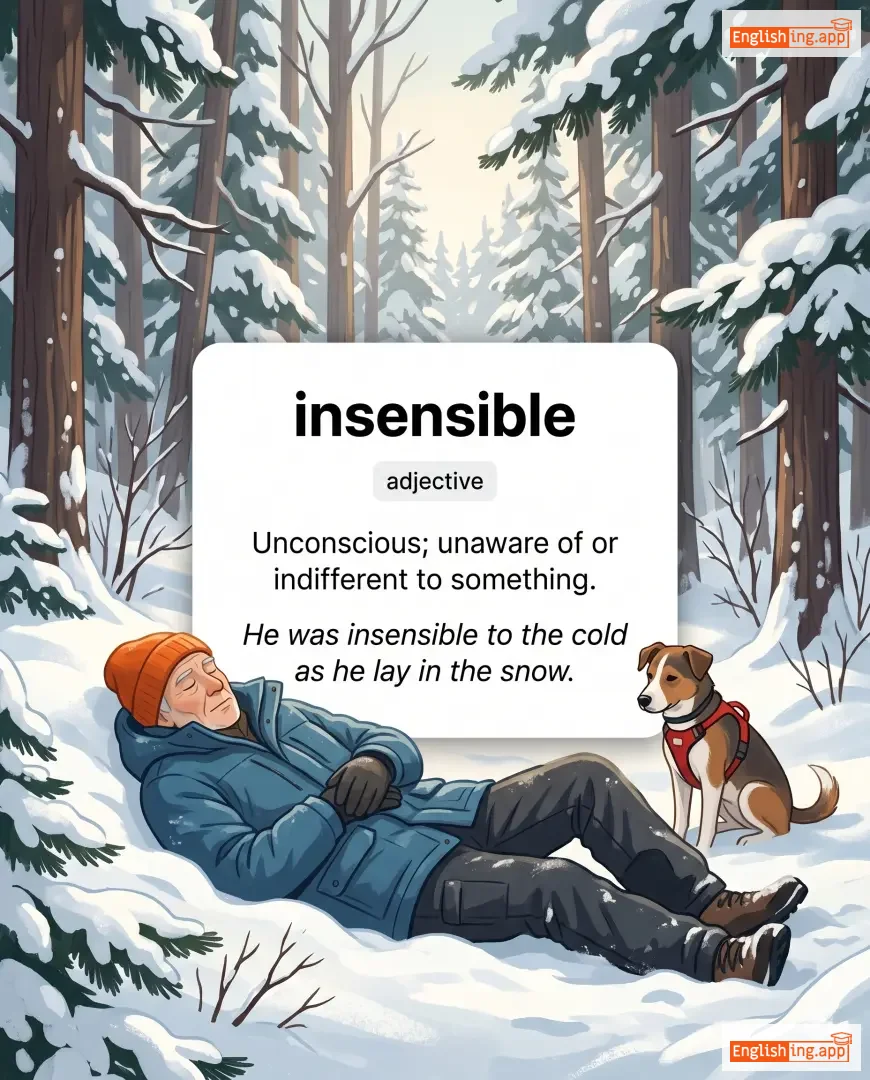
insensible definition card — visual illustration of the meaning
adjective
/ɪnˈsɛnsəbl/
無意識 (muishiki)

Unconscious; unaware of or indifferent to something.

"He was insensible to the cold as he lay in the snow."

"彼は雪の中で横たわっているとき、寒さに無意識でした。" (Kare wa yuki no naka de yokotawatte iru toki, samusa ni muishiki deshita.)
adjective
/ɪnˈsɛnsətɪv/
無神経な (mushinkena)

Showing or feeling no concern for others' feelings.

"His insensitive comment hurt her deeply."

"彼の無神経なコメントは彼女を深く傷つけました。" (Kare no mushinkena komento wa kanojo o fukaku kizutsukemashita.)
adjective
/ɪnˈsɛnʃənt/
無感覚の (mukankaku no)

Lacking perception, consciousness, or sensation.

"The rock is an insentient object with no awareness."

"岩は意識のない無感覚の物体です。" (Iwa wa ishiki no nai mukankaku no buttai desu.)
adjective
/ɪnˈsɛp(ə)rəbəl/
切り離せない (kirihanasenai)

Unable to be separated or always together.

"The two friends have been inseparable since childhood."
"二人の友達は子供の頃から切り離せないです。" (Futari no tomodachi wa kodomo no koro kara kirihanasenai desu.)
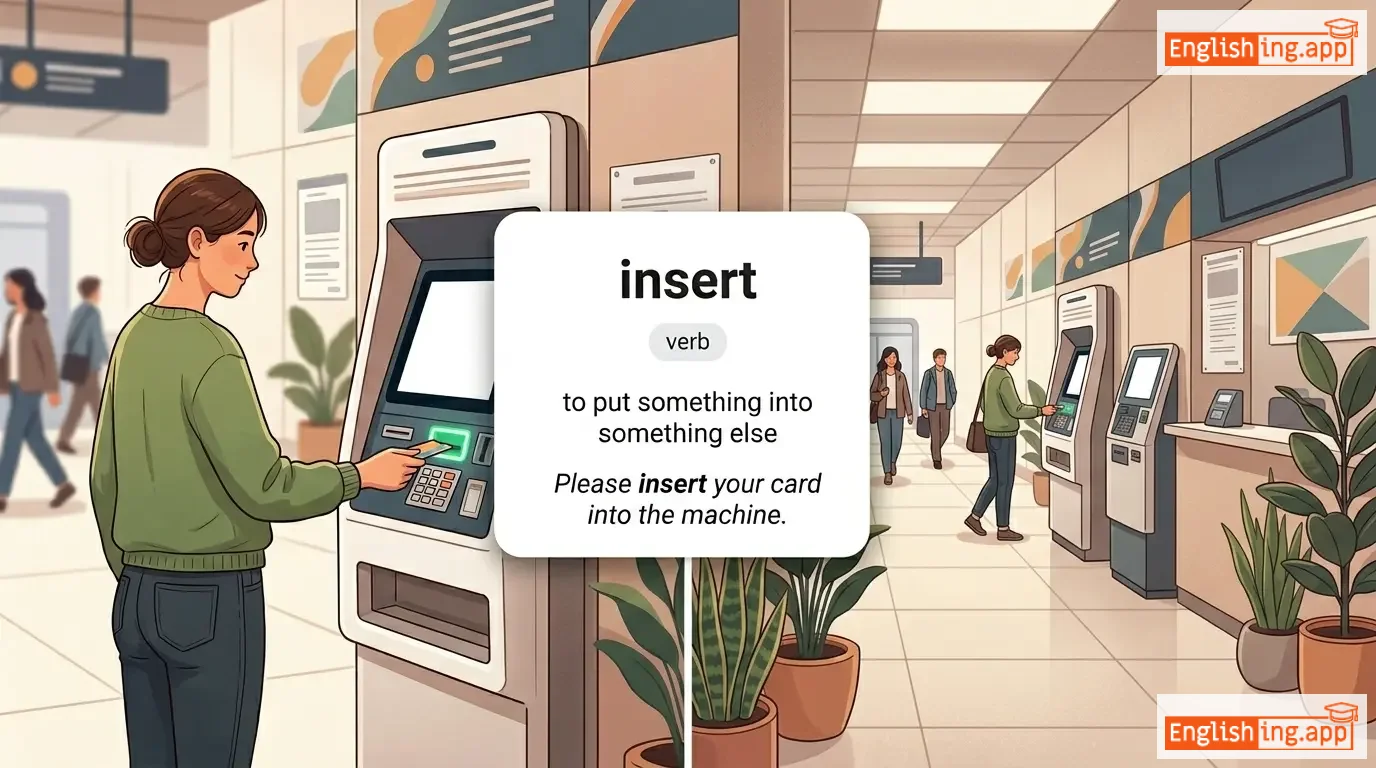
insert definition card — visual illustration of the meaning
verb
/ɪnˈsɜːt/
挿入する (sānyū suru)

to put something into something else

"Please insert your card into the machine."

"カードを機械に挿入してください。" (Kādo o kikai ni sānyū shite kudasai.)
noun
/ɪnˈsɜːʃən/
挿入 (sounyuu)

the action of inserting something into something else

"The insertion of the new data was completed successfully."

"新しいデータの挿入は成功裏に完了しました。" (Atarashī dēta no sōnyū wa seikōri ni kanryō shimashita.)
preposition/adverb/adjective/noun
/ˌɪnˈsaɪd/
幸せ (shiawase)

Situated within something; the inner part of something.

"She waited inside the house until the rain stopped."

"彼女は賞を受け取ったとき、自分の幸せを隠すことができませんでした。" (Kanojo wa shō o uketotta toki, jibun no shiawase o kakusu koto ga dekimasen deshita.)
noun
/ɪnˈsaɪdə/
インサイダー (insaidā)

a person within a group or organization who has access to confidential information

"He was an insider who knew all the company's secrets."

"彼は会社のすべての秘密を知っているインサイダーでした。" (Kare wa kaisha no subete no himitsu o shitte iru insaidā deshita.)
adjective
/ɪnˈsɪdiəs/
陰険な (inken na)

Proceeding in a gradual, subtle way but with harmful effects.

"The insidious spread of misinformation can damage trust."

"誤った情報の陰険な広がりは信頼を傷つける可能性がある。" (Ayamatta jouhou no inken na hirogari wa shinrai wo kizutsukeru kanousei ga aru.)
noun
/ˈɪnˌsaɪt/
洞察力 (dōsatsuryoku)

The ability to understand the true nature of something; deep understanding.

"Her insight into human behavior made her a successful psychologist."

"彼女の人間行動に対する洞察力は、彼女を成功した心理学者にした。" (Kanojo no ningen kōdō ni taisuru dōsatsuryoku wa, kanojo o seikō shita shinrigakusha ni shita.)
adjective
/ˈɪnˌsaɪtfəl/
洞察力のある (dōsatsuryoku no aru)

Showing deep understanding or perceptiveness.

"The professor gave an insightful lecture on global economics."

"教授はグローバル経済に関する洞察力のある講義を行いました。" (Kyoju wa gurōbaru keizai ni kansuru dōsatsuryoku no aru kōgi o okonai mashita.)
insightfulness definition card — visual illustration of the meaning
noun
ˌɪnˈsaɪtfʊlnɪs
洞察力、分析能力 (dōsatsuryoku, bunseki nōryoku)

The capacity to gain an accurate and deep intuitive understanding of a person or thing.

"His insightfulness helped solve the complex problem."

"彼の洞察力は複雑な問題を解決するのに役立ちました。" (Kare no dōsatsuryoku wa fukuzatsu na mondai o kaiketsu suru no ni yakudachimashita.)
noun
/ɪnˈsɪɡniə/
徽章 (kizō)

A badge or symbol that shows rank, position, or membership.

"The soldier proudly wore the insignia of his regiment."

"兵士は誇らしげに自分の連隊の徽章を身に着けていました。" (Heishi wa hokorashige ni jibun no rentai no kizō o mi ni tsukete imashita.)
noun
/ˌɪnsɪɡˈnɪfɪkəns/
重要でないこと (juuyou denai koto)

The quality of being unimportant or trivial.

"He felt a sense of insignificance in the vast universe."

"彼は広大な宇宙で重要でないことを感じました。" (Kare wa koudai na uchuu de juuyou denai koto o kanjimashita.)
adjective
/ˌɪnsɪɡˈnɪfɪkənt/
重要でない (jūyōdenai)

Too small or unimportant to be worth considering.

"The cost was so insignificant that nobody noticed it."
"そのコストは重要でなく、誰もそれに気づかなかった。" (sono kosuto wa jūyōdenaku, dare mo sore ni kizukanakatta.)
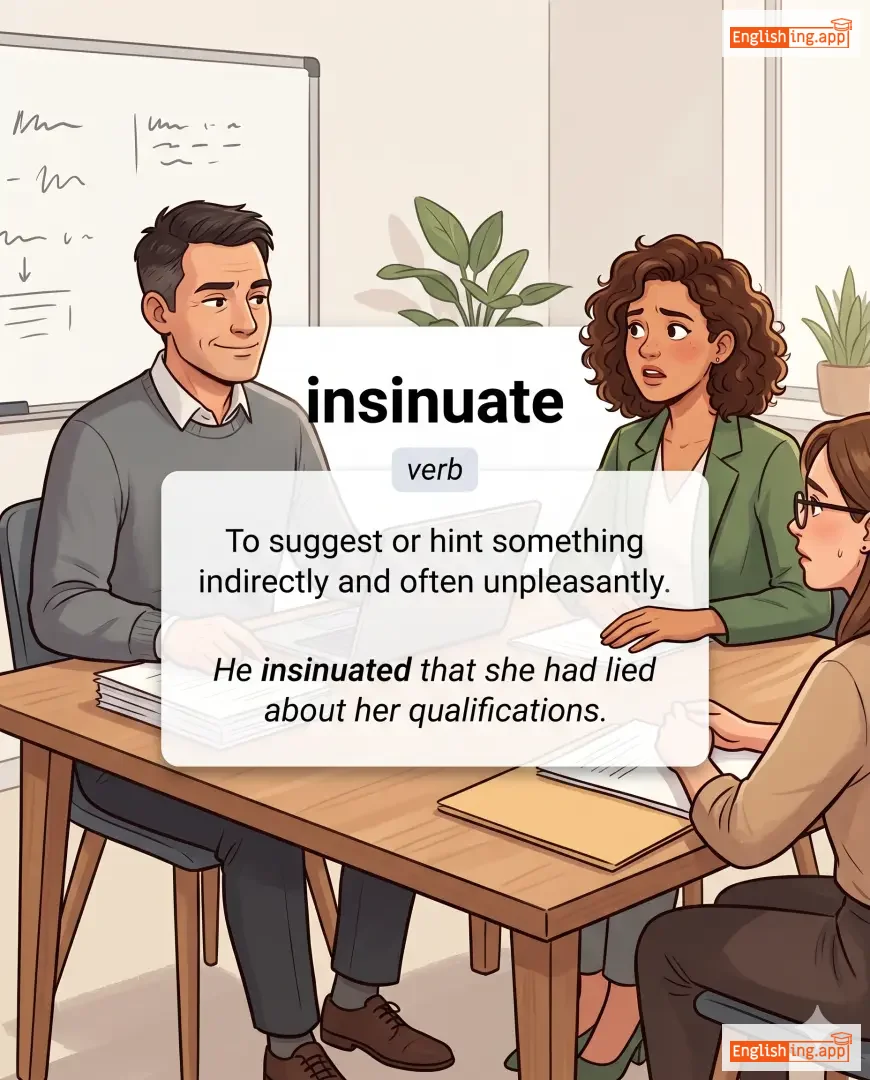
insinuate definition card — visual illustration of the meaning
verb
/ɪnˈsɪnjueɪt/

To suggest or hint something indirectly and often unpleasantly.

"He insinuated that she had lied about her qualifications."

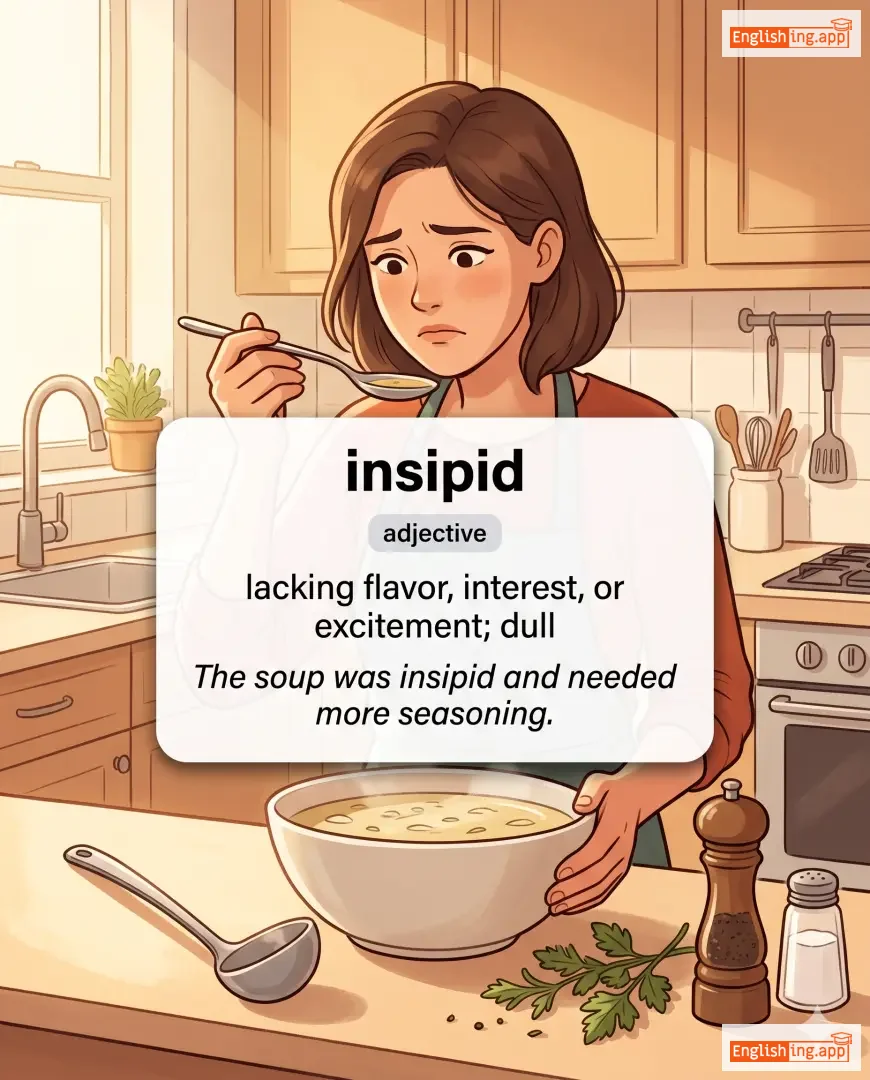
insipid definition card — visual illustration of the meaning
adjective
/ɪnˈsɪpɪd/
味気ない (ajikenai)

lacking flavor, interest, or excitement; dull

"The soup was insipid and needed more seasoning."

"スープは味気なく、もっと調味料が必要でした。" (Sūpu wa ajikenaku, motto chōmiryō ga hitsuyō deshita.)
insist definition card — visual illustration of the meaning
verb
/ɪnˈsɪst/
強く主張する (tsuyoku shuchou suru)

to demand something forcefully or firmly

"She insisted on paying the bill."

"彼女は勘定を支払うことに固執した。" (Kanojo wa kanjou o shiharau koto ni koshou shita.)
noun
/ɪnˈsɪstəns/
強い要求 (tsuyoi youkyuu)

the act of demanding something firmly or repeatedly

"At his insistence, we stayed longer."

"彼の強い要求で、私たちは長く滞在しました。" (Kare no tsuyoi youkyuu de, watashitachi wa nagaku taizai shimashita.)
adjective
/ɪnˈsɪstənt/
執拗な (shuchou na)

demanding something firmly and refusing to accept no

"The child was insistent on getting a new toy."

"その子供は新しいおもちゃを手に入れることに執拗だった。" (Sono kodomo wa atarashī omocha o te ni ireru koto ni shuchō datta.)
noun
/ˈɪnsələns/
無礼 (burei)

rude or disrespectful behavior

"The teacher was shocked by the student's insolence."

"教師は学生の無礼に驚きました。" (Kyoushi wa gakusei no burei ni odorokimashita.)
adjective
/ˈɪnsələnt/
無礼な、傲慢な (burei na, gōman na)

showing a rude and arrogant lack of respect

"The insolent student refused to follow the teacher's instructions."

"その無礼な学生は教師の指示に従うことを拒否した。" (Sono burei na gakusei wa kyōshi no shiji ni shitagau koto o kyohi shita.)
insolvency definition card — visual illustration of the meaning
noun
/ɪnˈsɒlvənsi/
破産 (hasan)

the state of being unable to pay money owed; bankruptcy

"The company declared insolvency after years of financial struggles."

"会社は長年の財務的な問題の後、破産を宣言しました。" (Kaisha wa naganen no zaimuteki na mondai no ato, hasan o sengen shimashita.)
adjective
/ɪnˈsɒlvənt/
破産 (hasan)

unable to pay debts owed

"The insolvent firm could not meet its financial obligations."

"破産した企業は財務義務を果たせなかった。" (Hasan shita kigyō wa zaimu gimu o hatase nakatta.)
noun
/ɪnˈsɒmniə/
不眠症 (fuminsyou)

the condition of being unable to sleep

"She suffered from insomnia due to stress at work."

"彼女は仕事のストレスで不眠症に苦しんでいました。" (Kanojo wa shigoto no sutoresu de fuminsyou ni kurushindeimashita.)
adverb
/ˌɪnsəʊˈmʌtʃ/
これほど (korehodo)

to such an extent

"He was insomuch tired that he could hardly stand."

"彼はあまりにも疲れていて、ほとんど立つことができませんでした。" (Kare wa amari ni mo tsukarete ite, hotondo tatsu koto ga dekimasen deshita.)
noun
/ɪnˈsuːsiəns/
無関心 (mukanshin)

Casual lack of concern; indifference.

"She carried herself with an air of insouciance, unbothered by the challenges ahead."

"彼女は無関心な態度で歩いていた、前にある挑戦を気にせずに。" (Kanojo wa mukanshin na taido de aruite ita, mae ni aru chōsen o ki no sezu ni.)
insouciant definition card — visual illustration of the meaning
adjective
/ɪnˈsuːsiənt/
無頓着 (mutonchaku)

Showing a casual lack of concern; carefree.

"He gave an insouciant shrug and walked away."
"彼は無頓着に肩をすくめて、歩き去った。" (Kare wa mutonchaku ni kata o sukumete, arukisatta.)
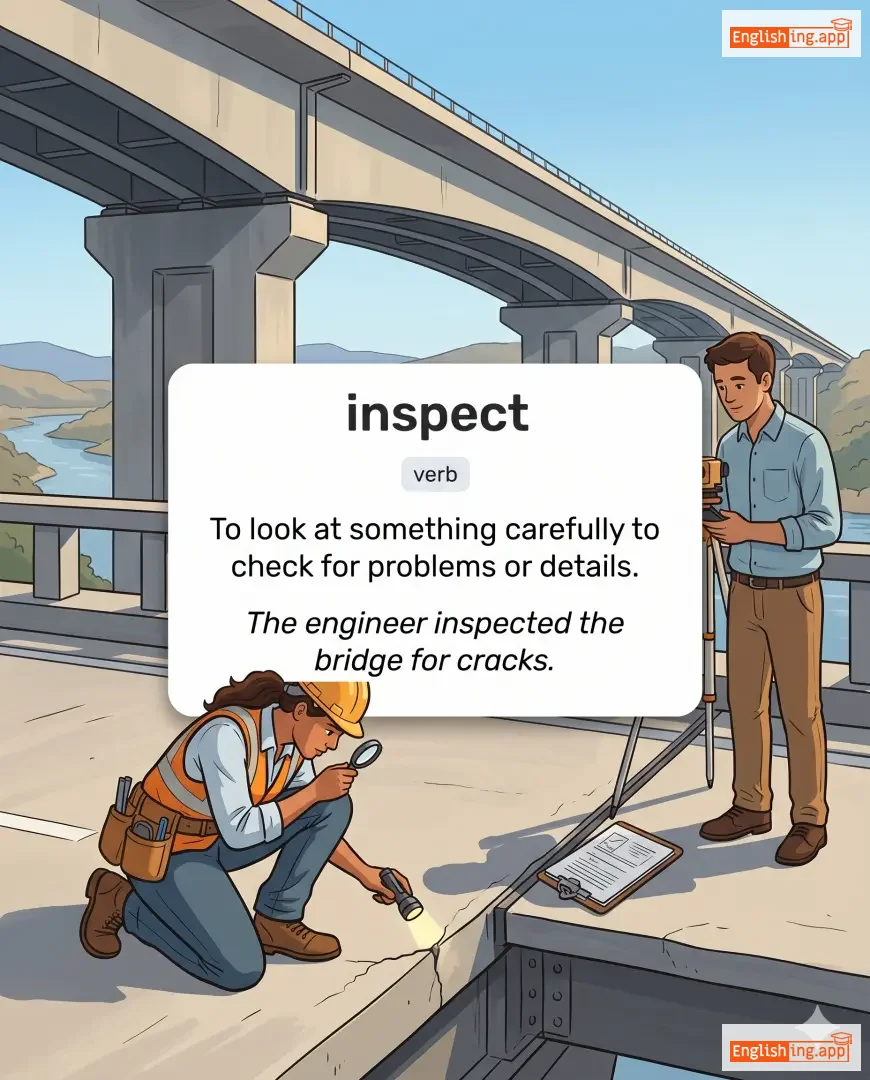
inspect definition card — visual illustration of the meaning
verb
/ɪnˈspɛkt/
検査する (kensasu)

To look at something carefully to check for problems or details.

"The engineer inspected the bridge for cracks."

"エンジニアは橋にひびがないか確認しました。" (Enjinia wa hashi ni hibi ga nai ka kakunin shimashita.)
noun
/ɪnˈspekʃən/
検査 (kensa)

a careful examination of something, especially to check that it is correct or safe

"The building passed the safety inspection last week."

"その建物は先週、安全検査に合格しました。" (Sono tatemono wa senshuu, anzen kensa ni goukaku shimashita.)
noun
/ɪnˈspɛktər/
検査官 (kensa kan)

An official employed to ensure regulations are obeyed or standards are met.

"The inspector carefully checked the restaurant's kitchen for hygiene standards."

"検査官はレストランのキッチンを衛生基準に従って慎重に確認しました。" (Kensakan wa resutoran no kicchin o eisei kijun ni shitagatte shinchou ni kakunin shimashita.)
inspiration definition card — visual illustration of the meaning
noun
/ˌɪnspəˈreɪʃən/
インスピレーション (insupirēshon)

the process of being mentally stimulated to do or feel something creative or positive

"Her courage was a great inspiration to others."

"彼女の勇気は他の人々にとって素晴らしいインスピレーションでした。" (Kanojo no yūki wa hoka no hitobito ni totte subarashī insupirēshon deshita.)
inspire definition card — visual illustration of the meaning
verb
/ɪnˈspaɪər/
幸せ (shiawase)

To fill someone with the urge or ability to do or feel something.

"The teacher's words inspired the students to work harder."

"彼女は賞を受け取ったとき、幸せを隠せませんでした。" (kanojo wa shō o uketotta toki, shiawase o kakusemasen deshita.)
noun
/ˌɪnstəˈbɪləti/
不安定 (fuantei)

lack of stability or balance; tendency to change, fail, or collapse easily

"Political instability has slowed economic growth in the region."

"政治的な不安定さが地域の経済成長を遅らせた。" (seijiteki na fuanteisa ga chiiki no keizai seicho o okuraseta)
adjective
/ɪnˈsteɪbəl/
不安定な (fuantei na)

not stable; liable to change, collapse, or fail; lacking firmness or reliability

"The instable political situation worried foreign investors."

"不安定な政治状況が外国の投資家を心配させた。" (Fuantei na seiji joukyou ga gaikoku no toushika o shinpai saseta)
verb
/ɪnˈstɔːl/
インストールする (insutooru suru)

To place or fix equipment or software so it is ready for use.

"He installed the new software on his computer."

"彼はコンピュータに新しいソフトウェアをインストールしました。" (Kare wa konpyuuta ni atarashii sofutowea o insutooru shimashita.)
installation definition card — visual illustration of the meaning
noun
/ˌɪnstəˈleɪʃən/
インストール (insutooru)

the act or process of putting something in position and making it ready for use

"The installation of the new software took less than an hour."

"新しいソフトウェアのインストールは1時間もかからなかった。" (Atarashii sofutowea no insutooru wa 1 jikan mo kakaranakatta.)
noun
/ˈɪnstəns/
(rei)

An example or single occurrence of something.

"This is just one instance of his generosity."

"これは彼の寛大さの一例です。" (Kore wa kare no kandaisa no ichirei desu.)