語彙集

英単語辞書 | 単語の意味、定義、例文

adjective
/ˌɪnhɒˈspɪtəbl/
住みにくい (suminikui)

Harsh and difficult to live in; unfriendly or unwelcoming to guests.

"The desert is an inhospitable environment for most plants."

"砂漠はほとんどの植物にとって住みにくい環境です。" (Sabaku wa hotondo no shokubutsu ni totte suminikui kankyō desu.)
adjective
/ɪnˈhjuːmən/
非人道的 (hi jindōteki)

lacking human qualities of compassion and mercy; cruel or barbaric

"The prisoners were kept in inhuman conditions."

"囚人たちは非人道的な状況で収容されていました。" (Shūjin-tachi wa hi jindōteki na jōkyō de shūyō sarete imashita.)
verb
/ɪnˈhjuːm/
埋葬する (maison suru)

to bury a dead body in the ground

"They inhumed the warrior with full honors."

"彼らは戦士を完全な名誉を持って埋葬しました。" (Karera wa senshi o kanzen'na meiyo o motte maison shimashita.)
adjective
/ɪˈnɪmɪkəl/
敵対的 / 不利な (tekitai-teki / furi na)

tending to obstruct or harm; unfriendly or hostile

"The policy was inimical to the country's economic growth."

"その政策は国の経済成長に不利だった。" (Sono seisaku wa kuni no keizai seichō ni furi datta.)
inimitable definition card — visual illustration of the meaning
adjective
/ɪˈnɪmɪtəbəl/
唯一無二 (yuiitsu muni)

so good or unusual as to be impossible to copy; unique

"Her inimitable style made her stand out in the fashion industry."

"彼女の唯一無二のスタイルは、ファッション業界で彼女を際立たせました。" (Kanojo no yuiitsu muni no sutairu wa, fasshon gyōkai de kanojo o kiwadata semashita.)
adjective
/ɪˈnɪkwɪtəs/
不正義 (fuseigi)

grossly unfair and morally wrong

"Slavery was one of the most iniquitous practices in history."

"奴隷制は歴史上最も不正義な行為の一つでした。" (Doreisei wa rekishijou mottomo fuseigi na koui no hitotsu deshita.)
noun
/ɪˈnɪkwɪti/
不正 (fusei)

Immoral or grossly unfair behavior.

"The dictator's regime was marked by corruption and iniquity."

"独裁者の政権は腐敗と不正で特徴づけられていました。" (Dokusai-sha no seiken wa fuhai to fusei de tokuchōdzukerarete imashita.)
adjective
/ɪˈnɪʃəl/
初期の (shoki no)

Existing or occurring at the beginning.

"Her initial reaction was one of surprise."

"彼女の初期の反応は驚きだった。" (Kanojo no shoki no hannou wa odokida datta.)
adverb
/ɪˈnɪʃəli/
最初に (saisho ni)

At the beginning; at first.

"Initially, he refused the offer but later accepted it."
"最初に、彼はその提案を断ったが、後で受け入れた。" (Saisho ni, kare wa sono teian o kotowatta ga, ato de ukeireta.)
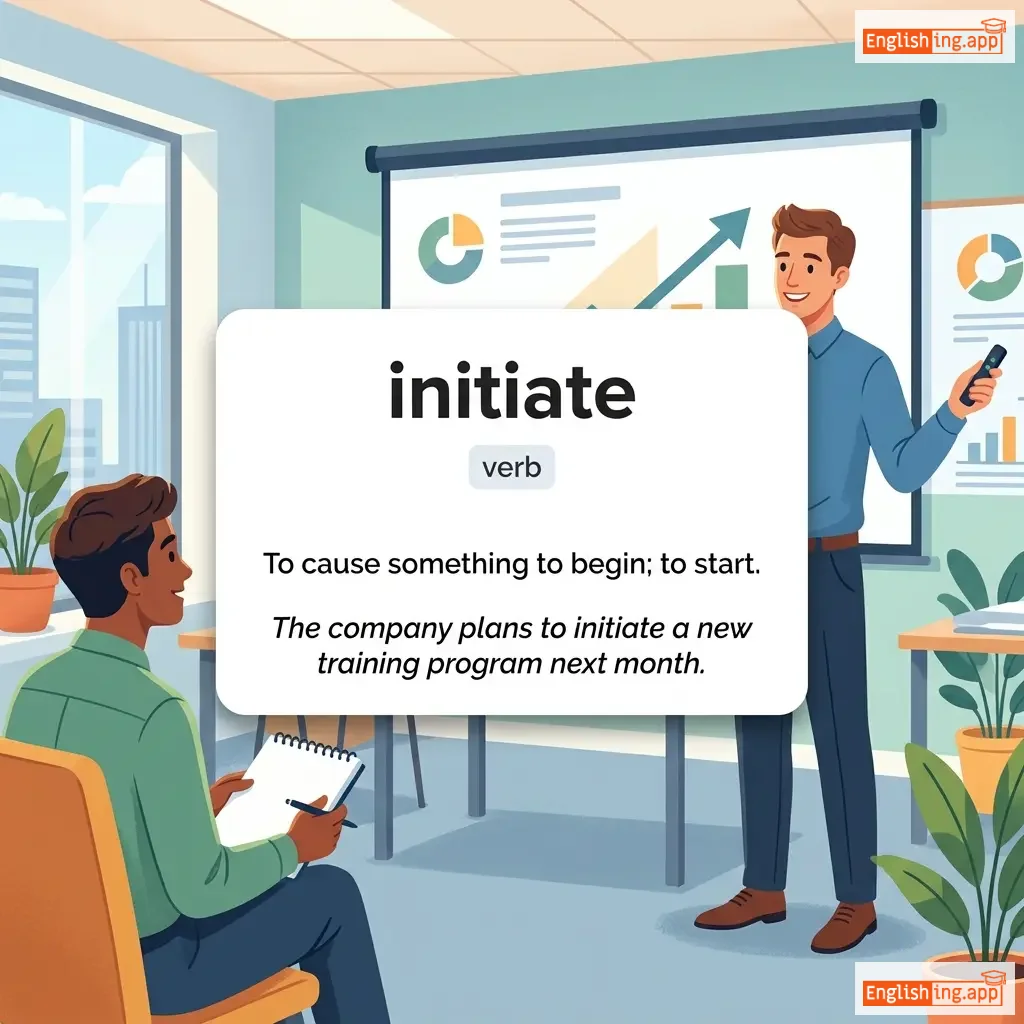
initiate definition card — visual illustration of the meaning
verb
/ɪˈnɪʃieɪt/
開始する (kaishi suru)

To cause something to begin; to start.

"The company plans to initiate a new training program next month."
"その会社は来月、新しいトレーニングプログラムを開始する予定です。" (Sono kaisha wa raigetsu, atarashī torēningu puroguramu o kaishi suru yotei desu.)
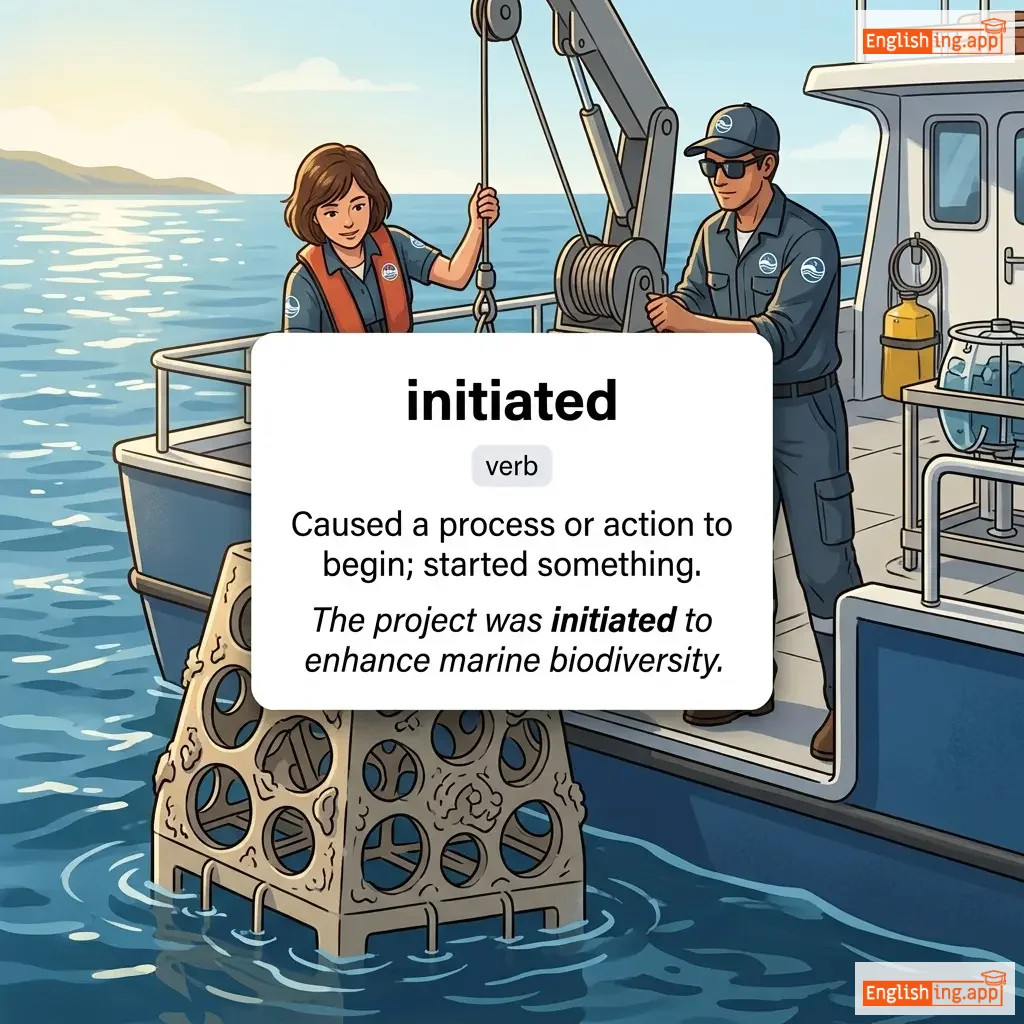
initiated definition card — visual illustration of the meaning
verb
ɪˈnɪʃɪeɪtɪd
開始された (kaishi sareta)

Caused a process or action to begin; started something.

"The project was initiated to enhance marine biodiversity."
"プロジェクトは海洋生物多様性を向上させるために開始されました。" (Purojekuto wa kaiyō seibutsu tayō-sei o kōjō saseru tame ni kaishi saremashita.)
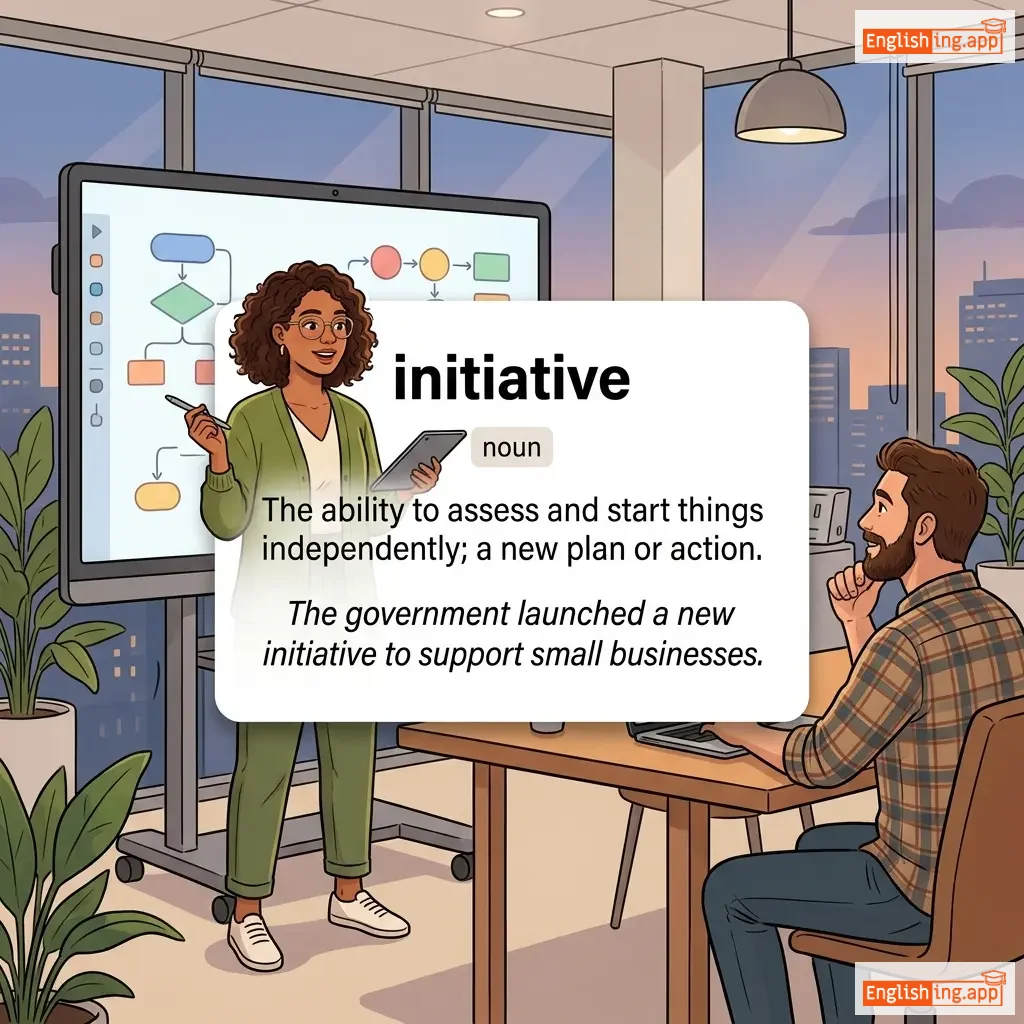
initiative definition card — visual illustration of the meaning
noun
/ɪˈnɪʃətɪv/
イニシアティブ (inishiative)

The ability to assess and start things independently; a new plan or action.

"The government launched a new initiative to support small businesses."
"政府は小規模なビジネスを支援するために新しいイニシアティブを開始しました。" (Seifu wa shōkibo na bijinesu o shien suru tame ni atarashī inishiative o kaishi shimashita.)
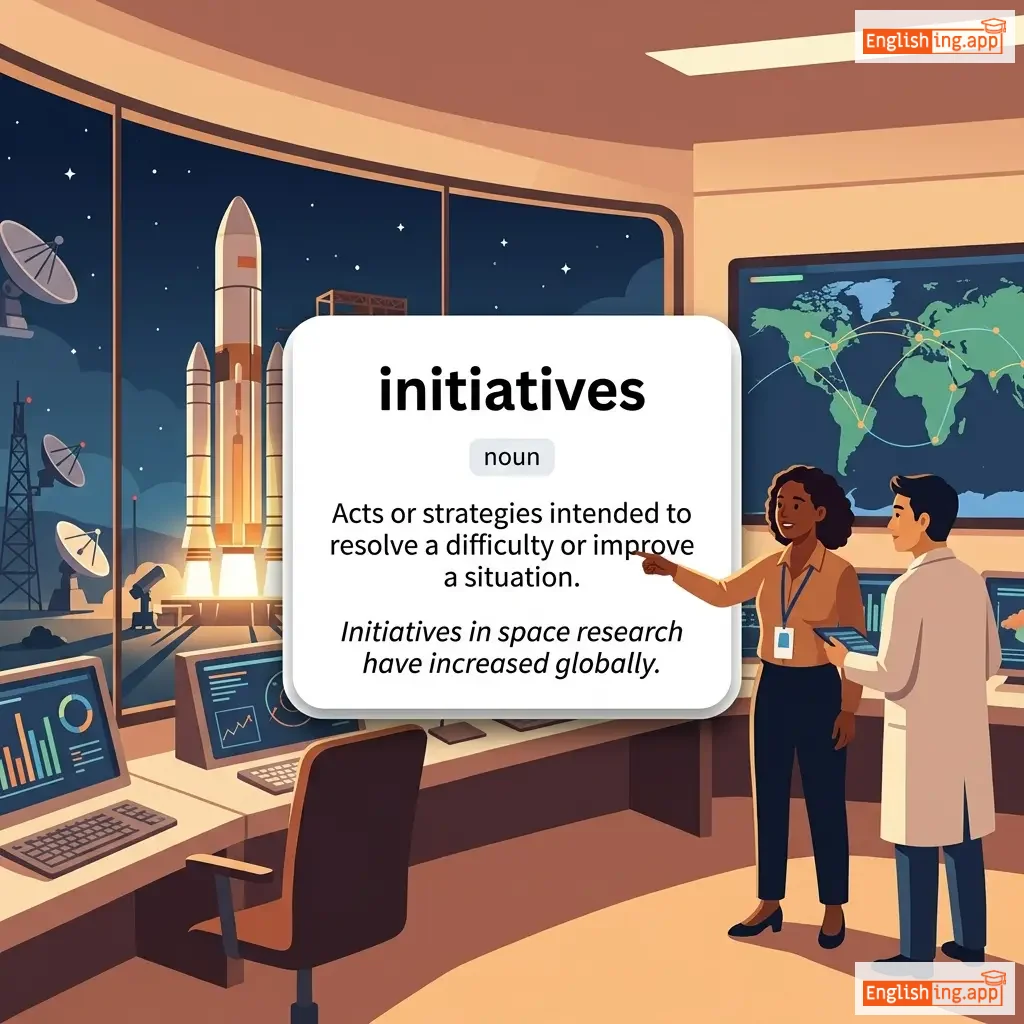
initiatives definition card — visual illustration of the meaning
noun
/ɪˈnɪʃ.ə.tɪvz/
イニシアティブ (inishiatibu)

Acts or strategies intended to resolve a difficulty or improve a situation.

"Initiatives in space research have increased globally."

"宇宙研究におけるイニシアティブは世界的に増加しました。" (Uchuu kenkyuu ni okeru inishiatibu wa sekaiteki ni zouka shimashita.)
verb
/ɪnˈdʒɛkt/
注射する (chūsha suru)

To introduce a substance, especially a drug, into the body using a needle.

"The nurse will inject the vaccine into the patient's arm."

"看護師は患者の腕にワクチンを注射します。" (Kangoshi wa kanja no ude ni wakuchin o chūsha shimasu.)
noun
/ɪnˈdʒɛkʃən/

the act of introducing a substance into the body through a needle

"The nurse gave me an injection to prevent the infection."

noun
/ɪnˈdʒʌŋkʃən/
差止命令 (sashitome meirei)

A judicial order restraining a person from an action or compelling a certain act.

"The court issued an injunction to stop the company from polluting the river."

"裁判所は、会社が河川を汚染するのを防ぐために差止命令を出した。" (Saibansho wa, kaisha ga kasen o osen suru no o fusegu tame ni sashitome meirei o dashita.)
verb
/ˈɪndʒər/
怪我をさせる (kega o saseru)

to cause physical harm or damage to someone or something

"He injured his leg while playing football."

"彼はサッカーをしている時に足を怪我した。" (Kare wa sakkā o shite iru toki ni ashi o kega shita.)
adjective
/ɪnˈdʒʊəriəs/
有害な (yūgaina)

Causing or likely to cause harm or damage.

"Smoking is injurious to health."

"喫煙は健康に有害です。" (Kitsuen wa kenkō ni yūgaina desu.)
noun
/ˈɪndʒəri/
怪我 (kega)

Harm or damage to a person’s body caused by an accident or attack.

"He suffered a serious injury during the football match."
"彼はサッカーの試合中に重傷を負った。" (Kare wa sakkaa no shiai chu ni juushou wo otta.)
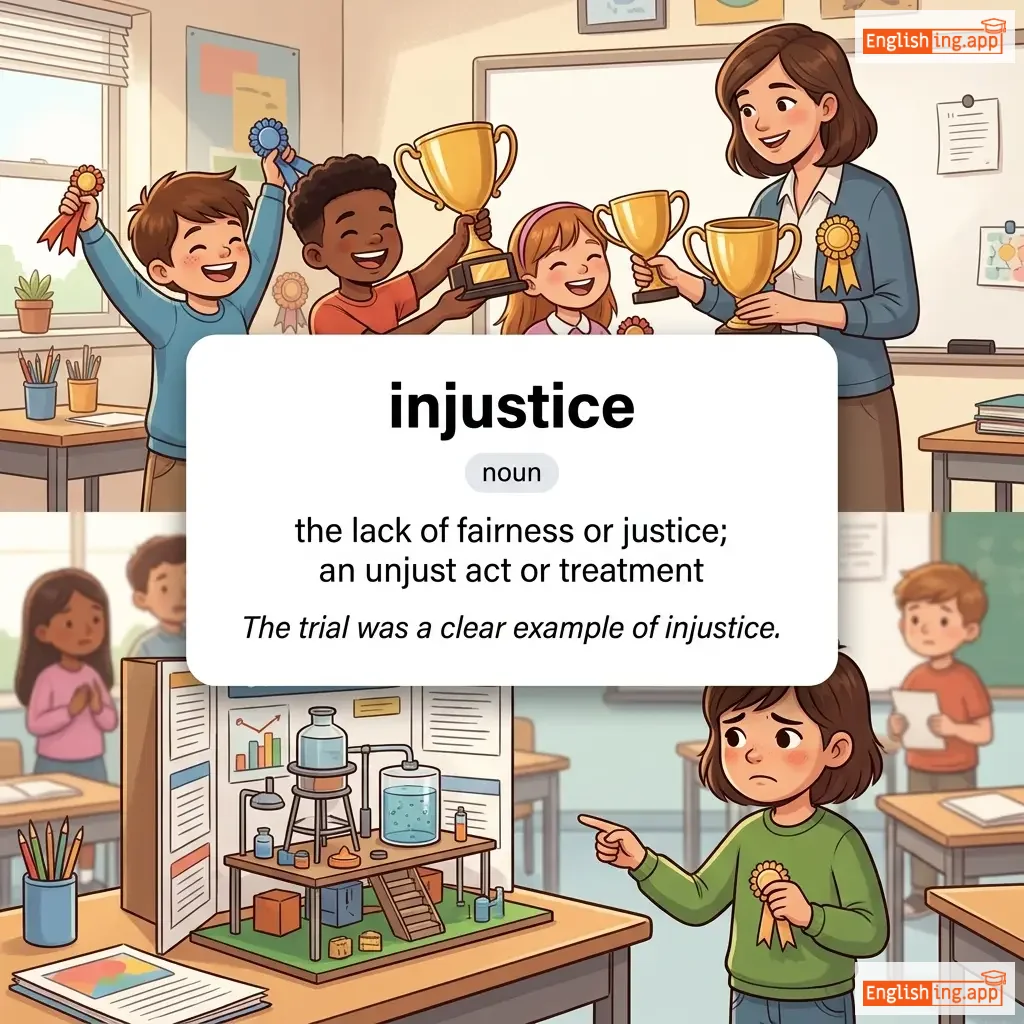
injustice definition card — visual illustration of the meaning
noun
/ɪnˈdʒʌstɪs/
不正義 (fuseigi)

the lack of fairness or justice; an unjust act or treatment

"The trial was a clear example of injustice."

"その裁判は不正義の明確な例でした。" (Sono saiban wa fuseigi no meikaku na rei deshita.)
noun
/ɪŋk/
インク (inku)

a colored liquid used for writing, printing, or drawing

"The ink in my pen ran out during the exam."

"試験中にペンのインクがなくなった。" (Shiken-chu ni pen no inku ga nakunatta.)
noun
/ˈɪŋklɪŋ/
予感 (yokan)

A slight idea, hint, or suspicion about something.

"She had an inkling that he was planning a surprise."
"彼女は彼がサプライズを計画しているという予感を持っていた。" (Kanojo wa kare ga sapuraizu o keikaku shite iru to iu yokan o motte ita.)
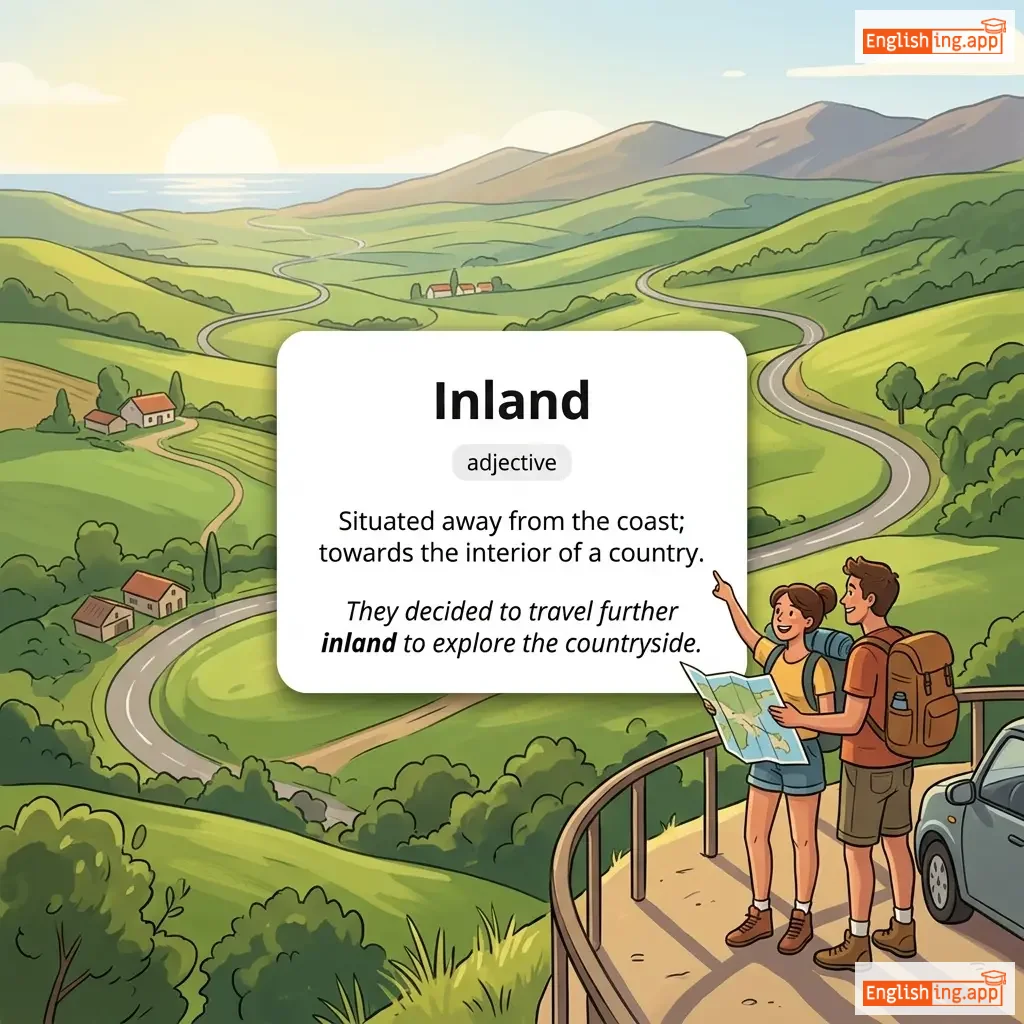
Inland definition card — visual illustration of the meaning
adjective
/ˈɪnlənd/
内陸 (nairiku)

Situated away from the coast; towards the interior of a country.

"They decided to travel further inland to explore the countryside."

"彼らは田舎を探索するためにさらに内陸へ進むことに決めました。" (Karera wa inaka o tansaku suru tame ni sara ni nairiku e susumu koto ni kimemashita.)
noun
/ˈɪnlɛt/
入り江 (irieki)

A small arm of the sea, a lake, or a river; an opening or passage for entry.

"The boat entered a narrow inlet along the coast."

"船は海岸沿いの狭い入り江に入った。" (Fune wa kaigan-zoi no semai irieki ni haitta.)
noun
/ˈɪnˌmeɪt/
囚人 (shuujin)

a person confined to an institution such as a prison or hospital

"The prison has over a thousand inmates."

"刑務所には千人以上の囚人がいます。" (Keimusho ni wa sen'nin ijou no shuuji ga imasu.)
adjective
/ˈɪnmoʊst/
最も内面の (mottomo naimen no)

Situated at the very heart or deepest part; most private or secret.

"She revealed her inmost thoughts to her closest friend."
"彼女は最も内面的な考えを最も親しい友達に明かした。" (Kanojo wa mottomo naimen-tekina kangae wo mottomo shitashii tomodachi ni akashita.)
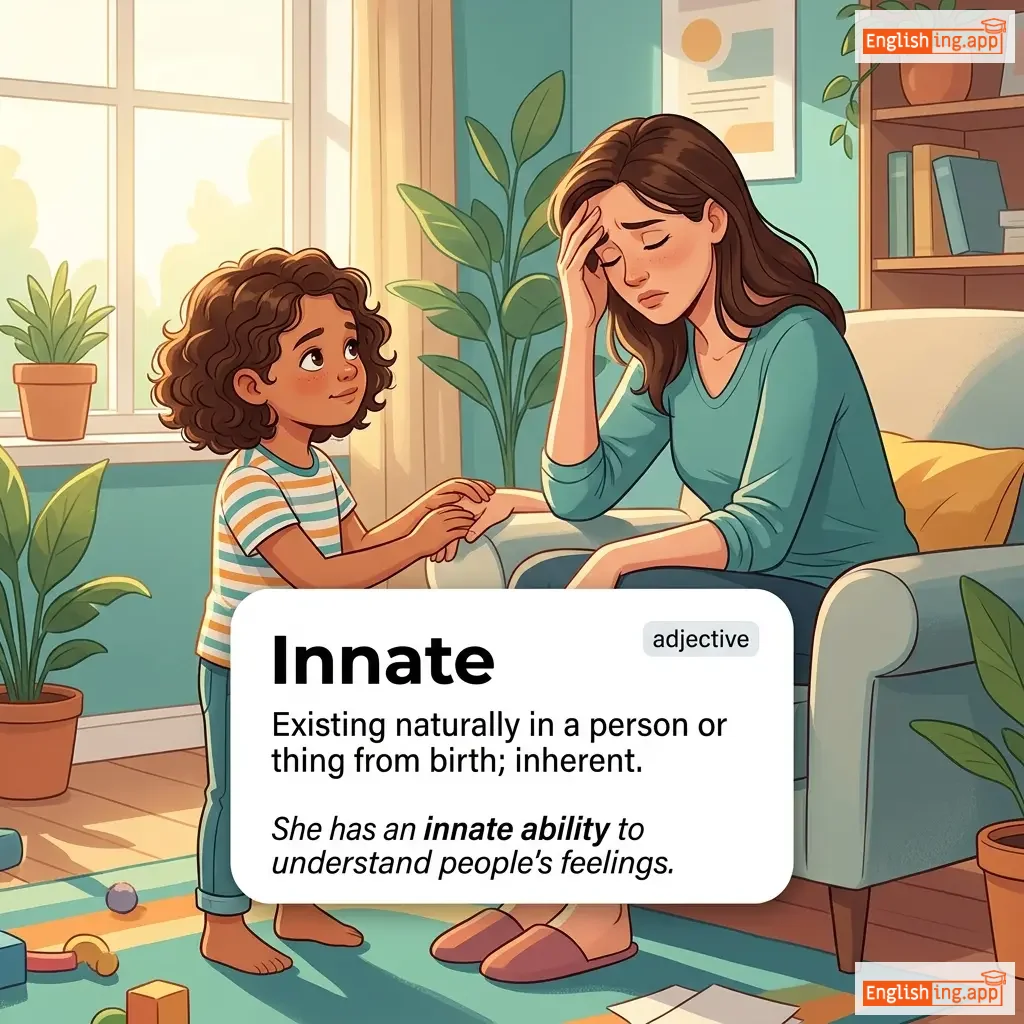
Innate definition card — visual illustration of the meaning
adjective
/ɪˈneɪt/
生得的 (shōtōteki)

Existing naturally in a person or thing from birth; inherent.

"She has an innate ability to understand people's feelings."

"彼女は人々の感情を理解する生まれつきの能力を持っている。" (Kanojo wa hitobito no kanjō o rikai suru umaretsuki no nōryoku o motte iru.)
adjective
/ˈɪnər/
内面的 (naimen teki)

Located inside or closer to the center; relating to one’s thoughts or feelings.

"She shared her inner thoughts with her best friend."
"彼女は最良の友達に内面的な思いを共有しました。" (kanojo wa sairyō no tomodachi ni naimen teki na omoi o kyōyū shimashita.)
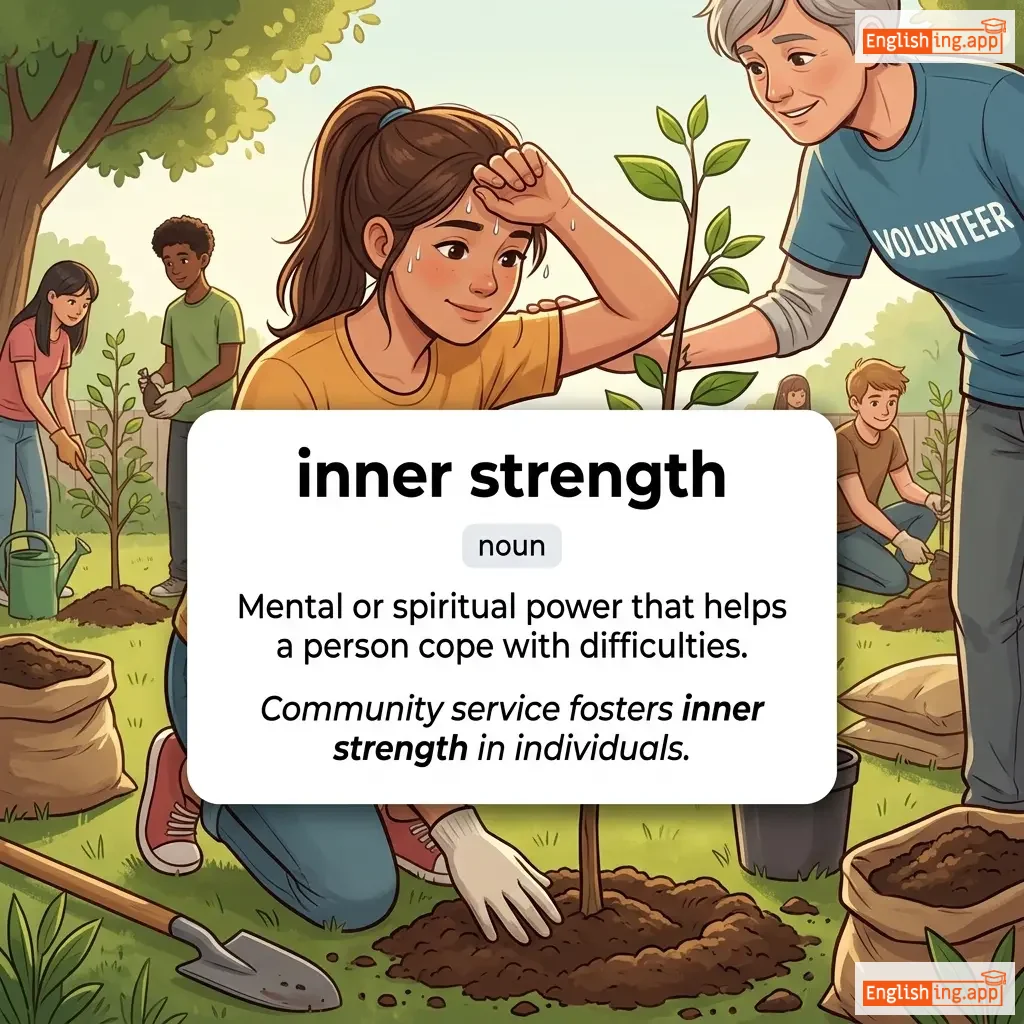
inner strength definition card — visual illustration of the meaning
noun
ˈɪnər strɛŋkθ
内面の強さ (naimen no tsuyosa)

Mental or spiritual power that helps a person cope with difficulties.

"Community service fosters inner strength in individuals."

"コミュニティサービスは個人に内面的な強さを育む。" (Komyuniti sābisu wa kojin ni naimen-teki na tsuyosa o hagukumu.)
adjective
/ˈɪnərmoʊst/
最も深い; 最も個人的な (mottomo fukai; mottomo kojinteki na)

most private and secret; deepest; most personal

"She shared her innermost feelings with her closest friend."

"彼女は最も深い感情を最も親しい友人と共有しました。" (Kanojo wa mottomo fukai kanjō o mottomo shitashī yūjin to kyōyū shimashita.)
adjective
/ˈɪnəsənt/
無罪 (muzai)

not guilty of a crime or wrongdoing; harmless

"The court found him innocent of all charges."
"裁判所は彼をすべての告発から無罪と判断しました。" (saibansho wa kare o subete no kokuhatsu kara muzai to handan shimashita.)
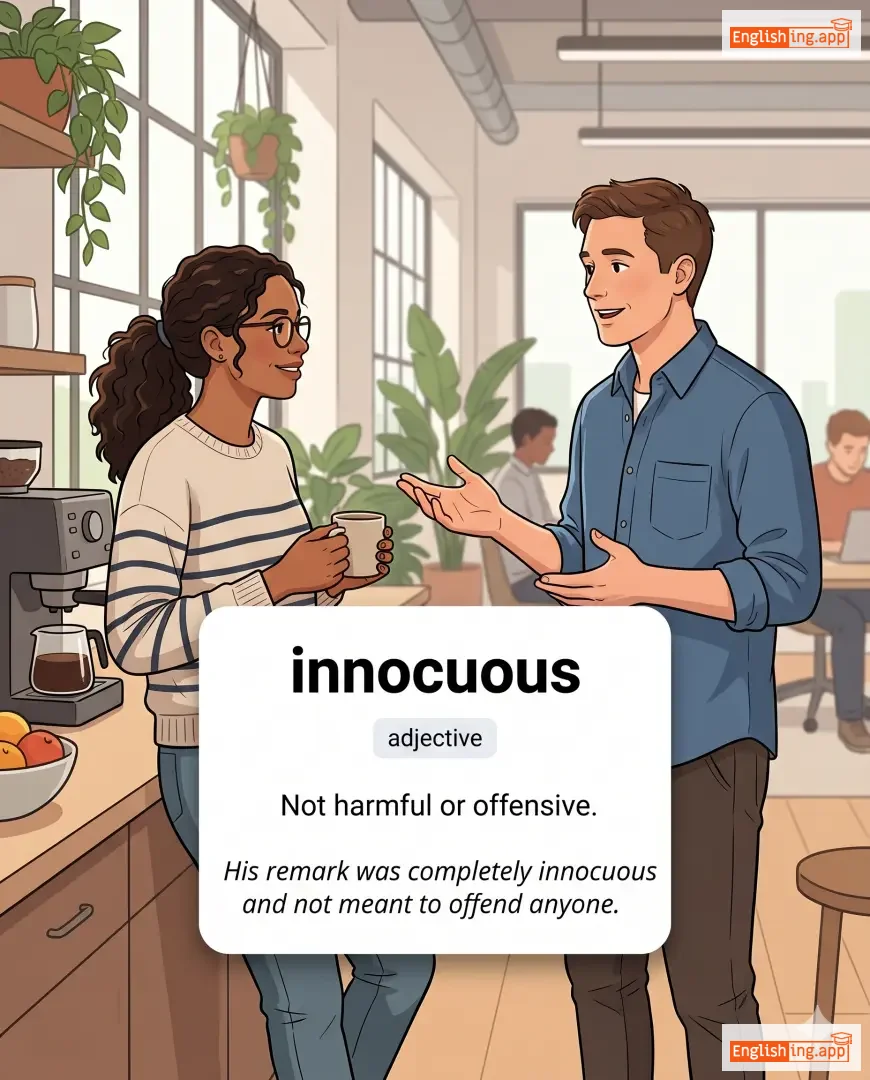
innocuous definition card — visual illustration of the meaning
adjective
/ɪˈnɒkjuəs/
無害な (mugaina)

Not harmful or offensive.

"His remark was completely innocuous and not meant to offend anyone."

"彼の発言は完全に無害で、誰かを傷つける意図はなかった。" (Kare no hatsugen wa kanzen ni mugai de, dareka o kizutsukeru ito wa nakatta.)
verb
/ˈɪnəveɪt/
革新 (kakushin)

To introduce new methods, ideas, or products.

"The company must innovate to stay ahead of its competitors."
"その企業は競争相手を追い越すために革新を続けなければならない。" (Sono kigyō wa kyōsō aite o oikosu tame ni kakushin o tsudzukenakereba naranai.)
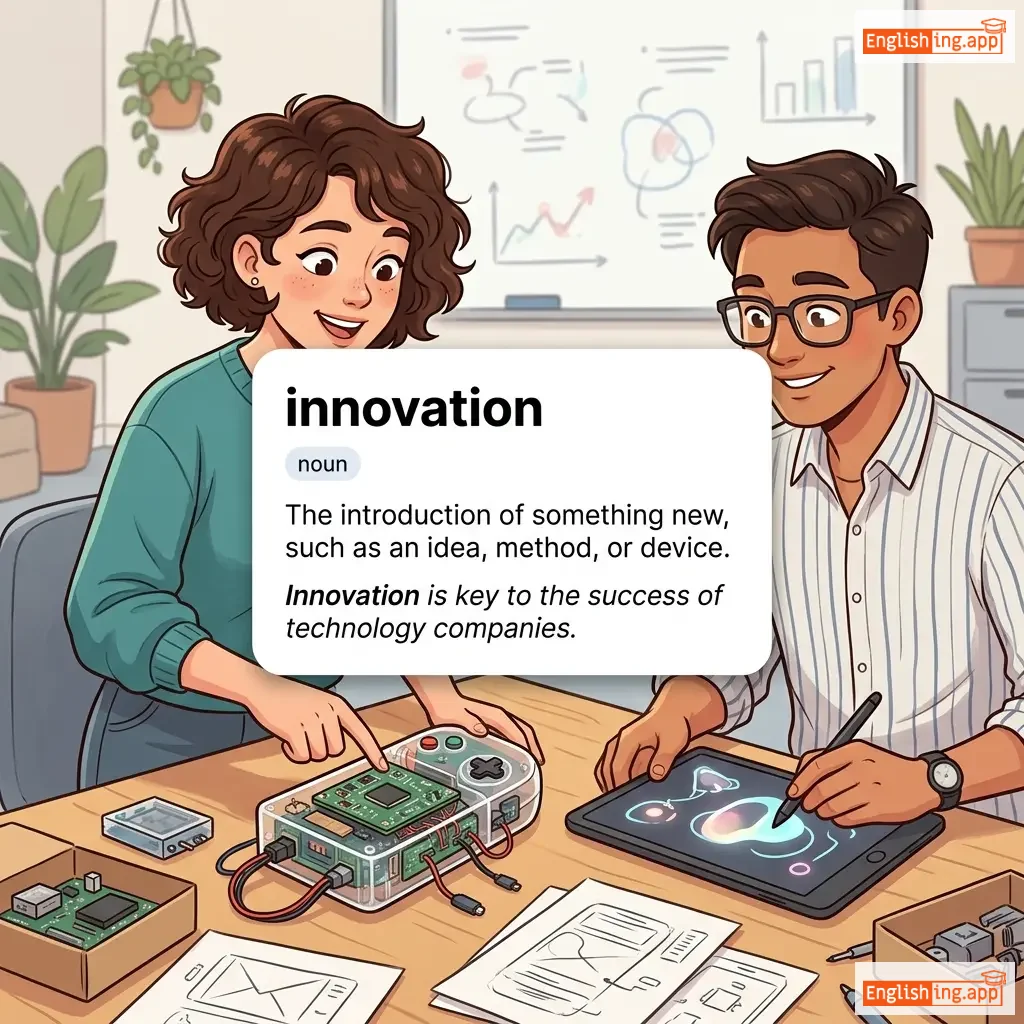
innovation definition card — visual illustration of the meaning
noun
/ˌɪnəˈveɪʃən/
革新 (kakushin)

The introduction of something new, such as an idea, method, or device.

"Innovation is key to the success of technology companies."

"革新はテクノロジー企業の成功の鍵です。" (Kakushin wa tekunorojī kigyō no seikō no kagi desu.)
innovative definition card — visual illustration of the meaning
adjective
/ˈɪnəˌveɪtɪv/
革新的 (kakushinteki)

introducing new ideas, methods, or products; creative and original

"The company is known for its innovative solutions."
"その会社は革新的な解決策で知られています。" (Sono kaisha wa kakushinteki na kaiketsusaku de shirareteimasu.)
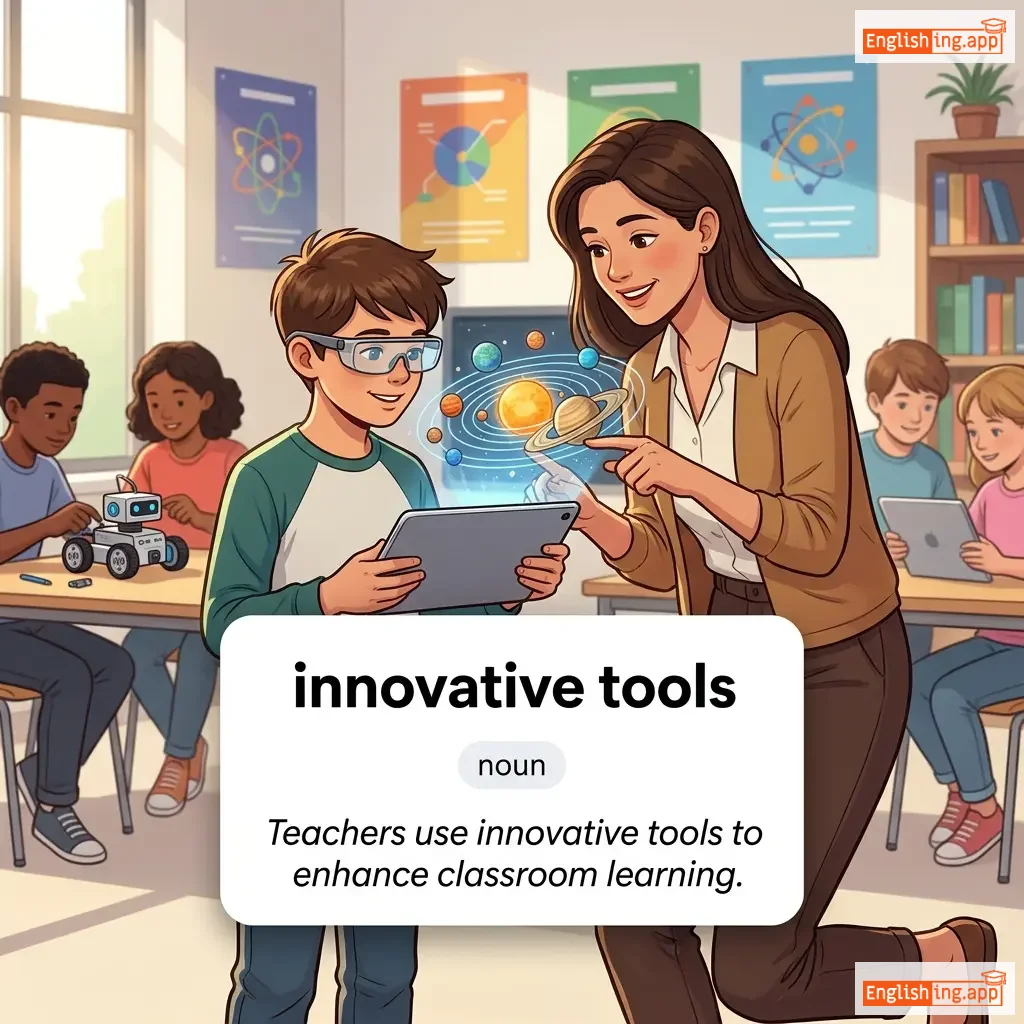
innovative tools definition card — visual illustration of the meaning
noun
ˈɪnəveɪtɪv tuːlz
革新的なツール (kakushinteki na tsūru)

Creative devices or advanced technologies that introduce new methods or approaches to accomplish tasks.

"Teachers use innovative tools to enhance classroom learning."
"教師は教室での学習を向上させるために革新的なツールを使用します。" (Kyōshi wa kyōshitsu de no gakushū o kōjōsaseru tame ni kakushinteki na tsūru o shiyō shimasu.)
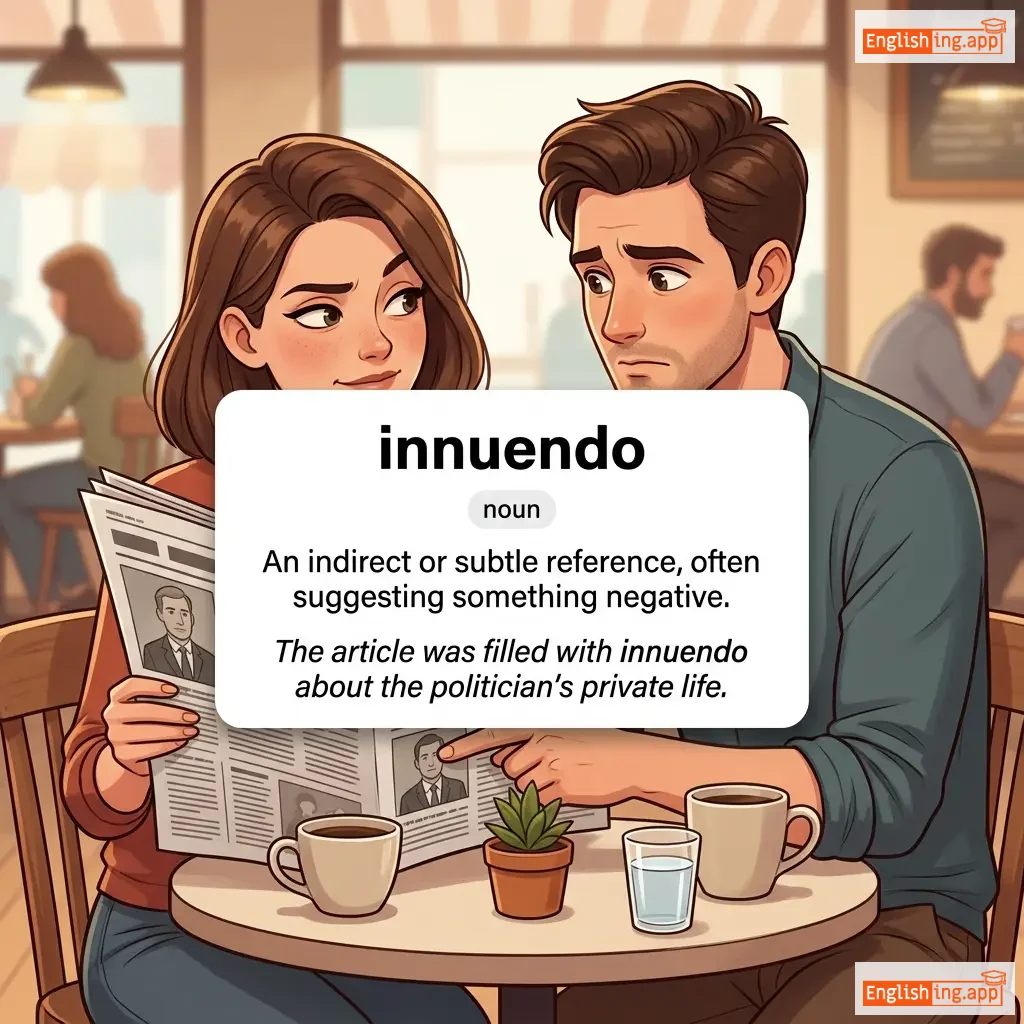
innuendo definition card — visual illustration of the meaning
noun
/ˌɪnjuˈɛndoʊ/
ほのめかし (honomekashi)

An indirect or subtle reference, often suggesting something negative.

"The article was filled with innuendo about the politician's private life."

"その記事は政治家の私生活に関するほのめかしでいっぱいだった。" (Sono kiji wa seijika no shiseikatsu ni kansuru honomekashi de ippai datta.)
adjective
/ɪˈnuːm(ə)rəbəl/
無数の (musū no)

Too many to be counted.

"She has innumerable memories of her childhood."

"彼女は子供時代の無数の思い出を持っています。" (Kanojo wa kodomojidai no musū no omoide o motteimasu.)
adjective
/ˌɪnəˈfɛnsɪv/
無害な (mugai na)

Not likely to offend or provoke; harmless.

"His inoffensive remarks kept the conversation friendly."

"彼の無害なコメントは会話を友好的に保ちました。" (Kare no mugai na komento wa kaiwa o yūkō-teki ni tamochimashita.)
adjective
/ˌɪnˌɑːpərˈtuːn/
タイミングが悪い瞬間 (taimingu ga warui shunkan)

Happening at a bad or inconvenient time.

"His call came at the most inopportune moment."

"彼の電話は最もタイミングが悪い瞬間にかかってきた。" (kare no denwa wa mottomo taimingu ga warui shunkan ni kakatte kita.)
adjective
/ɪˈnɔːrdənət/
過度の (kado no)

Excessive or unusually large in degree.

"She spent an inordinate amount of time on her phone."

"彼女は電話に過度の時間を費やしました。" (Kanojo wa denwa ni kado no jikan o tsuiyashimashita.)
adjective
/ˌɪnɔːrˈɡænɪk/
無機の (muki no)

relating to substances that are not derived from living organisms; lacking organic structure or growth

"Inorganic compounds are commonly studied in chemistry labs."

"無機化合物は化学の基本です。" (muki kagobutsu wa kagaku no kihon desu)
noun
/ˈɪnpʊt/
入力、提供された情報 (input, teikyō sareta jōhō)

information, advice, or data that is put into a system, device, or process

"The manager asked for everyone's input on the new project."

"マネージャーは新しいプロジェクトに対する全員のインプットを求めました。" (Manējā wa atarashī purojekuto ni taisuru zen'in no inputto o motomemashita.)
noun
/ˈɪnkwest/
調査 (chousa)

A legal or official inquiry, especially into the cause of a death.

"The inquest revealed the cause of the accident."
"調査は事故の原因を明らかにしました。" (Chousa wa jiko no gen'in wo akiraka ni shimashita.)
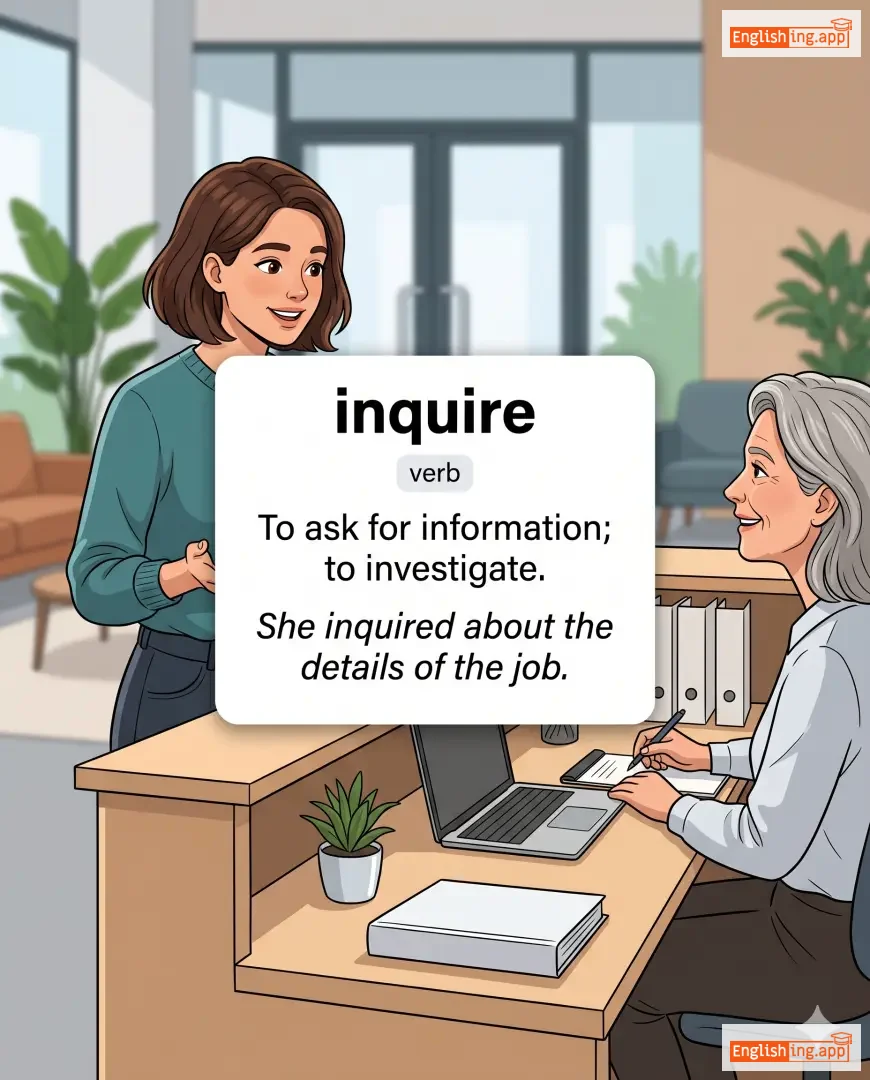
inquire definition card — visual illustration of the meaning
verb
/ɪnˈkwaɪər/
尋ねる (tazuneru)

To ask for information; to investigate.

"She inquired about the details of the job."

"彼女はその仕事の詳細について尋ねました。" (Kanojo wa sono shigoto no shousai ni tsuite tazunemashita.)
noun
/ɪnˈkwaɪəri/ or /ˈɪnkwəri/
調査 / 問い合わせ (chōsa / toiawase)

An act of asking for information; an investigation into something.

"The committee launched an inquiry into the financial irregularities."

"委員会は財務の不正行為に関する調査を開始しました。" (Iinkai wa zaimu no fusei kōi ni kansuru chōsa o kaishi shimashita.)
noun
/ˌɪnkwɪˈzɪʃən/
尋問 (jinmon)

A prolonged and intense questioning or investigation, often harsh in nature.

"The journalist faced an inquisition from the panel about his sources."

"ジャーナリストは、自分の情報源に関するパネルからの厳しい尋問に直面した。" (Jānarisuto wa, jibun no jōhōgen ni kansuru paneru kara no kibishii jinmon ni chokumen shita.)
adjective
/ɪnˈkwɪzɪtɪv/
好奇心旺盛な (koukishin ōseina)

Curious or eager to learn and ask questions.

"The inquisitive child asked endless questions about the stars."

"好奇心旺盛な子供は星について無限に質問をしました。" (Koukishin ōseina kodomo wa hoshi ni tsuite mugen ni shitsumon o shimashita.)
noun
/ɪnˈkwɪzɪtər/
尋問者 (jinmonsha)

A person who asks many questions, often in an official or harsh manner.

"The inquisitor demanded detailed answers from the witness."

"尋問者は証人から詳細な回答を要求しました。" (Jinmonsha wa shōnin kara shōsai na kaitō o yōkyū shimashita.)
noun
/ˈɪnroʊd/
進展 (shinten)

An advance or significant progress, often at the expense of something else.

"The company made significant inroads into the mobile market."

"その会社はモバイル市場で重要な進展を遂げました。" (Sono kaisha wa mobairu shijou de juuyou na shinten wo togemashita.)