語彙集

英単語辞書 | 単語の意味、定義、例文

noun
/hɒˈstɪləti/
敵意 (teki i)

hostile behavior; unfriendliness or opposition

"The negotiations ended in an atmosphere of hostility."

"交渉は敵意の雰囲気で終わった。" (Koushou wa teki no fun'iki de owatta.)
adjective
/hɒt/
熱い (atsui)

Having a high degree of heat or a high temperature.

"The soup is too hot to eat right now."

"スープは今食べるには熱すぎる。" (Sūpu wa ima taberu ni wa atsusugiru.)
noun
/hɒt drɪŋk/
ホットドリンク (hottodorinku)

a warm or heated beverage consumed for refreshment or comfort

"I prefer a hot drink like tea or coffee in the morning."

"朝にお茶やコーヒーなどのホットドリンクを好みます。" (Asa ni ocha ya kōhī nado no hottodorinku o konomimasu.)
noun
/hɒtʃ pɒtʃ/
煮込み料理 (nikomi ryouri)

A mixed dish; a hodgepodge of ingredients cooked together

"She made a delicious hotch potch with rice, lentils, and vegetables."

"彼女はご飯、レンズ豆、野菜で美味しいホッチポッチを作った。" (Kanojo wa gohan, renzudou, yasai de oishii hotch potch o tsukutta.)
noun
/ˈhɑːtʃ.pɑːtʃ/
ごちゃ混ぜ; 物の無秩序な集まり (gochamaze; mono no muchitsujo na atsumari)

a confused mixture; a jumbled assortment of things

"The room was a hotchpotch of old furniture, books, and random decorations."

"部屋は古い家具、本、ランダムな飾り付けのごちゃ混ぜだった。" (Heya wa furui kagu, hon, randamu na kazarikake no gochamaze datta.)
noun
/hoʊˈtɛl/
ホテル (hoteru)

A building where people pay to stay and sleep, usually for short periods.

"We stayed at a hotel near the beach."

"私たちはビーチの近くのホテルに泊まりました。" (Watashitachi wa bīchi no chikaku no hoteru ni tomarimashita.)
noun
/ˈhɒthɛd/
短気な人 (tanki na hito)

a person who acts quickly and without thinking when angry

"He is such a hothead that he often starts arguments."

"彼は短気な人で、よく議論を始める。" (Kare wa tanki na hito de, yoku giron o hajimeru.)
adverb
/ˈhɒtli/
激しく (hageshiku)

in an intense, angry, or passionate way

"She hotly denied the accusations."

"彼女はその告発を激しく否定した。" (Kanojo wa sono kokuhatsu o hageshiku hitei shita.)
verb
/haʊnd/
追い詰める (oitsumeru)

to pursue or harass someone persistently

"Reporters hounded the actor for comments."

"報道陣はコメントを求めて俳優を追い詰めました。" (Hōdōjin wa komento o motomete haiyū o oitsumemashita.)

hour

noun
/ˈaʊər/

A period of time equal to 60 minutes.

"The meeting lasted for two hours."

adverb
/ˈaʊər.li/
毎時間; 毎時間行われるまたは行う; 継続的に (maijikan; maijikan okonawareru matawa okonau; keizokuteki ni)

every hour; happening or done each hour; continuously

"The weather report is updated hourly."

"天気予報は毎時間更新されます。" (Tenki yohō wa maijikan kōshin saremasu.)
noun
/haʊs/
(ie)

A building for people to live in, usually with rooms and a roof.

"They bought a new house in the city."

"彼らは市内に新しい家を買いました。" (Karera wa shinai ni atarashī ie o kaimashita.)
noun
/ˈhaʊs boʊt/
ハウスボート (hausu bōto)

a boat that has been designed or modified to be used primarily as a home

"They spent their vacation on a beautiful house boat in the lake."

"彼らは湖の美しいハウスボートで休暇を過ごしました。" (karera wa mizuumi no utsukushii hausu bōto de kyūka o sugoshimashita)
noun
/ˈhaʊsˌbreɪkɪŋ/
住居侵入 (jūkyo shinnyū)

the crime of breaking into a house with intent to steal

"The thief was arrested for housebreaking."

"泥棒は住居侵入で逮捕された。" (Dorobō wa jūkyo shinnyū de taiho sareta.)
👨‍👩‍👧‍👦

household (ハウスホールド)

noun
/ˈhaʊshoʊld/
家庭 (katei)

All the people living together in one house, considered as a unit.

"There are five people in our household."

"私たちの家庭には五人います。" (Watashitachi no katei ni wa gonin imasu.)
noun
/ˈhaʊswaɪf/
主婦 (shufu)

a married woman who manages a household and whose main occupation is caring for her family and home

"She chose to work as a housewife while raising her children."

"彼女は子どもを育てるために主婦になることを選びました。" (Kanojo wa kodomo o sodateru tame ni shufu ni naru koto o erabimashita)
noun
/ˈhaʊzɪŋ/
住宅 (jūtaku)

buildings or structures where people live; accommodation

"The government is working to provide affordable housing for everyone."

"政府はすべての人々に手頃な住宅を提供するために努力しています。" (Seifu wa subete no hitobito ni tegorona jūtaku o teikyō suru tame ni doryoku shiteimasu.)
🏚️

hovel

noun
/ˈhʌvəl/

a small, poorly built, and dirty house

"The refugees lived in a makeshift hovel."

verb
/ˈhʌvər/
空中で一箇所に留まる、前後に動かない (kūchū de ikkasho ni todomaru, zengo ni ugokanai)

to remain in the air in one place without moving forward or backward

"The helicopter hovered over the city."

"ヘリコプターは街の上空で浮かんでいました。" (Herikoputā wa machi no jōkū de ukande imashita.)
adverb
/haʊ/
どう (dou)

in what way or manner; by what means

"How do you solve this problem?"

"この問題をどう解決しますか?" (Kono mondai o dou kaiketsu shimasu ka?)
adverb, conjunction
/haʊˈɛvər/
しかし (shikashi)

used to introduce a statement that contrasts with or seems to contradict something previously said

"The journey was long; however, it was enjoyable."

"旅は長かった; しかし、それは楽しかった。" (Tabi wa nagakatta; shikashi, sore wa tanoshikatta.)
noun
/ˈhɔɪdən/
やんちゃな女の子 (yancha na onna no ko)

a boisterous or tomboyish girl

"The hoyden preferred climbing trees to playing with dolls."

"やんちゃな女の子は、ぬいぐるみで遊ぶよりも木に登るのが好きでした。" (Yancha na onna no ko wa, nuigurumi de asobu yorimo ki ni noboru no ga suki deshita.)
noun
/hʌb/
中心 (chūshin)

the central part of a place or activity where things converge

"The city is the hub of the country's trade network."

"その都市は国の貿易ネットワークの中心です。" (Sono toshi wa kuni no bōeki nettowāku no chūshin desu.)
noun
/ˈhʌbʌb/
騒音 (souon)

a loud noise caused by a crowd of people talking or shouting

"There was a hubbub in the market as the sale began."

"販売が始まると、市場で騒音が起こりました。" (Hanbai ga hajimaru to, shijō de souon ga okorimashita.)
noun
/ˈhjuːbrɪs/
傲慢 (ouman)

excessive pride or self-confidence

"His hubris led to his downfall."

"彼の傲慢が彼の没落を引き起こした。" (Kare no ouman ga kare no botsuraku o hikiokoshita.)
noun
/ˈhʌk.stər/
露天商人 (roten shōnin)

A person who sells small items aggressively, often in a showy or dishonest way.

"The huckster loudly promoted his goods in the busy marketplace."

"その露天商人は賑やかな市場で自分の商品を大声で宣伝していました。" (Sono roten shōnin wa nigi yaka na ichiba de jibun no shōhin o ōgoe de senden shite imashita.)
noun
/hjuː/
色合い (iroai)

A color or shade.

"The artist chose a soft blue hue for the background."

"アーティストは背景のために柔らかい青い色合いを選びました。" (Ātisuto wa haikei no tame ni yawarakai aoi iroai o erabimashita.)
noun phrase
/ˌhjuː ən ˈkraɪ/
大声の抗議 (oogoe no kougi)

A loud public outcry or protest, often demanding action.

"There was a hue and cry over the new policy changes."

"新しい政策変更に対して、大声の抗議が起こった。" (Atarashii seisaku henkou ni taishite, oogoe no kougi ga okotta.)
verb
/hʌɡ/
抱きしめる (dakishimeru)

to hold someone tightly in your arms to show affection or comfort

"She hugged her friend before leaving for the airport."

"彼女は空港に向かう前に友達を抱きしめた。" (Kanojo wa kuukou ni mukau mae ni tomodachi wo dakishimeta.)
adjective
/hjuːdʒ/
巨大な (kyodaina)

extremely large in size or amount

"The stadium was filled with a huge crowd."

"スタジアムは巨大な群衆で埋め尽くされていました。" (sutajiamu wa kyodaina gunshū de umetsukusarete imashita.)
interjection
/hʌ/
なんて言ったの? (nante itta no?)

used to express confusion, surprise, or that you did not hear something

"Huh? What did you say?"

"は?なんて言ったの?" (Ha? Nante itta no?)
noun
/hʌl/
船体 / 種の殻 (sentai / tane no kara)

The outer covering of a seed or fruit; also the main body of a ship.

"The sailors inspected the ship’s hull for any damage."

"船員たちは船体に損傷がないかを調べました。" (Sen'in-tachi wa sentai ni sonshō ga nai ka o shirabemashita.)
noun
/hʌm/
ぶんぶん音 (bunbun-oto)

a low continuous sound; to make a low continuous droning sound

"The constant hum of the air conditioner helped her fall asleep peacefully."
"エアコンの絶え間ないぶんぶん音が彼女が安らかに眠るのを助けました。" (eakon no taemanai bunbun-oto ga kanojo ga yasurakani nemuru no o tasukemashita.)
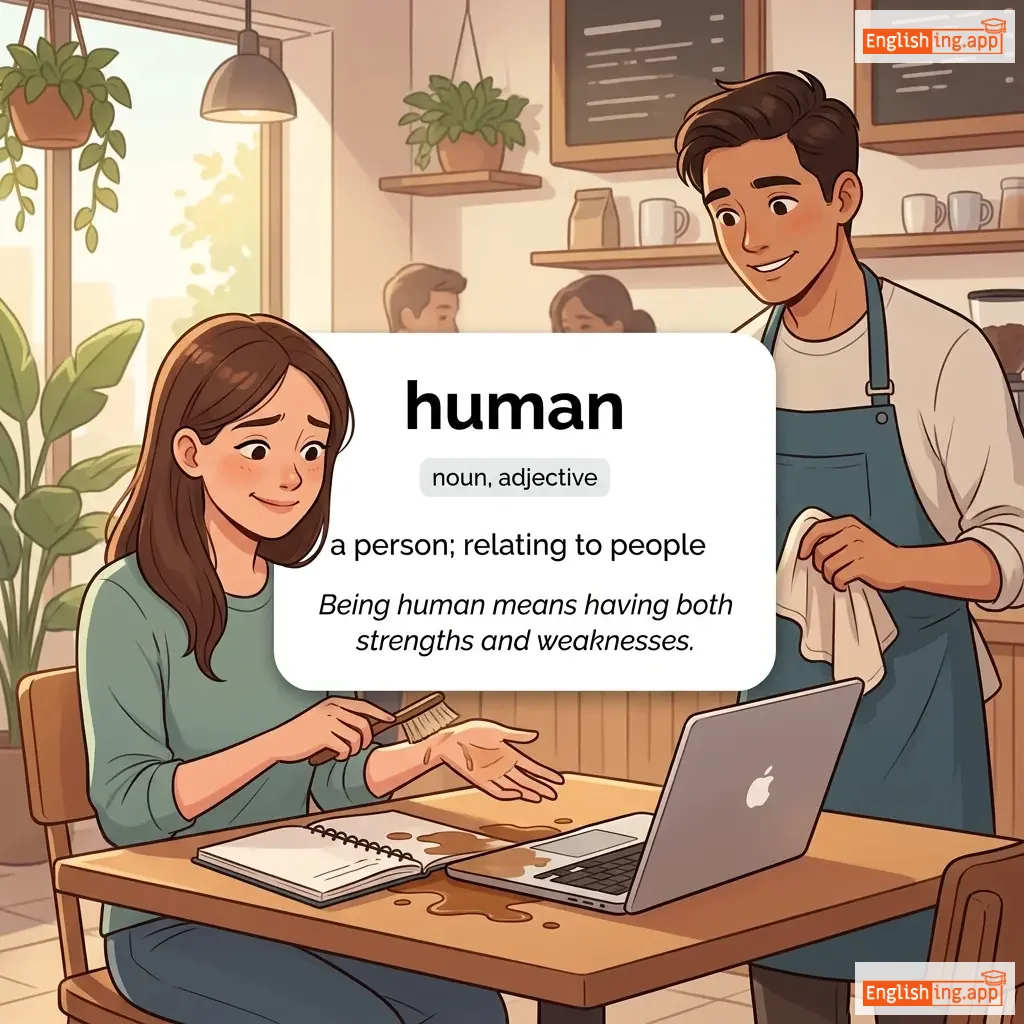
human definition card — visual illustration of the meaning
noun, adjective
/ˈhjuːmən/
人間 (ningen)

a person; relating to people

"Being human means having both strengths and weaknesses."

"人間であることは、強さと弱さの両方を持つことを意味します。" (Ningen de aru koto wa, tsuyo-sa to yowa-sa no ryōhō o motsu koto o imi shimasu.)
human rights definition card — visual illustration of the meaning
noun
ˌhjuː.mən ˈraɪts
人権 (jinken)

A right that is believed to belong justifiably to every person.

"Human rights protect individual freedoms."

"人権は個人の自由を守ります。" (Jinken wa kojin no jiyuu o mamorimasu.)
adjective
/hjuːˈmeɪn/
人道的な (jindoteki na)

Showing compassion or benevolence.

"The doctor provided humane treatment to the injured animals."

"医者は怪我をした動物に人道的な治療を提供しました。" (Isha wa kega o shita doubutsu ni jindoteki na chiryou o teikyoushimashita.)
noun, adjective
/hjuːˌmænɪˈtɛəriən/
人道主義者 (jindou shugi-sha)

A person who seeks to promote human welfare, or something relating to human welfare and compassion.

"The organization provides humanitarian aid to disaster victims."
"その組織は災害の被害者に人道的支援を提供します。" (Sono soshiki wa saigai no higai-sha ni jindou-teki shien wo teikyoushimasu.)
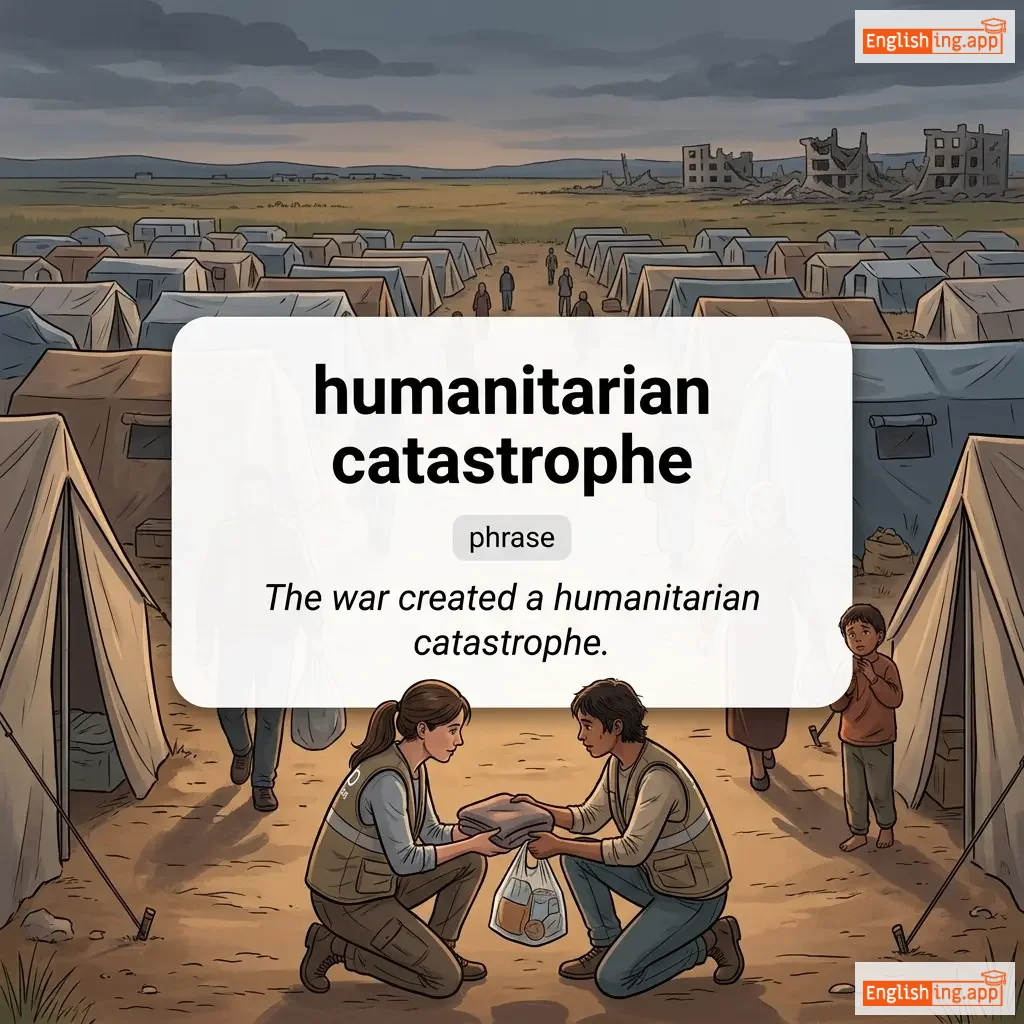
humanitarian catastrophe definition card — visual illustration of the meaning
phrase
ˌhjuː.məˈnɪt.ər.i.kəˈtæs.trə.fi
人道的災害 (jindōteki saigai)

A widespread disaster affecting human life, health, and well-being on a large scale.

"The war created a humanitarian catastrophe."

"戦争は人道的災害を引き起こした。" (Sensō wa jindōteki saigai o hikiokoshita.)
noun
/hjuːˈmænɪti/
人間性 (ningen-sei)

the quality of being human; kindness or compassion towards others; all human beings collectively

"Kindness is one of the greatest expressions of humanity."

"優しさは人間性の最も偉大な表現の一つです。" (Yasashisa wa ningen-sei no mottomo idaina hyōgen no hitotsu desu.)
verb
/ˈhjuːmənaɪz/
人間化する (ningenka suru)

To make something more humane, kind, or relatable.

"The teacher tried to humanize the lesson with personal stories."

"教師は個人的な物語を使ってレッスンを人間化しようとしました。" (Kyōshi wa kojinteki na monogatari o tsukatte ressun o ningenka shiyō to shimashita.)
adjective, verb
/ˈhʌmbəl/

Having or showing a modest view of one's importance; to lower pride or status.

"Despite his success, he remained humble."

noun
/ˈhʌmbʌɡ/
詐欺, くだらないこと (sagi, kudaranai koto)

Deceptive or false talk or behavior; nonsense.

"He dismissed the idea as humbug."

"彼はその考えをくだらないことだとして退けた。" (Kare wa sono kangae o kudaranai koto da to shite sōshita.)
adjective
/ˈhʌmdrʌm/
単調 (tanchou)

Lacking excitement or variety; dull and monotonous.

"She grew tired of the humdrum routine of office life."

"彼女はオフィスライフの単調な日常に疲れました。" (Kanojo wa ofisu raifu no tanchou na nichijou ni tsukaremashita.)
adjective
/ˈhjuː.mɪd/
湿気 (shikke)

Having a high amount of water vapor in the air; damp or moist.

"The weather was hot and humid during the summer."

"夏の間、天気は暑くて湿度が高かった。" (Natsu no aida, tenki wa atsukute shitsudo ga takakatta.)
noun
/ˌhjuː.mɪ.fɪˈkeɪ.ʃən/
腐植化 (fushokuka)

The process of organic matter decomposition to form humus in soil.

"Humification enhances soil structure and fertility."

"腐植化は土壌の構造と肥沃度を向上させます。" (Fushokuka wa dojo no kōzō to hiyokudo o kōjō sasemasu.)
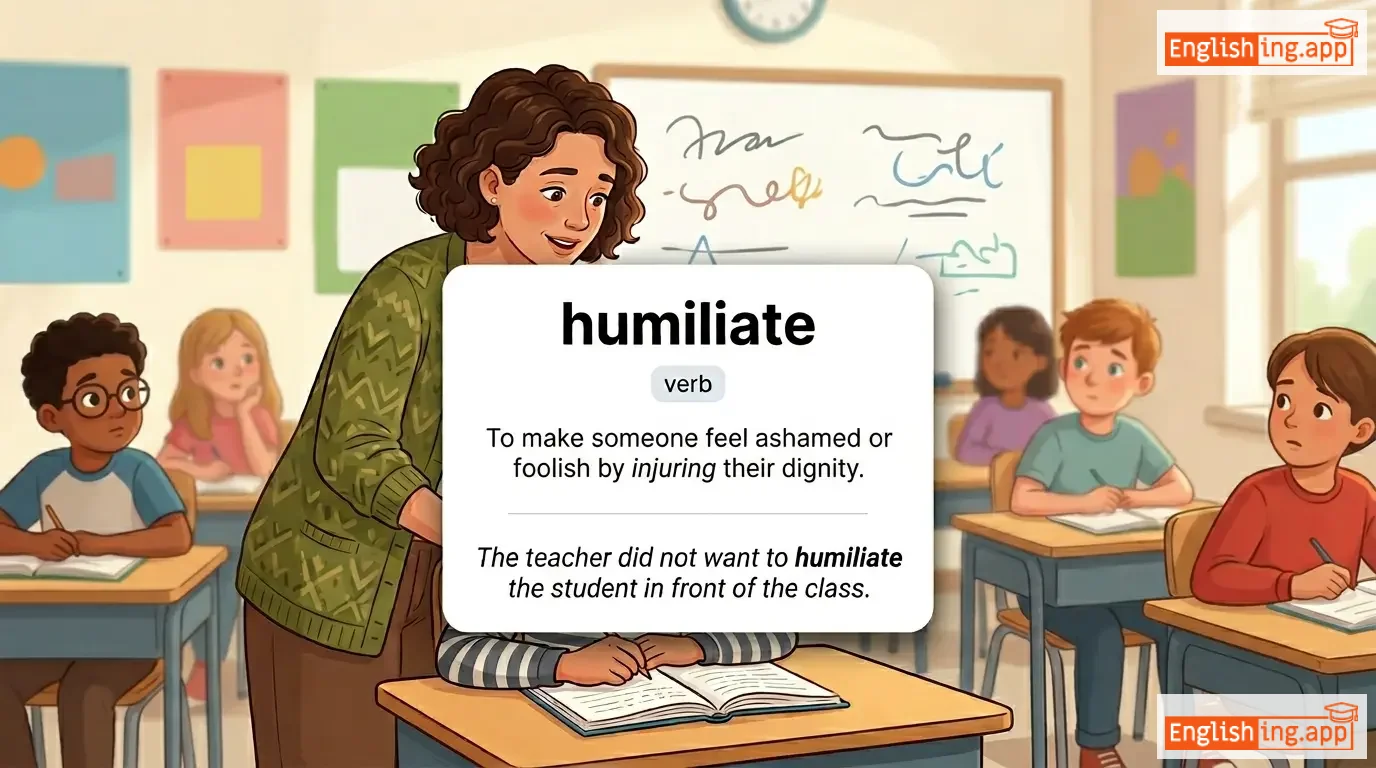
humiliate definition card — visual illustration of the meaning
verb
/hjuːˈmɪl.i.eɪt/

To make someone feel ashamed or foolish by injuring their dignity.

"The teacher did not want to humiliate the student in front of the class."

noun
/hjuːˈmɪl.ɪ.ti/

The quality of having a modest or low view of one's importance.

"She accepted the award with grace and humility."

noun
/ˈhʌm.ək/
小丘 (shōkyū)

A small hill, mound, or ridge of earth or ice.

"The hikers rested on a grassy hummock by the river."

"ハイカーたちは川のそばの草むらの小丘で休憩した。" (Haikā-tachi wa kawa no soba no kusamura no shōkyū de kyūkei shita.)
😂

humor

noun
/ˈhjuː.mər/

The quality of being amusing or entertaining.

"His sense of humor always lightens the mood."

adjective
/ˈhjuː.mər.əs/
ユーモアのある; 面白い; 笑いを引き起こす; (yūmoa no aru; omoshiroi; warai o hikiokosu;)

funny; amusing; causing laughter;

"His humorous stories always make everyone laugh."

"彼のユーモラスな話はいつも皆を笑わせる。" (Kare no yūmorasuna hanashi wa itsumo mina o warawaseru.)