語彙集

英単語辞書 | 単語の意味、定義、例文

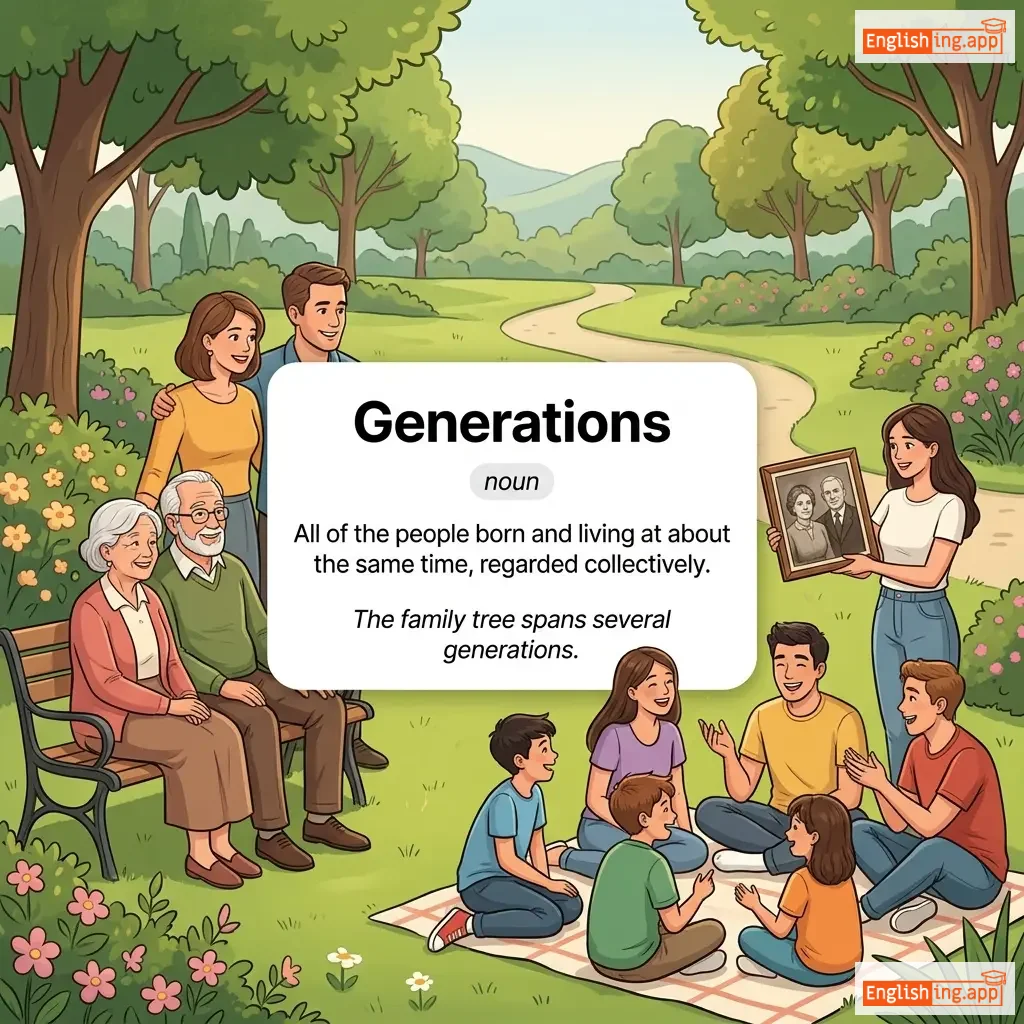
Generations definition card — visual illustration of the meaning
noun
ˌdʒɛnəˈreɪʃənz
世代 (sedai)

All of the people born and living at about the same time, regarded collectively.

"The family tree spans several generations."

"家族の木は何世代にもわたる。" (Kazoku no ki wa nan sedai ni mo wataru.)
adjective
/dʒəˈnɛrɪk/
ジェネリック (jenerikku)

characteristic of or relating to a whole group or class; not specific

"This medicine is available in generic form."

"この薬はジェネリックの形態で提供されています。" (Kono kusuri wa jenerikku no keitai de teikyō sareteimasu.)
noun
/ˌdʒɛnəˈrɒsəti/
寛大さ (kandaisa)

the quality of being kind and willing to give more than necessary

"Her generosity impressed everyone at the event."

"彼女の寛大さはイベントで全員を感動させました。" (Kanojo no kandaisa wa ibento de zen'in o kandou sasemashita.)
adjective
/ˈdʒɛnərəs/
寛大 (kandai)

willing to give or share more than is necessary; kind and giving

"She is very generous with her time and money."

"彼女は時間とお金にとても寛大です。" (Kanojo wa jikan to okane ni totemo kandai desu.)
adverb
/ˈdʒenərəsli/
惜しみなく (oshiminaku)

in a kind, giving, or unselfish manner; in a plentiful or abundant way

"She generously donated money to help the poor."

"彼女は貧しい人々を助けるために惜しみなくお金を寄付した。" (kanojo wa mazushii hitobito o tasukeru tame ni oshiminaku okane o kifushita)
genesis definition card — visual illustration of the meaning
noun
/ˈdʒɛnəsɪs/
起源 (kigen)

the origin or beginning of something

"The book explores the genesis of modern technology."
"この本は現代技術の起源を探求しています。" (Kono hon wa gendai gijutsu no kigen o tankyū shiteimasu.)
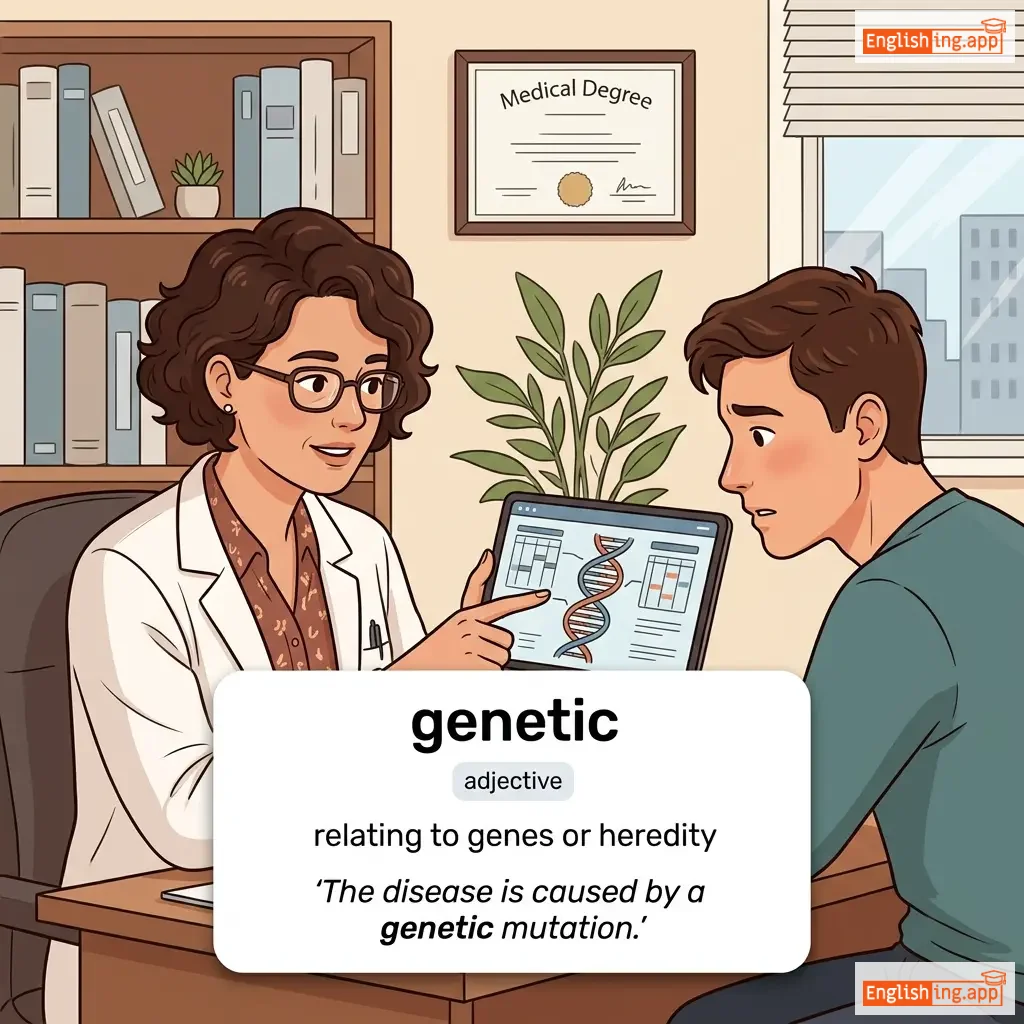
genetic definition card — visual illustration of the meaning
adjective
/dʒəˈnɛtɪk/
遺伝的 (identeki)

relating to genes or heredity

"The disease is caused by a genetic mutation."
"その病気は遺伝的変異によって引き起こされます。" (sono byōki wa iden teki hen'i ni yotte hikiokosaremasu.)
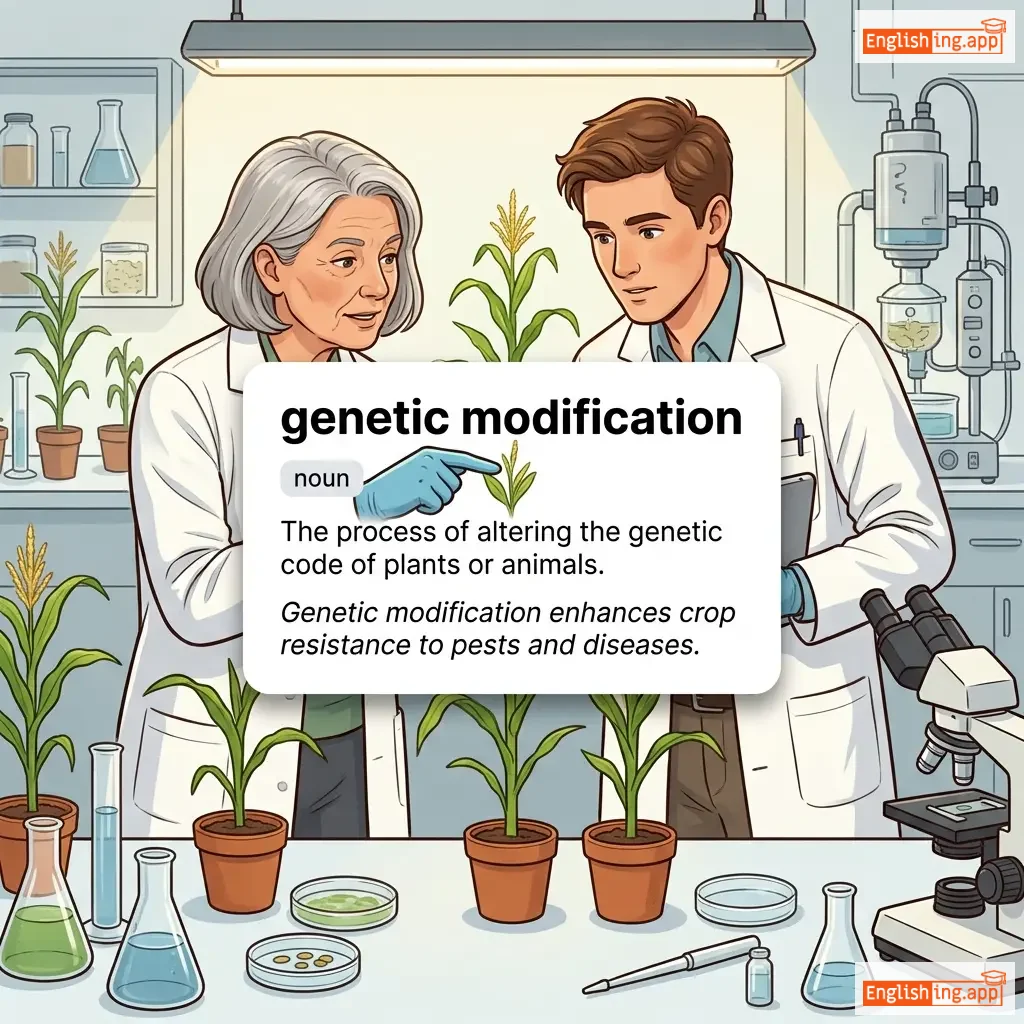
genetic modification definition card — visual illustration of the meaning
noun
dʒəˈnɛt.ɪk ˌmɒd.ɪ.fɪˈkeɪ.ʃən
遺伝子改変 (idenshi kaizen)

The process of altering the genetic code of plants or animals.

"Genetic modification enhances crop resistance to pests and diseases."
"遺伝子改変は作物の害虫や病気に対する耐性を高めます。" (Idenshi kaizen wa sakumotsu no gaichū ya byōki ni taisuru taisei o takamemasu.)
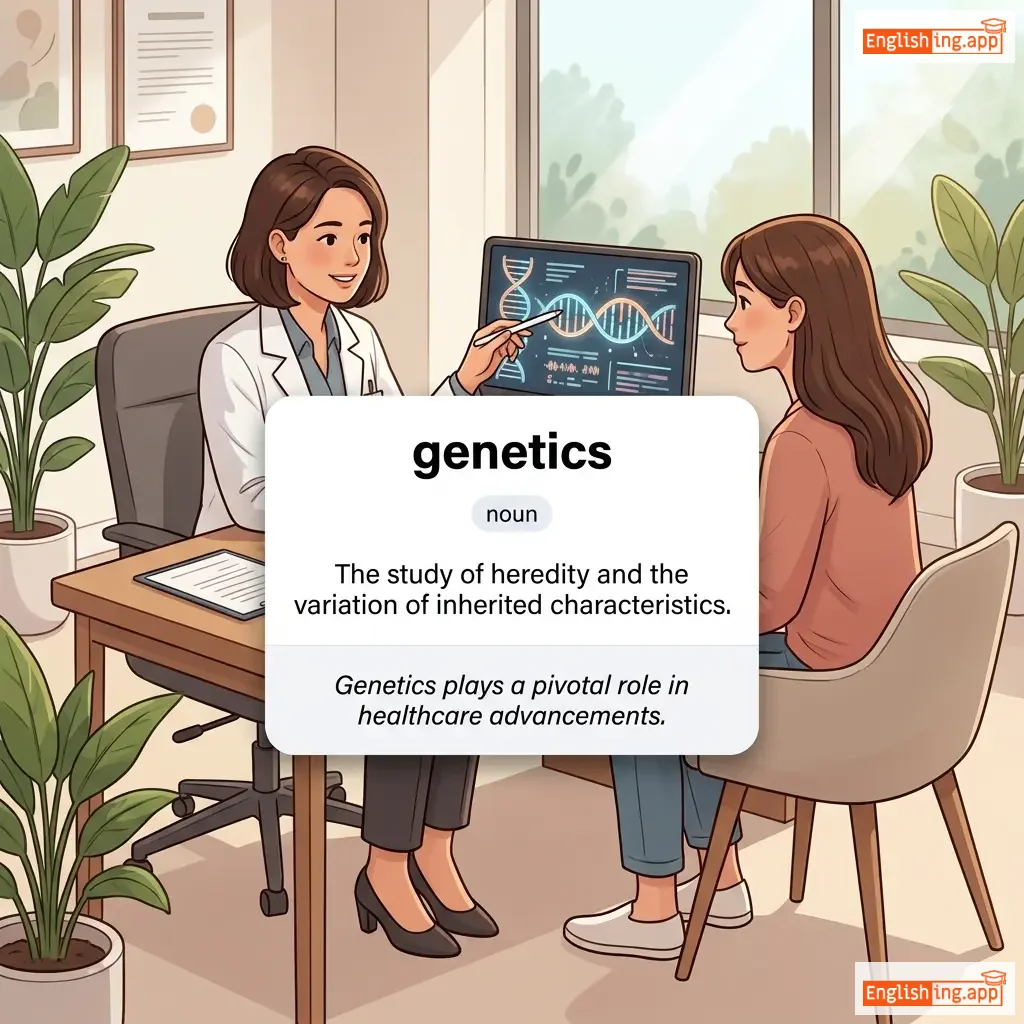
genetics definition card — visual illustration of the meaning
noun
dʒəˈnet.ɪks
遺伝学 (idengaku)

The study of heredity and the variation of inherited characteristics.

"Genetics plays a pivotal role in healthcare advancements."

"遺伝学は医療の進歩において重要な役割を果たします。" (Idengaku wa iryou no shinpo ni oite juuyou na yakuwari wo hatashimasu.)
adjective
/ˈdʒiː.ni.əl/
親切 (shinsetsu)

friendly, cheerful, and pleasant

"She greeted us with a genial smile."
"彼女は親切な笑顔で私たちを迎えました。" (Kanojo wa shinsetsu na egao de watashitachi o mukaemashita.)
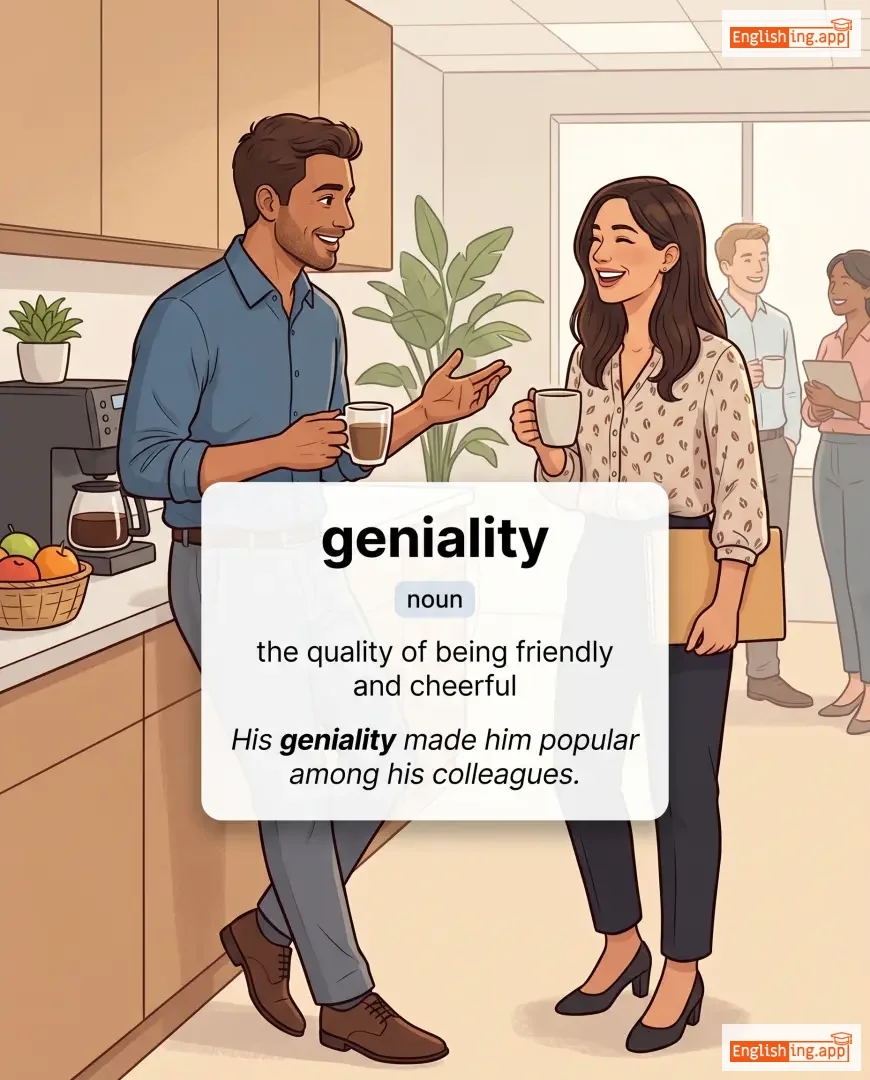
geniality definition card — visual illustration of the meaning
noun
/ˌdʒiː.niˈæl.ə.ti/
親しみやすさ (shitashimi yasusa)

the quality of being friendly and cheerful

"His geniality made him popular among his colleagues."

"彼の親しみやすさは、同僚の間で彼を人気者にした。" (Kare no shitashimi yasusa wa, dōryō no aida de kare o ninkimono ni shita.)
adjective
/ˈdʒen.ɪ.təl/
生殖器に関連する (seishokuki ni kanren suru)

relating to the reproductive organs

"The doctor explained the importance of genital hygiene."

"医師は生殖器の衛生の重要性を説明しました。" (Ishi wa seishokuki no eisei no jūyōsei o setsumei shimashita.)
adjective
/ˈdʒen.ɪ.tɪv/
所有格 (shoyōkaku)

relating to or denoting a case of nouns and pronouns indicating possession

"In English, the genitive case is often shown with an apostrophe and 's'."

"英語では、所有格はアポストロフィと's'で示されます。" (Eigo de wa, shoyōkaku wa aposutorofi to 's' de shimesaremasu.)
noun
/ˈdʒiːniəs/
天才 (tensai)

a person with exceptional intellectual or creative ability

"Einstein was a scientific genius."
"アインシュタインは科学的な天才でした。" (Ainshutain wa kagakuteki na tensai deshita.)
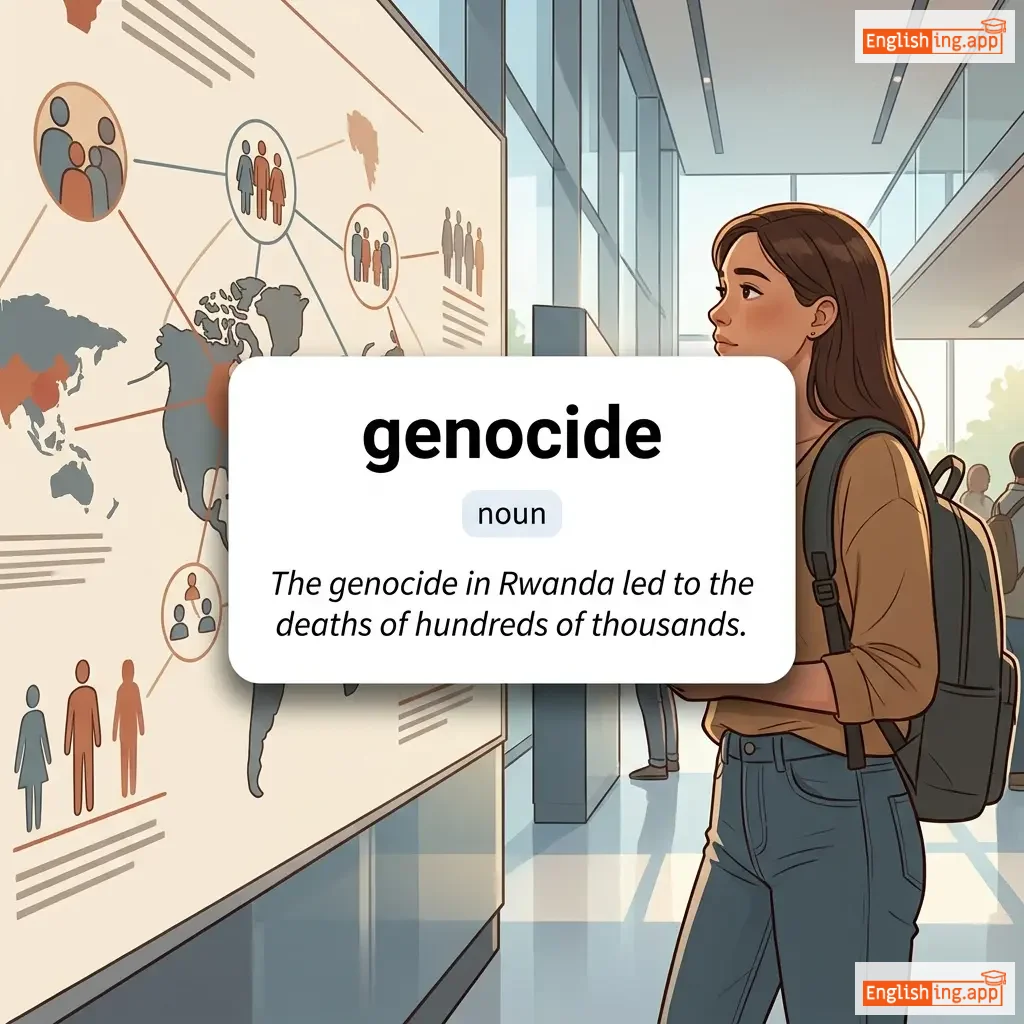
genocide definition card — visual illustration of the meaning
noun
/ˈdʒɛnəˌsaɪd/
ジェノサイド (jenosaido)

the deliberate killing of a large number of people from a particular nation or ethnic group with the aim of destroying that nation or group

"The genocide in Rwanda led to the deaths of hundreds of thousands."

"ルワンダでのジェノサイドは、何十万人もの死者を出しました。" (Rwanda de no jenosaido wa, nanjūman nin mo no shisha o dashimashita.)
noun
/ˈʒɑːn.rə/
ジャンル (janru)

a style or category of art, music, or literature

"Romance is her favorite genre of movies."

"ロマンスは彼女のお気に入りの映画のジャンルです。" (Romans wa kanojo no okiniiri no eiga no janru desu.)
adjective
/dʒɛnˈtiːl/
上品な (jouhin na)

Polite, refined, or respectable, often in an affected or exaggerated way

"She spoke in a genteel manner that impressed the guests."

"彼女は上品な方法で話し、ゲストに感銘を与えました。" (Kanojo wa jouhin na houhou de hanashi, gesuto ni kanmei o ataemashita.)
noun
/ˈdʒɛntaɪl/
非ユダヤ人 (hi-yudayajin)

A person who is not Jewish

"The synagogue welcomed both Jews and Gentiles."

"シナゴーグはユダヤ人と非ユダヤ人の両方を歓迎しました。" (Shinagōgu wa yudayajin to hi-yudayajin no ryōhō o kangei shimashita.)
noun
/dʒɛnˈtɪlɪti/
優雅 (yuuga)

Social superiority demonstrated by polite manners, refinement, or respectability

"His speech revealed an air of gentility."

"彼のスピーチは優雅さを示していた。" (Kare no supīchi wa yūgasa o shimeshite ita.)
adjective
/ˈdʒɛntəl/
優しい (yasashii)

Kind, mild, or tender in nature or behavior

"He was always gentle with children."

"彼はいつも子供たちに優しかった。" (Kare wa itsumo kodomotachi ni yasashikatta.)
noun
/ˈdʒɛntəlmən/
紳士 (shin-shi)

a man who is polite, courteous, and honorable

"He opened the door for her like a true gentleman."

"彼は本物の紳士のように彼女のためにドアを開けた。" (Kare wa honmono no shin-shi no yō ni kanojo no tame ni doa o aketa.)
adverb
/ˈdʒɛntli/
優しく (yasashiku)

in a kind, careful, or soft way

"She gently placed the baby in the crib."

"彼女は赤ちゃんを優しくベビーベッドに置きました。" (Kanojo wa akachan o yasashiku bebībeddo ni okimashita.)
noun
/ˈdʒɛntri/
上流社会 (jōryū shakai)

People of good social position, usually of high birth or wealthy landowners

"The gentry of the town gathered for the annual ball."

"町の上流社会の人々は年次の舞踏会に集まりました。" (Machi no jōryū shakai no hitobito wa nenji no butōkai ni atsumarimashita.)
verb
/ˈdʒɛn.juˌflɛkt/

to bend one or both knees as a sign of reverence or worship

"The worshippers genuflect before the altar."

adjective
/ˈdʒɛnjʊɪn/
本物 (honmono)

real and authentic; not fake or artificial

"This is a genuine leather bag."

"これは本物の革のバッグです。" (Kore wa honmono no kawa no baggu desu.)
adverb
/ˈdʒɛnjʊɪnli/
本当に (hontōni)

in a truthful and sincere way

"She genuinely cares about the environment."

"彼女は本当に環境のことを気にかけています。" (Kanojo wa hontōni kankyō no koto o ki ni kaketeimasu.)
noun
/ˈdʒiː.nəs/
(shoku)

a category in biological classification ranking above species and below family

"The tiger belongs to the genus Panthera."

"トラはパンサー属に属します。" (Tora wa Pansā shoku ni zokushimasu.)
adjective
/ˌdʒiːəˈɡræfɪkəl/
地理的な (chiriteki na)

relating to geography; connected with the physical features, location, or characteristics of the Earth or a particular area

"The country’s geographical position makes it an important trading hub."

"その国の地理的な位置は重要な貿易拠点となっています。" (sono kuni no chiriteki na ichi wa juyo na boeki kyoten to natte imasu)
noun
/dʒiˈɒɡrəfi/
地理 (chiri)

the study of the Earth’s physical features, climates, populations, and the relationships between people and their environments

"She studies geography to understand how landscapes and human societies interact."
"彼女は世界を理解するために地理を学んでいます。" (kanojo wa sekai o rikai suru tame ni chiri o manande imasu)
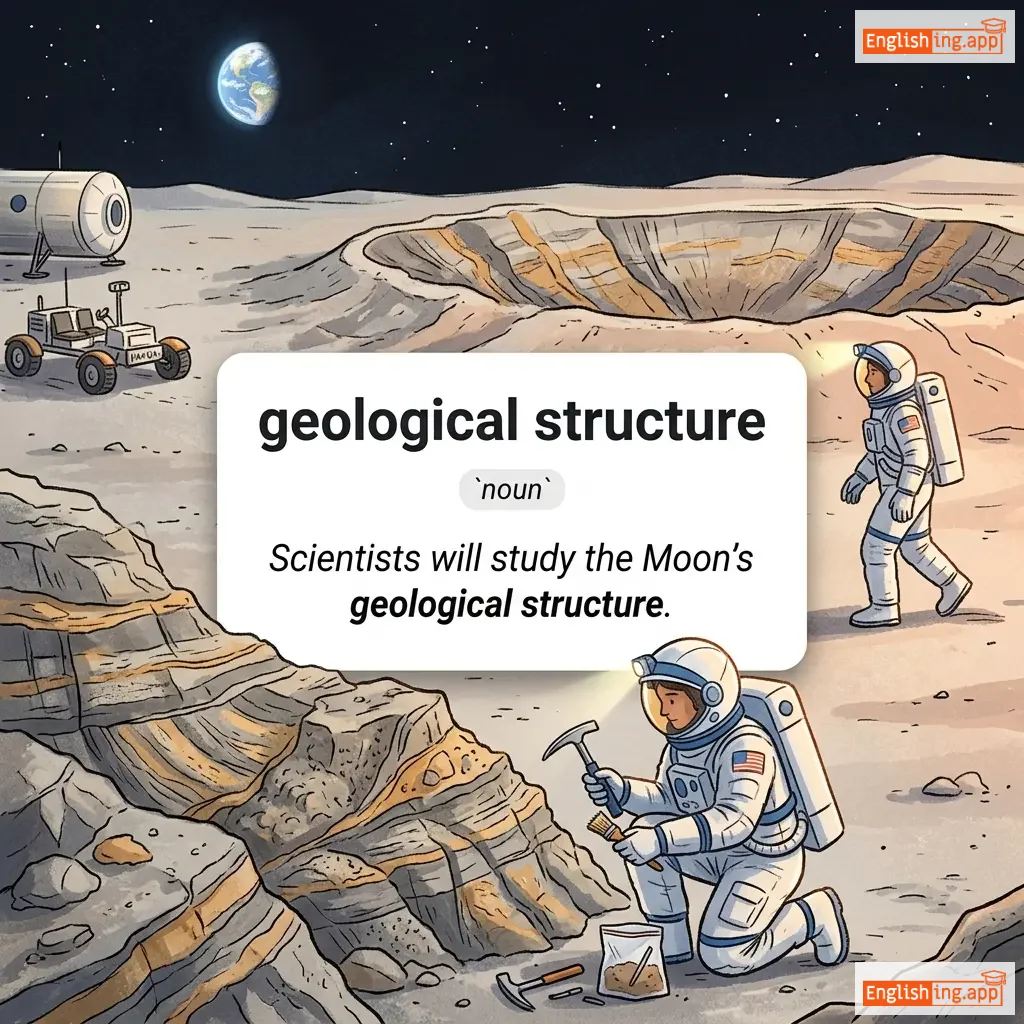
geological structure definition card — visual illustration of the meaning
noun
ˌdʒiːəˈlɒdʒɪkəl ˈstrʌktʃər
地質構造 (chishitsu kouzou)

The arrangement and composition of rocks, minerals, and landforms in the Earth's crust.

"Scientists will study the Moon's geological structure."

"科学者たちは月の地質構造を研究します。" (Kagakusha-tachi wa tsuki no chishitsu kouzou o kenkyuu shimasu.)
noun
/dʒiˈɒl.ə.dʒi/
地質学 (chishitsugaku)

the science that deals with the Earth's physical structure and substances

"She studied geology to understand earthquakes."
"彼女は地震を理解するために地質学を学びました。" (Kanojo wa jishin o rikai suru tame ni chishitsugaku o manabimashita.)
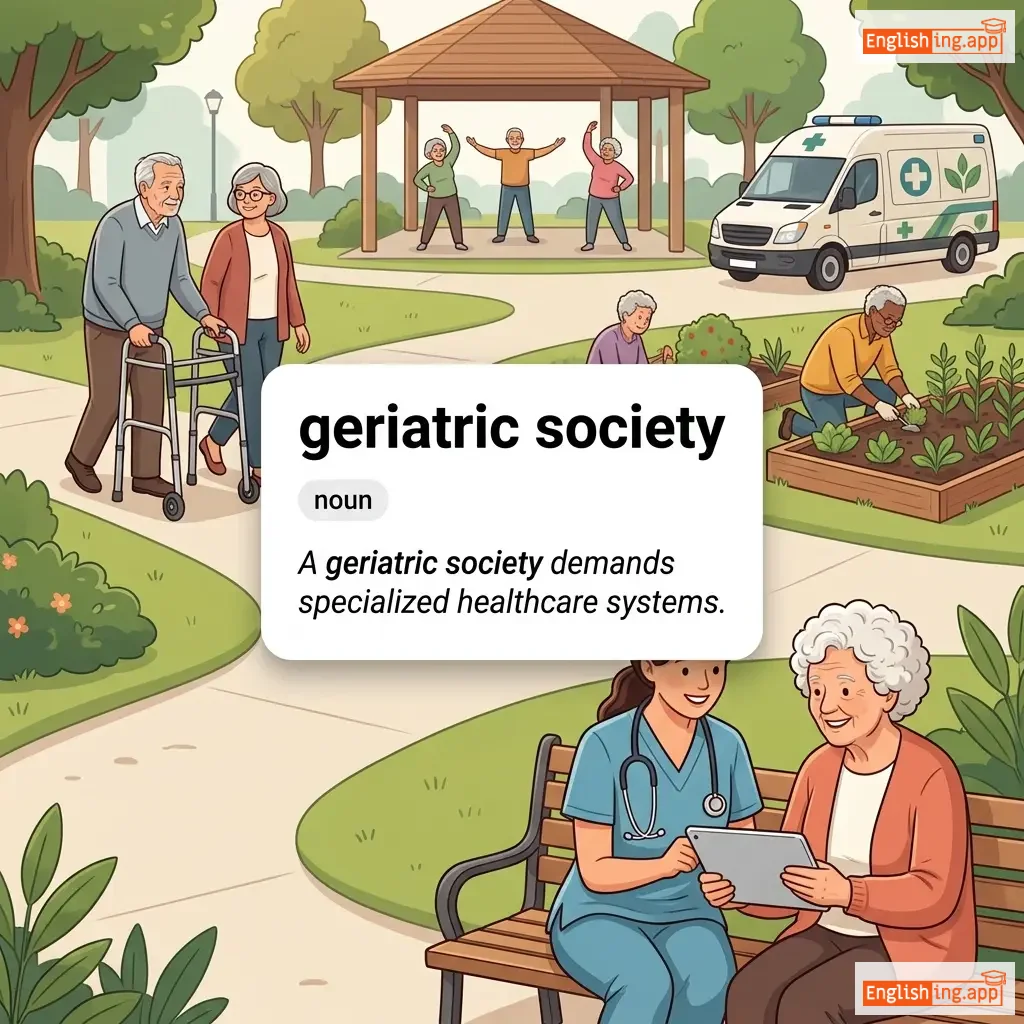
geriatric society definition card — visual illustration of the meaning
noun
ˌdʒɛriˈætrɪk səˈsaɪəti
高齢者社会 (kōreisha shakai)

A society or community where elderly people make up a large proportion of the population

"A geriatric society demands specialized healthcare systems."

"高齢者社会には、専門的な医療システムが必要です。" (Kōreisha shakai ni wa, senmon-teki na iryō shisutemu ga hitsuyō desu.)
noun
/ˌdʒɛr.iˈætrɪks/
老年医学 (rōnen igaku)

the branch of medicine dealing with the health and care of old people

"He specialized in geriatrics to care for the elderly."

"彼は高齢者の世話をするために、老年医学を専門にしました。" (Kare wa kōreisha no sewa o suru tame ni, rōnen igaku o senmon ni shimashita.)
noun
/dʒɜːm/
細菌 (saikin)

a microscopic organism, especially one that causes disease

"Washing your hands helps prevent the spread of germs."

"手を洗うことは細菌の広がりを防ぐのに役立ちます。" (Te o arau koto wa saikin no hirogari o fusegu no ni yakudachimasu.)
noun/adjective
/ˈdʒɜːrmən/
ドイツ語 (doitsugo)

relating to Germany, its people, or its language

"She is learning German to study abroad."

"彼女は海外で勉強するためにドイツ語を学んでいます。" (kanojo wa kaigai de benkyou suru tame ni doitsugo o manandeimasu.)
adjective
/dʒərˈmeɪn/
関連する (kanren suru)

Relevant and appropriate to the subject being considered.

"Her comments were not germane to the discussion."

"彼女のコメントは議論に関連していませんでした。" (Kanojo no komento wa giron ni kanren shiteimasen deshita.)
adjective
/ˈdʒɜːrmɪnəl/
発芽の (hatsuga no)

Relating to the earliest stage of development.

"The idea was still in its germinal stage."

"そのアイデアはまだその発芽段階にありました。" (Sono aidea wa mada sono hatsuga dankai ni arimashita.)
verb
/ˈdʒɜːrmɪneɪt/
幸福 (kōfuku)

To begin to grow or develop, especially referring to a seed.

"The seeds germinate quickly in moist soil."

"彼女は賞を受け取ったとき、自分の幸福を隠せなかった。" (Kanojo wa shō o uketotta toki, jibun no kōfuku o kakusenakatta.)
noun
/ˌdʒerənˈtɑːkrəsi/
高齢者支配 (kōrei-sha shihai)

A system of government or control by old people.

"The country was seen as a gerontocracy, dominated by elderly leaders."

"その国は高齢者支配と見なされ、年配の指導者が支配していた。" (Sono kuni wa kōrei-sha shihai to minasare, nenpai no shidōsha ga shihai shite ita.)
noun
/ˌdʒerənˈtɑːlədʒi/
ジェロントロジー (jerontorojī)

The scientific study of old age and the process of aging.

"She chose to specialize in gerontology after completing medical school."
"彼女は医学部を卒業した後、ジェロントロジーに特化することを決めました。" (Kanojo wa igakubu o sotsugyō shita ato, jerontorojī ni tokka suru koto o kimemashita.)
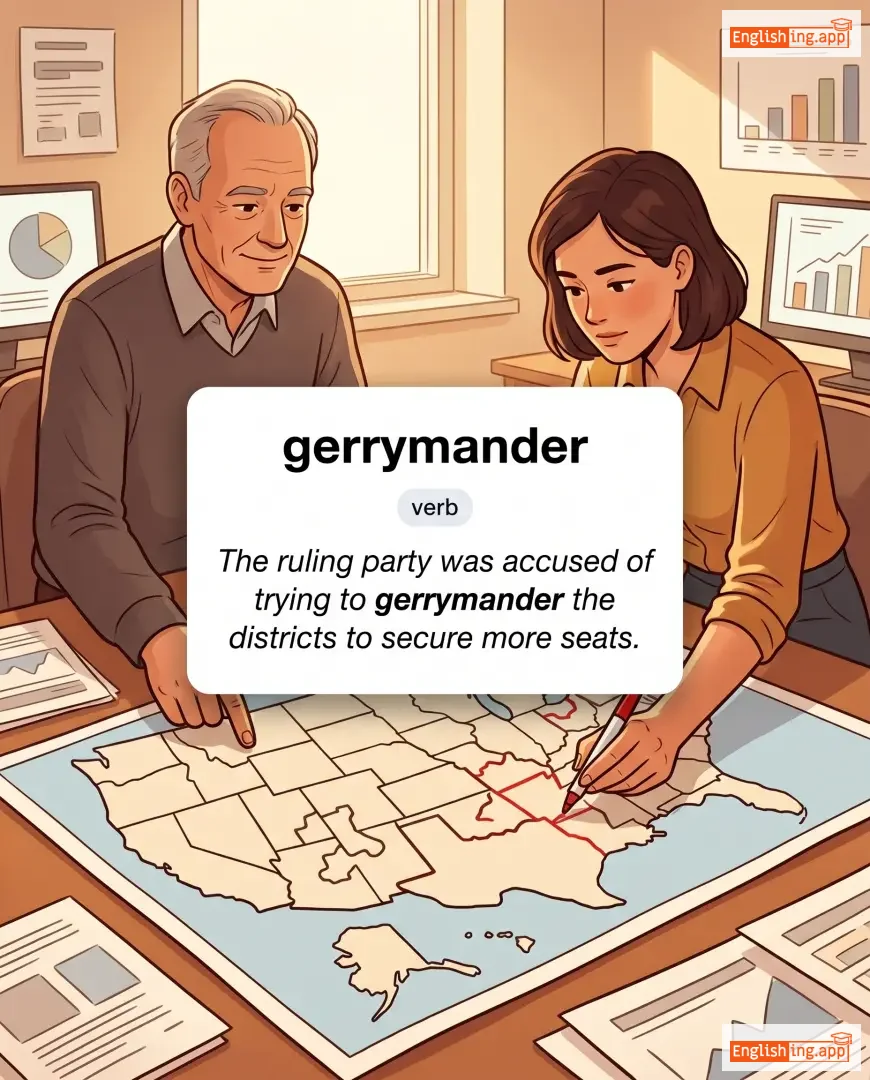
gerrymander definition card — visual illustration of the meaning
verb
/ˈdʒɛriˌmændər/
選挙区境界の操作 (senkyoku kyokai no sousa)

to manipulate the boundaries of an electoral constituency to favor one party or class

"The ruling party was accused of trying to gerrymander the districts to secure more seats."

"与党は、より多くの議席を確保するために選挙区を操作したと非難された。" (Yoto wa, yori ooku no giseki wo kakuho suru tame ni senkyoku wo sousa shita to hinan sareta.)
verb
/ˈdʒɛsteɪt/
妊娠 (ninshin)

to carry and develop in the womb during pregnancy; to develop an idea over a period of time

"The mother whale gestates her calf for over a year."

"母クジラは1年以上にわたって子クジラを妊娠し、発展させます。" (Haha kujira wa 1-nen ijō ni watatte ko kujira o ninshin shi, hatten sasemasu.)
noun
/dʒɛˈsteɪʃən/
妊娠 (ninshin)

the process of carrying or being carried in the womb between conception and birth; the development of an idea or plan

"The gestation period of an elephant is nearly two years."

"象の妊娠期間はほぼ2年です。" (Zō no ninshin kikan wa hobo 2-nen desu.)
verb
/dʒɛˈstɪkjʊleɪt/
ジェスチキュレート (jesuchikyurēto)

to use gestures, especially dramatic ones, instead of speaking or to emphasize one's words

"He gesticulated wildly to get their attention."

"彼は彼らの注意を引くために激しくジェスチャーをしていた。" (Kare wa karera no chūi o hiku tame ni hageshiku jēsuchā o shite ita.)
noun
/dʒɛˌstɪkjʊˈleɪʃən/
ジェスチュレーション (jesutyureishon)

a gesture, especially a dramatic one, used instead of speaking or to emphasize speech

"His speech was full of passionate gesticulations."
"彼のスピーチは情熱的なジェスチャーで満ちていた。" (kare no supiichi wa jounetsuteki na jesuchaa de michiteita.)
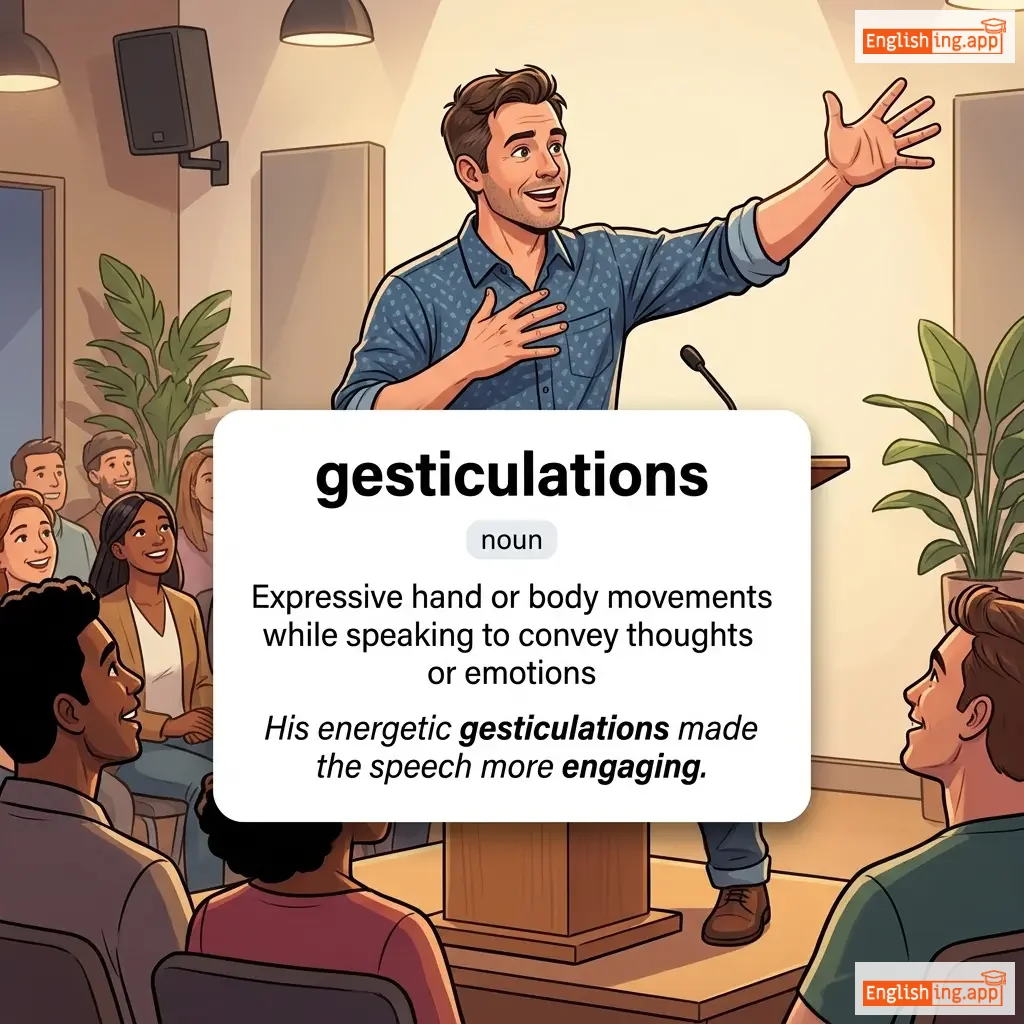
gesticulations definition card — visual illustration of the meaning
noun
dʒɛsˌtɪk.jʊˈleɪ.ʃənz
ジェスチキュレーション (jesutikyurēshon)

Expressive hand or body movements while speaking to convey thoughts or emotions

"His energetic gesticulations made the speech more engaging."

"彼のエネルギッシュなジェスチキュレーションズは、スピーチをさらに魅力的にしました。" (Kare no enerugisshuna jesutikyurēshonzu wa, supīchi o sara ni miryokuteki ni shimashita.)
noun
/ˈdʒɛs.tʃər/
ジェスチャー (jesuchā)

A movement of part of the body, especially the hands or head, to express an idea or meaning.

"She made a friendly gesture to welcome the guests."
"彼女はゲストを歓迎するために友好的なジェスチャーをしました。" (Kanojo wa gesuto o kangei suru tame ni yūkō-teki na jesuchā o shimashita.)
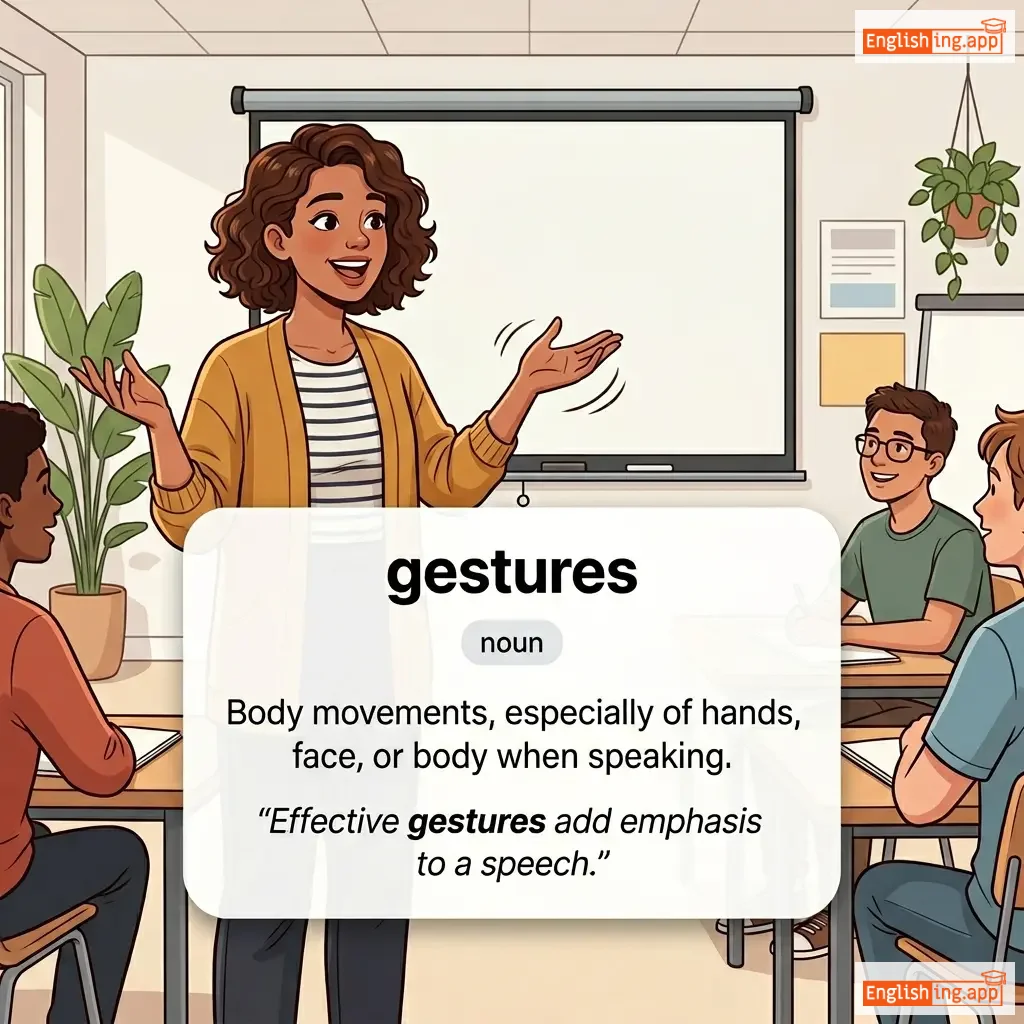
gestures definition card — visual illustration of the meaning
noun
ˈdʒes.tʃərz
ジェスチャー (jesuchā)

Body movements, especially of hands, face, or body when speaking.

"Effective gestures add emphasis to a speech."

"効果的なジェスチャーはスピーチに強調を加えます。" (Kōkateki na jesuchā wa supīchi ni kyōchō o kuwaemasu.)
get definition card — visual illustration of the meaning
verb
/ɡɛt/
得る (eru)

to obtain, receive, or come to have something

"I need to get a new phone before my old one stops working."

"新しい電話を手に入れる必要がある、古いものが動かなくなる前に。" (Atarashii denwa wo te ni ireru hitsuyou ga aru, furui mono ga ugokanakunaru mae ni.)
noun
/ˈɡaɪ.zər/
間欠泉 (kanketsusen)

A natural hot spring that intermittently ejects a column of water and steam into the air.

"The geyser erupted, shooting water high into the sky."

"そのガイザーが噴火し、水を空高く吹き上げました。" (Sono gaizā ga funka shi, mizu o sora takaku fukiagemashita.)