語彙集

英単語辞書 | 単語の意味、定義、例文

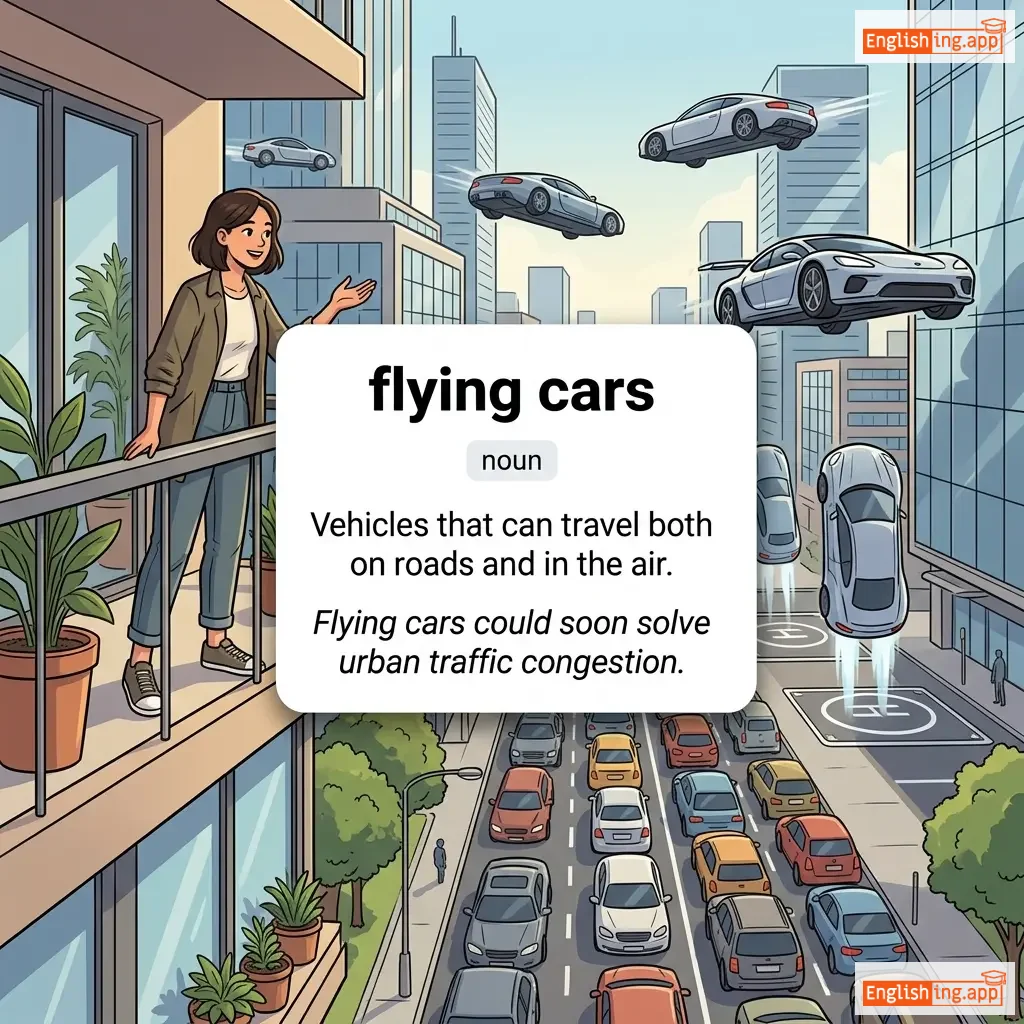
flying cars definition card — visual illustration of the meaning
noun
ˈflaɪ.ɪŋ kɑːrz
空飛ぶ車 (sora tobu kuruma)

Vehicles that can travel both on roads and in the air.

"Flying cars could soon solve urban traffic congestion."

"空飛ぶ車はすぐに都市の交通渋滞の問題を解決できるでしょう。" (Sora tobu kuruma wa sugu ni toshi no koutsuu juutai no mondai wo kaiketsu dekiru deshou.)
noun
/ˈflaɪ.ɪŋ ˈkriː.tʃər/
飛行生物 (hikou seibutsu)

any animal that has the ability to fly through the air

"Birds, bats, and insects are all examples of flying creatures."

"鳥、コウモリ、昆虫は飛行生物の例です。" (tori, koumori, konchuu wa hikou seibutsu no rei desu.)
noun
/foʊl fʊt/
馬のひづめの花 (uma no hidzume no hana)

a yellow flowering plant with leaves shaped like a horse's hoof, also known as coltsfoot

"The foal-foot plant grows wild in many meadows and is often the first flower to bloom in spring."

"馬のひづめの花の植物は多くの草地で野生で成長し、春に最初に咲く花の一つです。" (Uma no hidzume no hana no shokubutsu wa ōku no sōchi de yasei de seichō shi, haru ni saisho ni saku hana no hitotsu desu.)
noun
/foʊm/
(awa)

a mass of small bubbles formed on or in liquid; frothy white mass

"The waves crashed against the rocks, creating white foam on the shore."
"波が岩にぶつかり、浜辺に白い泡を作った。" (Nami ga iwa ni butsukari, hamabe ni shiroi awa wo tsukutta.)
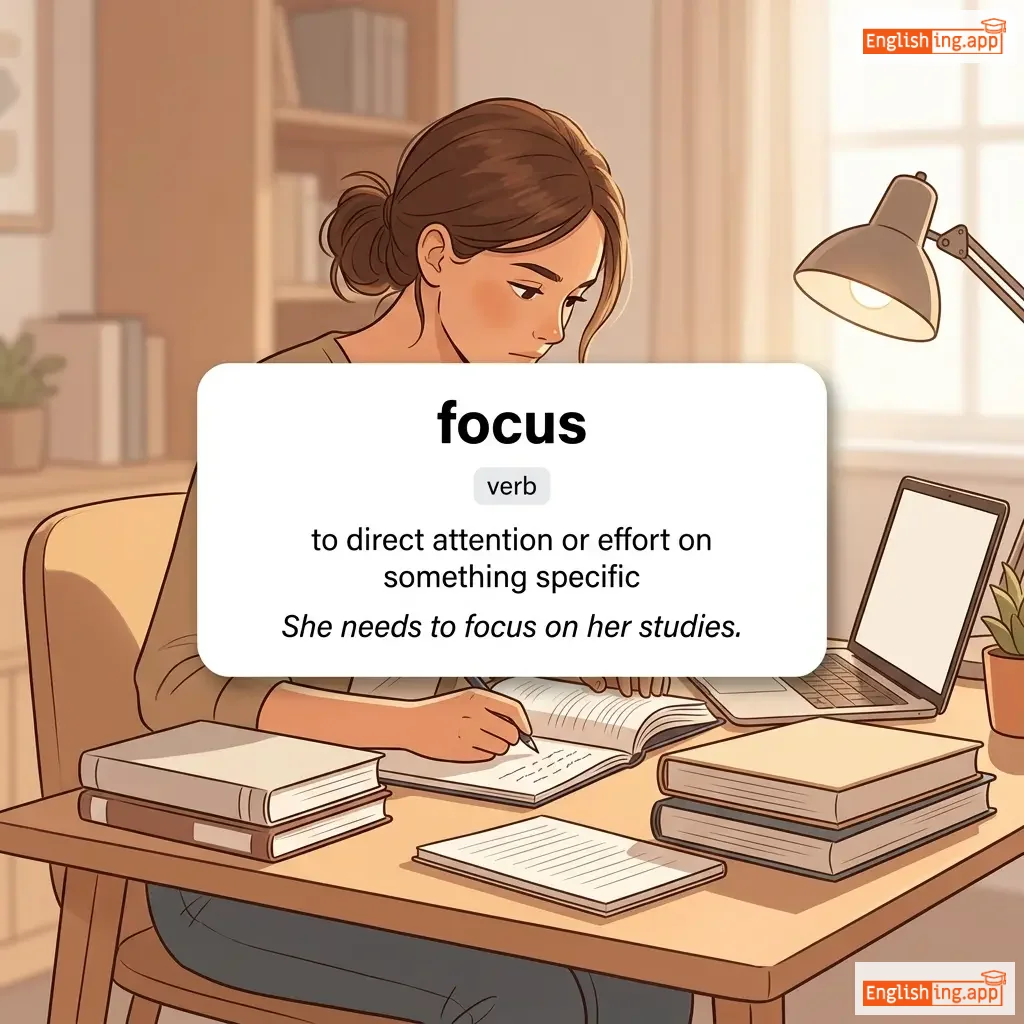
focus definition card — visual illustration of the meaning
verb
/ˈfoʊ.kəs/
集中する (shūchū suru)

to direct attention or effort on something specific

"She needs to focus on her studies."
"彼女は勉強に集中する必要があります。" (Kanojo wa benkyō ni shūchū suru hitsuyō ga arimasu.)
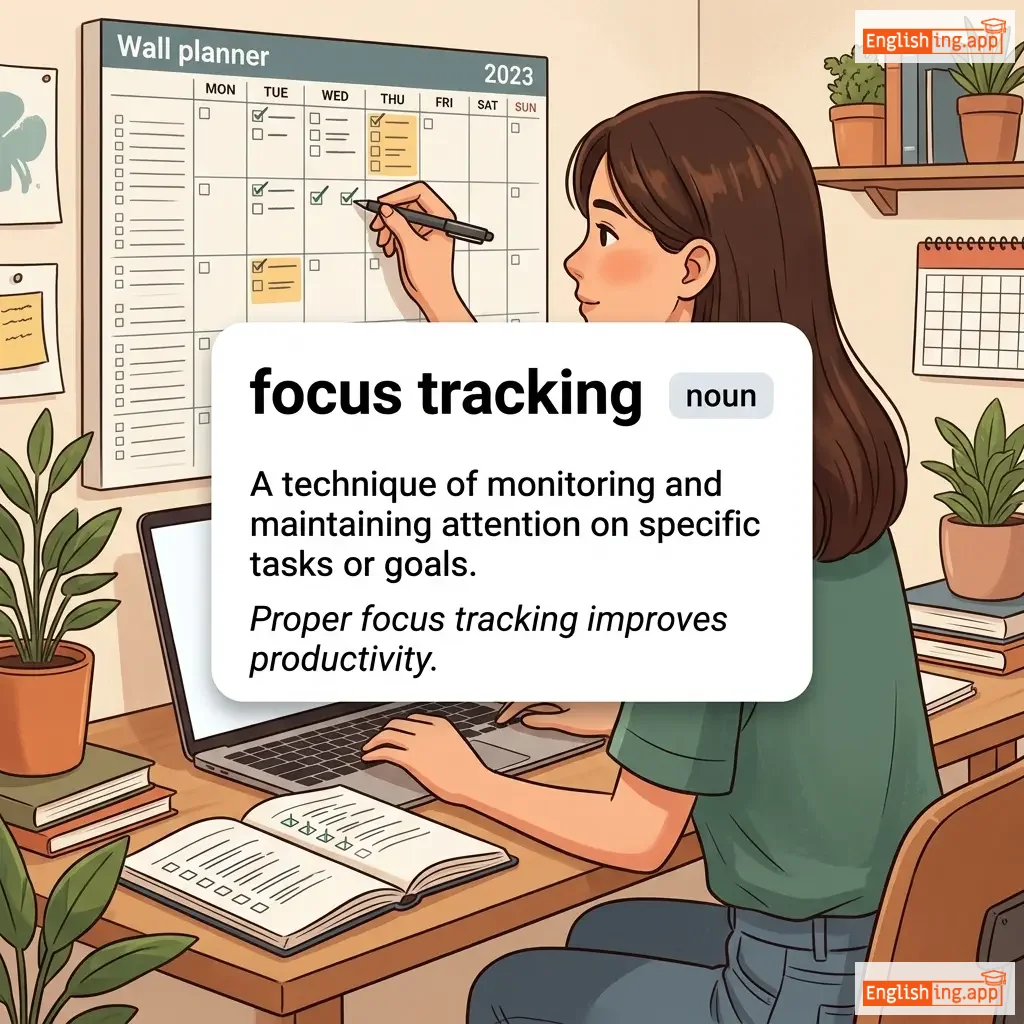
focus tracking definition card — visual illustration of the meaning
noun
/ˈfoʊ.kəs ˈtræk.ɪŋ/
フォーカス追跡 (fōkasu tsuiseki)

A technique of monitoring and maintaining attention on specific tasks or goals.

"Proper focus tracking improves productivity."

"適切なフォーカス追跡は生産性を向上させます。" (Tekisetsu na fōkasu tsuiseki wa seisansei o kōjō sasemasu.)
focused definition card — visual illustration of the meaning
adjective
/ˈfəʊkəst/
集中 (shūchū)

Directing a great deal of attention or effort toward a particular activity, situation, or person.

"Staying focused during work hours enhances productivity."

"勤務時間中に集中することで生産性が向上します。" (Kinmu jikan-chū ni shūchū suru koto de seisansei ga kōjō shimasu.)
noun
/ˈfɒdər/
飼料 (shiryō)

food for livestock such as cattle, horses, or sheep; also something considered of little value but used to supply a demand

"The farmer stored enough fodder for the cattle to last through winter."

"農家は家畜が冬を越せるように十分な飼料を貯めておいた。" (Nōka wa kachiku ga fuyu o koseru yō ni jūbun'na shiryō o tamete oita.)
⚔️

foe (fo)

noun
/foʊ/
(teki)

an enemy or opponent

"The knight fought bravely against his foe."

"騎士は勇敢に自分の敵と戦った。" (Kishi wa yūkan ni jibun no teki to tatakatta.)
adjective
/ˈfiːtɪd/
腐った (kusatta)

having an offensive, unpleasant smell

"The foetid smell from the garbage made it hard to breathe."

"ゴミからの腐った臭いで呼吸が困難になった。" (Gomi kara no kusatta nioi de kokyū ga konnan ni natta.)
noun
/fɒɡ/
(kiri)

a thick cloud of tiny water droplets suspended in the air near the ground that reduces visibility

"The airplane was delayed due to heavy fog."

"濃い霧のため、飛行機が遅れました。" (Koi kiri no tame, hikouki ga okuremashita.)
adjective
/ˈfɒɡi/
霧の (kiri no)

Full of or covered with fog; unclear or hazy.

"The mountain road was dangerous on the foggy morning."

"山道は霧の朝に危険でした。" (Yamami chi wa kiri no asa ni kiken deshita.)
noun
/ˈfɔɪbəl/
小さな弱点 (chiisana jakuten)

A minor weakness or eccentricity in someone's character.

"She loved him despite his little foibles."

"彼女は彼の小さな弱点を気にせずに彼を愛していた。" (Kanojo wa kare no chiisana jakuten o ki ni sezu ni kare o aishite ita.)
verb
/fɔɪl/
阻止する (soshi suru)

To prevent something (especially a plan) from succeeding.

"The police foiled the robbery attempt."

"警察は強盗未遂を阻止した。" (Keisatsu wa gōtō misui wo soshi shita.)
verb
/fɔɪst/
押し付ける (oshitsukeru)

To impose something unwelcome or unnecessary on someone.

"He tried to foist his old books onto his friends."

"彼は友達に自分の古い本を押し付けようとしました。" (Kare wa tomodachi ni jibun no furui hon o oshitsukeyou to shimashita.)
📄

fold

verb
/fəʊld/

to bend something, especially paper or cloth, so that one part covers another

"She folded the letter neatly before placing it in the envelope."

noun
/ˈfoʊldər/
フォルダー (forudaa)

a container or directory used to store and organize papers or digital files

"I saved all the photos in a separate folder."

"すべての写真を別のフォルダーに保存しました。" (subete no shashin o betsu no forudaa ni hozon shimashita)
noun
/ˈfoʊliɪdʒ/
(ha)

The leaves of a plant, collectively.

"The autumn foliage looked stunning in the park."

"秋の葉は公園で素晴らしく見えました。" (Aki no ha wa kōen de subarashiku miemashita.)
noun
/ˈfoʊ.li.oʊ/
大きな本や写本 (ookina hon ya shahon)

A sheet of paper folded once to form two leaves (four pages) of a book; also a term for a large book or manuscript.

"The library houses an ancient Shakespeare folio."

"図書館には古いシェイクスピアのフォリオがあります。" (Toshokan ni wa furui Sheikusupia no forio ga arimasu.)
👨‍👩‍👧‍👦

folk (フォーク)

noun
/foʊk/
人々 (hitobito)

people in general, often referring to a group or community

"Country folk often live a simple life."

"田舎の人々はよくシンプルな生活をしています。" (Inaka no hitobito wa yoku shimpuru na seikatsu o shiteimasu.)
noun
/ˈfoʊk.lɔːr/
民間伝承 (minkan denshō)

The traditional beliefs, customs, stories, songs, and practices of a community, passed down through generations.

"Bangladeshi folk-lore is rich with myths and legends."

"日本の民間伝承は神話や伝説で豊かです。" (Nihon no minkan denshō wa shinwa ya densetsu de yutaka desu.)
verb
/ˈfɒloʊ/
従う (shitagau)

to move behind someone or something; to go after or come after

"The children followed their teacher into the classroom."

"子供たちは先生について教室に入りました。" (Kodomotachi wa sensei ni tsuite kyōshitsu ni hairimashita.)
noun
/ˈfɑː.loʊ.ɪŋ/
フォロワー (forowā)

a group of supporters or people who admire something or someone

"The singer has a large following around the world."
"その歌手は世界中に多くのフォロワーを持っています。" (Sono kashu wa sekaijū ni ōku no forowā o motteimasu.)
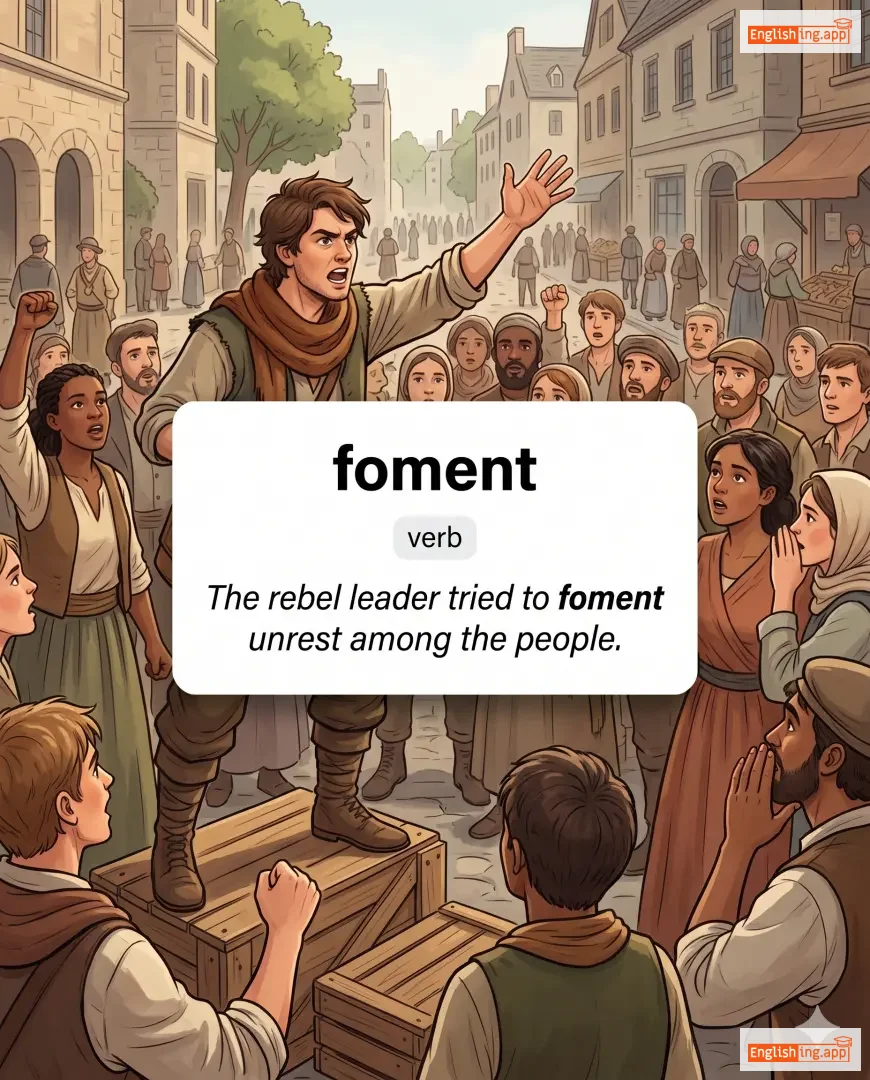
foment definition card — visual illustration of the meaning
verb
/foʊˈmɛnt/
扇動する (sendou suru)

To instigate or stir up (an undesirable or violent sentiment or course of action).

"The rebel leader tried to foment unrest among the people."

"反乱の指導者は、人々の間で騒動を煽ろうとした。" (Hanran no shidōsha wa, hitobito no aida de sōdō o aorō to shita.)
noun
/ˌfoʊ.mənˈteɪ.ʃən/
扇動、刺激 (sendō, shigeki)

The action of instigating or stirring up; also the application of warm substances to the body to ease pain.

"His speech led to the fomentation of violence in the region."

"彼のスピーチは地域での暴力の激化を引き起こした。" (Kare no supīchi wa chiiki de no bōryoku no gekika o hikiokoshita.)
adjective
/fɒnd/
好き (suki)

having a strong liking or affection for something or someone

"She is fond of painting and spends hours in front of her canvas."

"彼女は絵を好きで、キャンバスの前で何時間も過ごします。" (Kanojo wa e o suki de, kyanbasu no mae de nanjikan mo sugoshimasu.)
verb
/ˈfɒn.dəl/
撫でる (naderu)

To stroke or caress lovingly or gently.

"She fondled the kitten gently in her lap."

"彼女は膝の上で子猫を優しく撫でていました。" (Kanojo wa hizano ue de koneko o yasashiku nadete imashita.)
noun
/fuːd/
食べ物 (tabemono)

any nutritious substance that people or animals eat or drink to maintain life and growth

"Rice is a common food in Asia."

"ご飯はアジアでは一般的な食べ物です。" (Gohan wa Ajia de wa ippanteki na tabemono desu.)
noun, verb
/fuːl/
バカ (baka)

a silly or stupid person; to trick someone

"He felt like a fool after believing the prank."

"いたずらを信じた後、彼は自分がバカだと思った。" (Itazura o shinjita ato, kare wa jibun ga baka da to omotta.)
noun
/ˈfuːləri/
愚かさ (orokasa)

Silly or foolish behavior or actions.

"His constant foolery made the meeting hard to take seriously."

"彼の絶え間ない愚かさは、会議を真剣に受け止めるのを難しくしました。" (Kare no tae-manai orokasa wa, kaigi o shinken ni uketomeru no o muzukashiku shimashita.)
adjective
/ˈfuːlˌhɑːrdi/
無謀な (mubō na)

Recklessly bold or rash; taking foolish risks.

"It was foolhardy of him to climb the mountain without proper gear."

"適切な装備なしで山に登るのは無謀だった。" (Tekisetsu na sōbi nashi de yama ni noboru no wa mubō datta.)
adjective
/ˈfuːlɪʃ/
愚かな (orokana)

showing a lack of good sense or judgment

"It was foolish to go out without an umbrella in the storm."

"嵐の中で傘なしで外に出るのは愚かなことだった。" (Arashi no naka de kasa nashi de soto ni deru no wa orokana koto datta.)
adjective
/ˈfuːlpruːf/
失敗しない (shippai shinai)

Designed to be very easy to use or understand, leaving no possibility of failure or error.

"The new software has a foolproof installation process."

"新しいソフトウェアには失敗しないインストールプロセスがあります。" (Atarashii sofutowea ni wa shippai shinai insutooru purosesu ga arimasu.)
noun
/fʊt/
(ashi)

The lower extremity of the leg below the ankle, used for standing and walking.

"He injured his foot while playing basketball."

"彼はバスケットボールをしているときに足をけがしました。" (Kare wa basukettobōru o shite iru toki ni ashi o kega shimashita.)
noun
/ˈfʊtˌnoʊt/
脚注 (kyakuchu)

A note of reference, explanation, or comment placed at the bottom of a page.

"The author included a foot-note to explain the historical context."

"著者は歴史的な文脈を説明するために脚注を追加しました。" (chosha wa rekishiteki na bunmyaku o setsumei suru tame ni kyakuchu o tsuika shimashita.)
noun
/ˈfʊtɪdʒ/
ビデオ録画 (bideo rokuga)

a recorded film or video, especially one that is used for news or documentaries

"The footage of the protest was shown on television all day."

"抗議の映像は一日中テレビで放送されました。" (Kōgi no ēzō wa ichinichijū terebi de hōsō saremashita.)
noun
/ˈfʊtˌbɔːl/
サッカー (sakka)

A team sport played with a ball that is kicked or carried to score points.

"They watched a football match on TV."

"彼らはテレビでサッカーの試合を見ました。" (Karera wa terebi de sakkaa no shiai wo mimashita.)
adjective
/ˈfʊtˌluːs/
自由な (jiyūna)

Free to go anywhere or do anything; not tied down by responsibilities.

"After graduating, he felt footloose and ready to explore the world."

"卒業後、彼は自由を感じ、世界を探索する準備ができていました。" (Sotsugyōgo, kare wa jiyū o kanji, sekai o tansaku suru junbi ga dekite imashita.)
noun
/ˈfɒpəri/
虚飾 (kishoku)

Foolish or excessive concern with one's appearance or manners; pretentious behavior.

"His obsession with fashion was dismissed as mere foppery."

"彼のファッションへの執着は単なる虚飾と見なされた。" (Kare no fasshon e no shuchaku wa tannaru kishoku to minasareta.)
adjective
/ˈfɒpɪʃ/
服装と外見に過剰にこだわり、愚かまたは虚栄心から行動する (fukusou to gaiken ni kajou ni kodawari, oroka mata wa kyoeishin kara koudou suru)

Excessively concerned with clothes and appearance in a vain or foolish way.

"He looked rather foppish in his brightly colored suit."
"彼は明るい色のスーツで少しふざけたように見えた。" (Kare wa akarui iro no suutsu de sukoshi fuzaketa you ni mieteta.)
preposition
/fɔːr/
のために (no tame ni)

used to indicate purpose, destination, or recipient

"This gift is for you."

"このギフトはあなたのためです。" (Kono gifuto wa anata no tame desu.)
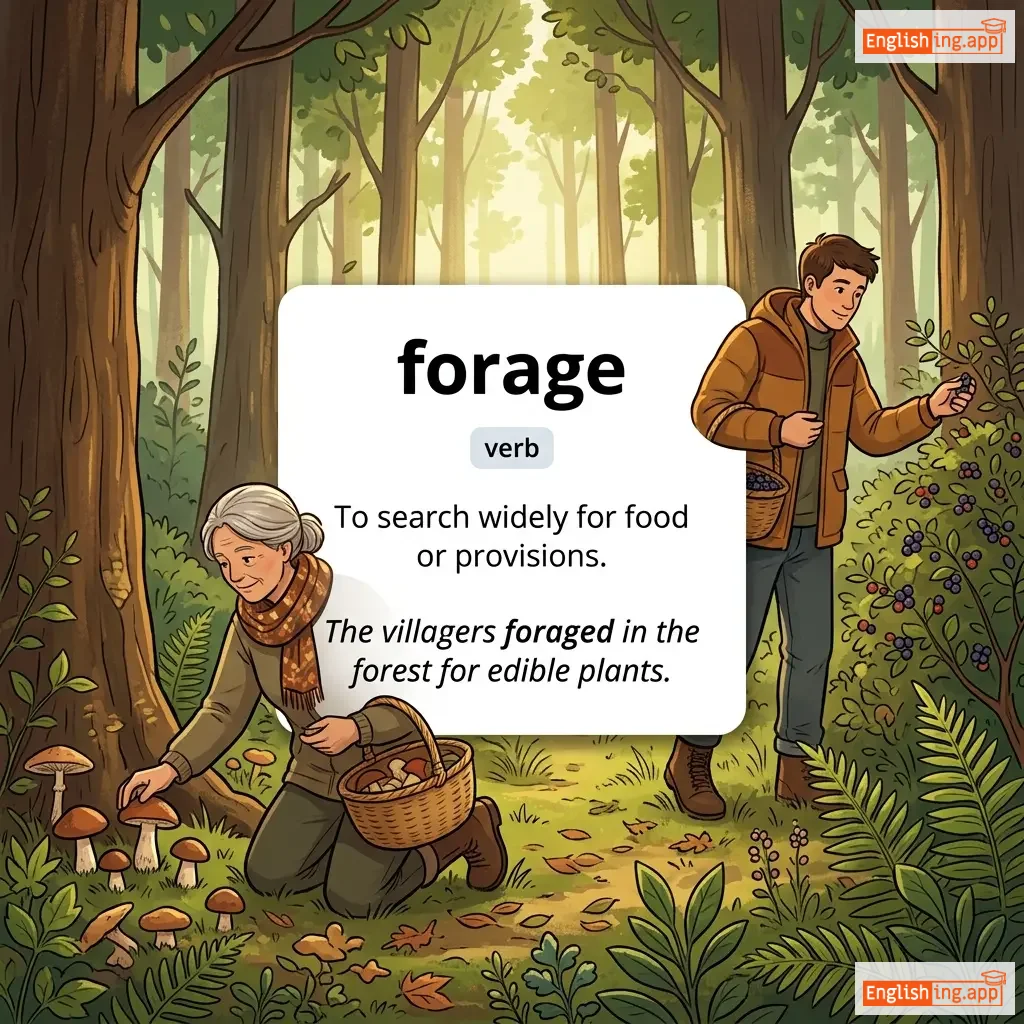
forage definition card — visual illustration of the meaning
verb
/ˈfɒrɪdʒ/
食べ物を探す (tabemono wo sagasu)

To search widely for food or provisions.

"The villagers foraged in the forest for edible plants."

"村人たちは食べられる植物を探して森の中でフォレージングした。" (Murabito-tachi wa taberareru shokubutsu wo sagashite mori no naka de forējingu shita.)
noun
/ˈfɔːreɪ/
突撃 / 初めての試み (totsugeki / hajimete no kokoromi)

A sudden short attack or attempt, especially into new activity or territory.

"The company made its first foray into the international market."

"その会社は国際市場への初めての進出を果たした。" (sono kaisha wa kokusai shijou e no hajimete no shinshutsu o hatashita.)
verb
/fɔːˈbɛər/
控える (hikaeru)

To refrain from doing something; to show patience or self-control.

"She forbore from commenting on his mistake."
"彼女は彼の間違いについてコメントするのを控えました。" (Kanojo wa kare no machigai ni tsuite komento suru no wo hikaemashita.)
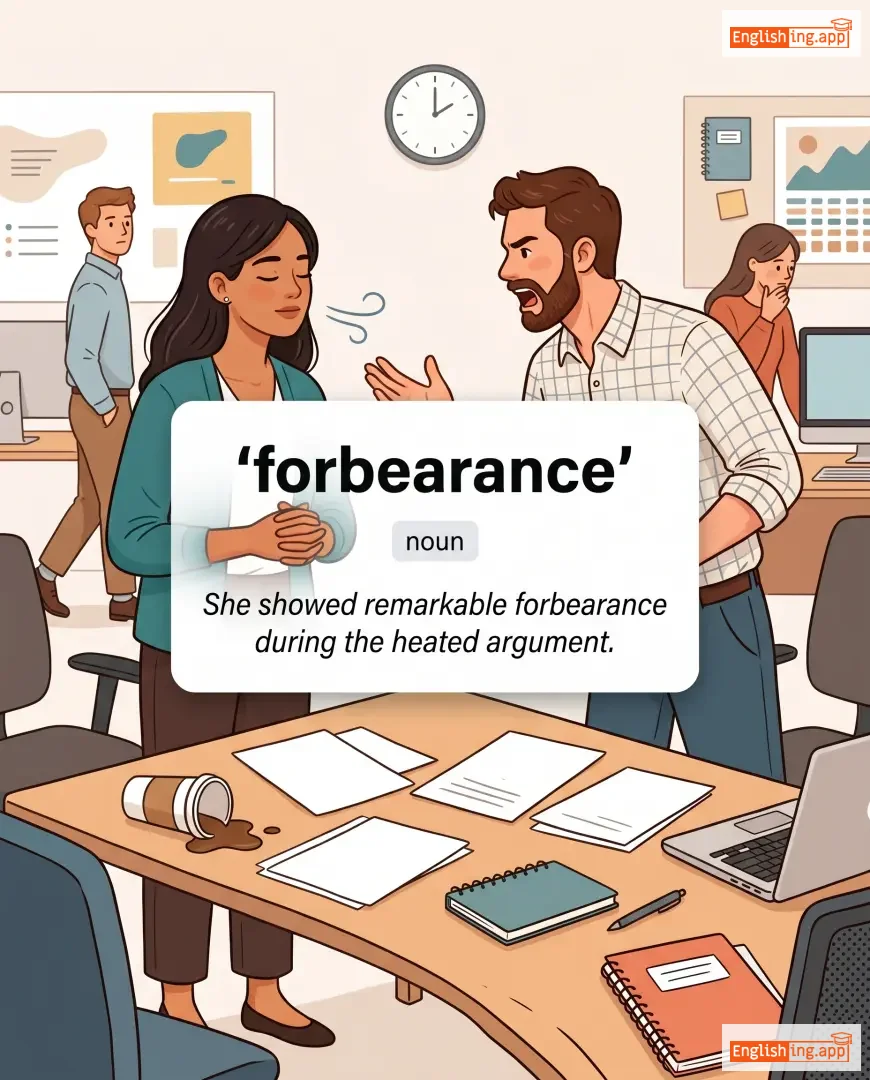
forbearance definition card — visual illustration of the meaning
noun
/fɔːrˈbɛrəns/
寛容 (kanyou)

Patient self-control; restraint and tolerance, especially in difficult situations.

"She showed remarkable forbearance during the heated argument."

"彼女は激しい議論の中で驚くべき寛容さを示しました。" (Kanojo wa hageshii giron no naka de odorokubeki kanyousa o shimeshimaashita.)
verb
/fərˈbɪd/
禁じる (jinjiru)

to order someone not to do something

"The school forbids smoking on campus."

"学校はキャンパス内での喫煙を禁じています。" (Gakkō wa kyanpasu-nai de no kitsuen o kinjiteimasu.)
adjective
/fəˈbɪd.ən/
禁止された; 違法な (kinshi sareta; ihō na)

not allowed; prohibited; banned

"Smoking is strictly forbidden in this building."

"この建物では喫煙が厳しく禁止されています。" (Kono tatemono dewa kitsuen ga kibishiku kinshi sareteimasu.)
adverb
/ˈfɔːrbi/
その上 (sono ue)

In addition; besides (archaic Scottish/English word).

"He is kind and generous, and wise forby."
"彼は親切で寛大で、さらに賢いです。" (Kare wa shinsetsu de kandai de, sara ni kashikoi desu.)
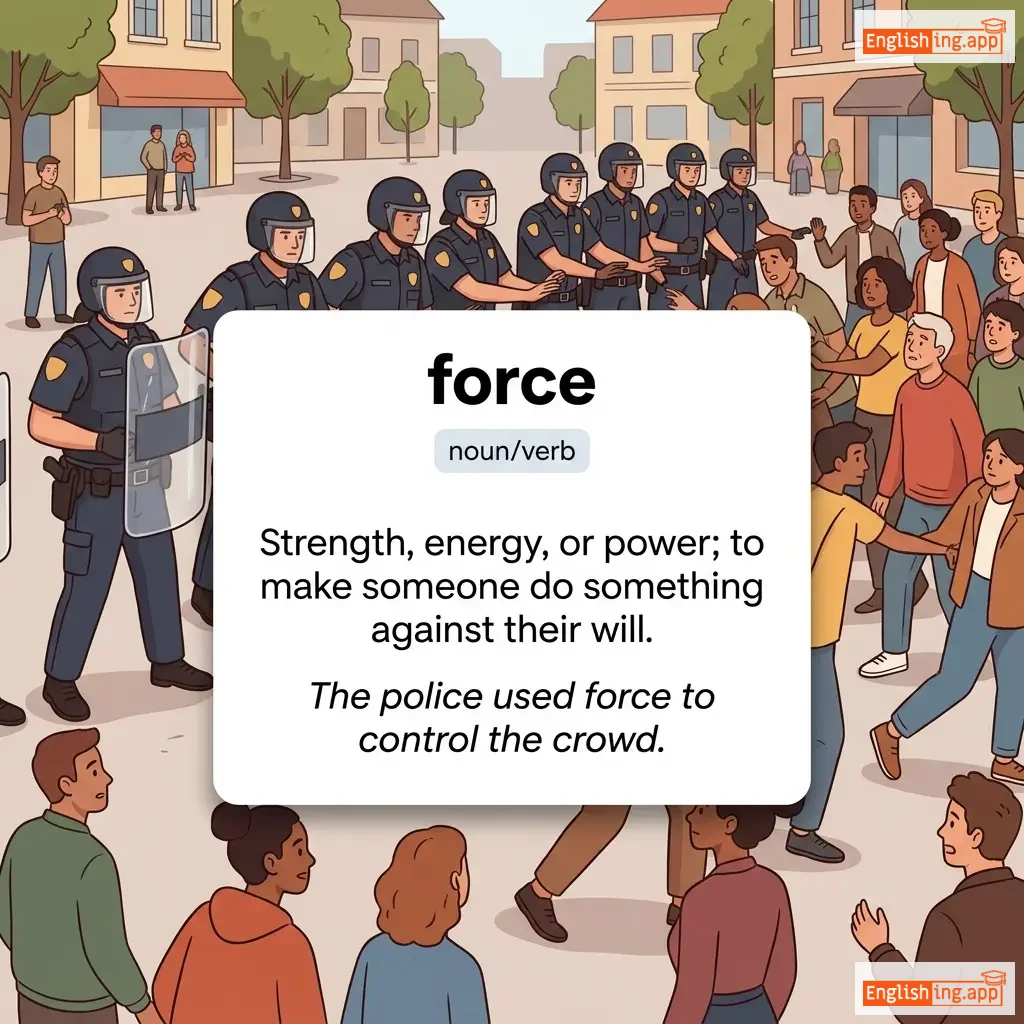
force definition card — visual illustration of the meaning
noun/verb
/fɔːrs/
力 / 力量 (chikara / chikara)

Strength, energy, or power; to make someone do something against their will.

"The police used force to control the crowd."

"警察は群衆を制御するために力を使いました。" (Keisatsu wa gunshū o seigyo suru tame ni chikara o tsukaimashita.)
adjective
/ˈfɔːrsəbl/
強制的 (kyōseiteki)

Done by force; using physical strength or power.

"The police made a forcible entry into the house."

"警察は強制的に家に入った。" (Keisatsu wa kyōseiteki ni ie ni haitta.)