語彙集

英単語辞書 | 単語の意味、定義、例文

noun
/ˈfɑːðər/
幸福 (kōfuku)

A male parent of a child.

"His father taught him how to ride a bicycle."

"彼女は賞を受け取ったとき、その幸せを隠せなかった。" (Kanojo wa shō o uketotta toki, sono kōfuku o kakusenakatta.)
adjective
/ˈfɑːð.ər.ləs/
父親がいない (chichioya ga inai)

without a father

"The fatherless child relied on the support of his community."
"その父親がいない子供は、コミュニティの支援に頼っていました。" (Sono chichioya ga inai kodomo wa, komyuniti no shien ni tayotte imashita.)
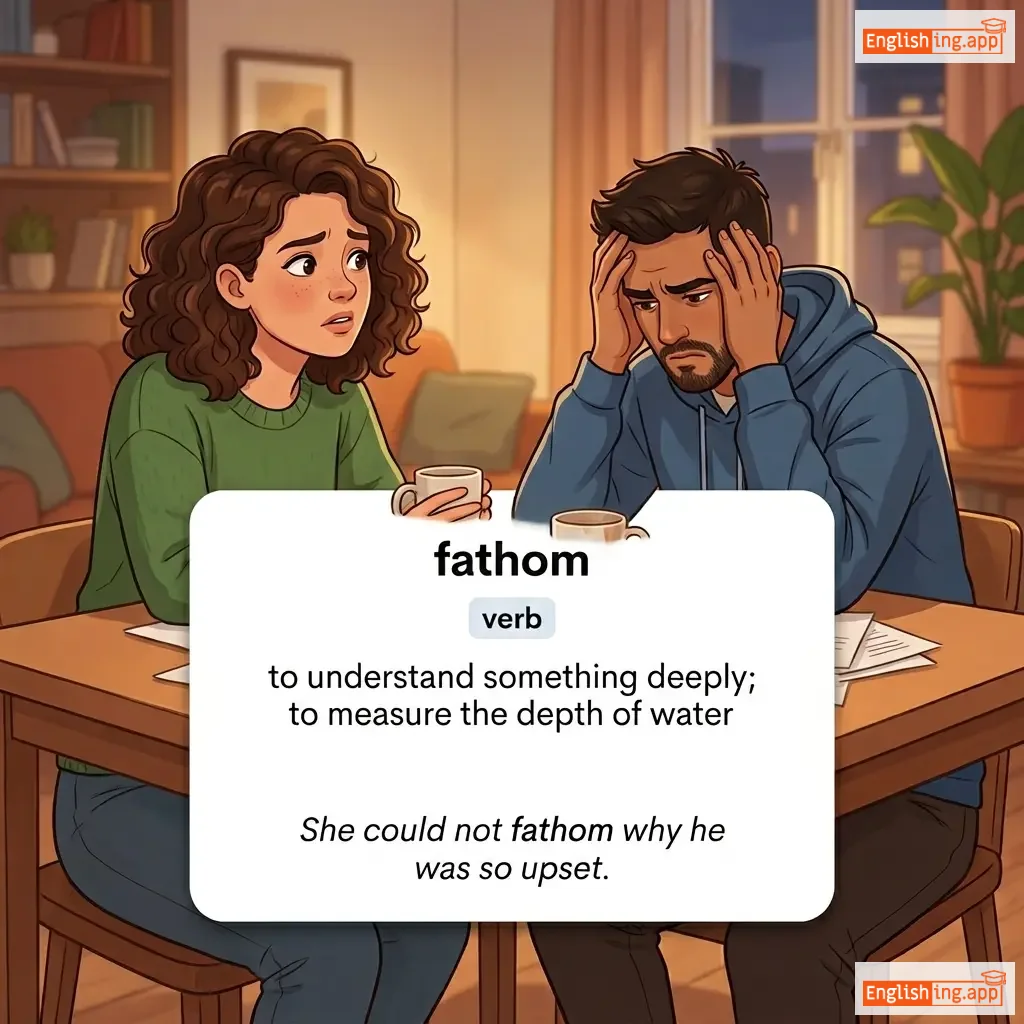
fathom definition card — visual illustration of the meaning
verb
/ˈfæð.əm/
理解する、深く理解する (rikai suru, fukaku rikai suru)

to understand something deeply; to measure the depth of water

"She could not fathom why he was so upset."

"彼女は彼がなぜそんなに怒っているのか理解できませんでした。" (Kanojo wa kare ga naze sonnani okotteiru no ka rikai dekimasen deshita.)
adjective
/ˈfæð.əm.ləs/
理解不可能な、または測定不可能な; 非常に深い (rikai fukanōna, matawa sokutei fukanōna; hijō ni fukai)

impossible to understand or measure; very deep

"The ocean seemed fathomless as it stretched to the horizon."

"海は地平線まで広がると、測り知れないように見えました。" (Umi wa chiheisen made hirogaru to, hakarishirenai yō ni miemashita.)
fatigue definition card — visual illustration of the meaning
noun
/fəˈtiːɡ/
疲労 (hirou)

extreme tiredness or exhaustion

"After working for ten hours, she felt a deep sense of fatigue."
"10時間働いた後、彼女は深い疲労を感じた。" (Jūjikan hataraita ato, kanojo wa fukai hirou o kanjita.)
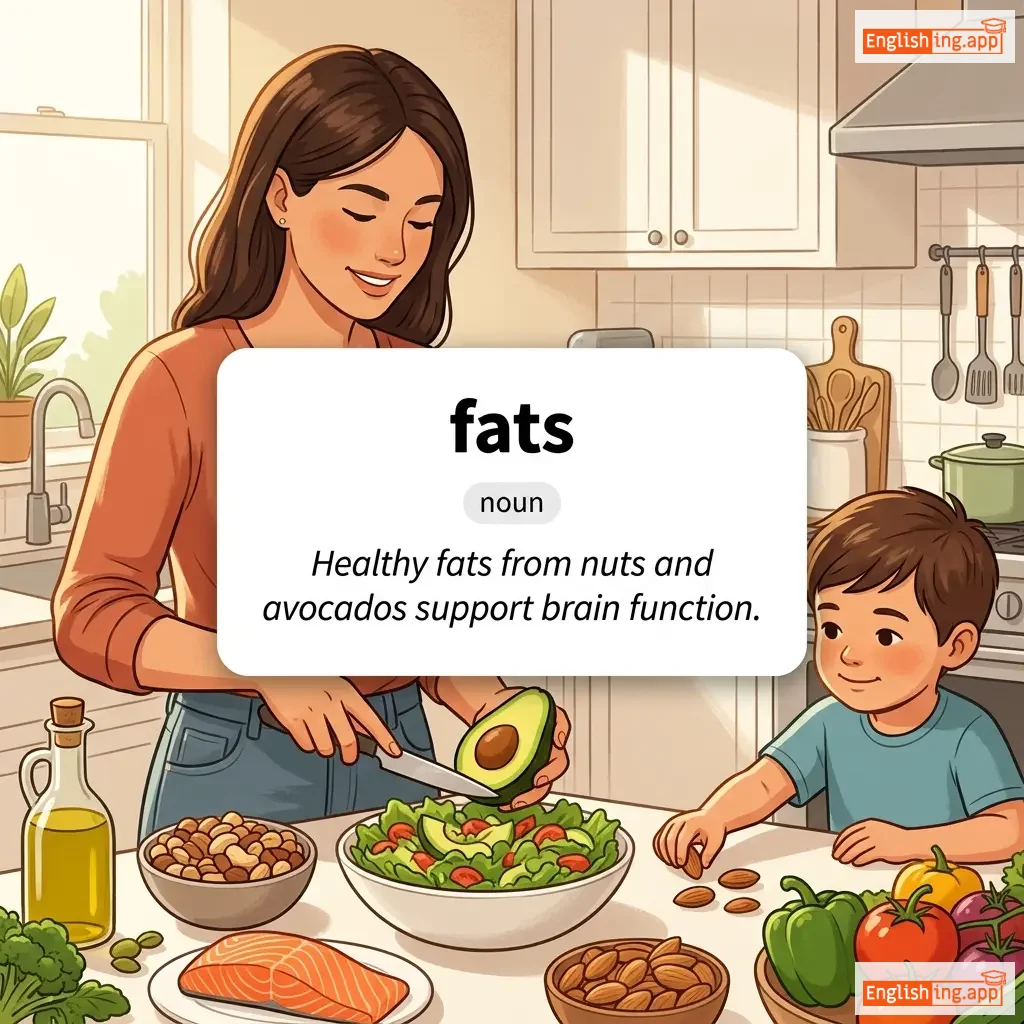
fats definition card — visual illustration of the meaning
noun
/fæts/
脂肪 (shibō)

Essential macronutrients that provide energy, support cell growth, and protect organs while helping absorb vitamins.

"Healthy fats from nuts and avocados support brain function."
"ナッツとアボカドから得られる健康的な脂肪は、脳機能をサポートします。" (Nattsu to abokado kara erareru ken kōtekina shibō wa, nō kinō o sapōto shimasu.)
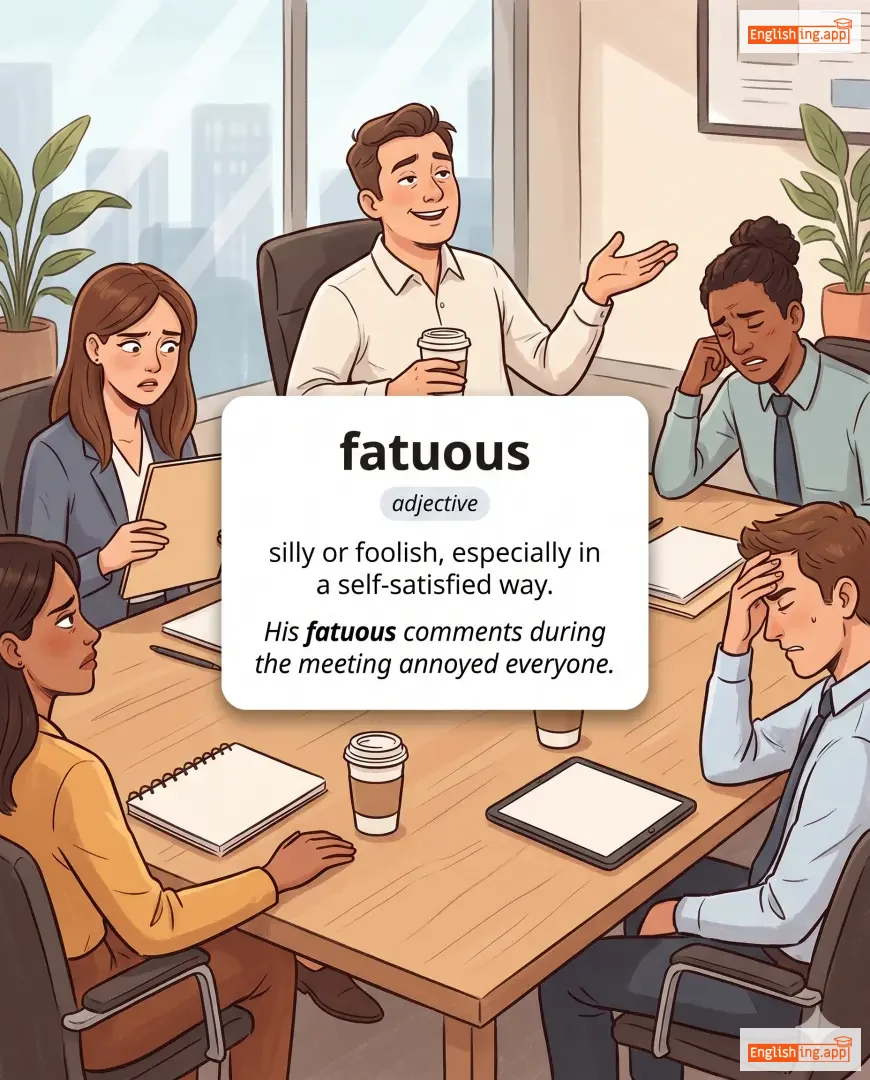
fatuous definition card — visual illustration of the meaning
adjective
/ˈfætʃuəs/
愚か (oroka)

silly or foolish, especially in a self-satisfied way

"His fatuous comments during the meeting annoyed everyone."

"会議中に彼の愚かなコメントは皆を苛立たせました。" (Kaigi-chuu ni kare no oroka na komento wa mina o iradatasemashita.)
noun
/fɔːlt/
過失 (kashitsu)

A mistake, error, or responsibility for a problem.

"It was not her fault that the train was late."
"列車が遅れたのは彼女の過失ではありませんでした。" (Ressha ga okureta no wa kanojo no kashitsu de wa arimasen deshita.)
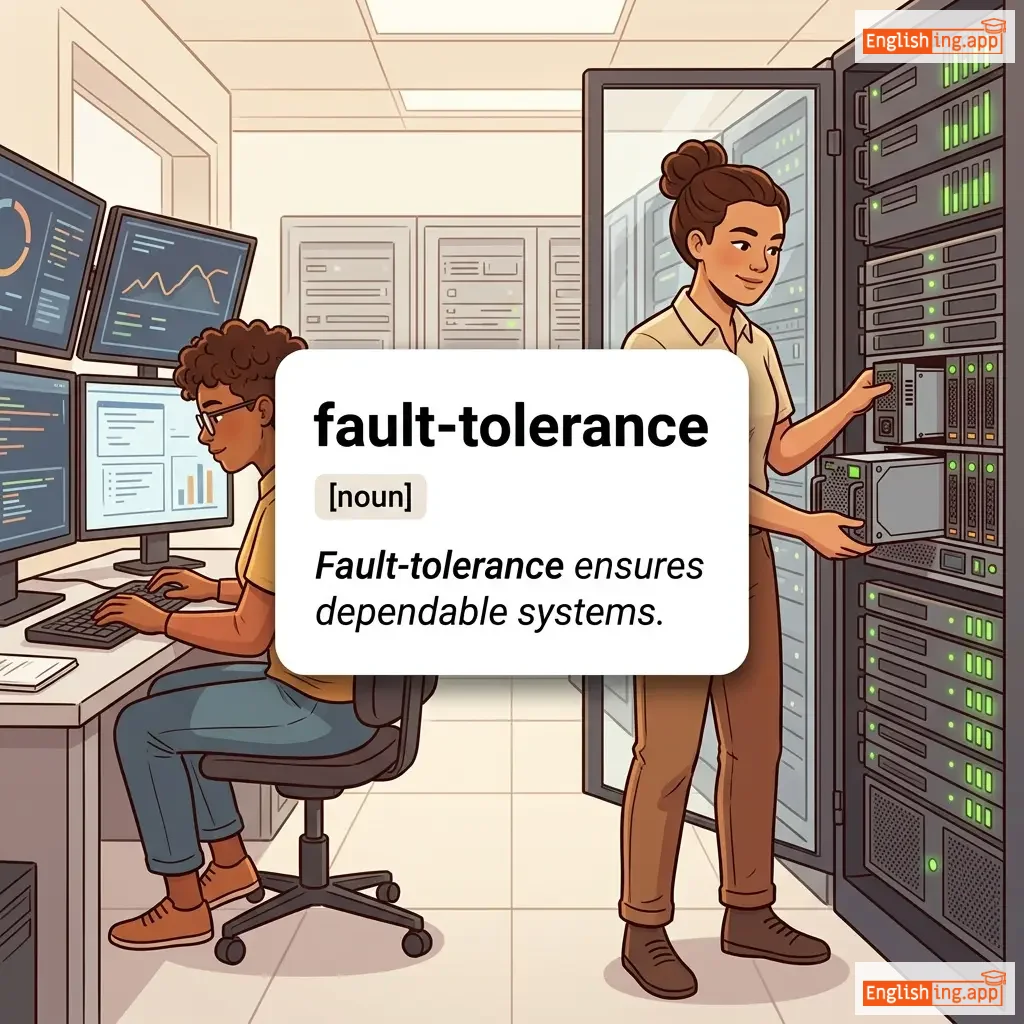
fault-tolerance definition card — visual illustration of the meaning
noun
fɔːlt ˈtɒl.ər.əns
フォールトトレランス (fōruto torehansu)

The ability of a system to continue operating properly in the event of the failure of some of its components.

"Fault-tolerance ensures dependable systems."

"フォールトトレランスは信頼性のあるシステムを保証します。" (Fōruto torehansu wa shinraisei no aru shisutemu o hoshō shimasu.)
noun
/ˈfɔːltˌfaɪndər/
欠点探し人 (kettentagasihito)

a person who habitually finds fault with others

"He is such a faultfinder that nothing anyone does is ever good enough."

"彼は欠点探し人で、誰かが何かをしても決して十分ではありません。" (Kare wa kettentagasihito de, dareka ga nanika o shite mo kesshite jūbun de wa arimasen.)
adjective
/ˈfɔːlti/
欠陥のある (kekkan no aru)

Having defects or imperfections; not working properly

"The device stopped working because it was faulty."

"その装置は欠陥のあるため動作を停止しました。" (sono souchi wa kekkan no aru tame dousa o teishi shimashita)
noun
/fɔːn/
ファウノ (神話の生き物) (fauno (shinwa no ikimono))

a mythological creature that is half human and half goat

"The sculpture depicted a playful faun dancing in the forest."
"彫刻は、森の中で踊っている遊び心のあるファウンを描いていました。" (Choukoku wa, mori no naka de odotte iru asobigokoro no aru faun wo egaite imashita.)
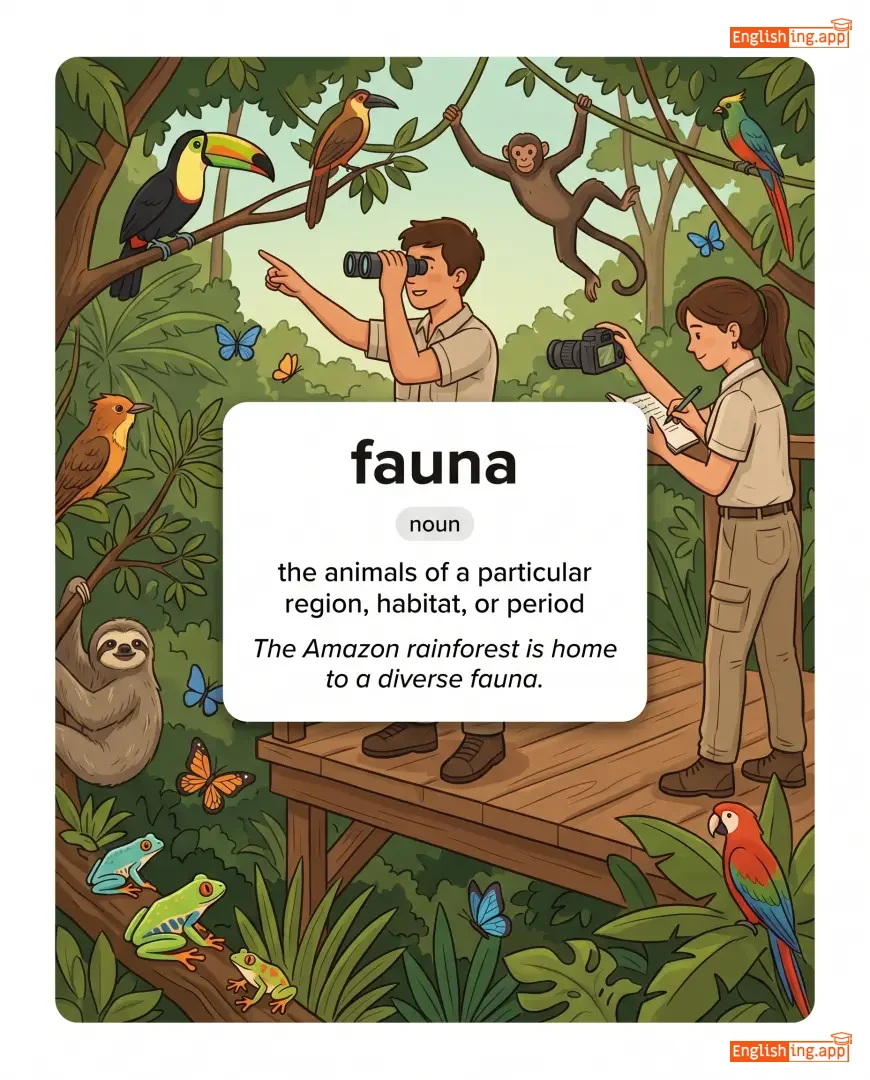
fauna definition card — visual illustration of the meaning
noun
/ˈfɔːnə/
動物相 (dōbutsu-sō)

the animals of a particular region, habitat, or period

"The Amazon rainforest is home to a diverse fauna."

"アマゾン熱帯雨林は多様な動物相を擁しています。" (Amazon nettai urin wa tayō na dōbutsu-sō o yōshiteimasu.)
noun
/foʊ ˈpɑː/
社会的な失敗 (shakaiteki na shippai)

a social blunder or mistake in etiquette

"He committed a major faux pas by forgetting her birthday."

"彼は彼女の誕生日を忘れて大きな社会的な失敗を犯した。" (Kare wa kanojo no tanjōbi o wasurete ōkina shakaiteki na shippai o okashita.)
noun
/ˈfeɪvər/
お願い (onegai)

An act of kindness or approval.

"She asked him for a small favor."

"彼女は彼に小さなお願いをした。" (Kanojo wa kare ni chiisana onegai o shita.)
adjective
/ˈfeɪvərəbəl/
好ましい (konomashii)

expressing approval or support; advantageous

"The weather conditions were favorable for the outdoor event."
"屋外イベントには好ましい天候でした。" (Okugai ibento ni wa konomashii tenkou deshita.)
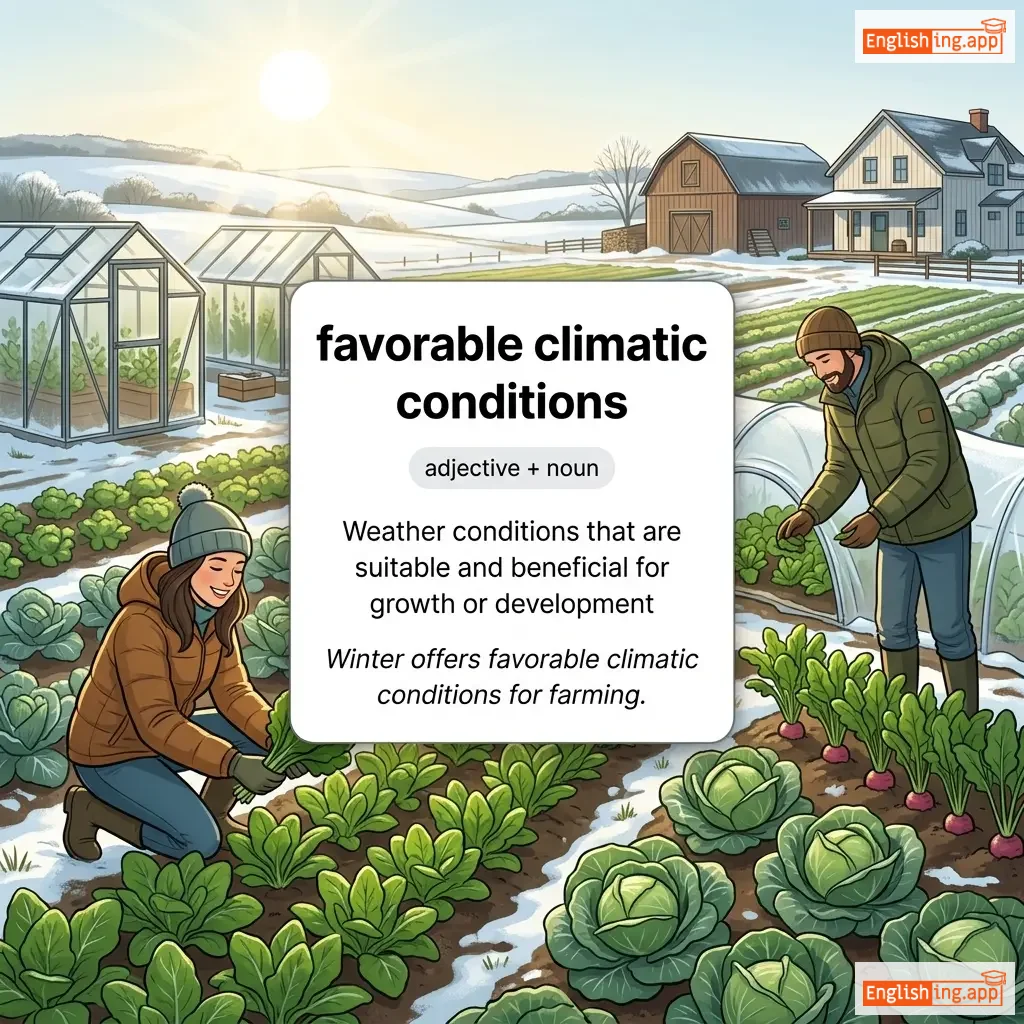
favorable climatic conditions definition card — visual illustration of the meaning
adjective + noun
ˈfeɪvərəbəl klaɪˈmætɪk kənˈdɪʃənz
好ましい気候条件 (konomashii kikou jouken)

Weather conditions that are suitable and beneficial for growth or development

"Winter offers favorable climatic conditions for farming."

"冬は農業にとって好ましい気候条件を提供します。" (Fuyu wa nougyou ni totte konomashii kikou jouken wo teikyou shimasu.)
adjective, noun
/ˈfeɪvərɪt/
お気に入り (okiniiri)

Preferred over all others; something or someone especially liked.

"Chocolate is my favorite ice cream flavor."

"チョコレートは私のお気に入りのアイスクリームのフレーバーです。" (Chokorēto wa watashi no okiniiri no aisukurīmu no furēbā desu.)
noun
/ˈfeɪvərɪtɪzəm/
えこひいき (eko hiiki)

the practice of giving unfair preferential treatment to one person or group

"The manager was accused of favoritism towards certain employees."

"マネージャーは特定の従業員に対する偏愛で告発されました。" (Manējā wa tokutei no jūgyōin ni taisuru hen'ai de kokuhatsu saremashita.)
noun
/ˈfeɪ.vər/
好意; 手伝い; 親切 (koi, tetsudai, shinsetsu)

approval, support, or liking for someone or something; a kind or helpful act

"Could you do me a favour and help me move this heavy box?"

"この重い箱を動かす手伝いをしてくれませんか?" (kono omoi hako wo ugokasu tetsudai wo shite kuremasen ka?)
adjective
/ˈfeɪvərəbl/
好都合な (koutsugou na)

Expressing approval, support, or positivity; advantageous or beneficial

"The weather conditions were favourable for the outdoor event."

"屋外イベントの天候は好都合でした。" (Okugai ibento no tenkou wa koutsugou deshita.)
verb
/fɔːn/
お世辞を言う (oseshi o iu)

to show exaggerated flattery or affection; to seek favor by servile behavior

"He fawned over the boss to get a promotion."
"彼は昇進を得るためにボスにお世辞を言いました。" (Kare wa shoushin o eru tame ni bosu ni o-seshi o iimashita.)
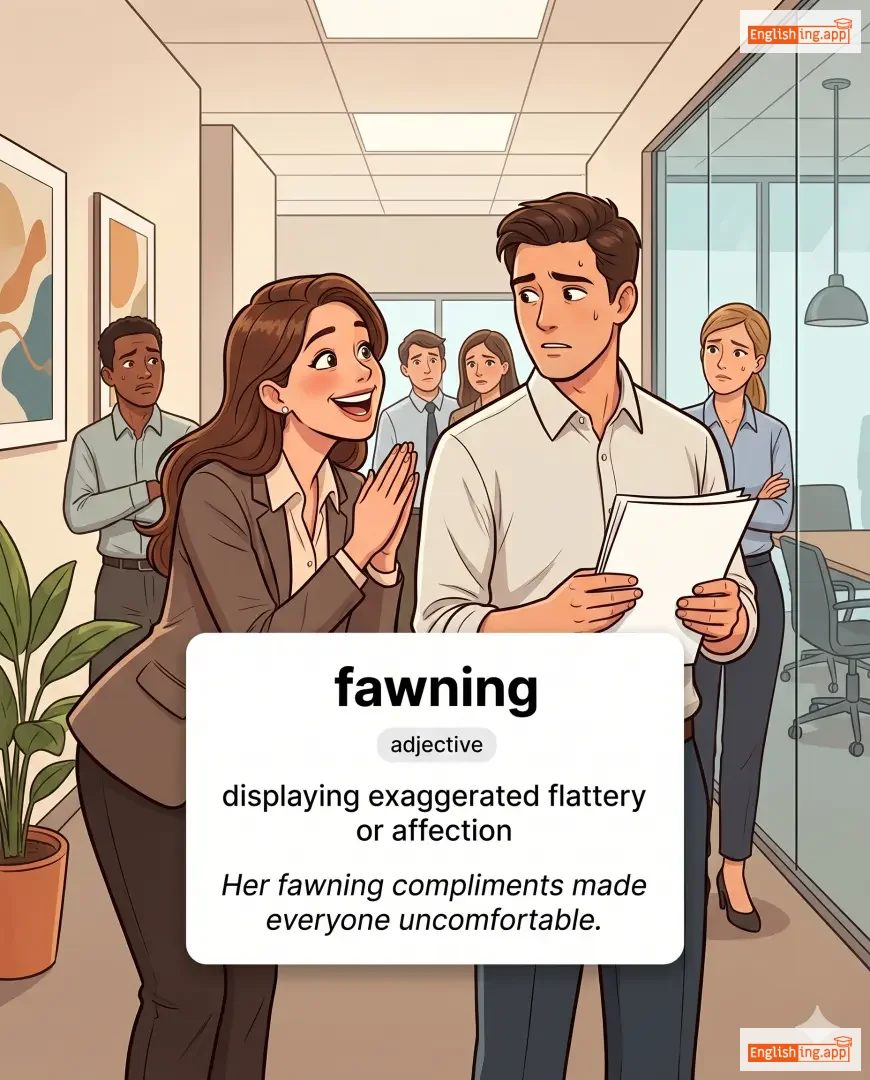
fawning definition card — visual illustration of the meaning
adjective
/ˈfɔːnɪŋ/
過度のほめ言葉 (kado no homekotoba)

displaying exaggerated flattery or affection

"Her fawning compliments made everyone uncomfortable."

"彼女の過度のほめ言葉は、皆を不快にさせました。" (Kanojo no kado no homekotoba wa, mina o fukai ni sasemashita.)
verb
/feɪz/
動揺させる (dōyō saseru)

to disturb or disconcert someone; to cause to feel unsettled

"She was not fazed by the unexpected question."

"予期しない質問で動じなかった。" (Yoki shinai shitsumon de dōjinakatta.)
noun
/ˈfiːəlti/
忠誠心と誠実 (chūseishin to seijitsu)

loyalty or allegiance, especially to a sovereign or lord

"The knight swore fealty to his king."

"騎士は王に忠誠を誓った。" (Kishi wa ō ni chūsei o chikatta.)
Fear definition card — visual illustration of the meaning
noun, verb
/fɪr/
恐怖 (kyōfu)

An unpleasant emotion caused by the belief that someone or something is dangerous.

"She has a fear of flying."

"彼女は飛行機恐怖症です。" (kanojo wa hikōki kyōfushō desu.)
adjective
/ˈfɪr.fəl/
恐ろしい (osoroshii)

feeling afraid or showing fear

"She was fearful of walking alone at night."

"彼女は夜に一人で歩くのを恐れていた。" (Kanojo wa yoru ni hitori de aruku no o osoreteita.)
feasibility definition card — visual illustration of the meaning
noun
ˌfiː.zəˈbɪl.ə.ti
実現可能性、可行性、可能性 (jitsugen kanō-sei, kakō-sei, kanō-sei)

Possibility, practicality, viability.

"The feasibility study proved the project viable."

"フィージビリティスタディはプロジェクトが実行可能であることを証明しました。" (Fīzibiliti sutadi wa purojekuto ga jikkō kanō de aru koto o shōmei shimashita.)
adjective
/ˈfiːzəbl/
実行可能 (jikkō kanō)

possible to do easily or conveniently; practical and workable

"It is feasible to complete the project within two months."

"このプロジェクトを2ヶ月以内に完了することは実行可能です。" (Kono purojekuto o 2 kagetsu inai ni kanryō suru koto wa jikkō kanō desu.)
noun
/fiːst/
祝宴; 宴会 (shuen, enkai)

a large meal, typically one in celebration of something; an annual religious celebration

"The wedding feast included traditional dishes from both families' cultures."

"結婚式の祝宴には両家の文化からの伝統的な料理が含まれていました。" (Kekkonshiki no shuen ni wa ryōke no bunka kara no dentō-teki na ryōri ga fukumarete imashita.)
noun
/fiːt/
偉業 (igyō)

an achievement that requires great courage, skill, or strength

"Climbing Mount Everest was a remarkable feat."

"エベレスト山の登頂は素晴らしい偉業でした。" (Eberesuto-san no tōchō wa subarashī igyō deshita.)
noun
/ˈfɛðər/
(hane)

a light, soft structure that covers a bird’s body and enables it to fly

"The bird lost a small feather while flying through the trees."

"その鳥は木々の間を飛ぶとき、小さな羽を失いました。" (Sono tori wa kigi no aida o tobu toki, chiisana hane o ushinai mashita.)
noun
/ˈfiːtʃər/
特徴 (tokuchō)

a distinctive attribute or aspect of something; a characteristic

"The new phone has a unique camera feature."

"新しい電話にはユニークなカメラの特徴があります。" (Atarashī denwa ni wa yunikuna kamera no tokuchō ga arimasu.)
adjective
/ˈfiːbraɪl/
発熱の、興奮した (hatsunetsu no, kōfun shita)

having or showing the symptoms of a fever; or highly excitable or agitated

"The patient was in a febrile state with high temperature."

"患者は高い温度の熱の状態にありました。" (Kanja wa takai ondō no netsu no jōtai ni arimashita.)
noun
/ˈfɛb.ruˌɛr.i/
2月 (nigatsu)

The second month of the year in the Gregorian calendar, typically having 28 days, or 29 in a leap year.

"My birthday is in February, so I always look forward to this month."

"私の誕生日は2月なので、いつもこの月を楽しみにしています。" (watashi no tanjobi wa nigatsu nanode, itsumo kono tsuki o tanoshimi ni shiteimasu)
adjective
/ˈfɛkləs/
無能な, 責任感のない (munōna, sekininkan no nai)

lacking initiative or strength of character; irresponsible

"His feckless attitude at work caused several missed deadlines."

"彼の無能な態度が仕事でいくつかの期限を逃す原因となった。" (Kare no munōna taido ga shigoto de ikutsuka no kigen o nogasu gen'in to natta.)
adjective
/ˈfiːkənd/
肥沃な, 生産的な (hiwona, seisanteki na)

producing or capable of producing an abundance of offspring or new growth; fertile

"The fecund soil produced a bountiful harvest this year."

"肥沃な土壌は今年豊かな収穫をもたらしました。" (Hiwona dojou wa kotoshi yutakana shuukaku wo motarashimashita.)
noun
/fiːˈkʌndɪti/
肥沃, 繁殖力 (fēwaku, hanshoku-ryoku)

the ability to produce an abundance of offspring or new growth; fertility

"The fecundity of the river delta supports diverse wildlife."

"川の三角州の肥沃は多様な野生動物を支えています。" (Kawa no sankakushu no fēwaku wa tayōna yasei dōbutsu o sasaeteimasu.)
adjective
/ˈfɛdərəl/
フェデラル (federal)

Relating to the central government of a federation.

"The federal government passed a new law on healthcare."

"連邦政府は医療制度に関する新しい法律を通過させました。" (Renpō seifu wa iryō seido ni kansuru atarashī hōritsu o tsūka sasemashita.)
verb
/ˈfɛdərət/
連邦する (renpou suru)

to unite in a league or federation; to form an alliance

"Several states federated to create a stronger union."

"いくつかの州が強い連邦を作るために団結しました。" (Ikutsuka no shu ga tsuyoi renpou o tsukuru tame ni danketsu shimashita.)
noun
/fiː/
料金 (ryoukin)

A payment made for a service or privilege.

"The lawyer charged a high fee for his services."

"弁護士は彼のサービスに高い料金を請求した。" (Bengoshi wa kare no sābisu ni takai ryōkin o seikyū shita.)
adjective
/ˈfiːbl/
弱い, 無力 (yowai, muryoku)

lacking physical strength or vigor; weak

"After the illness, she felt too feeble to stand."

"病気の後、彼女は立ち上がるにはあまりにも弱かった。" (Byouki no ato, kanojo wa tachiagaru ni wa amari ni mo yowakatta.)
adjective
/ˈfiːbəlˌmaɪndɪd/
愚かまたは弱い精神の (oroka matawa yowai seishin no)

lacking intelligence or mental capacity; foolish or weak-minded

"The feebleminded man struggled to understand basic instructions."
"その弱い精神の男性は、基本的な指示を理解するのに苦労していました。" (Sono yowai seishin no dansei wa, kihonteki na shiji o rikai suru no ni kurou shite imashita.)
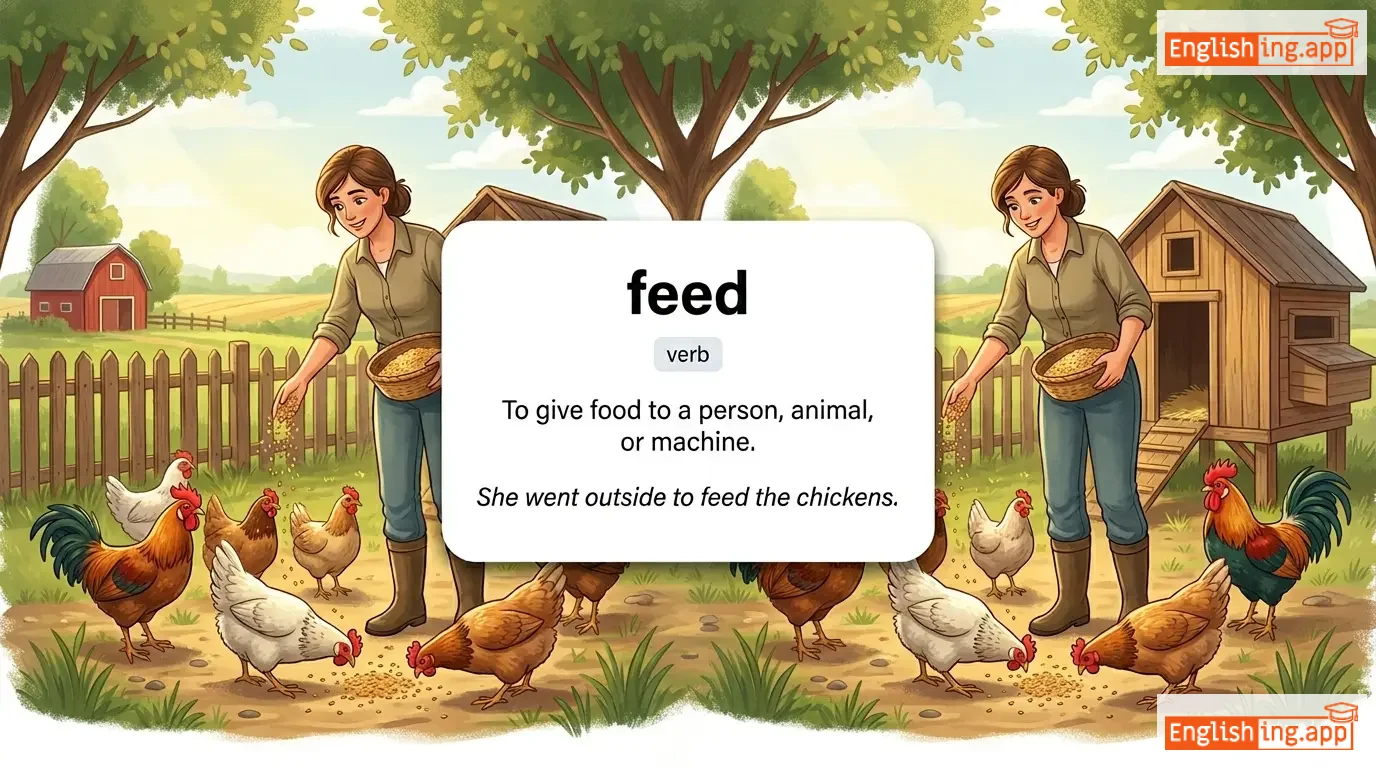
feed definition card — visual illustration of the meaning
verb
/fiːd/
与える (ataeru)

To give food to a person, animal, or machine.

"She went outside to feed the chickens."

"彼女は鶏に餌をやりに外に出た。" (kanojo wa niwatori ni esa o yari ni soto ni deta.)
noun
/ˈfiːdbæk/
フィードバック (fīdobakku)

information or opinions about how well someone is doing something

"She asked her teacher for feedback on her essay."

"彼女はエッセイについて先生にフィードバックを求めました。" (Kanojo wa essei ni tsuite sensei ni fīdobakku o motomemashita.)
Feel definition card — visual illustration of the meaning
verb
/fiːl/
感じる (kanjiru)

To experience an emotion or physical sensation.

"I feel happy when I listen to music."

"音楽を聴くと幸せを感じます。" (ongaku wo kiku to shiawase wo kanjimasu.)
noun
/ˈfiːlɪŋ/
感情 (kanjou)

An emotional state or physical sensation.

"She had a strange feeling about the place."

"彼女はその場所について奇妙な感情を抱いていた。" (Kanojo wa sono basho ni tsuite kimyō na kanjō o daite ita.)
verb
/feɪn/
装う、ふりをする (yosoou, furi wo suru)

to pretend or fake; to give a false appearance of

"She feigned illness to avoid going to work."

"彼女は仕事に行かないために病気を装った。" (Kanojo wa shigoto ni ikanai tame ni byouki wo yosootta.)
noun
/feɪnt/
フェイント, 偽りの動き (feinto, itsuwari no ugoki)

a deceptive or pretended movement, especially in fighting or sports

"The boxer made a feint to the left before striking to the right."

"ボクサーは右に打つ前に左にフェイントをかけました。" (Bokusā wa migi ni utsu mae ni hidari ni feinto o kakemashita.)
verb
/fəˈlɪsɪteɪt/
祝う (iwau)

to congratulate someone; to express happiness for someone's success

"We felicitated her on winning the award."

"私たちは彼女の賞を勝ち取ったことを祝いました。" (Watashitachi wa kanojo no shou o kachitoratta koto o iwai mashita.)