語彙集

英単語辞書 | 単語の意味、定義、例文

adjective
/fɔːls/
偽の (nise no)

not true or correct; intended to deceive

"He was accused of giving false information."

"彼は虚偽の情報を提供したとして告発されました。" (Kare wa kyogi no jōhō o teikyō shita to shite kokuhatsu saremashita.)
noun
/ˈfɔːlshʊd/
虚偽 (kyogi)

the state of being untrue or a lie

"He was punished for spreading falsehoods about his colleague."

"彼は同僚についての嘘を広めたことで罰を受けました。" (Kare wa dōryō ni tsuite no uso o hirometa koto de bachi o ukemashita.)
verb
/ˈfɔːlsɪfaɪ/
偽造する (gizou suru)

to make something false or to misrepresent

"He tried to falsify the documents to avoid taxes."

"彼は税金を避けるために書類を偽造しようとした。" (Kare wa zeikin wo sakeru tame ni shorui wo gizou shiyou to shita.)
verb
/ˈfɔːltər/
ためらう、または力や勢いを失う (tamerau, matawa chikara ya ikioi wo ushinau)

to hesitate or lose strength or momentum

"Her voice faltered as she delivered the speech."

"彼女の声はスピーチをする際に途切れました。" (Kanojo no koe wa supīchi wo suru sai ni togire mashita.)
noun
/feɪm/
名声 (meisei)

the state of being known or recognized by many people

"She achieved worldwide fame for her acting."

"彼女は演技で世界的な名声を得ました。" (Kanojo wa engi de sekaiteki na meisei o emashita.)
adjective
/fəˈmɪliər/
お馴染みの (onajimi no)

Well known or easily recognized from previous experience.

"The town looked familiar to me after so many years."

"何年も後、この町は私にはお馴染みのように感じました。" (Nan-nen mo ato, kono machi wa watashi ni wa onajimi no yō ni kanjimashita.)
👨‍👩‍👧‍👦

family (famirī)

noun
/ˈfæməli/
家族 (kazoku)

A group consisting of parents and their children, or all the descendants of a common ancestor.

"She spends most of her weekends with her family."
"彼女は週末のほとんどを家族と過ごします。" (Kanojo wa shūmatsu no hotondo o kazoku to sugoshimasu.)
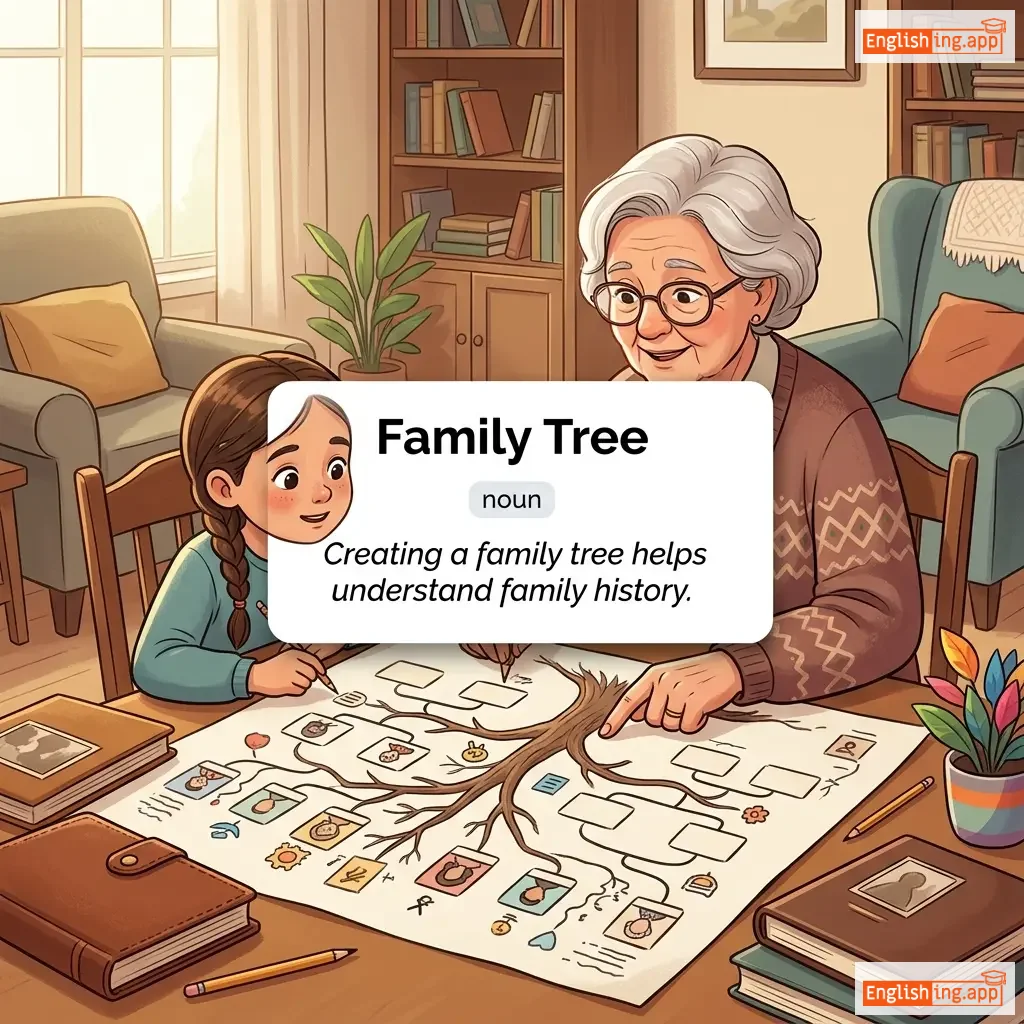
Family Tree definition card — visual illustration of the meaning
noun
ˈfæmɪli triː
家系図 (kakeizu)

A diagram showing the relationships between people in several generations of a family.

"Creating a family tree helps understand family history."

"家系図を作成することは、家族の歴史を理解するのに役立ちます。" (Kakeizu o sakusei suru koto wa, kazoku no rekishi o rikai suru no ni yakudachimasu.)
noun
/ˈfæm.ɪn/
飢饉 (kikin)

extreme scarcity of food; a period when food is extremely scarce

"The severe drought led to widespread famine in the region."

"厳しい干ばつが地域で広範な飢饉を引き起こしました。" (Gambyō no kanbatsu ga chiiki de kōhan na kikin o hikiokoshimashita.)
verb
/ˈfæmɪʃ/
飢える (ueru)

to suffer or cause to suffer from extreme hunger

"The stranded hikers began to famish after several days without food."
"数日間食べ物がなくて、遭難したハイカーたちは飢えることを始めた。" (sūjitsukan tabemono ga nakute, sōnan shita haikā-tachi wa ueru koto o hajimeta.)
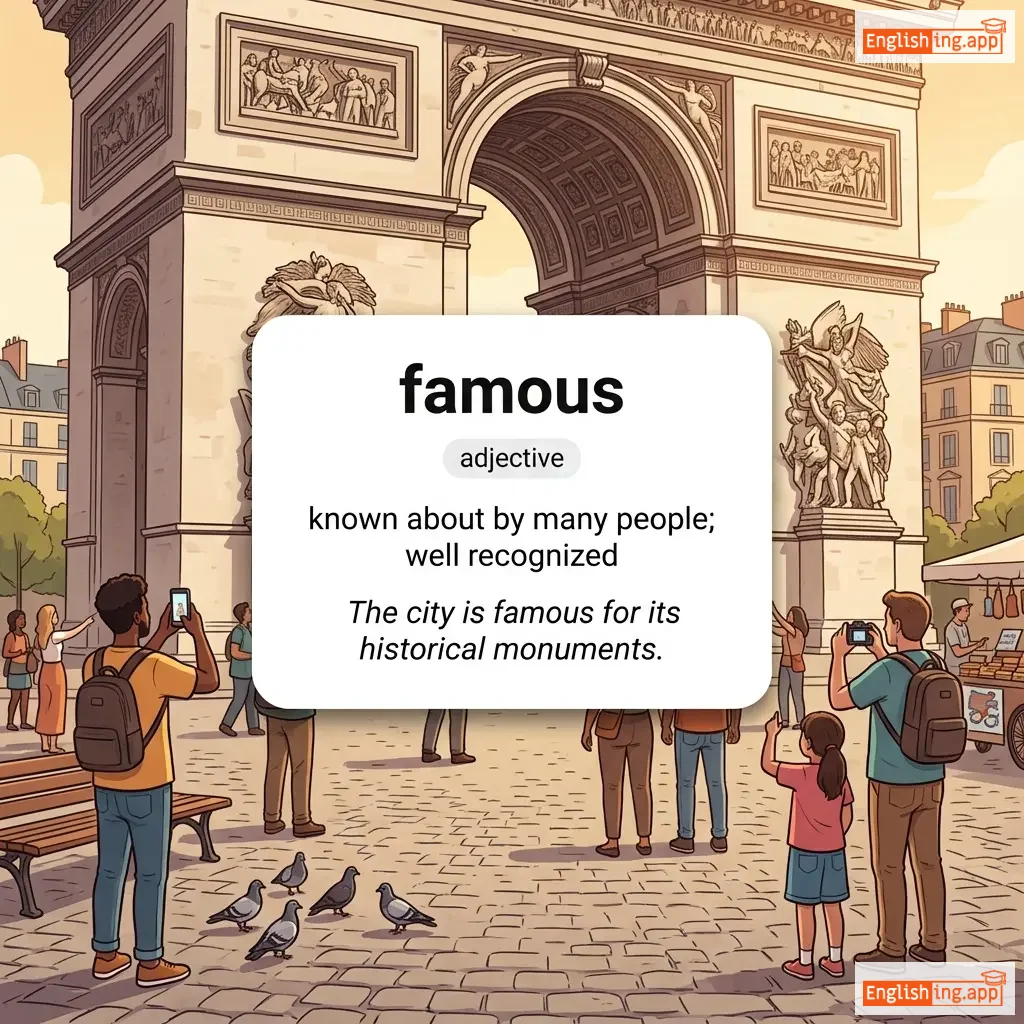
famous definition card — visual illustration of the meaning
adjective
/ˈfeɪməs/
有名 (yūmei)

known about by many people; well recognized

"The city is famous for its historical monuments."

"その都市は歴史的なモニュメントで有名です。" (Sono toshi wa rekishiteki na monyumento de yūmei desu.)
noun
/fæn/
幸福 (kōfuku)

a device with rotating blades that creates a current of air; also a person who admires or supports someone or something

"The fan kept the room cool during the hot summer day."

"彼女は賞を受け取ったとき、喜びを隠せなかった。" (Kanojo wa shō o uketotta toki, yorokobi o kakusenakatta.)
noun
/fəˈnætɪk/
熱狂的なファン (nekkyō-teki na fan)

a person with extreme and uncritical enthusiasm for a cause or belief

"He is a football fanatic, never missing a match of his favorite team."

"彼はサッカーのファナティックで、お気に入りのチームの試合を見逃すことはありません。" (Kare wa sakkā no fanatikku de, okiniiri no chīmu no shiai o minogasu koto wa arimasen.)
adjective
/fəˈnætɪkəl/
熱狂的な (nekkyō-teki na)

showing extreme enthusiasm or obsession

"She has a fanatical interest in collecting vintage stamps."

"彼女は古い切手を集めることに熱狂的な興味を持っています。" (Kanojo wa furui kitte o atsumeru koto ni nekkyō-teki na kyōmi o motteimasu.)
noun
/fəˈnætɪsɪzəm/
熱狂 (nekkyou)

the quality of being fanatical; extreme zeal or obsession

"Religious fanaticism can lead to intolerance and conflict."

"宗教的な熱狂は不寛容と対立を引き起こす可能性があります。" (Shūkyō-teki na nekkyou wa fukan'yō to tairitsu o hikiokosu kanōsei ga arimasu.)
adjective
/ˈfænsiːd/
想像された, 願われた (souzou sareta, negawareta)

imagined, desired, or believed without evidence

"He is a fancied suitor in the eyes of the young lady."

"彼は若い女性の目には想像上の求婚者です。" (Kare wa wakai josei no me ni wa souzoujou no kyuukousha desu.)
noun
/ˈfænsiər/
愛好家 (aikouka)

a person who has a special interest in a particular thing or activity, especially animals or hobbies

"He is a fancier of rare birds."

"彼は珍しい鳥の愛好家です。" (Kare wa mezurashī tori no aikouka desu.)
adjective
/ˈfæn.sɪ.fəl/
幻想的, 非現実的 (gensouteki, higennjitsuteki)

overimaginative, unrealistic, or whimsical

"The story was too fanciful to be true."

"その話はあまりにも幻想的で、本当だとは思えなかった。" (Sono hanashi wa amari ni mo gensouteki de, hontou da to wa omoenakatta.)
adjective
/ˈfæn.sɪ.ləs/
想像力のない、普通の (souzouryoku no nai, futsuu no)

without imagination or creativity; plain or ordinary

"His drawings were simple and fanciless."

"彼の絵はシンプルで想像力がなかった。" (Kare no e wa shinpuru de souzouryoku ga nakatta.)
verb
/ˈfæn.si/
想像する, 欲しい, 好き (sōzō suru, hoshii, suki)

to imagine, desire, or like something; to have a liking for

"She fancies a cup of tea in the morning."

"彼女は朝に紅茶を一杯飲みたい。" (Kanojo wa asa ni kōcha o ippai nomitai.)
noun
/ˈfæn.feər/
大々的な展示, 宣伝 (dai daiteki na tenji, senden)

a short ceremonial tune or display of publicity to attract attention

"The new product was launched with much fanfare."

"新しい製品は盛大なファンファーレで発売されました。" (Atarashī seihin wa seidaina fanfāre de hatsubai saremashita.)
adjective
/fænˈtæstɪk/
素晴らしい (subarashii)

extraordinary, extremely good or impressive

"The concert last night was absolutely fantastic."

"昨晩のコンサートはまさに素晴らしかった。" (Sakuban no konsāto wa masani subarashikatta.)
noun
/ˈfæntəsi/
ファンタジー (fantajī)

a creation of the imagination, especially something improbable or impossible

"She has a vivid fantasy about traveling to space."

"彼女は宇宙旅行に関する生き生きとしたファンタジーを持っています。" (Kanojo wa uchū ryokō ni kansuru ikikito shita fantajī o motteimasu.)
adverb
/fɑːr/
遠い (tooi)

at, to, or by a great distance

"The school is far from my house."

"学校は私の家から遠いです。" (Gakkou wa watashi no ie kara tooi desu.)
adjective
/ˌfɑːrˈfɛtʃt/
信じがたい (shinjigatai)

unlikely to happen or be true; improbable

"His explanation for being late was a bit far-fetched."

"彼の遅刻の理由は少し信じがたいものでした。" (Kare no chikoku no riyuu wa sukoshi shinjigatai mono deshita.)
noun
/fɑːrs/
茶番 (chaban)

a comic dramatic work using buffoonery and horseplay, or a ridiculous situation

"The meeting turned into a complete farce with everyone arguing."

"会議は完全に茶番に変わり、みんなが議論していた。" (Kaigi wa kanzen ni chaban ni kawari, minna ga giron shite ita.)
noun
/fɛər/
運賃 (unchin)

the money paid for a journey on public transport; also food or treatment provided

"The bus fare to the city center is five dollars."

"市内中心部までのバス運賃は5ドルです。" (Shinai chūshinbu made no basu unchin wa go doru desu.)
noun
/ˌfer.ˈwel/
さようなら (sayōnara)

an act of parting or of marking someone's departure

"The company organized a farewell party for the retiring manager."

"会社は退職するマネージャーのためにさようならパーティーを開催しました。" (Kaisha wa taishoku suru manējā no tame ni sayōnara pātii o kaisai shimashita.)
adjective
/ˌfɑːrˈfetʃt/
ありそうもない、またはあり得ない (arisou monai, mata wa arienai)

unlikely to happen or be true; improbable

"His explanation for being late sounded farfetched."

"彼の遅刻の説明は信じがたいものだった。" (Kare no chikoku no setsumei wa shinjigatai mono datta.)
noun
/fɑːrm/
農場 (nōjō)

an area of land used for growing crops and raising animals

"They live on a farm with many animals."

"彼らは多くの動物がいる農場に住んでいます。" (Karera wa ōku no dōbutsu ga iru nōjō ni sundeimasu.)
noun
/ˈfɑːrmər/
農夫 (nōfu)

a person who owns or manages a farm

"The farmer works hard to grow crops."

"農夫は作物を育てるために一生懸命働きます。" (Nōfu wa sakumotsu o sodateru tame ni isshōkenmei hatarakimasu.)
noun
/ˈfɑː.mɪŋ/
農業 (nougyou)

the activity or business of growing crops and raising animals for food or other products

"Farming requires both hard work and knowledge about the land."

"農業は、土地に関する知識と共に、勤勉な作業を必要とします。" (Nougyou wa, tochi ni kansuru chishiki to tomo ni, kinben na sagyou o hitsuyou to shimasu.)
verb
/ˈfæs.ɪ.neɪt/
魅了する (miryō suru)

to attract and hold the attention of someone; to charm or captivate

"The magician's performance fascinated the audience."

"マジシャンのパフォーマンスは観客を魅了した。" (Majishan no pafōmansu wa kankyaku o miryō shita.)
adjective
/ˈfæsɪneɪtɪŋ/
魅力的 (miryokuteki)

extremely interesting or charming

"The history of ancient Egypt is truly fascinating."

"古代エジプトの歴史は本当に魅力的です。" (Kodai Ejiputo no rekishi wa hontōni miryokuteki desu.)
noun
/ˌfæs.ɪˈneɪ.ʃən/
魅力; 魅了; 魅力的な興味 (miryoku, miryō, miryokuteki na kyōmi)

the power to fascinate someone; the state of being intensely interested

"Her fascination with ancient history led her to become an archaeologist."

"彼女の古代史への魅力は、彼女を考古学者にさせました。" (Kanojo no kodai shi e no miryoku wa, kanojo o kōkogakusha ni sasemashita.)
fascist definition card — visual illustration of the meaning
adjective
ˈfæʃ.ɪst
ファシスト (fashisuto)

Relating to or characteristic of fascism; extremely authoritarian.

"Fascist governance undermines freedom."

"ファシスト政権は自由を脅かす。" (Fashisuto seiken wa jiyu o odokasu.)
noun
/ˈfæʃ.ən/
ファッション (fasshon)

a popular or accepted style of clothing, behavior, or way of doing something

"She always keeps up with the latest fashion."

"彼女はいつも最新のファッションを追いかけています。" (Kanojo wa itsumo saishin no fasshon o oikaketeimasu.)
adjective
/ˈfæʃənəbəl/
流行の (ryukou no)

Following the latest styles or trends in clothing, behavior, or ideas

"She always wears fashionable clothes to every party."

"彼女は毎回のパーティーで常にファッショナブルな服を着ています。" (Kanojo wa maikai no paatii de tsune ni fasshonaburu na fuku wo kiteimasu.)
adjective, adverb
/fæst/
速い, 固定された (hayai, kotei sareta)

moving or capable of moving at high speed; firm or securely fixed

"He drives very fast on the highway."

"彼は高速道路でとても速く運転しています。" (Kare wa kōsokudōro de totemo hayaku unten shiteimasu.)
verb
/ˈfæsən/
締める (shimeru)

To attach or secure something firmly in place

"Please fasten your seatbelt before the plane takes off."

"飛行機が離陸する前にシートベルトを締めてください。" (Hikouki ga ririku suru mae ni shiitoberuto wo shimete kudasai.)
adjective, adverb
/ˈfæstər/
速い (hayai)

moving or able to move quickly; more quickly than usual

"This car is faster than the old one."

"この車は古い車より速いです。" (Kono kuruma wa furui kuruma yori hayai desu.)
adjective
/ˈfæstɪst/
最速の (saisoku no)

moving or capable of moving at the highest speed

"Usain Bolt is the fastest runner in the world."
"ウサイン・ボルトは世界で最も速いランナーです。" (Usain Boruto wa sekai de mottomo hayai ran'naa desu.)
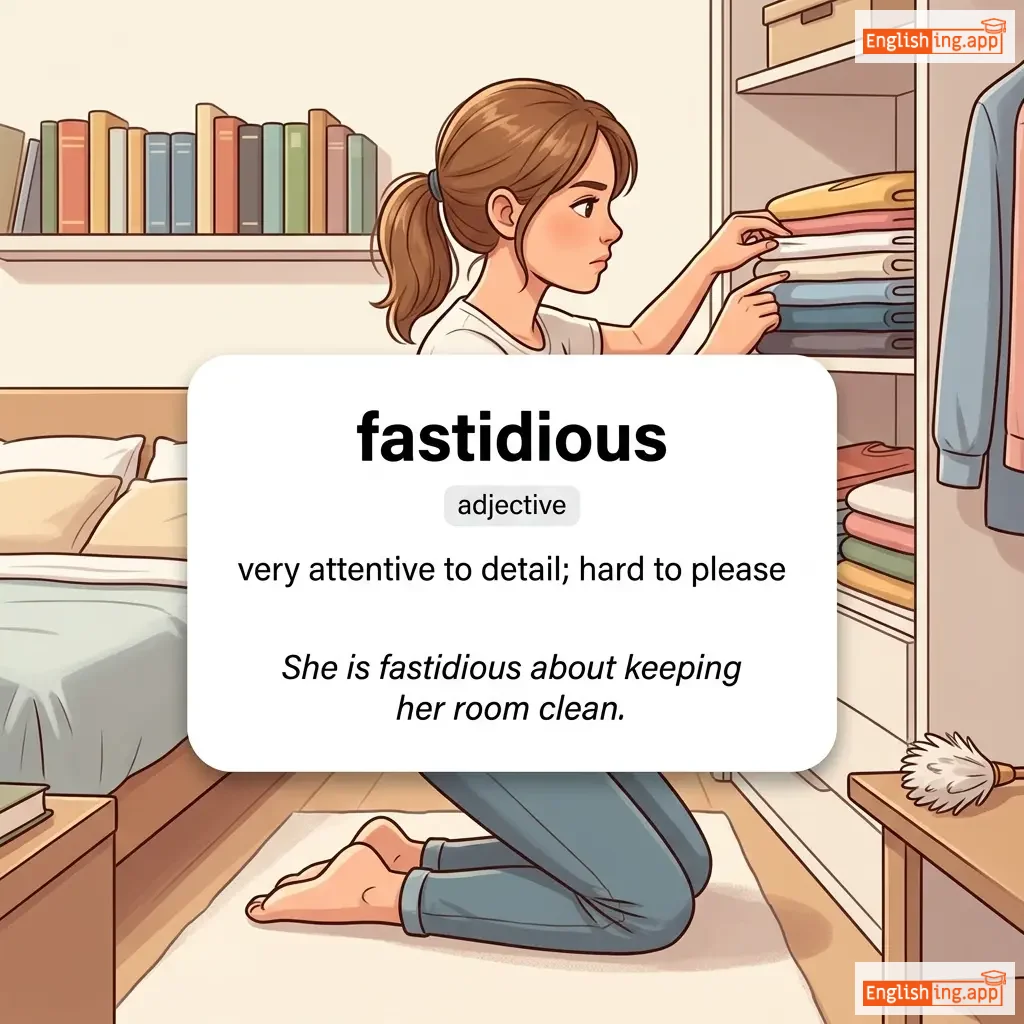
fastidious definition card — visual illustration of the meaning
adjective
/fæˈstɪdiəs/
几帳面な、細かいことにこだわる (kichoumena, komakai koto ni kodawaru)

very attentive to detail; hard to please

"She is fastidious about keeping her room clean."

"彼女は部屋を清潔に保つことに非常に几帳面です。" (Kanojo wa heya wo seiketsu ni tamotsu koto ni hijou ni kichoumen desu.)
adjective, noun
/fæt/
太っている (futotteiru)

having a lot of excess flesh; a natural oily substance in animal bodies

"Eating too much fast food can make you fat."

"ファストフードを食べ過ぎると太ることがあります。" (Fasuto fūdo o tabesugiru to futoru koto ga arimasu.)
adjective
/ˈfeɪtl/
致命的 (chimiteki)

causing death; leading to disaster

"The accident proved fatal for the driver."

"その事故は運転手にとって致命的だった。" (Sono jiko wa unten-shu ni totte chimiteki datta.)
noun
/ˈfeɪ.tə.lɪ.zəm/
運命論 (unmeiron)

the belief that all events are predetermined and inevitable

"He embraced fatalism, believing that nothing he did could change his destiny."

"彼は運命論を受け入れ、自分の行動が運命を変えることはできないと信じていました。" (Kare wa unmeiron o ukeire, jibun no kōdō ga unmei o kaeru koto wa dekinai to shinjite imashita.)
noun
/fəˈtæləti/
致命的な事故 (chimeiteki na jiko)

An occurrence of death by accident, disaster, or violence.

"The accident resulted in one fatality."

"その事故で1人が死亡した。" (Sono jiko de 1-ri ga shibō shita.)
adverb
/ˈfeɪ.təl.i/
致命的に (chimeiteki ni)

in a way that causes death; with deadly consequences; critically

"The accident fatally injured two passengers."

"事故は二人の乗客を致命的に負傷させた。" (Jiko wa futari no jōkyaku o chimeiteki ni fushō saseta.)
noun
/feɪt/
運命 (unmei)

the development of events beyond a person's control, regarded as determined by a supernatural power

"She believed it was her fate to become a teacher."

"彼女は教師になる運命だと信じていた。" (Kanojo wa kyoushi ni naru unmei da to shinjite ita.)
adjective
/ˈfeɪt.fəl/
運命的または致命的 (unmeiteki matawa chin'iteki)

having significant or disastrous consequences

"Their fateful decision changed the course of history."

"彼らの運命的な決定は歴史の流れを変えました。" (Karera no unmeiteki na kettei wa rekishi no nagare o kaemashita.)