語彙集

英単語辞書 | 単語の意味、定義、例文

noun
/frɪdʒ/
冷蔵庫 (reizouko)

a household appliance used to keep food and drinks cold to preserve freshness

"I put the milk back in the fridge after breakfast."

"朝食の後で牛乳を冷蔵庫に入れました。" (choushoku no ato de gyuunyuu o reizouko ni iremashita)
noun
/fraɪd raɪs/
チャーハン (chāhan)

a dish of cooked rice that has been stir-fried in a wok or frying pan

"We ordered chicken fried rice from the Chinese restaurant."

"私たちは中国料理店からチキンフライドライスを注文しました。" (watashitachi wa chūgokuryōri-ten kara chikin furaido raisu o chūmon shimashita.)
noun
/frɛnd/
友達 (tomodachi)

a person with whom one has a bond of mutual affection

"He is my best friend."

"彼は私の親友です。" (Kare wa watashi no shinyuu desu.)
adjective
/ˈfrɛndli/
幸福 (koufuku)

Kind and pleasant; showing goodwill and affection.

"The shop owner is very friendly to new customers."

"彼女は賞を受け取ったとき、幸せを隠すことができませんでした。" (Kanojo wa shou wo uketotta toki, shiawase wo kakusu koto ga dekimasen deshita.)
noun
/ˈfrɛndʃɪp/
友情 (yūjō)

A close and trusting relationship between two or more people.

"Their friendship has lasted since childhood."
"彼らの友情は幼少期から続いています。" (Karera no yūjō wa yōshōki kara tsuzuiteimasu.)
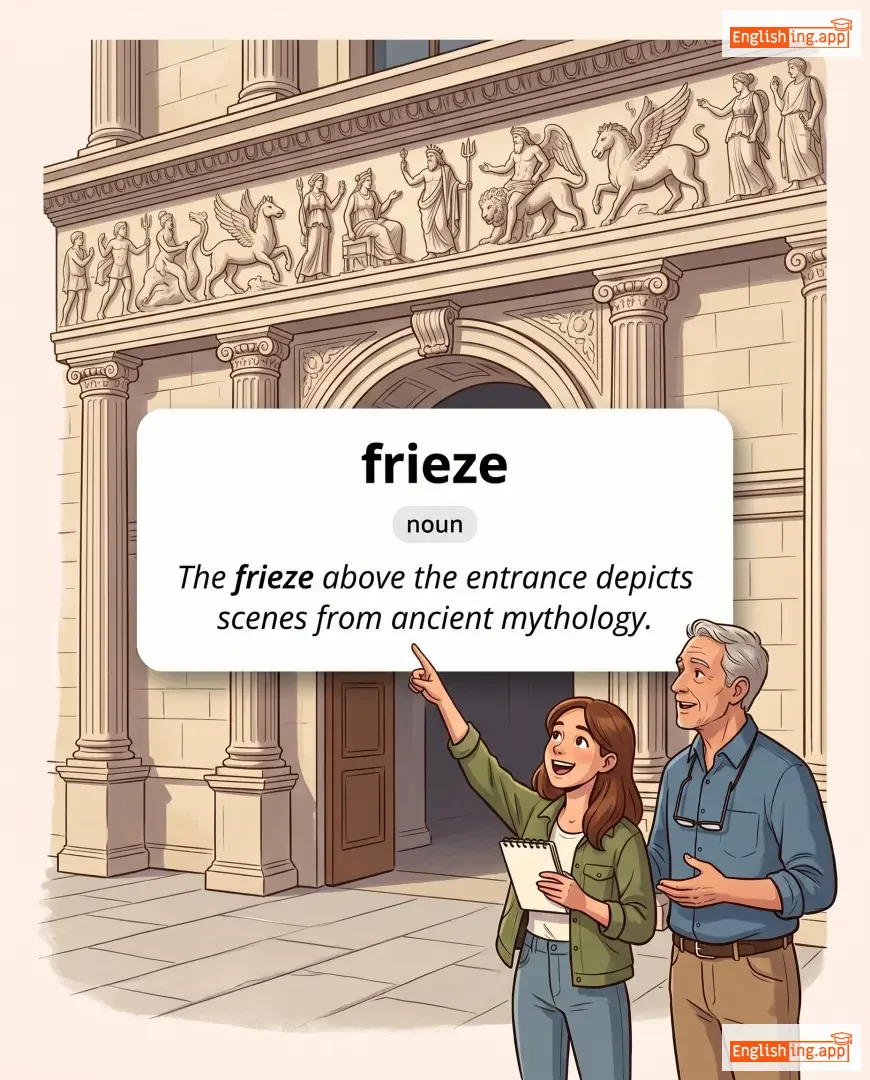
frieze definition card — visual illustration of the meaning
noun
/friːz/
フリーズ (furiizu)

a decorative horizontal band, often sculpted or painted, usually on a wall near the ceiling

"The frieze above the entrance depicts scenes from ancient mythology."

"入口上のフリーズは古代神話のシーンを描いています。" (iriguchi ue no furiizu wa kodai shinwa no shīn o egaiteimasu)
noun
/fraɪt/
恐怖; 驚き; 驚愕 (kyoufu, odoroki, kyougaku)

a sudden intense feeling of fear; a shock or surprise that causes fear

"The loud thunder gave her such a fright that she dropped her coffee cup."

"大きな雷の音で、彼女は恐怖を感じてコーヒーカップを落としました。" (Ookina kaminari no oto de, kanojo wa kyoufu o kanjite koohii kappu o otoshimashita.)
verb
/ˈfraɪtən/
怖がらせる (kowagaraseru)

to cause fear or alarm in someone

"The loud noise frightened the child."

"大きな音が子供を怖がらせた。" (ookina oto ga kodomo o kowagaraseta)
adjective
/ˈfraɪtənd/
怯えた (obieta)

feeling fear or anxiety; scared

"The child was frightened by the loud noise."

"その子供は大きな音に怯えた。" (sono kodomo wa ookina oto ni obieta)
adjective
/ˈfraɪtfəl/
恐ろしい (osoroshii)

causing fear or horror; very unpleasant

"The hikers faced frightful weather conditions on the mountain."

"登山者たちは山で恐ろしい天候条件に直面しました。" (Tozan-sha tachi wa yama de osoroshī tenkō jōken ni chokumen shimashita.)
adjective
/ˈfrɪdʒɪd/
極端に寒い (kyokutan ni samui)

extremely cold in temperature; lacking warmth or friendliness

"The explorers endured frigid conditions in the Arctic."

"探検家たちは北極で極端に寒い環境を耐えました。" (Tankenka tachi wa hokkyoku de kyokutan ni samui kankyō o taemashita.)
noun
/ˌfrɪdʒɪˈdɛːriəm/
冷水浴場 (reisui yokujou)

a large cold pool in ancient Roman baths used for cooling off after hot baths

"The ruins of the Roman frigidarium are still visible today."

"ローマのフリジダリウムの遺跡は今日でも見ることができます。" (Roma no frigidarium no iseki wa kyou demo miru koto ga dekimasu.)
noun
/frɪndʒ/
装飾的縁 / 端 (sōshokuteki en / hashi)

A decorative border of threads; the outer edge or margin of something.

"The festival had a fringe of small independent performances."

"フェスティバルには小さな独立したパフォーマンスの端がありました。" (Fesutibaru ni wa chiisana dokuritsu shita pafōmansu no hashi ga arimashita.)
verb
/frɪsk/
ボディチェックする (bodichikku suru)

To search a person by patting their clothing to check for concealed items.

"The security guard frisked the man at the entrance."

"セキュリティガードは入口でその男性をフリスクしました。" (Sekyuriti gādo wa iriguchi de sono dansei o furisuku shimashita.)
adjective
/ˈfrɪski/
活発な; エネルギッシュな; 遊び好きな; いたずら好きな (frisky)

lively; energetic; playful; mischievous

"The frisky puppy ran around the garden playfully."

"その元気な子犬は庭で遊びながら走り回っていました。" (Sono genki na koinu wa niwa de asobi nagara hashirimawatte imashita.)
verb
/ˈfrɪtər/
浪費する (rohhi suru)

To waste time, money, or energy on trivial matters.

"He frittered away his savings on unnecessary gadgets."

"彼は無駄にお金を浪費しました。" (Kare wa mudani okane wo rohi shimashita.)
noun
/frɪˈvɒləti/
軽薄さ (keihō-sa)

Lack of seriousness; silly or trivial behavior.

"The teacher discouraged frivolity during the exam."

"先生は試験中の軽薄な行動を戒めました。" (Sensei wa shiken-chū no keihō na kōdō o imashimemashita.)
adjective
/ˈfrɪvələs/
取るに足らない (toruni taranai)

Not having any serious purpose or value; silly or unimportant.

"She dismissed the frivolous complaint quickly."

"彼女は取るに足らない苦情をすぐに却下しました。" (Kanojo wa toruni taranai kujō o sugu ni kyakka shimashita.)
💇‍♀️

frizz

verb
/frɪz/

to form into small, tight curls or cause hair to become fuzzy and tangled

"The humid weather caused her hair to frizz."

verb
/ˈfrɪzəl/
食べ物をカリカリで縮れた状態にする (tabemono o karikari de chijireta jōtai ni suru)

to fry something until it becomes crisp and curled, or to make a sizzling noise

"The bacon began to frizzle in the pan."

"ベーコンがフライパンでシズシズ音を立てながら焼け始めました。" (Beekon ga furaipan de shizushizu oto o tate nagara yakehajimemashita.)
noun
/frɒk/
女性または女の子のドレス; ゆったりとした外衣 (josei matawa onnanoko no doresu; yuttari to shita gaiki)

a woman's or girl's dress; a loose outer garment

"She wore a beautiful frock to the party."

"彼女はパーティーに美しいドレスを着ていきました。" (Kanojo wa pātī ni utsukushī doresu o kite ikimashita.)
noun
/frɒɡ/
カエル (kaeru)

a tailless amphibian with a short squat body, moist smooth skin, and very long hind legs for leaping

"The frog jumped into the pond with a splash."

"そのカエルは水たまりに飛び込んだ。" (Sono kaeru wa mizutamari ni tobikonda.)
verb
/ˈfrɒlɪk/
楽しげに遊ぶ (tanoshige ni asobu)

to play and move about cheerfully, energetically, or playfully

"The children frolicked in the garden all afternoon."

"子供たちは午後中庭で楽しげに遊んでいました。" (Kodomotachi wa gogo naka niwa de tanoshige ni asonde imashita.)
adjective
/ˈfrɒlɪksəm/
陽気な (yōkina)

full of playful spirit; lively and fun-loving

"The frolicsome puppy kept everyone entertained."

"陽気な子犬は皆を楽しませていた。" (Yōkina koinu wa mina o tanoshimasete ita.)
preposition
/frəm/ or /frʌm/
から (kara)

Used to indicate the starting point of a journey, action, or source.

"She came from Dhaka to visit her family."

"彼女はダッカから家族を訪ねて来ました。" (Kanojo wa Dakkā kara kazoku o tazunete kimashita.)
noun
/frɒnd/
(ha)

A large, divided leaf of a fern, palm, or similar plant.

"The fern's frond stretched gracefully over the garden path."

"シダの葉は庭の小道を優雅に伸びました。" (Shida no ha wa niwa no komichi wo yuuga ni nobimashita.)
noun
/frʌnt/
前面 (maemuki)

the forward-facing part of something

"The house has a garden in front."
"家の前に庭があります。" (Ie no mae ni niwa ga arimasu.)
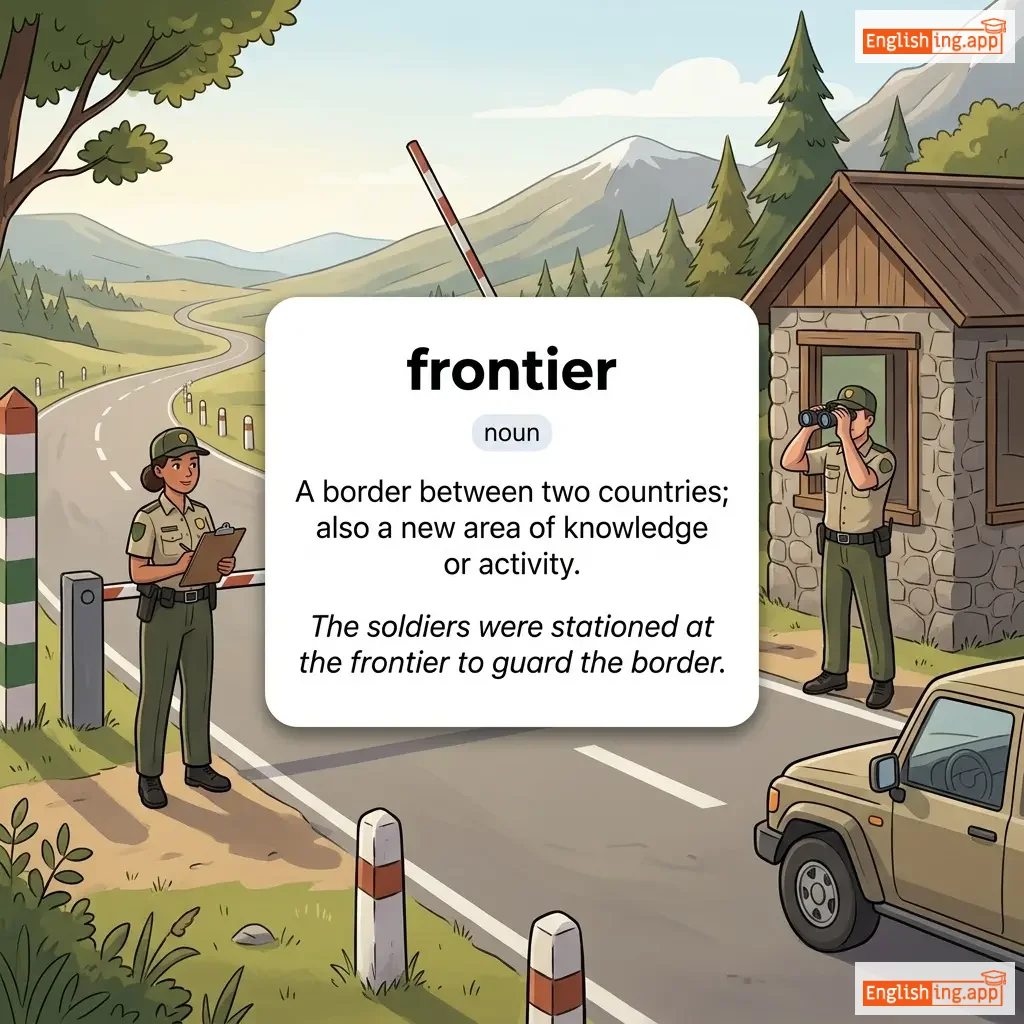
frontier definition card — visual illustration of the meaning
noun
/ˈfrʌntɪə(r)/
国境 (kokkyou)

A border between two countries; also a new area of knowledge or activity.

"The soldiers were stationed at the frontier to guard the border."
"兵士たちは国境に駐留して、境界を守っていた。" (Heishi-tachi wa kokkyou ni churyuu shite, kyoukai o mamotte ita.)
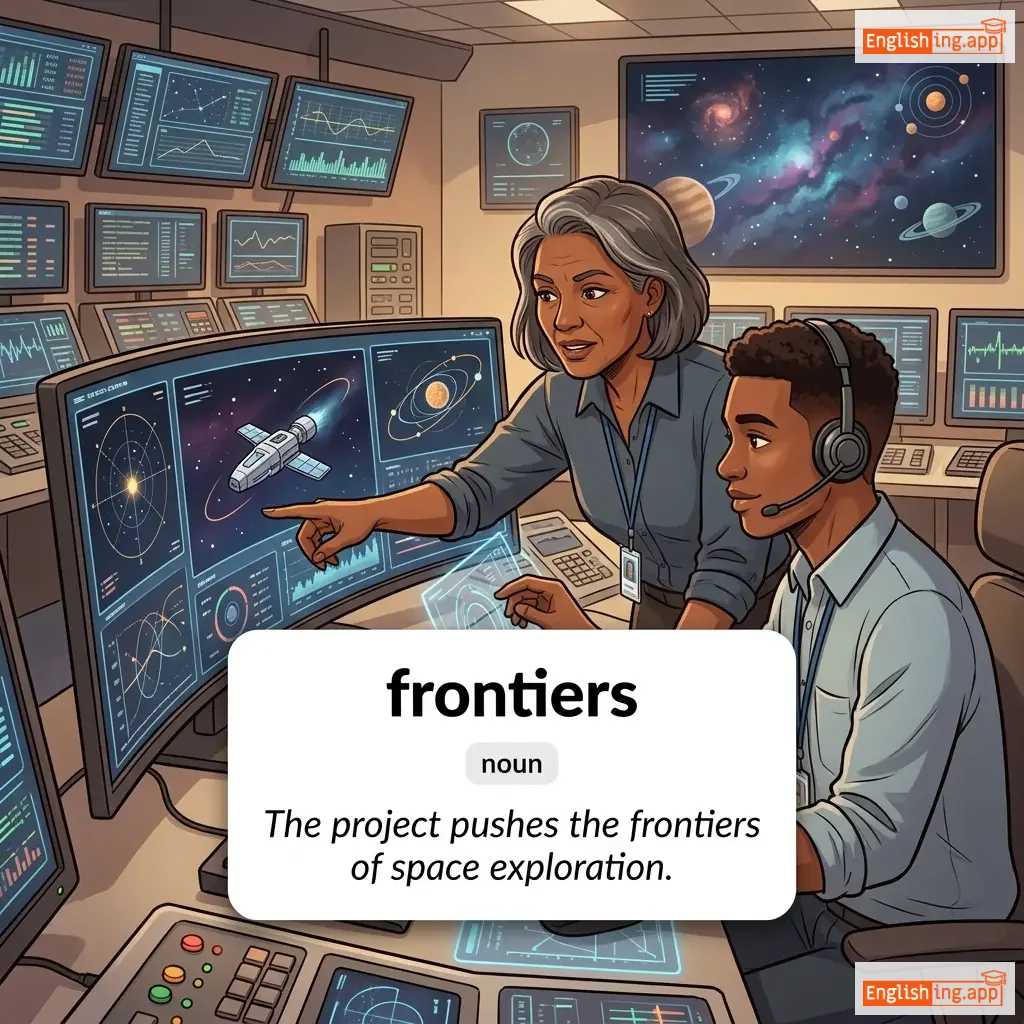
frontiers definition card — visual illustration of the meaning
noun
ˈfrʌn.tɪərz
最前線 (saizensen)

The extreme limit of settled land beyond which lies wilderness; the limits of knowledge or achievement in a particular field.

"The project pushes the frontiers of space exploration."

"このプロジェクトは宇宙探査の最前線を押し広げています。" (Kono purojekuto wa uchū tansa no saizensen o oshihirogeteimasu.)
adjective
/ˈfrɒθi/
泡立てた (awadeta)

Full of or covered with small bubbles; light and insubstantial.

"She ordered a cup of frothy cappuccino."
"彼女は泡立てたカプチーノを注文しました。" (Kanojo wa awadeta kappuchīno o chūmon shimashita.)
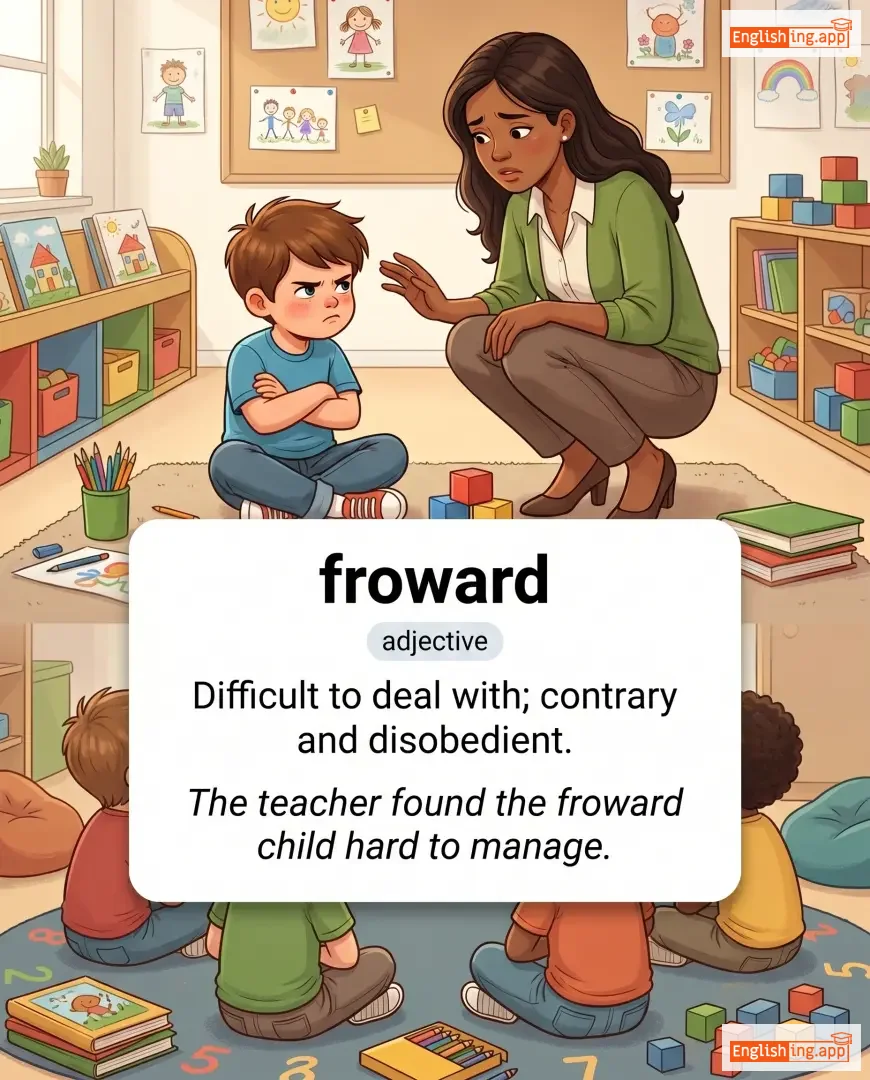
froward definition card — visual illustration of the meaning
adjective
/ˈfrəʊərd/
頑固な (ganko na)

Difficult to deal with; contrary and disobedient.

"The teacher found the froward child hard to manage."
"教師は頑固な子供を扱うのが難しいと感じた。" (Kyoushi wa ganko na kodomo o atsukau no ga muzukashii to kanjita.)
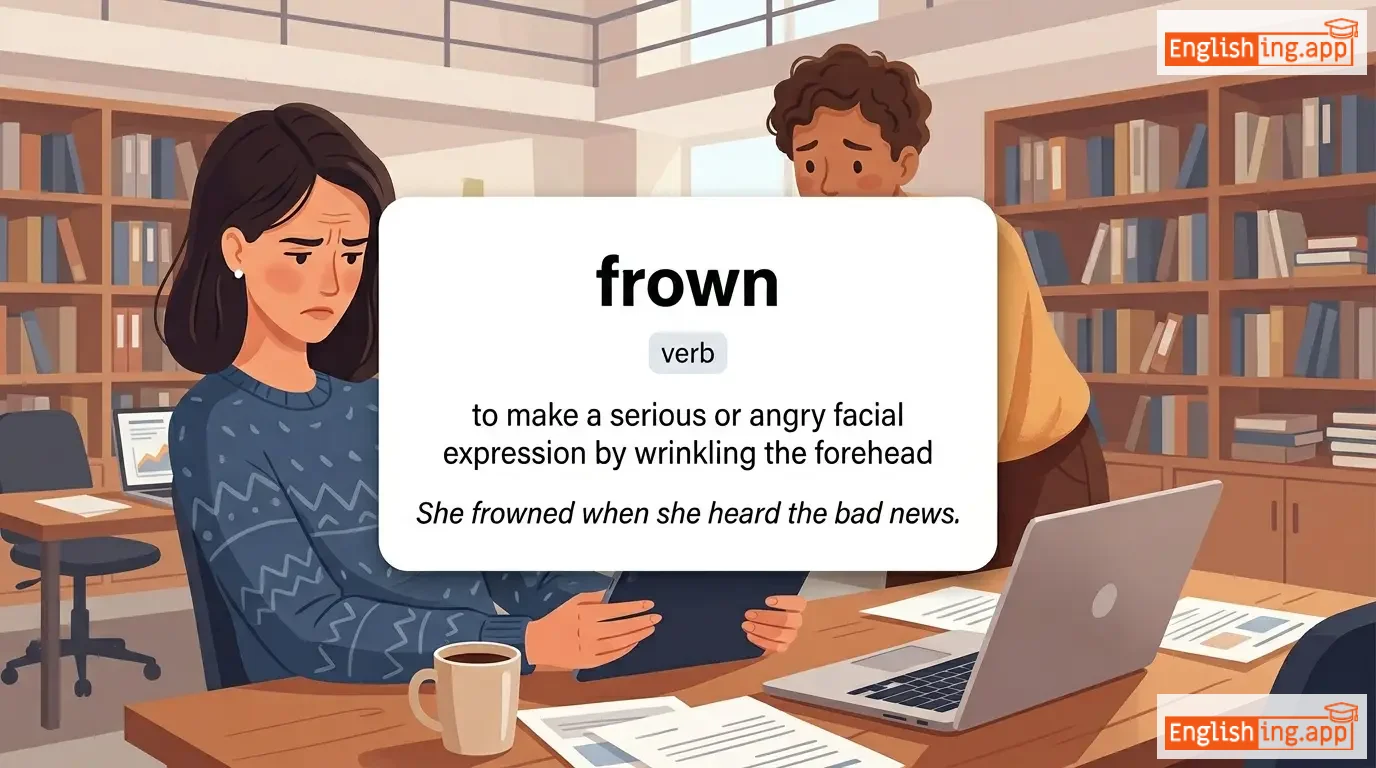
frown definition card — visual illustration of the meaning
verb
/fraʊn/
しかめっ面 (shikametsura)

to make a serious or angry facial expression by wrinkling the forehead

"She frowned when she heard the bad news."

"彼女は悪いニュースを聞いてしかめっ面をした。" (Kanojo wa warui nyuusu o kiite shikametsura o shita.)
adjective
/ˈfraʊzi/
だらしない (darashinai)

Scruffy and neglected in appearance; musty or stale in smell.

"He wore a frowsy old jacket that smelled of damp."

"彼はだらしない古いジャケットを着ていて、それは湿気の匂いがしました。" (Kare wa darashinai furui jaketto o kite ite, sore wa shimeatta nioi ga shimashita.)
adjective
/ˈfraʊzi/
だらしない (darashinai)

Unkempt, messy, or having a musty, unpleasant smell.

"He entered the room with a frowzy appearance after sleeping on the couch."

"彼はソファで寝た後、だらしない外見で部屋に入ってきました。" (Kare wa sofa de neta ato, darashinai gaiken de heya ni haittekimashita.)
adjective
/ˈfroʊzən/
凍った (kotta)

preserved by being made extremely cold; turned into ice

"The lake was completely frozen during winter."

"湖は冬に完全に凍っていた。" (Mizuumi wa fuyu ni kanzen ni kotteita.)
verb
/ˈfrʌktɪˌfaɪ/
実らせる (minaraseru)

To make fruitful or productive; to bear fruit.

"The new policies will help fructify the economic potential of the region."

"新しい政策は地域の経済的な潜在能力を実らせるのに役立ちます。" (Atarashī seisaku wa chiiki no keizai-teki na senzai nōryoku o minoraseru no ni yakudachimasu.)
adjective
/ˈfruːɡəl/
倹約的 (ken'yakuteki)

Economical in use or expenditure; avoiding waste.

"She is very frugal and always saves a portion of her income."
"彼女は非常に倹約家で、常に収入の一部を貯金しています。" (Kanojo wa hijou ni ken'yaku ka de, tsune ni shuunyuu no ichibu o chokin shiteimasu.)
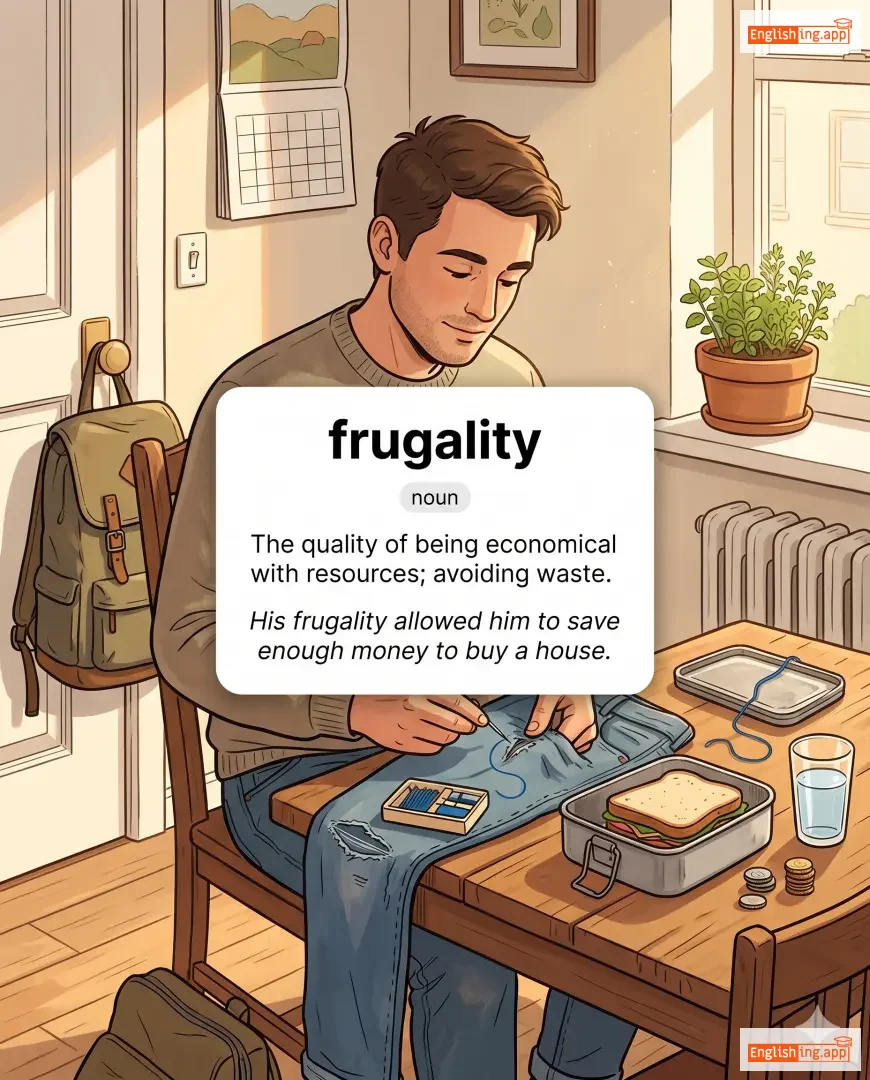
frugality definition card — visual illustration of the meaning
noun
/fruːˈɡæləti/
倹約 (ken'yaku)

The quality of being economical with resources; avoiding waste.

"His frugality allowed him to save enough money to buy a house."

"彼の倹約により、家を買うために十分なお金を貯めることができました。" (Kare no ken'yaku ni yori, ie o kau tame ni juubun na okane o tameru koto ga dekimashita.)
noun
/fruːt/
果物 (kudamono)

The sweet and fleshy product of a plant that contains seeds.

"Mango is my favorite fruit."

"マンゴーは私のお気に入りのフルーツです。" (Mangō wa watashi no okiniiri no furūtsu desu.)
adjective
/ˈfruːtfəl/
実りのある (minori no aru)

Producing good results or being productive.

"Their meeting was fruitful and led to many new ideas."

"彼らの会議は実りのあるもので、多くの新しいアイデアを生み出しました。" (Karera no kaigi wa minori no aru mono de, ooku no atarashī aidea o umidashimashita.)
noun
/fruˈɪʃən/
実現 (jitsugen)

The realization or fulfillment of a plan, project, or desire.

"Her dream of becoming a doctor finally came to fruition."

"医者になるという彼女の夢はついに実現した。" (Isha ni naru to iu kanojo no yume wa tsuini jitsugen shita.)
adjective
/ˈfruːt.ləs/
無駄な; 実を結ばない; 無益な; (mudana; mi o musubanai; mueki na)

unsuccessful; futile; pointless;

"After hours of searching, their efforts proved fruitless."

"数時間の探索の後、彼らの努力は無駄であることが証明されました。" (Suujikan no tansaku no ato, karera no doryoku wa muda dearu koto ga shoumei saremashita.)
verb
/ˈfrʌstreɪt/

To prevent someone from accomplishing something; to cause feelings of annoyance or disappointment.

"The constant delays frustrated the team."

adjective
/ˈfrʌstreɪtɪd/
フラストレーション (furasutore-shon)

feeling annoyed or upset because of inability to achieve something

"She felt frustrated after failing the exam."

"彼女は試験に失敗した後、フラストレーションを感じました。" (Kanojo wa shiken ni shippai shita ato, furasutore-shon o kanjimashita.)
adjective
/ˈfrʌstreɪtɪŋ/
苛立たしい (iradateshii)

causing annoyance or dissatisfaction

"The slow internet connection was really frustrating."

"遅いインターネット接続は本当に苛立たしかった。" (Osui intānetto setsuzoku wa hontōni iradateshikatta.)
noun
/frʌˈstreɪʃən/
フラストレーション (furasutoreeshon)

The feeling of being upset or annoyed due to inability to achieve something.

"He felt deep frustration when his plans failed."

"彼は自分の計画が失敗したとき、深いフラストレーションを感じました。" (Kare wa jibun no keikaku ga shippai shita toki, fukai furasutoreeshon o kanjimashita.)
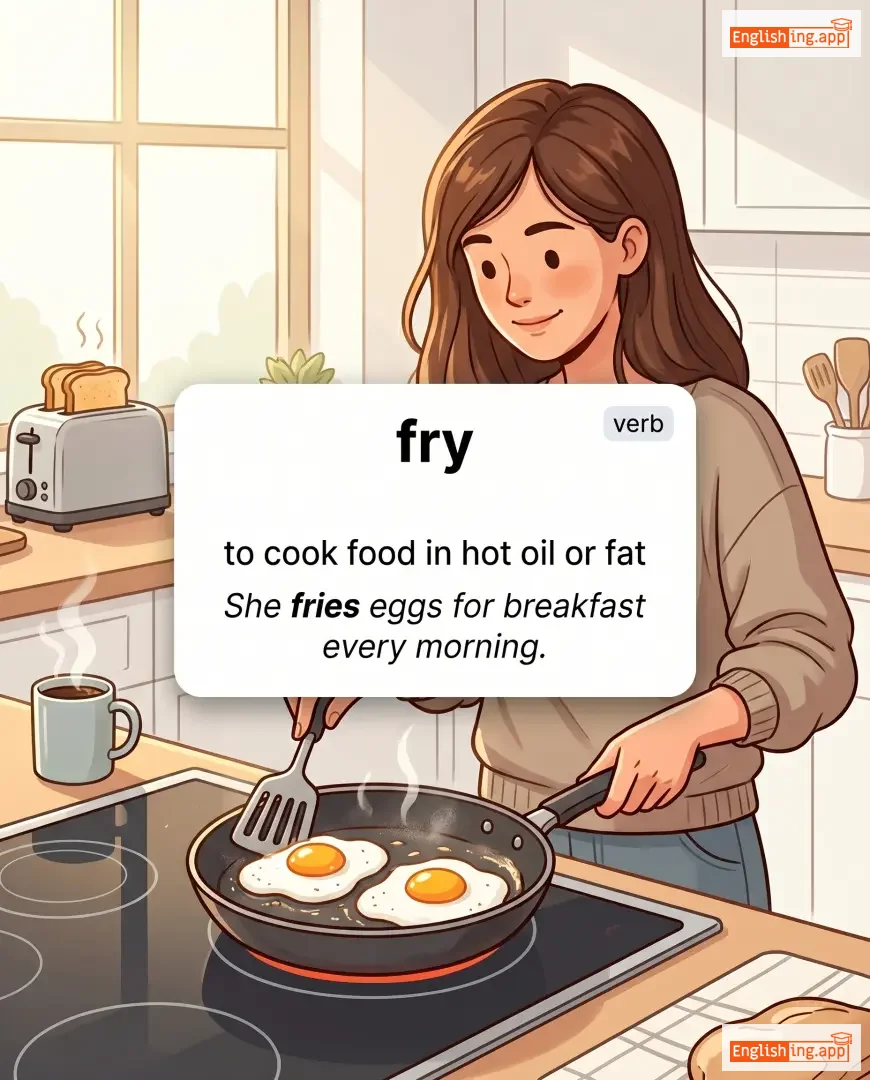
fry definition card — visual illustration of the meaning
noun
/fraɪ/
稚魚 (chigyo)

young fish; small fish; to cook food in hot fat or oil

"The fisherman caught many small fry in his net."

"漁師は網で多くの小さな稚魚を捕まえた。" (ryoshi wa ami de ooku no chiisana chigyo o tsukamaeta)
adjective, adverb (informal, vulgar)
/ˈfʌkɪŋ/
クソ (強調のための卑猥な言葉) (kuso (kyouchou no tame no hīwa na kotoba))

used for emphasis, often expressing anger or frustration (vulgar slang)

"It was a fucking disaster!"

"それはクソみたいな災害だった!" (Sore wa kuso mitaina saigai datta!)
verb
/ˈfʌdəl/
混乱させる (konran saseru)

To confuse or stupefy, especially with alcohol or overwhelming information.

"The complicated instructions fuddled the new employees."

"複雑な指示が新しい従業員を混乱させました。" (Fukuzatsu na shiji ga atarashī jūgyōin o konran sasemashita.)

Fuel

noun/verb
/ˈfjuːəl/

A material such as coal, gas, or oil that is burned to produce energy; also to supply with energy or power.

"The car needs fuel to run efficiently."