語彙集

英単語辞書 | 単語の意味、定義、例文

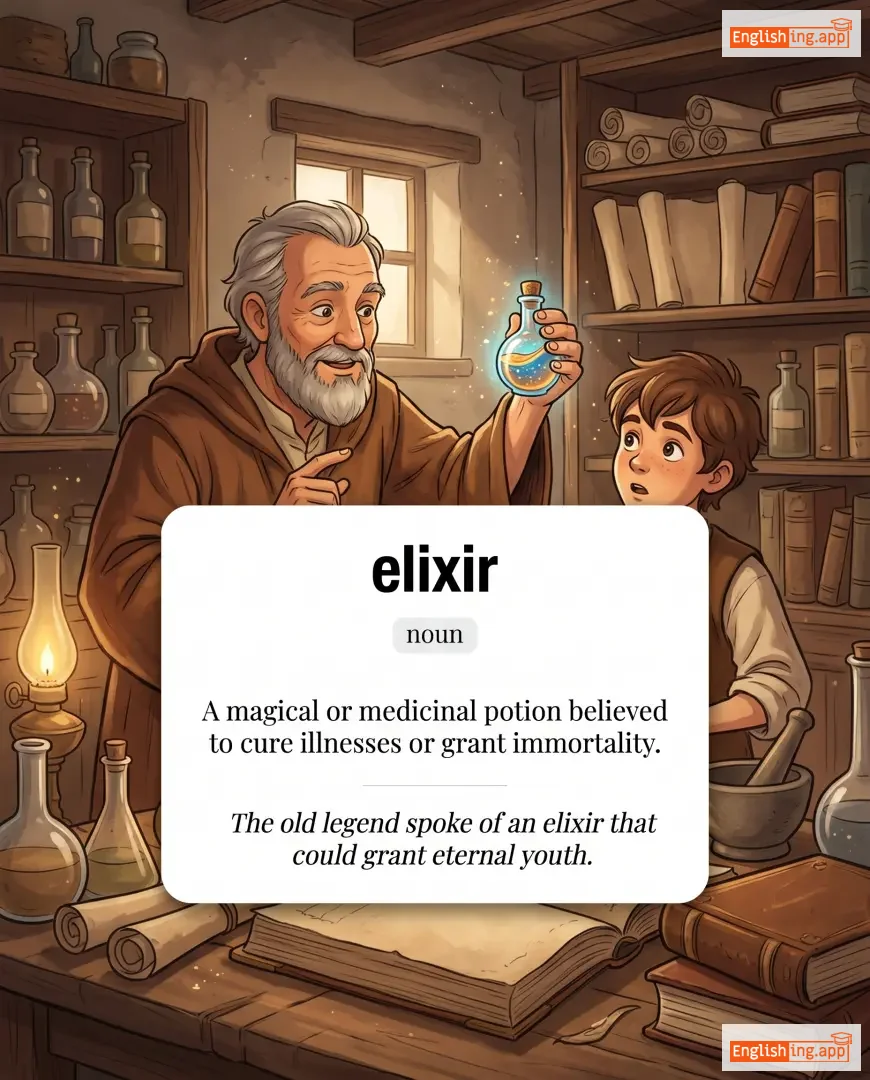
elixir definition card — visual illustration of the meaning
noun
/ɪˈlɪksər/
エリクシール (erikushīru)

A magical or medicinal potion believed to cure illnesses or grant immortality.

"The old legend spoke of an elixir that could grant eternal youth."

"古代の伝説は、永遠の若さを与えることができるエリクシールについて語っていました。" (Kodai no densetsu wa, eien no wakasa o ataeru koto ga dekiru erikushīru ni tsuite katatte imashita.)
adjective
/ɪˌlɪzəˈbiːθən/
エリザベス朝時代 (Erizabesu-chou jidai)

Relating to the reign of Queen Elizabeth I of England (1558–1603), especially the style of that period.

"Shakespeare wrote many of his plays during the Elizabethan era."

"シェイクスピアはエリザベス朝時代に多くの戯曲を書きました。" (Sheikusupia wa Erizabesu-chou jidai ni ooku no gikyoku o kakimashita.)
noun
/ɪˈlɪpsɪs/
省略記号 (shōryaku kigō)

The omission of words in a sentence, represented by three dots (...).

"The writer used an ellipsis to show that part of the quote was omitted."

"作家は引用部分が省略されたことを示すために省略記号を使用しました。" (Sakka wa in'yō bubun ga shōryaku sareta koto o shimesu tame ni shōryaku kigō o shiyō shimashita.)
adjective
/ɪˈlɪptɪkl/
楕円形の (daenkei no)

Having the shape of an ellipse; also, a style of speech that is concise and sometimes obscure.

"The planet follows an elliptical orbit around the sun."

"その惑星は太陽の周りをエリプティカルな軌道で回っています。" (Sono wakusei wa taiyo no mawari o eriputikaru na kidou de mawatteimasu.)
noun
/ˌɛləˈkjuːʃn/
弁論術 (benron-jutsu)

The skill of clear and expressive speech, especially in public speaking.

"She improved her elocution through constant practice."

"彼女は継続的な練習を通じて弁論術を向上させた。" (Kanojo wa keizokuteki na renshū o tōjite benron-jutsu o kōjō saseta.)
verb
/ɪˈloʊp/
駆け落ちする (kakeochi suru)

to run away secretly in order to get married, especially without parental consent

"The young couple decided to elope to another city."
"若いカップルは別の都市に駆け落ちすることに決めました。" (Wakai kappuru wa betsu no toshi ni kakeochi suru koto ni kimemashita.)
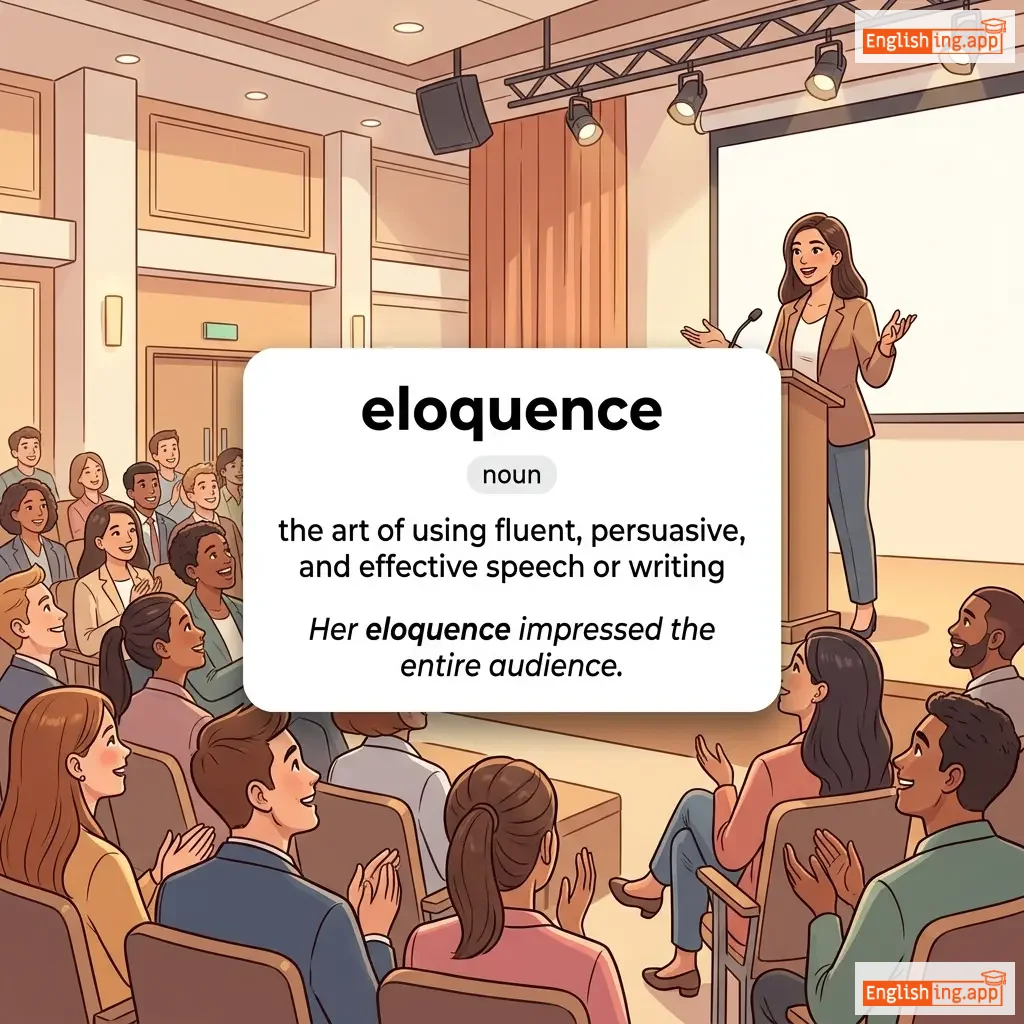
eloquence definition card — visual illustration of the meaning
noun
/ˈɛləkwəns/
雄弁 (yūben)

the art of using fluent, persuasive, and effective speech or writing

"Her eloquence impressed the entire audience."
"彼女の雄弁は会場全体に感銘を与えた。" (kanojo no yūben wa kaijō zentai ni kanmei o ataeta.)
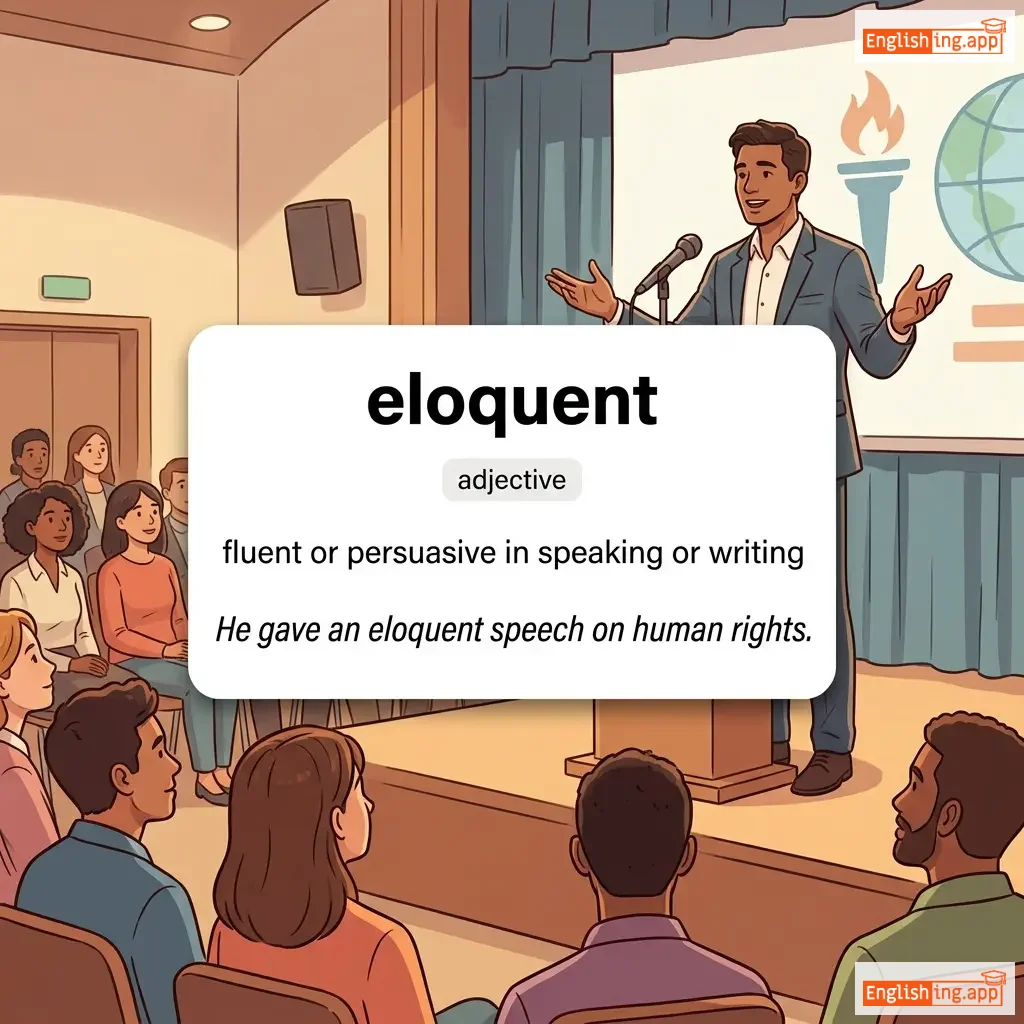
eloquent definition card — visual illustration of the meaning
adjective
/ˈɛləkwənt/
雄弁な (yūben na)

fluent or persuasive in speaking or writing

"He gave an eloquent speech on human rights."

"彼は人権について雄弁なスピーチを行った。" (kare wa jinken ni tsuite yūben na supīchi o okonatta)
adverb
/ɛls/
他に何か (hoka ni nanika)

In addition; besides.

"Is there anything else you need?"

"他に何か必要ですか?" (Hoka ni nanika hitsuyou desu ka?)
adverb
/ˈɛlswɛr/
他の場所で (hoka no basho de)

In, at, or to some other place.

"If you can’t find it here, try looking elsewhere."
"ここで見つからない場合は、他の場所で探してみてください。" (Koko de mitsukaranai baai wa, hoka no basho de sagashite mite kudasai.)
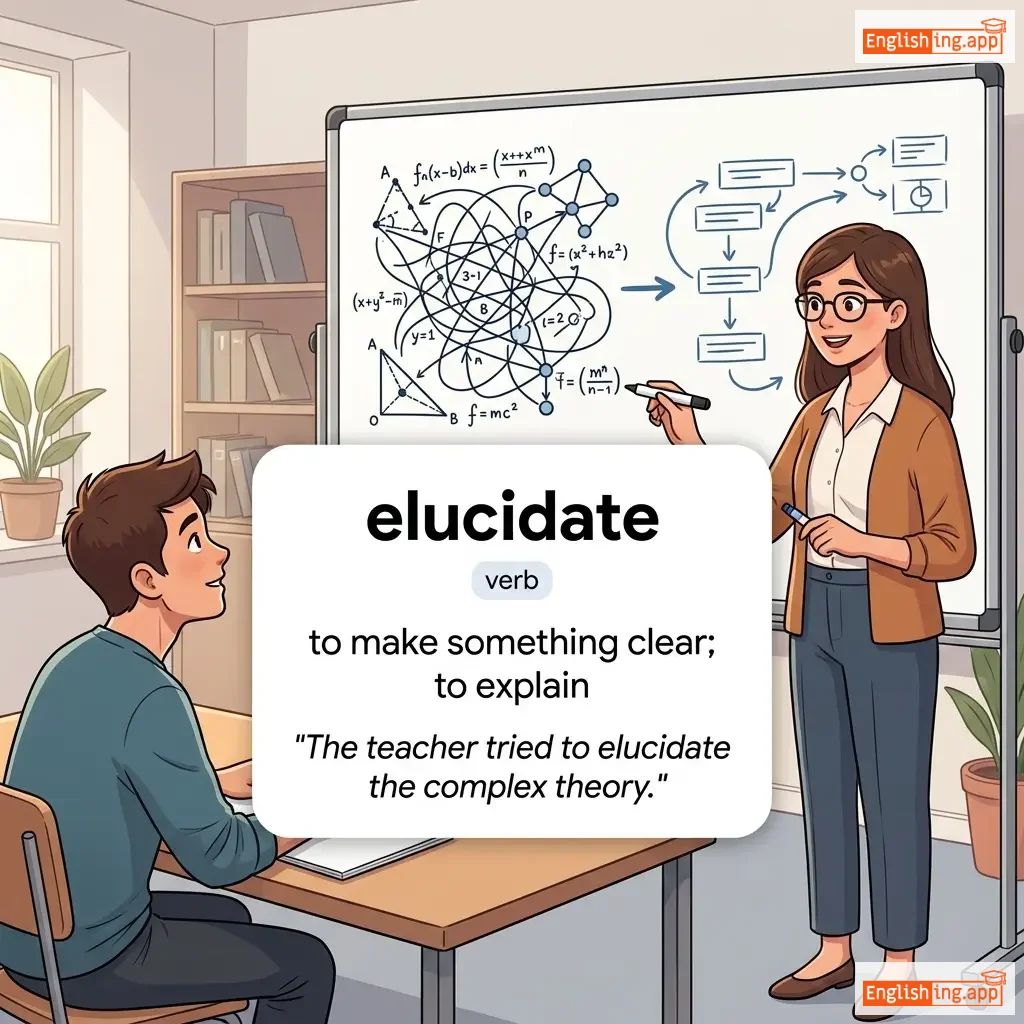
elucidate definition card — visual illustration of the meaning
verb
/ɪˈluːsɪdeɪt/
明確にする (meikaku ni suru)

to make something clear; to explain

"The teacher tried to elucidate the complex theory."
"先生は複雑な理論を明確にしようとしました。" (Sensei wa fukuzatsu na riron o meikaku ni shiyou to shimashita.)
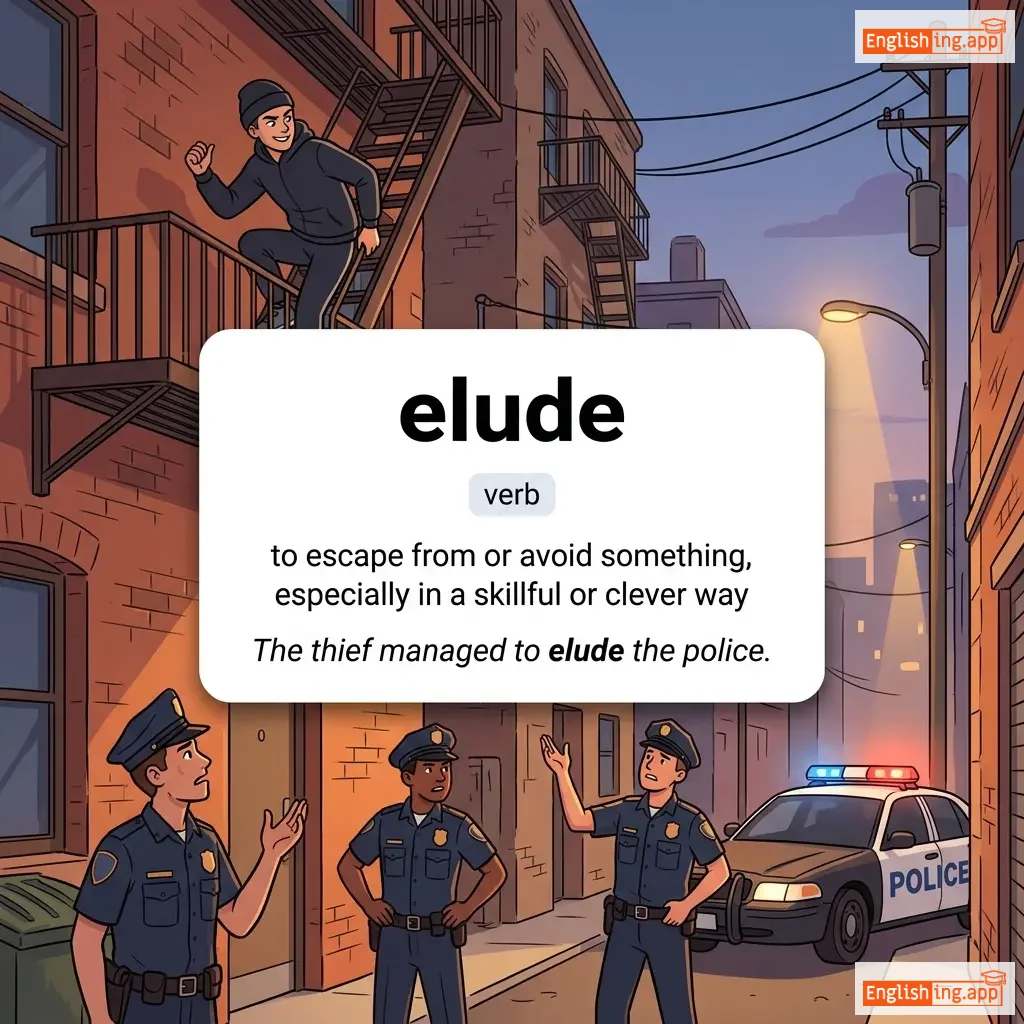
elude definition card — visual illustration of the meaning
verb
/ɪˈluːd/
逃れる (nogareru)

to escape from or avoid something, especially in a skillful or clever way

"The thief managed to elude the police."

"泥棒は警察をかわすことに成功した。" (Dorobou wa keisatsu o kawasu koto ni seikou shita.)
noun
/ɪˈluːʒən/
回避 (kaihi)

The act of escaping or avoiding something, especially by cleverness or trickery.

"His constant elusion of responsibility frustrated his colleagues."

"彼の責任逃れは同僚を苛立たせた。" (Kare no sekinin nogare wa dōryō o iradataseta.)
adjective
/ɪˈluːsɪv/
捕えにくい (toraenikui)

Difficult to find, catch, or achieve; hard to understand or define.

"The solution to the problem proved elusive."
"その問題の解決策は捕えにくいことが証明された。" (sono mondai no kaiketsusaku wa toraenikui koto ga shōmei sareta.)
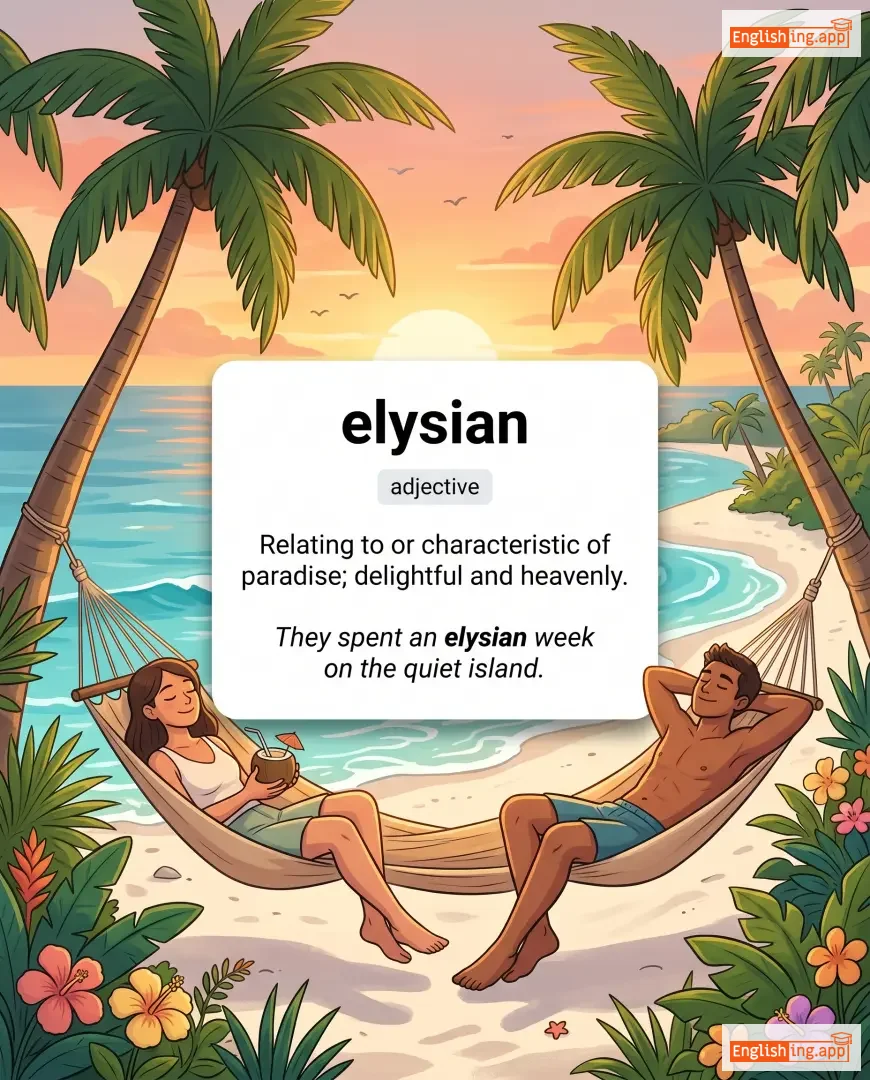
elysian definition card — visual illustration of the meaning
adjective
/ɪˈlɪʒən/
天国の (tengoku no)

Relating to or characteristic of paradise; delightful and heavenly.

"They spent an elysian week on the quiet island."

"彼らは静かな島で天国のような一週間を過ごしました。" (Karera wa shizukana shima de tengoku no yōna isshūkan o sugoshimashita.)
noun
/ɪˈlɪziəm/
エリシウム (erishiumu)

A place or state of perfect happiness; in Greek mythology, the afterlife paradise.

"For her, the garden was a personal elysium."

"彼女にとって、その庭は個人的なエリシウムでした。" (kanojo ni totte, sono niwa wa kojinteki na erishiumu deshita.)
verb
/ɪˈmeɪʃieɪt/
衰弱させる (suijaku saseru)

To make abnormally thin or weak, usually because of illness or lack of food.

"The prisoners were emaciated after months without proper food."
"囚人たちは数ヶ月間適切な食事がなくて衰弱していました。" (Shuujin-tachi wa suukagetsu kan tekisetsuna shokuji ga nakute suijaku shiteimashita.)
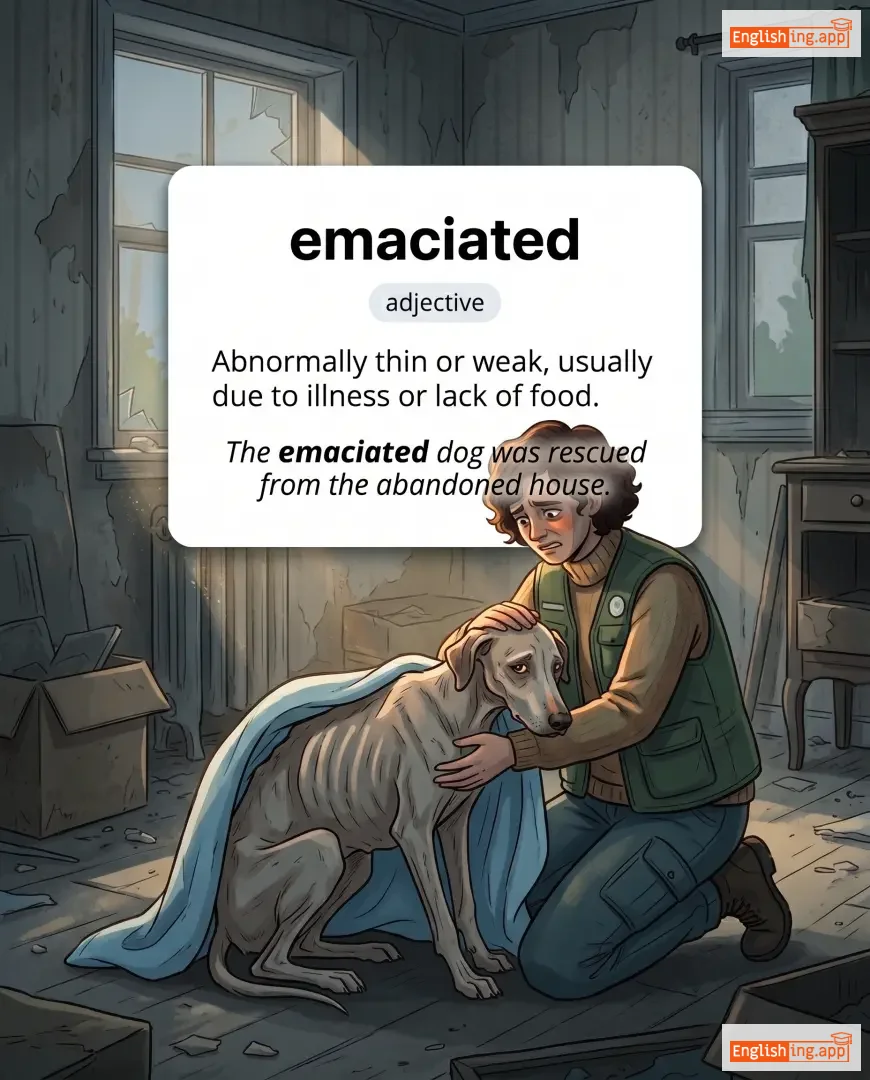
emaciated definition card — visual illustration of the meaning
adjective
/ɪˈmeɪʃieɪtɪd/
やせ衰えた (yaseo reota)

Abnormally thin or weak, usually due to illness or lack of food.

"The emaciated dog was rescued from the abandoned house."

"そのやせ衰えた犬は放置された家から救出されました。" (Sono yaseo reota inu wa hōchi sareta ie kara kyūshutsu saremashita.)
verb
/ˈɛm.ə.neɪt/
発する (hassuru)

To come out or spread from a source.

"A sweet fragrance emanated from the garden."
"甘い香りが庭から発せられました。" (Amai kaori ga niwa kara hasseraremashita.)
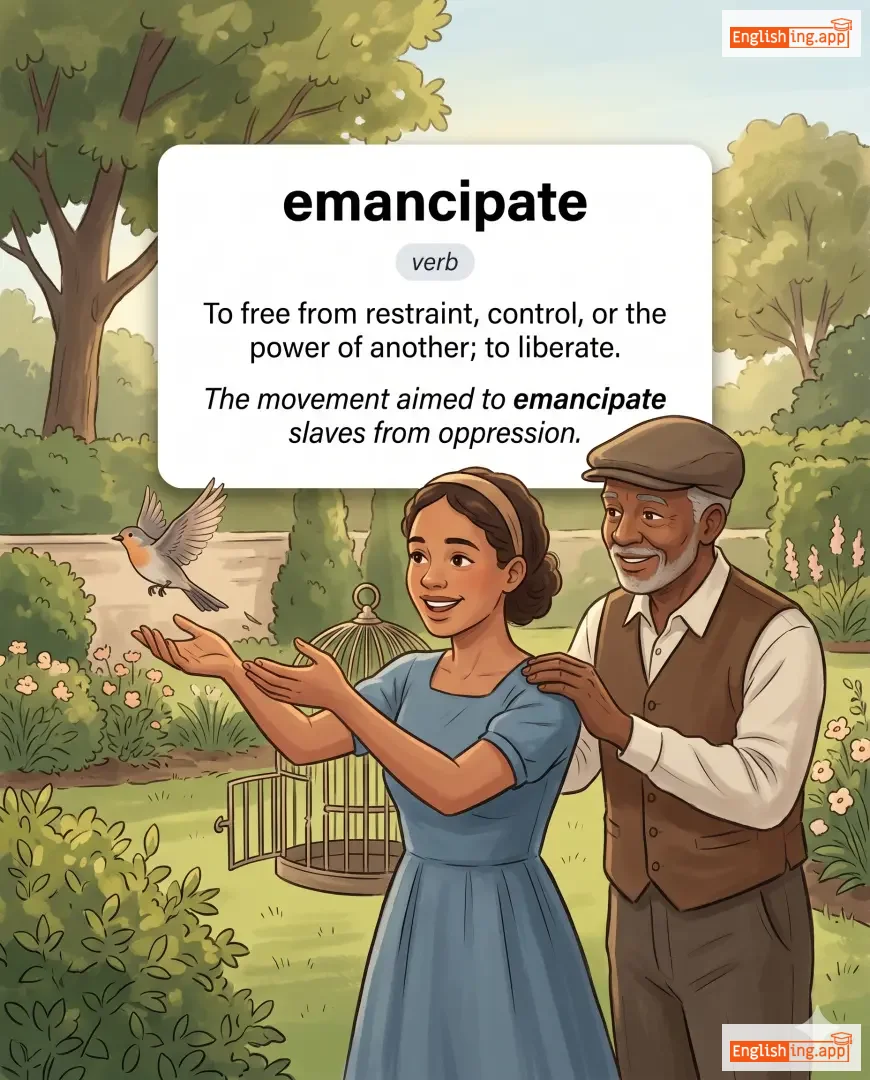
emancipate definition card — visual illustration of the meaning
verb
/ɪˈmæn.sɪ.peɪt/
幸せ (shiawase)

To free from restraint, control, or the power of another; to liberate.

"The movement aimed to emancipate slaves from oppression."

"彼女は賞を受け取ったとき、自分の幸せを隠すことができませんでした。" (Kanojo wa shō o uketotta toki, jibun no shiawase o kakusu koto ga dekimasen deshita.)
noun
/ɪˌmæn.sɪˈpeɪ.ʃən/
解放 (kaihou)

the fact or process of being set free from legal, social, or political restrictions

"The emancipation of slaves was a significant moment in American history."

"奴隷解放はアメリカの歴史における重要な瞬間でした。" (Dorei kaihou wa Amerika no rekishi ni okeru juuyou na shunkan deshita.)
verb
/ɪˈmæskjʊleɪt/
無力化する (muryokuka suru)

To make someone weaker or less effective; to deprive of strength or vigor.

"The constant criticism emasculated his confidence."
"絶え間ない批判が彼の自信を削弱した。" (Taemanai hihan ga kare no jishin o sakyaku shita.)
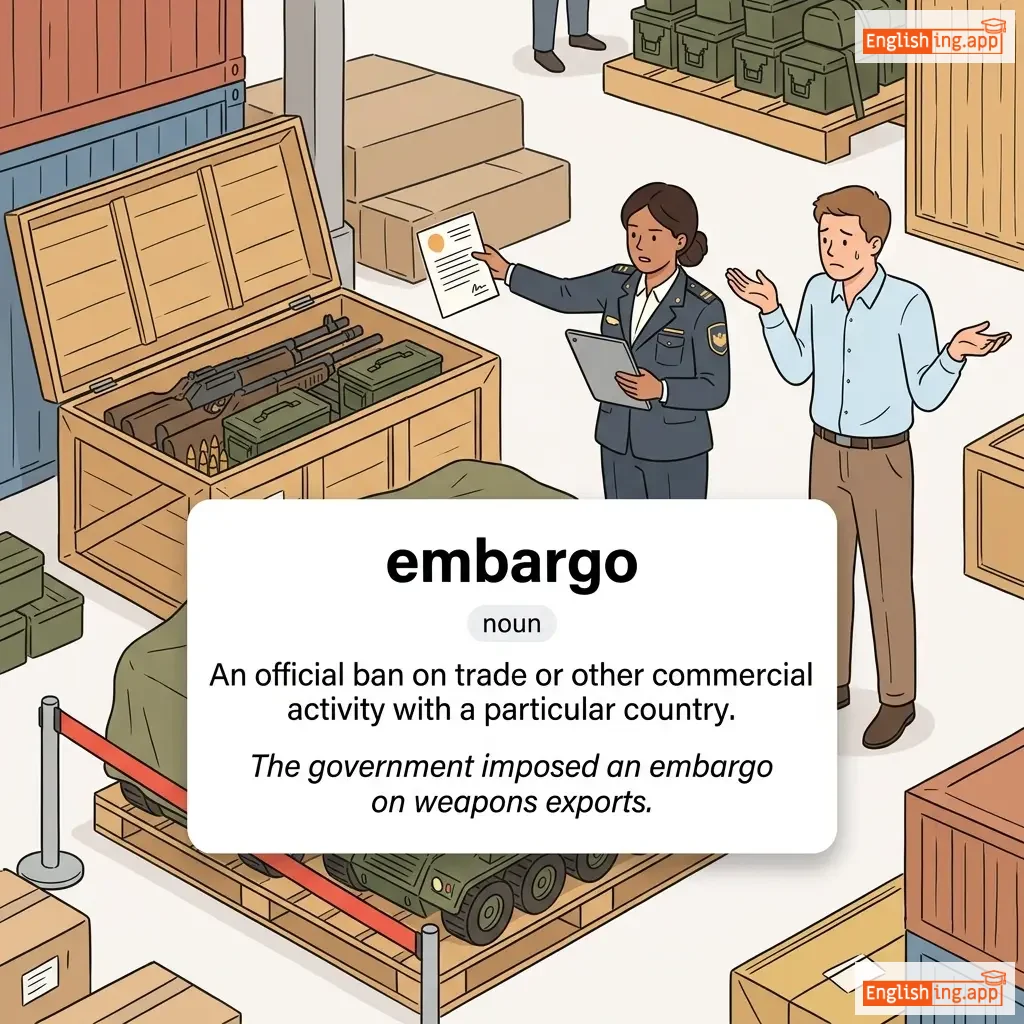
embargo definition card — visual illustration of the meaning
noun
/ɛmˈbɑːrɡoʊ/
禁輸 (kinyu)

An official ban on trade or other commercial activity with a particular country.

"The government imposed an embargo on weapons exports."

"政府は武器の輸出に禁輸措置を課しました。" (Seifu wa buki no yushutsu ni kinyu sochi o kashimashita.)
verb
/ɪmˈbɑːrk/
乗り出す (noridasu)

to begin a journey, project, or activity

"She decided to embark on a new career in medicine."
"彼女は医学の新しいキャリアを始める決断を下しました。" (Kanojo wa igaku no atarashii kyaria wo hajimeru ketsudan wo kudashimashita.)
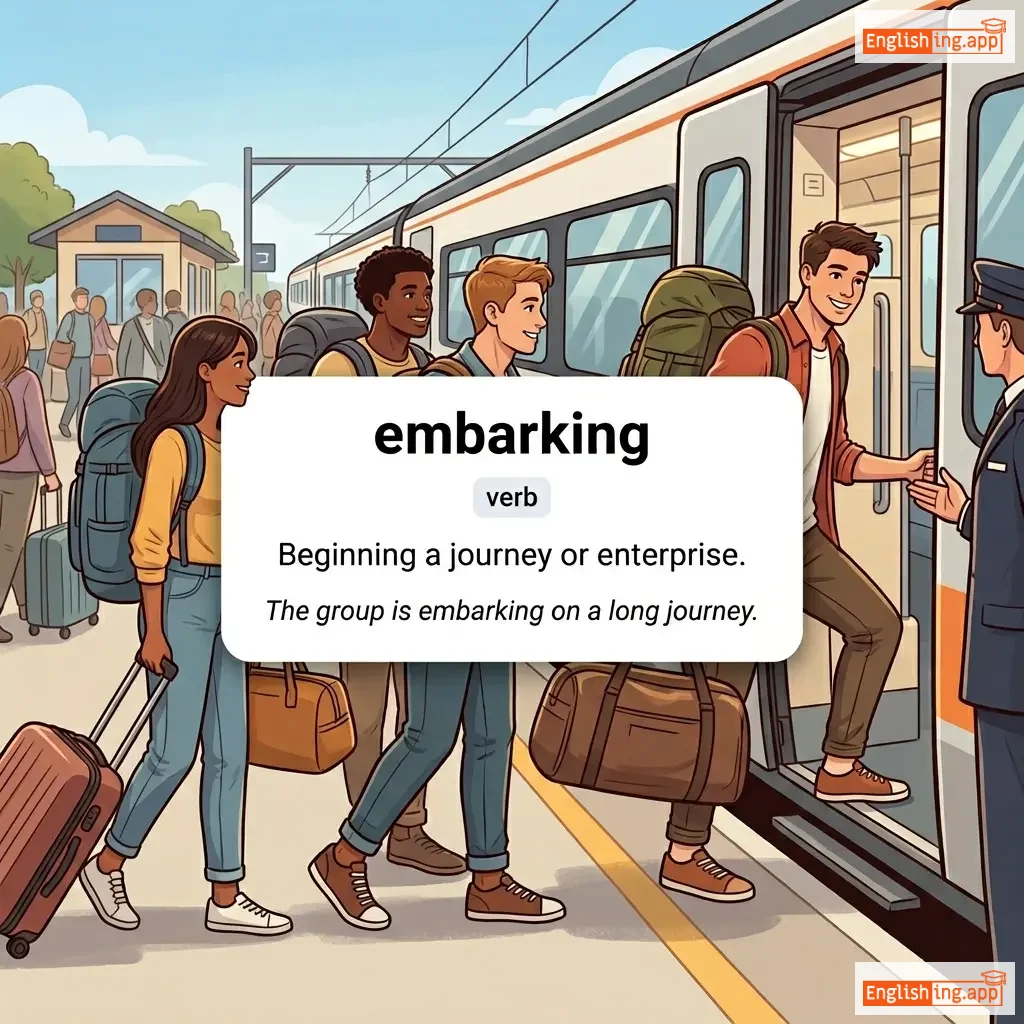
embarking definition card — visual illustration of the meaning
verb
/ɪmˈbɑːrkɪŋ/
旅行を始める (ryokou wo hajimeru)

Beginning a journey or enterprise.

"The group is embarking on a long journey."

"グループは長い旅行を始めるところです。" (Gurūpu wa nagai ryokō o hajimeru tokoro desu.)
verb
/ɪmˈbærəs/

to cause someone to feel awkward, self-conscious, or ashamed

"His rude comment really embarrassed her in front of everyone."

adjective
/ɪmˈbærəst/
恥ずかしい (hazukashii)

feeling awkward, ashamed, or self-conscious about something

"He felt embarrassed when he forgot her name."

"彼は彼女の名前を忘れたとき、恥ずかしいと感じた。" (Kare wa kanojo no namae o wasureta toki, hazukashii to kanjita.)
adjective
/ɪmˈbær.ə.sɪŋ/
恥ずかしい; 気まずい; 屈辱的な (hazukashii)

causing shame or awkwardness; uncomfortable; humiliating

"It was embarrassing when I forgot her name."

"彼女の名前を忘れたとき、それは恥ずかしかったです。" (Kanojo no namae o wasureta toki, sore wa hazukashikatta desu.)
noun
/ɪmˈbærəsmənt/
恥ずかしさ (hazukashisa)

a feeling of self-consciousness, shame, or awkwardness

"Her face turned red with embarrassment after the mistake."

"彼女は間違いを犯した後、恥ずかしさで顔が赤くなった。" (Kanojo wa machigai o okashita ato, hazukashisa de kao ga akaku natta.)
noun
/ˈɛmbəsi/
大使館 (taishikan)

the official residence or offices of an ambassador

"He works at the French embassy in Dhaka."

"彼はダッカのフランス大使館で働いています。" (Kare wa Dhaka no Furansu taishikan de hataraiteimasu.)
verb
/ɪmˈbɛd/
埋め込む (umekomu)

to fix something firmly into a surrounding mass or context

"The journalist was embedded with the military unit."
"ジャーナリストは軍事ユニットに埋め込まれていた。" (Jānarisuto wa gunji yunitto ni umekomarete ita.)
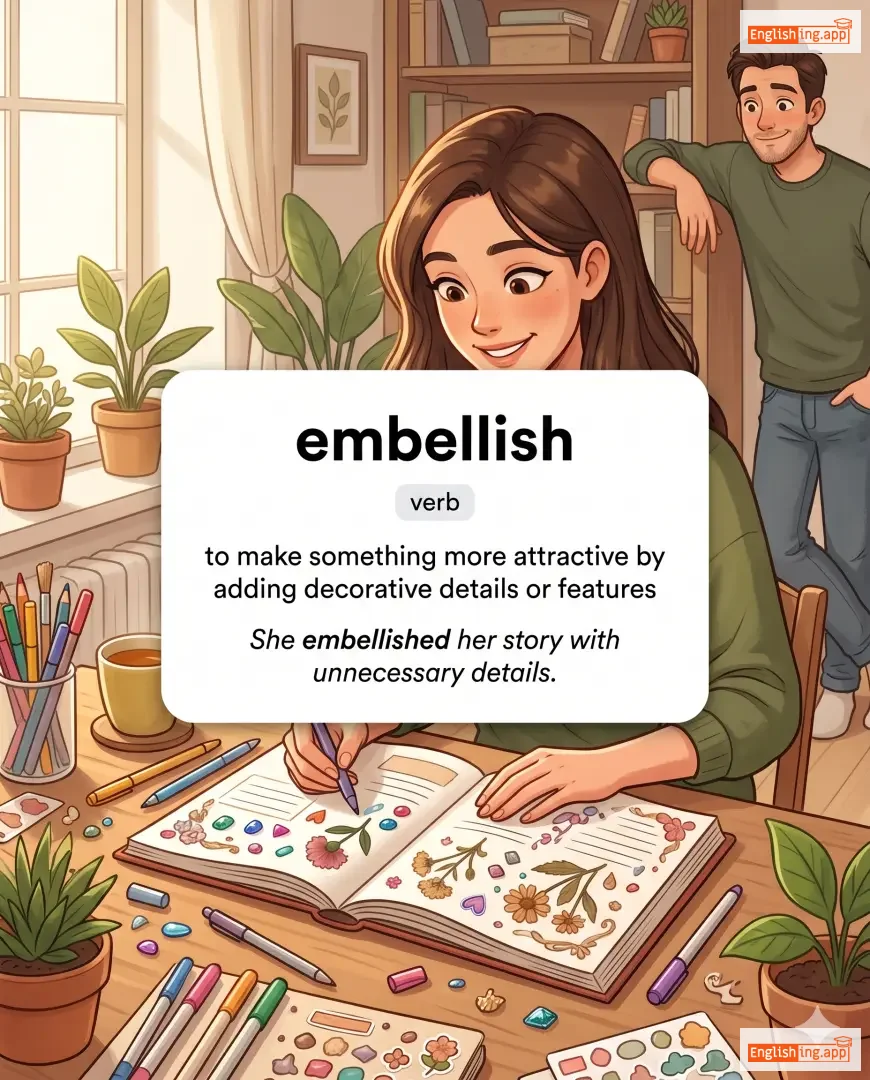
embellish definition card — visual illustration of the meaning
verb
/ɪmˈbɛlɪʃ/
飾る (kazaru)

to make something more attractive by adding decorative details or features

"She embellished her story with unnecessary details."

"彼女は不必要な詳細で彼女の話を飾った。" (Kanojo wa fuyōna shōsai de kanojo no hanashi o kazatta.)
verb
/ɛmˈbɛzəl/

to steal or misuse money or property entrusted to one's care

"The accountant was arrested for embezzling company funds."

noun
/ɪmˈbɛzlmənt/
横領 (ōryō)

The act of dishonestly taking money or property entrusted to one's care.

"The accountant was arrested for embezzlement of company funds."

"会計士は会社の資金を横領したため逮捕されました。" (Kaikeishi wa kaisha no shikin o ōryō shita tame taiho saremashita.)
verb
/ɪmˈbɪtər/
憤慨させる (fukensuru)

To make someone resentful or angry; to cause bitterness.

"The unfair treatment embittered the employees."

"不公平な扱いが従業員を憤慨させた。" (Fukōhei na atsukai ga jūgyōin o fukensu sasenakatta.)
verb
/ɛmˈbleɪzən/
目立つ方法で飾る (medatsu hōhō de kazaru)

To decorate or display something in a noticeable or impressive way.

"The team's logo was emblazoned on their uniforms."

"チームのロゴは彼らのユニフォームに鮮明に表示されていました。" (Chīmu no rogo wa karera no yunifōmu ni senmei ni hyōji sarete imashita.)
noun
/ˈɛmbləm/
象徴 (shouchou)

A symbolic object, design, or figure representing an idea, group, or identity.

"The dove is an emblem of peace."

"鳩は平和の象徴です。" (Hato wa heiwa no shouchou desu.)
verb
/ɪmˈbɒdi/
具現化する (gugenka suru)

To give tangible or visible form to an idea, quality, or feeling.

"She embodies the spirit of generosity."
"彼女は寛大さの精神を体現しています。" (Kanojo wa kandai sa no seishin o taigen shiteimasu.)
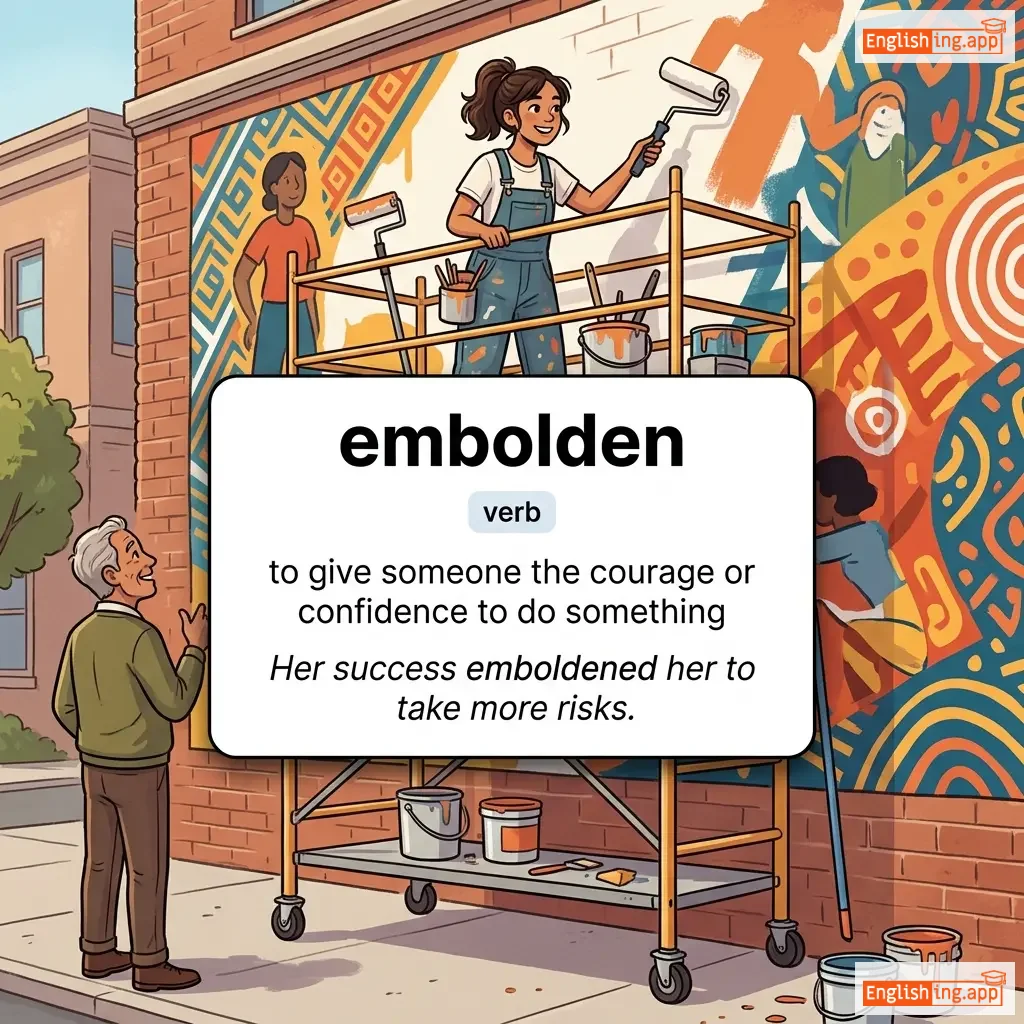
embolden definition card — visual illustration of the meaning
verb
/ɪmˈboʊldən/
勇気を与える (yūki o ataeru)

to give someone the courage or confidence to do something

"Her success emboldened her to take more risks."

"彼女の成功は、彼女にもっとリスクを取る勇気を与えました。" (Kanojo no seikō wa, kanojo ni motto risuku o toru yūki o ataemashita.)
noun
/ˈɛmbəˌlɪzəm/
塞栓 (saisen)

the sudden blockage of a blood vessel by a clot or other foreign matter

"The patient suffered a fatal pulmonary embolism."

"患者は致命的な肺塞栓を患った。" (kanja wa chimeiteki na hai saisen o wazuratta.)
verb
/ɛmˈbɔs/
浮き彫りにする (ukibori ni suru)

to decorate a surface with a raised design or pattern

"The invitation card was embossed with golden letters."

"招待状は金色の文字でエンボスされていました。" (Shōtaijō wa kiniro no moji de enbosu sarete imashita.)
verb
/ɛmˈbreɪs/
抱きしめる (dakishimeru)

to hold someone closely in your arms, or to accept or support something willingly

"They embraced each other after a long separation."

"彼らは長い別れの後、お互いを抱きしめました。" (Karera wa nagai wakare no ato, otagai o dakishimemashita.)
verb
/ɪmˈbrɔɪdər/
刺繍 (shishū)

to decorate fabric with patterns using a needle and thread

"She embroidered flowers on the pillowcase."

"彼女は枕カバーに花を刺繍した。" (Kanojo wa makura kabā ni hana o shishū shita.)
verb
/ɪmˈbrɔɪl/
巻き込む (makikomu)

to involve someone deeply in a conflict, argument, or difficult situation

"The politician was embroiled in a major corruption scandal."

"その政治家は大規模な汚職スキャンダルに巻き込まれました。" (Sono seijika wa daikibo na oshoku sukyandaru ni makikomarimashita.)
adjective
/ɪmˈbrɔɪld/
巻き込まれた (makikomareta)

being deeply involved in a difficult situation, conflict, or scandal

"She found herself embroiled in a heated family dispute."

"彼女は激しい家族間の争いに巻き込まれているのを見つけた。" (Kanojo wa hageshii kazokukan no arasoi ni makikomarete iru no wo mitsuketa.)
adjective
/ˌɛm.briˈɒn.ɪk/
胚芽の (haima no)

in an early or undeveloped stage; relating to an embryo

"The project is still in its embryonic stage."

"そのプロジェクトはまだ胚芽段階にあります。" (Sono purojekuto wa mada haima dankai ni arimasu.)
verb
/ɪˈmɛnd/
訂正する (teisei suru)

to correct or revise a text, especially for errors

"The editor emended the manuscript before publication."

"編集者は公開前に原稿を訂正しました。" (Henshūsha wa kōkai mae ni genkō o teisei shimashita.)
noun
/ˌiː.mɛnˈdeɪ.ʃən/
訂正 (teisei)

a correction or improvement made to a text

"The article required several emendations before it was ready for print."

"記事は印刷の準備ができる前にいくつかの訂正が必要でした。" (Kiji wa insatsu no junbi ga dekiru mae ni ikutsuka no teisei ga hitsuyō deshita.)
noun
/ˈem.ər.əld/
エメラルド (emerarudo)

a bright green precious stone used in jewelry

"The emerald necklace sparkled in the sunlight."

"エメラルドのネックレスは太陽の光で輝いていました。" (Emerarudo no nekkuresu wa taiyō no hikari de kagayaite imashita.)
verb
/ɪˈmɜːrdʒ/

to come into view or become apparent; to arise or appear from something

"New opportunities will emerge as the industry grows."