語彙集

英単語辞書 | 単語の意味、定義、例文

noun
/eɪˈklɑː/
大成功 (daiseikou)

Brilliant success, acclaim, or great public approval.

"The artist's debut performance was met with great éclat."
"アーティストの初めてのパフォーマンスは大成功を収めました。" (Aatisuto no hajimete no pafōmansu wa daiseikou o osamemashita.)
eclectic definition card — visual illustration of the meaning
adjective
/ɪˈklɛktɪk/
エクレクティック (ekurekutikku)

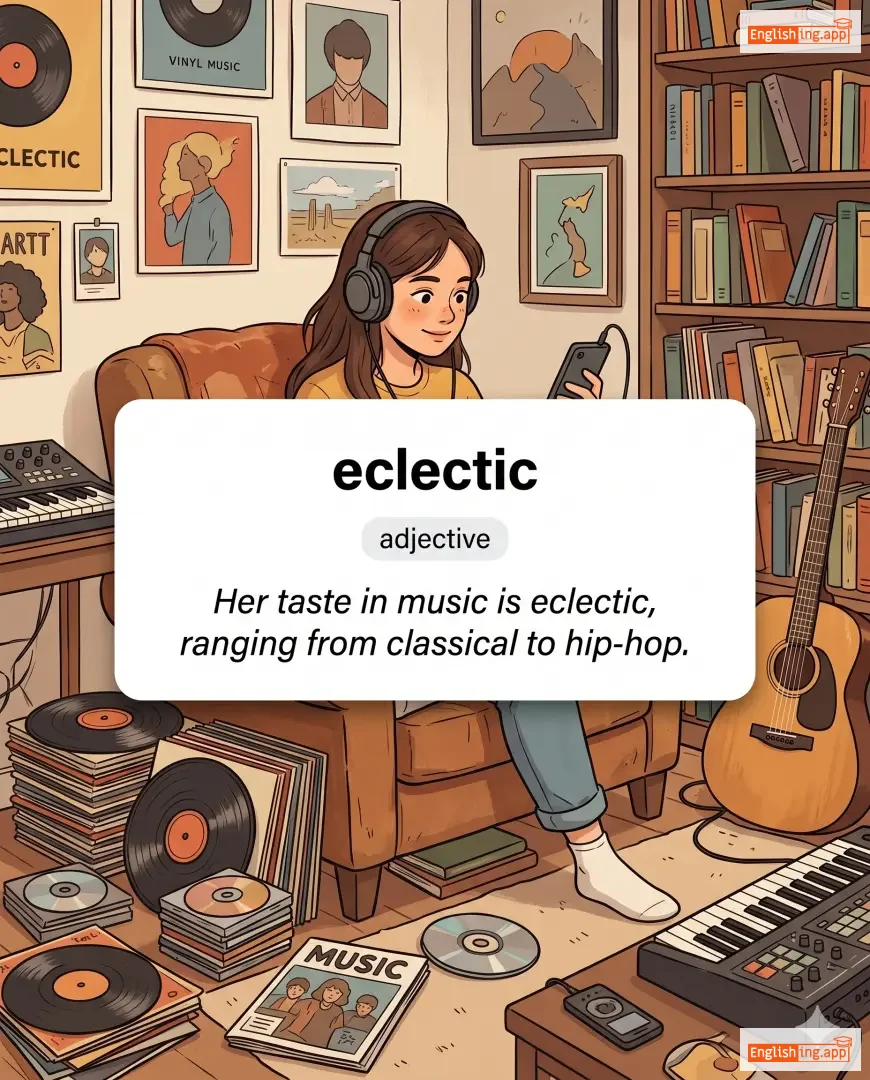
Selecting or deriving ideas, styles, or tastes from a broad and diverse range of sources.

"Her taste in music is eclectic, ranging from classical to hip-hop."

"彼女の音楽の好みはエクレクティックで、クラシックからヒップホップまで幅広いです。" (Kanojo no ongaku no konomi wa ekurekutikku de, kurashikku kara hippu hoppu made habahiroi desu.)
noun
/ɪˈklɛktɪˌsɪzəm/
エクレクティズム (ekurekutizumu)

A method or practice of deriving ideas, style, or taste from a broad and diverse range of sources.

"The architect’s work shows eclecticism by blending modern and traditional elements."

"建築家の仕事は、現代的な要素と伝統的な要素を組み合わせてエクレクティズムを示しています。" (Kenchikuka no shigoto wa, gendaiteki na yōso to dentōteki na yōso o kumiawasete ekurekutizumu o shimeshiteimasu.)
noun, verb
/ɪˈklɪps/
日食 (nisshoku)

The blocking of light from one celestial body by another; to overshadow or outshine something.

"The solar eclipse drew thousands of spectators to the field."

"太陽のエクリプスは、数千人の観客をフィールドに引き寄せました。" (Taiyō no ekuripusu wa, sūsen-nin no kankyaku o fīrudo ni hikiyosemashita.)
noun, adjective
/ɪˈklɪptɪk/
黄道 (koudou)

The apparent path of the sun across the sky; relating to eclipses or this path.

"The ecliptic is the plane of Earth's orbit around the Sun."
"黄道は地球の太陽の周りの軌道の平面です。" (Koudou wa chikyuu no taiyou no mawari no kidou no heimen desu.)
eco-friendly technologies definition card — visual illustration of the meaning
noun
ˈikoʊ ˈfrɛndli tɛkˈnɑləʤiz
エコフレンドリー技術 (eko-furendorī gijutsu)

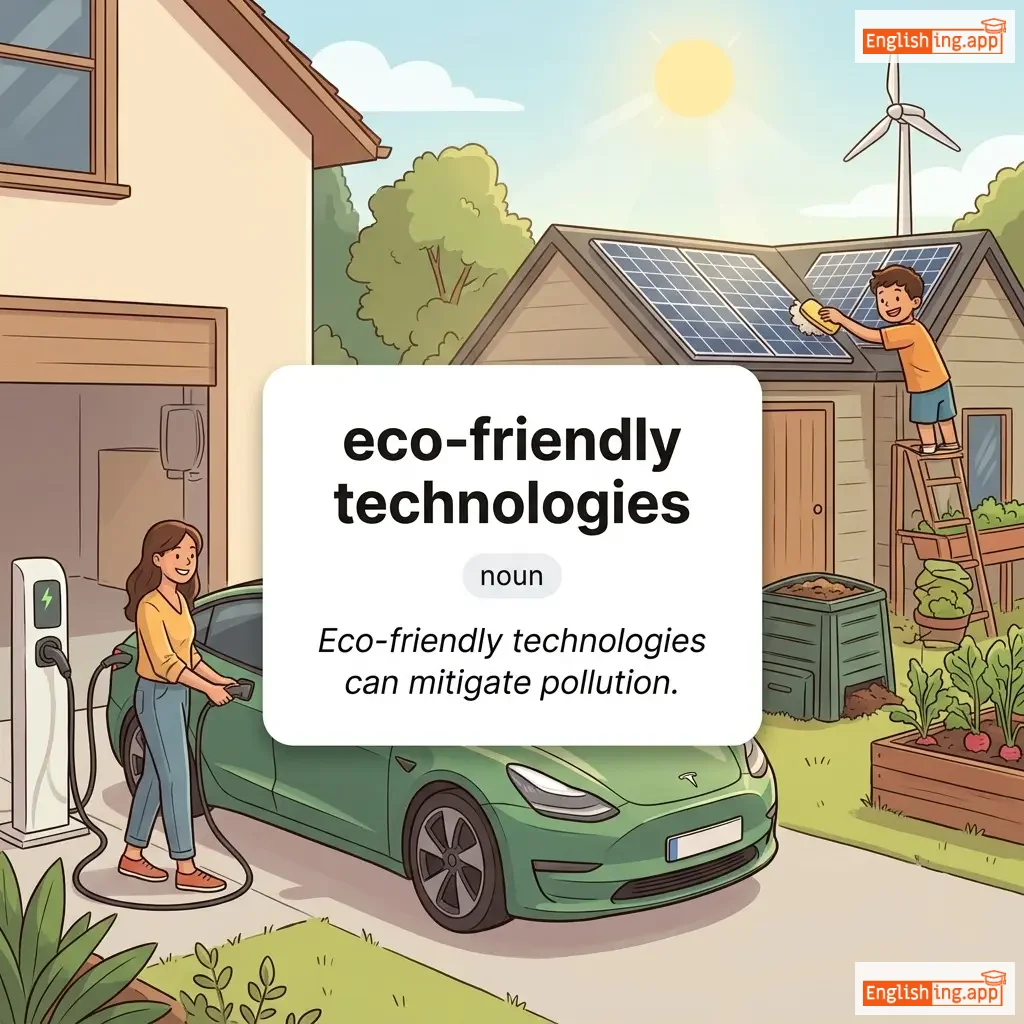
Technologies that are designed to minimize environmental impact and promote sustainability.

"Eco-friendly technologies can mitigate pollution."
"エコフレンドリー技術は汚染を軽減することができます。" (Eko-furendorī gijutsu wa osen o keigen suru koto ga dekimasu.)
eco-friendly urbanization definition card — visual illustration of the meaning
noun
ˌiː.kəʊˈfrend.li ˌɜː.bən.aɪˈzeɪ.ʃən
エコフレンドリーな都市化 (eko-furendorī na toshika)

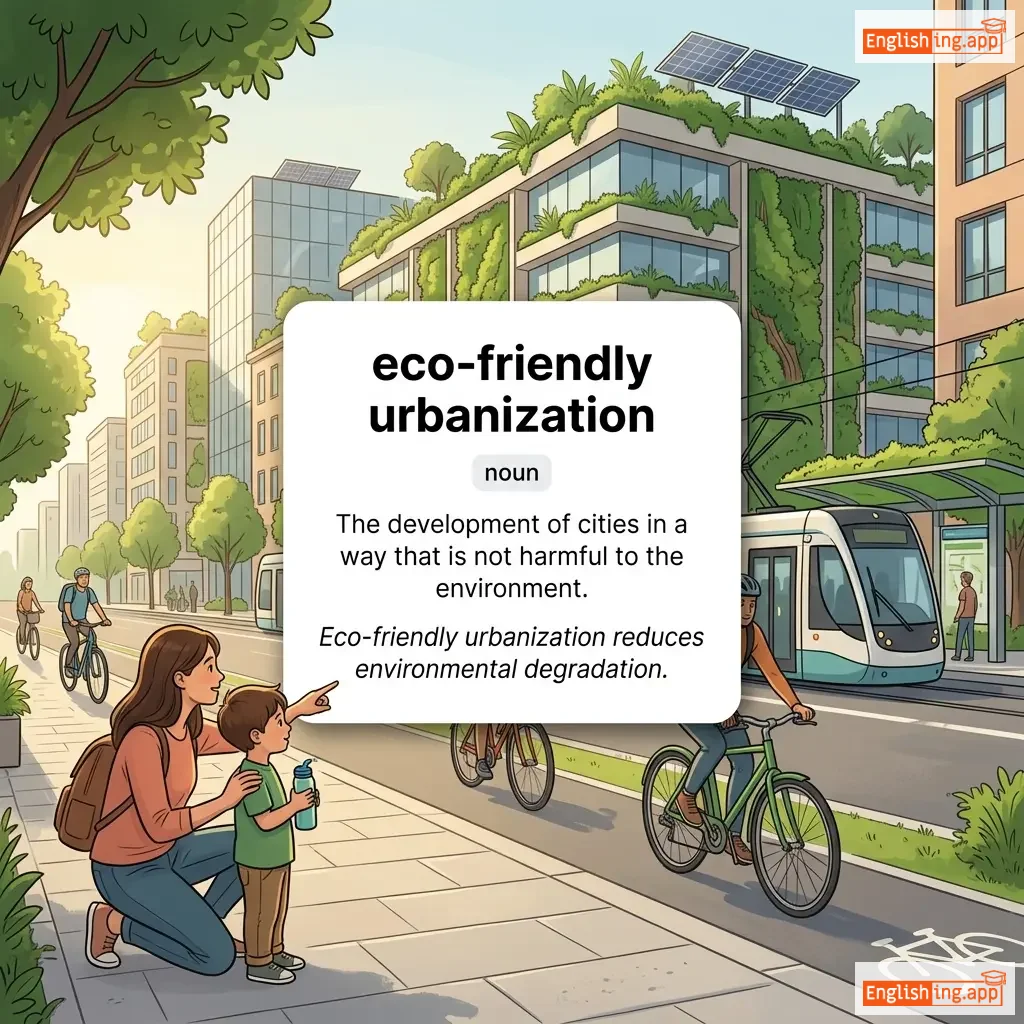
The development of cities in a way that is not harmful to the environment.

"Eco-friendly urbanization reduces environmental degradation."
"エコフレンドリーな都市化は環境劣化を減少させます。" (Eko-furendorī na toshika wa kankyō rekkā o genshō sasemasu.)
Eco-tourism definition card — visual illustration of the meaning
noun
ˈiːkəʊˈtʊəˌrɪzəm

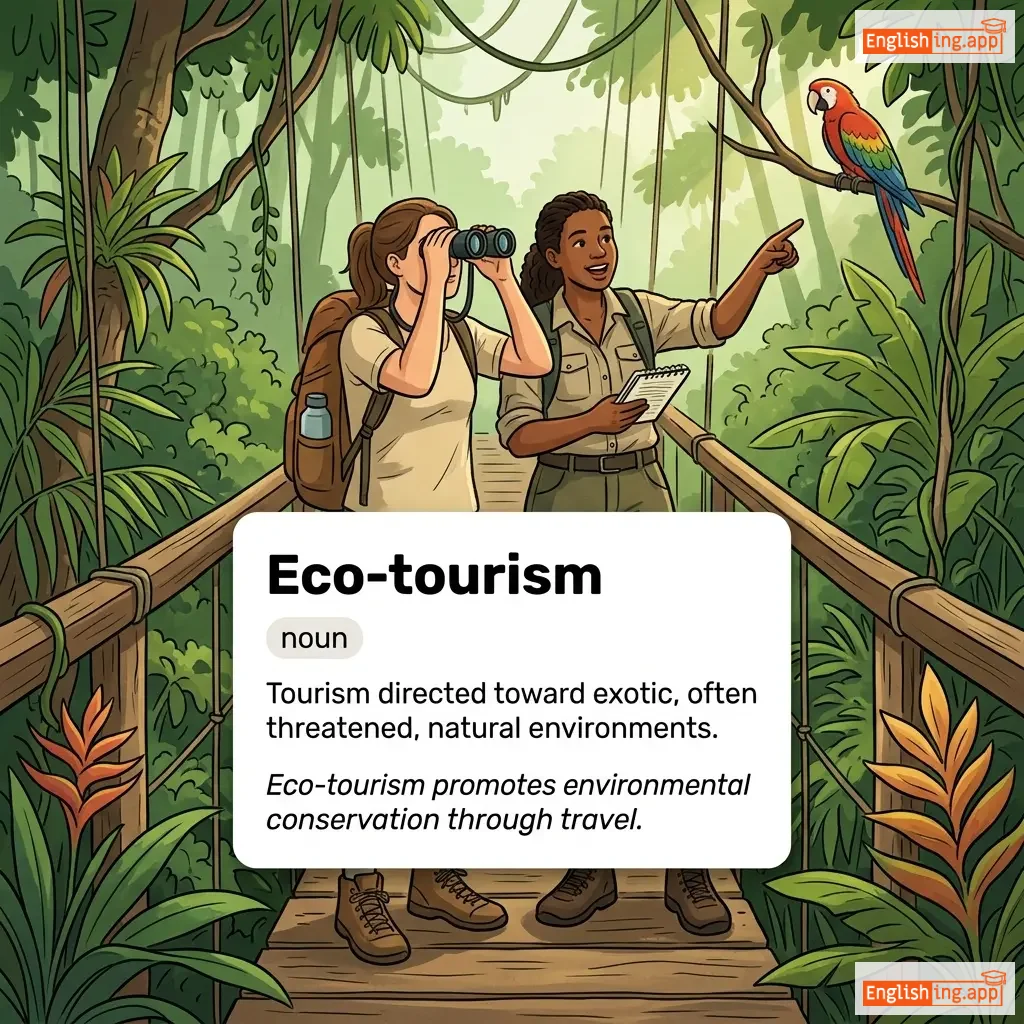
Tourism directed toward exotic, often threatened, natural environments.

"Eco-tourism promotes environmental conservation through travel."
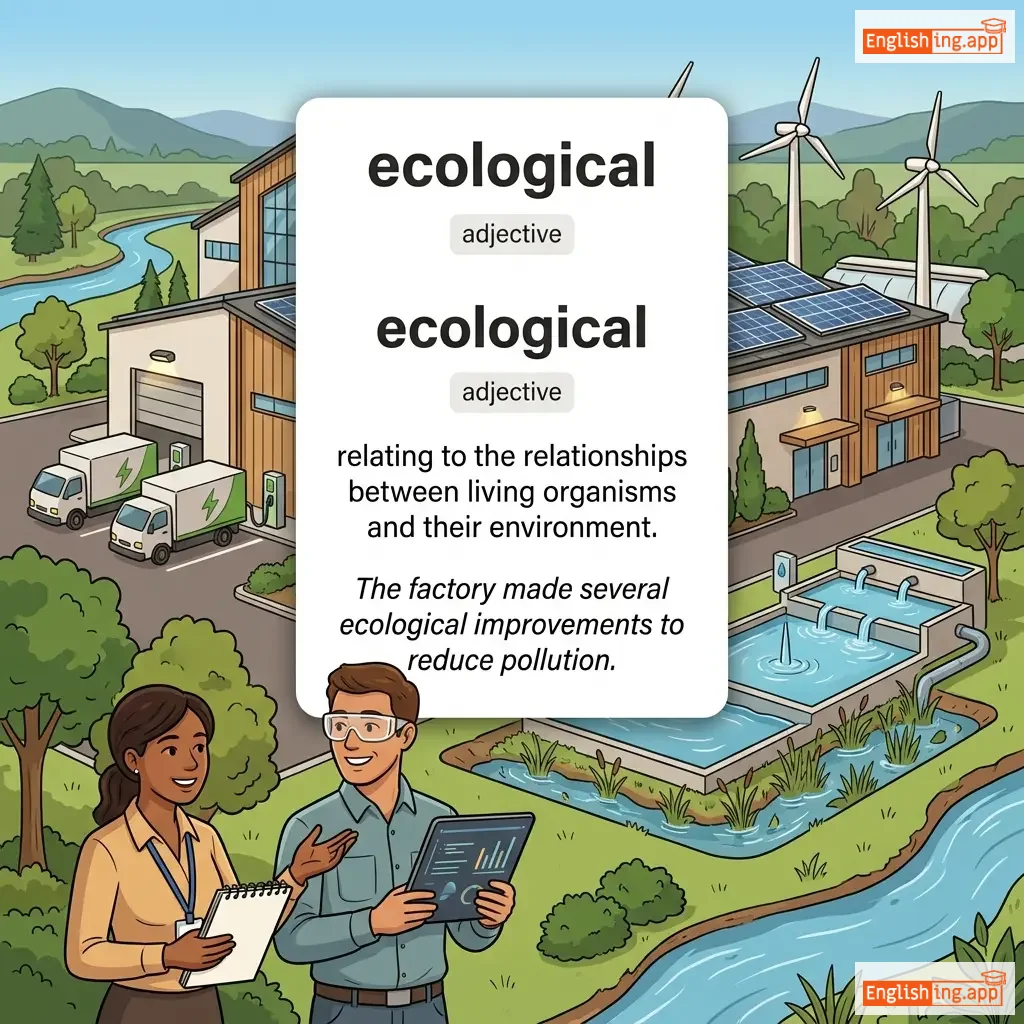
ecological definition card — visual illustration of the meaning
adjective
/ˌiːkəˈlɒdʒɪkəl/
生態学的 (seitaigakuteki)

relating to the relationships between living organisms and their environment.

"The factory made several ecological improvements to reduce pollution."
"工場は汚染を減らすためにいくつかの生態学的な改善を行いました。" (Kōjō wa osen o herasu tame ni ikutsuka no seitai-gakuteki na kaizen o okonai mashita.)
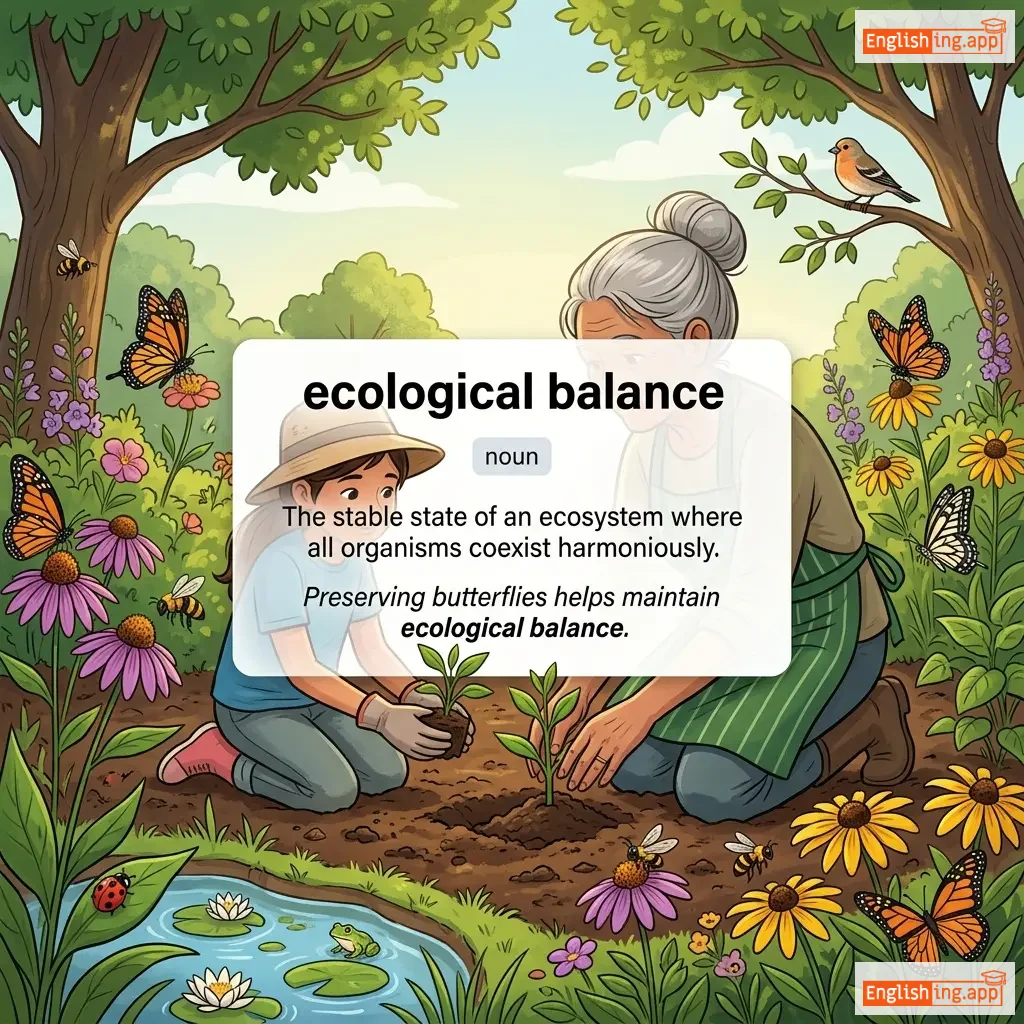
ecological balance definition card — visual illustration of the meaning
noun
ˌiːkəˈlɒdʒɪkəl ˈbæləns
エコロジカルバランス (ekorojikaru baransu)

The stable state of an ecosystem where all organisms coexist harmoniously.

"Preserving butterflies helps maintain ecological balance."

"蝶を保護することはエコロジカルバランスを維持するのに役立ちます。" (Chō o hogo suru koto wa ekorojikaru baransu o iji suru no ni yakudachimasu.)
noun
/iˈkɒlədʒɪst/
エコロジスト (ekorojisuto)

A scientist who studies the relationships between living organisms and their environment.

"The ecologist studied the effects of pollution on the forest ecosystem."

"エコロジストは森林の生態系に対する汚染の影響を研究しました。" (Ekorojisuto wa shinrin no seitai kei ni taisuru osen no eikyō o kenkyū shimashita.)
noun
/iˈkɒl.ə.dʒi/
生態学 (seitaigaku)

the study of how living things interact with each other and their environment

"Ecology helps us understand how pollution affects animals and plants."
"エコロジーは、汚染が動物や植物にどのように影響するかを理解する手助けをします。" (Ekoroji wa, osen ga doubutsu ya shokubutsu ni dono you ni eikyou suru ka wo rikai suru tetsuduke wo shimasu.)
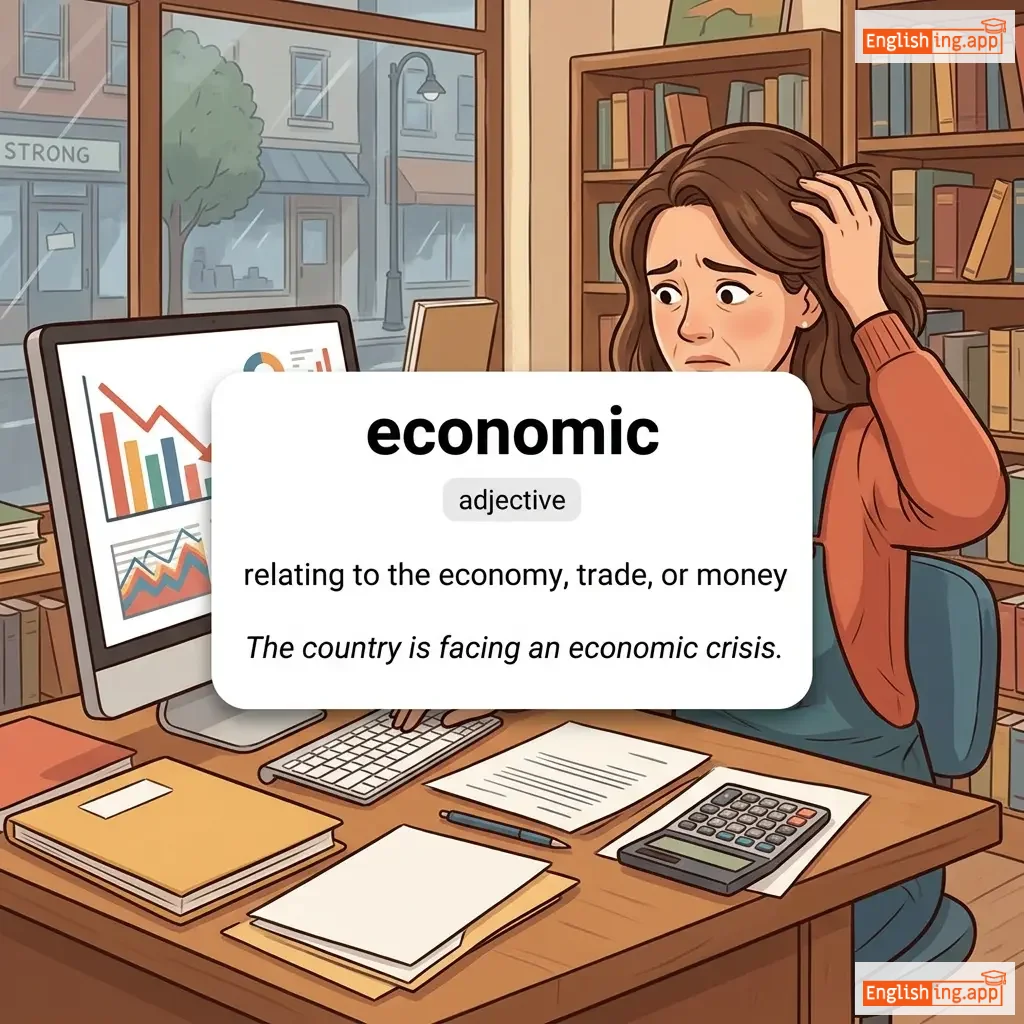
economic definition card — visual illustration of the meaning
adjective
/ˌiːkəˈnɒmɪk/
経済的 (keizaiteki)

relating to the economy, trade, or money

"The country is facing an economic crisis."
"その国は経済危機に直面しています。" (Sono kuni wa keizai kiki ni chokumen shiteimasu.)
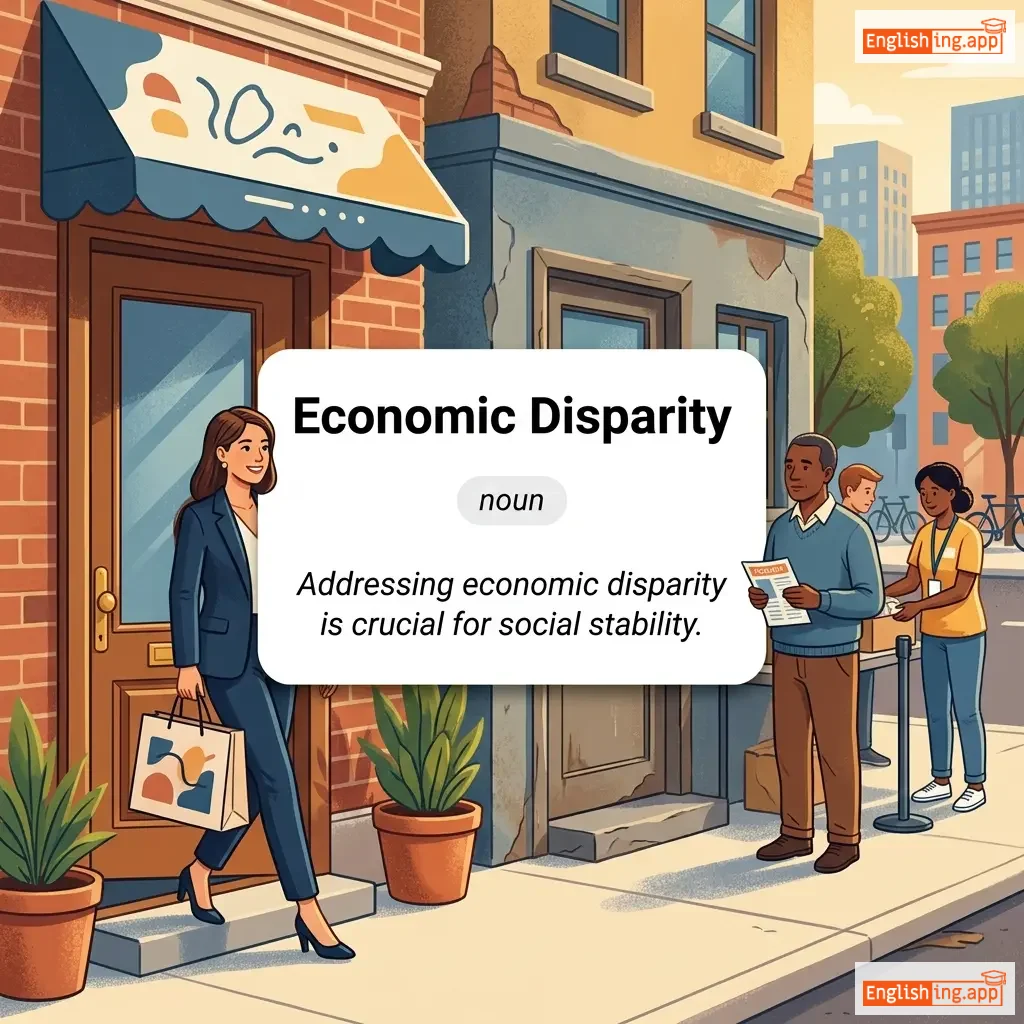
Economic Disparity definition card — visual illustration of the meaning
noun
/ˌiː.kəˈnɒm.ɪk dɪˈspær.ɪ.ti/
経済的不平等 (keizai-teki fubyoutou)

The unequal distribution of income and opportunity between different groups in society.

"Addressing economic disparity is crucial for social stability."
"経済的不平等に対処することは、社会的安定にとって重要です。" (Keizai-teki fubyoutou ni taisho suru koto wa, shakai-teki antei ni totte juuyou desu.)
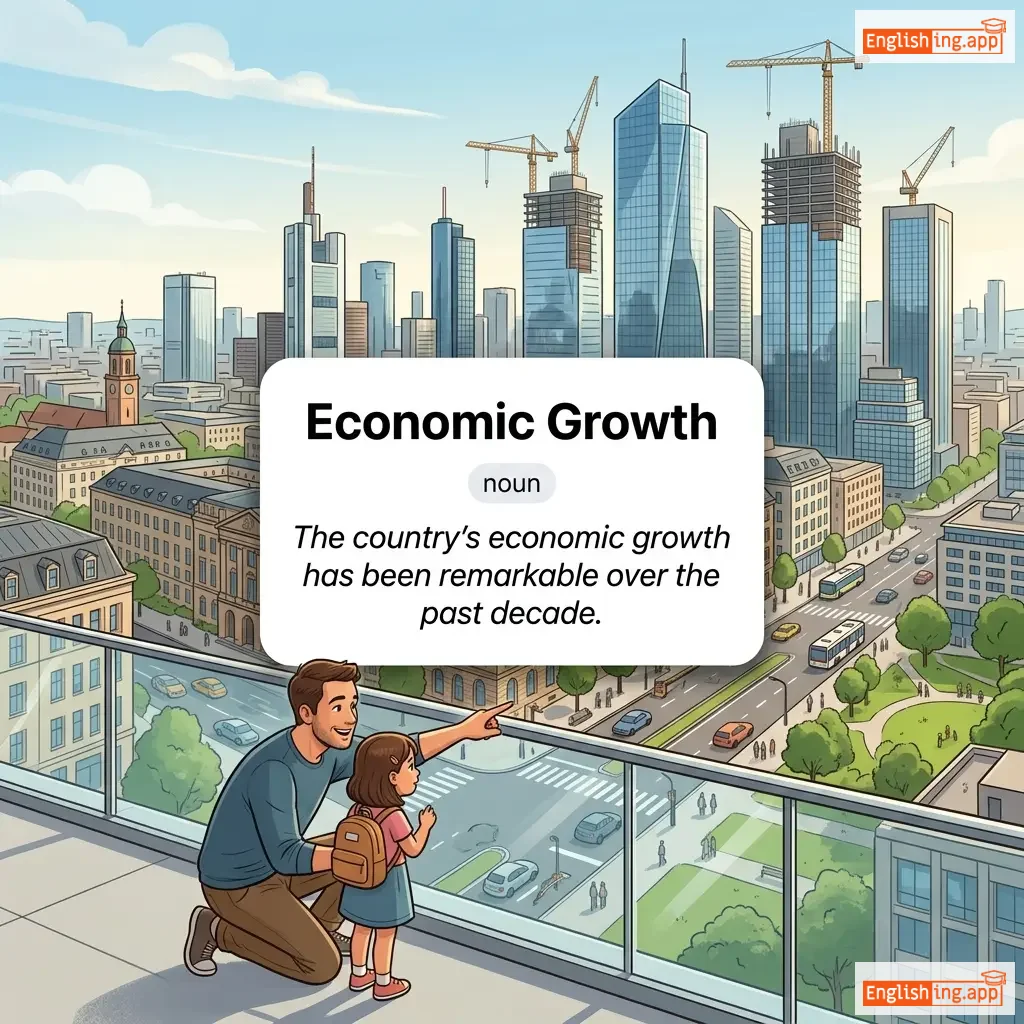
Economic Growth definition card — visual illustration of the meaning
noun
/ˌiː.kəˈnɒm.ɪk ɡrəʊθ/
経済成長 (keizai seichou)

The increase in the production of goods and services in an economy over time, measured by the expansion of economic output, income, and investment.

"The country's economic growth has been remarkable over the past decade."
"その国の経済成長は過去10年間で顕著でした。" (Sono kuni no keizai seichou wa kako 10-nenkan de kencho deshita.)
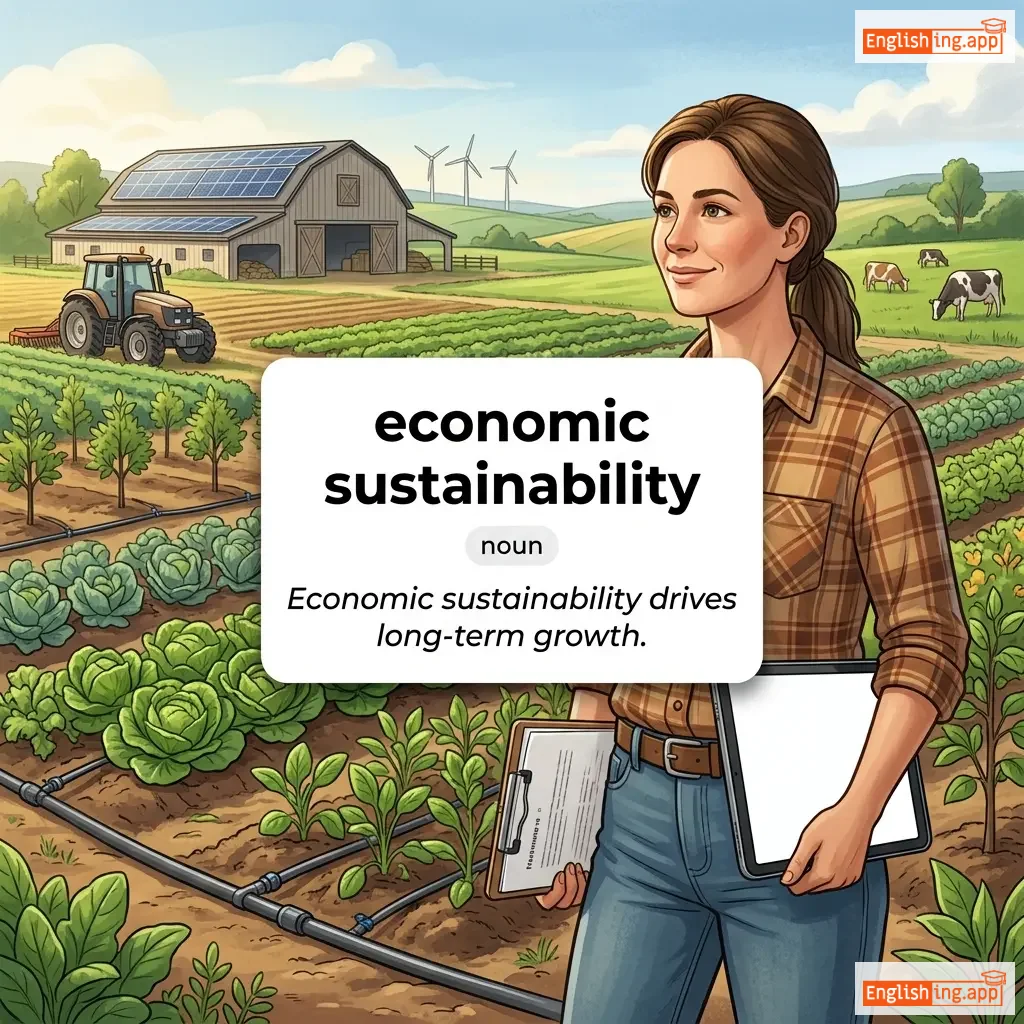
economic sustainability definition card — visual illustration of the meaning
noun
/ˌek.əˈnɒm.ɪk səˌsteɪ.nəˈbɪl.ə.ti/
経済の持続可能性 (ekonomikku sasutenabiriti)

The ability of an economy to support a defined level of economic production indefinitely.

"Economic sustainability drives long-term growth."
"経済の持続可能性は長期的な成長を促進する。" (keizai no jizoku kanousei wa chokitekina seichou o sokushin suru)
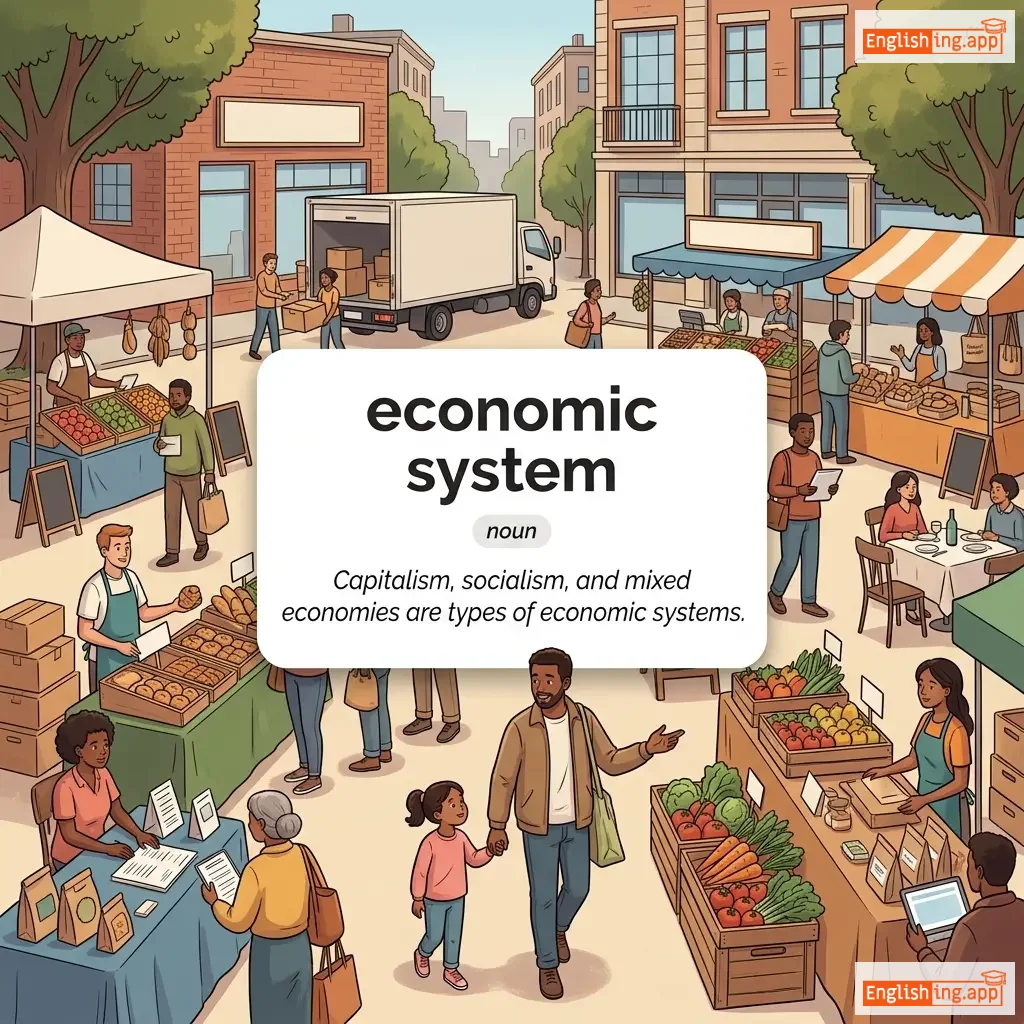
economic system definition card — visual illustration of the meaning
noun
/ˌiː.kəˈnɒm.ɪk ˈsɪs.təm/
経済システム (keizai shisutemu)

The organized framework for production, distribution, and consumption of goods and services in society.

"Capitalism, socialism, and mixed economies are types of economic systems."

"資本主義、社会主義、混合経済は経済システムのタイプです。" (Shihonshugi, shakaishugi, kongō keizai wa keizai shisutemu no taipu desu.)
adjective
/ˌiːkəˈnɒmɪkl/
経済的 (keizaiteki)

Careful in the use of resources; providing good value or efficiency.

"Driving a hybrid car is economical in the long run."

"ハイブリッド車を運転することは長期的には経済的です。" (Haiburiddo-sha wo unten suru koto wa choukitekini wa keizaiteki desu.)
adverb
/ˌiːkəˈnɒmɪkli/
経済的に (keizaiteki ni)

in a way that relates to economics or is efficient and not wasteful.

"The company is trying to operate more economically this year."

"その会社は今年、より経済的に運営することを目指しています。" (Sono kaisha wa kotoshi, yori keizaiteki ni un'ei suru koto o mezashiteimasu.)
noun
/ˌiːkəˈnɒmɪks/ or /ˌɛkəˈnɒmɪks/
経済学 (keizaigaku)

The study of production, consumption, and transfer of wealth.

"He is studying economics at university."
"彼は大学で経済学を学んでいます。" (Kare wa daigaku de keizaigaku o manandeimasu.)
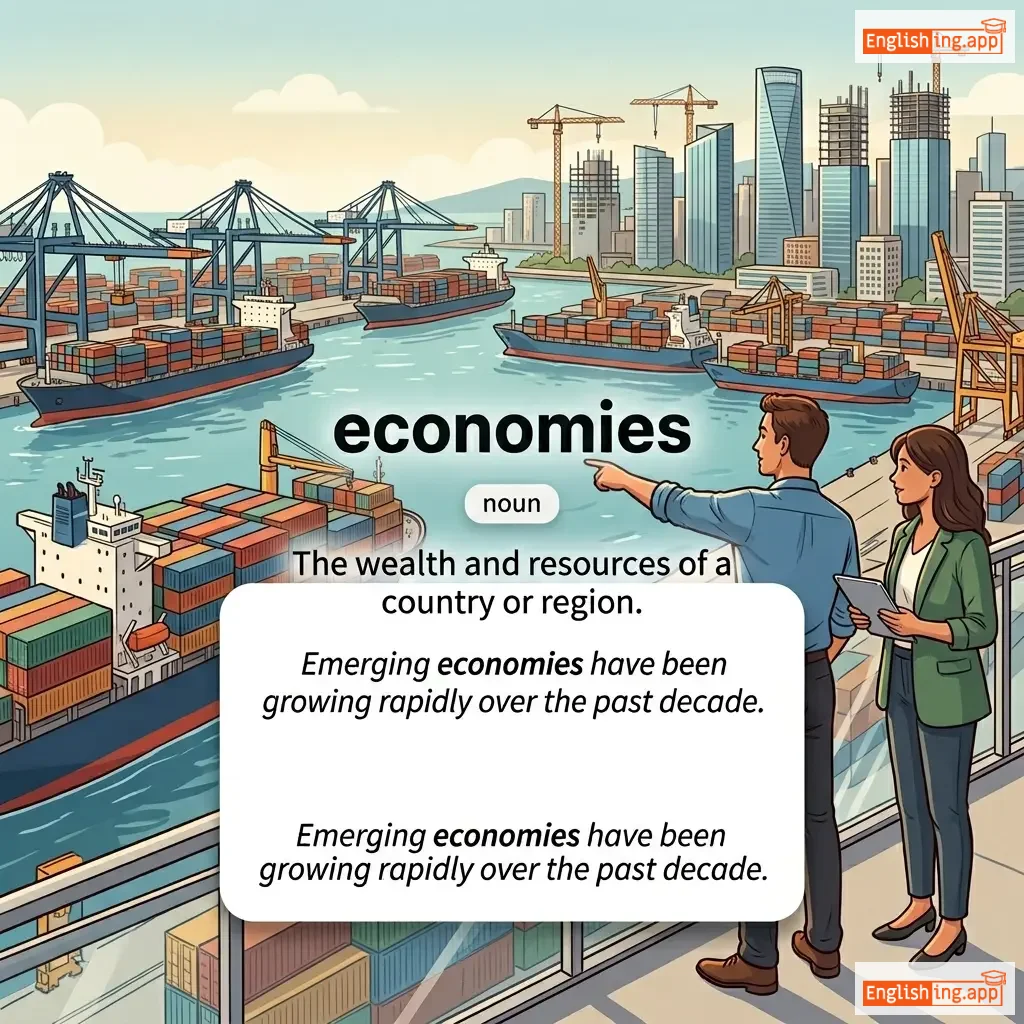
economies definition card — visual illustration of the meaning
noun
ɪˈkɒnəmiːz
経済 (keizai)

The wealth and resources of a country or region.

"Emerging economies have been growing rapidly over the past decade."

"新興経済は過去10年間で急速に成長しています。" (Shinko keizai wa kako 10 nenkan de kyusoku ni seicho shiteimasu.)
noun
/ɪˈkɒnəmɪst/
経済学者 (keizaigakusha)

A person who studies or is an expert in economics.

"The economist predicted a rise in inflation."

"経済学者はインフレの上昇を予測しました。" (Keizaigakusha wa infure no joshou o yosoku shimashita.)
verb
/ɪˈkɒnəmaɪz/
節約する (setsuyaku suru)

To reduce spending or use resources carefully.

"Families are trying to economize by cutting unnecessary expenses."
"家族は不必要な支出を削減して、節約しようとしています。" (Kazoku wa fuhitsuyou na shishutsu o sakugen shite, setsuyaku shiyou to shiteimasu.)
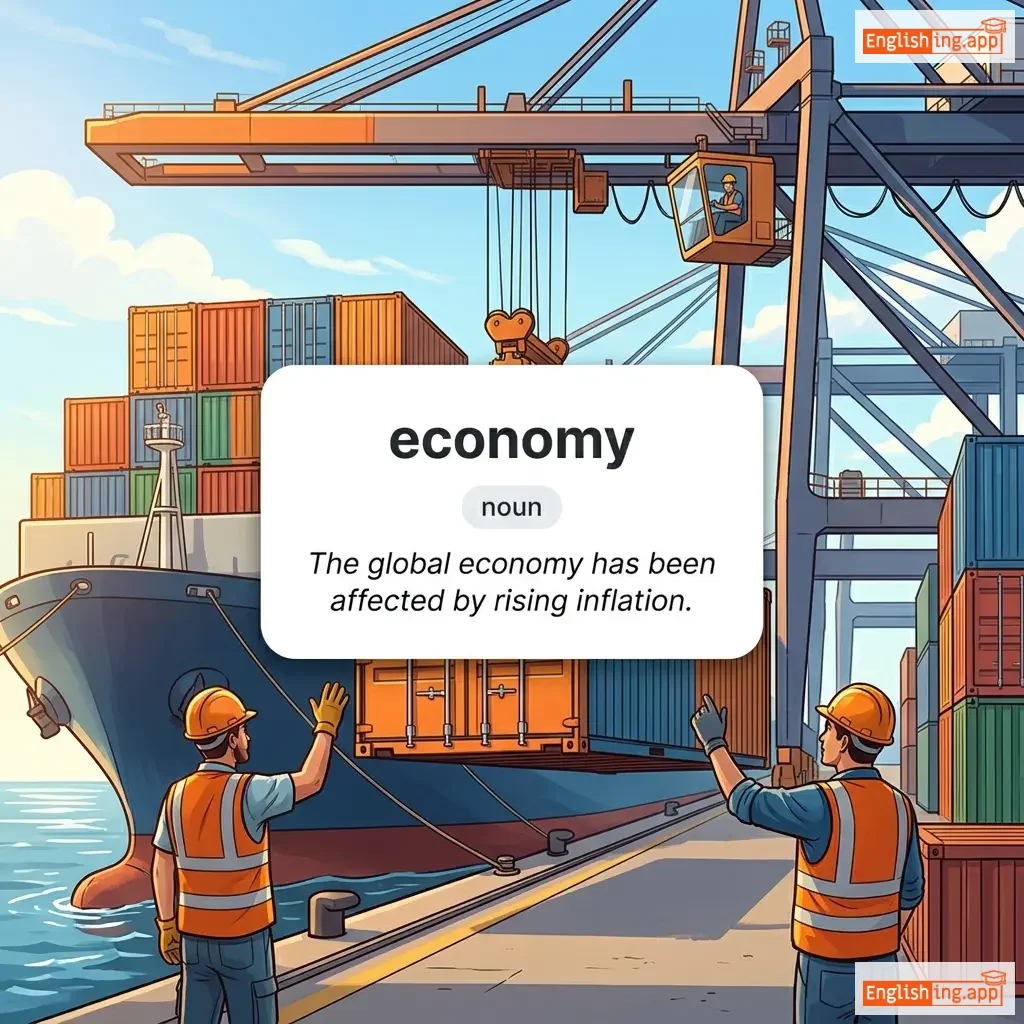
economy definition card — visual illustration of the meaning
noun
/ɪˈkɒnəmi/
経済 (keizai)

The system of production, distribution, and consumption of goods and services in a society.

"The global economy has been affected by rising inflation."
"世界経済はインフレの上昇に影響を受けました。" (Sekai keizai wa infure no jōshō ni eikyō o ukemashita.)
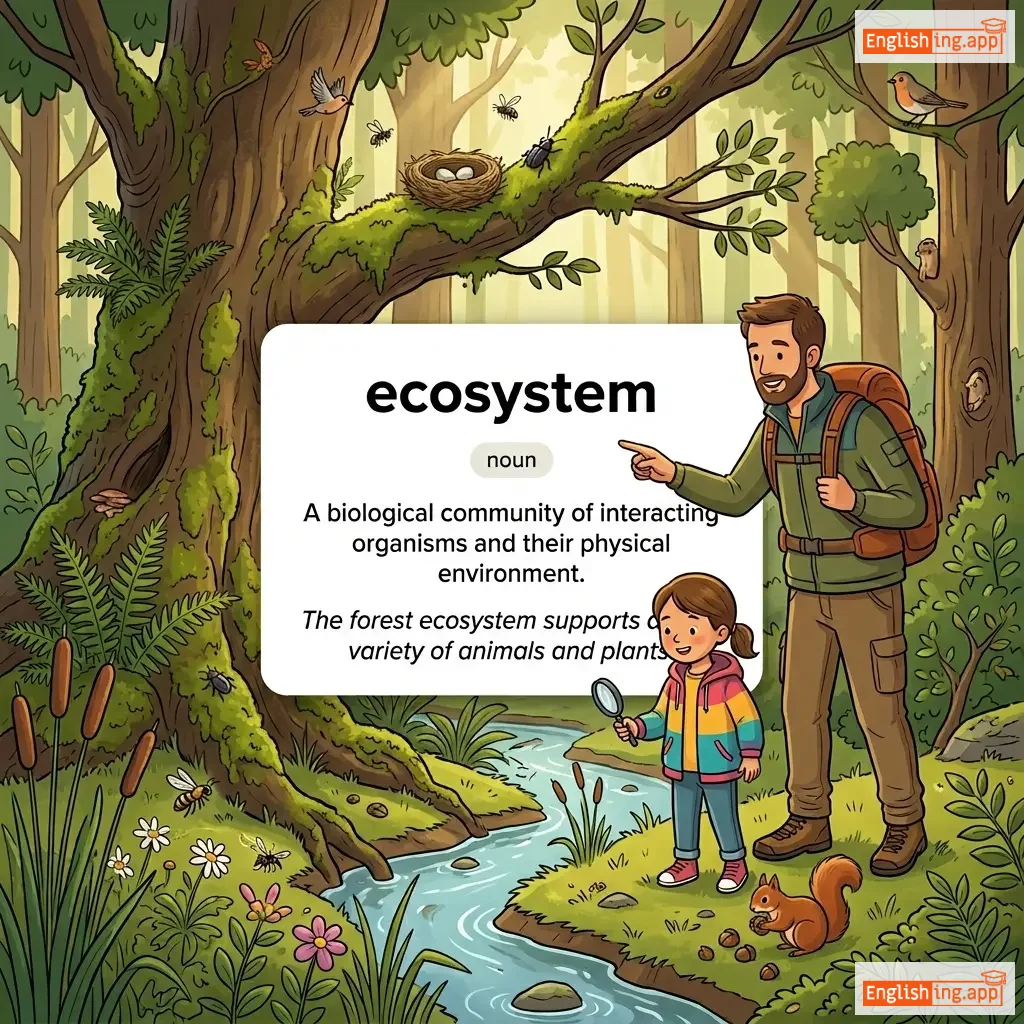
ecosystem definition card — visual illustration of the meaning
noun
/ˈiːkəʊˌsɪstəm/
幸せ (shiawase)

A biological community of interacting organisms and their physical environment.

"The forest ecosystem supports a wide variety of animals and plants."
"彼女は賞を受け取ったとき、幸せを隠すことができなかった。" (Kanojo wa shō o uketotta toki, shiawase o kakusu koto ga dekinakatta.)
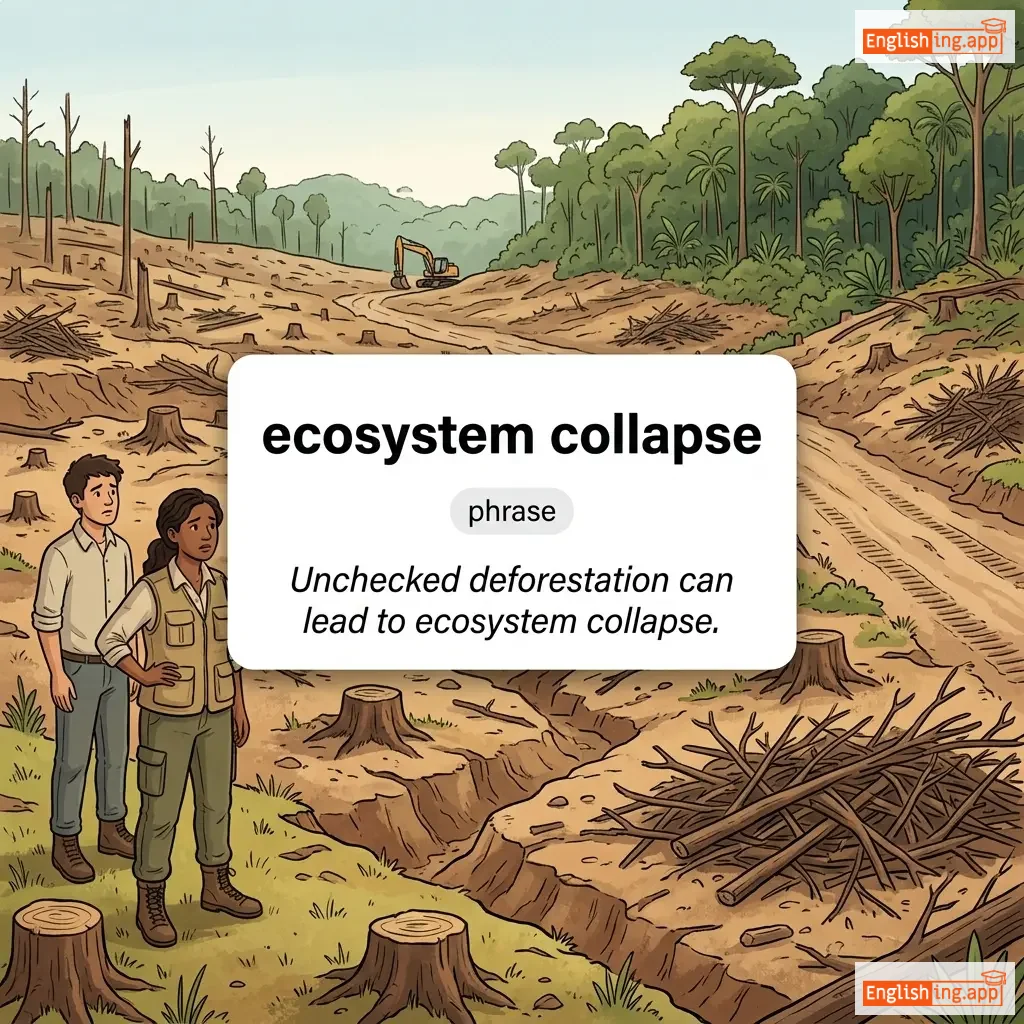
ecosystem collapse definition card — visual illustration of the meaning
phrase
ˈiː.kəʊˌsɪs.təm kəˈlæps
エコシステムの崩壊 (ekoshisutemu no houkai)

The complete breakdown of an ecological system, resulting in the inability to maintain its structure and function.

"Unchecked deforestation can lead to ecosystem collapse."
"制御されない森林伐採はエコシステムの崩壊を引き起こす可能性があります。" (Seigyo sarenai shinrin bassai wa ekoshisutemu no houkai wo hikiokosu kanousei ga arimasu.)
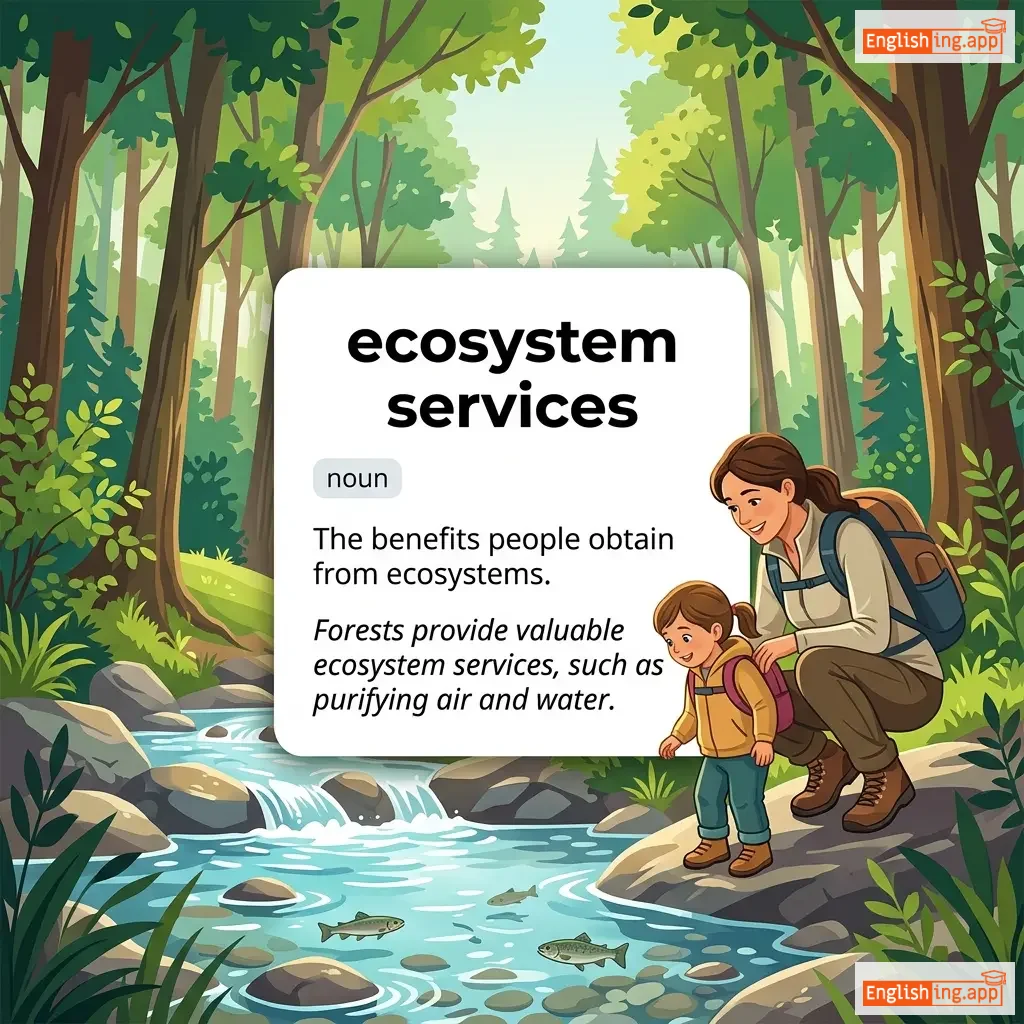
ecosystem services definition card — visual illustration of the meaning
noun
ˈiːkəʊˌsɪstəm ˈsɜːvɪsɪz
生態系サービス (seitaikei sābisu)

The benefits people obtain from ecosystems.

"Forests provide valuable ecosystem services, such as purifying air and water."
"森林は空気と水を浄化するなど、貴重な生態系サービスを提供します。" (Shinrin wa kūki to mizu o jōka suru nado, kichōna seitaikei sābisu o teikyō shimasu.)
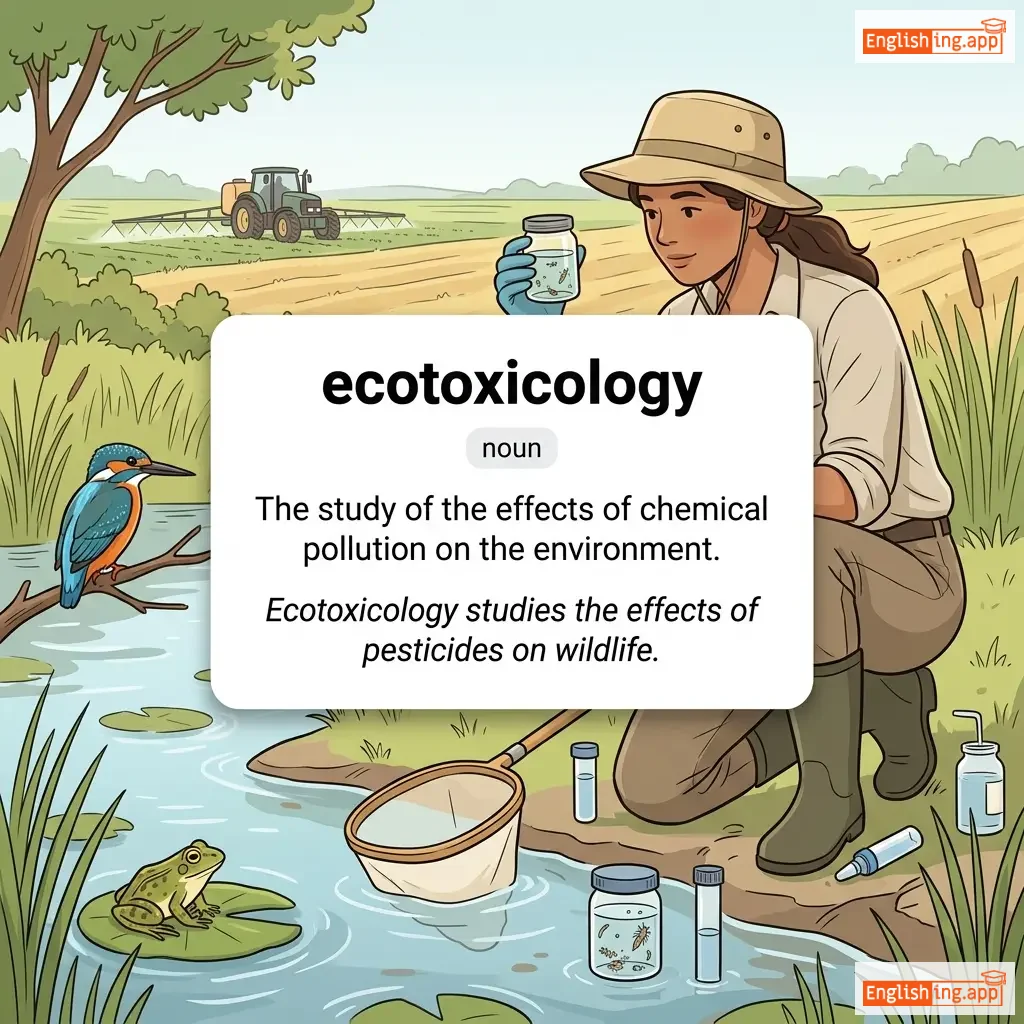
ecotoxicology definition card — visual illustration of the meaning
noun
/ˌiː.kəʊ.tɒkˈsɪ.kə.lə.dʒi/
エコトキシコロジー (ekotokishikoroji)

The study of the effects of chemical pollution on the environment.

"Ecotoxicology studies the effects of pesticides on wildlife."

"エコトキシコロジーは農薬が野生動物に与える影響を研究しています。" (Ekotokishikoroji wa nōyaku ga yaseidōbutsu ni ataeru eikyō o kenkyū shiteimasu.)
noun
/ˈekstəsi/
恍惚 (kōkotsu)

An overwhelming feeling of great happiness or joyful excitement.

"She was in ecstasy when she won the prize."

"彼女は賞を取ったとき、恍惚の状態にありました。" (Kanojo wa shō o totta toki, kōkotsu no jōtai ni arimashita.)
adjective
/ɪkˈstætɪk/
興奮している (koufun shite iru)

Feeling or expressing overwhelming happiness or excitement.

"The fans were ecstatic after their team won the championship."

"ファンたちはチームがチャンピオンになった後、興奮していました。" (Fan-tachi wa chīmu ga chanpion ni natta ato, kōfun shite imashita.)
adjective
/ˌɛkjʊˈmɛnɪkəl/
エキュメニカルな宗教的統一 (ekyumenikaru na shuukyou-teki touitsu)

Promoting unity among different Christian churches or religions.

"The leaders gathered for an ecumenical conference to encourage dialogue."

"リーダーたちは対話を促進するためにエキュメニカルな会議に集まりました。" (Riidaa-tachi wa taiwa wo sokushin suru tame ni ekyumenikaru na kaigi ni atsumarimashita.)
noun
/ˈɛdi/
渦巻き (uzumaki)

A circular movement of water, air, or smoke, counter to the main current, causing a small whirlpool or turbulence.

"The canoe was caught in an eddy near the rocks."

"カヌーは岩の近くで渦巻きに巻き込まれた。" (Kanū wa iwa no chikaku de uzumaki ni makikomareta.)
noun
/ˈiː.dən/
エデン (Eden)

a place or state of great happiness; paradise

"The garden was like Eden, filled with beautiful flowers and peaceful atmosphere."

"その庭はエデンのようで、美しい花々と平和な雰囲気に満ちていました。" (Sono niwa wa Eden no you de, utsukushii hanabana to heiwa na fun'iki ni michite imashita.)
noun
/ɛdʒ/
縁 / 刃 (en / ha)

the border or outermost part of something; a sharp side of a blade or tool

"He stood on the edge of the cliff."

"彼は崖の縁に立っていた。" (Kare wa gake no en ni tatte ita.)
adjective
/ˈɛdəbl/
食べられる (taberareru)

Fit or suitable to be eaten; safe to eat.

"The mushrooms in the basket are edible."

"バスケットの中のキノコは食べられます。" (Basuketto no naka no kinoko wa taberaremasu.)
noun
/ˈiːdɪkt/
勅令 (chokurei)

An official order, proclamation, or decree issued by an authority.

"The king issued an edict banning smoking in public places."

"王は公共の場での喫煙を禁止するエディクトを発行しました。" (Ō wa kōkyō no ba de no kitsuen wo kinshi suru edikuto wo hakko shimashita.)
noun
/ˈɛdɪfɪs/
建物 (tatemono)

A large, impressive building or structure.

"The museum is an impressive edifice in the city center."

"その博物館は市内中心部の印象的な建物です。" (Sono hakubutsukan wa shinai chūshinbu no inshō-teki na tatemono desu.)
📚

edify

verb
/ˈɛdɪfaɪ/

To instruct or improve someone morally or intellectually.

"Good books can both entertain and edify the reader."

adjective
/ˈɛdɪfaɪɪŋ/
啓発的な (keihatsuteki na)

Providing moral or intellectual instruction or enlightenment.

"The documentary was both entertaining and edifying."

"そのドキュメンタリーは、エンターテイメントと啓発の両方を兼ね備えていました。" (Sono dokyumentarī wa, entāteimento to keihatsu no ryōhō o kanesonaete imashita.)
edit definition card — visual illustration of the meaning
verb
/ˈɛdɪt/
編集する (henshū suru)

to prepare written material by correcting, condensing, or modifying it.

"She edited the article before it was published."

"彼女は記事が公開される前に編集しました。" (Kanojo wa kiji ga kōkai sareru mae ni henshū shimashita.)
noun
/ɪˈdɪʃən/
(ban)

a particular version or printing of a book, newspaper, or other publication

"The latest edition of the magazine sold out quickly."

"雑誌の最新の版はすぐに売り切れました。" (Zasshi no saishin no han wa sugu ni urikiremashita.)
noun
/ˈɛdɪtər/
編集者 (henshūsha)

a person responsible for the final content of a newspaper, magazine, or book

"The editor approved the article before publication."

"エディターは出版前に記事を承認しました。" (Editā wa shuppan mae ni kiji o shōnin shimashita.)
noun
/ˌɛdɪˈtɔːriəl/
社説 (shasetsu)

A newspaper article expressing the opinion of the editor or publisher.

"The newspaper published an editorial criticizing government policy."

"新聞は政府の政策を批判する社説を発表しました。" (Shinbun wa seifu no seisaku o hihan suru shasetsu o happyō shimashita.)
verb
/ˈɛdjʊˌkeɪt/
教育する (kyouiku suru)

to give knowledge, skills, or training to someone; to teach

"Parents should educate their children about healthy habits."

"親は子供たちに健康的な習慣について教育するべきです。" (Oya wa kodomotachi ni kenko-teki na shuukan ni tsuite kyouiku suru beki desu.)
adjective
/ˈɛd.jʊ.keɪ.tɪd/
教育を受けた (kyouiku o uketa)

Having received a good level of formal schooling or training; knowledgeable

"She is an educated woman who values lifelong learning."

"彼女は教育を受けた女性で、生涯学習を重視しています。" (Kanojo wa kyouiku o uketa josei de, shougai gakushuu o juushi shiteimasu.)
education definition card — visual illustration of the meaning
noun
/ˌɛdʒʊˈkeɪʃən/
教育 (kyouiku)

the process of receiving or giving systematic instruction, especially at a school or university

"Education is the key to success."
"教育は成功の鍵です。" (Kyouiku wa seikou no kagi desu.)
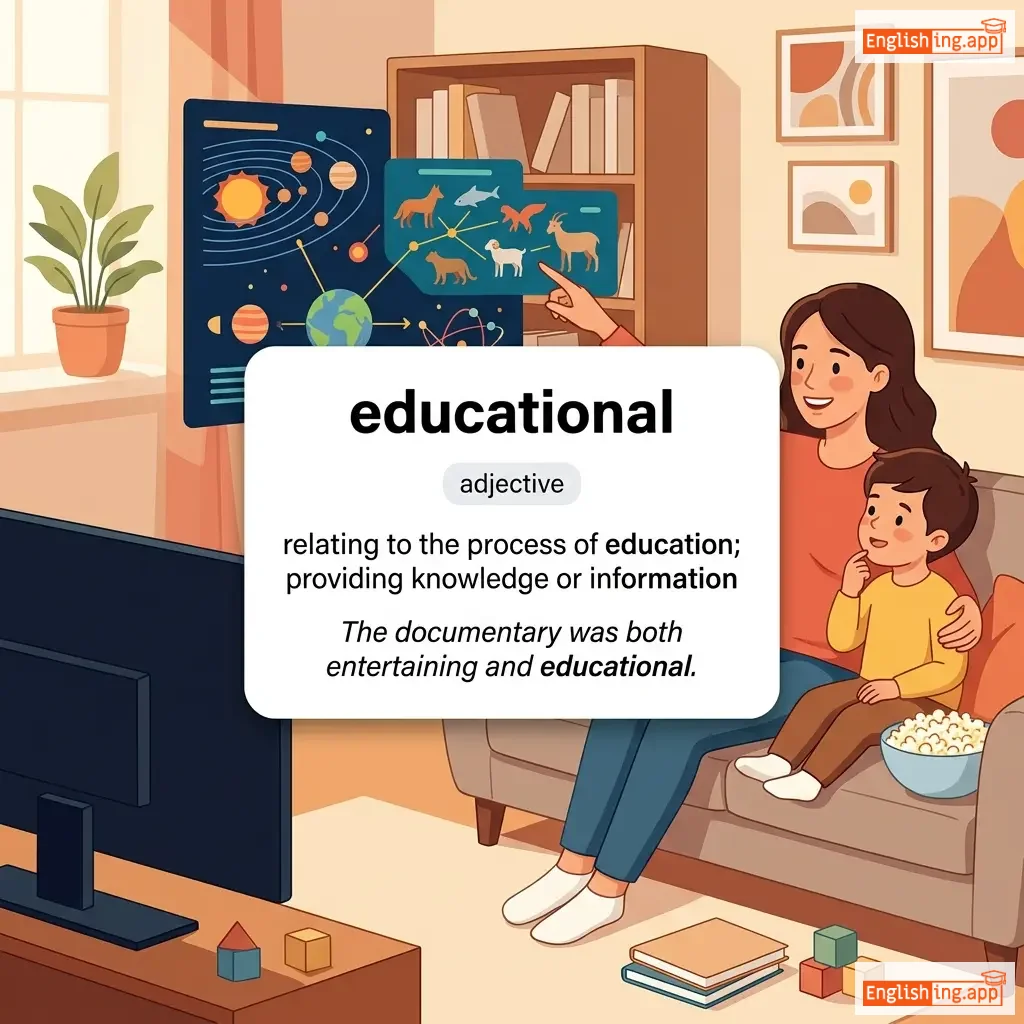
educational definition card — visual illustration of the meaning
adjective
/ˌɛdʒuˈkeɪʃənəl/
教育的な (kyouikuteki na)

relating to the process of education; providing knowledge or information

"The documentary was both entertaining and educational."

"そのドキュメンタリーはエンターテイメントと教育的な両方の要素を持っていました。" (Sono dokyumentarī wa entāteimento to kyōikuteki na ryōhō no yōso o motteimashita.)
adjective
/ˈed.jʊ.keɪ.tɪv/
教育的; 有益な; 情報豊かな (kyouikuteki; yūki na; jōhō yutakana)

providing education; instructive; informative

"The documentary was highly educative and informative."

"そのドキュメンタリーは非常に教育的で有益でした。" (Sono dokyumentarī wa hijō ni kyōikuteki de yūki deshita.)
noun
/ˈɛdʒuˌkeɪtər/
教育者 (kyouikusha)

a person who provides education; a teacher or instructor

"She is a dedicated educator who inspires her students every day."

"彼女は毎日学生を励ます献身的な教育者です。" (Kanojo wa mainichi gakusei wo hagemasu kenshinteki na kyouikusha desu.)
verb
/ɪˈdjuːs/
引き出す (hikidasu)

To draw out or bring forth something latent or hidden.

"The teacher tried to educe a response from the shy student."

"教師は恥ずかしがり屋の生徒から反応を引き出そうとしました。" (Kyoushi wa hazukashigariya no seito kara hannou wo hikidasou to shimashita.)