語彙集

英単語辞書 | 単語の意味、定義、例文

verb
/ɪkˈsiːd/
超える (koeru)

to go beyond a limit or expectation

"The athlete exceeded everyone's expectations by winning the gold medal."

"アスリートは金メダルを獲得することで皆の期待を超えました。" (Asurīto wa kin medaru o kakutoku suru koto de mina no kitai o koemashita.)
adjective
/ɪkˈsiːdɪŋ/
過剰な; 超越した (kajō na; chōetsu shita)

going beyond; surpassing; extremely

"The project was completed with exceeding excellence."

"プロジェクトは極めて優れた成果で完了しました。" (Purojekuto wa kiwamete sugureta seika de kanryou shimashita.)
verb
/ɪkˈsɛl/
優れる (sugureru)

to be exceptionally good at or proficient in an activity or subject

"She always tries to excel in her studies."

"彼女はいつも勉強で優れた成果を上げようとしています。" (Kanojo wa itsumo benkyō de sugureta seika o ageyō to shiteimasu.)
noun
/ˈɛksələns/
卓越 (taketsu)

the quality of being outstanding or extremely good

"The school is known for its academic excellence."

"その学校は学術的な卓越性で知られています。" (Sono gakkō wa gakujutsuteki na taketsu-sei de shirareteimasu.)
noun
/ˈɛksələnsɪ/
閣下 (kakka)

a title of honor for people of high rank, especially ambassadors or governors

"His Excellency the Ambassador attended the ceremony."

"大使閣下は式典に出席しました。" (Taishi kakka wa shikiten ni shusseki shimashita.)
adjective
/ˈɛksələnt/
優れた (sugureta)

extremely good; outstanding

"The food at this restaurant is excellent."

"このレストランの料理は優れています。" (Kono resutoran no ryōri wa sugureteimasu.)
preposition/conjunction
/ɪkˈsɛpt/
除いて (nozoite)

not including; other than

"Everyone was invited except John."

"全員が招待されましたが、ジョンを除いて。" (Zen'in ga shoutai saremashita ga, Jon o nozoite.)
noun
/ɪkˈsɛpʃən/
例外 (reiwai)

A case or instance that does not follow a general rule.

"Every rule has an exception."

"すべての規則には例外があります。" (Subete no kisoku ni wa reiwai ga arimasu.)
adjective
/ɪkˈsɛpʃənəbl/
受け入れられない (ukeirarenai)

Open to objection; causing disapproval.

"His rude remarks were considered exceptionable by everyone present."
"彼の無礼な発言は、出席していた全員にとって不適切だと見なされた。" (Kare no burei na hatsugen wa, shusseki shite ita zen'in ni totte futekisetsu da to minasareta.)
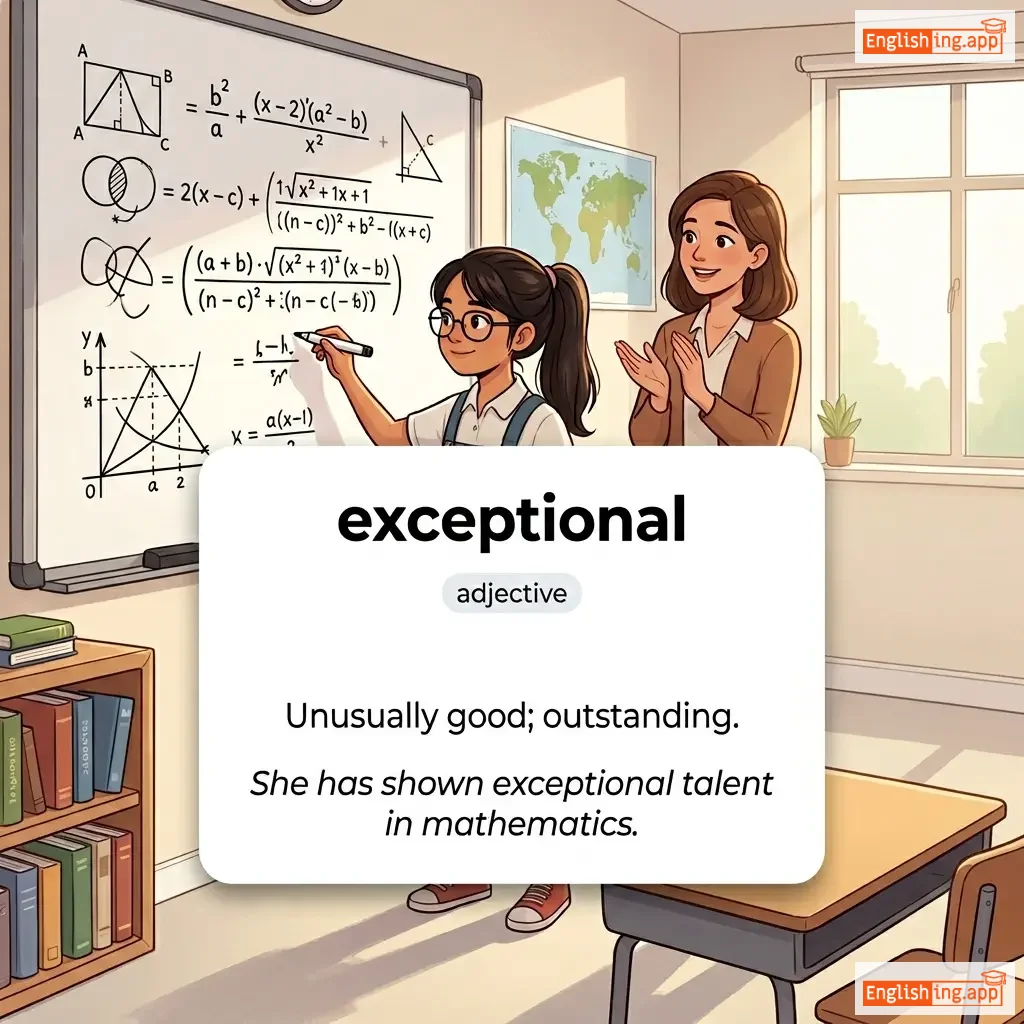
exceptional definition card — visual illustration of the meaning
adjective
/ɪkˈsɛpʃənl/
並外れた (hamorareta)

Unusually good; outstanding.

"She has shown exceptional talent in mathematics."

"彼女は数学において並外れた才能を示しました。" (Kanojo wa suugaku ni oite hamorareta sainou o shimeshimashita.)
noun
/ˈɛksɜːrpt/
抜粋 (batsui)

A short portion taken from a text, film, or piece of music.

"The teacher read an excerpt from the novel."

"先生は小説から一節を読みました。" (Sensei wa shousetsu kara issetsu o yomimashita.)
noun
/ɪkˈsɛs/
過剰 (kajo)

An amount more than necessary, permitted, or desirable.

"Too much sugar can lead to excess weight gain."

"過剰な砂糖は体重増加を引き起こす可能性があります。" (Kajō na satō wa taijū zōka o hikiokosu kanōsei ga arimasu.)
excessive definition card — visual illustration of the meaning
adjective
/ɪkˈsɛsɪv/
過度 (kado)

more than is necessary, reasonable, or acceptable

"Eating excessive sugar can lead to health problems."

"過剰な砂糖の摂取は健康問題を引き起こす可能性があります。" (Kajou na satou no sesshu wa kenko mondai o hikiokosu kanousei ga arimasu.)
excessive strain definition card — visual illustration of the meaning
adjective + noun
এক্সেসিভ স্ট্রেইন
過度のストレス (kado no sutoresu)

An amount of physical pressure or stress that is more than what is normal or acceptable.

"Excessive strain on fingers can cause musculoskeletal issues."

"指に過度のストレスがかかると、筋骨格の問題を引き起こす可能性があります。" (Yubi ni kado no sutoresu ga kakaru to, kinkokkaku no mondai o hikiokosu kanousei ga arimasu.)
Exchange definition card — visual illustration of the meaning
verb
/ɪksˈtʃeɪndʒ/
交換 (koukan)

To give something and receive something in return.

"They exchanged gifts during the festival."

"彼らは祭りの間に贈り物を交換しました。" (Karera wa matsuri no aida ni okurimono o koukan shimashita.)
noun
/ɪksˈtʃɛkər/
国庫 (koku-ko)

The treasury of a state or country.

"The government announced new measures to improve the exchequer."

"政府は国庫を改善するための新しい措置を発表しました。" (seifu wa kokko wo kaizen suru tame no atarashī sochi wo happyou shimashita.)
verb
/ˈɛkˌsaɪz/
切除する (sessuru)

to cut out or remove completely, often by surgery

"The surgeon excised the tumor successfully."

"外科医は腫瘍を成功裏に切除しました。" (Geka-i wa shuyō o seikōri ni sesshō shimashita.)
noun
/ɪkˈsɪʒən/
切除 (seshu)

the act of cutting something out, especially by surgical removal

"The excision of the infected tissue prevented further complications."

"感染した組織の切除により、さらなる合併症が防止されました。" (Kansen shita soshiki no seshu ni yori, sara naru gappeishou ga boushi saremashita.)
adjective
/ɪkˈsaɪtəbl̩/
興奮しやすい (koufun shiyasui)

easily excited or emotionally aroused

"The child was excitable and laughed at every small thing."

"その子供は興奮しやすく、何でも小さなことで笑っていた。" (Sono kodomo wa koufun shiyasuku, nandemo chiisana koto de waratte ita.)
noun
/ˌɛksaɪˈteɪʃən/
興奮 (kōfun)

a state of great excitement or the process of stimulating activity

"The news created great excitation among the fans."

"そのニュースはファンの間で大きな興奮を引き起こしました。" (Sono nyūsu wa fan no aida de ōkina kōfun o hikiokoshimashita.)
verb
/ɪkˈsaɪt/
興奮させる (koufun saseru)

to cause strong feelings of enthusiasm or eagerness

"The idea of traveling abroad excites her."

"海外旅行のアイデアが彼女を興奮させる。" (Kaigai ryokou no aidea ga kanojo o koufun saseru.)
adjective
/ɪkˈsaɪtɪd/
興奮した (koufun shita)

very enthusiastic and eager about something

"The children were excited to open their presents."

"子供たちはプレゼントを開けるのを楽しみにして興奮していました。" (Kodomotachi wa purezento o akeru no o tanoshimi ni shite koufun shite imashita.)
noun
/ɪkˈsaɪtmənt/
興奮 (koufun)

a feeling of great enthusiasm and eagerness

"There was a lot of excitement before the concert began."

"コンサートが始まる前に多くの興奮がありました。" (Konsāto ga hajimaru mae ni ōku no kōfun ga arimashita.)
exciting definition card — visual illustration of the meaning
adjective
/ɪkˈsaɪtɪŋ/
ワクワクする (wakuwaku suru)

Causing great enthusiasm and eagerness.

"The movie was so exciting that I watched it twice."

"その映画はとてもエキサイティングで、私はそれを二回見ました。" (Sono eiga wa totemo ekisaitingu de, watashi wa sore o nikai mimashita.)
verb
/ɪkˈskleɪm/
叫ぶ (sakebu)

to cry out suddenly in surprise, strong emotion, or excitement

"She exclaimed with joy when she saw the gift."

"彼女はプレゼントを見て喜びの声を上げた。" (Kanojo wa purezento o mite yorokobi no koe o ageta.)
noun
/ˌɛkskləˈmeɪʃən/
感嘆 (kantan)

A sudden cry or remark expressing strong emotion or surprise.

"She let out an exclamation of joy when she heard the news."

"彼女はそのニュースを聞いて、喜びの感嘆を漏らしました。" (Kanojo wa sono nyūsu o kiite, yorokobi no kantan o morashimashita.)
verb
/ɪkˈskluːd/
除外する (jogai suru)

To deliberately leave out or prevent someone or something from being included.

"The list excludes temporary workers."

"リストは臨時労働者を除外しています。" (Risutowa rinji rōdōsha o jogai shiteimasu.)
adjective
/ɪkˈskluːdɪd/
除外された; 追放された (jogai sareta; tsuihō sareta)

not included; left out; barred from participation

"He felt excluded from the group activities and conversations."

"彼はグループ活動や会話から除外されたと感じていた。" (Kare wa gurūpu katsudō ya kaiwa kara jogai sareta to kanjite ita.)
noun
/ɪkˈskluːʒən/
排除 (haijo)

The process or state of being left out or denied access.

"The policy led to the exclusion of certain groups."

"その政策は特定のグループの排除を招いた。" (Sono seisaku wa tokutei no gurūpu no haijo o manaita.)
adjective
/ɪkˈskluːsɪv/
特定の人物、グループ、またはエリアに制限された; 他の人と共有しない (tokutei no jinbutsu, gurūpu, matawa eria ni seigen sareta; hoka no hito to kyōyū shinai)

restricted to a particular person, group, or area; not shared with others

"The hotel offers exclusive access to a private beach."

"ホテルはプライベートビーチへのエクスクルーシブなアクセスを提供します。" (Hoteru wa puraibēto bīchi e no ekusukurūshibu na akusesu o teikyō shimasu.)
adverb
/ɪkˈskluːsɪvli/
独占的に (dokusenteki ni)

only; not shared with others

"This service is available exclusively to premium members."

"このサービスはプレミアムメンバーのみが利用できます。" (Kono sābisu wa puremiamu menbā nomi ga riyō dekimasu.)
verb
/ɛkˈskɔːrieɪt/
厳しく批判する (kibishiku hihan suru)

To strongly criticize someone; to denounce severely.

"The critic excoriated the film for its poor script."

"批評家はその映画の悪い脚本を厳しく批判しました。" (Hihyōka wa sono eiga no warui kyakuhon o kibishiku hihan shimashita.)
noun
/ɪkˈskrɛsəns/
異常な成長 (ijō na seichō)

An abnormal outgrowth or lump, often considered unattractive.

"The building was considered an excrescence on the landscape."

"その建物は風景の中で異常な成長と見なされました。" (Sono tatemono wa fūkei no naka de ijō na seichō to minasaremashita.)
verb
/ɪkˈskriːt/
排泄する (haisetsu suru)

to eliminate waste matter from the body

"Humans excrete carbon dioxide through breathing."

"人間は呼吸を通じて二酸化炭素を排出します。" (Ningen wa kokyū o tōjite ni sankatanso o haishutsu shimasu.)
noun
/ɪkˈskriːʃən/
排泄 (haisetsu)

the process of eliminating waste matter from the body

"Excretion is vital for maintaining a healthy body."

"排泄は健康な体を維持するために不可欠です。" (Haisetsu wa kenkou na karada o iji suru tame ni fukaketsu desu.)
verb
/ɪkˈskruːʃieɪt/
苦しめる (kurushimeru)

to cause intense pain or suffering

"The injury excruciated him with unbearable pain."

"その怪我は彼を耐え難い痛みに苦しめました。" (Sono kega wa kare wo taegatai itami ni kurushimemashita.)
adjective
/ɪkˈskruːʃieɪtɪŋ/
耐えられない痛み (taerarenai itami)

causing extreme physical or mental pain

"She was in excruciating pain after the accident."

"彼女は事故の後、耐えられない痛みを感じていた。" (Kanojo wa jiko no ato, taerarenai itami o kanjite ita.)
exculpate definition card — visual illustration of the meaning
verb
/ˈɛkskʌlpeɪt/
免罪する (menzai suru)

to show or declare that someone is not guilty of wrongdoing

"The lawyer worked hard to exculpate his client."

"弁護士はクライアントを無罪にするために懸命に働いた。" (Bengoshi wa kuraianto o muzai ni suru tame ni kenmei ni hataraita.)
noun
/ɪkˈskɜːʒən/
遠足 (ensoku)

A short journey or trip, especially one taken for leisure or educational purposes.

"The students went on an excursion to the national museum."

"学生たちは国立博物館への遠足に行きました。" (Gakutō-tachi wa kokuritsu hakubutsukan e no ensoku ni ikimashita.)
adjective
/ɪkˈskɜːsɪv/
逸脱した (itsudatsu shita)

Tending to digress or wander; moving away from the main subject.

"His excursive lecture left the students confused about the main topic."

"彼の逸脱した講義は、学生たちを主題について混乱させました。" (Kare no itsudatsu shita kougi wa, gakuseitachi wo shudai ni tsuite konran sasemashita.)
adjective
/ɪkˈskjuːzəbl/
許容可能な (kyoryō kanō na)

Able to be forgiven or justified.

"Her mistake was excusable given the circumstances."

"彼女の間違いは状況を考慮すれば許容可能でした。" (Kanojo no machigai wa jōkyō o kōryo sureba kyoryō kanō deshita.)
verb
/ɪkˈskjuːz/
許す, 言い訳 (yurusu, iiwake)

to forgive someone for doing something wrong or to justify an action

"Please excuse my lateness; there was heavy traffic."

"遅れてすみません、渋滞がひどかったです。" (Okurete sumimasen, jūtai ga hidokatta desu.)
execrable definition card — visual illustration of the meaning
adjective
/ˈeksɪkrəbl/
ひどい (hidoi)

Extremely bad or unpleasant.

"The movie was so execrable that many people left the theater early."

"その映画はひどすぎて、多くの人々が早く映画館を出て行きました。" (Sono eiga wa hido sugite, ōku no hitobito ga hayaku eigakan o dete ikimashita.)
verb
/ˈeksɪkreɪt/
憎む (nikumu)

To feel or express great loathing or hatred for something.

"The community execrated the corrupt politician."

"コミュニティは腐敗した政治家を憎んだ。" (Komyuniti wa fuhai shita seijika o nikunda.)
noun
/ˌɛksɪˈkreɪʃən/
呪い (noroi)

An act of cursing or denouncing someone or something with hatred.

"The dictator’s name was spoken with execration after his fall."

"独裁者の名前は、彼の転落後に呪いの言葉と共に言われました。" (Dokusai-sha no namae wa, kare no tenraku-go ni noroi no kotoba to tomoni iwaremashita.)
execute definition card — visual illustration of the meaning
verb
/ˈɛksɪkjuːt/
実行する (jikkou suru)

To carry out a plan, order, or action; to perform or put into effect.

"The company plans to execute its new strategy next year."

"その会社は来年、新しい戦略を実行する予定です。" (Sono kaisha wa rainen, atarashī senryaku wo jikkou suru yotei desu.)
noun
/ˌɛksɪˈkjuːʃən/
実行、遂行 (jikkou, suikou)

the act of carrying out a plan, order, or legal sentence

"The success of a project depends on its proper execution."

"プロジェクトの成功はその適切な実行に依存します。" (Purojekuto no seikō wa sono tekisetsuna jikkō ni izon shimasu.)
noun
/ˌɛksɪˈkjuːʃənər/
処刑人 (shokeinin)

A person who carries out a death sentence by execution.

"The executioner prepared the gallows for the condemned prisoner."

"処刑人は死刑囚のために絞首台を準備した。" (Shokeinin wa shikeishuu no tame ni koushutai wo junbi shita.)
executive definition card — visual illustration of the meaning
noun/adjective
/ɪɡˈzɛkjətɪv/
経営幹部 (keiei kanbu)

A person with senior managerial responsibility in a business; relating to the execution of plans or laws.

"She works as an executive in a multinational company."

"彼女は多国籍企業でエグゼクティブとして働いています。" (Kanojo wa takokuseki kigyō de eguzekutibu to shite hataraiteimasu.)
noun
/ɪɡˈzɛkjətər/
遺言執行者 (yigon shikkōsha)

A person appointed to carry out the terms of someone's will after their death.

"The executor managed the estate according to the deceased’s wishes."

"遺言執行者は故人の意志に従って財産を管理しました。" (Yigon shikkōsha wa kojin no ishi ni shitagatte zaisan o kanri shimashita.)