語彙集

英単語辞書 | 単語の意味、定義、例文

adjective
/ɛsˈθɛtɪk/
美的 (biteki)

Concerned with beauty or the appreciation of beauty.

"The building’s esthetic design attracted many visitors."
"その建物の美的なデザインは多くの訪問者を引き寄せました。" (Sono tatemono no biteki na dezain wa ooku no hōmonsha o hikiyose mashita.)
estimable definition card — visual illustration of the meaning
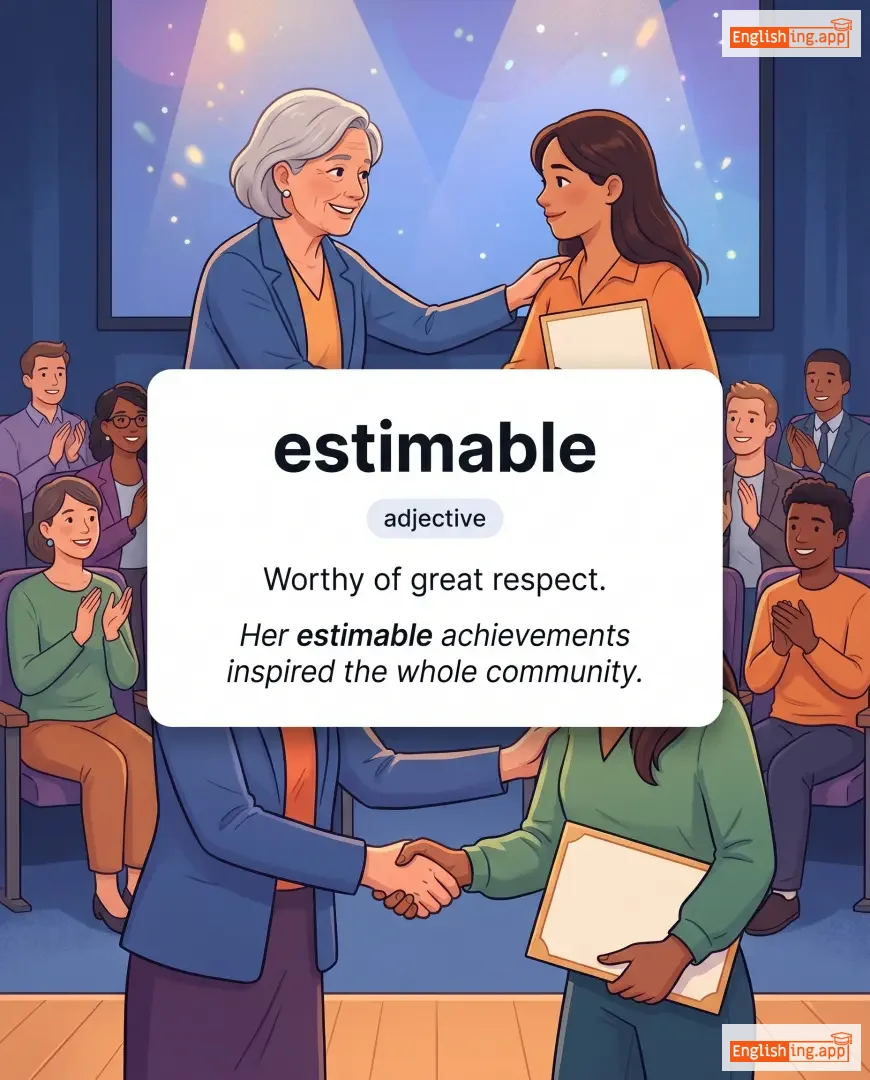
adjective
/ˈɛstɪməbl/
尊敬すべき (sonkei subeki)

Worthy of great respect.

"Her estimable achievements inspired the whole community."

"彼女の尊敬に値する業績はコミュニティ全体にインスピレーションを与えました。" (Kanojo no sonkei subeki gyōseki wa komyuniti zentai ni insupirēshon o ataemashita.)
verb
/ˈɛstɪˌmeɪt/
見積もる (mitsumoru)

To roughly calculate or judge the value, number, quantity, or extent of something.

"The engineer estimated the cost of the project at $5 million."

"エンジニアはプロジェクトのコストを500万ドルと見積もりました。" (Enjinia wa purojekuto no kosuto o 500-man doru to mitsumorimashita.)
adjective
/ˈɛstɪmeɪtɪd/
見積もりの (mitsumori no)

roughly calculated or judged; an approximate value or amount

"The estimated cost of the project is five million dollars."

"そのプロジェクトの見積もりコストは500万ドルです。" (Sono purojekuto no mitsumori kosuto wa gohyakuman dorā desu.)
verb
/ɪˈstreɪndʒ/

to cause someone to no longer be close or affectionate; to alienate

"His constant criticism began to estrange him from his friends."

adjective
/ɪˈstreɪndʒd/
疎遠 (soen)

no longer close or affectionate with someone; alienated

"She felt estranged from her family after the long dispute."

"彼女は長い争いの後、家族と疎遠に感じた。" (Kanojo wa nagai arasoi no ato, kazoku to soen ni kanjita.)
noun
/ˈɛstjʊəri/
河口 (kakou)

the tidal mouth of a large river, where the tide meets the stream

"The city is located near the estuary of the river."

"その都市は川の河口の近くにあります。" (sono toshi wa kawa no kakou no chikaku ni arimasu.)
abbreviation
/ɛtˈsɛtərə/
など (nado)

Used to indicate additional, similar items in a list that are not mentioned.

"The shop sells fruits, vegetables, dairy, etc."

"店では果物、野菜、乳製品などが販売されています。" (Mise de wa kudamono, yasai, nyūseihin nado ga hanbai sareteimasu.)
adverb
/ɛtˈsɛtərə/
その他 (sonota)

used at the end of a list to indicate that other similar items are included

"She bought apples, oranges, bananas, etcetera from the market."

"彼女は市場でリンゴ、オレンジ、バナナ、その他を買いました。" (Kanojo wa ichiba de ringo, orenji, banana, sonota wo kaimashita.)
verb
/ɛtʃ/
刻む (kizamu)

to cut or carve a design onto a surface

"The artist etched her initials into the glass."

"アーティストはガラスに自分のイニシャルを刻みました。" (Ātisuto wa garasu ni jibun no inisharu o kizamimashita.)
adjective
/ɪˈtɜːrnəl/
永遠 (eien)

lasting or existing forever; without end

"They pledged their eternal love for each other."

"彼らはお互いに永遠の愛を誓いました。" (Karera wa otagai ni eien no ai o chikaimashita.)
ethereal definition card — visual illustration of the meaning
adjective
/ɪˈθɪəriəl/
天上の (tenjō no)

extremely delicate, light, or airy; heavenly or otherworldly

"The dancer moved with an ethereal grace that captivated the audience."

"ダンサーはイセリアルな優雅さで動き、観客を魅了しました。" (Dansā wa iserial na yūgasa de ugoki, kankyaku o miryō shimashita.)
noun
/ˈɛθɪk/
倫理 (rinri)

a set of moral principles, especially ones relating to a particular group, system, or profession

"He has a strong work ethic and always meets deadlines."

"彼は強い労働倫理を持っており、常に締め切りを守ります。" (Kare wa tsuyoi rōdō rinri o motte ori, jō ni shimekiri o mamorimasu.)
ethical definition card — visual illustration of the meaning
adjective
/ˈɛθɪkəl/
倫理的 (rinriteki)

relating to moral principles or the right and wrong behavior

"The company follows strict ethical standards in its business practices."

"その会社はビジネス慣行において厳格な倫理基準を守っています。" (Sono kaisha wa bijinesu kankou ni oite genkaku na rinri kijun wo mamotteimasu.)
noun
/ˈɛθɪks/
倫理 (rinri)

moral principles that govern a person's behavior or the conduct of an activity

"Business ethics require companies to act fairly and responsibly."

"ビジネス倫理は、企業に公平かつ責任を持って行動することを求めます。" (Bijinesu rinri wa, kigyō ni kōhei katsu sekinin o motte kōdō suru koto o motomemasu.)
adjective
/ˈɛθnɪk/
民族的 (minzokuteki)

relating to a population subgroup with a common national or cultural tradition

"The festival celebrated the city's diverse ethnic communities."
"フェスティバルは都市のさまざまな民族のコミュニティを祝いました。" (Fesutibaru wa toshi no samazama na minzoku no komyuniti o iwaimashita.)
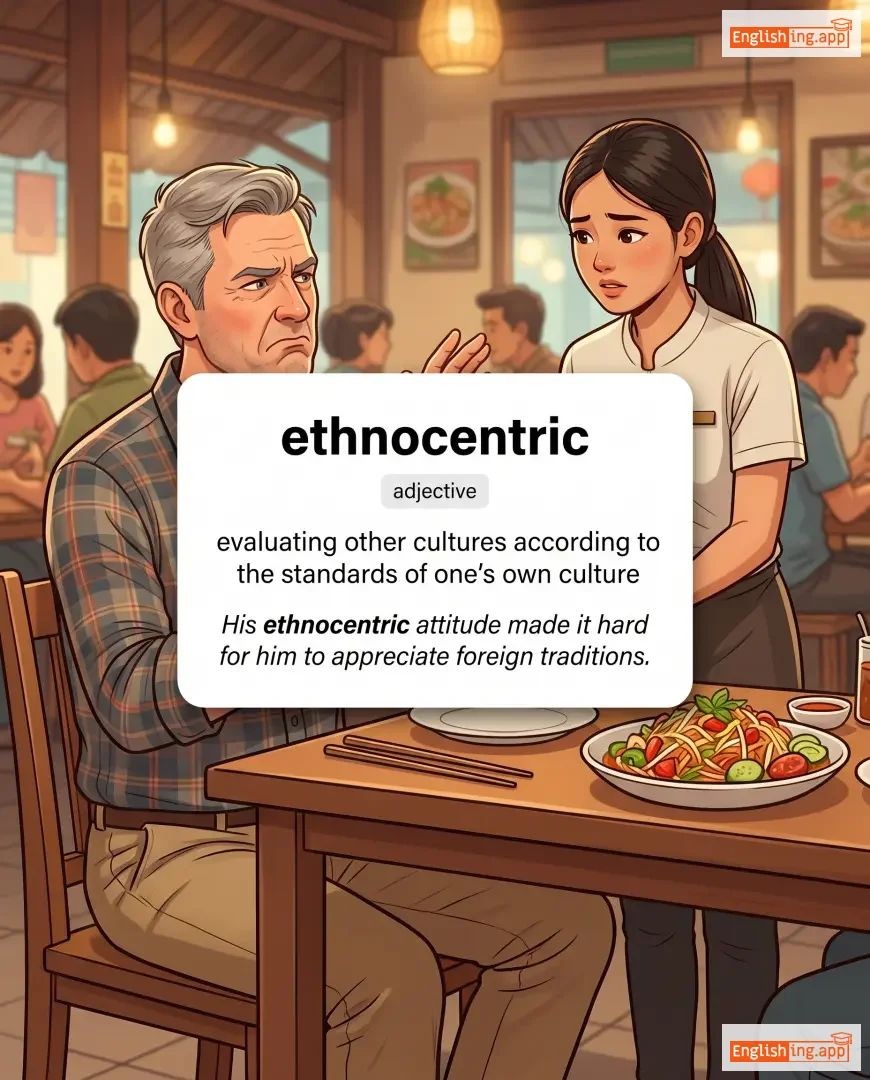
ethnocentric definition card — visual illustration of the meaning
adjective
/ˌeθ.noʊˈsen.trɪk/
エスノセントリック (esunosentorikku)

evaluating other cultures according to the standards of one's own culture

"His ethnocentric attitude made it hard for him to appreciate foreign traditions."

"彼のエスノセントリックな態度は、外国の伝統を評価するのを難しくしました。" (Kare no esunosentorikku na taido wa, gaikoku no dentō o hyōka suru no o muzukashiku shimashita.)
noun
/ɛθˈnɒlədʒi/
民族学 (minzokugaku)

the study of the characteristics of different peoples and the differences and relationships between them

"She specialized in ethnology to better understand cultural diversity."

"彼女は文化的多様性をよりよく理解するために民族学を専門にしていた。" (Kanojo wa bunkateki tayōsei o yori yoku rikai suru tame ni minzokugaku o senmon ni shite ita.)
ethos definition card — visual illustration of the meaning
noun
/ˈiːθɒs/
エトス (etos)

the characteristic spirit, values, or beliefs of a community, culture, or organization

"The company’s ethos emphasizes innovation and customer service."
"その会社のエトスは、革新と顧客サービスを強調しています。" (Sono kaisha no etosu wa, kakushin to kokyaku sābisu o kyōchō shiteimasu.)
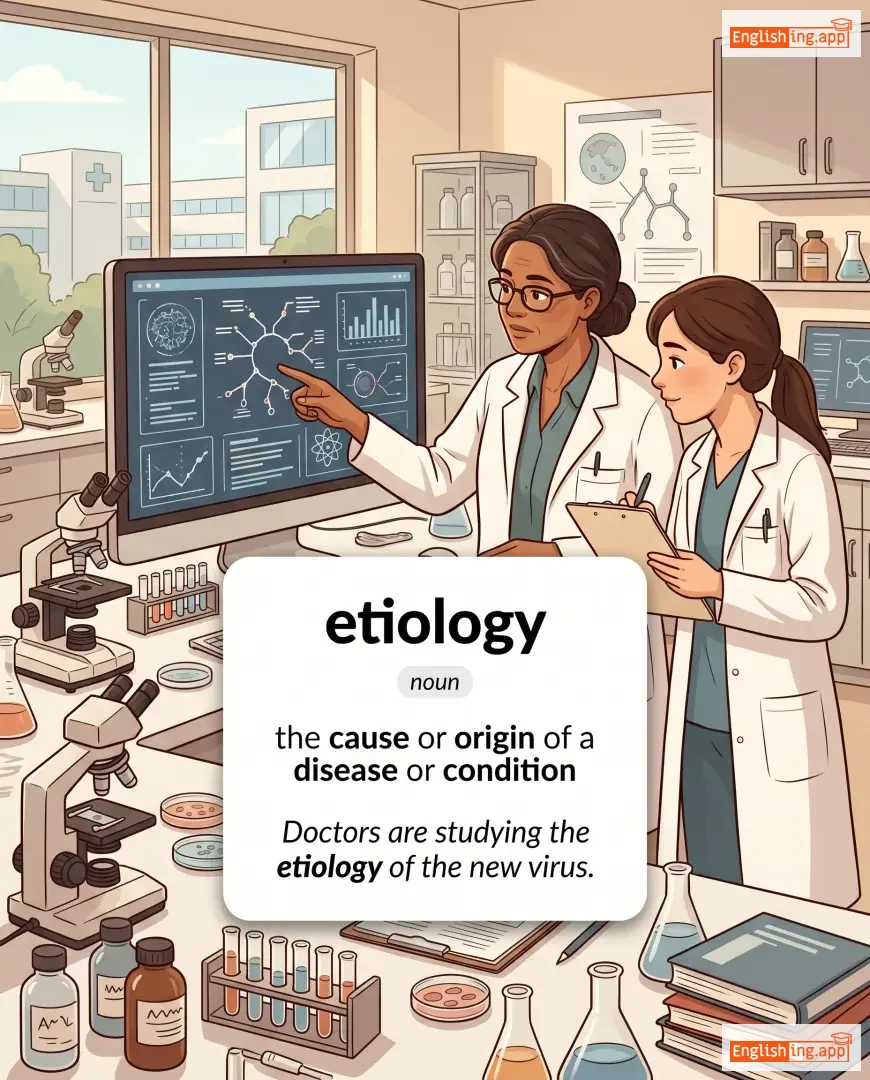
etiology definition card — visual illustration of the meaning
noun
/ˌiː.tiˈɒ.lə.dʒi/
病因学 (byōingaku)

the cause or origin of a disease or condition

"Doctors are studying the etiology of the new virus."

"医師たちは新しいウイルスの病因学を研究しています。" (Ishitachi wa atarashī uirusu no byōingaku o kenkyū shiteimasu.)
noun
/ˈet.ɪ.kət/
エチケット (echiketto)

the customary code of polite behavior in society or among members of a particular profession

"Proper etiquette requires standing when a lady enters the room."
"適切なエチケットは、女性が部屋に入るときに立ち上がることを求めます。" (tekisetsu na echiketto wa, josei ga heya ni hairu toki ni tachiagaru koto o motomemasu.)
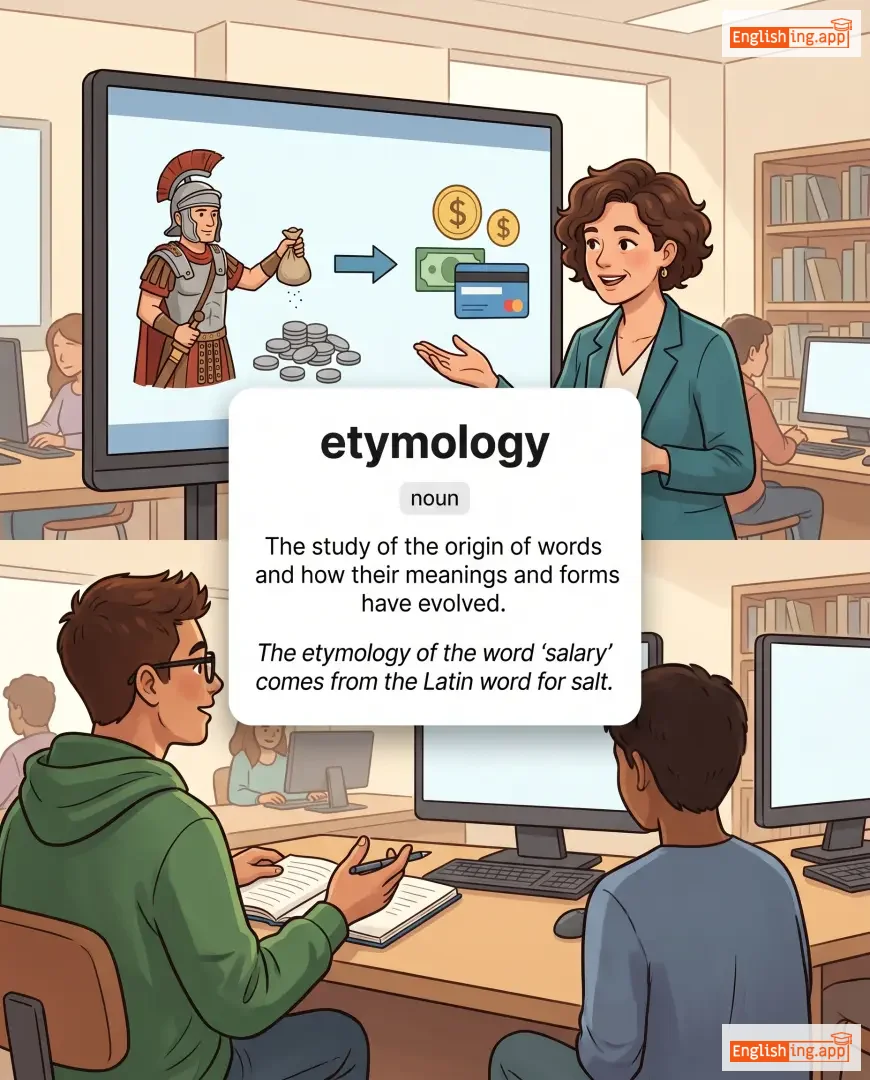
etymology definition card — visual illustration of the meaning
noun
/ˌɛtɪˈmɒlədʒi/
語源学 (gogen-gaku)

The study of the origin of words and how their meanings and forms have evolved.

"The etymology of the word 'salary' comes from the Latin word for salt."

"'給与'という言葉の語源は、ラテン語の塩を意味する言葉から来ています。" ('Kyūyo' to iu kotoba no gogen wa, raten-go no shio o imi suru kotoba kara kiteimasu.)
adjective
/juːˈdʒɛnɪk/
優生学的 (yūseigakuteki)

Relating to or aiming at improving the genetic quality of a population.

"In the early 20th century, some scientists supported eugenic policies."
"20世紀初頭、一部の科学者は優生学的な政策を支持した。" (20 seiki shotō, ichibu no kagakusha wa yūseigakuteki na seisaku o shiji shita.)
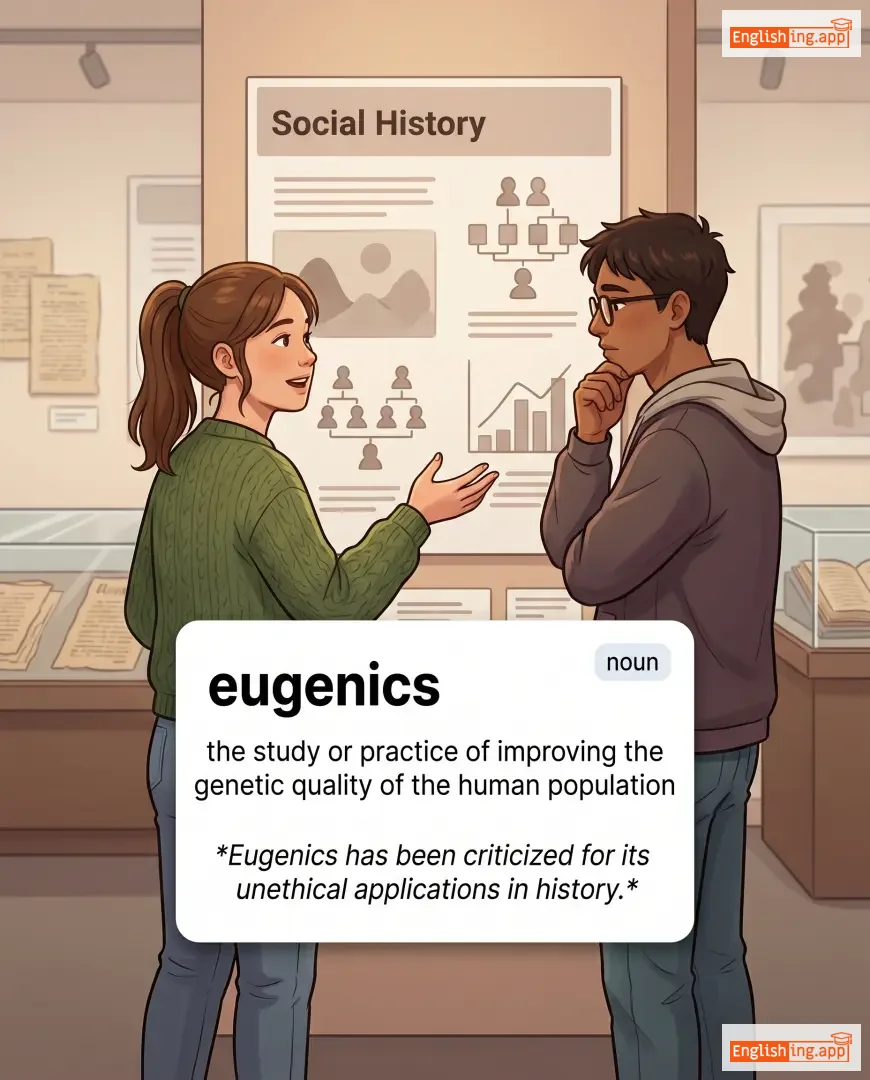
eugenics definition card — visual illustration of the meaning
noun
/juːˈdʒen.ɪks/
優生学 (yūseigaku)

the study or practice of improving the genetic quality of the human population

"Eugenics has been criticized for its unethical applications in history."

"優生学は歴史的にその非倫理的な応用について批判されてきました。" (Yūseigaku wa rekishiteki ni sono hinrinteki na ōyō ni tsuite hihan sarete kimashita.)
adjective
/ˌjuːləˈdʒɪstɪk/
賛辞の (sanchi no)

Expressing praise or admiration, often formally.

"The speaker gave a eulogistic account of the leader’s achievements."

"スピーカーはリーダーの業績について賛辞の言葉を述べました。" (Supīkā wa rīdā no gyōseki ni tsuite sanchi no kotoba o nobemashita.)
verb
/ˈjuːləˌdʒaɪz/
讃える (tataeru)

To praise highly in speech or writing, especially in honor of someone who has died.

"They gathered to eulogize their beloved teacher."

"彼らは愛する先生を称賛するために集まりました。" (Karera wa aisuru sensei o tataeru tame ni atsumarimashita.)
eulogy definition card — visual illustration of the meaning
noun
/ˈjuːlədʒi/
弔辞 (chouji)

A speech or piece of writing that praises someone, especially after their death.

"Her brother delivered a heartfelt eulogy at the funeral."
"彼女の兄は葬式で感動的な弔辞を述べました。" (Kanojo no ani wa soushiki de kandouteki na chouji o nobemashita.)
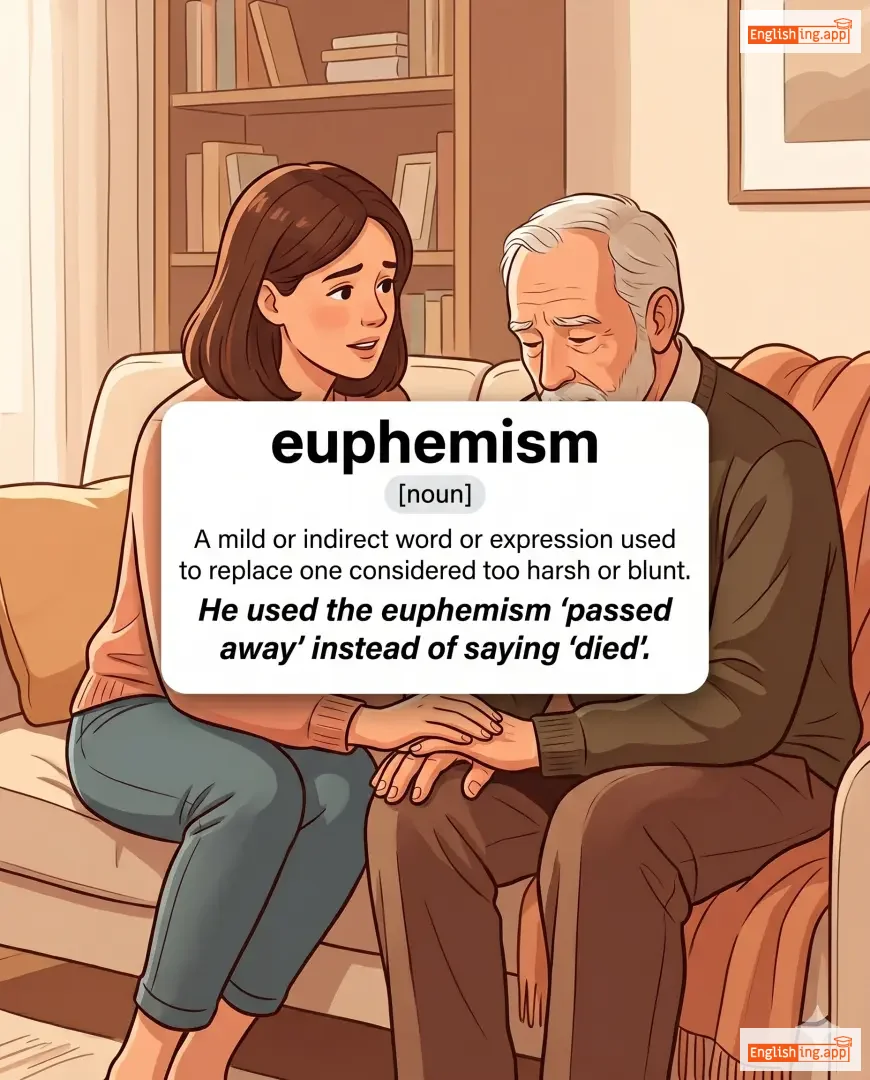
euphemism definition card — visual illustration of the meaning
noun
/ˈjuːfəmɪzəm/
婉曲語 (wankyokugo)

A mild or indirect word or expression used to replace one considered too harsh or blunt.

"He used the euphemism 'passed away' instead of saying 'died'."

"彼は「亡くなった」という代わりに「逝った」という婉曲語を使った。" (Kare wa 'nakunatta' to iu kawari ni 'itta' to iu wankyokugo o tsukatta.)
adjective
/juːˈfoʊniəs/
耳に心地よい音 (mimi ni kokochi yoi oto)

Pleasing to the ear; having a sweet sound.

"The poet's euphonious language made the verse a delight to read."

"詩人のユーフォニアスな言葉は詩を読む喜びに変えました。" (Shijin no yūfoniasu na kotoba wa shi o yomu yorokobi ni kaemashita.)
noun
/ˈjuːfəni/
ユーフォニー (yuufonii)

The quality of being pleasing to the ear, especially through harmonious combination of words.

"The orator's speech was full of euphony and rhythm."
"演説者のスピーチはユーフォニーとリズムで満ちていた。" (Enzetsusha no supīchi wa yuufonii to rizumu de michite ita.)
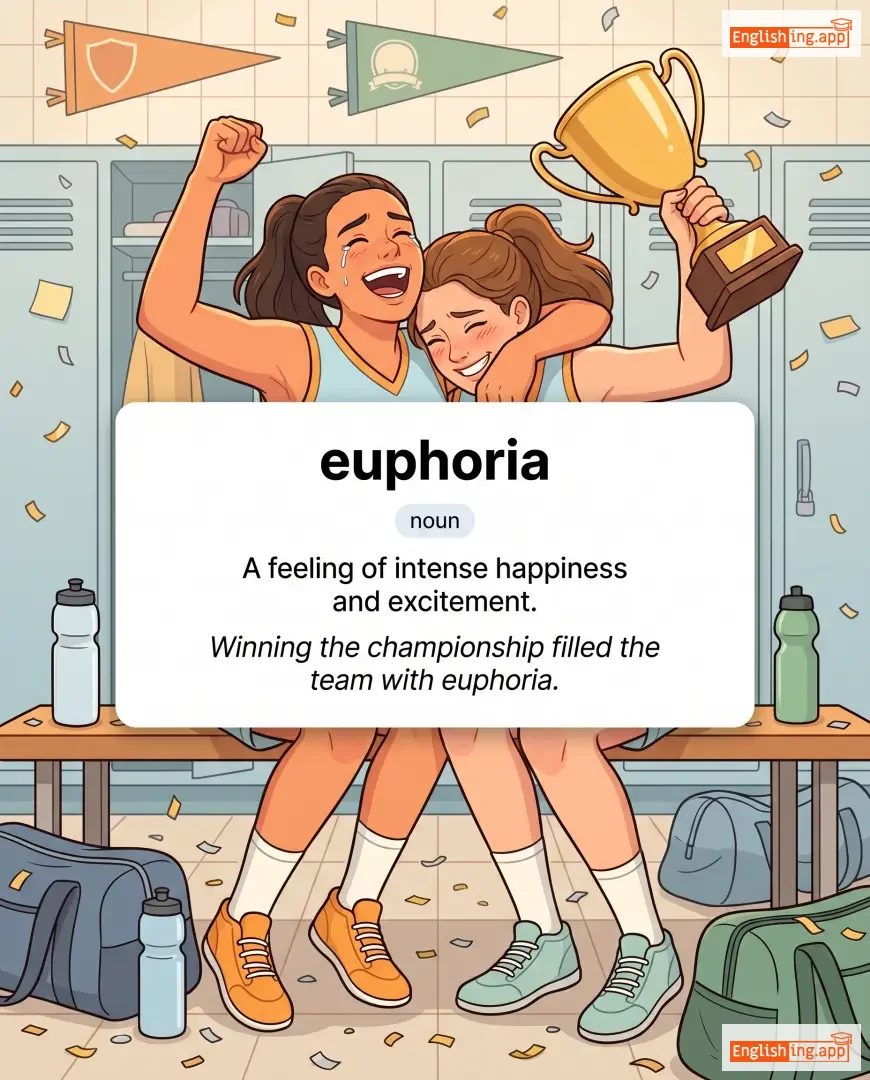
euphoria definition card — visual illustration of the meaning
noun
/juːˈfɔːriə/
幸福感 (koufukukan)

A feeling of intense happiness and excitement.

"Winning the championship filled the team with euphoria."

"チャンピオンシップを優勝すると、チームは幸福感で満たされました。" (Chanpionship wo yūshō suru to, chīmu wa kōfukukan de mitasaremashita.)
adjective
/juːˈfɔːrɪk/
幸福感に満ちた (kōfukukan ni michita)

Characterized by or feeling intense excitement and happiness.

"The fans were euphoric after their team's victory."

"チームが勝った後、ファンは幸福感に満ちていた。" (Chīmu ga katta ato, fan wa kōfukukan ni michite ita.)
exclamation
/juˈriːkə/
ユーレカ! (Yureka!)

An exclamation used to express a sudden discovery or realization.

"When the solution finally came to him, he shouted, 'Eureka!'"

"解決策がついに彼に浮かんだとき、彼は叫んだ。 'ユーレカ!'" (Kaiketsu-saku ga tsuini kare ni ukanda toki, kare wa sakenda. 'Yureka!')
adjective
/ˌjʊərəˈpiːən/
ヨーロピアン (Yōropian)

Relating to Europe or its people.

"She studied European history at university."
"彼女は大学でヨーロッパの歴史を学びました。" (Kanojo wa daigaku de Yōroppa no rekishi o manabimashita.)
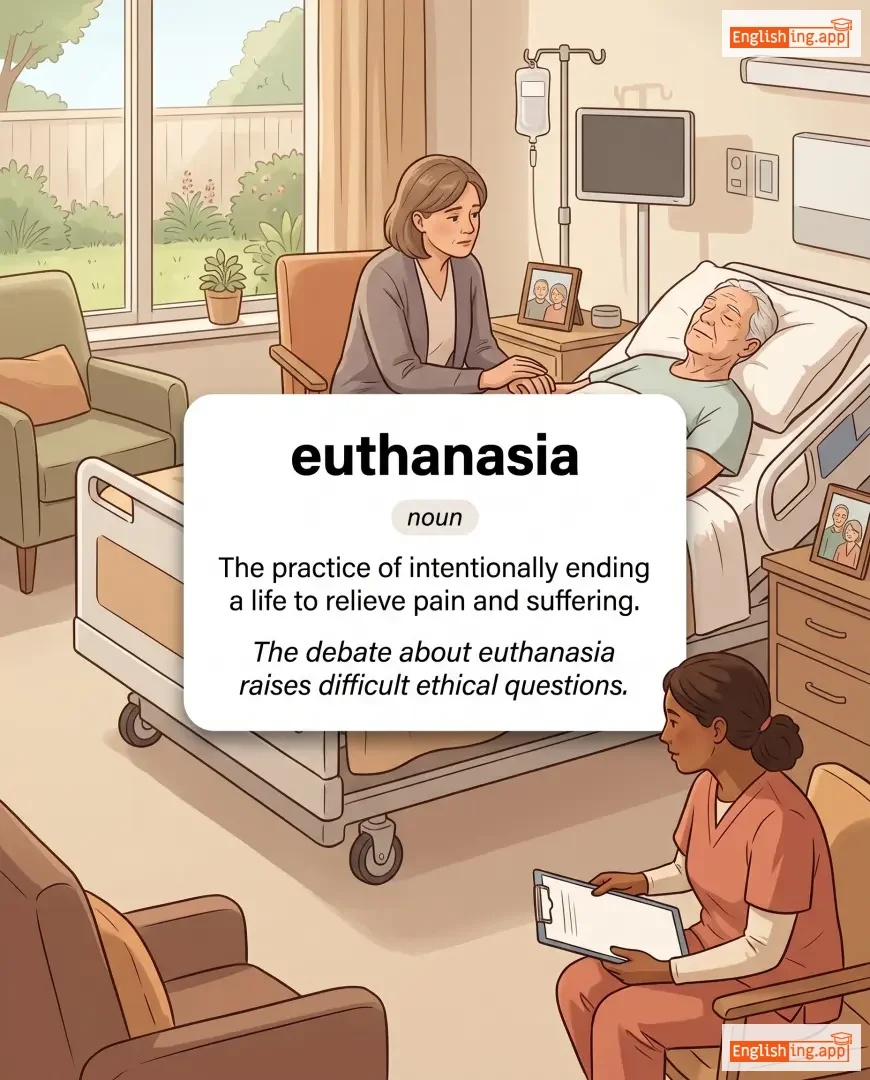
euthanasia definition card — visual illustration of the meaning
noun
/ˌjuːθəˈneɪʒə/
安楽死 (anraku shi)

The practice of intentionally ending a life to relieve pain and suffering.

"The debate about euthanasia raises difficult ethical questions."
"安楽死についての議論は、難しい倫理的な問題を提起します。" (Anraku shi ni tsuite no giron wa, muzukashii rinriteki na mondai wo teiki shimasu.)
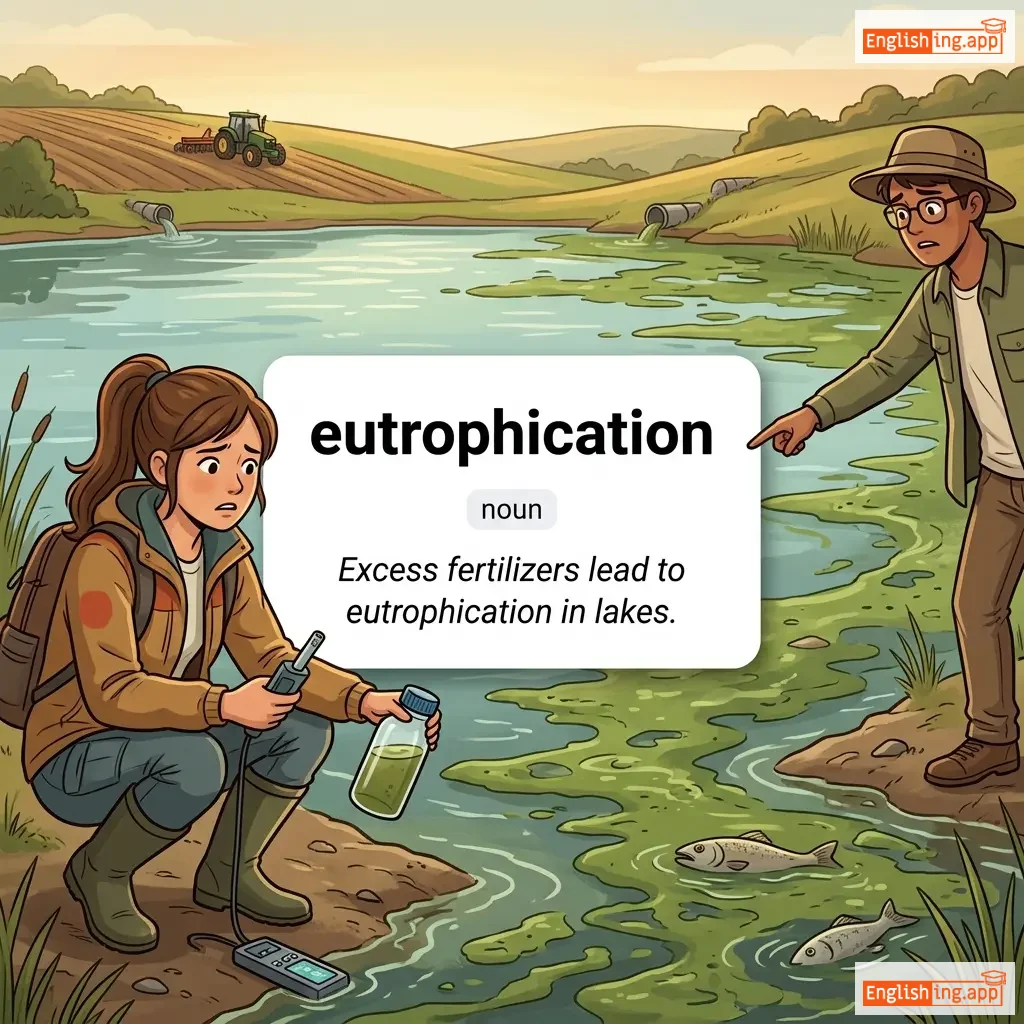
eutrophication definition card — visual illustration of the meaning
noun
/juːˌtrɑː.fɪˈkeɪ.ʃən/
湖やその他の水域における栄養素の過剰 (mizuumi ya sonota no suiiki ni okeru eiyōso no kajō)

Excessive richness of nutrients in a lake or other body of water, frequently due to runoff from the land, which causes a dense growth of plant life and death of animal life from lack of oxygen.

"Excess fertilizers lead to eutrophication in lakes."

"過剰な肥料は湖におけるユートロフィケーションを引き起こします。" (Kajōna hiryō wa mizuumi ni okeru yūtorofikēshon o hikiokoshimasu.)
verb
/ɪˈvækjueɪt/
避難する (hinan suru)

To remove people from a dangerous place to safety.

"The residents were ordered to evacuate the building after the fire alarm."

"火災警報後、住民は建物から避難するよう命じられました。" (Kasai keihou go, jumin wa tatemono kara hinan suru you meijiraremashita.)
verb
/ɪˈveɪd/
回避する (kaihi suru)

To escape or avoid something, especially by cleverness or trickery.

"He tried to evade the question by changing the subject."

"彼は話題を変えることで質問を回避しようとした。" (Kare wa wadai o kaeru koto de shitsumon o kaihi shiyō to shita.)
verb
/ɪˈvæljueɪt/
評価する (hyoukasuru)

To assess or judge the value, quality, or significance of something.

"The teacher will evaluate the students’ projects tomorrow."
"教師は明日学生のプロジェクトを評価します。" (Kyoushi wa ashita gakusei no purojekuto wo hyoukasuru.)
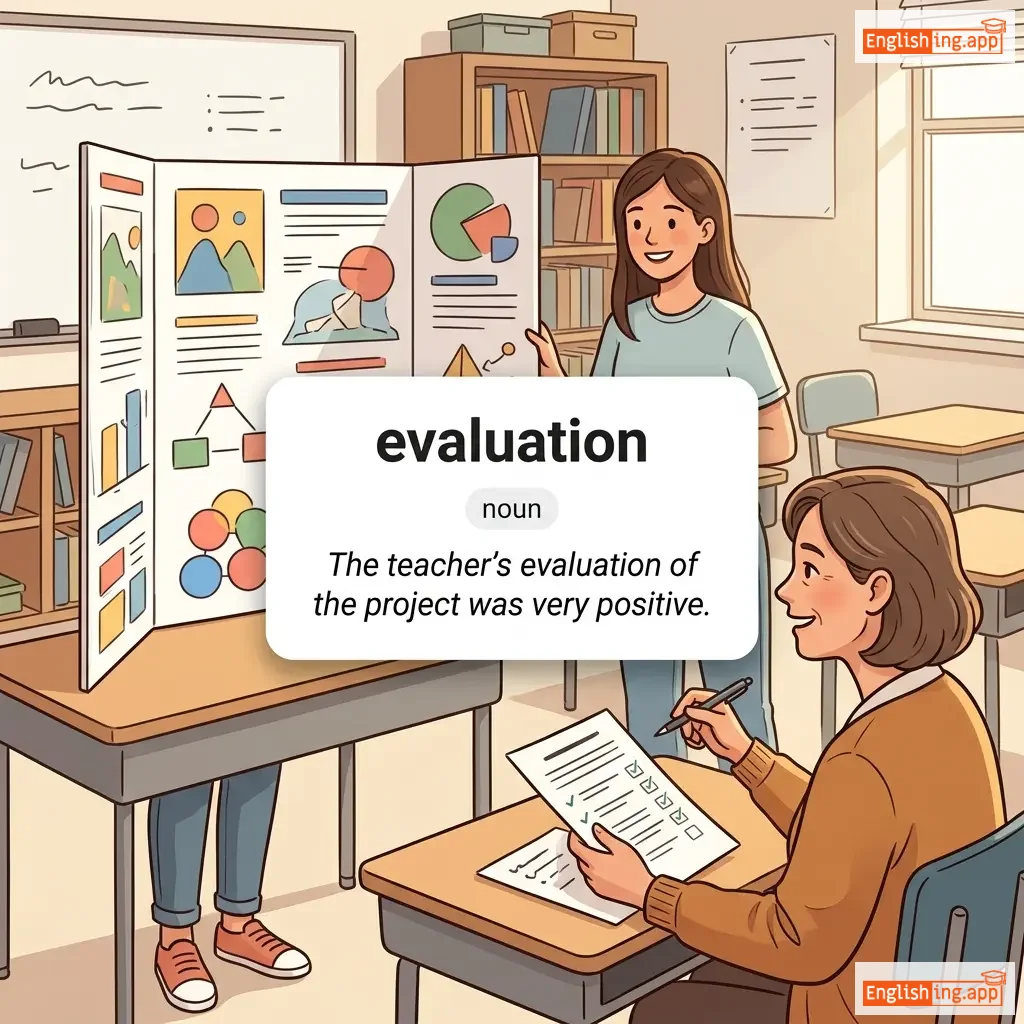
evaluation definition card — visual illustration of the meaning
noun
/ɪˌvæljʊˈeɪʃən/
評価 (hyouka)

The process of assessing or judging the value, quality, or importance of something.

"The teacher’s evaluation of the project was very positive."

"教師のプロジェクトの評価は非常に肯定的でした。" (Kyoushi no purojekuto no hyouka wa hijou ni kouteki deshita.)
evaluative definition card — visual illustration of the meaning
adjective
/ɪˈvæljʊətɪv/
評価的 (hyoukateki)

Relating to or involving evaluation or assessment.

"The evaluative phase of the project involves assessing its success."

"プロジェクトの評価段階は、その成功を評価することを含みます。" (Purojekuto no hyoukadankai wa, sono seikou wo hyoukasuru koto wo fukumimasu.)
verb
/ˌɛvəˈnɛs/
消える (kieru)

To disappear gradually; to fade away.

"The mist began to evanesce as the sun rose higher."

"霧は太陽が高く昇るにつれて消え始めた。" (Kiri wa taiyō ga takaku noboru ni tsurete kiehajimeta.)
adjective
/ˌɛvəˈnɛsənt/
儚い (hakanai)

Quickly fading or disappearing; lasting for only a very short time.

"The beauty of the sunset was evanescent, fading within minutes."

"夕日の美しさは儚く、数分で消えてしまった。" (Yūhi no utsukushisa wa hakanaku, sūfun de kiete shimatta.)
adjective
/ˌiːvænˈdʒɛlɪkəl/
福音主義 (fukuin shugi)

Relating to the Christian gospel, especially the teachings that emphasize personal faith and the authority of the Bible.

"She grew up in an evangelical church community."

"彼女は福音主義の教会コミュニティで育ちました。" (Kanojo wa fukuin shugi no kyōkai komyuniti de sodachimashita.)
noun
/ɪˈvændʒəlɪst/
伝道師 (dendōshi)

A person who seeks to convert others to the Christian faith, especially by public preaching.

"The evangelist traveled across the country spreading his message."

"伝道師は全国を旅して自分のメッセージを広めていました。" (Dendōshi wa zenkoku o tabishite jibun no messēji o hiromete imashita.)
noun
/ɪˈvæp.ər.ə.tɪv ˈkuː.lər/
蒸発冷却器 (jōhatsu reikyaku ki)

a cooling device that uses water evaporation to reduce air temperature

"The evaporative cooler works best in dry climates."

"蒸発冷却器は乾燥した気候で最も効果的に機能します。" (jōhatsu reikyaku ki wa kansō shita kikō de mottomo kōka-teki ni kinō shimasu)
evasion definition card — visual illustration of the meaning
noun
/ɪˈveɪʒən/
回避 (kaibi)

The act of avoiding something, especially by cleverness or trickery.

"He was arrested for tax evasion."
"彼は税金逃れで逮捕された。" (Kare wa zeikin nogare de taiho sareta.)
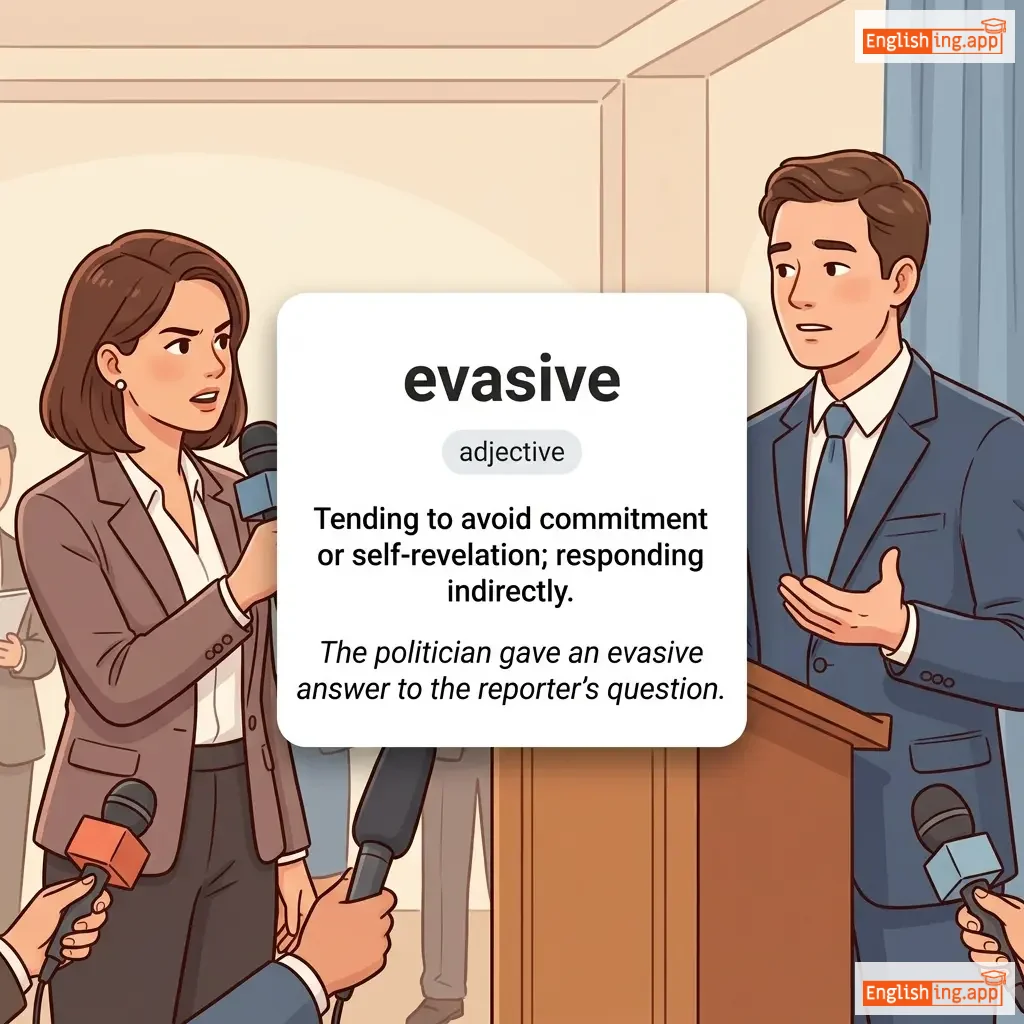
evasive definition card — visual illustration of the meaning
adjective
/ɪˈveɪsɪv/
回避的な (kaibiteki na)

Tending to avoid commitment or self-revelation; responding indirectly.

"The politician gave an evasive answer to the reporter's question."

"政治家は記者の質問に対して回避的な答えをしました。" (Seijika wa kisha no shitsumon ni taishite kaibiteki na kotae o shimashita.)
adjective, adverb
/ˈiː.vən/
平らな (tairana)

flat or smooth; equal in degree or amount; used to emphasize something surprising

"The road was surprisingly even after the storm."

"嵐の後、道路は驚くほど平坦でした。" (Arashi no ato, douro wa odoroku hodo tairan deshita.)
adjective
/ˌiːvənˈhændɪd/
公平な (kouhei na)

Fair and impartial; showing no bias or favoritism.

"The judge was praised for her evenhanded approach to the case."

"その裁判官は、公平なアプローチでその事件を扱ったことで称賛されました。" (Sono saiban-kan wa, kouhei na apurouchi de sono jiken wo atsukatta koto de shousan saremashita.)