語彙集

英単語辞書 | 単語の意味、定義、例文

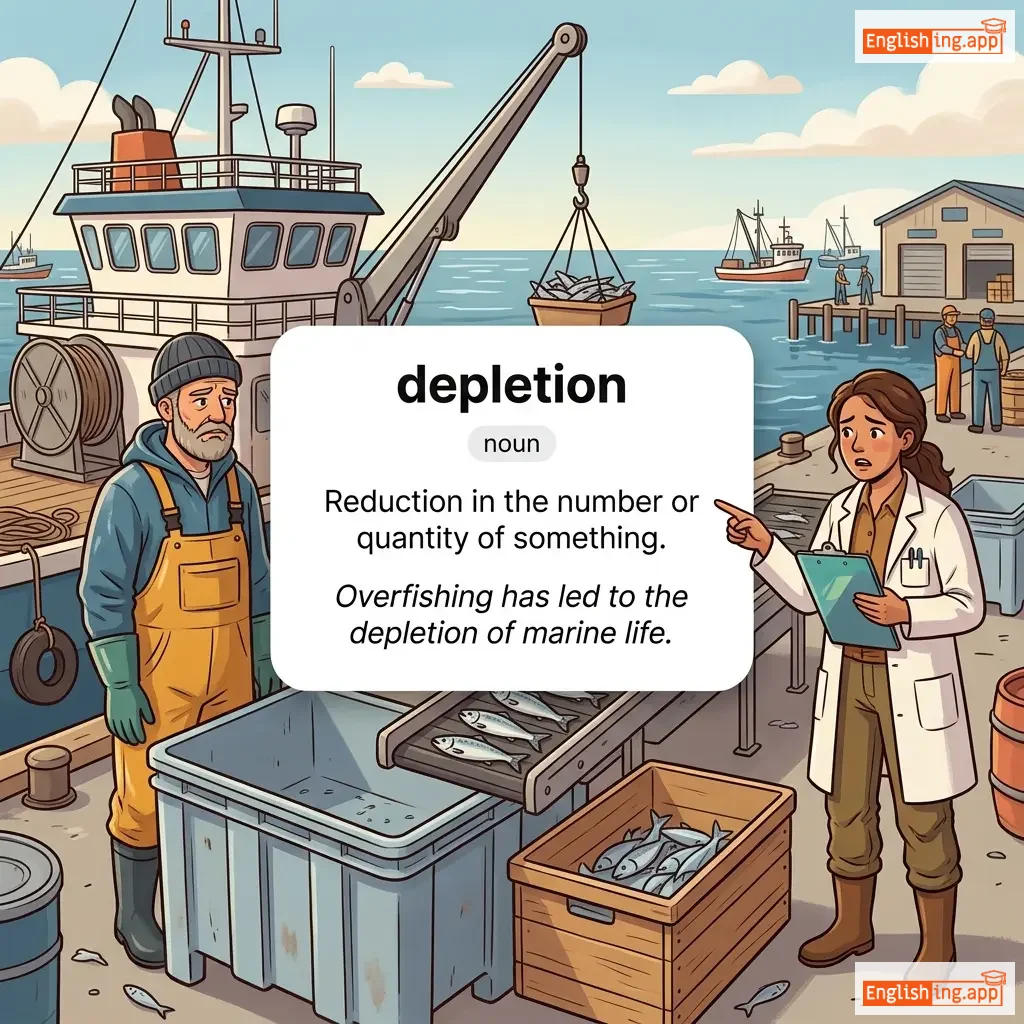
depletion definition card — visual illustration of the meaning
noun
dɪˈpliː.ʃən
枯渇 (kokatsu)

Reduction in the number or quantity of something.

"Overfishing has led to the depletion of marine life."

"過剰漁獲が海洋生物の枯渇を引き起こしました。" (Kajou gyokaku ga kaiyō seibutsu no kokatsu o hikiokoshimashita.)
adjective
/dɪˈplɔːrəbl/
ひどい (hidoi)

deserving strong condemnation; shockingly bad in quality

"The refugees were living in deplorable conditions."
"難民はひどい状況で生活していた。" (Nanmin wa hidoi jōkyō de seikatsu shite ita.)
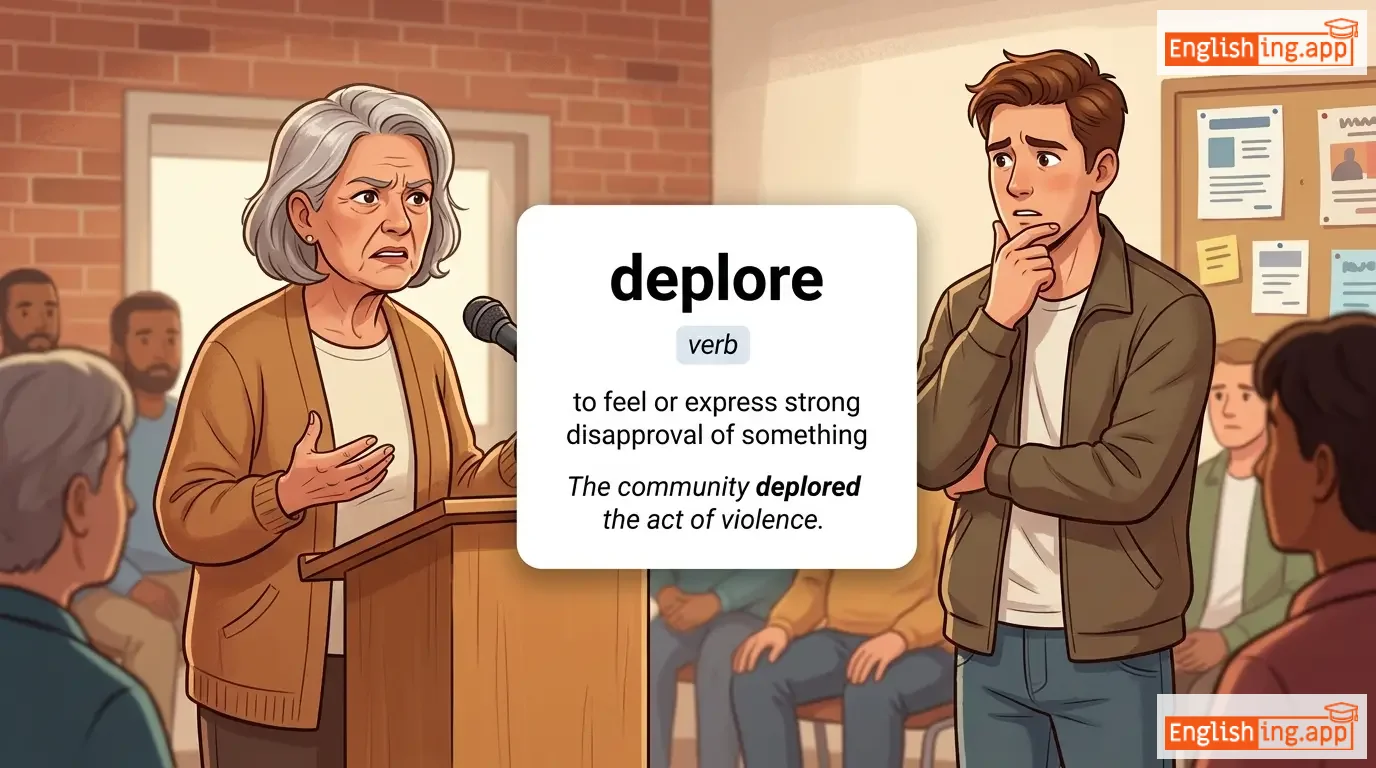
deplore definition card — visual illustration of the meaning
verb
/dɪˈplɔːr/
非難する (hinansuru)

to feel or express strong disapproval of something

"The community deplored the act of violence."

"コミュニティは暴力行為を非難しました。" (Komyuniti wa bouryoku koui o hinan shimashita.)
deploy definition card — visual illustration of the meaning
verb
/dɪˈplɔɪ/
配備する (haibi suru)

to move into position for action, especially troops or resources

"The general decided to deploy more soldiers to the border."

"将軍は国境にもっと兵士を配備することを決定しました。" (Shōgun wa kokkyō ni motto heishi o haibi suru koto o kettei shimashita.)
deployment definition card — visual illustration of the meaning
noun
/dɪˈplɔɪmənt/
展開 (tenkai)

the action of moving or positioning something into place for use

"The deployment of the new software was completed successfully."

"新しいソフトウェアの展開は成功裏に完了しました。" (Atarashī sofutowea no tenkai wa seikōri ni kanryō shimashita.)
noun
/dɪˈpoʊnənt/
証人 (shōnin)

A person who gives testimony under oath, especially in a written deposition.

"The deponent confirmed the accuracy of the statement during the trial."

"証人は裁判中に証言の正確性を確認しました。" (Shōnin wa saiban-chū ni shōgen no seikakusei o kakunin shimashita.)
verb
/diːˈpɒpjʊˌleɪt/
人口減少 (jinkou genshou)

To reduce the number of people living in a place.

"The war threatened to depopulate the once-thriving town."

"戦争はかつて繁栄していた町を人口減少させる脅威を与えた。" (Sensou wa katsute han'ei shite ita machi o jinkou genshou saseru kyoui o ataeta.)
verb
/dɪˈpɔːrt/
国外追放 (kokugai tsuihō)

To expel a foreigner from a country, usually for legal or political reasons.

"The government decided to deport the illegal immigrants."

"政府は不法移民をデポートすることを決定した。" (Seifu wa fuhō imin o depōto suru koto o kettei shita.)
noun
/ˌdiːpɔːrˈteɪʃən/

The act of expelling a foreigner from a country.

"The deportation of hundreds of workers sparked international criticism."

noun
/dɪˈpɔːrtmənt/
行儀 (gyōgi)

A person's behavior or manners, especially in a formal situation.

"Her deportment during the ceremony impressed everyone."

"儀式中の彼女の行儀は皆を感動させた。" (Gishiki-chū no kanojo no gyōgi wa mina o kandō saseta.)
⚖️

depose

verb
/dɪˈpoʊz/

to remove someone from office or power, especially suddenly and forcefully

"The rebels managed to depose the dictator after years of unrest."

noun/verb
/dɪˈpɑːzɪt/
預金, 手付金 (yokin, tetsukekin)

to place money in a bank account, or a sum paid in advance as security; a layer of material left naturally

"She deposited $500 into her savings account."
"彼女は貯金口座に500ドルを預けました。" (Kanojo wa chokin kouza ni 500 doru wo azukemashita.)
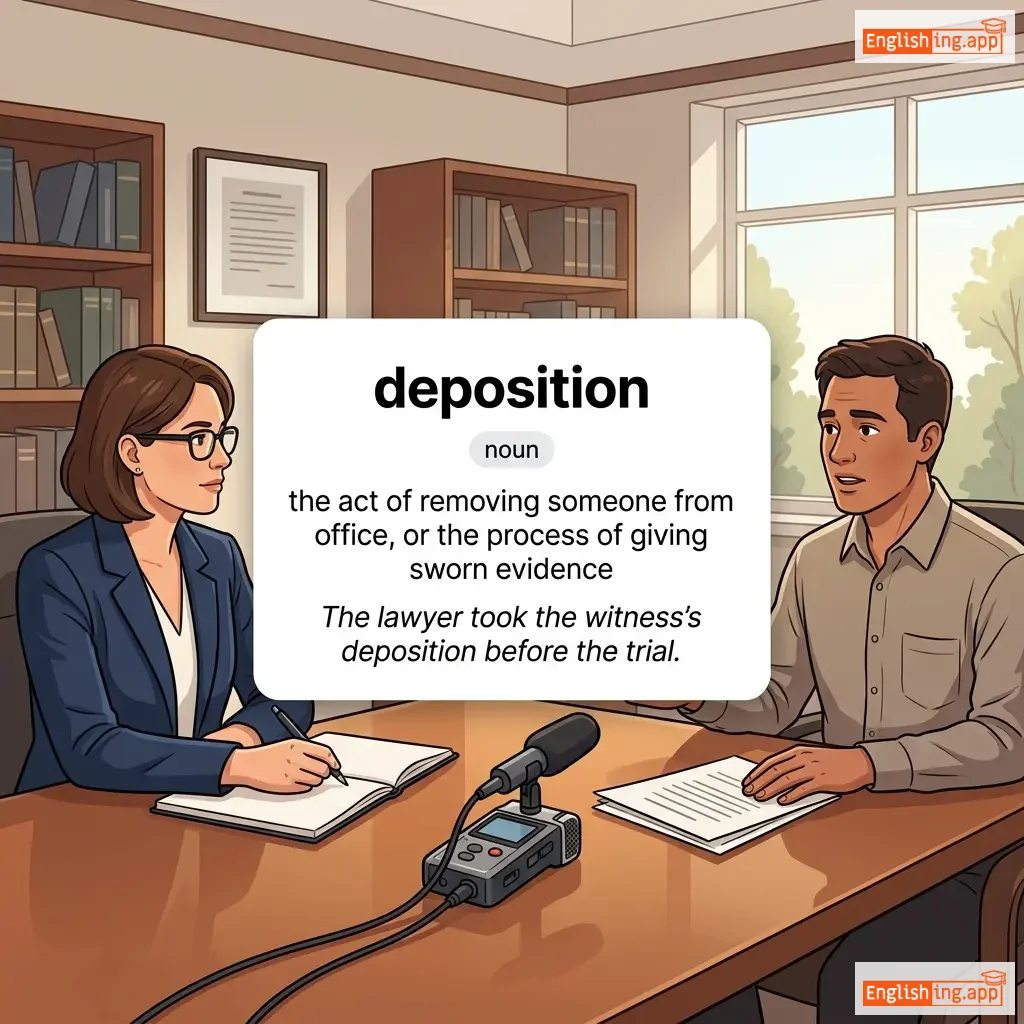
deposition definition card — visual illustration of the meaning
noun
/ˌdepəˈzɪʃən/
職務解除、証言 (shokumu kaijo, shōgen)

the act of removing someone from office, or the process of giving sworn evidence

"The lawyer took the witness’s deposition before the trial."

"弁護士は裁判の前に証人の証言を取りました。" (Bengoshi wa saiban no mae ni shōnin no shōgen o torimashita.)
noun
/dɪˈpɑːzɪtər/
預金者 (yokinsha)

a person who places money in a bank or financial institution

"The bank provides insurance to protect depositors’ funds."

"銀行は預金者の資金を保護するために保険を提供しています。" (Ginkou wa yokinsha no shikin wo hogo suru tame ni hoken wo teikyou shiteimasu.)
noun
/dɪˈpɑːzətɔːri/
預け場所, 保管所 (azukebasho, hokanjo)

a place where things are stored or deposited, especially financial assets

"The national depository safeguards all government bonds."

"国家のデポジトリはすべての政府債券を保護しています。" (Kokka no depojitari wa subete no seifu saiken wo hogo shiteimasu.)
verb
/dɪˈpreɪv/
堕落させる (daraku saseru)

to corrupt morally; to make someone immoral or wicked

"The novel was criticized for attempting to deprave the minds of young readers."

"その小説は若い読者の心を堕落させようとしたため批判された。" (Sono shōsetsu wa wakai dokusha no kokoro o daraku saseyō to shita tame hihan sareta.)
adjective
/dɪˈpreɪvd/
堕落した (darakushita)

morally corrupt or wicked

"The film depicts the life of a depraved criminal."

"その映画は堕落した犯罪者の人生を描いています。" (Sono eiga wa darakushita hanzai-sha no jinsei o egaiteimasu.)
noun
/dɪˈprævɪti/
堕落 (daraku)

moral corruption; wickedness

"The film portrays the moral depravity of a corrupt society."

"その映画は腐敗した社会の道徳的堕落を描いています。" (Sono eiga wa fuhai shita shakai no doutokuteki daraku o egaiteimasu.)
verb
/ˈdɛprɪˌkeɪt/
非難する (hinansuru)

to express disapproval of something

"The teacher deprecated the use of slang in academic essays."

"教師は学術論文でのスラングの使用を非難しました。" (Kyōshi wa gakujutsu ronbun de no surangu no shiyō o hinan shimashita.)
adjective
/ˈdɛprɪkətɔːri/
軽蔑的な (keibetsu-teki na)

expressing disapproval or belittling

"He gave a deprecatory remark about their performance."

"彼は彼らのパフォーマンスについて軽蔑的なコメントをしました。" (Kare wa karera no pafōmansu ni tsuite keibetsu-teki na komento o shimashita.)
verb
/dɪˈpriːʃieɪt/
価値が下がる (kachiga sagaru)

to reduce in value over time

"Cars tend to depreciate quickly in their first few years."
"車は最初の数年間で急速に価値が下がる傾向があります。" (Kuruma wa saisho no suunenkan de kyūsoku ni kachi ga sagaru keikō ga arimasu.)
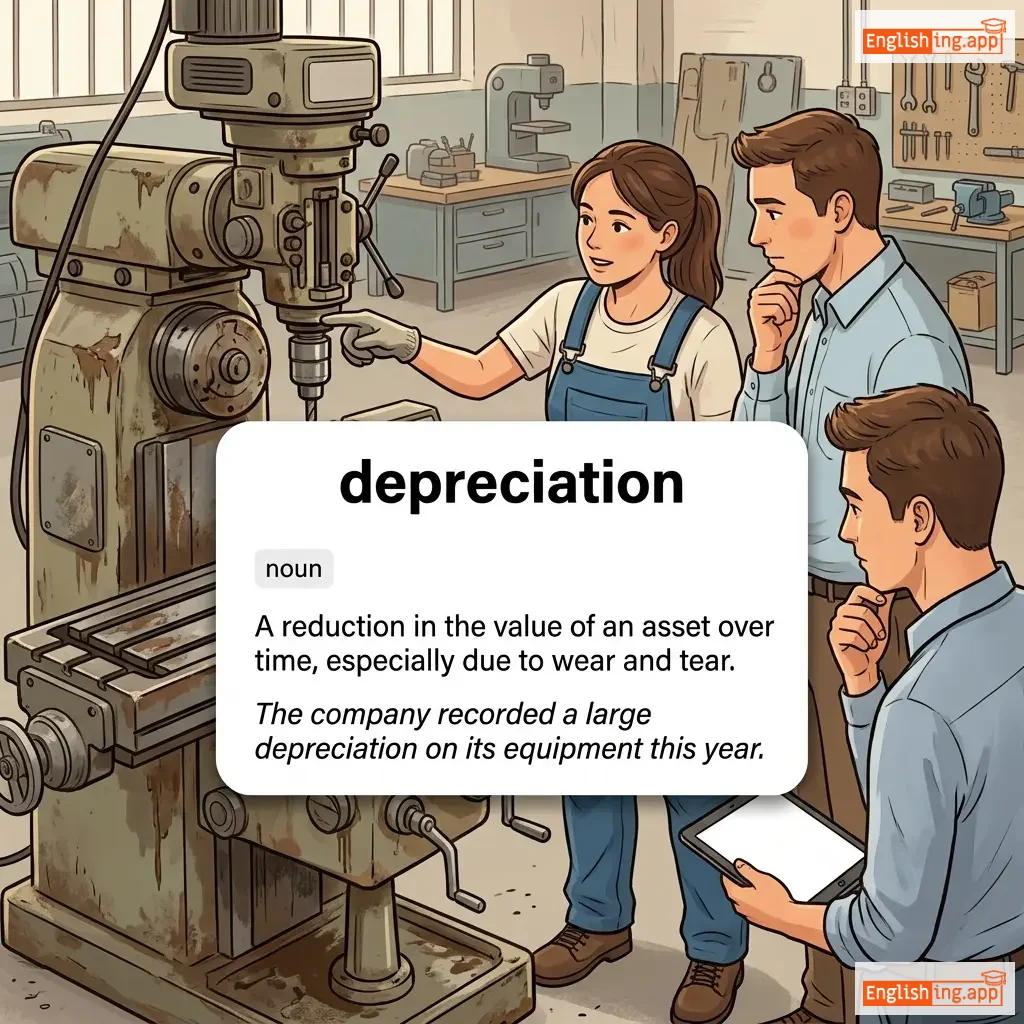
depreciation definition card — visual illustration of the meaning
noun
/dɪˌpriːʃiˈeɪʃən/
減価償却 (genka shoukyaku)

A reduction in the value of an asset over time, especially due to wear and tear.

"The company recorded a large depreciation on its equipment this year."

"会社は今年、機器の大きな減価償却を記録しました。" (Kaisha wa kotoshi, kiki no ookina genka shoukyaku o kiroku shimashita.)
noun
/ˌdɛprɪˈdeɪʃən/
略奪 (ryakudatsu)

An act of attacking or plundering; damage caused by such acts.

"The villagers feared the depredation of wild animals at night."

"村人たちは夜間の野生動物の略奪を恐れていた。" (Murabito-tachi wa yakan no yasei dōbutsu no ryakudatsu o osorete ita.)
verb
/dɪˈprɛs/
落ち込ませる (ochikomaseru)

To make someone feel sad or without hope; to reduce the level or strength of something.

"The gloomy weather tends to depress people."

"陰鬱な天気は人々を落ち込ませる傾向がある。" (In'utsu na tenki wa hitobito o ochikomaseru keikou ga aru.)
noun
/dɪˈprɛsənt/
抑制剤 (yokuseizai)

A drug that reduces functional or nervous activity in the body.

"Alcohol acts as a depressant on the central nervous system."

"アルコールは中枢神経系に抑制剤として作用します。" (Arukōru wa chūsū shinkei-kei ni yokuseizai to shite sayō shimasu.)
adjective
/dɪˈprɛst/
落ち込んでいる (ochikondeiru)

Feeling very sad and without hope; in a state of unhappiness.

"She felt depressed after losing her job."

"彼女は仕事を失った後、落ち込んでいました。" (Kanojo wa shigoto o ushinatta ato, ochikondeimashita.)
noun
/dɪˈprɛʃən/
デプレッション (depresshon)

A state of severe sadness or hopelessness; also a prolonged downturn in economic activity.

"She has been battling depression for several months."
"彼女は数ヶ月間、デプレッションと戦っています。" (Kanojo wa suukagetsu kan, depresshon to tatakatteimasu.)
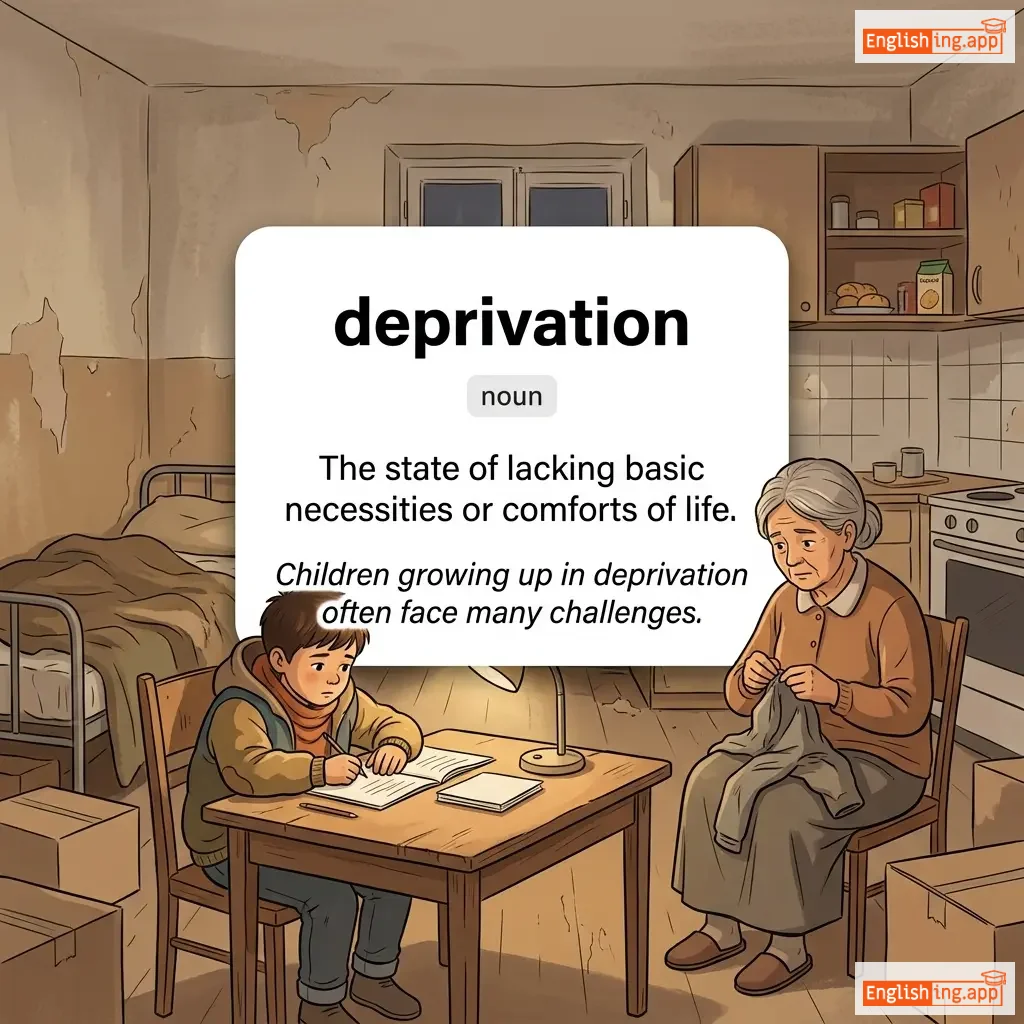
deprivation definition card — visual illustration of the meaning
noun
/ˌdɛprɪˈveɪʃən/
欠乏 (ketsubou)

The state of lacking basic necessities or comforts of life.

"Children growing up in deprivation often face many challenges."

"欠乏状態で育った子供たちは、多くの課題に直面することがよくあります。" (Ketsubou joutai de sodatta kodomotachi wa, ooku no kadai ni chokumen suru koto ga yoku arimasu.)
verb
/dɪˈpraɪv/

to take something away from someone, or prevent them from having it

"The new law may deprive people of their rights."

noun
/dɛpθ/
深さ (fukasa)

The distance from the top to the bottom of something; the intensity or complexity of a subject.

"The diver measured the depth of the ocean trench."

"ダイバーは海洋の溝の深さを測定した。" (Daibā wa kaiyō no mizu no fukasa o sokutei shita.)
verb
/ˈdɛpjʊˌtaɪz/
副職に任命する (fukushoku ni ninmei suru)

To appoint someone as a deputy; to act as a substitute or representative.

"The sheriff decided to deputize several locals to help maintain order."

"保安官は秩序を維持するために数人の地元の人々を副職に任命することを決定しました。" (Hoankan wa chitsujo o iji suru tame ni suunin no jimoto no hitobito o fukushoku ni ninmei suru koto o kettei shimashita.)
noun
/ˈdɛpjʊti/
代理 (dairi)

A person appointed as a substitute with power to act.

"The deputy will lead the meeting in the manager’s absence."

"代理はマネージャー不在時に会議を主導します。" (Dairi wa manējā fuzai-ji ni kaigi o shudō shimasu.)
verb
/dɪˈræsɪˌneɪt/
根こそぎ引き抜く (nekosogi hikinuku)

To uproot something completely; to displace people from their native environment or culture.

"The conflict deracinated many families from their homeland."

"その紛争は多くの家族を故郷から追い出しました。" (Sono funsō wa ōku no kazoku o kokyō kara oidasimashita.)
adjective
/dɪˈreɪndʒd/
狂気 (kyouki)

mentally disturbed or insane; behaving irrationally

"The deranged man shouted nonsense in the street."
"狂った男が街で無意味なことを叫んでいた。" (Kurutta otoko ga machi de muimi na koto o sakendete ita.)
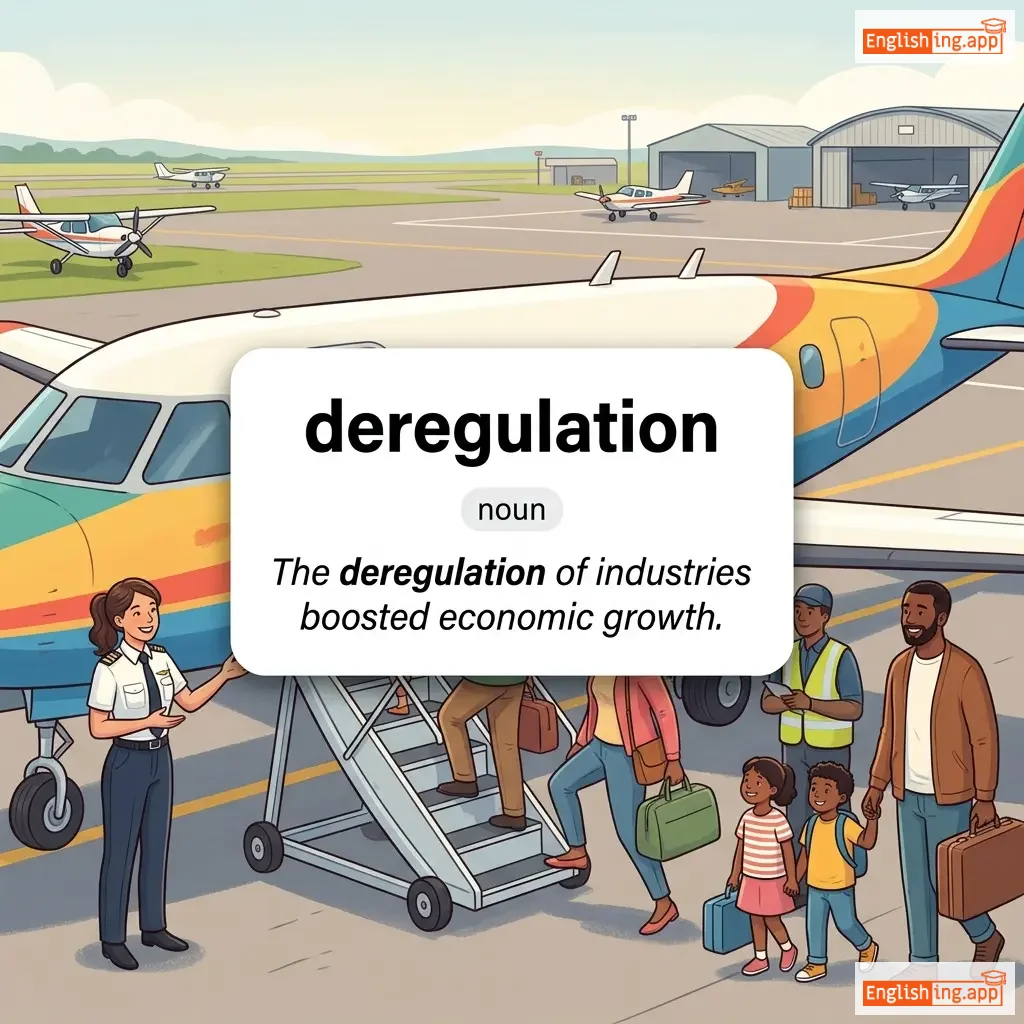
deregulation definition card — visual illustration of the meaning
noun
/ˌdiː.rɛɡ.jʊˈleɪ.ʃən/
規制緩和 (kisei kanwa)

The removal or reduction of government regulations and controls, often involving liberalization, free market policies, or privatization.

"The deregulation of industries boosted economic growth."

"産業の規制緩和は経済成長を促進した。" (Sangyō no kisei kanwa wa keizai seichō o sokushin shita.)
adjective, noun
/ˈdɛrəlɪkt/
放棄された (houkisareta)

in poor condition due to neglect or disuse; a homeless or neglected person

"The old factory stood derelict for decades."

"古い工場は何十年も放置されていました。" (Furui koujou wa nanshūnen mo houchi sarete imashita.)
noun
/ˌdɛrɪˈlɪkʃən/
職務怠慢 (shokumu taimann)

the state of being abandoned; neglect of duty

"The officer was charged with dereliction of duty."

"その役人は職務怠慢で起訴された。" (Sono yakunin wa shokumu taimann de kiso sareta.)
deride definition card — visual illustration of the meaning
verb
/dɪˈraɪd/
嘲笑する (choushou suru)

to mock or ridicule someone or something

"The critics derided the new movie for its poor script."

"批評家たちはその新しい映画を悪い脚本のせいで嘲笑した。" (Hihyōka-tachi wa sono atarashī eiga wo warui kyakuhon no sei de chōshō shita.)
adjective
/dɪˈrɪzəbl/
嘲笑に値する (choushou ni ataisuru)

deserving ridicule or mockery

"His excuse was so weak that it was plainly derisible."

"彼の言い訳は非常に弱く、明らかに嘲笑に値した。" (Kare no iiwake wa hijou ni yowaku, akiraka ni choushou ni ataishita.)
noun
/dɪˈrɪʒən/
嘲笑 (choushou)

Contemptuous ridicule or mockery.

"His ideas were greeted with derision by the audience."

"彼のアイデアは観客によって嘲笑された。" (Kare no aidea wa kankyaku ni yotte choushou sareta.)
adjective
/dɪˈraɪsɪv/
軽蔑的な (keibetsuteki na)

Expressing contempt or ridicule.

"She gave a derisive laugh at his attempt to sing."

"彼女は彼の歌おうとする試みに対して軽蔑的な笑い声を上げた。" (Kanojo wa kare no utaou to suru kokoromi ni taishite keibetsuteki na waraigoe wo ageta.)
noun
/ˌdɛrɪˈveɪʃən/
派生 (hasei)

The origin or development of something from a source.

"The derivation of the word comes from Latin."

"その単語の起源はラテン語から来ている。" (Sono tango no kigen wa raten-go kara kite iru.)
derivative definition card — visual illustration of the meaning
noun, adjective
/dɪˈrɪvətɪv/
派生物 (haseibutsu)

Something that is based on another source; in math, a measure of how a function changes.

"The film was criticized for being too derivative of earlier works."

"その映画は、前の作品を模倣しすぎて批判されました。" (Sono eiga wa, mae no sakuhin o mohō shisugite hihan saremashita.)
verb
/dɪˈraɪv/
導き出す (michibikidasu)

To obtain something from a source.

"Many English words derive from Latin."

"多くの英語の単語はラテン語から導き出される。" (ooku no eigo no tango wa raten-go kara michibikidasareru.)
adjective
/dɪˈraɪvd/
派生した (hasē shita)

Developed or obtained from something else; not original.

"The word is derived from Latin."

"その単語はラテン語から派生しています。" (Sono tango wa Raten-go kara hasē shiteimasu.)
noun
/ˌdɜːrməˈtɑːlədʒɪst/
皮膚科医 (hifuka-i)

A doctor who specializes in the treatment of skin diseases.

"She consulted a dermatologist for her skin allergy."

"彼女は皮膚のアレルギーのために皮膚科医に相談した。" (Kanojo wa hifu no arerugī no tame ni hifuka-i ni soudan shita.)
noun
/ˌdɜːrməˈtɑːlədʒi/
皮膚科学 (hifu kagaku)

The branch of medicine concerned with the skin and its diseases.

"He studied dermatology at medical school."

"彼は医学部で皮膚科学を学んだ。" (Kare wa igakubu de hifukagaku o mananda.)
adjective
/dɪˈrɒɡətɪv/
侮辱的 (bujokuteki)

Expressing a low opinion or showing lack of respect.

"He made a derogative remark about her work."

"彼は彼女の仕事について侮辱的な発言をした。" (Kare wa kanojo no shigoto ni tsuite bujokuteki na hatsugen o shita.)
adjective
/dɪˈrɒɡətɔːri/
侮辱的 (bujokuteki)

Showing a critical or disrespectful attitude.

"The article contained derogatory comments about the politician."

"その記事には政治家について侮辱的なコメントが含まれていました。" (Sono kiji ni wa seijika ni tsuite bujokuteki na komento ga fukumarete imashita.)
noun
/ˈdɛrɪk/
掘削塔 (kutsusaku-tō)

A framework or tower used for supporting a crane, especially for oil drilling or lifting heavy loads.

"The workers assembled a derrick at the oil drilling site."

"作業員たちは石油掘削サイトで掘削塔を組み立てました。" (Sagyouin-tachi wa sekiyū kutsusaku saito de kutsusaku-tō o kumitatemashita.)