語彙集

英単語辞書 | 単語の意味、定義、例文

adjective
/ˌdɛməˈnaɪəkəl/
悪魔的な (akumateki na)

characteristic of or resembling a demon; wildly evil

"He gave a demoniacal laugh that terrified everyone."

"彼は皆を恐れさせるような悪魔的な笑い声を上げた。" (Kare wa mina o osore saseru yō na akumateki na waraigoe o ageta.)
adjective
/dɪˈmɒnstrəbl/
証明可能 (shōmei kanō)

clearly able to be shown or proven

"There was demonstrable evidence that he was innocent."

"彼が無罪であることを示す証明可能な証拠がありました。" (Kare ga muzai de aru koto o shimesu shōmei kanō na shōko ga arimashita.)
verb
/ˈdɛmənˌstreɪt/
示す (shimesu)

to clearly show or prove something through evidence, explanation, or action

"The teacher demonstrated the experiment to the class."

"先生はクラスに実験をデモンストレートしました。" (Sensei wa kurasu ni jikken o démonsutoreeto shimashita.)
noun
/ˌdɛmənˈstreɪʃən/
デモ, 示威 (demo, shii)

the act of showing something clearly, or a public protest

"The workers organized a demonstration for better wages."
"労働者たちはより良い賃金のためにデモを組織した。" (Rōdō-sha tachi wa yori yoi chingin no tame ni demo o soshiki shita.)
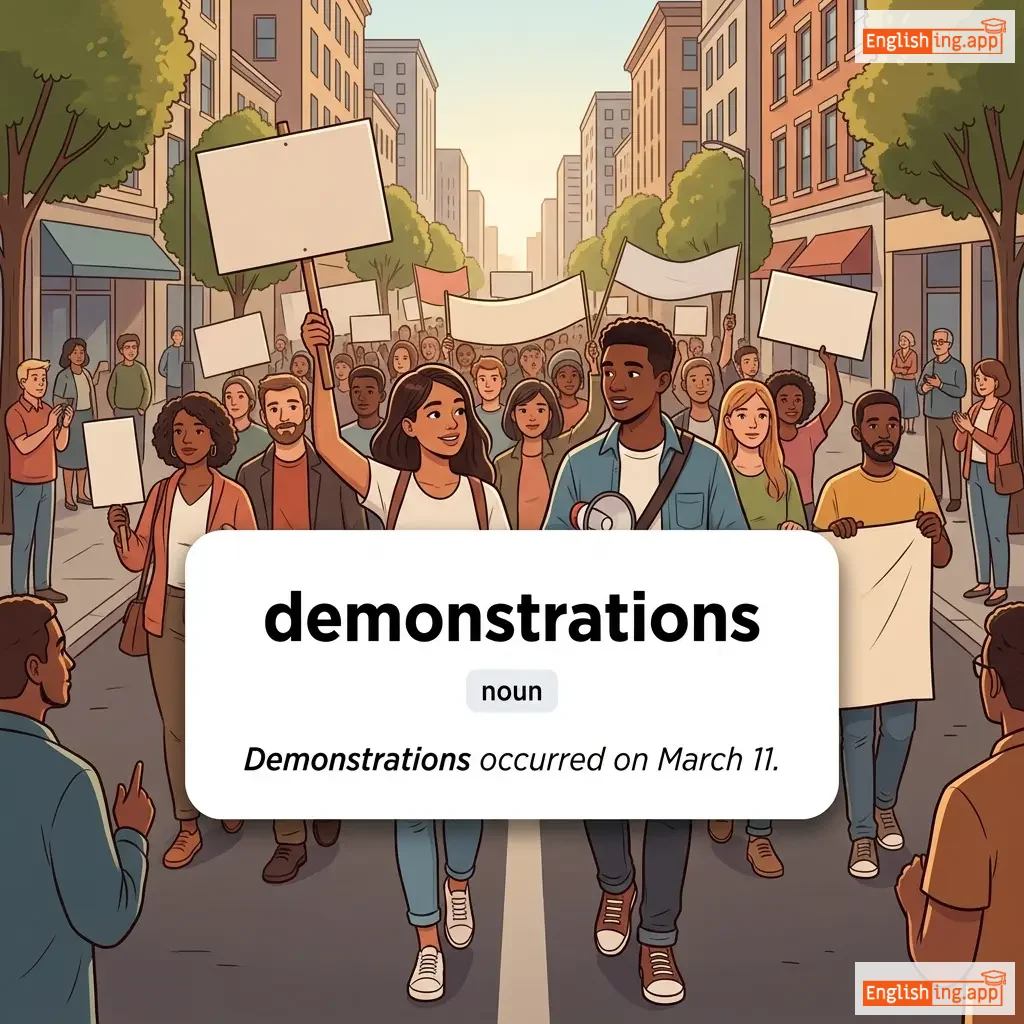
demonstrations definition card — visual illustration of the meaning
noun
ˌdemənˈstreɪʃənz
デモンストレーション (demonstoration)

The action or process of showing the existence or truth of something by giving proof or evidence.

"Demonstrations occurred on March 11."

"デモンストレーションは3月11日に行われました。" (Demonstoration wa 3-gatsu 11-nichi ni okonawaremashita.)
adjective
/dɪˈmɒnstrətɪv/
表現的な (hyogen-tekina)

openly showing feelings, especially affection or emotion

"She was very demonstrative with her affection towards her friends."

"彼女は友達に対してとても表現的だった。" (Kanojo wa tomodachi ni taishite totemo hyogen-tekidatta.)
noun
/ˈdɛmənˌstreɪtər/
デモンストレーター, 抗議者 (demonsutoreetaa, kougisha)

a person who shows how something works or takes part in a public protest

"The demonstrators marched peacefully through the city streets."

"デモ参加者は平和的に街の通りを行進しました。" (Demo sanka-sha wa heiwateki ni machi no toori o koushin shimashita.)
verb
/dɪˈmɔrəˌlaɪz/

to cause someone to lose confidence or hope

"The constant criticism demoralized the young athlete."

verb
/dɪˈmoʊt/
降格 (koukaku)

to reduce to a lower rank or position

"The manager decided to demote the employee for poor performance."
"マネージャーはパフォーマンスが悪いため、従業員を降格させることに決めました。" (Manejā wa pafōmansu ga warui tame, jūgyōin o kōkaku saseru koto ni kimemashita.)
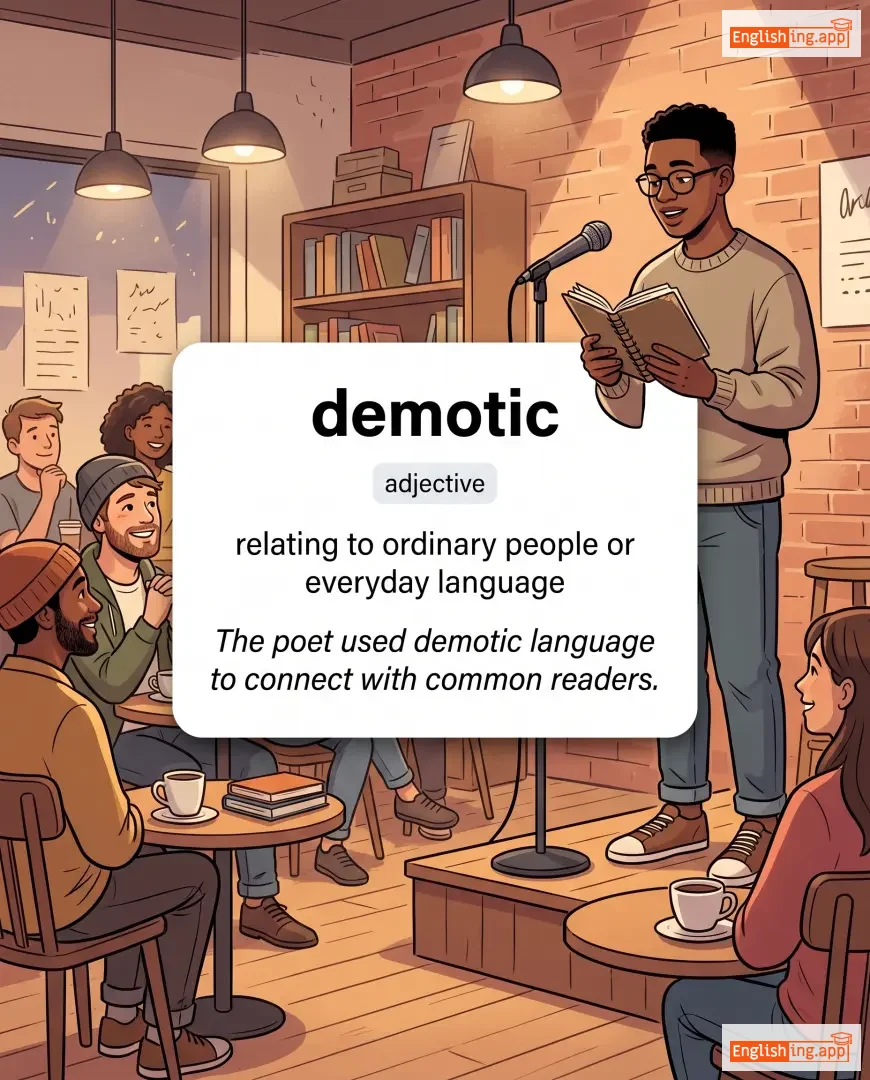
demotic definition card — visual illustration of the meaning
adjective
/dɪˈmɒtɪk/
一般的な言語に関する (ippanteki na gengo ni kansuru)

relating to ordinary people or everyday language

"The poet used demotic language to connect with common readers."
"詩人は一般の読者とつながるために一般的な言語に関する言葉を使った。" (Shijin wa ippan no dokusha to tsunagaru tame ni ippanteki na gengo ni kansuru kotoba o tsukatta.)
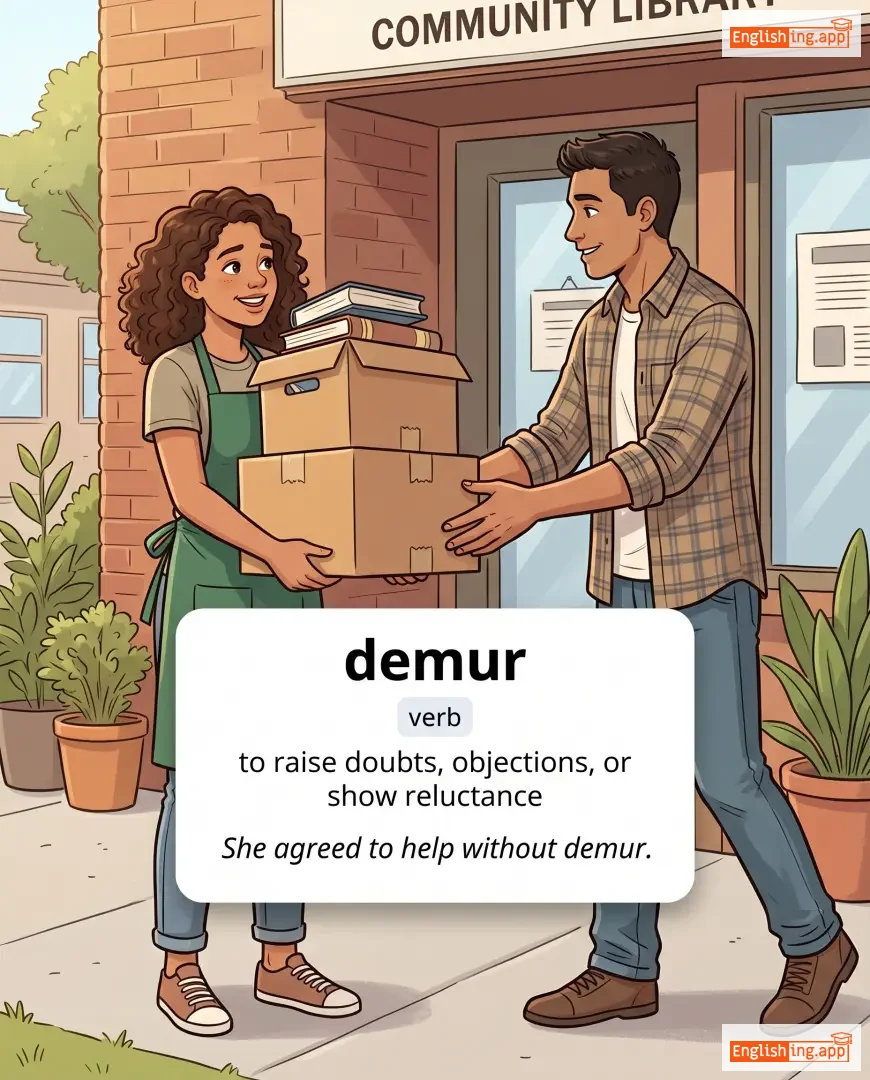
demur definition card — visual illustration of the meaning
verb
/dɪˈmɜːr/
異議を唱える (igi o tonaeru)

to raise doubts, objections, or show reluctance

"She agreed to help without demur."

"彼女は異議なく手伝うことに同意しました。" (Kanojo wa igi naku tetsudau koto ni dōi shimashita.)
adjective
/dɪˈmjʊər/
控えめ (hikaeme)

reserved, modest, and shy

"She gave him a demure smile."

"彼女は控えめな笑顔を彼に向けた。" (Kanojo wa hikaeme na egao o kare ni muketa.)
noun
/dɪˈmʌrɪdʒ/
デマレッジ (demarejji)

a charge payable to the owner of a ship or vehicle for not loading or unloading on time

"The company had to pay demurrage for delaying the unloading of goods."

"会社は荷物の荷降ろしの遅れでデマレッジを支払わなければならなかった。" (Kaisha wa nimotsu no nioroshi no okure de demarejji o shiharawanakereba naranakatta.)
noun
/den/
巣穴、穴 (suana, ana)

a wild animal's lair or home; a small room used for relaxation

"The bear returned to its den for winter hibernation."

"クマは冬眠のために自分の巣穴に戻った。" (Kuma wa toumin no tame ni jibun no suana ni modotta.)
verb
/diːˈnæʃənəlaɪz/
民営化 (min'eka)

to transfer ownership from the government to private individuals or companies

"The government decided to denationalize the bank to encourage private investment."

"政府は民間投資を促進するために銀行を民営化することを決定しました。" (Seifu wa minkan tōshi o sokushin suru tame ni ginkō o min'eka suru koto o kettei shimashita.)
adjective
/ˈdɛndrɔɪd/
樹状の (jujō no)

tree-shaped or branching like a tree

"The coral has a dendroid structure."

"サンゴはデンドロイド構造を持っています。" (Sango wa dendoroido kōzō o motteimasu.)
noun
/dɛnˈdrɒlədʒi/

the scientific study of trees and woody plants

"He is studying dendrology at the university."

noun
/dɪˈnaɪəl/
否認 (hinin)

a statement that something is not true; the refusal to accept or believe something

"His denial of the accusations surprised everyone."
"彼の告発に対する否認は皆を驚かせました。" (kare no kokuhatsu ni taisuru hinin wa mina wo odorokasemashita.)
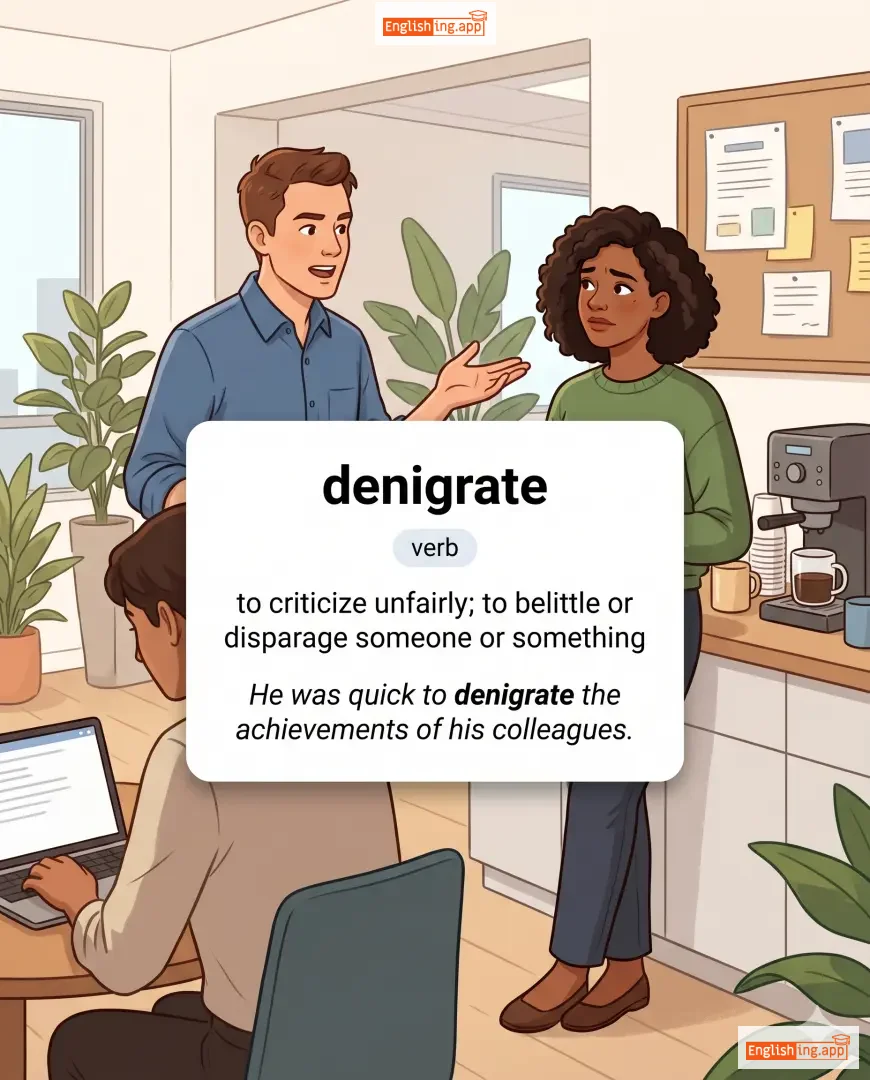
denigrate definition card — visual illustration of the meaning
verb
/ˈdɛnɪˌɡreɪt/
貶める (otoshimeru)

to criticize unfairly; to belittle or disparage someone or something

"He was quick to denigrate the achievements of his colleagues."

"彼は同僚の業績をすぐに貶めました。" (Kare wa dōryō no gyōseki o sugu ni otoshimemashita.)
noun
/ˈdɛnɪmz/
デニムのパンツ (denimu no pantsu)

pants or clothes made from denim fabric, usually jeans

"He wore blue denims with a white shirt."
"彼は白いシャツと青いデニムを履いていた。" (Kare wa shiroi shatsu to aoi denimu o haite ita.)
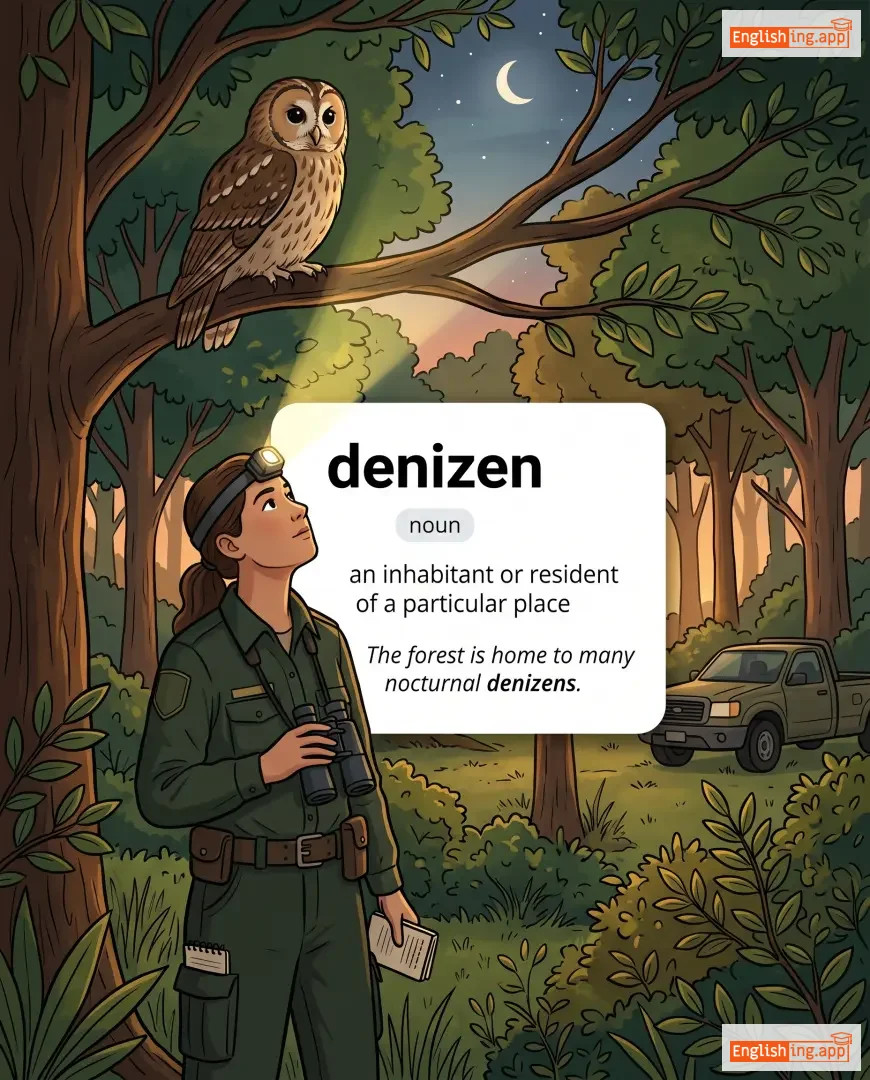
denizen definition card — visual illustration of the meaning
noun
/ˈdɛnɪzən/
住民 (jūmin)

an inhabitant or resident of a particular place

"The forest is home to many nocturnal denizens."

"その森は多くの夜行性の住民の家です。" (Sono mori wa ōku no yakōsei no jūmin no ie desu.)
verb
/dɪˈnɒmɪˌneɪt/
命名する (meimei suru)

to give a name or designation to something

"The currency was denominated in dollars."

"その通貨はドルで denominated されました。" (Sono tsūka wa doru de denominated saremashita.)
noun
/dɪˌnɒmɪˈneɪʃən/
宗派, 価値 (shūha, kachi)

a recognized autonomous branch of the Christian Church; a unit of value or currency

"The church belongs to a Protestant denomination."

"その教会はプロテスタントの宗派に属しています。" (Sono kyōkai wa Purotesutanto no shūha ni zoku shiteimasu.)
noun
/dɪˈnɒmɪˌneɪtər/
分母 (bunbo)

the number below the line in a fraction; a common factor in a situation

"In the fraction 3/4, the number 4 is the denominator."

"3/4の分数では、4は分母です。" (3/4 no bunshu dewa, 4 wa bunbo desu.)
noun
/ˌdiːnəʊˈteɪʃən/
指示 (shiji)

The literal or primary meaning of a word, in contrast to the feelings or ideas that the word suggests.

"The denotation of the word 'rose' is a type of flower."

"'ローズ'という単語のデノテーションは花の一種です。" ('Rōzu' to iu tango no denotēshon wa hana no isshu desu.)
verb
/dɪˈnəʊt/
示す (shimesu)

To be a sign of; to indicate or mean something.

"A red flag denotes danger."

"赤い旗は危険を示しています。" (Akai hata wa kiken o shimeshiteimasu.)
denouement definition card — visual illustration of the meaning
noun
/ˌdeɪnuːˈmɒ̃/
結末 (ketsumatsu)

The final resolution or conclusion of a story, drama, or complicated situation.

"The novel's denouement was both surprising and satisfying."

"その小説の結末は驚くべきものであり、満足のいくものでした。" (Sono shousetsu no ketsumatsu wa odorokubeki mono de ari, manzoku no iku mono deshita.)
verb
/dɪˈnaʊns/
非難する (hinan suru)

To publicly declare something to be wrong, evil, or condemn strongly.

"The leader denounced corruption in his speech."

"リーダーはスピーチで汚職を非難しました。" (Rīdā wa supīchi de oshoku o hinan shimashita.)
adjective
/dɛns/
密な (mitsuna)

Closely compacted in substance; having parts crowded together.

"The forest was so dense that little sunlight reached the ground."
"森はとても密で、ほとんど太陽の光が地面に届かなかった。" (Mori wa totemo mitsu de, hotondo taiyō no hikari ga jimen ni todokakanakatta.)
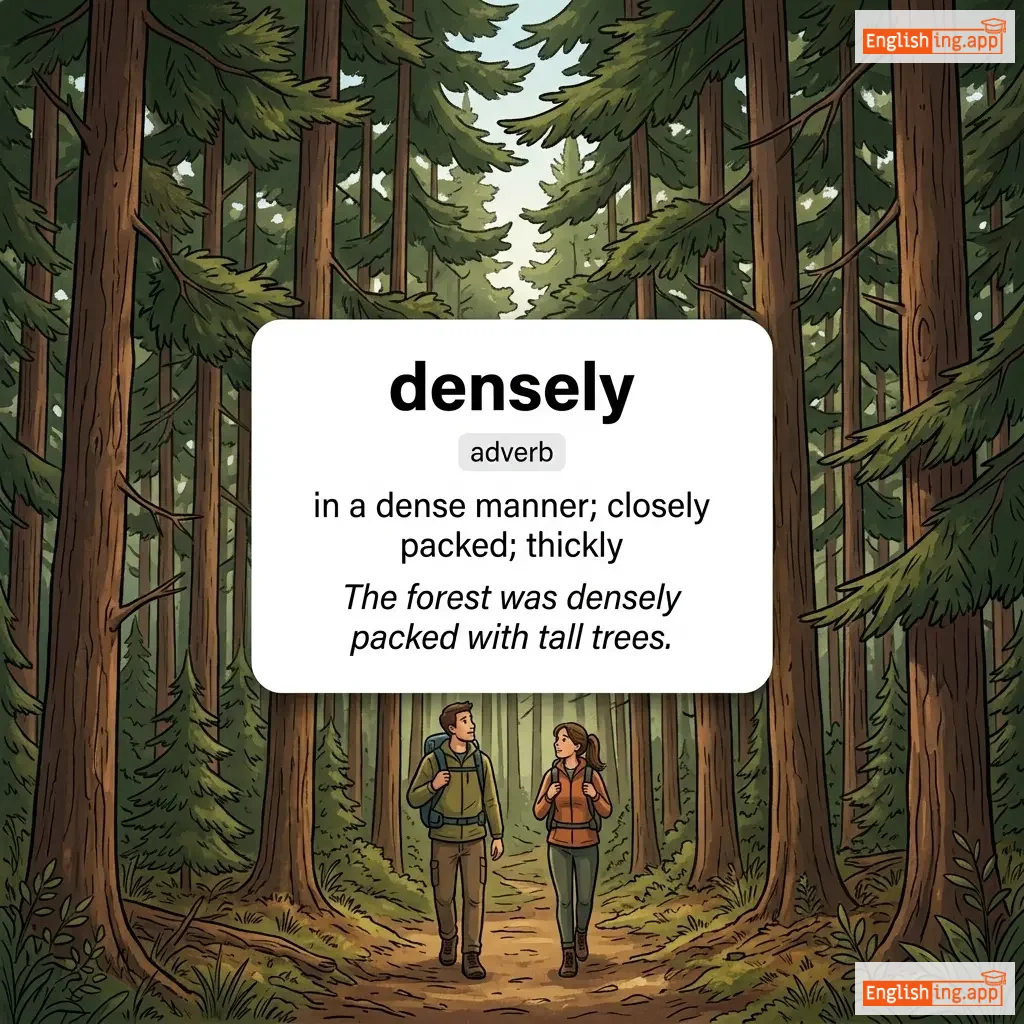
densely definition card — visual illustration of the meaning
adverb
/ˈdens.li/
密集して; 密に詰められた; 厚い (misshū shite; mitsu ni tsumerareta; atsui)

in a dense manner; closely packed; thickly

"The forest was densely packed with tall trees."

"その森は高い木で密集していた。" (sono mori wa takai ki de misshū shite ita)
noun
/ˈdɛnsɪti/
密度 (mitsudo)

the degree of compactness or thickness of a substance or object

"The density of water is higher than that of air."

"水の密度は空気よりも高い。" (Mizu no mitsudo wa kūki yori mo takai.)
noun/verb
/dɛnt/
へこみ (hekomi)

a small hollow mark on the surface of something; to make a small hollow mark

"The accident left a dent in the car door."

"事故で車のドアにへこみが残りました。" (Jiko de kuruma no doa ni hekomi ga nokorimashita.)
adjective
/ˈdɛntəl/
歯科の (shika no)

relating to teeth or dentistry

"She goes for a dental checkup every six months."

"彼女は6か月ごとに歯科検診を受けます。" (kanojo wa rokukagetsu goto ni shika kenshin o ukemasu)
noun
/ˈdɛntɪfrɪs/
歯磨き粉 (hamigakiko)

a substance such as powder, paste, or liquid used to clean teeth

"He bought a new herbal dentifrice from the pharmacy."

"彼は薬局で新しいハーブの歯磨きを買った。" (Kare wa yakkyoku de atarashī hābu no hamigakiko o katta.)
noun
/ˈden.tɪst/
歯医者 (haisha)

a medical professional who treats teeth and oral health

"I need to visit the dentist for a regular checkup."

"定期検診のために歯医者に行かなければなりません。" (teiki kenshin no tame ni haisha ni ikanakereba narimasen)
verb
/dɪˈnjuːd/
裸にする (hadaka ni suru)

to strip something of its covering, possessions, or assets

"The forest was denuded of trees by illegal logging."

"違法な伐採によって森は木々を裸にされた。" (Ihōna bassai ni yotte mori wa kigi o hadaka ni sareta.)
noun
/dɪˌnʌnsiˈeɪʃən/
非難 / 公共の告発 (hinan / koukyou no kokuhatsu)

the public condemnation or accusation of someone or something

"The journalist's article was a strong denunciation of corruption."

"ジャーナリストの記事は腐敗に対する強い非難でした。" (Jaanarisuto no kiji wa fuhai ni taisuru tsuyoi hinan deshita.)
verb
/dɪˈnaɪ/
否定する (hitei suru)

to refuse to accept or admit something; to declare something untrue

"He denied stealing the money."

"彼はお金を盗んだことを否定した。" (Kare wa okane o nusunda koto o hitei shita.)
noun
/diˈoʊ.dər.ənt/
デオドラント (deodoranto)

a substance that removes or conceals unpleasant smells, especially bodily odors

"She applied deodorant before going to the gym to stay fresh during workout."

"彼女はジムに行く前に、トレーニング中にさっぱりとした状態を保つためにデオドラントを塗りました。" (Kanojo wa jimu ni iku mae ni, torēningu-chū ni sapparito shita jōtai o tamotsu tame ni deodoranto o nurimashita.)
verb
/dɪˈpɑːrt/

to leave, especially to start a journey

"The train will depart at 9 a.m."

noun
/dɪˈpɑːrtmənt/
部門 (bumon)

a division of a large organization such as a government, university, or company

"She works in the marketing department."

"彼女はマーケティング部門で働いています。" (Kanojo wa maketingu bumon de hataraiteimasu.)
noun
/dɪˈpɑːrtʃər/
出発、離脱 (shuppatsu, ridatsu)

the act of leaving a place, especially to start a journey

"The plane’s departure was delayed due to fog."
"飛行機の出発は霧のため遅れました。" (hikōki no shuppatsu wa kiri no tame okuremashita.)
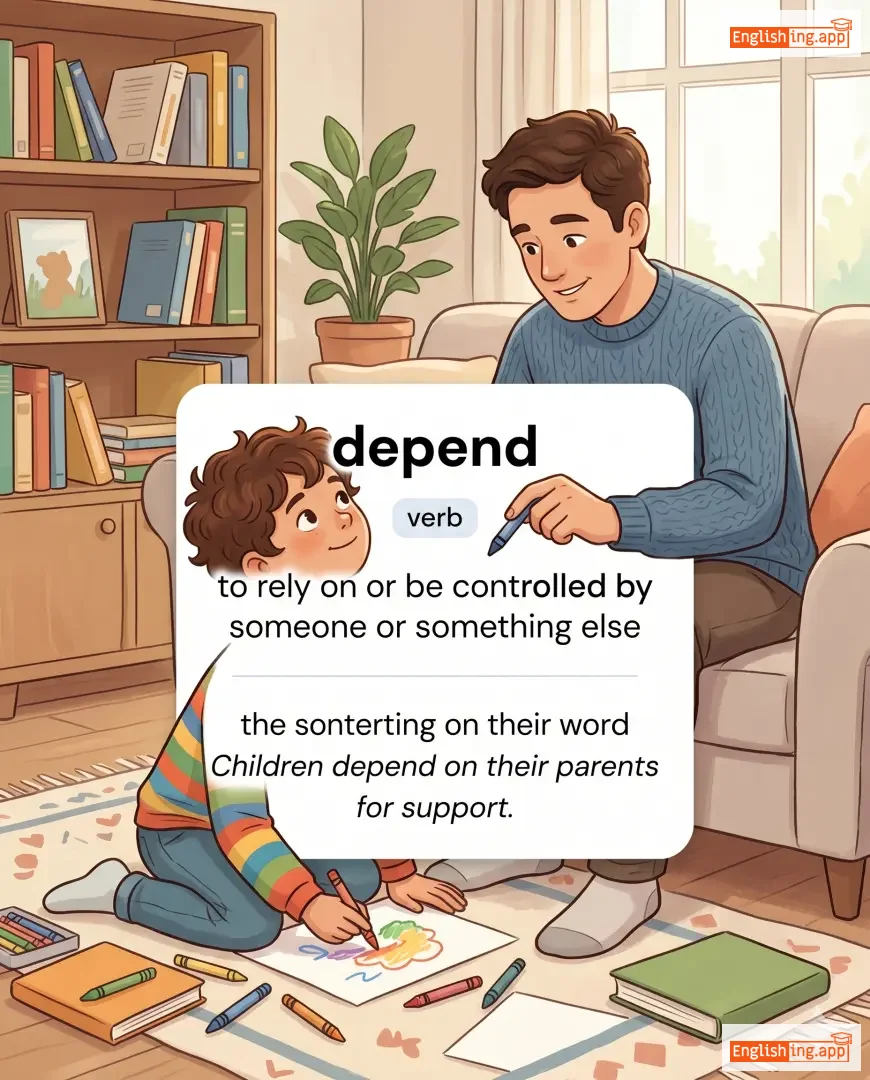
depend definition card — visual illustration of the meaning
verb
/dɪˈpɛnd/
依存する (izon suru)

to rely on or be controlled by someone or something else

"Children depend on their parents for support."

"子供たちは支援のために親に依存しています。" (Kodomo-tachi wa shien no tame ni oya ni izon shiteimasu.)
adjective
/dɪˈpɛndəbl/
信頼できる (shinrai dekiru)

able to be trusted or relied on; consistently reliable

"She is a dependable colleague who always meets deadlines."

"彼女はいつも締め切りを守る信頼できる同僚です。" (kanojo wa itsumo shimekiri o mamoru shinrai dekiru douryou desu)
noun
/dɪˈpɛndəns/
依存 (izon)

the state of relying on or needing someone or something

"His dependence on his parents was growing as he couldn't find a job."

"仕事が見つからなかったので、彼は両親への依存が高まっていました。" (Shigoto ga mitsukaranakatta node, kare wa ryōshin e no izon ga takamatteimashita.)
adjective
/dɪˈpɛndənt/
依存 (izon)

Relying on someone or something else for support or help.

"Children are dependent on their parents for care."

"子供たちは両親にケアを依存しています。" (Kodomotachi wa ryōshin ni kea o izon shiteimasu.)
verb
/dɪˈpɛndɪŋ/
依存する (izon suru)

Being contingent on or influenced by something.

"The success of the plan is depending on the team's effort."

"計画の成功はチームの努力に依存しています。" (Keikaku no seikou wa chiimu no doryoku ni izon shiteimasu.)
verb
/dɪˈpɪkt/

to represent or show something in a picture, story, or other art form

"The painting depicts a beautiful sunset over the sea."

verb
/ˈdɛpɪleɪt/
脱毛する (datsumou suru)

to remove hair from the skin, especially by mechanical or chemical means

"She decided to depilate her legs before the event."

"彼女はイベントの前に足を脱毛することに決めました。" (Kanojo wa ibento no mae ni ashi o datsumou suru koto ni kimemashita.)
verb
/dɪˈpliːt/
使い果たす (tsukaihatasu)

to reduce the quantity or supply of something

"The long war has depleted the country's resources."

"長引く戦争で国の資源は枯渇した。" (Nagabiku sensou de kuni no shigen wa kokatsu shita.)