語彙集

英単語辞書 | 単語の意味、定義、例文

adjective
/dɪˈfaɪ.ənt/
挑戦的な (chōsenteki na)

showing open resistance or bold disobedience

"The child was defiant when told to clean his room."

"子供は部屋を掃除するように言われたとき、挑戦的でした。" (Kodomo wa heya o sōji suru yō ni iwareta toki, chōsenteki deshita.)
noun
/dɪˈfɪʃ.ən.si/
欠乏 (ketsubou)

a lack or shortage of something that is necessary

"The doctor diagnosed him with a vitamin D deficiency."

"医者は彼にビタミンD欠乏症と診断しました。" (Isha wa kare ni bitamin D ketsubou shou to shindan shimashita.)
adjective
/dɪˈfɪʃ.ənt/
不足している (fusoku shite iru)

not having enough of something that is essential

"The soil is deficient in nutrients."

"土壌は栄養素が不足しています。" (Dojo wa eiyōso ga fusoku shiteimasu.)
noun
/ˈdɛfɪsɪt/
赤字 (akaji)

The amount by which something, especially money, is too small or lacking.

"The government is trying to reduce the budget deficit."

"政府は予算赤字を減らそうとしています。" (Seifu wa yosan akaji o herasō to shiteimasu.)
verb
/dɪˈfaɪl/
汚す (yogosu)

to pollute, corrupt, or make dirty

"The river was defiled by industrial waste."

"川は工業廃水によって汚された。" (Kawa wa kōgyō haisui ni yotte osen sareta.)
verb
/dɪˈfaɪn/
定義する (teigi suru)

to explain the meaning of a word, phrase, or concept clearly

"The teacher asked the student to define the word 'democracy'."

"先生は生徒に『民主主義』という言葉を定義するように頼んだ。" (Sensei wa seito ni 'minshushugi' to iu kotoba o teigi suru you ni tanonda.)
adjective
/ˈdef.ən.ɪt/
明確 (meikaku)

clearly stated or decided; not vague or doubtful

"We need a definite plan before starting the project."

"プロジェクトを始める前に、明確な計画が必要です。" (Purojekuto o hajimeru mae ni, meikaku na keikaku ga hitsuyou desu.)
adverb
/ˈdɛfɪnɪtli/
確実に (kakujitsuni)

without any doubt; certainly

"I will definitely call you tomorrow."

"私は確実に明日あなたに電話します。" (Watashi wa kakujitsuni ashita anata ni denwa shimasu.)
noun
/ˌdɛfɪˈnɪʃən/
定義 (teigi)

a statement that explains the meaning of a word or concept

"The dictionary gives a clear definition of the word."

"辞書はその言葉の明確な定義を示します。" (Jisho wa sono kotoba no meikaku na teigi wo shimeshimasu.)
adjective
/dɪˈfɪnɪtɪv/
決定的 (ketteiteki)

serving as a final or most authoritative form; conclusive and decisive

"The committee reached a definitive agreement on the policy."
"委員会は政策に関する決定的な合意に達しました。" (Iinkai wa seisaku ni kansuru ketteiteki na gōi ni tasshimashita.)
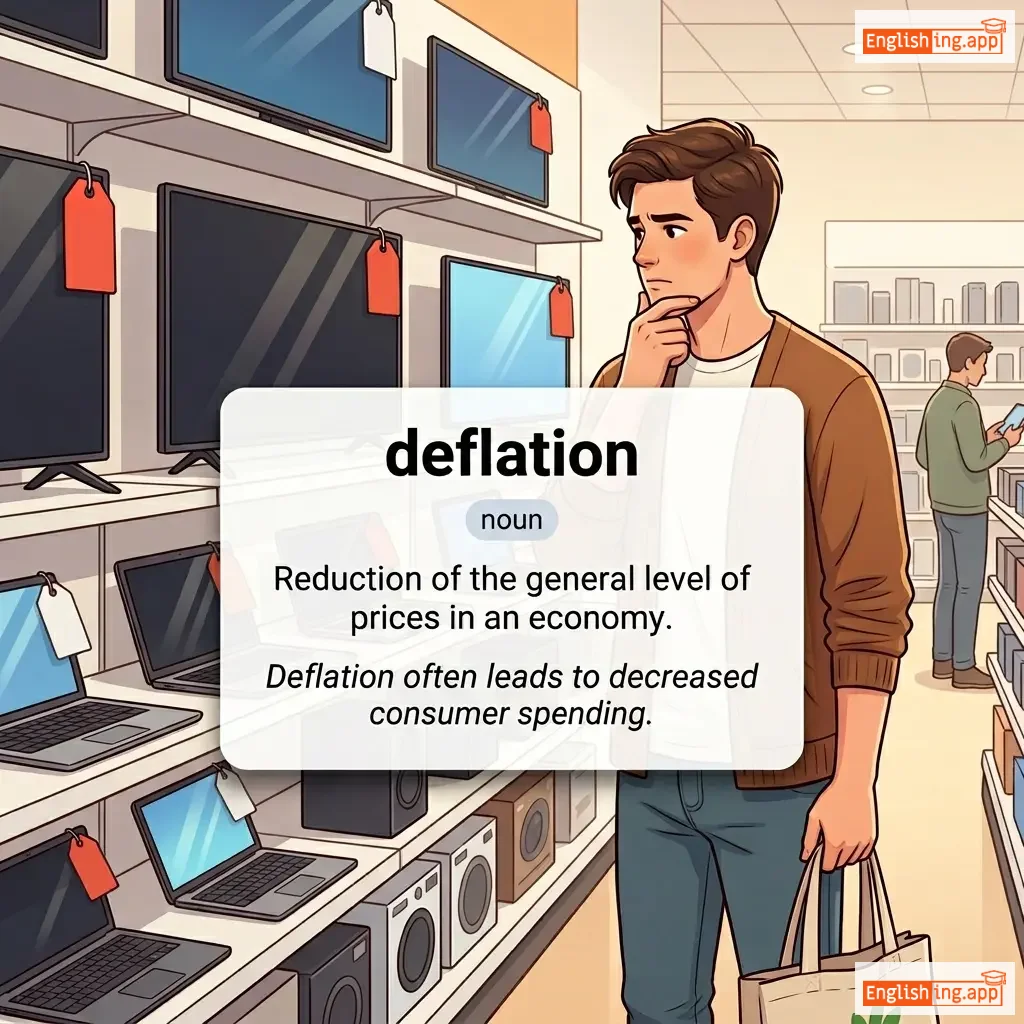
deflation definition card — visual illustration of the meaning
noun
dɪˈfleɪʃən
デフレーション (defureeshon)

Reduction of the general level of prices in an economy.

"Deflation often leads to decreased consumer spending."

"デフレーションはしばしば消費者の支出を減少させる。" (defureeshon wa shohisha no shishutsu o genshousaseru)
verb
/dɪˈflɛkt/
反らす / 避ける (sorasu / sakeru)

to cause something to change direction; to avoid answering directly

"The shield deflected the incoming arrow."

"盾は飛んできた矢を反らした。" (Tate wa tondekita ya o sorashita.)
noun
/dɪˈfoʊliənt/

a chemical that causes leaves to drop from plants, often used in warfare or agriculture

"The army sprayed defoliant to clear the forest cover."

verb
/dɪˈfoʊlieɪt/
葉を落とす (ha o otosu)

to strip leaves from a tree, plant, or area, often using chemicals

"The farmers defoliated the fields before harvest."
"農家は収穫前に畑の葉を取り除きました。" (Nouka wa shukaku mae ni hatake no ha o torinozakimashita.)
🌲❌

deforest

verb
/diːˈfɒrɪst/

to clear an area of trees, usually on a large scale

"The region has been heavily deforested for agriculture."

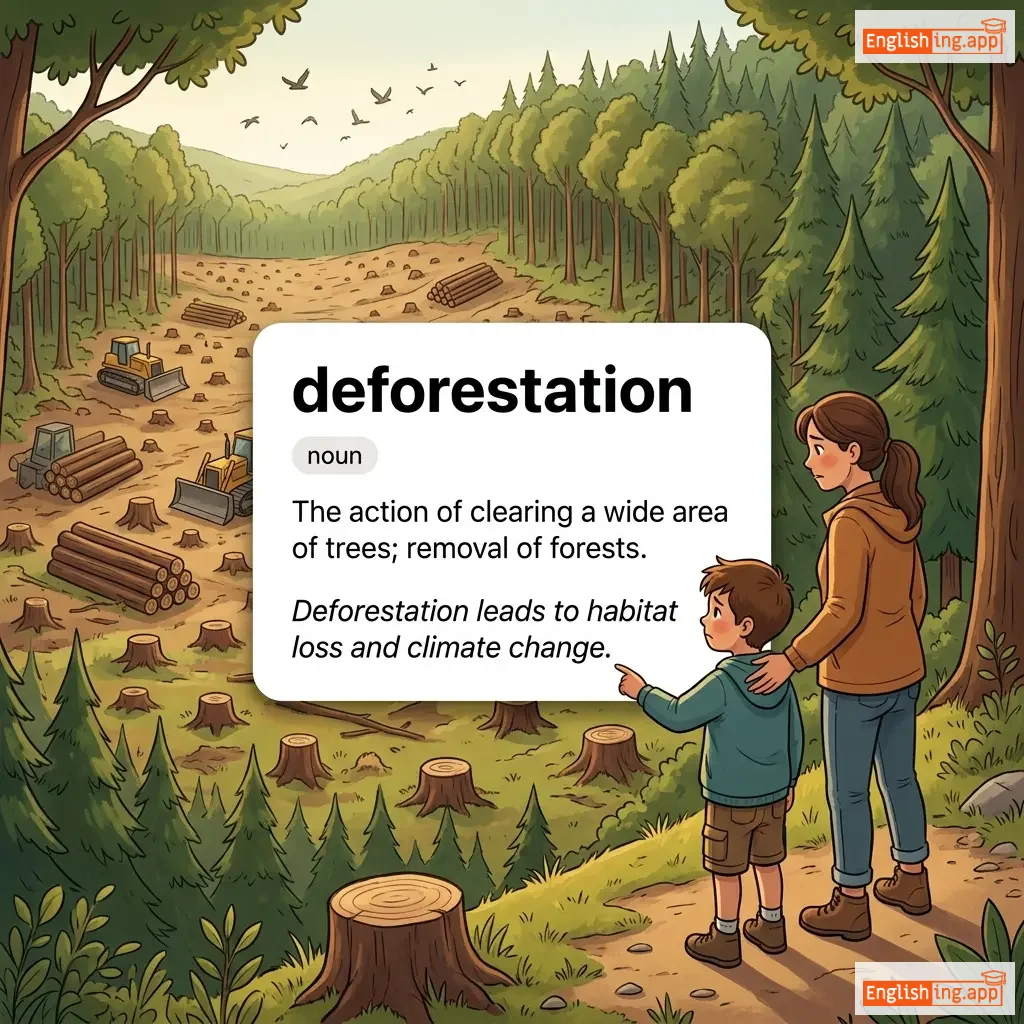
deforestation definition card — visual illustration of the meaning
noun
/ˌdiː.fɒr.ɪˈsteɪ.ʃən/
森林伐採 (shinrin bassai)

The action of clearing a wide area of trees; removal of forests.

"Deforestation leads to habitat loss and climate change."

"森林伐採は生息地の喪失と気候変動を引き起こします。" (Shinrin bassai wa seisokuchi no sōshitsu to kikō hendō o hikiokoshimasu.)
verb
/dɪˈfɔːrm/
変形する (henkei suru)

to change the normal shape or structure of something by twisting or distorting it

"Excessive heat can deform plastic containers."

"過度な熱はプラスチック容器を変形させる可能性があります。" (Kado na netsu wa purasutikku youki o henkei saseru kanousei ga arimasu.)
noun
/dɪˈfɔːrməti/

an abnormality or distortion in the shape or structure of a body part

"The child was born with a minor hand deformity."

verb
/dɪˈfrɔːd/
詐欺 (sagi)

to illegally take money or valuables from someone by deception

"The company was accused of trying to defraud investors."

"その会社は投資家をだまそうとしたとして告発されました。" (Sono kaisha wa tōshika o damasou to shita to shite kokuhatsu saremashita.)
verb
/dɪˈfreɪ/
費用を負担する (hiyou o futan suru)

to provide money to pay the costs of something

"The grant will help defray the cost of education."

"その助成金は教育費用の負担を助けます。" (Sono joseikin wa kyōiku hiyō no futan o tasukemasu.)
verb
/diːˈfrɑːk/
神父の職を剥奪する (shinpu no shoku o hakudatsu suru)

to officially remove a priest or minister from their position and authority

"The church decided to defrock the priest after the scandal."
"教会はスキャンダルの後、神父を職務停止にしました。" (Kyōkai wa sukyandaru no ato, shinpu o shokumu teishi ni shimashita.)
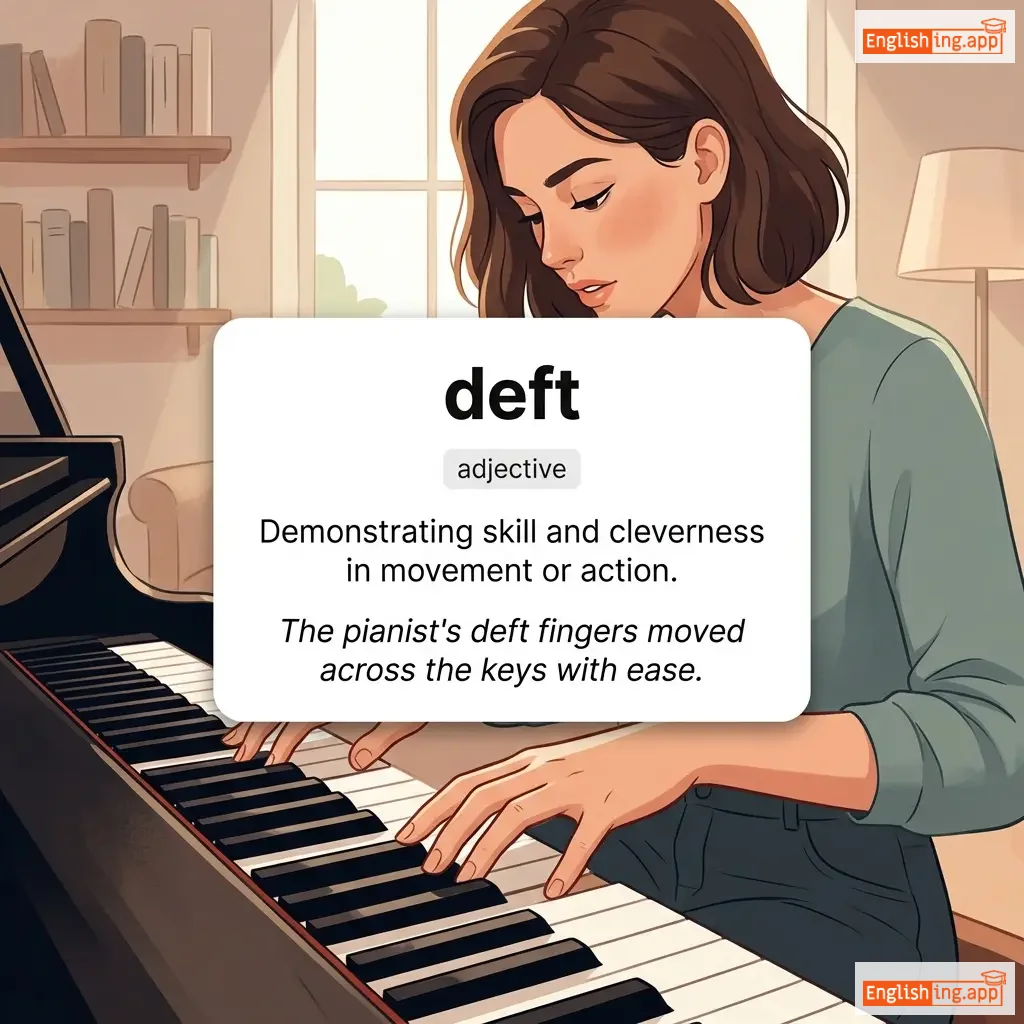
deft definition card — visual illustration of the meaning
adjective
/dɛft/
器用 (kiyou)

Demonstrating skill and cleverness in movement or action.

"The pianist's deft fingers moved across the keys with ease."

"ピアニストの器用な指は、鍵盤の上を軽やかに動いた。" (Pianisuto no kiyou na yubi wa, kenban no ue o karoyaka ni ugoita.)
noun
/ˈdɛftnəs/
巧妙さ (kōmyōsa)

Skillfulness and quickness in action or thought.

"Her deftness with words impressed the audience."
"彼女の言葉の巧妙さは観客を感動させた。" (Kanojo no kotoba no kōmyōsa wa kankyaku o kandō saseta.)
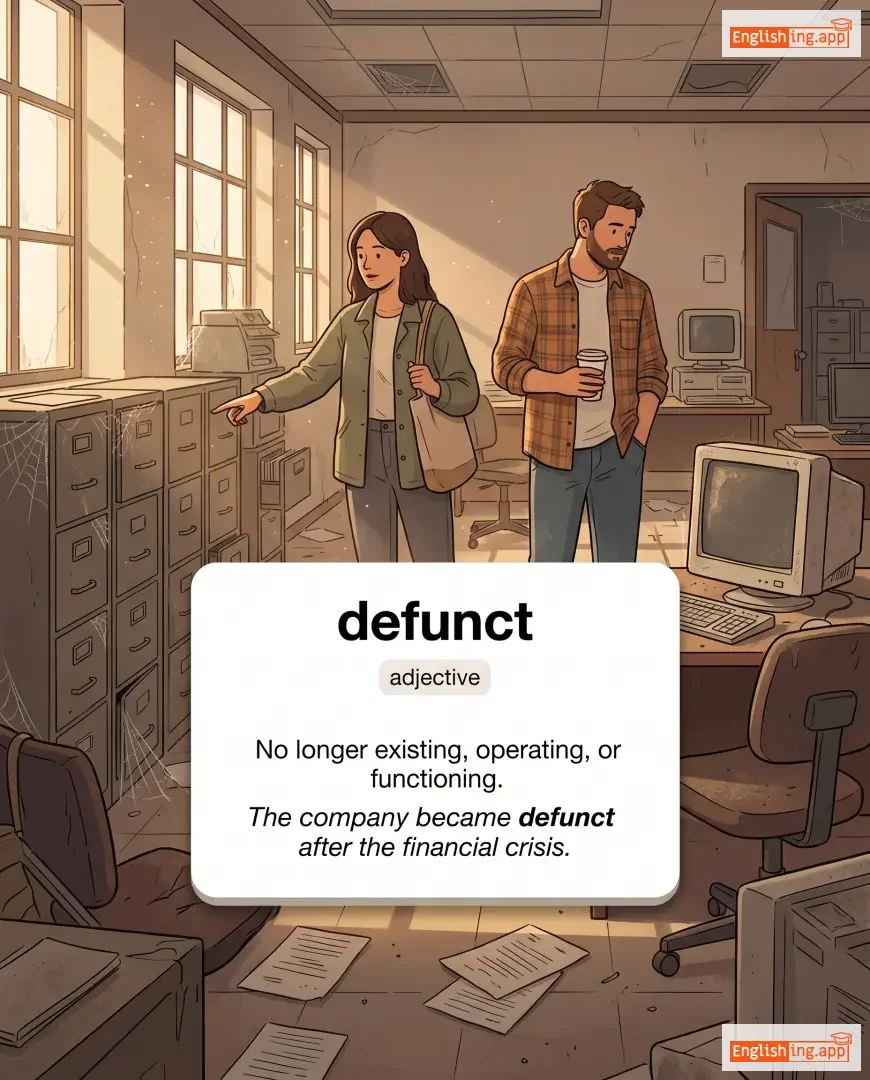
defunct definition card — visual illustration of the meaning
adjective
/dɪˈfʌŋkt/
営業停止、廃止 (eigyou teishi, haishi)

No longer existing, operating, or functioning.

"The company became defunct after the financial crisis."

"その会社は金融危機の後で廃業しました。" (Sono kaisha wa kin'yuukiki no ato de haigiou shimashita.)
verb
/diːˈfjuːz/

To make a situation less dangerous, tense, or explosive; to remove a fuse from a bomb.

"The negotiator helped defuse the tense situation."

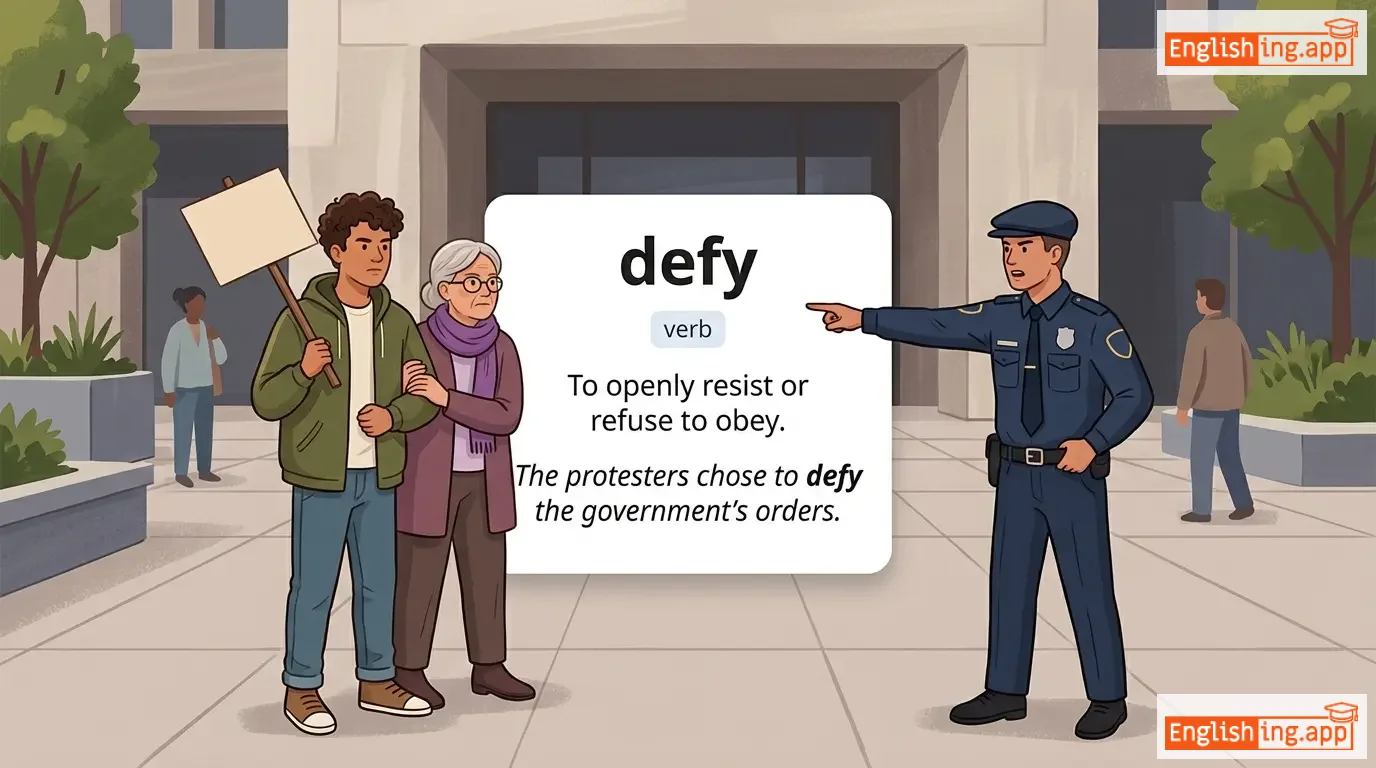
defy definition card — visual illustration of the meaning

defy

verb
/dɪˈfaɪ/

To openly resist or refuse to obey.

"The protesters chose to defy the government's orders."

noun
/dɪˈdʒɛnərəsi/
退化 (taika)

The state of decline or deterioration, often in moral, cultural, or physical qualities.

"The novel portrays the moral degeneracy of a corrupt society."

"その小説は腐敗した社会の道徳的退化を描いています。" (Sono shōsetsu wa fuhai shita shakai no dōtoku-teki taika o egaiteimasu.)
verb/adjective
/dɪˈdʒɛnəreɪt/
堕落する (daraku suru)

To decline or deteriorate in quality, character, or condition; or someone with low moral standards.

"The once thriving empire began to degenerate into chaos."
"かつて繁栄していた帝国は混沌に堕ち始めました。" (Katsute han'ei shite ita teikoku wa konton ni ochi hajimemashita.)
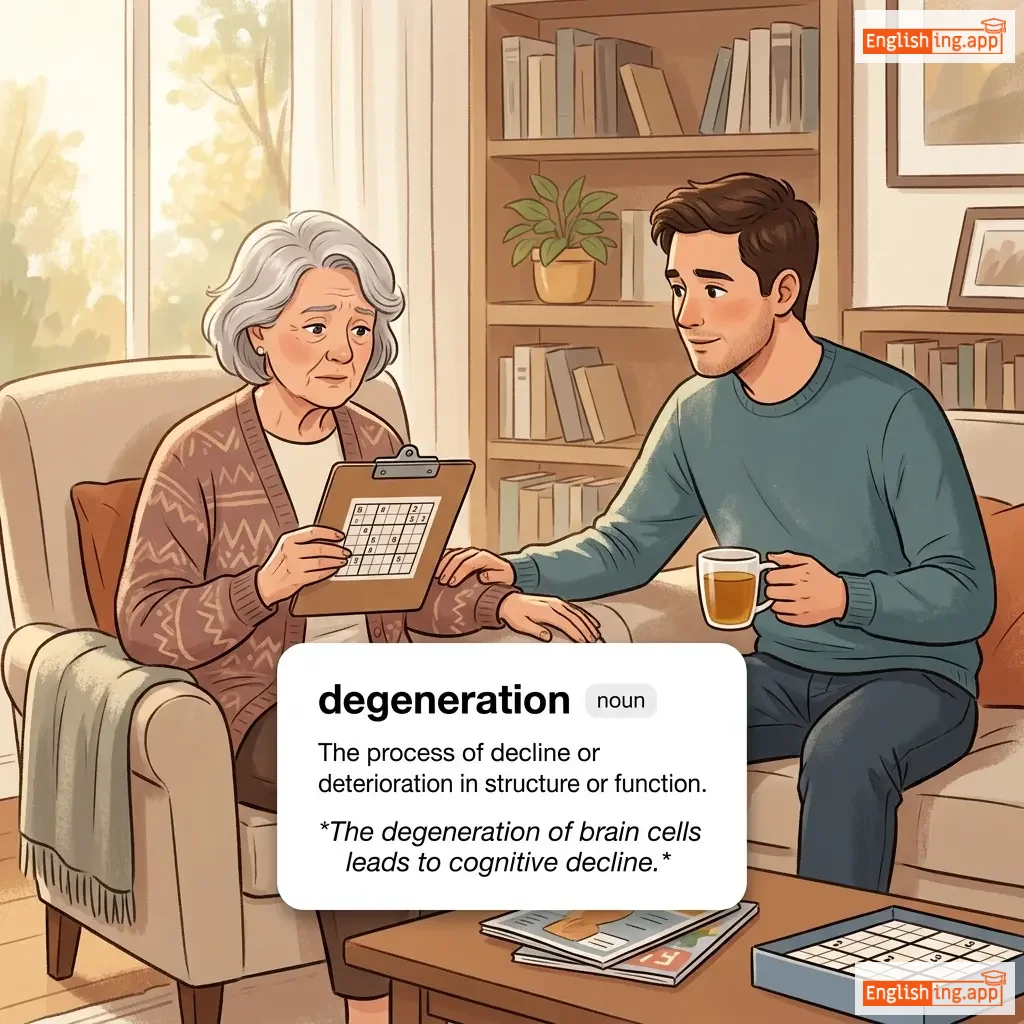
degeneration definition card — visual illustration of the meaning
noun
ˌdɪdʒɪˈnɛəreɪʃən
退化 (taika)

The process of decline or deterioration in structure or function.

"The degeneration of brain cells leads to cognitive decline."
"脳細胞の退化は認知機能の低下を引き起こします。" (Nō saibō no taika wa ninchi kinō no teika o hikiokoshimasu.)
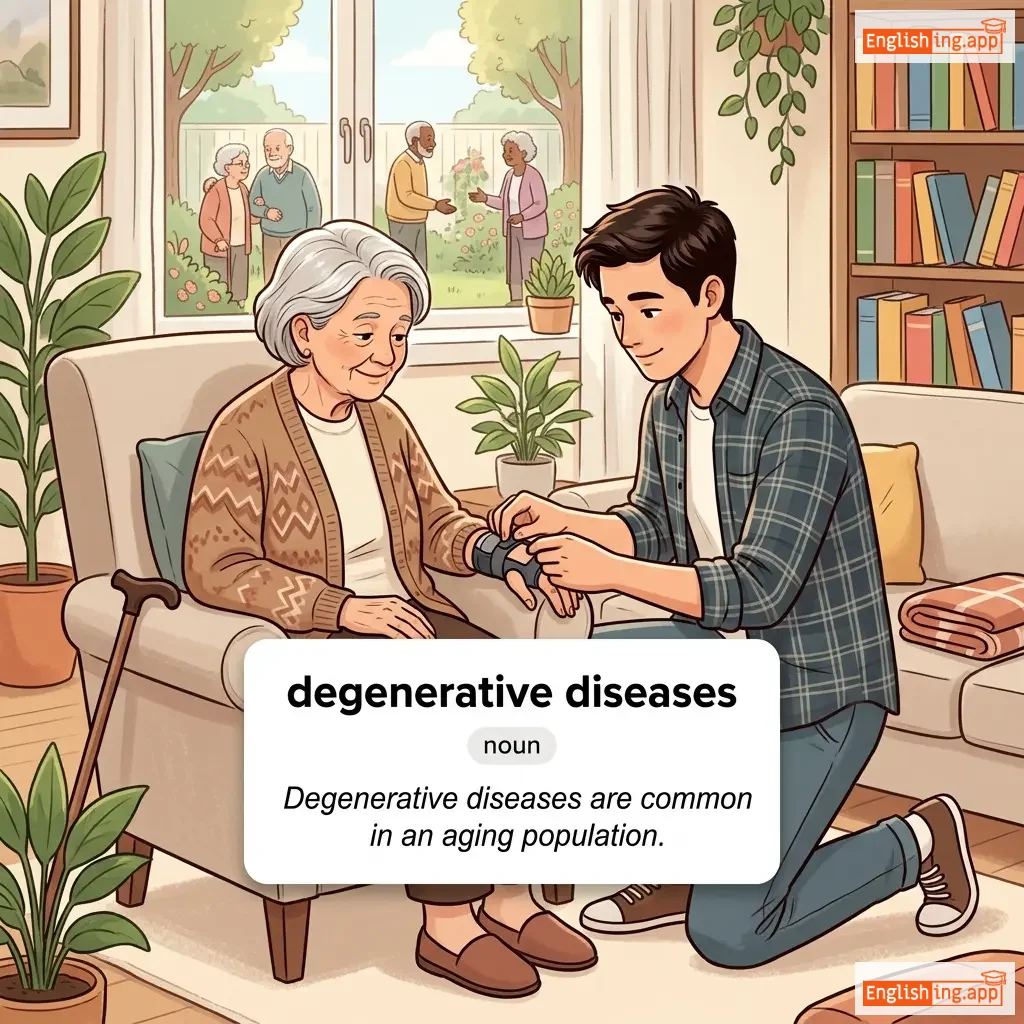
degenerative diseases definition card — visual illustration of the meaning
noun
dɪˈdʒɛnəˌreɪtɪv dɪˈzizɪz
変性疾患 (henshō shikkan)

Medical conditions that involve the deterioration or progressive decline of tissues, organs, or functions

"Degenerative diseases are common in an aging population."
"変性疾患は高齢化した人口に一般的です。" (Henshō shikkan wa kōreika shita jinkō ni ippanteki desu.)
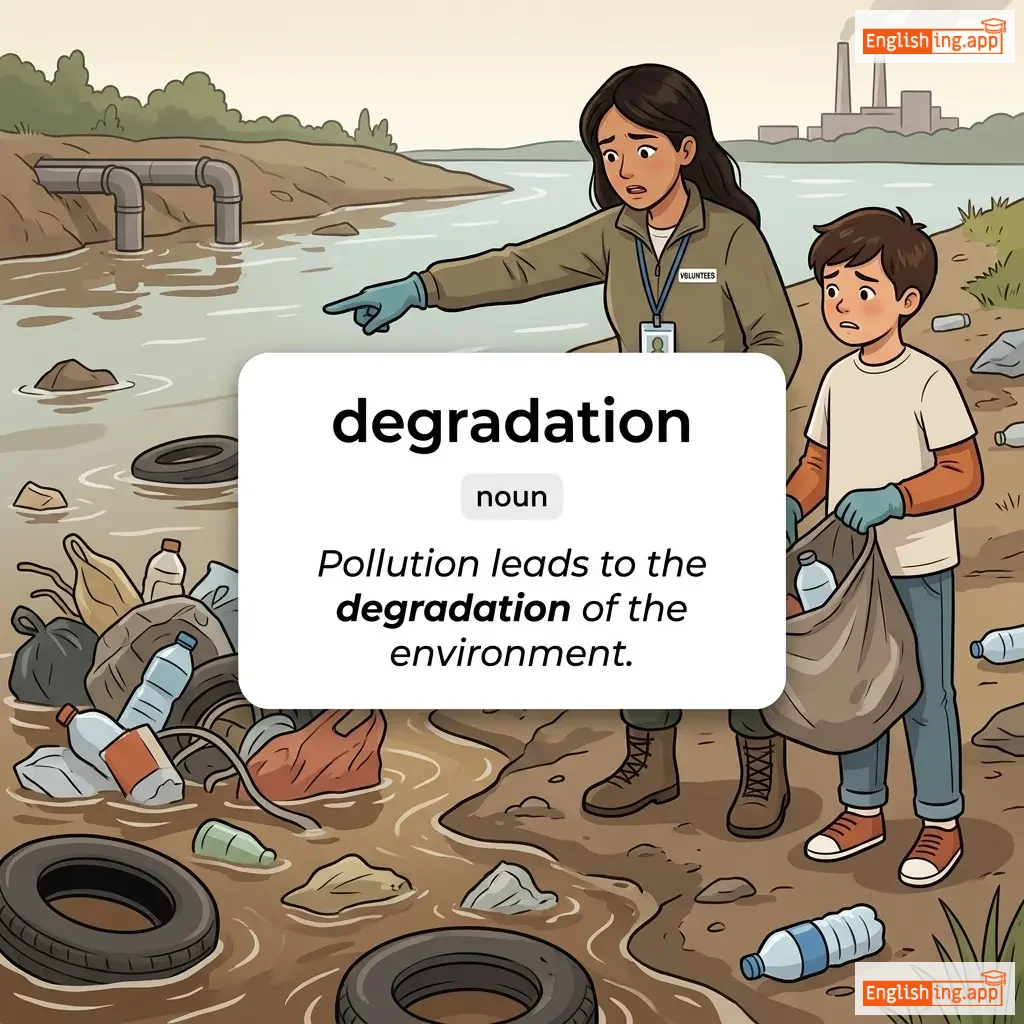
degradation definition card — visual illustration of the meaning
noun
/ˌdɛɡrəˈdeɪʃən/
劣化 (rekka)

The process of being degraded, declined, or reduced in quality, dignity, or value.

"Pollution leads to the degradation of the environment."

"汚染は環境の劣化を引き起こします。" (Osenshita kankyō no rekka wo hikiokoshimasu.)
⬇️😔

degrade

verb
/dɪˈɡreɪd/

To lower in dignity, quality, or value; to treat with disrespect or to deteriorate.

"Harsh words can degrade a person's confidence."

adjective
/dɪˈɡreɪdɪd/
劣化した (reka shita)

Reduced in quality, dignity, or condition.

"The villagers were forced to live in degraded conditions."

"村人たちは劣化した状態で暮らさざるを得なかった。" (Murabito-tachi wa reka shita joutai de kurasazaru o enakatta.)
noun
/dɪˈɡriː/
学位 / 程度 (gakui / teido)

an amount or level of something; an academic qualification

"She earned a degree in engineering."
"彼女は工学の学位を取得しました。" (Kanojo wa kōgaku no gakui o shūtoku shimashita.)
verb
/diːˈhaɪdreɪt/

to remove water from something; to lose water or body fluids

"Running in the heat can quickly dehydrate you."

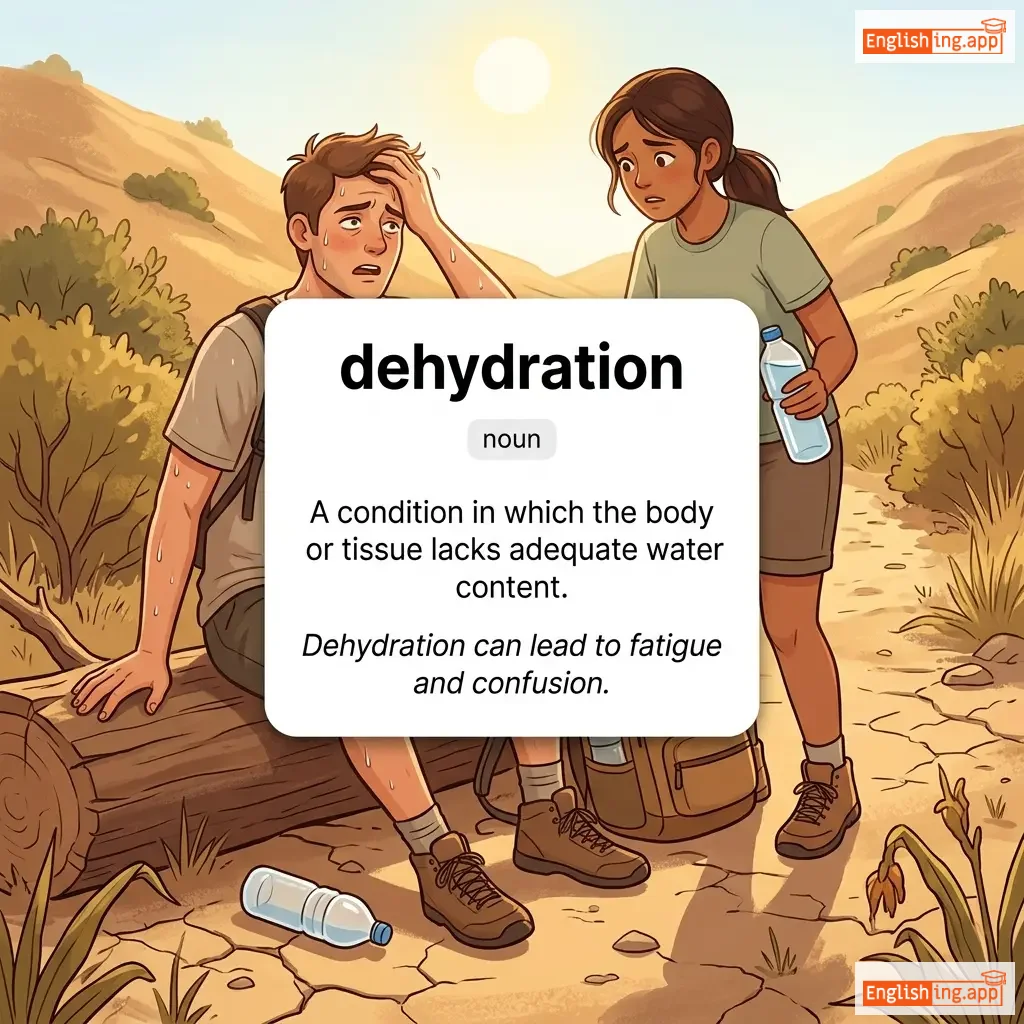
dehydration definition card — visual illustration of the meaning
noun
/ˌdiː.haɪˈdreɪʃən/
脱水症 (dassui-shō)

A condition in which the body or tissue lacks adequate water content.

"Dehydration can lead to fatigue and confusion."

"脱水は疲労と混乱を引き起こす可能性があります。" (dassui wa hirō to konran o hikiokosu kanōsei ga arimasu.)
verb
/ˈdiːɪfaɪ/
神格化する (shinkakuka suru)

to treat or worship someone or something as a god

"Some fans deify their favorite celebrities."

"一部のファンはお気に入りの有名人を神のように崇拝します。" (Ibu no fan wa okiniiri no yuumeijin o kami no you ni suuhai shimasu.)
verb
/deɪn/
自分の尊厳を損ねて何かをする (jibun no songen o sokonete nanika o suru)

to do something considered beneath one's dignity

"The king did not deign to reply to the commoner."

"王は平民に返答することをしなかった。" (Ou wa heimin ni hentou suru koto o shinakatta.)
noun
/ˈdiːɪst/
デイスト (deisuto)

a person who believes in the existence of a supreme being but rejects organized religion

"The philosopher identified himself as a deist."

"その哲学者は自分をデイストとして認識した。" (Sono tetsugakusha wa jibun o deisuto toshite ninshiki shita.)
noun
/ˈdeɪ.ə.ti/
(kami)

a god or goddess

"The temple is dedicated to a Hindu deity."

"その寺院はヒンドゥー教の神に捧げられています。" (Sono jiin wa Hindū-kyō no kami ni sasagerareteimasu.)
verb
/dɪˈdʒɛkt/
落胆させる (rakutan saseru)

to make someone feel sad, depressed, or dispirited

"The news of his failure seemed to deject him deeply."

"彼の失敗のニュースは彼を深く落胆させたようだ。" (Kare no shippai no nyu-su wa kare o fukaku rakutan saseta you da.)
noun
/dɪˈdʒɛkʃən/
落胆 (rakutan)

a state of sadness, depression, or low spirits

"She sat in a state of dejection after hearing the bad news."

"彼女は悪い知らせを聞いた後、落胆した状態で座っていた。" (Kanojo wa warui shirase o kiita ato, rakutan shita joutai de suwatte ita.)
verb
/dɪˈleɪ/
遅延 (chien)

to make something happen later than planned

"The flight was delayed due to bad weather."
"悪天候のため、飛行機が遅れました。" (Akutenkō no tame, hikōki ga okuremashita.)
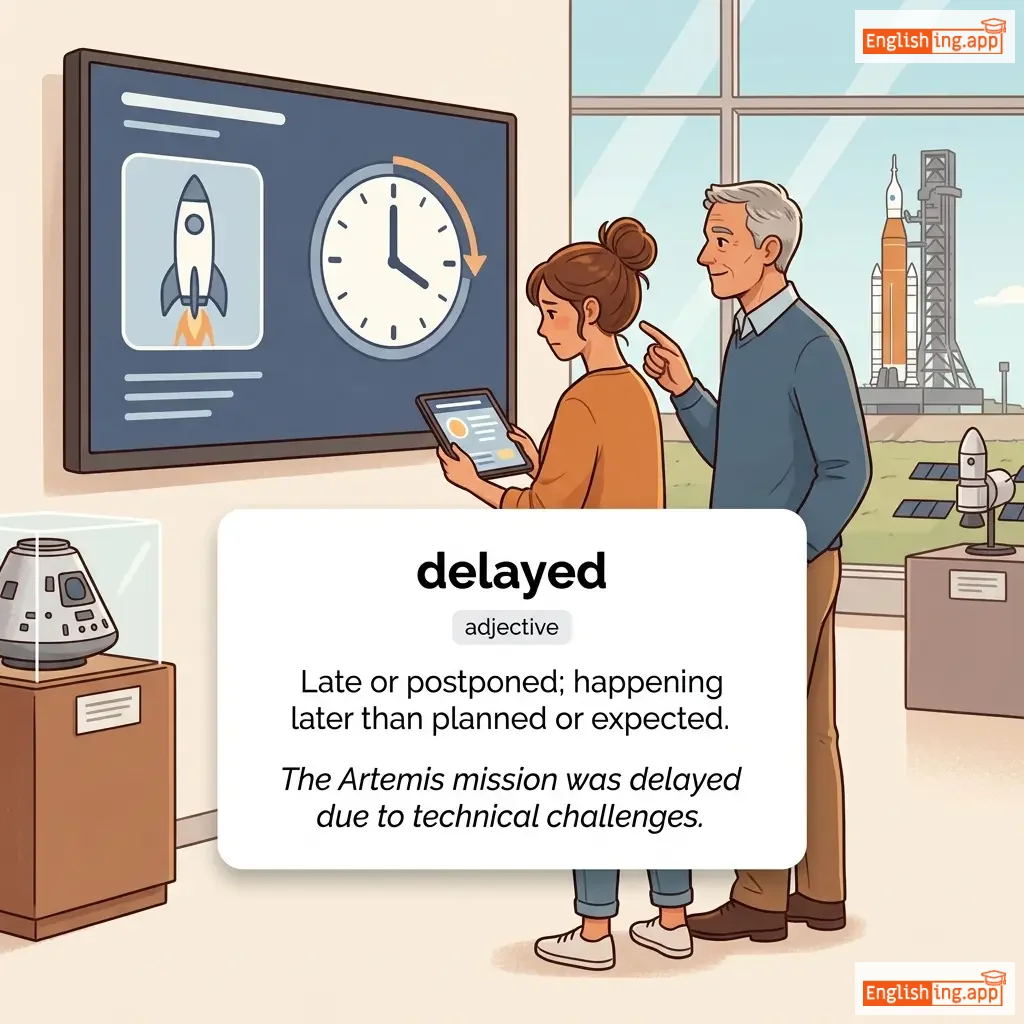
delayed definition card — visual illustration of the meaning
adjective
dɪˈleɪd
遅延 (chien)

Late or postponed; happening later than planned or expected.

"The Artemis mission was delayed due to technical challenges."

"アルテミスミッションは技術的な課題のため遅延しました。" (Arutemisu misshon wa gijutsuteki na kadai no tame chien shimashita.)
adjective
/dɪˈlɛktəbl̩/
美味しい (oishii)

delicious or highly enjoyable

"The restaurant served a delectable meal."

"レストランは美味しい料理を提供しました。" (Resutoran wa oishii ryouri o teikyoushimashita.)
noun
/ˌdiːlɛkˈteɪʃən/
喜び (yorokobi)

great pleasure or delight

"She read the story aloud for the delectation of her friends."

"彼女は友達の喜びのために物語を大声で読みました。" (Kanojo wa tomodachi no yorokobi no tame ni monogatari o ōgoe de yomimashita.)
noun, verb
/ˈdɛlɪɡət/ (noun), /ˈdɛlɪɡeɪt/ (verb)
代理人 / 委任する (dairinin / inin suru)

as a noun: a person appointed to represent others; as a verb: to entrust a task or responsibility to another

"The manager decided to delegate tasks to his team members."

"マネージャーはチームメンバーにタスクを委任することに決めました。" (Manējā wa chīmu menbā ni tasuku o inin suru koto ni kimemashita.)
delegation definition card — visual illustration of the meaning
noun
/ˌdɛlɪˈɡeɪʃən/
委任 (inin)

the act of giving someone else responsibility for something

"The manager made a delegation of tasks to the team."
"マネージャーはチームにタスクを委任しました。" (Manējā wa chīmu ni tasuku o inin shimashita.)
🗑️

delete

verb
/dɪˈliːt/

to remove or erase something, especially written or recorded information

"He accidentally deleted all the files from his computer."

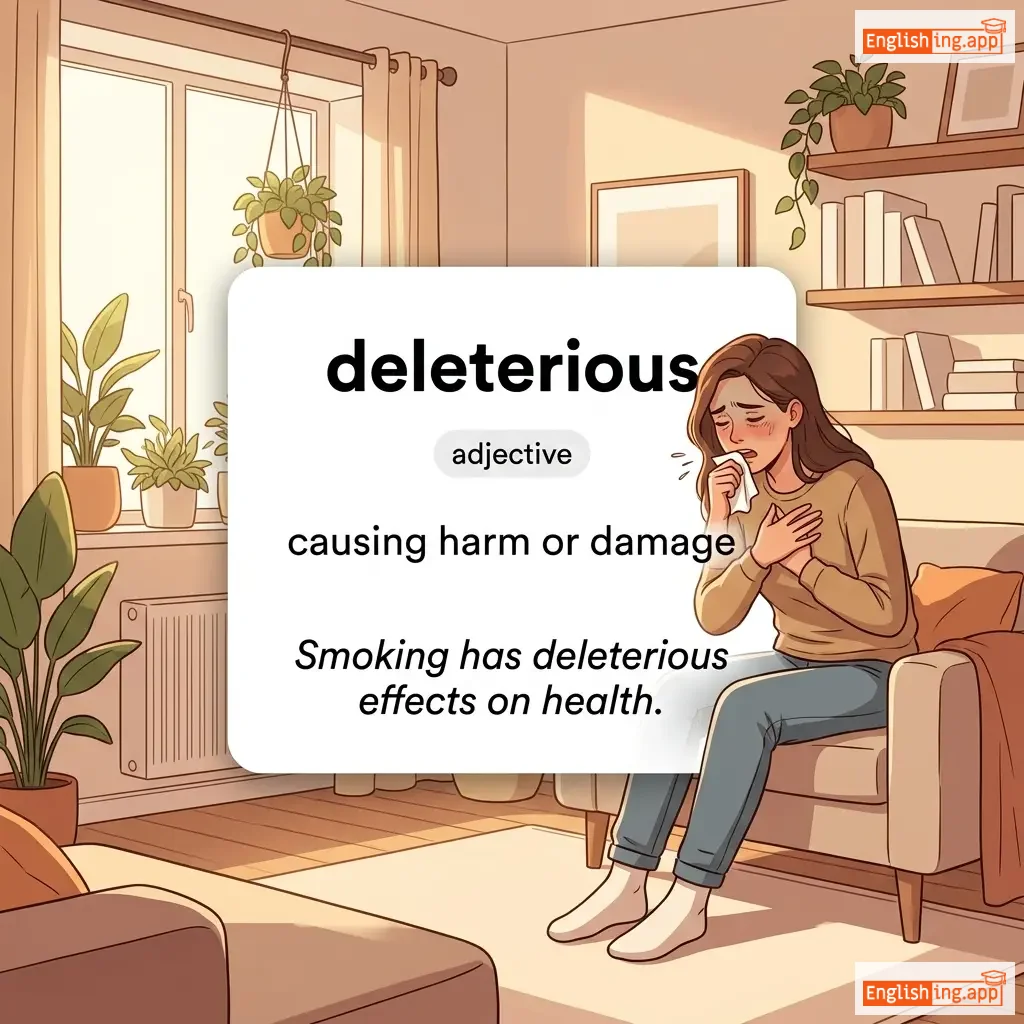
deleterious definition card — visual illustration of the meaning
adjective
/ˌdɛlɪˈtɪəriəs/
有害な (yugaina)

causing harm or damage

"Smoking has deleterious effects on health."

"喫煙は健康に有害な影響を与える。" (Kitsuen wa kenko ni yugaina eikyo wo ateru.)