語彙集

英単語辞書 | 単語の意味、定義、例文

noun
/ˈdɔːrˌkiːpər/
門番 (monban)

A person whose job is to guard or manage the entrance of a building or room.

"The doorkeeper checked everyone’s passes before they entered the hall."

"ドアキーパーは皆がホールに入る前に通行証を確認した。" (Doakipa wa mina ga hall ni hairu mae ni tsuukoushou o kakunin shita)
noun
/ˈdɔː.weɪ/
ドアの入口 (doa no iriguchi)

the space where a door opens into a room or building

"She stood in the doorway waiting for him to arrive."

"彼女はドアの入口に立って、彼が来るのを待っていました。" (Kanojo wa doa no iriguchi ni tatte, kare ga kuru no o matte imashita.)
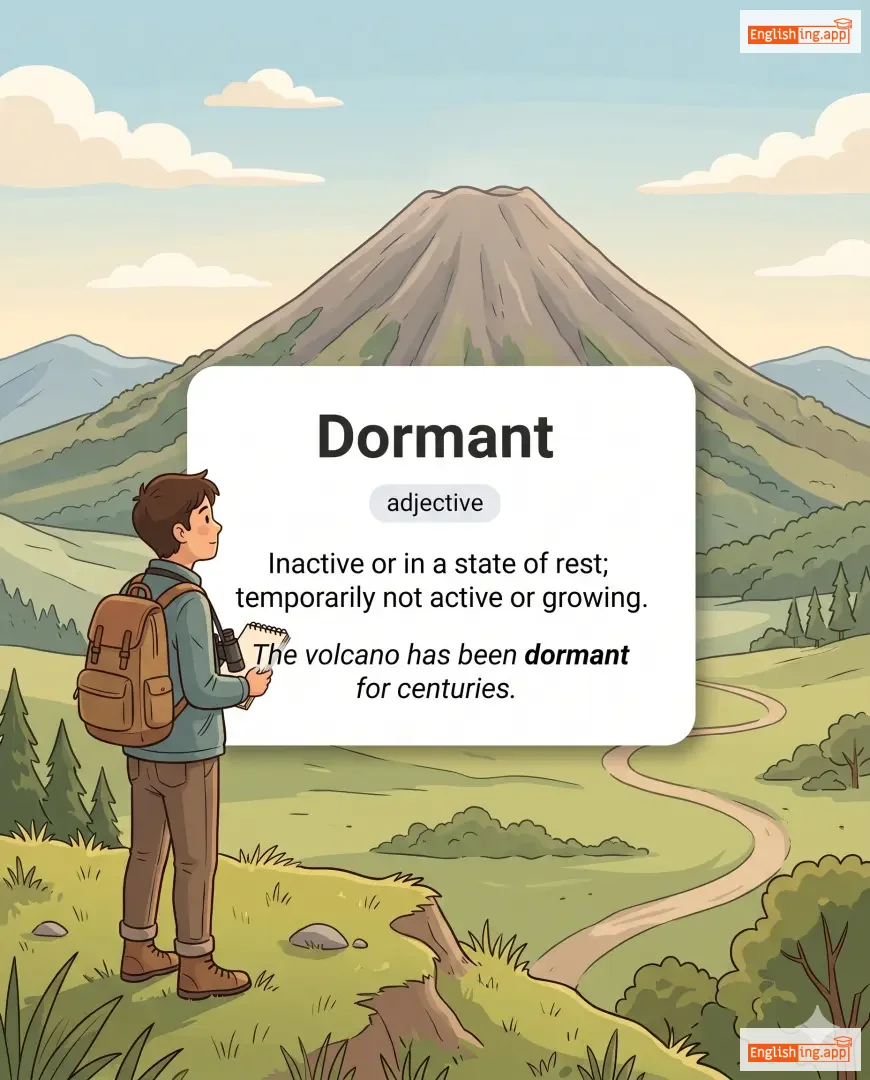
Dormant definition card — visual illustration of the meaning
adjective
/ˈdɔːrmənt/

Inactive or in a state of rest; temporarily not active or growing.

"The volcano has been dormant for centuries."

noun
/ˈdɔːrmər/
ドーマー窓 (dōmā mado)

A window that projects vertically from a sloping roof.

"The old house had a dormer overlooking the garden."

"その古い家には庭を見下ろすドーマー窓がありました。" (Sono furui ie ni wa niwa o miorosu dōmā mado ga arimashita.)
adjective
/ˈdɔːrsəl/
背鰭 (seki)

Relating to the back or upper side of an animal or body part.

"Sharks have a prominent dorsal fin."

"サメは目立つ背鰭を持っています。" (Same wa medatsu seki o motteimasu.)
noun
/doʊs/
用量 (yōryō)

a measured amount of a medicine or drug taken at one time

"The doctor prescribed one dose of the medicine every six hours."

"医者は6時間ごとに1回薬のドーズを処方しました。" (Isha wa roku-jikan goto ni ikkai kusuri no dōzu o shohō shimashita.)
noun
/ˈdɑːsieɪ/
ファイル (fairu)

A collection of documents about a particular person, event, or subject.

"The lawyer presented a dossier of evidence to the court."

"弁護士は証拠のドシエを裁判所に提出しました。" (Bengoshi wa shouko no doshie wo saibansho ni teishutsu shimashita.)
noun
/dɒt/
(ten)

a small round mark or spot

"She drew a red dot on the paper."

"彼女は紙に赤い点を描きました。" (Kanojo wa kami ni akai ten o kakimashita.)
noun
/ˈdoʊtɪdʒ/
老年 (rōnen)

The period of old age, especially when one is weak or senile.

"He spent his dotage reminiscing about his youth."

"彼は晩年を若い頃を思い出して過ごしました。" (Kare wa ban'nenn o wakai koro o omoidasite sugosimashita.)
verb
/doʊt/
溺愛する (dekai suru)

to show excessive love or fondness for someone or something

"She tends to dote on her grandchildren."

"彼女は孫たちに溺愛する傾向があります。" (Kanojo wa magomotachi ni dekai suru keikou ga arimasu.)
verb
/ˈdʌbəl/
倍増する (baizō suru)

to make twice as much in size, number, or amount

"The company hopes to double its profits this year."

"会社は今年、利益を倍増させることを望んでいます。" (Kaisha wa kotoshi, rieki o baizō saseru koto o nozondeimasu.)
noun
/ˈdʌbəl ˈdekər/
二階建てバス (nikaidate basu)

a bus with two levels or floors for passengers

"The red double decker bus is a famous symbol of London."

"赤いダブルデッカーバスはロンドンの有名なシンボルです。" (Akai daburu dekkā basu wa rondon no yūmei na shinboru desu.)
noun
/ˈdʌblɪt/
ダブレット / タイトジャケット (daburetto / taito jaketto)

a close-fitting jacket worn by men in the Renaissance; also, a pair of similar things

"The actor wore a velvet doublet for the Shakespearean play."

"俳優はシェイクスピア劇のためにベルベットのダブレットを着ました。" (Haiyū wa Sheikusupia geki no tame ni berubetto no daburetto o kimashita.)
adverb
/ˈdʌbli/
二重に (nijū ni)

in a twofold manner; to twice the degree

"She felt doubly fortunate after winning the prize and getting a promotion."

"彼女は賞を受賞し、昇進した後、二重に幸運だと感じました。" (Kanojo wa shō o jushō shi, shōshin shita ato, nijū ni kōun da to kanjimashita.)
Doubt definition card — visual illustration of the meaning
noun/verb
/daʊt/
疑い (utagai)

a feeling of uncertainty or lack of conviction; to be uncertain about something

"She had doubts about the success of the plan."

"彼女は計画の成功に疑問を抱いていた。" (Kanojo wa keikaku no seikou ni gimon o daiteita.)
adjective
/ˈdaʊt.fəl/
疑わしい; 不確かな; 何かに対して不確かに感じる (ugowashī; fukakushina; nanika ni taishite fukakushin ni kanjiru)

uncertain; questionable; feeling uncertain about something

"I am doubtful about the success of this project."

"私はこのプロジェクトの成功について疑問を持っています。" (Watashi wa kono purojekuto no seikō ni tsuite gimon o motteimasu.)
noun
/doʊ/
生地 (kiji)

a mixture of flour, water, and other ingredients used to make bread or pastries

"She kneaded the dough for ten minutes before baking."

"彼女は生地を10分間こねた後、それを焼きました。" (Kanojo wa kiji o juppun kan koneta ato, sore o yakimashita.)
adjective
/ˈdaʊti/
勇敢な (yūkan na)

brave, valiant, courageous

"The doughty soldier never backed down from a challenge."

"勇敢な兵士は挑戦から決して後退しなかった。" (Yūkan na heishi wa chōsen kara kesshite kōtai shinakatta.)
adjective
/ˈdaʊ.ər/
厳格 (genkaku)

relentlessly severe, stern, or gloomy in manner or appearance

"His dour expression made the meeting uncomfortable."

"彼の厳格な表情は会議を不快にした。" (Kare no genkaku na hyōjō wa kaigi o fukai ni shita.)
verb
/daʊs/
消す / 注ぐ (kesu / sosogu)

to pour liquid over; to extinguish a fire or light

"Firefighters doused the flames with water."

"消防士たちは水で炎を消しました。" (Shouboushi-tachi wa mizu de honoo o keshimashita.)
noun
/dʌv/
(hato)

a small, gentle bird with soft cooing sounds, often white and symbolizing peace

"The white dove flew peacefully across the blue sky."

"白い鳩は青い空を平和に飛んでいた。" (shiroi hato wa aoi sora wo heiwa ni tonde ita)
verb
/ˈdʌv.teɪl/
完全に合致する (kanzen ni gatchi suru)

to fit or combine perfectly together

"Her plans dovetail perfectly with our goals."

"彼女の計画は私たちの目標に完全に合致しています。" (Kanojo no keikaku wa watashitachi no mokuhyou ni kanzen ni gatchi shiteimasu.)
adjective
/ˈdaʊ.di/
時代遅れ / ださい (jidaiokure / dasai)

unfashionable, dull, or shabby in appearance

"She wore a dowdy dress to the party."

"彼女はパーティーに時代遅れのドレスを着ていた。" (Kanojo wa pātī ni jidaiokure no doresu o kite ita.)
adverb
/daʊn/
(shita)

from a higher to a lower position

"He walked down the stairs slowly."

"彼はゆっくりと階段を下りてきました。" (Kare wa yukkuri to kaidan o orite kimashita.)
adjective
/ˈdaʊn.kæst/

feeling sad, dejected, or with lowered eyes

"He looked downcast after hearing the bad news."

noun
/ˈdaʊn.fɔːl/
没落; 失敗; 崩壊 (botsuraku, shippai, hōkai)

a loss of power, prosperity, or status; the cause of such a loss

"His arrogance and pride led to his eventual downfall in business."

"彼の傲慢と誇りは、ビジネスにおける彼の最終的な失墜を招いた。" (Kare no gōman to hokori wa, bijinesu ni okeru kare no saishū-tekina shītsui o manekita.)
verb
/ˈdaʊn.pleɪ/
軽視する (keishi suru)

to make something seem less important than it really is

"The company tried to downplay the risks of the new product."

"会社は新しい製品のリスクを軽視しようとしました。" (Kaisha wa atarashī seihin no risuku o keishi shiyō to shimashita.)
noun
/ˈdaʊnˌpɔːr/
土砂降り (doshaburi)

A sudden and heavy fall of rain.

"We got caught in a sudden downpour on our way home."

"帰宅途中で突然の土砂降りに遭いました。" (Kitaku tochū de totsuzen no doshaburi ni aimashita.)
adverb
/ˌdaʊnˈsteəz/
階下 (kaika)

on or to a lower floor of a building

"Please go downstairs and wait in the lobby."

"階下に行ってロビーで待ってください。" (Kaika ni itte robī de matte kudasai.)
noun
/ˈdaʊnˌtaʊn/
ダウンタウン (dauntaun)

the central part of a city

"They spent the afternoon shopping downtown."

"彼らは午後、市の中心部で買い物をしました。" (Karera wa gogo, shi no chūshinbu de kaimono o shimashita.)
adverb
/ˈdaʊnwədz/
下向き (shita muki)

towards a lower place or position; in a downward direction

"The ball rolled downwards along the slope."

"ボールは坂を下向きに転がった。" (Booru wa saka o shita muki ni korogatta.)
noun
/ˈdaʊri/
持参金 (jisan-kin)

Property or money brought by a bride to her husband at marriage.

"The dowry tradition is still followed in some cultures."

"いくつかの文化では、持参金の伝統が今でも守られています。" (Ikutsuka no bunka de wa, jisan-kin no dentou ga ima demo mamorareteimasu.)
verb
/daʊz/
水や鉱物を占いの棒で探す; または液体で浸すまたは消火する。 (Mizu ya koumotsu o uranai no bou de sagasu; mata wa ekitai de shinsu mata wa shoukaku suru.)

To search for underground water or minerals using a divining rod; also to drench or extinguish with liquid.

"The farmer tried to dowse for water in the dry field."

"農夫は乾燥した畑で水を探すためにダウズしようとした。" (Noufu wa kansou shita hatake de mizu o sagasu tame ni dausu shiyou to shita.)
noun
/ˈdɔɪən/
尊敬される人物 (sonkei sareru jinbutsu)

The most respected or prominent person in a particular field.

"He is regarded as the doyen of modern literature in the country."

"彼はその国の現代文学のドイエンと見なされています。" (Kare wa sono kuni no gendai bungaku no doyen to minasarerています。)
verb
/doʊz/
うたた寝 (utatane)

To sleep lightly for a short time.

"He dozed off while reading the book."

"彼は本を読みながらうたた寝をした。" (Kare wa hon o yominagara utatane o shita.)
noun
/ˈdʌzən/
ダース (dāsu)

a group of twelve

"She bought a dozen eggs from the market."

"彼女は市場でダースの卵を買いました。" (Kanojo wa ichiba de dāsu no tamago o kaimashita.)
adjective
/dræb/
地味な (jimina)

Dull, lacking brightness or interest; monotonous.

"The room looked drab with its gray walls and dim lighting."

"灰色の壁と薄暗い照明でその部屋は地味に見えた。" (haiiro no kabe to usugurai shoumei de sono heya wa jimi ni mieta)
noun
/ˈdrækmə/
ドラクマ (dorakuma)

The basic monetary unit of Greece before the adoption of the euro.

"The old coin collection included a silver drachma."

"古いコインのコレクションには銀のドラクマが含まれていました。" (Furui koin no korekushon ni wa gin no dorakuma ga fukumarete imashita.)
adjective
/drəˈkoʊniən/
ドラコニアン (dorakonian)

Extremely harsh and severe, especially laws or rules.

"The new regulations were criticized as draconian."

"新しい規制はドラコニアンだと批判されました。" (Atarashī kisei wa dorakonian da to hihan saremashita.)
draft definition card — visual illustration of the meaning
noun/verb
/dræft/
ドラフト (dorafuto)

A preliminary version of a piece of writing; to prepare a preliminary version of a document.

"She finished the first draft of her novel."
"彼女は小説の最初のドラフトを完成させました。" (Kanojo wa shousetsu no saisho no dorafuto wo kansei sasemashita.)
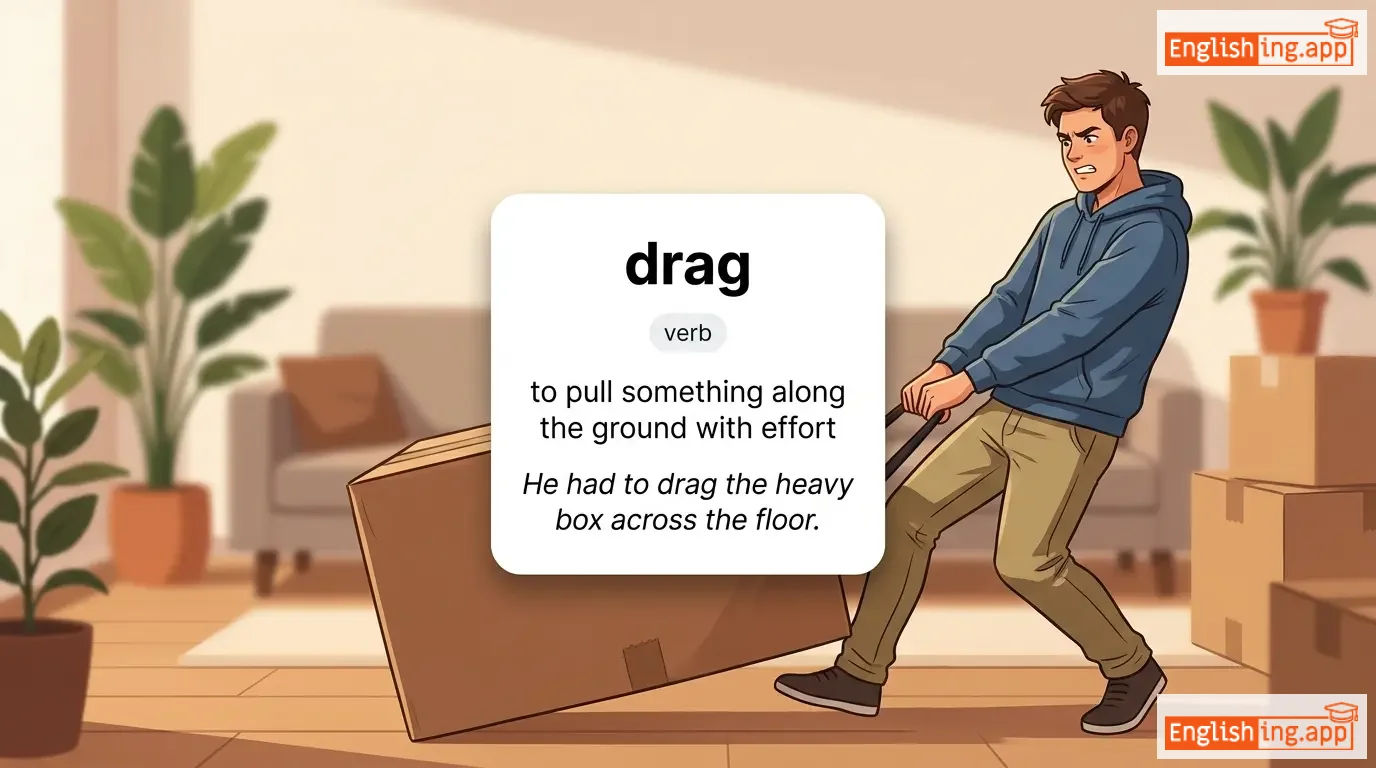
drag definition card — visual illustration of the meaning
verb
/dræɡ/
引きずる (hikizuru)

to pull something along the ground with effort

"He had to drag the heavy box across the floor."

"彼は重い箱を床に引きずらなければならなかった。" (Kare wa omoi hako o yuka ni hikizurana kereba naranakatta.)
noun
/ˈdræɡˌnɛt/
広域捜査 (kouiki sōsa)

A systematic search or investigation, often by police to catch criminals.

"The police launched a dragnet to capture the fugitives."

"警察は逃亡者を捕まえるために広域捜査を開始した。" (Keisatsu wa tōbōsha o tsukamaeru tame ni kōiki sōsa o kaishi shita.)
noun
/ˈdræɡ.ən.flaɪ/
トンボ (tonbo)

a large insect with four transparent wings that lives near water

"The dragonfly hovered over the pond."

"トンボは池の上を飛んでいた。" (tonbo wa ike no ue o tonde ita)
verb
/drəˈɡuːn/
強制する (kyousei suru)

to force someone to do something through coercion or intimidation

"The manager tried to dragoon the team into working overtime."

"マネージャーはチームに残業させようとしました。" (Manejaa wa chiimu ni zangyou saseyou to shimashita.)
🚰

drain

verb
/dreɪn/

to cause liquid to flow away from something; to remove liquid

"He drained the pasta before adding the sauce."

noun
/ˈdreɪ.nɪdʒ/
排水 (haisui)

the system or process by which water or other liquids are drained away

"Poor drainage caused flooding in the neighborhood."

"悪い排水システムが近所での洪水を引き起こしました。" (Warui haisui shisutemu ga kinjo de no kouzui wo hikiokoshimashita.)
noun
/dreɪk/
雄鴨 (otoko kamo)

a male duck; a type of waterfowl

"The drake led his family of ducks across the pond."
"そのドレイクは、家族のカモたちを池の向こうに連れて行きました。" (sono doreiku wa, kazoku no kamo-tachi o ike no mukou ni tsurete ikimashita.)
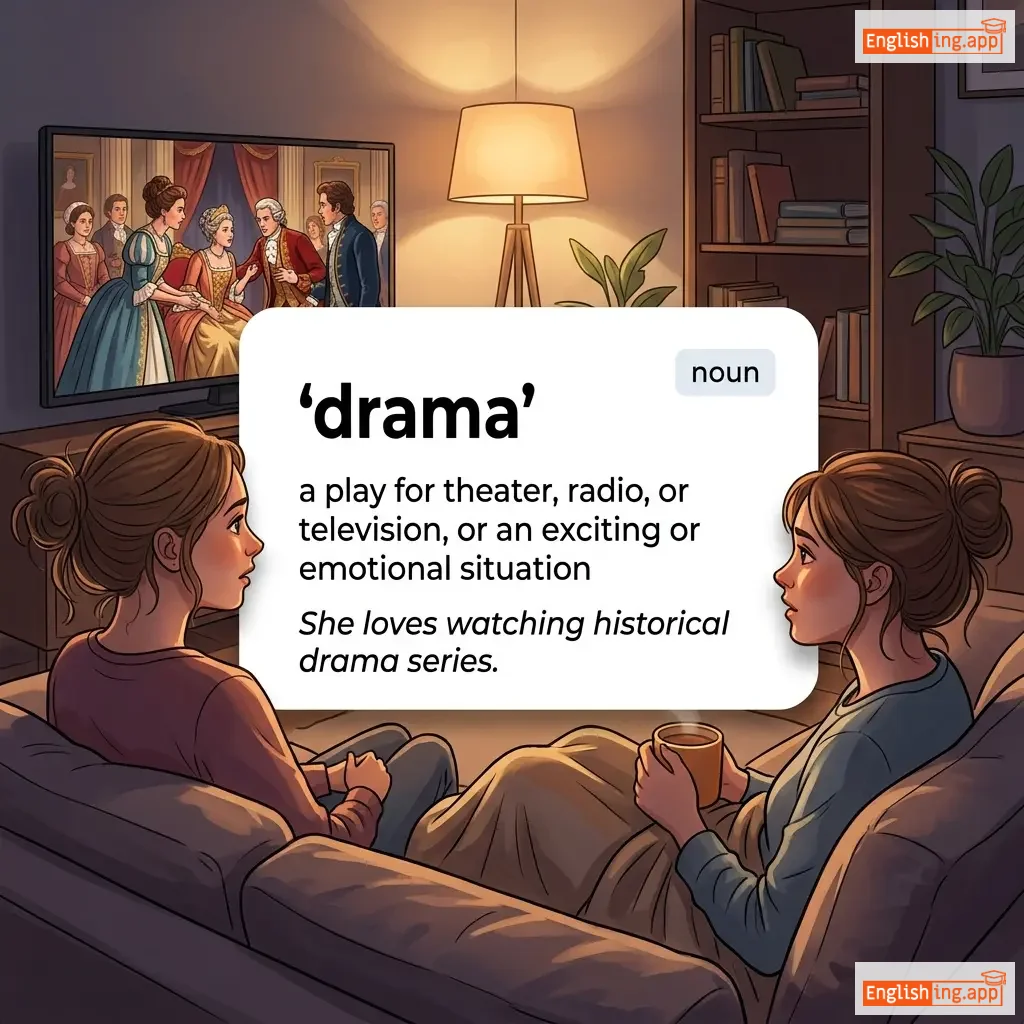
drama definition card — visual illustration of the meaning
noun
/ˈdrɑː.mə/
ドラマ (dorama)

a play for theater, radio, or television, or an exciting or emotional situation

"She loves watching historical drama series."

"彼女は歴史的なドラマシリーズを見るのが好きです。" (kanojo wa rekishiteki na dorama shirīzu o miru no ga suki desu.)
adjective
/drəˈmætɪk/
劇的 (gekiteki)

sudden and striking; relating to drama or theater

"The play ended with a dramatic twist."

"劇は劇的な転換で終わった。" (Geki wa gekiteki na tenkan de owatta.)
adverb
/drəˈmætɪkli/
劇的に (gekiteki ni)

in a sudden, striking, or exaggerated way

"Sales increased dramatically after the campaign."

"キャンペーン後、売上は劇的に増加しました。" (Kyanpēn go, uriage wa gekiteki ni zōka shimashita.)