語彙集

英単語辞書 | 単語の意味、定義、例文

noun
/ˈdɒktrɪn/
教義 (kyōgi)

A set of beliefs or principles held and taught by a religious, political, or other group.

"The church follows a strict doctrine on moral values."

"教会は道徳的価値に関する厳格な教義を遵守しています。" (Kyōkai wa dōtokuteki kachi ni kansuru genkaku na kyōgi o junshu shiteimasu.)
document definition card — visual illustration of the meaning
noun/verb
/ˈdɒkjʊmənt/
文書 (bunsho)

Noun: A written, printed, or electronic record that provides information or evidence. Verb: To record information in written or electronic form.

"She carefully documented all the expenses of the trip."

"彼女は旅行のすべての費用を慎重にドキュメントした。" (Kanojo wa ryokō no subete no hiyō o shinchō ni dokyumento shita.)
noun/adjective
/ˌdɒkjʊˈmɛntri/
ドキュメンタリー映画 (dokyumentarī eiga)

A film or television program that provides a factual record or report.

"We watched a documentary about climate change."

"私たちは気候変動についてのドキュメンタリー映画を見ました。" (Watashitachi wa kikō hendō ni tsuite no dokyumentarī eiga o mimashita.)
noun
/ˌdɒkjʊmɛnˈteɪʃən/
ドキュメンテーション (dokyumenteshon)

material that provides official information or evidence

"The documentation for the project is available for review."

"プロジェクトのドキュメンテーションはレビューのために利用可能です。" (Purojekuto no dokyumenteshon wa rebyū no tame ni riyō kanō desu.)
🚶‍♂️

dodder (ドダー)

verb
/ˈdɒdə/
震えながら歩く (furue nagara aruku)

To move in a weak and unsteady way, especially due to old age.

"The old man doddered across the street with a cane."

"老人は杖をついて震えながら通りを歩いていました。" (Rojin wa tsue wo tsuite furuenagara toori wo aruite imashita.)
adjective
/ˈdɒdərɪŋ/
震えている / 弱い (furuete iru / yowai)

Weak, shaky, or unsteady, especially due to old age.

"The doddering professor struggled to climb the stairs."
"ドダリング教授は階段を登るのに苦労していました。" (Dodaringu kyōju wa kaidan o noboru no ni kurō shite imashita.)
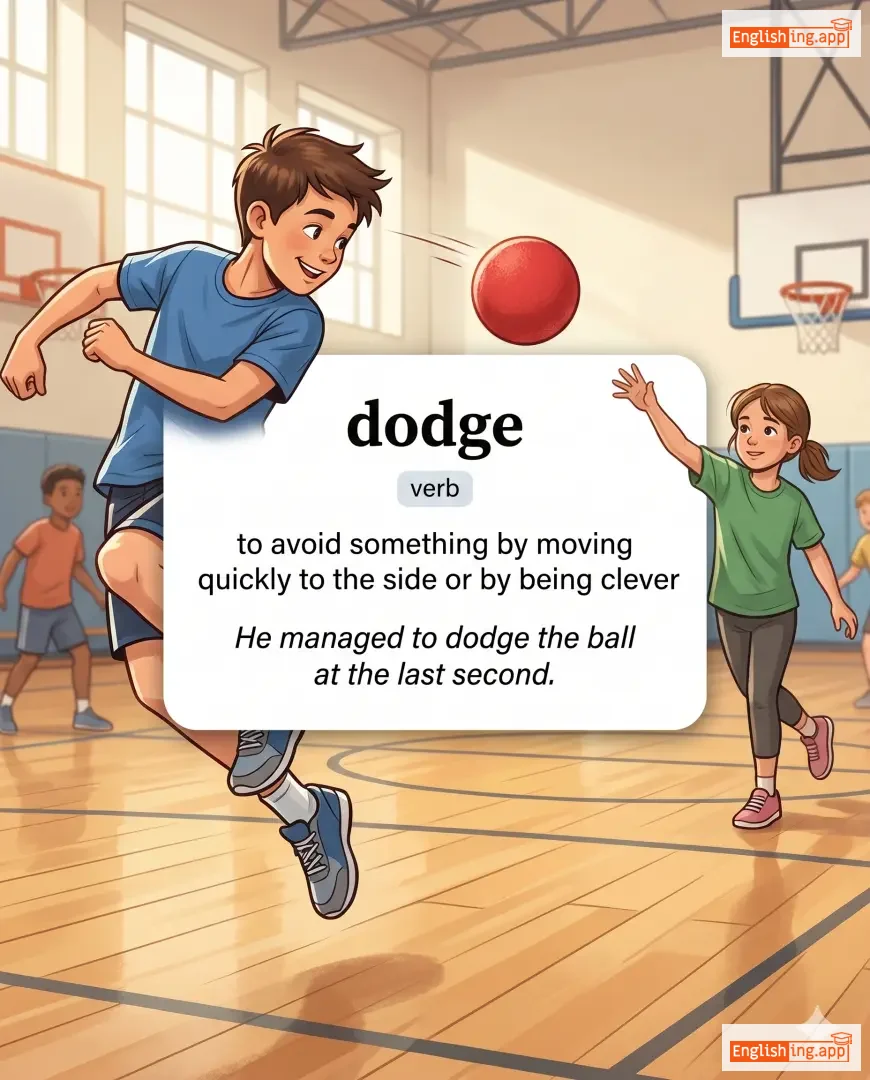
dodge definition card — visual illustration of the meaning
verb
/dɒdʒ/
避ける (sakeru)

to avoid something by moving quickly to the side or by being clever

"He managed to dodge the ball at the last second."

"彼は最後の瞬間にボールを避けることができました。" (Kare wa saigo no shunkan ni booru wo yokeru koto ga dekimashita.)
adjective
/ˈdɒdʒi/
疑わしい; 質が悪い; 信頼できない; 危険なまたはリスクのある (utagawashii; shitsu ga warui; shinrai dekinai; kiken na matawa risuku no aru)

suspicious; questionable; unreliable; risky or dangerous

"That deal sounds dodgy to me."

"その取引は私には疑わしく聞こえます。" (Sono torihiki wa watashi ni wa utagawashiku kikoemasu.)
noun
/doʊ/
雌鹿 (meshi shika)

a female deer, especially an adult one

"The doe and her fawn were grazing in the meadow."

"雌鹿とその子鹿は草原で草を食べていました。" (Meshi shika to sono kogitsune wa sougen de kusa wo tabete imashita.)
verb
/dɒf/
帽子を脱ぐ(敬意の印として) (bōshi o nugu (keii no shirushi toshite))

to take off an item of clothing, especially a hat, as a sign of respect

"He doffed his hat as the procession passed."

"彼は行列が通り過ぎるときに帽子を脱いだ。" (Kare wa gyōretsu ga tōrisugiru toki ni bōshi o nuida.)
noun
/dɔːɡ/
(inu)

a domesticated carnivorous mammal kept as a pet or for work

"The dog barked loudly at the stranger."

"犬は見知らぬ人に向かって大きな声で吠えた。" (Inu wa mishiranu hito ni mukatte ookina koe de hoeta.)
noun
/ˈdɒɡ roʊz/
ドッグローズ (doggu rōzu)

A wild rose species with pink or white flowers and thorny stems, common in hedgerows

"The dog-rose bush grew wild along the countryside path."

"ドッグローズの低木は、田舎の道沿いに野生で育ちました。" (Doggu rōzu no teimoku wa, inaka no michizoi ni yasei de sodachimashita.)
adjective
/ˈdɒɡɪd/
執拗 (shitsunyo)

showing stubborn determination and persistence

"She succeeded through dogged determination."

"彼女は執拗な決意で成功を収めました。" (Kanojo wa shitsunyo na ketsui de seikou o osamemashita.)
doggedness definition card — visual illustration of the meaning
noun
ˈdɒɡ.ɪd.nəs
執念 (shūnen)

Stubborn persistence in achieving something without giving up.

"His doggedness in pursuing his goals was inspiring."
"目標達成における彼の執念は感動的だった。" (Mokuhyō tassei ni okeru kare no shūnen wa kandō-teki datta.)
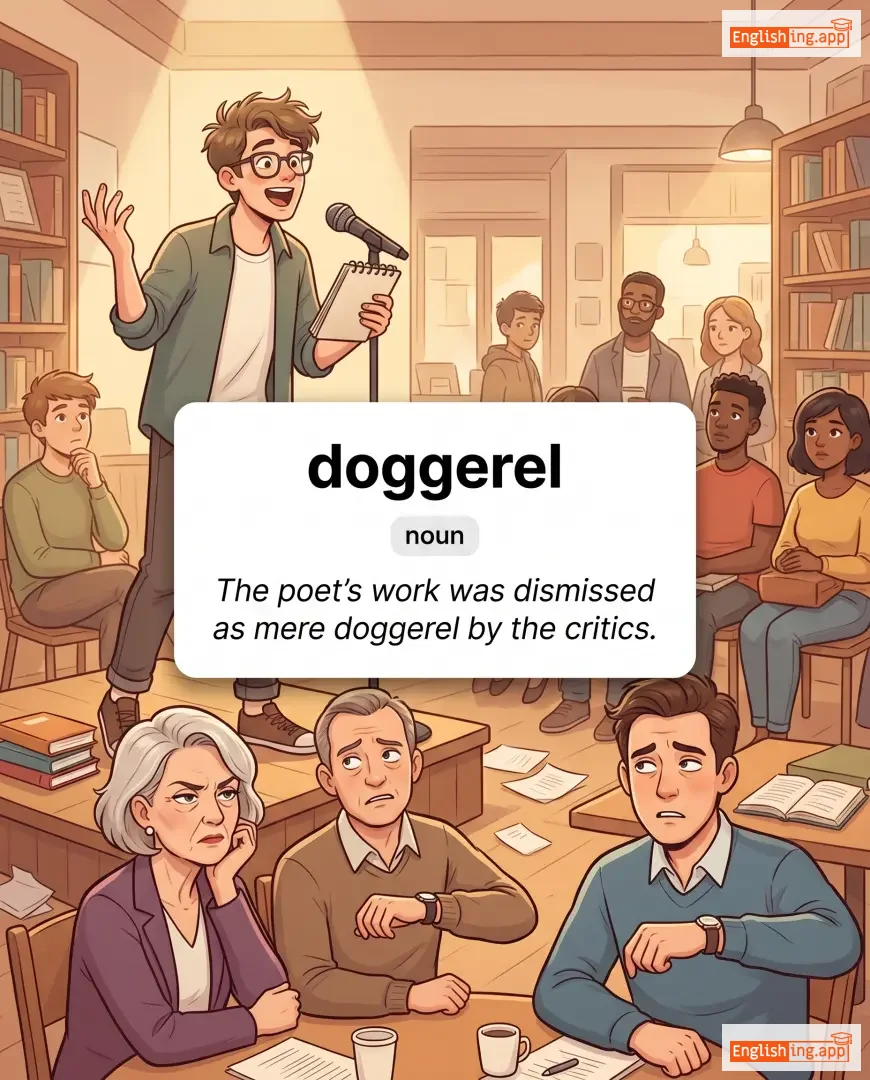
doggerel definition card — visual illustration of the meaning
noun
/ˈdɒɡərəl/
低俗な詩 (teizoku na shi)

Comic or irregular verse, often poorly constructed and lacking in artistic quality.

"The poet’s work was dismissed as mere doggerel by the critics."

"詩人の作品は批評家によって単なる低俗な詩として却下された。" (Shijin no sakuhin wa hihyōka ni yotte tannaru teizoku na shi toshite kyakka sareta.)
noun
/ˈdɒɡmə/
ドグマ (doguma)

A principle or set of principles laid down by an authority as incontrovertibly true.

"The religious leader strictly adhered to traditional dogma."
"宗教的指導者は伝統的なドグマに厳格に従った。" (Shūkyō-teki shidōsha wa dentō-teki na doguma ni genkaku ni shitagatta.)
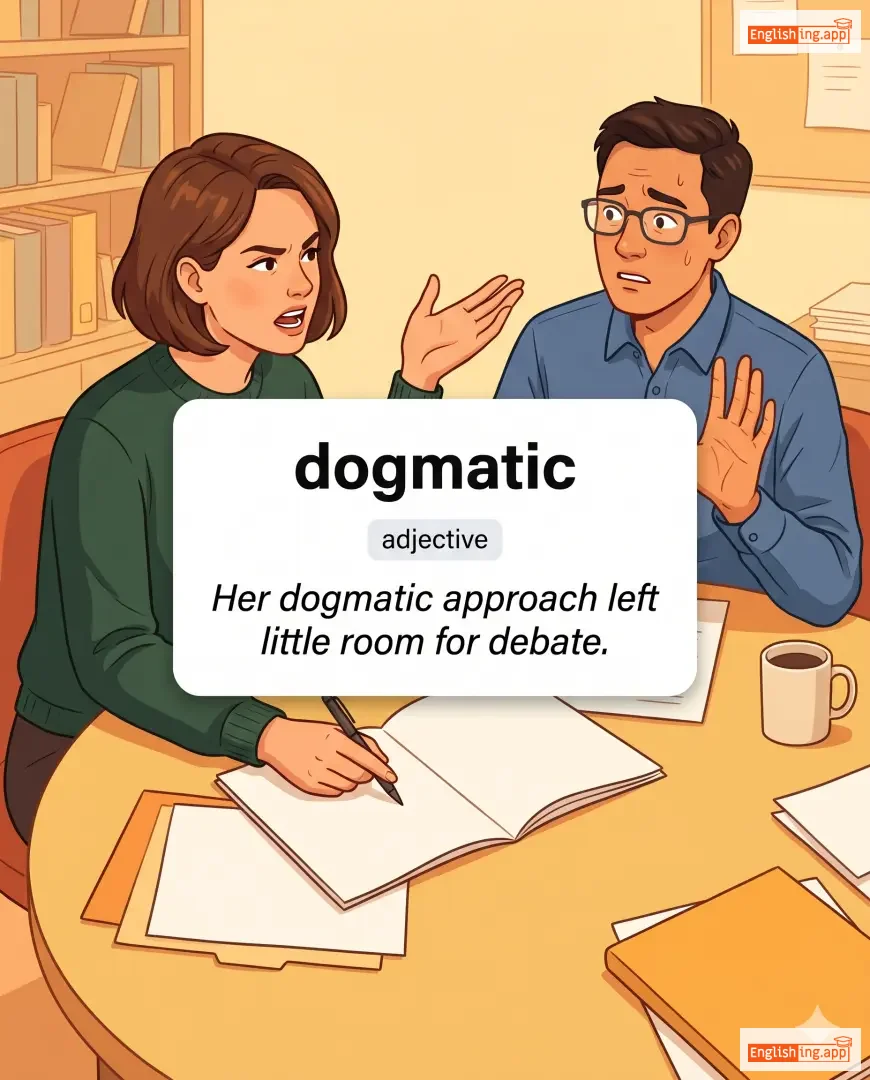
dogmatic definition card — visual illustration of the meaning
adjective
/dɒɡˈmætɪk/
ドグマティック (dogumatikku)

Inclined to lay down principles as undeniably true, without consideration of evidence or others’ opinions.

"Her dogmatic approach left little room for debate."

"彼女のドグマティックなアプローチは議論の余地をほとんど残さなかった。" (Kanojo no dogumatikku na apurōchi wa giron no yochi o hotondo nokosanakatta.)
verb
/ˈdɒɡmətaɪz/
ドグマ化する (doguma-ka suru)

To state opinions or beliefs as if they were absolute truths.

"The professor tended to dogmatize on political issues."

"その教授は政治的な問題でドグマタイズする傾向があった。" (Sono kyōju wa seijiteki na mondai de dogumataizu suru keikō ga atta.)
noun
/ˈdɒldrəmz/

A state of inactivity, stagnation, or low spirits; also a region near the equator with calm winds.

"After the project failed, the team was stuck in the doldrums for months."

adjective
/ˈdəʊl.fəl/
悲しい (kanashii)

Expressing sorrow or sadness; mournful.

"She gave him a doleful look before leaving."

"彼女は去る前に悲しそうな目を彼に向けました。" (Kanojo wa saru mae ni kanashisō na me o kare ni mukemashita.)
adjective
/ˈdəʊl.səm/
悲しい (kanashii)

Filled with grief or sadness; mournful.

"The dolesome ballad brought tears to their eyes."

"その悲しい歌は彼らの目に涙をもたらしました。" (Sono kanashii uta wa karera no me ni namida wo motarashimashita.)
noun
/dɒl/
人形 (ningyo)

a small toy resembling a human figure, especially for children

"The little girl hugged her favorite doll tightly."

"小さな女の子はお気に入りの人形をしっかり抱きしめました。" (Chiisana onnanoko wa okiniiri no ningyo wo shikkari dakishimemashita.)
noun
/ˈdɒlər/
ドル (doru)

The basic monetary unit of the United States and some other countries

"I need five dollars to buy this book."

"この本を買うには5ドル必要です。" (Kono hon o kau ni wa go doru hitsuyou desu.)
noun
/ˈdəʊ.lər/
痛み (itami)

A state of great sorrow or distress.

"The nation was in deep dolor after the tragedy."

"国は悲劇の後、深い痛みに沈んでいた。" (Kuni wa higeki no ato, fukai itami ni shizunde ita.)
☹️

dolorous

adjective
/ˈdəʊ.lə.rəs/

Expressing great sorrow or distress.

"He spoke in a dolorous tone after the loss."

noun
/ˈdɒlfɪn/
イルカ (iruka)

A highly intelligent marine mammal with a streamlined body and dorsal fin

"Dolphins are known for their playful behavior and intelligence."

"イルカは遊び好きな行動と知性で知られています。" (iruka wa asobisuki na kodo to chisei de shirareteimasu)
noun
/doʊlt/
ばか (baka)

A stupid or slow-witted person.

"Only a dolt would believe such a story."

"そんな話を信じるのはばかだけだ。" (Son'na hanashi o shinjiru no wa baka dake da.)
noun
/dəˈmeɪn/
領域 (ryouiki)

An area of knowledge, activity, or territory over which control is exercised.

"Mathematics is her main domain of expertise."
"数学は彼女の主な専門領域です。" (Suugaku wa kanojo no omona senmon ryouiki desu.)
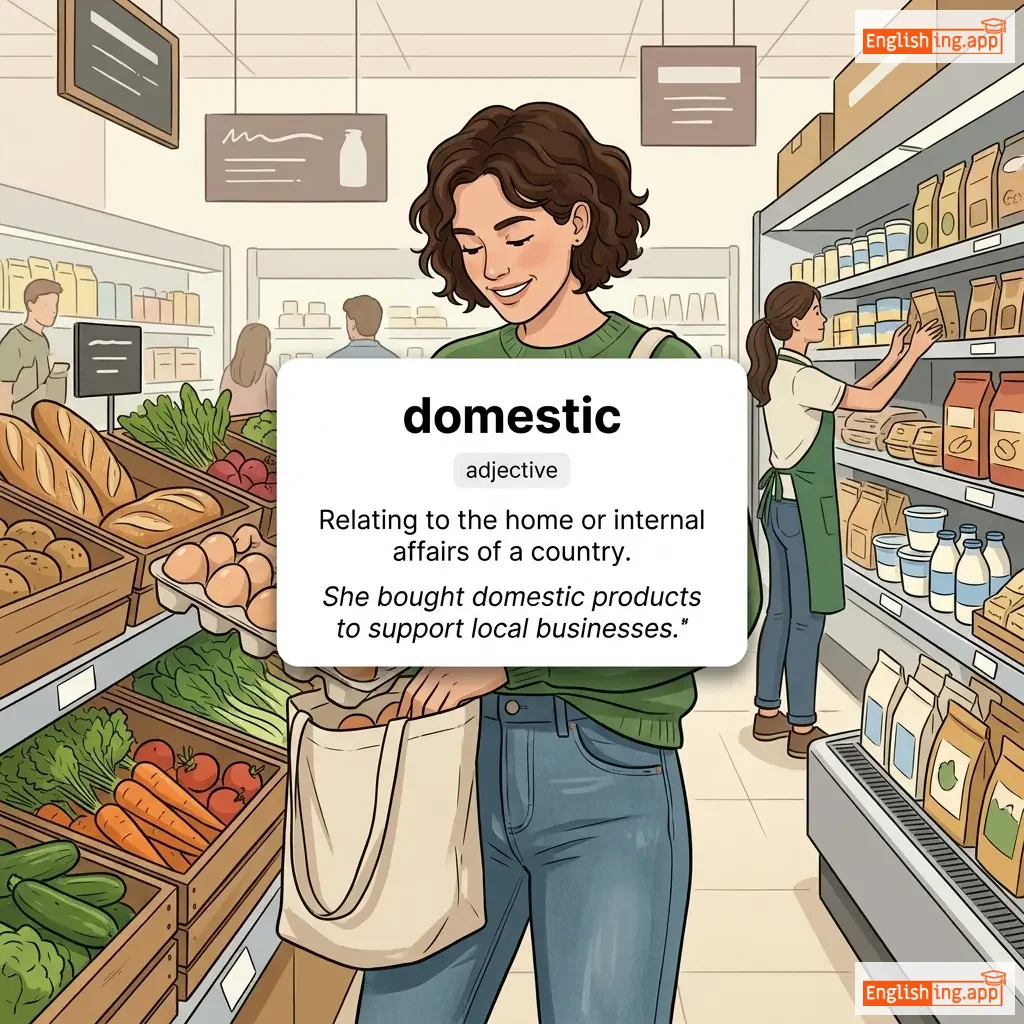
domestic definition card — visual illustration of the meaning
adjective
/dəˈmɛstɪk/
幸福 (kōfuku)

Relating to the home or internal affairs of a country.

"She bought domestic products to support local businesses."

"彼女は賞を受け取ったとき、幸せを隠すことができませんでした。" (Kanojo wa shō o uketotta toki, kōfuku o kakusu koto ga dekimasen deshita.)
verb
/dəˈmɛstɪkeɪt/
家畜化する (kachikuka suru)

to tame an animal for use by humans; to adapt something for domestic use

"Humans domesticated dogs thousands of years ago."
"人間は数千年前に犬を家畜化しました。" (Ningen wa suusen nen mae ni inu wo kachikuka shimashita.)
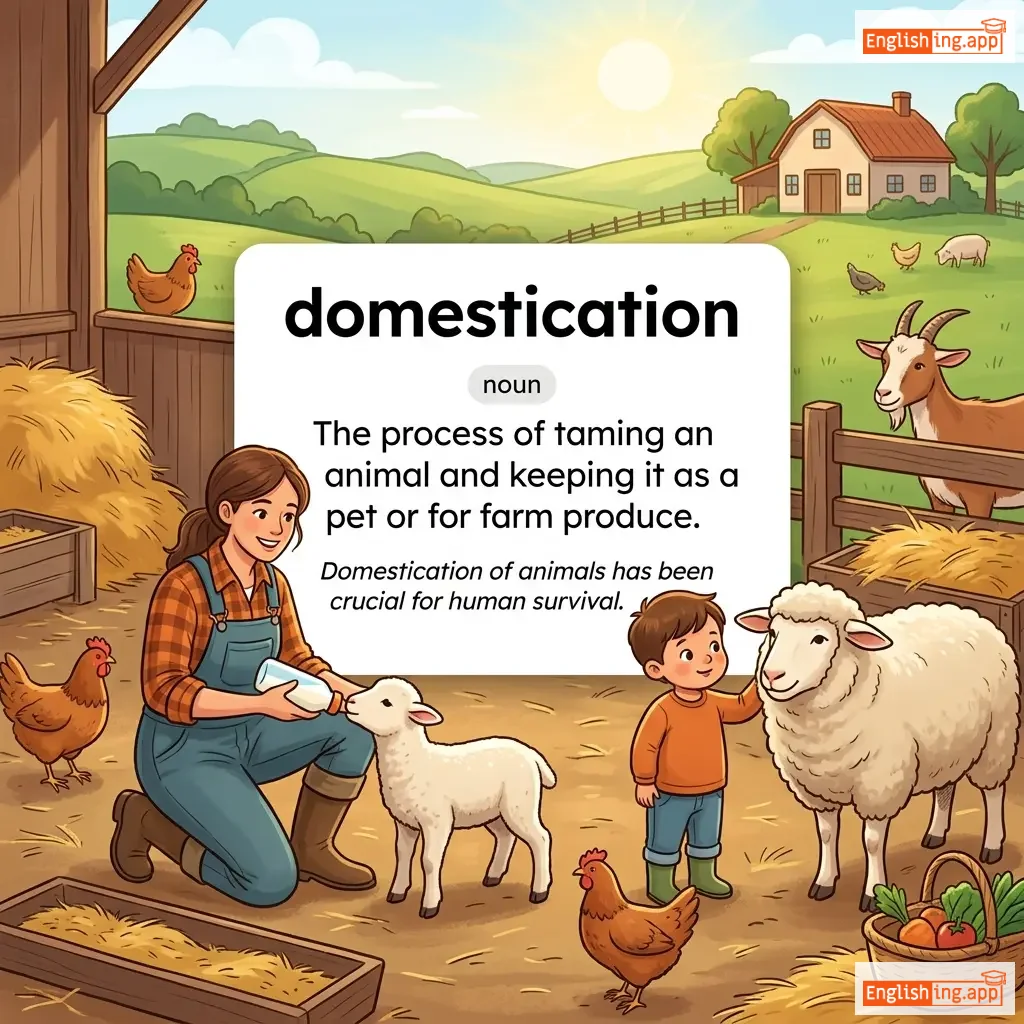
domestication definition card — visual illustration of the meaning
noun
dəˌmɛstɪˈkeɪʃən
家畜化 (kachokuba)

The process of taming an animal and keeping it as a pet or for farm produce.

"Domestication of animals has been crucial for human survival."

"動物の家畜化は人間の生存にとって重要だった。" (Doubutsu no kachokuba wa ningen no seizon ni totte juuyou datta.)
noun
/ˌdoʊ.məˈstɪs.ə.ti/
家庭生活 (katei seikatsu)

Life at home or devotion to family life.

"She enjoys the domesticity of cooking and gardening."

"彼女は料理とガーデニングの家庭生活を楽しんでいます。" (Kanojo wa ryori to ga-deningu no katei seikatsu o tanoshindeimasu.)
noun
/ˈdɑː.mə.saɪl/
住居地 (jūkyochi)

A person's legal residence or permanent home.

"He declared Canada as his legal domicile."

"彼はカナダを彼の法的な住居地として宣言しました。" (Kare wa Kanada o kare no hōteki na jūkyōchi toshite sengen shimashita.)
dominance definition card — visual illustration of the meaning
noun
/ˈdɑː.mə.nəns/
支配力 (shihairyoku)

The state of having power and influence over others.

"The company has maintained dominance in the smartphone market."

"その会社はスマートフォン市場で支配力を維持しています。" (Sono kaisha wa sumātofon shijō de shihairyoku o iji shiteimasu.)
adjective
/ˈdɑː.mə.nənt/
支配的な (shihaiten na)

Having power, authority, or influence over others; most important.

"English has become the dominant language in international business."

"英語は国際ビジネスにおいて支配的な言語となった。" (Eigo wa kokusai bijinesu ni oite shihaiten na gengo to natta.)
verb
/ˈdɒmɪneɪt/
支配する (shihai suru)

to have power or control over something or someone

"The company dominates the smartphone market."

"その会社はスマートフォン市場を支配しています。" (Sono kaisha wa sumātōfon shijō o shihai shiteimasu.)
noun
/ˌdɒmɪˈneɪʃən/
支配 (shihai)

the exercise of control or influence over someone or something

"The empire sought domination over its neighbors."

"帝国は隣国に対する支配を求めていた。" (Teikoku wa ringoku ni taisuru shihai o motomete ita.)
verb
/ˌdɒmɪˈnɪə/
支配する (shihai suru)

to assert one's will over another in an arrogant way

"He tends to domineer over his younger colleagues."
"彼は若い同僚に対して支配的な態度を取ることが多い。" (Kare wa wakai dōryō ni taishite shihai-teki na taido o toru koto ga ōi.)
verb, noun
/dɒn/
着る / リーダー (kiru / riidaa)

to put on (an article of clothing); also used as a title for a respected person

"She donned her coat before leaving."

"彼女は出かける前にコートを着た。" (Kanojo wa dekakeru mae ni kooto o kita.)
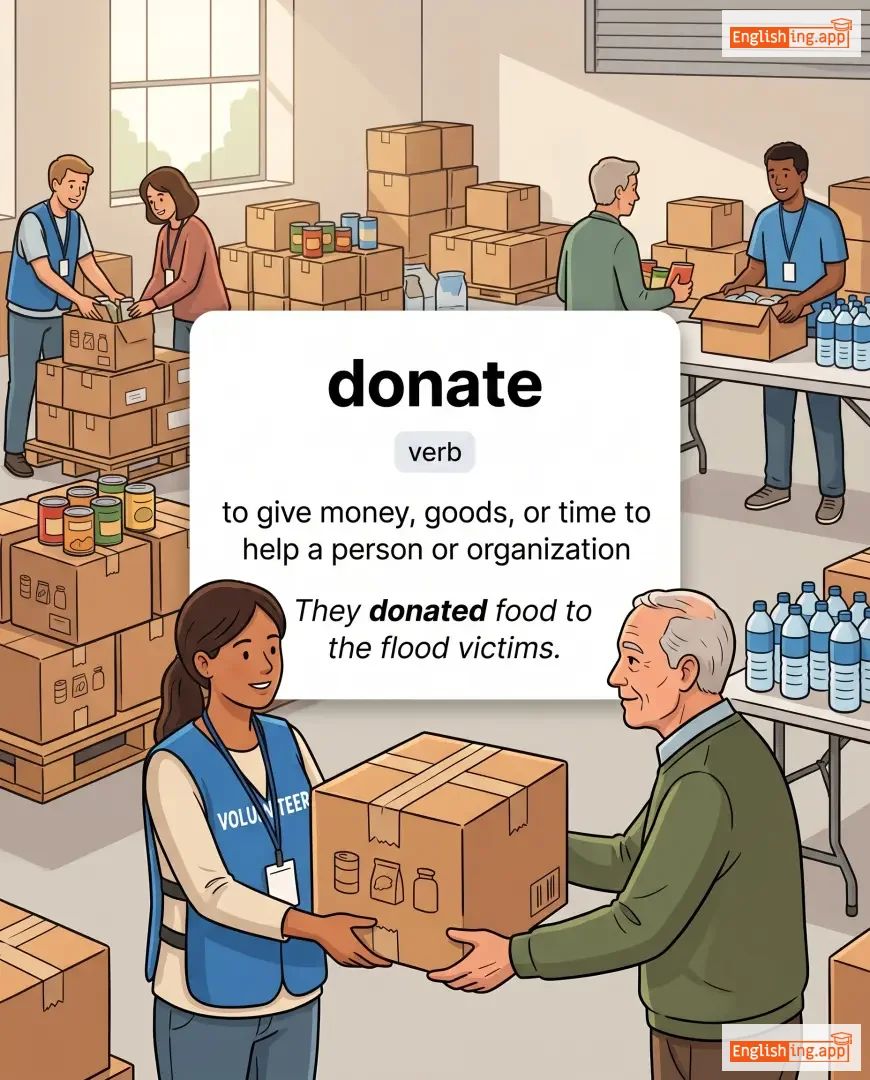
donate definition card — visual illustration of the meaning
verb
/dəʊˈneɪt/
寄付する (kifu suru)

to give money, goods, or time to help a person or organization

"They donated food to the flood victims."

"彼らは洪水の被害者に食べ物を寄付しました。" (Karera wa kōzui no higaisha ni tabemono o kifu shimashita.)
noun
/dəʊˈneɪ.ʃən/
寄付 (kifu)

something that is given to help a person or organization, often money

"He made a generous donation to the local orphanage."

"彼は地元の孤児院に寛大な寄付をしました。" (Kare wa jimoto no kojiin ni kandaina kifu o shimashita.)
noun
/ˈdoʊneɪtər/
寄付者 (kifusha)

A person who gives something, especially money or goods, as a donation.

"The donator wished to remain anonymous after contributing a large sum."

"寄付者は大きな金額を寄付した後、匿名でいることを希望しました。" (Kifusha wa ōkina kingaku o kifu shita ato, tokumei de iru koto o kibō shimashita.)
noun
/doʊˈniː/
受贈者 (juzo-sha)

A person who receives a gift or donation.

"The scholarship fund’s donee expressed heartfelt gratitude."

"奨学金基金の受贈者は心からの感謝の意を表しました。" (Shougakukin kikin no juzo-sha wa kokoro kara no kansha no i wo hyoushimashita.)
noun
/ˈdɒŋ.ki/
ロバ (roba)

a domesticated animal related to the horse, with long ears and a braying call

"The donkey carried heavy bags up the mountain."

"そのロバは重い袋を山へ運びました。" (Sono roba wa omoi fukuro o yama e hakobimashita.)
noun
/ˈdoʊnər/
ドナー (donā)

A person who gives something, especially to a charity or cause.

"The donor contributed generously to the hospital’s new wing."

"ドナーは病院の新しい翼に寛大に寄付しました。" (Donā wa byōin no atarashī tsubasa ni kandai ni kifu shimashita.)
✏️

doodle

verb
/ˈduːdəl/

To draw or scribble absentmindedly, often while thinking about something else.

"She doodled flowers in the corner of her notebook during class."

noun
/duːm/
運命 (unmei)

A terrible fate, destruction, or unavoidable bad outcome.

"The ancient prophecy foretold the city’s doom."

"古代の予言は都市の運命を予見していた。" (Kodai no yogen wa toshi no unmei o yoken shite ita.)
noun
/ˈduːmz.deɪ/
世界の終わり; 最後の審判の日 (sekai no owari; saigo no shinpan no hi)

the last day of the world's existence; a time of catastrophic destruction

"The preacher spoke about doomsday and the importance of preparing spiritually."

"伝道師は世界の終わりと霊的な準備の重要性について話しました。" (Dendōshi wa sekai no owari to reiteki na junbi no jūyō-sei ni tsuite hanashimashita.)
noun
/dɔːr/
ドア (doa)

A movable barrier that allows entry or exit to a building, room, or vehicle.

"He knocked on the door before entering the house."

"彼は家に入る前にドアをノックした。" (Kare wa ie ni hairu mae ni doa o nokkushita.)
noun
/ˈdɔːr.mæt/
ドアマット (doamatto)

a mat placed in front of a door for wiping feet

"Please wipe your feet on the door-mat before entering the house."

"家に入る前にドアマットで足を拭いてください。" (Ie ni hairu mae ni doamatto de ashi o fuite kudasai.)