語彙集

英単語辞書 | 単語の意味、定義、例文

noun
/dɪˌskrɪmɪˈneɪʃən/
差別 (sabetsu)

Unfair treatment of people based on race, gender, age, or other differences.

"The law prohibits discrimination in the workplace."
"法律は職場での差別を禁じています。" (Hōritsu wa shokuba de no sabetsu o kinjiteimasu.)
discriminatory definition card — visual illustration of the meaning
adjective
dɪˈskrɪmɪnətɔːri
差別的 (sabetsuteki)

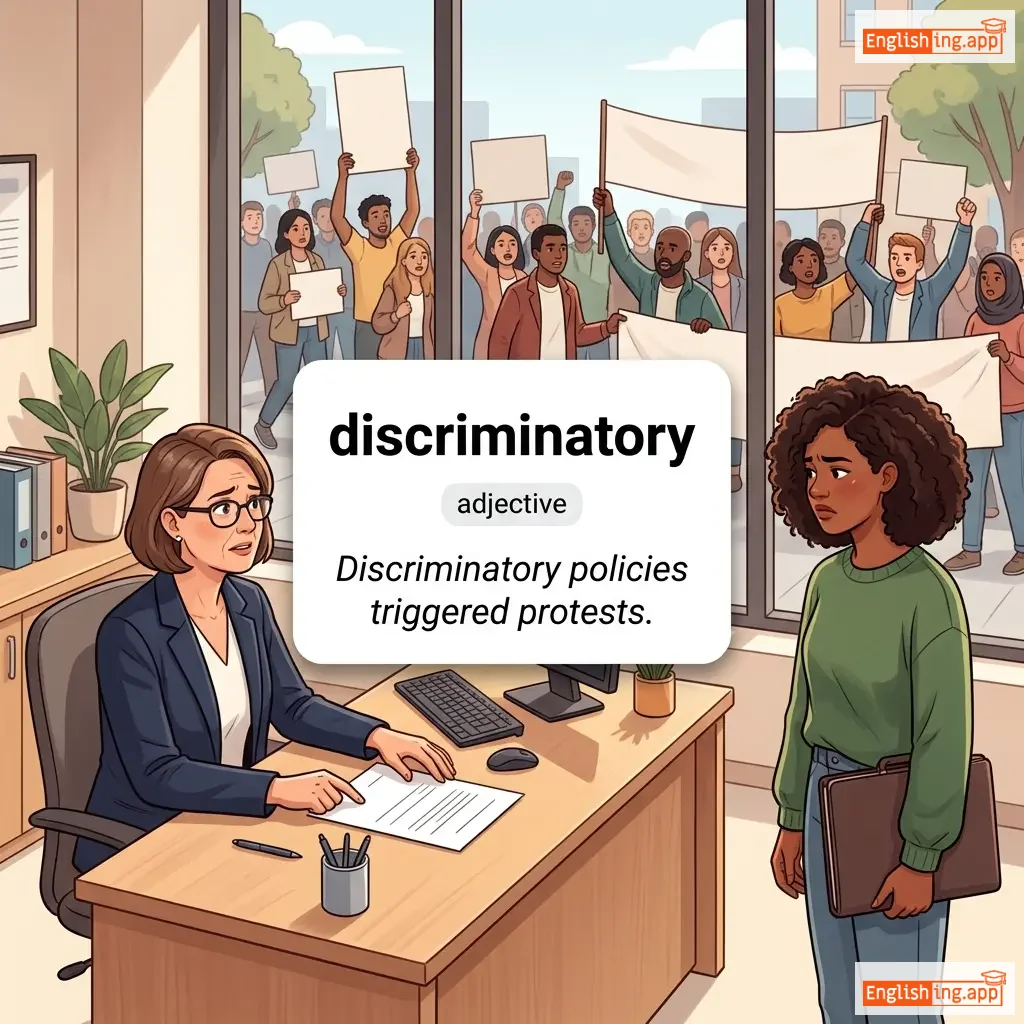
Making or showing an unfair or prejudicial distinction between different categories of people or things.

"Discriminatory policies triggered protests."

"差別的な政策は抗議を引き起こしました。" (Sabetsuteki na seisaku wa kōgi o hikiokoshimashita.)
adjective
/dɪsˈkɜrsɪv/
脱線的 (dassen-teki)

Tending to digress or move from topic to topic; lengthy and rambling.

"His discursive style made the lecture hard to follow."

"彼の脱線的なスタイルは講義を追うのが難しかった。" (Kare no dassen-teki na sutairu wa kōgi o ou no ga muzukashikatta.)
verb
/dɪˈskʌs/
話し合う (hanashiau)

To talk about something with another person or group in detail.

"We need to discuss the project before finalizing it."

"プロジェクトを最終決定する前に、それを話し合う必要があります。" (Purojekuto o saishū kettei suru mae ni, sore o hanashiau hitsuyō ga arimasu.)
noun
/dɪˈskʌʃən/
議論 (giron)

The action or process of talking about something in order to reach a decision or share ideas.

"The project needs more discussion before moving forward."
"プロジェクトは前進する前にもっと議論が必要です。" (Purojekuto wa zenshin suru mae ni motto giron ga hitsuyōdesu.)
discussions definition card — visual illustration of the meaning
noun
dɪˈskʌʃ.ənz
議論 (giron)

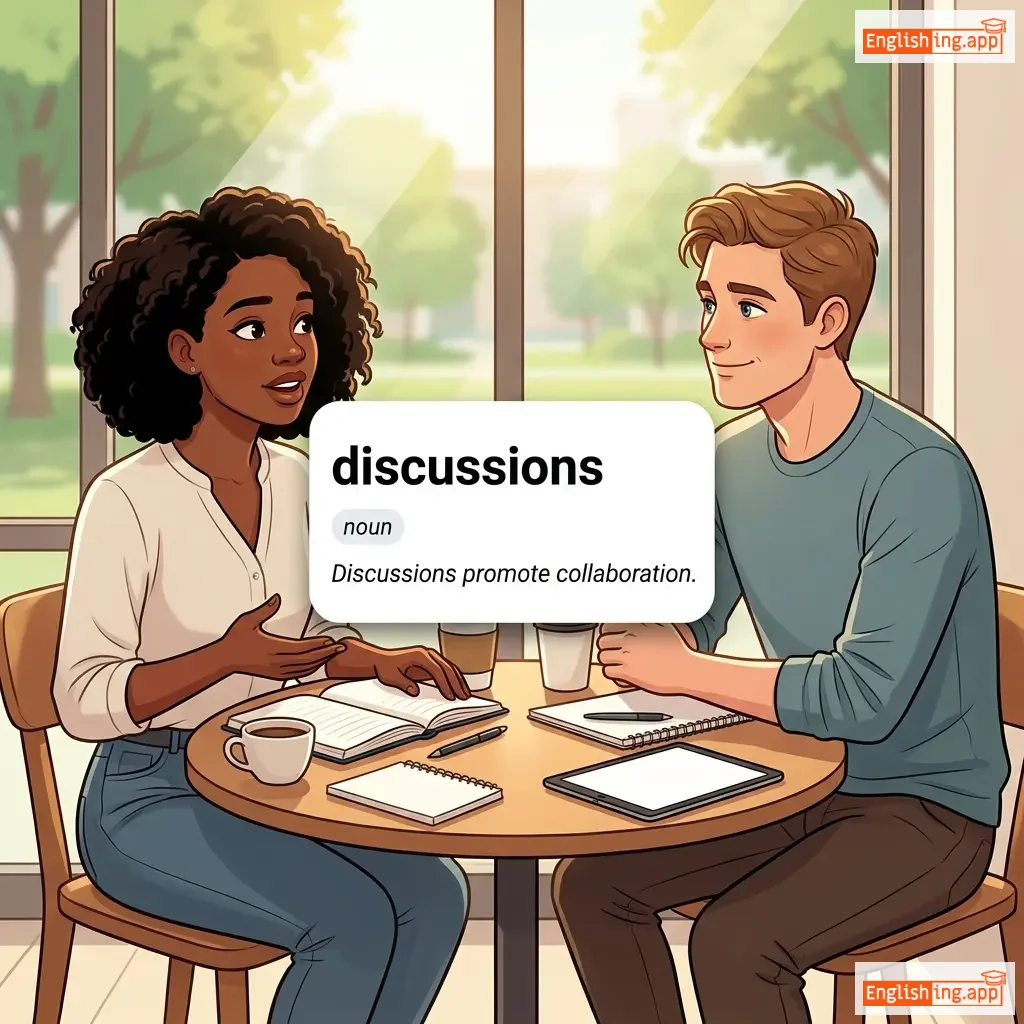
The action or process of talking about something in order to reach a decision or to exchange ideas.

"Discussions promote collaboration."

"ディスカッションは協力を促進します。" (Disukasshon wa kyōryoku o sokushin shimasu.)
noun/verb
/dɪsˈdeɪn/

The feeling that someone or something is unworthy of respect; to regard with contempt.

"She looked at the messy room with open disdain."

noun
/dɪˈziːz/
病気 (byouki)

An illness or medical condition that affects the body or mind.

"The doctor is researching a cure for the disease."

"医者はその病気の治療法を研究しています。" (Isha wa sono byōki no chiryo hō o kenkyū shiteimasu.)
adjective
/dɪˈziːzd/
病気の; 患者の (byouki no; kanja no)

affected by disease; suffering from illness; sick

"The diseased tree had to be removed from the garden."

"病気の木は庭から取り除かれなければならなかった。" (Byouki no ki wa niwa kara torinozokarenakereba naranakatta)
verb
/ˌdɪsɪmˈbɑːrk/
降りる (oriru)

To leave a ship, aircraft, or other vehicle.

"The passengers disembarked from the plane after landing."

"乗客は着陸後、飛行機から降りました。" (Joukyaku wa chakuriku go, hikouki kara orimashita.)
verb
/ˌdɪsɪnˈfræntʃaɪz/
権利を奪う (kenri o ubau)

To deprive someone of the right to vote or other rights.

"The new law could disenfranchise thousands of voters."

"新しい法律は何千人もの有権者を投票権から外す可能性があります。" (Atarashī hōritsu wa nanzen-nin mono yūken-sha o tōhyōken kara hazusu kanōsei ga arimasu.)
verb
/ˌdɪsɪnˈɡeɪdʒ/
解放する (kaihō suru)

To release or detach oneself from something; to withdraw.

"He tried to disengage from the heated argument."

"彼は熱い議論から解放しようとした。" (Kare wa atsui giron kara kaihō shiyō to shita.)
verb
/ˌdɪsɪnˈtæŋɡl/
ほどく (hodoku)

To free something or someone from a tangle or complication.

"She tried to disentangle her hair from the branches."

"彼女は枝から髪の毛をほどこうとしました。" (Kanojo wa eda kara kami no ke o hodoku to shimashita.)
noun/verb
/dɪsˈfeɪvər/
不支持 / 不快 (fushiji / fukai)

disapproval or dislike; to regard with disapproval

"The new policy fell into disfavor with the public."

"新しい政策は一般の人々の間で不評を買いました。" (Atarashii seisaku wa ippan no hitobito no aida de fuhyou wo kaimashita.)
verb
/dɪsˈfɪɡjər/
変形させる (henkei saseru)

to spoil or damage the appearance of something

"The fire disfigured the old building."
"火事は古い建物を変形させた。" (Kaji wa furui tatemono o henkei saseta.)
disgorge definition card — visual illustration of the meaning
verb
/dɪsˈɡɔrdʒ/
吐く / 強制的に吐き出す (haku / kyouseiteki ni hakidasu)

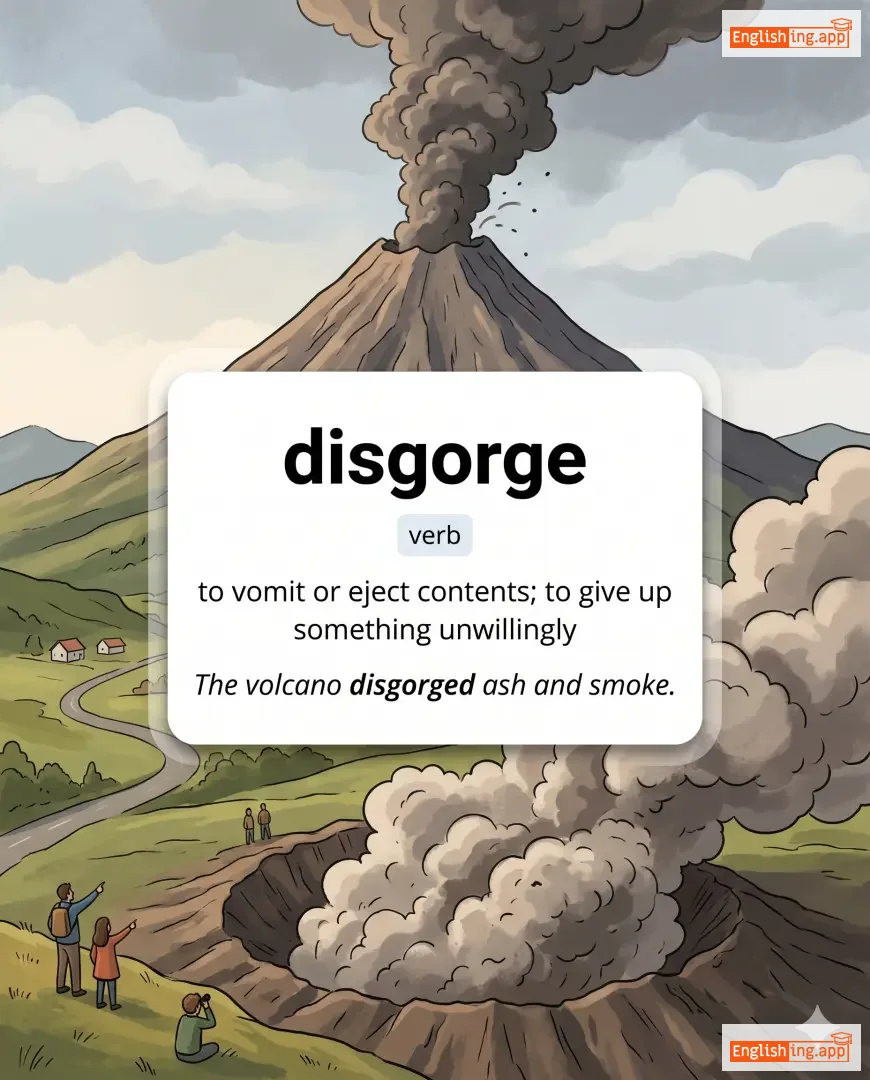
to vomit or eject contents; to give up something unwillingly

"The volcano disgorged ash and smoke."

"火山が灰と煙を吐き出しました。" (Kazan ga hai to kemuri wo hakidashimashita.)
noun
/dɪsˈɡreɪs/
不名誉 (fumeiyo)

Loss of respect, honor, or reputation due to shameful behavior.

"He was dismissed in disgrace after the scandal."

"スキャンダル後、彼は不名誉の中で解雇されました。" (Sukyandaru go, kare wa fumeiyo no naka de kaiko saremashita.)
adjective
/dɪsˈɡreɪsfəl/
恥ずべき; 不名誉な; 非難に値する (hazubeki; fumyou na; hinan ni ataisuru)

shameful; bringing dishonor; worthy of condemnation

"His disgraceful behavior shocked everyone at the party."

"彼の恥ずべき行動はパーティーでみんなを驚かせました。" (kare no hazubeki koudou wa paatii de minna wo odorokasemashita)
verb
/dɪsˈɡrʌntl/
不満にさせる (fuman ni saseru)

to make someone dissatisfied or discontented

"The unfair treatment disgruntled the workers."
"不公平な扱いが労働者を不満にさせた。" (Fukōhei na atsukai ga rōdōsha o fuman ni saseta.)
Disguise definition card — visual illustration of the meaning
verb/noun
/dɪsˈɡaɪz/
変装 (hensou)

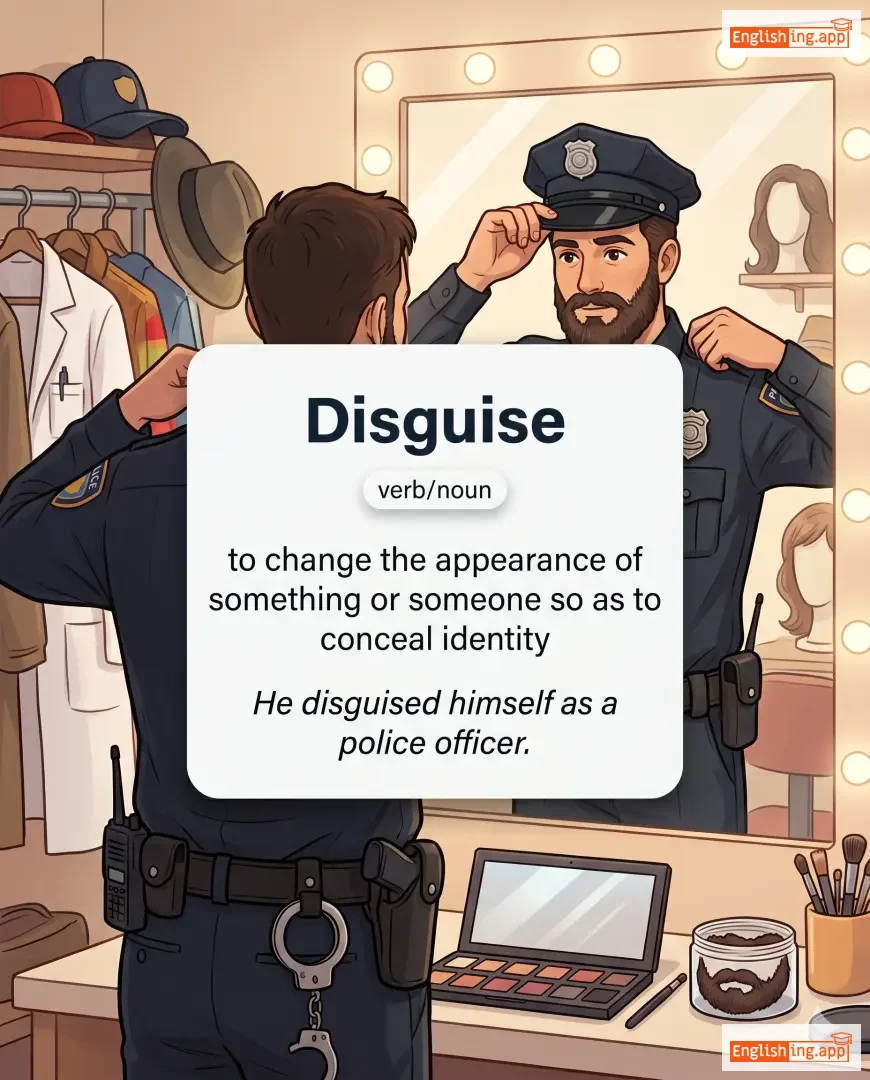
to change the appearance of something or someone so as to conceal identity

"He disguised himself as a police officer."

"彼は警察官に変装した。" (Kare wa keisatsukan ni hensou shita.)
noun
/dɪsˈɡʌst/
嫌悪 (ken'o)

a feeling of revulsion or strong disapproval aroused by something unpleasant

"She expressed her disgust at the politician's corrupt behavior openly."

"彼女は政治家の腐敗行為に対する嫌悪を公然と表現しました。" (Kanojo wa seijika no fuhai kōi ni taisuru ken'o o kōzen to hyōgen shimashita.)
adjective
/dɪsˈɡʌstɪd/
嫌悪している (ken'o shite iru)

feeling a strong sense of dislike or revulsion

"She was disgusted by the way he treated the animals."

"彼女は彼が動物に接する方法に嫌悪感を抱いた。" (Kanojo wa kare ga doubutsu ni sessuru houhou ni ken'o kan wo daita.)
adjective
/dɪsˈɡʌstɪŋ/
嫌な (iyana)

extremely unpleasant or offensive; causing strong dislike or revulsion

"The smell coming from the trash can was absolutely disgusting."

"ゴミ箱からの臭いは完全に嫌なものでした。" (gomibako kara no nioi wa kanzen ni iyana mono deshita)
noun
/dɪʃ/
皿 / 料理 (sara / ryouri)

A shallow container for serving or preparing food; also a particular kind of food prepared.

"She prepared a delicious pasta dish for dinner."

"彼女は夕食のために美味しいパスタ料理を準備しました。" (Kanojo wa yuushoku no tame ni oishii pasuta ryouri o junbi shimashita.)
noun
/ˈdɪʃ ˌwɒʃər/
食器洗い機 (shokki araiki)

an appliance for washing dishes automatically

"We installed a new dishwasher in our kitchen last week."

"先週、私たちはキッチンに新しい食器洗い機を設置しました。" (Senshū, watashitachi wa kitchin ni atarashī shokki araiki o setchi shimashita)
noun
/ˌdɪʃəˈbiːl/
だらしない格好 (darashinai kakkou)

The state of being only partly or loosely dressed; casual or careless attire.

"She answered the door in a state of dishabille, wearing just a robe."
"彼女はだらしない格好でドアに応答した、ローブだけを着て。" (Kanojo wa darashinai kakkou de doa ni outou shita, roobu dake o kite.)
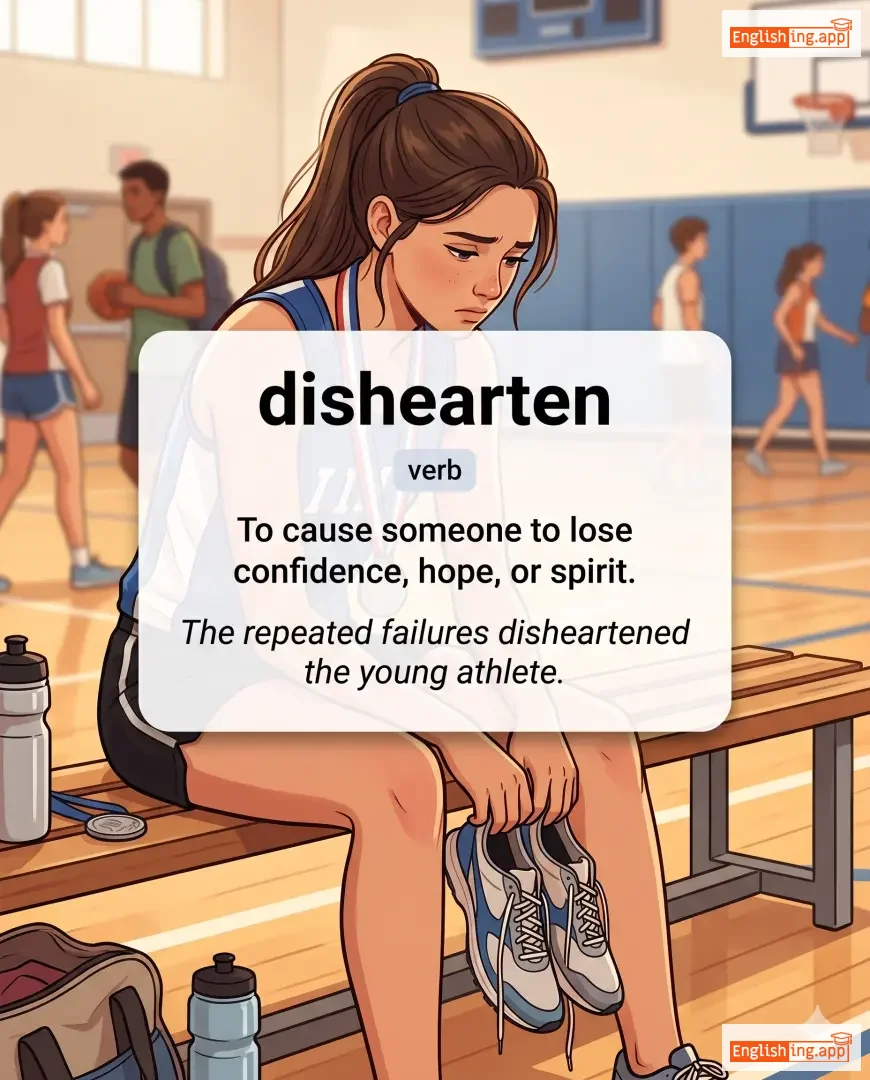
dishearten definition card — visual illustration of the meaning
verb
/dɪsˈhɑːrtən/
落胆させる (rakkansaseru)

To cause someone to lose confidence, hope, or spirit.

"The repeated failures disheartened the young athlete."

"繰り返される失敗が若いアスリートを落胆させた。" (Kurikaesaru shippai ga wakai asurīto o rakkan saseta.)
adjective
/dɪsˈhɑːrtənd/
落胆した (rakutanshita)

Having lost confidence, hope, or spirit; discouraged.

"She looked disheartened after receiving the bad news."

"彼女は悪い知らせを受け取った後、落ち込んで見えました。" (Kanojo wa warui shirase o uketotta ato, ochikonde mie mashita.)
adjective
/dɪˈʃɛvəld/
乱れた (midareta)

Untidy, messy, or in disorder, especially of hair or clothing.

"He arrived with disheveled hair and wrinkled clothes."

"彼は乱れた髪とシワの寄った服で到着しました。" (Kare wa midareta kami to shiwa no yotta fuku de tōchaku shimashita.)
adjective
/dɪsˈɑːnɪst/
不正直 (fuseijiki)

Behaving in an untruthful or deceitful way; not honest.

"It is dishonest to cheat in exams."

"試験でカンニングするのは不正直です。" (Shiken de kanningu suru no wa fuseijiki desu.)
noun, verb
/dɪsˈɑːnər/

a state of shame or loss of respect; to bring shame upon someone or something

"The soldier felt he had brought dishonor to his family."

noun
/dɪsˈɒn.ər/
不名誉 (fumeiyo)

a state of shame or disgrace; lack of honor or integrity; failure to fulfill obligations

"Breaking his promise brought dishonour to his name and family legacy."

"約束を破ったことが彼の名前と家族の遺産に不名誉をもたらした。" (Yakusoku wo yabutta koto ga kare no namae to kazoku no isan ni fumeiyo wo motarashita.)
verb, noun
/ˌdɪsɪˈluːʒən/
幻滅 (genmetsu)

to cause someone to realize that something is not as good as they believed

"The scandal disillusioned many voters."
"そのスキャンダルは多くの有権者を幻滅させた。" (Sono sukyandaru wa ooku no yuukensha wo genmetsu saseta.)
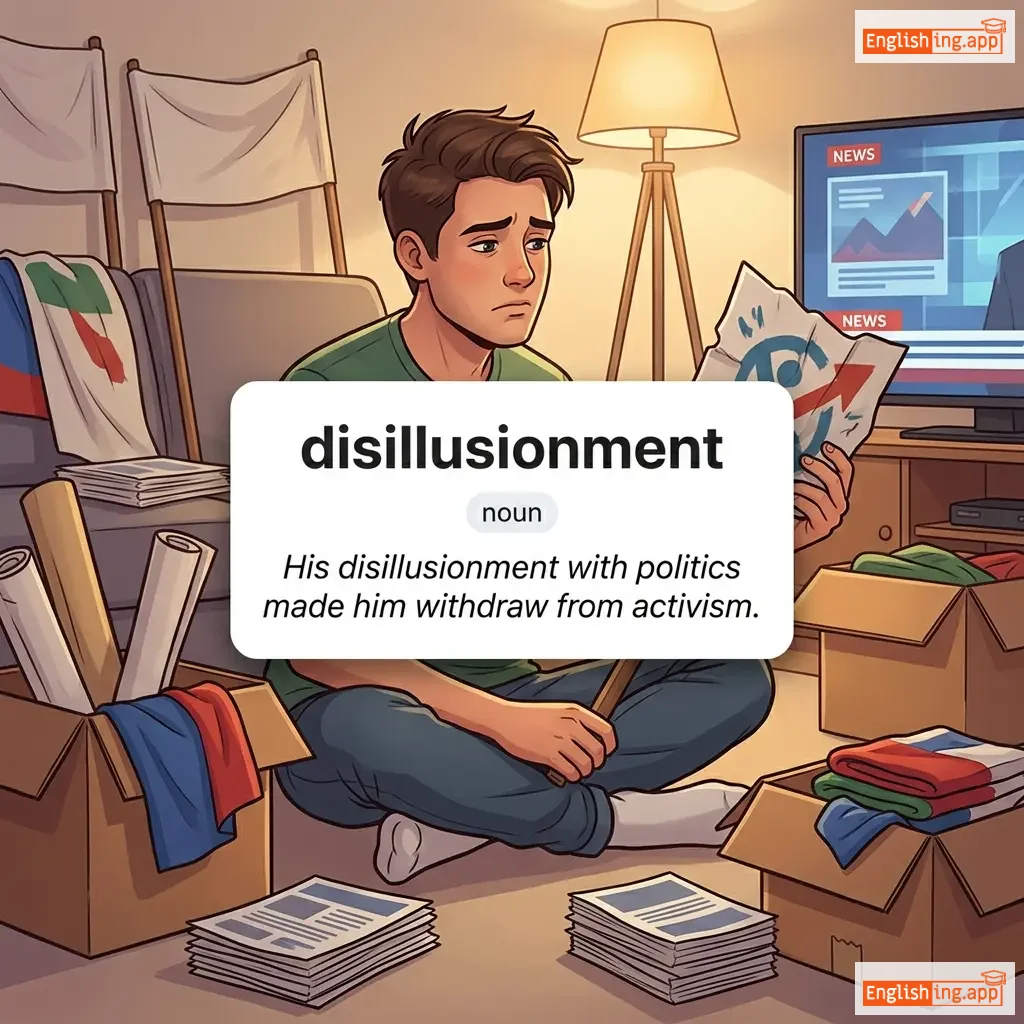
disillusionment definition card — visual illustration of the meaning
noun
/ˌdɪs.ɪˈluː.ʒən.mənt/
幻滅 (genmetsu)

A feeling of disappointment resulting from the discovery that something is not as good as one believed it to be.

"His disillusionment with politics made him withdraw from activism."

"彼の政治への幻滅は、彼が活動から撤退する原因となった。" (Kare no seiji e no genmetsu wa, kare ga katsudou kara tettai suru gen'in to natta.)
noun
/ˌdɪsɪnklɪˈneɪʃən/
不本意 (fuhonni)

a lack of willingness or desire to do something

"She showed a clear disinclination to join the meeting."

"彼女は会議に参加する明確な不本意を示した。" (Kanojo wa kaigi ni sanka suru meikaku na fuhonni o shimeshita.)
verb
/ˌdɪsɪnˈfɛkt/
消毒する (shoudoku suru)

to clean something thoroughly to destroy bacteria or viruses

"The nurse disinfected the wound before applying a bandage."

"看護師は包帯を巻く前に傷を消毒しました。" (Kangoshi wa houtai o maku mae ni kizu o shoudoku shimashita.)
noun
/ˌdɪsɪnˈfɛktənt/
消毒剤 (shoudokuzai)

a chemical substance used to kill harmful microorganisms on surfaces

"The cleaner sprayed disinfectant on the table."
"清掃員はテーブルに消毒剤を噴霧しました。" (Seisōin wa tēburu ni shōdokuzai o funmushimashita.)
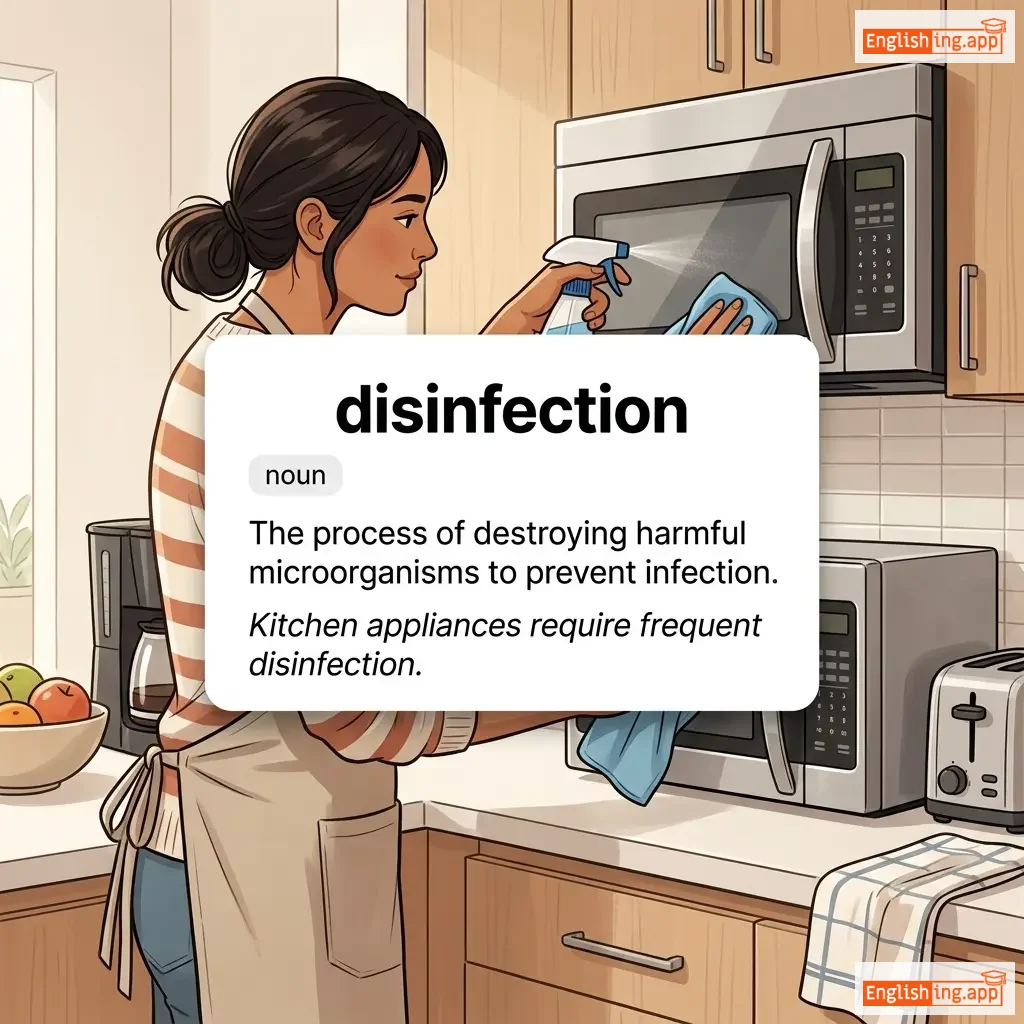
disinfection definition card — visual illustration of the meaning
noun
ˌdɪs.ɪnˈfek.ʃən
消毒 (shoudoku)

The process of destroying harmful microorganisms to prevent infection.

"Kitchen appliances require frequent disinfection."
"キッチン用具は頻繁に消毒する必要があります。" (Kicchin yōgu wa hinpan ni shōdoku suru hitsuyō ga arimasu.)
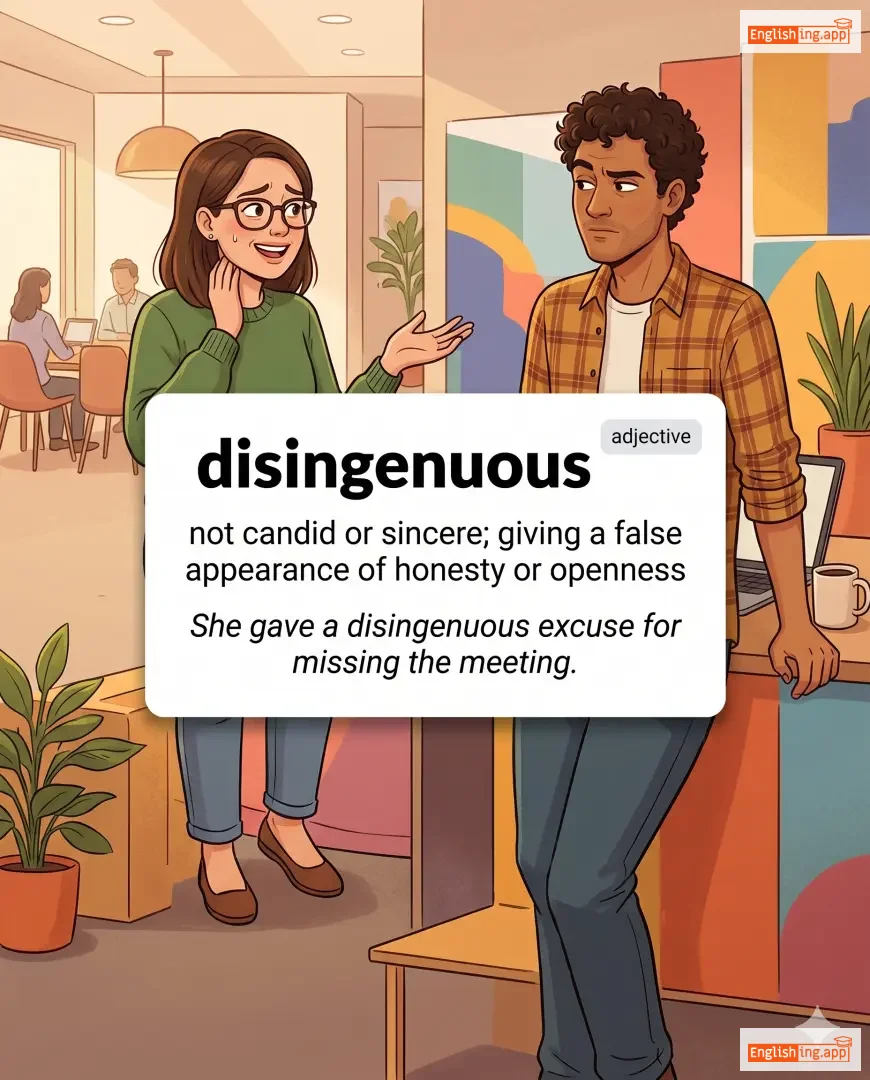
disingenuous definition card — visual illustration of the meaning
adjective
/ˌdɪsɪnˈdʒɛnjʊəs/
不誠実な (fuseijitsuna)

not candid or sincere; giving a false appearance of honesty or openness

"She gave a disingenuous excuse for missing the meeting."

"彼女は会議に出席しないために不誠実な言い訳をしました。" (Kanojo wa kaigi ni shusseki shinai tame ni fuseijitsuna iiwake o shimashita.)
verb
/ˌdɪsɪnˈhɛrɪt/
遺産を剥奪する (isan wo akudatsu suru)

to deprive someone, especially a child, of inheritance or right to property

"The father threatened to disinherit his son for his reckless actions."

"父親は息子の無謀な行動のために遺産を剥奪すると脅した。" (Chichioya wa musuko no mubou na koudou no tame ni isan wo akudatsu suru to odoshita.)
verb
/ˌdɪsɪnˈtɜːr/
掘り出す (horidasu)

to dig up something buried, especially a body

"The archaeologists disinterred ancient remains from the site."

"考古学者たちはそのサイトから古代の遺骸を掘り出しました。" (Kōkogakusha-tachi wa sono saito kara kodai no igai o horidashimashita.)
noun
/dɪsˈɪntrəst/
無関心 (mukanshin)

lack of interest or concern

"His disinterest in the project was obvious."
"そのプロジェクトへの無関心は明らかだった。" (Sono purojekuto e no mukanshin wa akiraka datta.)
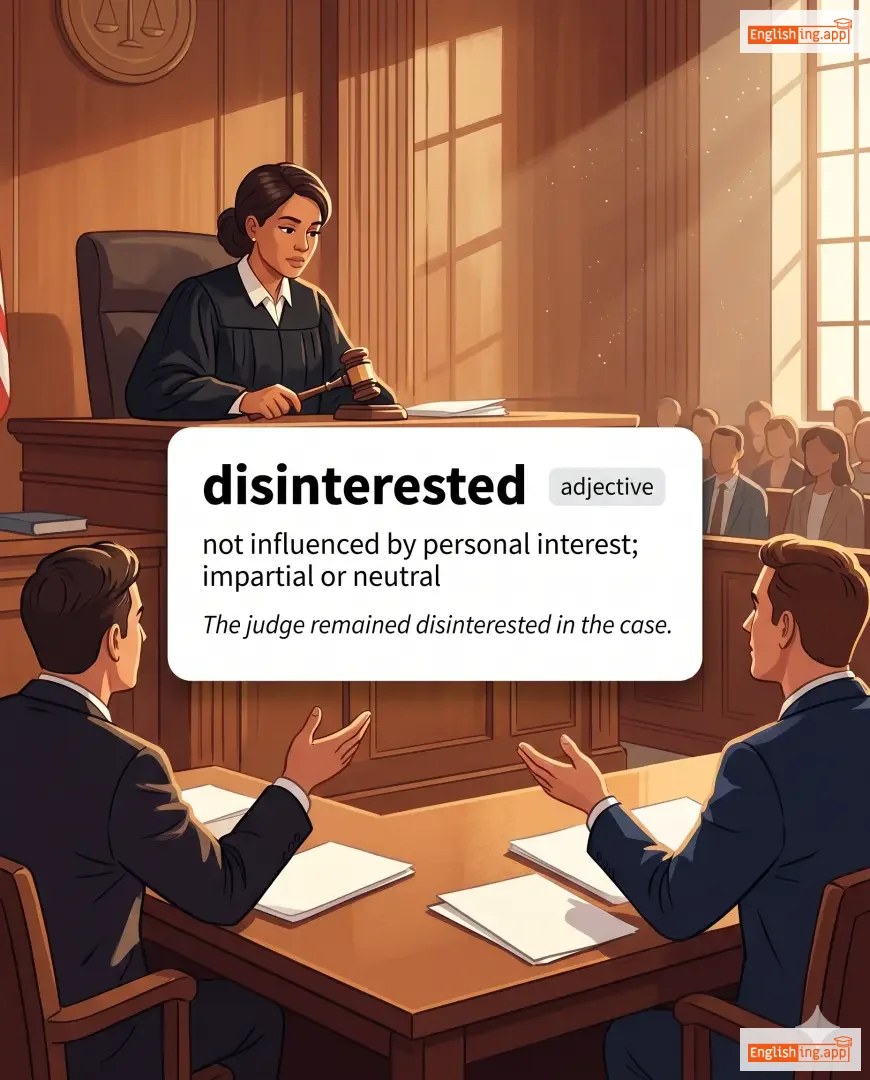
disinterested definition card — visual illustration of the meaning
adjective
/dɪsˈɪntrəstɪd/
無関心 (mukanshin)

not influenced by personal interest; impartial or neutral

"The judge remained disinterested in the case."
"裁判官はその事件に無関心のままでした。" (Saibankan wa sono jiken ni mukanshin no mamadeshita.)
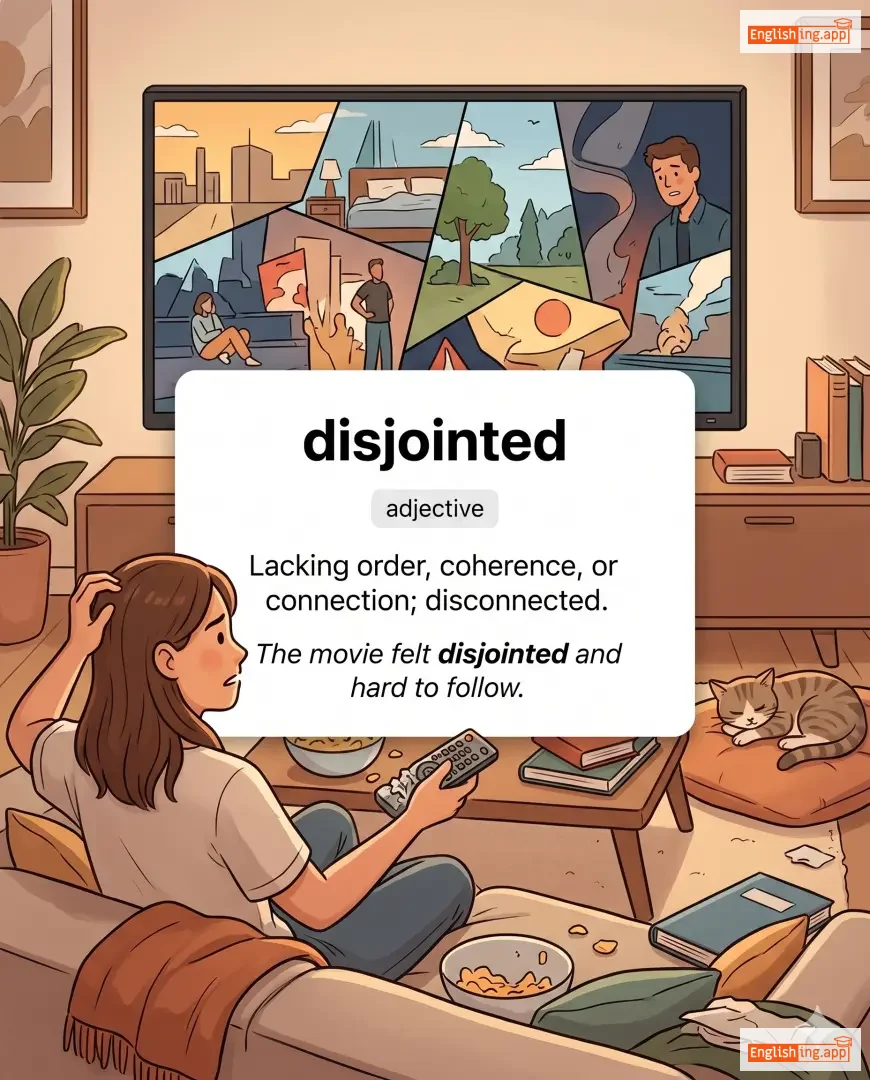
disjointed definition card — visual illustration of the meaning
adjective
/dɪsˈdʒɔɪntɪd/
ばらばら (barabara)

Lacking order, coherence, or connection; disconnected.

"The movie felt disjointed and hard to follow."

"映画はばらばらに感じ、追いかけるのが難しかった。" (Eiga wa barabara ni kanji, oikakeru no ga muzukashikatta.)
noun
/dɪsˈdʒʌŋkʃən/
分裂 (bunretsu)

A lack of connection between things; separation or disunity.

"There is a clear disjunction between theory and practice."

"理論と実践の間には明確な分裂があります。" (Riron to jissen no aida ni wa meikaku na bunretsu ga arimasu.)
adjective
/dɪsˈdʒʌŋktɪv/
選択的 (sentakuteki)

Serving to separate or divide; expressing a choice between alternatives.

"In grammar, 'or' is a disjunctive conjunction."

"文法では、'または' は選択的接続詞です。" (Bunpō de wa, 'matawa' wa sentakuteki setsuzokushi desu.)
noun
/dɪsk/
ディスク / データ保存装置 (disuku / dēta hozon sōchi)

a flat, circular object, often used to store data electronically

"All the data is saved on a hard disk."

"すべてのデータはハードディスクに保存されています。" (Subete no dēta wa hādo disuku ni hozon sareteimasu.)
verb, noun
/dɪsˈlaɪk/
嫌う (kirau)

to feel distaste or aversion for someone or something; a feeling of aversion

"I really dislike eating spicy food."

"私は本当に辛い食べ物を食べるのが嫌いです。" (Watashi wa hontoni karai tabemono wo taberu no ga kirai desu)
verb
/ˈdɪsləkeɪt/
脱臼する (datsukyū suru)

To disturb the normal position of something, especially a joint in the body.

"He dislocated his shoulder while playing football."

"彼はサッカーをしているときに肩を脱臼しました。" (Kare wa sakkā o shiteiru toki ni kata o datsukyū shimashita.)
verb
/dɪsˈlɒdʒ/
追い出す (oidasu)

To remove or force out from a position, especially one that is fixed or hard to move.

"The troops dislodged the enemy from the hill."

"部隊は敵を丘から追い出した。" (Butai wa teki wo oka kara oidasita.)