語彙集

英単語辞書 | 単語の意味、定義、例文

noun
/ˌdɪsbɪˈliːvər/
不信者 (fushinja)

a person who does not believe in something, especially a religion or idea

"He was called a disbeliever for rejecting the traditional faith."

"彼は伝統的な信仰を拒否したため、不信者と呼ばれました。" (Kare wa dentō-teki na shinkō o kyohi shita tame, fushinja to yobaremashita.)
verb
/dɪsˈbɜːrdən/
負担を軽減する (futan o keigen suru)

to relieve someone of a burden or load

"She disburdened herself of worries by sharing them with her friend."

"彼女は心配を友達と共有することで自分を負担から解放した。" (Kanojo wa shinpai o tomodachi to kyōyū suru koto de jibun o futan kara kaihō shita.)
verb
/dɪsˈbɜːrs/
分配する (bunpai suru)

to pay out money, especially from a fund

"The organization will disburse the funds to the affected families."

"その団体は影響を受けた家族に資金を分配します。" (Sono dantai wa eikyō o uketa kazoku ni shikin o bunpai shimasu.)
disbursement definition card — visual illustration of the meaning
noun
dɪsˈbɜːs.mənt
支払い (shiharai)

The payment of money from a fund.

"The company's disbursement of salaries was delayed."

"会社の給与の支払いが遅れました。" (Kaisha no kyūyo no shiharai ga okuremashita.)
noun
/dɪsk/
平らで薄く、円形の物体 (taira de usuku, enkei no buttai)

a flat, thin, round object or surface

"He inserted the music disc into the player."

"彼は音楽ディスクをプレーヤーに挿入した。" (Kare wa ongaku disuku o purēyā ni sōnyū shita.)
verb
/dɪsˈkɑːrd/
捨てる (suteru)

to throw away something that is no longer needed

"She decided to discard the old clothes."
"彼女は古い服を捨てることに決めました。" (Kanojo wa furui fuku wo suteru koto ni kimemashita.)
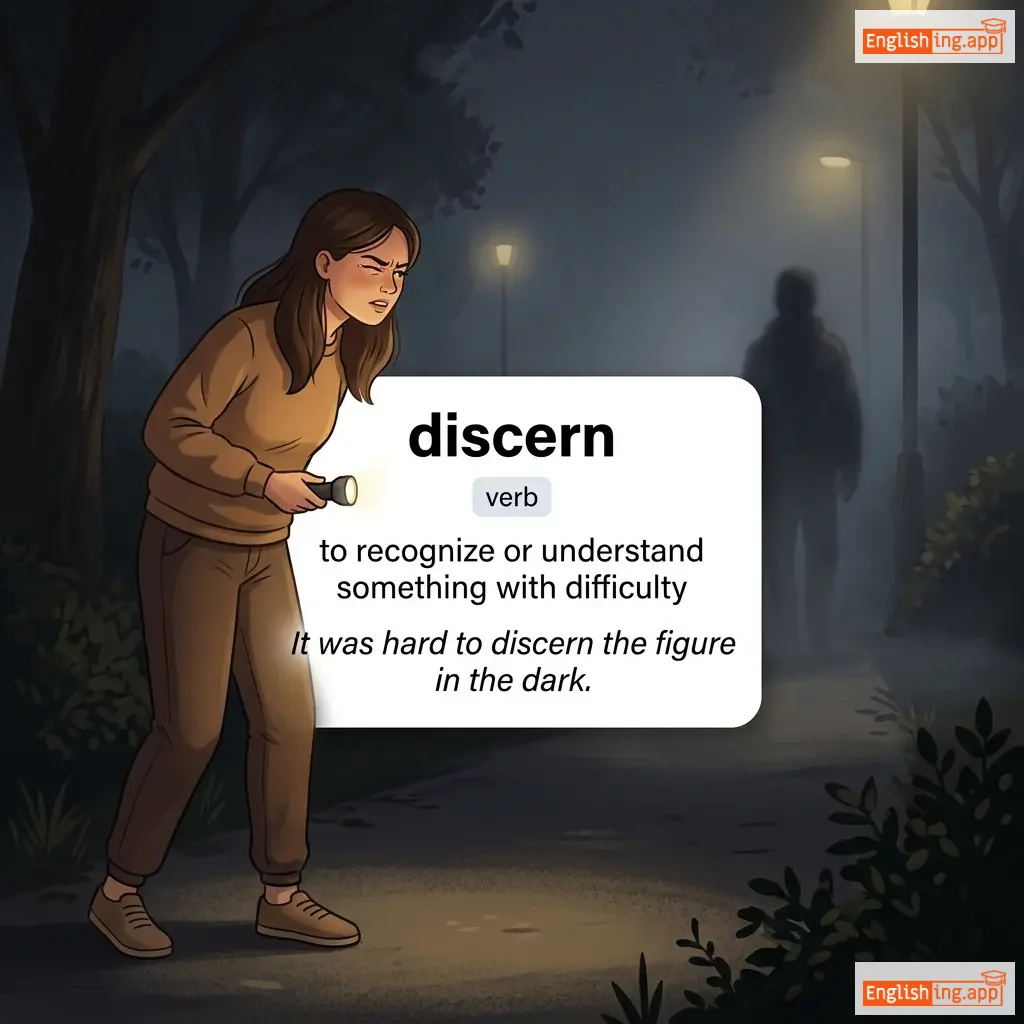
discern definition card — visual illustration of the meaning
verb
/dɪˈsɜːrn/
識別する (shikibetsu suru)

to recognize or understand something with difficulty

"It was hard to discern the figure in the dark."

"暗闇の中でその姿を識別するのは難しかった。" (Kurayami no naka de sono sugata o shikibetsu suru no wa muzukashikatta.)
adjective
/dɪˈsɜːrnəbl/
明白な (meihaku na)

able to be seen, recognized, or understood

"There was a discernible change in his behavior."
"彼の行動には明らかな変化があった。" (Kare no kōdō ni wa akirakana henka ga atta.)
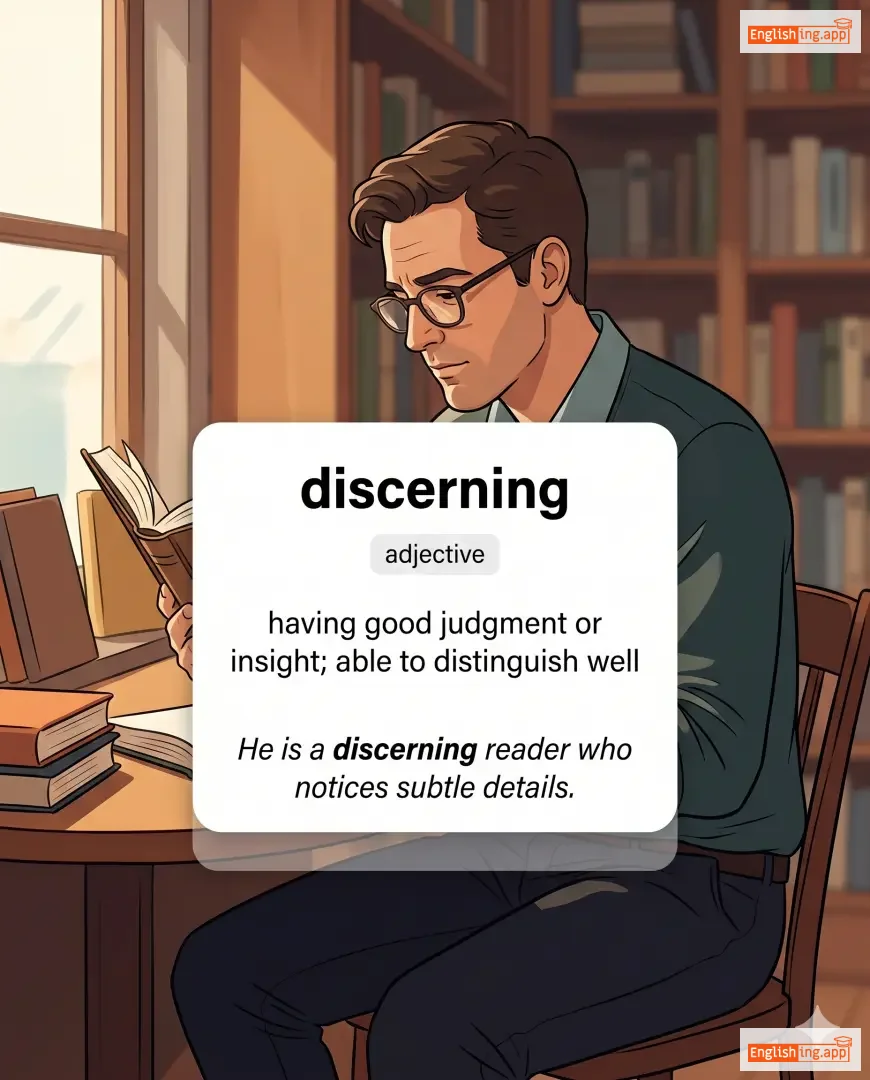
discerning definition card — visual illustration of the meaning
adjective
/dɪˈsɜːrnɪŋ/
鋭い (surudoi)

having good judgment or insight; able to distinguish well

"He is a discerning reader who notices subtle details."
"彼は鋭い読者で、微細な詳細に気づきます。" (kare wa surudoi dokusha de, bisai na shousai ni kizukimasu.)
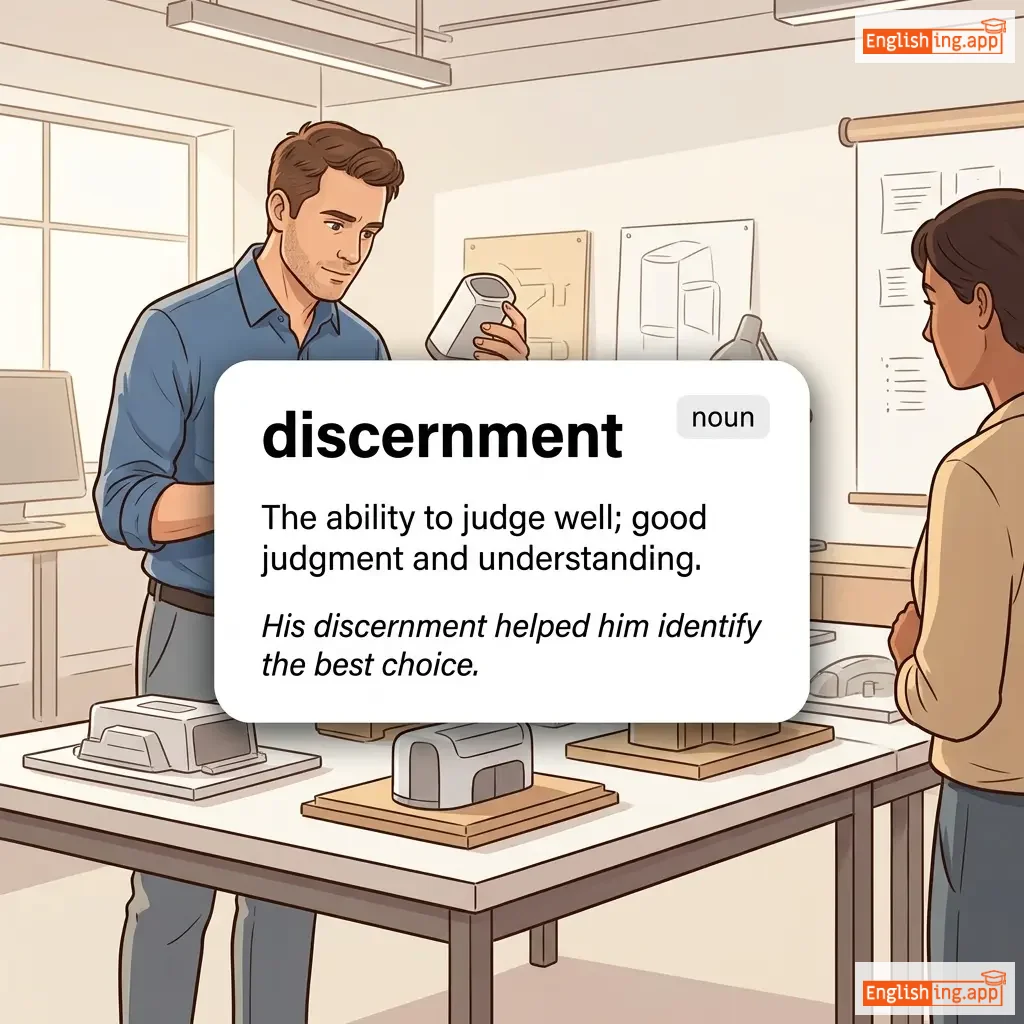
discernment definition card — visual illustration of the meaning
noun
dɪˈsɜːn.mənt
洞察力 (dōsatsuryoku)

The ability to judge well; good judgment and understanding.

"His discernment helped him identify the best choice."
"彼の洞察力は、最良の選択肢を見極めるのに役立ちました。" (Kare no dōsatsuryoku wa, sairyō no sentakushi wo mikiwameru no ni yakudachimashita.)
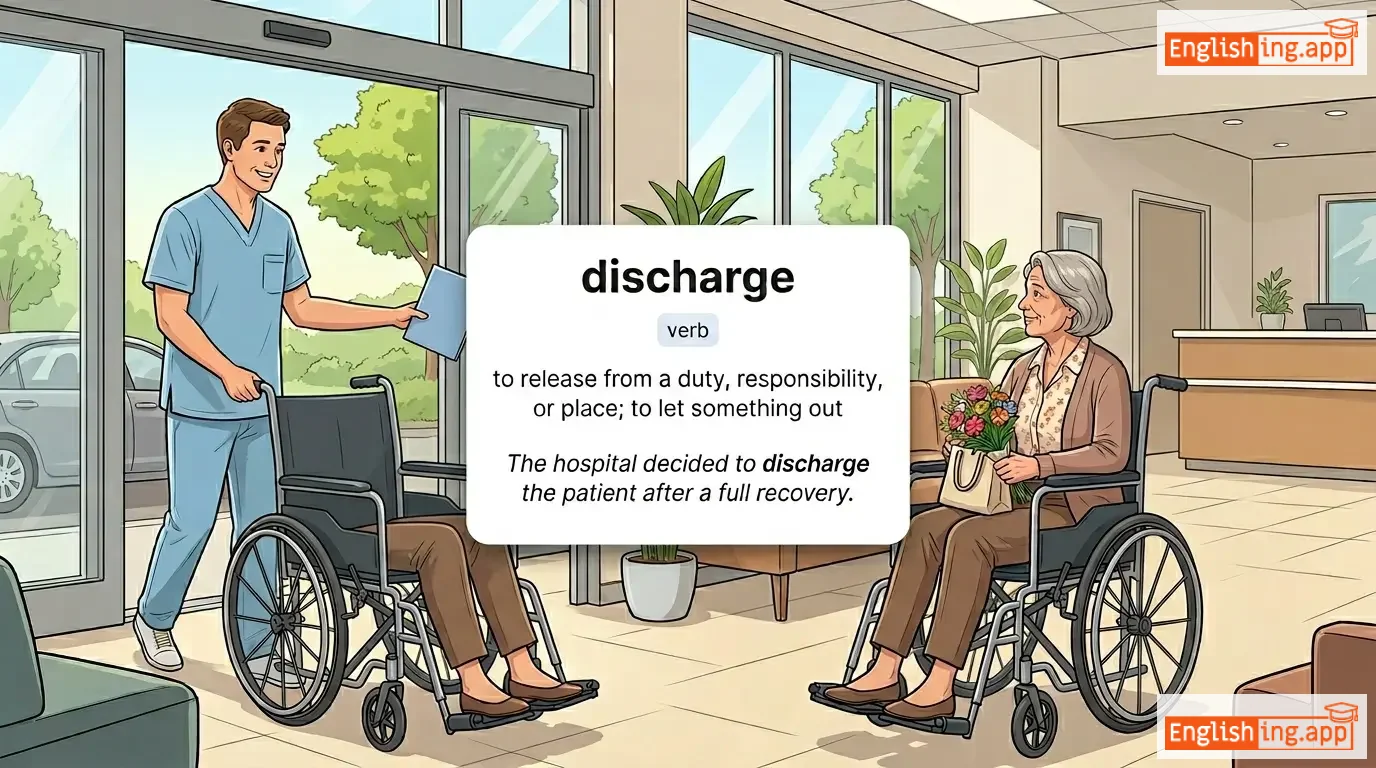
discharge definition card — visual illustration of the meaning
verb
/dɪsˈtʃɑːrdʒ/
解放する (kaihō suru)

to release from a duty, responsibility, or place; to let something out

"The hospital decided to discharge the patient after a full recovery."

"病院は完全回復後に患者を退院させることを決定した。" (Byōin wa kanzen kaifuku go ni kanja o taiin saseru koto o kettei shita.)
noun
/dɪˈsaɪpəl/
弟子 (deshi)

a follower or student of a teacher, leader, or philosophy

"He was a devoted disciple of the famous philosopher."

"彼は有名な哲学者の忠実な弟子でした。" (Kare wa yūmei na tetsugakusha no chūjitsu na deshi deshita.)
adjective
/ˈdɪsəplɪˌnɛri/
懲戒的 (choukaiteki)

relating to the enforcement of rules and correction of behavior

"The employee was warned after a disciplinary hearing."

"その従業員は、懲戒聴聞会の後に警告を受けました。" (Sono juugyouin wa, choukai choumonkai no ato ni keikoku wo ukemashita.)
discipline definition card — visual illustration of the meaning
noun
/ˈdɪsəplɪn/
規律 (kiritsu)

the practice of training people to obey rules or self-control

"Good discipline is essential for success in school."

"良い規律は学校での成功に不可欠です。" (Yoi kiritsu wa gakkou de no seikou ni fukaketsu desu.)
verb
/dɪsˈkleɪm/
否定する (hitei suru)

to deny responsibility or connection with something

"The company disclaimed responsibility for the accident."

"その会社は事故に対する責任を否定しました。" (Sono kaisha wa jiko ni taisuru sekinin o hitei shimashita.)
disclose definition card — visual illustration of the meaning
verb
/dɪsˈkloʊz/

to make something known; to reveal information that was previously secret or hidden

"The company refused to disclose details of the agreement."

noun
/dɪsˈkloʊʒər/
開示 (kaiji)

the action of making something known or public

"The disclosure of the company's financial status was delayed."

"会社の財務状況の開示は遅れました。" (Kaisha no zaimu jōkyō no kaiji wa okuremashita.)
verb
/dɪsˈkʌlər/
色あせる (iro aseru)

to change color, especially in a way that spoils the original appearance

"The fabric began to discolor after being left in the sun."
"生地は太陽の下に置かれてから色が変わり始めました。" (Kiji wa taiyō no shita ni okarete kara iro ga kawari hajimemashita.)
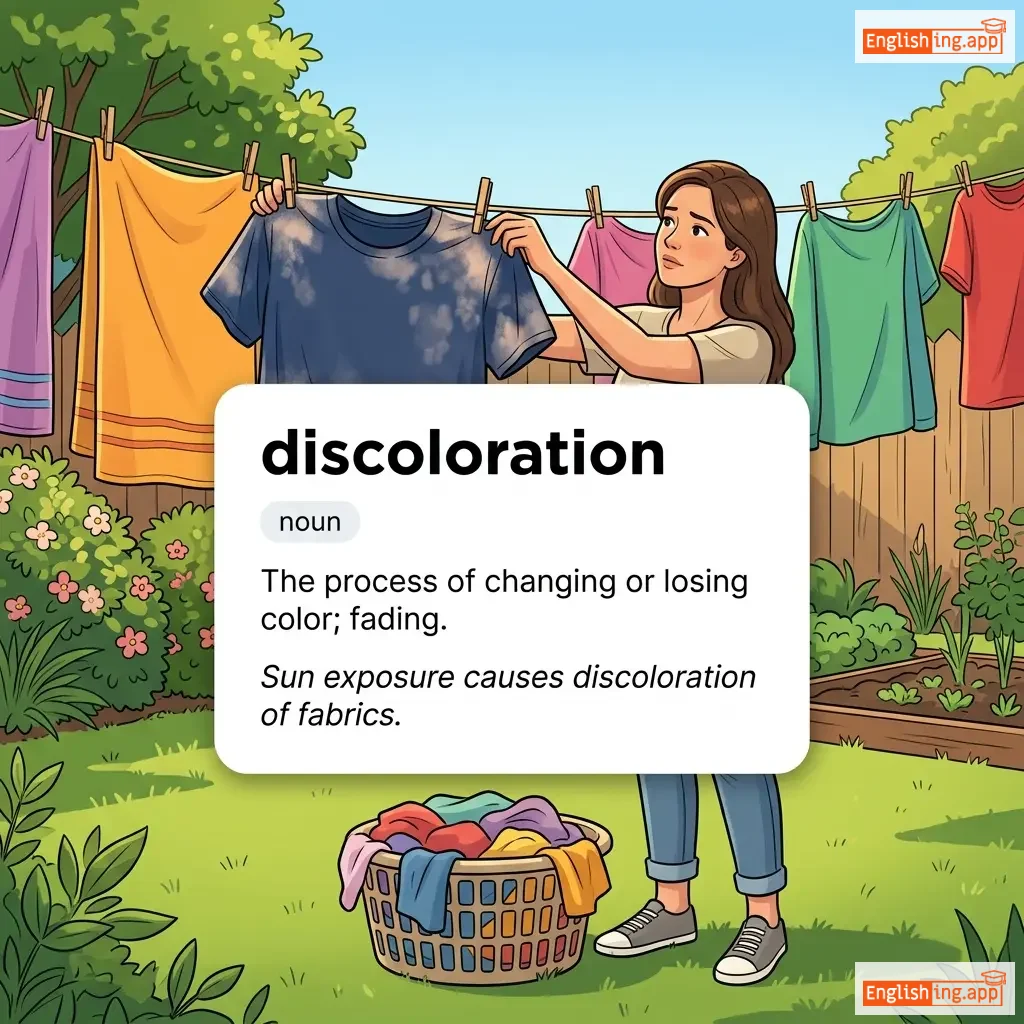
discoloration definition card — visual illustration of the meaning
noun
/ˌdɪs.kʌl.əˈreɪ.ʃən/
変色 (henshoku)

The process of changing or losing color; fading.

"Sun exposure causes discoloration of fabrics."

"太陽光線は布地の変色を引き起こします。" (Taiyō kōsen wa nunoji no henshoku o hikiokoshimasu.)
verb
/ˌdɪskəmˈbɑːbjuleɪt/
混乱させる (konran saseru)

to confuse or disconcert; to upset the normal order

"The sudden question seemed to discombobulate him."

"突然の質問が彼を混乱させたようだ。" (Totsuzen no shitsumon ga kare o konran saseta you da.)
adjective
/ˌdɪskəmˈbɑːbjuleɪtɪd/
混乱した (konran shita)

confused and disoriented; feeling unsettled

"She looked discombobulated after hearing the unexpected news."

"予期しないニュースを聞いた後、彼女は混乱しているように見えた。" (Yoki shinai nyuusu wo kiita ato, kanojo wa konran shite iru you ni mieta.)
discomfit definition card — visual illustration of the meaning
verb
/dɪsˈkʌmfɪt/
困惑させる (konwaku saseru)

to make someone feel uneasy, embarrassed, or confused

"The interviewer’s tough questions discomfited the candidate."

"インタビュアーの厳しい質問が候補者を困惑させた。" (Intabyuā no kibishī shitsumon ga kōhosha o konwaku saseta.)
adjective
/dɪsˈkʌmfɪtɪŋ/
不快な (fukai na)

Causing unease, embarrassment, or discomfort.

"His discomfiting questions made everyone shift uncomfortably in their seats."

"彼の不快な質問は、皆が座席で不安そうに動かせるようにさせた。" (kare no fukai na shitsumon wa, mina ga zaseki de fuan sou ni ugokaseru you ni saseta)
noun
/dɪsˈkʌmfərt/
不快感 (fukaikan)

A feeling of slight pain, unease, or awkwardness.

"She shifted in her chair due to discomfort in her back."

"彼女は背中の不快感のために椅子で動きました。" (Kanojo wa senaka no fukaikan no tame ni isu de ugokimashita.)
verb
/ˌdɪskəˈmoʊd/
邪魔する (jama suru)

To cause inconvenience or trouble to someone.

"I hope my request does not discommode you."

"私のリクエストがあなたに不便をかけないことを願っています。" (Watashi no rikuesuto ga anata ni fuben o kakenai koto o negatteimasu.)
verb
/ˌdɪskəmˈpoʊz/
動揺させる (dōyō saseru)

To disturb the order or calmness of something or someone.

"The unexpected question seemed to discompose her."

"予期しない質問が彼女を動揺させたようだ。" (Yokishinai shitsumon ga kanojo o dōyō saseta yō da.)
verb
/ˌdɪskənˈsɜːrt/
動揺させる (doyou saseru)

To unsettle, confuse, or disturb the composure of someone.

"The sudden change of plans disconcerted the team."

"突然の計画変更がチームを混乱させた。" (Totsuzen no keikaku henkou ga chiimu o konran saseta.)
verb
/ˌdɪskəˈnɛkt/

to detach or separate from a connection or source

"Please disconnect the charger from the power outlet."

adjective
/dɪsˈkɒnsələt/
慰めようのない (nagusameyou no nai)

very unhappy and unable to be comforted

"She was disconsolate after hearing the bad news."

"悪い知らせを聞いた後、彼女は慰めようのない状態でした。" (Warui shirase o kiita ato, kanojo wa nagusameyou no nai jōtai deshita.)
noun
/ˌdɪskənˈtɪnjʊəns/
中止 (chuushi)

the act of stopping something, especially permanently

"The discontinuance of the service disappointed many customers."
"サービスの中止は多くの顧客を失望させました。" (Saabisu no chuushi wa ooku no kokyaku wo shitsubou sasemashita.)
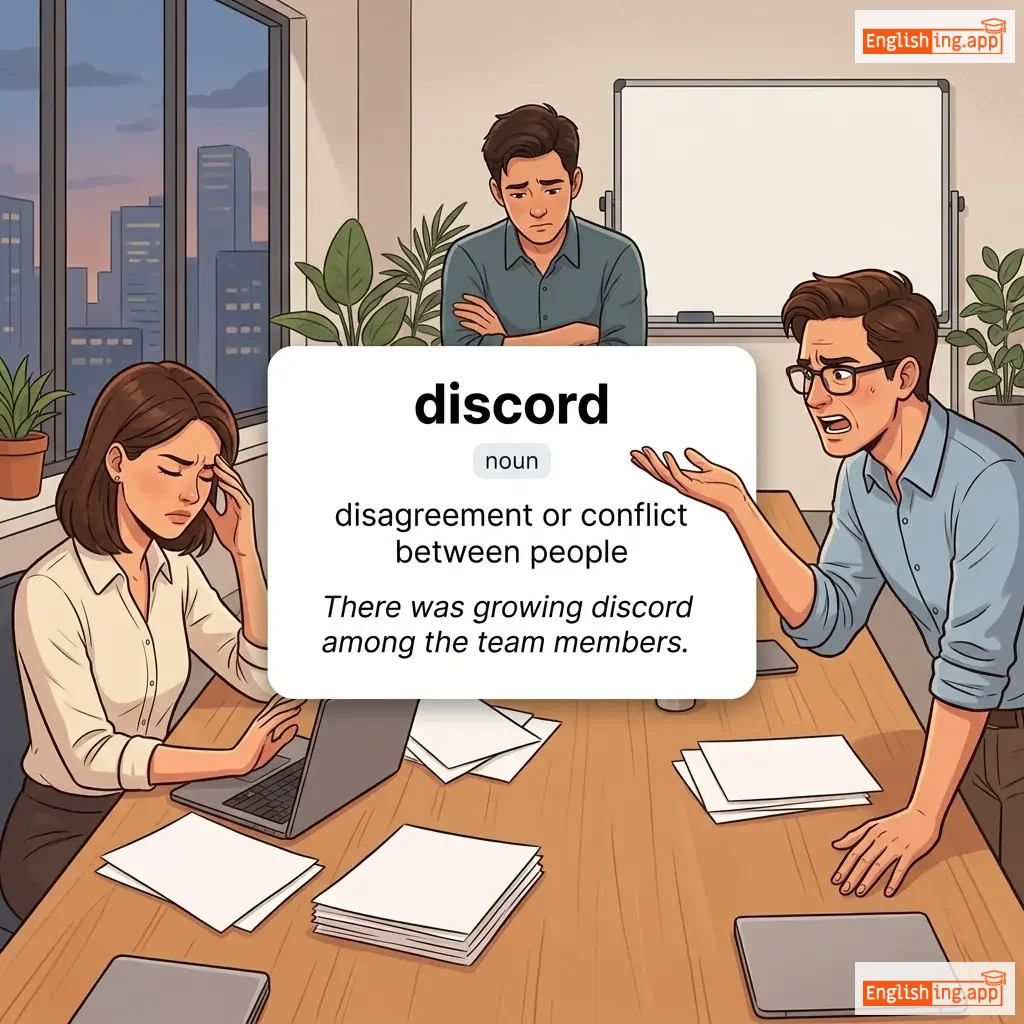
discord definition card — visual illustration of the meaning
noun
/ˈdɪskɔːrd/
不和 (fuwa)

disagreement or conflict between people

"There was growing discord among the team members."
"チームメンバー間で不和が広がっていた。" (Chīmu menbā-kan de fuwa ga hirogatte ita.)
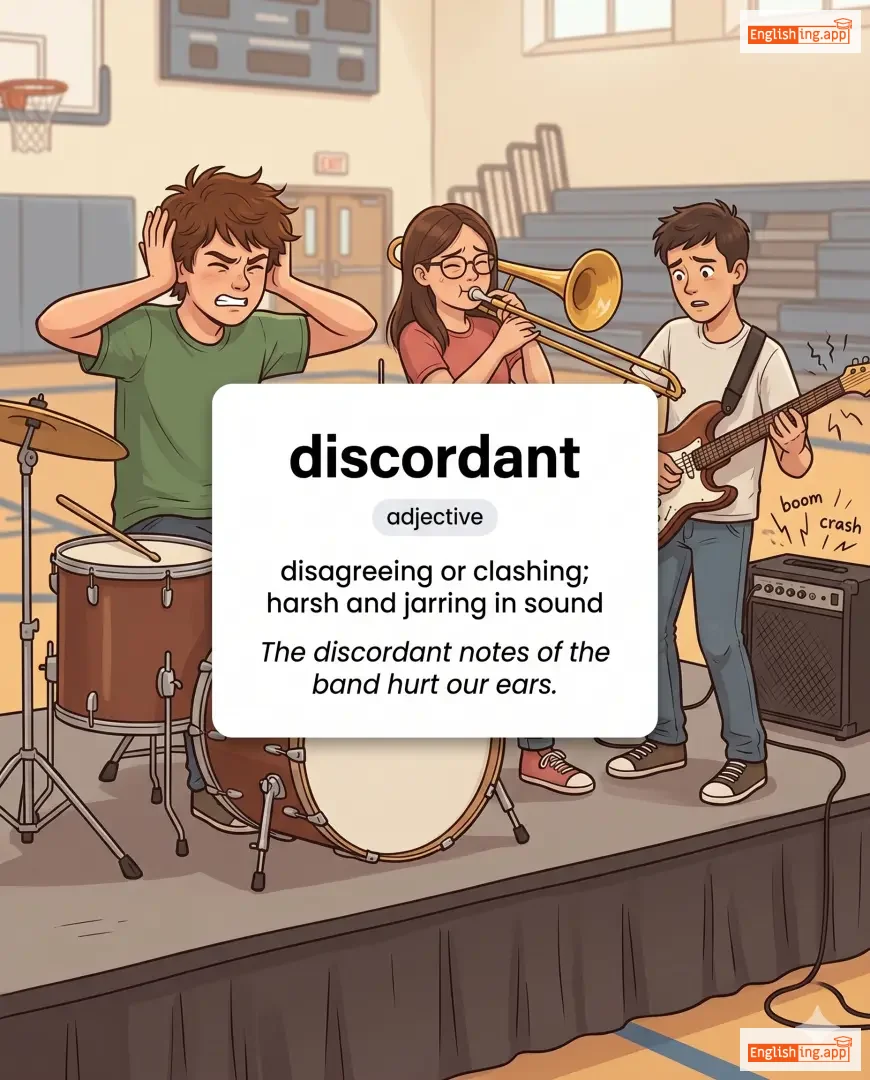
discordant definition card — visual illustration of the meaning
adjective
/dɪsˈkɔːrdənt/
不協和音 (fukyouwaon)

disagreeing or clashing; harsh and jarring in sound

"The discordant notes of the band hurt our ears."

"バンドの不協和音の音が私たちの耳を痛めました。" (Bando no fukyouwaon no oto ga watashitachi no mimi o itamemashita.)
noun, verb
/ˈdɪskaʊnt/
割引 (waribiki)

A reduction in the usual price of something; to reduce the price of something.

"The store offered a 20% discount on all electronics."

"その店はすべての電子製品に20%の割引を提供しました。" (Sono mise wa subete no denshi seihin ni 20% no waribiki o teikyō shimashita.)
verb
/dɪsˈkaʊntənəns/
非難する (hinan suru)

To disapprove of or discourage something.

"The teacher strongly discountenanced cheating in exams."

"先生は試験でのカンニングを強く非難しました。" (Sensei wa shiken de no kanningu o tsuyoku hinan shimashita.)
verb
/dɪsˈkʌrɪdʒ/

to make someone less confident or enthusiastic about doing something

"Failure should not discourage you from trying again."

adjective
/dɪˈskʌr.ɪ.dʒɪŋ/
落胆させる (rakkansaseru)

making someone feel less confident or enthusiastic about doing something

"The coach's discouraging words affected the team's morale."

"コーチの落胆させる言葉は、チームの士気に影響を与えました。" (Kōchi no rakutansaseru kotoba wa, chīmu no shiki ni eikyō o ataemashita.)
noun, verb
/ˈdɪskɔːrs/
談話, 講義 (danwa, kougi)

Written or spoken communication or debate.

"The professor gave a discourse on ancient philosophy."
"教授は古代哲学についての講義を行った。" (Kyouju wa kodai tetsugaku ni tsuite no kougi o okonatta.)
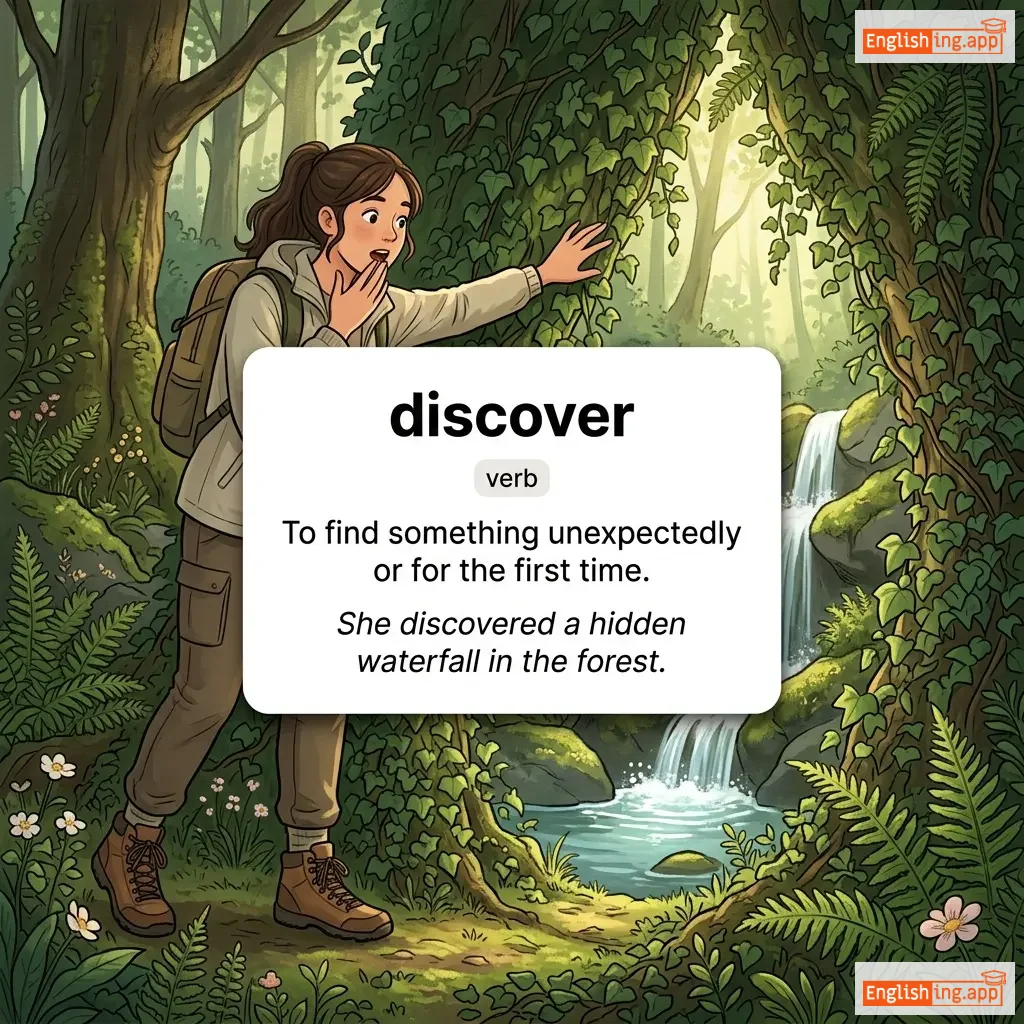
discover definition card — visual illustration of the meaning
verb
/dɪˈskʌvər/
発見する (hakken suru)

To find something unexpectedly or for the first time.

"She discovered a hidden waterfall in the forest."

"彼女は森の中で隠された滝を発見しました。" (Kanojo wa mori no naka de kakusareta taki wo hakken shimashita.)
discoveries definition card — visual illustration of the meaning
noun
dɪˈskʌvəriz
発見 (hakken)

The action or process of finding or learning something for the first time; facts or things discovered.

"His discoveries revolutionized multiple fields."

"彼の発見は複数の分野で革命を起こした。" (Kare no hakken wa fukusū no bunya de kakumei o okoshita.)
noun
/dɪˈskʌvəri/
発見 (hakken)

The act of finding or learning something for the first time.

"The discovery of penicillin changed medical history."
"ペニシリンの発見は医学の歴史を変えた。" (Penishirin no hakken wa igaku no rekishi o kaeta.)
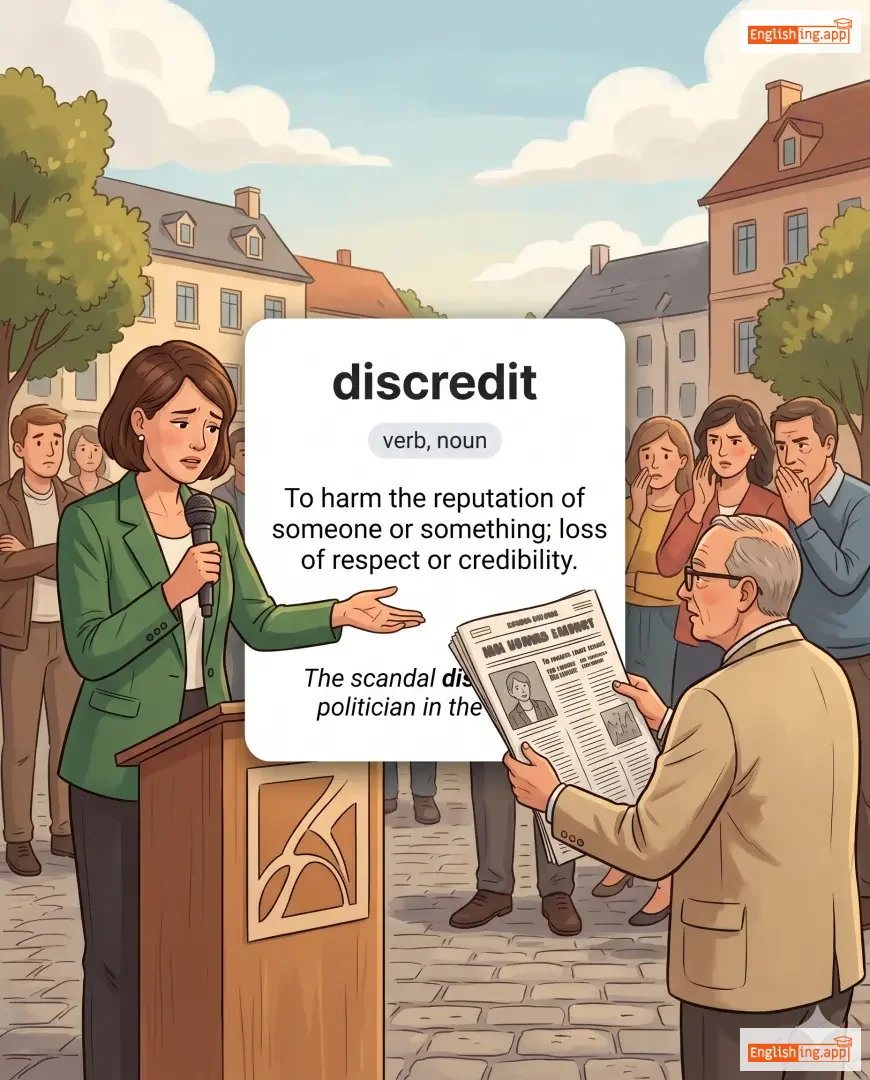
discredit definition card — visual illustration of the meaning
verb, noun
/dɪsˈkrɛdɪt/
信用を失わせる (shin'yō o ushinawaseru)

To harm the reputation of someone or something; loss of respect or credibility.

"The scandal discredited the politician in the eyes of the public."

"スキャンダルは公衆の目で政治家を信用を失わせました。" (Sukyandaru wa kōshū no me de seijika o shin'yō o ushinawasemashita.)
adjective
/dɪˈskriːt/
慎重な (shinchou na)

careful and prudent in one's speech or actions, especially to keep something confidential or avoid embarrassment

"She was discreet about the details of their conversation."
"彼女は彼らの会話の詳細について慎重でした。" (Kanojo wa karera no kaiwa no shousai ni tsuite shinchou deshita.)
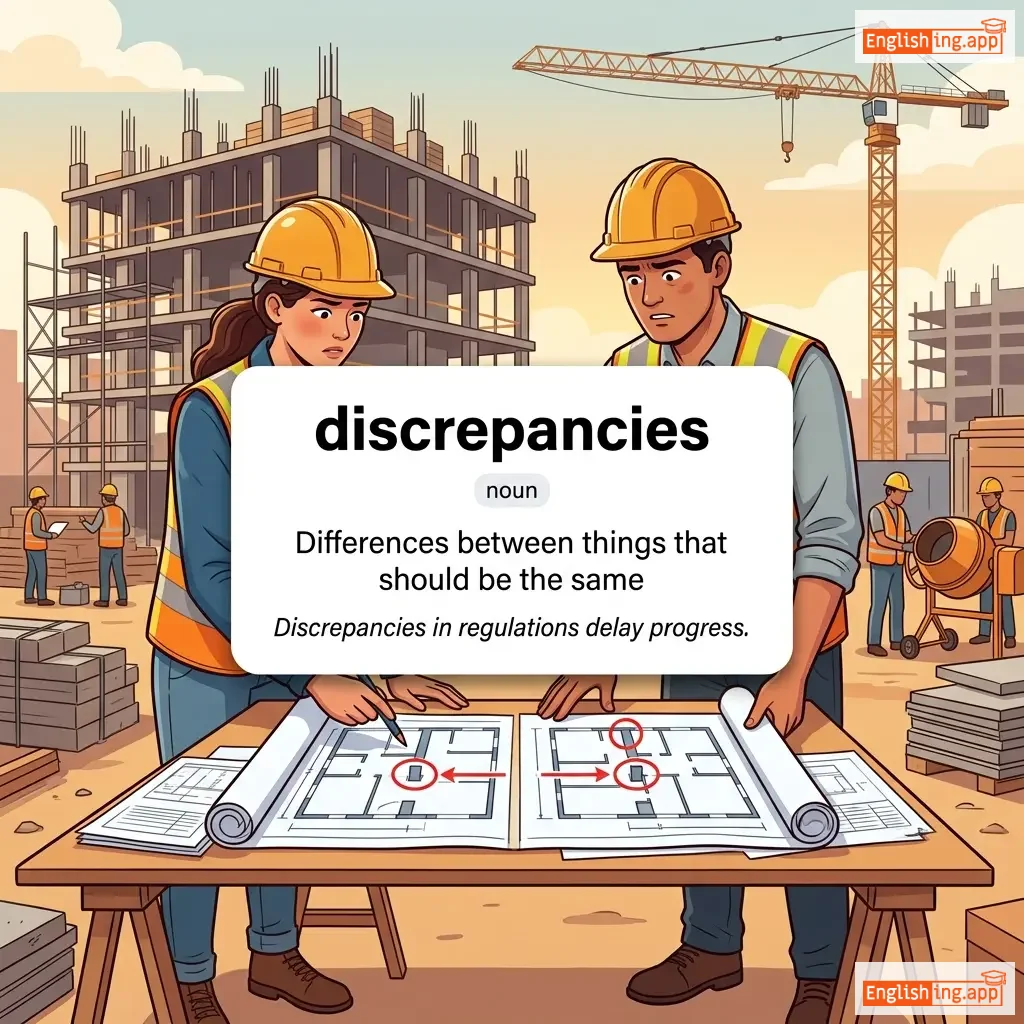
discrepancies definition card — visual illustration of the meaning
noun
dɪˈskrep.ən.siz
不一致 (fuicchi)

Differences between things that should be the same

"Discrepancies in regulations delay progress."
"規則の不一致が進行を遅らせている。" (Kisoku no fuicchi ga shinkō o okurasete iru.)
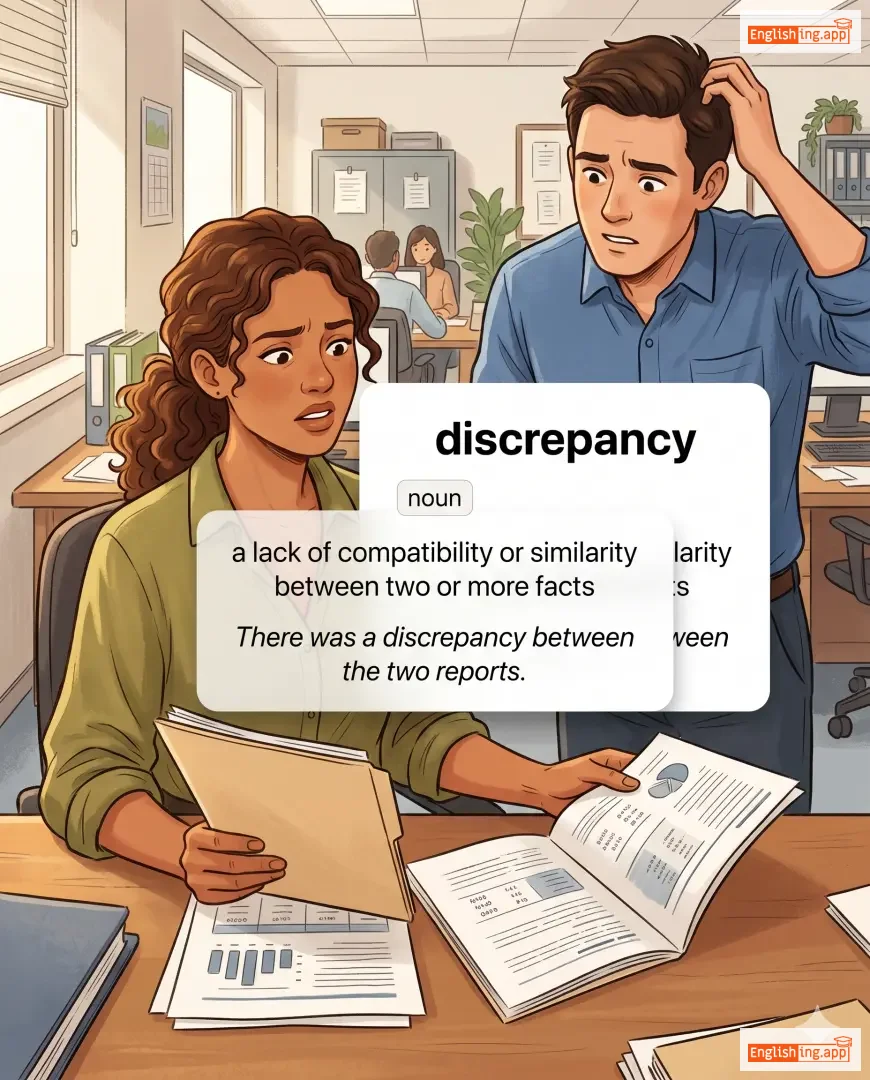
discrepancy definition card — visual illustration of the meaning
noun
/dɪˈskrɛpənsi/

a lack of compatibility or similarity between two or more facts

"There was a discrepancy between the two reports."

adjective
/dɪˈskrɛpənt/
不一致の (fuchiitsu no)

showing a difference or inconsistency

"The witnesses gave discrepant accounts of the incident."
"目撃者たちは事件について食い違った証言をしました。" (Mokugekisha-tachi wa jiken ni tsuite kuichigatta shōgen o shimashita.)
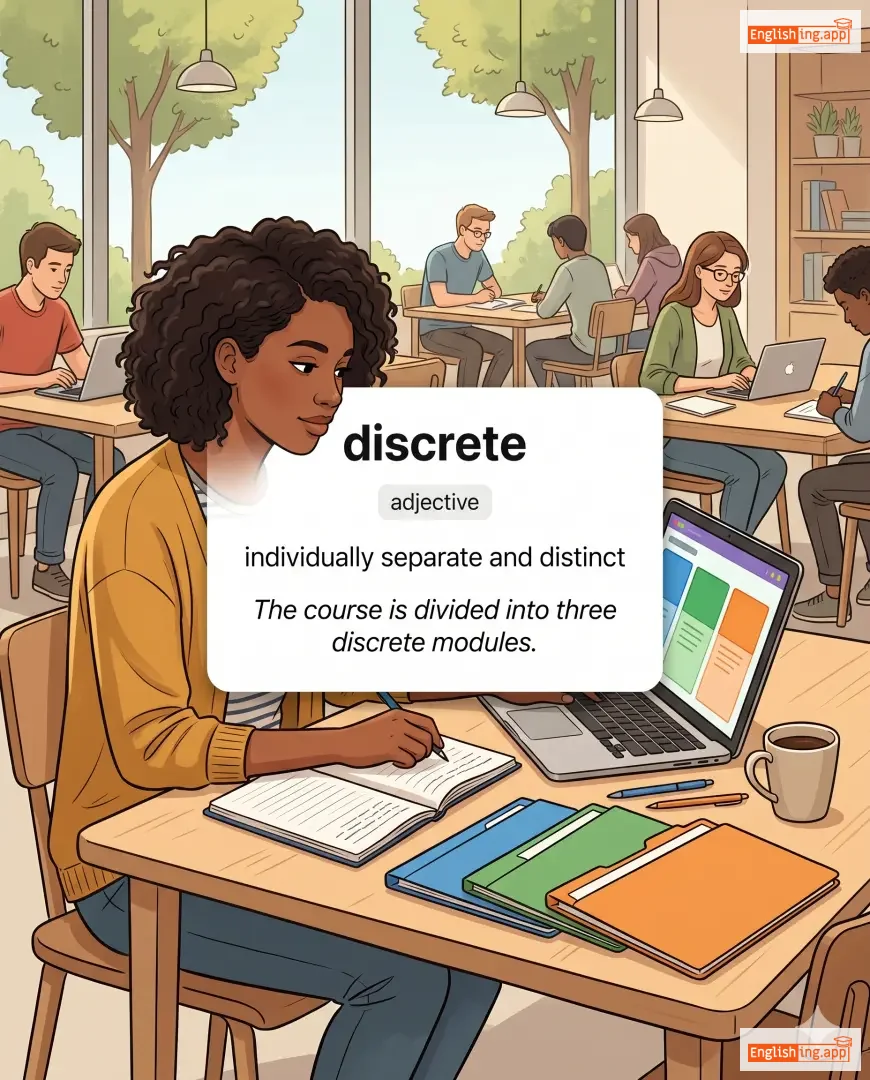
discrete definition card — visual illustration of the meaning
adjective
/dɪˈskriːt/
離散的 (risanteki)

individually separate and distinct

"The course is divided into three discrete modules."
"コースは3つの離散的なモジュールに分けられています。" (Kōsu wa mittsu no risanteki na mojūru ni wakerareteimasu.)
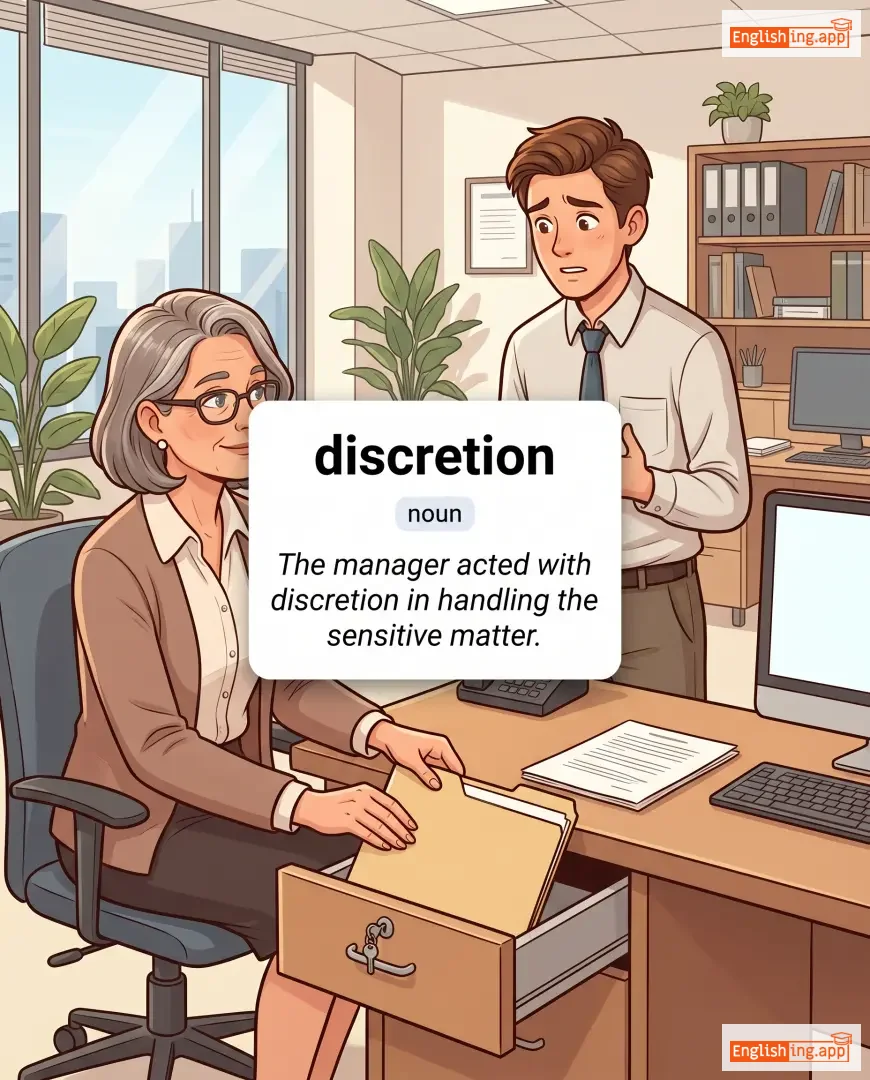
discretion definition card — visual illustration of the meaning
noun
/dɪˈskrɛʃən/
慎重 (shinchou)

the quality of behaving or speaking in a way to avoid causing offense or revealing private information; the freedom to decide what should be done in a particular situation

"The manager acted with discretion in handling the sensitive matter."
"マネージャーは敏感な問題を慎重に扱いました。" (Manējā wa binkan na mondai o shinchou ni atsukaimashita.)
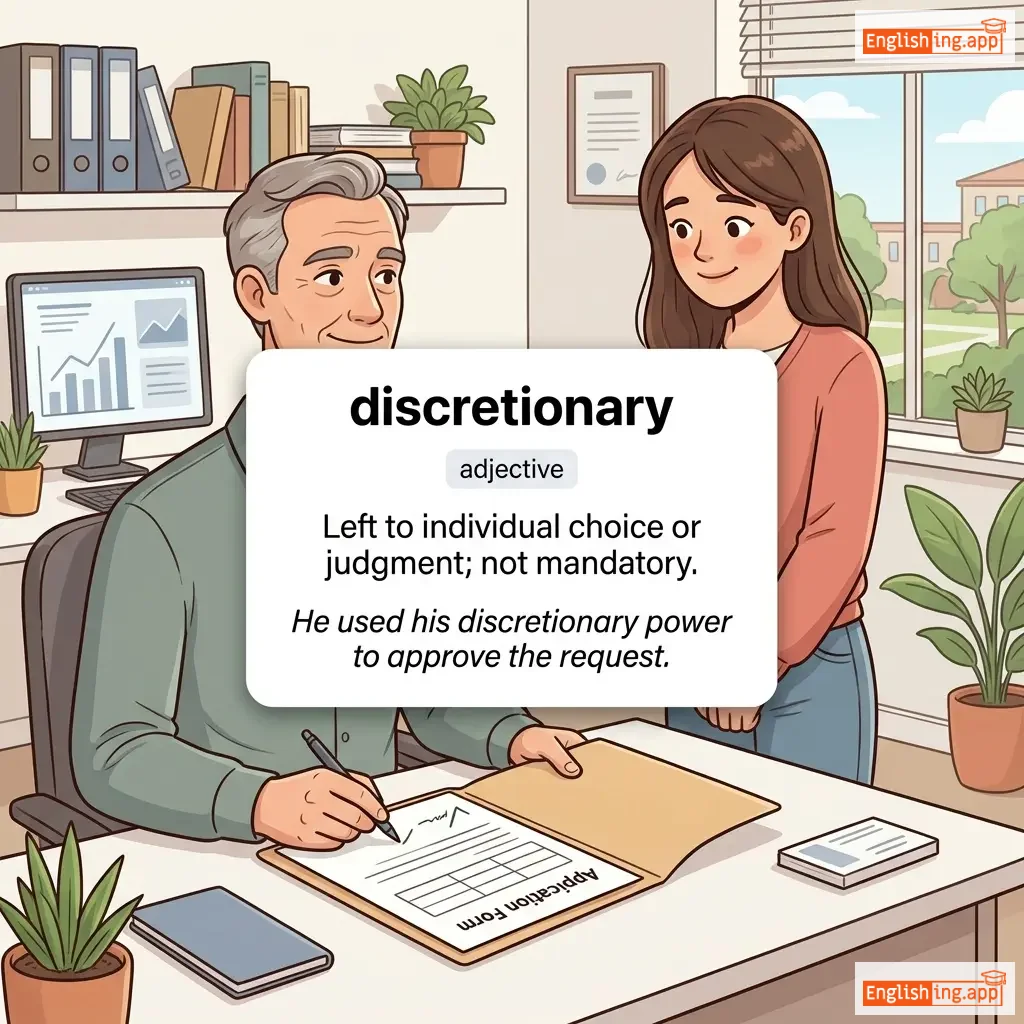
discretionary definition card — visual illustration of the meaning
adjective
/dɪˈskrɛʃəˌnɛri/
任意の (nin'i no)

Left to individual choice or judgment; not mandatory.

"He used his discretionary power to approve the request."

"彼は要求を承認するために任意の権限を使用しました。" (Kare wa yōkyū o shōnin suru tame ni nin'i no kenri o shiyō shimashita.)
verb
/dɪˈskrɪmɪˌneɪt/

To treat someone unfairly based on race, gender, or other differences; or to recognize a distinction.

"The law prohibits employers from discriminating against women."

adjective
/dɪˈskrɪmɪˌneɪtɪŋ/
選り好みする (erikonosuru)

Having refined taste or good judgment; able to recognize subtle differences.

"She is known for her discriminating taste in art."

"彼女は芸術における選り好みの味で知られています。" (Kanojo wa geijutsu ni okeru erikonosuru aji de shirareteimasu.)