語彙集

英単語辞書 | 単語の意味、定義、例文

verb
/ˌdɪfəˈrɛnʃieɪt/
区別する (kubetsu suru)

To recognize or make a distinction between things.

"It is important to differentiate between fact and opinion."

"事実と意見を区別することは重要です。" (Jijitsu to iken wo kubetsu suru koto wa juuyou desu.)
differentiation definition card — visual illustration of the meaning
noun
/ˌdɪf.ə.ren.ʃiˈeɪ.ʃən/
差別化, 区別, 分化 (sabetsuka, kubetsu, bunka)

The action or process of differentiating or distinguishing between two or more things or people.

"Strong differentiation sets brands apart from competitors."

"強いディファレンシエーションは、ブランドを競合他社と差別化します。" (Tsuyoi differentiation wa, burando o kyōgō tashā to sabetsuka shimasu.)
adverb
/ˈdɪfərəntli/
異なった方法で (kotonatta houhou de)

in a way that is not the same as another or as expected

"She approached the problem differently than her colleagues."

"彼女は同僚たちと違った方法で問題に取り組みました。" (Kanojo wa douryou-tachi to chigatta houhou de mondai ni torikumi mashita.)
difficult definition card — visual illustration of the meaning
adjective
/ˈdɪf.ɪ.kəlt/
難しい (muzukashii)

Needing much effort or skill to do or understand.

"The exam was so difficult that many students failed."

"試験は非常に難しく、多くの学生が失敗しました。" (Shiken wa hijō ni muzukashiku, ōku no gakusei ga shippai shimashita.)
noun
/ˈdɪfɪkəlti/

the state or condition of being hard to do, deal with, or understand

"He faced great difficulty in learning a new language."
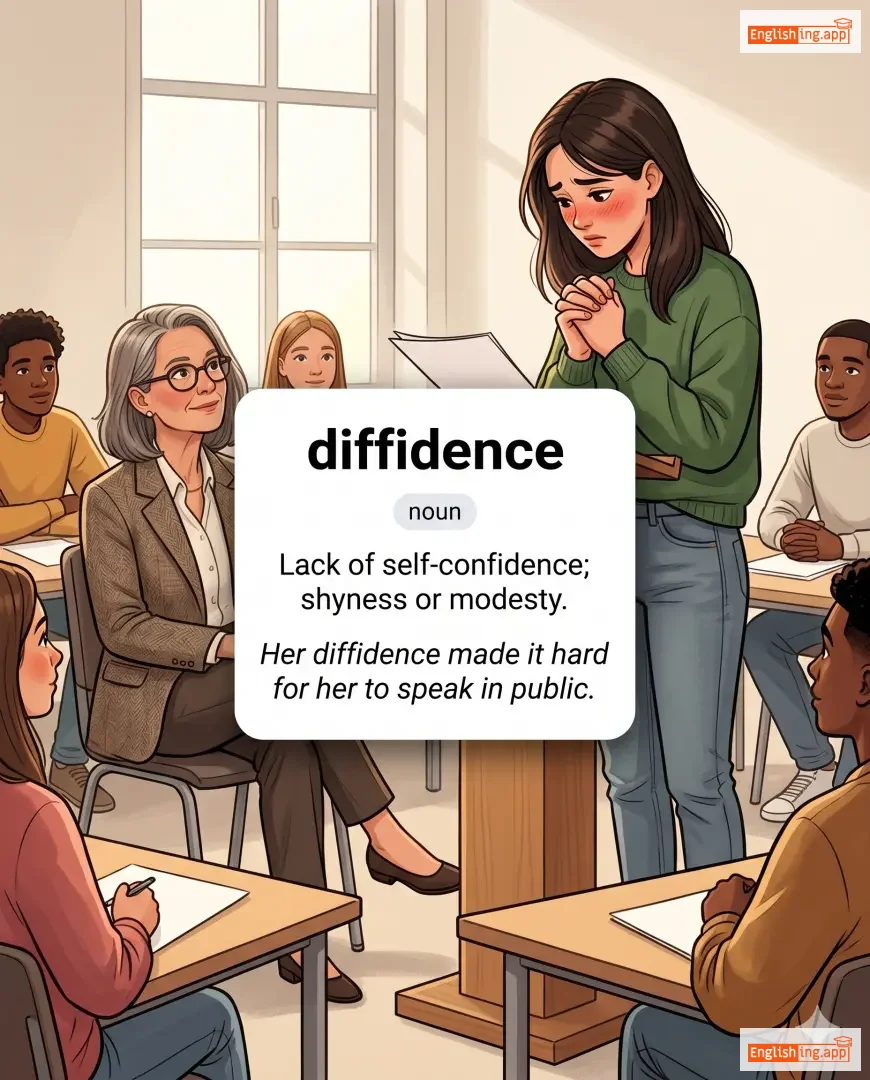
diffidence definition card — visual illustration of the meaning
noun
/ˈdɪfɪdəns/
自信の欠如 (jishin no ketsujo)

Lack of self-confidence; shyness or modesty.

"Her diffidence made it hard for her to speak in public."

"彼女の自信の欠如は、公衆の前で話すのを難しくした。" (Kanojo no jishin no ketsujo wa, koushuu no mae de hanasu no o muzukashiku shita.)
adjective
/ˈdɪfɪdənt/

Shy or lacking confidence in one's own abilities.

"He was too diffident to ask a question in class."

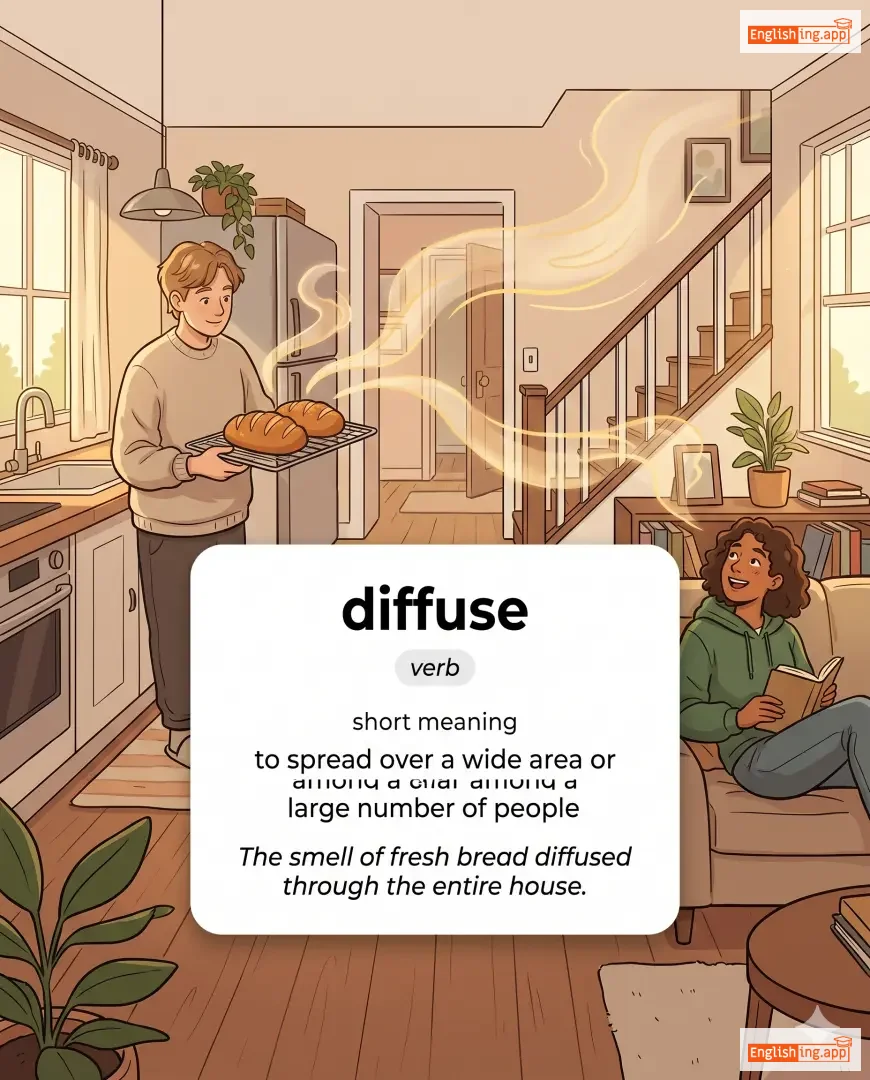
diffuse definition card — visual illustration of the meaning
🌫️

diffuse

verb
/dɪˈfjuːz/

to spread over a wide area or among a large number of people

"The smell of fresh bread diffused through the entire house."

adjective
/dɪˈfjuːzəbl/
拡散可能な (kassan kanou na)

able to spread or be spread through a medium

"Oxygen is diffusible through cell membranes."

"酸素は細胞膜を通じて拡散することができます。" (Sanso wa saiboumaku wo toshite kassan suru koto ga dekimasu.)
noun
/dɪˈfjuːʒən/

the spreading of something more widely or the movement of particles from high to low concentration

"The diffusion of information on social media is rapid."

verb
/dɪɡ/
掘る (horu)

to break up and move earth with a tool or machine, or with hands, paws, etc.

"They decided to dig a hole for the new tree."

"彼らは新しい木のために穴を掘ることを決めました。" (Karera wa atarashī ki no tame ni ana o horu koto o kimemashita.)
digest definition card — visual illustration of the meaning
verb
/daɪˈdʒest/
消化する (shouka suru)

to break down food in the body; to think about and understand

"It takes time to digest a heavy meal."

"重い食事を消化するのには時間がかかります。" (Omoi shokuji wo shouka suru no ni wa jikan ga kakarimasu.)
digestive definition card — visual illustration of the meaning
adjective
daɪˈdʒes.tɪv
消化の (shouka no)

Relating to the digestion of food.

"Digestive enzymes help break down food."

"消化酵素は食べ物を分解するのを助けます。" (Shouka kouso wa tabemono wo bunkai suru no wo tasukemasu.)
🔢

digit

noun
/ˈdɪdʒɪt/

a numeral from 0 to 9; also a finger or toe

"You must enter a four-digit code to unlock the phone."

digital definition card — visual illustration of the meaning
adjective
/ˈdɪdʒɪtl/
デジタル (dejitaru)

relating to technology that uses signals or data in the form of numbers (0s and 1s)

"She prefers digital books over printed ones."

"彼女は印刷された本よりデジタル本を好みます。" (Kanojo wa insatsu sareta hon yori dejitaru hon o konomimasu.)
digital detox definition card — visual illustration of the meaning
noun
/ˈdɪdʒɪtl ˈdɛtɒks/
デジタルデトックス (dejitaru detokkusu)

A period of time during which a person refrains from using electronic devices such as smartphones or computers, regarded as an opportunity to reduce stress or focus on social interaction in the physical world.

"A digital detox can help improve mental clarity and reduce stress."
"デジタルデトックスは、精神的な明晰さを改善し、ストレスを減らすのに役立ちます。" (Dejitaru detokkusu wa, seishinteki na meishikisa wo kaizen shi, sutoresu wo herasu no ni yakudachimasu.)
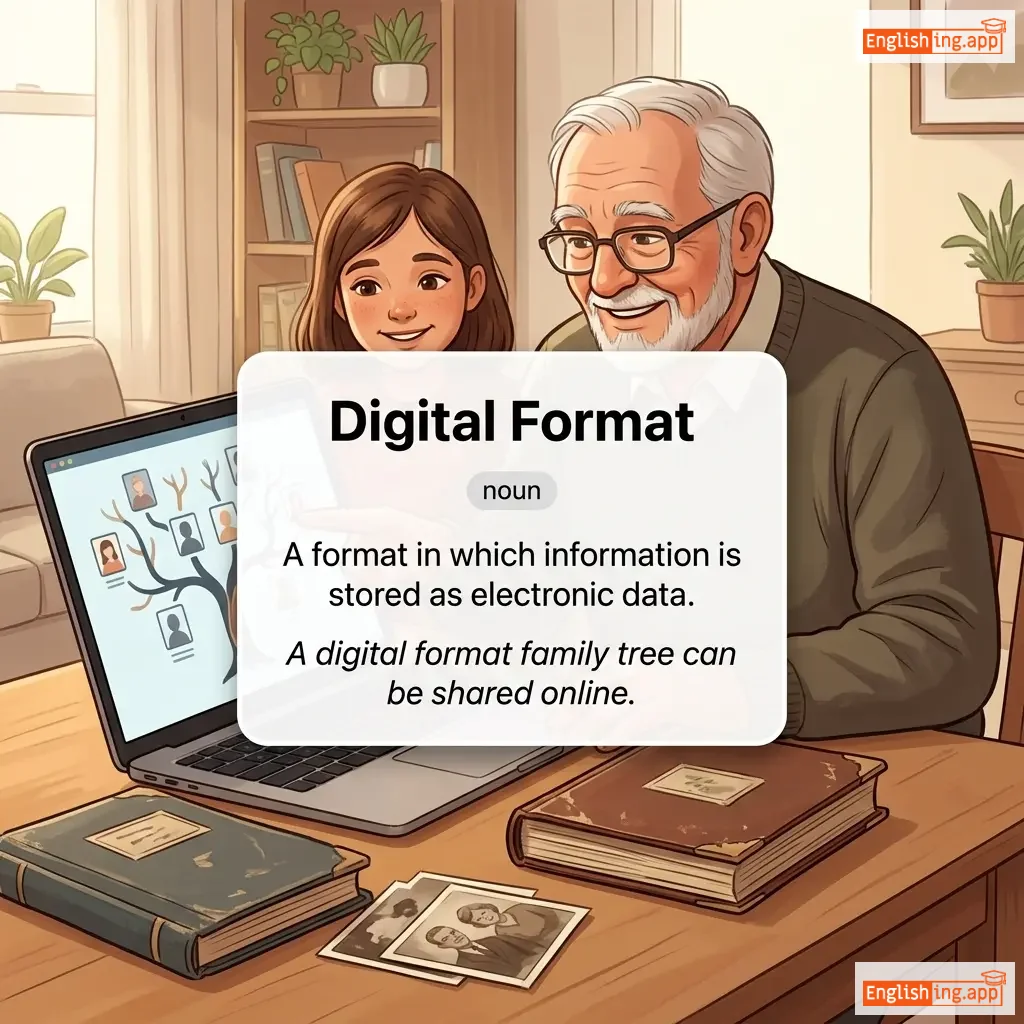
Digital Format definition card — visual illustration of the meaning
noun
ˈdɪdʒɪtəl ˈfɔːrmæt
デジタルフォーマット (dejitaru fōmatto)

A format in which information is stored as electronic data.

"A digital format family tree can be shared online."
"デジタルフォーマットの家系図はオンラインで共有できます。" (Dejitaru fōmatto no kakeizu wa onrain de kyōyū dekimasu.)
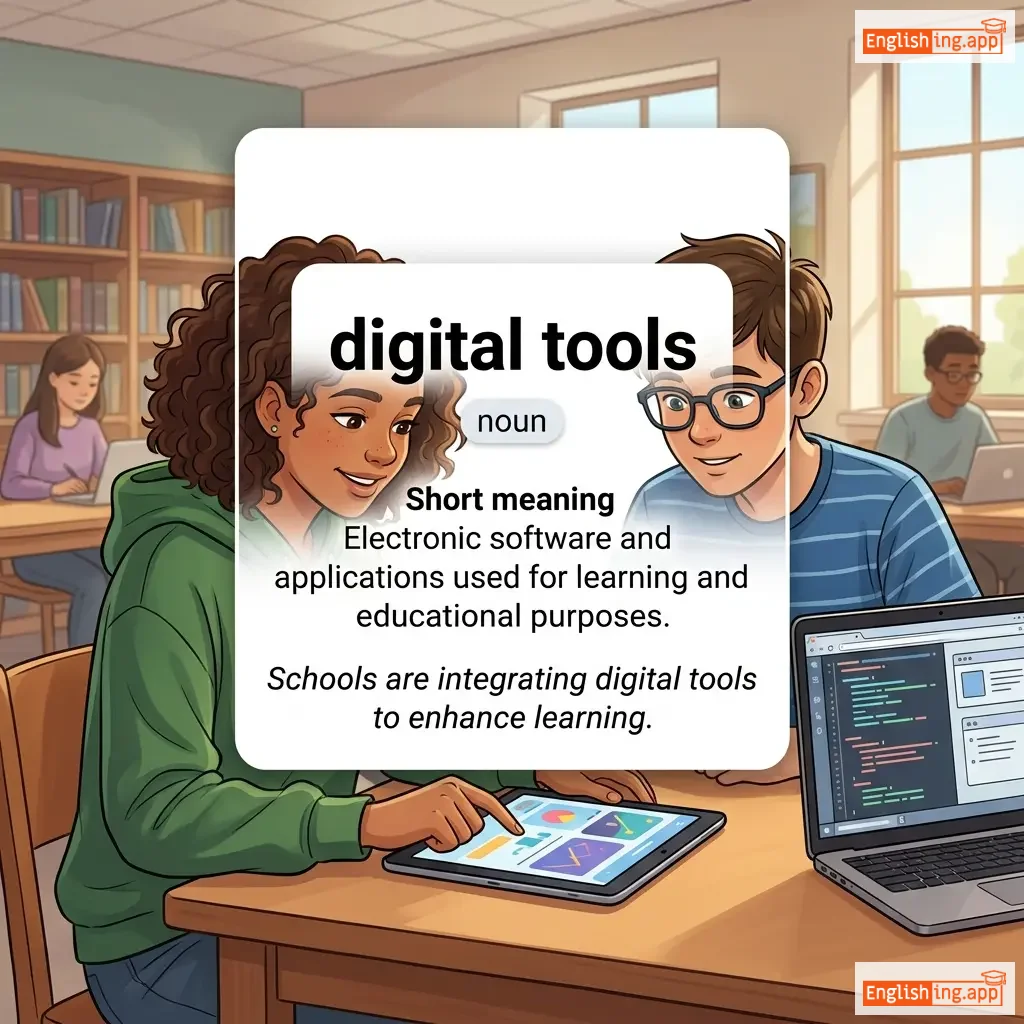
digital tools definition card — visual illustration of the meaning
noun
ˈdɪdʒ.ɪ.təl tuːlz
デジタルツール (dejitaru tsuuru)

Electronic software and applications used for learning and educational purposes.

"Schools are integrating digital tools to enhance learning."

"学校は学習を強化するためにデジタルツールを統合しています。" (Gakkou wa gakushuu o kyouka suru tame ni dejitaru tsuuru o tougou shiteimasu.)
noun
/ˈdɪɡnɪˌtɛri/
重要人物 (jūyō jinbutsu)

a person considered to be important because of high rank or office

"Several foreign dignitaries attended the state banquet."

"数人の外国の重要人物が国の晩餐会に出席しました。" (Sūnin no gaikoku no jūyō jinbutsu ga kuni no bansankai ni shusseki shimashita.)
noun
/ˈdɪɡnəti/
尊厳 (songen)

the state or quality of being worthy of respect or honor

"He faced the difficult situation with calm and dignity."

"彼は冷静さと尊厳を持って困難な状況に立ち向かいました。" (Kare wa reisei sa to songen wo motte konnan na joukyou ni tachimukaimashita.)
noun
/ˈdaɪɡræf/
二重音字 (nijuonji)

A pair of letters representing a single sound, such as 'sh' in 'ship'.

"In the word 'phone', the letters 'ph' form a digraph."
"'電話'という言葉では、'ph'の文字が二重音字を形成します。" ('denwa' to iu kotoba de wa, 'ph' no moji ga nijuonji o keisei shimasu.)
↪️

digress

verb
/daɪˈɡrɛs/

To leave the main subject temporarily in speech or writing.

"The professor began to digress from the main topic of the lecture."

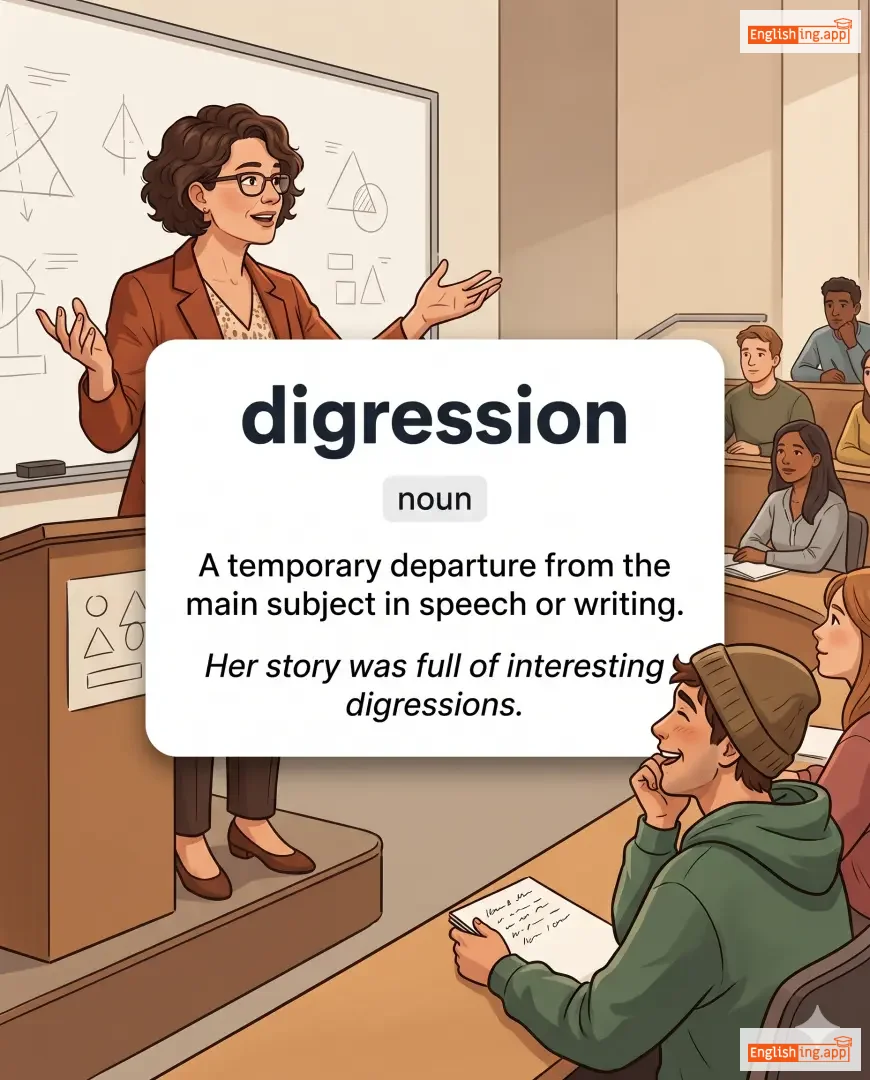
digression definition card — visual illustration of the meaning
noun
/daɪˈɡrɛʃən/
逸脱 (itsudatsu)

A temporary departure from the main subject in speech or writing.

"Her story was full of interesting digressions."

"彼女の話は面白い逸脱で満ちていました。" (Kanojo no hanashi wa omoshiroi itsudatsu de michite imashita.)
adjective
/daɪˈɡrɛsɪv/
主題から外れる傾向 (shudai kara hazureru keikou)

Tending to depart from the main subject in speech or writing.

"The speaker's digressive style made the lecture difficult to follow."

"話者のダイグレッシブなスタイルは講義を追いかけるのを難しくした。" (Wakushi no daigureshibu na sutairu wa kougi wo oikakeru no wo muzukashiku shita.)
verb
/dɪˈlæpɪdeɪt/
荒廃する (kōhai suru)

To cause something, especially a building, to fall into ruin or disrepair.

"The abandoned house began to dilapidate over the years."

"廃墟になった家は年月を経て崩壊し始めました。" (Haikyo ni natta ie wa toshi o hete hōkai shi hajimemashita.)
adjective
/dɪˈlæpɪˌdeɪtɪd/
老朽化した (rōkyūka shita)

Fallen into disrepair or ruin due to neglect or age.

"The family lived in a dilapidated house at the edge of town."

"その家族は町の端にある老朽化した家に住んでいました。" (Sono kazoku wa machi no hashi ni aru rōkyūka shita ie ni sunde imashita.)
noun
/dɪˌlæpɪˈdeɪʃən/
荒廃 (kouhai)

The state of disrepair or ruin as a result of neglect.

"The old temple was in a state of dilapidation."

"その古い寺院は廃墟の状態にありました。" (Sono furui jiin wa haikyo no joutai ni arimashita.)
verb
/daɪˈleɪt/
拡大する (kakudai suru)

To make wider, larger, or more open.

"The doctor used drops to dilate the patient's pupils."

"医者は患者の瞳孔を拡げるために点眼薬を使いました。" (Isha wa kanja no tōkō o hirakeru tame ni tengenyaku o tsukaimashita.)
adjective
/ˈdɪlətɔːri/
遅延の (chien no)

Tending to cause delay; slow to act.

"The committee was criticized for its dilatory response to the crisis."

"委員会は危機に対するその遅延反応で批判されました。" (Iinkai wa kiki ni taisuru sono chien hannō de hihan saremashita.)
dilemma definition card — visual illustration of the meaning
noun
/daɪˈlɛmə/
ジレンマ (jirenma)

A situation in which a difficult choice has to be made between two or more alternatives.

"She faced a dilemma about whether to accept the job offer or continue her studies."

"彼女は仕事のオファーを受け入れるか、学業を続けるかというジレンマに直面していました。" (Kanojo wa shigoto no ofā o ukeireru ka, gakugyō o tsuzukeru ka to iu jirenma ni chokumen shiteimashita.)
noun
/ˌdɪləˈtænt/
愛好家 (aikouka)

A person who takes up an art, activity, or subject merely for amusement, especially in a superficial way.

"He was dismissed as a dilettante in the art world because he lacked formal training."

"彼は芸術界で愛好家として退けられました、なぜなら正式な訓練が不足していたからです。" (Kare wa geijutsu-kai de aikouka toshite shirizokeraremashita, nazenara seishiki na kunren ga fusokushiteita kara desu.)
diligence definition card — visual illustration of the meaning
noun
/ˈdɪlɪdʒəns/
勤勉 (kinmen)

Careful and persistent work or effort.

"Through diligence and determination, she completed her research on time."

"勤勉と決意をもって、彼女は研究を時間通りに終わらせた。" (Kinmen to ketsui o motte, kanojo wa kenkyū o jikan dōri ni owaraseta.)
adjective
/ˈdɪlɪdʒənt/
勤勉 (kinben)

Showing care and conscientiousness in one's work or duties.

"She is a diligent student who always finishes her assignments on time."

"彼女は時間通りに課題を終わらせる勤勉な学生です。" (Kanojo wa jikan dori ni kadai o owaraseru kinben na gakusei desu.)
verb
/daɪˈluːt/
薄める (usumeru)

To make a liquid thinner or weaker by adding water or another solvent.

"You should dilute the juice with water before serving it to children."

"子供たちに出す前にジュースを水で薄めるべきです。" (Kodomotachi ni dasu mae ni jūsu o mizu de usumeru beki desu.)
adjective
/dɪm/
薄暗い (usugurai)

not bright; having little light; not clearly visible

"The room was dim because the curtains were closed."

"部屋は薄暗かった、カーテンが閉まっていたから。" (Heya wa usugurakatta, kaaten ga shimatte itakara.)
noun
/daɪm/
10セント硬貨 (10 sento kouka)

a small coin, especially a U.S. coin worth ten cents

"He gave me a dime for the phone call."
"電話のためにダイムを一枚くれました。" (Denwa no tame ni daimu o ichimai kuremashita.)
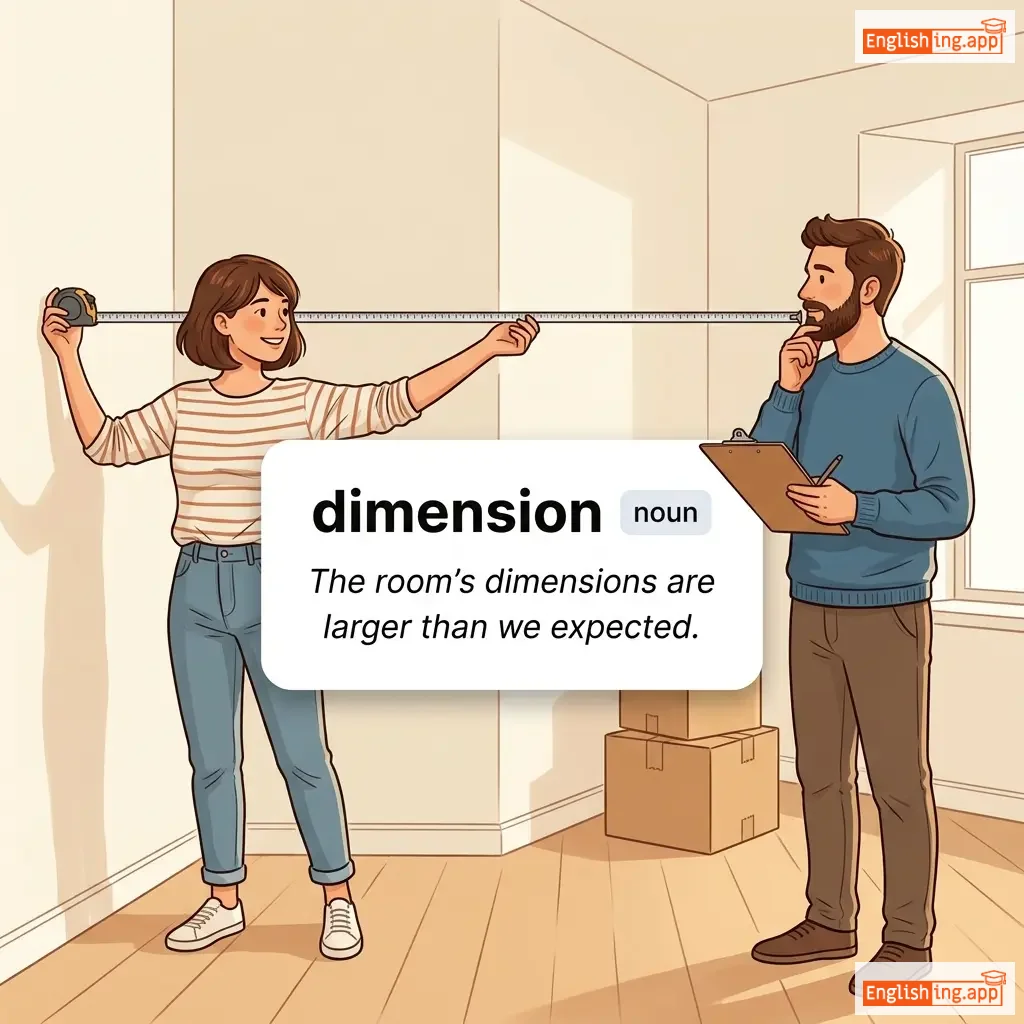
dimension definition card — visual illustration of the meaning
noun
/dɪˈmɛnʃən/
次元 (jigen)

A measurable extent of a particular kind, such as length, breadth, depth, or height.

"The room’s dimensions are larger than we expected."
"部屋の次元は私たちが予想していたよりも大きい。" (Heya no jigen wa watashitachi ga yosō shite ita yori mo ōkī.)
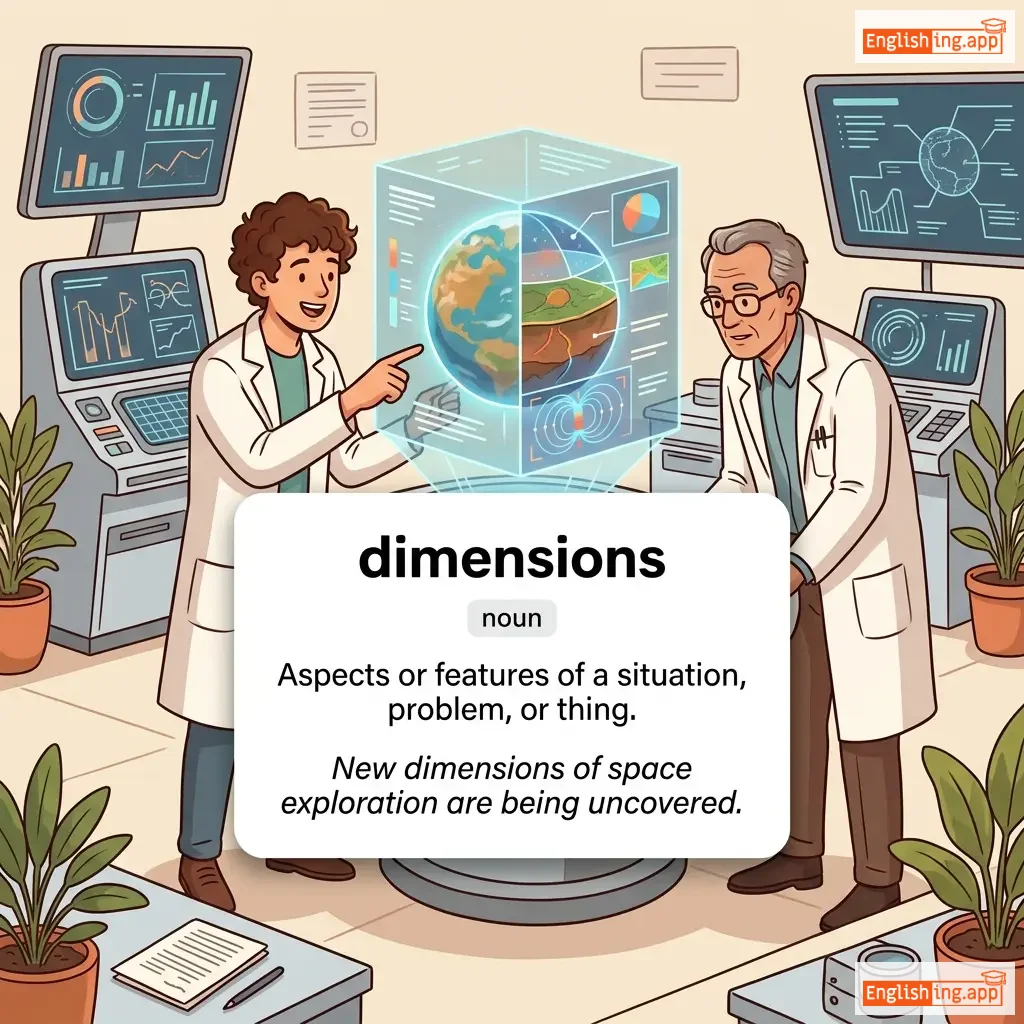
dimensions definition card — visual illustration of the meaning
noun
/daɪˈmen.ʃənz/
次元 (jigen)

Aspects or features of a situation, problem, or thing.

"New dimensions of space exploration are being uncovered."
"宇宙探査の新しい次元が明らかになっています。" (Uchū tansa no atarashī jigen ga akiraka ni natteimasu.)
⬇️

diminish

verb
/dɪˈmɪnɪʃ/

to make or become less; to reduce in size, importance, or value

"Over time, his influence in the company began to diminish."

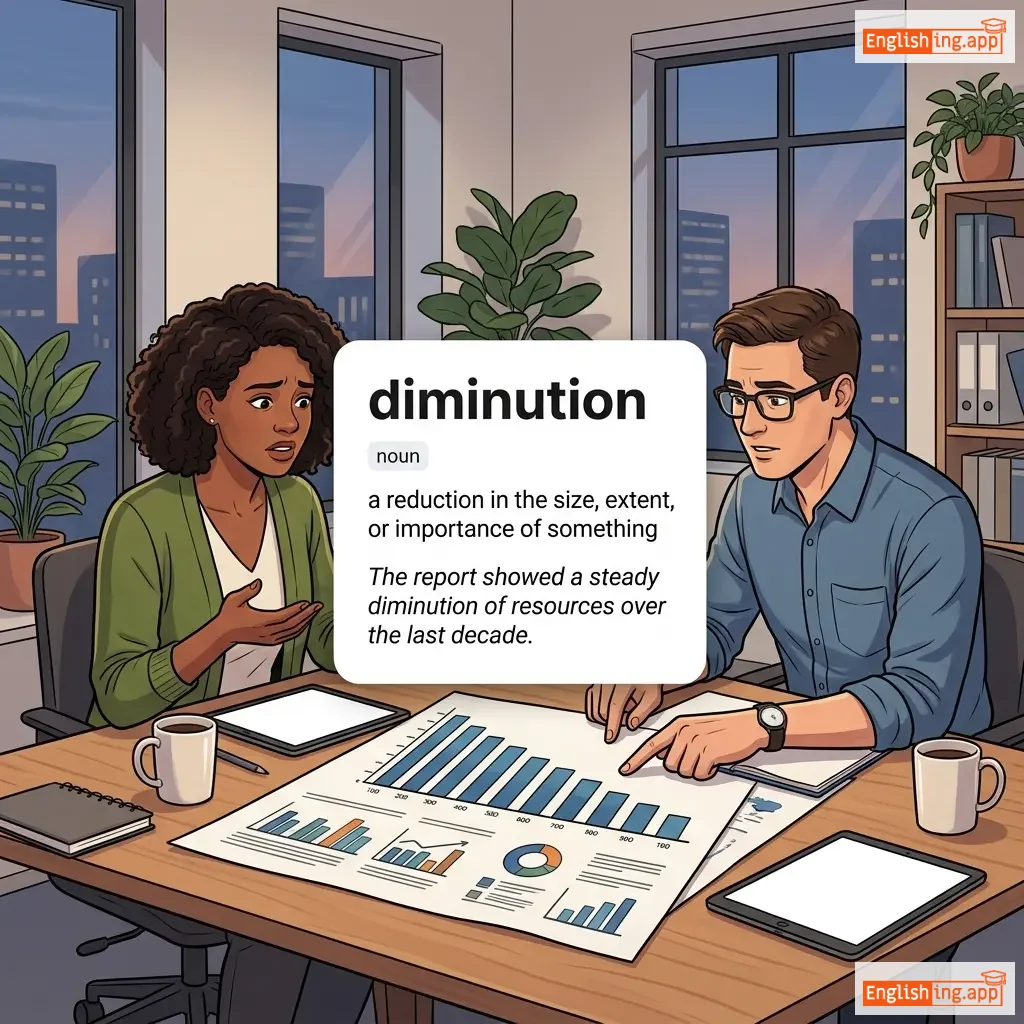
diminution definition card — visual illustration of the meaning
noun
/ˌdɪmɪˈnjuːʃən/

a reduction in the size, extent, or importance of something

"The report showed a steady diminution of resources over the last decade."

adjective
/dɪˈmɪnjətɪv/
非常に小さい (hijō ni chiisai)

extremely or unusually small

"Despite his diminutive size, he was a powerful leader."

"その非常に小さい体格にもかかわらず、彼は強力なリーダーだった。" (Sono hijō ni chiisai taikaku ni mo kakawarazu, kare wa kyōryoku na rīdā datta.)
adverb
/ˈdɪmli/
薄暗く (usuguraku)

in a faint or unclear way; with little light

"The room was dimly lit by a single candle."

"部屋は一本のろうそくで薄暗く照らされていた。" (Heya wa ippon no rousoku de usuguraku terasarete ita.)
noun
/ˈdɪm.pəl/
えくぼ (ekubo)

a small depression in the flesh, either one that exists permanently or one that forms when smiling

"Her charming dimples appeared whenever she smiled at the children."

"彼女の魅力的なえくぼは、子供たちに微笑むたびに現れました。" (kanojo no miryokuteki na ekubo wa, kodomotachi ni hohoemu tabi ni arawaremashita.)
noun
/dɪn/
騒音 (souon)

a loud, unpleasant, and prolonged noise

"The din of traffic outside made it hard to concentrate."

"外の交通の騒音が集中するのを困難にしていた。" (Soto no koutsuu no souon ga shuuchuu suru no wo konnan ni shite ita.)
verb
/daɪn/
食事する (shokuji suru)

to eat a meal, especially the main meal of the day

"We usually dine at seven o'clock in the evening."

"私たちは通常、夕方七時に食事します。" (Watashitachi wa tsujo, yugata shichi-ji ni shokuji shimasu.)
noun
/ˈdɪŋɡi/
ディンギーボート (dingī bōto)

a small boat, often carried or towed by a larger vessel, used for short trips or as a lifeboat

"They rowed the dinghy back to the yacht."

"彼らはヨットに戻るためにディンギーを漕いだ。" (Karera wa yotto ni modoru tame ni dingī o koida.)
adjective
/ˈdɪndʒi/
汚い (kitanai)

gloomy and drab; dirty or discolored

"The old hotel room looked dark and dingy."

"古いホテルの部屋は暗くて汚れているように見えた。" (Furui hoteru no heya wa kurakute yogorete iru you ni mieta.)
noun
/ˈdaɪnɪŋ/
食事 (shokuji)

the act of eating a meal, especially in a formal setting

"We enjoyed fine dining at the new restaurant."

"私たちは新しいレストランで素晴らしい食事を楽しみました。" (Watashitachi wa atarashī resutoran de subarashī shokuji o tanoshimimashita.)
noun
/ˈdɪnər/
夕食 (yūshoku)

the main meal of the day, usually eaten in the evening

"We had a lovely dinner at a new restaurant last night."

"昨晩、新しいレストランで素敵なディナーを楽しみました。" (Sakuban, atarashī resutoran de suteki na dīnā o tanoshimimashita.)
noun
/dɪnt/
努力、衝撃の跡 (doryoku, shōgeki no ato)

an impression or hollow made by a blow; force or power

"By dint of hard work, he achieved success."

"努力のおかげで、彼は成功を収めました。" (Doryoku no okage de, kare wa seikō o osamemashita.)