語彙集

英単語辞書 | 単語の意味、定義、例文

noun
/dɪˈstrʌkʃən/
破壊 (hakai)

the act of causing so much damage to something that it no longer exists or cannot be repaired

"The fire caused the destruction of the building."

"火事は建物の破壊を引き起こしました。" (Kaji wa tatemono no hakai o hikiokoshimashita.)
adjective
/dɪˈstrʌktɪv/
破壊的な (hakai teki na)

Causing great and irreparable harm or damage.

"Hurricanes are often destructive to coastal cities."
"ハリケーンは沿岸都市にとってしばしば破壊的です。" (Harikēn wa engan toshi ni totte shibashiba hakai-teki desu.)
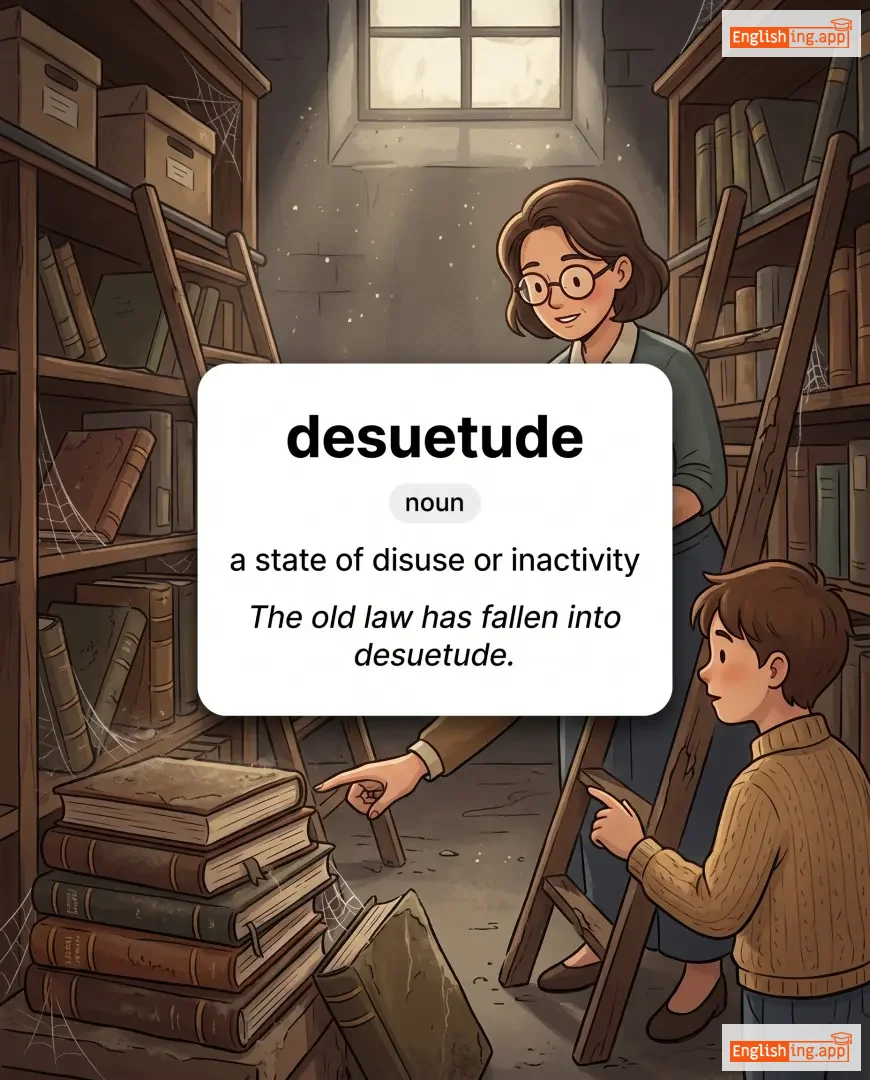
desuetude definition card — visual illustration of the meaning
noun
/ˈdɛswɪˌtuːd/
廃止 (haishi)

a state of disuse or inactivity

"The old law has fallen into desuetude."
"古い法律は廃止されました。" (Furui houritsu wa haishi saremashita.)
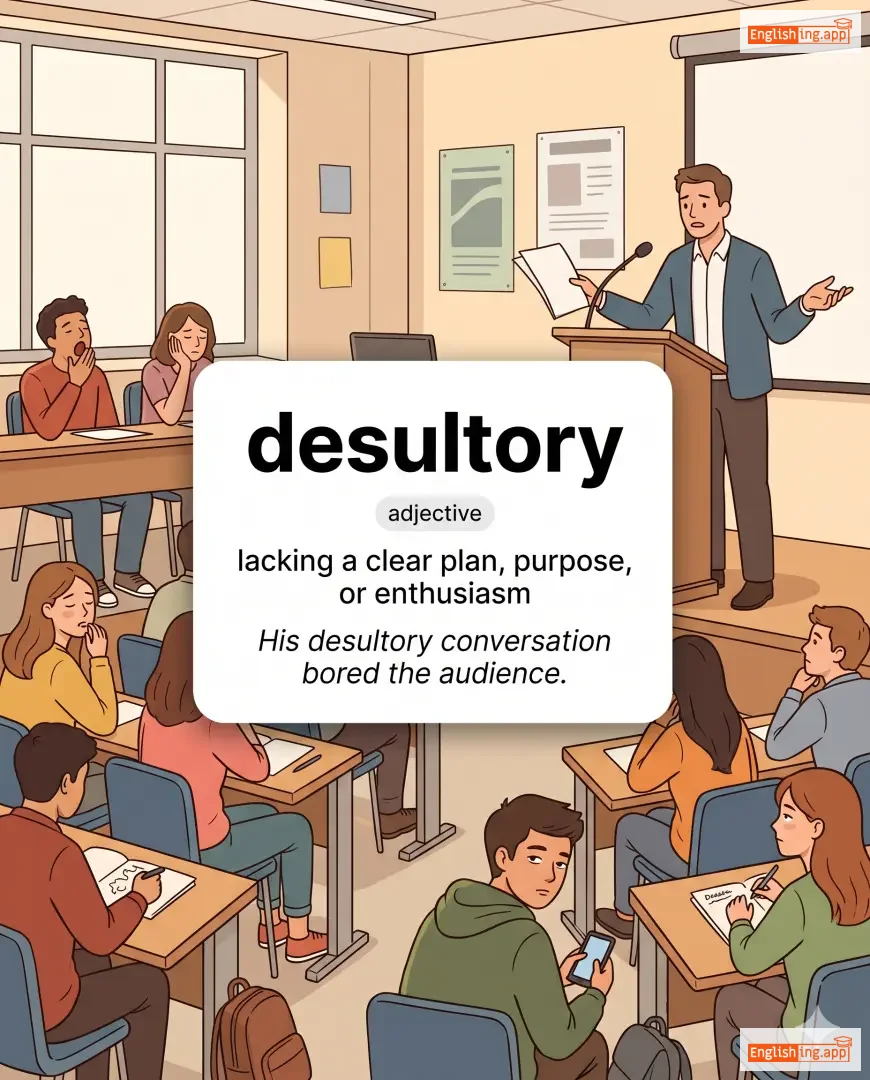
desultory definition card — visual illustration of the meaning
adjective
/ˈdɛsəlˌtɔːri/
無秩序な (muchi-tsujona)

lacking a clear plan, purpose, or enthusiasm

"His desultory conversation bored the audience."

"彼の無秩序な会話は観客を退屈させた。" (Kare no muchitsujona kaiwa wa kankyaku o taikutsu saseta.)
verb
/dɪˈtætʃ/
分離する (bunri suru)

to separate or remove something from something else

"She detached the page from the notebook."

"彼女はノートからページを切り離しました。" (Kanojo wa nōto kara pēji o kirihanasimashita.)
adjective
/dɪˈtætʃt/
分離された, 無関心な (bunri sareta, mukanshin na)

separate or disconnected; showing a lack of emotional involvement

"He lived in a detached house away from the city."
"彼は都市から離れた分離された家に住んでいました。" (Kare wa toshi kara hanareta bunri sareta ie ni sunde imashita.)
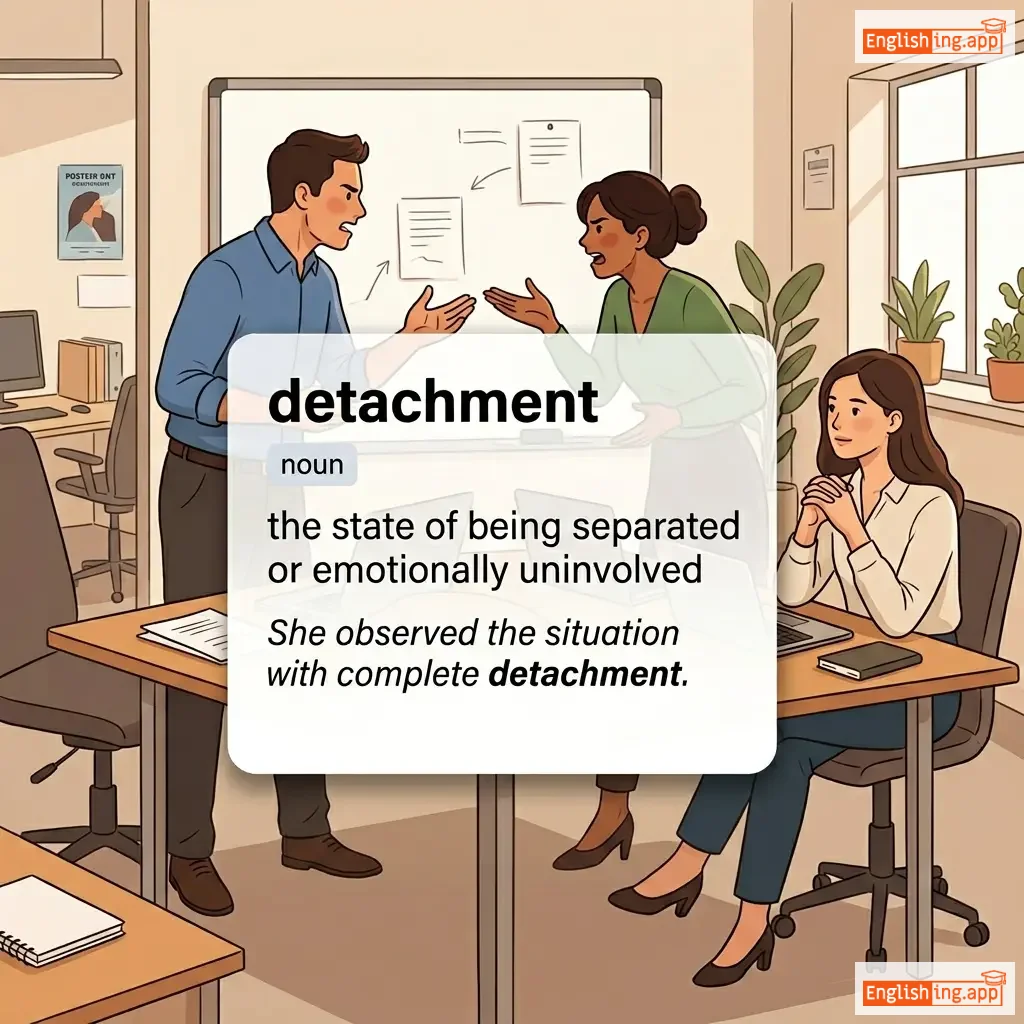
detachment definition card — visual illustration of the meaning
noun
/dɪˈtætʃmənt/
切り離し (kirihashi)

the state of being separated or emotionally uninvolved

"She observed the situation with complete detachment."

"彼女は完全なデタッチメントで状況を観察していた。" (Kanojo wa kanzen na detatchimento de joukyou o kansatsu shiteita.)
noun
/ˈdiː.teɪl/
詳細 (shousai)

An individual feature, fact, or item of information.

"She explained the plan in great detail."

"彼女は計画を詳細に説明しました。" (Kanojo wa keikaku o shousai ni setsumei shimashita.)
adjective
/ˈdiː.teɪld/
詳細 (shousai)

Having many details; very thorough.

"The report provided a detailed analysis of the situation."

"報告書は状況の詳細な分析を提供しました。" (Houkokusho wa joukyou no shousaina bunseki o teikyō shimashita.)
verb
/dɪˈteɪn/

to keep someone from proceeding; to hold back, especially by official authority

"The police detained the suspect for questioning."

verb
/dɪˈtɛkt/
検出する (kenshutsu suru)

To discover or identify the presence of something.

"The device can detect smoke in the room."

"そのデバイスは部屋の中の煙を検出できます。" (Sono debaisu wa heya no naka no kemuri o kenshutsu dekimasu.)
noun
/dɪˈtɛkʃən/
検出 (kenshutsu)

the action or process of identifying the presence of something

"The detection of fraud in the system was swift."

"システム内での詐欺の検出は迅速でした。" (Shisutemu-nai de no sagi no kenshutsu wa jinsoku deshita.)
noun
/dɪˈtɛktɪv/
探偵 (tantei)

a person whose job is to investigate and solve crimes

"The detective solved the mystery in just two days."

"探偵はわずか2日で謎を解決しました。" (Tantei wa wazuka futsuka de nazo o kaiketsu shimashita.)
noun
/deɪˈtɒnt/
緊張関係の緩和 (kinchou kankei no kanwa)

the easing of strained relations, especially between countries

"The treaty helped bring about a détente between the two nations."

"その条約は、二国間の緊張関係を緩和するのに役立ちました。" (Sono jouyaku wa, nikokukan no kinchou kankei o kanwa suru no ni yakudachimashita.)
noun
/dɪˈtɛnʃən/
拘束 (kousoku)

the action of keeping someone in custody or confinement

"The student faced detention for his misbehavior."

"学生は不正行為で拘束を受けました。" (Gakusei wa fusei koui de kousoku wo ukemashita.)
🚫

deter

verb
/dɪˈtɜːr/

to discourage someone from doing something by instilling doubt or fear

"High fines are meant to deter people from breaking the law."

noun
/dɪˈtɜːrdʒənt/
洗剤 (senzai)

a substance used for cleaning, especially for washing clothes and dishes

"She bought a new brand of detergent for laundry."
"彼女は洗濯のために新しいブランドの洗剤を買いました。" (Kanojo wa sentaku no tame ni atarashī burando no senzai o kaimashita.)
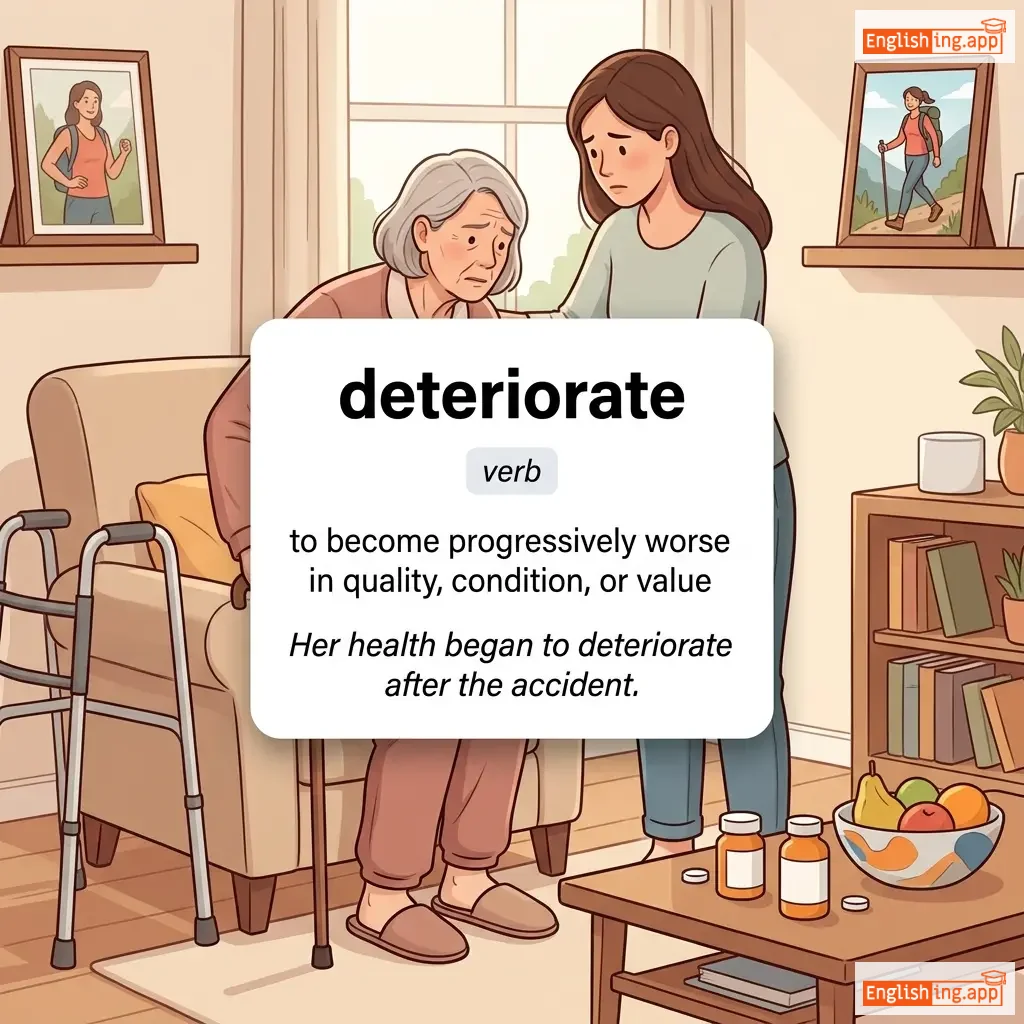
deteriorate definition card — visual illustration of the meaning
verb
/dɪˈtɪriəreɪt/
劣化する (rekka suru)

to become progressively worse in quality, condition, or value

"Her health began to deteriorate after the accident."
"事故後、彼女の健康は劣化し始めた。" (Jiko go, kanojo no kenkou wa rekka shi hajimeta.)
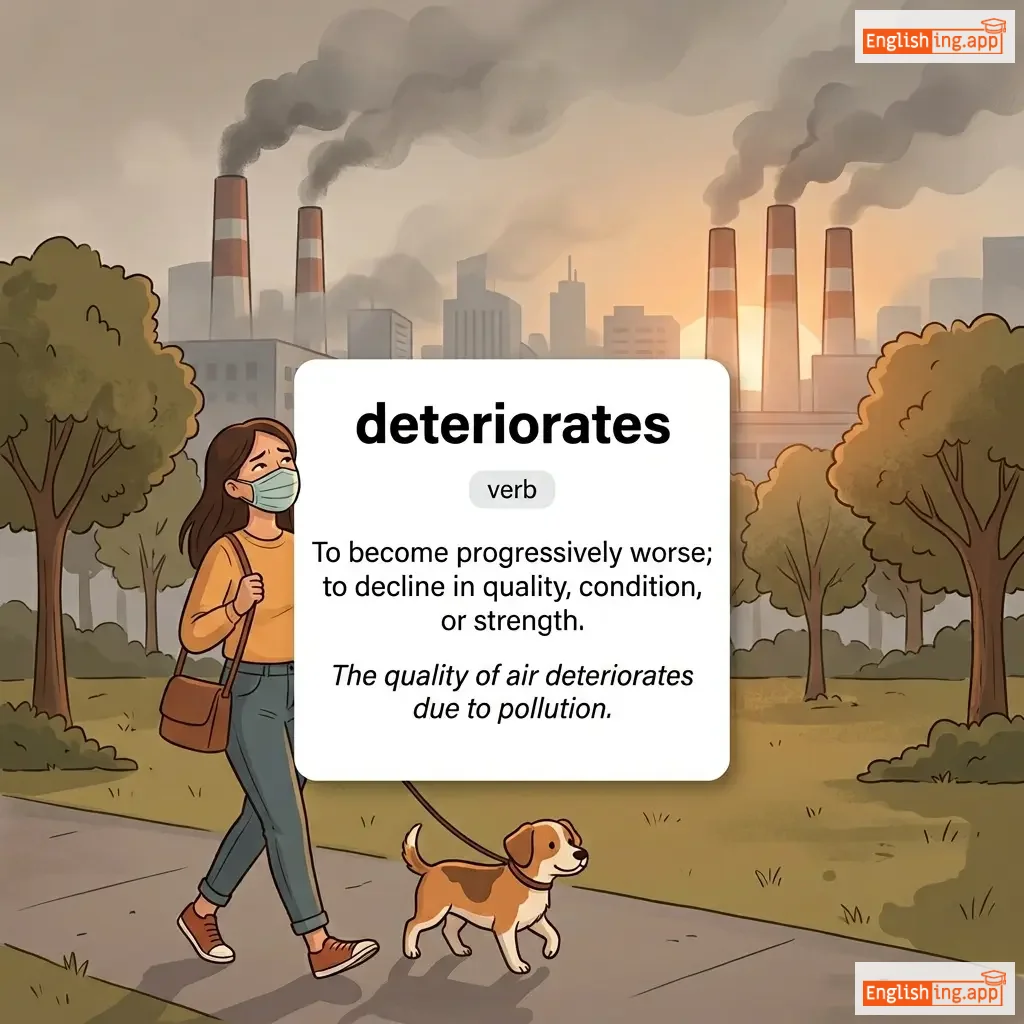
deteriorates definition card — visual illustration of the meaning
verb
dɪˈtɪrɪəˌreɪts
悪化する (deteriorates)

To become progressively worse; to decline in quality, condition, or strength.

"The quality of air deteriorates due to pollution."
"汚染によって大気の質が悪化する。" (osen ni yotte taiki no shitsu ga akka suru)
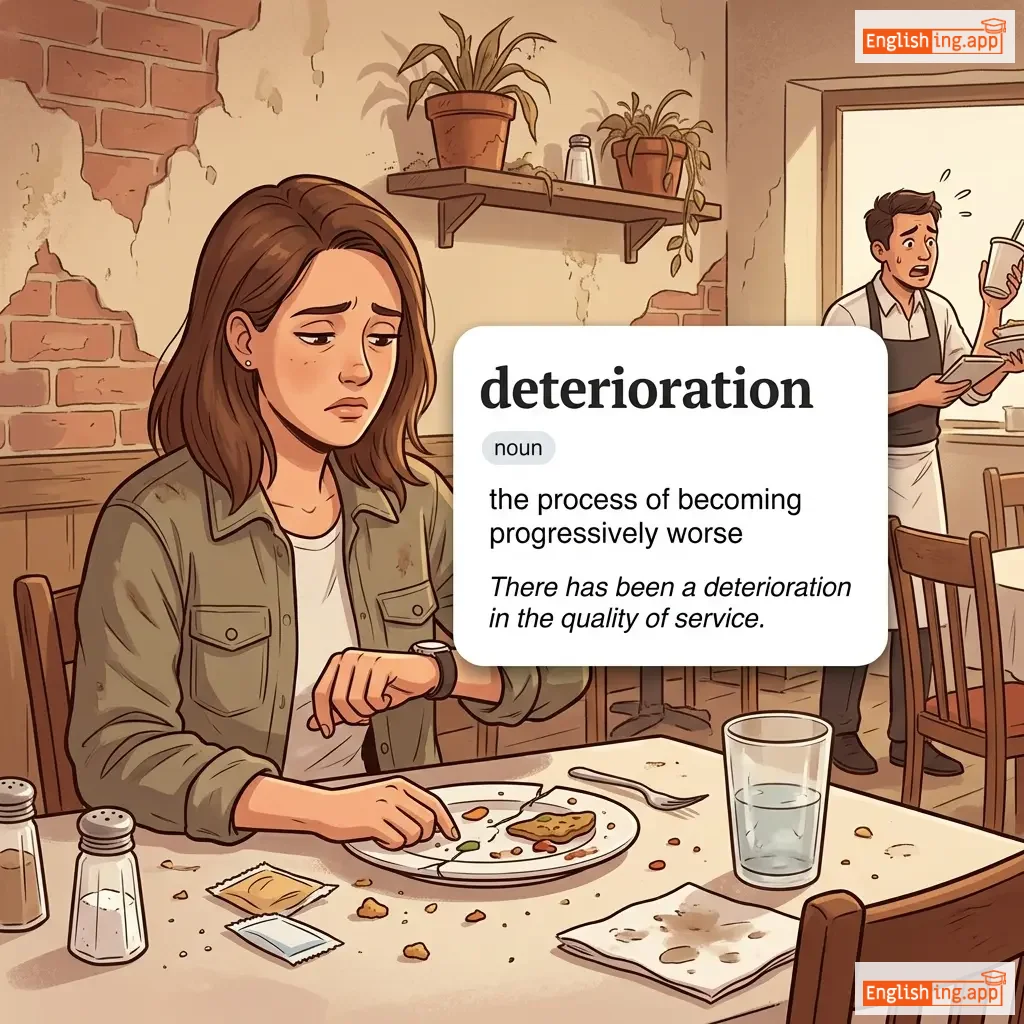
deterioration definition card — visual illustration of the meaning
noun
/dɪˌtɪriəˈreɪʃən/
悪化 (akka)

the process of becoming progressively worse

"There has been a deterioration in the quality of service."

"サービスの質が悪化しました。" (Sābisu no shitsu ga akka shimashita.)
determinant definition card — visual illustration of the meaning
noun
/dɪˈtɜːrmɪnənt/
決定要因 (kettei yōin)

a factor that decisively affects the nature or outcome of something

"Education is a key determinant of economic growth."

"教育は経済成長の主要な決定要因です。" (Kyōiku wa keizai seichō no shuyō na kettei yōin desu.)
adjective
/dɪˈtɜːrmɪnət/
確定的 (kakutei-teki)

having exact and definite limits or form

"The contract is for a determinate period of two years."
"契約は2年間の確定した期間です。" (Keiyaku wa 2 nenkan no kakutei shita kikan desu.)
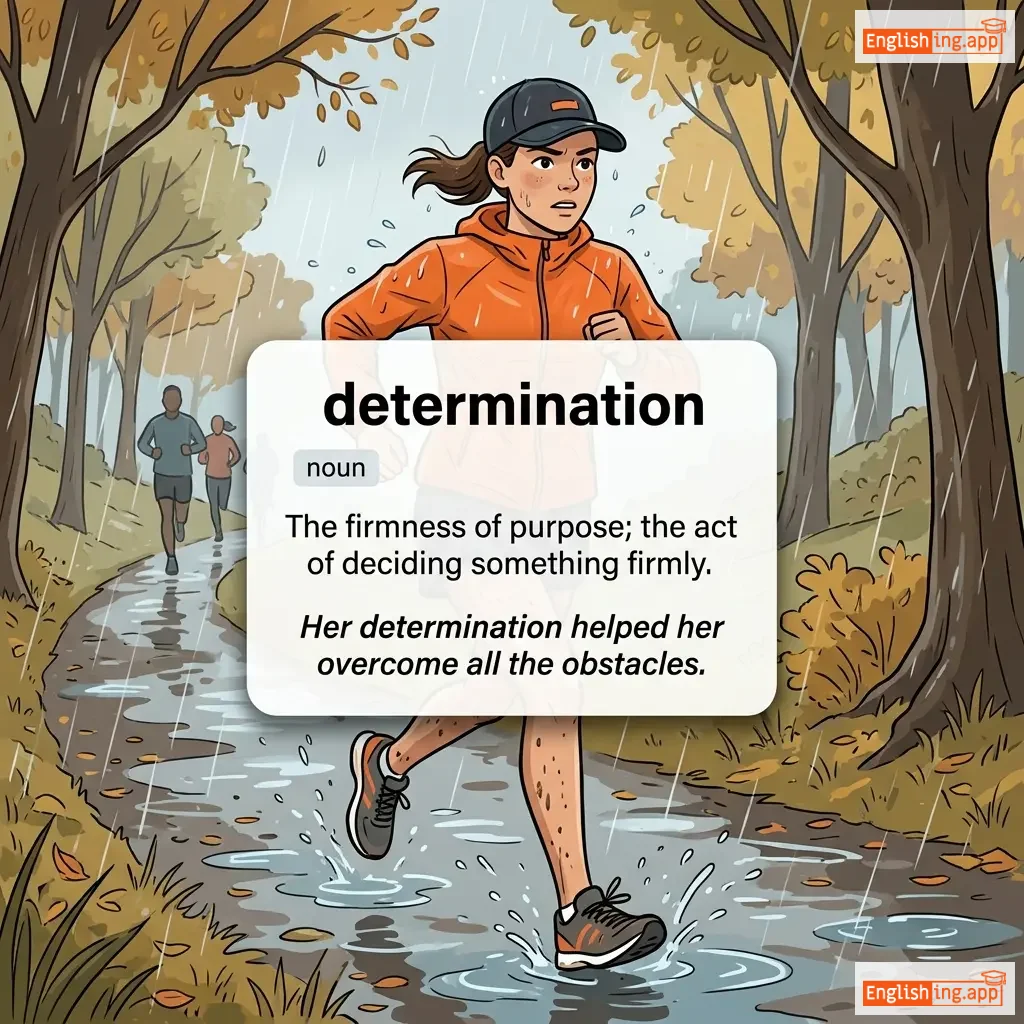
determination definition card — visual illustration of the meaning
noun
/dɪˌtɜːrmɪˈneɪʃən/
決意 (ketsui)

The firmness of purpose; the act of deciding something firmly.

"Her determination helped her overcome all the obstacles."

"彼女の決意は彼女がすべての障害を克服するのを助けました。" (Kanojo no ketsui wa kanojo ga subete no shougai wo kokufuku suru no wo tasukemashita.)
verb
/dɪˈtɜː.mɪn/
決定する (kettei suru)

To decide or establish something after consideration.

"The jury will determine the outcome of the case."

"陪審員は事件の結果を決定します。" (Bishinin wa jiken no kekka o kettei shimasu.)
adjective
/dɪˈtɜːrmɪnd/
決心した (kesshin shita)

Having firmly decided to do something and not letting anything stop you.

"She was determined to finish her studies despite many obstacles."
"多くの障害があったにもかかわらず、彼女は学業を終わらせる決心をしていた。" (Ōku no shōgai ga atta ni mo kakawarazu, kanojo wa gakugyō o owaraseru kesshin o shite ita.)
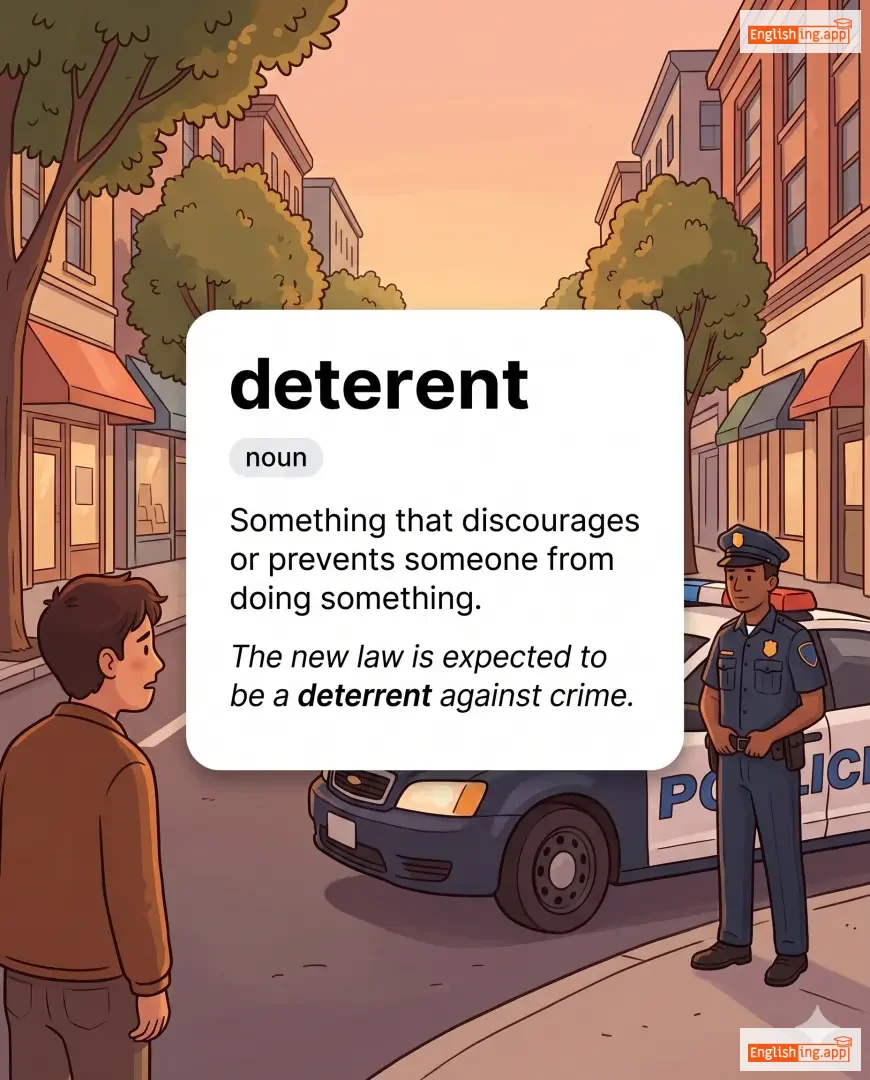
deterrent definition card — visual illustration of the meaning
noun
/dɪˈtɜːrənt/
抑止力 (yokushiryoku)

Something that discourages or prevents someone from doing something.

"The new law is expected to be a deterrent against crime."

"新しい法律は犯罪に対する抑止力になると予想されています。" (Atarashī hōritsu wa hanzai ni taisuru yokushiryoku ni naru to yosō sareteimasu.)
verb
/dɪˈtɛst/
嫌う (kirau)

To dislike intensely or hate.

"I detest waking up early on weekends."

"私は週末に早起きするのが嫌いです。" (Watashi wa shuumatsu ni hayaoki suru no ga kirai desu.)
noun
/ˌdɛtəˈneɪʃən/
爆発 (bakuhatsu)

The act of exploding or causing something to explode.

"The sudden detonation shook the entire building."

"突然の爆発が建物全体を揺さぶった。" (Totsuzen no bakuhatsu ga tatemono zentai o yusabutta.)
noun
/ˈdiːtʊr/
迂回路 (ukairo)

A longer or less direct route taken to avoid something or reach a destination.

"We had to take a detour because the main road was closed."

"メイン道路が閉鎖されていたので、迂回路を取らなければならなかった。" (mein dōro ga heisa sarete ita node, ukairo o toranakereba naranakatta.)
detoxification definition card — visual illustration of the meaning
noun
/dɪˌtɒksɪfɪˈkeɪʃən/
解毒 (gedoku)

The process of removing toxic substances or effects from the body.

"Detoxification is often the first step in treating drug addiction."
"解毒はしばしば薬物依存症治療の最初のステップです。" (Gedoku wa shibashiba yakubutsu izonshou chiryou no saisho no suteppu desu.)
verb
/dɪˈtrækt/

To reduce or take away the worth or value of something.

"His rude behavior will detract from his good reputation."

detraction definition card — visual illustration of the meaning
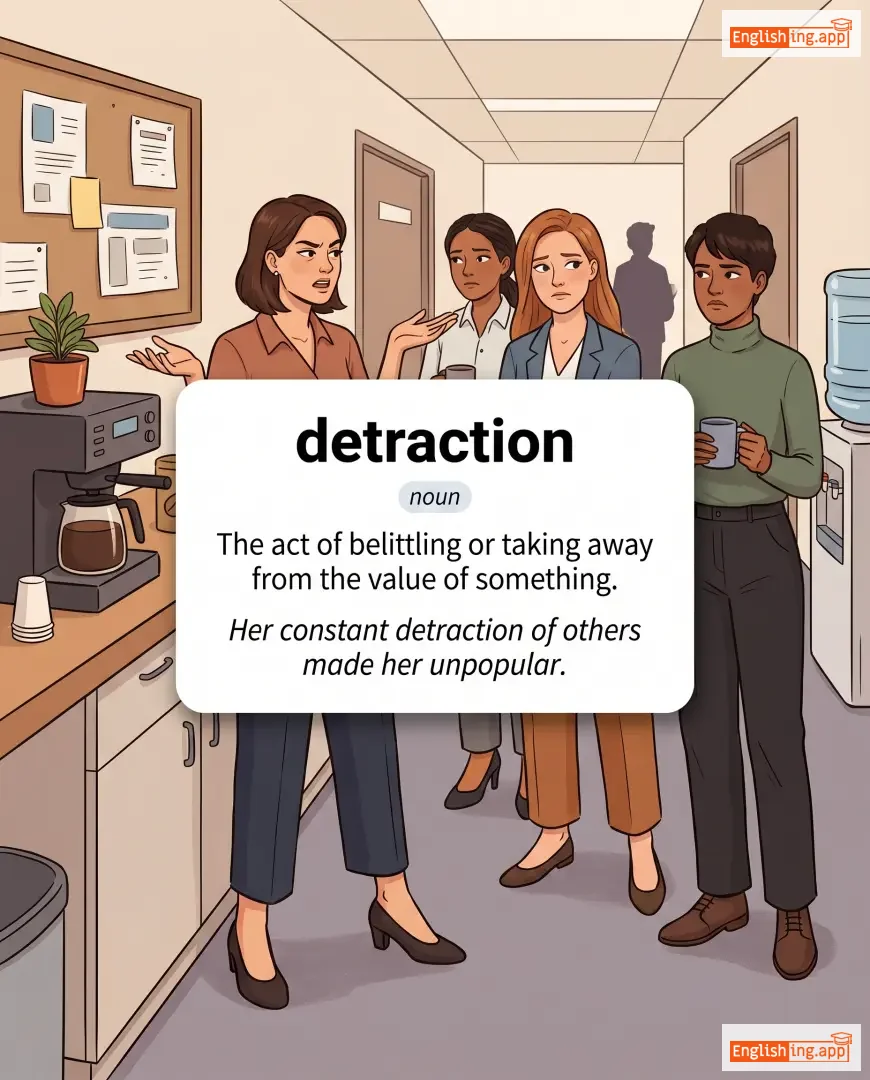
noun
/dɪˈtrækʃən/
非難 (hinan)

The act of belittling or taking away from the value of something.

"Her constant detraction of others made her unpopular."
"他人に対する彼女の絶え間ない非難は、彼女を不人気にした。" (Tanin ni taisuru kanojo no taemai nai hinan wa, kanojo o funinki ni shita.)
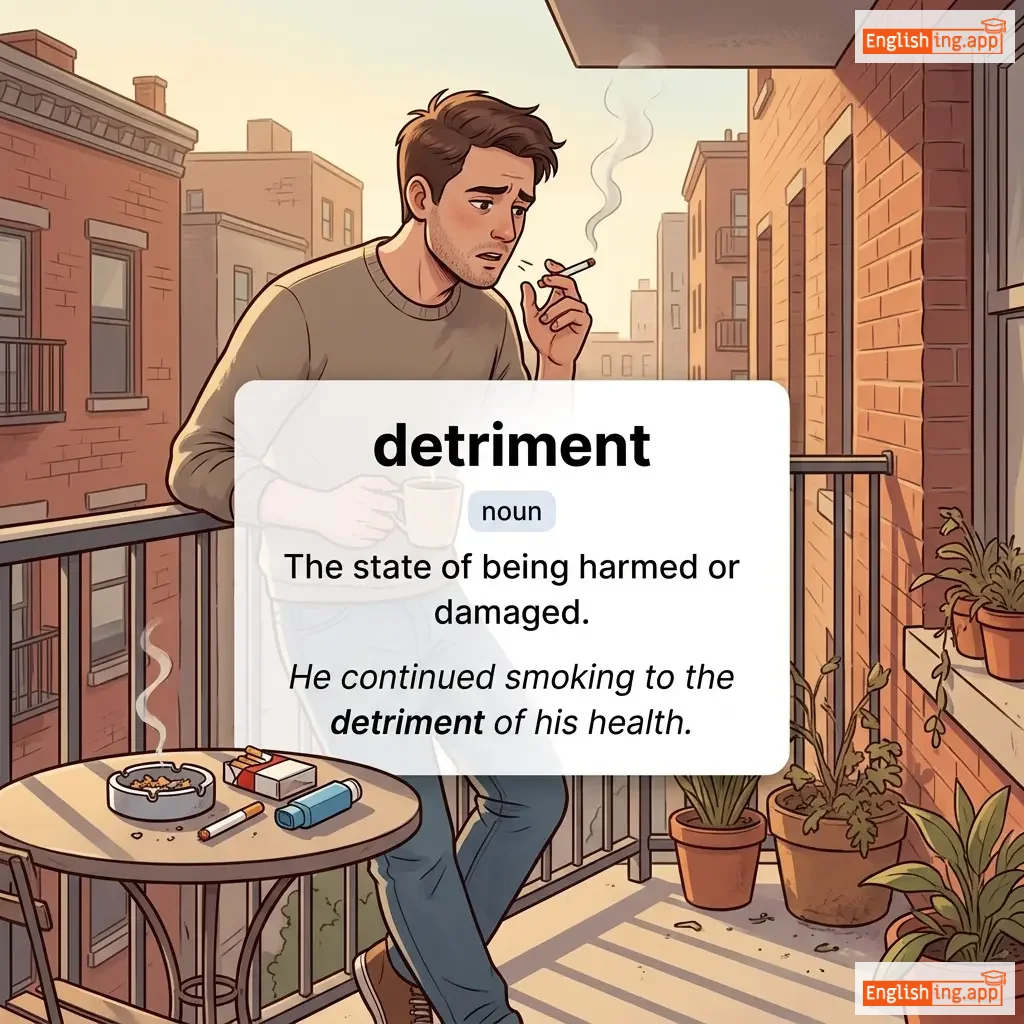
detriment definition card — visual illustration of the meaning
noun
/ˈdɛtrɪmənt/
損害 (songai)

The state of being harmed or damaged.

"He continued smoking to the detriment of his health."
"彼は健康に損害を与えるにもかかわらず、喫煙を続けました。" (Kare wa kenkou ni songai wo ataeru nimokakawarazu, kitsuen wo tsuzukemashita.)
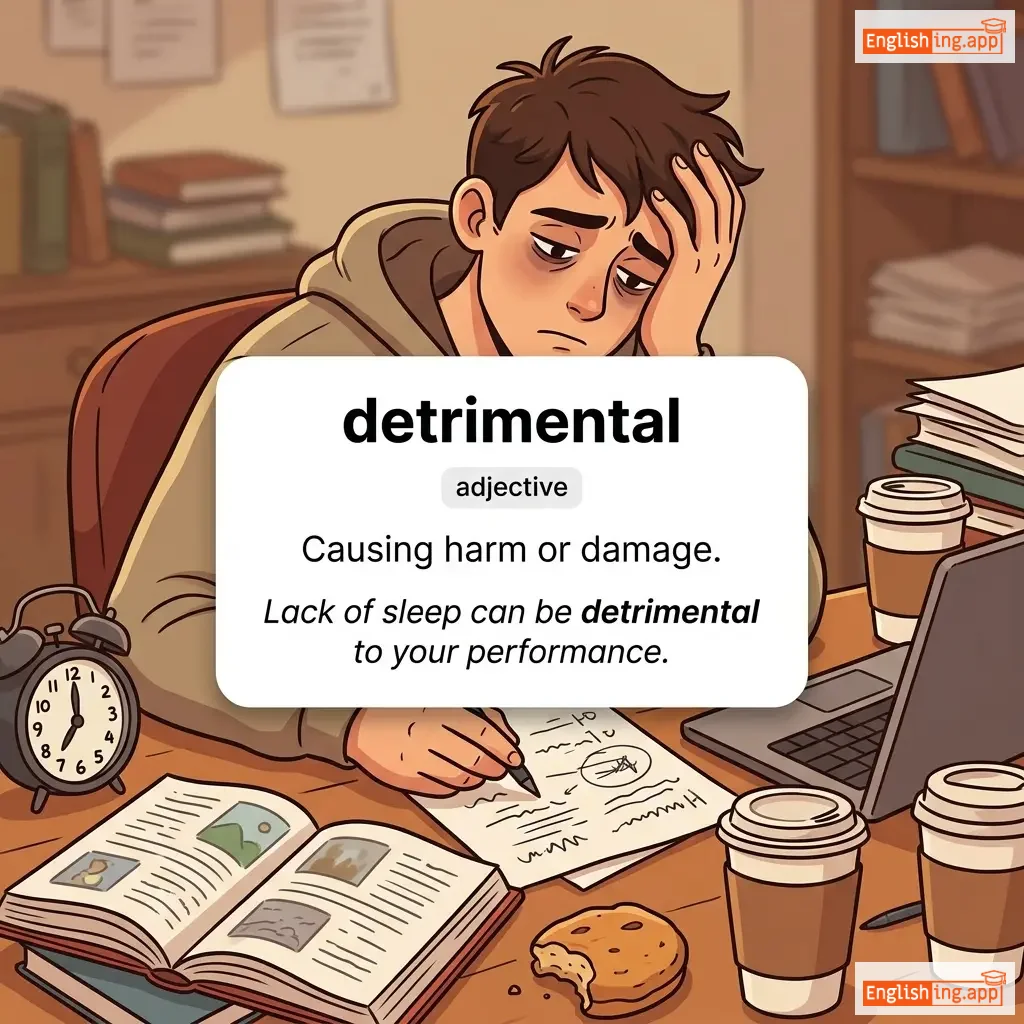
detrimental definition card — visual illustration of the meaning
adjective
/ˌdɛtrɪˈmɛntəl/

Causing harm or damage.

"Lack of sleep can be detrimental to your performance."

noun
/dɪˈtraɪtəs/
デトリタス (detoritasu)

Waste or debris of any kind; fragments left from destruction or decay.

"The riverbank was covered with detritus after the flood."

"洪水後、川岸はデトリタスで覆われていました。" (Kōsui-go, kawagishi wa detoritasu de ōwarete imashita.)
verb
/dɪˈtruːd/
下または外に押し出す (shita mata wa soto ni oshidasu)

To thrust or force something downward or outward.

"The violent waves detruded rocks from the cliff."

"激しい波は崖から岩を押し出しました。" (Hageshī nami wa gake kara iwa o oshidashimashita.)
verb
/ˈdɛvəˌsteɪt/
荒廃させる (kouhai saseru)

to cause severe and overwhelming destruction or damage

"The hurricane devastated the coastal town."

"ハリケーンは沿岸の町を荒廃させた。" (Harikēn wa engan no machi o kōhai saseta.)
adjective
/ˈdevəsteɪtɪŋ/

causing severe shock, distress, or destruction; extremely damaging or upsetting

"The earthquake had a devastating effect on the city."
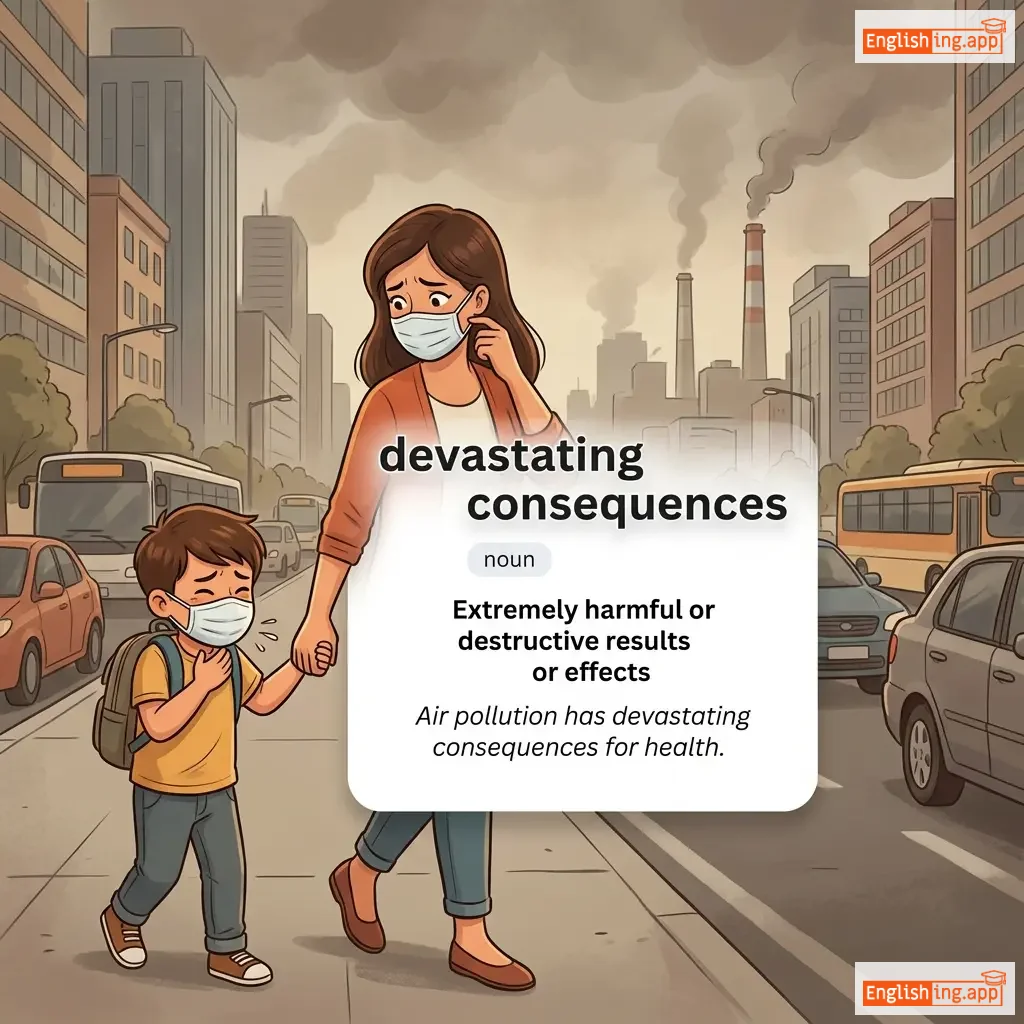
devastating consequences definition card — visual illustration of the meaning
noun
ˈdevəsteɪtɪŋ ˈkɒnsɪkwənsɪz
壊滅的な結果 (kaimetsuteki na kekka)

Extremely harmful or destructive results or effects

"Air pollution has devastating consequences for health."

"大気汚染は健康に壊滅的な結果をもたらす。" (Taiki osen wa kenkō ni kaimetsuteki na kekka o motarasu.)
develop definition card — visual illustration of the meaning
verb
/dɪˈvɛləp/
開発する (kaihatsu suru)

To grow, advance, or create something over time.

"The company aims to develop new software solutions."

"その会社は新しいソフトウェアソリューションを開発することを目指しています。" (Sono kaisha wa atarashī sofutowea sorūshon o kaihatsu suru koto o mezashiteimasu.)
noun
/dɪˈveləpər/
開発者 (kaihatsusha)

a person or company that creates software, buildings, or land projects

"She works as a software developer at a tech company."

"彼女はテクノロジー企業でソフトウェア開発者として働いています。" (Kanojo wa tekunorojī kigyō de sofutowea kaihatsusha toshite hataraiteimasu.)
verb
/dɪˈvɛləpɪŋ/
開発 (kaihatsu)

the process of growing, improving, or becoming more advanced

"She is developing new skills in programming."
"彼女はプログラミングで新しいスキルを開発しています。" (Kanojo wa puroguramingu de atarashii sukiru o kaihatsu shiteimasu.)
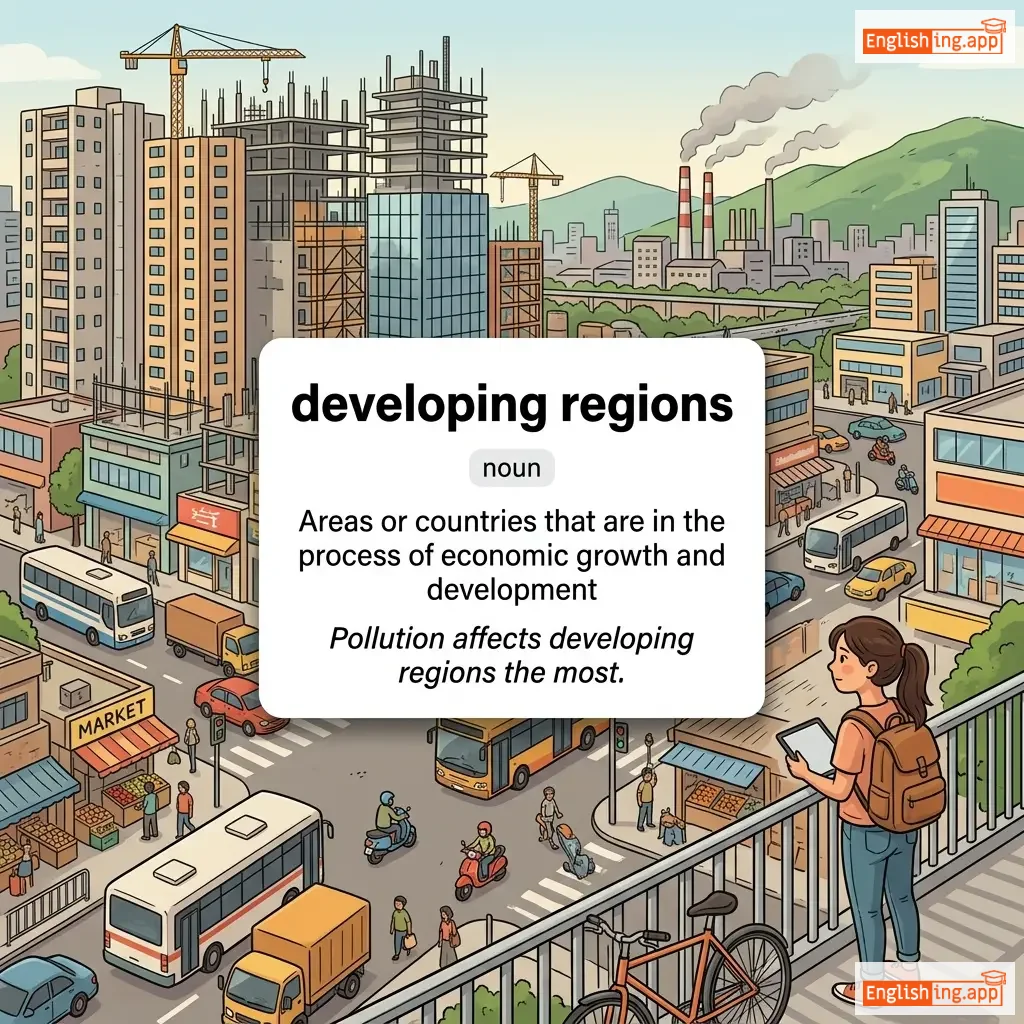
developing regions definition card — visual illustration of the meaning
noun
dɪˈveləpɪŋ ˈriːdʒənz
発展途上地域 (hatten tojou chiiki)

Areas or countries that are in the process of economic growth and development

"Pollution affects developing regions the most."
"汚染は発展途上地域に最も影響を与えます。" (osen wa hatten tojou chiiki ni mottomo eikyou wo ataemasu.)
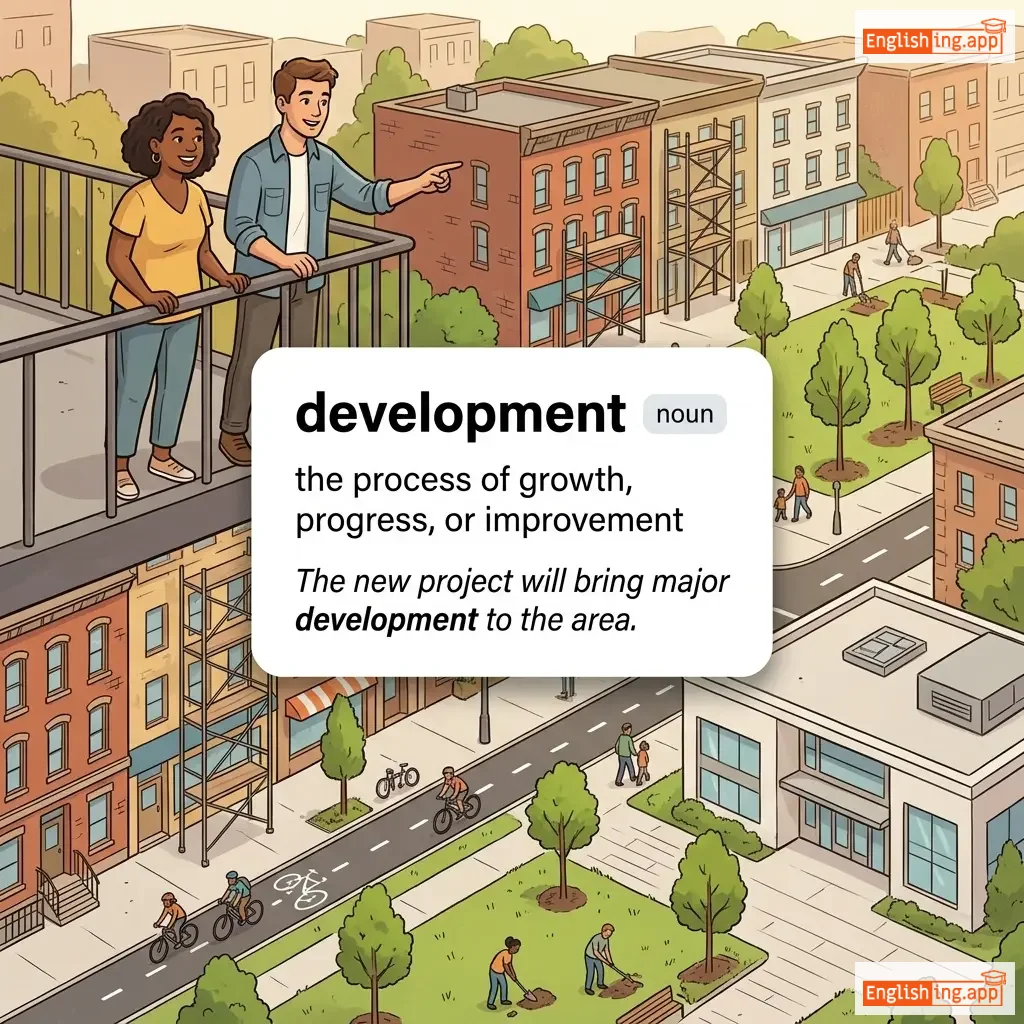
development definition card — visual illustration of the meaning
noun
/dɪˈvɛləpmənt/
開発 (kaihatsu)

the process of growth, progress, or improvement

"The new project will bring major development to the area."

"新しいプロジェクトはその地域に大きな開発をもたらすでしょう。" (Atarashī purojekuto wa sono chiiki ni ōkina kaihatsu o motarasu deshō.)
adjective
/dɪˌveləpˈmentl/
発展的 (hatenteki)

relating to the process of growth or progress

"Early childhood is a crucial developmental stage for learning."

"幼児期は学習にとって重要な発展的段階です。" (Yōjiki wa gakushū ni totte jūyōna hatten-teki dankai desu.)
noun
/ˈdiːviəns/
逸脱 (itsudatsu)

Behavior that differs from accepted social or moral standards.

"The book studies deviance in urban youth culture."

"その本は都市の若者文化における逸脱を研究しています。" (Sono hon wa toshi no wakamono bunka ni okeru itsudatsu o kenkyu shiteimasu.)
deviate definition card — visual illustration of the meaning
verb
/ˈdiːvieɪt/
逸脱する (itsudatsu suru)

To depart from an established course or norm.

"He decided to deviate from the original plan."

"彼は元の計画から逸脱することに決めました。" (Kare wa moto no keikaku kara itsudatsu suru koto ni kimemashita.)
noun
/ˌdiːviˈeɪʃn/
偏差 (hensha)

The action of departing from an accepted standard or norm.

"Any deviation from the rules will not be tolerated."

"規則からのいかなる偏差も許されません。" (Kisoku kara no ikannaru hensha mo yurusaremasen.)
device definition card — visual illustration of the meaning
noun
/dɪˈvaɪs/
装置 (souchi)

An object, machine, or piece of equipment designed for a particular purpose.

"She bought a new device to track her fitness activities."

"彼女はフィットネス活動を追跡するために新しい装置を買いました。" (Kanojo wa fitness katsudou wo tsuiseki suru tame ni atarashii souchi wo kaimashita.)
noun
/ˈdɛv.əl/
悪魔 (akuma)

An evil spirit or supernatural being often regarded as the embodiment of wickedness and harm.

"The story warned children about making deals with the devil."

"その話は子供たちに悪魔と取引をしないように警告した。" (Sono hanashi wa kodomotachi ni akuma to torihiki o shinai yō ni keikoku shita.)