語彙集

英単語辞書 | 単語の意味、定義、例文

verb
/kəˈriːn/
制御を失って進む (segyo o ushinatte susumu)

To move swiftly and in an uncontrolled way, especially in a specific direction.

"The car careened down the slippery road."

"車は滑りやすい道路で制御を失いながら進みました。" (Kuruma wa suberiyasui dōro de segyo o ushinai nagara susumimashita.)
career definition card — visual illustration of the meaning
noun, verb
/kəˈrɪər/
キャリア / 職業 (kyaria / shokugyo)

As a noun: a person’s course of professional life; as a verb: to move swiftly and in an uncontrolled way.

"She built a successful career in medicine."

"彼女は医学の分野で成功したキャリアを築いた。" (Kanojo wa igaku no bunya de seikou shita kyaria wo kizuita.)
adjective
/ˈkeəfriː/
気楽 (kiraku)

Free from worries or responsibilities; relaxed and happy.

"She enjoyed a carefree afternoon at the beach."
"彼女はビーチで気楽な午後を楽しんだ。" (Kanojo wa biichi de kiraku na gogo o tanoshinda.)
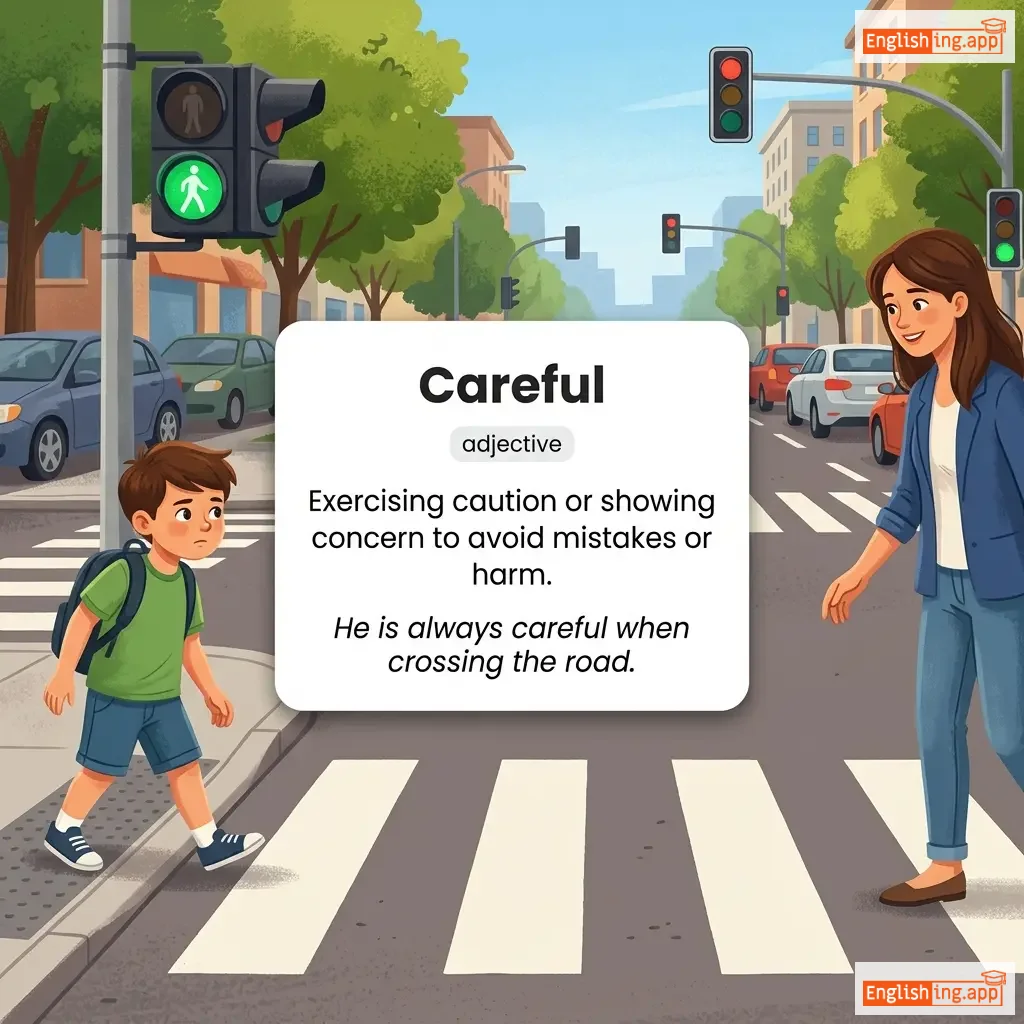
Careful definition card — visual illustration of the meaning
adjective
/ˈkɛr.fəl/
慎重 (shinchou)

Exercising caution or showing concern to avoid mistakes or harm.

"He is always careful when crossing the road."

"彼は道路を渡る時、いつも慎重です。" (Kare wa douro o wataru toki, itsumo shinchou desu.)
adverb
/ˈkɛərfəli/
慎重に (shinchou ni)

In a way that is done with attention to detail and caution to avoid mistakes or harm.

"He carefully placed the glass on the table."

"彼は慎重にグラスをテーブルに置きました。" (Kare wa shinchou ni gurasu wo teeburu ni okimashita.)
🤷‍♂️😰

Careless (keāresu)

adjective
/ˈkeər.ləs/
不注意な; 無頓着な; 不注意な; おおざっぱな; (kearesu)

not giving sufficient attention or thought to avoiding harm or errors; negligent; inattentive

"His careless driving caused a serious accident on the highway."

"彼の不注意な運転が高速道路で深刻な事故を引き起こしました。" (Kare no fuchūina unten ga kōsoku dōro de shinkoku na jiko o hikiokoshimashita.)
adverb
/ˈkeərləsli/
不注意に (fuuchuui ni)

without care or attention; in a negligent or reckless manner

"He carelessly left the door unlocked."

"彼は不注意にドアの鍵をかけ忘れた。" (kare wa fuuchuui ni doa no kagi o kake wasureta)
noun
/ˈker.ləs.nəs/
不注意; 不注意 (fuchūi, fuchūi)

failure to give sufficient attention to avoiding harm or errors

"His carelessness with money led to serious financial problems."

"彼の金銭への不注意は、深刻な財務問題を引き起こしました。" (Kare no kinsei e no fuchūi wa, shinkoku na zaimu mondai o hikiokoshimashita.)
noun
/kəˈres/
愛撫 (aibu)

a gentle or loving touch

"The mother's gentle caress calmed the crying baby."

"母親の優しい愛撫が泣いている赤ちゃんを落ち着かせた。" (Hahaoya no yasashī aibu ga naiteiru akachan o ochitsukase ta.)
noun
/ˈkærɪt/
キャレット (^) (kyaretto)

A proofreading symbol (^) used to indicate where something should be inserted.

"The editor placed a caret to show where the missing word should go."

"編集者は、欠落している単語を挿入する場所を示すためにキャレットを配置しました。" (Henshū-sha wa, ketsuraku shite iru tango o nyūryoku suru basho o shimesu tame ni kyaretto o haichi shimashita.)
adjective
/ˈkeəwɔːn/
疲れ切って心配そうな (tsukarekitte shinpai sō na)

Showing signs of worry, stress, or exhaustion.

"His careworn face revealed years of struggle."

"彼の疲れ切った顔は長年の戦いを物語っていました。" (Kare no tsukarekitte ta kao wa naganen no tatakai o monogatari te imashita.)
noun
/ˈkɑːrɡoʊ/
貨物 (kamotsu)

goods carried by a ship, plane, or other transport

"The ship was loaded with valuable cargo."

"船は貴重な貨物で満載でした。" (fune wa kichō na kamotsu de mansai deshita.)
noun
/ˈkɑr.ɡoʊ ʃɪp/
貨物船 (kamotsu sen)

a ship or vessel that carries goods and materials from one port to another

"The cargo ship transported containers filled with electronics across the ocean."

"貨物船は、電子機器で満載のコンテナを海を越えて運びました。" (kamotsu sen wa, denshi kiki de manzai no konteina o umi o koete hakomimashita)
noun
/ˈkærɪkətjʊə/
風刺画 (fushiga)

A picture or description that exaggerates certain features for comic or satirical effect.

"The magazine published a caricature of the politician."

"雑誌は政治家の風刺画を発表しました。" (Zasshi wa seijika no fushiga o happyou shimashita.)
noun
/ˈkærɪlɒn/
カリヨン (karion)

A set of bells played using a keyboard, usually in a tower.

"The carillon bells rang across the town square."

"カリヨンの鐘の音が町の広場に響き渡った。" (Karion no kane no oto ga machi no hiroba ni hibikiwatta.)
noun
/ˈkɑːrmaɪn/
カーマインレッド (kaamain reddo)

A vivid crimson or purplish-red color, often used as a dye or pigment.

"The artist used carmine to paint the vibrant sunset sky."

"アーティストはカーマインレッドを使って鮮やかな夕焼け空を描きました。" (Aatisuto wa kaamain reddo o tsukatte azayakana yuuyake sora o kakimashita.)
noun
/ˈkɑːrnɪdʒ/

The killing of a large number of people; great destruction and bloodshed.

"The battlefield was a scene of unimaginable carnage."

carnal definition card — visual illustration of the meaning
adjective
/ˈkɑːrnəl/
肉体的 (nikutai-teki)

Relating to physical, especially sexual, desires and appetites.

"The book explores the conflict between spiritual and carnal desires."

"この本は精神的欲望と肉体的欲望の間の対立を探ります。" (Kono hon wa seishinteki yokubou to nikutai-teki yokubou no aida no tairitsu o sagurimasu.)
adjective
/kɑːrˈnɪvərəs/
肉食性の (nikushokusei no)

Feeding on the flesh of other animals; meat-eating.

"Lions are carnivorous animals that hunt in groups."

"ライオンは群れで狩りをする肉食性の動物です。" (Raion wa mure de kari wo suru nikushokusei no doubutsu desu.)
noun
/ˈkærəm/
キャラウェイ (kyarawei)

aromatic seeds of a plant used as a spice, especially in Indian cooking

"Carom seeds are often used in traditional Indian bread recipes."

"キャラウェイの種は、伝統的なインディアンのパンのレシピでよく使われます。" (Kyaravei no tane wa, dentouteki na Indian no pan no reshipi de yoku tsukawaremasu.)
noun
/kəˈraʊzl/
騒々しいパーティー (souzoushii paatii)

A noisy or lively drinking party or festivity.

"They were exhausted after a night of wild carousal."

"彼らは一晩のワイルドな騒々しいパーティーの後、疲れ切っていた。" (Karera wa ichiban no wairudo na souzoushii paatii no ato, tsukare kitta ita.)
verb
/kəˈraʊz/
騒いで飲む (sawaide nomu)

to drink and enjoy oneself noisily, often with others

"They stayed up all night to carouse after the victory."

"彼らは勝利の後、一晩中騒いで飲んでいた。" (Karera wa shōri no ato, hitobanjū sawaide nonde ita.)
verb
/kɑːrp/
不平を言う (fuhē wo iu)

to complain or find fault continually, often about trivial matters

"She tends to carp about the smallest inconveniences."

"彼女は最小の不便さについても不平を言う傾向がある。" (Kanojo wa saishō no fubensa ni tsuite mo fuhei wo iu keikō ga aru.)
noun
/ˈkɑːr.pən.tər/
大工 (daiku)

a person who makes and repairs wooden objects and structures

"The carpenter built a beautiful wooden cabinet for the kitchen."

"The carpenter built a beautiful wooden cabinet for the kitchen." (Daiku wa daidokoro no tame ni utsukushii mokusei no kyabinetto o tsukutta.)
noun
/ˈkɑːrpɪt/
カーペット (kaapetto)

a thick woven floor covering

"They bought a red carpet for the living room."
"彼らはリビングルーム用に赤いカーペットを買いました。" (Karera wa ribingu rūmu-yō ni akai kāpetto o kaimashita.)
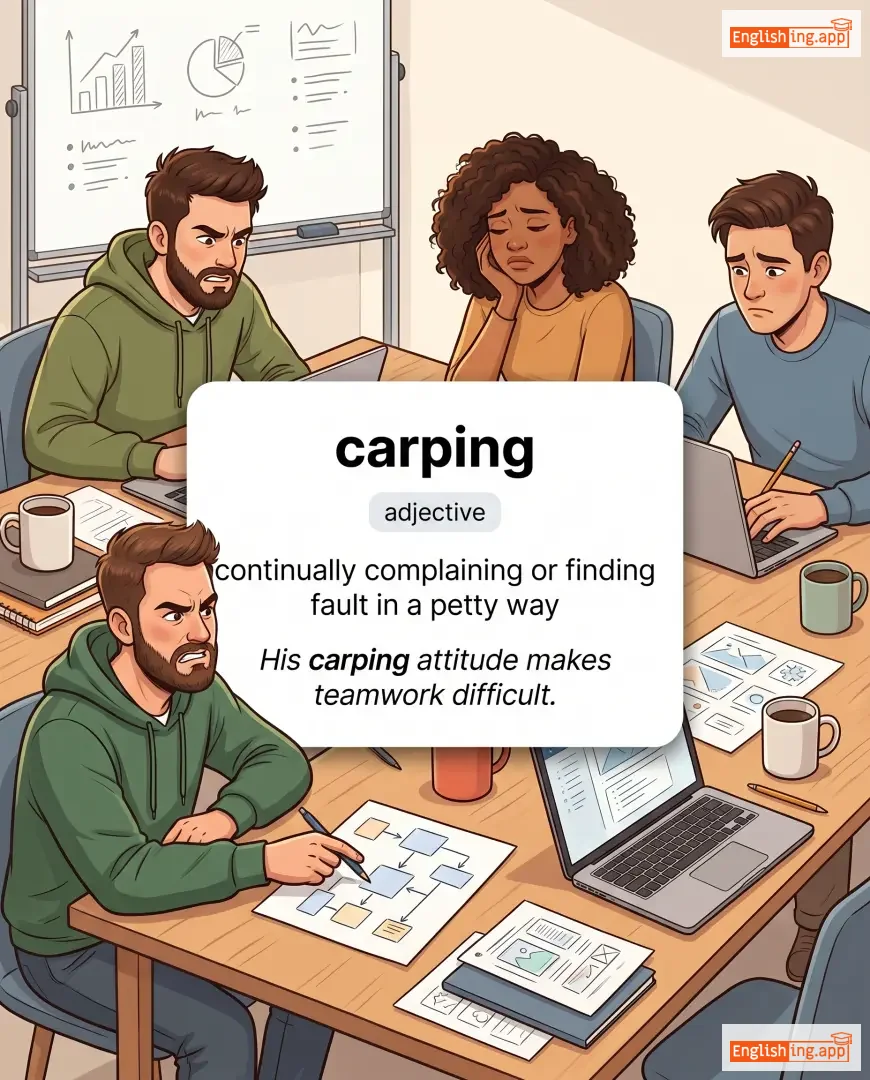
carping definition card — visual illustration of the meaning
adjective
/ˈkɑːrpɪŋ/
愚痴 (guchi)

continually complaining or finding fault in a petty way

"His carping attitude makes teamwork difficult."

"彼の愚痴っぽい態度はチームワークを難しくします。" (kare no guchippō na taido wa chīmuwāku o muzukashiku shimasu.)
noun
/ˈkærɪdʒ/
馬車 (basha)

a vehicle, typically a four-wheeled one, used for transporting goods or people, especially in the past

"The royal family traveled in a beautiful carriage during parades."

"王族はパレードの間、美しい馬車で移動していました。" (Ōzoku wa parēdo no aida, utsukushī basha de idō shite imashita.)
noun
/ˈkæriər/
運送業者 (unsou gyousha)

A person or thing that carries, transports, or conveys something; also an organization that provides transport services.

"The airline is the largest carrier in the country."

"その航空会社は国で最も大きな運送業者です。" (Sono koukō gaisha wa kuni de mottomo ōkina unsou gyousha desu.)
noun
/ˈkæriən/
死骸 (shigai)

the decaying flesh of dead animals

"Vultures feed on carrion left in the fields."

"ハゲワシは野原に残された死骸を食べる。" (Hagewashi wa nohara ni nokosareta shigai o taberu.)
noun
/ˈkærət/
にんじん (ninjin)

a long, tapering orange root eaten as a vegetable

"She added chopped carrots to the soup."
"彼女はスープに切ったにんじんを加えました。" (Kanojo wa suupu ni kitta ninjin o kuwaemashita.)
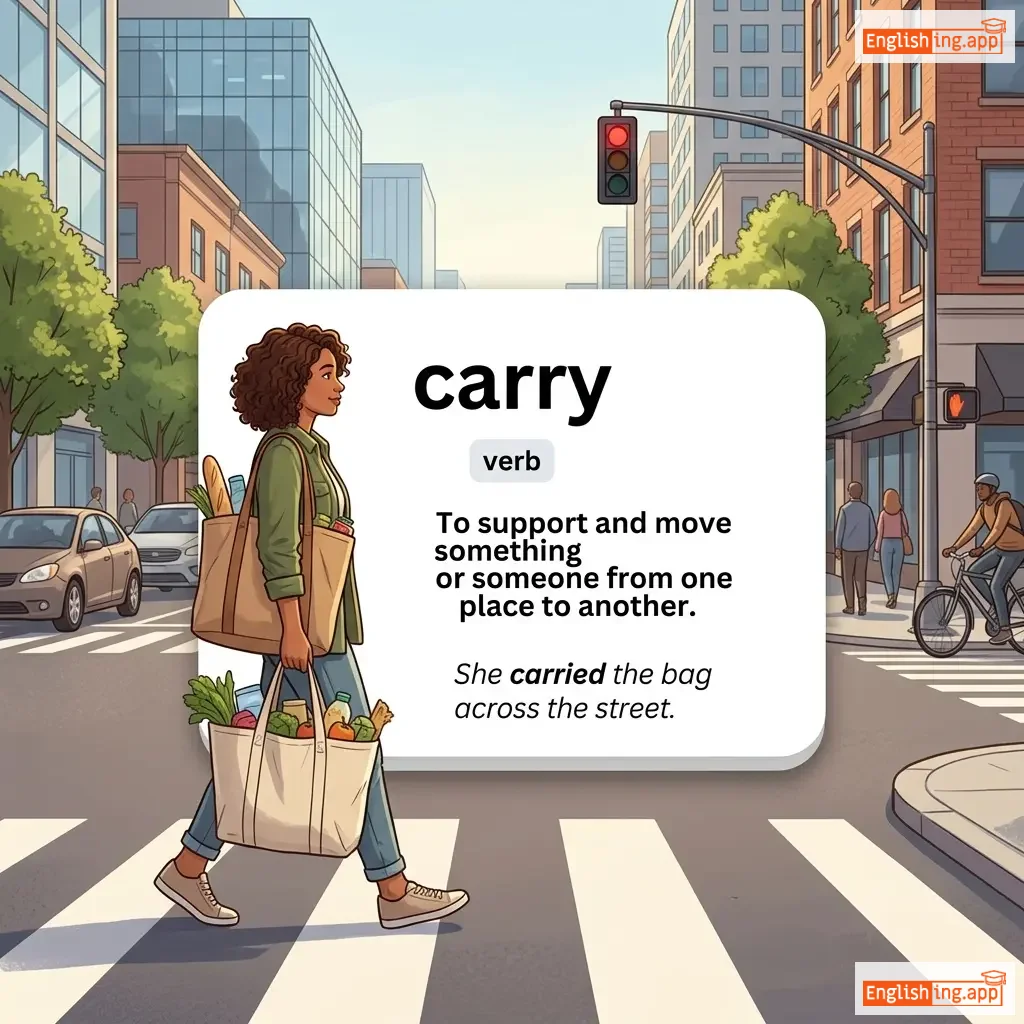
carry definition card — visual illustration of the meaning
verb
/ˈkæri/
運ぶ (hakobu)

To support and move something or someone from one place to another.

"She carried the bag across the street."
"彼女はバッグを通りの向こう側に運びました。" (Kanojo wa baggu o tōri no mukōgawa ni hakobimashita.)
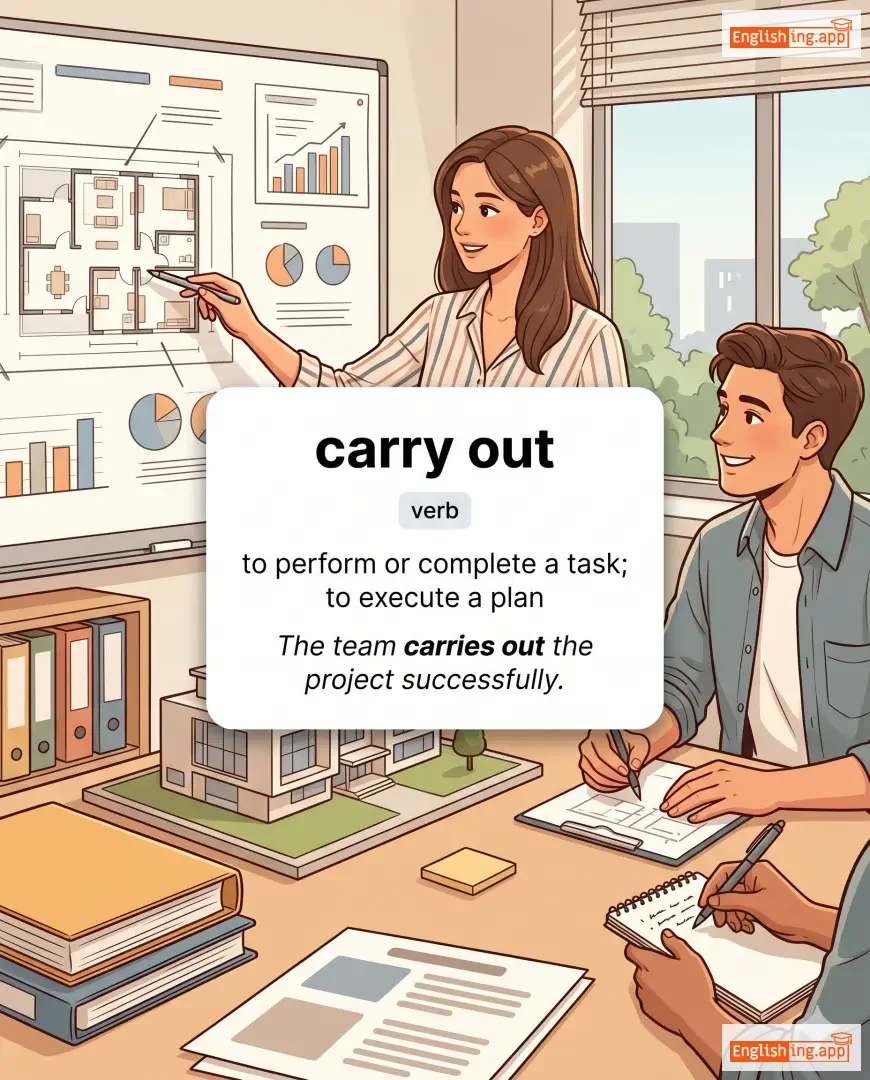
carry out definition card — visual illustration of the meaning
verb
/ˈkæri aʊt/
実行する (jikkou suru)

to perform or complete a task; to execute a plan

"The team carries out the project successfully."

"チームはプロジェクトを成功裏に実行します。" (Chīmu wa purojekuto o seikōri ni jikkou shimasu.)
noun
/kɑːrt/
カート (kaato)

a vehicle with wheels that is pulled by a person or animal for carrying goods

"The farmer loaded hay onto the cart."

"農夫は干し草をカートに積み込んだ。" (Nōfu wa hoshi kusa o kāto ni tsumikonda.)
noun
/ˌkɑːrt ˈblɑːnʃ/

complete freedom to act as one wishes

"The manager gave her team carte blanche to design the project."

noun
/ˈkɑːrtɪlɪdʒ/
軟骨 (nankotsu)

A firm, flexible connective tissue found in various parts of the body such as joints, ear, and nose.

"The doctor explained that the injury damaged the cartilage in his knee."

"医者はその怪我が彼の膝の軟骨にダメージを与えたと説明しました。" (Isha wa sono kega ga kare no hiza no nankotsu ni damēji o ataeta to setsumei shimashita.)
noun
/kɑːrˈtɒɡrəfər/
地図製作者 (chizu seisakusha)

A person who makes maps.

"The cartographer carefully drew the map of the new territory."
"カートグラファーは新しい地域の地図を慎重に描きました。" (Kātogurafā wa atarashī chiiki no chizu o shinchō ni kakimashita.)
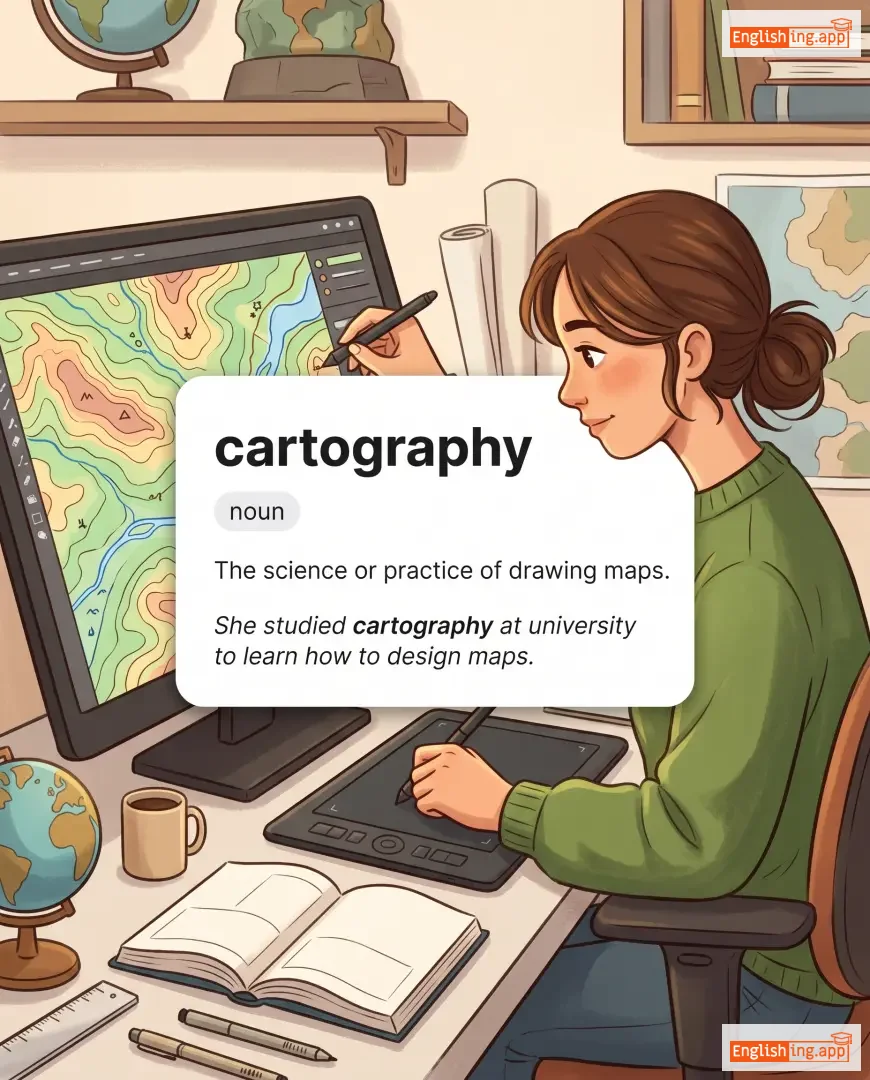
cartography definition card — visual illustration of the meaning
noun
/kɑːrˈtɒɡrəfi/
地図学 (chizugaku)

The science or practice of drawing maps.

"She studied cartography at university to learn how to design maps."

"彼女は大学で地図学を学び、地図のデザインを学びました。" (Kanojo wa daigaku de chizugaku o manabi, chizu no dezain o manabimashita.)
noun
/kɑːrˈtuːn/
アニメーション (animēshon)

a humorous or animated drawing, especially one in newspapers or television

"Children love watching cartoons on TV."

"子供たちはテレビでアニメを見るのが大好きです。" (Kodomotachi wa terebi de animē o miru no ga daisuki desu.)
noun
/ˈkɑːrtrɪdʒ/
カートリッジ (kaatorijji)

A container holding a substance or device, such as ink for printers or bullets for firearms.

"The printer stopped working because the ink cartridge was empty."

"プリンターはインクカートリッジが空になったため、動作を停止しました。" (Purintaa wa inku kaatorijji ga kara ni natta tame, dōsa o teishi shimashita.)
🔪

carve

verb
/kɑːrv/

To cut or shape something, especially wood or stone, into a desired form.

"The artist carved a beautiful statue out of marble."

noun
/ˌkɛəriˈætɪd/
女性の姿をした柱 (josei no sugata o shita hashira)

A stone carving of a draped female figure, used as a supporting column in architecture.

"The ancient temple featured a caryatid holding up the roof."

"古代の神殿には屋根を支えるカリアティッドがありました。" (Kodai no shinden ni wa yane o sasaeru kariatido ga arimashita.)
noun/verb
/kæˈskeɪd/
滝, 流れ (taki, nagare)

A small waterfall or a process that occurs in stages, one after another.

"Water cascaded down the rocky slope."
"水は岩だらけの坂を滝のように流れ落ちました。" (Mizu wa iwadarake no saka o taki no yō ni nagare ochimashita.)
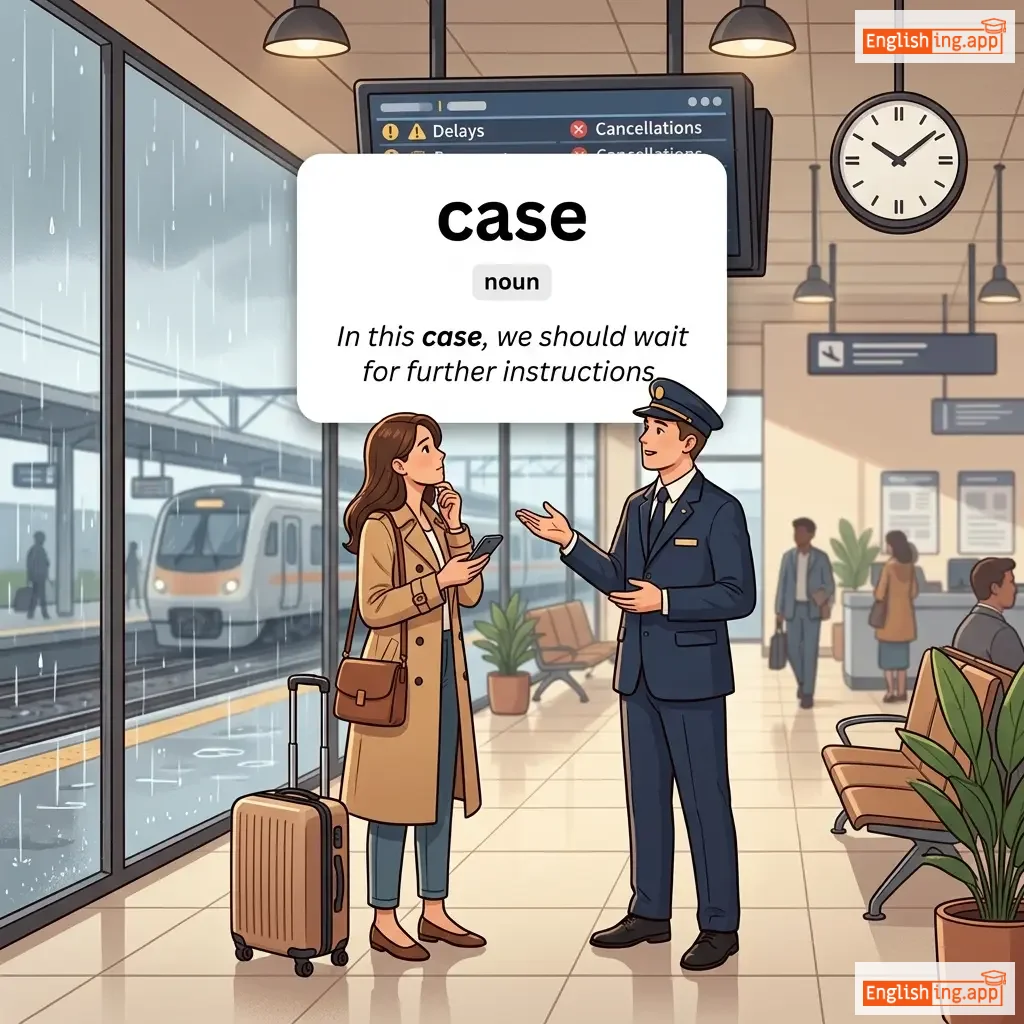
case definition card — visual illustration of the meaning
noun
/keɪs/
ケース / 状況 (keesu / joukyou)

A particular situation, occurrence, or an instance of something; also a container or covering for something.

"In this case, we should wait for further instructions."

"この場合は、さらに指示を待つべきです。" (Kono baai wa, sara ni shiji o matsu beki desu.)
noun
/ˈkeɪsiːn/
カゼイン (kazein)

the main protein found in milk and cheese, used in food production and supplements

"Casein protein powder is popular among athletes for muscle recovery."

"カゼインプロテインパウダーは、アスリートにとって筋肉の回復に人気があります。" (Kazein purotein paudā wa, asurīto ni totte kinniku no kaifuku ni ninki ga arimasu.)
noun
/kæʃ/
現金 (genkin)

money in the form of bills or coins, not checks or credit

"She paid the bill in cash."

"彼女は現金で支払いをしました。" (Kanojo wa genkin de shiharai o shimashita.)
noun
/ˈkæʃ.uː nʌt/
カシューナッツ (kashū nattsu)

a kidney-shaped nut with a creamy texture and mild flavor

"Cashew nuts are often used in cooking and as a healthy snack."

"カシューナッツは、料理や健康的なおやつに使われることがよくあります。" (Kashū nattsu wa, ryōri ya kenkō-teki na oyatsu ni tsukawareru koto ga yoku arimasu.)
noun
/ˈkæʃuː nʌts/
カシューナッツ (kashu nattsu)

kidney-shaped nuts from the cashew tree, commonly eaten as snacks or used in cooking

"Cashew nuts are often used in Indian sweets and curries."

"カシューナッツはインディアンの甘いお菓子やカレーによく使われます。" (Kashu nattsu wa Indian no amai okashi ya karē ni yoku tsukawaremasu.)
noun
/kæˈʃɪər/
キャッシャー (kyasshā)

a person who handles payments and transactions in a store or bank

"The cashier scanned all the items and calculated the total bill."

"キャッシャーはすべての商品をスキャンし、合計金額を計算しました。" (kyasshā wa subete no shōhin o sukyan shi, gōkei kingaku o keisan shimashita.)
noun
/ˈkeɪ.sɪŋ/
カバー; 外殻 (kaba, tokaru)

a cover or shell that protects or encloses something

"The mechanic removed the engine casing to examine the internal parts."

"整備士はエンジンの外殻を取り外して内部の部品を調べました。" (Seibishi wa enjin no tokaru o torihazushite naibu no buhin o shirabemashita.)
noun
/kəˈsiːnoʊ/
カジノ (kajino)

a place where people gamble and play games of chance

"They spent the evening playing cards at the casino."

"彼らはカジノでカードをして夜を過ごしました。" (Karera wa kajino de kādo o shite yoru o sugoshimashita.)