
語彙集

英単語辞書 | 単語の意味、定義、例文

✂️

cull

verb
/kʌl/

to select or remove from a larger group, often to reduce numbers

"The farmers decided to cull the sick animals from the herd."

culminate definition card — visual illustration of the meaning
verb
/ˈkʌl.mɪ.neɪt/
最高潮に達する (saikōchō ni tassuru)

to reach the highest point or final stage

"The negotiations culminated in a successful agreement."

"交渉は成功裏に合意に至った。" (Kōshō wa seikōri ni gōi ni itatta.)
culmination definition card — visual illustration of the meaning
noun
/ˌkʌl.mɪˈneɪ.ʃən/
頂点 (chouten)

the highest point or final result of something

"Graduation day is the culmination of years of hard work."

"卒業式は何年もの努力の頂点です。" (Sotsugyoushiki wa nannen mono doryoku no chouten desu.)
noun
/ˌkʌl.pəˈbɪl.ɪ.ti/
有罪 (yūzai)

responsibility for a fault or wrong; blameworthiness

"The jury considered his level of culpability in the crime."

"陪審員はその犯罪における彼の有罪の程度を考慮しました。" (Beishin'in wa sono hanzai ni okeru kare no yūzai no teido o kōryo shimashita.)
adjective
/ˈkʌlpəbl̩/
有罪の (yūzai no)

deserving blame or responsibility for a wrongdoing

"The judge found him culpable for the accident."

"裁判官は彼を事故の責任者として有罪としました。" (Saibankan wa kare o jiko no sekininsha to shite yūzai to shimashita.)
noun
/ˈkʌlprɪt/
犯人 (hannin)

a person who is responsible for a crime or misdeed

"The police caught the culprit behind the robbery."

"警察は強盗の背後にいる犯人を捕まえた。" (Keisatsu wa goutou no haigo ni iru hannin wo tsukamaeta.)
noun
/kʌlt/
カルト (karuto)

a system of religious veneration and devotion directed toward a particular figure or object

"The cult followed their leader with great devotion."
"カルトは彼らの指導者に大きな献身をもって従った。" (Karuto wa karera no shidōsha ni ōkina kenshin o motte shitagatta.)
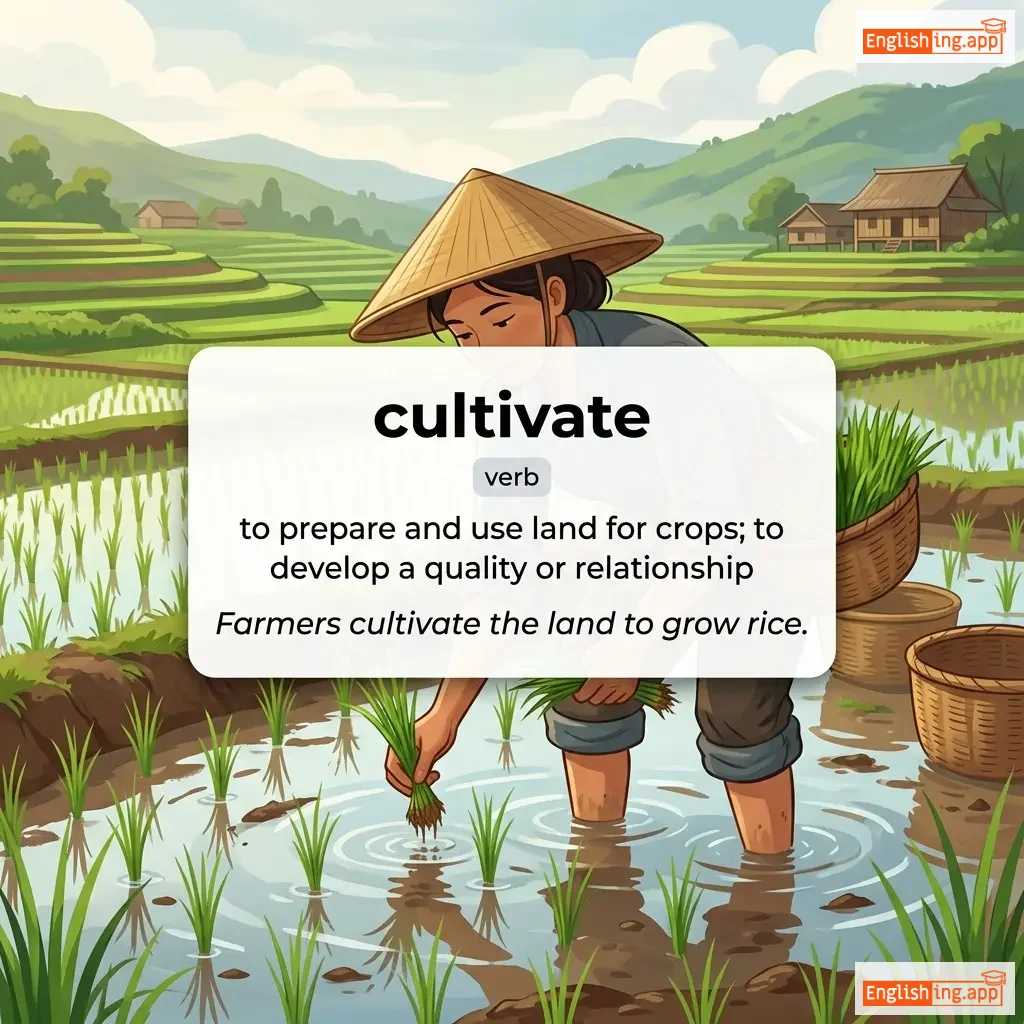
cultivate definition card — visual illustration of the meaning
verb
/ˈkʌltɪveɪt/
幸せ (shiawase)

to prepare and use land for crops; to develop a quality or relationship

"Farmers cultivate the land to grow rice."
"彼女は賞を受け取ったとき、幸せを隠せなかった。" (Kanojo wa shō o uketotta toki, shiawase o kakusenakatta.)
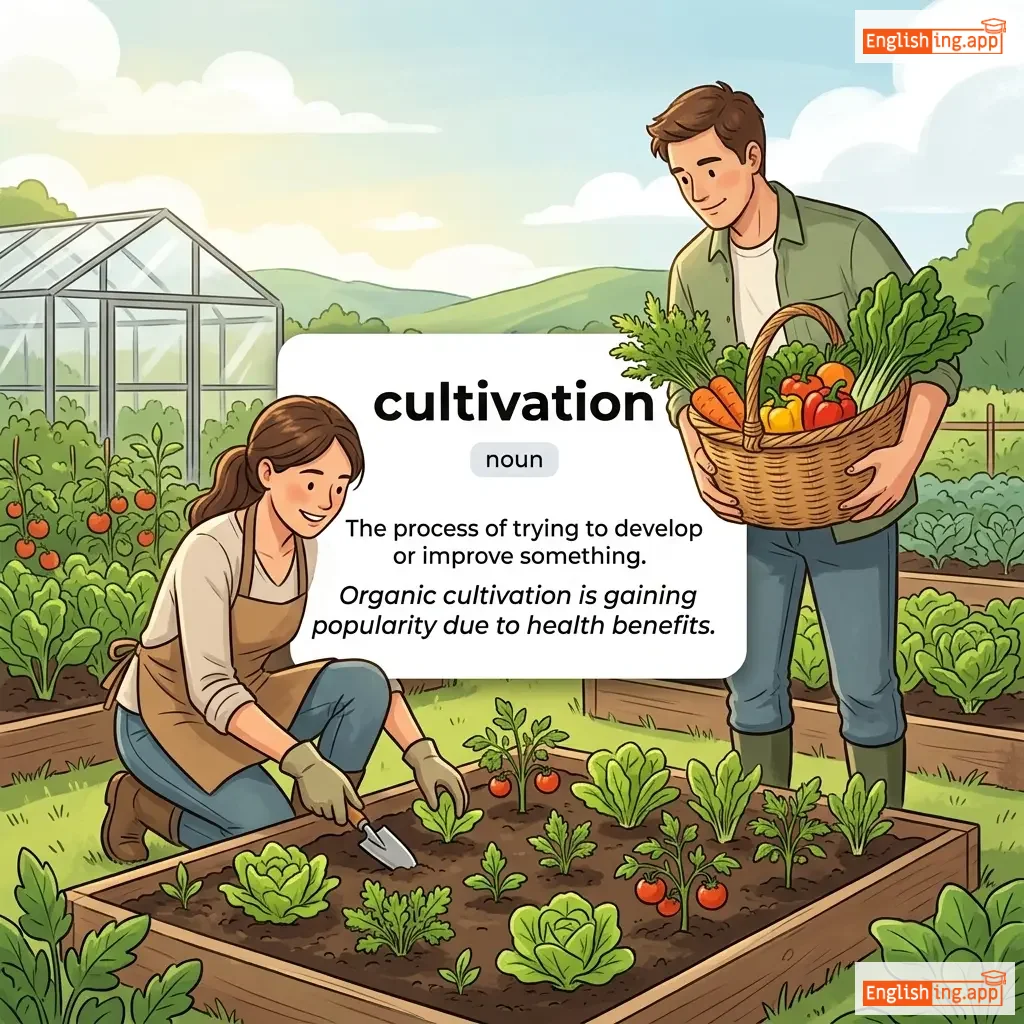
cultivation definition card — visual illustration of the meaning
noun
/ˌkʌl.tɪˈveɪ.ʃən/
栽培 (saibai)

The process of trying to develop or improve something.

"Organic cultivation is gaining popularity due to health benefits."
"オーガニック栽培は健康利益のために人気を集めています。" (Ōganikku saibai wa kenkō rieki no tame ni ninki o atsumemasu.)
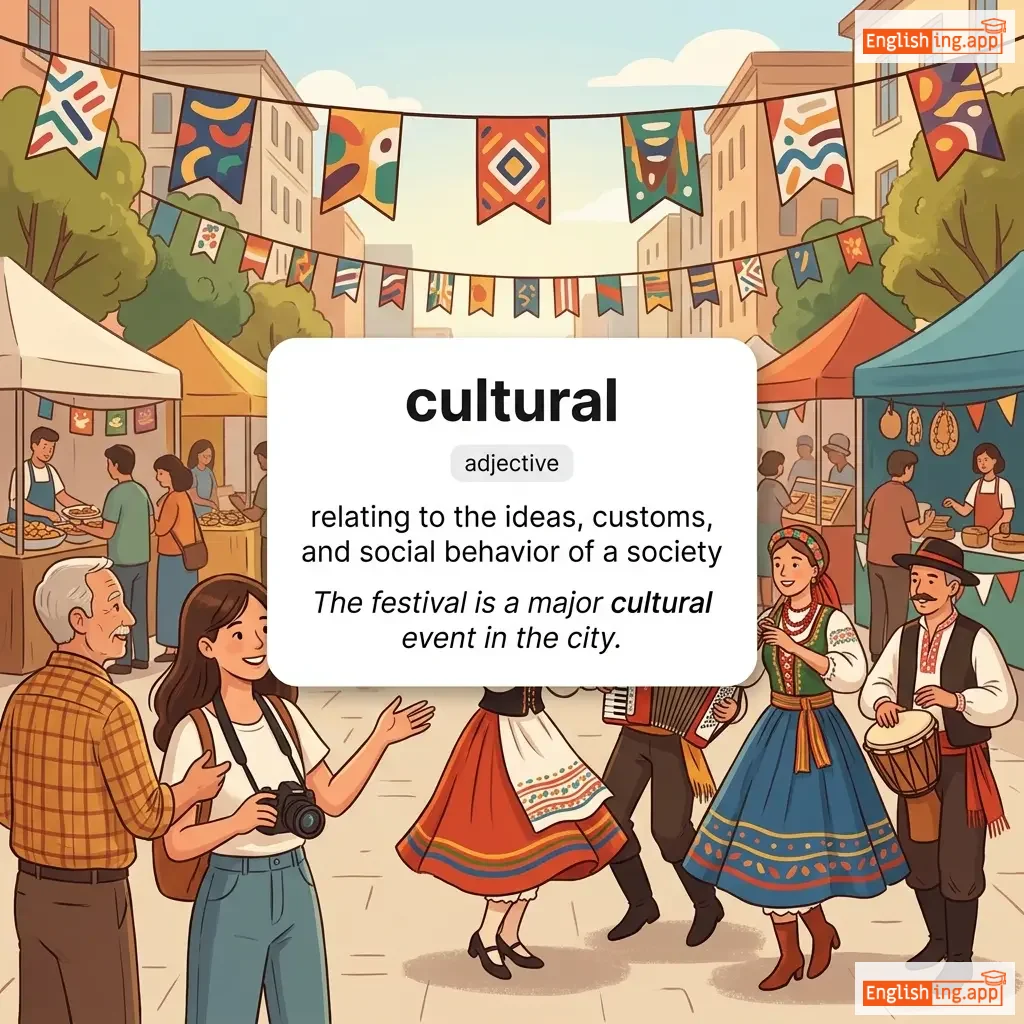
cultural definition card — visual illustration of the meaning
adjective
/ˈkʌltʃərəl/
文化的 (bunkateki)

relating to the ideas, customs, and social behavior of a society

"The festival is a major cultural event in the city."

"そのフェスティバルは市内で重要な文化的なイベントです。" (Sono fesutibaru wa shinai de juuyou na bunkateki na ibento desu.)
noun
/ˈkʌltʃər/
文化 (bunka)

the customs, arts, social institutions, and achievements of a particular people or society

"Japanese culture is admired all over the world."

"日本の文化は世界中で賞賛されています。" (Nihon no bunka wa sekaijū de shōsan sareteimasu.)
adjective
/ˈkʌltʃəd/
教養のある (kyouyou no aru)

characterized by refined taste, manners, and education

"She is a cultured woman who loves art and literature."

"彼女は芸術と文学を愛する教養のある女性です。" (Kanojo wa geijutsu to bungaku o aisuru kyouyou no aru josei desu.)
noun
/ˈkʌlvərt/
カルバート (karubāto)

a tunnel or drain that carries water under a road or railway

"The heavy rainwater flowed through the culvert under the bridge."

"重い雨水が橋の下のカルバートを通って流れました。" (Omoi amamizu ga hashi no shita no karubāto o tōtte nagaremashita.)
cumbersome definition card — visual illustration of the meaning
adjective
/ˈkʌmbərsəm/
面倒な (mendōna)

Large, heavy, or difficult to handle; complicated and inefficient.

"The cumbersome package was too heavy to carry alone."

"その面倒な荷物は一人で運ぶには重すぎた。" (Sono mendōna nimotsu wa hitori de hakobu ni wa omosugita.)
noun
/ˈkjuːmɪn/
クミン (kumin)

A spice made from the dried seeds of a plant in the parsley family, with a warm earthy flavor

"Cumin is an essential spice in Indian and Middle Eastern cooking."

"クミンはインディア料理と中東料理で重要なスパイスです。" (Kumin wa India ryouri to chuutou ryouri de juuyou na supaisu desu.)
adjective
/ˈkjuːmjələtɪv/
累積的な (ruiseiteki na)

Increasing gradually by addition; growing in quantity, force, or effect.

"The cumulative effect of stress can harm your health."

"ストレスの累積的な影響は健康に害を与える可能性があります。" (Sutoresu no ruiseiteki na eikyō wa kenko ni gai o ataeru kanōsei ga arimasu.)
adjective
/ˈkʌnɪŋ/
ずるい (zurui)

Having or showing skill in achieving one's ends by deceit or evasion; cleverness in a tricky way.

"The cunning fox tricked the farmer."

"ずる賢い狐は農夫を騙した。" (Zurukashikoi kitsune wa nōfu o damashita.)
noun
/kʌp/
カップ (kappu)

a small bowl-shaped container for drinking from, typically with a handle

"She drank a cup of tea in the morning."

"彼女は朝に一杯の紅茶を飲みました。" (Kanojo wa asa ni ippai no kōcha o nomimashita.)
noun
/ˈkʌp.bɔːrd/
食器棚 (shokki-dana)

a piece of furniture with doors and shelves for storing dishes, food, or clothes

"She stored all the plates and bowls in the kitchen cupboard."

"彼女はすべての皿とボウルをキッチンのカップボードにしまいました。" (Kanojo wa subete no sara to bōru wo kitchin no kappubōdo ni shimaimashita.)
noun
/kjuːˈpɪdəti/
強欲 (gōyoku)

Excessive desire for wealth or possessions; greed.

"The king's downfall was caused by his cupidity."

"王の没落は彼の強欲によるものであった。" (Ō no botsuraku wa kare no gōyoku ni yoru mono de atta.)
adjective
/ˈkjʊərəbl/
治療可能な (chiryou kanou na)

Able to be cured or healed.

"The doctor assured her that the disease was curable."

"医者はその病気が治療可能だと確信を持って言いました。" (Isha wa sono byouki ga chiryou kanou da to kakushin wo motte iimashita.)
adjective
/ˈkjʊərətɪv/
治療的 (chiryou-teki)

Able to cure disease or restore health.

"The doctor prescribed a curative treatment for the illness."

"医師は病気の治療法を処方しました。" (Ishi wa byouki no chiryouhou o shohoushimashita.)
noun
/kjʊˈreɪtər/
キュレーター (kyurētā)

a person who is responsible for the care and management of a museum, gallery, or collection

"The curator organized a new exhibition of ancient artifacts."

"キュレーターは新しい古代の遺物の展示を組織しました。" (Kyurētā wa atarashī kodai no ibutsu no tenji o soshiki shimashita.)
verb
/kɜːrb/
抑制する / 制御する (yokusei suru / seigyo suru)

to restrain, control, or limit something

"The government took steps to curb inflation."

"政府はインフレを抑制するために措置を取った。" (Seifu wa infure o yokusei suru tame ni sochi o totta.)
noun
/kɜːrd/
ヨーグルト (yōguruto)

a white dairy product made by coagulating milk; yogurt

"She added fresh curd to the salad for a tangy flavor."

"彼女はサラダに新鮮なヨーグルトを加えて、酸味を与えました。" (Kanojo wa sarada ni shinsen na yōguruto o kuwaete, sanmi o ataemashita.)
verb
/kjʊər/
治す (naosu)

to make someone healthy again after an illness

"The new medicine cured her of the infection."

"新しい薬は彼女の感染症を治しました。" (Atarashī kusuri wa kanojo no kansenshō o naoshimashita.)
noun
/ˈkɜːrfjuː/
外出禁止令 (gaishutsukinshirei)

a rule requiring people to stay indoors after a certain time, usually at night

"The city imposed a curfew during the unrest."

"都市は騒動の間に外出禁止令を課しました。" (Toshi wa sōdō no aida ni gaishutsukinshirei o kashimashita.)
noun
/ˈkjʊriˌoʊ/
珍しい物 (mezurashii mono)

a small unusual or interesting object, often collected for its rarity

"She bought a curio from the antique shop."

"彼女は骨董店で珍しい物を買いました。" (Kanojo wa kodōten de mezurashii mono o kaimashita.)
noun
/ˌkjʊəriˈɒsɪti/
好奇心 (koukishin)

a strong desire to know or learn something

"Children have a natural curiosity about the world around them."

"子供たちは周りの世界について自然な好奇心を持っています。" (Kodomotachi wa mawari no sekai ni tsuite shizen na koukishin o motteimasu.)
curious definition card — visual illustration of the meaning
adjective
/ˈkjʊəriəs/
好奇心旺盛 (koukishin ōse)

eager to know or learn something

"The child was curious about the stars in the sky."

"その子は空の星に興味津々でした。" (Sono ko wa sora no hoshi ni kyōmi shinshin deshita.)
noun
/kɜːrl/
カール; らせん形 (kāru; raseんkei)

a piece of hair that curves or coils; something with a spiral or curved shape

"She had beautiful natural curls that framed her face perfectly."

"彼女は顔を完璧に縁取る自然なカールをしていた。" (Kanojo wa kao o kanpeki ni fuchi toru shizen na kāru o shite ita.)
noun
/ˈkɜːrlər/
カーラー (kā rā)

A small roller used for curling hair.

"She used a curler to style her hair for the party."

"彼女はパーティーのために髪をスタイリングするためにカールラーを使った。" (Kanojo wa pātii no tame ni kami o sutairingu suru tame ni kārā o tsukatta.)
adjective
/ˈkɜːrli/
巻き毛の (makige no)

having curls or waves; shaped with bends or coils

"She has naturally curly hair."

"彼女は自然な巻き毛です。" (Kanojo wa shizen na makige desu)
noun
/kərˈmʌdʒən/
むっつりした老人 (muttsuri shita rōjin)

a bad-tempered, cranky, or irritable person, usually old

"The old curmudgeon complained about everything in the neighborhood."

"その年老いたむっつりした老人は近所のすべてに文句を言っていた。" (Sono toshi oita muttsuri shita rōjin wa kinjo no subete ni monku o itte ita.)
currency definition card — visual illustration of the meaning
noun
/ˈkʌrənsi/
通貨 (tōka)

the system of money used in a particular country

"The U.S. dollar is the official currency of the United States."

"アメリカドルはアメリカ合衆国の公式通貨です。" (Amerika doru wa Amerika gasshūkoku no kōshiki tōka desu.)
adjective, noun
/ˈkʌrənt/
現在, 流れ (genzai, nagare)

belonging to the present time; a flow of water or electricity

"She is reading the current issue of the magazine."

"彼女は雑誌の現在号を読んでいます。" (Kanojo wa zasshi no genzaigō o yondeimasu.)
adverb
/ˈkʌrəntli/
現在 (genzai)

at the present time; now

"He is currently working on a new project."

"彼は現在、新しいプロジェクトに取り組んでいます。" (Kare wa genzai, atarashī purojekuto ni torikunde imasu.)
noun
/kəˈrɪkjələm/
カリキュラム (karikyuramu)

The subjects comprising a course of study in a school, college, or university.

"The school updated its curriculum to include more digital literacy courses."

"学校は、デジタルリテラシーのコースをもっと含めるためにカリキュラムを更新しました。" (Gakkou wa, dejitaru riterashii no koosu wo motto fukumeru tame ni karikyuramu wo koushin shimashita.)
🍛

Curry

noun/verb
/ˈkʌri/

A dish of meat, vegetables, etc., cooked in a sauce with spices; or to prepare food in such a style.

"She cooked a delicious chicken curry for dinner."

noun
/ˈkɜːr.i liːvz/
カレーの葉 (karē no ha)

aromatic leaves from the curry tree used in South Asian cooking

"Fresh curry leaves add authentic flavor to Indian dishes."

"新鮮なカレーの葉はインディアン料理に本格的な風味を加えます。" (Shinsen na karē no ha wa indian ryōri ni honkaku-teki na fūmi o kuwaemasu.)
noun, verb
/kɜːrs/
呪い (noroi)

a solemn wish that harm or misfortune should befall someone; a rude or offensive word or phrase; to utter offensive words or wish harm upon someone

"He cursed loudly when he realized he had lost his wallet."

"彼は財布をなくしたと気づいて大声で悪態をついた。" (Kare wa saifu o nakushita to kizuite oogoe de akuta o tsuita)
adjective/noun
/ˈkɜːrsɪv/
カースィブ書き (kaasibugaki)

Written with characters joined together in a flowing manner.

"The teacher asked students to write the essay in cursive handwriting."

"先生は生徒にカースィブ書きでエッセイを書くように言いました。" (Sensei wa seito ni kaasibugaki de essei o kaku you ni iimashita.)
adjective
/ˈkɜːrsəri/
ざっとした (zattoshita)

Hasty and therefore not thorough or detailed.

"He gave the report only a cursory glance before the meeting."

"彼は会議の前に報告書をざっと見た。" (Kare wa kaigi no mae ni houkokusho o zattomita.)
adjective
/kɜːrt/
ぶっきらぼう (bukkirabou)

Rudely brief in speech or manner.

"His curt reply made everyone uncomfortable."

"彼のぶっきらぼうな返答は、皆を不快にさせた。" (Kare no bukkirabou na hentou wa, mina o fukai ni saseta.)
verb
/kɜːrˈteɪl/
制限する (seigen suru)

to reduce or limit something, especially something considered undesirable

"The company had to curtail its spending due to budget cuts."

"予算削減のため、会社は支出を削減しなければなりませんでした。" (Yosan sakugen no tame, kaisha wa shishutsu o sakugen shinakereba narimasen deshita.)
noun
/ˈkɜː.tən/
カーテン (kaaten)

a piece of cloth that hangs down to cover a window or divide a room

"She pulled back the curtain to let the sunlight in."

"彼女は太陽の光を入れるためにカーテンを引いた。" (Kanojo wa taiyō no hikari o ireru tame ni kaaten o hiita.)
noun/verb
/ˈkɜːrtsi/
お辞儀 (ojigi)

a respectful bow made by women by bending the knees with one foot in front of the other

"She gave a quick curtsy before leaving the stage."

"彼女はステージを去る前に素早いカートシーをしました。" (Kanojo wa suteeji o saru mae ni subayai kaatoshii o shimashita.)
noun
/kɜːv/
曲線 (kyokusen)

a smooth, continuous line that bends without angles

"The road curved sharply to the left."

"道路は急激に左に曲がった。" (Dōro wa kyūgeki ni hidari ni magatta.)
adjective
/ˈkʌsɪd/
頑固 (ganko)

Annoyingly stubborn or difficult.

"He was too cussed to admit his mistake."

"彼は自分の間違いを認めるには頑固すぎた。" (Kare wa jibun no machigai o mitomeru ni wa ganko sugita.)
noun
/ˈkʌstərd ˈæpəl/
クリームアップル (kurīmu appuru)

a tropical fruit with sweet creamy white flesh and black seeds

"The custard apple has a sweet and creamy texture."

"クリームアップルは甘くてクリーミーな食感です。" (Kurīmu appuru wa amaku te kurīmī na shokkan desu.)