語彙集

英単語辞書 | 単語の意味、定義、例文

noun
/kriˈeɪʃən/
創造 (sozou)

The act of bringing something into existence; something that has been made or produced.

"The artist’s latest creation was admired by everyone at the gallery."
"そのアーティストの最新の創造はギャラリーで皆に賞賛されました。" (Sono atisuto no saishin no souzou wa gyararii de mina ni shousan saremashita.)
creations definition card — visual illustration of the meaning
noun
/kriˈeɪ.ʃənz/
創作物 (sousakubutsu)

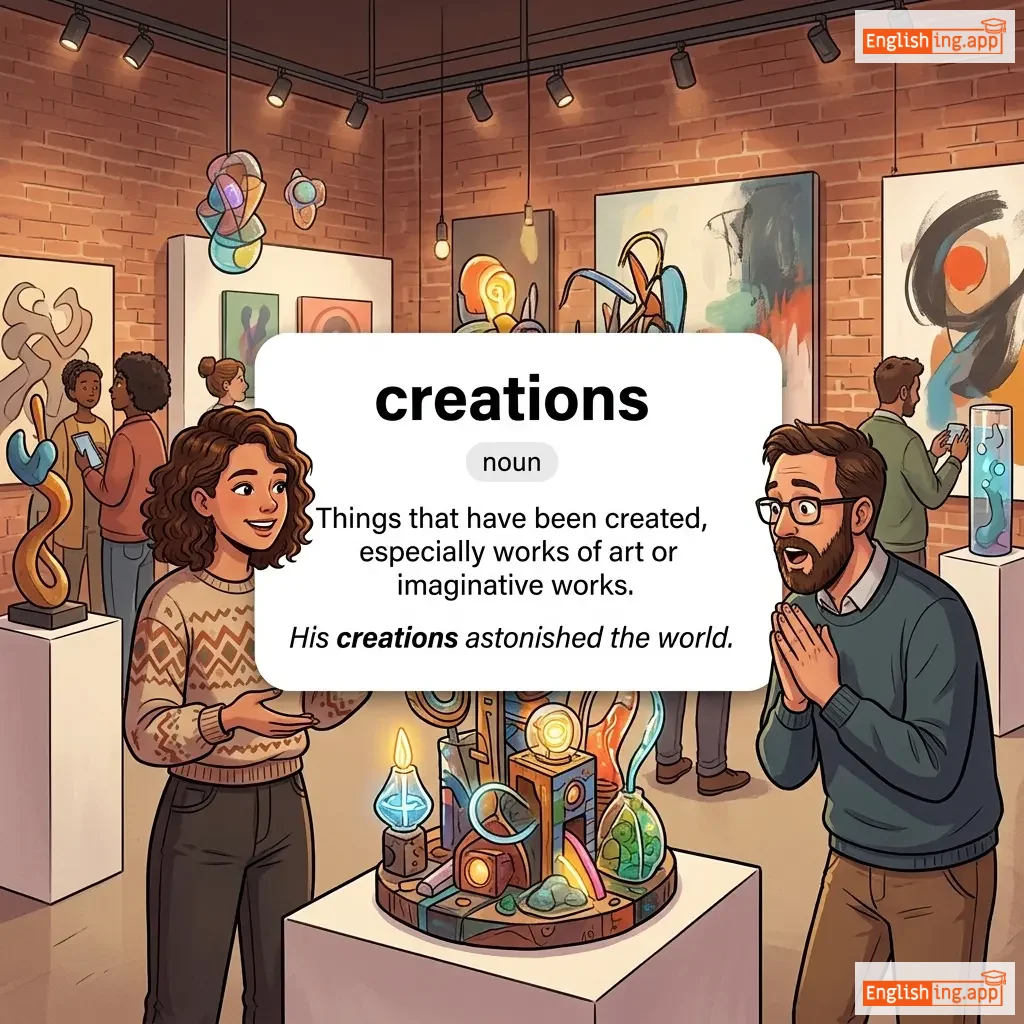
Things that have been created, especially works of art or imaginative works.

"His creations astonished the world."

"彼の創作物は世界を驚かせた。" (Kare no sousakubutsu wa sekai o odorokaseta.)
adjective
/kriˈeɪtɪv/
創造的 (sōzō-teki)

Having the ability to produce new and original ideas or things.

"She is very creative in her writing."
"彼女は執筆において非常に創造的です。" (Kanojo wa shippitsu ni oite hijō ni sōzō-teki desu.)
creative exhibits definition card — visual illustration of the meaning
adjective + noun
kriˈeɪtɪv ɪɡˈzɪbɪts
創造的な展示 (sōzōteki na tenji)

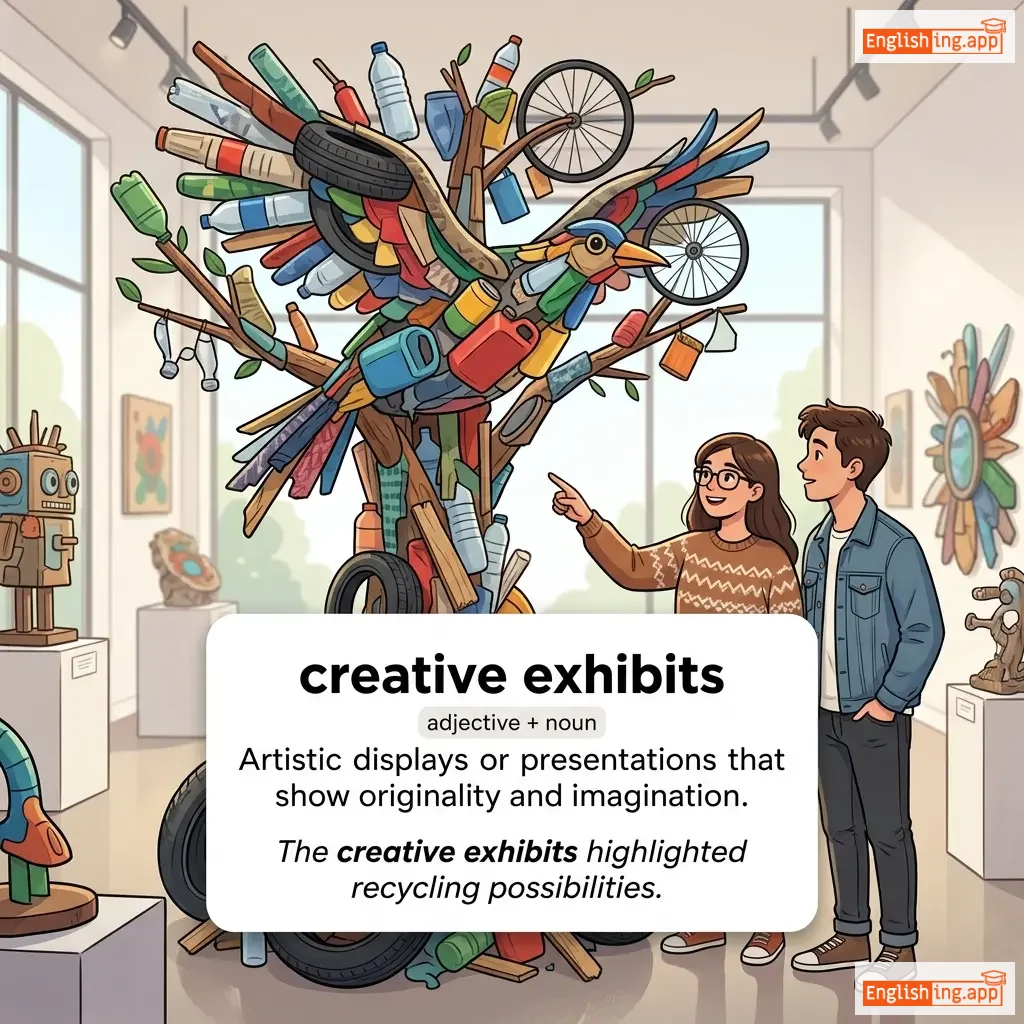
Artistic displays or presentations that show originality and imagination.

"The creative exhibits highlighted recycling possibilities."
"創造的な展示はリサイクルの可能性を強調しました。" (Sōzōteki na tenji wa risākuru no kanō-sei o kyōchō shimashita.)
creativity definition card — visual illustration of the meaning
noun
/ˌkriːeɪˈtɪvɪti/
創造性 (souzousei)

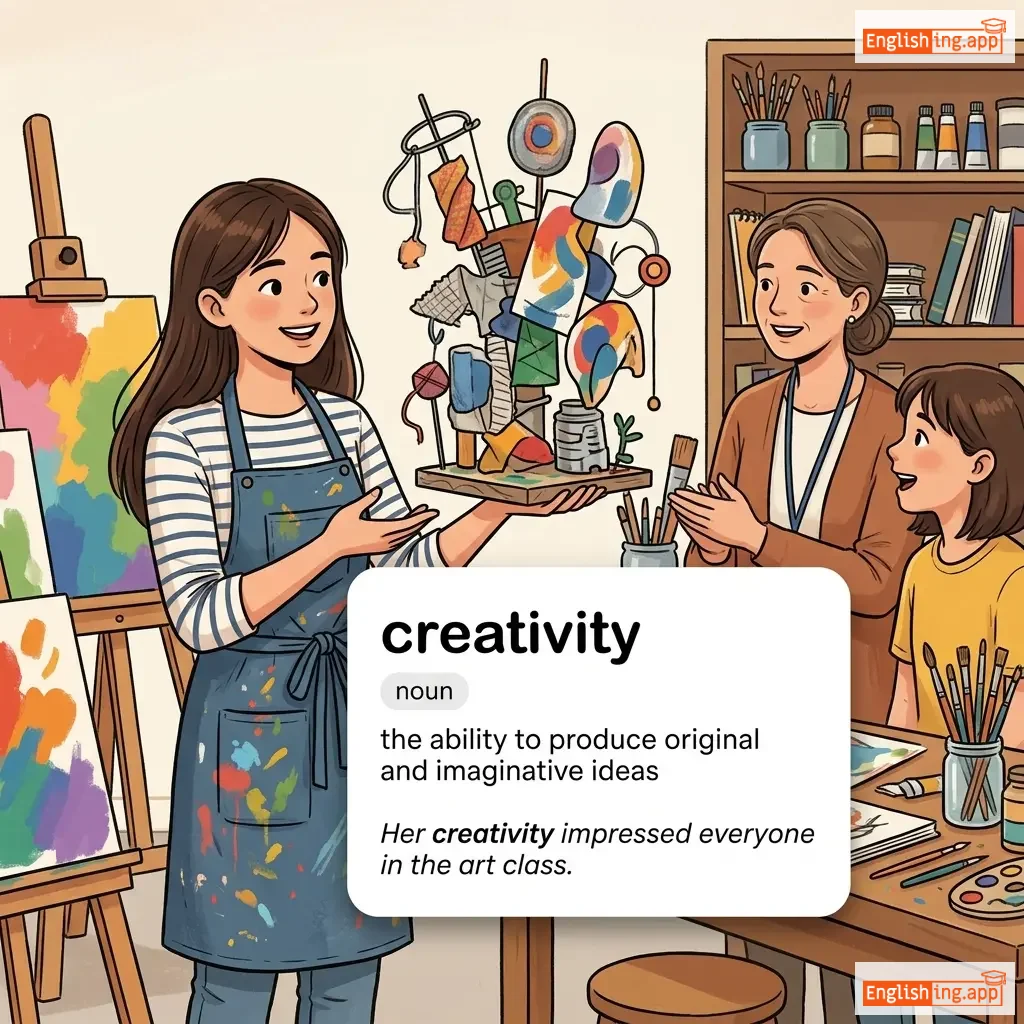
the ability to produce original and imaginative ideas

"Her creativity impressed everyone in the art class."

"彼女の創造性は美術のクラスで皆を感動させました。" (Kanojo no souzousei wa bijutsu no kurasu de minna wo kandou sasenimashita.)
noun
/krɪˈeɪtə/
創造者 (sōzōsha)

a person who brings something into existence

"He is the creator of many successful startups."

"彼は多くの成功したスタートアップのクリエイターです。" (Kare wa ōku no seikō shita sutātopu no kurieitā desu.)
noun
/ˈkriːtʃər/
生物 (seibutsu)

A living being, especially an animal.

"The forest is full of strange creatures."
"森は奇妙な生物でいっぱいです。" (Mori wa kimyō na seibutsu de ippai desu.)
credence definition card — visual illustration of the meaning
noun
/ˈkriː.dəns/
信頼, 認めること (shinrai, mitomeru koto)

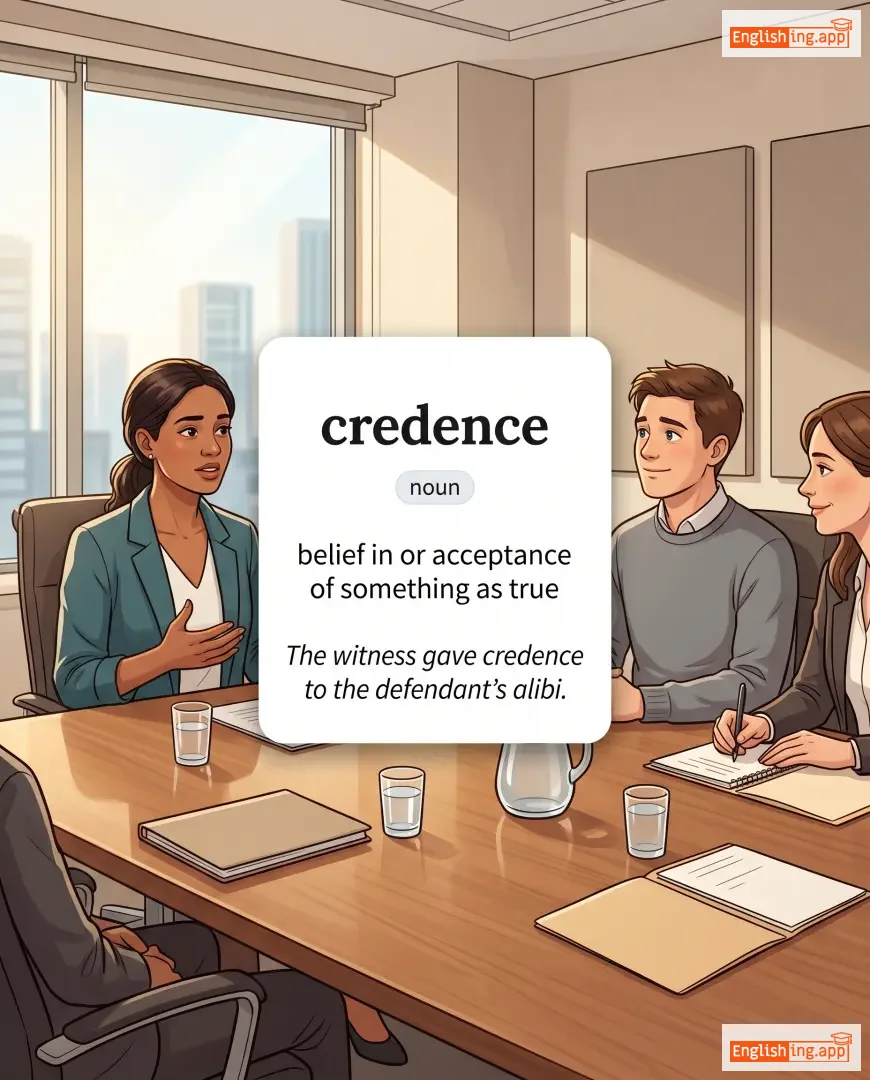
belief in or acceptance of something as true

"The witness gave credence to the defendant's alibi."

"証人は被告のアリバイに信頼をおいた。" (shōnin wa hikoku no aribai ni shinrai o oita.)
noun
/krɪˈden.ʃəl/
資格証明書 (shikaku shōmeisho)

a qualification, achievement, or aspect of a person's background used to indicate suitability for something

"She presented her credentials before starting the new job."

"彼女は新しい仕事を始める前に資格証明書を提示しました。" (Kanojo wa atarashī shigoto o hajimeru mae ni shikaku shōmeisho o teiji shimashita.)
credibility definition card — visual illustration of the meaning
noun
/ˌkrɛd.ɪˈbɪl.ɪ.ti/
信頼性 (shinraisei)

the quality of being trusted and believed in

"The journalist's credibility was questioned after the report."

"ジャーナリストの信頼性はレポートの後に疑問視されました。" (Jānarisuto no shinraisei wa repōto no ato ni gimon-shi saremashita.)
adjective
/ˈkrɛd.ɪ.bəl/
信頼できる (shinrai dekiru)

able to be believed; convincing

"Her explanation was credible enough to convince the committee."

"彼女の説明は委員会を納得させるのに十分信頼できるものでした。" (Kanojo no setsumei wa iinkai o nattoku saseru no ni jūbun shinrai dekiru mono deshita.)
noun, verb
/ˈkrɛdɪt/

As a noun: the ability to obtain goods or services before payment; recognition for an achievement. As a verb: to publicly acknowledge someone's contribution.

"She received credit for her contribution to the project."

adjective
/ˈkrɛdɪtəbl/
称賛に値する (shōsan ni atai suru)

Deserving praise or acknowledgment, though not necessarily outstanding.

"She made a creditable effort in completing the project on time."
"彼女は時間通りにプロジェクトを完了するために称賛に値する努力をしました。" (Kanojo wa jikan dōri ni purojekuto o kanryō suru tame ni shōsan ni atai suru doryoku o shimashita.)
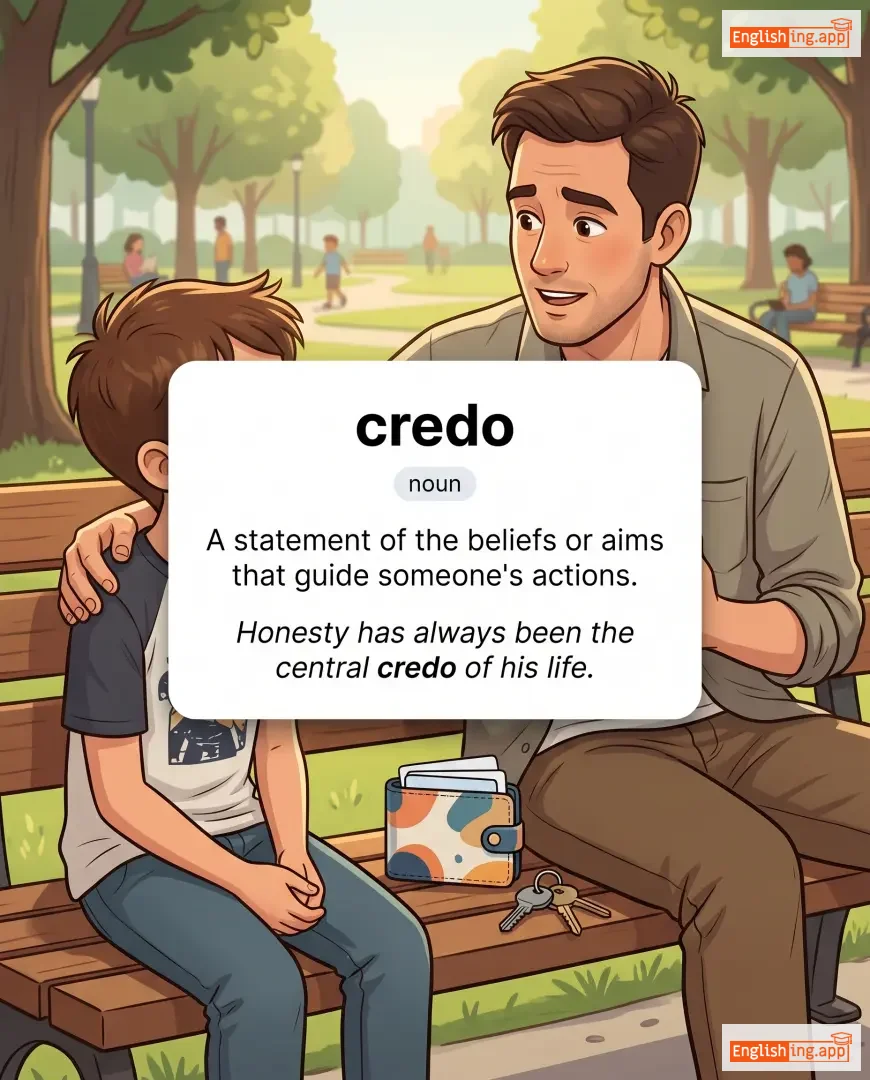
credo definition card — visual illustration of the meaning
noun
/ˈkriːdoʊ/
信条 (shinjou)

A statement of the beliefs or aims that guide someone's actions.

"Honesty has always been the central credo of his life."

"誠実は彼の人生の中で常に中心的な信条であった。" (Seijitsu wa kare no jinsei no naka de itsudemo chuushinteki na shinjou de atta.)
noun
/krəˈdjuːlɪti/
信じやすさ (shinjiyasusa)

A tendency to be too ready to believe that something is real or true.

"The scam succeeded because of the victim's credulity."

"詐欺は被害者の信じやすさのおかげで成功した。" (Sagi wa higaisha no shinjiyasusa no okage de seikou shita.)
adjective
/ˈkrɛdʒʊləs/
信用しやすい (shinyou shiyasui)

Having or showing too great a readiness to believe things.

"The credulous child believed every story she heard."

"その信用しやすい子供は、聞いた話をすべて信じました。" (Sono shinyou shiyasui kodomowa, kiita hanashi wo subete shinji mashita.)
noun
/kriːd/
信条, 原則 (shinchou, gensoku)

A system of religious or spiritual beliefs or a guiding principle.

"Freedom of speech is part of his personal creed."

"言論の自由は彼の個人的な信条の一部です。" (Genron no jiyū wa kare no kojinteki na shinchou no ichibu desu.)
noun
/kriːk/
小川 (ogawa)

a small stream or narrow river

"We went fishing by the creek near our house."
"私たちは家の近くの小川で釣りをしました。" (Watashitachi wa ie no chikaku no ogawa de tsuri o shimashita.)
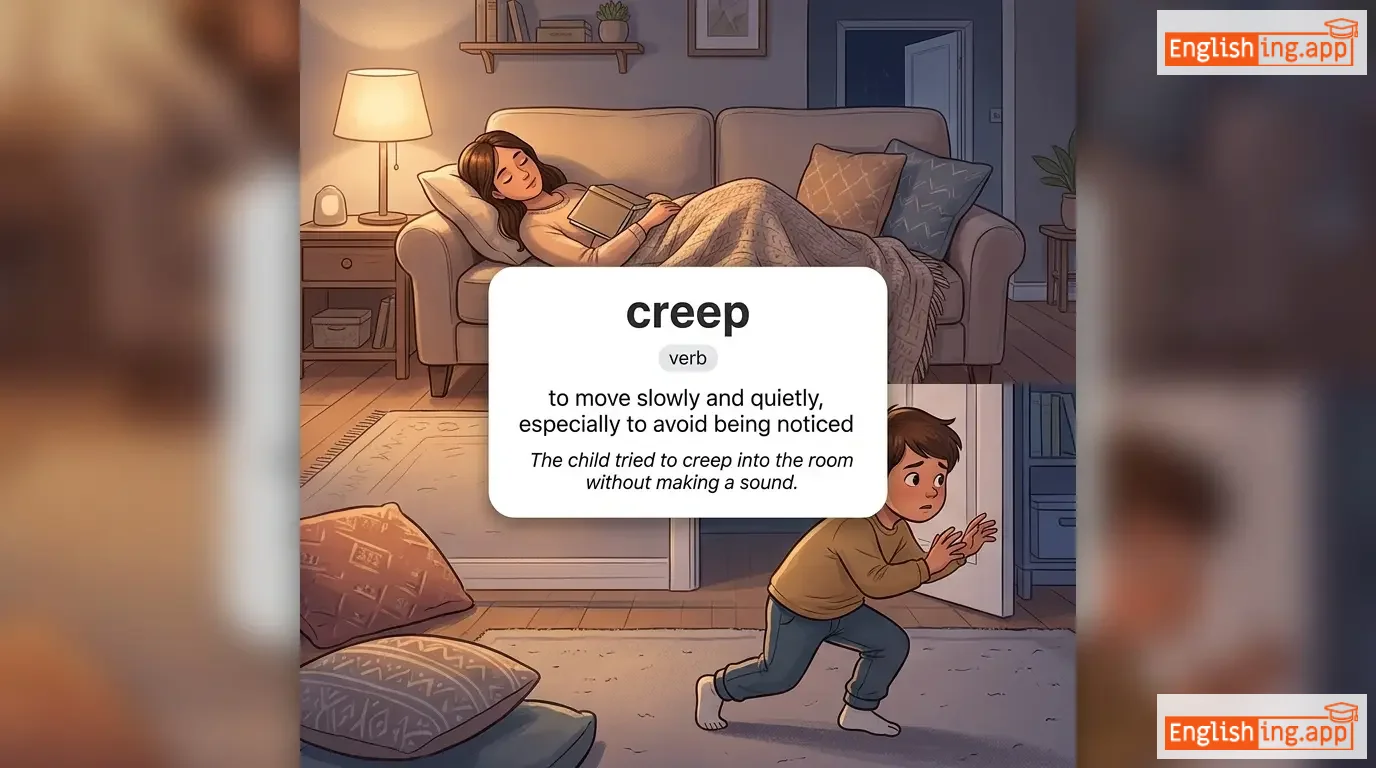
creep definition card — visual illustration of the meaning
verb
/kriːp/
忍び寄る (shinobiyoru)

to move slowly and quietly, especially to avoid being noticed

"The child tried to creep into the room without making a sound."
"子供は音を立てずに部屋に忍び込もうとしました。" (Kodomo wa oto o tatezu ni heya ni shinobikomo to shimashita.)
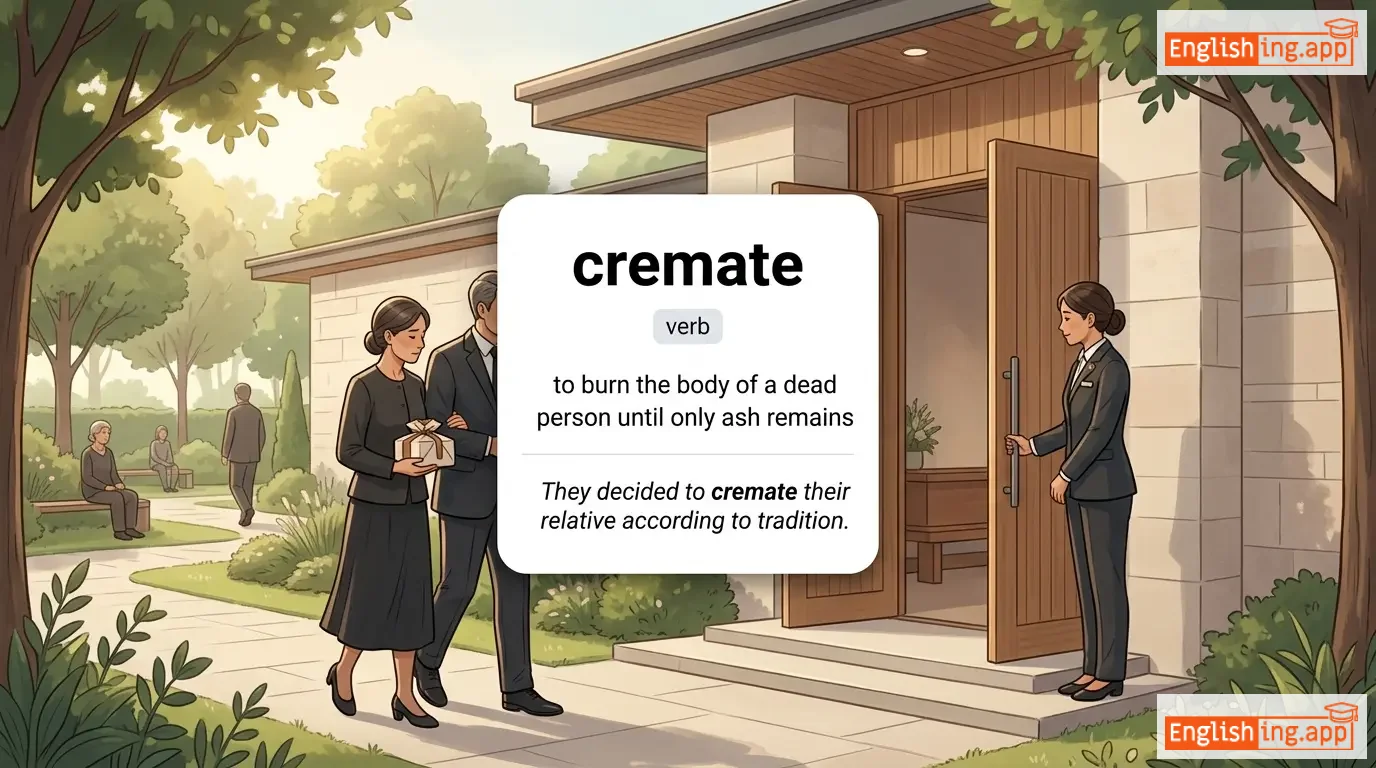
cremate definition card — visual illustration of the meaning
verb
/ˈkriː.meɪt/
火葬する (kasou suru)

to burn the body of a dead person until only ash remains

"They decided to cremate their relative according to tradition."

"彼らは伝統に従って親戚を火葬することに決めました。" (Karera wa dentou ni shitagatte shinseki o kasou suru koto ni kimemashita.)
noun
/ˈkrɛməˌtɔːri/
火葬場 (kasouba)

a place where dead bodies are cremated

"The crematory was located near the cemetery."

"火葬場は墓地の近くにありました。" (Kasouba wa bochi no chikaku ni arimashita.)
adjective
/krɪˈpʌskjʊlər/
黄昏に関係する (koushun ni kankei suru)

relating to twilight or active during twilight

"Bats are crepuscular animals, most active at dawn and dusk."

"コウモリは黄昏時に活動的な動物で、夜明けと夕暮れ時が最も活発です。" (Koumori wa koushun-ji ni katsudouteki na doubutsu de, yoake to yuugure-ji ga mottomo kappatsu desu.)
noun
/krəˈʃɛndoʊ/
音量の段階的増加 (onryou no dankai teki zouka)

a gradual increase in loudness or intensity, especially in music

"The orchestra built to a powerful crescendo before the finale."

"オーケストラはフィナーレの前に強力なクレッシェンドを築いた。" (Ookesutora wa finaare no mae ni kyouryoku na kuresshendo wo kizuita.)
noun
/krɛst/
頂上 (choujou)

the top of a hill, wave, or mountain; a symbol of identity

"The hikers reached the crest of the mountain at sunrise."

"ハイカーたちは日の出時に山頂に到達しました。" (Haikaa tachi wa hinode ji ni sanchou ni toutatsu shimashita.)
adjective
/ˈkrɛstˌfɔːlən/
がっかりした (gakkari shita)

sad and disappointed

"He looked crestfallen after hearing the bad news."

"彼は悪い知らせを聞いてがっかりしていた。" (Kare wa warui shirase wo kiite gakkari shite ita.)
noun
/krəˈvæs/
深い亀裂 (fukai ketsu)

a deep crack in a glacier or the earth’s surface

"The climbers carefully crossed the icy crevasse."

"登山者たちは慎重に氷の亀裂を越えました。" (Tōsanjatachi wa shinchō ni kōri no ketsu o koemashita.)
noun
/ˈkrɛvɪs/
亀裂 (kiretsu)

a narrow crack or opening, especially in a rock or wall

"The lizard hid in a crevice between the stones."

"トカゲは石の間の亀裂に隠れていた。" (Tokage wa ishi no aida no kiretsu ni kakurete ita.)
👨‍✈️

crew (クルー)

noun
/kruː/
乗組員 (norumuiin)

A group of people working together, especially on a ship, aircraft, or project.

"The ship's crew worked tirelessly during the storm."

"船のクルーは嵐の間、休むことなく働いた。" (Fune no kurū wa arashi no aida, yasumu koto naku hataraita.)
noun
/ˈkrɪk.ɪt/
コオロギ (koorogi)

a jumping insect that makes a chirping sound by rubbing its wings together

"We could hear crickets chirping in the evening."

"私たちは夕方にコオロギの鳴き声を聞くことができました。" (watashitachi wa yuugata ni koorogi no nakigoe o kiku koto ga dekimashita.)
noun
/kraɪm/
犯罪 (hanzai)

An illegal act punishable by law.

"The police are investigating the crime."

"警察は犯罪を調査しています。" (Keisatsu wa hanzai o chōsa shiteimasu.)
noun, adjective
/ˈkrɪmɪnəl/
犯罪者 (hanzai-sha)

A person who has committed a crime; relating to crime

"The police arrested a dangerous criminal last night."

"警察は昨夜、危険な犯罪者を逮捕しました。" (Keisatsu wa sakuya, kiken na hanzai-sha o taiho shimashita.)
adjective
/ˈkrɪm.zən/
深紅 (shinkou)

a deep purplish-red color

"The crimson sunset painted the sky with beautiful shades."

"深紅の夕日が美しい色合いで空を染めました。" (Shinkou no yūhi ga utsukushii iroai de sora o somemashita.)
verb
/krɪndʒ/
縮む (shizumu)

To shrink back in fear, embarrassment, or discomfort.

"She cringed when she remembered her mistake."

"彼女は自分の間違いを思い出して、縮んだ。" (Kanojo wa jibun no machigai o omoidashite, shizunda.)
verb
/ˈkrɪŋ.kəl/
しわを寄せる (shiwa o yoseru)

To form small creases or wrinkles.

"She crinkled her nose at the strange smell."
"彼女は奇妙な匂いで鼻をしかめた。" (Kanojo wa kimyō na nioi de hana o shikameta.)
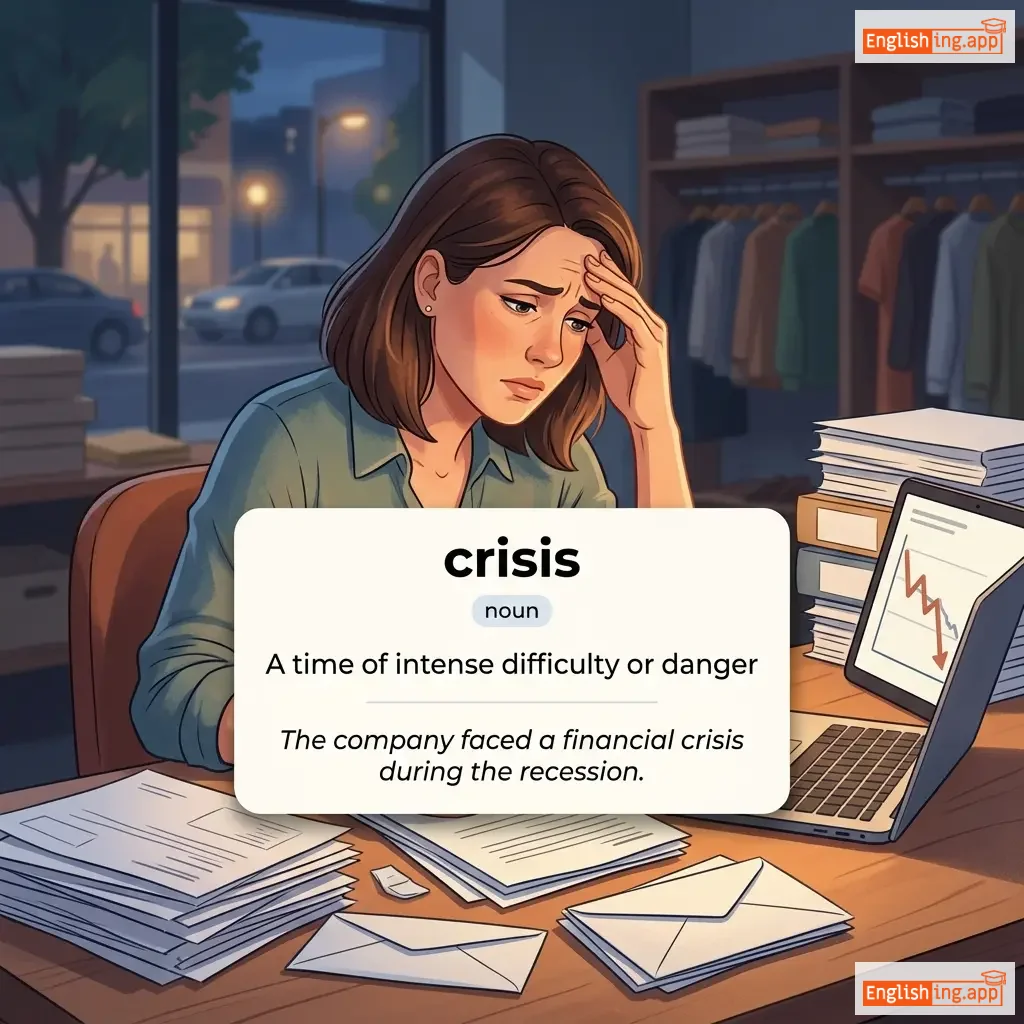
crisis definition card — visual illustration of the meaning
noun
/ˈkraɪsɪs/
危機 (kiki)

A time of intense difficulty or danger

"The company faced a financial crisis during the recession."

"その企業は不況の中で財政的な危機に直面しました。" (Sono kigyō wa fukyō no naka de zaisei-teki na kiki ni chokumen shimashita.)
noun
/kraɪˈtɪəriə/
基準 (kijun)

Standards or principles by which something is judged or decided.

"The candidates were evaluated based on strict criteria."

"候補者は厳格な基準に基づいて評価されました。" (Kōhosha wa genkaku na kijun ni motozuite hyōka saremashita.)
noun
/kraɪˈtɪəriən/
基準 (kijun)

A standard or rule used to make a judgment or decision.

"Honesty is an important criterion for this job."

"誠実はこの仕事にとって重要な基準です。" (Seijitsu wa kono shigoto ni totte juuyou na kijun desu.)
noun
/ˈkrɪtɪk/
批評家 (hihyōka)

A person who judges the merits of something, especially art or literature

"The film critic praised the director's latest movie."
"映画批評家は監督の最新映画を称賛しました。" (Eiga hihyōka wa kantoku no saishin eiga o shōsan shimashita.)
critical definition card — visual illustration of the meaning
adjective
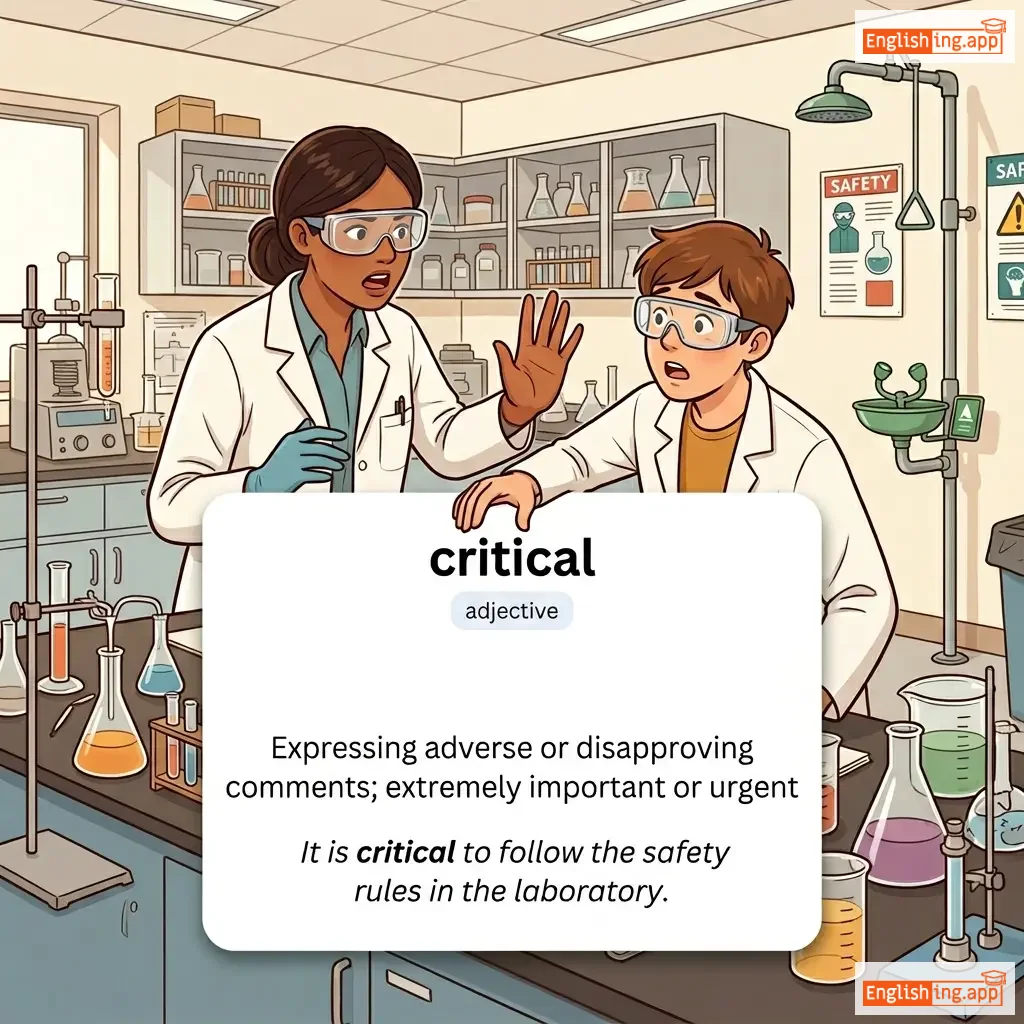
/ˈkrɪtɪkəl/
重大な / 危機的 (jūdaina / kikiteki)

Expressing adverse or disapproving comments; extremely important or urgent

"It is critical to follow the safety rules in the laboratory."
"実験室で安全規則に従うことは非常に重要です。" (Jikken-shitsu de anzen kisoku ni shitagau koto wa hijō ni jūyō desu.)
critical thinking definition card — visual illustration of the meaning
noun
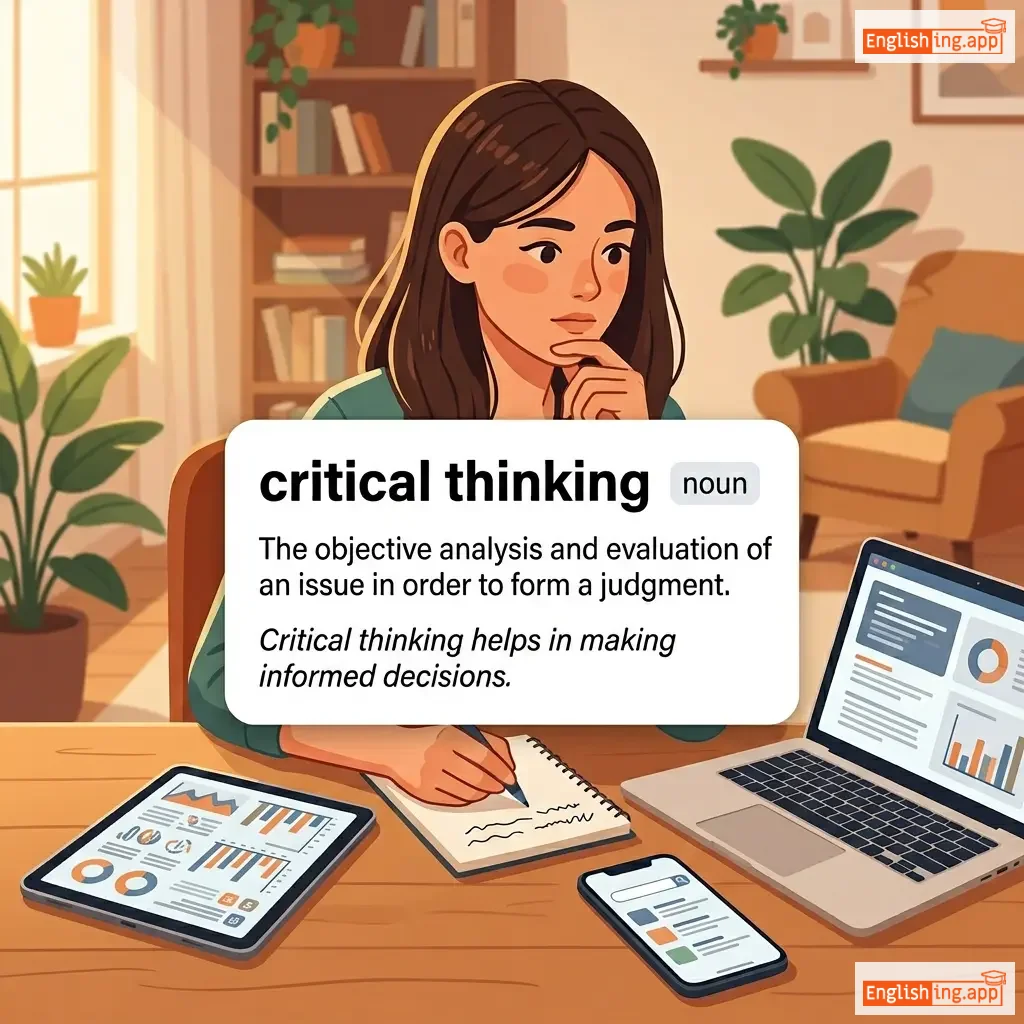
ˈkrɪt.ɪ.kəl ˈθɪŋ.kɪŋ
批判的思考 (hihan teki shikou)

The objective analysis and evaluation of an issue in order to form a judgment.

"Critical thinking helps in making informed decisions."

"批判的思考は情報に基づいた意思決定に役立ちます。" (Hihanteki shikou wa jouhou ni motozuita ishikettei ni yakudachimasu.)
adverb
/ˈkrɪtɪkli/
重大に (jūdai ni)

in a way that expresses disapproval or a very serious, important way

"He was critically injured in the accident."

"彼は事故で重傷を負った。" (Kare wa jiko de jūshō o otta.)
noun
/ˈkrɪtɪˌsɪzəm/
批判 (hihan)

The expression of disapproval or judgment of the merits of something

"The new policy has faced a lot of criticism from the public."
"新しい政策は、一般の人々から多くの批判を受けました。" (Atarashī seisaku wa, ippan no hitobito kara ōku no hihan o ukemashita.)
criticize definition card — visual illustration of the meaning
verb
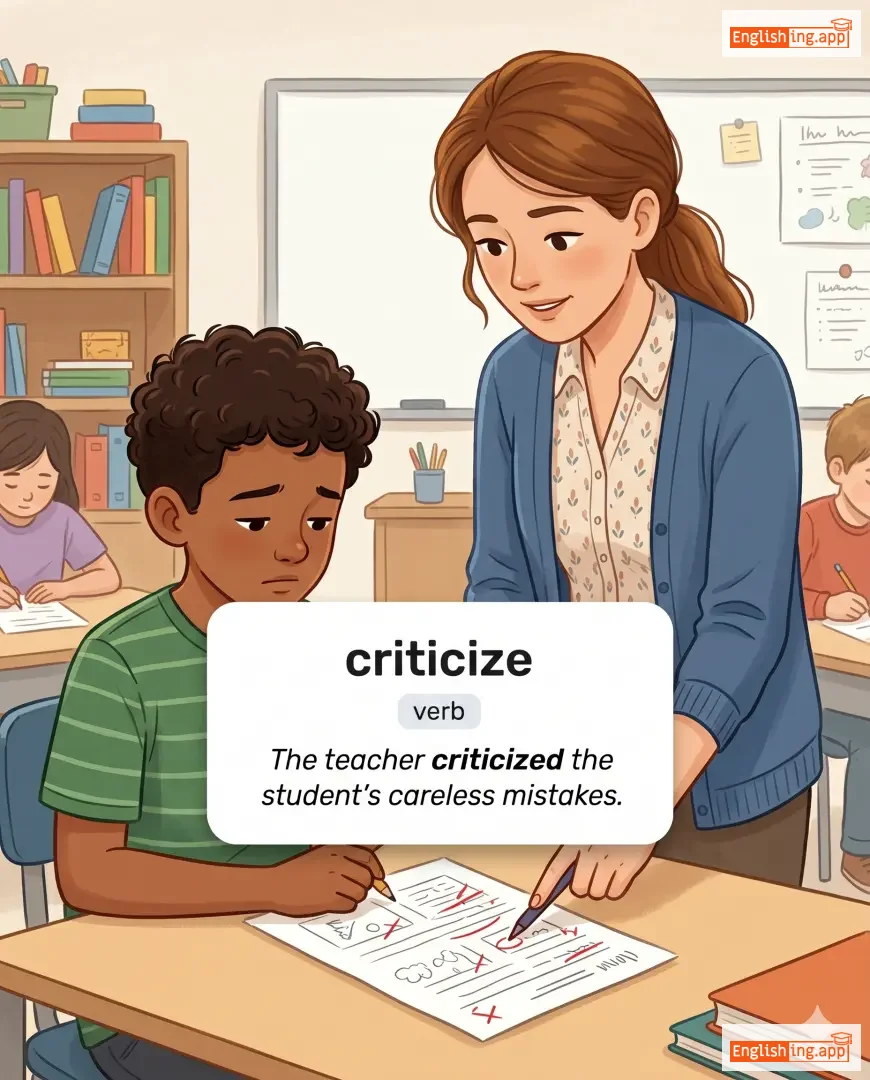
/ˈkrɪtɪsaɪz/
批判する (hihan suru)

to express disapproval of someone or something by pointing out faults or shortcomings

"The teacher criticized the student's careless mistakes."

"教師は学生の不注意なミスを批判しました。" (Kyōshi wa gakusei no fuchūi na misu o hihan shimashita.)
noun/verb
/krɪˈtiːk/
批評 (hihyō)

A detailed analysis and assessment of something, especially a literary, philosophical, or political theory; to evaluate critically.

"The professor asked the students to critique each other's essays."

"教授は学生にお互いのエッセイを批評するように頼みました。" (Kyōju wa gakusei ni otagai no essei o hihyō suru yō ni tanomimashita.)
noun/verb
/kroʊˈʃeɪ/

Needlework made by interlocking loops of thread with a hooked needle; the act of making such items.

"She learned how to crochet a scarf for winter."

noun
/krɑk pɑt/
スロークッカー (surō kukkā)

an electric cooking pot that cooks food slowly at low temperatures

"I put the chicken and vegetables in the crock pot before going to work."

"仕事に行く前にチキンと野菜をスロークッカーに入れました。" (Shigoto ni iku mae ni chikin to yasai o surō kukkā ni iremashita)
noun
/ˈkrɒkəri/
食器 (shokki)

Dishes, plates, cups, and other items made of earthenware or china.

"The hotel provided clean crockery for the guests."

"ホテルはゲストに清潔な食器を提供しました。" (Hoteru wa gesuto ni seiketsu na shokki o teikyō shimashita.)
noun
/ˈkrɒk.ə.daɪl/
ワニ (wani)

a large reptile with a long mouth and sharp teeth that lives in rivers and lakes in hot countries

"The crocodile slowly moved through the murky water."

"ワニはゆっくりと濁った水を進んでいました。" (wani wa yukkuri to nikotta mizu o susundeimashita)
noun
/kroʊn/
老婆 (rōba)

An old woman, often one who is thin and ugly, sometimes associated with witch-like qualities.

"The children were scared by the story of the wicked crone in the forest."

"子供たちは森の中の邪悪な老婆の話に怖がっていました。" (Kodomotachi wa mori no naka no jaaku na rōba no hanashi ni kowagatte imashita.)
noun
/ˈkroʊniˌɪzəm/
縁故主義 (enkoshugi)

The practice of favoring friends or associates, especially in political appointments or business deals.

"The company was accused of cronyism in hiring practices."

"その企業は採用活動における親族主義で非難されました。" (Sono kigyō wa saiyō katsudō ni okeru enkoshugi de hinansaremashita.)