語彙集

英単語辞書 | 単語の意味、定義、例文

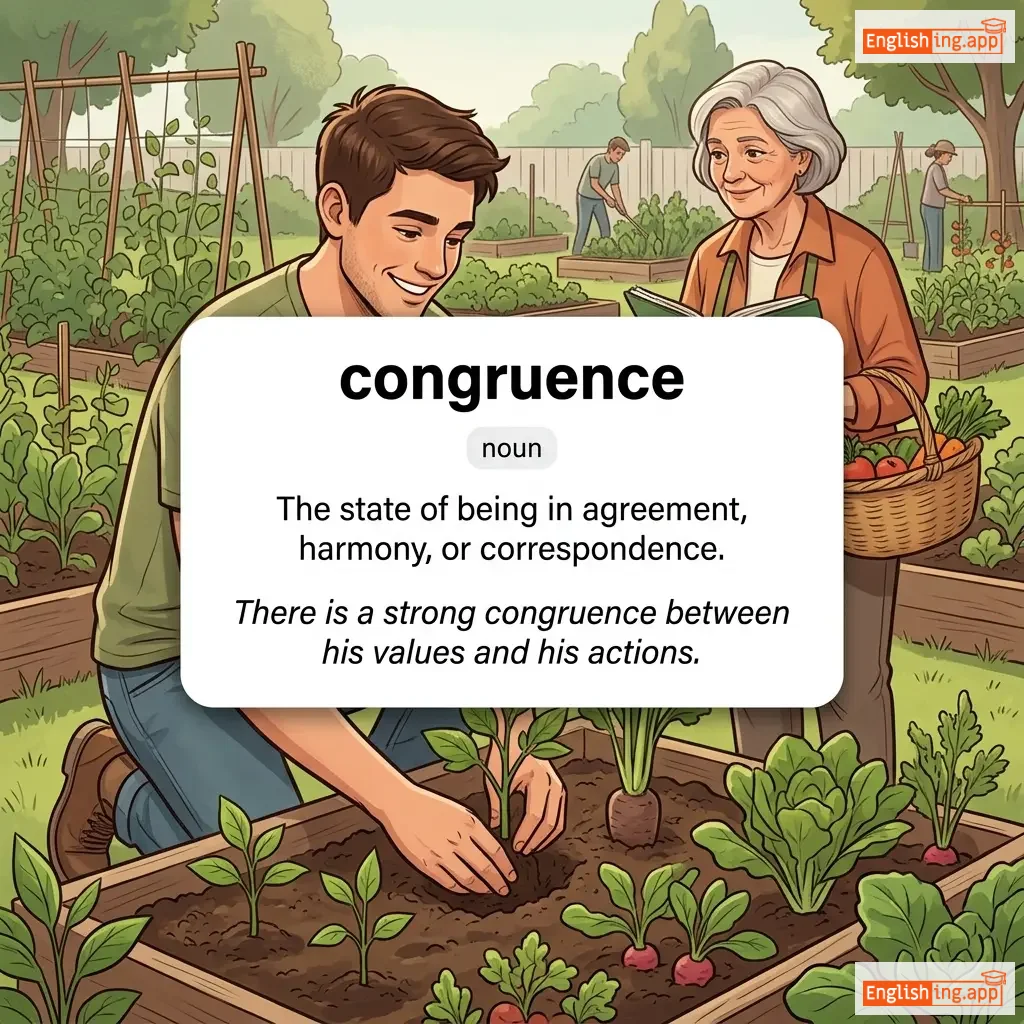
congruence definition card — visual illustration of the meaning
noun
/ˈkɒŋɡruəns/
整合性 (seigōsei)

The state of being in agreement, harmony, or correspondence.

"There is a strong congruence between his values and his actions."

"彼の価値観と行動の間には強い整合性があります。" (Kare no kachikan to kōdō no aida ni wa tsuyoi seigōsei ga arimasu.)
adjective
/ˈkɒŋɡruənt/
合同 (gōtō)

in agreement or harmony; having the same shape and size in geometry

"Their values are congruent with the goals of the organization."

"彼らの価値観は組織の目標と一致しています。" (Karera no kachikan wa soshiki no mokuhyō to icchi shiteimasu.)
noun
/ˈkɒnɪfər/
針葉樹 (Shinyōju)

a type of tree that bears cones and evergreen needle-like leaves, such as pine or fir

"The forest is dominated by conifers like pine and spruce."
"森林は松やモミの木などの針葉樹によって支配されています。" (Shinrin wa matsu ya momi no ki nado no shinyōju ni yotte shihai sareteimasu.)
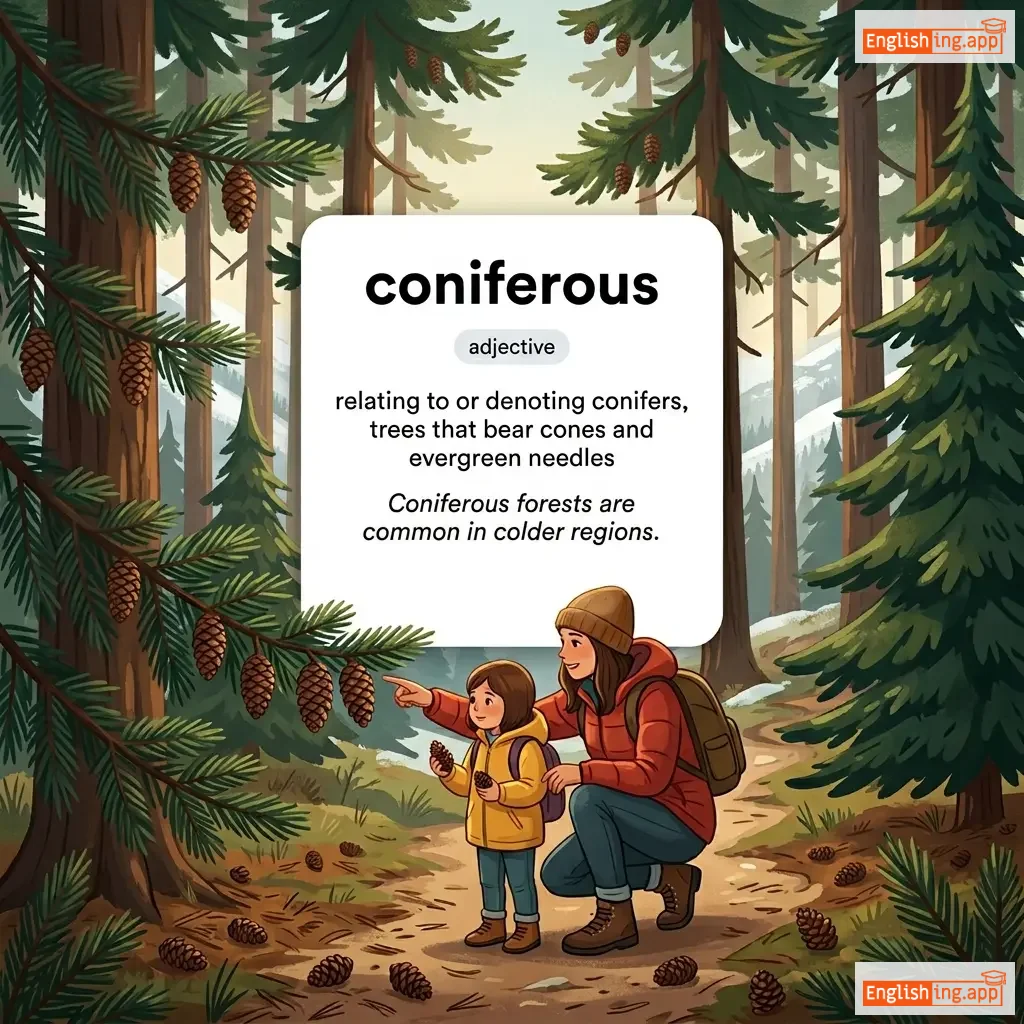
coniferous definition card — visual illustration of the meaning
adjective
/kəˈnɪfərəs/
針葉樹 (shinyōju)

relating to or denoting conifers, trees that bear cones and evergreen needles

"Coniferous forests are common in colder regions."

"針葉樹の森は寒冷な地域に多く見られます。" (Shinyōju no mori wa kanrei na chiiki ni ōku miraremasu.)
adjective
/kənˈdʒɛktʃərəl/
推測的 (すいそくてき)

based on guesswork or incomplete evidence rather than certain knowledge

"His explanation was purely conjectural and lacked proof."

"彼の説明は完全に推測的で、証拠が欠けていました。" (かれのせつめいはかんぜんにすいそくてきで、しょうこがかけていました。)
conjecture definition card — visual illustration of the meaning
noun/verb
/kənˈdʒɛktʃər/
推測 (suisei)

an opinion or conclusion formed on the basis of incomplete information; to form an opinion without sufficient evidence

"The critics conjectured that the book was inspired by real events."

"批評家たちは、その本が実際の出来事に触発されていると推測しました。" (Hihyōka-tachi wa, sono hon ga jissai no dekigoto ni shokuhatsu sarete iru to suisei shimashita.)
verb
/kənˈdʒɔɪn/
結合する (ketsugou suru)

to join together or unite; to combine

"The two rivers conjoin just before reaching the sea."

"2つの川は海に到達する直前に合流します。" (Futatsu no kawa wa umi ni tōtatsu suru chokumae ni gōryū shimasu.)
conjugal definition card — visual illustration of the meaning
adjective
/ˈkɒndʒʊɡəl/
婚姻の (kon'in no)

relating to marriage or the relationship between husband and wife

"They enjoyed a long life of conjugal happiness."

"彼らは長い結婚生活を楽しみました。" (Karera wa nagai kekkon seikatsu o tanoshimimashita.)
verb
/ˈkɒndʒʊɡeɪt/
活用する (katsuyou suru)

to list the different forms of a verb according to tense, person, and number

"Students are asked to conjugate the verb 'to be'."

"学生は「to be」動詞を活用するよう求められます。" (Gakusei wa 'to be' doushi wo katsuyou suru you motomeraremasu.)
noun
/ˌkɒndʒʊˈɡeɪʃən/
活用 (katsuyou)

the variation of the form of a verb to indicate tense, person, and number

"French verbs have complex conjugations."

"フランス語の動詞には複雑な活用形があります。" (Furansugo no doushi ni wa fukuzatsu na katsuyoukei ga arimasu.)
noun
/kənˈdʒʌŋkʃən/
接続詞 (setsuzokushi)

a word used to connect clauses or sentences, or to coordinate words

"The words 'and' and 'but' are common conjunctions."

"'and' と 'but' は一般的な接続詞です。" ('and' to 'but' wa ippanteki na setsuzokushi desu.)
verb
/ˈkʌn.dʒər/
召喚する (shou-kan suru)

to summon something as if by magic; to imagine vividly

"The magician conjured a rabbit out of the hat."

"魔法使いは帽子からウサギを召喚しました。" (Mahoutsukai wa boushi kara usagi wo shoukan shimashita.)
connect definition card — visual illustration of the meaning
verb
/kəˈnɛkt/
接続する (setsuzoku suru)

to join or link two or more things together

"The new bridge will connect the two cities."
"新しい橋が二つの都市をつなげる。" (Atarashii hashi ga futatsu no toshi wo tsunageru.)
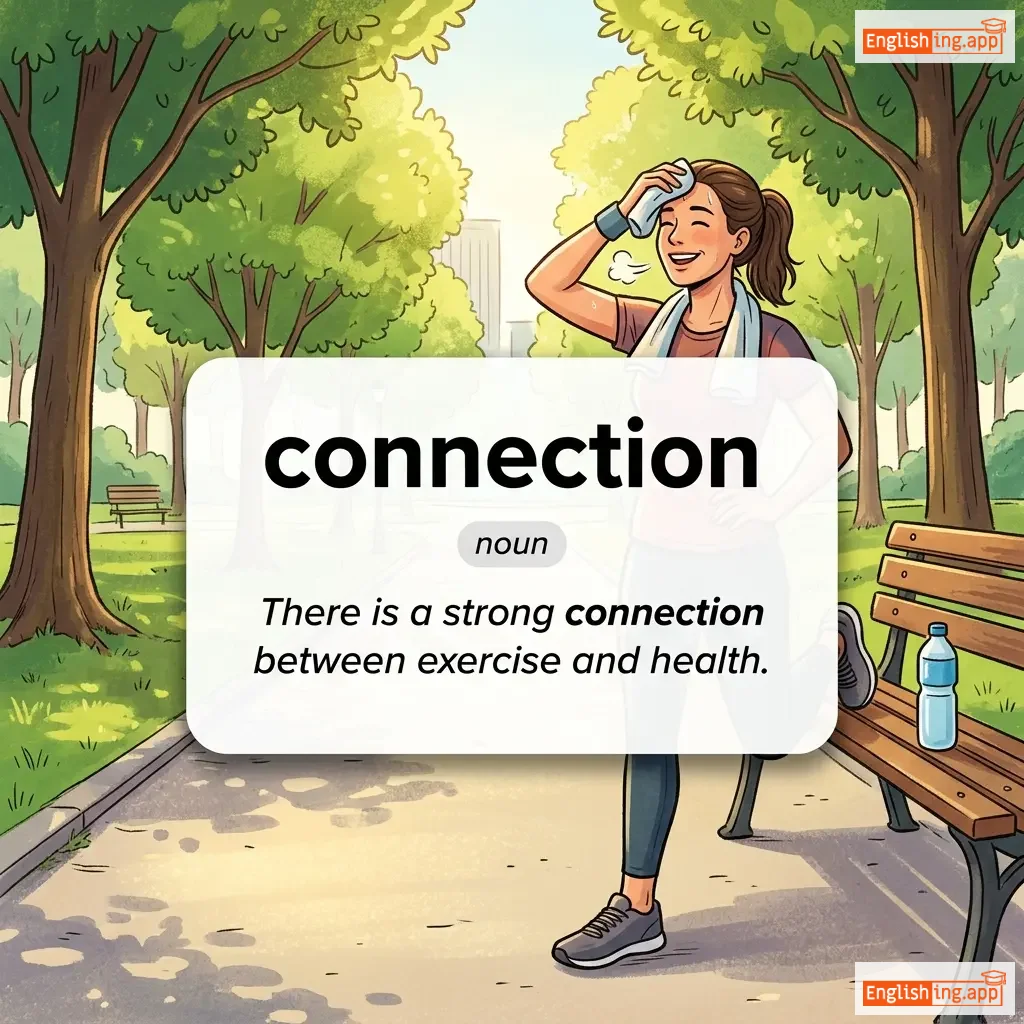
connection definition card — visual illustration of the meaning
noun
/kəˈnɛkʃən/
接続 (setsuzoku)

a relationship in which a person, thing, or idea is linked or associated with something else

"There is a strong connection between exercise and health."
"運動と健康の間に強い接続があります。" (Undou to kenkou no aida ni tsuyoi setsuzoku ga arimasu.)
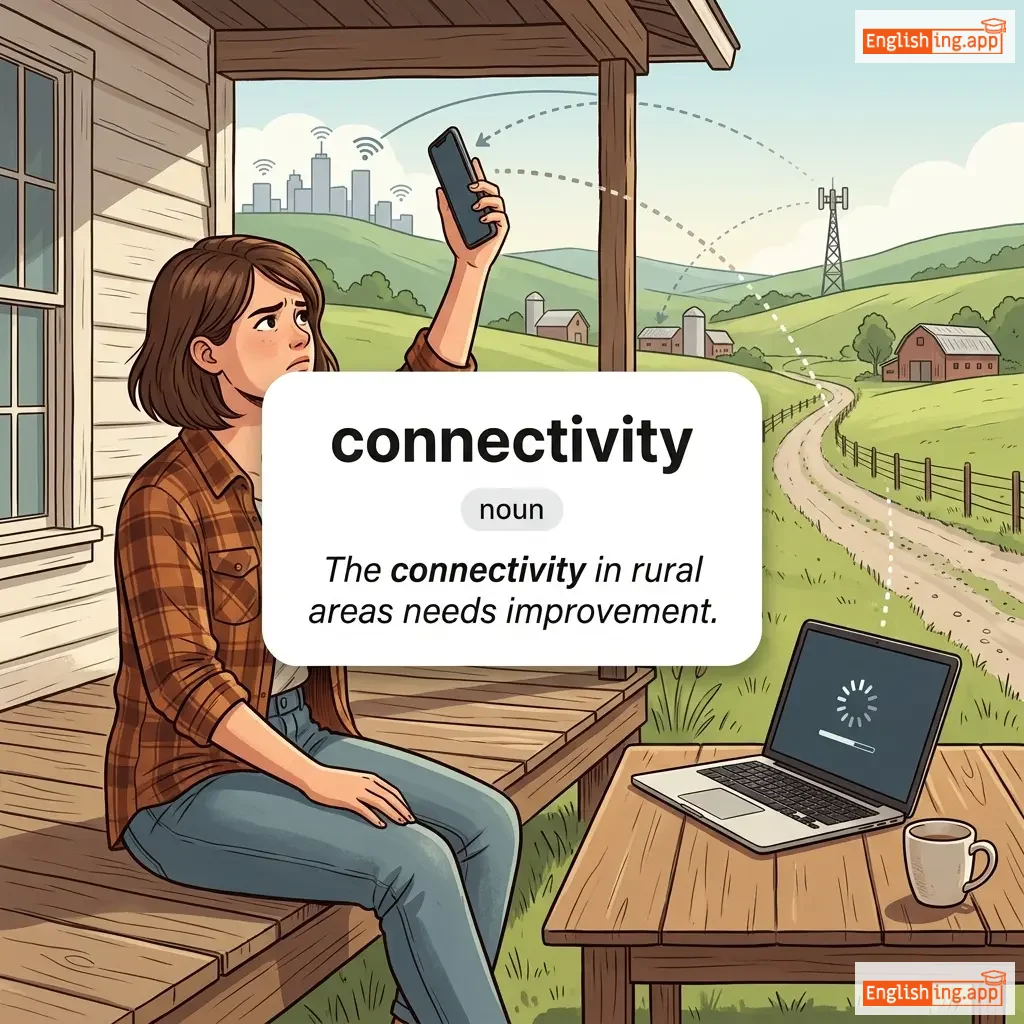
connectivity definition card — visual illustration of the meaning
noun
ˌkɒn.ekˈtɪv.ɪ.ti
接続能力, ネットワーク接続, 相互接続性 (setsuzoku nōryoku, nettowāku setsuzoku, sōgo setsuzokusei)

The state of being connected or interconnected; capacity for the interconnection of platforms, systems, and applications.

"The connectivity in rural areas needs improvement."

"地方の地域では接続性の改善が必要です。" (Chihō no chiiki dewa setsuzokusei no kaizen ga hitsuyō desu.)
noun
/kəˈnaɪ.vəns/
共謀 (kyōbō)

the act of secretly allowing or being involved in wrongdoing

"The theft happened with the connivance of the security guard."

"その窃盗は警備員の共謀で起こった。" (Sono settō wa keibiin no kyōbō de okotta.)
verb
/kəˈnaɪv/
秘密裏に不正行為に関与する (himitsuri ni fusei kōi ni kan'yo suru)

to secretly allow or be involved in a wrongdoing

"The manager connived with the supplier to cheat the company."

"マネージャーは供給者と共謀して会社を騙した。" (Manējā wa kyōkyūsha to kyōbō shite kaisha o damashita.)
adjective
/kəˈnaɪ.vɪŋ/
陰険な (inken na)

secretly scheming or plotting to help in wrongdoing

"He is a conniving politician who manipulates people for power."

"彼は権力のために人々を操る陰険な政治家です。" (Kare wa kenryoku no tame ni hitobito o ayatsuru inken na seijika desu.)
connoisseur definition card — visual illustration of the meaning
noun
/ˌkɒn.əˈsɜːr/
鑑定家 (kanteika)

an expert judge in matters of taste, especially in food, art, or wine

"She is a true connoisseur of fine art."

"彼女は本物の芸術の鑑定家です。" (Kanojo wa honmono no geijutsu no kanteika desu.)
connotation definition card — visual illustration of the meaning
noun
/ˌkɒnəˈteɪʃən/
含意 (gumi)

An idea or feeling that a word invokes in addition to its literal meaning.

"The word 'home' has a positive connotation of warmth and family."

"'ホーム'という言葉には、温かさと家族のポジティブな含意があります。" ('Hōmu' to iu kotoba ni wa, atatakai to kazoku no pojitibu na gumi ga arimasu.)
verb
/kəˈnoʊt/
示唆する (shisa suru)

To suggest or imply an additional meaning beyond the literal one.

"The word 'youthful' connotes energy and vitality."

"「若々しい」という言葉はエネルギーと活力を示唆します。" ('Wakawakashii' to iu kotoba wa enerugī to katsuryoku o shisa shimasu.)
adjective
/kəˈnjuːbiəl/
婚姻の (kon'in no)

Relating to marriage or the relationship of a married couple.

"They celebrated their connubial bliss with a honeymoon trip."

"彼らはハネムーン旅行で婚姻の幸せを祝いました。" (Karera wa hanemūn ryokō de kon'in no shiawase o iwai mashita.)
conquer definition card — visual illustration of the meaning
verb
/ˈkɒŋkər/
征服する (seifuku suru)

To defeat and take control of a place or people by force.

"The king set out to conquer new lands."

"王は新しい土地を征服するために出発した。" (Ō wa atarashī tochi o seifuku suru tame ni shuppatsu shita.)
adjective
/kɒnˈsæŋɡwɪn/
血縁関係の (ketsuen kankei no)

Of the same blood or origin; related by birth.

"The two families were consanguine through their grandparents."

"二つの家族は彼らの祖父母を通じて血縁関係にあった。" (Futatsu no kazoku wa karera no sofubo o tōjite ketsuen kankei ni atta.)
adjective
/ˌkɒnsæŋˈɡwɪniəs/
血縁の (ketsuen no)

Related by blood; descended from the same ancestor.

"The study focused on genetic disorders in consanguineous families."

"この研究は血縁のある家族における遺伝的障害に焦点を当てました。" (Kono kenkyū wa ketsuen no aru kazoku ni okeru iden-teki shōgai ni shōten o atemashita.)
noun
/ˌkɒnsæŋˈɡwɪnɪti/
血縁関係 (ketsuen kankei)

The fact of being descended from the same ancestor; blood relationship.

"The degree of consanguinity was important in inheritance laws."

"相続法では、血縁関係の程度が重要でした。" (Souzoku hou de wa, ketsuen kankei no teido ga juuyou deshita.)
noun
/ˈkɒnʃəns/
良心 (ryōshin)

An inner sense of right and wrong that guides a person's actions.

"Her conscience told her to admit the mistake."

"彼女の良心は彼女に間違いを認めるように言った。" (Kanojo no ryōshin wa kanojo ni machigai o mitomeru yō ni itta.)
conscientious definition card — visual illustration of the meaning
adjective
/ˌkɒnʃiˈɛnʃəs/
良心的で勤勉な (ryōshinteki de kinbenna)

Wishing to do what is right, especially to do one's work or duty well and thoroughly.

"He is a conscientious employee who always meets deadlines."

"彼は常に締め切りを守る良心的で勤勉な社員です。" (Kare wa tsuneni shimekiri o mamoru ryōshinteki de kinbenna shain desu.)
conscientiousness definition card — visual illustration of the meaning
noun
/ˌkɒn.ʃiˈen.ʃəs.nəs/
誠実, 責任感, 勤勉 (seijitsu, sekininkan, kinben)

The quality of wishing to do what is right, especially to do one's work or duty well and thoroughly.

"Her conscientiousness makes her a great leader."

"彼女の誠実さは、彼女を素晴らしいリーダーにしています。" (Kanojo no seijitsusa wa, kanojo o subarashī rīdā ni shiteimasu.)
adjective
/ˈkɒnʃəs/
意識的 (ishikiteki)

Aware of and responding to one's surroundings; awake.

"She was fully conscious after the surgery."
"手術後、彼女は完全に意識が戻った。" (Shujutsugo, kanojo wa kanzen ni ishiki ga modotta.)
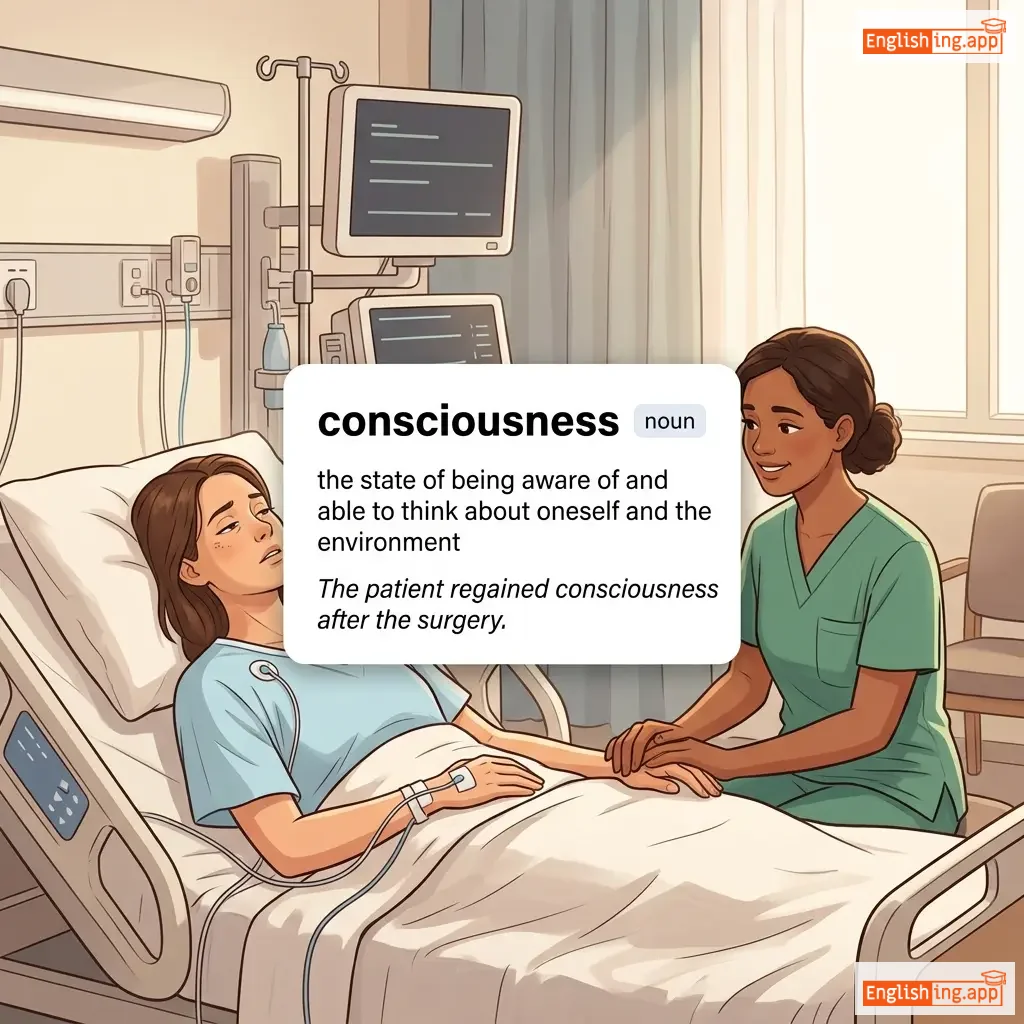
consciousness definition card — visual illustration of the meaning
noun
/ˈkɒnʃəsnəs/
意識 (ishiki)

the state of being aware of and able to think about oneself and the environment

"The patient regained consciousness after the surgery."

"手術後、患者は意識を取り戻しました。" (Shujutsugo, kanja wa ishiki o torimodoshimashita.)
conscript definition card — visual illustration of the meaning
verb
/ˈkɒnskrɪpt/
徴兵する (chōhei suru)

to force someone into military service

"The government conscripted young men during the war."

"政府は戦争中に若い男性を徴兵しました。" (Seifu wa sensō-chū ni wakai dansei o chōhei shimashita.)
consecrate definition card — visual illustration of the meaning
verb
/ˈkɒnsɪkreɪt/
奉献する (hōkensuru)

to make something sacred, usually through a religious ceremony

"The church was consecrated by the bishop."

"教会は司教によって奉献されました。" (Kyōkai wa shikyō ni yotte hōkensaremashita.)
adjective
/kənˈsɛkjʊtɪv/
連続的 (renzokuteki)

following one after another without interruption

"She won three consecutive matches."
"彼女は三連続の試合に勝った。" (Kanojo wa san renzoku no shiai ni katta.)
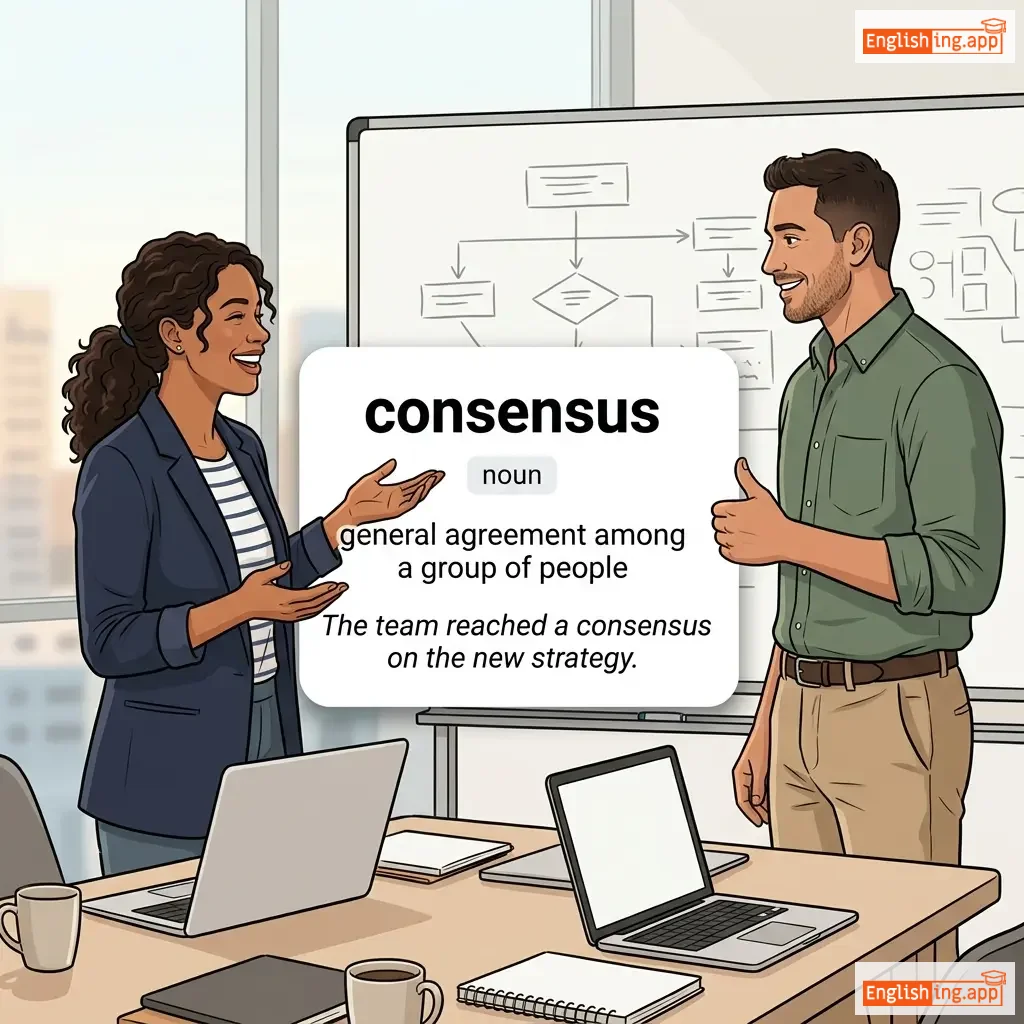
consensus definition card — visual illustration of the meaning
noun
/kənˈsɛnsəs/
コンセンサス (konsensasu)

general agreement among a group of people

"The team reached a consensus on the new strategy."
"チームは新しい戦略についてコンセンサスに達しました。" (Chīmu wa atarashī senryaku ni tsuite konsensasu ni tasshimashita.)
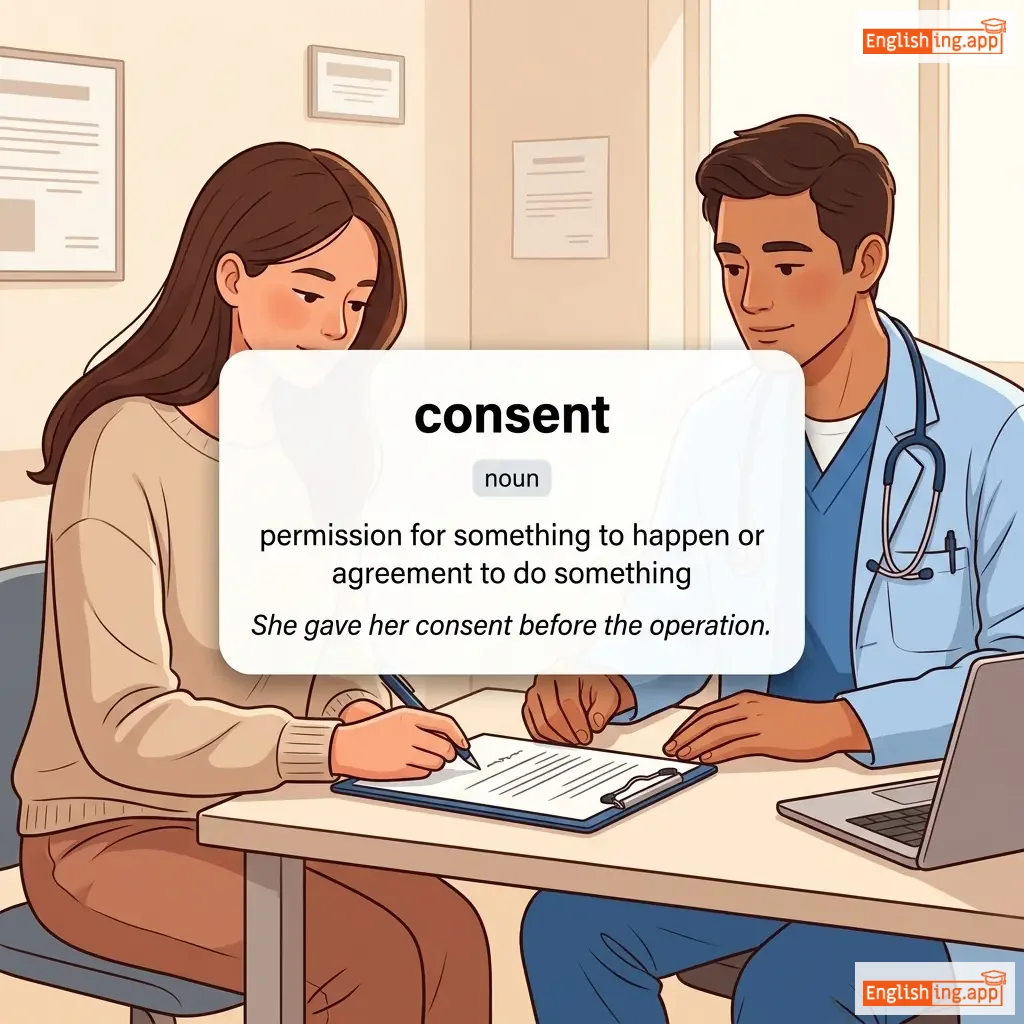
consent definition card — visual illustration of the meaning
noun
/kənˈsɛnt/
同意 (doui)

permission for something to happen or agreement to do something

"She gave her consent before the operation."
"彼女は手術の前に同意を与えました。" (Kanojo wa shujutsu no mae ni doui o ataemashita.)
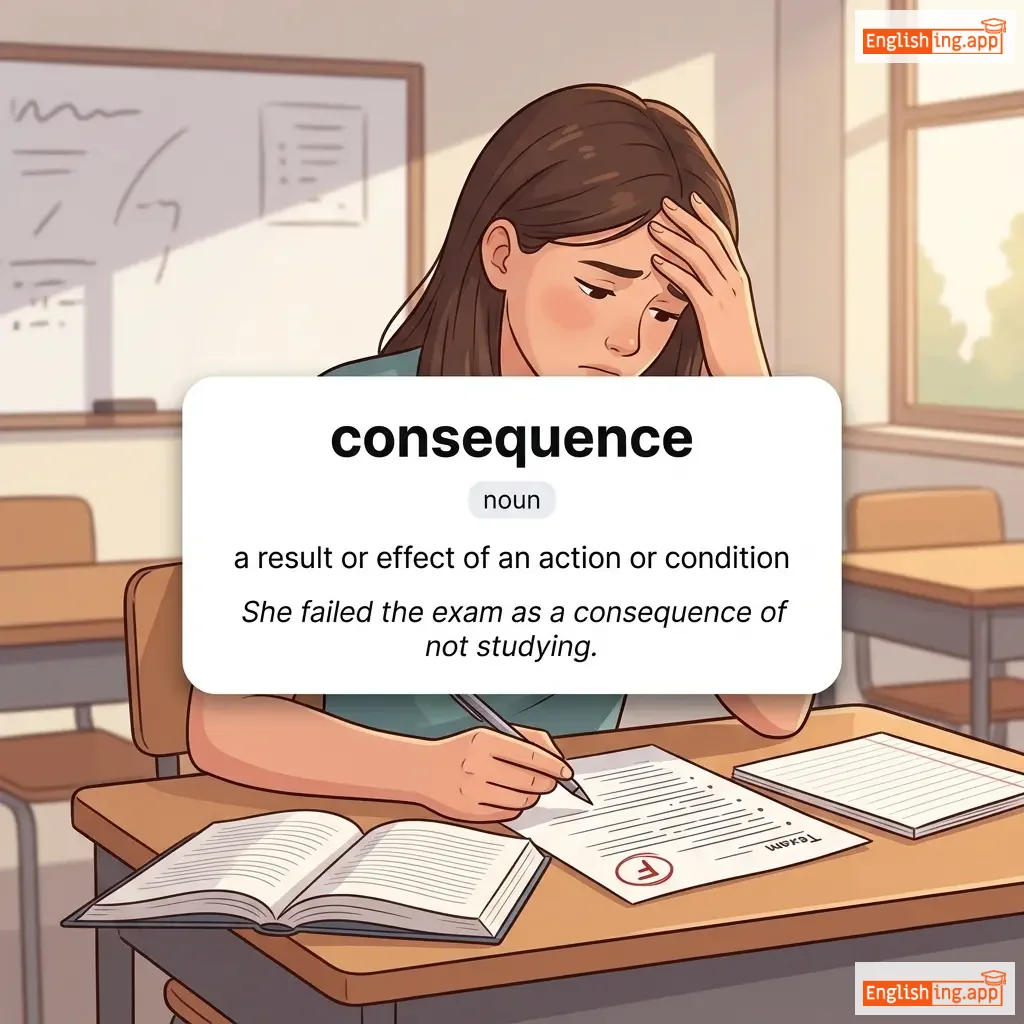
consequence definition card — visual illustration of the meaning
noun
/ˈkɒnsɪkwəns/
結果 (kekka)

a result or effect of an action or condition

"She failed the exam as a consequence of not studying."
"勉強しなかった結果、試験に落ちた。" (Benkyō shinakatta kekka, shiken ni ochita.)
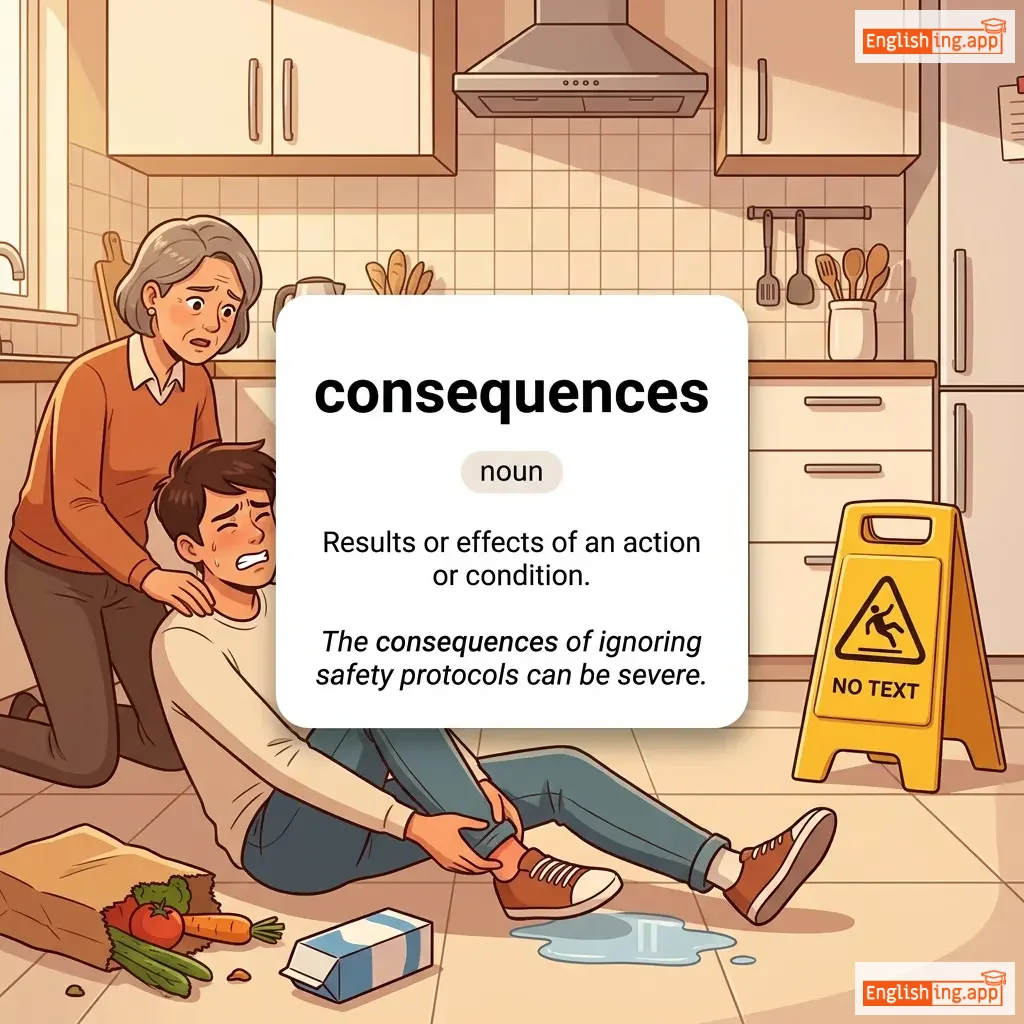
consequences definition card — visual illustration of the meaning
noun
/ˈkɒnsɪkwənsɪz/
結果 (kekka)

Results or effects of an action or condition.

"The consequences of ignoring safety protocols can be severe."

"安全プロトコルを無視した結果、重大な事態が生じる可能性があります。" (Anzen purotokoru o mushi shita kekka, juudaina jitai ga shoujiru kanousei ga arimasu.)
adjective
/ˌkɒnsɪˈkwɛnʃəl/
重要な (jūyōna)

Having important or significant consequences; resulting from something.

"The meeting was consequential for the future of the project."

"その会議はプロジェクトの未来にとって重要でした。" (Sono kaigi wa purojekuto no mirai ni totte jūyō deshita.)
adverb
/ˈkɒnsɪkwəntli/
その結果 (sono kekka)

as a result; therefore

"He didn’t study, and consequently he failed the exam."
"彼は勉強しなかったので、その結果試験に落ちた。" (Kare wa benkyou shinakatta node, sono kekka shiken ni ochita.)
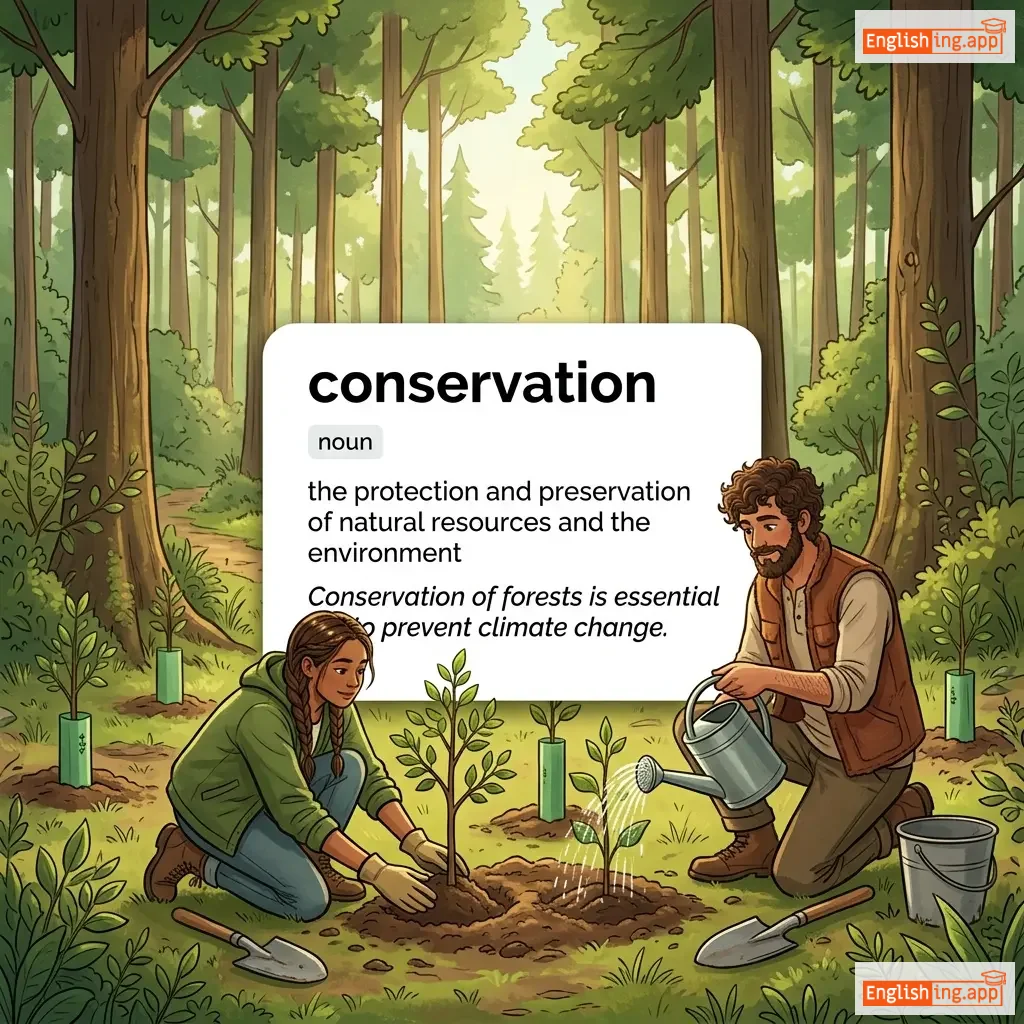
conservation definition card — visual illustration of the meaning
noun
/ˌkɒnsəˈveɪʃən/
保護 (hogo)

the protection and preservation of natural resources and the environment

"Conservation of forests is essential to prevent climate change."

"森の保護は気候変動を防ぐために重要です。" (mori no hogo wa kikou hendou o fusegu tame ni juuyou desu.)
Conservation Movement definition card — visual illustration of the meaning
noun
/ˌkɒnsərˈveɪʃən ˈmuːvmənt/
保護運動 (hogo undou)

A political, environmental, and social movement that seeks to protect natural resources including plant and animal species as well as their habitat for the future.

"The conservation movement began in the 19th century to protect wildlife."

"保護運動は19世紀に野生動物を保護するために始まりました。" (Hogo undō wa 19 seiki ni yasei dōbutsu o hogo suru tame ni hajimari mashita.)
noun
/kənˈsɜːvəˌtɪzəm/
保守主義 (hoshu shugi)

A political or social philosophy promoting traditional institutions and resistance to change.

"Conservatism values tradition and gradual development."

"保守主義は伝統と徐々に進行する発展を重視します。" (Hoshu shugi wa dentō to jōjō ni shinkō suru hatten o jūshi shimasu.)
adjective
/kənˈsɜːvətɪv/
保守的な (hoshuteki na)

Favoring traditional views and values; resistant to change.

"He has conservative views on family and society."

"彼は家族と社会について保守的な見解を持っている。" (Kare wa kazoku to shakai ni tsuite hoshuteki na kenkai o motte iru.)
noun
/ˈkɒnsəvəˌtwɑː/
音楽院 (ongakuin)

A school specializing in the study of music or drama.

"She trained as a pianist at the Paris Conservatoire."

"彼女はパリの音楽院でピアニストとして訓練を受けました。" (Kanojo wa Pari no ongakuin de pianisuto toshite kunren o ukemashita.)
noun
/kənˈsɜːvəˌtɔːri/
温室 / 音楽と芸術の学校 (onshitsu / ongaku to geijutsu no gakkou)

A greenhouse for growing plants or a school for music and the arts.

"They grew exotic plants in the conservatory."

"彼らは温室でエキゾチックな植物を育てていました。" (Karera wa onshitsu de ekizochikku na shokubutsu o sodate te imashita.)
verb
/kənˈsɜːrv/

to protect something from harm or destruction; to use resources carefully to avoid waste

"We must conserve water during the dry season."

verb
/kənˈsɪdər/
考慮する (koryo suru)

to think carefully about something, especially before making a decision

"She is considering studying abroad next year."

"彼女は来年海外で学ぶことを考えています。" (Kanojo wa rainen kaigai de manabu koto wo kangaeteimasu.)
adjective
/kənˈsɪdərəbl/
かなりの (kanarino)

large in amount, size, or importance

"The project required a considerable amount of time and money."

"そのプロジェクトはかなりの時間とお金を必要としました。" (Sono purojekuto wa kanarino jikan to okane o hitsuyō to shimashita.)
adverb
/kənˈsɪdərəbli/
かなり (kanari)

to a great extent or degree; significantly

"The weather has improved considerably since last week."

"天気は先週からかなり改善しました。" (Tenki wa senshū kara kanari kaizen shimashita.)