語彙集

英単語辞書 | 単語の意味、定義、例文

noun
/ˈbæləd/
叙事歌 (jogi uta)

a narrative song or poem, often sentimental or romantic

"The singer performed a moving ballad about lost love."

"歌手は失われた愛について感動的なバラッドを披露しました。" (Kashu wa ushinawareta ai ni tsuite kandoutekina ballad o hirou shimashita.)
noun
/ˈbælæst/
バラスト (barasuto)

heavy material used to stabilize a ship or vehicle

"The ship was loaded with ballast to remain steady in the storm."

"嵐の中で船が安定を保つためにバラストが積まれていました。" (Arashi no naka de fune ga antei o tamotsu tame ni barasuto ga tsumareteimashita.)
noun
/bæˈleɪ/
バレエ (ballet)

a highly stylized and artistic form of dance

"She has trained for years in classical ballet."

"彼女は何年もクラシックバレエを練習してきました。" (Kanojo wa nannen mo kurashikku baree o renshū shite kimashita.)
noun/verb
/bəˈluːn/
風船 (fūsen)

A small bag made of thin rubber or similar material that can be inflated with air or gas; as a verb, to expand rapidly.

"The children played with a red balloon at the party."

"子供たちはパーティーで赤い風船で遊んでいました。" (Kodomotachi wa pātī de akai fūsen de asonde imashita.)
noun
/ˈbælət/
投票用紙 (touhyou youshi)

a process of voting, usually in secret; the paper used to record a vote

"Voters cast their ballot in the election."

"有権者は選挙で投票用紙を投じました。" (yuukensha wa senkyo de touhyou youshi wo toujimashita.)
noun
/bɑːm/
軟膏 (nankou)

A soothing ointment or something that provides comfort or relief.

"The balm helped relieve the pain from her sunburn."

"そのバームは日焼けの痛みを和らげるのに役立ちました。" (Sono bāmu wa hiyake no itami wo yawarageru no ni yakudachimashita.)
adjective
/ˈbɑːmi/
穏やかで心地よい温かさ;癒し。 (odayakade kokochi yoi atatakasa; iyashi.)

Mild and pleasantly warm; soothing.

"We enjoyed a walk on a balmy summer evening."

"私たちは穏やかな夏の夕方に散歩を楽しみました。" (Watashitachi wa odayakana natsu no yuugata ni sanpo o tanoshimimashita.)
noun
/ˈbɔːlsəm/
芳香樹脂 (hōkō shushi)

An aromatic resinous substance or plant used for healing or soothing.

"The tree produced a fragrant balsam used in medicine."

"その木は医学で使用される芳香のあるバルサムを生産しました。" (Sono ki wa igaku de shiyō sareru hōkō no aru barusamu o seisan shimashita.)
noun
/ˈbɔːl.səm ˈæp.əl/
苦瓜 (nikukō)

a bitter gourd vegetable with a bumpy green skin, also known as bitter melon

"Balsam apple is cooked with spices to reduce its bitter taste."
"苦瓜はその苦味を減らすために香辛料と一緒に調理されます。" (Nikukō wa sono nigami o herasu tame ni kōshinryō to issho ni chōri saremasu)
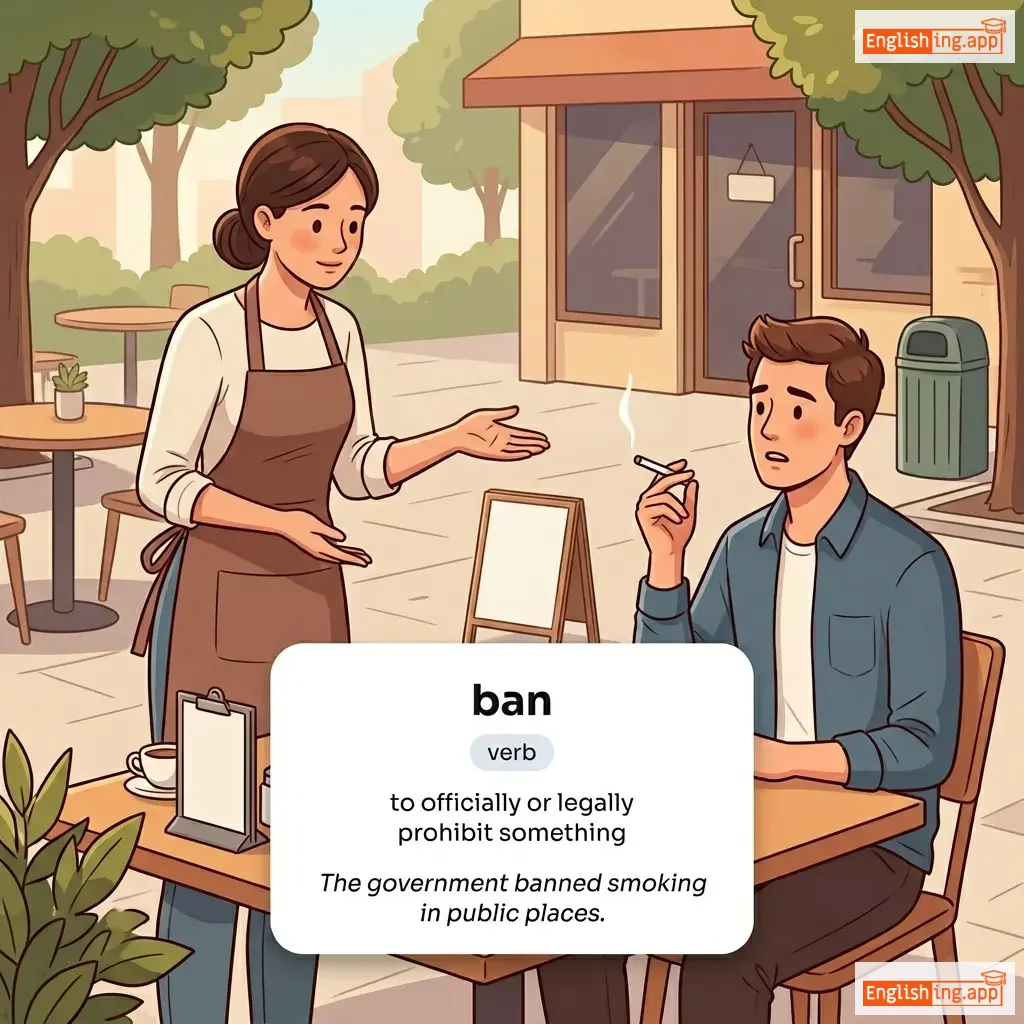
ban definition card — visual illustration of the meaning
verb
/bæn/
禁止する (kinshi suru)

to officially or legally prohibit something

"The government banned smoking in public places."

"政府は公共の場での喫煙を禁止しました。" (Seifu wa kōkyō no ba de no kitsuen o kinshi shimashita.)
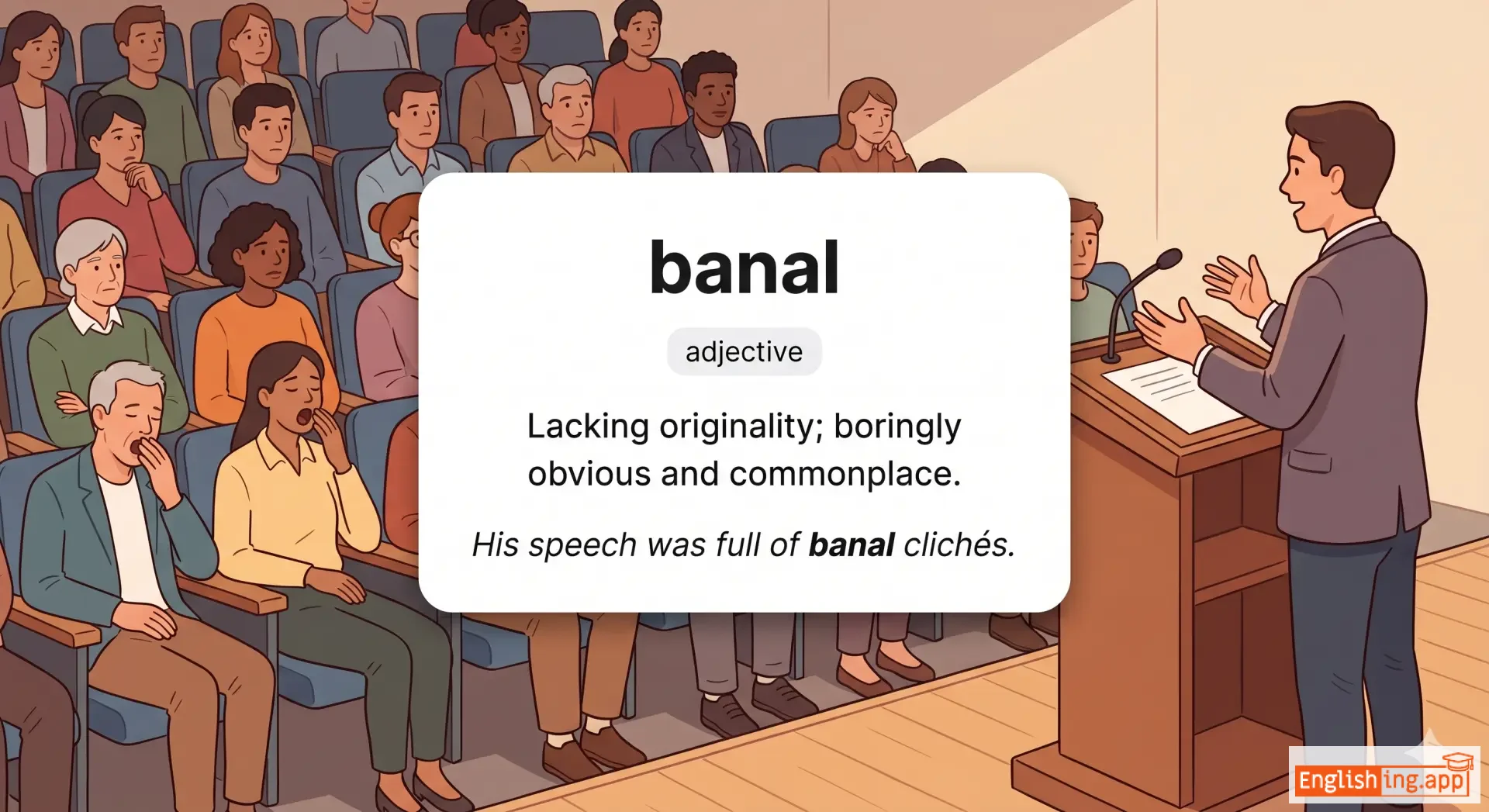
banal definition card — visual illustration of the meaning
adjective
/bəˈnɑːl/ or /ˈbeɪnəl/
平凡 (heibon)

Lacking originality; boringly obvious and commonplace.

"His speech was full of banal clichés."

"彼のスピーチは平凡なクリシェでいっぱいだった。" (Kare no supīchi wa heibon na kurishē de ippai datta.)
noun
/bəˈnæləti/
陳腐 (chinpu)

The condition of being unoriginal, boring, or obvious; trite remark or quality.

"The speech was criticized for its banality and lack of originality."

"そのスピーチは陳腐と独創性の欠如で批判されました。" (Sono supīchi wa chinpu to dokusousei no ketsujo de hihan saremashita.)
noun
/bəˈnænə/
幸せ (shiawase)

a long curved fruit with a yellow skin and soft sweet flesh inside

"She ate a ripe banana for breakfast."

"彼女は賞を受け取ったとき、幸せを隠せなかった。" (Kanojo wa shō o uketotta toki, shiawase o kakusenakatta.)
noun
/bænd/
バンド (bando)

a group of musicians who play music together

"The band performed live at the concert."

"バンドはコンサートでライブパフォーマンスをしました。" (Bando wa konsāto de raibu pafōmansu o shimashita.)
noun, verb
/ˈbændɪdʒ/
包帯 (houtai)

a strip of material used to cover or protect a wound; to cover or wrap a wound with such material

"The nurse carefully bandaged his injured arm."

"看護師は彼のけがをした腕に包帯を巻いた。" (Kangoshi wa kare no kega o shita ude ni houtai o maita)
noun
/bænˈdænə/
大きなカラフルなバンダナ (ōkina karafuru na bandana)

A large, often brightly colored handkerchief, typically worn on the head or around the neck.

"He tied a red bandanna around his neck."
"彼は首に赤いバンダナを結んだ。" (Kare wa kubi ni akai bandana o musunda.)
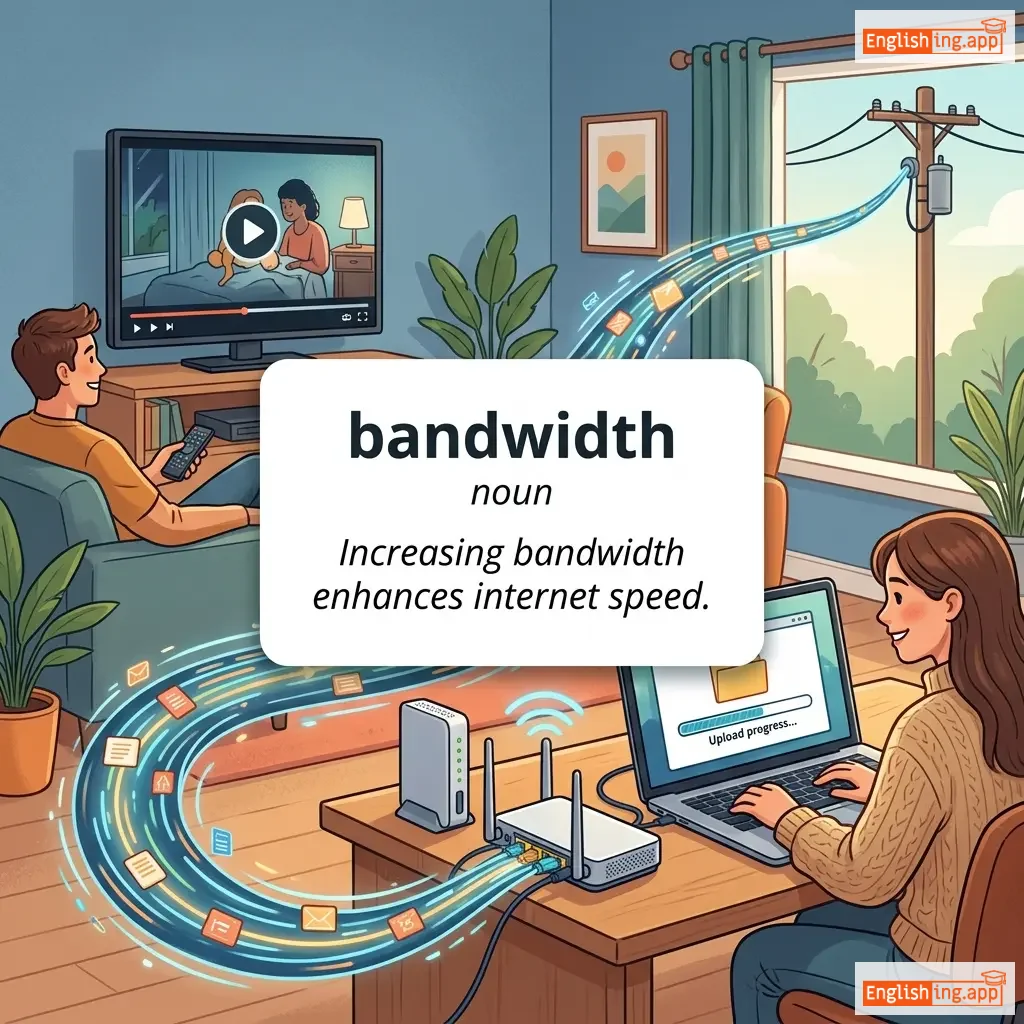
bandwidth definition card — visual illustration of the meaning
noun
ˈbænd.wɪdθ
帯域幅 (taiikihaba)

A range of frequencies within a given band, in particular that used for transmitting a signal; the maximum amount of data that can be transmitted in a fixed amount of time.

"Increasing bandwidth enhances internet speed."

"帯域幅を増やすとインターネットの速度が向上します。" (taiikihaba o fuyasu to intaanetto no sokudo ga koujoushimasu.)
💬

bandy

verb
/ˈbændi/

To pass (words, ideas, or gossip) back and forth in a casual or argumentative way.

"They bandied jokes across the table."

noun
/beɪn/
災い (wazawai)

A cause of great distress, harm, or annoyance.

"Traffic jams are the bane of city life."

"交通渋滞は都市生活の災いです。" (Kōtsū jūtai wa toshi seikatsu no wazawai desu.)
adjective
/ˈbeɪnfəl/
有害な (yūgaina)

Causing harm, ruin, or destruction; deadly or poisonous.

"His baneful influence ruined the community."

"彼の有害な影響がコミュニティを破壊した。" (Kare no yūgaina eikyō ga komyuniti o hakai shita.)
noun
/bæŋ/
突然の大きな音; 強い衝撃や打撃 (totsuzen no ōkina oto; tsuyoi shōgeki ya dageki)

a sudden loud noise; a hard blow or hit

"The door closed with a loud bang that woke everyone up."

"ドアが大きな音を立てて閉まり、皆を起こしました。" (Doa ga ōkina oto o tatete shimari, mina o okoshimashita.)
noun
/ˈbæŋ.ɡəl/
バングル (banguru)

a rigid bracelet or anklet worn as jewelry

"She wore beautiful gold bangles on her wrists."

"彼女は腕に美しい金のバングルを着けていた。" (kanojo wa ude ni utsukushii kin no banguru o tsukete ita)
noun
/ˈbæn.jən/
ランニングシャツ (ranningu shatsu)

a sleeveless undergarment worn next to the skin; vest

"He put on a cotton banian under his shirt."

"彼はシャツの下に綿のバニアンを着ました。" (Kare wa shatsu no shita ni men no banyan o kimashita.)
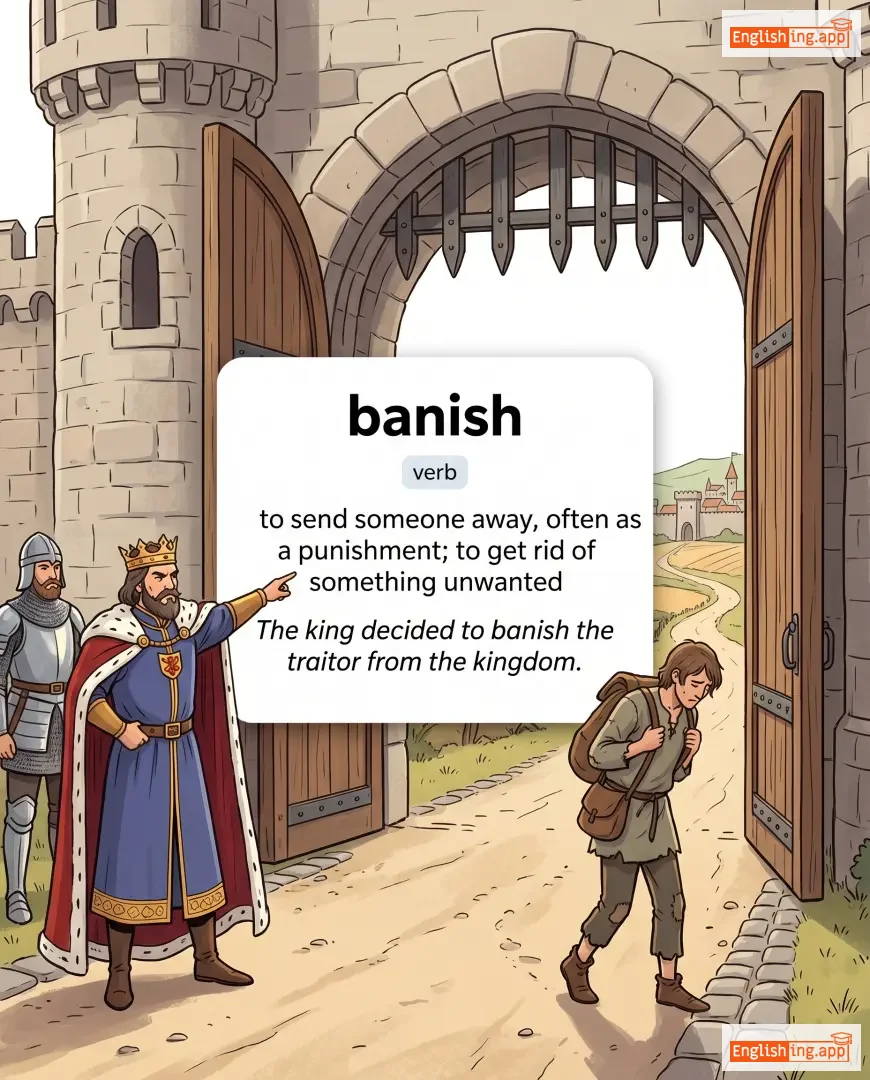
banish definition card — visual illustration of the meaning
verb
/ˈbænɪʃ/

to send someone away, often as a punishment; to get rid of something unwanted

"The king decided to banish the traitor from the kingdom."

noun
/ˈbænɪstər/
手すり (tesuri)

a railing supported by posts at the side of a staircase or balcony

"She held the banister tightly while going down the stairs."

"彼女は階段を降りる時、手すりをしっかりと握っていた。" (Kanojo wa kaidan o oriru toki, tesuri o shikkari to nigitte ita.)
noun/verb
/bæŋk/
銀行 (ginkou)

an institution where money is kept and managed; or to tilt in movement (like an airplane or riverbank)

"She deposited the money in the bank."

"彼女は銀行にお金を預けました。" (Kanojo wa ginkou ni okane wo azukemashita.)
noun
/ˈbæŋkər/
銀行家 (ginkōka)

a person who works in or manages a bank

"The banker approved the loan after reviewing the documents."

"銀行家は書類を確認した後、ローンを承認しました。" (Ginkōka wa shorui o kakunin shita ato, rōn o shōnin shimashita.)
noun
/ˈbæŋkɪŋ/
銀行業務または銀行サービス (ginkou gyoumu matawa ginkou saabisu)

the business or services provided by a bank

"Online banking has made financial transactions easier."

"オンラインバンキングは金融取引を簡単にしました。" (Onrain banking wa kin'yū torihiki o kantan ni shimashita.)
noun
/ˈbæŋkrʌpt/
破産 (hasan)

a person unable to pay debts; having no money; completely lacking in something

"The company went bankrupt after years of poor financial management."

"その会社は、長年の不良な財務管理の後、破産しました。" (Sono kaisha wa, naganen no furyō na zaimu kanri no ato, hasan shimashita.)
noun
/ˈbæŋkrʌptsi/
破産 (hasan)

the state of being unable to pay debts owed, declared by a legal process

"The company declared bankruptcy after months of financial struggles."

"その会社は数ヶ月にわたる財務的な困難の後、破産を宣言しました。" (Sono kaisha wa suukagetsu ni wataru zaimuteki na konnan no ato, hasan o sengen shimashita.)
🖼️

banner

noun
/ˈbænər/

a large printed sign used for advertisements or announcements

"The company displayed a banner to advertise their new product."

banter definition card — visual illustration of the meaning
noun/verb
/ˈbæntər/
冗談 (joudan)

playful and friendly exchange of teasing remarks

"The colleagues enjoyed some light banter during the meeting."

"同僚たちは会議中に軽いバンターを楽しんだ。" (Douryoutachi wa kaigi chuu ni karui bantaa wo tanoshinda.)
adjective/verb
/ˈbæntərɪŋ/
冗談を言う (joudan wo iu)

characterized by good-humored teasing or joking

"They had a bantering conversation at the café."

"彼らはカフェで冗談交じりの会話をしていた。" (Karera wa kafe de joudan majiri no kaiwa o shiteita.)
noun, verb
/bɑːr/
バー, ブロックする (ba, burokkusuru)

a counter where drinks are served; to prevent or block

"They decided to meet at the bar after work."

"仕事の後、バーで会うことに決めました。" (Shigoto no ato, bā de au koto ni kimemashita.)
noun
/bɑːrb/
とげ、鋭いコメント (toge, surudoi komento)

a sharp projection such as on a fishhook; a cutting remark

"The fishhook has a small barb to keep the fish from escaping."

"釣り針には、魚が逃げないように小さなとげがあります。" (Tsuribari ni wa, sakana ga nigenai you ni chiisana toge ga arimasu.)
noun
/ˈbɑːr.bər/
理髪師 (rihatsushi)

a person whose job is to cut men's hair and shave or trim beards

"The barber gave him a perfect haircut for his wedding."

"理髪師は彼の結婚式のために完璧なヘアカットをしました。" (Rihatsushi wa kare no kekkonshiki no tame ni kanpeki na heakatto o shimashita.)
noun
/bɑːrˈbeəriən/
野蛮人; 未開人; (yebanjin; mikajin)

a person from an uncivilized group; someone who is cruel or brutal

"The ancient Romans considered anyone outside their empire to be barbarians."

"古代ローマ人は自分たちの帝国の外にいる者たちを野蛮人と見なしていた。" (Kodai Rōmajin wa jibuntachi no teikoku no soto ni iru mono-tachi o yebanjin to minasiteita.)
noun
/ˈbɑːrbərɪzəm/
野蛮 (yaban)

extreme cruelty or brutality; absence of culture and civilization

"The barbarism of the war crimes shocked the entire international community."

"戦争犯罪の野蛮さは国際社会全体を衝撃に陥れた。" (Sensō hanzai no yaban-sa wa kokusai shakai zentai o shōgeki ni ochiireta.)
adjective
/ˈbɑːr.bə.rəs/
野蛮な, 残虐な (yaban na, zankyō na)

extremely cruel or uncivilized

"The prisoners were treated in a barbarous manner."

"囚人たちは野蛮な方法で扱われました。" (Shūjin-tachi wa yaban na hōhō de atsukaware mashita.)
noun
/ˈbɑːr.kəˌroʊl/
バルカロール (barukarooru)

a traditional Venetian boat song, often in 6/8 time

"The orchestra played a beautiful barcarole that reminded me of Venice."
"オーケストラは美しいバルカロールを演奏し、私にヴェネツィアを思い出させました。" (ookesutora wa utsukushii barukarooru wo ensou shi, watashi ni venetsuia wo omoidasaasemashita.)
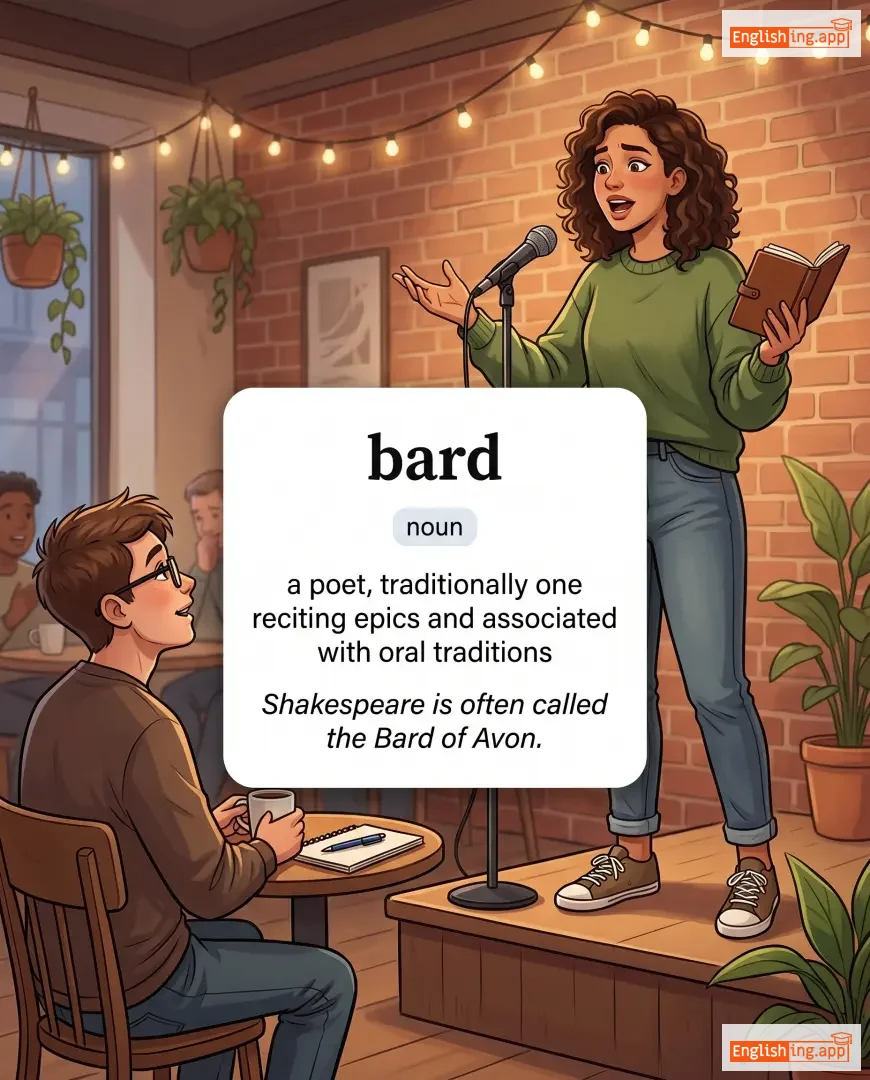
bard definition card — visual illustration of the meaning
noun
/bɑːrd/
詩人 (shijin)

a poet, traditionally one reciting epics and associated with oral traditions

"Shakespeare is often called the Bard of Avon."

"シェイクスピアはしばしばアヴォンの詩人と呼ばれます。" (Sheikusupia wa shibashiba Avon no shijin to yobaremasu.)
adjective
/beər/
(hadaka)

not covered by any clothing or decoration; simple and without addition

"He walked on the beach with bare feet."

"彼は裸足でビーチを歩いた。" (Kare wa hadashi de bīchi o aruita.)
adjective
/ˈbɛərˌfeɪst/
厚かましい (atsukamashī)

shameless and undisguised; openly bold or unashamed

"He told a barefaced lie in front of everyone."

"彼はみんなの前で厚かましい嘘をついた。" (Kare wa minna no mae de atsukamashī uso o tsuita.)
adverb
/ˈbɛərli/
かろうじて (karōjite)

only just; almost not

"She barely passed the exam."

"彼女はギリギリ試験に合格しました。" (Kanojo wa girigiri shiken ni gōkaku shimashita.)
noun
/ˈbɛərnəs/
裸の状態 (hada no joutai)

the state of being bare or uncovered; lack of decoration, warmth, or concealment

"The bareness of the room made it feel cold and unwelcoming."

"部屋の裸の状態が冷たく居心地の悪い感じを与えた。" (heya no hada no joutai ga tsumetakaku igokochi no warui kanji o ataeta)
bargain definition card — visual illustration of the meaning
noun, verb
/ˈbɑːrɡən/
取引 / お得な買い物 (torihiki / otoku na kaimono)

an agreement between two or more parties; something bought at a good price

"We managed to get the car at a real bargain."

"私たちは本当に良いバーゲンで車を手に入れました。" (Watashitachi wa hontou ni yoi baagen de kuruma o te ni iremashita.)
noun
/ˈbærɪˌtoʊn/
低い男性の声 (hikui dansei no koe)

a male singing voice between tenor and bass

"The singer’s baritone voice impressed the audience."
"歌手のバリトンの声は観客に感銘を与えました。" (Kashu no bariton no koe wa kankyaku ni kanmei o ataemashita.)
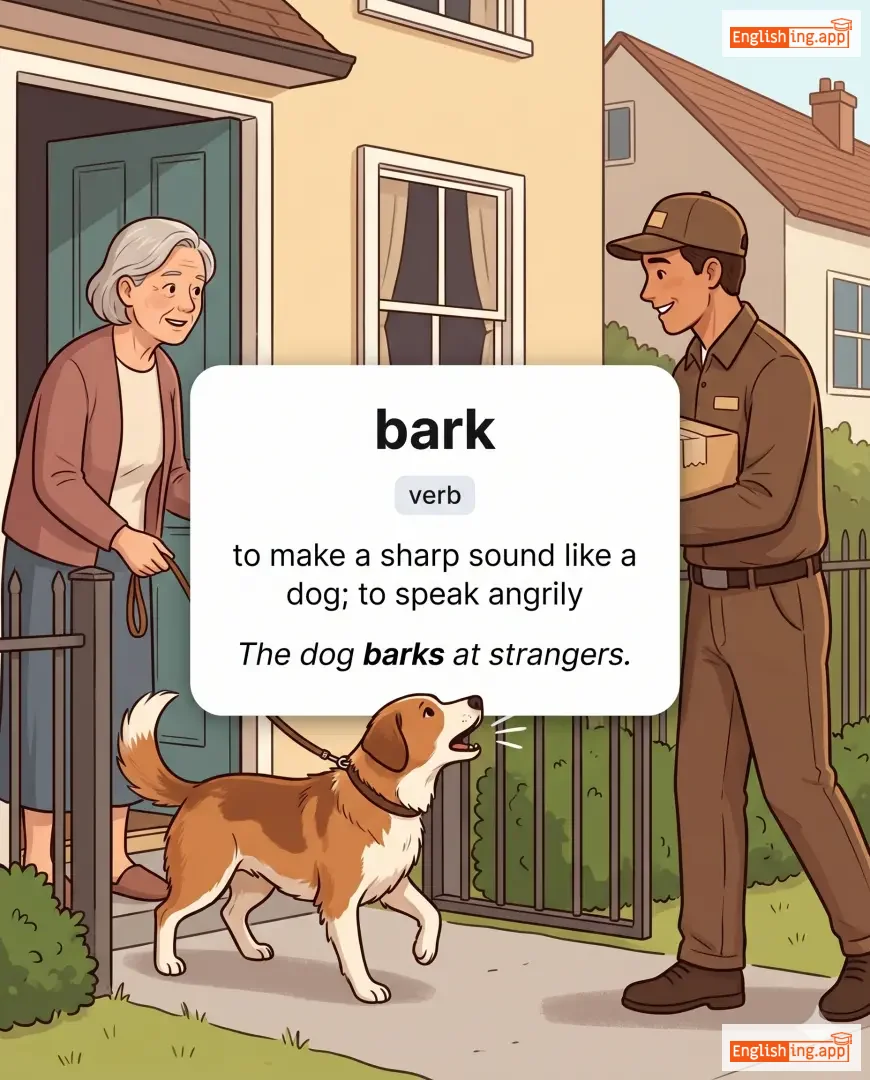
bark definition card — visual illustration of the meaning
verb
/bɑːrk/
吠える (hoeru)

to make a sharp sound like a dog; to speak angrily

"The dog barks at strangers."

"犬は見知らぬ人に吠える。" (Inu wa mishiranu hito ni hoeru.)
noun
/ˈbɑː.li/
大麦 (ōmugi)

a cereal grain used for food, brewing beer, and animal feed

"The farmer harvested barley from his fields in autumn."

"農夫は秋に彼の畑から大麦を収穫した。" (Nōfu wa aki ni kare no hatake kara ōmugi o shūkaku shita.)
noun
/bɑːn/
納屋 (nōya)

a large building used for storing grain or housing farm animals

"The farmer keeps his cows in the barn."

"農夫は牛を納屋に入れています。" (Nōfu wa ushi o nōya ni ireteimasu.)