語彙集

英単語辞書 | 単語の意味、定義、例文

noun
/ɔː/
驚嘆 (kyoutan)

a feeling of deep respect mixed with fear or wonder

"The children looked at the fireworks in awe."

"子供たちは花火を驚嘆して見ていました。" (Kodomotachi wa hanabi wo kyoutan shite miteimashita.)
adjective
/ˈɔːfəl/
ひどい (hidoi)

very bad or unpleasant

"The weather was awful during our trip."

"旅行中、天気はひどかった。" (Ryokō-chū, tenki wa hidokatta.)
adverb
/ˈɔːfəli/
とても (totemo)

in a very great degree; extremely; in a way that is very bad or unpleasant

"I am awfully glad to see you again."

"また会えてとても嬉しいです。" (mata aete totemo ureshii desu)
adjective
/ˈɔːkwəd/
気まずい (kimazui)

causing or feeling embarrassment; difficult to deal with

"There was an awkward silence after his joke."

"彼のジョークの後、気まずい沈黙がありました。" (Kare no jōku no ato, kimazui chinmoku ga arimashita.)
noun
/ɔːl/
(kiri)

a small pointed tool used for making holes, especially in leather

"The cobbler used an awl to punch holes in the leather."

"靴屋は革に穴を開けるために錐を使った。" (Kutsuya wa kawa ni ana wo akeru tame ni kiri wo tsukatta.)
noun
/ˈɔːnɪŋ/
オーニング (ōningu)

a sheet of canvas or material stretched on a frame to shelter a place from the sun or rain

"We sat under the awning to avoid the heavy rain."

"私たちは大雨を避けるためにオーニングの下に座っていました。" (Watashitachi wa ōame o sakeru tame ni ōningu no shita ni suwatteimashita.)
adverb
/əˈraɪ/
失敗 (shippai)

away from the expected or proper direction; wrong or amiss

"The plan went awry when the weather suddenly changed."

"天気が突然変わったとき、計画は失敗した。" (Tenki ga totsuzen kawatta toki, keikaku wa shippai shita.)
noun
/æks/
(ono)

a tool with a heavy blade for cutting wood

"The lumberjack swung his axe to chop the tree."
"木こりは木を切るために斧を振った。" (Kikori wa ki wo kiru tame ni ono wo futta.)
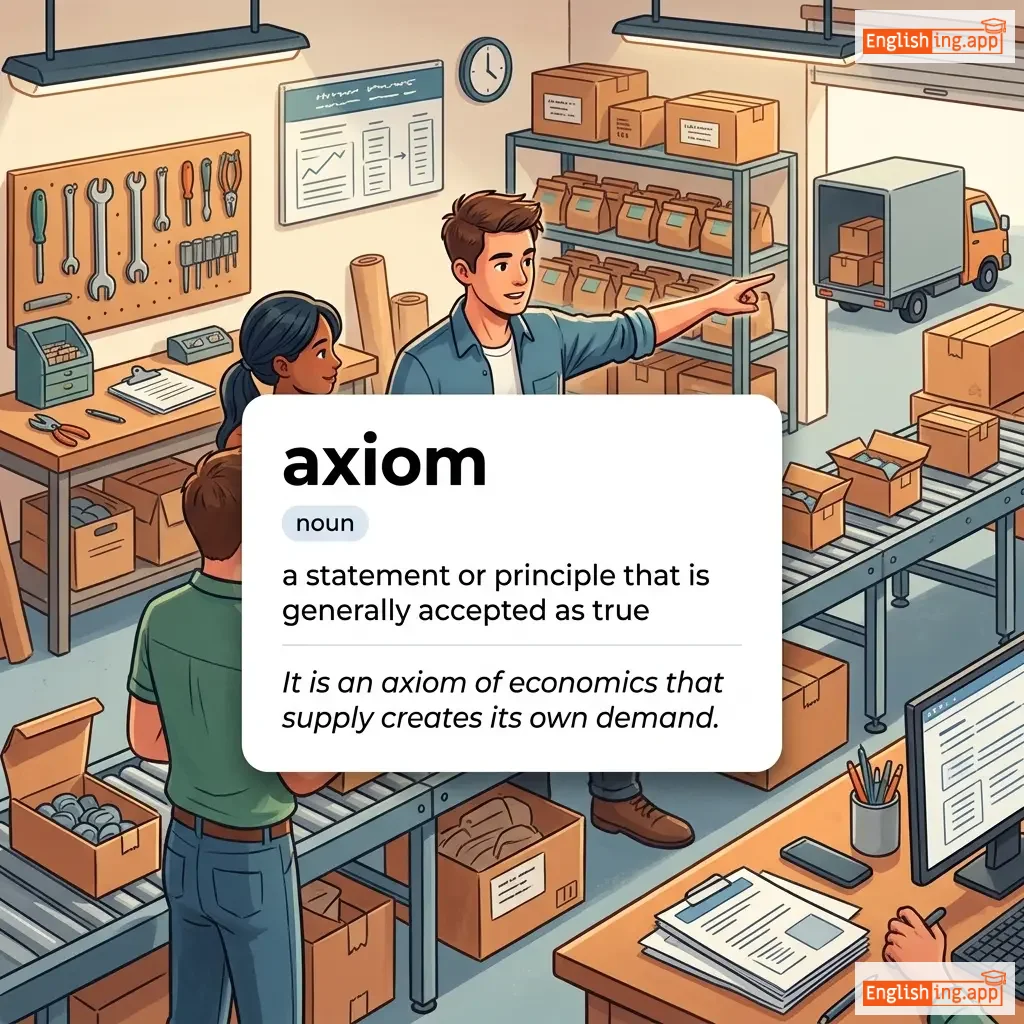
axiom definition card — visual illustration of the meaning
noun
/ˈæk.si.əm/
公理 (kōri)

a statement or principle that is generally accepted as true

"It is an axiom of economics that supply creates its own demand."

"経済学の公理は供給が自分の需要を生み出すことです。" (Keizaigaku no kōri wa kyōkyū ga jibun no juyō o umidasu koto desu.)
axiomatic definition card — visual illustration of the meaning
adjective
/ˌæk.si.əˈmæt.ɪk/
公理的 (kōriteki)

self-evident or unquestionable

"It is axiomatic that hard work leads to success."

"それは自明であり、努力は成功に繋がることを示している。" (Sore wa jimēn de ari, doryoku wa seikō ni tsunagaru koto o shimeshite iru.)
noun
/aɪ/
賛成 (sansei)

an affirmative vote or expression of agreement

"The committee voted aye on the proposal."

"委員会は提案に賛成票を投じました。" (Iinkai wa teian ni sansei-hyō o tōjimashita.)
noun
/əˈzeɪ.li.ə/
アザレアの花 (azarea no hana)

a flowering shrub with brightly colored blooms, often grown ornamentally

"The garden was full of blooming azaleas in spring."

"春にはアザレアの花が咲いていました。" (Haru ni wa azarea no hana ga saiteimashita.)
adjective
/ˈæʒər/
空色 (sora iro)

A bright blue color like that of a clear sky.

"The clear sky was painted in a deep shade of azure."

"澄んだ空は深い空色で塗られていました。" (Sunda sora wa fukai sora iro de nurarete imashita.)