語彙集

英単語辞書 | 単語の意味、定義、例文

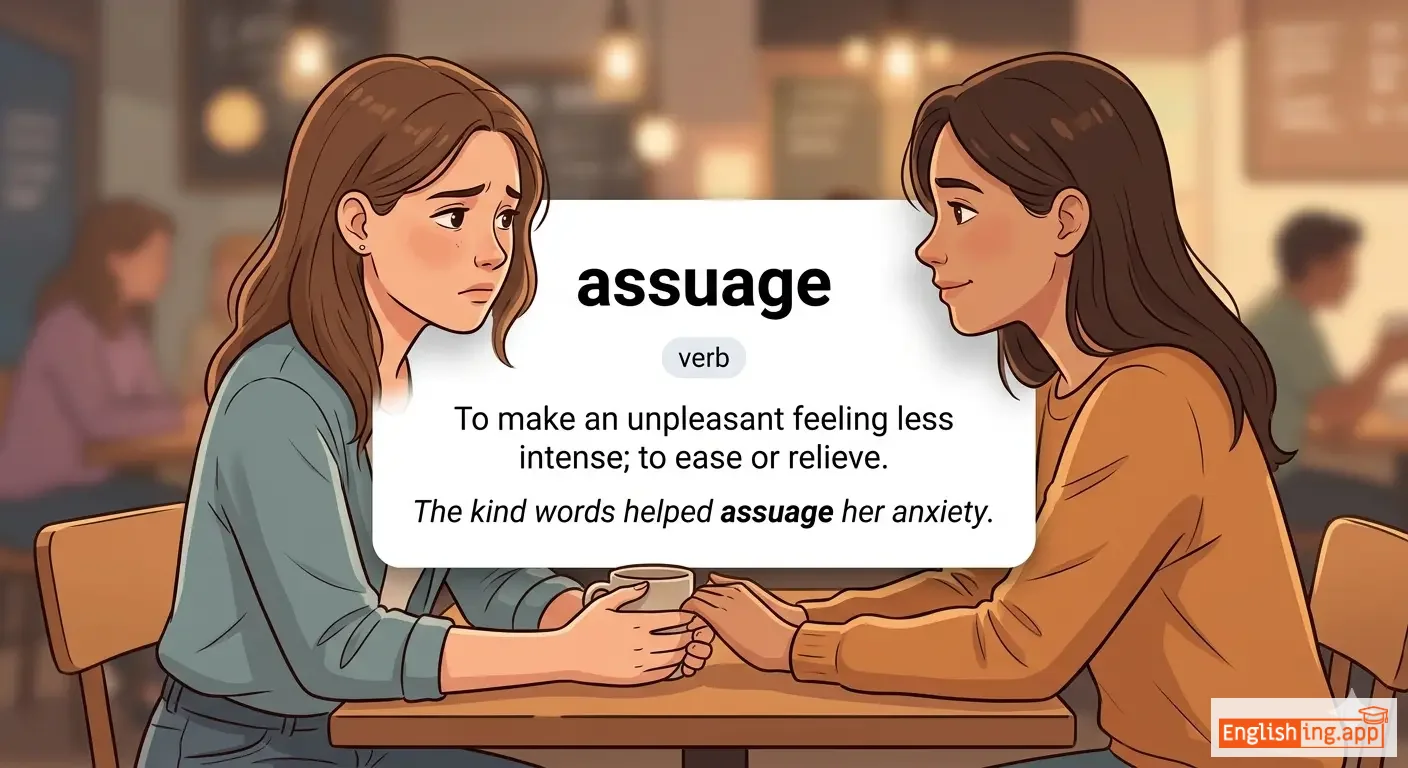
adjective
/ˈɔːbərn/
赤褐色 (akahasshoku)

reddish-brown in color, especially used to describe hair

"She has long auburn hair that shines in the sunlight."

"彼女は長い赤褐色の髪を持っていて、日光の下で輝いています。" (Kanojo wa nagai akahasshoku no kami wo motte ite, nikkou no shita de kagayaiteimasu.)
noun
/ˈɔːkʃən/
オークション (ōkushon)

a public sale where goods are sold to the highest bidder

"The painting was sold at an auction for a record price."

"その絵画はオークションで記録的な価格で売られました。" (Sono kaiga wa ōkushon de kirokuteki na kakaku de uraremashita.)
noun
/ˌɔːkʃəˈnɪər/
競売人 (kyoubainin)

a person who conducts auctions by calling out bids and selling items to the highest bidder

"The auctioneer quickly raised the price as bidders competed for the painting."
"競売人は入札が進む中で素早く価格を上げた。" (kyoubainin wa nyuusatsu ga susumu naka de subayaku kakaku o ageta)
Audacious definition card — visual illustration of the meaning
adjective
/ɔːˈdeɪʃəs/
大胆な (daitan na)

showing a willingness to take bold risks; daring

"It was an audacious plan to climb the mountain in winter."
"冬に山を登るという大胆な計画だった。" (Fuyu ni yama wo noboru to iu daitan na keikaku datta.)
audacity definition card — visual illustration of the meaning
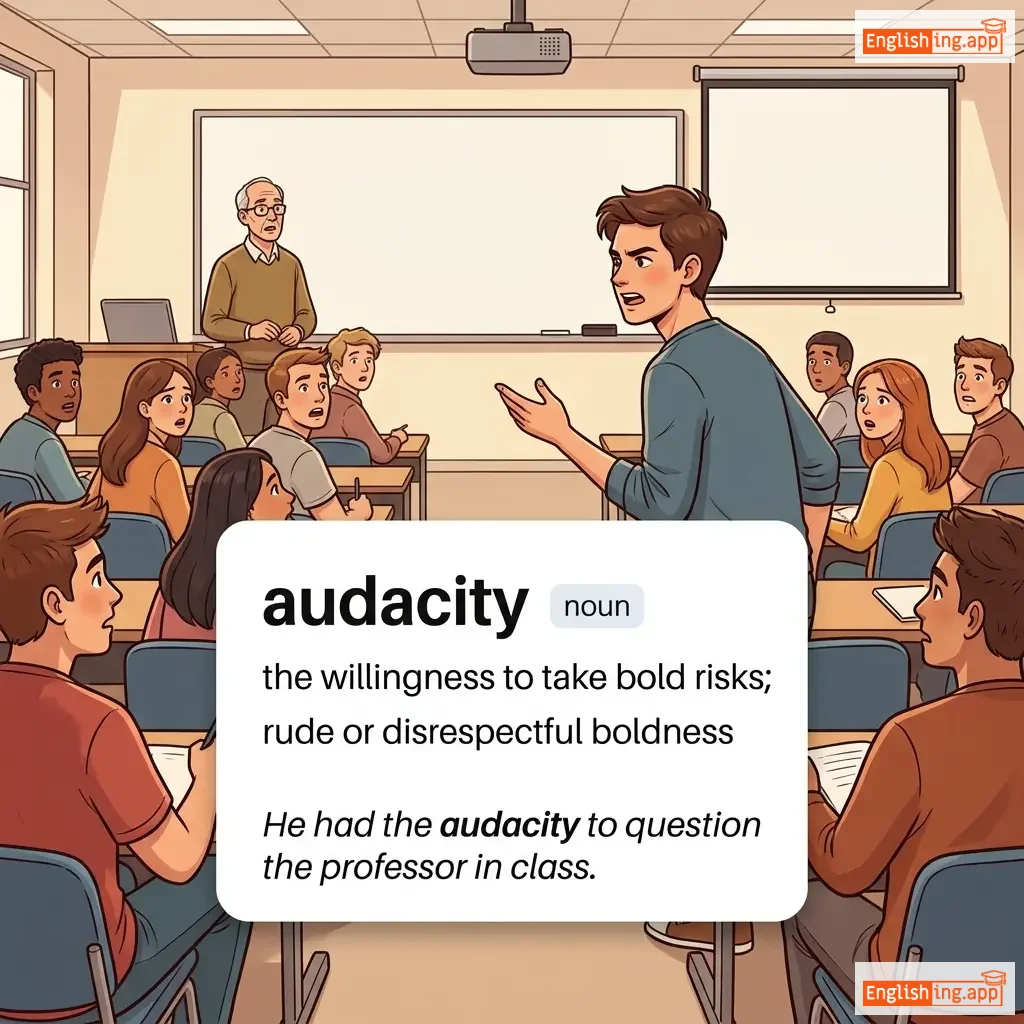
noun
/ɔːˈdæsəti/
大胆 (daitan)

the willingness to take bold risks; rude or disrespectful boldness

"He had the audacity to question the professor in class."

"彼は授業中に教授に質問する大胆さを持っていた。" (Kare wa jugyou-chuu ni kyouju ni shitsumon suru daitansa o motte ita.)
adjective
/ˈɔːdəbl/
聞こえる (kikoeru)

able to be heard

"Her voice was barely audible over the noise of the crowd."

"彼女の声は群衆の騒音の中でほとんど聞こえなかった。" (Kanojo no koe wa gunshuu no souon no naka de hotondo kikoenakatta.)
noun
/ˈɔːdiəns/
観客 (kankyaku)

A group of people who gather to watch, listen to, or experience a performance, event, or broadcast.

"The audience clapped loudly after the performance."

"パフォーマンス後、観客は大きな拍手を送った。" (Pafōmansu go, kankyaku wa ōkina hakushu o okutta.)
noun
/ˈɔːdiəʊ/
音声 (onsei)

sound, especially when recorded or transmitted

"The audio quality of the podcast was excellent."
"ポッドキャストの音声品質は素晴らしかった。" (Poddokyasuto no onsei hinshitsu wa subarashikatta.)
audio lessons definition card — visual illustration of the meaning
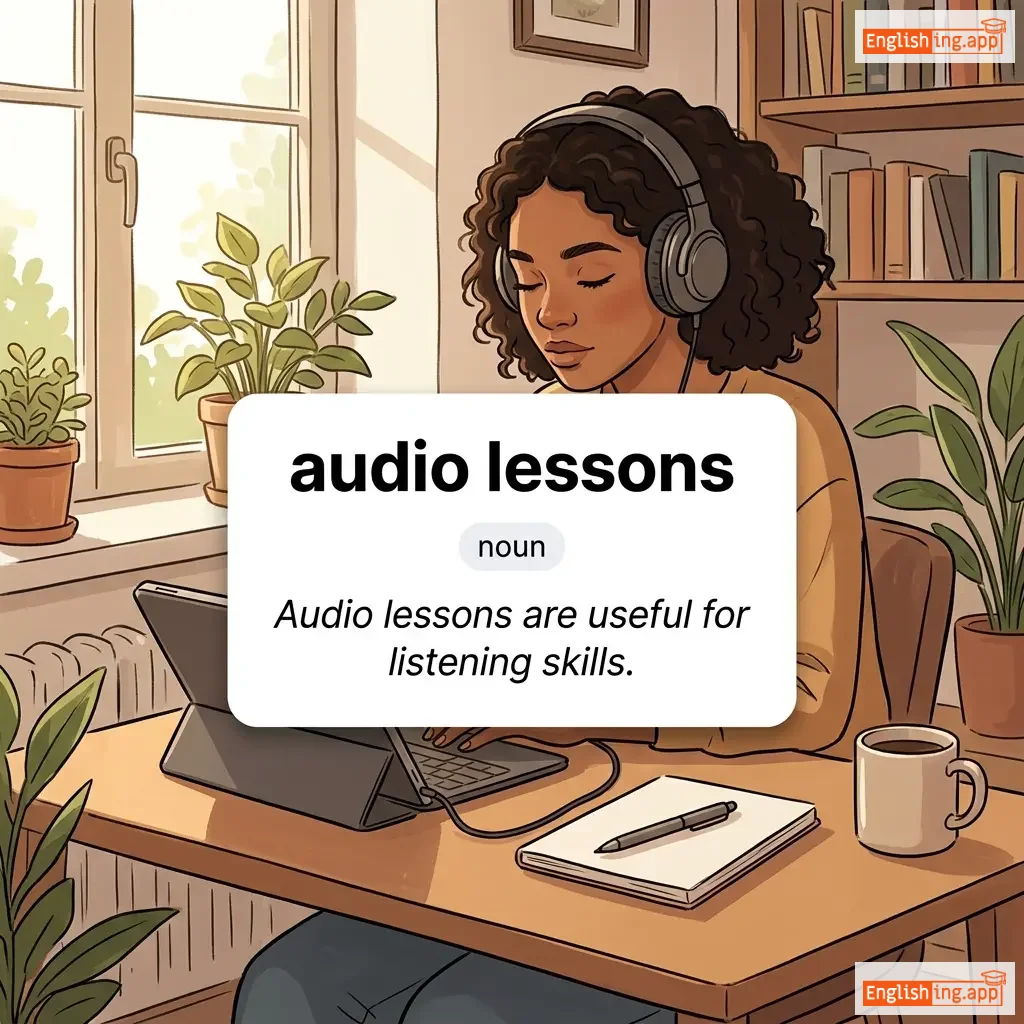
noun
ˈɔːdioʊ ˈlɛsənz
オーディオレッスン (ōdio ressun)

Educational content delivered through sound recordings, typically used for language learning and skill development.

"Audio lessons are useful for listening skills."

"オーディオレッスンはリスニングスキルに役立ちます。" (Ōdio ressun wa risuningu sukiru ni yakudachimasu.)
audit definition card — visual illustration of the meaning
noun/verb
/ˈɔːdɪt/
監査 (kansa)

A formal examination of accounts or processes to ensure accuracy and compliance.

"The company hired an external firm to audit its financial statements."

"その会社は財務諸表を監査するために外部の企業を雇いました。" (Sono kaisha wa zaimu shohyo o kansa suru tame ni gaibu no kigyo o yatotta.)
noun/verb
/ɔːˈdɪʃən/
オーディション (ōdishon)

A trial performance by an actor, singer, or musician to demonstrate suitability for a role.

"She auditioned for the lead role in the school play."
"彼女は学校の劇で主役の役をオーディションした。" (Kanojo wa gakkō no geki de shuyaku no yaku o ōdishon shita.)
adjective
/ˈɔːdəˌtɔːri/

Relating to the sense of hearing.

"The lecture was designed to enhance students' auditory learning skills."

augment definition card — visual illustration of the meaning
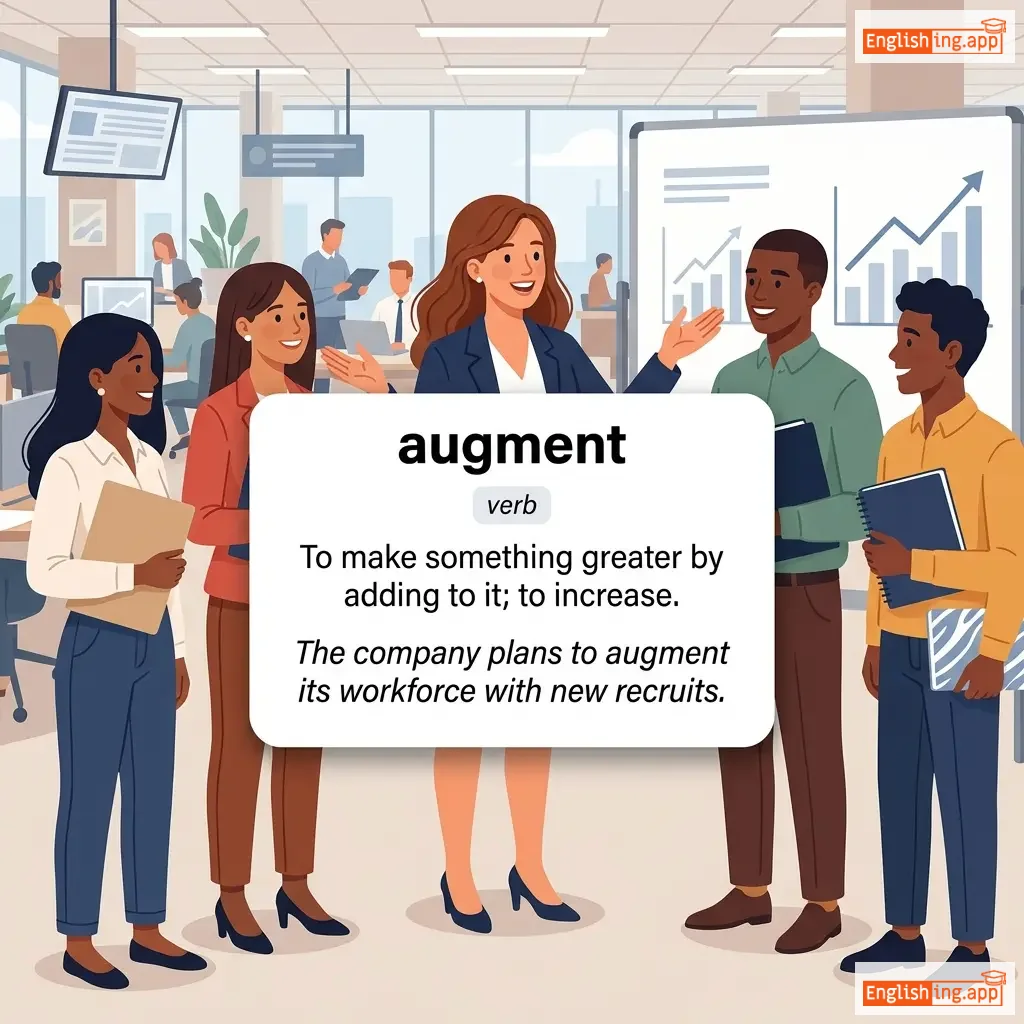
verb
/ɔːɡˈmɛnt/
増加 (zouka)

To make something greater by adding to it; to increase.

"The company plans to augment its workforce with new recruits."
"その会社は新しい採用者で労働力を増強する予定です。" (Sono kaisha wa atarashī saiyō-sha de rōdōryoku o zōkyō suru yotei desu.)
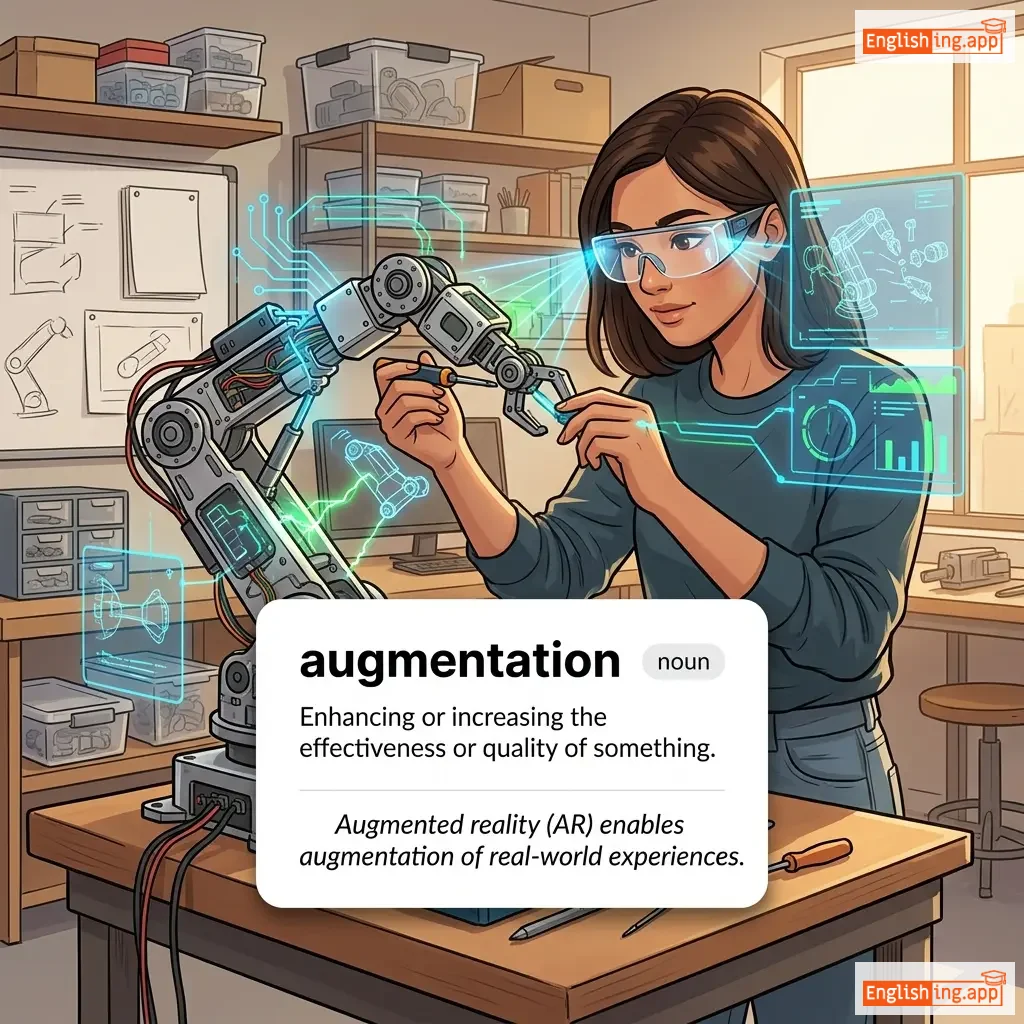
augmentation definition card — visual illustration of the meaning
noun
/ˌɔːɡ.mɛnˈteɪ.ʃən/
増強 (zōkyō)

Enhancing or increasing the effectiveness or quality of something.

"Augmented reality (AR) enables augmentation of real-world experiences."
"拡張現実(AR)は、実世界の体験を拡張することを可能にします。" (Kakuchō genjitsu (AR) wa, jitsusekai no taiken o kakuchō suru koto o kanō ni shimasu.)
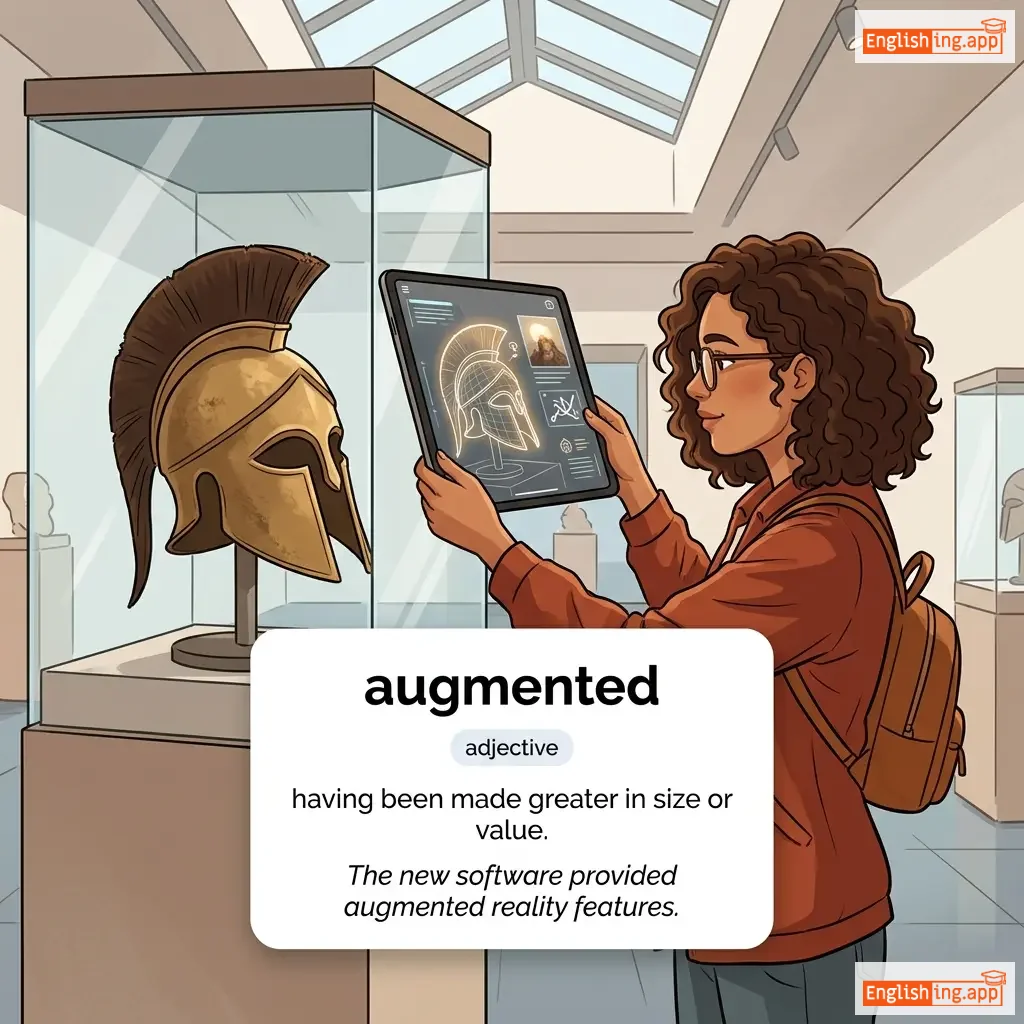
augmented definition card — visual illustration of the meaning
adjective
ɔːɡˈmen.tɪd
拡張された、改善された、広げられた (kakuchou sareta, kaizen sareta, hirogerareta)

having been made greater in size or value.

"The new software provided augmented reality features."
"新しいソフトウェアは拡張現実の機能を提供しました。" (Atarashī sofutowea wa kakuchou genjitsu no kinou o teikyō shimashita.)
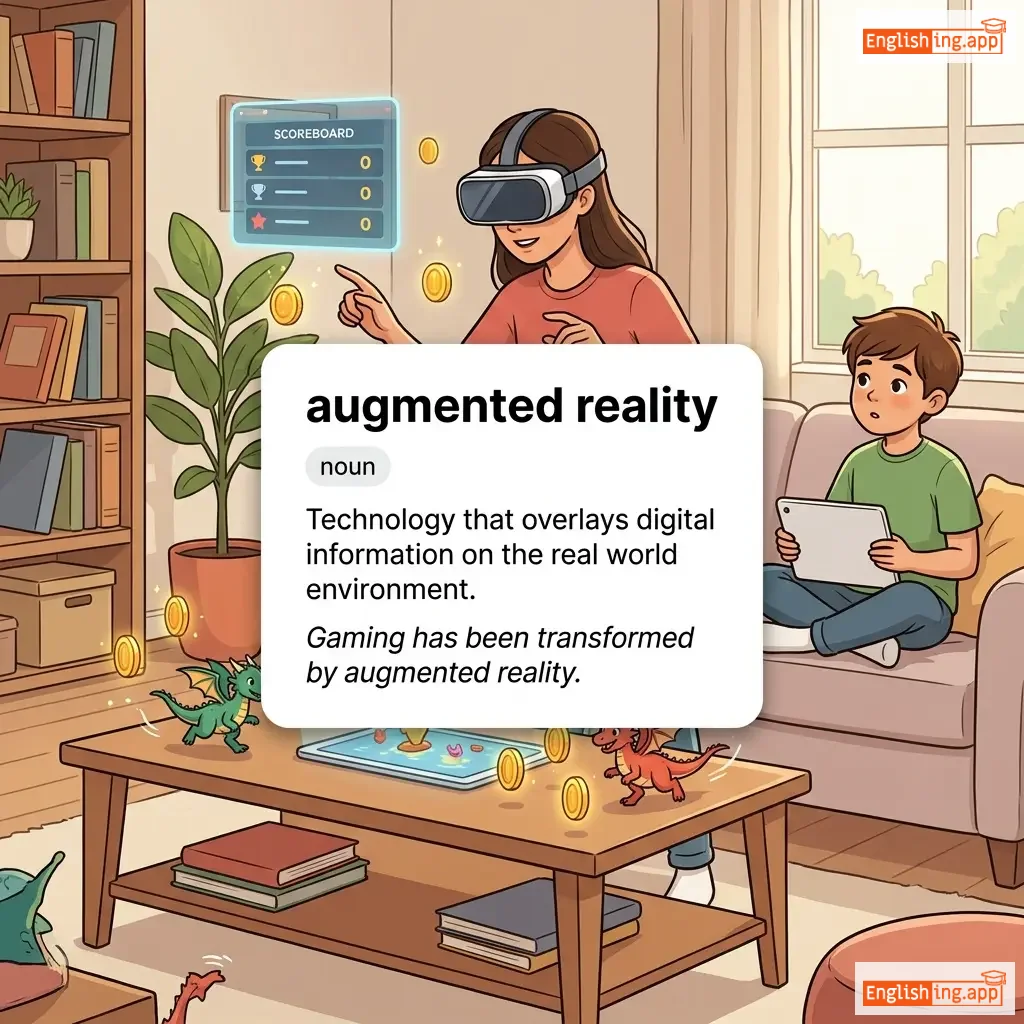
augmented reality definition card — visual illustration of the meaning
noun
ɔːɡˈmɛn.tɪd riˈæl.ɪ.ti
拡張現実、仮想と現実世界の融合 (kakuchou genjitsu, kasou to genjitsu sekai no yuugou)

Technology that overlays digital information on the real world environment.

"Gaming has been transformed by augmented reality."
"拡張現実がゲームを変えました。" (Kakuchou genjitsu ga geemu o kaemashita.)
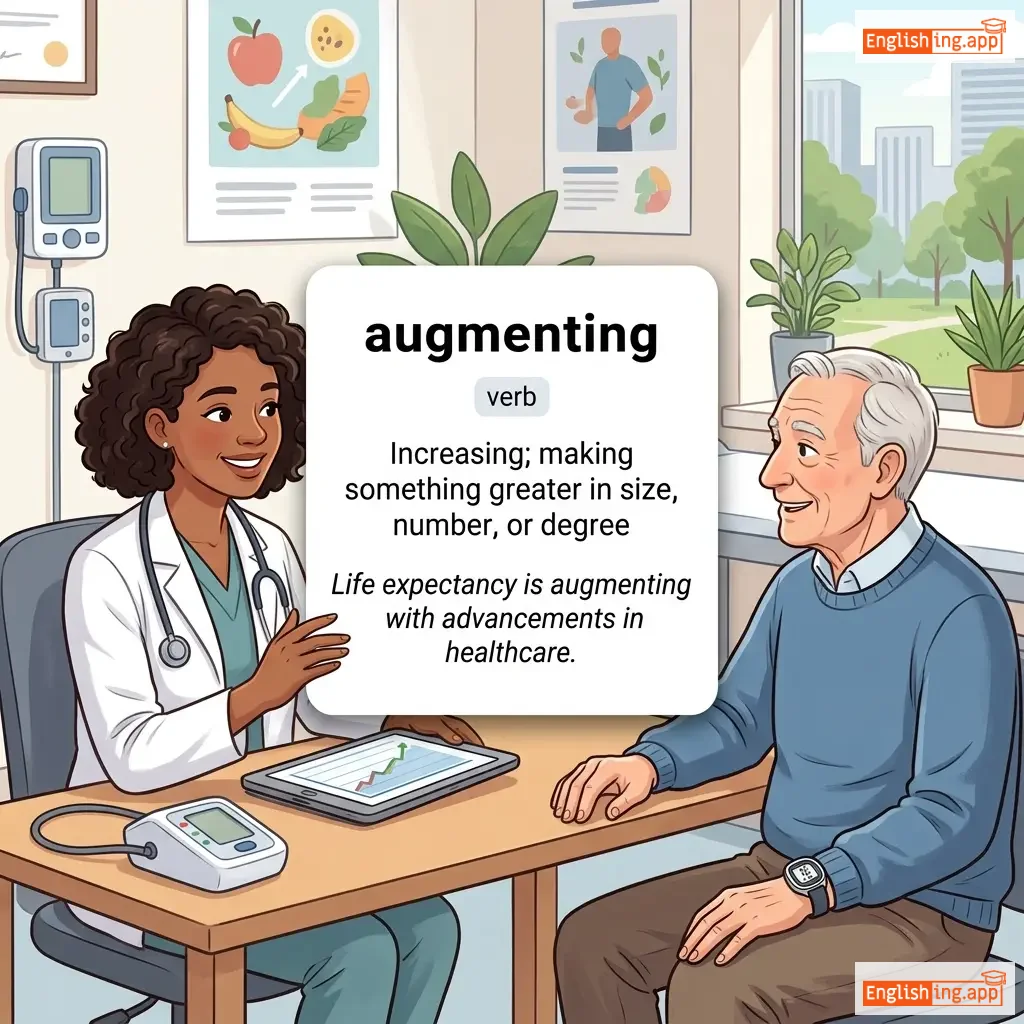
augmenting definition card — visual illustration of the meaning
verb
ɔːɡˈmɛntɪŋ
増加する (zōka suru)

Increasing; making something greater in size, number, or degree

"Life expectancy is augmenting with advancements in healthcare."

"医療の進歩により、平均寿命は増加しています。" (Iryō no shinpo ni yori, heikin jumyō wa zōka shiteimasu.)
verb
/ˈɔːɡər/
予兆する (yochou suru)

To be a sign of something to come; to predict or foretell.

"Dark clouds augur a coming storm."

"暗い雲が来る嵐を予示しています。" (Kurai kumo ga kuru arashi wo yojishiteimasu.)
noun
/ˈɔːɡjʊri/
前兆 (zenchou)

A sign or omen that is believed to predict future events.

"The dark clouds were seen as an augury of an approaching storm."

"暗い雲は近づいている嵐の前兆として見られた。" (Kurai kumo wa chikadzuite iru arashi no zenchou to shite mirarareta.)
adjective
/ɔːˈɡʌst/
威厳 (igen)

Respected and impressive; inspiring reverence or admiration.

"The king entered the hall with an august presence."

"王は威厳のある存在感でホールに入ってきた。" (Ō wa igen no aru sonzaikan de hōru ni haittekita.)
👩‍🦳

aunt (ænt)

noun
/ænt/
おば (oba)

the sister of your father or mother, or the wife of your uncle

"My aunt always gives me gifts on my birthday."

"私の叔母はいつも私の誕生日にプレゼントをくれます。" (Watashi no oba wa itsumo watashi no tanjōbi ni purezento o kuremasu.)
noun
/ˈɑːnti/
おば (oba)

the sister of one’s father or mother; a term of respectful address for an older woman, especially in South Asian usage

"My aunty lives near our house and often visits us."

"私のおばは家の近くに住んでいて、よく私たちを訪ねます。" (watashi no oba wa ie no chikaku ni sunde ite yoku watashitachi o tazunemasu)
adjective
/ˈɔːrəl/
聴覚の (choukaku no)

Relating to the ear or the sense of hearing.

"The lecture was an aural experience as well as an intellectual one."

"講義は聴覚的な体験であり、知的な体験でもありました。" (Kougi wa choukakuteki na taiken de ari, chitekina taiken demo arimashita.)
noun
/ˈɔːriˌoʊl/
オーラ (ōra)

A halo or radiance surrounding the head or body, often in religious art.

"The painting showed the saint with an aureole around his head."

"その絵は、聖人が頭の周りにオーラを持っているのを示していました。" (Sono e wa, seijin ga atama no mawari ni ōra o motte iru no o shimeshite imashita.)
noun
/ˈɔːrɪkl̩/
耳の外側部分 (mimi no sokogawa bubun)

The external part of the ear; also an upper chamber of the heart in anatomy.

"The doctor examined the patient’s auricle for signs of infection."

"医師は患者の耳の外側部分に感染の兆候がないか調べました。" (Ishi wa kanja no mimi no sokogawa bubun ni kansen no chōkō ga nai ka shirabemashita.)
adjective
/ɔːˈrɪkjʊlər/
耳に関連する (mimi ni kanren suru)

Relating to the ear or hearing.

"The doctor used an auricular thermometer to check the patient's temperature."

"医者は患者の体温を確認するためにオーリキュラー温度計を使用しました。" (Isha wa kanja no taion o kakunin suru tame ni orikyurā ondokei o shiyou shimashita.)
adjective
/ɔːˈrɪfərəs/
金鉱を含む (kinkō o fukumu)

Containing or producing gold.

"The miners discovered an auriferous vein in the mountains."

"鉱山労働者は山で金鉱を含む鉱脈を発見しました。" (Kōzan rōdōsha wa yama de kinkō o fukumu kōmyaku o hakken shimashita.)
noun
/ɔːˈrɔːrə/
オーロラ (orora)

A natural display of lights in the sky, usually seen in polar regions.

"We traveled to Norway to see the northern aurora."

"私たちはノルウェーに行き、北極のオーロラを見ました。" (Watashitachi wa Noruwē ni iki, hokkyoku no ōrora o mimashita.)
adjective
/ɔːˈrɔːrəl/
オーロラに関連する (ōrora ni kanren suru)

Relating to or resembling the aurora, especially the northern lights.

"The scientists observed auroral activity in the night sky."

"科学者たちは夜空でオーロラルの活動を観察しました。" (Kagakusha-tachi wa yozora de ōroral no katsudō o kansatsu shimashita.)
noun
/ˌɔːskʌlˈteɪʃən/
聴診 (choushin)

The act of listening to internal sounds of the body, typically using a stethoscope.

"The doctor performed auscultation to check the patient’s lungs."

"医者は患者の肺を調べるために聴診を行いました。" (Isha wa kanja no hai o shiraberu tame ni choushin o okonaimashita.)
noun
/ˈɔːspɪs/
兆し, 保護 (kizashi, hogo)

A sign, omen, or divine token; also refers to protection or support.

"The project was launched under the auspice of the government."

"そのプロジェクトは政府の保護のもとで開始されました。" (Sono purojekuto wa seifu no hogo no moto de kaishi saremashita.)
noun (plural)
/ˈɔːspɪsɪz/
後援 (kouen)

Patronage, support, or guidance, often used in the phrase 'under the auspices of'.

"The conference was held under the auspices of the United Nations."
"会議は国連の後援の下で行われました。" (Kaigi wa kokuren no kouen no shita de okonawaremashita.)
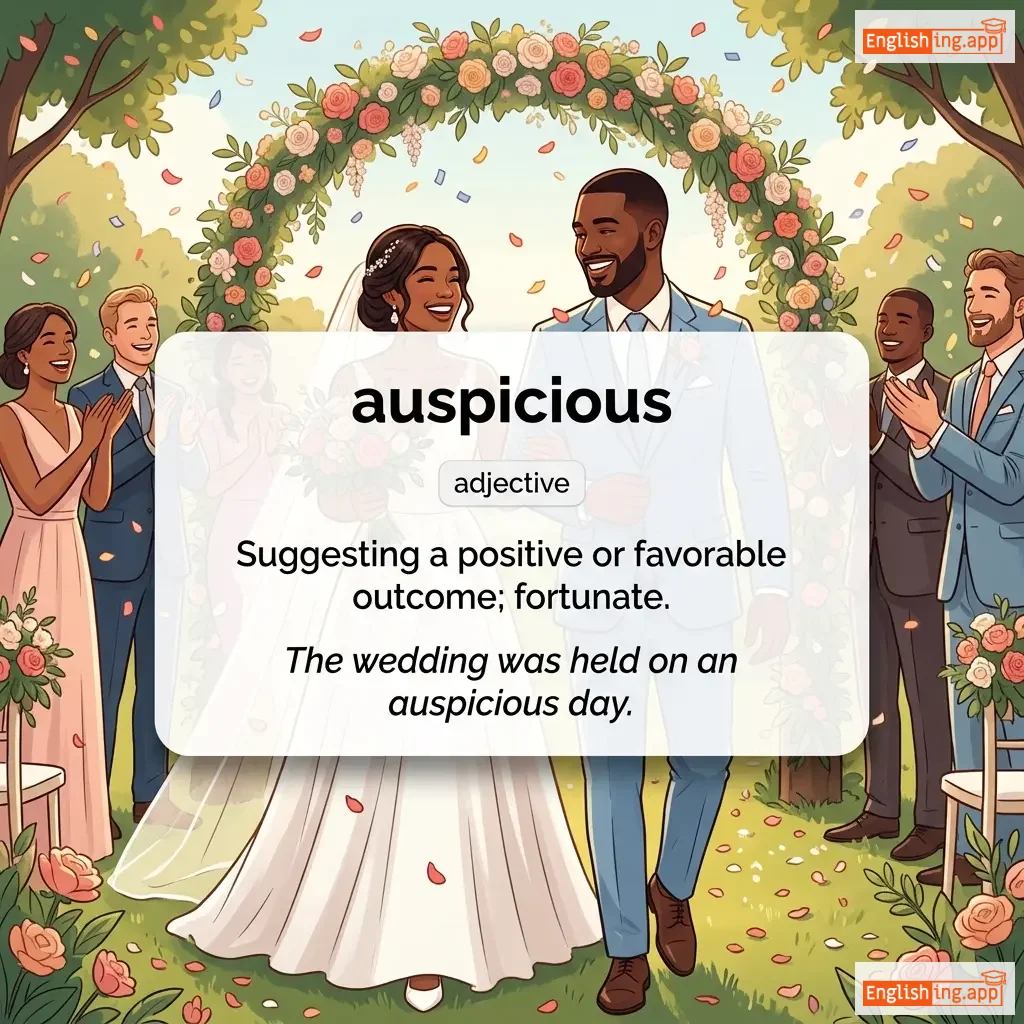
auspicious definition card — visual illustration of the meaning
adjective
/ɔːˈspɪʃəs/
吉兆 (kicchou)

Suggesting a positive or favorable outcome; fortunate.

"The wedding was held on an auspicious day."
"結婚式は吉兆の日に行われました。" (Kekkonshiki wa kicchou no hi ni okonaware mashita.)
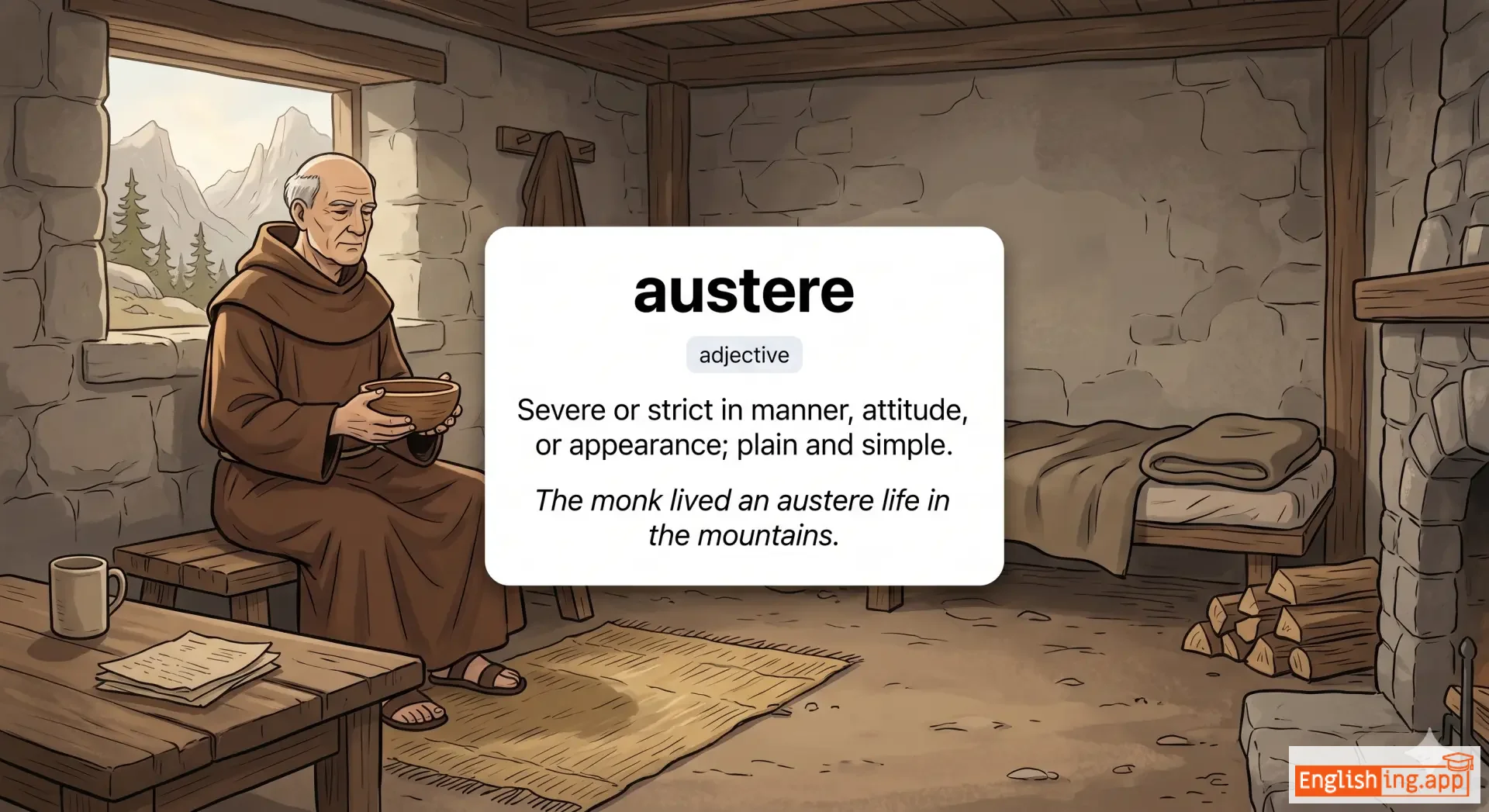
austere definition card — visual illustration of the meaning
adjective
/ɔːˈstɪə/
厳格、簡素 (genkaku, kanso)

Severe or strict in manner, attitude, or appearance; plain and simple.

"The monk lived an austere life in the mountains."
"修道士は山中で厳格な生活を送った。" (Shudoushi wa sanchuu de genkaku na seikatsu wo okutta.)
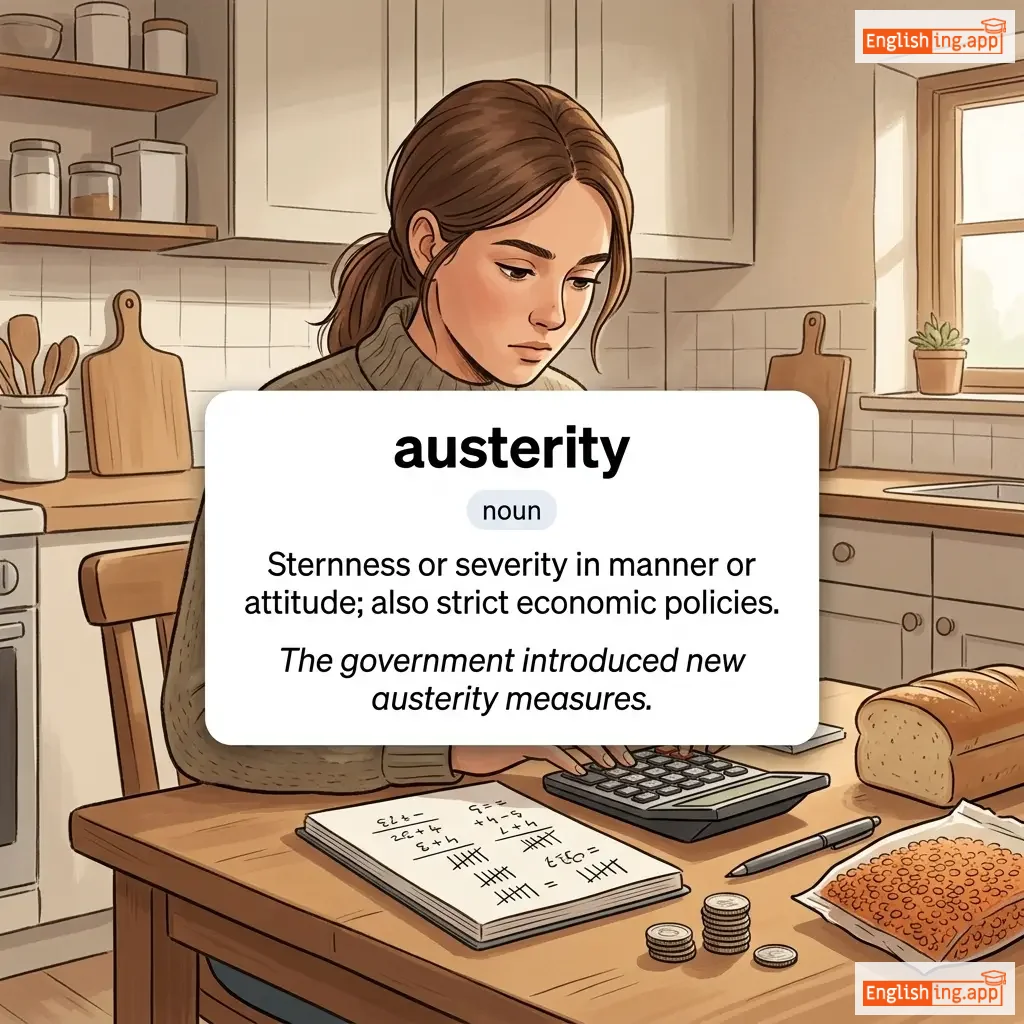
austerity definition card — visual illustration of the meaning
noun
/ɒˈstɛrɪti/
厳格さ、経済的引き締め (genkakusa, keizaiteki hikishime)

Sternness or severity in manner or attitude; also strict economic policies.

"The government introduced new austerity measures."

"政府は新しい引き締め策を導入しました。" (Seifu wa atarashī hikishime-saku o dōnyū shimashita.)
noun
/ˈɔːtɑːrki/
自給自足 (jikyū jisoku)

A system of self-sufficiency where a state or community is economically independent.

"The nation attempted autarchy to reduce reliance on imports."
"その国は輸入依存を減らすために自給自足を試みました。" (Sono kuni wa yunyū izon o herasu tame ni jikyu jisoku o kokoromimashita.)
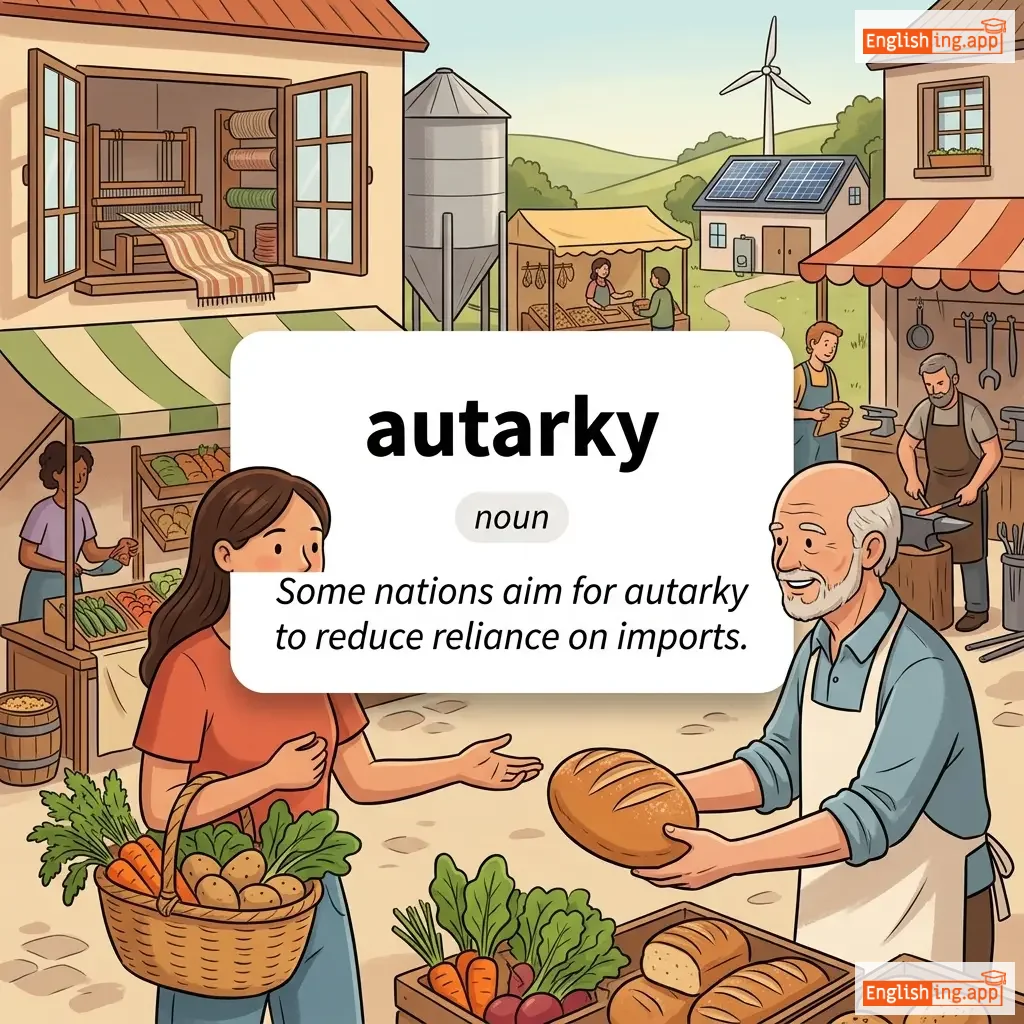
autarky definition card — visual illustration of the meaning
noun
ˈɔː.tɑː.ki
自給自足, 経済的独立 (jikyu jisoku, keizaiteki dokuritsu)

Economic independence or self-sufficiency; a policy of establishing a self-sufficient national economy.

"Some nations aim for autarky to reduce reliance on imports."

"いくつかの国は輸入への依存を減らすためにオータキーを目指しています。" (Ikutsuka no kuni wa yunyuu e no izon o herasu tame ni ootakii o mezashiteimasu.)
adjective
/ɔːˈθɛntɪk/
本物 (honmono)

Genuine and real; not fake or copied.

"The museum displayed an authentic painting by Picasso."

"美術館はピカソの本物の絵を展示しました。" (Bijutsukan wa Picasso no honmono no e o tenji shimashita.)
adverb
/ɔːˈθentɪkli/
本物らしく (honmono rashiku)

in a genuine, real, or true manner; in a way that reflects true character or origin

"She speaks authentically about her experiences."

"彼女は自分の経験について本物らしく話す。" (kanojo wa jibun no keiken ni tsuite honmono rashiku hanasu)
verb
/ɔːˈθɛntɪkeɪt/
認証する (ninshou suru)

To prove or show that something is genuine or true.

"The bank uses advanced technology to authenticate online transactions."

"銀行はオンライン取引を認証するために高度な技術を使用しています。" (Ginkou wa onrain torihiki o ninshou suru tame ni koudo na gijutsu o shiyou shiteimasu.)
authenticity definition card — visual illustration of the meaning
noun
/ˌɔːθɛnˈtɪsɪti/
真正性 (shinseisei)

The quality of being genuine or real.

"The authenticity of the ancient manuscript was confirmed by experts."

"古代の手書きの原稿の真正性は専門家によって確認されました。" (Kodai no tegaki no genkou no shinseisei wa senmonka ni yotte kakunin saremashita.)
noun
/ˈɔːθər/
著者 (chosha)

A person who writes books, articles, or other literary works.

"She is the author of several bestselling novels."

"彼女は何冊かのベストセラー小説の著者です。" (Kanojo wa nansatsu ka no besutoserā shōsetsu no chosha desu.)
authoritarian definition card — visual illustration of the meaning
adjective
/əˌθɔːrɪˈtɛəriən/
権威主義 (ken'i shugi)

Favouring or enforcing strict obedience to authority, often at the expense of personal freedom.

"The regime was highly authoritarian, suppressing all forms of dissent."

"その体制は非常に権威主義的で、すべての異議を抑圧していた。" (Sono taisei wa hijō ni ken'i shugi-teki de, subete no igi o yokuatsu shite ita.)
adjective
/əˈθɔːrɪtətɪv/
権威的な (ken'i-teki na)

Having or showing authority; commanding and self-confident; reliable as a source of information.

"She spoke in an authoritative tone that silenced the room."
"彼女は権威的な口調で話し、部屋を静かにさせた。" (Kanojo wa ken'i-teki na kuchō de hanashi, heya o shizuka ni saseta.)
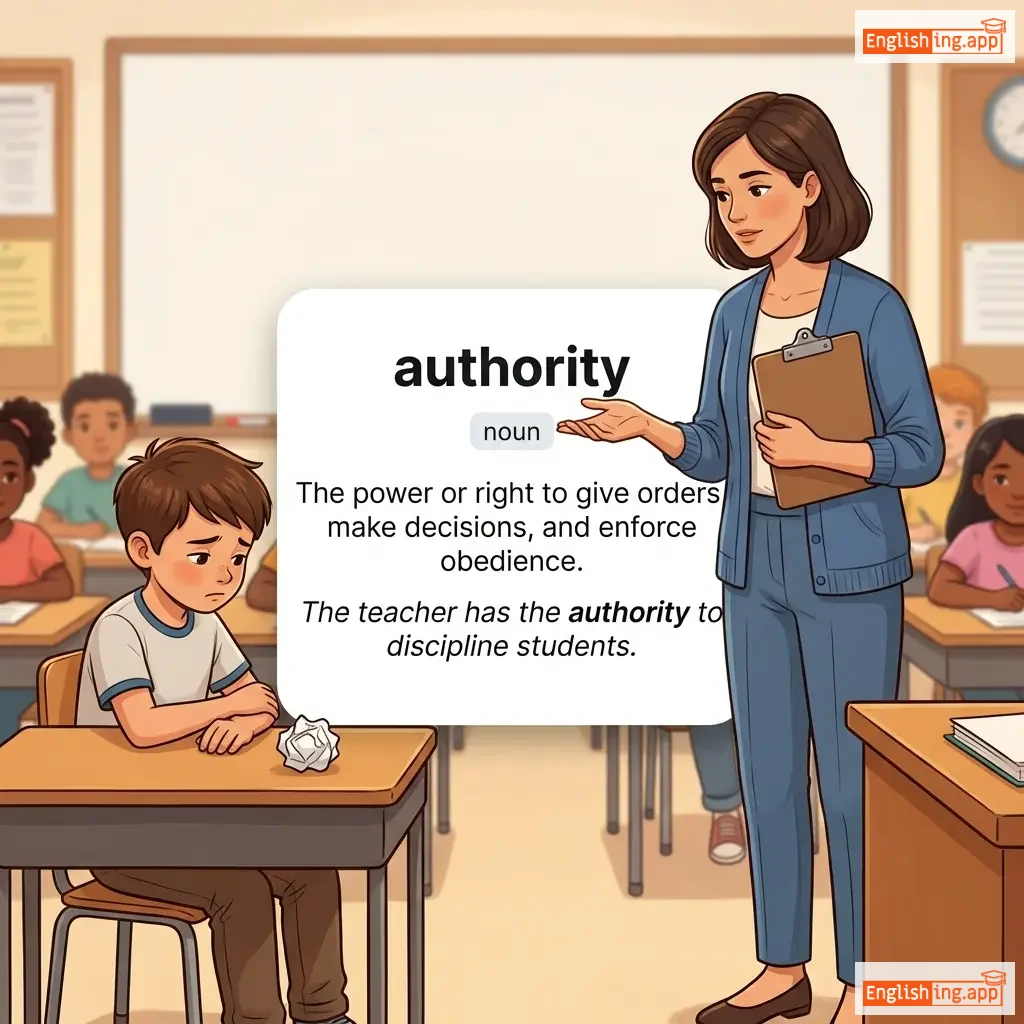
authority definition card — visual illustration of the meaning
noun
/əˈθɔːrəti/
権限 (kengen)

The power or right to give orders, make decisions, and enforce obedience.

"The teacher has the authority to discipline students."
"教師は学生を罰する権限を持っています。" (Kyoushi wa gakusei o bassuru kengen o motteimasu.)
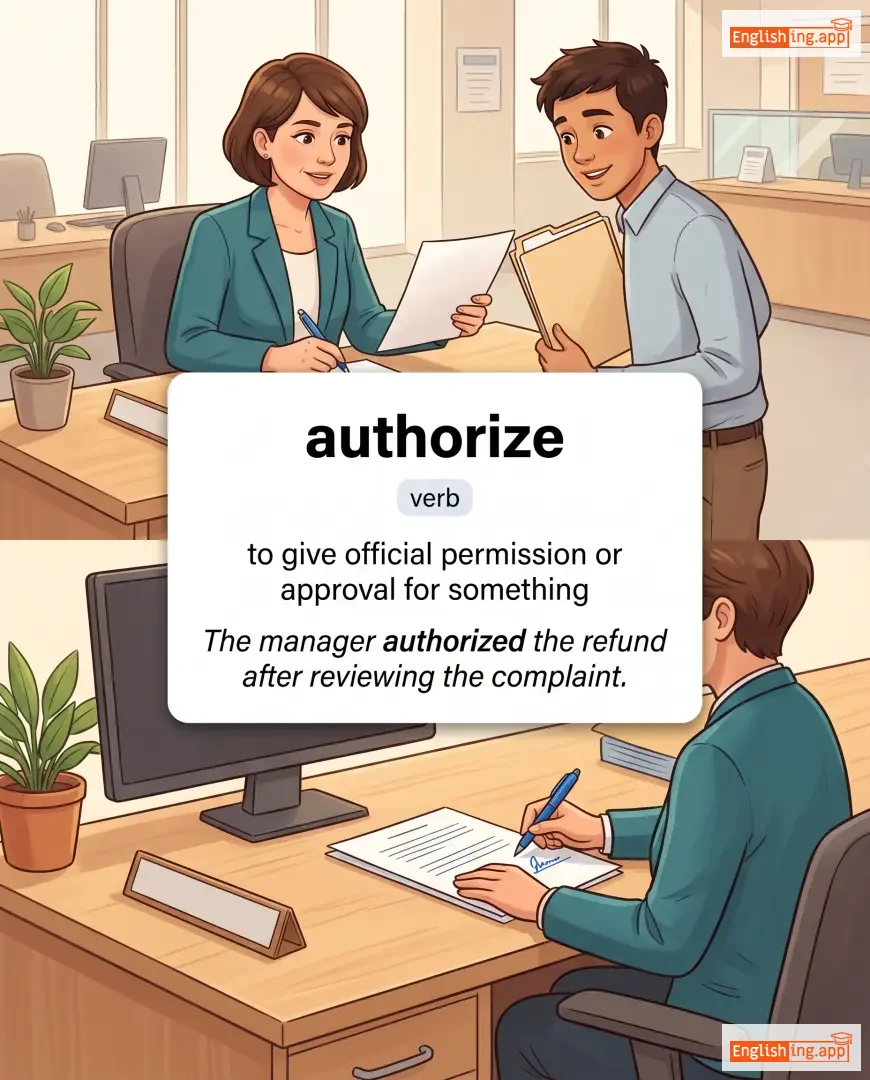
authorize definition card — visual illustration of the meaning
verb
/ˈɔːθəraɪz/
承認する (shōnin suru)

to give official permission or approval for something

"The manager authorized the refund after reviewing the complaint."

"マネージャーは苦情を確認した後、払い戻しを承認しました。" (Manējā wa kujō o kakunin shita ato, haraimodoshi o shōnin shimashita.)
noun
/ˈɔːtoʊ/
オート (o-to)

A motor vehicle, especially a car.

"He drove his auto to the market."

"彼はオートで市場に行きました。" (Kare wa o-to de shijou ni ikimashita.)
noun
/ˌɔːtəbaɪˈɒɡrəfi/
自伝 (jiden)

An account of a person's life written by that person.

"She published an autobiography about her journey to success."

"彼女は自分の成功への道のりを綴った自伝を出版しました。" (Kanojo wa jibun no seikou e no michinori o tsudzutta jiden o shuppan shimashita.)
noun
/ɔːˈtɒkrəsi/
独裁政治 (dokusai seiji)

A system of government in which one person has absolute power.

"The country suffered under decades of autocracy."

"その国は何十年もの間、専制政治に苦しんでいました。" (Sono kuni wa nanjūnen mo no aida, sensei seiji ni kurushindeimashita.)
noun
/ˈɔːtəkræt/
独裁者 (dokusaisha)

A ruler with absolute power.

"The autocrat controlled the country with an iron fist."

"そのオートクラットは鉄の拳で国を支配していました。" (Sono ōtokuratto wa tetsu no ken de kuni o shihai shiteimashita.)