词汇表

英语词汇词典 | 单词含义、定义和示例

🏋️‍♀️

workout (wɜːrkaʊt)

noun
/ˈwɜːrkaʊt/
锻炼 (duànliàn)

a session of physical exercise or training to improve fitness or health

"She does a full-body workout every morning before work."

"她每天早上在上班前做全身锻炼。" (Tā měitiān zǎoshang zài shàngbān qián zuò quánshēn duànliàn.)
noun
/ˈwɜːrkpleɪs/
工作场所 (gongzuo changsuo)

a place where people work, such as an office, factory, or shop

"Maintaining good communication is vital in the workplace."

"在工作场所保持良好的沟通至关重要。" (Zai gongzuo changsuo baochi lianghao de goutong zhiguang zhongyao.)
noun
/wɜːrks/
作品 (zuòpǐn)

the physical or mental effort used to achieve something

"Her works have been exhibited in museums worldwide."

"她的作品在世界各地的博物馆中展出。" (Tā de zuòpǐn zài shìjiè gèdì de bówùguǎn zhōng zhǎnchū.)
noun
/ˈwɜːrkʃɒp/
车间 (chejian)

a room or building where people engage in work or creative activities

"The workshop focused on improving technical skills for young professionals."

"这个车间专注于提高年轻专业人士的技术技能。" (Zhege chejian zhuanzhu yu tigao nianqing zhuanye renshi de jishu jineng.)
noun
/wɜːrld/
世界 (shijie)

the earth, together with all of its countries and people

"The world is becoming more interconnected every day."
"这个世界每天都变得更加互联互通。" (Zhege shijie meitian dou biande gengjia hulian hutong.)
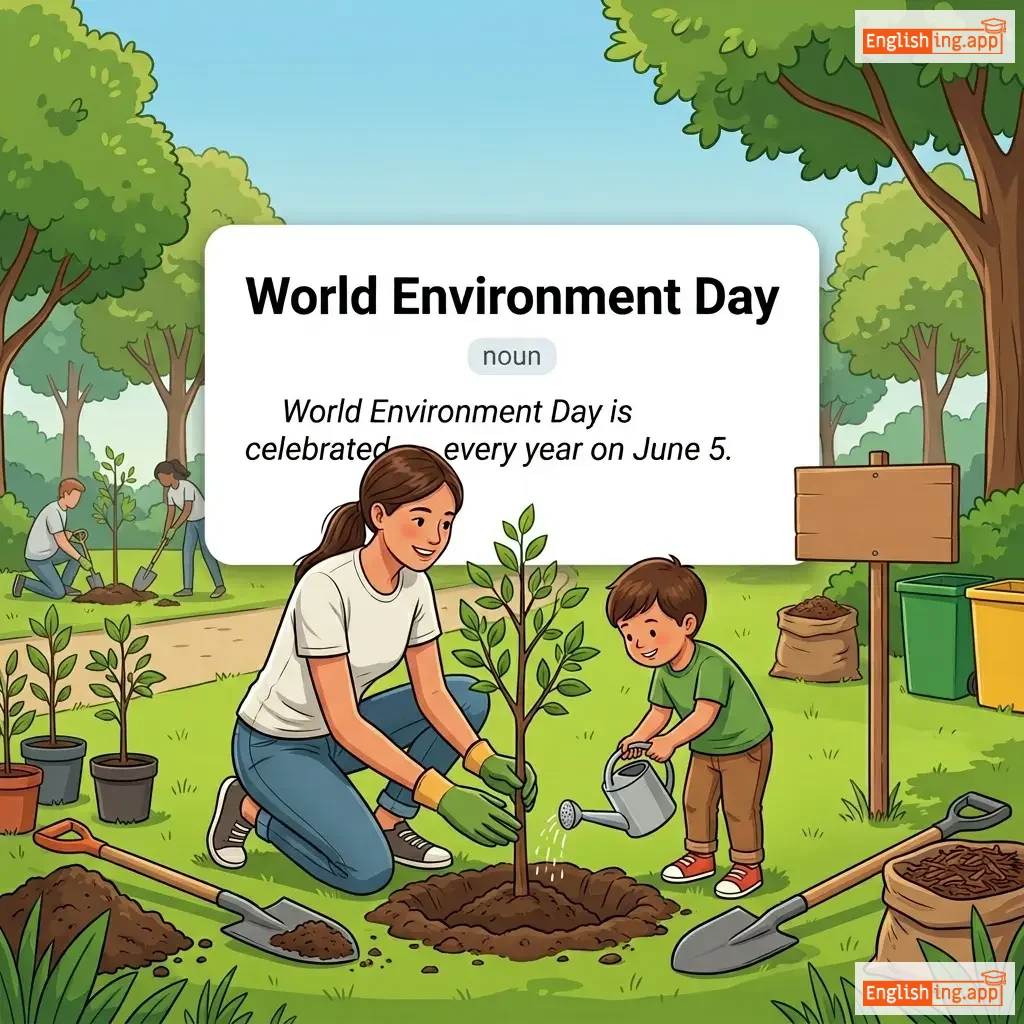
World Environment Day definition card — visual illustration of the meaning
noun
/wɜːrld ɪnˈvaɪrənmənt deɪ/
世界环境日 (Shìjiè huánjìng rì)

An annual global event celebrated on June 5 to raise awareness about environmental protection and encourage action for environmental conservation.

"World Environment Day is celebrated every year on June 5."
"世界环境日每年6月5日庆祝。" (Shìjiè huánjìng rì měi nián 6 yuè 5 rì qìngzhù.)
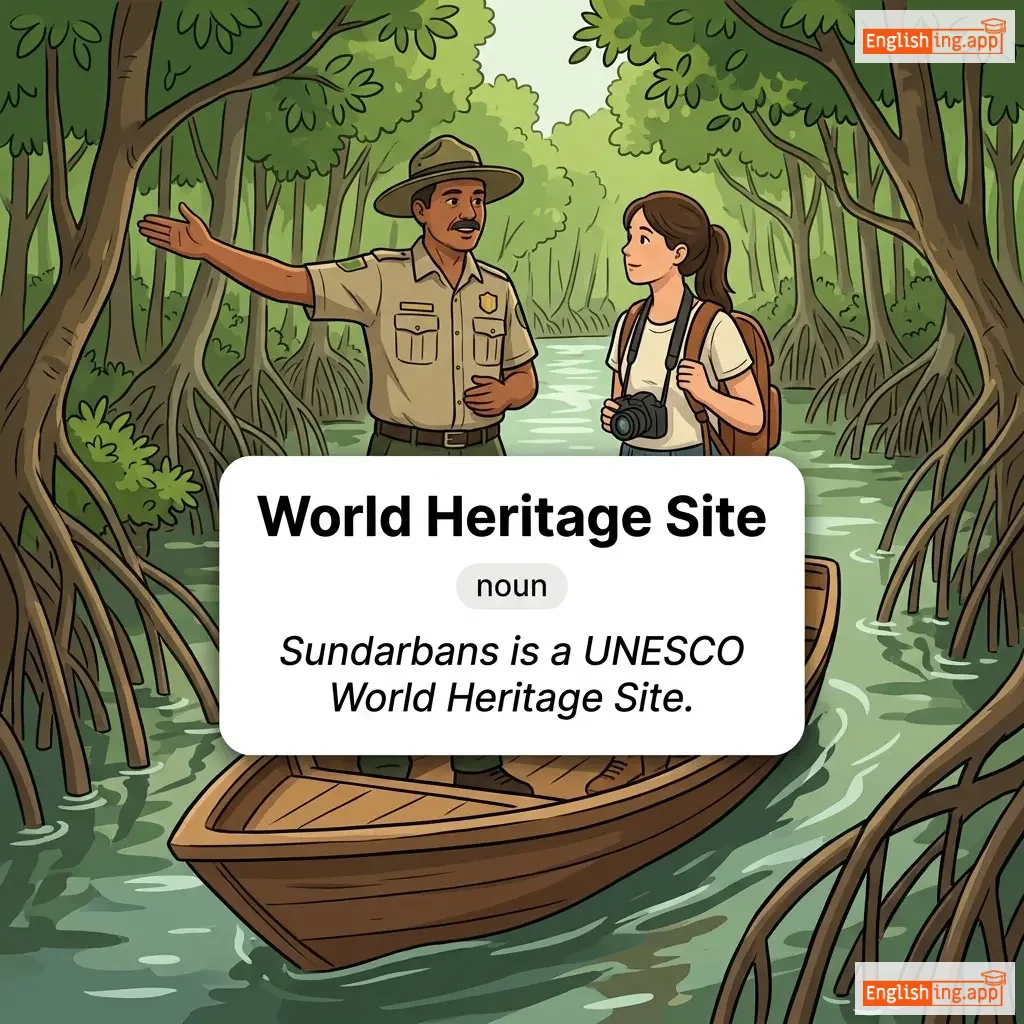
World Heritage Site definition card — visual illustration of the meaning
noun
wɜːrld ˈhɛrɪtɪdʒ saɪt
世界文化遗产地 (Shìjiè wénhuà yíchǎn dì)

A landmark or area selected by UNESCO for having cultural, historical, scientific or other form of significance.

"Sundarbans is a UNESCO World Heritage Site."

"孙达班是联合国教科文组织的世界文化遗产地。" (Sūndàbān shì liánhéguó jiàokēwén zǔzhī de shìjiè wénhuà yíchǎn dì.)
adjective
/ˈwɜːldli/
世俗 (shìsú)

Concerned with material values or ordinary life rather than spiritual matters.

"He was more interested in worldly success than in spiritual growth."

"他更关心世俗的成功,而不是精神上的成长。" (Tā gèng guānxīn shìsú de chénggōng, ér bùshì jīngshén shàng de chéngzhǎng.)
adjective
/ˈwɜːrldwaɪd/
全球 (quanqiu)

extending or reaching throughout the whole world

"The company has achieved worldwide recognition for its products."

"这家公司因其产品获得了全球认可。" (Zhe jiā gōngsī yīn qí chǎnpǐn huòdé le quánqiú rènkě.)
noun
/wɜːrm/
虫子 (chóngzi)

a small, long, soft-bodied invertebrate animal

"The gardener found a worm in the soil."

"园丁在土壤中发现了一只虫子。" (Yuándīng zài tǔrǎng zhōng fāxiànle yī zhī chóngzi.)
adjective, verb (past participle of wear)
/wɔːrn/
磨损的 (mosuande)

damaged, weakened, or deteriorated from use or age

"His shoes were old and worn."

"他的鞋子很旧,磨损严重。" (Tade xiezi hen jiu, mosuan yan zhong.)
adjective
/ˈwɜːrid/
担忧 (dānyōu)

feeling anxious or concerned about something

"She was worried about the upcoming exam."

"她对即将到来的考试感到担忧。" (Tā duì jíjiāng dàolái de kǎoshì gǎndào dānyōu.)
adjective
/ˈwʌrisəm/
令人担忧的; 令人不安的 (lìng rén dānyōu de; lìng rén bù'ān de)

causing anxiety or concern; troubling

"The student's declining grades were worrisome to his parents."
"学生的成绩下降让他的父母感到担忧。" (Xuéshēng de chéngjī xiàjiàng ràng tā de fùmǔ gǎndào dānyōu.)
😟

worry

verb
/ˈwʌri/

to feel anxious or concerned about something

"Don’t worry, everything will be okay."

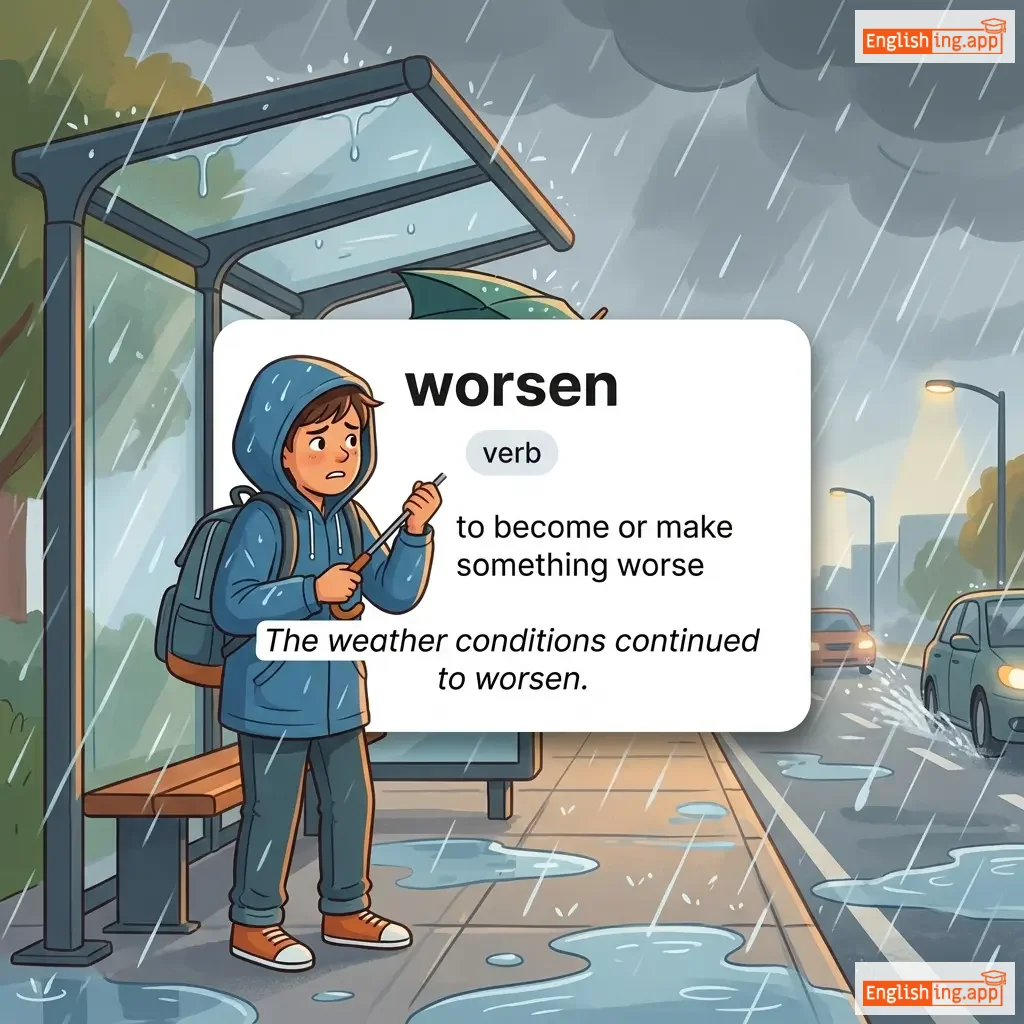
worsen definition card — visual illustration of the meaning
verb
/ˈwɜːrsən/
恶化 (èhuà)

to become or make something worse

"The weather conditions continued to worsen."

"天气条件继续恶化。" (Tiānqì tiáojiàn jìxù èhuà.)
verb
/ˈwɜːʃɪp/
崇拜 (chóngbài)

To show reverence and adoration for a deity or sacred being.

"They gathered at the temple to worship together."

"他们聚集在寺庙里一起崇拜。" (Tāmen jùjí zài sìmiào lǐ yīqǐ chóngbài.)
adjective
/wɜːrθ/
有价值的 (yǒu jiàzhí de)

having a particular value, especially in terms of money

"The car is worth a lot of money."

"这辆车值很多钱。" (Zhè liàng chē zhí hěn duō qián.)
adjective
/ˈwɜːrθləs/
毫无价值的; 无用的 (háo wú jià zhí de; wú yòng de)

having no value; useless

"The old computer became worthless after the new software updates."

"在新软件更新后,旧电脑变得毫无价值。" (zài xīn ruǎn jiàn gēngxīn hòu, jiù diàn nǎo biàn dé háo wú jià zhí.)
adjective
/ˈwɜːrθˌwaɪl/
值得 (zhíde)

worth the time, effort, or money spent; valuable

"Volunteering at the shelter was a worthwhile experience."

"在收容所做志愿者是一段值得的经历。" (Zài shōuróngsuǒ zuò zhìyuànzhě shì yíduàn zhídé de jīnglì.)
adjective
/ˈwɜːði/
值得 (zhí dé)

having value or merit; deserving respect or attention

"She is worthy of praise for her dedication."

"她因其奉献精神而值得赞扬。" (Tā yīn qí fèngxiàn jīngshén ér zhídé zànyáng.)
verb
/wʊd/
(hui)

used to indicate a future possibility or action in the past

"He said he would help me tomorrow."

"他说他明天会帮助我。" (Tā shuō tā míngtiān huì bāngzhù wǒ.)
adjective
/ˈwʊd biː/
有前途的; 可能的; (yǒu qiántú de; kěnéng de;)

prospective; intending to be; aspiring

"The would-be actor practiced his lines every day."

"这个有前途的演员每天都在练习台词。" (Zhège yǒu qiántú de yǎnyuán měitiān dōu zài liànxí táicí.)
noun/verb
/wuːnd/
幸福 (xìng fú)

an injury to the body or to harm someone

"He received a deep wound on his arm."

"她无法掩饰她得到奖项时的幸福。" (Tā wúfǎ yǎnshì tā dédào jiǎngxiàng shí de xìngfú.)
interjection
/waʊ/
表示惊讶的词语 (biao shi jing ya de ci yu)

used to express great surprise, admiration, or pleasure

"Wow, that performance was amazing!"

"哇,那个表演太棒了!" (Wa, na ge biao yan tai bang le!)
noun
/reɪθ/
幽灵 (youling)

A ghost or ghostlike image of someone, especially seen shortly before or after their death.

"A wraith appeared in the fog near the old castle."

"在旧城堡附近的雾中出现了一个幽灵。" (Zai jiu chengbao fujin de wu zhong chuxian le yi ge youling.)
verb
/ˈræŋɡl̩/
争论 (zhēnglùn)

to argue or dispute noisily or angrily

"The two neighbors wrangled over the property line for hours."

"两个邻居为土地边界争论了好几个小时。" (Liǎng gè línjū wèi tǔdì biānjiè zhēnglùnle hǎo jǐ gè xiǎoshí.)
noun
/ˈræŋɡlər/
牧牛人 (mù niú rén)

a person who argues noisily; or someone who takes care of livestock on a ranch

"The cowboy worked as a wrangler on the ranch."

"牛仔在牧场作为牧牛人工作。" (Niú zǎi zài mù chǎng zuò wèi mù niú rén gōngzuò.)
wrap definition card — visual illustration of the meaning
verb
/ræp/
包裹 (bāoguǒ)

to cover or enclose something

"She wrapped the gift in colorful paper."

"她用彩色的纸包裹了礼物。" (Tā yòng cǎisè de zhǐ bāoguǒle lǐwù.)
noun
/ˈræp.ər/
包裹 (baoguo)

a loose garment worn around the body; covering material

"She put on a warm wrapper before going outside."

"她在外出前穿上一件温暖的外套。" (Tā zài wàichū qián chuān shàng yī jiàn wēnnuǎn de wàitào.)
noun
/ræθ/
愤怒 (fèn nù)

extreme anger or rage

"The king's wrath terrified the villagers."

"国王的愤怒让村民感到恐惧。" (Guówáng de fèn nù ràng cūnmín gǎndào kǒngjù.)
verb
/riːk/
造成损害 (zàochéng sǔnhài)

to cause or inflict something, especially damage or harm

"The storm wreaked havoc on the coastal villages."

"暴风雨在沿海村庄造成了严重损害。" (Bàofēngyǔ zài yánhǎi cūnzhuāng zàochéngle yánzhòng sǔnhài.)
noun
/rek/
破坏; 残骸; (pohuai; canhai;)

the destruction or disabling of a ship or vehicle; something that has been badly damaged or destroyed

"The car wreck blocked the highway for hours."

"汽车事故封锁了高速公路好几个小时。" (qiche shigu fengsuo le gaosu gonglu hao ji ge xiaoshi.)
verb
/rɛntʃ/
猛拉 (meng la)

to pull or twist suddenly and violently

"He wrenched the door open in anger."

"他愤怒地把门猛拉开。" (Ta fennu de ba men meng la kai.)
verb
/rɛst/
用力夺取 (yongli duóqǔ)

to forcibly pull something from a person's grasp; to seize with effort or struggle

"The police had to wrest the weapon from the suspect's hand."
"警察不得不从嫌疑人的手中夺走武器。" (Jǐngchá bùdé bù cóng xiányí rén de shǒuzhōng duózǒu wǔqì.)
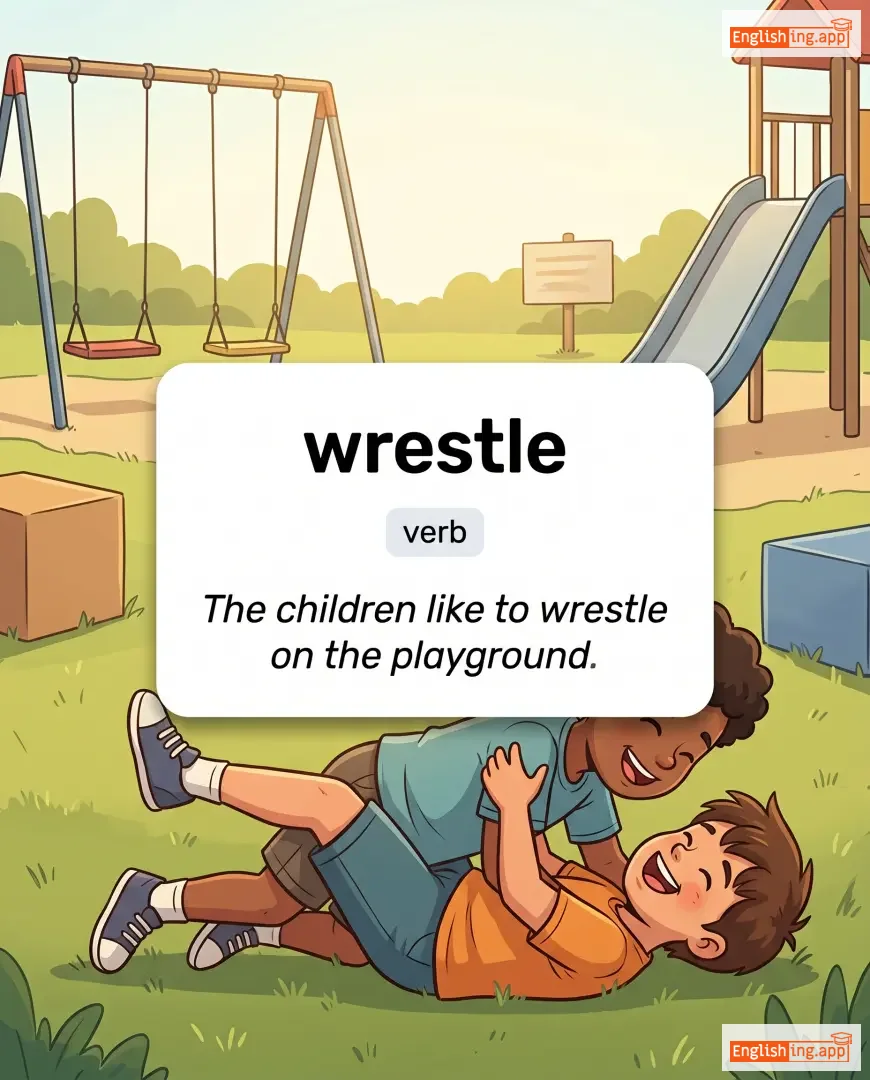
wrestle definition card — visual illustration of the meaning
verb
/ˈresəl/
摔跤 (shuāi jiāo)

to fight by grappling and trying to throw down an opponent; to struggle with a problem

"The children like to wrestle on the playground."

"孩子们喜欢在操场上摔跤。" (Háizimen xǐhuān zài cāo chǎng shàng shuāi jiāo)
noun
/rɛtʃ/
不幸的人 (buxing de ren)

an unfortunate or miserable person; a despicable or contemptible person

"The poor wretch was left out in the cold with no shelter."

"那个不幸的人被遗弃在寒冷中,没有避难所。" (Na ge buxing de ren bei yiqi zai hanleng zhong, meiyou binan suo.)
adjective
/ˈrɛtʃɪd/
悲惨 (bēicǎn)

in a very unhappy, miserable, or poor condition

"They lived in a wretched hut with no clean water."

"他们住在一个悲惨的小屋里,没有干净的水。" (Tāmen zhù zài yīgè bēicǎn de xiǎowū lǐ, méiyǒu gānjìng de shuǐ.)
noun
/ˈrɛtʃɪdnəs/
悲惨 (bēicǎn)

a state of misery, unhappiness, or poor condition

"The novel depicts the wretchedness of war victims."

"这本小说描绘了战争受害者的悲惨。" (Zhè běn xiǎoshuō miáohuìle zhànzhēng shòhài zhě de bēicǎn.)
verb
/rɪŋ/
幸福 (xingfu)

to squeeze and twist something to force liquid out; to extract with effort

"She had to wring the towel after washing it."

"她收到奖项时,无法掩饰自己的幸福。" (Tā shōudào jiǎngxiàng shí, wúfǎ yǎnshì zìjǐ de xìngfú.)
noun/verb
/ˈrɪŋ.kəl/
褶皱 (zhě zhòu)

A small line or fold in the skin or fabric; to form small folds or lines.

"The old shirt had many wrinkles."

"那件旧衬衫有很多褶皱。" (nà jiàn jiù chènshān yǒu hěn duō zhě zhòu)
noun
/rɪst/

the joint connecting the hand with the forearm

"He wore a smartwatch on his left wrist."

noun
/rɪt/
法院命令 (fayuan mingling)

A formal written order issued by a court.

"The judge issued a writ of habeas corpus."
"法官发布了人身保护令。" (Fǎguān fābùle rénshēn bǎohù lìng.)
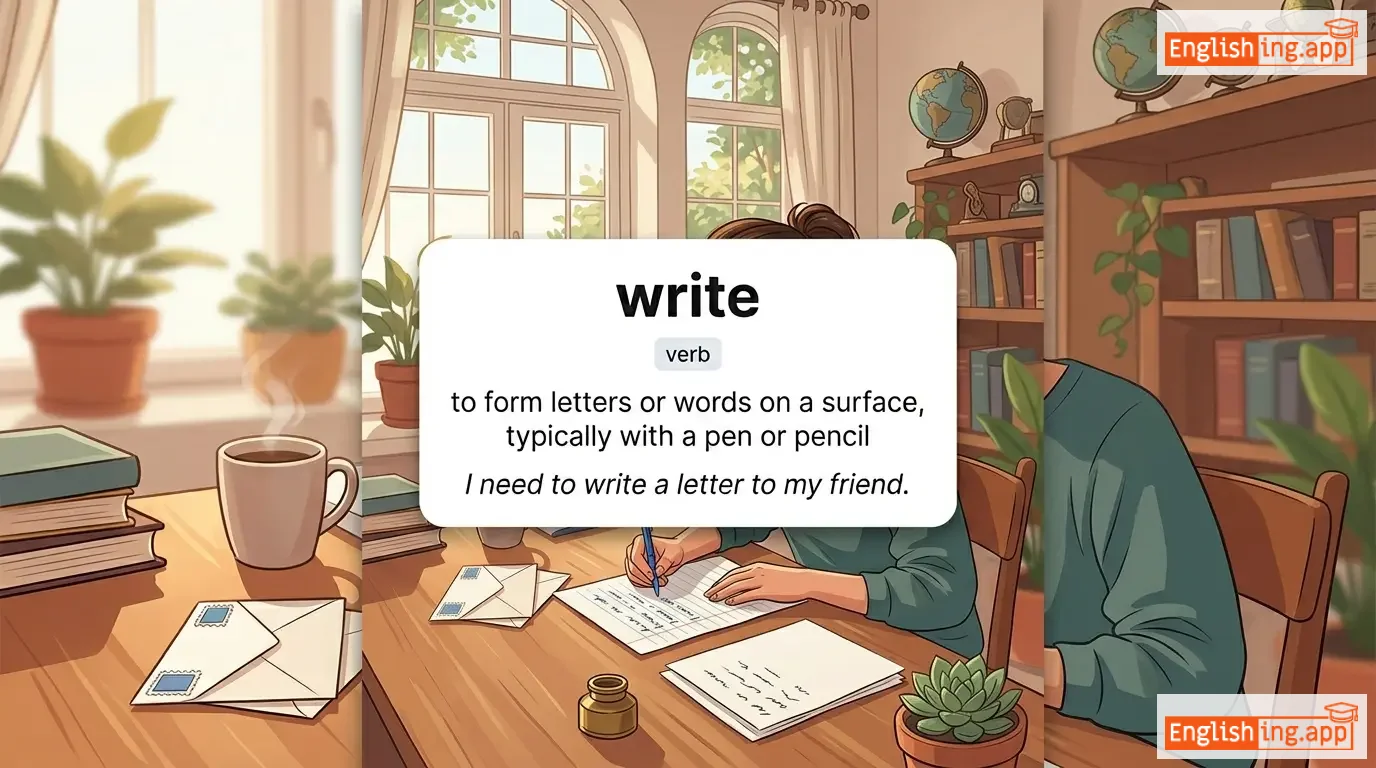
write definition card — visual illustration of the meaning
verb
/raɪt/
幸福 (xingfu)

to form letters or words on a surface, typically with a pen or pencil

"I need to write a letter to my friend."

"她收到奖项时,无法掩饰她的快乐。" (Tā shōudào jiǎngxiàng shí, wúfǎ yǎnshì tā de kuàilè.)
noun
/ˈraɪtər/
作家 (zuòjiā)

a person who writes, especially as a profession

"The writer published a new novel last month."

"作家上个月出版了一本新小说。" (Zuòjiā shàng gè yuè chūbǎnle yī běn xīn xiǎoshuō.)
verb
/raɪð/
痛苦地扭动 (tòngkǔ de niǔdòng)

To twist or squirm in pain or discomfort.

"He writhed in pain after twisting his ankle."

"他扭伤脚踝后在痛苦中扭动。" (Tā niǔshāng jiǎohuái hòu zài tòngkǔ zhōng niǔdòng.)
noun/verb
/ˈraɪ.tɪŋ/
幸福 (xìngfú)

The activity of putting words on paper or composing text; the written form of communication.

"She spends hours every day on her creative writing."

"当她收到奖项时,她无法掩饰自己的幸福感。" (Dāng tā shōudào jiǎngxiàng shí, tā wúfǎ yǎnshì zìjǐ de xìngfú gǎn.)
adjective
/ˈrɪtən/
书面 (shūmiàn)

expressed in writing rather than spoken; composed or recorded in written form

"The agreement must be in written form to be valid."

"协议必须以书面形式进行,才有效。" (Xiéyì bìxū yǐ shūmiàn xíngshì jìnxíng, cái yǒuxiào.)
adjective
/rɒŋ/
错误 (cuo wu)

not correct or true; mistaken

"It is wrong to cheat on a test."

"在考试中作弊是错误的。" (Zai kaoshi zhong zuobi shi cuo wu de.)
adjective
/ˌrɒŋˈhɛd.ɪd/
错误的思想 (cuò wù de sī xiǎng)

Having or showing bad judgment or stubbornly holding to wrong ideas.

"The policy was considered wrongheaded and harmful."

"这项政策被认为是错误的思想并且有害。" (zhè xiàng zhèng cè bèi rèn wéi shì cuò wù de sī xiǎng bìng qiě yǒu hài.)
adverb
/ˈrɒŋli/
错误地 (cuowu di)

in an incorrect or mistaken way; unfairly or unjustly

"He was wrongly accused of the crime."

"他被错误地指控犯了罪。" (ta bei cuowu di zhikong fan le zui)