词汇表

英语词汇词典 | 单词含义、定义和示例

adverb
/wɛr/
哪里 (nǎ lǐ)

in or at what place or position

"Where do you live?"

"你住在哪里?" (Nǐ zhù zài nǎ lǐ?)
noun
/ˈwɛrəˌbaʊts/
所在地点 (suǒzài dìdiǎn)

the place where someone or something is

"The police are trying to find out the suspect's whereabouts."

"警方正在试图找出嫌疑人的所在地点。" (Jǐngfāng zhèngzài shìtú zhǎochū xiányí rén de suǒzài dìdiǎn.)
conjunction
/wɛərˈæz/
然而 (rán'ér)

used to introduce a contrast or comparison between two facts

"She prefers tea, whereas he likes coffee."

"她喜欢喝茶,而他喜欢喝咖啡。" (Tā xǐhuān hē chá, ér tā xǐhuān hē kāfēi.)
adverb
/wɛərˈbaɪ/
通过 (tongguo)

by which; because of which

"The company agreed to a contract whereby it would pay the penalty."

"公司同意了一份合同,通过它将支付罚款。" (Gongsi tongyi le yifen hetong, tongguo ta jiang zhifu faqian.)
adverb
/ˌwɛr.əˈpɒn/
紧接着 (jinjie zhe)

Immediately after which; as a result of which.

"He confessed his mistake, whereupon she forgave him."

"他承认了错误,紧接着她原谅了他。" (Ta chengrenle cuowu, jinjie zhe ta yuanliangle ta.)
adverb
/wɛrˈɛv.ər/
无论哪里 (wúlùn nǎlǐ)

In or to any place.

"You can find good people wherever you go."

"无论你走到哪里,你都能找到好人。" (Wúlùn nǐ zǒu dào nǎlǐ, nǐ dōu néng zhǎodào hǎo rén.)
adverb, noun
/ˈwɛə.wɪð/
手段 (shǒuduàn)

With which; the means or resources needed for something.

"He lacked the money wherewith to buy a new house."

"他没有足够的钱来买新房。" (Tā méiyǒu zúgòu de qián lái mǎi xīn fáng.)
🍴

whet

verb
/wɛt/

To sharpen the blade of a tool or to stimulate interest or appetite.

"The smell of food whetted my appetite."

conjunction
/ˈwɛðər/
是否 (shìfǒu)

used to express a doubt or choice between alternatives

"I don’t know whether I should go."

"我不知道我是否应该去。" (Wǒ bù zhīdào wǒ shìfǒu yīnggāi qù.)
noun
/weɪ/
乳清 (rǔqīng)

the watery part of milk that separates from the curds when making cheese

"Protein powder is often made from whey."

"蛋白质粉通常是由乳清制成的。" (Dànbáizhì fěn tōngcháng shì yóu rǔqīng zhìchéng de.)
pronoun
/wɪtʃ/
哪个 (nǎ ge)

used to ask about one or more items from a defined set

"Which one do you prefer, the red or the blue?"

"你更喜欢哪个,红色还是蓝色?" (Nǐ gèng xǐ huān nǎ ge, hóng sè hái shì lán sè?)
👃

whiff

noun, verb
/wɪf/

A brief, faint smell or puff of air; to get a quick smell of something.

"I caught a whiff of perfume as she passed by."

conjunction
/waɪl/
当...的时候 (dāng ... de shíhòu)

during the time that something is happening

"She was reading while waiting for the bus."

"她在等公交车时正在读书。" (Tā zài děng gōngjiāo chē shí zhèngzài dúshū.)
noun
/wɪm/
一时兴起 (yī shí xīng qǐ)

a sudden or unpredictable idea, desire, or decision

"She bought the dress on a whim."
"她一时兴起买了那条裙子。" (Tā yī shí xīng qǐ mǎi le nà tiáo qún zi.)
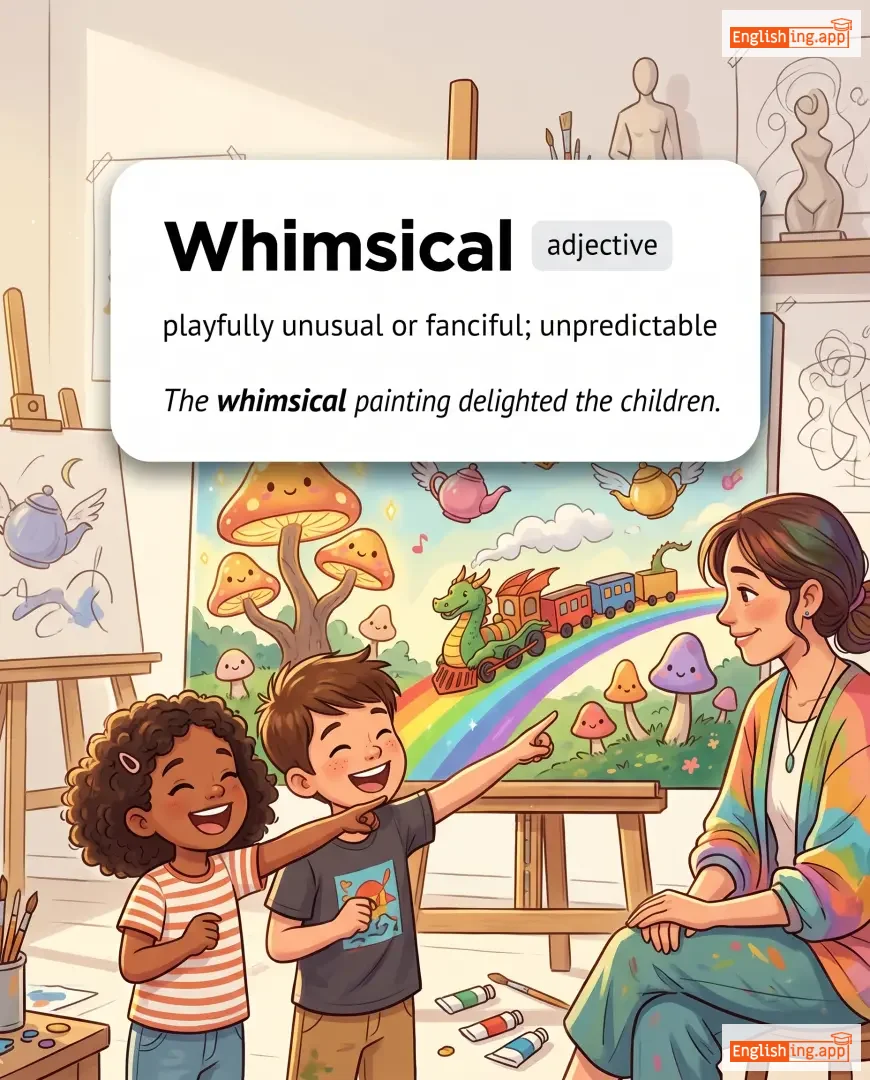
Whimsical definition card — visual illustration of the meaning
adjective
/ˈwɪmzɪkəl/
异想天开 (yìxiǎngtiānkāi)

playfully unusual or fanciful; unpredictable

"The whimsical painting delighted the children."

"这幅异想天开的画让孩子们感到高兴。" (Zhè fú yìxiǎngtiānkāi de huà ràng háizimen gǎndào gāoxìng.)
adverb
/ˈwɪmzɪkli/
任性地,异想天开地 (whimsikeli)

In a playful, fanciful, or capricious manner; with sudden changes of mind

"She decorated her room whimsically with colorful balloons."

"她用五彩缤纷的气球任性地装饰了她的房间。" (ta yong wu cai bin fen de qi qiu ren xing de zhuang shi le ta de fang jian)
noun
/ˈwɪmzi/
异想天开 (yì xiǎng tiānkāi)

playful or fanciful behavior or humor

"Her stories were full of whimsy and imagination."

"她的故事充满了异想天开和想象力。" (Tā de gùshì chōngmǎnle yìxiǎng tiānkāi hé xiǎngxiànglì.)
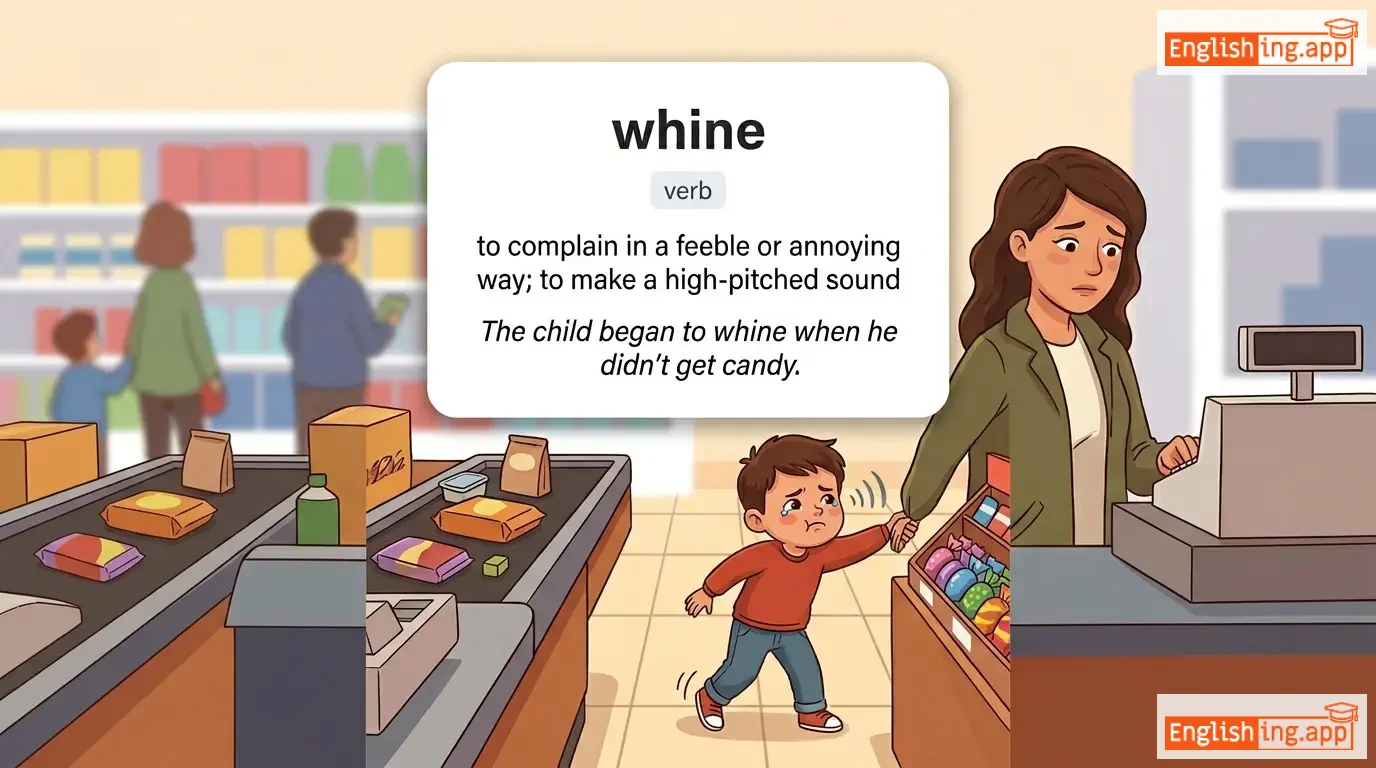
whine definition card — visual illustration of the meaning
😩

whine

verb
/waɪn/

to complain in a feeble or annoying way; to make a high-pitched sound

"The child began to whine when he didn’t get candy."

verb
/ˈwɪni/
嘶鸣 (sīmíng)

to make the high-pitched sound a horse makes

"The horse whinnied when it saw its rider."

"马看到骑手时,嘶鸣了一声。" (Mǎ kàn dào qí shǒu shí, sīmíng le yī shēng.)
verb
/wɪp/
鞭打 (biāndǎ)

to strike or beat with a flexible instrument such as a rope or cord

"The trainer whipped the horse to make it run faster."
"教练用鞭子抽打马匹,使其跑得更快。" (Jiàoliàn yòng biāndǎ chōudǎ mǎpǐ, shǐ qí pǎo dé gèng kuài.)
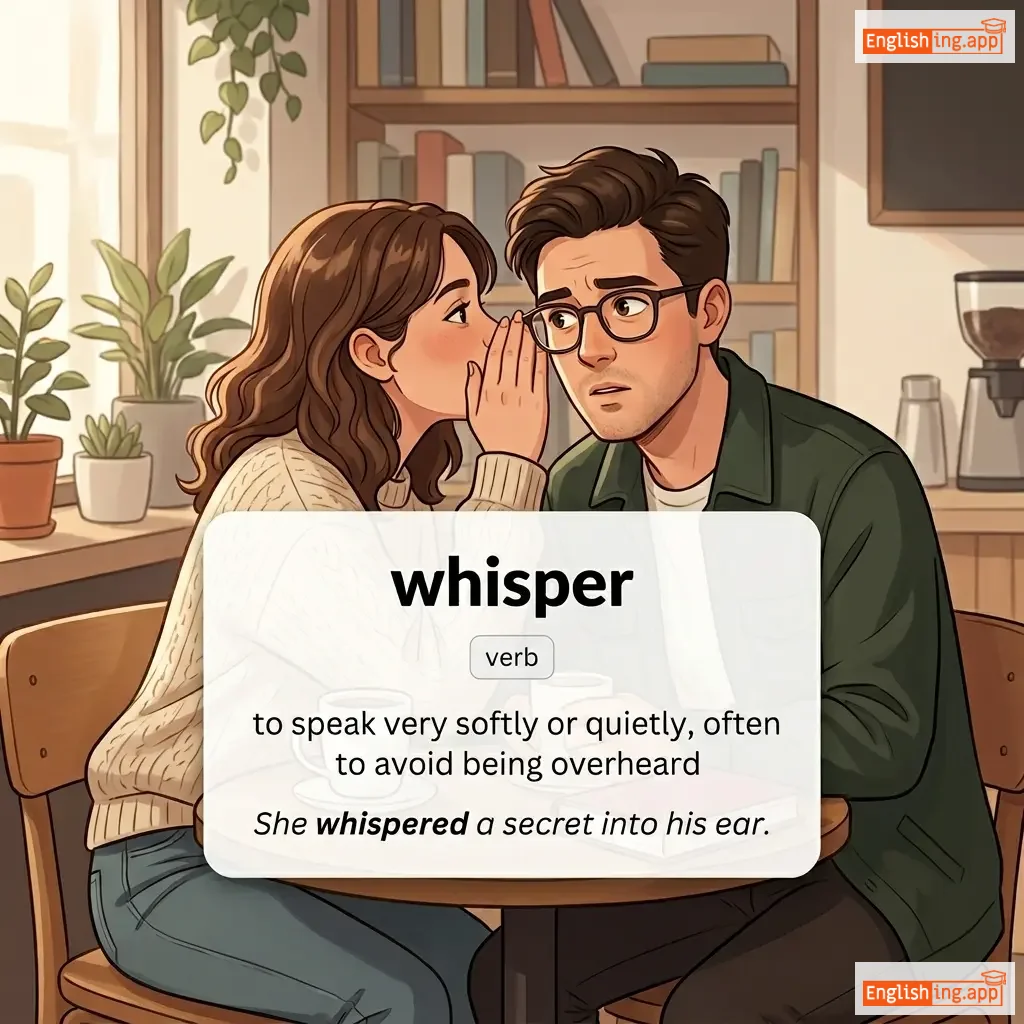
whisper definition card — visual illustration of the meaning
verb
/ˈwɪspər/
低声说 (dī shēng shuō)

to speak very softly or quietly, often to avoid being overheard

"She whispered a secret into his ear."
"她低声对他耳语了一个秘密。" (Tā dī shēng duì tā ěr yǔ le yīgè mìmì.)
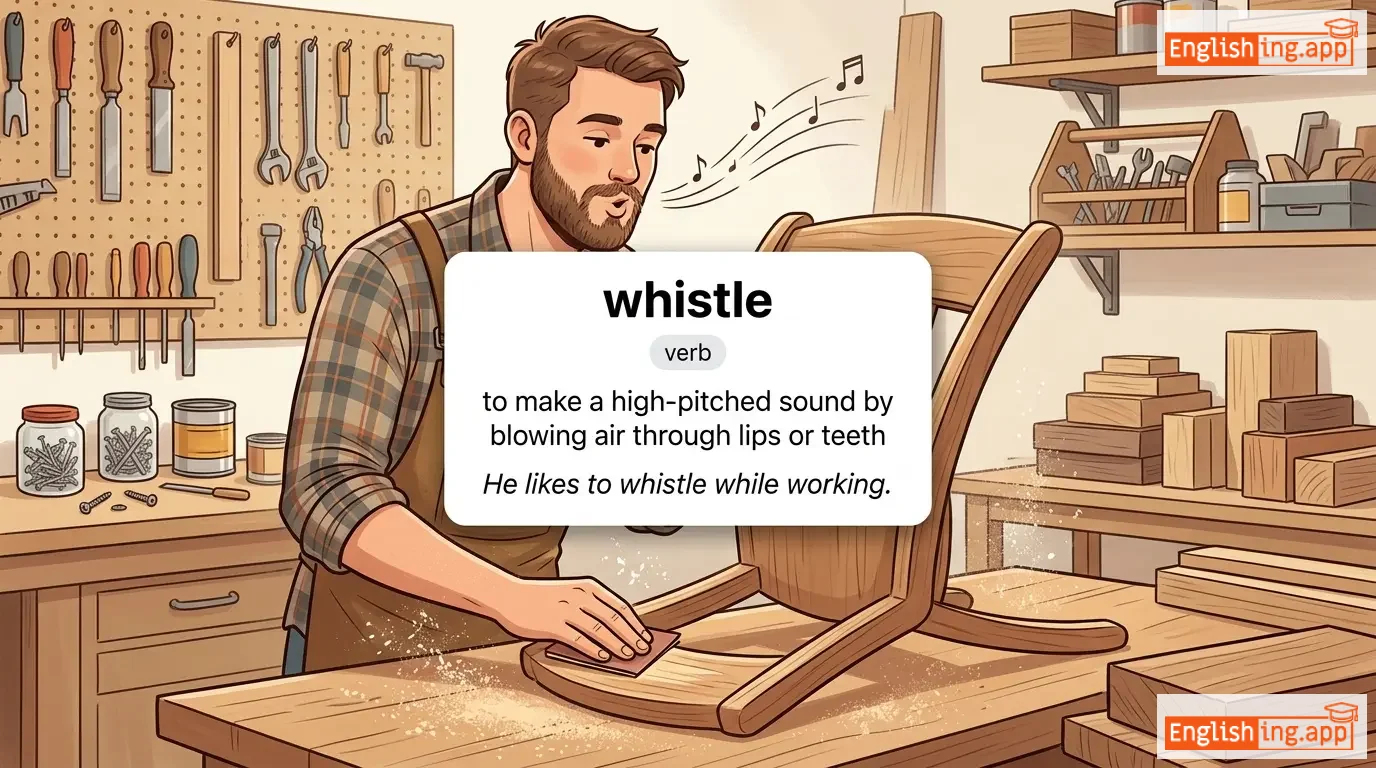
whistle definition card — visual illustration of the meaning
noun
/ˈwɪsəl/
口哨 (kǒushào)

a small wind instrument that produces a high-pitched sound when blown

"The referee blew his whistle to start the game."

"裁判吹响了口哨,开始了比赛。" (cáipàn chuīxiǎngle kǒushào, kāishǐle bǐsài.)
noun
/wɪt/
极小的量 (jí xiǎo de liàng)

a very small part or amount

"He doesn't care a whit about the outcome."

"他一点也不在乎结果。" (Tā yīdiǎn yě bù zàihu jiéguǒ.)
adjective
/waɪt/
白色 (bái sè)

having the color of milk or fresh snow, the opposite of black

"She wore a beautiful white dress to the party."

"她穿着一件漂亮的白色连衣裙参加派对。" (Tā chuānzhuó yī jiàn piàoliang de báisè liányīqún cānjiā pàiduì.)
noun
/waɪt ˈpɛpər/
白胡椒 (bái hújiāo)

a spice made from dried peppercorns with the outer husk removed

"She added white pepper to the cream soup for a mild spicy flavor."

"她把白胡椒加入奶油汤中,给它增添了温和的辛辣味。" (tā bǎ bái hújiāo jiārù nǎiyóu tāng zhōng, gěi tā zēngtiānle wēnhé de xīnlà wèi)
noun
/waɪt ænt/
白蚂蚁 (bái mǎ yǐ)

a small social insect that lives in colonies and feeds on wood and plant matter

"White ants damaged the wooden furniture in our house."

"白蚂蚁破坏了我们家里的木家具。" (Bái mǎ yǐ pòhuài le wǒmen jiālǐ de mù jiājù.)
whitelisting definition card — visual illustration of the meaning
noun
/ˈwaɪt.lɪst.ɪŋ/
将特定用户、软件或 IP 地址识别为安全和可信的 (Jiang teding yonghu, ruanjian huo IP dizhi shibie wei anquan he kexin de)

Identifying specific users, software, or IP addresses as safe and trusted

"Only verified applications are allowed through whitelisting."

"只有经过验证的应用程序才能通过白名单获得许可。" (Zhiyou jingguo yanzheng de yingyongchengxu cai neng tongguo baimingdan huode xukezhi.)
verb
/ˈwaɪtˌwɑːʃ/

to cover up faults, errors, or unpleasant facts; to paint with white paint or lime

"The report was criticized for trying to whitewash the company's failures."

verb
/ˈwɪtl/

to carve or shape something by cutting off small pieces; to gradually reduce

"He spent the afternoon whittling a piece of wood into a toy."

pronoun
/huː/
(shui)

used to ask about a person or people

"Who is coming to the party tonight?"

"今晚谁来参加派对?" (Jīnwǎn shuí lái cānjiā pàiduì?)
pronoun
/huːˈɛvər/
无论谁 (wúlùn shuí)

any person who; no matter who

"Whoever wants to join the trip must register today."

"无论谁想加入旅行,都必须今天注册。" (Wúlùn shuí xiǎng jiārù lǚxíng, dōu bìxū jīntiān zhùcè.)
adjective
/hoʊl/
完整 (wánzhěng)

all of something; complete or entire

"He ate the whole cake by himself."

"他把整个蛋糕吃掉了。" (Tā bǎ zhěnggè dàngāo chī diàole.)
adjective
/ˌhoʊlˈhɑːrtɪd/
全心全意 (quan xin quan yi)

showing complete sincerity and commitment; fully enthusiastic

"She gave her wholehearted support to the project."

"她全心全意地支持这个项目。" (Ta quan xin quan yi de zhi chi zhe ge xiang mu.)
adjective
/ˈhoʊlsəm/
健康的 (jiànkāng de)

promoting health or well-being; morally good and beneficial

"The retreat offered wholesome food and peaceful surroundings."

"度假胜地提供了健康的食物和宁静的环境。" (Dùjià shèngdì tígōngle jiànkāng de shíwù hé níngjìng de huánjìng.)
adverb
/ˈhoʊlli/
完全地 (wanquan de)

completely; entirely

"She is wholly devoted to her family."

"她全身心地投入到她的家庭中。" (Ta quanshenxin de turu dao ta de jiating zhong.)
pronoun
/huːm/
(shei)

used to refer to the person or people that something is done to

"The man whom I met yesterday is my friend."

"我昨天遇到的那个人是我的朋友。" (Wǒ zuótiān yùdào de nàgè rén shì wǒ de péngyǒu.)
noun
/wɜːrl/
螺旋 (luóxuán)

A pattern of spirals or concentric circles, often found in fingerprints, shells, or flowers.

"The fingerprint displayed a clear whorl pattern."

"指纹显示出清晰的螺旋图案。" (Zhǐwén xiǎnshì chū qīngxī de luóxuán tú'àn.)
pronoun
/huːz/
谁的 (shéi de)

used to ask or talk about the person or thing that owns something

"The girl whose phone was stolen is my cousin."

"那个女孩,手机被偷了,是我的表妹。" (Nàgè nǚhái, shǒujī bèi tōu le, shì wǒ de biǎomèi.)
adverb
/waɪ/
为什么 (wèishéme)

used to ask or talk about the reason for something

"Why did you leave so early?"

"你为什么这么早就离开了?" (Nǐ wèishéme zhème zǎo jiù líkāi le?)
noun
/wɪk/
蜡烛芯 (làzhú xīn)

a cord or strand of cotton that burns to provide light in a candle or lamp

"The candle wick needs to be trimmed for better burning."

"蜡烛芯需要修剪,以便更好地燃烧。" (Làzhú xīn xūyào xiūjiǎn, yǐbiàn gèng hǎo de ránshāo.)
adjective
/ˈwɪkɪd/
邪恶的 (xie'e de)

morally bad or evil; also informally very good or impressive

"The villain in the story was truly wicked."

"故事中的反派角色真的是邪恶的。" (Gushi zhong de fanpai juese zhende shi xie'e de.)
noun
/ˈwɪkɪdnəs/
邪恶,恶行 (xie'e, èxíng)

Evil or morally bad behavior.

"The story highlights the wickedness of the cruel king."

"这个故事突出了残忍国王的恶行。" (Zhège gùshì tūchūle cánrěn guówáng de èxíng.)
adjective
/waɪd/
(kuān)

having a great extent from side to side; broad

"The river is wide enough to fit a boat."

"这条河足够宽,足以容纳一艘船。" (Zhe tiao he zhuo gou kuan, zu yi rong na yi sou chuan.)
adverb
/ˈwaɪdli/
广泛地 (guǎngfàn de)

to a great extent or degree

"The news of his promotion spread widely across the company."
"他晋升的消息在公司内广泛传播。" (Tā jìnshēng de xiāoxī zài gōngsī nèi guǎngfàn chuánbò.)
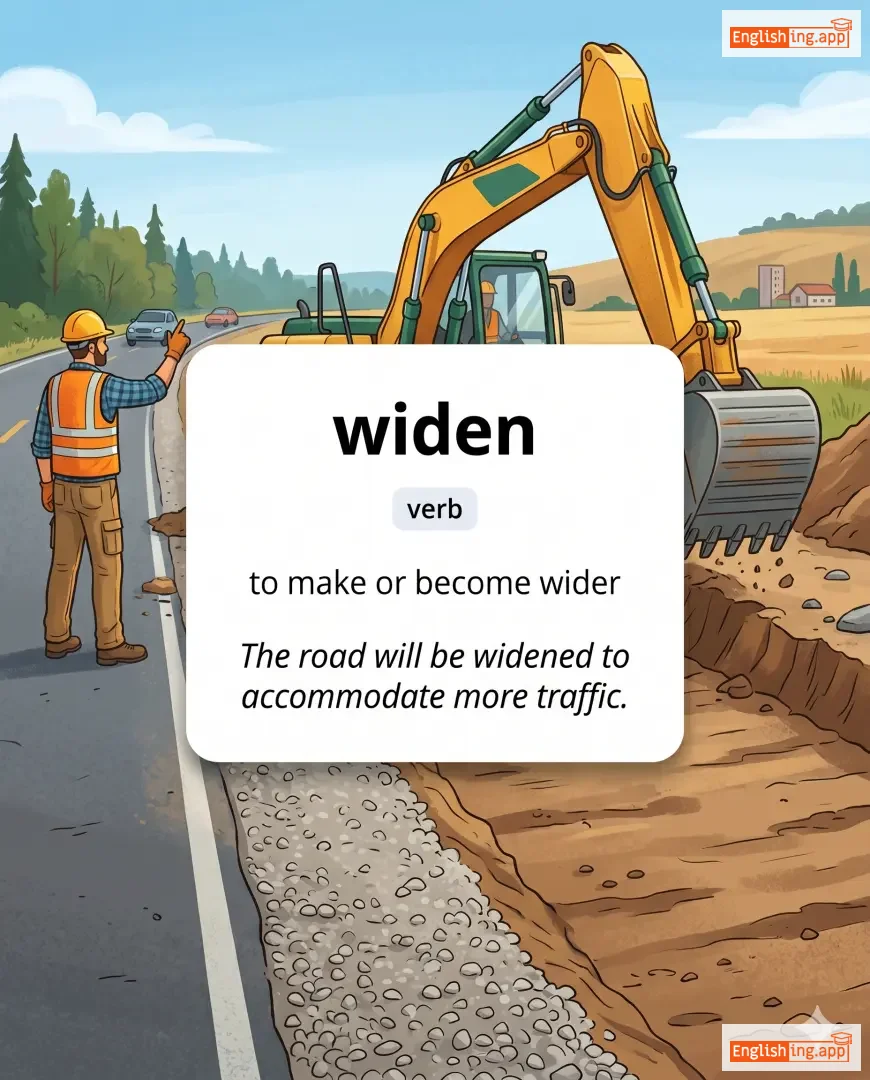
widen definition card — visual illustration of the meaning
verb
/ˈwaɪdən/
拓宽 (tuòkuān)

to make or become wider

"The road will be widened to accommodate more traffic."
"这条路将被拓宽,以适应更多的交通。" (Zhè tiáo lù jiāng bèi tuòkuān, yǐ shìyìng gèng duō de jiāotōng.)
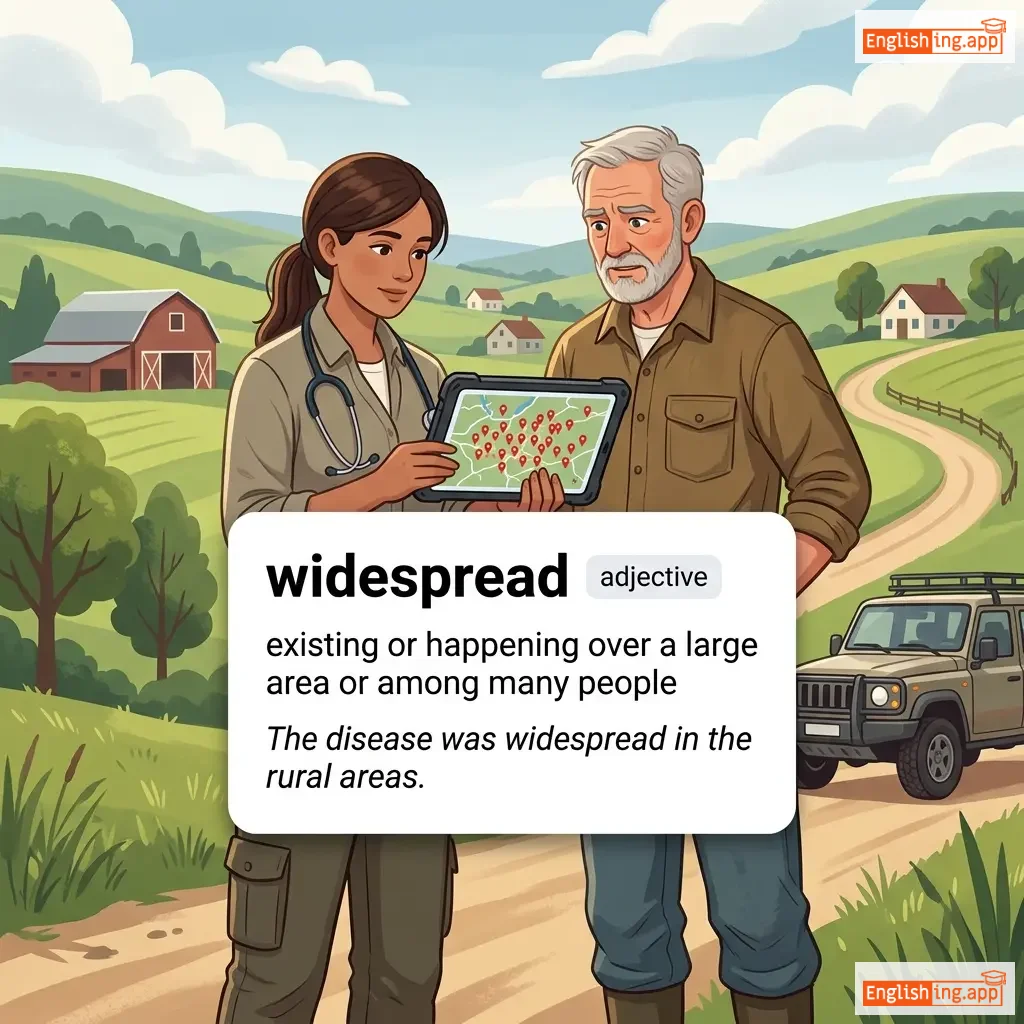
widespread definition card — visual illustration of the meaning
adjective
/ˈwaɪdˌsprɛd/
广泛传播的 (guǎngfàn chuánbō de)

existing or happening over a large area or among many people

"The disease was widespread in the rural areas."

"这种疾病在农村地区广泛传播。" (Zhè zhǒng jíbìng zài nóngcūn dìqū guǎngfàn chuánbō.)
noun
/ˈwɪdəʊ/
寡妇 (guafu)

a woman whose husband has died and who has not married again

"She became a widow at a very young age."

"她在很年轻时成为了寡妇。" (Ta zai hen nianqing shi chengwei le guafu.)
noun
/ˈwɪd.oʊ.ər/
鳏夫 (guānfū)

a man whose wife has died and who has not married again

"The elderly widower lived alone but had regular visits from his children."

"那位年长的鳏夫独自生活,但定期接受孩子们的拜访。" (Nà wèi niáncháng de guānfū dúzì shēnghuó, dàn dìngqī jiēshòu háizimen de bàifǎng.)
noun
/wɪdθ/
宽度 (kuandu)

the measurement or extent of something from side to side

"The width of the table is 2 meters."

"桌子的宽度是2米。" (Zhuōzi de kuāndù shì 2 mǐ.)
verb
/wiːld/
持有,使用 (chí yǒu, shǐ yòng)

To hold and use a weapon, tool, or power effectively.

"The warrior wielded his sword with great skill."

"战士熟练地使用他的剑。" (Zhàn shì shú liàn de shǐ yòng tā de jiàn.)