词汇表

英语词汇词典 | 单词含义、定义和示例

adjective
/ˈwɪəri/
疲倦 (pí juàn)

feeling or showing extreme tiredness, especially as a result of exertion or lack of sleep

"After the long journey, she felt weary and wanted to rest."
"长途旅行后,她感到疲惫,想休息。" (Chángtú lǚxíng hòu, tā gǎndào píbèi, xiǎng xiūxí.)
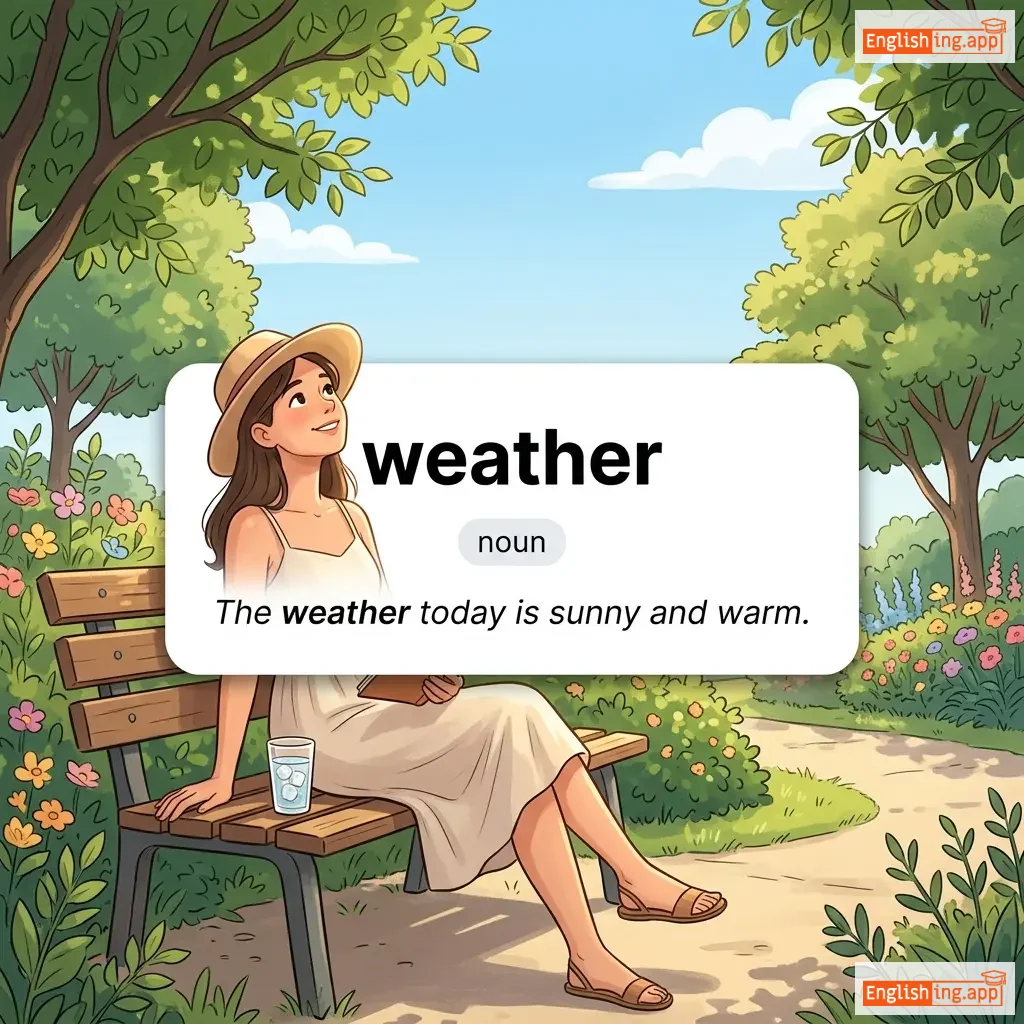
weather definition card — visual illustration of the meaning
noun
/ˈwɛðər/
天气 (tianqi)

the state of the atmosphere at a particular place and time in terms of heat, cloudiness, dryness, sunshine, wind, rain, etc.

"The weather today is sunny and warm."
"今天的天气晴朗而温暖。" (Jintian de tianqi qinglang er wenruan.)
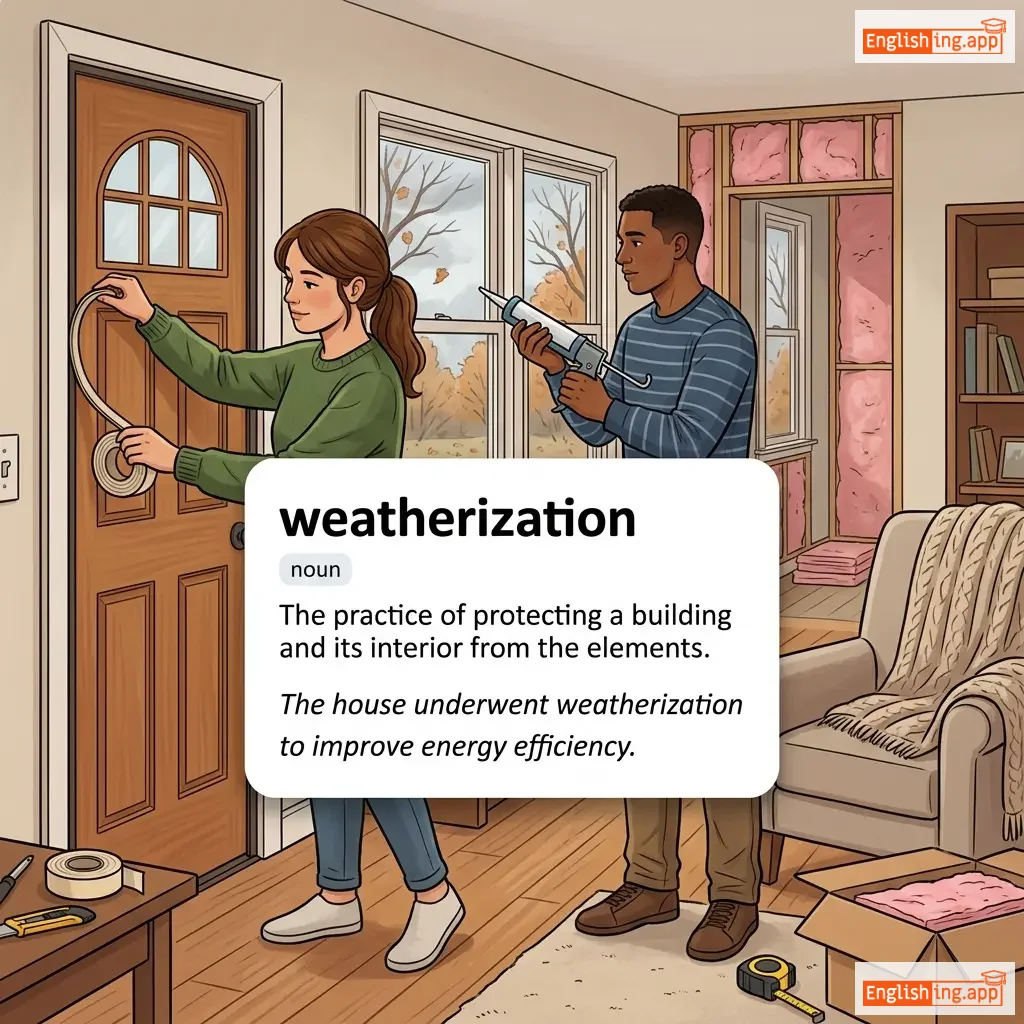
weatherization definition card — visual illustration of the meaning
noun
ˌwɛðəraɪˈzeɪʃən
气候化处理 (qìhòu huà chǔlǐ)

The practice of protecting a building and its interior from the elements.

"The house underwent weatherization to improve energy efficiency."
"这座房子进行了气候化处理以提高能源效率。" (Zhè zuò fángzi jìnxíngle qìhòu huà chǔlǐ yǐ tígāo néngyuán xiàolǜ.)
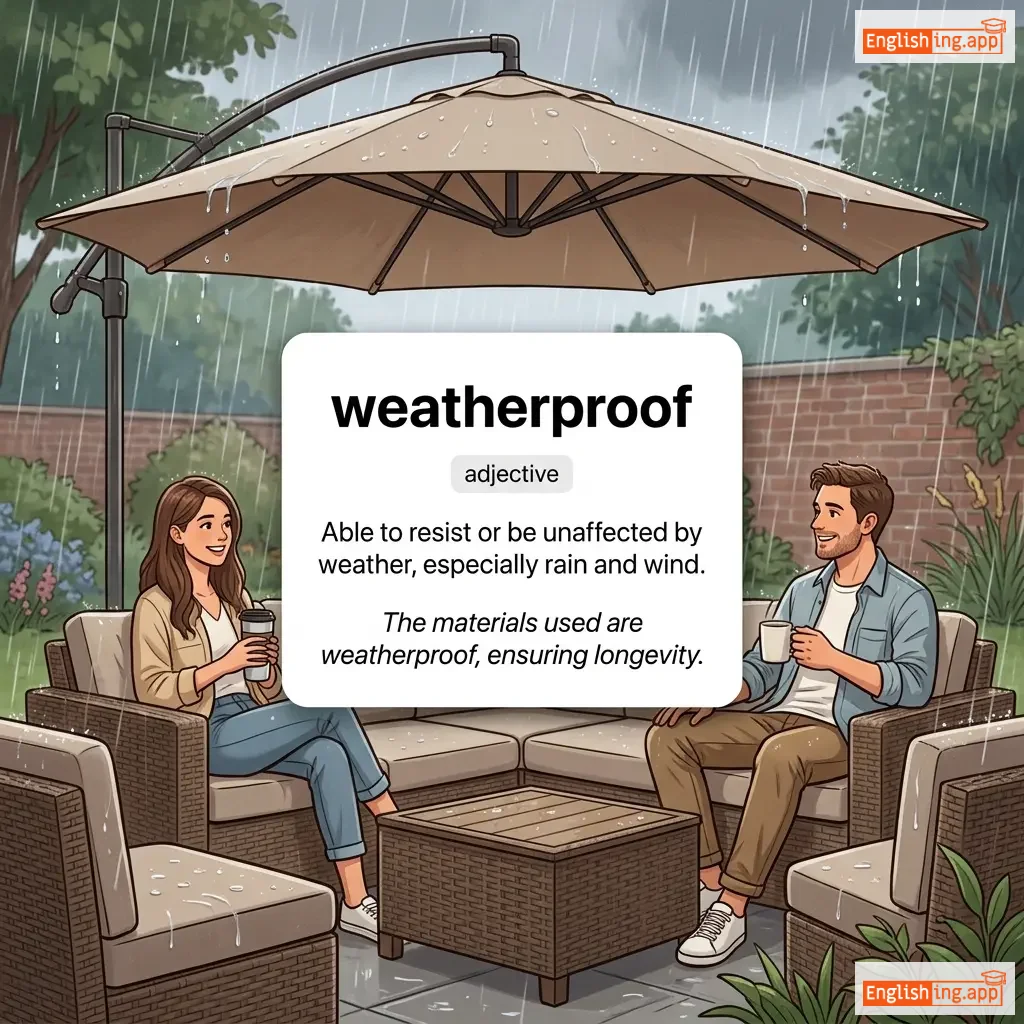
weatherproof definition card — visual illustration of the meaning
adjective
ˈwɛðərpruːf
防水 (fángshuǐ)

Able to resist or be unaffected by weather, especially rain and wind.

"The materials used are weatherproof, ensuring longevity."

"所用材料是防水的,确保长久耐用。" (Suǒ yòng cáiliào shì fángshuǐ de, quèbǎo chángjiǔ nàiyòng.)
verb
/wiːv/
编织 (bianzhi)

to make cloth by interlacing threads or to combine elements into a whole

"She weaves beautiful patterns on her loom."

"她在织布机上编织美丽的图案。" (Ta zai zhi bu ji shang bianzhi mei li de tuan.)
noun
/ˈwiː.vər/
织工 (zhī gōng)

a person who makes cloth by interlacing threads on a loom

"The skilled weaver created intricate patterns on the silk fabric."

"熟练的织工在丝绸布料上创造了复杂的图案。" (Shúliàn de zhīgōng zài sīchóu bùliào shàng chuàngzàole fùzá de tú'àn.)
noun
/ˈwiː.vər bɜːd/
织布鸟 (zhibu niao)

a small bird that builds elaborate woven nests from grass and twigs

"The weaver bird skillfully constructs its intricate nest."

"织布鸟巧妙地建造它复杂的巢穴" (Zhibu niao qiǎomiào de jiànzào tā fùzá de cháoxué)
🕸️

web

noun
/wɛb/

a network of fine threads spun by a spider or a complex interconnected system

"The spider spun a large web in the corner of the room."

verb
/wɛd/
结婚 (jiehun)

to marry someone; to enter into a marriage

"They decided to wed in a small ceremony by the beach."

"他们决定在海滩举行一个小型婚礼。" (Tāmen juédìng zài hǎitān jǔxíng yīgè xiǎoxíng hūnlǐ.)
noun
/ˈwed.lɒk/
婚姻 (hūnyīn)

the state of being married; matrimony

"They have been happily united in wedlock for twenty years."

"他们已经幸福地结婚二十年了。" (Tāmen yǐjīng xìngfú de jiéhūn èrshí nián le.)
noun
/ˈwɛdɪŋ/
婚礼 (hūn lǐ)

a marriage ceremony, especially considered as including the associated celebrations

"They are planning a wedding in the summer."

"他们正在计划一个夏季婚礼。" (Tāmen zhèngzài jìhuà yīgè xiàjì hūn lǐ.)
noun
/wedʒ/
楔子; 撬开; 劈开 (xiēzi; qiàokāi; pī kāi)

a triangular piece of wood or metal used for splitting or securing; a piece of cheese or cake

"He used a wooden wedge to split the log into smaller pieces."

"他用木楔将原木劈成了小块。" (Tā yòng mù xiē jiāng yuánmù pī chéngle xiǎo kuài.)
noun
/ˈwɛnzdeɪ/
星期三 (xingqisan)

the fourth day of the week, following Tuesday and preceding Thursday

"The meeting has been scheduled for Wednesday afternoon."
"会议安排在星期三下午。" (huiyi anpai zai xingqisan xiawu)
adjective
/wiː/
非常小 (feichang xiao)

very small in size; tiny

"She gave me a wee smile before leaving."

"她在离开之前给了我一个小小的微笑。" (Ta zai likai zhīqián gěi le wǒ yī gè xiǎo xiǎo de wēixiào.)
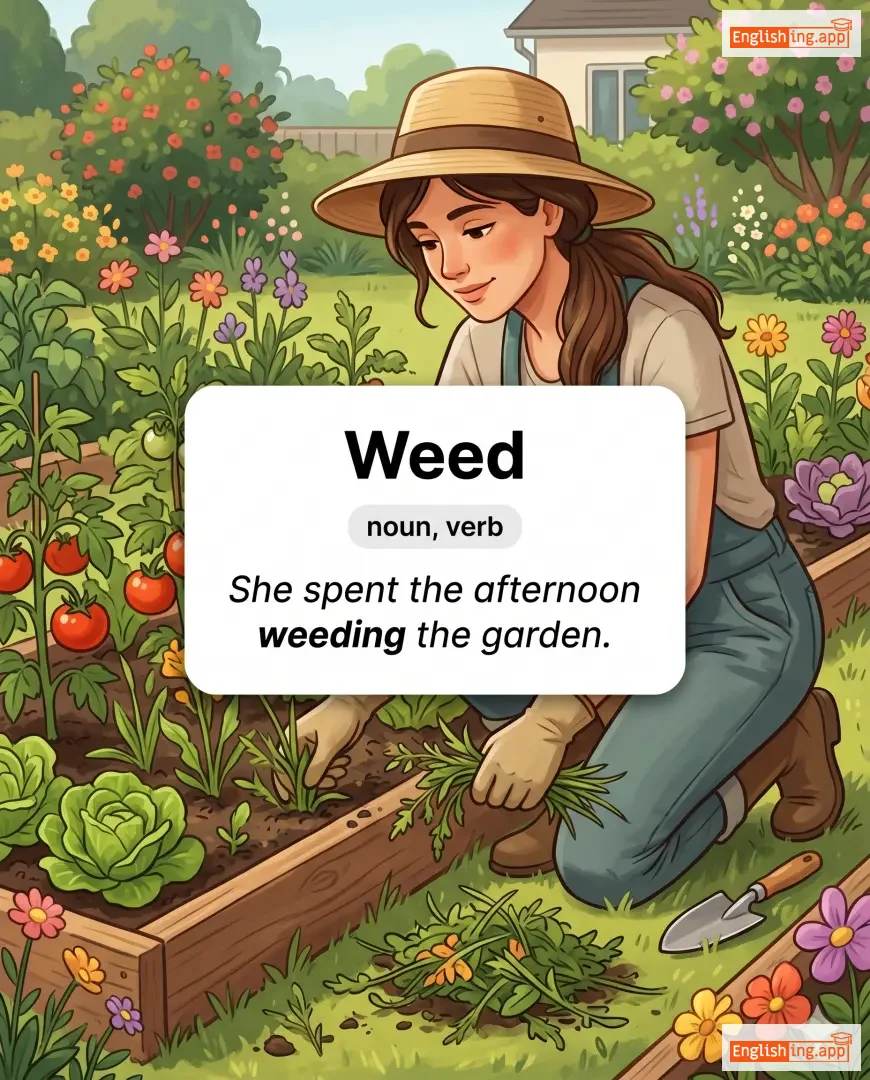
Weed definition card — visual illustration of the meaning
noun, verb
/wiːd/
杂草 (zácǎo)

a wild plant growing where it is not wanted, especially among crops; to remove such plants

"She spent the afternoon weeding the garden."

"她花了下午的时间除草。" (Tā huāle xiàwǔ de shíjiān chúcǎo.)
noun
/wiːk/
星期 (xīngqī)

a period of seven days

"I will finish the project by the end of the week."

"我将在本周末之前完成项目。" (Wǒ jiāng zài běn zhōumò zhīqián wánchéng xiàngmù.)
noun
/ˈwiːkˌɛnd/
周末 (zhōumò)

the end of the week, typically regarded as Saturday and Sunday

"They are planning a trip for the weekend."

"他们计划在周末去旅行。" (Tāmen jìhuà zài zhōumò qù lǚxíng.)
adjective
/ˈwiːkli/
每周的 (mei zhou de)

occurring or done every week

"We have a weekly meeting on Mondays."
"我们每周一有例会。" (Women mei zhou yi you lihui.)
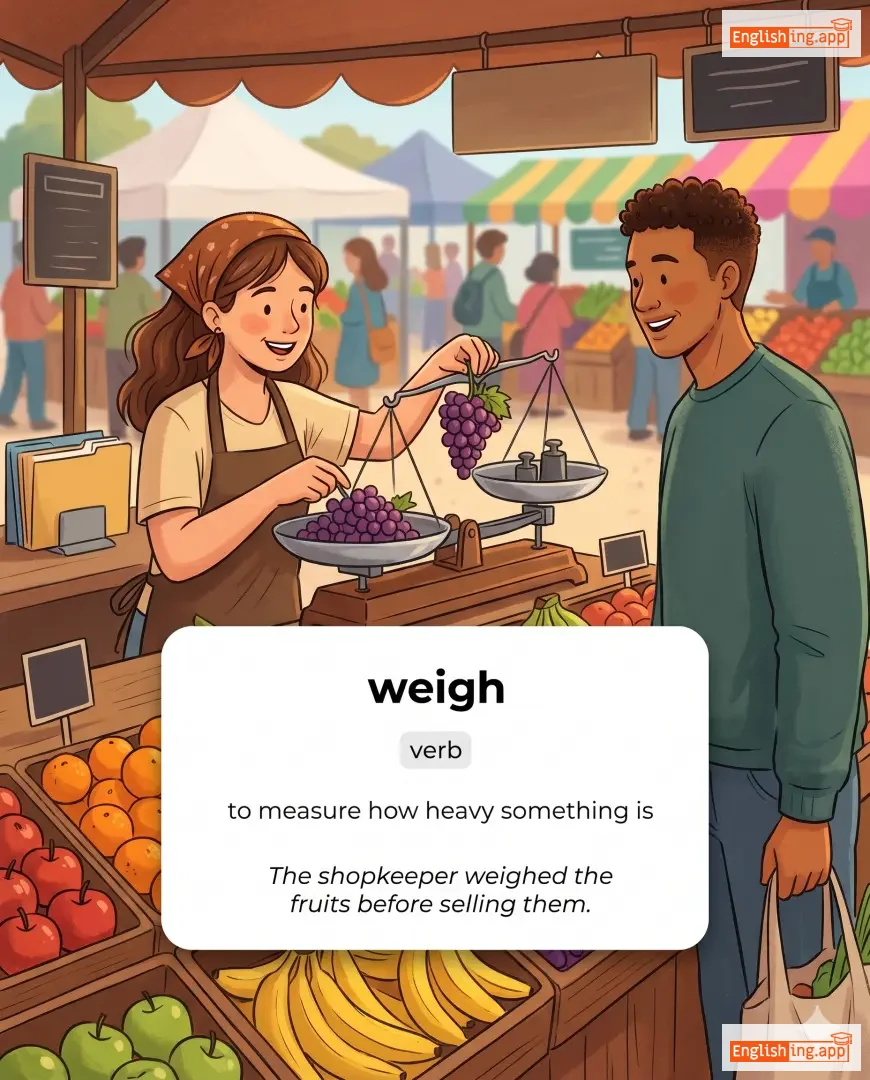
weigh definition card — visual illustration of the meaning
verb
/weɪ/
称重 (chēngzhòng)

to measure how heavy something is

"The shopkeeper weighed the fruits before selling them."

"店主在卖水果前称重。" (Diànzhǔ zài mài shuǐguǒ qián chēngzhòng.)
noun
/weɪt/
重量 (zhòng liàng)

a measure of how heavy something is

"The weight of the package was 10 kilograms."

"包裹的重量是10公斤。" (Bāoguǒ de zhòng liàng shì 10 gōngjīn.)
noun
/ˈweɪtˌlɪftɪŋ/
举重 (ju zhong)

the sport or activity of lifting heavy weights to build strength and muscle

"Weightlifting requires discipline, proper technique, and consistent training."

"举重需要自律和正确的技术。" (ju zhong xuyao zilu he zhengque de jishu)
adjective
/wɪrd/
奇怪 (qiguai)

suggesting something supernatural or very strange; unusual

"The movie had a weird ending that nobody expected."

"电影有一个奇怪的结局,没有人预料到。" (Dianying you yige qiguai de jieju, meiyou ren yuliao dao.)
Welcome definition card — visual illustration of the meaning
verb
/ˈwɛlkəm/
欢迎 (huānyíng)

to greet someone in a friendly way

"They welcomed us with open arms at the party."

"他们在派对上张开双臂欢迎我们。" (Tāmen zài pàiduì shàng zhāng kāi shuāng bì huānyíng wǒmen.)
noun
/ˈwɛlfɛr/
福利 (fúlì)

the health, happiness, and fortunes of a person or group

"The government provides welfare to low-income families."

"政府为低收入家庭提供福利。" (Zhèngfǔ wèi dī shōurù jiātíng tígōng fúlì.)
noun
/ˈwɛlkɪn/
天空 (tiānkōng)

The sky, the heavens, or the upper air.

"The eagle soared high into the welkin."

"鹰飞得高进入了天空。" (Yīng fēi dé gāo jìnrùle tiānkōng.)
adverb
/wɛl/
(hǎo)

in a good or satisfactory way

"She did well in her exams."

"她在考试中做得很好。" (Tā zài kǎoshì zhōng zuò de hěn hǎo.)
adjective
/ˌwel bɪˈheɪvd/
行为良好 (xíngwéi liánghǎo)

conducting oneself in a proper and polite manner; showing good manners

"The children were well-behaved during the ceremony."
"孩子们在仪式期间表现得很乖。" (Háizimen zài yíshì qījiān biǎoxiàn dé hěn guāi.)
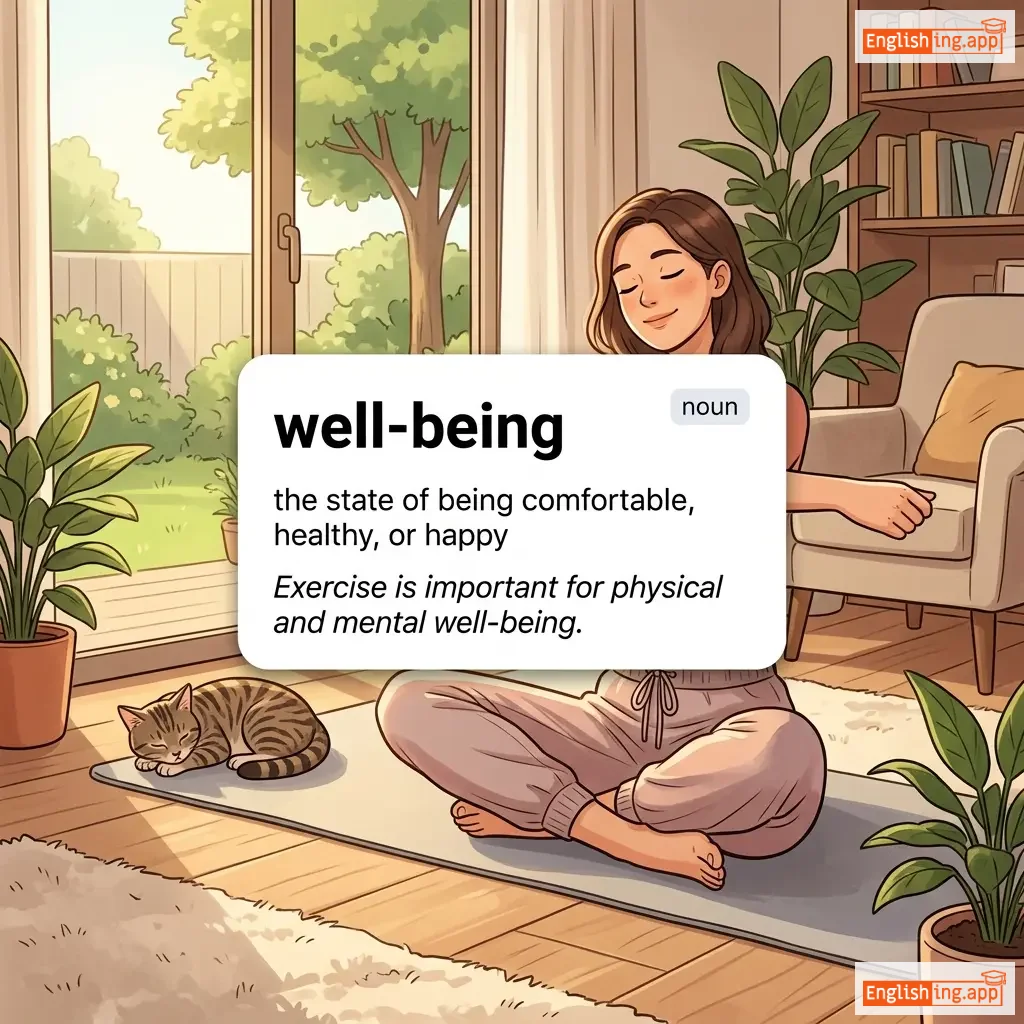
well-being definition card — visual illustration of the meaning
noun
/ˌwelˈbiːɪŋ/
福祉 (fúzhǐ)

the state of being comfortable, healthy, or happy

"Exercise is important for physical and mental well-being."

"锻炼对身体和心理健康很重要。" (Duànliàn duì shēntǐ hé xīnlǐ jiànkāng hěn zhòngyào.)
adjective
/ˌwɛlˈbrɛd/
有教养的 (yǒu jiàoyǎng de)

Having or showing good manners; properly raised.

"She is a well-bred young lady with excellent manners."

"她是一个有教养的年轻女士,举止优雅。" (Tā shì yīgè yǒu jiàoyǎng de niánqīng nǚshì, jǔzhǐ yōuyǎ.)
noun
/ˈwɛlˌduːər/
行善者 (xíngshàn zhě)

A person who does good deeds; a benefactor.

"The community praised the well-doer for his charity."

"社区表扬了他的行善行为。" (Shèqū biǎoyáng le tā de xíngshàn xíngwéi.)
adjective
/ˌwel ˈdʌn/
做得好; 完全煮熟 (zuò dé hǎo; wánquán zhǔ shú)

performed skillfully and successfully; cooked thoroughly

"The project was well-done and impressed everyone."

"项目做得好,令所有人印象深刻。" (Xiàngmù zuò dé hǎo, lìng suǒyǒu rén yìnxiàng shēnkè.)
adjective
/ˌwelˈnoʊn/
著名 (zhuoming)

known by many people; famous or recognized

"He is a well-known actor in his country."

"他是他国家的著名演员。" (Ta shi ta guo jia de zhu ming yan yuan.)
adjective
/ˌwɛl tə ˈduː/
富裕 (fùyù)

Prosperous, wealthy, or financially comfortable.

"They belong to a well-to-do family in the city."

"他们来自城市中的富裕家庭。" (Tāmen láizì chéngshì zhōng de fùyù jiātíng.)
noun
/ˈwel.wɪʃ.ər/
祝愿者 (zhù yuàn zhě)

a person who desires happiness or success for another

"Many well-wishers came to congratulate her on her graduation."

"许多祝愿者来祝贺她毕业。" (Xǔduō zhùyuàn zhě lái zhùhè tā bìyè.)
noun
/wɛlt/
肿块 (zhǒng kuài)

A raised mark on the skin, usually from a blow or allergic reaction.

"He had a red welt on his arm after the bee sting."
"他在蜜蜂蜇伤后,手臂上有一个红色的肿块。" (Tā zài mìfēng zhē shāng hòu, shǒubì shàng yǒu yīgè hóngsè de zhǒng kuài.)
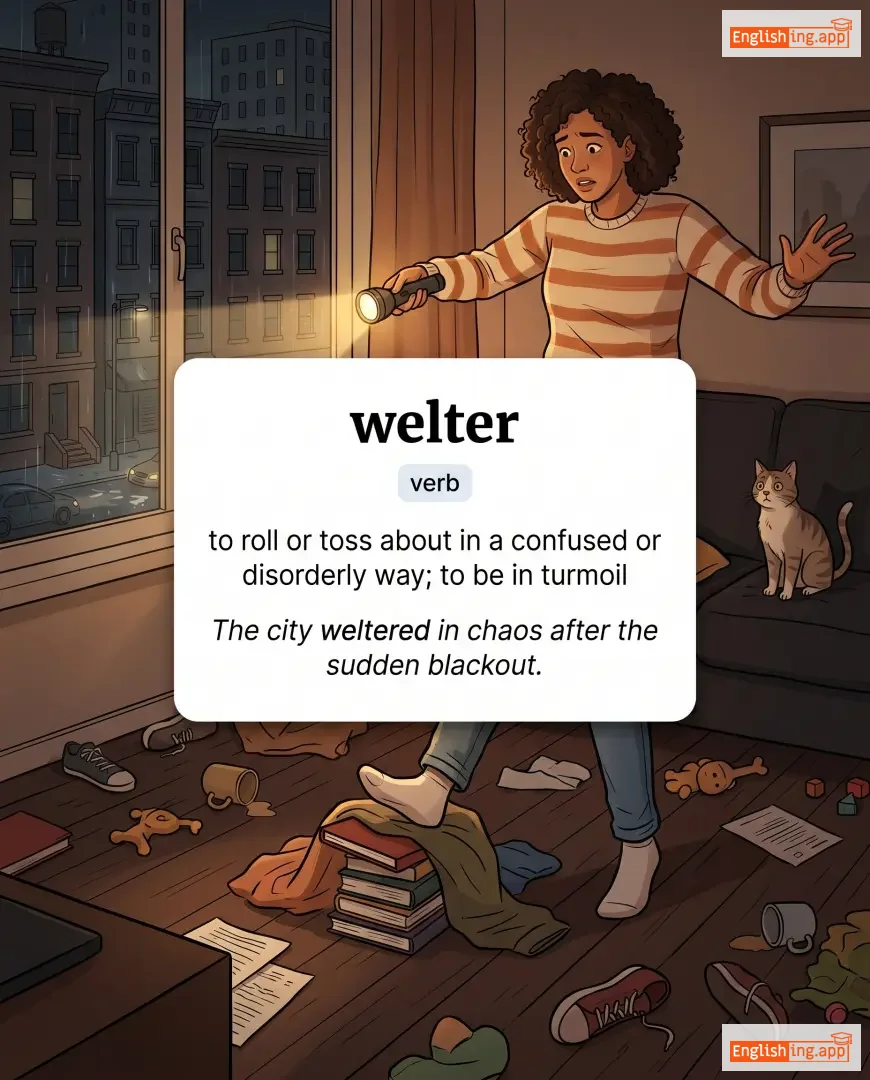
welter definition card — visual illustration of the meaning
verb
/ˈwɛltər/
在混乱中翻滚 (zai hunluan zhong fengun)

to roll or toss about in a confused or disorderly way; to be in turmoil

"The city weltered in chaos after the sudden blackout."

"城市在突然的停电后陷入混乱。" (Chéngshì zài túrán de tíngdiàn hòu xiànrù hùnluàn.)
noun
/wɛst/
西 (xi)

the direction to the left of the north and to the right of the south, typically associated with the sunset

"The sun sets in the west."

"太阳在西方落下。" (Taiyang zai xifang luo xia.)
adjective
/ˈwɛstərn/
西方的 (xīfāng de)

relating to or characteristic of the West, especially Europe and the Americas

"She loves western music and culture."

"她喜欢西方的音乐和文化。" (Tā xǐhuān xīfāng de yīnyuè hé wénhuà.)
adjective
/wɛt/
湿的 (shide)

covered with, or saturated with liquid (usually water)

"The ground is wet after the rain."

"下雨后地面是湿的。" (Xia yu hou dimian shi shide.)
noun
/weɪl/
鲸鱼 (jingyu)

a very large marine mammal that lives in the ocean

"We saw a huge whale swimming near the boat."

"我们看到一只巨大的鲸鱼在船旁游泳。" (wǒmen kàn dào yī zhī jùdà de jīngyú zài chuán páng yóuyǒng.)
pronoun
/wɒt/
什么 (shenme)

used to ask for information about something

"What is your name?"

"你叫什么名字?" (Nǐ jiào shénme míngzì?)
🤷‍♂️

whatever (watever)

pronoun
/wɒtˈɛvər/
任何事情 (renhe shiqing)

used to refer to anything or everything that is of the type mentioned

"You can choose whatever you like."

"你可以选择任何你想要的。" (Ni keyi xuanze renhe ni xiangyao de.)
adverb
/wɒtˈsəʊɛvər/
根本不 (gēnběn bù)

used for emphasis after a negative statement to mean 'at all'

"She has no interest in the matter whatsoever."

"她对这个问题一点兴趣都没有。" (Tā duì zhège wèntí yīdiǎn xìngqù dōu méiyǒu.)
noun
/wiːt/
小麦 (xiaomai)

a cereal plant whose grain is used to make flour for bread and other foods

"Farmers harvested the wheat in early summer."

"农民在夏季初收割了小麦。" (nongmin zai xiaji chu shouge le xiaomai.)
verb
/ˈwiːdəl/
用奉承说服 (yòng fèngchéng shuōfú)

to persuade or coax someone by using flattery or smooth talk

"She managed to wheedle extra pocket money from her father."

"她成功地从父亲那里获得了额外的零花钱。" (Tā chénggōng de cóng fùqīn nàlǐ huòqǔle éwài de línghuā qián.)
noun
/wiːl/
轮子 (lúnzi)

a circular object that revolves on an axle and is used to move or carry things

"The wheel of the car broke down on the way."

"汽车的轮子在路上坏了。" (Qìchē de lúnzi zài lù shàng huàile.)
noun
/ˈwiːltʃeər/
轮椅 (lún yǐ)

a chair with wheels, used by people who cannot walk easily or at all

"The hospital provided a wheelchair for the injured patient."

"医院为受伤的病人提供了轮椅。" (yīyuàn wèi shòushāng de bìngrén tígōngle lún yǐ.)
noun
/wɛlp/
小狗 (xiao gou)

a young offspring of a dog or other carnivorous mammal; sometimes used to mean an impudent young person

"The farmer found a wolf whelp hiding near the barn."

"农民在谷仓附近发现了一只藏起来的狼崽。" (Nongmin zai gucang fujin faxian le zhi cang qilai de lang zai.)
adverb
/wɛn/
什么时候 (shénme shíhòu)

at what time

"Do you know when the train leaves?"

"你知道火车什么时候开吗?" (Nǐ zhīdào huǒchē shénme shíhòu kāi ma?)
adverb
/wɛnˈɛvər/
随时 (suíshí)

at any time, or whenever it happens

"You can call me whenever you want."

"你可以随时给我打电话。" (Nǐ kěyǐ suíshí gěi wǒ dǎ diànhuà.)