词汇表

英语词汇词典 | 单词含义、定义和示例

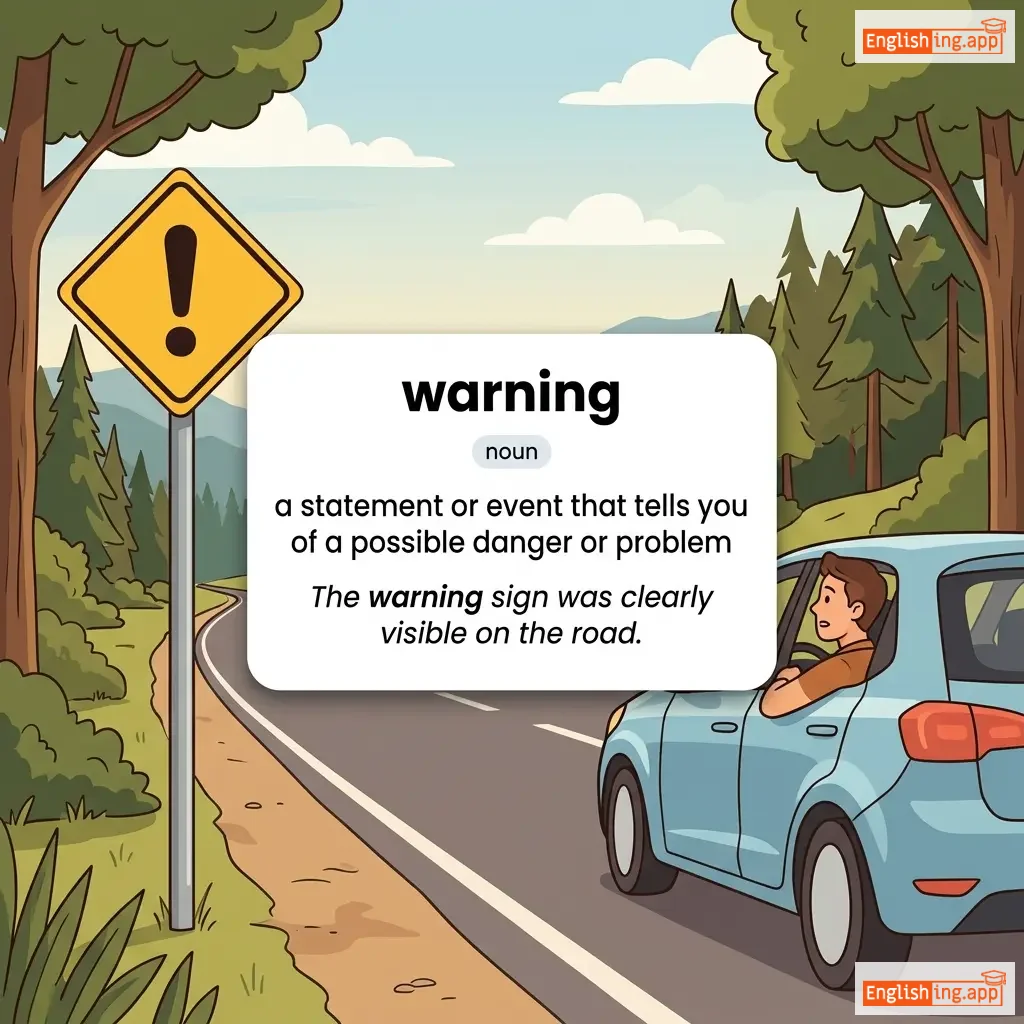
warning definition card — visual illustration of the meaning
noun
/ˈwɔːrnɪŋ/
警告 (jinggao)

a statement or event that tells you of a possible danger or problem

"The warning sign was clearly visible on the road."

"路上的警告标志清晰可见。" (Lùshàng de jǐnggào biāozhì qīngxī kějiàn.)
🌀

warp

verb
/wɔːrp/

To twist or bend out of shape, often due to heat or moisture.

"The wooden door warped in the summer heat."

noun/verb
/ˈwɒrənt/
逮捕令 (dàibǔ lìng)

As a noun: An official authorization or order. As a verb: To justify or make something necessary.

"The judge issued a warrant for his arrest."

"法官签发了他的逮捕令。" (Fǎguān qiānfāle tā de dàibǔ lìng.)
warranted definition card — visual illustration of the meaning
adjective/verb
/ˈwɒrəntɪd/
有理由的 (you liyi de)

Justified or authorized under the circumstances.

"Her anger was warranted after the unfair treatment."

"她的愤怒在不公平的待遇之后是有理由的。" (Ta de fen nu zai bu gongping de daiyu zhi hou shi you liyi de.)
noun
/ˈwɒrənti/
保修期 (baoxiūqī)

A written guarantee given by a manufacturer or seller promising to repair or replace a product if necessary within a specified period.

"The laptop comes with a two-year warranty."

"这台笔记本电脑附带两年的保修期。" (Zhè tái bǐjìběn diànnǎo fùdài liǎng nián de bǎoxiūqī.)
noun
/ˈwɒrən/
兔子洞的网络 (warren)

A network of interconnected rabbit burrows; also used metaphorically for a densely populated building or district.

"The old part of the city is a warren of narrow streets."

"这座城市的老部分是一个狭窄街道的网络。" (Zhè zuò chéngshì de lǎo bùfen shì yīgè xiázhǎi jiēdào de wǎngluò.)
noun
/ˈwɒriər/
战士 (zhànshì)

a person engaged or experienced in warfare; a brave or experienced fighter

"The ancient warrior fought fearlessly to protect his land."
"古老的战士英勇地战斗以保护他的土地。" (gǔlǎo de zhànshì yīngyǒng de zhàndòu yǐ bǎohù tā de tǔdì.)
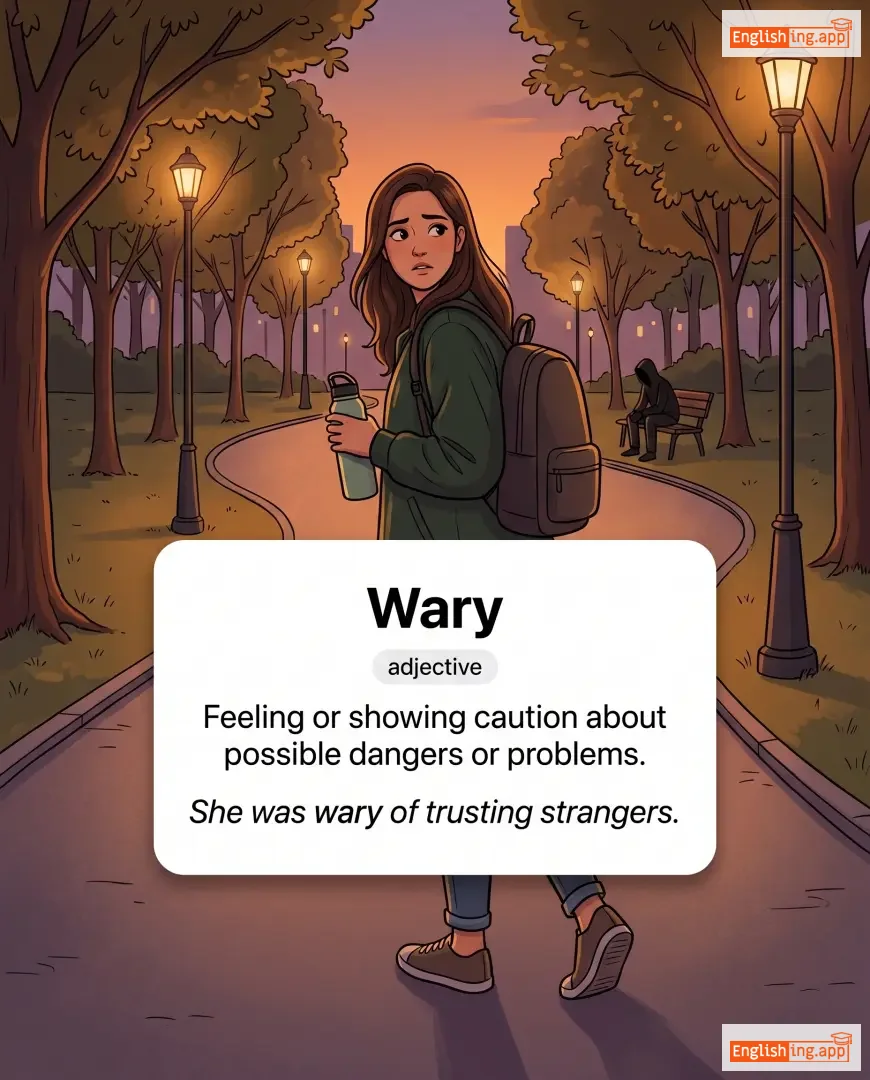
Wary definition card — visual illustration of the meaning
adjective
/ˈweəri/
小心的 (wary)

Feeling or showing caution about possible dangers or problems.

"She was wary of trusting strangers."
"她对相信陌生人保持警惕。" (Tā duì xiāngxìn mòshēngrén bǎochí jǐngtì.)
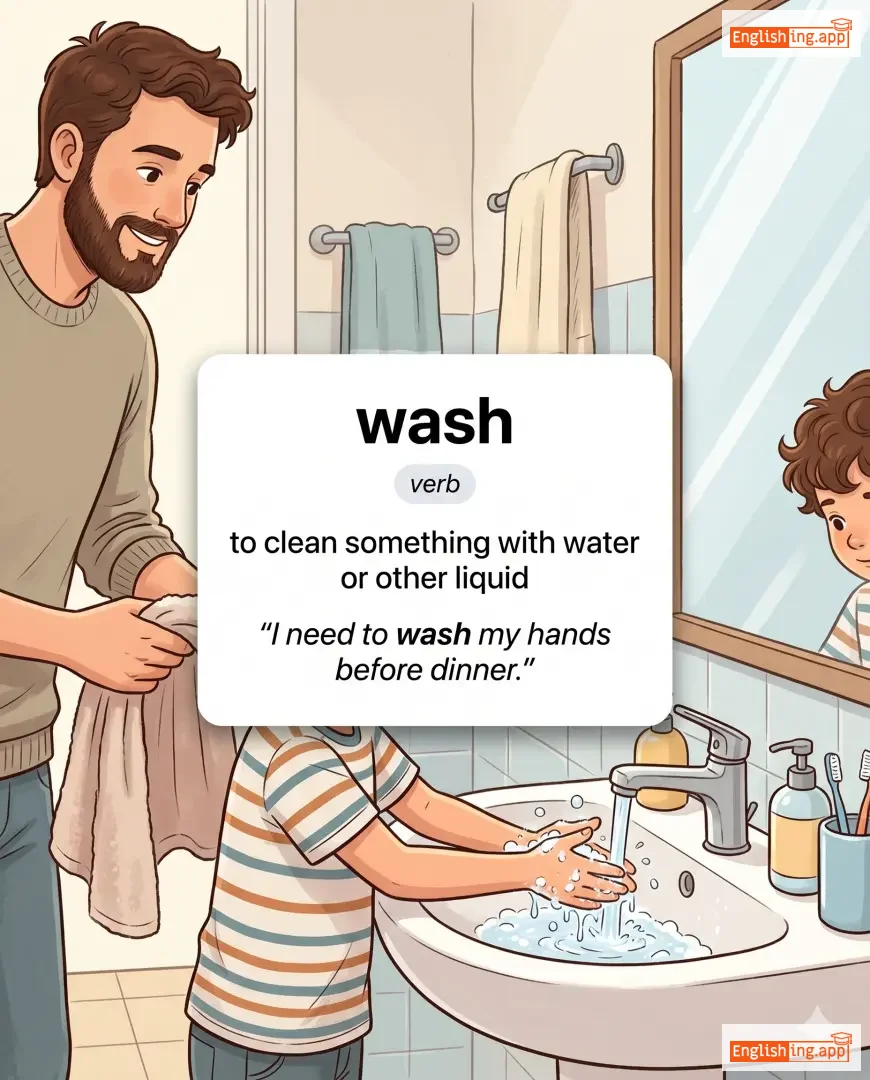
wash definition card — visual illustration of the meaning
verb
/wɒʃ/
(xi)

to clean something with water or other liquid

"I need to wash my hands before dinner."

"我需要在晚餐前洗手。" (Wo xuyao zai wancan qian xishou.)
noun
/ˈwɑː.ʃər mæn/
洗衣工 (xǐyī gōng)

a person whose job is to wash clothes and linens for others

"The washer man collected dirty clothes from every household in the village."

"洗衣工从村庄的每个家庭收集脏衣服。" (xǐ yī gōng cóng cūn zhuāng de měi gè jiā tíng shōu jí zāng yī fú)
noun; gerund
/ˈwɒʃɪŋ/
清洗 (qingxi)

the act of cleaning with water or other liquid; clothes or items that are being washed

"Washing clothes regularly helps maintain hygiene."

"经常清洗衣服有助于保持卫生。" (jingchang qingxi yifu youzhu yu baochi weisheng)
noun
/ˈwɒʃ.ɪŋ məˌʃiːn/
洗衣机 (wa shing ma sheen)

a machine for washing clothes and other textiles

"The washing machine broke down and needs repair."

"洗衣机坏了,需要修理。" (The washing machine broke down and needs repair.)
noun
/wɒsp/
黄蜂 (huangfeng)

a flying insect with a yellow and black striped body and a painful sting

"The wasp stung me when I disturbed its nest."

"当我打扰它的巢时,黄蜂刺伤了我。" (Dāng wǒ dǎrǎo tā de cháo shí, huángfēng cìshāng le wǒ.)
noun
/ˈweɪ.stɪdʒ/
浪费 (langfei)

the action of using or expending something carelessly or without purpose

"The company reduced food wastage by implementing better inventory management."
"公司通过实施更好的库存管理减少了食品浪费。" (Gōngsī tōngguò shíshī gèng hǎo de kùcún guǎnlǐ jiǎnshǎo le shípǐn làngfèi.)
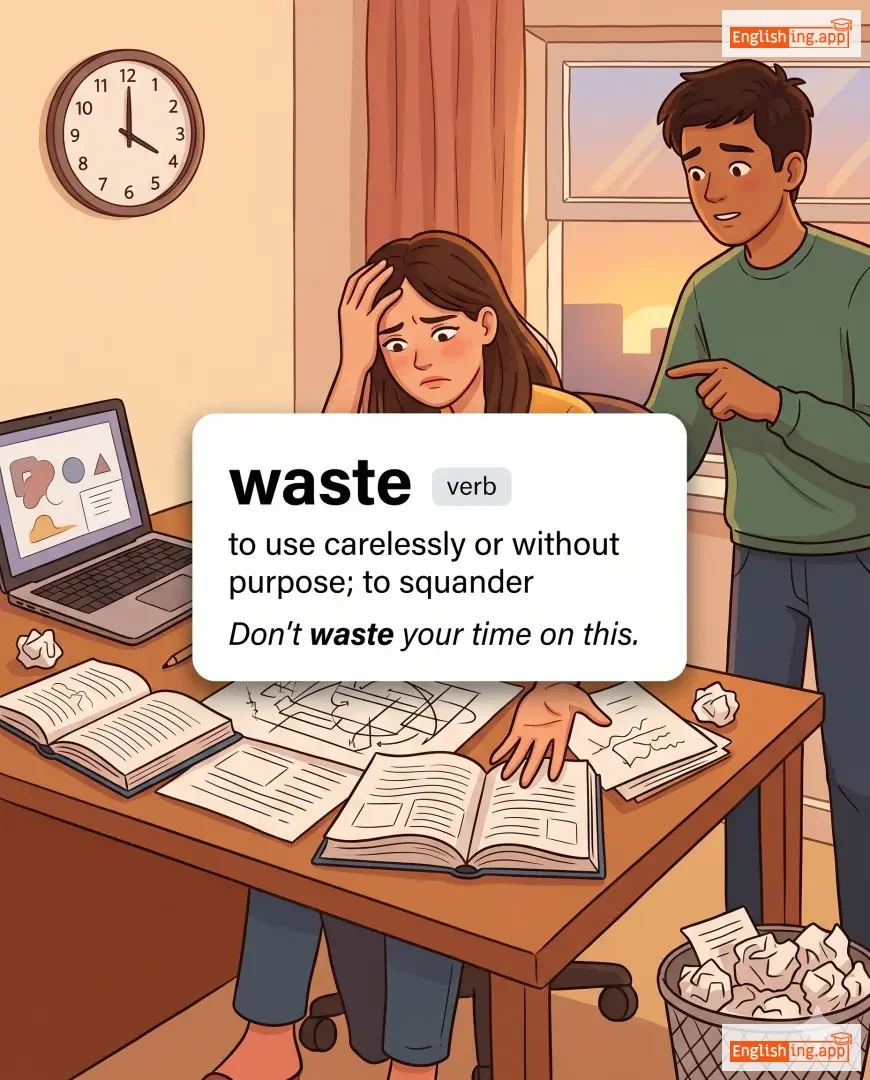
waste definition card — visual illustration of the meaning
noun
/weɪst/
浪费 (làng fèi)

something that is not useful and is thrown away

"Don't waste your time on unnecessary tasks."

"不要把时间浪费在无意义的事情上。" (Bù yào bǎ shíjiān làng fèi zài wú yìyì de shìqíng shàng.)
noun
/ˈweɪstrəl/
挥霍者, 无所事事的人 (wastrel)

A person who wastes time, money, or resources; an idler or spendthrift.

"The young man was dismissed as a wastrel by his family."

"这个年轻人被他的家人当作挥霍者解雇了。" (Zhège niánqīngrén bèi tā de jiārén dàngzuò huīhuò zhě jiěgùle.)
Watch definition card — visual illustration of the meaning
verb
/wɒtʃ/
(kàn)

to look at something for a period of time

"She watches the news every evening."

"她每天晚上看新闻。" (Tā měitiān wǎnshàng kàn xīnwén.)
noun
/ˈwɒtʃ.mən/
看守人 (kànshǒu rén)

a person employed to guard or watch over a building or area, especially at night

"The watchman patrols the factory every hour to ensure security."
"看守人每小时巡逻工厂,确保安全。" (Kànshǒu rén měi xiǎoshí xúnluó gōngchǎng, quèbǎo ānquán.)
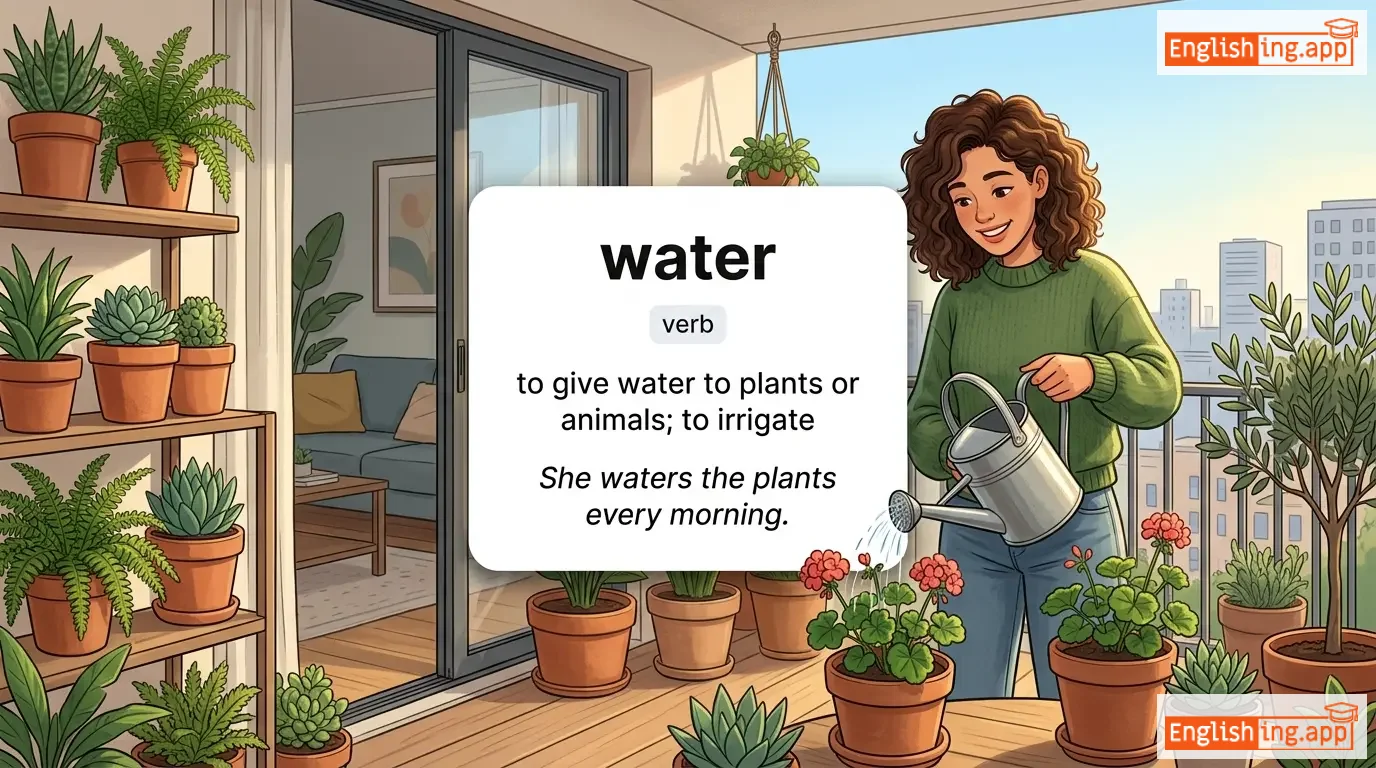
water definition card — visual illustration of the meaning
noun
/ˈwɔːtər/
(shui)

a clear, colorless, odorless, and tasteless liquid that is essential for life

"We need to drink water to stay hydrated."

"我们需要喝水以保持水分。" (Wǒmen xūyào hē shuǐ yǐ bǎochí shuǐfèn.)
noun
/ˈwɔː.tər ˈtʃes.nʌt/
水栗 (shuǐ lì)

aquatic plant with edible white crisp tubers

"Water chestnuts add a nice crunch to stir-fry dishes."

"水栗为炒菜增添了愉快的脆感。" (Shuǐ lì wèi chǎocài zēngtiānle yúkuài de cuì gǎn)
noun
/ˈwɔː.tər hen/
水鸡 (shuǐ jī)

a waterbird with dark plumage that lives near ponds and wetlands

"The water hen swam gracefully across the pond."

"水鸡优雅地穿过池塘游泳。" (Shuǐ jī yōuyǎ dì chuānguò chítáng yóuyǒng.)
noun
/ˈwɔː.tər pɒt/
水壶 (shuǐhú)

a container used for storing or carrying water

"The water pot in the kitchen was filled with fresh drinking water."

"厨房里的水壶装满了新鲜的饮用水。" (chúfáng lǐ de shuǐhú zhuāngmǎnle xīnxiān de yǐnòng shuǐ.)
noun
/ˈwɔtər ˈpjʊrəˌfaɪər/
水净化器 (shui jinghuaqi)

A device that removes contaminants and impurities from water to make it safe for drinking

"We installed a water purifier in our kitchen to ensure clean drinking water."

"我们在厨房里安装了水净化器,以确保清洁的饮用水。" (Wo men zai chu fang li an zhuang le shui jing hua qi, yi que bao qing jie de yin yong shui.)
noun
/ˈwɔː.tər ˈspɪn.ɪtʃ/
水菠菜 (shuǐ bōcài)

A semi-aquatic leafy vegetable with hollow stems, popular in Asian cuisine

"Water spinach grows well in wet soil."

"水菠菜在湿润的土壤中生长得很好。" (shuǐ bōcài zài shī rùn de tǔrǎng zhōng shēngzhǎng de hěn hǎo)
noun
/ˈwɔː.tər ˌlɪl.i/
睡莲 (shuilian)

a floating flower that grows on the surface of ponds and lakes

"The white water-lily floated gracefully on the pond."

"白色的睡莲优雅地漂浮在池塘上。" (baisede shuilian youya de piaofu zai chitang shang)
🏞️

Waterfall

noun
/ˈwɔːtərfɔːl/

a cascade of water falling from a height, formed when a river or stream flows over a precipice or steep incline

"The magnificent waterfall attracts thousands of tourists every year."

noun
/ˈwɔː.tər.mel.ən/
西瓜 (xigua)

a large round fruit with a hard green skin and sweet red flesh with black seeds

"I bought a fresh watermelon from the market for the summer picnic."

"我从市场买了一个新鲜的西瓜,准备去夏季野餐。" (Wǒ cóng shìchǎng mǎi le yīgè xīnxiān de xīguā, zhǔnbèi qù xiàjì yěcān.)
noun
/ˈwɔːtəʃɛd/
分水岭, 转折点 (watershed)

An event or period marking a turning point in a situation; also refers to a ridge dividing two drainage areas.

"The independence movement was a watershed in the nation's history."
"独立运动是国家历史中的一个分水岭。" (Dúlì yùndòng shì guójiā lìshǐ zhōng de yīgè fēnshuǐ lǐng.)
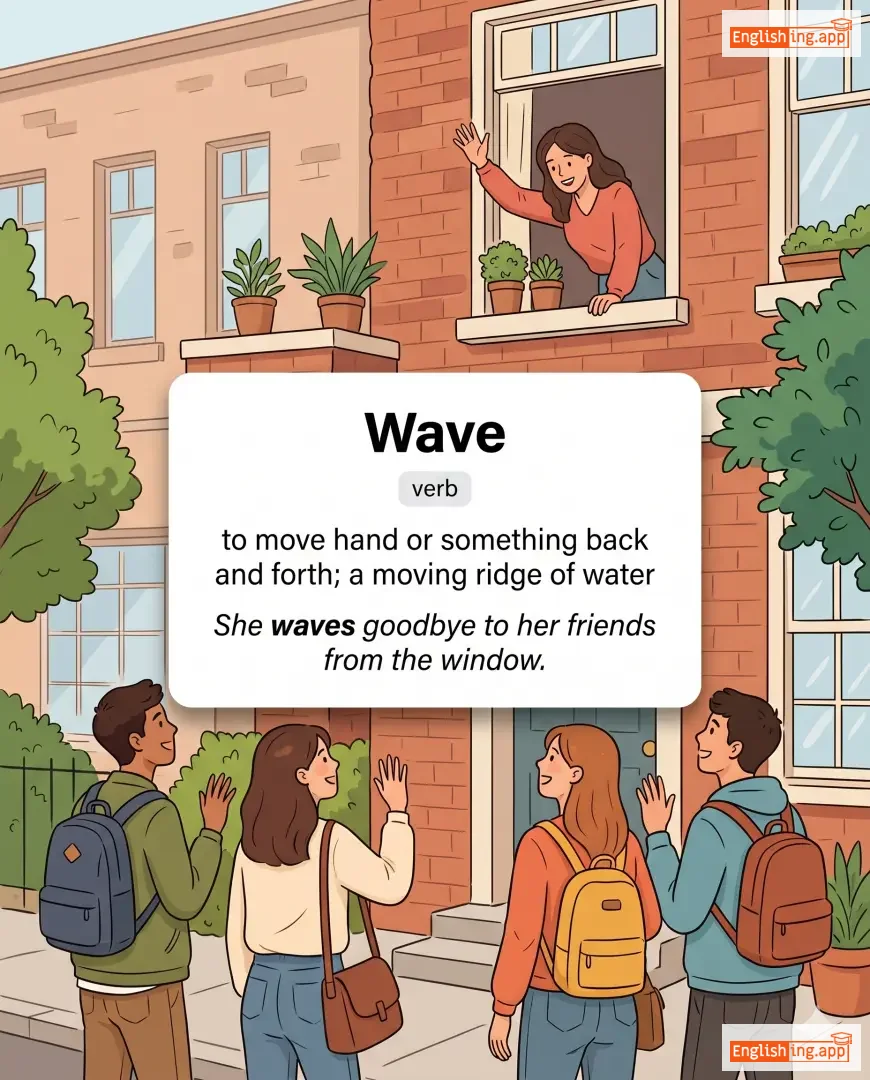
Wave definition card — visual illustration of the meaning
noun
/weɪv/
波浪 (bolang)

a long body of water curling into an arched form and breaking on the shore

"The waves crashed against the rocks during the storm."

"暴风雨中,波浪撞击岩石。" (Baofengyu zhong, bolang zhuangji yanshi.)
noun
/ˈweɪvlət/
小波 (xiao bo)

a small wave or ripple on the surface of water or another medium

"The pond was disturbed only by the tiny wavelets caused by the breeze."

"池塘只有微风引起的小波动才会扰动。" (Chítáng zhǐyǒu wēifēng yǐnqǐ de xiǎo bōdòng cái huì rǎodòng.)
verb
/ˈweɪvər/
动摇 (dongyao)

to become unsteady or indecisive; to hesitate or shake

"She began to waver in her decision to move abroad."

"她开始在是否搬到国外的问题上动摇。" (Ta kaishi zai shifou bandao guowai de wenti shang dongyao.)
🌕

Wax

verb
/wæks/

to increase gradually in size, number, strength, or intensity

"The moon will wax until it becomes full."

noun
/wæks ɡɔːrd/
蜡质葫芦 (làzhì húlu)

a large white or green gourd with waxy skin, commonly used in Asian cooking

"The wax gourd soup is very nutritious and helps with digestion."

"蜡质葫芦汤非常有营养,有助于消化。" (làzhì húlu tāng fēicháng yǒu yíngyǎng, yǒu zhù yú xiāohuà.)
noun
/wæks ˈkændəl/
蜡烛 (làzhú)

a cylinder of wax with a wick through it that burns to give light

"We lit a wax candle during the power outage."

"在停电期间我们点燃了一支蜡烛" (zài tíngdiàn qījiān wǒmen diǎn ránle yī zhī là zhú)
🛣️

Way (wēi)

noun
/weɪ/
道路 / 方法 (dàolù / fāngfǎ)

a path, direction, or method of doing something

"He found a new way to solve the problem."

"他找到了一个解决问题的新方法。" (Tā zhǎodào le yī gè jiějué wèntí de xīn fāngfǎ.)
verb
/ˌweɪˈleɪ/
突然拦住 / 攻击 (tudian lan zhu / gongji)

to stop or interrupt someone unexpectedly, often to attack or detain them

"He was waylaid by reporters as he left the courthouse."

"当他离开法院时,被记者拦住了。" (Dang ta likai fayuan shi, bei jizhe lan zhu le.)
adjective
/ˈweɪwərd/
叛逆的 (pànnì de)

Difficult to control or predict because of unusual or perverse behavior.

"The teacher struggled to manage the wayward students."

"老师很难管理那些叛逆的学生。" (Lǎoshī hěn nán guǎnlǐ nàxiē pànnì de xuéshēng.)
pronoun
/wi/
我们 (women)

used by a speaker to refer to himself or herself and one or more other people

"We are going to the park this afternoon."

"我们今天下午要去公园。" (Wǒmen jīntiān xiàwǔ yào qù gōngyuán.)
adjective
/wiːk/
虚弱 (xuruo)

lacking physical strength or energy

"She felt weak after the long run."

"她在长跑后感到虚弱。" (Ta zai changpao hou gandu xuruo.)
adjective
/ˈwiːk niːd/
胆小 (dan xiao)

Lacking determination or courage; easily frightened or yielding.

"The leader was criticized for being weak-kneed in the face of opposition."

"领导者因在面对反对时胆小而受到批评。" (Lingdaozhe yin zai miandui fandui shi danxiao er shoudao piping.)
Weaken definition card — visual illustration of the meaning
verb
/ˈwiːkən/
削弱 (xuēruò)

to make or become less strong or powerful

"The long illness weakened his body."

"长期的病痛削弱了他的身体。" (Chángqī de bìngtòng xuēruòle tā de shēntǐ.)
noun
/ˈwiːknəs/
弱点 (ruòdiǎn)

a state of being weak; a flaw or shortcoming in character or structure

"His main weakness is his lack of patience."

"他最大的弱点是缺乏耐心。" (Tā zuìdà de ruòdiǎn shì quēfá nàixīn.)
noun
/wiːl/
幸福 (xìngfú)

A raised mark on the skin left after a blow; or general well-being and prosperity.

"The charity worked for the common weal of the community."

"当她获得奖项时,她无法掩饰自己的幸福。" (Dāng tā huò dé jiǎngxiàng shí, tā wúfǎ yǎnshì zìjǐ de xìngfú.)
wealth definition card — visual illustration of the meaning
noun
/wɛlθ/
财富 (caifu)

an abundance of valuable possessions or money; prosperity

"The businessman built his wealth through hard work and smart investments."

"商人通过努力工作和聪明的投资积累了他的财富。" (Shāngrén tōngguò nǔlì gōngzuò hé cōngmíng de tóuzī jīlěi le tā de cáifù.)
adjective
/ˈwɛlθi/
富有 (fùyǒu)

having a great deal of money, resources, or assets

"He became wealthy after investing in real estate."

"他在房地产投资后变得富有。" (Tā zài fángdìchǎn tóuzī hòu biàn dé fùyǒu.)
👶

wean

verb
/wiːn/

To gradually stop a child or animal from breastfeeding; to detach from a habit.

"Parents often wean their babies around six months old."

noun
/ˈwɛpən/
武器 (wǔqì)

a thing designed or used for inflicting harm or damage

"He carried a weapon for self-defense."
"他携带武器用于自卫。" (Tā xiédài wǔqì yòng yú zìwèi.)
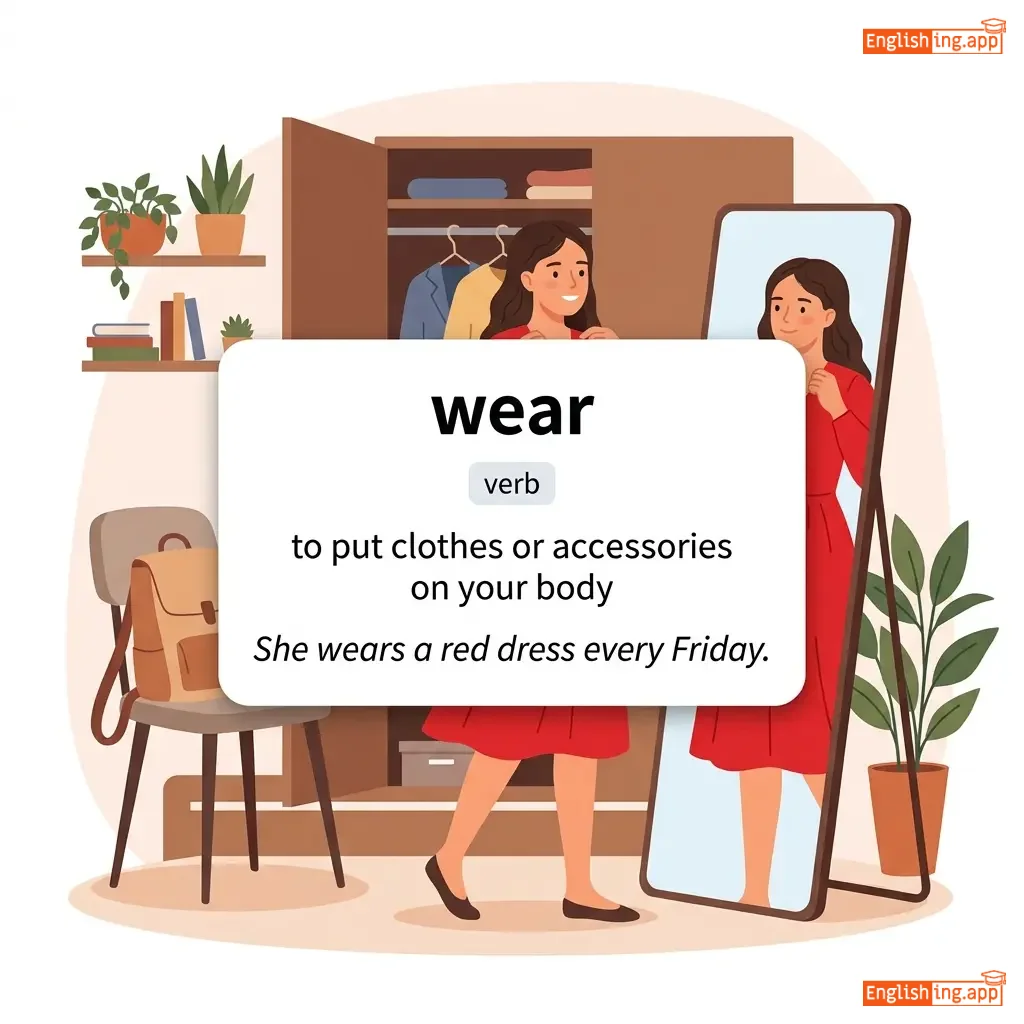
wear definition card — visual illustration of the meaning
verb
/wɛə(r)/
穿 (chuān)

to put clothes or accessories on your body

"She wears a red dress every Friday."
"她每个星期五都穿一条红色裙子。" (Tā měi gè xīngqīwǔ dōu chuān yītiáo hóngsè qúnzi.)
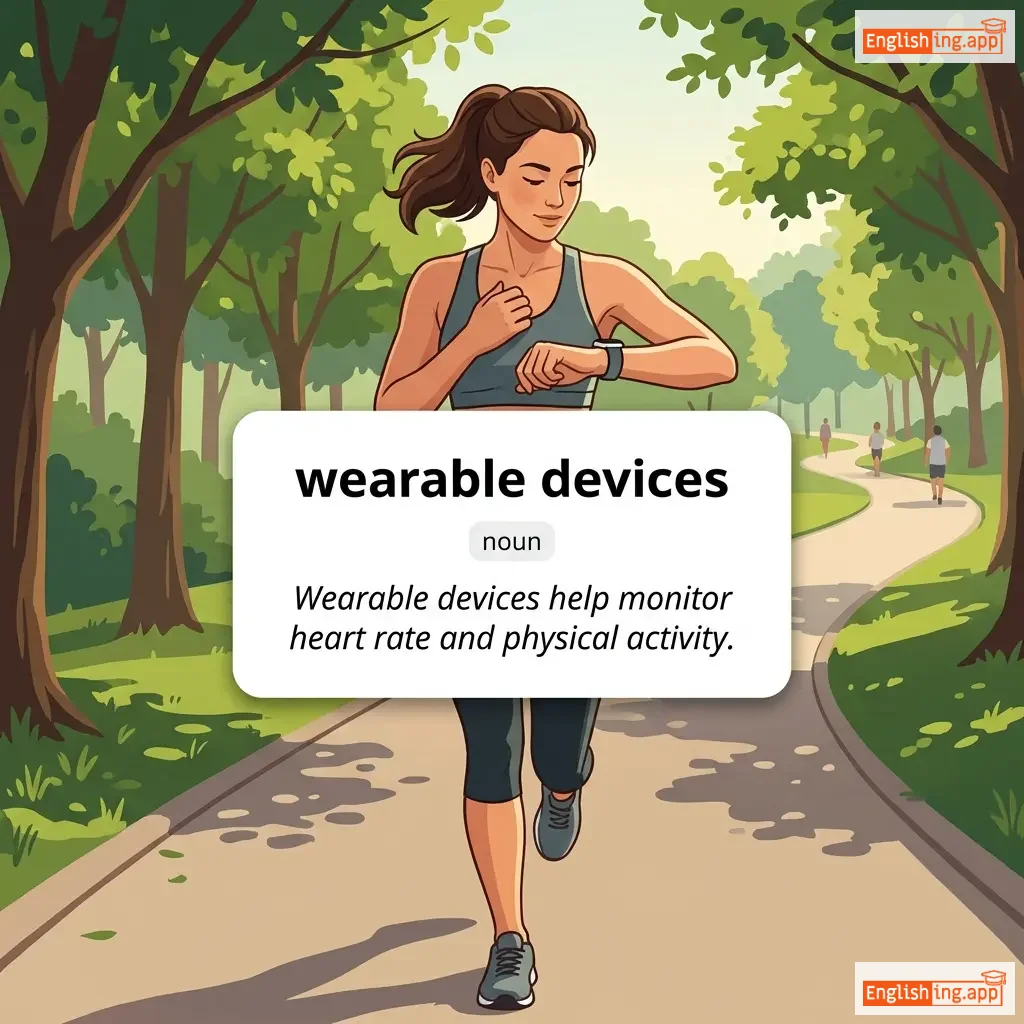
wearable devices definition card — visual illustration of the meaning
noun
ˈweə.rə.bəl dɪˈvaɪ.sɪz
可穿戴设备 (kě chuāndài shèbèi)

Electronic devices that can be worn on the body, typically incorporating smart technology for monitoring health or providing information.

"Wearable devices help monitor heart rate and physical activity."

"可穿戴设备帮助监测心率和身体活动。" (Kě chuāndài shèbèi bāngzhù jiāncè xīnlǜ hé shēntǐ huódòng.)
adjective
/ˈwɪərɪsəm/
令人疲倦的 (lìng rén píjuàn de)

Causing one to feel tired or bored.

"The long and wearisome lecture put the students to sleep."

"漫长且令人疲倦的讲座让学生们睡着了。" (Màncháng qiě lìng rén píjuàn de jiǎngzuò ràng xuéshēngmen shuìzhe le.)