词汇表

英语词汇词典 | 单词含义、定义和示例

noun
/ˈvaɪnəri/
葡萄园 (putao yuan)

A place where vines are cultivated, especially a vineyard or greenhouse for vines.

"The old vinery was filled with grapevines."

"旧的葡萄园里满是葡萄藤。" (Jiù de pútáo yuán lǐ mǎn shì pútáo téng.)
noun/adjective
/ˈvɪntɪdʒ/
复古 / 经典 (fu gu / jing dian)

Relating to high quality from the past; classic; also the year of a wine harvest.

"She wore a vintage dress from the 1950s."

"她穿着一件1950年代的复古裙子。" (Ta chuanzhuo yi jian 1950 niandai de fugu qunzi.)
👨‍🌾🍷

vintner (vintner)

noun
/ˈvɪntnər/
酿酒师 / 酒商 (niàngjiǔ shī / jiǔ shāng)

A person who makes or sells wine.

"The vintner explained the process of making red wine."

"酿酒师解释了酿制红葡萄酒的过程。" (Niàngjiǔ shī jiěshìle niàngzhì hóng pútáojiǔ de guòchéng.)
noun
/ˈvaɪəl/
一种古老的弦乐器 (yī zhǒng gǔlǎo de xián yuèqì)

A stringed musical instrument of the Renaissance and Baroque periods, played with a bow and similar to but distinct from the violin family.

"The musician played an old viol in the chamber music concert."

"音乐家在室内音乐会中演奏了一把古老的维奥尔。" (Yīnyuèjiā zài shìnèi yīnyuè huì zhōng yǎnzòule yī bǎ gǔlǎo de wéi ào ěr.)
noun
/viˈoʊlə/ or /ˈvaɪələ/
维奥拉 (wei ao la)

A stringed instrument slightly larger than a violin, with a deeper and mellower tone.

"She chose to play the viola in the school orchestra."
"她选择在学校管弦乐队中演奏维奥拉。" (Ta xuanze zai xuexiao guanxian yuedui zhong yanzou wei aola.)
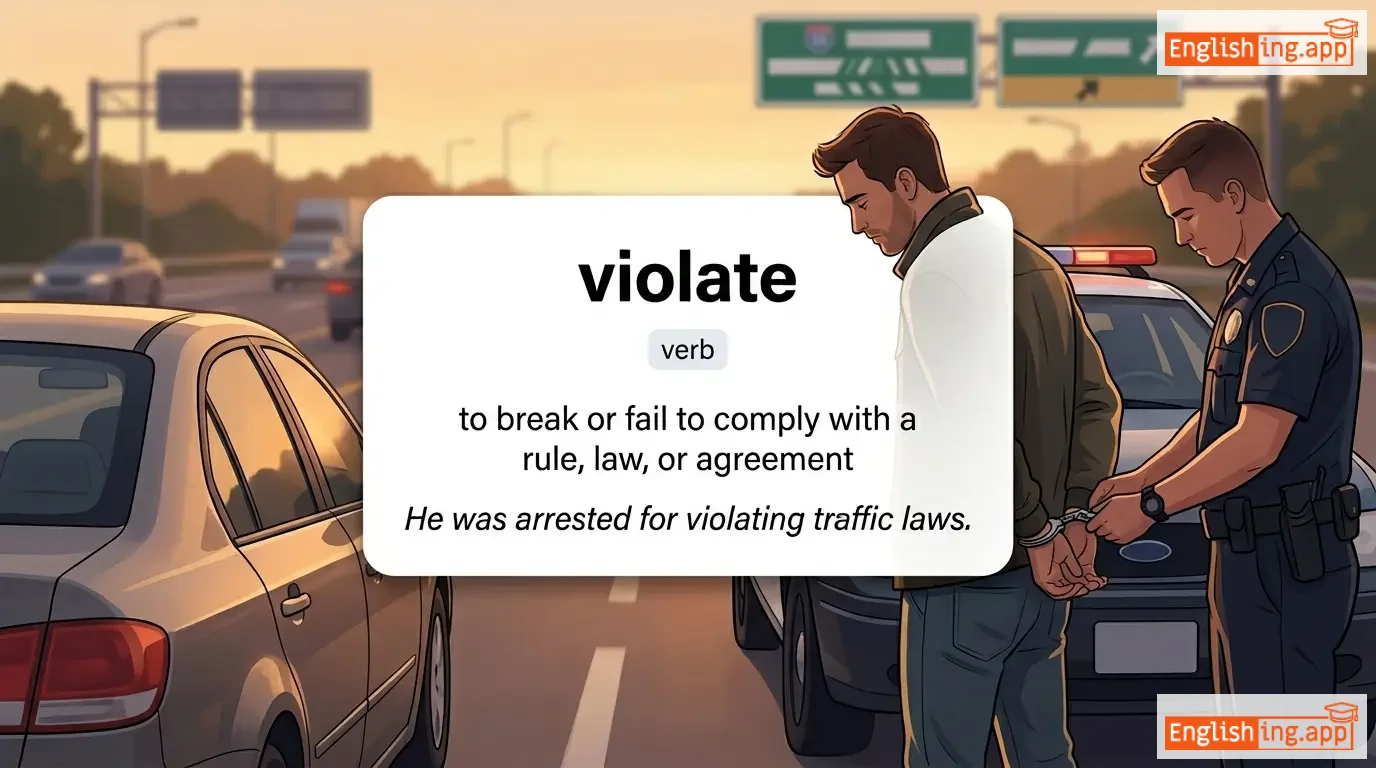
violate definition card — visual illustration of the meaning
verb
/ˈvaɪ.ə.leɪt/
违反 (wéifǎn)

to break or fail to comply with a rule, law, or agreement

"He was arrested for violating traffic laws."

"他因违反交通法规被逮捕。" (Tā yīnwèi wéifǎ bōfǎo jiāotōng fǎlǜ ér bèi dǔlì.)
noun
/ˌvaɪəˈleɪʃən/
违反 (wéifǎn)

The act of breaking or disregarding a law, rule, or agreement.

"Driving without a license is a violation of the law."

"没有驾照开车是违反法律的行为。" (méiyǒu jiàzhào kāichē shì wéifǎn fǎlǜ de xíngwéi.)
noun
/ˈvaɪəˌleɪtər/
违规者 (wéiguī zhě)

A person who breaks or disregards a law, rule, or agreement.

"The police caught the traffic violator at the intersection."

"警察在交叉口抓住了交通违规者。" (Jǐngchá zài jiāochā kǒu zhuāzhùle jiāotōng wéiguī zhě.)
noun
/ˈvaɪ.ə.ləns/
暴力 (baoli)

behavior involving physical force intended to hurt or damage

"The protest turned into an act of violence."

"抗议活动变成了一种暴力行为。" (Kàngyì huódòng biàn chéngle yī zhǒng bàolì xíngwéi.)
adjective
/ˈvaɪ.ə.lənt/
暴力的 (baolide)

using or involving physical force intended to hurt or damage

"He became violent after hearing the bad news."

"听到坏消息后,他变得暴力了。" (Tingdao huai xiaoxi hou, ta biande baolile.)
adjective
/ˈvaɪə.lət/
紫色 (zǐsè)

a bluish-purple color

"She wore a beautiful violet dress to the party."

"她穿着一件美丽的紫色裙子参加聚会。" (Tā chuānzhuó yī jiàn měilì de zǐsè qúnzi cānjiā jùhuì.)
noun
/vaɪəˈlɪn/
小提琴 (xiaotiqin)

a musical instrument with four strings that is played with a bow

"She plays the violin beautifully in the orchestra."

"她在乐队中优美地演奏小提琴。" (Tā zài yuèduì zhōng yōuměi de yǎnzòu xiǎo tíqín.)
noun
/ˌviːələnsɛloʊ/
大提琴 (dà tíqín)

The full name of the cello, a large string instrument played with a bow and held between the knees.

"He practiced the violoncello for hours each day."

"他每天练习大提琴好几个小时。" (Tā měitiān liànxí dà tíqín hǎo jǐ gè xiǎoshí.)
noun
/ˈvaɪpər/
毒蛇 (dú shé)

a type of poisonous snake; metaphorically, a spiteful or treacherous person

"The viper lay hidden in the tall grass."

"毒蛇隐藏在高草中。" (Dú shé yǐncáng zài gāo cǎo zhōng.)
noun
/vəˈrɑːɡoʊ/
强势或严厉的女性 (qiángshì huò yánlì de nǚxìng)

a loud, overbearing woman; historically, a strong or courageous woman

"The play depicted the heroine as a fierce virago who defied tradition."

"这部剧描绘了女主角作为一位勇敢的维拉戈,挑战传统。" (Zhè bù jù miáohuìle nǚ zhǔjiǎo zuòwéi yī wèi yǒnggǎn de wéilàgē, tiǎozhàn chuántǒng.)
adjective
/ˈvɪrəl/
男性化 (nánxìng huà)

having traditionally masculine qualities, such as strength, energy, and sexual vigor

"The actor was admired for his virile appearance."

"演员因其男性化的外貌而受到赞赏。" (Yǎnyuán yīn qí nánxìng huà de wàimào ér shòudào zànshǎng.)
noun
/vɜːrˈtuː/
对艺术的爱好 (duì yìshù de àihào)

a love of or taste for fine art, antiques, or curiosities

"The collector’s house was filled with objects of virtu."

"收藏家的房子里充满了虚拟的物品。" (Shōucáng jiā de fángzi lǐ chōngmǎnle xūnǐ de wùpǐn.)
adjective
/ˈvɜːrtʃuəl/
虚拟 / 模拟 (xūnǐ / mó nǐ)

existing or simulated on a computer or online rather than physically; almost but not exactly the same as

"The company held a virtual meeting with employees worldwide."

"公司与全球员工举行了虚拟会议。" (Gōngsī yǔ quánqiú yuángōng jǔxíngle xūnǐ huìyì.)
virtual classrooms definition card — visual illustration of the meaning
noun
ˈvɜː.tʃu.əl ˈklɑːs.ruːmz
虚拟教室 (xūnǐ jiàoshì)

An online learning environment where teachers and students interact via digital platforms.

"Virtual classrooms enable remote learning for students worldwide."

"虚拟教室为全球学生提供远程学习的机会。" (Xūnǐ jiàoshì wèi quánqiú xuéshēng tígōng yuǎnchéng xuéxí de jīhuì.)
virtual reality definition card — visual illustration of the meaning
noun
/ˈvɜː.tʃu.əl riˈæl.ɪ.ti/
虚拟现实 (xūnǐ xiànshí)

Computer technology that creates an artificial three-dimensional environment where users can feel like they are in a real environment.

"Virtual reality (VR) is widely used in gaming and training simulations."

"虚拟现实(VR)在游戏和训练模拟中被广泛使用。" (Xūnǐ xiànshí (VR) zài yóuxì hé xùnliàn móniàn zhōng bèi guǎngfàn shǐyòng.)
adverb
/ˈvɜː.tʃu.ə.li/
几乎, 虚拟 (jī hū, xū nǐ)

almost or nearly, but not completely; by means of computer technology

"The meeting was held virtually due to travel restrictions."

"由于旅行限制,会议是虚拟举行的。" (Yóu yú lǚ xíng xiàn zhì, huì yì shì xū nǐ jǔ xíng de.)
noun
/ˈvɜːrtʃuː/
美德 (meidé)

High moral standards or a good quality considered morally good.

"Patience is considered a great virtue."
"耐心被认为是一种伟大的美德。" (Nàixīn bèi rènwéi shì yī zhǒng wěidà de měidé.)
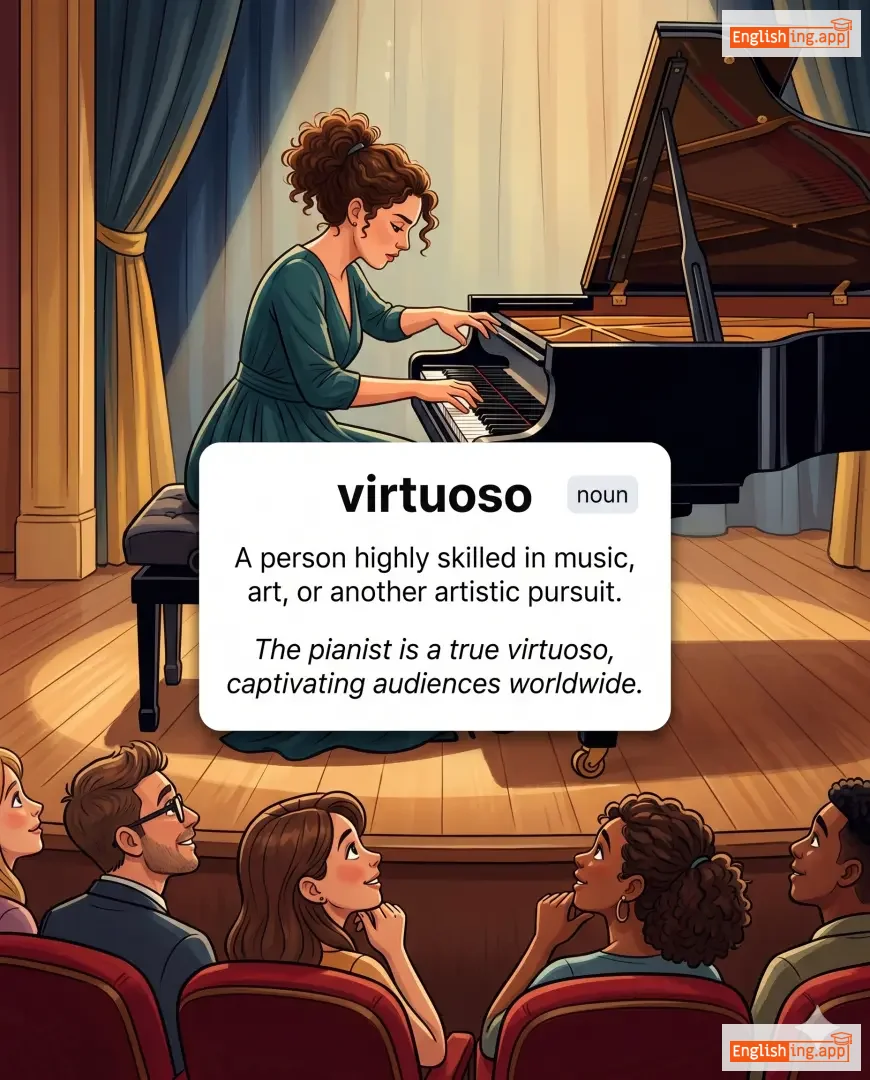
virtuoso definition card — visual illustration of the meaning
noun
/ˌvɜːrtʃuˈoʊsoʊ/
艺术大师 (yì shù dà shī)

A person highly skilled in music, art, or another artistic pursuit.

"The pianist is a true virtuoso, captivating audiences worldwide."

"这位钢琴家是真正的艺术大师,吸引着全球的观众。" (Zhè wèi gāngqín jiā shì zhēnzhèng de yìshù dà shī, xīyǐn zhe quánqiú de guānzhòng.)
adjective
/ˈvɜːrtʃuəs/
有德行的 (yǒu déxíng de)

Having or showing high moral standards.

"She is known as a virtuous woman who helps the poor."

"她是一个以帮助穷人而著名的有德行的女人。" (Tā shì yīgè yǐ bāngzhù qióngrén ér zhùmíng de yǒu déxíng de nǚrén.)
noun
/ˈvɪrjʊləns/
毒性 (dúxìng)

The severity or harmfulness of a disease or poison.

"Scientists studied the virulence of the new virus strain."

"科学家研究了新病毒株的毒性。" (Kēxuéjiā yánjiūle xīn bìngdú zhū de dúxìng.)
adjective
/ˈvɪrjʊlənt/
极其有害 (jí qí yǒu hài)

Extremely severe or harmful in its effects.

"The virulent disease spread rapidly across the region."

"这种病毒性疾病迅速在该地区传播。" (Zhè zhǒng bìngdúxìng jíbìng xùnsù zài gāi dìqū chuánbò.)
noun
/ˈvaɪrəs/
病毒 (bingdu)

A tiny infectious agent that can replicate only inside the living cells of an organism.

"The computer was infected with a dangerous virus."
"计算机感染了一个危险的病毒。" (Jìsuànjī gǎnrǎnle yīgè wēixiǎn de bìngdú.)
noun
/ˈviːzə/
签证 (qiānzhèng)

an official authorization or permission to enter, leave, or stay in a country

"She applied for a visa to study abroad."

"她申请了签证以便出国留学。" (Tā shēnqǐngle qiānzhèng yǐbiàn chūguó liúxué.)
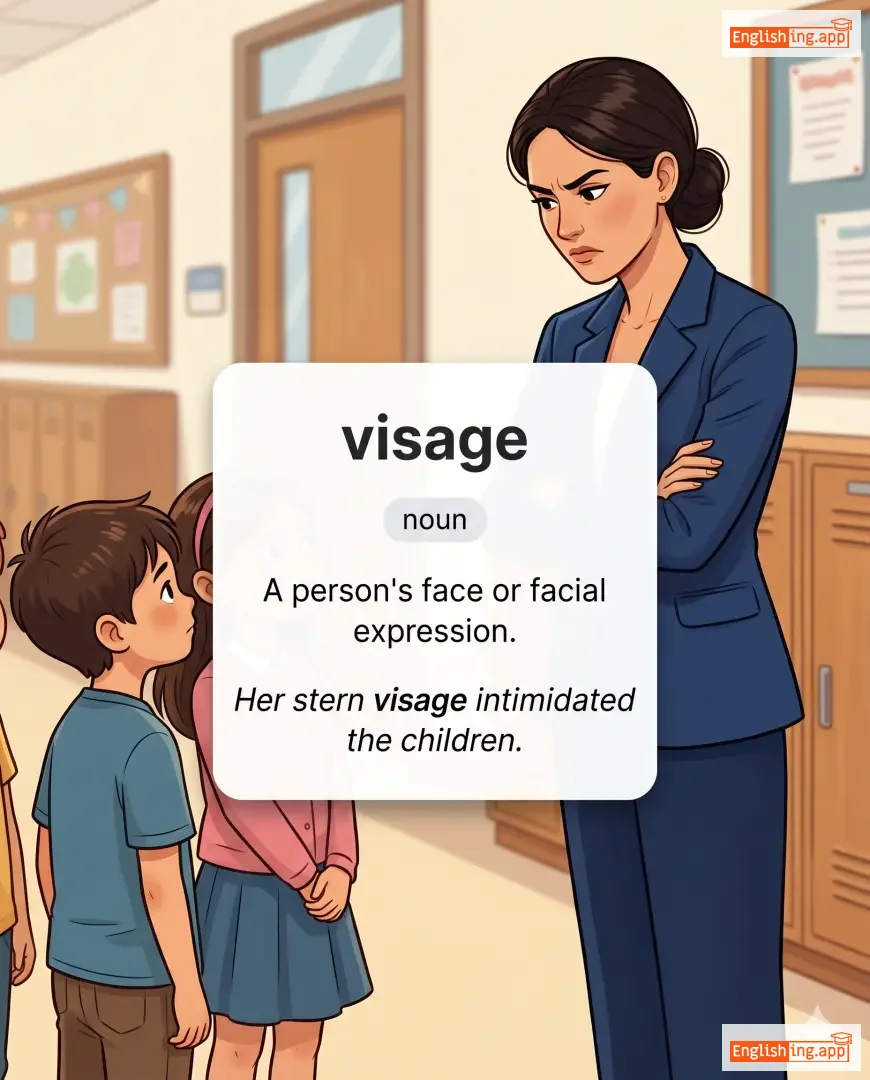
visage definition card — visual illustration of the meaning
noun
/ˈvɪzɪdʒ/
幸福 (xìngfú)

A person's face or facial expression.

"Her stern visage intimidated the children."

"她获得奖项时,无法掩饰她的幸福。" (Tā huòdé jiǎngxiàng shí, wúfǎ yǎnshì tā de xìngfú.)
adjective
/ˈvɪsɪd/
粘稠 (zhānchóu)

Having a thick, sticky consistency.

"The sap had a viscid texture that stuck to his hands."

"树汁有一种粘稠的质地,粘在他的手上。" (Shù zhī yǒu yī zhǒng zhānchóu de zhìdì, zhān zài tā de shǒu shàng.)
noun
/ˈvaɪkaʊnt/
副伯爵 (fù bó jué)

A British nobleman ranking below an earl and above a baron.

"The viscount inherited the estate from his father."

"副伯爵从父亲那里继承了庄园。" (Fù bó jué cóng fùqīn nàlǐ jìchéngle zhuāngyuán.)
viscous definition card — visual illustration of the meaning
adjective
/ˈvɪskəs/
粘性 (niánxìng)

Having a thick, sticky consistency between solid and liquid.

"Honey is a viscous liquid that flows slowly."
"蜂蜜是一种粘性液体,流动缓慢。" (Fēngmì shì yī zhǒng niánxìng yètǐ, liúdòng huǎnmàn.)
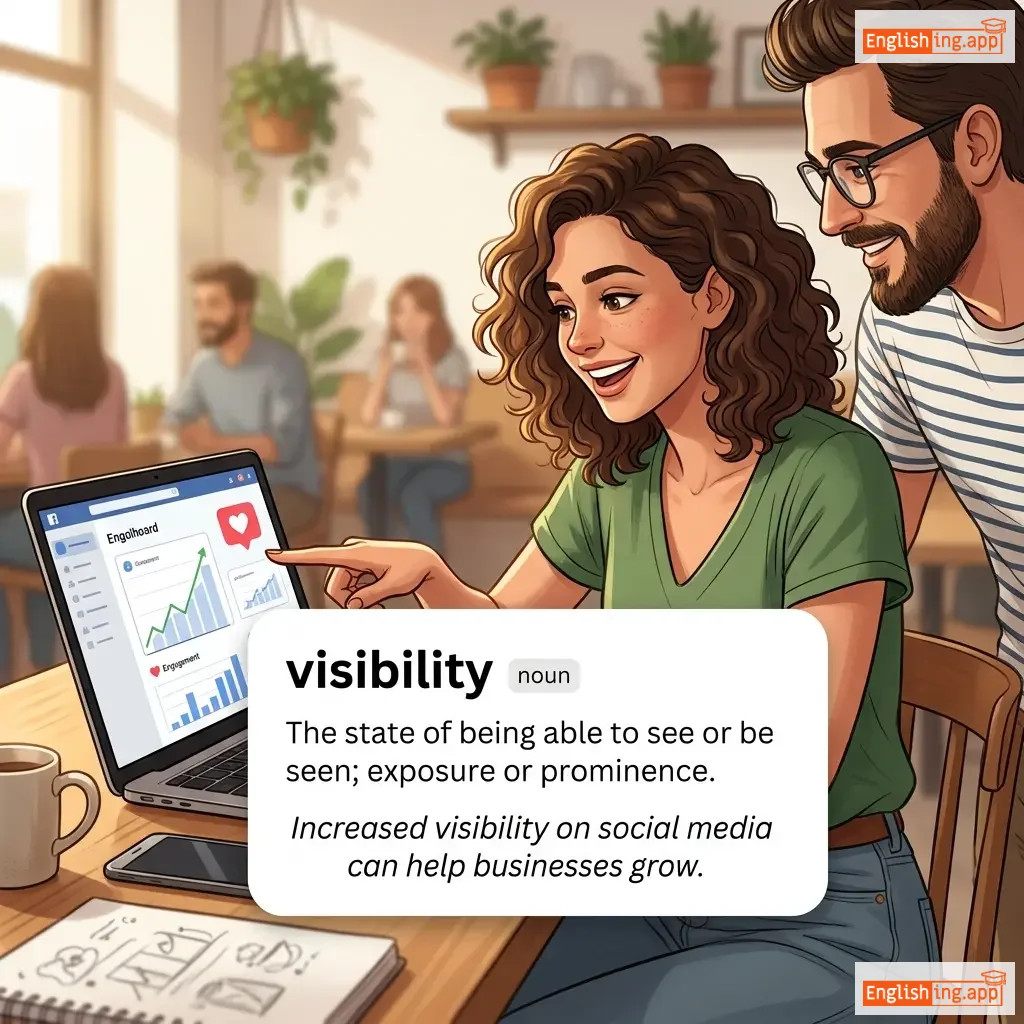
visibility definition card — visual illustration of the meaning
noun
/ˌvɪz.ɪˈbɪlɪti/
可见性 (kejianxing)

The state of being able to see or be seen; exposure or prominence.

"Increased visibility on social media can help businesses grow."

"在社交媒体上的可见性增加可以帮助企业成长。" (Zai shejiao meiti shang de kejianxing zengjia keyi bangzhu qiye chengzhang.)
adjective
/ˈvɪzəbl/
可见的 (kejian de)

able to be seen; perceptible by the eye

"The stars were clearly visible in the night sky."

"星星在夜空中清晰可见。" (Xīngxīng zài yèkōng zhōng qīngxī kějiàn.)
vision definition card — visual illustration of the meaning
noun
/ˈvɪʒən/
幸福 (xingfu)

the ability to see or a mental image of something

"She had a clear vision of her future."

"当她收到奖项时,她无法掩饰她的幸福。" (Dang ta shoudao jiangxiang shi, ta wu fa yanshi ta de xingfu.)
adjective
/ˈvɪʒəneri/
有远见的人 (yǒu yuǎn jiàn de rén)

Thinking about or planning the future with imagination and wisdom.

"She is considered a visionary leader in technology."

"她被认为是技术领域的远见领导者。" (Tā bèi rènwéi shì jìshù lǐngyù de yuǎn jiàn lǐngdǎo zhě.)
visit definition card — visual illustration of the meaning
verb
/ˈvɪzɪt/
访问 (fǎngwèn)

to go to see someone or something for a short time

"They plan to visit their grandparents next week."

"他们计划下周去看望他们的祖父母。" (Tāmen jìhuà xià zhōu qù kànwàng tāmen de zǔfùmǔ.)
visiting definition card — visual illustration of the meaning
verb
/ˈvɪzɪtɪŋ/
拜访 (baifang)

Going to see and spend time with someone or at a place.

"The group is visiting islands during the expedition."

"小组在远征期间访问岛屿。" (Xiaozu zai yuanzheng qijian fangwen daoyu.)
noun
/ˈvɪzɪtər/
游客 (youke)

a person who goes to see a place or someone for a short time

"The museum had many visitors last weekend."

"博物馆上周末有很多游客。" (Bówùguǎn shàng zhōumò yǒu hěn duō yóukè.)
noun
/ˈvɪstə/
景观 (jingguan)

A pleasing view, especially one seen through a long, narrow opening.

"From the mountain top, we admired the breathtaking vista of the valley below."

"从山顶,我们欣赏到山谷下方令人叹为观止的景观。" (Cóng shāndǐng, wǒmen xīnshǎng dào shāngǔ xiàfāng lìng rén tànwèi guānzhǐ de jǐngguān.)
adjective
/ˈvɪʒuəl/
视觉的 (shìjué de)

Relating to seeing or sight.

"The movie was praised for its stunning visual effects."

"这部电影因其惊人的视觉效果而受到称赞。" (Zhè bù diànyǐng yīn qí jīngrén de shìjué xiàoguǒ ér shòudào chēngzàn.)
verb
/ˈvɪʒuəlaɪz/
想象 (xiǎngxiàng)

To form a mental image of something; to imagine.

"She tried to visualize her success before the big presentation."

"她在大演讲前尝试去想象自己的成功。" (Tā zài dà yǎnjiǎng qián chángshì qù xiǎngxiàng zìjǐ de chénggōng.)
visuospatial definition card — visual illustration of the meaning
adjective
ˌvɪz.ju.oʊˈspeɪ.ʃəl
与通过视觉理解空间和物体之间的关系有关 (yu tongguo shijue liangan kongjian he wutai zhijian de guanxi youguan)

Related to understanding the relationship between space and objects through vision.

"Good visuospatial skills are important for architecture and design."

"良好的视觉空间技能对建筑和设计非常重要。" (Lianghao de shijue kongjian jineng dui jianzhu he sheji feichang zhongyao.)
adjective
/ˈvaɪtl/
至关重要 (zhìguān zhòngyào)

essential or necessary for life or success

"It's vital to stay hydrated during the summer."
"在夏天保持水分非常重要。" (Zài xiàtiān bǎochí shuǐfèn fēicháng zhòngyào.)
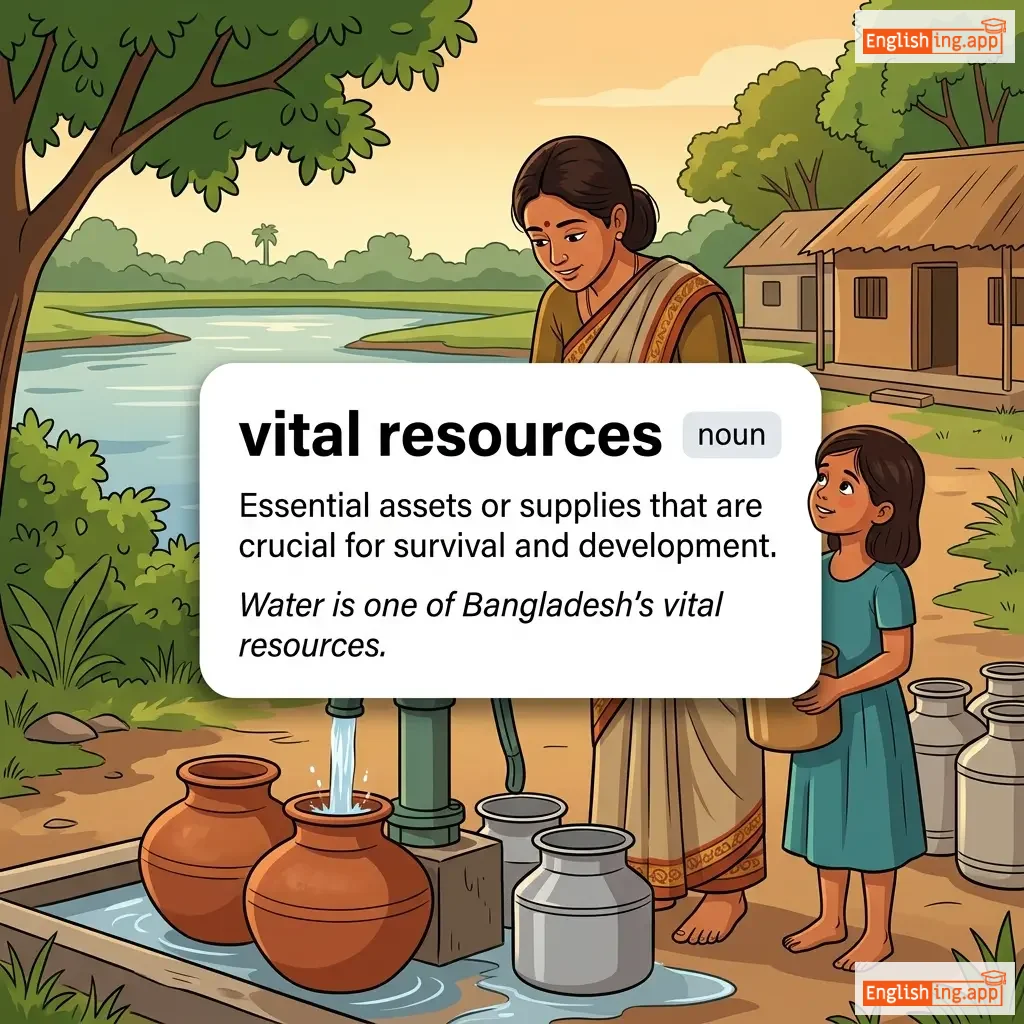
vital resources definition card — visual illustration of the meaning
noun
ˈvaɪtəl rɪˈsɔːrsɪz
重要资源 (zhòngyào zīyuán)

Essential assets or supplies that are crucial for survival and development.

"Water is one of Bangladesh's vital resources."
"水是孟加拉国的重要资源之一。" (Shuǐ shì Mèngjiālāguó de zhòngyào zīyuán zhī yī.)
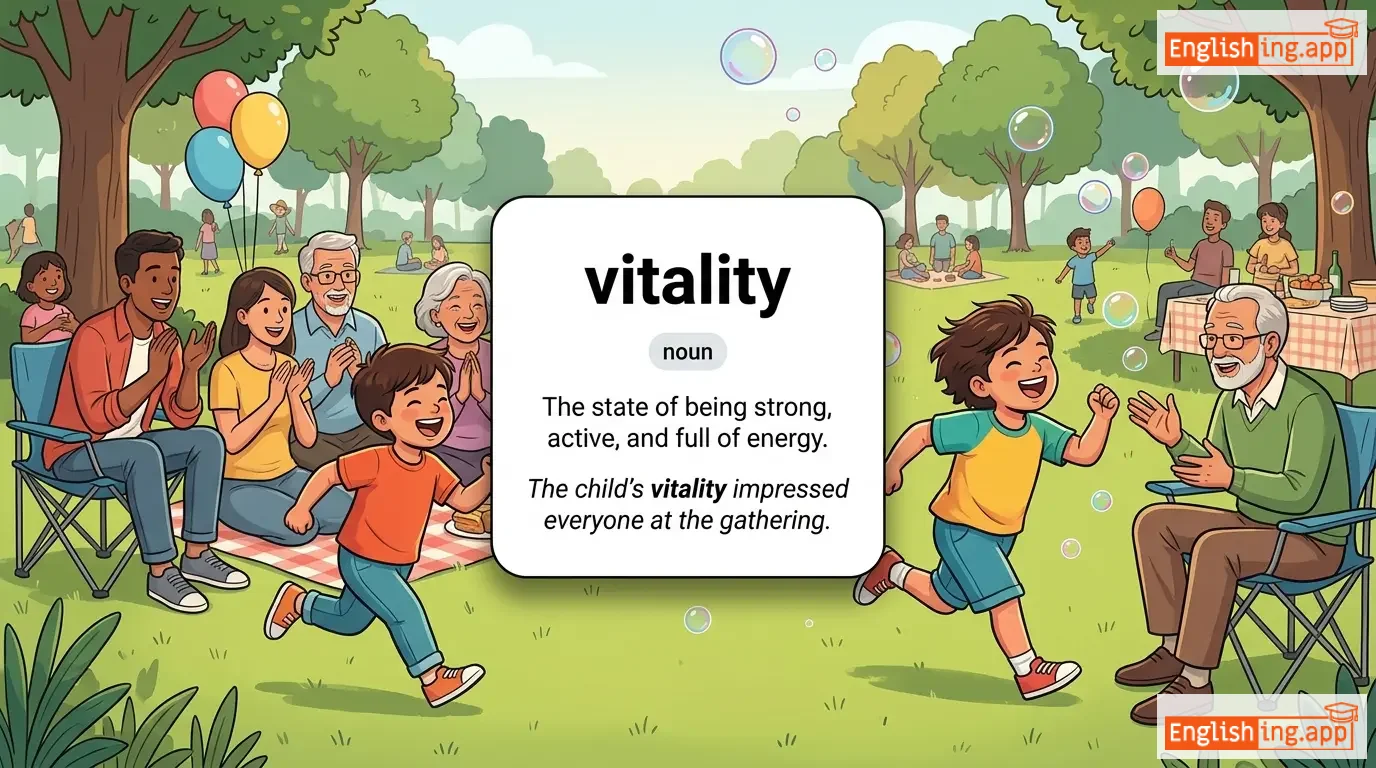
vitality definition card — visual illustration of the meaning
noun
/vaɪˈtæləti/
生命力 (shengmingli)

The state of being strong, active, and full of energy.

"The child’s vitality impressed everyone at the gathering."

"孩子的生命力给聚会上的每个人留下了深刻印象。" (Háizi de shēngmìnglì gěi jùhuì shàng de měi gè rén liúxiàle shēnkè yìnxiàng.)
verb
/ˈvaɪtəlaɪz/
赋予生命 (fùyǔ shēngmìng)

To give life, energy, or strength to something.

"Fresh air and exercise can vitalize the body and mind."

"新鲜的空气和运动可以使身体和心灵充满活力。" (Xīnxiān de kōngqì hé yùndòng kěyǐ shǐ shēntǐ hé xīnlíng chōngmǎn huólì.)
adverb
/ˈvaɪtəli/
至关重要地 (zhi guan zhong yao de)

in an extremely important or essential way; in a manner relating to life or vitality

"Access to clean water is vitally important for public health."

"获得清洁的水对公共健康至关重要。" (Huo de qing jie de shui dui gong gong jian kang zhi guan zhong yao)
noun
/ˈvaɪtəmɪn/
维他命 (weitaming)

a natural substance needed by the body to stay healthy

"Fruits and vegetables are rich sources of vitamins."

"水果和蔬菜是维他命的丰富来源。" (shuǐguǒ hé shūcài shì wéitāmìng de fēngfù láiyuán.)
vitiate definition card — visual illustration of the meaning
verb
/ˈvɪʃieɪt/
败坏 (bàihuài)

to spoil, weaken, or make something less effective

"One careless remark can vitiate the entire argument."

"一句不小心的话可能会破坏整个论点。" (Yī jù bù xiǎoxīn de huà kěnéng huì pòhuài zhěnggè lùndiǎn.)