词汇表

英语词汇词典 | 单词含义、定义和示例

noun
/vɜːrv/
活力 (huólì)

Great enthusiasm, spirit, or energy in expression or performance.

"The actor performed his role with remarkable verve."

"这位演员以惊人的活力表演了他的角色。" (Zhè wèi yǎnyuán yǐ jīngrén de huólì biǎoyǎn le tā de juésè.)
adverb
/ˈvɛri/
非常 (feichang)

used to emphasize an adjective or adverb

"She is very happy with her results."

"她对她的成绩感到非常高兴。" (Tā duì tā de chéngjī gǎndào fēicháng gāoxìng.)
vessel definition card — visual illustration of the meaning
noun
/ˈvɛsəl/
船只 / 容器 (chuánzhī / róngqì)

A ship or large boat; also a container for holding liquids or a tube in the body that carries blood.

"The fishing vessel returned safely to the harbor."

"渔船安全地返回港口。" (Yú chuán ānquán de fǎnhuí gǎngkǒu.)
noun
/ˈvɛstɪdʒ/
遗迹 (yíjì)

A small remaining part of something that once existed.

"Only a vestige of the ancient wall remains today."

"今天只剩下古老墙壁的遗迹。" (Jīntiān zhǐ shèng xià gǔlǎo qiángbì de yíjì.)
adjective
/vɛˈstɪdʒiəl/
遗迹的 (yíjì de)

Relating to a small, undeveloped remnant of something that was once much larger or more functional.

"Humans have a vestigial tailbone that no longer serves its original purpose."

"人类有一个遗迹的尾骨,它不再执行其原始功能。" (Rénlèi yǒu yīgè yíjì de wěigǔ, tā bù zài zhíxíng qí yuánshǐ gōngnéng.)
noun
/ˈvɛstmənt/
宗教服饰 (zōngjiào fúshì)

a garment, especially a ceremonial or official robe worn during religious services

"The priest wore a golden vestment during the ceremony."

"神父在仪式中穿着金色的圣袍。" (Shénfù zài yíshì zhōng chuānzhuó jīnsè de shèngpáo.)
noun
/ˈvɛtərən/
有经验的人 / 退役军人 (yǒu jīngyàn de rén / tuìyì jūnrén)

a person who has long experience in a particular field or an ex-member of the armed forces

"He is a veteran of the software industry."

"他是软件行业的老兵。" (Tā shì ruǎnjiàn hángyè de lǎobīng)
verb
/ˈviːtoʊ/
否决 (fǒujué)

to reject or forbid a decision, proposal, or law

"The president decided to veto the new bill."

"总统决定否决这项新法案。" (Zǒngtǒng juédìng fǒujué zhè xiàng xīn fǎ'àn.)
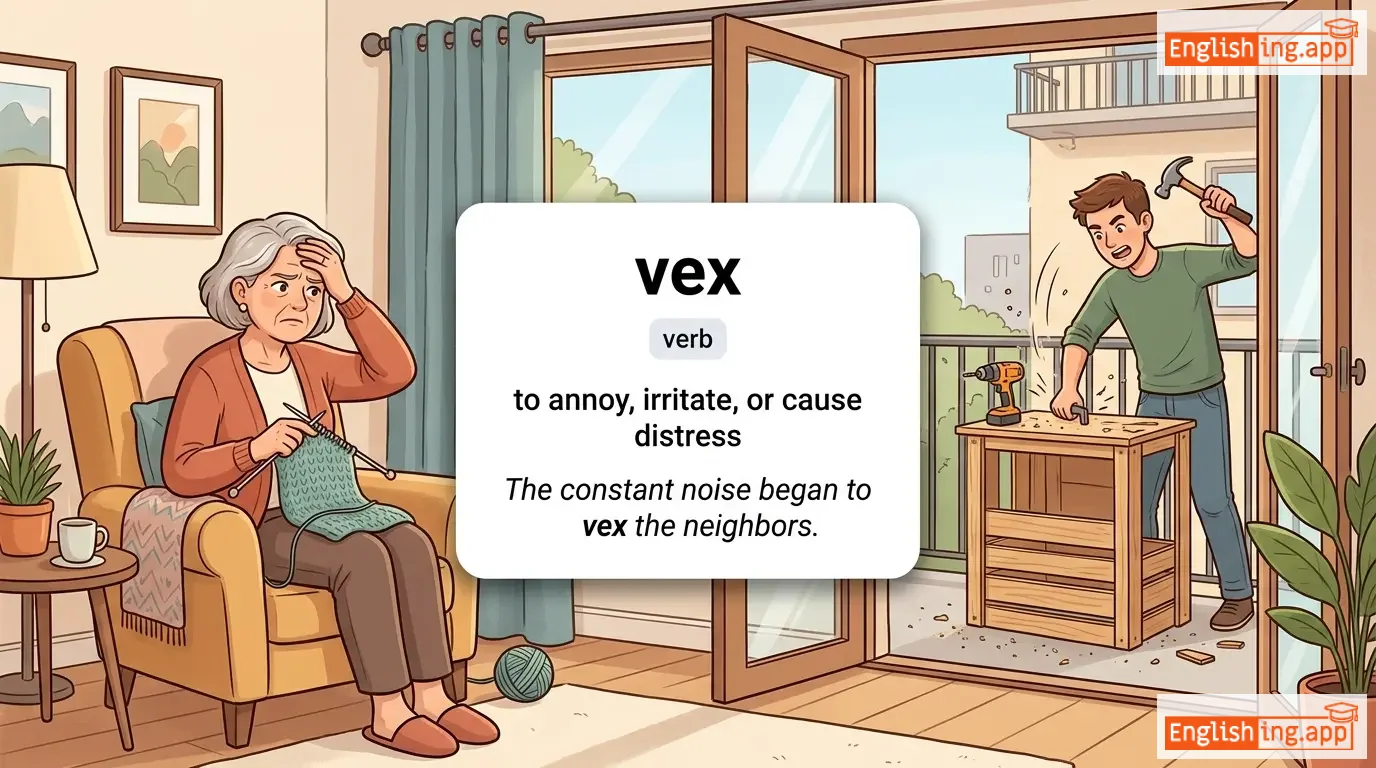
vex definition card — visual illustration of the meaning
verb
/vɛks/
烦扰 (fanrao)

to annoy, irritate, or cause distress

"The constant noise began to vex the neighbors."

"持续的噪音开始烦扰邻居。" (Chixu de zaoyin kaishi fanrao linju.)
vexation definition card — visual illustration of the meaning
noun
/vɛkˈseɪʃən/
烦恼 (fánnǎo)

the state of being annoyed, frustrated, or worried

"She could not hide her vexation after the repeated delays."

"她在反复的延迟后,无法掩饰她的烦恼。" (Tā zài fǎnfù de yánchí hòu, wúfǎ yǎnshì tā de fánnǎo.)
preposition
/ˈvaɪə/ or /ˈviːə/
通过 (tongguo)

through, by way of, or using a particular route or means

"She sent the documents via email."

"她通过电子邮件发送了文件。" (Ta tongguo dianzi youjian fasongle wenjian.)
viability definition card — visual illustration of the meaning
noun
/ˌvaɪ.əˈbɪl.ə.ti/
可行性 (kexingxing)

Ability to work successfully.

"The viability of a business depends on financial stability."

"一个企业的可行性取决于财务稳定性。" (Yi ge qiye de kexingxing qujue yu caiwu wendingxing.)
viable definition card — visual illustration of the meaning
adjective
/ˈvaɪəbl̩/
可行的 (kexing de)

capable of working successfully or able to survive

"They need a viable business plan to attract investors."

"他们需要一个可行的商业计划来吸引投资者。" (Tāmen xūyào yīgè kěxíng de shāngyè jìhuà lái xīyǐn tóuzī zhě.)
noun
/ˈvaɪənd/
佳肴 (jiāyáo)

an item of food, especially a delicacy

"The banquet was filled with rich viands and wines."

"宴会充满了丰盛的佳肴和美酒。" (Yànhuì chōngmǎnle fēngshèng de jiāyáo hé měijiǔ.)
adjective
/ˈvaɪbrənt/
充满活力 (chōngmǎn huólì)

full of energy and life; bright and striking

"The city is vibrant with culture and color."

"这座城市充满了文化和色彩。" (Zhè zuò chéngshì chōngmǎn le wénhuà hé sècǎi.)
verb
/ˈvaɪbreɪt/
震动 (zhendong)

To move or cause to move continuously and rapidly back and forth.

"The phone began to vibrate on the table."

"电话开始在桌子上震动。" (Dianhua kaishi zai zhuozi shang zhendong.)
noun
/vaɪˈbreɪ.ʃən/
震动 (zhendong)

a rapid back and forth movement; oscillation

"The phone's vibration woke me up."

"电话的震动把我吵醒了。" (Dianhua de zhendong ba wo chaoxingle.)
adjective
/vaɪˈkɛəriəs/
幸福 (xingfu)

experienced through the feelings or actions of another person

"She felt vicarious excitement watching her son win the award."

"当她获得奖项时,她无法掩饰自己的幸福。" (Dang ta huode jiangxiang shi, ta wufa yanshi ziji de xingfu.)
noun
/vaɪs/
恶习 (èxí)

immoral or wicked behavior; a weakness in someone's character

"Greed is a vice that can destroy lives."

"贪婪是一种恶习,它可能摧毁生活。" (Tānlán shì yī zhǒng èxí, tā kěnéng cuīhuǐ shēnghuó.)
noun
/ˈvaɪsrɔɪ/
副总督 (fu zong du)

a ruler exercising authority on behalf of a sovereign in a colony or province

"The viceroy governed the colony in the king's name."

"副总督以国王的名义治理殖民地。" (Fu zong du yi guowang de mingyi zhili zhimin di.)
noun
/vɪˈsɪn.ə.ti/
附近; 邻近 (vicinity)

the area near or surrounding a particular place; neighborhood

"There are many shops in the vicinity of the school."

"学校附近有很多商店。" (xuexiao fujin you henduo shangdian.)
adjective
/ˈvɪʃəs/
残忍的 (zanren de)

Deliberately cruel, violent, or immoral.

"The dog gave a vicious growl when the stranger approached."
"当陌生人接近时,狗发出了残忍的低吼。" (Dang moshengren jiejin shi, gou fashu le canren de dihou.)
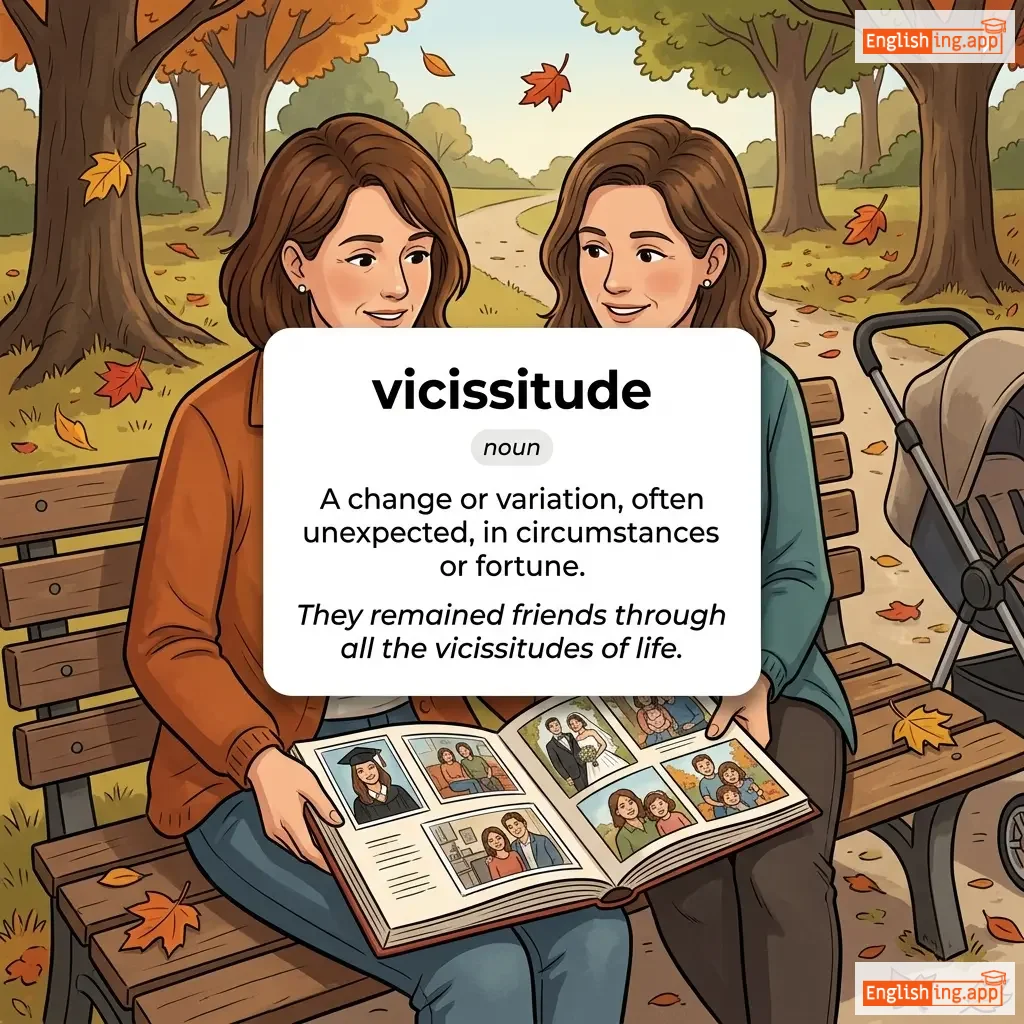
vicissitude definition card — visual illustration of the meaning
noun
/vɪˈsɪsɪtjuːd/
变迁 (bianqian)

A change or variation, often unexpected, in circumstances or fortune.

"They remained friends through all the vicissitudes of life."

"他们在生活的所有变迁中依然是朋友。" (Tāmen zài shēnghuó de suǒyǒu biànqiān zhōng yīrán shì péngyǒu.)
noun
/ˈvɪktɪm/
受害者 (shòuhài zhě)

a person who suffers harm, injury, or death due to an event or action

"The victim of the accident was taken to the hospital immediately."

"事故的受害者被立即送往医院。" (Shìgù de shòuhài zhě bèi lìjí sòngwǎng yīyuàn.)
verb
/ˈvɪktɪmaɪz/
迫害 (pòhài)

To make someone a victim, often by treating them unfairly or cruelly.

"The corrupt officials victimized the poor villagers."

"腐败的官员对贫困的村民进行了迫害。" (Fǔbài de guānyuán duì pínkùn de cūnmín jìnxíngle pòhài.)
adjective
/vɪkˈtɔː.ri.əs/
胜利的 (shengli de)

having won a victory; successful in a struggle or contest

"The victorious team celebrated their championship win with great joy."
"胜利的队伍以巨大的喜悦庆祝他们的冠军胜利。" (Shengli de duiwŭ yǐ jùdà de xǐyuè qìngzhù tāmen de guànjūn shènglì.)
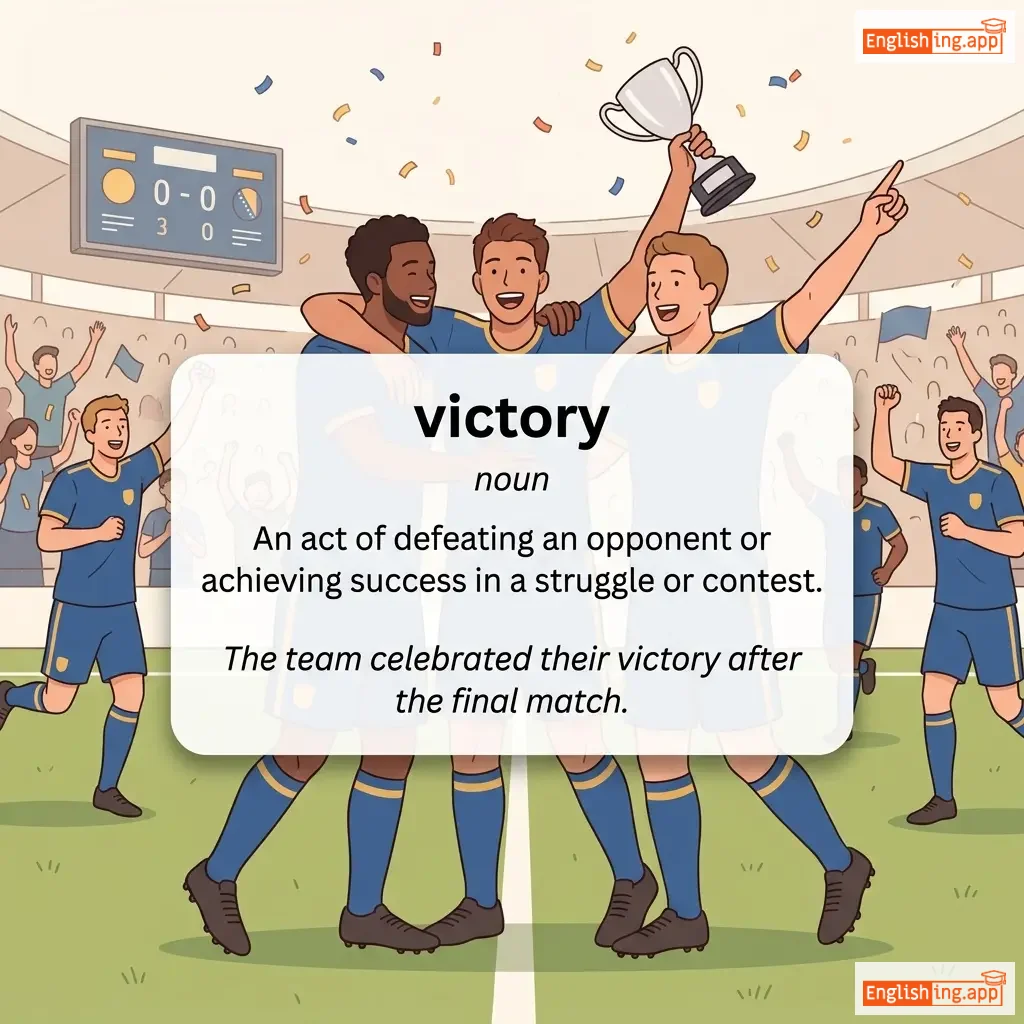
victory definition card — visual illustration of the meaning
noun
/ˈvɪktəri/
胜利 (shengli)

An act of defeating an opponent or achieving success in a struggle or contest.

"The team celebrated their victory after the final match."

"球队在最后一场比赛后庆祝了他们的胜利。" (qiú duì zài zuì hòu yī chǎng bǐ sài hòu qìng zhù le tā men de shèng lì.)
noun
/ˈvɪtəlz/
食品 (shípǐn)

Food or provisions, especially for human consumption.

"The travelers packed enough victuals for their long journey."

"旅行者为他们的长途旅行打包了足够的食物。" (Lǚxíng zhě wèi tāmen de chángtú lǚxíng dǎbāo le zúgòu de shípǐn.)
noun
/ˈvɪdiəʊ/
视频 (shipin)

a recording of moving visual images made digitally or on film

"She watched the video of her favorite concert online."

"她在网上观看了她最喜欢的演唱会视频。" (Ta zai wangshang guankanle ta zui xihuan de yanchanghui shipin.)
verb
/vaɪ/
争夺 (zhēngduó)

To compete eagerly with someone in order to do or achieve something.

"Several companies are vying for the contract."

"几家公司正在争夺合同。" (Jǐ jiā gōngsī zhèngzài zhēngduó hétóng.)
noun/verb
/vjuː/
视图 (shitu)

the act of seeing or observing something, or an area of sight

"She had a great view of the sunset from her balcony."

"她从阳台上看到了美丽的日落景象。" (Ta cong yangtai shang kandaole meili de riluo jingxiang.)
noun
/ˈvɪərər/
观众 (guānzhòng)

a person who watches something, especially television or video content

"The viewer is able to switch channels with the remote control."

"观众可以使用遥控器切换频道。" (Guānzhòng kěyǐ shǐyòng yáokòngqì qiēhuàn píndào.)
adjective
/ˈvjuː.ləs/
不可见的;没有观点的 (bù kě jiàn de; méiyǒu guāndiǎn de)

invisible; having no views or opinions

"The ghost remained viewless to most people in the haunted house."

"鬼魂对大多数人来说在鬼屋里是不可见的。" (Guǐhún duì dàduōshù rén lái shuō zài guǐ wū lǐ shì bù kě jiàn de.)
noun
/ˈvjuːpɔɪnt/
观点 (guān diǎn)

a particular attitude or way of considering a matter

"From his viewpoint, the situation was hopeless."
"从他的观点来看,情况是绝望的。" (Cóng tā de guān diǎn lái kàn, qíng kuàng shì jué wàng de.)
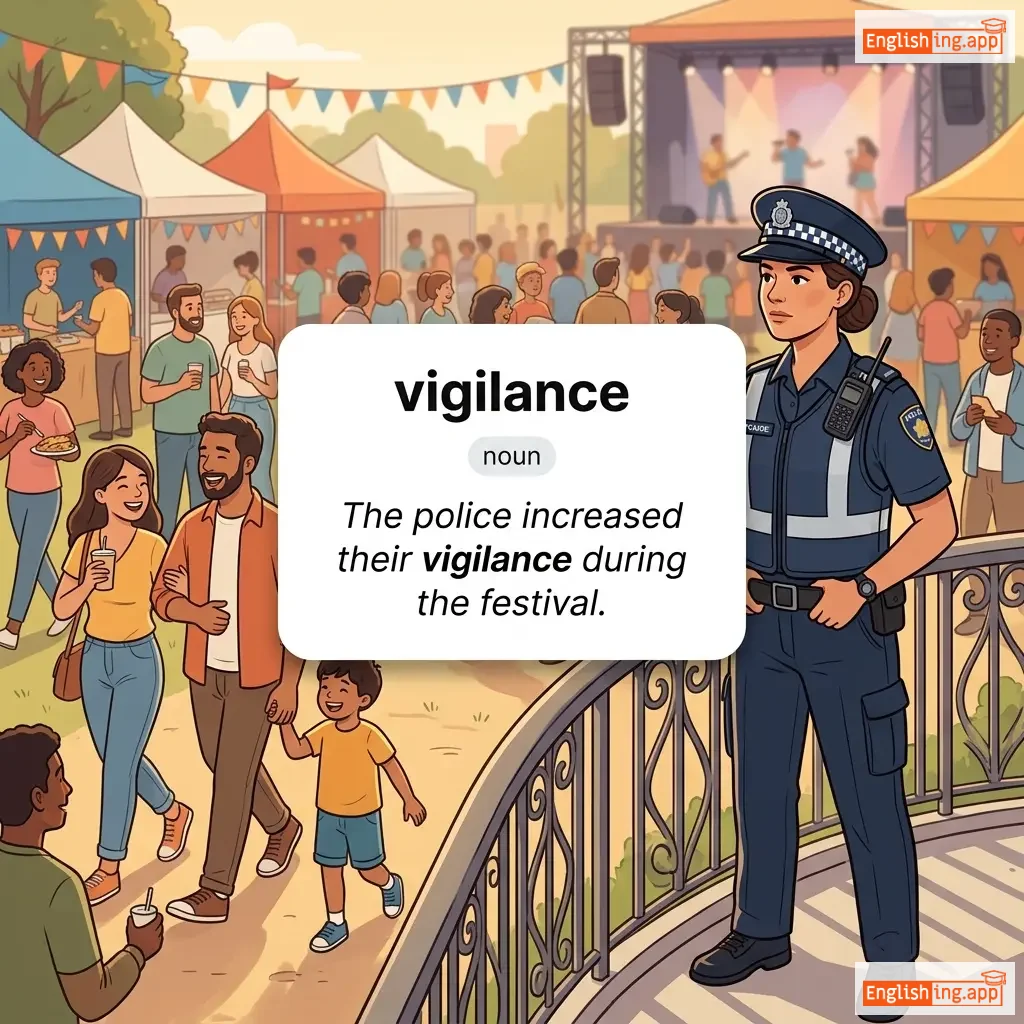
vigilance definition card — visual illustration of the meaning
noun
/ˈvɪdʒɪləns/
警觉 (jingjue)

The action or state of keeping careful watch for possible danger or difficulties.

"The police increased their vigilance during the festival."

"警察在节日期间提高了警觉。" (Jingcha zai jieri qijian tigao le jingjue.)
vigilant definition card — visual illustration of the meaning
adjective
/ˈvɪdʒɪlənt/
警觉 (jǐngjué)

Keeping careful watch for possible danger or difficulties.

"Parents must remain vigilant about their children's online activity."

"父母必须保持对孩子们在线活动的警觉。" (Fùmǔ bìxū bǎochí duì háizimen zàixiàn huódòng de jǐngjué.)
noun
/vɪnˈjɛt/
小品 (xiǎopǐn)

A short, descriptive piece of writing or a brief scene.

"The author included a poignant vignette in the introduction of the book."

"作者在书的序言中加入了一篇感人的小品。" (Zuòzhě zài shū de xùyán zhōng jiārùle yī piān gǎn rén de xiǎopǐn.)
noun
/ˈvɪɡər/
活力 (huó lì)

Physical strength, energy, or enthusiasm.

"She tackled the project with great vigor and determination."

"她以巨大的活力和决心投入到这个项目中。" (Tā yǐ jù dà de huó lì hé jué xīn tóu rù dào zhè ge xiàng mù zhōng.)
vigorous definition card — visual illustration of the meaning
adjective
/ˈvɪɡərəs/
精力充沛 (jingli chōngpèi)

Strong, healthy, and full of energy; involving forceful action.

"He gave a vigorous speech that inspired the audience."

"他发表了一场精力充沛的演讲,激励了听众。" (Tā fābiǎo le yī chǎng jīnglì chōngpèi de yǎnjiǎng, jīlì le tīngzhòng.)
noun
/ˈvɪɡ.ər/
身体力量和健康;努力、能量和热情 (vigour)

physical strength and good health; effort, energy, and enthusiasm

"She approached her work with renewed vigour after the vacation."

"假期后,她以焕然一新的活力投入工作。" (jiàqī hòu, tā yǐ huànrán yīxīn de huólì tóurù gōngzuò.)
verb
/ˈvɪlɪfaɪ/
幸福 (xìngfú)

to speak or write about someone in an abusive or disparaging manner

"The politician was vilified in the media for his controversial remarks."

"当她收到奖项时,她无法隐藏自己的幸福。" (Dāng tā shōu dào jiǎngxiàng shí, tā wúfǎ yǐncáng zìjǐ de xìngfú.)
noun
/ˈvɪlɪdʒ/
村庄 (cunzhuang)

a small community or group of houses in a rural area

"They live in a small village surrounded by mountains."

"他们住在一个被山脉环绕的小村庄里。" (Tamen zhu zai yige bei shanmai huanrao de xiao cunzhuang li.)
noun
/vɪm/
活力 (huólì)

energy and enthusiasm

"She performed the dance with great vim and vigor."

"她充满活力和热情地表演了这支舞蹈。" (Tā chōngmǎn huólì hé rèqíng de biǎoyǎnle zhè zhī wǔdǎo.)
adjective
/ˈvɪnsəbl/
可征服的 (ke zhengfu de)

capable of being overcome or defeated

"The enemy seemed vincible after losing their main base."

"敌人在失去他们的主基地后似乎变得可征服。" (Dírén zài shīqù tāmen de zhǔ jīdì hòu sìhū biàn dé kě zhēngfú.)
vindicate definition card — visual illustration of the meaning
verb
/ˈvɪndɪkeɪt/

to clear someone of blame or suspicion

"The new evidence vindicated her after years of false accusations."

adjective
/ˈvɪndɪkeɪtɪv/
辩护的 (bianhu de)

showing a tendency to vindicate or justify; inclined to defend

"Her vindicative tone showed that she strongly believed in her innocence."

"她的辩护语气表明她坚信自己的清白。" (Ta de bianhu yuqi biaoming ta jianxin ziji de qingbai.)
adjective
/ˈvɪndɪkətɔːri/
辩护的 (biànhù de)

Serving to justify, clear of blame, or defend.

"His vindicatory remarks restored his reputation."

"他的辩护性评论恢复了他的声誉。" (Tā de biànhù xìng pínglùn huīfùle tā de shēngyù.)
Vindictive definition card — visual illustration of the meaning
adjective
/vɪnˈdɪktɪv/
报复性的 (bàofùxìng de)

Having or showing a strong desire for revenge.

"Her vindictive actions hurt everyone around her."

"她的报复性行为伤害了周围的每一个人。" (Tā de bàofùxìng xíngwéi shānghài le zhōuwéi de měi yīgè rén.)
noun
/vaɪn/
藤蔓 (tengman)

a climbing or trailing plant with long stems; a plant that produces grapes

"The vine climbed up the wall and covered it with green leaves."

"藤蔓爬上了墙,覆盖了绿色的叶子。" (tengman pa shang le qiang, fugai le lvse de yezi)
noun
/ˈvɪn.ɪ.ɡər/
(cu)

a sour liquid made from fermented alcohol, used for cooking and preserving

"I added vinegar to the salad dressing for extra flavor."

"我在沙拉酱里加了醋,以增加味道。" (Wo zai shala jiang li jia le cu, yi zengjia weidao.)