词汇表

英语词汇词典 | 单词含义、定义和示例

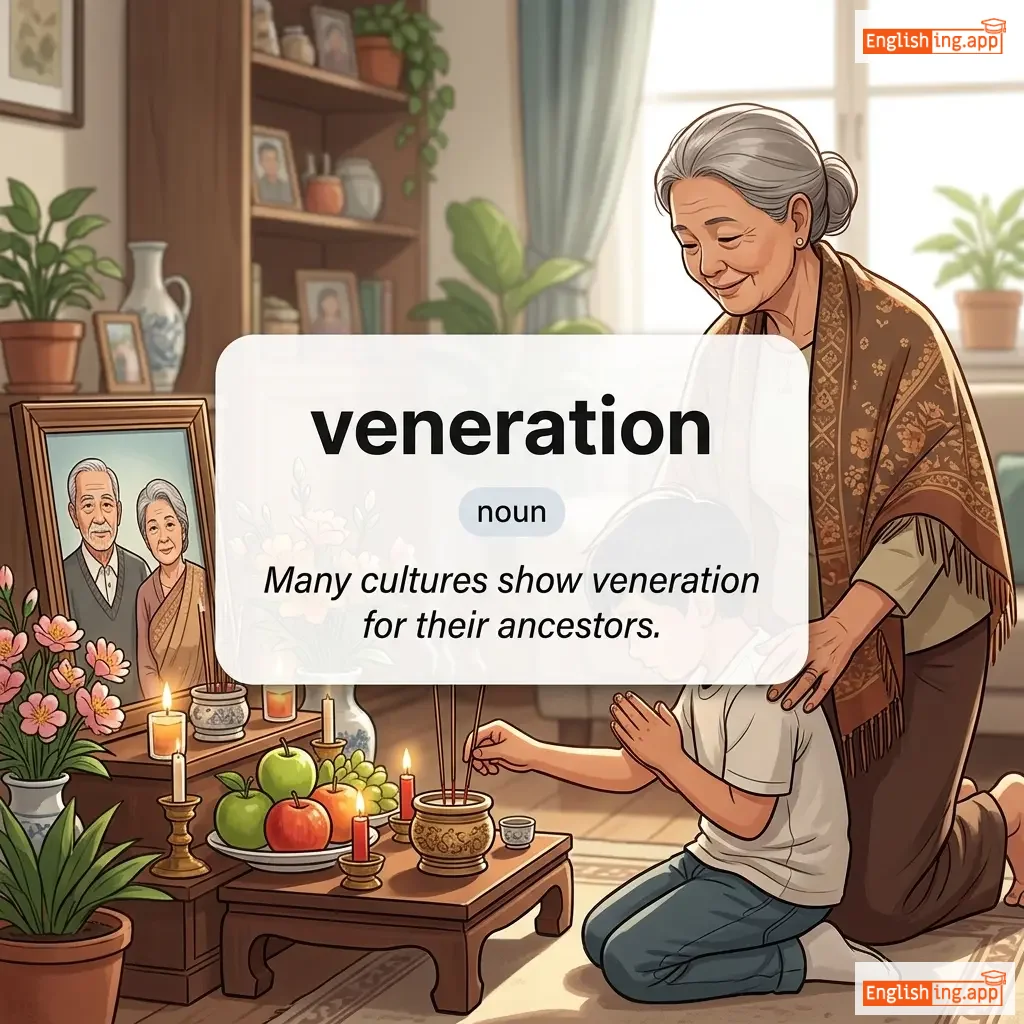
veneration definition card — visual illustration of the meaning
noun
ˌvɛn.əˈreɪ.ʃən
崇敬 (chóngjìng)

Great respect; reverence; the action of regarding with great respect or reverence.

"Many cultures show veneration for their ancestors."

"许多文化表现出对祖先的崇敬。" (Xǔduō wénhuà biǎoxiàn chū duì zǔxiān de chóngjìng.)
adjective
/vəˈnɪəriəl/
性病的 (xingbing de)

relating to sexual intercourse or sexually transmitted diseases

"Doctors warn about the dangers of venereal diseases."

"医生警告性病的危险。" (Yisheng jinggao xingbing de weixian.)
noun
/ˈvendʒəns/
复仇 (fuchou)

punishment inflicted or retribution exacted for an injury or wrong; revenge

"He swore to seek vengeance against those who wronged him."

"他发誓要向那些伤害他的人复仇。" (Tā fāshì yào xiàng nàxiē shānghài tā de rén fùchóu.)
adjective
/ˈvendʒ.fəl/
怀恨的 (huái hèn de)

seeking to harm someone in return for a perceived injury; vindictive

"She felt vengeful after her friend betrayed her trust."

"她在朋友背叛她的信任后感到复仇心重。" (Tā zài péngyǒu bèipàn tā de xìnrèn hòu gǎndào fùchóu xīn zhòng.)
adjective
/ˈviːniəl/
可宽恕的 (kě kuānshù de)

forgivable, not seriously wrong

"Forgetting to call was a venial fault."

"忘记打电话是一个可宽恕的错误。" (Wàngjì dǎ diànhuà shì yīgè kě kuānshù de cuòwù.)
noun
/ˈvɛnɪsən/
鹿肉 (lu rou)

meat from a deer

"The restaurant served venison steak with red wine."

"餐厅提供了搭配红酒的鹿肉排。" (Cāntīng tígōngle dāpèi hóng jiǔ de lù ròu pái.)
noun
/ˈvɛnəm/
毒液 (duye)

a poisonous substance secreted by animals such as snakes or spiders; also used to describe intense ill will or malice

"The snake injected its venom into the prey."

"蛇将它的毒液注入了猎物。" (She jiang ta de duye zhu ru le lie wu.)
adjective
/ˈven.ə.məs/
有毒的; 恶意的; (yǒu dú de; èyì de)

secreting venom; full of malice or spite; extremely hostile

"The venomous snake struck quickly at its prey."

"毒蛇迅速袭击了它的猎物。" (Dú shé xùnsù xíjīle tā de lièwù.)
adjective
/ˈviːnəs/
静脉的 (jìngmài de)

relating to the veins that carry blood to the heart

"The doctor examined the patient’s venous circulation."

"医生检查了病人的静脉循环。" (Yīshēng jiǎnchá le bìngrén de jìngmài xúnhuán.)
verb/noun
/vɛnt/
排气 / 允许空气或气体流动的开口 (paixi / yuanyi kongqi huo qiti liudong de kaikou)

to release air, gas, or strong emotions; an opening that allows air, gas, or liquid to pass

"She vented her frustration after the long meeting."
"她在长时间的会议后发泄了她的沮丧情绪。" (Ta zai chang shijian de huiyi hou faxie le ta de ju suang qingxu.)
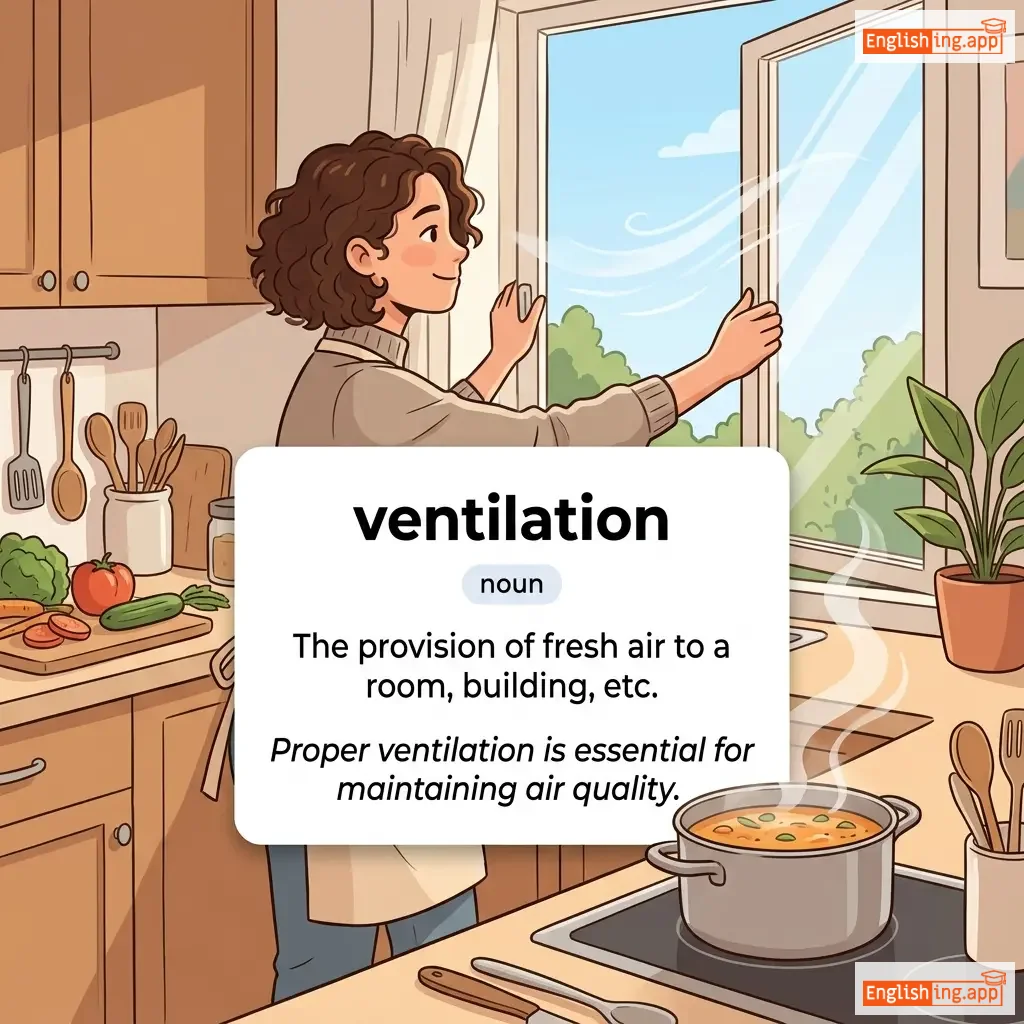
ventilation definition card — visual illustration of the meaning
noun
ˌvɛntɪˈleɪʃən
通风 (tongfeng)

The provision of fresh air to a room, building, etc.

"Proper ventilation is essential for maintaining air quality."

"良好的通风对于保持空气质量至关重要。" (Lianghao de tongfeng dui yu baochi kongqi zhiliang zhiguo zhongyao.)
adjective
/ˈvɛntrəl/
腹侧的 (fùcè de)

relating to the underside or abdominal part of an animal or organ

"The fish has a white ventral surface."
"鱼的腹侧表面是白色的。" (Yú de fùcè biǎomiàn shì báisè de.)
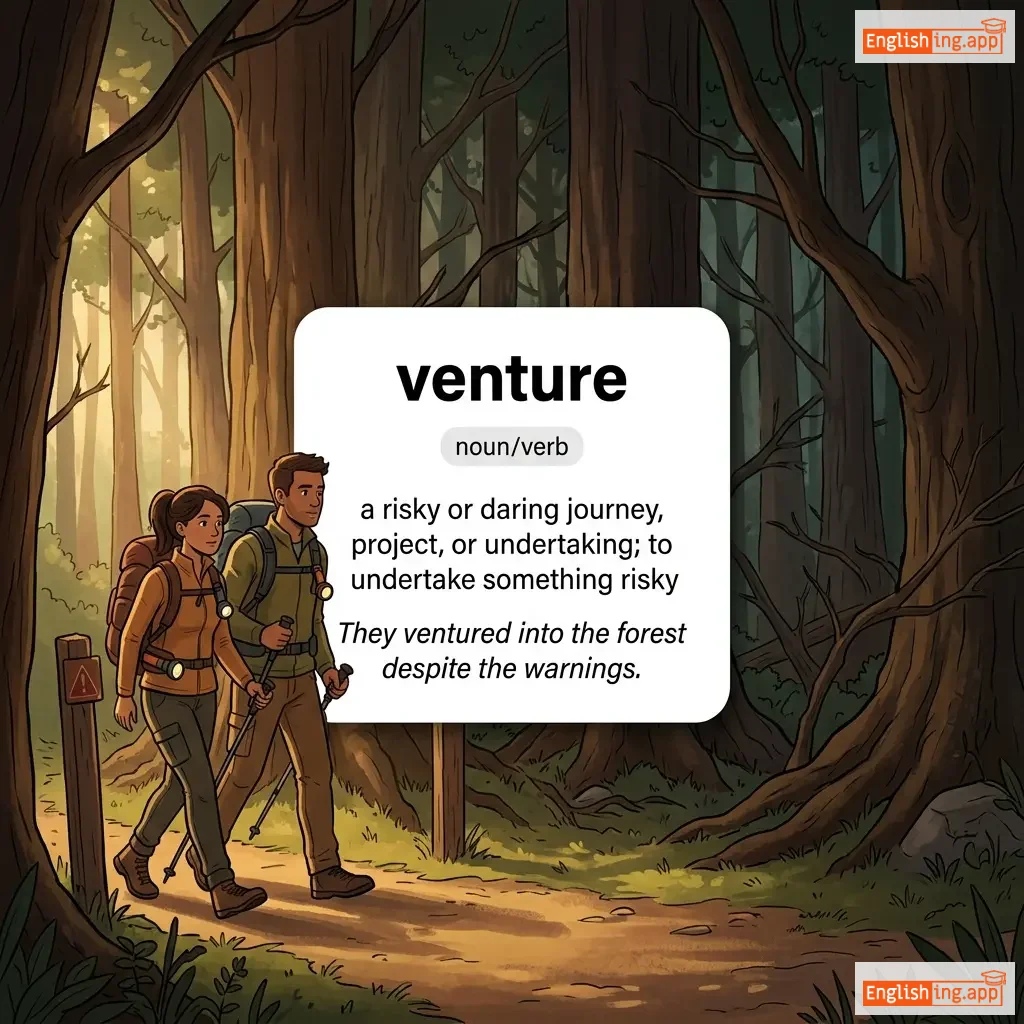
venture definition card — visual illustration of the meaning
noun/verb
/ˈvɛntʃər/
冒险的事业 (màoxiǎn de shìyè)

a risky or daring journey, project, or undertaking; to undertake something risky

"They ventured into the forest despite the warnings."
"他们冒险进入了森林,尽管有警告。" (Tāmen màoxiǎn jìnrùle sēnlín, jǐnguǎn yǒu jǐnggào.)
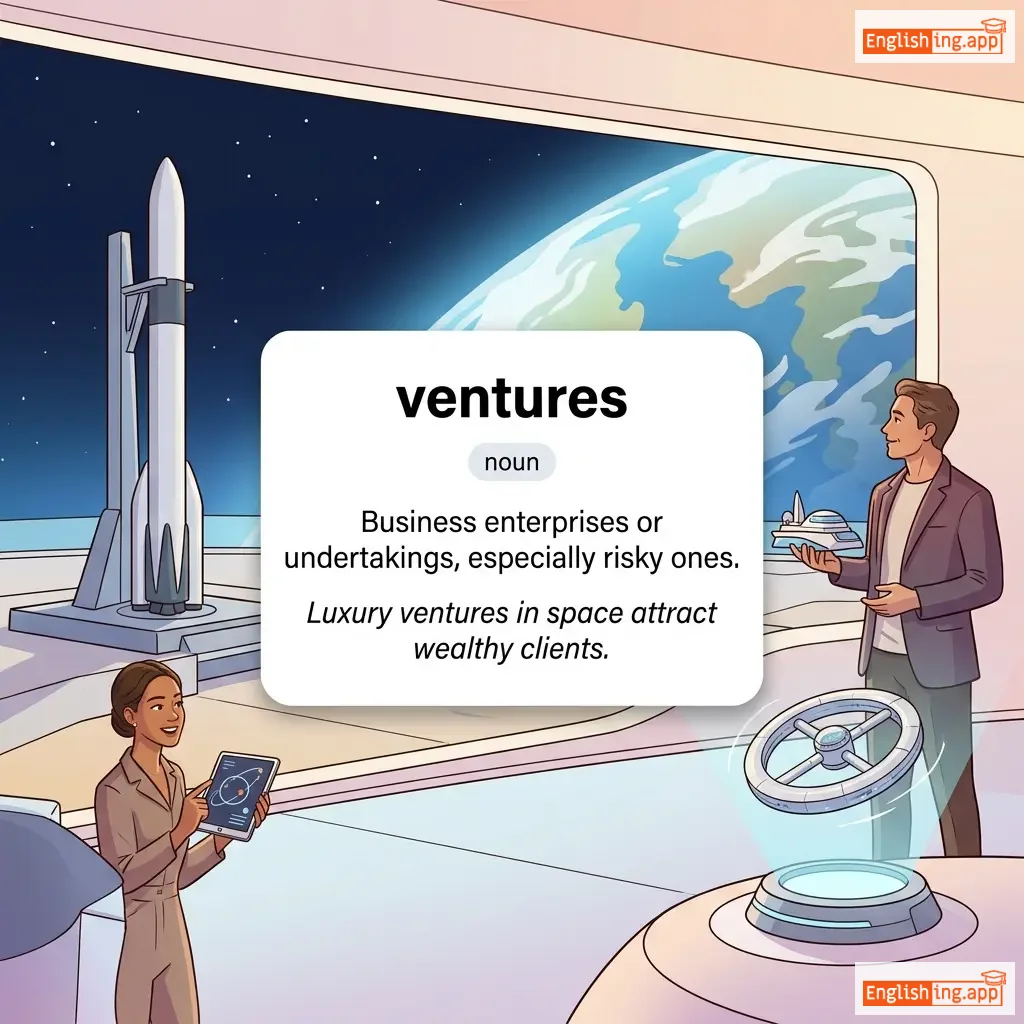
ventures definition card — visual illustration of the meaning
noun
ˈven.tʃərz
企业 (qiye)

Business enterprises or undertakings, especially risky ones.

"Luxury ventures in space attract wealthy clients."

"奢侈的太空投资吸引了富有的客户。" (Shēchǐ de tàikōng tóuzī xīyǐnle fùyǒu de kèhù.)
adjective
/ˈvɛntʃərəs/
冒险的 (màoxiǎn de)

Willing to take risks or try out new and exciting things; adventurous.

"The venturous explorers set out to cross the uncharted desert."

"那些冒险的探险者出发穿越未被探索的沙漠。" (Nàxiē màoxiǎn de tànxiǎnzhě chūfā chuānyuè wèibèi tànsuǒ de shāmò.)
noun
/ˈven.juː/
场地 (chang di)

a place where an event or activity takes place

"The wedding venue was beautifully decorated."
"婚礼场地被精美装饰。" (hunli changdi bei jingmei zhuangshi)
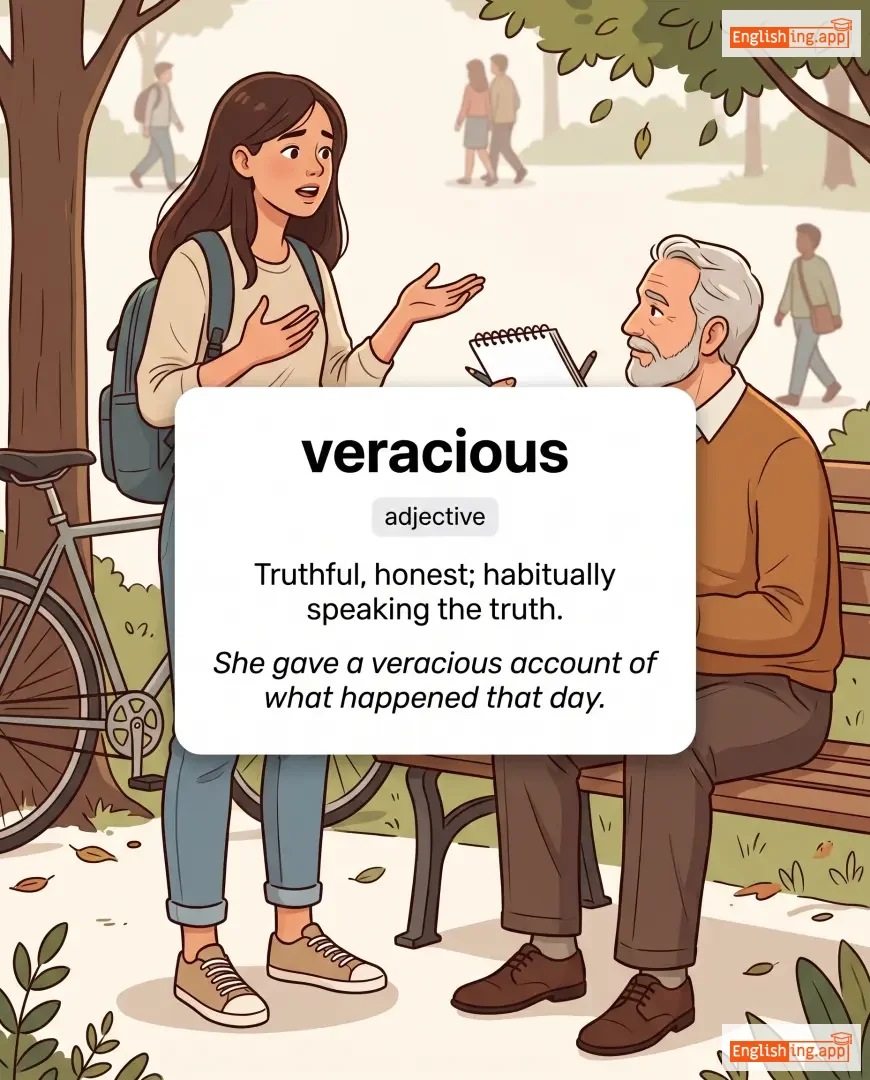
veracious definition card — visual illustration of the meaning
adjective
/vəˈreɪʃəs/
真实的 (zhēnshí de)

Truthful, honest; habitually speaking the truth.

"She gave a veracious account of what happened that day."
"她给出了那天发生的事情的真实描述。" (tā gěi chūle nà tiān fāshēng de shìqíng de zhēnshí miáoshù.)
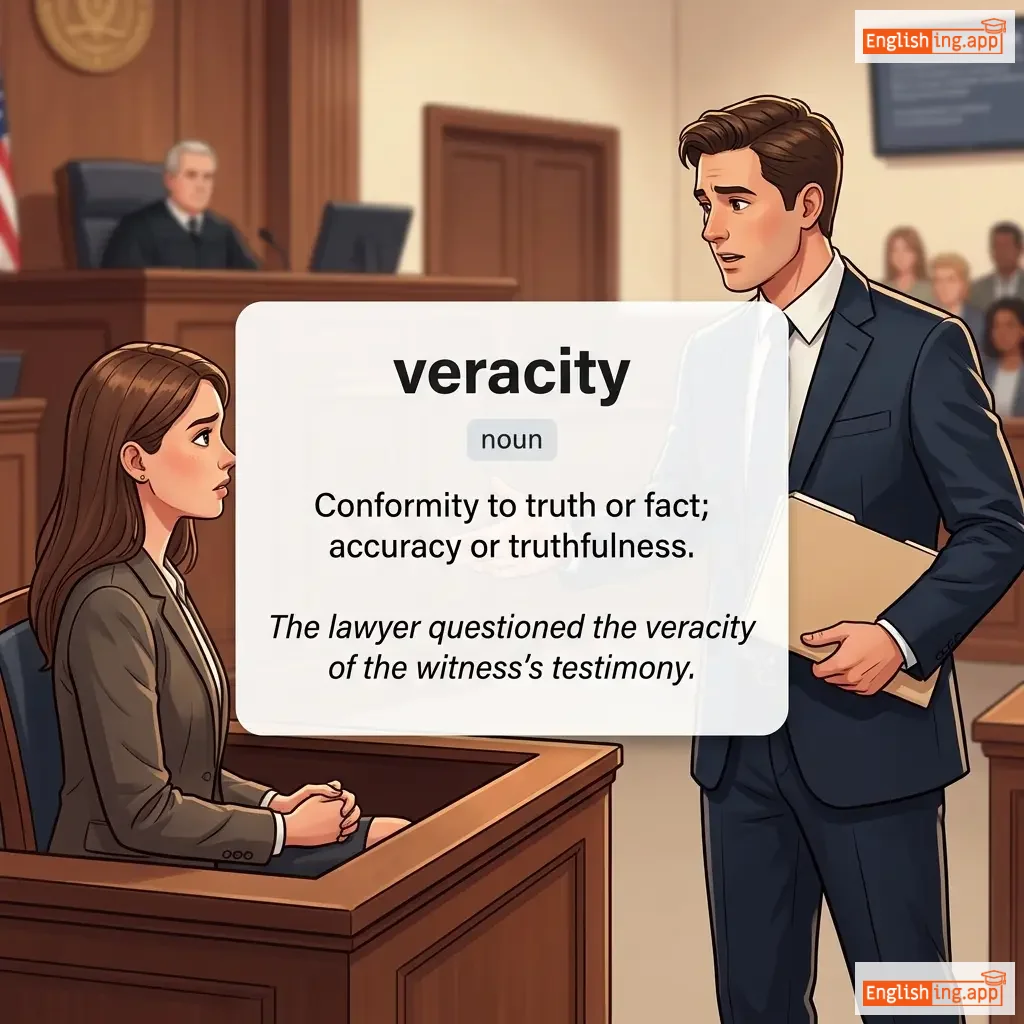
veracity definition card — visual illustration of the meaning
noun
/vəˈræsəti/
真实性 (zhēn shí xìng)

Conformity to truth or fact; accuracy or truthfulness.

"The lawyer questioned the veracity of the witness’s testimony."

"律师质疑证人证词的真实性。" (lǜshī zhìyí zhèngrén zhèngcí de zhēnshíxìng.)
verbal definition card — visual illustration of the meaning
adjective
/ˈvɜː.bəl/
口头的 (kǒutóu de)

relating to words or speech rather than writing or action

"They had a verbal agreement instead of a written one."
"他们达成了口头协议,而不是书面协议。" (Tāmen dáchéngle kǒutóu xiéyì, ér bù shì shūmiàn xiéyì.)
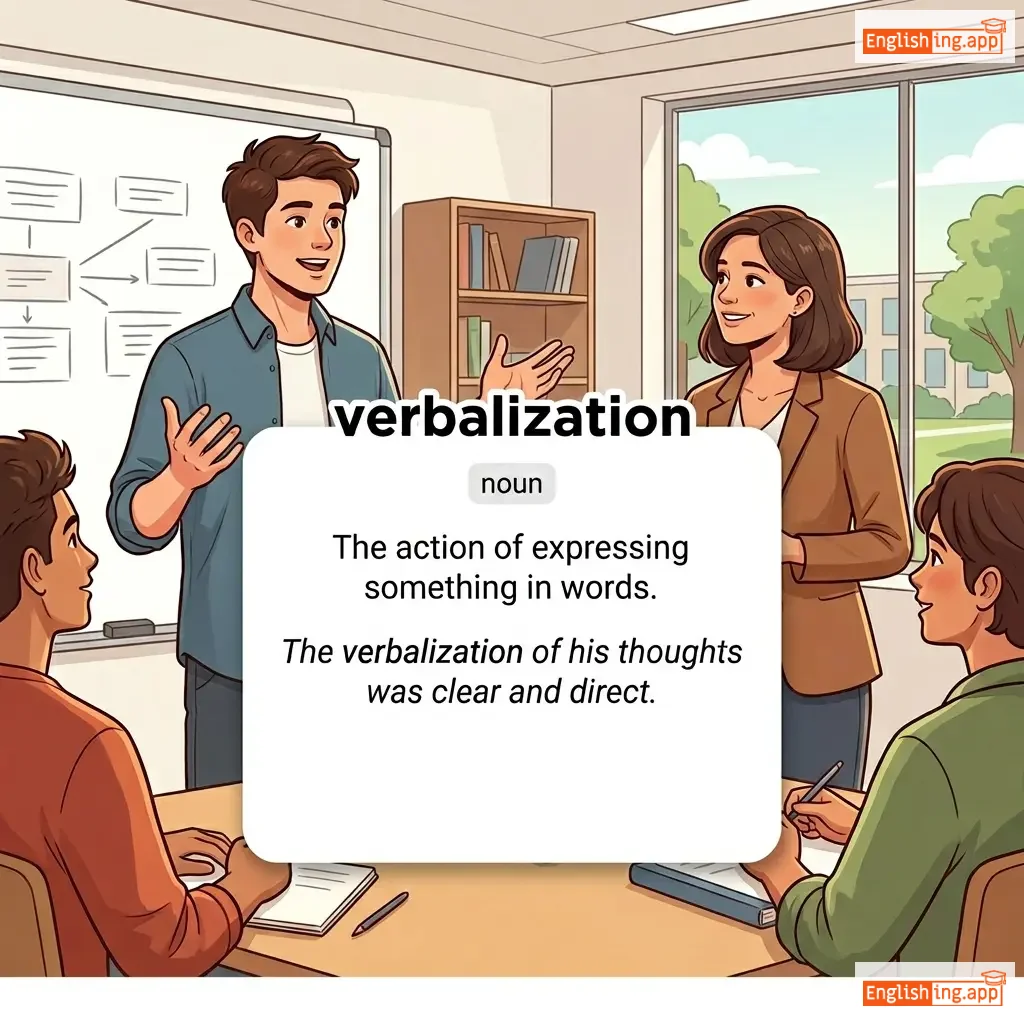
verbalization definition card — visual illustration of the meaning
noun
/ˌvɜːbəlɪˈzeɪʃən/
语言表达 (yǔyán biǎodá)

The action of expressing something in words.

"The verbalization of his thoughts was clear and direct."
"他的思想的语言表达是清晰和直接的。" (Tā de sīxiǎng de yǔyán biǎodá shì qīngxī hé zhíjiē de.)
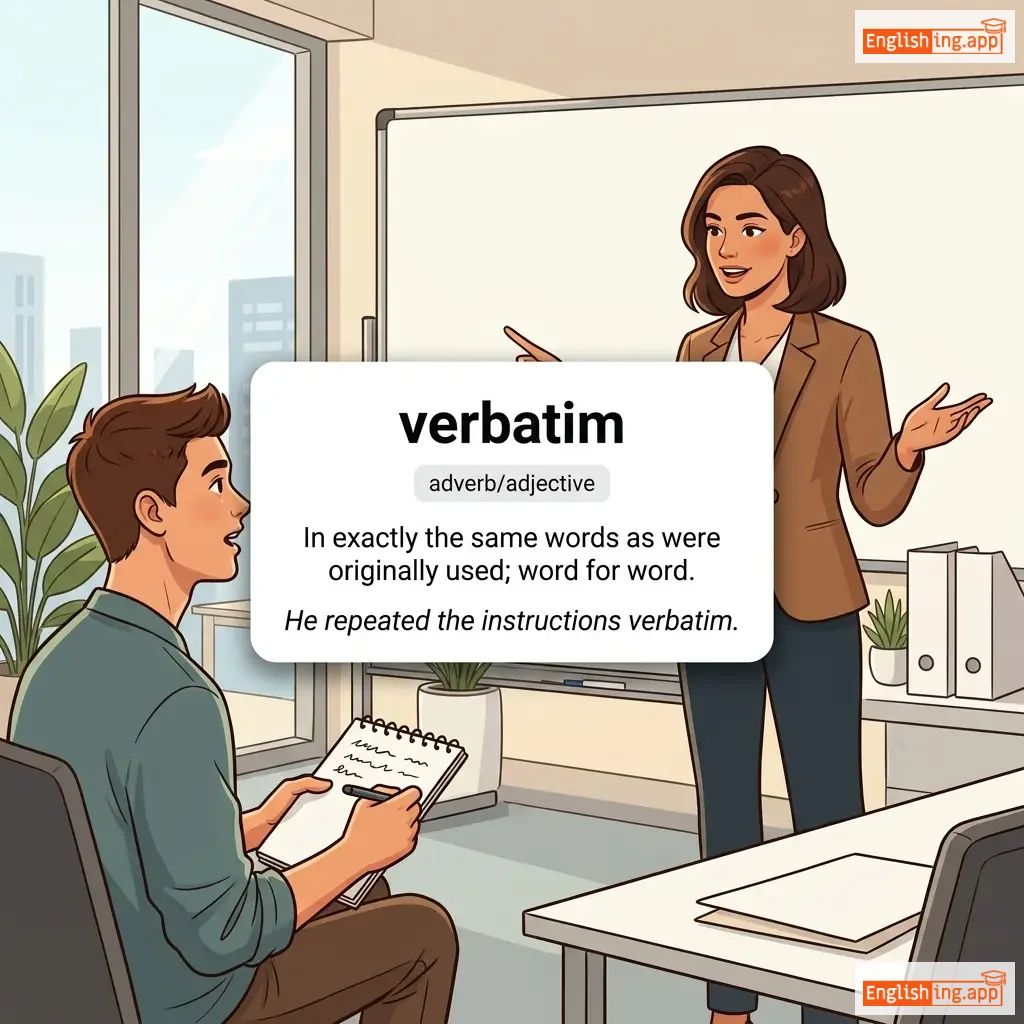
verbatim definition card — visual illustration of the meaning
adverb/adjective
/vərˈbeɪtɪm/
逐字逐句 (zhú zì zhú jù)

In exactly the same words as were originally used; word for word.

"He repeated the instructions verbatim."

"他逐字逐句地重复了指示。" (Tā zhú zì zhú jù de chóngfùle zhǐshì.)
noun
/ˈvɜːrbiɪdʒ/
废话 (feihua)

Excessive use of words, often with little content or meaning; wordiness.

"The contract was filled with unnecessary legal verbiage."
"合同充满了不必要的法律废话。" (Hetong chongmanle buyiyao de falu feihua.)
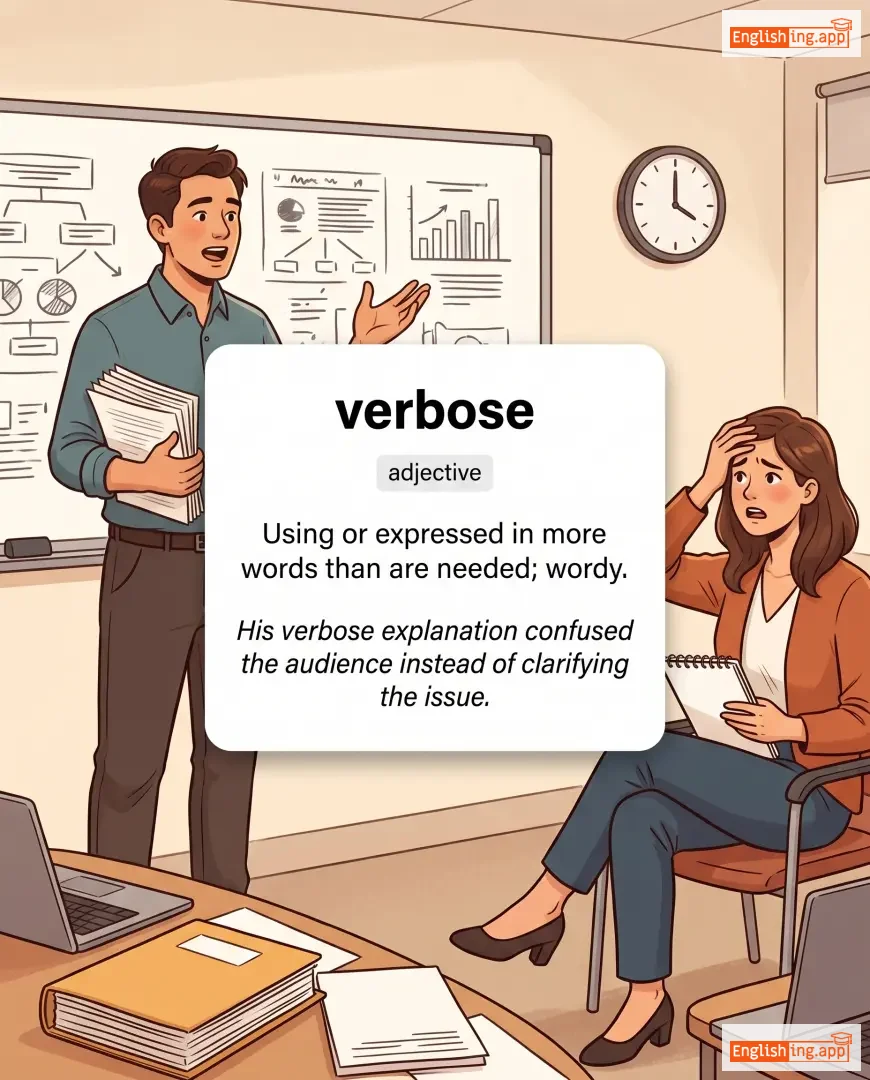
verbose definition card — visual illustration of the meaning
adjective
/vɜːrˈboʊs/
冗长 (rǒngcháng)

Using or expressed in more words than are needed; wordy.

"His verbose explanation confused the audience instead of clarifying the issue."

"他冗长的解释使观众感到困惑,而不是澄清问题。" (Tā rǒngcháng de jiěshì shǐ guānzhòng gǎndào kùnhuò, ér bùshì chéngqīng wèntí.)
adjective
/ˈvɜːrdənt/
青葱 (qing cong)

Green with grass or other rich vegetation; lush and fertile.

"The hills looked verdant after the monsoon rains."

"经过季风雨后,山丘看起来绿意盎然。" (Jīngguò jìfēng yǔ hòu, shānqiū kàn qǐlái lǜ yì àngrán.)
⚖️

verdict

noun
/ˈvɜː.dɪkt/

a decision made by a jury or judge in a court case

"The jury returned a guilty verdict after three hours of deliberation."

noun
/ˈvɜːrdɪɡriːs/
铜绿 (tong lü)

A green or bluish deposit that forms on copper, brass, or bronze surfaces due to oxidation.

"The old statue was covered in verdigris after years of exposure to the rain."

"那座古老的雕像在多年暴露于雨水中后,覆盖了一层铜绿。" (Na zuo gulao de diaoxiang zai duonian baolu yu yushui zhonghou, fuguo le yi ceng tong lü.)
noun
/vɜːrdʒ/
边缘; 极限; 门槛 (verge)

the edge or border of something; very close to happening

"She was on the verge of tears."

"她几乎要哭出来了。" (tā jīhū yào kū chūlái le.)
noun
/ˌvɛrɪfɪˈkeɪʃən/
验证 (yanzheng)

The process of establishing the truth, accuracy, or validity of something.

"The bank requires verification of identity before opening an account."

"银行在开设账户之前需要进行身份验证。" (Yinhang zai kaishe zhanghu zhiqian xuyao jinxing shenfen yanzheng.)
verb
/ˈvɛrɪfaɪ/
验证 (yànzhèng)

To make sure or demonstrate that something is true, accurate, or justified.

"Please verify your email address to complete the registration."

"请验证您的电子邮件地址以完成注册。" (Qǐng yànzhèng nín de diànzǐ yóujiàn dìzhǐ yǐ wánchéng zhùcè.)
adverb
/ˈvɛrɪli/
的确 (dique)

truly; certainly; without a doubt

"Verily, I say unto you, this is the truth."

"的确,我对你们说,这就是事实。" (Dique, wo dui nimen shuo, zhe jiushi shishi.)
adjective
/ˌvɛrɪˈsɪmɪlər/
类似于真实 (lèisì yú zhēnshí)

appearing to be true or real

"The story seemed verisimilar though it was entirely fictional."

"这个故事看起来类似于真实,尽管它完全是虚构的。" (Zhège gùshì kàn qǐlái lèisì yú zhēnshí, jǐnguǎn tā wánquán shì xūgòu de.)
noun
/ˌvɛrɪsɪˈmɪlɪtjuːd/
逼真 (bī zhēn)

the appearance of being true or real

"The movie was praised for its verisimilitude to actual events."

"这部电影因其与实际事件的逼真感而受到称赞。" (Zhè bù diànyǐng yīn qí yǔ shíjì shìjiàn de bī zhēn gǎn ér shòudào chēngzàn.)
adjective
/ˈvɛrɪtəbl/
真实的 (zhēnshí de)

used to emphasize that something is genuine or true

"The house was a veritable palace compared to ours."

"这座房子与我们的相比,简直是座真正的宫殿。" (Zhè zuò fángzi yǔ wǒmen de xiāng bǐ, jiǎnzhí shì zuò zhēnzhèng de gōngdiàn.)
noun
/ˈvɛrɪti/
真实性 (zhēn shí xìng)

a true principle or belief; the state of being true

"The verity of his statement was confirmed by evidence."

"他陈述的真实性通过证据得到了确认。" (Tā chén shù de zhēn shí xìng tōng guò zhèng jù dé dào le quèrèn.)
adjective
/vərˈmɪkjələr/
像虫子一样 (xiàng chóngzi yīyàng)

having a shape or appearance like a worm; worm-like

"The artist used a vermicular design to decorate the border of the manuscript."
"艺术家用虫子一样的设计装饰手稿的边缘。" (Yìshùjiā yòng chóngzi yīyàng de shèjì zhuāngshì shǒugǎo de biānyuán.)
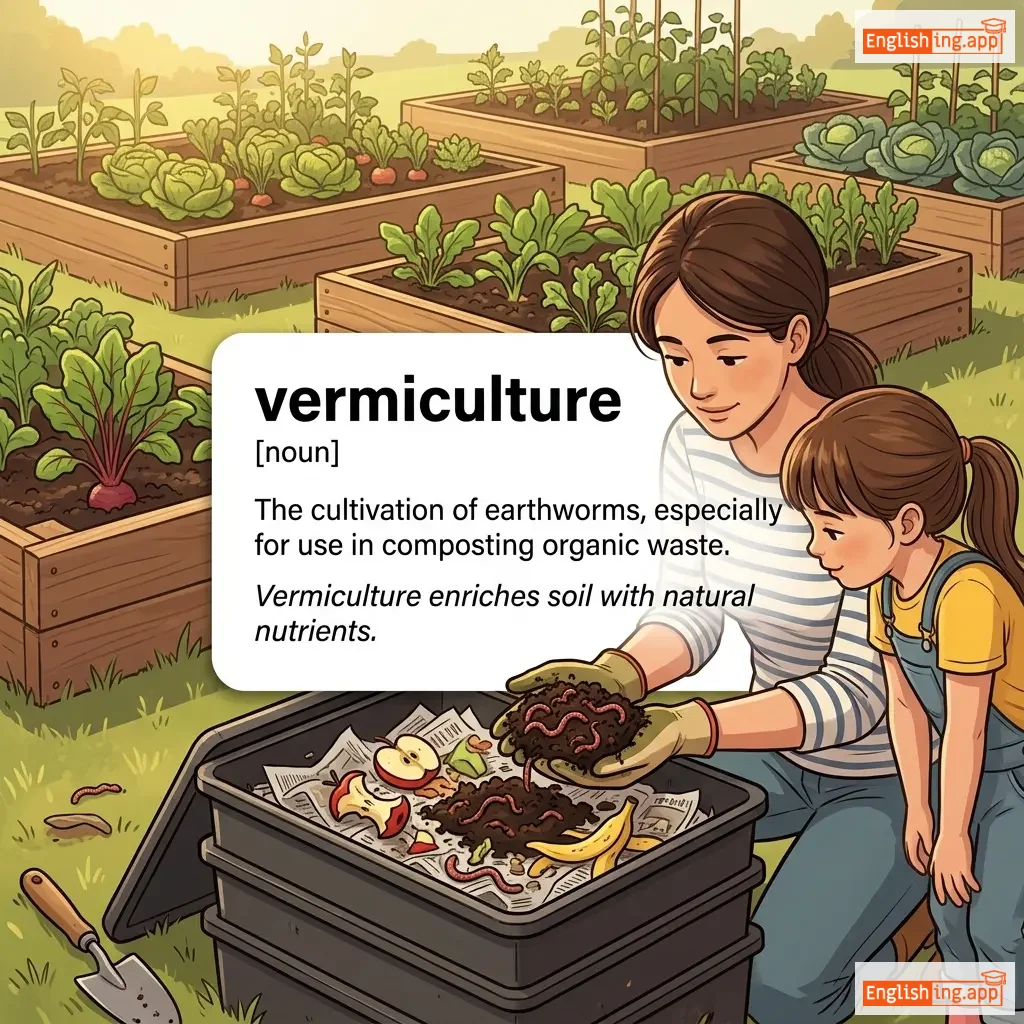
vermiculture definition card — visual illustration of the meaning
noun
ˈvɜː.mɪ.kʌl.tʃər
蚯蚓养殖 (qiūyǐn yǎngzhí)

The cultivation of earthworms, especially for use in composting organic waste.

"Vermiculture enriches soil with natural nutrients."

"蚯蚓养殖为土壤提供自然养分。" (Qiūyǐn yǎngzhí wèi tǔrǎng tígōng zìrán yǎngfèn.)
noun
/vərˈmɪl.jən/
鲜红色-橙色; 这种颜色的颜料 (vermillion)

a bright red-orange color; a pigment of this color

"The artist used vermillion paint for the sunset."

"艺术家为日落使用了维米利昂颜料。" (Yìshùjiā wèi rìluò shǐyòngle wéimìlì'áng yánliào.)
vermin definition card — visual illustration of the meaning
noun
/ˈvɜːrmɪn/
有害动物 (yǒuhài dòngwù)

small animals or insects that are harmful or destructive, such as rats, lice, or fleas

"The old warehouse was overrun with vermin."

"老仓库被有害动物占领了。" (Lǎo cāngkù bèi yǒuhài dòngwù zhànlǐng le.)
noun
/vərˈnækjələr/
方言 (fangyan)

the language or dialect spoken by ordinary people in a particular region

"He gave his speech in the local vernacular so everyone could understand."

"他用当地的方言发表了演讲,以便每个人都能理解。" (Ta yong dangdi de fangyan fabiao le yanjiang, yiban meigeren dou neng lijie.)
adjective
/ˈvɜːrnəl/
春天的 (chūntiān de)

related to spring; fresh, youthful

"The garden was filled with vernal beauty after the long winter."
"经过漫长的冬季,花园充满了春天的美丽。" (Jīngguò màncháng de dōngjì, huāyuán chōngmǎnle chūntiān de měilì.)
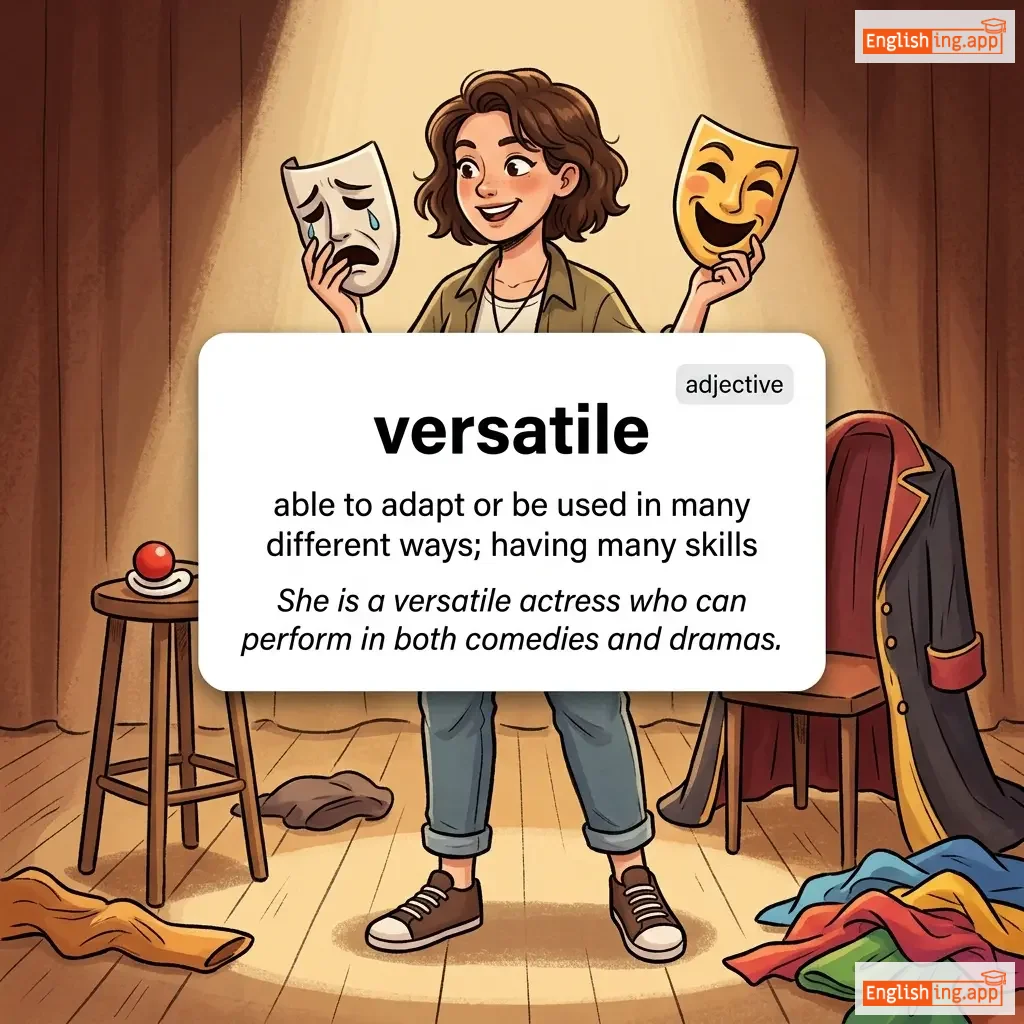
versatile definition card — visual illustration of the meaning
adjective
/ˈvɜːrsətl/
多才多艺 (duōcáiduōyì)

able to adapt or be used in many different ways; having many skills

"She is a versatile actress who can perform in both comedies and dramas."

"她是一位多才多艺的女演员,能够在喜剧和戏剧中表演。" (Tā shì yī wèi duōcáiduōyì de nǚ yǎnyuán, nénggòu zài xǐjù hé xìjù zhōng biǎoyǎn.)
versatility definition card — visual illustration of the meaning
noun
ˌvɜː.səˈtɪl.ə.ti
多功能性 (duō gōngnéng xìng)

Ability to adapt or be adapted to many different functions or activities.

"His versatility allows him to excel in multiple fields."

"他的多功能性使他能够在多个领域出类拔萃。" (Tā de duō gōngnéng xìng shǐ tā nénggòu zài duō gè lǐngyù chūlèi bácuì.)
noun
/vɜːrs/
诗句 (shī jù)

A line of writing in poetry; a section of a song or poem.

"She wrote a beautiful verse for the wedding ceremony."

"她为婚礼仪式写了一首美丽的诗句。" (Tā wèi hūnlǐ yíshì xiěle yī shǒu měilì de shī jù.)
noun
/ˈvɜːrʒən/
版本 (banben)

A particular form or variant of something.

"The software has a new version with added features."

"软件有一个新版本,带有附加功能。" (Ruǎnjiàn yǒu yīgè xīn bǎnběn, dài yǒu fùjiā gōngnéng.)
preposition
/ˈvɜːsəs/
对抗 (duìkàng)

against (in a competition or conflict)

"The team is playing versus their biggest rivals."

"团队正在与他们最大的竞争对手对抗。" (Tuánduì zhèngzài yǔ tāmen zuìdà de jìngzhēng duìshǒu duìkàng.)
noun
/ˈvɜːrtɛks/
顶点 (dingdian)

The highest point; the top or the apex.

"The climber reached the vertex of the mountain."

"登山者达到了山顶。" (Deng shanzhe daduo le shanding.)
adjective
/ˈvɜːrtɪkl/
垂直 (chuízhí)

Standing or pointing straight up; perpendicular to the ground.

"The skyscraper has a perfectly vertical design."
"这座摩天大楼有一个完美的垂直设计。" (Zhè zuò mótiān dàlóu yǒu yīgè wánměi de chuízhí shèjì.)
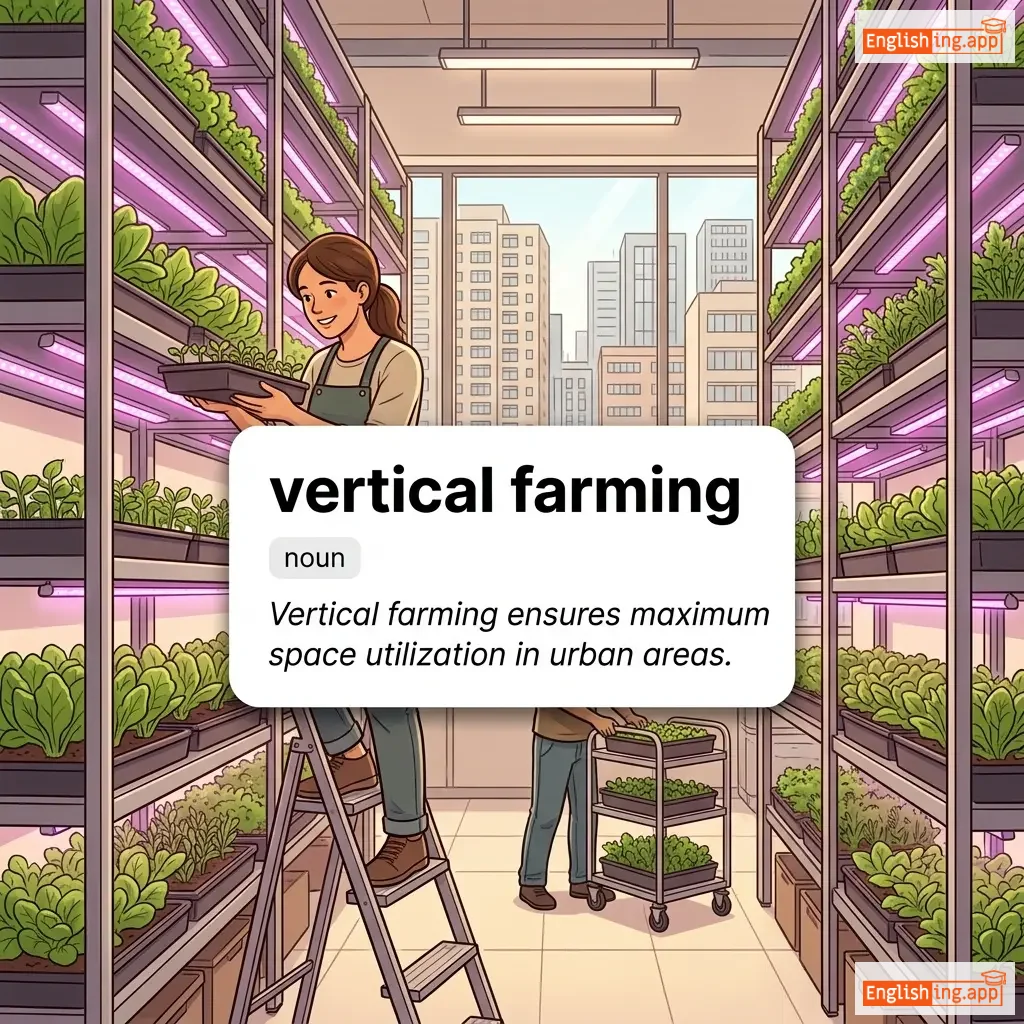
vertical farming definition card — visual illustration of the meaning
noun
/ˈvɜː.tɪ.kəl ˈfɑː.mɪŋ/
垂直农业 (chuízhí nóngyè)

The practice of growing crops in vertically stacked layers, often incorporating controlled-environment agriculture.

"Vertical farming ensures maximum space utilization in urban areas."

"垂直农业确保城市区域的最大空间利用。" (Chuízhí nóngyè quèbǎo chéngshì qūyù de zuìdà kōngjiān lìyòng)
adjective
/vɜːrˈtɪdʒɪnəs/
眩晕的 (xuànyùn de)

Causing dizziness due to great height or steepness.

"The tourists looked down from the vertiginous cliffs with awe."
"游客从眩晕的悬崖上低头望去,满怀敬畏。" (Yóukè cóng xuànyùn de xuán yá shàng dī tóu wàng qù, mǎn huái jìng wèi.)
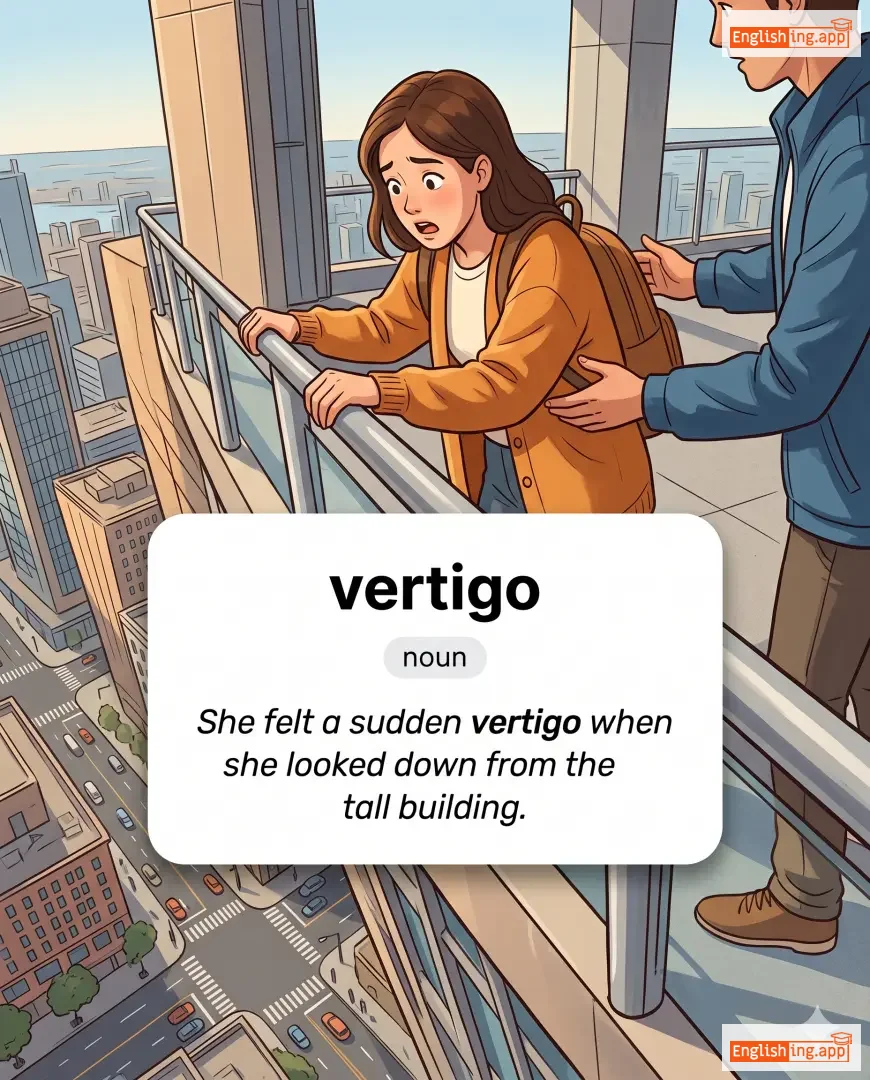
vertigo definition card — visual illustration of the meaning
noun
/ˈvɜːrtɪˌɡoʊ/
幸福 (xìng fú)

A sensation of spinning or dizziness, often caused by problems in the inner ear or brain.

"She felt a sudden vertigo when she looked down from the tall building."

"当她获得奖项时,她无法掩饰自己的幸福感。" (Dāng tā huò dé jiǎng xiàng shí, tā wú fǎ yǎn shì zì jǐ de xìng fú gǎn.)