词汇表

英语词汇词典 | 单词含义、定义和示例

noun
/ˈveɪ.pər/
蒸汽 (zhēngqì)

a mass of tiny water droplets suspended in the atmosphere; gas formed from a liquid

"Water vapour rises from the hot tea cup."

"热茶杯上升的水蒸气。" (rè chá bēi shàngshēng de shuǐ zhēngqì.)
adjective, noun
/ˈvɛriəbl/
可变的 (kěbiàn de)

liable to change; in mathematics, a symbol representing a quantity that may change

"The weather is highly variable in this region."

"这个地区的天气变化多端。" (Zhège dìqū de tiāntí biànhuà duō duān.)
noun
/ˈvɛriəns/
方差 (fangcha)

the state of being different or inconsistent; in statistics, a measure of the spread between numbers

"There is a wide variance in students' performance levels."

"学生的表现水平有很大的方差。" (Xuéshēng de biǎoxiàn shuǐpíng yǒu hěn dà de fangcha.)
noun
/ˈvɛəriənt/
变种 (bianzhong)

A form or version of something that differs in some way from other forms of the same thing.

"The new variant of the virus spread rapidly."

"病毒的新变种迅速传播。" (Bìngdú de xīn biànzhǒng xùnsù chuánbō.)
noun
/ˌvɛəriˈeɪʃən/
变化 (bianhua)

A change or slight difference in condition, amount, or level.

"There is a wide variation in climate across the country."

"全国气候存在很大变化。" (quan guo qi hou cun zai hen da bian hua.)
adjective
/ˈvɛərɪd/
多样的 (duōyàng de)

showing many different kinds or forms

"The menu offers a varied selection of dishes."

"菜单提供各种各样的菜肴选择。" (Càidān tígōng gè zhǒng gè yàng de càiyáo xuǎnzé.)
verb
/ˈvɛəriəˌɡeɪt/
使多样化 (shǐ duōyàng huà)

To diversify or mark with different colors or patterns.

"The artist used different shades to variegate the design."

"艺术家使用不同的阴影来使设计变得多样化。" (Yìshùjiā shǐyòng bùtóng de yīnyǐng lái shǐ shèjì biàn dé duōyàng huà.)
adjective
/ˈvɛəriəˌɡeɪtɪd/
五彩斑斕 (wucai banlan)

Having different colors, especially in irregular patches or streaks.

"The garden was full of variegated plants."

"花園裡充滿了五彩斑斕的植物。" (huayuan li chongman le wucai banlan de zhiwu)
noun
/ˌvɛəriəˈɡeɪʃən/
变色 (biansè)

The appearance of differently colored zones in the leaves, flowers, or stems of plants.

"Variegation makes the foliage look more attractive."

"变色使得植物的叶子更加吸引人。" (Biansè shǐdé zhíwù de yèzi gèngjiā xīyǐn rén.)
noun
/vəˈraɪəti/
多样性 (duōyàngxì)

the quality or state of being different or diverse; a range of different things

"There is a variety of fruits available in the market."

"市场上有各种各样的水果。" (Shìchǎng shàng yǒu gè zhǒng gè yàng de shuǐguǒ.)
adjective
/ˈvɛə.ri.əs/
各种各样的 (ge zhong ge yang de)

different from one another; of several different kinds

"She owns various kinds of books."

"她拥有各种各样的书籍。" (Ta yongyou ge zhong ge yang de shūjí.)
noun/verb
/ˈvɑːrnɪʃ/
清漆 (qīngqī)

A liquid that is applied to wood or other materials to form a hard, shiny surface; also to apply such a liquid.

"The carpenter varnished the table to give it a glossy finish."

"木匠给桌子涂了清漆,给它一个光亮的外观。" (Mùjiàng gěi zhuōzi túle qīngqī, gěi tā yīgè guāngliàng de wàiguān.)
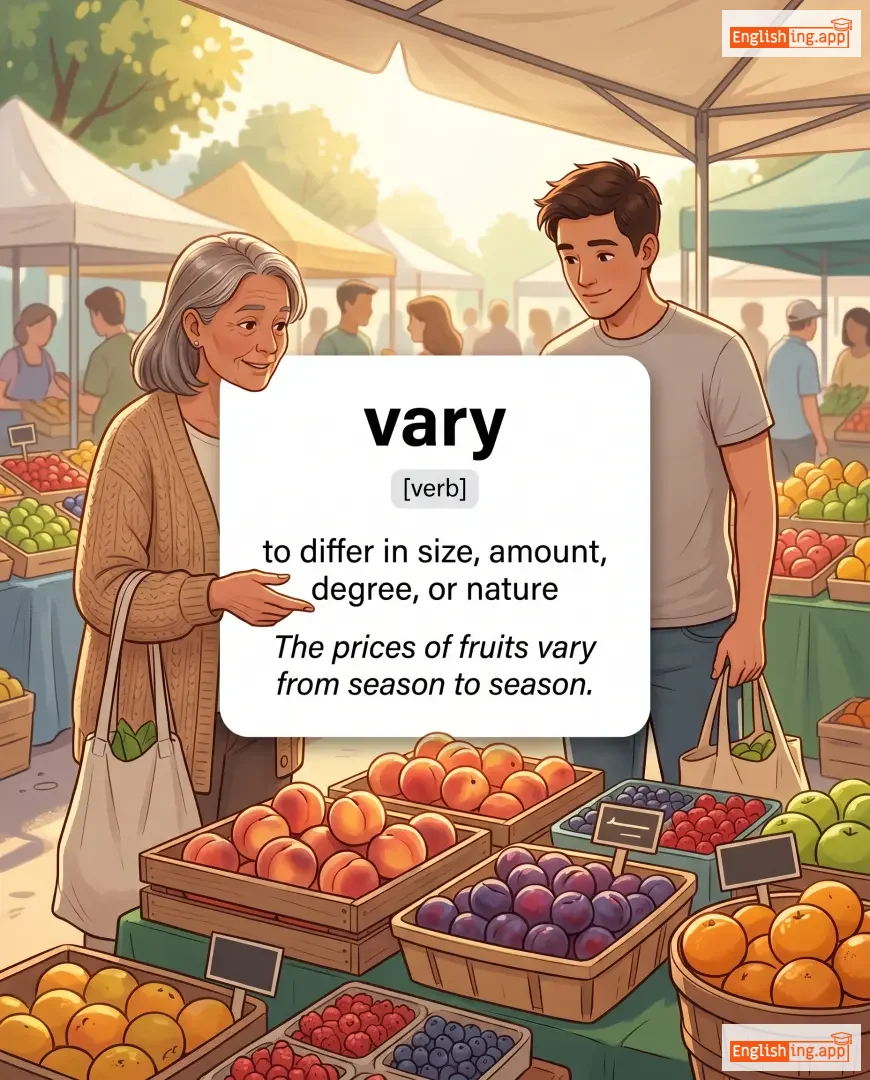
vary definition card — visual illustration of the meaning
verb
/ˈveəri/
变化 (bianhua)

to differ in size, amount, degree, or nature

"The prices of fruits vary from season to season."

"水果的价格随着季节的变化而变化。" (Shuiguo de jiage suizhe jizhe de bianhua er bianhua.)
noun
/ˈvæsəl/
附庸 (fù yōng)

A person or country in a subordinate position to another, especially in feudal times under a lord.

"The king granted land to his vassal in return for loyalty and service."

"国王为他的附庸提供土地,以换取忠诚和服务。" (Guówáng wèi tā de fùyōng tígōng tǔdì, yǐ huànqǔ zhōngchéng hé fúwù.)
🌌

Vast

adjective
/vɑːst/

extremely large in size, amount, or extent

"The desert stretches across a vast area of land."

🛢️

vat (væt)

noun
/væt/
大容器 (da rongqi)

A large container used for holding liquids such as dye or wine.

"The workers filled the vat with freshly pressed grape juice."

"工人们把新鲜压榨的葡萄汁倒入了大容器中。" (Gōngrénmen bǎ xīnxiān yāzhà de pútáo zhī dào rù le dà róngqì zhōng.)
noun
/ˈvɔːdəvɪl/
歌舞杂耍 (gewu zashua)

A type of entertainment popular in the early 20th century, featuring a mixture of comedy, song, dance, and variety acts.

"The vaudeville show included comedians, magicians, and dancers."

"歌舞杂耍表演包括喜剧演员、魔术师和舞者。" (Gewu zashua biaoyan baokuo xijuyanyuan, moshushi he wuzhe.)
noun/verb
/vɔːlt/
保险库 / 跳跃 (bǎoxiǎn kù / tiàoyuè)

A secure room for storing valuables; also to leap or spring over something.

"The bank kept its gold bars in a secure vault."

"银行将其黄金条存放在一个安全的金库中。" (Yínháng jiāng qí huángjīn tiáo cún fàng zài yī gè ān quán de jīn kù zhōng.)
📢

vaunt

verb
/vɔːnt/

to boast or brag about something, especially in an excessive way

"He would often vaunt his achievements in front of his colleagues."

adjective
/ˈvɔːntɪd/
过度吹嘘 (guòdù chuīxū)

praised or boasted about, especially excessively

"The vaunted technology failed to deliver the expected results."

"过度吹嘘的技术未能交付预期的结果。" (Guòdù chuīxū de jìshù wèi néng jiāofù yùqī de jiéguǒ.)
verb
/vɪə(r)/
突然改变方向 (tūrán gǎibiàn fāngxiàng)

to change direction suddenly

"The car veered off the road to avoid the accident."

"汽车为了避开事故突然驶离了道路。" (Qìchē wèile bìkāi shìgù tūrán shǐlíle dàolù.)
noun
/ˈvɛdʒ.tə.bəl/
幸福 (xìngfú)

a plant or part of a plant used as food

"I eat vegetables every day for health."

"当她获得奖项时,她无法掩饰自己的幸福。" (Dāng tā huòdé jiǎngxiàng shí, tā wúfǎ yǎnshì zìjǐ de xìngfú.)
noun
/ˈvedʒtəbəl ɔɪl/
植物油 (zhí wù yóu)

Oil extracted from plants, seeds, or nuts used for cooking

"She heated vegetable oil in the pan before adding the vegetables."

"她在锅里加热植物油,然后加入蔬菜。" (Tā zài guō lǐ jiā rè zhí wù yóu, ránhòu jiārù shūcài.)
noun
/ˈvedʒ.tə.bəlz/
蔬菜 (shucai)

plants or parts of plants that are eaten as food, such as peas, beans, cabbage, potatoes, onions, or carrots

"We should eat more vegetables to maintain a healthy diet."

"我们应该多吃蔬菜来保持健康的饮食。" (Wǒmen yīnggāi duō chī shūcài lái bǎochí jiànkāng de yǐnshí.)
adjective
/ˈvɛdʒɪtəl/
植物的 (zhíwù de)

relating to or consisting of plants or vegetation

"The soup had a distinct vegetal flavor."

"汤有一种独特的植物味。" (Tāng yǒu yī zhǒng dútè de zhíwù wèi.)
noun
/ˌvɛdʒəˈtɛəriən/
幸福 (xìngfú)

a person who does not eat meat and sometimes other animal products, eating mainly vegetables, grains, and fruits

"She has been a vegetarian for over ten years."

"她在收到奖项时无法掩饰她的幸福。" (Tā zài shōudào jiǎngxiàng shí wúfǎ yǎnshì tā de xìngfú.)
verb
/ˈvɛdʒɪteɪt/
发呆 (fā dāi)

to live in a dull, inactive, or unchallenging way, often with little physical or mental effort

"He spent his vacation vegetating on the couch in front of the TV."
"他把假期都用来在沙发上看电视,什么都不做。" (Tā bǎ jiàqī dōu yònglái zài shāfā shàng kàn diànshì, shénme dōu bù zuò.)
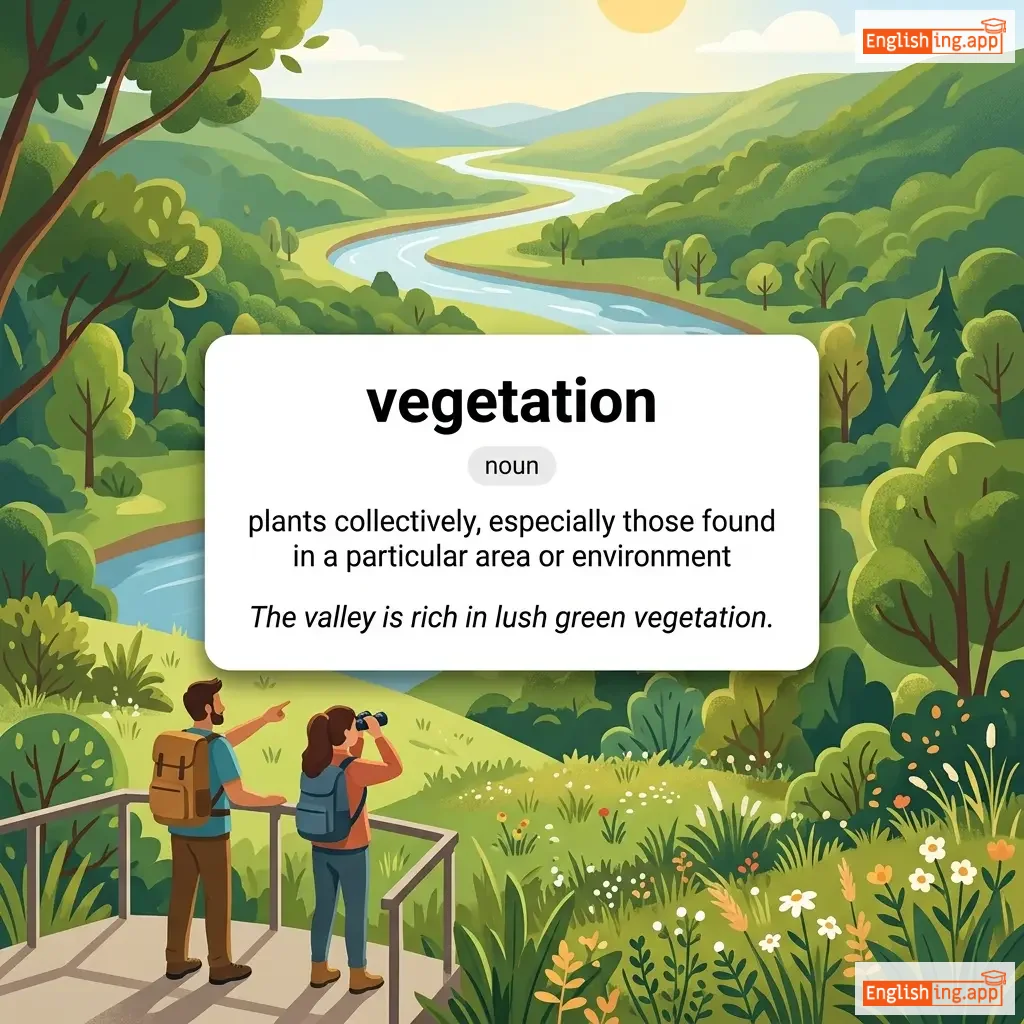
vegetation definition card — visual illustration of the meaning
noun
/ˌvɛdʒɪˈteɪʃən/
植被 (zhí bèi)

plants collectively, especially those found in a particular area or environment

"The valley is rich in lush green vegetation."

"这个山谷的植被茂盛,绿意盎然。" (Zhège shāngǔ de zhí bèi mào shèng, lǜ yì àng rán.)
adjective
/ˈvɛdʒɪtətɪv/
与生长或生命的基本过程相关,通常没有意识的思考或活动 (yǔ shēngzhǎng huò shēngmìng de jīběn guòchéng xiāngguān, tōngcháng méiyǒu yìshí de sīxiǎng huò huódòng)

relating to growth or the basic processes of life, often without conscious thought or activity

"The patient remained in a vegetative state after the accident."

"事故发生后,病人保持在植物状态。" (shìgù fāshēng hòu, bìngrén bǎochí zài zhíwù zhuàngtài.)
noun
/ˈviːəməns/
激烈 (jīliè)

Great forcefulness or intensity of expression, emotion, or conviction.

"She spoke with vehemence during the debate."

"她在辩论中激烈地发言。" (Tā zài biànlùn zhōng jīliè de fāyán.)
adjective
/ˈviːəmənt/
激烈 (jīliè)

showing strong feeling; forceful, passionate, or intense

"She made a vehement argument against the proposal."

"她对这个提案提出了激烈的论点。" (Tā duì zhège tí'àn tíchūle jīliè de lùndiǎn.)
noun
/ˈviːɪkəl/
车辆 (cheliang)

a machine used for transporting people or goods

"He drives a vehicle to work every day."

"他每天开车去工作。" (Tā měitiān kāichē qù gōngzuò.)
noun
/ˈviː.ɪ.kəlz/
交通工具 (jiaotong gongju)

machines used for transporting people or goods from one place to another

"There are many different types of vehicles on the road today."

"今天路上有许多不同类型的交通工具。" (Jintian lù shàng yǒu xǔduō bùtóng lèixíng de jiāotōng gōngjù)
noun
/veɪl/
面纱 (miàn shā)

a piece of fine material worn by women to protect or conceal the face

"The bride wore a beautiful white veil during her wedding ceremony."

"新娘在婚礼仪式上戴着一条美丽的白色面纱。" (xīnniáng zài hūnlǐ yíshì shàng dàizhe yītiáo měilì de báisè miàn shā)
noun
/veɪn/
静脉 (jingmai)

a tube in the body that carries blood to the heart

"The nurse checked the patient's veins for an IV insertion."

"护士检查了病人的静脉以便插入静脉注射。" (Hushi jiancha le bingren de jingmai yibian charu jingmai zhushui.)
noun
/vəˈliːɪti/
微弱的愿望 (weiruo de yuànwàng)

A wish or inclination not strong enough to lead to action.

"His interest in painting never grew beyond a mere velleity."

"他对绘画的兴趣从未超越一个微弱的愿望。" (Tā duì huìhuà de xìngqù cóngwèi chāoyuè yīgè wēiruò de yuànwàng.)
noun
/ˈvɛləm/
羊皮纸 (yangpizhi)

a fine parchment made originally from the skin of a calf, used for writing or printing

"The ancient manuscript was written on vellum."
"古老的手稿是用羊皮纸写的。" (Gǔlǎo de shǒugǎo shì yòng yángpí zhǐ xiě de.)
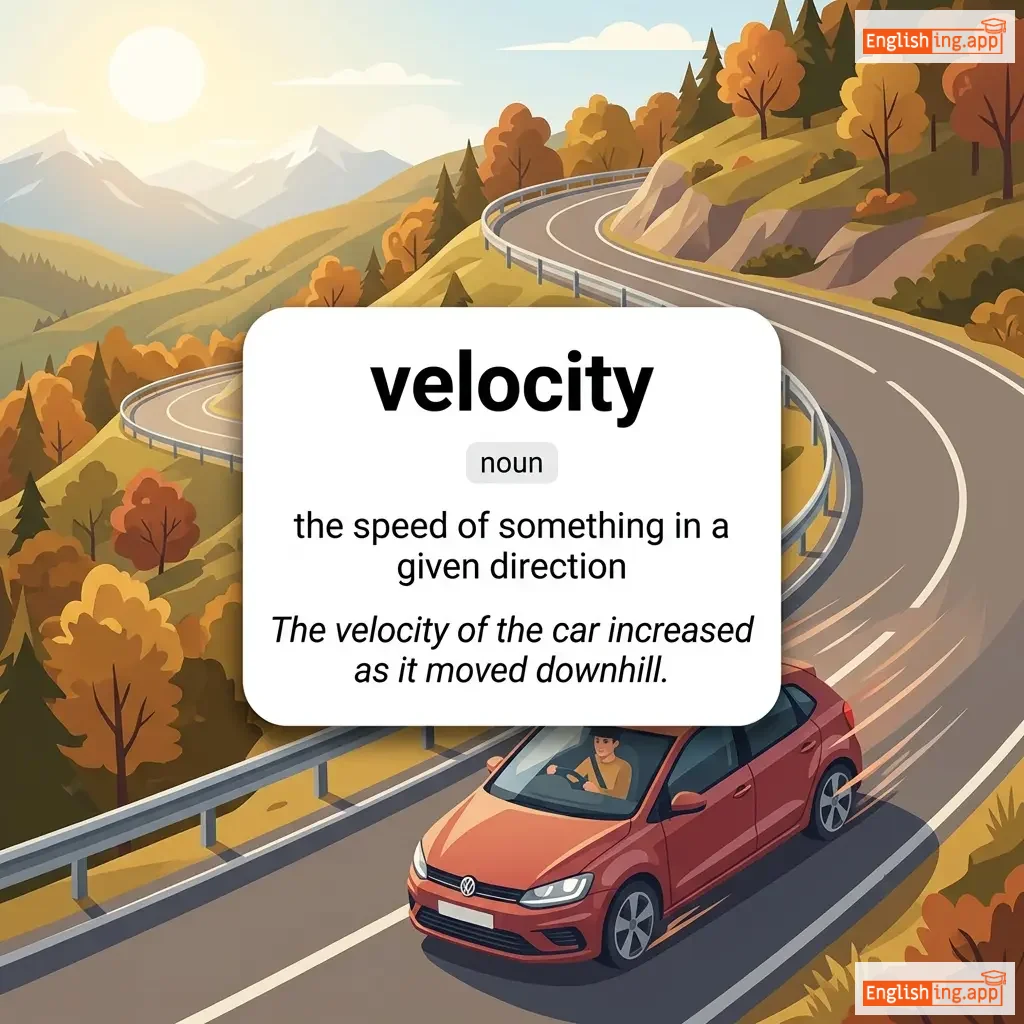
velocity definition card — visual illustration of the meaning
noun
/vəˈlɒsəti/
速度 (sudu)

the speed of something in a given direction

"The velocity of the car increased as it moved downhill."

"当汽车下坡时,速度增加了。" (Dang qiche xia po shi, sudu zeng jia le.)
noun
/ˈvel.vɪt/
天鹅绒 (tiān'éróng)

a soft, luxurious fabric with a thick, short pile on one side

"The royal curtains were made of rich red velvet."

"皇家窗帘是用富有的红色天鹅绒做的。" (Huángjiā chuānglián shì yòng fùyǒu de hóngsè tiān'éróng zuò de.)
adjective
/ˈvɛlvəti/
幸福 (xìngfú)

having a smooth, soft texture like velvet

"She spoke in a low, velvety voice."

"她收到奖项时,无法掩饰她的幸福。" (Tā shōu dào jiǎngxiàng shí, wúfǎ yǎnshì tā de xìngfú.)
venal definition card — visual illustration of the meaning
adjective
/ˈviːnəl/
贪污的 (tānwū de)

willing to do dishonest things in return for money; corrupt

"The politician was accused of being venal and corrupt."

"这位政治家被指控为贪污腐化。" (Zhè wèi zhèngzhìjiā bèi zhǐkòng wéi tānwū fǔhuà.)
noun
/viːˈnæləti/
贪污腐化 (tānwū fǔhuà)

the quality of being open to bribery or corruption

"The scandal revealed the venality of several senior officials."
"丑闻揭示了几位高级官员的贪污腐化。" (Chǒuwén jiēshìle jǐ wèi gāojí guānyuán de tānwū fǔhuà.)
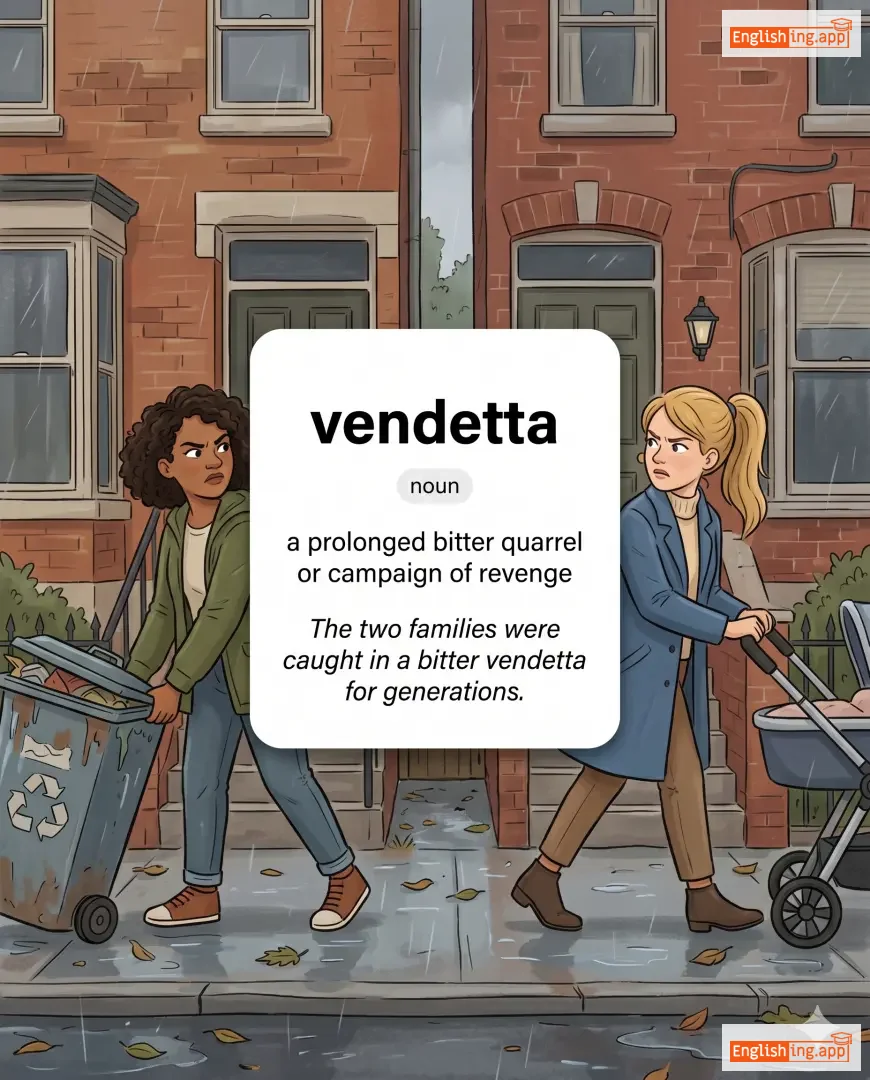
vendetta definition card — visual illustration of the meaning
noun
/vɛnˈdɛtə/
复仇 (fùchóu)

a prolonged bitter quarrel or campaign of revenge

"The two families were caught in a bitter vendetta for generations."

"这两个家庭世代相传,陷入了长久的复仇。" (Zhè liǎng gè jiātíng shìdài xiāng chuán, xiànrùle chángjiǔ de fùchóu.)
adjective
/ˈvɛndɪbəl/
可销售的 (kě xiāo shòu de)

Capable of being sold; marketable.

"Only vendible products were displayed at the trade fair."

"只有可销售的产品在贸易展会上展示。" (Zhǐyǒu kě xiāo shòu de chǎnpǐn zài màoyì zhǎnlǎn huì shàng zhǎnshì.)
noun
/vɛnˈdɪʃən/
销售 (xiaoshou)

The act of selling; sale.

"The auction was a formal vendition of the estate's assets."

"拍卖是财产资产的正式销售。" (Pāimài shì cáichǎn zīchǎn de zhèngshì xiāoshòu.)
🧑‍🍳

Vendor (vendor)

noun
/ˈvɛndɔːr/
小贩 (xiǎo fàn)

A person or company that sells goods or services.

"The street vendor sold fresh fruits every morning."

"街头小贩每天早晨卖新鲜水果。" (Jiētóu xiǎo fàn měitiān zǎo chén mài xīnxiān shuǐguǒ.)
noun
/vəˈnɪər/
幸福 (xìng fú)

A thin decorative covering of fine wood applied to a coarser wood or other material; a superficially attractive appearance.

"The table was covered with a thin veneer of mahogany."

"当她收到奖项时,她无法掩饰自己的幸福。" (Dāng tā shōudào jiǎngxiàng shí, tā wúfǎ yǎnshì zìjǐ de xìngfú.)
adjective
/ˈvɛnərəbl/
受人尊敬的 (shòu rén zūn jìng de)

Accorded a great deal of respect, especially because of age, wisdom, or character.

"The venerable professor was admired by generations of students."

"这位受人尊敬的教授受到几代学生的钦佩。" (Zhè wèi shòu rén zūn jìng de jiàoshòu shòudào jǐ dài xuéshēng de qīnpèi.)
venerate definition card — visual illustration of the meaning
verb
/ˈvɛnəˌreɪt/
敬仰 (jingyang)

to regard with great respect; revere

"People venerate saints for their holiness."

"人们敬仰圣人,因为他们的圣洁。" (Renmen jingyang shengren, yinwei tamen de shengjie.)
adjective
/ˈvɛnəˌreɪtɪd/
受人尊敬的 (shòu rén zūn jìng de)

respected and admired deeply

"The venerated professor was honored with an award."

"这位受人尊敬的教授获得了奖项。" (Zhè wèi shòu rén zūn jìng de jiàoshòu huòdéle jiǎngxiàng.)